Rival Consoles is 21-year old IDM-smith Ryan Lee West from Leicester in the Midlands of England. After having supported his city neighbours and label comrades Kyte on an extensive European tour in November 2008, West locked himself away all winter to finish his first full-length album, set to see the light of day in mid 2009. In the meantime fans of his debut 'The Decadent EP' will be pleased to hear that on February 23, 2009 Erased Tapes Records will release an exclusive 4-track 7" single / download bundle ? Rival Consoles' take on classical music entitled 'Helvetica'. Instead of X-Box versus Playstation, here West plays classical against dance music! Influenced by impressionists like Claude Debussy and modern electronic artists such as Autechre and Daft Punk, Ryan Lee West created a unique signature sound for Rival Consoles. A playful and brutal mix of electronic beats, emotive piano melodies and warm synth string arrangements. Ryan repeatedly performed at the Tate Britain Museum in London where he drew over 2000 visitors into his unpredictable, yet detailed sound drawings. He was the first to represent Erased Tapes Records at the British Music Week 2007 in Cologne, Germany. Limited to 500 copies only: with download code. Album due later in the year, and it will be one of the years hittest tips...
Поиск:debussy
Все
RIVAL CONSOLES IS 21-YEAR OLD ELECTRO ACID-SMITH RYAN LEE WEST FROM LEICESTER. INFLUENCED BY IMPRESSIONISTS LIKE CLAUDE DEBUSSY AND MODERN ELECTRONIC ARTISTS SUCH AS AUTECHRE AND SQUAREPUSHER, HE CREATED HIS UNIQUE SIGNATURE. A PLAYFUL AND BRUTAL MIX OF IDM ACID BEATS AND WARM, EMOTIVE SYNTH STRING ARRANGEMENTS. IN FEBRUARY HE RELEASED AND TOURED THE MORE QUIRKY "VEMEER EP" UNDER HIS SECOND MUSICAL ALIAS APARATEC, WHICH SOLD LIKE HOT CAKES AND EARNED HIM A LOT OF FANS. RYAN RECENTLY REPRESENTED ERASED TAPES RECORDS AT THE BRITISH MUSIC WEEK 2007 IN COLOGNE, GERMANY AND CRAFTED REMIXES FOR UPCOMING LABEL COMRADE AND PRODUCER JUSTIN LOCKEY (YOURCODENAMEIS:MILO). "THE DECADENT EP" WILL HIT THE UK SHOPS AS A FUSION OF TRADITIONAL AND CONTEMPORARY FORMATS - A 10" VINYL RECORD WITH A DOWNLOAD CODE, THAT ALLOWS THE PURCHASER TO BE ABLE TO GET THE ENTIRE EP PLUS BONUS TRACK DIGITALLY FOR NO EXTRA COST.
LTD Edition!
A Winged Victory For The Sullen veröffentlichen auf Ninja Tune ihr neues Album, das musikalisch zwischen Neo-Klassik, Ambient und Electronic angesiedelt ist!
A Winged Victory For The Sullen, Spezialisten auf ihrem Gebiet der zeitgenössischen und elektronisch inspirierten Ambient-Musik, kehren auf dem neuen Album, „The Undivided Five“, mit einem mutigen Schritt zurück. Das Duo, bestehend aus Dustin O'Halloran und Adam Wiltzie, hat ikonische Filmmusik und zukunftsweisende Ambient-Projekte geschaffen und eine Reihe von Platten für Erased Tapes und Kranky veröffentlicht. Auf „The Undivided Five“ beleben sie ihre einzigartige Partnerschaft für nur ihr zweites Stück Originalmusik außerhalb von Film-, Fernseh- und Bühnen-aufträgen und kreieren ein Album, das Ritual, höhere Kräfte und ungekannte kreative Energien kanalisiert. Mit ihrer fünften Veröffentlichung (nach ihrem Debütalbum, zwei Film-Scores und einer EP) visieren sie konkret die Rolle der Nummer fünf an, inspiriert von der Künstlerin Hilma af Klint und der steten Wiederholung des perfekten fünften Akkords.
Auf diesem Album kreieren sie mutige neue Arbeiten, die auf ihren Fundamenten in Ambient und neoklassischer Musik aufbauen. Seit ihrem selbstbetitelten Debüt im Jahr 2011 ist das Duo Teil einer viel gelobten Szene mit Kollegen wie Max Richter, Nils Frahm, Hildur Guðnadóttir, Tim Hecker und Fennesz.
A Winged Victory For The Sullen veröffentlichen auf Ninja Tune ihr neues Album, das musikalisch zwischen Neo-Klassik, Ambient und Electronic angesiedelt ist!
A Winged Victory For The Sullen, Spezialisten auf ihrem Gebiet der zeitgenössischen und elektronisch inspirierten Ambient-Musik, kehren auf dem neuen Album, „The Undivided Five“, mit einem mutigen Schritt zurück. Das Duo, bestehend aus Dustin O'Halloran und Adam Wiltzie, hat ikonische Filmmusik und zukunftsweisende Ambient-Projekte geschaffen und eine Reihe von Platten für Erased Tapes und Kranky veröffentlicht. Auf „The Undivided Five“ beleben sie ihre einzigartige Partnerschaft für nur ihr zweites Stück Originalmusik außerhalb von Film-, Fernseh- und Bühnen-aufträgen und kreieren ein Album, das Ritual, höhere Kräfte und ungekannte kreative Energien kanalisiert. Mit ihrer fünften Veröffentlichung (nach ihrem Debütalbum, zwei Film-Scores und einer EP) visieren sie konkret die Rolle der Nummer fünf an, inspiriert von der Künstlerin Hilma af Klint und der steten Wiederholung des perfekten fünften Akkords.
Auf diesem Album kreieren sie mutige neue Arbeiten, die auf ihren Fundamenten in Ambient und neoklassischer Musik aufbauen. Seit ihrem selbstbetitelten Debüt im Jahr 2011 ist das Duo Teil einer viel gelobten Szene mit Kollegen wie Max Richter, Nils Frahm, Hildur Guðnadóttir, Tim Hecker und Fennesz.
- A1: Reanimation Music
- A2: War Music, 1St Perspective
- A3: Fairytale Music, 1St Perspective
- A4: Dance Music, 1St Perspective
- A5: Death Music, 1St Perspective
- A6: Dance Music, 2Nd Perspective
- B1: War Music, 2Nd Perspective
- B2: Festivity Music
- B3: Art Music
- B4: Fairytale Music, 2Nd Perspective
- B5: Consolation Music
- B6: War Music, 3Rd Perspective
- B7: Death Music, 2Nd Perspective
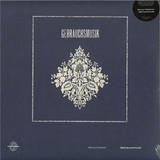
Marcus Fjellström's second album Gebrauchsmusik, initially released a decade and a half ago, is a bizarre sound document that deserves a closer look. Listening back to it now only re-confirms the unique mind of the Swedish composer, who sadly died in September 2017, only 37 years old.
"Gebrauchsmusik" is German for 'Utility Music', and his second excursion into post-classical experimentation is exactly that; thirteen tracks with each one written to suit a certain theme. War, art, festivity, sadness, death and resurrection are all interpreted by Fjellström in his unique style, taking a classical framework and distorting, confusing and manipulating them into far fetching scenarios that is only limited by ones own imagination.
Marcus worked with the Swedish Royal Ballet, the Scottish Chamber Orchestra and Sinfonietta Cracovia as well as numerous other orchestras, ensembles and soloists, artists and filmmakers. He spent the last half year of his life scoring the AMC series The Terror. In his works, Marcus often aimed to combine opposites so that they don’t contradict each other, but rather fuse into a natural, third element - “High” and “low” culture, the naïve and the sophisticated, good and bad taste. These are all elements that comfortably blend together in his works. Musical influences range from electronic acts such as Aphex Twin and Autechre to 20th century composers such as György Ligeti and John Cage. Further influences include impressionist composers Maurice Ravel and Claude Debussy as well as film music composers Bernard Herrmann, Angelo Badalamenti and Zdeněk Liška.
Vinyl edition ltd. to 300 copies, incl. 8-page 12" booklet with drawings by Marcus Fjellström.
After The First Wave Of Artists That Have Broken The Ice With Their Way Of Combining Contemporary Symphonic Music With Electronica And Jazz On The European Side (olafur Arnalds, Nils Frahm, Max Richter) - Now There Is A New Generation Of Young Musician Breaking Boundaries On A New Level. Especially In Germany There Is A New Wave Of Artists That Bring The Thing On A Whole New Level. These 20 - 25 Year Old People Don't Just Imitate What The Bigger Names In The Scene (the Fathers) Have Done But Develop The Style To A Totally Different Level And Add New Ideas Instead Of Just Copying What The Older Guys Did. This New Wave Of Artists Have A Huge Musical Knowledge, Have Studied At The Best Music Academies, Learned To Play "classical" Instruments And Know How To Improvise On A Very High Level. They Have Been Raised In 2 Different World: Studied The History Of (contemporary) Classical Music And Also Been Influenced By What's Happening In Electronica Evolution Of The Last 25 Years. Ralph Heidel Is One Of These New Kids In The German Scene. Coming From Munich, The 25 Year Old Extremely Talented Musician Studied Saxophone And Composition At The Munich Academy Of Music (known For Being The Best Music School In Germany. Think Julliard Or Berklee). He Graduated In 2018.leering Everything About The Music Of 20th Century Composers (charles Ives, Alfred Schnittke, Giöyrgi Ligeti Etc). At The Same Time He Grow Up With The Music Of Electronic Producers Like Alvo Noto, Boards Of Canada, Jon Hopkins, Jan Jelinek, Four Tet Since Early Days. And: He Comes From A Jazz Musicians Family And Has Grown Up By Listening To The Jazz Collection Of His Father. Studied Saxophone Since Age Of 12 With A Big Passion For The More Advanced Jazz. In His Own Music All This Comes Together. "moments Of Resonance" Are Seven Compositions Full Of Brilliant Little Ideas, Harmonic Complexity, Unheard Music Surprises, Clever Citations, Dramatic Evolutions, Big Explosive Moments, Meditative Moments And Euphoric High Points. This Album Is An Extremely Emotional Work Of Art For Strings, Saxophone, Drums, Bass And Electronics. Ralph Heidel And His 7 Piece Ensemble Homo Ludens Connect Contemporary Chamber Music With Electronica, Ambient, Post Rock And Avant-garde Jazz. On A Highest Possible Musical Level - Without Getting Too Abstract And Incomprehensible. Everything Is Composed And Improvised. Nothing Is Sampled. You Find Wild Punk-jazz Parts That Recall John Zorn Or Mahavishnu Orchestra And Romantic Passages That Make You Think About European Impressionistic Composers Like Ravel Or Debussy. But Nothing Is Imitated, Everything Gets Broken Up Through An Expressive New Way Of Using Harmonization And Melodic Composing. Sometimes The Band Flies Through An Ambient And Drone Universe But One Moment Later The Music Evolves Into An Explosive, Impossible To Describe Musical Moment. One Of Heidel's Biggest Ability Is To Melt Electronic And Organic Elements Into A New Unheard Sound.
- A1: Ich Will Dir Helfen
- A2: A La Manière (With Roya Arab)
- A3: Ondine
- B1: Aspiration (With Mona Soyoc)
- B2: One Of These Days (With Hafdis Huld)
- B3: Théorème
- B4: Mortel Battement / Nocturne (With Alain Bashung)
- C1: Organique
- C2: The Watcher (With Mona Soyoc)
- C3: Qu’est-Ce Qui M’a Pris (With Philippe Poirier)
- D1: Xr 116 / Messe Rouge
- D2: Untitled
- D3: Ondine (Alt Take)
- D4: Piasong
The sensitive mountain » (la montagne sensible) is the nickname Alain Bashung came up with for Arnaud Rebotini. At the height of his fame, after the success of Fantaisie Militaire in 1998, Bashung readily agreed to create an album with Rebotini. The two men didn’t know each other; their record label had introduced them. Bashung brought in “Mortel Battement” and “Nocturne,” two poems by Jean Tardieu, which he recited in a voice simultaneously warm and flat, and Arnaud produced an impressionist soundscape that ended with an apocalypse of metal. Bashung was so proud of their collaboration that he offered to give several interviews to promote the record. Today, listening back to this moving Léo Ferré influenced "talking singing" exercise, it’s hard not to hear the template for L'Imprudence, the album that Bashung went on to record with Rebotini two years later. In a similar way, the album Organique sparked a productive partnership between Rebotini and filmmaker Robin Campillo, which resulted in their being awarded a César for Best Original Music in 2018. The director, who trusted Rebotini to create the soundtracks for his films Eastern Boys and 120 Beats per Minute, never kept his love for the 2000 record a secret.
Yet it’s an understatement to say that when it was released, Organique was not in the spirit of times. That year was all about the French touch. The funky samples of Modjo’s “Lady” and Superfunk’s “Lucky Star” ruled the sweaty dancefloors. Although Rebotini was familiar with the electronic scene, he had something else in mind when he set about creating Organique. Under his own name or under the pseudonyms Aleph, Avalanche, Black Strobe, Maison Laffitte, and of course Zend Avesta, he had already released several quite bizarre and experimental techno, house, or jungle maxi singles on pioneering labels like P.O.F., Source, and Artefact, run by his friend Jérôme Mestre’s, whom he had met back when both were working as record salesmen at Rough Trade’s ephemeral Parisian store. It was at Artefact, still financed at the time by Barclay and Universal, that he naturally proposed this record project, which was a bit "different." It was his first real album.
Arnaud Rebotini has never hidden his love-hate relationship with the electronic scene. He’s a fan of rave music, Rex, and later Pulp, but he listens mostly to metal and contemporary music, mainly American minimalists such as Terry Riley, Philip Glass, Steve Reich. He wanted to mix this genre with a more French aesthetic inspired by Debussy, whose unconventionality fascinates him. From the first suspended guitar note of Organique, you can pick up another influence, possibly poppier. In the style of Mark Hollis, the erratic leader of Talk Talk, whose only solo album’s silences and dissonances left their mark two years earlier, we hear the fingers touching the keys of the clarinet on “Ondine.” The instruments have presence, character. Nothing is smooth. Everything is organic.
Although it’s sometimes labeled as electronica because of Rebotini’s career, there’s nothing digital about Organique. No "pro tools" editing or samples, only programmed drums and some synth layering. And his guest vocalists. Playing the role of electro producer, he invited Bashung, of course, to join him on the album, but also Roya Arab, who Rebotini first spotted while she was playing in Archive, and her sister Leila, Gus Gus alum Hafdis Huld, Kat Onoma’s Philippe Poirier on the “Samuel Hall” inspired track “Qu’est ce qui m’a pris,” and former KaS Product member Mona Soyoc.
The frustration of a tour where he had "little to do on stage," the desire to sing himself, and the creation of the Black Strobe project, a haunting mix of blues and rock, stopped Zend Avesta from putting out another album. Eighteen years later, the Organique we rediscover today has lost nothing of its strangeness, nor beauty. When it came out, Bashung said, "What is interesting for a musician is to feel that you have a piece of wasteland in front of you, something to clear.” That remains true today.
serenitatem, the fifteenth installment of FRKWYS, RVNG Intl.'s collaboration series pairing intergenerational artists in creative conversation, joins Visible Cloaks with Yoshio Ojima and Satsuki Shibano, two trailblazers of the Japanese avantgarde music and visual arts scenes of the 1980s and 90s.
Yoshio Ojima began his career as a composer of environmental and ambient music, with a particular interest, and optimism, in the possibilities of generative software. His compositional pursuit of human synthesis with computerized forms was realized in its fullest potential alongside Satsuki Shibano, a pianist renowned for her interpretations of Erik Satie and Claude Debussy. Together, they were among a handful of influential Japanese artists whose innovations still resonate, if not more vibrantly than ever, well beyond the tightly-knit scene's original core. In the early 90s, Ojima was among the programmers of the influential satellite radio experiment St. Giga, a constantly-evolving sonic landscape that combined field recordings and sound collage with occasional readings of Japanese poetry. Satsuki was a regular reader for the station. This musical terrarium bloomed out of sight in a small Tokyo studio, a greenhouse of sound with no set start or finish time that audiences could tune into, absorb, and immerse.
The perpetual flow state of St. Giga — recordings of which Ojima shared with Visible Cloaks — would be highly influential to serenitatem's constitution. As Visible Cloaks, the Portland, Oregon duo of Spencer Doran and Ryan Carlile have developed their own set of creative strategies that form an aesthetic fuse point between human intention, aleatoric composition, and improvisation.
These are notions most recently reflected in 2017's Reassemblage and Lex, a respective album and EP in which the duo combined generative software and virtual representations of global instruments into lacy, interlocking patterns. Long time admirers of Ojima's work on albums like 1988's Une Collection Des Chainons, Doran and Carlile discovered after an online introduction that they shared with Yoshio and Satsuki an abiding interest in pre-classical composers, the Lovely Music, Ltd. label, and the British avant-garde, as well as a mutual respect for one another's techniques and processes.
The four musicians met in Tokyo, Japan at Sounduno Studios in December 2017, at the tail end of Visible Cloaks' first Japanese tour, to commence work on serenitatem. Leading up to the studio sessions, Doran and Carlile sent Ojima processed sound sketches recorded while on a European tour, which Yoshio would add to and return. Visible Cloaks would then fold Yoshio's edits back into the original compositions, which Doran and Carlile brought to the exploratory recording session. During that week together in Tokyo, the quartet made use of a number of creative strategies — 'echoing sound together,' as Yoshio puts it. Among the strategies, MIDI randomization gave the quartet melodic lines and what Doran calls 'randomized clouds,' or 'tightly grouped notes that become smeared tonal clusters functioning more like chords in themselves.' Carlile would also feed Ojima and Satsuki's text into Wotja, a generative music software which produced a MIDI language around which the quartet expanded their compositions.
'The aim,' Doran says of serenitatem, 'was to make a work that was not specifically ambient (or environmental), but something more multi-hued, weaving these deconstructive concepts into an album that has a deeper architecture underpinning it.' Accordingly, serenitatem is a marvelously sharp record, its sutures between human and machine virtually impossible to find but suggested everywhere you turn. The collaboration among Ojima, Satsuki, and Visible Cloaks is both musically and conceptually inseparable from the technology that made it possible. Throughout the album, Shibano's playing resonates like Satie's, her rhythms cascading like drops from leaves an hour after the rain. Overtones are stretched and warped like modeling clay, then spun around and shown off from multiple angles.
A single soaring note might seem to be suddenly plunged underwater, its richness of sound made shallow and its sharp edges blunted. Pittering chimes and rapidly warping vocal samples hang in the luxuriously glossy space, water trickles from ear-toear, familiar melodies rise from nothing and dissolve before they can be traced. With the depth of its emotional charge, serenitatem burns away the easy cynicism of the day, presenting itself as the kind of delocalized work of art the internet promised us decades ago — a synthesis of artistic visions, technological sophistication, futurist ambition, and, occasionally, ancient polyphony. Listening to it can feel a bit like tuning in to a 21st Century version of St. Giga: It's a place where the future still grows.
Visible Cloaks, Yoshio Ojima, and Satsuki Shibano's serenitatem, FRKWYS Vol. 15, will be available across LP, CD, and digital formats on April 5, 2019. The quartet will perform select live shows throughout 2019.
- A1: Gnossienne #1 (Cabaret Piano)
- A2: Gymnopedie #1 (Sugar Plum Piano/Water Bell Synthesizer)
- A3: Gnossienne #3 (Street Corner Mouth Accordion)
- A4: Gnossienne #3 (Organ Ripple Synthesizer)
- A5: Gymnopedie #1 (Hesitant Piano/Confident Lips)
- A6: Gnossienne #1 (French Ice Piano/Siberian Snow Synthesizer)
- B1: Gnossienne #1 (German Haiku Pianica)
- B2: Gymnopedie #3 (Family Piano/A Hint Of La-La-La)
- B3: Gnossienne #2 (Perrier Swing Synthesizer)
- B4: Gymnopedie #2 (Resonant Concert Piano/Tide Synthesizer)
- B5: Gymnopedie #1 (Festival Soft Fanfare Synthesizer)
Sacred Summits returns after a two-year hiatus with an album of interpretations of the music of Eric Satie by acclaimed composer Morgan Fisher.
Active for over 50 years Morgan's career has moved from 60's number one hit wonders Love Affair, to 70's rock'n'roll keyboardist in Mott The Hoople, before finally on to 80's ambient, improvisation and soundtracks, working with the likes of Yoko Ono, Haroumi Hosono and Dip In The Pool.
Based in Japan since the mid-80s, Fisher's long-standing admiration for Erik Satie (1866-1925) led to these Inside Satie recordings. Satie's unique work as a precursor to artistic movements such as minimalism, surrealism and repetitive music are acknowledged but for long periods he not given the accolades his music warranted.
A strange, eccentric, surreal man, he was never as acclaimed as the established masters, but influenced not only the likes of Debussy but also many of the Dada artists. On this album Morgan played his music freely after just a brief look at the scores. Recorded in just three days, it features piano, melodica, synthesisers, and Morgan's favoured tape delay system.
'INSIDE SATIE is one of the first albums I recorded in Japan shortly after moving here in 1985. In three days I improvised on several of my favourite Satie themes. Mostly I played piano as well as the rich, analog-sounding Yamaha GS-1 (precursor of the DX-7), and sometimes used long tape delays to build layers of sound. All the pieces were recorded in single takes - no overdubs (no time!)'.
music is the silence between the notes.' the french composer claude debussy once said.
the german trio wareika, consisting of florian schirmacher, henrik raabe and jakob seidensticker, love the silence between their notes, even if their music is often fully loaded with many detailed sounds, rhythms, melodies and intercultural sound links.
since 2007 they spread their passion for repetitive club grooves in the minimal house spheres that love to swing in the epic way. with four albums on labels like perlon or visionquest as well as eps for labels like eskimo, tartelet, circus company or bar 25 under their wings, the trio proofed their craftsmanship for multi-layered dance music already arrestingly deep on numerous releases and during tours around the globe that brought them also to japan.
now they deliver a new one hour long sonic journey on the tokyo based mule musiq, the label on which wareika member florian schirmacher already released as part of the glowing glisses project in 2008. also wareika itself are not new to the japanese imprint, as they previously dropped a remix for mule for the mysterious project jemmy in late 2015.
and now water, sky, sun, wood' - an ambitious one-track (on vinyl separated into four parts) love letter that kicks you deep into meditation - assumed you surrender yourself to their complex sounding and grooving story-arc. it all started with an unplanned four-hour jam session between henrik and flo-rian, gaming and messing around on the piano, guitar and drum computer.
later florian edited the happening into a one-hour sensation, henrik added some congas and synthlines and jakob mixed it down. the result is a meticulously edited, deeply absorbing dance between the pi-ano, guitar, conga, mfb tanzbär, mfb dominion 1, ob-6, jupiter 6 and manikin mellotron synthsizer. you can use it to get lost. lost from the daily grind. lost from precast perception.
lost in music. you can use it for your imagination to move to a place beyond words that guarantees some genuine experience. or you just can shut yourself down to it, dive deep into your unforeseeable dream world and dance your sub-consciousness around and around.
whatever each listener chooses to do, wareika's latest adventurous blend of jazz, techno, house and world music will move each soul individual. primarily because water, sky, sun, wood' is a reverbera-tion of the inner notes that are floating and dancing in florian, henrik and jakob. and as the greatest music in the world is nothing but an echo of the inner music, wareika managed to reach a new fresh peak of their multidimensional artistic body of work, that grows and grows to stand out in terms of deepness, permanency, eternalness and silence between all sounding sensations.
You could be forgiven for thinking Basso's been hitting the plant food of late. Last time out we took a trip with Trance, and now our esoteric expert nods his head, rolls his shoulders and drops a h-h-h-house record on our unexpecting asses. That's right folks, roll up the rug, push the sofa back and enjoy some ‚Personal Growth' from James Booth.
.
Operating a million miles away from the kick and hiss of the trendy lo-fi folks, the Berlin based producer favours subtle rhythms, delicate textures and tender melodies - turning out a string of sophisticated dance floor winners for 100% Silk, Church and No Bad Days. Now he brings his organic house stylings to the Growing Bin with a fresh five-tracker packed with all the warmth of a Tempelhof picnic on a balmy July afternoon.
Emerging from the watery depths of the Drexciyan ocean, opener ‚Mood' strides calmly through the morning dew, stretching those loose limbs and seeking out Hardcastle's rainforest. Drifting freely
through immersive, aquatic pads and soft focus melodies, the track takes in a little R&R before snapping electro percussion, cascading synthlines and a rolling rhythm up the intensity. The deepness continues on the A2 as ‚Dream Precipitation' offers a medicated vision of Debussy doing P-Bar while Lynch rolls the cameras. Syncopated hi-hats, jazzy keys and star-gazing sine waves wrap themselves around your cerebellum, expanding your mind as a steady kick moves your body into the pleasure zone. Booth takes a Derren Brown tip on the flip, imbuing ‚You' with the kind of mesmeric rhythm that can make the staunchest wallflower pull a Pink Panther on a packed dance floor. The exotic tumble of woody percussion and hissing castanets keep up a fascinating rhythm, driving the titular mantra and snaking synth melody through bursts of slapped bass and subtle 4/4. ‚Dhoop Stick' stays on board with the boogie hypnotism, weaving its way through celestial melodies, squelching bass and toasty Rhodes before ‚The Chorus' brings down the curtain with wailing FM vox, military snares and the dreamy synth pop charm of a lost Sheffield classic. Warm, woody and entirely organic, this is the birth of Green House...you heard it here first!
(words by Patrick Ryder)
Following his acclaimed collaboration on Strut with The Heliocentrics, the Father of Ethio jazz presents his brand new studio album, 'Mulatu Steps Ahead' for 2010! The album explores new directions in fusions of Western jazz with Ethiopian modes, moving forward the pioneering sound Mulatu developed during the '60s and '70s, showcased on the recent Strut compilation 'New York * Addis * London'.
For the new album, tracks were recorded with members of Either/Orchestra in Boston, with contributions by traditional Ethiopian musicians in Addis, members of The Heliocentrics and some of the UK's leading jazz and African players during the final sessions in London in November 2009.
Each track on the album tells its own story. The reflective, opener, Radcliffe, was composed specifically for the Radcliffe Institute during Mulatu's time lecturing at Harvard in Boston - the original score is now framed on the wall there. The Way To Nice was written and arranged on the tour bus during Mulatu's recent French dates - "with this track, you are travelling on a long journey, talking and thinking" explains Mulatu. "It was inspired by the many beautiful places on the coast road around Nice." Assosa adapts traditional music from the Assosa tribes in North-Western Ethiopia and Mulatu's Mood re-works a Mulatu jazz fusion composition from the early '90s into a new swinging Afro highlife arrangement. "I wanted to use West African styles within this version and try new ways of using the beautiful sound of the kora." Boogaloo and I Faram Gami I Faram reprise Mulatu classics with new, fuller scores and bonus digital track Derashe highlights the traditional diminishing scales of the Derashe people of Southern Ethiopia, a musical technique that would later feature in the classical compositions of Debussy and the jazz of Charlie Parker. "Many debate how this music developed but the Derashe have played these scales for centuries. It is an untold story."