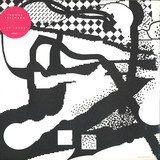
The drum and bass chart-topping artist, CURRENT VALUE, whose tunes are often a staple of Aphex Twin’s performances, returns to METHLAB RECORDINGS with his SENEX LP, which features twenty one of his most technical and innovative sonic works on the
ike-minded label.
A twin release with it's more upfront & riotous cousin PUER delivered via Souped Up Recordings, SENEX displays its half of the CURRENT VALUE sound with an expansive array of sonic sequences marked by their forward thinking sonic character and the singular timbres for which CURRENT VALUE is known.
Early in the album’s span come the glittering arpeggios of MEGACITY, which filter downwards above the bassline pursuit that plays out beneath their fluttering rays. Further in, DISMANTLE deconstructs a set of classic rhythms before reshaping them within the milieu of it's hazy pads under the pressure of it's mechanical low frequency generator.
An elysian piano melody wafts through the opening percussion of FRIENDLY TAKEOVER and therein masks the brutalist companion frequencies that await within the track’s second section.
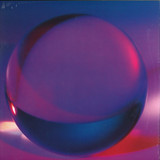
ACCESS POINT surges within a stream of bitcrushed binary at the albums third quarter, and opens the way for the enigmatically warped sonics that course through the albums final sections and flow within the depths of it’s voidborne closing track, CRYSTAL BALL.
With SENEX, CURRENT VALUE delivers one half of his joint 11th and 12th albums as he explores his most experimental sonic leanings to both a further breadth and depth than ever before upon the METHLAB RECORDINGS label.
Cerca:deco 2
Ever since dropping her critically-acclaimed debut LP Online Dating through Central Processing Unit back in 2017, Tryphème (Tiphaine Belin) has marked herself out as one of the more unique voices in contemporary electronica. We mean that literally - Belin's productions are characterised by frequent use of vocals, either processed to provide atmosphere or deployed high in the mix as passages of singing/spoken word. When these are wedded to her typically deft electronic productions the results are lush, atmospheric and moving.
Two years on from Online Dating and Tryphème has returned to CPU with the six-track Aluminia EP. While Online Dating leaned into a range of rave styles, Aluminia is more painterly, with Belin putting greater emphasis on timbre and texture. 'Lava', 'Fey' and 'Cry Silent Cry' are some of the most innovative tracks Belin has produced to date.
While another producer would allow listeners to luxuriate in such warm synth tones, Belin doesn't let you get comfortable, constantly surprising you with innovative structural choices or unexpected sounds. The way in which 'Lava' is agitated by chattering voices and processed singing recalls both the uncanniness of Holly Herndon and the maximalism of A. G. Cook, while the synth line that snakes through 'Cry Silent Cry' nods to Lorenzo Senni's recent trance deconstructions. Beats and bass take precedence in Aluminia's midsection.
This is the portion of the record which most closely recalls Online Dating - 'Eedyu' and 'X-Ray Mantra' are more settled than the other cuts on Aluminia, and it's here that the 90s electronica influences that so often inform CPU's output are most keenly felt. Those who enjoyed Bochum Welt's recent Seafire full-length - itself another CPU drop - will be able to get behind these tunes.
The two sides of Aluminia are combined in penultimate number 'In A Cyber Spiral'. The track's eerie beginning, with its ghostly vocals and nagging drums, is reminiscent of Hype Williams. Soon things morph into a leftfield digi-dub replete with speaker-crushing sub. Halfway through Belin wrong-foots us again, cleverly flipping the drums from half-time to a kind of fluttering breakbeat. It's the most diverse and unique production in a record full of them, drawing on everything from IDM to Eskibeat, and a track which furthers Tryphème's status as an exciting new artist on the European electronics scene.
21-year-old New Zealand musician Arjuna Oakes's debut EP,
The Watcher, is a showcase of his ability as a singer-songwriter, instrumentalist and producer, and a testament to his depth of engagement with music. The first two tracks on the EP fit neatly
within the jazz-infused soul music landscape he is quickly becoming part of, but the latter half of the EP is far harder to categorise.
Featuring instrumentation from some of New Zealand’s most exciting young jazz musicians, The Watcher explores a wide variety of themes and musical ideas, with Arjuna’s charismatic soul vocals and robust sonic palette serving as a connective thread. From big social issues to personal relationships and internal self-discoveries, across The Watcher, Arjuna takes his cue from the title track and exploration of mass surveillance, and it’s relevance within our everyday lives.
This watcher theme continues throughout the rest of the EP, with the stories told rendered as if being observed by an outside force. Decorated by cinematic soundscapes, hypnotic grooves, creative improvisation and catchy melodies, Arjuna's debut is a test palette for his future projects, one that makes his enthusiasm to develop and explore themes and style in song abundantly clear.
During the uprising in 2000, aided by the League of Humanity, two of Dr: Gall’s advanced prototypes escape the Rossum Universal Robot factory and flee Earth on a decommissioned spacecraft.
Travelling aimlessly through space, they begin to wonder what their new home would look like. They tell each other stories of planets with no humans to enslave them, no factories to go to — planets where fresh blue water runs through pink, sun kissed mountaintops.
Perhaps it’s fortunate then that these Robots can feel no time, have no sense of past and future? And by the time their ship touches down on Ebaum’s Dreamland, who knows how many years have passed on Earth…
“Ebaum’s Dreamland” is the first Rossum Universal Tracks release.
It features a remix by Julius Steinhoff, who first discovered the scrambled transmissions in his deep space observatory in the woods.
Hot off the heels of Aluxes, his 2018 Lumière Noire debut EP, young Mexican DJ/producer Iñigo
Vontier is inviting Chloé's label on a trip to the far corners of the body & mind with an album of
demented grooves, psychedelic take-offs and imaginary comic strips of mystical rituals. A
bewitching debut full-length. Mexicans may never possess the sonic science of the Germans,
the hedonistic madness of the English or the gift for synthesis of the French, but, as proven by
Iñigo Vontier's first full-length for Lumière Noire, their universe is much more exciting than
anyone would have ever thought.
The DJ/producer fully asserts his origins by brandishing the album’s title "El Hijo del Maiz" ("the
son of the corn") almost as an emblem: "in Mexico, corn is eaten daily. It has long been defined
as 'the gold of America', and I consider all Mexicans as children of corn". A spiritual and
embodied vision Iñigo's first Lumière Noire release, the four-track Aluxes, set the tone of the
young talent's distinctive interpretation of dark disco, which creeps up on the dancefloor from its
iconoclastic side. The two tracks and two remixes (one by Flügel, the other by Inigo himself)
featured on the 12" for lead single "Xu Xu" (featuring Red Axes-affiliate Xen's irrelevant vocals)
was a full-bodied confirmation that Vontier sees the dancefloor as an arena for the occult –
whether from the peoples of the equatorial jungle, the Middle East or, even from indocile
machines. But, while the spiritual element seems part and parcel of the Jalisco native’s output, it
is in no way the only ingredient of this first long-player: "this album best reflects my own vision
and spirituality, and the way I feel it" he says.
Whether contemplative or frenetic, the collection of tracks that make up “El Hijo Del Maiz” takes
the kitchen sink and throws it out the window: languid rhythms, haunted vocals, and mysterious
percussion fuel a discombobulated house set that scrambles the listener's five senses, leaving
one disoriented and exposed to the vagaries of vertigo. Following the demented, dystopian “Xu
Xu” EP, which explored an imaginary jungle that harbored Mayan and Egyptian pyramids,
Middle Eastern accents are once more present in the off-kilter “Bo Ni Ke” and its Japaneseinfluenced vocal trickery, which Moroccan flutes à la Jajouka transform into a feverish trance.
With the following three tracks, Iñigo Vontier raises himself to the same level of excellence as
the Pachanga duo (of which pride of the Mexican scene Rebolledo, is also known as a prolific
artisan of deconstruction): “Awaken”'s slumbering voice, heard as through the veil of hypnosis,
slowly introduces a techno beat which, as in follow-up “Time”, literally brings the listener to a
levitative state. In a housier vein, yet continuing in the same psychedelic, 90s-infused spirit,
“Don’t Go Back” disrupts the genre’s usual signatures with an out-of-tune keyboard that is
becoming the artist's trademark, destabilizing the listener into a drunken vertigo, with a good
helping of sexiness: "I think the sexy dimension definitely brings a kind of magic to music," says
Vontier. “I'm sure I felt this magic during my DJ sets, and I like to think that sorcerers use this
element in their practices. I might consider myself a bit of a sorcerer when I take over the DJ
booth, by the way." A mood and sound that can once again be found – in a quieter, more
bucolic version – on “Chiquitita” (feat. the flute stylings of pioneer DJ Rocca, now a partner of
cosmic disco legend Daniele Baldelli). The more cinematic, fast-paced and dreamy beat of the
no less captivating “Little Monster” might evoke the mischievous spirit of the Mayas' minor
mythological creatures, while ode to the magical herb Marijuana (feat Thomass Jackson)
proudly tramples into the debate that such a provocative title inevitably provokes: "psychedelic
drugs are powerful tools to reach a higher level of consciousness about what surrounds us, but
we must learn how to complete this psychic journey by ourselves, notably through meditation
and love.
In the end, El Hijo del Maiz is an album-length confirmation of Iñigo Vontier's uniqueness, and
his adherence to Lumière Noire's policy of letting artists fully express their vision – while letting
their passions guide their idiosyncrasies and explorations of innovative electronic signatures
Amos’ Flat is a three part album by VASE in collaboration with Opal Tapes & INDEX:Records: an odyssey of sonic manoeuvres through ambient, bass and IDM. This trilogy reveals VASE dissecting compositions down to sparse rhythmic explorations, disruptive power shifts and nebulous bass bliss.
Amos’ Flat: Room 1 will be sculpted into the physical form of a 12” vinyl record, released by INDEX:Records, followed by Opal Tapes reeling out Room 1 & 2 on double Cassette Tape.
Room 3 transcends into the digital, where VASE passes the brush to fellow artists, to rework into their own decorative pieces. Featured artists for Room 3 include Basic house, Fis, Katsunori Sawa, Shelley Parker and PYUR.
It’s the unexpected that fascinates us, letting our curiosity grow stronger than the urge for safety and control. The magic of new encounters and unplanned turnarounds helps us switch
off the autopilot of everyday life and grants us an unbiased, curious glimpse at ourselves and the world around us. In these brief moments we accept the chaos surrounding us, allow
ourselves to embrace it and see the beauty of it.
This delightful chaos is the vibrant fabric woven into “Pleasant Clutter”, the debut album of Vienna-based DJ and producer B.Visible. With an endless love for detail, he masterfully
condenses familiar and strange sounds into a fascinating collection of moments, each one in itself as beautiful as volatile – again and again you find yourself wanting to hold on to something
you’ve only just grown fond of, yearning to stay just a little longer. Leaving space for the unexpected, the album bit by bit reveals the beauty that lies in the harmony of the whole.
Using playful little melodies and decontextualized fragments of sounds, B.Visible conjures up a wide range of moods and emotions: he tells mesmerizing instrumental stories full of
unexpected twists and turns, evoking lively images within the mind. In constant flux between weightlessness and dead-aim beats, structures are being broken up and put back together on
the fly – always changing, always evolving.
Change as a constant and the symbiosis of contrasting elements are omnipresent on “Pleasant Clutter”, and beyond that. Running through the entire work of B.Visible, these stylistic devices have shaped the musician’s creative output over the years, and this distinctive sound has long become his trademark. Colorful Illustrations by Viennese artist Daniel Triendl complement the
music and add a visual dimension to the album, making the project’s intentions visually accessible.
Captivity is the next highly anticipated extended EP by Kush Arora aka Only Now, following a triptych of self-released output in 2019. Continuing the project’s ever evolving engagement with themes of time and existence, Captivity encompasses versatile synthesis, mutant kuduro, widescreen sound design, turbulent cold fronts of power ambient and melodic undertones of black metal.
The product of a two-year period in which Arora was contending with transitional shifts in his personal life, Captivity is a culmination of what the project has explored both in a prolific run of recent material and as a whole, across several years of time dilating, mind altering music.
Although shaped by adversity and corresponding sentiments of angst and insignificance, Captivity is pitched at total transcendence. Adopting a meticulous approach to production, a methodology which opens up almost every element to transformation and deconstruction, Arora generates forms which possess a sense of pointillist precision, as well as a keen psychedelic potency.
Despite consistency with his earlier output as Only Now, Captivity is nevertheless an indication of Arora’s ability to challenge internal and external assumptions. The introduction of new hardware – namely, the Nord Drum 3P synthesizer – as well as the incorporation of far-flung atmospherics – closing track ‘Clock Lust’ features field recordings from a trip to Kyoto – delivers fresh enterprise and experimentation, contributing to the expansion of a sound signature which remains as unpredictable and compelling as ever.
With the eponymous opener, Arora combines fathomless underworlds and riotous breakbeats. On ‘Mutants’ a hyper-kinetic onslaught of percussion, low-end and stray cut-ups of noise break out, building to a panorama of thunderous industrial firmaments. ‘Perpetual Slaughter’ maintains momentum with icy, ricocheting FX and concussive, tribal drums, and then unexpectedly shifts into a poignant outro which brings to the fore the enduring influence of black metal on the project. ‘Bound 2’ is cut with relentless sub-bass and rapid syncopation, resembling an abstracted form of juke music, something that could feasibly have been masterminded by Autechre. With the LP’s finale, ‘Clock Lust’, Arora presents a finale of transfixing 3D ritualism, the lone toll of a bell ringing out into a mesmeric emptiness.
Together these form a complete statement from Arora, illustrating the fertile and open-ended territories the Only Now project has arrived at after promising outings on Infinite Machine and Discrepant imprint Sucata Tapes. With Captivity Arora delivers a substantial highpoint and a profound voyage into the world of Only Now.
Yes, dear customers, your favourite instrumental-experimental-tropical quintet Satanique Samba Trio, known for its iconoclastic research on Brazilian traditional rhythms, is pushing the envelope on the low fidelity field once again! Friday September 13th 2019 will be remembered in Music History for the release of their new 10" vinyl Mais Bad, a conceptual sequel of the 2015 release Mó Bad. Mais Bad is a new collection of low fidelity bagatelles, forged into existence by Satanique Samba Trio's thirst for aesthetical deconstruction. All instruments in this 10-track vinyl have been recorded with the same cheap cell phone from the early 2000’s. It is meant to sound desperate, harsh and absolutely surreal. A little over the top, maybe? Yeah, but hey: that’s just how a country in crisis should look and sound like. Right? Greetings from Brasília, Brazil!
The boys from Satanique Samba Trio: Munha da 7 (electric bass and regency), Gustavo “Don Chavez” Elias (acoustic guitar), Jota Dale (cavaco), Lucas “Sombrio” Muniz (bass clarinet) and Lupa Marques (drums).
The “Under Frustration” project takes stock of the contemporary Arab electronic scene, and highlights its astonishing diversity, by deconstructing Western clichés that are still fantasizing about a culturally homogenous Arab world.
In a context of post-revolutionary disillusion, this ambitious trilogy sets itself as a manifesto of a new, futuristic, underground wave that aims to uplift the Arab voice, once again. With this new release, Arabstazy allows the listener to walk among Shiite, Shaabi or Stambali lands - revealing new mystical sounds, reserved for trance ceremonies and ancestral rituals; all vivid in the eyes of the collective members, musicians, producers, videographers and photographers, nowadays, scattered between the United States, Tunisia, Germany, France, Sweden, Irak, Lebanon and Poland.
Vol2 includes unreleased tracks of Dj Haram, Praed, Hello Psychaleppo, Okydoki and many more.
Curated by Arabstazy, produced by Shouka, published by InFiné.
White Marbled Vinyl
T Kode presents “Anima Mei” on Stratosphera Records.
After two years T Kode releases his newest EP on his own label Stratosphera Records featuring Mike Parker and Conrad Van Orton.
Each track develops in its own personal way with flows and rhythms that fully reflect each artist’s musical style and imprint.
A solid structure and dynamic grooves make up a sophisticated, delicate and sharp synthesis.
Deep, minimalistic and pulsating layers embody the concept of this EP, containing three original tracks and two remixes.
On his second 12", simply titled "More", Mischa Lively manifests a colorful world of vigorous techno journeys. On the A-Side, the record greets us with the psychedelic extraterrestrial funk of "Phuhkwiddem", followed up by the freestyle drum-break electro of "Pain in the Vein". On the flip side, the trip continues with the breathing techno pounder "More" which vividly deconstructs and rebirths itself through an agile series of peaks and valleys. The EP closes with the broken-beat grime of "WIP Limits", a finishing move that bounces with no restriction.
Released through Mischa Lively's own freshly-established New Love Unlimited imprint, a portion of all sales from More will be donated to the Equal Justice Initiative - an organization "committed to ending mass incarceration and excessive punishment in the United States, to challenging racial and economic injustice, and to protecting basic human rights for the most vulnerable people in American society
Dream Ticket is back with a barrage of sonic bliss from SHUT boss Ryan James Ford. His is a futuristic vocabulary transmitted from a quarter century ago and decoded tomorrow: incunabulated ambience, aphextual textures, reflectivised rhythms. This EP is for anyone whose heart is in the techno, IDM, jungle & environs of the early-to-mid-90s, but whose feet are planted firmly in the here and now, most likely in the middle of a fearless dancefloor. Rave on.
For COS_MOS's next trick they serve up a special 12” that features a brand new single from M>O>S super group R-A-G, also known as MaSpaventi, Aroy Dee and G-String. It comes backed with a re-release of one of the key tracks of the previously released Crystal Maze album on aDepth Audio. A fierce and full 45rpm re-cut of 'Dr Claw' that has been a secret weapon of Aroy Dee for many years. It's a raw cosmic adventure, with warm solar winds blowing over prickly drums. Twisted bass and knotted pads wrap round the groove as a detuned lead synth heads into a Legowelt-ish future. 'Larry Venom', stirs things up with a deconstructed, off kilter mix of beeps and drones with marching drums adding to the feeling that this is a robot party in meltdown. This is a brilliantly left of centre EP of intergalactic house.
Keiji Haino,Jim O'rourke,Oren Ambarchi
In the past only geniuses were capable of staging the perfect...
- A1: In The Past Only Geniuses Were Capable Of Staging The Perfect Crime (Also Known As A Revolution) Today Anybody Can Accomplish Their Aims With The Push Of The Button Part 1
- B1: Decorously Decorously Decorously Decorously Decorously Decorously Decorously Decorously Decorously Decorously To Make Something Beautiful And Then To Smash It Decorously
- C1: Head-On Collision If It Still Has Bones It Shall Move Forward (Which Is Different To Progress)
- D1: In The Past Only Geniuses Were Capable Of Staging The Perfect Crime (Also Known As A Revolution) Today Anybody Can Accomplish Their Aims With The Push Of The Button Part 2
For its 50th release, Black Truffle presents the 9th album from one of the label’s core ensembles, the power trio of Keiji Haino, Jim O’Rourke and Oren Ambarchi. Drawn from a November 2015 performance at Tokyo’s now-defunct SuperDeluxe, the record’s opening piece drops us immediately into the maelstrom, abruptly cutting into an extended episode of Ambarchi’s pummelling drums, O’Rourke’s fuzzed-out 6 string bass and Haino’s roaring guitar and electronics. Eventually settling into a hypnotic bass and drum groove over which Haino unleashes some almost Ray Russell-eque skittering atonal screech, these opening 13 minutes act as a potent reminder of the trio’s power. Alongside showcasing the steady development of a unique language for the guitar-bass-drums power trio, the group’s succession of releases over the last decade has demonstrated a constant experimentation with new instruments, which continues here with O’Rourke use of Hammond organ (played at the same time as his roaming, sometimes knotty basslines). On the album’s second piece, the organ plays a key role, furnishing a harmonically rich shimmer over O’Rourke’s angular 6 string bass chords, Haino’s distant, chirping electronics and Ambarchi’s crisp cymbal work; arriving somewhere halfway between Albert Marcoeur and Terje Rypdal, this piece is undoubtedly a highlight in the trio’s catalogue so far. Sides two and three are given over to slow-burning, multi-part epics that range from spacious reflection to furious tumult. Where the trio’s previous 2LP set (This Dazzling, Genuine “Difference” Now Where Shall It Go?, 2017) was primarily instrumental in focus, here we find Haino’s voice taking the spotlight on the expansive third side, intoning, wailing and exhorting in Japanese and English over a backdrop that moves from hushed bass and organ atmospherics to rolling toms and cymbal crashes before arriving at an ecstatic finale of searing guitar, tumbling drums and reverb-saturated bass. The fourth side returns to the hypnotic grooves of the opening piece, fixing on an relentless riff and riding it into oblivion under Haino’s roaming psychedelic soloing and jagged chordal slashes.
The infamous Kiwi returns to Needwant with his second EP on the London label (home to the likes of The Revenge, Ejeca, Maxxi Soundsystem and many more) On this cut Kiwi does what he does best by incorporating emotion and grit into dance music. The EP features 3 mixes of ‘Kiya’ as well as a remix from underground hero Brian Ring.
The record opens with the original version of ‘Kiya' which features warm bass tones, spaced out synth lines, shuffling percussion and a tribal-esq vocal. The Rave mix gives ‘Kiya’ dance floor authority, introducing driving acid synth lines and a weightier low end. On the B side Kiwi delivers a deconstructed ‘Dreamscape’ mix stripping ‘Kiya' back to it’s beautiful bare bones.
‘Kiya’ will be another addition to Kiwi’s already impressive physical discography which includes releases on imprints such as Disco Halal, Future Boogie & 17 Steps. His unique approach to remixing and producing over the years has meant that he has seen a wealth of support from names such as Andrew Weatherall, DJ Harvey, Gerd Janson, Daniel Avery, Erol Alkan, Optimo, Annie Mac and Skream.
Techno workhorse Dustmite demonstrates once again why he’s appreciated for his uniquely deep and diverse production styles. “Warpath”, the 6th release on Supervoid Records, is a palette of contrasting elements that are sure to strike a notable chord in listeners’ minds.
The titular track opens with determination. Heavy kicks drive a syncopated rhythm as momentous explosions decompress into oily murk. The polyrhythmic synth stabs of “Weaving” evoke imagery of complex machinery calibrated in near- perfect synchronicity. The hard offbeat shuffle of “Flares” conjures a primal response with scattered dissociative flashes. A foreboding mood descends over the listener in “Caustics.” Increasing tension and a pensive ambience.
After an intrepid new phase in the label’s history - initiated by the “Solidarity Forever” series and followed by releases from Katerina, Mujaji The Rain, Gladkazuka and also Matias Aguayo’s “Support Alien Invasion” (w/ “Crammed Discs”) - Cómeme is happy to announce a new release by a wonderful and unique artist, who chooses to walk adventurous paths beyond nowadays musical normativity, and media spectacle: JOE.
(You might already be acquainted with his releases on the ever - exciting “Hessle Audio” label) On his first EP on Cómeme, JOE invites us to “Get Centred” via fresh sounds, perfect beats, and unusual time signatures – difficult to play, and easy to dance!
A1 GET CENTRED
New rhythms inspire new dances and new ideas, and already at the very first bars you realize that this record can be both a joyfully twisted dance floor work out as also beautiful listening experience - with its shifting arpeggios and trippy crescendos. Reminiscent of minimalist milestones it crosses the artificial barriers between body, mind and soul, satisfying those in need of getting centred, in times of accelerated alienation...
A2 LINE TO EARTH
Triplets are back and here to stay! Such as in this percussive creature Joe unleashes onto the festive crowd. This very catchy jam is clever and intense drum programming at its best, with its swirling toms that seem to float in the air. We feel them activating different body parts for futuristic popping, whereas the relentless boogie rhythm that lays the foundation for this track gives us material to twist our legs in sync to the beat.
A3 RIO LEA
Joe closes this EP with “Rio Lea” - an elegantly swinging jam that smoothly and slowly builds up to a melodic meditation. Its many decorative elements seem all - necessary to make this work and are always falling rightly into place. You can imagine this a perfect fit for a long drink on a spacecraft, watching meteorites pass by, as we are sure it will also work in a bus on headphones late at night, watching the rain rolling down the windows...
In 1985, I started working as a sound engineer in the famed Far Studios of German hit producer legend Frank Farian in Rosbach near Frankfurt, and there had an array of gear at my disposal that not many producers could afford, and know how to use in consequence. In the center a high-end Neve studio desk, but also the finest machines created by mythic brands like Linn, Kurzweil, Publison, or Quantec. Confronted with this considerable amount of opportunities on a daily basis, I soon decided to use what I was surrounded with for my own musical ideas, and started experimenting with it in my spare time. My perception of sounds quickly surpassed what I had known before. The equipment offered me many possibilities to position sounds within a song and I learnt how to compose by filling up all the places in between the speakers. There was not only left and right but near and far as well, and even up and down. My preferred perspective grew to be that of standing in front of the speakers, "looking down" on a song from a slightly higher position. The material was recorded on analogue reel-to-reel audiotape, which I subsequently edited and deconstructed manually with a razor blade, an edit block and a roll of audio splicing tape.
- A1: Tomoko Soryo - I Say Who
- A2: Taeko Ohnuki - Kusuri Wo Takusan
- A3: Minako Yoshida - Midnight Driver
- A4: Nanako Sato - Subterranean Futari Bocci
- B1: Haruomi Hosono - Sports Men
- B2: Izumi Kobayashi - Coffee Rumba
- B3: Foe - In My Jungle
- B4: Akira Inoue, Hiroshi Sato, Masataka Matsutoya - Sun Bathing
- C1: Hiroshi Satoh - Say Goodbye
- C2: Yukihiro Takahashi - Drip Dry Eyes
- C3: Masayoshi Takanaka - Bamboo Vender
- C4: Shigeru Suzuki - Lady Pink Panther
- D1: Haruomi Hosono, Takahiko Ishikawa, Masataka Matsutoya - Mykonos No Hanayome
- D2: Yasuko Agawa - La Night
- D3: Hitomi Tohyama - Exotic Yokogao
- D4: Tazumi Toyoshima - Machibouke
Pacific Breeze is a collection of choice cuts that range from silky smooth grooves to innovative techno pop bangers and everything in between.
Long-revered by crate diggers and adventurous music heads, this music has never been released outside of Japan until now. Including key artists like Taeko Ohnuki and Minako Yoshida, as well as cult favorites Hitomi Tohyama and Hiroshi Sato, the long-awaited release also features newly commissioned cover painting by Tokyo-based artist Hiroshi Nagai, whose iconic images of resort living have graced the covers of many classic City Pop albums of the 1980s.
Many of the key City Pop players evolved from the Japanese New Music scene of the early '70s, as heard on Light In The Attic's acclaimed Even a Tree Can Shed Tears: Japanese Folk & Rock 1969-1973, the first release of the ongoing Japan Archival Series. In fact, you could say City Pop set sail with a champagne smash from Happy End, the freakishly talented subversives who included amongst their ranks Haruomi Hosono and Shigeru Suzuki, both featured on this compilation. As Michael K. Bourdaghs noted in his book, Sayonara Amerika, Sayonara Nippon, this music was, 'Deconstructing the line between imitation and authenticity.' Some of the best City Pop teeters in this zone—easy listening with mutant exotica, tilted techno-pop, and steamy boogie bubbling beneath the gloss.
2xLP housed in a deluxe wide spine jacket with over sized fold-out booklet, full color printed inner sleeves, and custom die-cut obi card
History of Heat is an eroto-intellectual retelling of a love story. It is the scholarship of heat, and the sources of its production in the body: desire, exaltation, anticipation, fear, rage and mourning . It is a fable circulating through the nerves, pumped and distributed by its own mythologies. Through different chapters, we follow the heroine of our story from the initial desire to love, the sensual pull which oscillates between the grotesque and sacred longing of the flesh (‘L’Enfer en pleine lumière’ translates to ‘Hell in plain sight’)...to the sudden ghostlike appearance of the Other (Apparition) as a projection of the dream. We enter into the spiritual, the seeing visions and the blindness of love. ‘Animal’ speaks of instinct, the smell of the beloved, already the deconstruction of the divine back into the realm of the physical. The title track ‘History of heat’ sings the hesitation of love, the precipice of openness and the invitation of the contract: Dance with me... (This is where the metaphoric marriage is forged). In ‘Perfection’, the pressure which keeps the relationship on the pedestal of the absolute stunts and paralyses love. Unrealistic expectations of the self and the other person creates the push and pull of the not wanting what one wants and the fear to get what one has been asking for. ‘Tiny engine’ speaks of mechanical attachment, attachment to the lover as habit, as a second nature, and the call to the other person as a magnet. In ‘Ditectrice’, the madness and the folly of separation spawns war and confusion. It is the violent refusal to live without the other... the pleading with god. ‘Feed him’ follows with resignation and exhaustion. Love has become the beast of burden who eats away at itself insatiably. ‘War text’ brings forth the devastation, the peace treaty and finally the metaphysical Divorce. In ‘Guttermoon’, the vita contemplativa begins, the blood starts to cool, the scene is a ghost town. ‘Wrong god’ similarly winds down as an ode to remorse and mourning. Finally, ‘Cinema Verité’ closes out the album with a mistrust of ‘reality’: the heroine becomes a philosopher, she becomes an artist... did the relationship ever exist or was it a projection “In front of a movie screen” ?
History of Heat is an experimental narrative and cinematic pastiche of all original and self recorded material. A chaotic mix of sounds both analog and digitally produced recalls a warlike interpersonal breakdown. The mood established by the lyrical content of the piece is meant to be demanding, enclosing the listener within a unique and compelling cocoon of otherworldly sound. the Album is framed within a discursive love story which reflects larger relational problematics and interpersonal traumas. looped vocals act as incantations woven in and out of lyrical singing and spoken word. The instrumentals embrace chaos and intensity. Improvised violin and broken down beats compliment and balance the melancholic overtones which flutter above off the grid rhythms in this charged ficto-personal account.
Early June 2019 Frankfurt am Main based label MMODEMM unleashes DRUMS – the first of a series of vinyl compilations in the spirit of signature sounds, stating a tribute to sound-libraries – a deconstruction of your favorite preset sound-groups.
DRUMS will be followed by sound-themed releases FLUTES, VOICES and SLAPBASS within the next months.
DRUMS features a proggy composition by Eva Geist (Macadam Mambo), a raving clave inferno with odd, pitched chants by Cienfuegos (L.I.E.S.), a dance-floor drum-solo straight from Ireland by Lumigraph (Opal Tapes, Mr. Saturday Night) and last but not least – a drunk masterclass drum-lesson by Peder Mannerfelt (Avian, Berlin Atonal Rec), taking house apart with his “Dumb Drums“.
Oblique Russian sound strategist Natalia Salmina’s latest forking path portfolio as Atariame, Voiceless, arose in the wake of a dissociative relocation to Moscow, where she found herself adrift amidst a manic metropolis, alone in a skyscraper staring out at trees: “It made me lose faith in my ability to communicate, in my ideas about life.” Days without speaking turned to weeks. Even in private she felt estranged from her voice, and soon ceased singing.
For solace she turned to her Waldorf Blofeld, mining its panoramic frequencies to craft a shivering suite of futurist-noir nocturnes and rhythmic noise vignettes, equal parts exorcism and manifestation, desperation and delirium. Track titles hint at the headspace – “Outside At 5 AM,” “Same Thought All Day,” “Stay Late” – mirroring the music’s mood of hoods up, headphones on, wandering empty urban tunnels under flickering streetlights. Enigmatically, Salmina slips in a sliver of spectral voice on the intro and exit songs (“Breathe Exercise” and “Deconstruction”), framing them as induction into and escape from the cryptic isolationist condition of the rest of the collection. Mastered by P. Nikolsky, Powerhouse Moscow. Design by Britt Brown.
Analog and digital electronic devices, vocals
All tracks written, produced & mixed by MIRCO MAGNANI and LUKASZ TRZCINSKI
Recorded & mixed in Berlin at Undogmatisch in 2018/19
Mastered by KEN KARTER at DECODE STUDIO, Berlin
Publishing by KIZMAIAZ
Original artwork VALENTINA BARDAZZI
Sleeve design LAPO BELMESTIERI/THE ANTI-B NYC
“Lumiraum” is a neologism, the suffix AUM included in the title, according to the Hindu tradition is the basis of their ethical and spiritual conception.
Its meaning involves the passage and overcoming of four levels of knowledge that are expressed by the three letters A-U-M, plus the extension of the M as maintenance of the vibration.
Operating in a similar way Lukasz and Mirco through sessions of various kinds have taken a similar empirical path through improvisation, coding, editing and re-elaboration and finally mixing.
Recalling in their imaginary the spirituality of ancient cultures, symbologies and concepts that had analogue cosmogonic conceptions of origin of the universe. An imaginary that slips into a remote and anachronistic world.
“Lumiraum” also means a space of light, a circumscribed place in which a message is received and from which a spark arises, an idea.
Aggelos Baltas is a veteran of the global electronic music scene, responsible for a handful of celebrated EBM 12”s as Dream Weapons, and a particularly heady and open-ended brand of krautrock as Fantastikoi Hxoi. His newest project, Anatolian Weapons, was conceived as a way to bring together these two seemingly mismatched concepts, with the polyrhythmic percussion and wailing tones of Greek folk music serving as their unlikely bonding agent. His output garners praise particularly around the Golden Pudel scene, such as Vladimir Ivkovic, and Phuong Dan. Lena Willikens, from the same circle, included Baltas’ track “Disillusioned” on her Dekmantel Selectors compilation in 2018.
But where much of what Baltas has released as Anatolian Weapons is instantly recognizable as dance music, To The Mother Of Gods—Baltas’ debut album for Beats In Space—is something else entirely. Created in tandem with Greek folk musician Seirios Savvaidis, it is a work of simultaneous collaboration and subtraction whose meticulous construction becomes more apparent with every listen. An album-length exploration of what happens when the principles of dance music are applied to pre-digital musical modalities. It is a record of psychedelic folk music that has more in common with Kikagaku Moyo, Minami Deutsch, and the Habibi Funk label than it does with anything else Baltas has produced under any alias. It’s difficult to imagine this music in any kind of club setting.
And yet, it’s very much the work of a DJ. Baltas initially heard Savvaidis’ music through a friend, and was absolutely amazed. “It was his very esoteric, pagan [music and] beautiful lyrics that grabbed me,” he writes. Seirios is a composer and performer of traditional Greek folk music with a growing discography of regional psych-rock gems. Baltas reached out to collaborate and the seeds of To The Mother Of Gods were sown.
Savvidis contributed stems of ten songs, which Baltas deconstructs and rearranges with appreciation of the ancestry of their lineage and of the deceptively ancient eerie, droning qualities inherent in the style. Occasionally augmenting Savvaidis’ recordings with his own, Baltas treats these elements as if raw materials for an architectural process.
To The Mother Of Gods showcases Baltas’ arrangement skills. He treats Savvaidis’ songs as landscapes, filling them with slanted, droning light and setting the singer’s vocals in dead center. His years behind the decks have given him an intuitive understanding of dynamics—drums crest and recede like tides, snippets of bassline repeat and swirl. He knows how to entrance, and when to push the music from the head to the body. Opener “Taratchi Katarratchi” (“Stormy Cataract”) is sung as a spell to ward off the fear of death, but Baltas’ orchestration demonstrates that dancing is an equally effective way of dispelling the darkness. The beat he assembles from Savvaidis’ playing recalls the late-night ecstasies of Primal Scream circa Screamadelica.
To The Mother Of Gods is a reminder that folk music and dance music are both powered by their audience as much as the musicians themselves. Savvaidis’ lyrics echo pagan Greek themes, touching on what Baltas calls “the magic of nature.” At times, as on “Kalesma” (“Invitation”), this can feel incantatory. Savvaidis chisels his vocal melodies into hard, clipped syllables, their cadence recalling Gregorian chant, and yet Baltas cloaks these details in washes of distortion. “Ston Stavraito” (“In Stavraithos”) is delivered with a lamentive tenderness that Baltas swells into a prideful stomp, immersing Savvaidis in marching drums and distant vocals that form a resilient protest-song. To The Mother Of Gods is a testament to the ongoing and innate truth that music can take us beyond ourselves. That repetition and drone can shepherd us to a liminal space beyond thought and rationality, where the wall between perception and reality does not exist. Call it spirit, if you want, and watch as it courses its way through modern-day dance music, mid-century psych, and the ancient sounds of the anatol.
Anatolian Weapons’ To The Mother Of Gods will be available from Beats In Space on June 14, 2019 in limited vinyl and unlimited digital forms.
Artist Highlights
• Aggelos Baltas is an Athenian music producer creating and Djing under the monikers of Anatolian Weapons, Fantastikoi Hxoi, and Dream Weapons.
• The Anatolian Weapons moniker is an outlet for Baltas to explore global music—from African to Anatolian and Middle Eastern, while also incorporating sounds from his home country of Greece.
- A1: Bees Around The Lime Tree
- A2: Memory Gore
- A3: Confession Bay
- A4: It`s A Low
- A5: Decompression
- A6: Carcass
- B1: The Golden Bough
- B2: Palm Hex Arndale Chins
- B3: Babes Of The Plague
- B4: Four Bibles
LIME W/ SMOKE Vinyl[20,97 €]
Coming out of London and the South West of England, Hey Colossus are one of Europe's great live bands. Since 2003 the 6-piece has been driving around the continent with their “pirate ship” backline of broken amps and triple-guitar drang, elevating audiences in every type of venue imaginable; a doctor’s waiting room in Salford, an industrial unit in Liege and a vast field next to a river in Portugal. Wherever they may roam.
Four Bibles is their twelfth studio album and the first to be released by London label ALTER, whose sole proprietor (the electronic producer Helm) encountered the group at their first gig in 2003. Recorded by Ben Turner at Space Wolf Studios in Somerset, it's their most direct album yet and follows a well-documented trajectory of evolution that began (in the truest sense) with 2011’s RRR for Riot Season and continued across three albums for Rocket Recordings. Lead vocalist Paul Sykes sounds more in focus than before, dialling down the effects and using reverb / delay to carry his lyrics rather than smother. The band has also fine-tuned to leave some room for extra depth. Piano, electronics and violin (by Daniel O'Sullivan of This is not This Heat / Grumbling Fur) all find a way in amongst a familiar mesh of interlacing guitars, wrapped round a taut rhythm section. Like every other Hey Colossus record before, the line-up has altered and the sounds reflect this.
From the weight of “Memory Gore”, to the subtlety and swag of “It's a Low”, via the sonic extremes of “Palm Hex/Arndale Chins” this is exactly as the band are live; raging & rail-roading but somehow in control. Grooves for those who want to dance or for those who want to hug a wall and nod...bleak dystopian imagery submerged in relentless rhythms and low-end rattle. The songs breath life and soul - Hey Colossus have never sounded fresher or more on point.
Purveyors of contemporary electronic music Anagram return with their second remix EP that calls upon some of the scene's most compelling and uncompromising names. Coalescence, the next chapter from the label, will unfold as a series of remix EP's reinforcing the labels core values of community, togetherness and growth. The first instalment reflects on their previous three releases reimagining four titles under the controls of Drugstore resident Tiljana T, Ostgut Ton legend Ryan Elliot, Klockworks artist Newa and the Tel Aviv based Yotam Avni. Orchestrating the rework of Elad Magdasi's 'Liquid Dreams' is Serbian talent Tiljana T who runs with the cinematic ideas behind the original but uses snapping hits, ebullient bass notes and plenty delay to fuel the cut with a new lease of life. The accompanying A-side sees Ryan Elliott do what Ryan Elliot does best by keeping things straight up four to the floor transforming 'Sound of the Siren' by Barbara Ford into pulsating peak hour material. On the flip side are two remixes taken from label co-founder Sinfol's latest solo EP 'Pull Back'. First up, Newa gets the blood rushing injecting breaking beats and furious energy into 'Life Of Measure' resulting in a high tempo no-nonsense techno affair that embodies the sound of the bustling Tbilisi scene. Tying together Coalescence Vol. I is arguably the most dynamic choice of the four remixes in Yotam Avni's 'Final Push' Remix. With a meticulous assortment of intricately crafted synth lines and sequences, he manages to deconstruct Sinfol's title cut of its acid workouts and replenish it with an equally rivalled amount of energy. Four artists, four remixes, Coalescence Vol. I!
As a winemaker hailing from the Palatinate, Florian Hollerith understands a thing or two about vintage. It's something that also comes through when you sample his music - rich, full bodied with just the right level of acidity. 2018 was already a good year with Ohrenzirkus featuring on both Sven Väth's Sound of the 19th Season mix CD as well as this year's Dots and Pearls vol. 5 compilation. Florian certainly announced his arrival on the scene in style, so it's only fair that he gets the chance to demonstrate his full range of skills on his very own Cocoon Recordings release. 2019 however, has a darker, more complex flavour...
Florian certainly knows a hookline when he finds one. On the EP's title track Perlas, he's working from the inside out with complex layers creating a vortex of sound. This dense sonic mesh is playful yet dangerous, with ethereal voices and jagged chants adding to the disorientation of the opening exchanges until the congas and skipping bassline give us something to hold onto. The dance floor melts under our feet as a raw, tripped out groove takes hold before the bass suddenly morphs into a brassy acid line that spreads its wings and soars. It's music for the headstrong, a celebration of the timeless tribal ceremonies that have come to define us.
Love Summer adds a contemporary twist to the melodic joys that drenched the early nineties in pure ecstasy. The soulful vocals soothe the mind as horn stabs punctuate the sensual groove, generating power and passion in equal measures. It's a straightforward approach, revolving around a familiar yet eminently seductive riff that just keeps on rolling, propelled forward by the force of its own momentum. There's no need to fuss when you hit on a winning formula like this.
More retro futurism abounds on Electro Indianer as arpeggiated bleeps usher in another vast, sprawling soundscape designed to induce a collective trance on the dance floor. Whistling, circular effects wash back and forth increasing the tension notch by notch as we're led deeper into the wormhole. Finally, the track deconstructs slightly, creating enough space for classic Casio-style bleeps and percussion to embellish a beautiful blissed out ending that trails off into the sun rise, as ancient Native American pipes pick out a haunting melody in the distance.
'When you put on the first track on the album 'Antisocial Background 2017 - 2019 by Mythologen your likely to think: 'this is THAT kind of an album', and fell happy with that. But Mythologen aka Alexander Palmestal is not 'THAT' kind of an artist and this album reflects his broad musical background. It spans from Japan to USA, from the 70s to the 00s and from cold concrete floors to fluffy cotton clouds. Palmestal, with a background in bands such as Pistol Disco and Iberia now releases his second full-length album on Hoga Nord Rekords
The album is a play with emotions and genres, with unexpected meetings between major and minor keys and is a collection of tracks where Jungle, Electro, House, Synth and Big Beat are deconstructed and put together as relevant contemporary dance music. The production on 'Antisocial background' sometimes sound like a more electronic version of Boredoms but most of the time it puts the listener on the British isles and in the 90's. Palmestal pays respect to his masters but he is not in any way too careful with their legacy and let, just as on his debut album, influences from the 1970's and 80's Nigeria and Soweto.'
Independent record label YGAM presents "Les Bergers du Galetas", Magnétisme Animal's debut EP, in which they share their intimate view of society. Formed by brg and Catartsis, the French duo invites the listeners to dive into a journey through the density of the modern metropolis. In a time of materialistic fetishism, where superficial occurrences and capitalism rule, the 4-track EP acts in opposition to these current matters. However, rather than trying to create a contrasting sonic landscape, Magnétisme Animal use sounds recorded in their environment to elaborate pieces that bear the heavy and frenetic industrial atmosphere of our urban sceneries. All sorts of clanging metal, steam discharge, electromagnetic static noise, train rails frictions, sirens and distant traffic, are combined with breathing, footsteps and vocal humming to create an oddly industrial as much as organic soundscape. The EP starts with a noise track that recalls some of the compositional processes of musique concrète, to then slowly drifts towards rhythmically oriented pieces. "Être c’est être coincé", with its ponderous bass and distortion work, appears as a peculiar blending of noise and techno, while "L’Enthousiasme des statues" displays a more traditional and dance floor approach to rhythm and drums, but still leaves space for an uncanny sound decor to unfold. The project ends with "La Toute-Toute", a repetitive ambient track filled with subtle sounds, where one can wander as spoken words underline a sense of melancholy. "Les Bergers du Galetas" is an unsettling industrial tapestry, a strange study of noises, that depicts the contemporary frenzy of the artists’ environments they referred to as the urban jungle. A landscape where one is a witness of the disparity of human conditions, where mind and body coexist with difficulty, where one is subject to conformism, where one is lost in the smog while carried by the masses through the cemented maze.
Running Back welcomes Blood Shanti! The Falasha Recordings main man and brother of UK's living sound system legend Aba-Shanti delivers four breathtaking versions of Feater's 'Time Millionaire' (taken from the album ‚Socialo Blanco") in proper style. It might sound like an odd pairing, but it's a match made in heaven. Blood Shanti makes it sound as if the song was written for him. Pressed on one 10 in appropriate design and sleeve (watch out for the lion) it sounds as good as any slice of British reggae ever made (horns and piano included). While the 'Main Mix' is everything that lovers rock should be, the three dub versions deconstruct and dismantle the composition more and more as they go along. A modern take with an old-fashioned style of loving.
It all started with words, and a project for an art book with a CD, acronym for Corps Diplomatiques as a tribute to a special diplomatic elephant called Abul Abbas. A few mundane terms, picked randomly, then coupled with frequencies chosen in a spontaneous way for their presupposed properties or synchronicities, whether in space, orbital rhythms, color spectrum, or electro-magnetic fields. Those free associations became the foundation for a written composition, the reprogramming of recordings of computer improvisations, and a dialogue with the visual elements of the book. It is also based on the deconstruction of the first LP I did and its reconstruction under the auspices of echoes of a joyful brouhaha from a dreamed speakeasy, including the true voices behind the charade. The freedom is given to the listener to connect the dots and name the tracks according to their own state of mind, mood or interpretation. All further informations are in the book !
Gregorio Gomez aka Gladkazuka is a mythical figure from Medelli´n's underground nightlife, contributing since pre - smartphone ages with energetic live sets to the celebration of life in the convulsive surrounding of the Colombian city. After playing and touring alongside Matias Aguayo with 'The Desdemonas' and contributing with the club smash hits 'Ihr Euer' and 'Futuro Chaos' to the 'Solidarity Forever' series on Co´meme - Gladkazuka is back with a full EP in which highly emotive and sensual electro dance fantasies culminate to 'The Drop'. Gomez' creations are nocturnal and lush, utopian and melancholic - underground dance pop that would be mainstream in a better world.
However these songs were created in a place where an unseen destruction of nature is taking place, and - in mids of times of supposed peace agreements - social leaders are being assassinated under the eyes of a new right wing government. Meanwhile the societies are fragmented towards a growing individualism and competition, exchanging dignity for an ideal of consumerism.
In this chaos, music becomes the celebration of life.
'Naturalia', the first track of the EP reflects this with its lushness and its jungle - like humid warmth, 'Flancing' with its happy flying fishes and 'El Coral' with its jittering electric eels.
'The Drop' is decontextualized Electro and New Wave - echoes of The Cure and The Other People Place dissolving into utopian dreaming, longing for better times, like vampire bats, hanging in their caves, waiting for the night to come.
serenitatem, the fifteenth installment of FRKWYS, RVNG Intl.'s collaboration series pairing intergenerational artists in creative conversation, joins Visible Cloaks with Yoshio Ojima and Satsuki Shibano, two trailblazers of the Japanese avantgarde music and visual arts scenes of the 1980s and 90s.
Yoshio Ojima began his career as a composer of environmental and ambient music, with a particular interest, and optimism, in the possibilities of generative software. His compositional pursuit of human synthesis with computerized forms was realized in its fullest potential alongside Satsuki Shibano, a pianist renowned for her interpretations of Erik Satie and Claude Debussy. Together, they were among a handful of influential Japanese artists whose innovations still resonate, if not more vibrantly than ever, well beyond the tightly-knit scene's original core. In the early 90s, Ojima was among the programmers of the influential satellite radio experiment St. Giga, a constantly-evolving sonic landscape that combined field recordings and sound collage with occasional readings of Japanese poetry. Satsuki was a regular reader for the station. This musical terrarium bloomed out of sight in a small Tokyo studio, a greenhouse of sound with no set start or finish time that audiences could tune into, absorb, and immerse.
The perpetual flow state of St. Giga — recordings of which Ojima shared with Visible Cloaks — would be highly influential to serenitatem's constitution. As Visible Cloaks, the Portland, Oregon duo of Spencer Doran and Ryan Carlile have developed their own set of creative strategies that form an aesthetic fuse point between human intention, aleatoric composition, and improvisation.
These are notions most recently reflected in 2017's Reassemblage and Lex, a respective album and EP in which the duo combined generative software and virtual representations of global instruments into lacy, interlocking patterns. Long time admirers of Ojima's work on albums like 1988's Une Collection Des Chainons, Doran and Carlile discovered after an online introduction that they shared with Yoshio and Satsuki an abiding interest in pre-classical composers, the Lovely Music, Ltd. label, and the British avant-garde, as well as a mutual respect for one another's techniques and processes.
The four musicians met in Tokyo, Japan at Sounduno Studios in December 2017, at the tail end of Visible Cloaks' first Japanese tour, to commence work on serenitatem. Leading up to the studio sessions, Doran and Carlile sent Ojima processed sound sketches recorded while on a European tour, which Yoshio would add to and return. Visible Cloaks would then fold Yoshio's edits back into the original compositions, which Doran and Carlile brought to the exploratory recording session. During that week together in Tokyo, the quartet made use of a number of creative strategies — 'echoing sound together,' as Yoshio puts it. Among the strategies, MIDI randomization gave the quartet melodic lines and what Doran calls 'randomized clouds,' or 'tightly grouped notes that become smeared tonal clusters functioning more like chords in themselves.' Carlile would also feed Ojima and Satsuki's text into Wotja, a generative music software which produced a MIDI language around which the quartet expanded their compositions.
'The aim,' Doran says of serenitatem, 'was to make a work that was not specifically ambient (or environmental), but something more multi-hued, weaving these deconstructive concepts into an album that has a deeper architecture underpinning it.' Accordingly, serenitatem is a marvelously sharp record, its sutures between human and machine virtually impossible to find but suggested everywhere you turn. The collaboration among Ojima, Satsuki, and Visible Cloaks is both musically and conceptually inseparable from the technology that made it possible. Throughout the album, Shibano's playing resonates like Satie's, her rhythms cascading like drops from leaves an hour after the rain. Overtones are stretched and warped like modeling clay, then spun around and shown off from multiple angles.
A single soaring note might seem to be suddenly plunged underwater, its richness of sound made shallow and its sharp edges blunted. Pittering chimes and rapidly warping vocal samples hang in the luxuriously glossy space, water trickles from ear-toear, familiar melodies rise from nothing and dissolve before they can be traced. With the depth of its emotional charge, serenitatem burns away the easy cynicism of the day, presenting itself as the kind of delocalized work of art the internet promised us decades ago — a synthesis of artistic visions, technological sophistication, futurist ambition, and, occasionally, ancient polyphony. Listening to it can feel a bit like tuning in to a 21st Century version of St. Giga: It's a place where the future still grows.
Visible Cloaks, Yoshio Ojima, and Satsuki Shibano's serenitatem, FRKWYS Vol. 15, will be available across LP, CD, and digital formats on April 5, 2019. The quartet will perform select live shows throughout 2019.
Experimental A/V duo. It's live-sets are pure dark distorsion and deconstruction sound. Avant-Garde, non-art, chaos and tension are the main references of this project. Broken rhythms, sharp sounds, dissonances make up the main musical spectrum of this band.
Influenced by Electro and Industrial music, inspired by artists such as Ultradyne, Hijokaidan, Merzbow, Drexciya, Consumer Electronics, Throbbing Gristle, Dopplereffekt or Esplendor Geometrico. They just realised their first EP called math.random() in Rator Mute label.
Esencia is proud to present Forgotten Ones, the new album from London based quintet Culross Close. The album opens with 'Fractured', a cosmic musing carried delicately by electric piano and decorated with a synthesized dalliance. The album then cruises into 'Forgotten Ones', a spiritual made potent by their choral-esque vocals by far their most accomplished piece to date.
'Acceptance' finds the quintet in familiar hip-hop territory, carving out a top tier groove with a recurring piano motif of the highest order. Their vocals, this time more chant than choral makes for a brilliant 5-minute mantra.
'Mood' is a stark contrast to anything else on the album, an acidic and rugged illustration of the group's present state. 'The Tiniest Lights Still Shine' is a syncopated excursion in 5/4 time. With an electrifying percussion solo, this will be the song that finds its way onto the dance-floor. 'Healing' is a percussion heavy journey, draped in synthesizers and style, embodying elements of 70's fusion and bossa-nova, a perfect closer to the album.
1 x LP Full Colour Sleeve, shrinkwrapped
Alex creates with Tum Tum the soundtrack of a dreamed teen movie and sings for the lonely hearts that beat behind their screens.
The hero of this film ventures into the meanders of a digital jungle, a digital psychedelism where words come into resonance with sounds, structures deform, because behind the pop evidence of Tum Tum lies a desire deconstruction of pre-established forms.
As much influenced by the break-up songs of the Everly Brothers as by Ryuichi Sakamoto's compositions, by Kitano's films, and by Ninja Kids, Tum Tum is a map of Alex Van Pelt's influences that finds its form in an intimate patchwork.
"The simplest line is always the best," he says in the song Endless Rain that closes Tum Tum. A formula worthy of Lao-Tseu, which sums up well the poetics of the guitarist of French band Coming Soon, Alex Van Pelt: it is in a refined language that responds to the kaleidoscopic profusion of his music that Alex tells these eight romances, in search of a Way to to follow. We listen to it with pleasure, and let it guide us through the labyrinth of our mediated lives.
A haunting collection of experimental music by the celebrated electronic artist and sound designer, 'Refraction' continues Caminiti's exploratory path of deconstructed electronic sounds and structures as showcased on his last album (2017's 'Toxic City'), presenting four new pieces created on a Make Noise modular synthesizer with an emphasis on tranquil atmospheres and dub-influenced production.
This Make Noise Records release was Mastered by Rafael Anton Irisarri at Black Knoll Studios.
Pressed to 12" Clear (140gm) vinyl and inserted into a black inner dust sleeve
and Matte Jacket featuring artwork by Sean Curtis Patrick.
This release is pressed in an edition of 500.
Genre: Electronic, World (Arabic). 180gram vinyl includes 12'x24' art print poster + 320kbps DL card. RIYL: Matar Mohammad, Pauline Oliveros, Nadah El Shazly, Lucrecia Dalt, Chino Amobi, Sote, Arca, Fatima Al Qadiri, Tacita Dean, Stan Brakhage. Jerusalem In My Heart (JIMH) returns with Daqa'iq Tudaiq, the third full-length album from the Montréal-Beirut contemporary Arabic audio-visual duo, following the acclaimed 2015 release If He Dies, If If I f If If If (ye ar-end li sts at The Wire (#39), The Quietus (#24) and A C loser Listen (Top 10), among other accolades).
Featuring voice, electronics, buzuk and other instrumentation from composer-producer Radwan Ghazi Moumneh (Matana Roberts, Suuns, Big Brave) and abetted by the 16mm analog film work of Charles-André Coderre in live performance, JIMH continues to expand the horizons of its profound conceptual and aesthetic engagement with Arabic/Middle-Eastern traditions. Daqa'i q Tudaiq translates as 'minutes that bother/oppress/harass'—which presumably needs no further explanation—and features two distinct album sides of music. Side One realizes a long-held dream of Moumneh's to record a modern orchestral version of the popular Egyptian classic 'Ya Garat Al Wadi' by the legendary composer Mohammad Abdel Wahab. JIMH assembled a 15-piece orchestra in Beirut, enlisting the celebrated Montréal-Cairo composer Sam Shalabi (Land Of Kush) as arranger and musical director for the session. Anchored by the stately hypnotic pace of mallet and percussion instruments (riq, santur, derbakeh, kanun), the piece unfolds with lush, languid, reverb-drenched manoeuvrings through virtuosic Maqam shifts (Oriental scales). Moumneh's melismatic lead vocals and electronic production sensibility pay homage to the genre's documented historical recording traditions, while pushing things subtly and respectfully into new territories of sonic distortion and noised, artefact-laden transmission.
The song's original title (with lyrics penned in 1928 by the poet Ahmad Shawqi) translates as 'Oh Neighbour Of The Valley', but JIMH takes a different line from the original lyric as the new title for its orchestral-electronic re-interpretation. 'Wa Ta'atalat Loughat Al Kalam' (' The Language Of Speech Has Broke Down') is an expression of wordless love and transcendent communication between two lovers' eyes in Shawqi's poem; JIMH re-titles the song with this line, exploding the sentiment with more complexity, tragedy and socio-political meaning - also prefiguring the formal aesthetic ruptures JIMH bring to the piece itself. Love in a time of politics, politics in a world conspiring against love, and the specificity of Arab diasporic experience in our brutish 21st century. Side Two comprises four tracks of non-ensemble 'solo' material by Moumneh which push rupture and decomposition/recomposition of tradition further into avant-garde territory - voice, buzuk and electronics take the lead on a suite of emotive and evocative songs, including the percussive loopdriven instrumental 'Bein Ithnein' ('Between Two' ) and the stunningly unsettling processed vocal track 'Thahab, Mish Roujou', Thahab' ('(The Act Of) Departing, Not Returning, Departing'). Daqa'iq Tudaiq is a masterful, mesmerizing artistic statement and confirms Jerusalem In My Heart as one of the most engaged and forward-looking avant-Arabic projects at work in contemporary music today. Thanks for listening.
James Baldwin was an unparalleled master of the written and spoken word. He was best known for his brilliant essays, plays and novels that shone light on his insights into race, sexuality, spirituality and humanity. Baldwin was an incredible orator who commanded the power of words. Whether on the pages of his books or in speeches and debates, he was passionate, compelling and powerful. This EP is the second half of a project that is a tribute to Baldwin. It features extracts from the audio portion of a documentary film shot of a discussion led by James Baldwin and Dick Gregory at the West Indian Student Centre in London in 1968.
Peabody & Sherman is a partnership between Phillip C Hertz and Curtis Ruptash - drummer and bass player respectively. They share common interests in dub, afrobeat, funk, jazz, ambient and improvisational music. They have long histories of the employing 'studio as instrument' approach to recording. The foundations for this EP was P&S rhythm tracks recorded at the Wayback Machine Studio in 2011. Supplemental instruments were layered on to create the final product. The same original sessions were also the source for their James Baldwin EP released in 2012. That EP featured remixes by Area and Afrikan Sciences.
The same concept is applied here, with remixes being contributed by Waajeed and BusCrates. Waajeed is a Detroit producer known for inventive and genre-defying music. He is background includes his work with Slum Village through to the Platinum Pied Pipers and to his work with his own Dirt Tech label today. BusCrates is a Pittsburg based producer known for his inventive use of electric and vintage synths to create deep layers of analog goodness.
Mystique Sound Explorer Scherbe Is Bursting Out Danceable Groove Science Between Epiphany And Delusion. Urban Misty Visions Of A Past And Current Future Deconstructed And Cludged Together Again, Twisted And Dubbed Into Danceable House.
The Ep Contains 6 Tracks In Mid Tempo, Each Of Them Having A Distinct Emotive And Dense Energy. Ready To Be Played In Clubs As Well As Tailored To Accompany You In Your Everyday Frenzy.
Steady Work By Dear Friends, A Heidelberg (germany) Based Label, Is Feeling Honoured To Disseminate His 3rd Release Featuring Scherbe, Who Used To Live A Long Time In Heidelberg And Is Now Based In Dresden. This Release Fits Well Into Scherbe¥s Discography Who Yet Released A Variety Of Records On Numerous German Underground Labels Like Uncanny Valley, Or*s, Kashual Plastik And Big Bait.
Rich, Deep, Percussive Soulful Folk Album From Master Togolese Singer, Akofa Akoussah.
The Album Moves Through Uptempo Afro-folk-funk On 'tango' To Deep Ballads Of 'ramer Sans Rame' And 'i Tcho Tchass' And Lighter Moments On 'g Blem Di' And 'mitso Aseye'. Akofas Exceptional Songs And Soaring Vocals Are Decorated With Percussion, Guitar Lines, Subtle Backing Vocals And Horns To Create A Unique, Rich Sonic. The Album Was Recorded For Release By French Label Sonafric In 1976. Produced By Gérard Akueson; Founder & Owner Of African Record Label, 'akue', Based In Paris.
Music Was Truly In The Blood Of Julie Akofa Akoussah. She Began Singing At The Age Of Three, Inspired And Led By Her Mother And Older Sister And Became Principal Soloist In Her School Choir, St. Peter & Paul Choir Of Our Immaculate Conception Parish Of Nyékonakpoé, At The Age Of 8. From There Her Career Blossomed, And Singing Often Took Precedence Over Her Studies. In Order To Master Her Art She Spent Time Studying And Working Closely With Local Groups Including Mélo Togo, Rocka Mambo, Rio Romamcero, Ok Fiesta, Eryco Jazz, Afro Cubano, Los Muchacho, Elégance Jazz And Togo Star Amongst Others. In Her Own Words: 'luck Opened The Door In January 1966 Where I Had The Honour Of Being Selected To Share The Stage With Bella Below - One Of The Best Voices Of
Africa - At The 1st 'negro Arts Festival' In Dakar. On My Return, I Was Approached By Ambroise Ouyi, The Highly Respected Singer & Poet, And We Wrote 'tu Ne M'écris Plus', My Very First Opus.'
The Popularity Of Her Work Led To An Increased Exposure For Togolese Music Outside Of The Country, In Neighbouring Ghana And Benin Most Notably. During Her Career She Collaborated And Performed With Greats Including Manou Djibango, Queen Pelagie, Abeti Massikini, Aycha Koné And Myriam Makeba. Akoussah Was Also Dedicated To, And Widely Recognised For, Her Work For Social Causes, Championing And Nurturing Young Musical Talent, And The Fight Against Aids. She Was President Of The National Union Of Artists Musicians Of Togo (unam) Before Sadly Passing Away In April 2007 After A Long Illness, At The Age Of 57.
- A1: Wind Surf Ballad 2:20
- A2: La Danse Des Méduses 2:40
- A3: Une Ballade Pour Une Goélette 1:30
- A4: Les Deux Poissons 3:00
- A5: Ballet Amoureux Des Dauphins 2:20
- A6: Les Pingouins S'amusent 2:40
- B1: Destination Inconnue 3:25
- B2: Iceberg En Voyage 3:30
- B3: L'univers De La Mer 3:20
- B4: Alerte En Mer 2:50
- B5: Les Émigrants De La Mer 3:35
- B6: À La Découverte D'une Amphore 2:30
Beautiful 1 Lp Edition 140g Vinyl, Heavy 350gsm Sleeve, Sticker
- Official Reissue Of Hard-to-find Favorite L'univers De La Mer By Dominique Guiot, Considered By Some The Greatest Library Album Ever Recorded. Available On Vinyl For The First Time Since 1978 And For The First Time Ever On Vinyl And Digital.
- For Fans Of Synthesizers, Library Music, Prog-rock, Experimental, Ambient, Folk, Medieval, Movie Soundtracks, Sci-fi, Schicke Führs Fröhling (sff), Tangerine Dream, Mike Oldfield, King Crimson, Didier Bonin, Claude Perraudin, Jacques Wyrs, Oceanic Vibes And Giant Squids.
Wrwtfww Records Is Honored To Announce The Official Reissue Of Super Rare And Fabled Prog-rock/library/synth Album L'univers De La Mer By French Composer Dominique Guiot. The Full Length Release Is Sourced From Original Masters, Available On Vinyl Lp For The First Time Since 1978 And Housed In A 350g Sleeve With A Spellbinding Artwork By Surrealist Sci-fi Artist Jacques Wyrs. It It Also Available On Cd And Digital Formats For The First Time Ever.
Written, Composed And Played By Dominique Guiot With His Mellotron, Minimoog, Clavinet, Organ, And Guitar, L'univers De La Mer Draws Its Inspiration From Deep Sea Exploration, Oceanic Creatures, And Underwater Kingdoms. The 12-track Album Navigates Organically Through Diverse Mutations Of The Prog-rock And Synth Kind, From Scenic Meditation Pieces ("wind Surf Ballad"), To Medieval Electronica ("une Ballade Pour Une Goélette"), Spacey Smooth Jazz ("les Deux Poissons"), Funked Out Fantasy Folk ("l'univers De La Mer"), Or Even Incredible Sega Mega-cd Vibes ("la Danse Des Méduses") - Altogether Painting A Fascinating World Of Eerie Magic And Subaquatic Sensuality. It's Escapism At Its Best With Subtle Overtones Of Schicke Führs Fröhling, Mike Oldfield, And Claude Perraudin.
The Sound Of The Album Is Brilliantly Captured By Its Surreal Cover Art, The Work Of Legendary Artist Jacques Wyrs, Whose Memorable Record Sleeves Include Klaus Schulze's Picture Music, Eloy's Floating, Ange's Le Cimetière Des Arlequins, And The 1974 Reissue Of Larry Coryell's Spaces.
Domestic Exile are proud to present the devastatingly deplorable and malevolent recordings (that are sure to corrode yet electrify your ears) by Glasgow's very own KLEFT.
KLEFT aka Vickie McDonald is rooted in and has actively propagated the underground DIY radical queer punk and feminist movement here in Glasgow. Their projects have included the skull crushing sludge doom of Cartilage, the unflinching and infamous multi- membered hard core stars that were DIVORCE and the sacrificial, druid drone glitch of MOURN. Alongside these projects they have uncompromisingly disrupted, motivated and facilitated collective endeavors to take down the capital power structure of the dominant system of patriarchal club venues and abhorrent fuckers in this town.
For this record 'H+ Sexualis', KLEFT explores the neo-modern space where flesh is left behind. Negotiating, analyzing and tearing to shreds the relationship and balance between flesh and technology. KLEFT's expansive and palpable sonic offerings delve into themes of transhumanism and body hacking and seep into our collective skin begging the question; can flesh ever be created digitally. Does a lack of physicality alienate human experience in a post transhumanism society Are we all destined to be skinless yet digitally connected Will the body become superfluous Toward "the utopian dream of the hope for a monstrous world without gender," as stated on Donna Haraway's essay ''A Cyborg Manifesto.'
From the opening track 'Ossein' the listener grasps a foreboding lethargic build up, lurking out of the spatial ritualistic shadows into a sea of suffocating nothingness. A void where there is no gravity. Skeletal and brittle shattering rhythms which echo DMZ / Skull Disco dubstep alongside the more frozen, glacial ominous explorations of grime are often felt proving KLEFT is an artist whose inspirations run deep and wide and generally exist in the darkest recesses of our subconscious. These fearful, disjointed rhythms are set against weightless atmospheric oscillated synths, as if roaming through bleakly opaque, claustrophobic narrow corridors on a first person survival horror video game such as Resident Evil.
Moving through to 'CMBR', KLEFT's dissonant, degrading soundscape ferociously ascends. The resilient kick drum is propulsive and pulverizing akin to 'ardcore tekno - or intense gabba if you have the guts to adjust the tempo up to +8 - aesthetics that overwhelm and agitate finally revealing it's grotesque biological / amorphous bio structure. Elevating the repetitive 4/4 kick to a destructive, distorted banger of a track as layers of converging atonal noise and sound design simultaneously further enhances the sense of imminent radioactive contamination.
Next is 'Writhe, Squirm, Broken' continuing the convulsive, nauseating permutations of the prior track but reconfigured like a mangled, gruesome Cronenberg-esque parasite that has infiltrated an open wound, excruciatingly feeding off of the inner anatomy of it's hosts body from within. Repulsively reformulating the shape and dimension. The intro is akin to a panic stricken bouncy ball contracting and expanding, the spring reverb building momentum and traveling further away in distance and speed.
'Hackfleisch Deluxe' is a muuurrderous stomper and is one of the more grime / bass orientated tracks that deconstructs and disrupts the tempo familiar to sub-low producers on Black Ops / Jon E Cash / DJ Dread D. The crawling, plummeting frequency of the synth is a nauseating rush of coagulating blood to the heed; a deep throbbing sensory depravation in sharp, paradoxical contrast with the driving harmony layered on top which proves to be infectiously addictive. Furthermore are splintering programmed vocal samples that gives a sense of artificial disorientation, mind over matter, a possible hint at our evolving sentient cognition within a nightmarish simulated, augmented reality
Second to last we have 'Keratin' which is filled with the near fatal dissolving thud of Djax-Up acid that gives the impression that you're a biologist peering through a microscope into a petrie dish and witnessing the rapid and furious genetic cellular replication of bacterial and viral organisms.
Culminating in 'Bruised and Bleeding Hands' where the squashed density of a deflated and depressurized helium filled balloon and elastic umbilical cords, barbed wire and copper wires grind n' coil around the lens of a zooming camera. Taking no prisoners, this is a punishing grime weapon. A phat, surgical kick drum bulldozes its way thru causing carnage, syncopated punching snares after every rave stab and dizzying third beat. It won't be long until ye hear this on Silver Drizzle's youtube channel in the near future.
This record transports us to the hyperkinetic mutation scene on the cult cyberpunk film Tetsuo The Iron Man where the organic flesh / mechanical rust of the Iron Man metamorphoses with the Metal Fetishist during the rebirth sequence and we say 'LONG LIVE THE NEW FLESH!''.
Two Modular Synth Live acts come together on this split EP to form a non-compromising Techno four-tracker.
French live act Porteix delivers two big room tracks with slightly electro-leaning drums on top of a bold kickdrum fundament.
Austrian modular-head Anml Mthr is deep into the acid game and let's his 303 speak with some serious distortion work. His relentless pattern repeat and modulation over time lets you truely get into one of the initial ideas of Berlin's underground sound from the 90s, ment to escape reality and leave out unecessary changes, stereo tricks and decoration.
The fifth issue of Blacksilk sees the return of label head Marc Ash. Following the debut of his one-project moniker Plovdiv in 2016, a tape EP on Clan Destine and appearances on labels such Helena Hauff's 'Return to Disorder', he now comes forth with a work that reveals a deeper side of his obscure and multifaceted vision of electronic music.
Rejecting any fixed musical categorization, the listener is left free to decide how to deal with these compositions, each one exploring different areas of Marc's approach to existence through seductively articulated synth lines.
A work of self-reflection and a stark celebration of controversial times of uncertainty and doubt.
Deadpan vocals extracted from Godard films, eerie Teutonic fairytales and Marc's own deconstructed voice take the listener by the hand on a rollercoaster of anxiety and active resignation to the absurd post-everything age in which we live.
Silent Servant's reinterpretation of 'Take your Judgments' crowns the EP with a shadowy march built on repetitive sequences, abruptly waking us up from the sinister dream and leaving a sweet yet sour taste in our mouths.
Replaced That Bass is a collaboration for a heavy rotation on 180g vinyl only! David and Marcus pleased to get Jaw from DOP kissing their track Replaced with his unique voice, get crowned by the timeless Norman Weber's Back To The Roots Mix. The other side is draped by That Bass from youANDme feat. Gjaezon which was released on Rejected (digital), yet. Enliven got the chance to decorate it with their special remix. So catch your copy because it is limited!
For this third release on Dais, Drew McDowall reaches into concept, ritual, and immersion, in an exercise of unravelling the DNA of hallucination. The Third Helix is McDowall's product of deconstructive exploration, twisting the fibers of being into new structure, shape, pattern, and pulse, without reconstituting its inscribed template.
The result is a true third act,in McDowall's career, that has seen him peregrinate from the late-70s art-punk of the trio Poems to his work with Psychic TV and Coil throughout the 80s and 90s, into his current home of New York City, where he has composed with CSD, Compound Eye, as well his solo work. That triangulation is central to The Third Helix, as it begins with his dive into the existence of a sensory toolkit unique to McDowall before twisting faculties and reconfiguring consciousness by honoring inherent power, cognizant of memory yet agnostic of context.
With the tenet that journey is rarely linear, but rather an omnipresent oscillation of matter, sound is stripped to salient and primal, propelled by McDowall's boring into the core of memory and impulse, suturing together the silent awareness of excogitating experience.
Featuring eight new tracks of McDowall's dark, experimental electronics, including the opener "Rhizome", The Third Helix is a churning descent into emotion, provoking thought and reflection while carving out haunting space only to fill it with baffling and wondrous structures of layered sound. McDowall solidifies himself as an architect who transforms otherworldly materials into something fascinating and challenging in the process.
Unnerving, trancelike anthems for nervous meditation and anxious relaxation, fans of Coil will immediately connect and immerse, while the complex compositions welcome listen for drone and ambient enthusiasts.
Packaged within a thick sturdy matte sleeve jacket featuring artwork/design by artist J.S. Aurelius (Ascetic House/Marshstepper).
Cat.no.: DAIS 122 LP
Tracklisting
For this third release on Dais, Drew McDowall reaches into concept, ritual, and immersion, in an exercise of unravelling the DNA of hallucination. The Third Helix is McDowall's product of deconstructive exploration, twisting the fibers of being into new structure, shape, pattern, and pulse, without reconstituting its inscribed template.
The result is a true third act,in McDowall's career, that has seen him peregrinate from the late-70s art-punk of the trio Poems to his work with Psychic TV and Coil throughout the 80s and 90s, into his current home of New York City, where he has composed with CSD, Compound Eye, as well his solo work. That triangulation is central to The Third Helix, as it begins with his dive into the existence of a sensory toolkit unique to McDowall before twisting faculties and reconfiguring consciousness by honoring inherent power, cognizant of memory yet agnostic of context.
With the tenet that journey is rarely linear, but rather an omnipresent oscillation of matter, sound is stripped to salient and primal, propelled by McDowall's boring into the core of memory and impulse, suturing together the silent awareness of excogitating experience.
Featuring eight new tracks of McDowall's dark, experimental electronics, including the opener "Rhizome", The Third Helix is a churning descent into emotion, provoking thought and reflection while carving out haunting space only to fill it with baffling and wondrous structures of layered sound. McDowall solidifies himself as an architect who transforms otherworldly materials into something fascinating and challenging in the process.
Unnerving, trancelike anthems for nervous meditation and anxious relaxation, fans of Coil will immediately connect and immerse, while the complex compositions welcome listen for drone and ambient enthusiasts.
Deep'a & Biri curate a bevy of much-respected underground techno specialists to further unravel and reimagine the vital and sophisticated sounds of 'Dominance', their full-length LP released earlier in 2018.
Midnight Operator, the collaborative project of Mathew and Nathan Johnson, begin the set with their trippy and transcendent take on 'False Memories'. A rare remix from the pair, their return has been worth the wait; an expertly executed techno excursion, it simultaneously burrows deeper into the psychedelic textures of the original, while providing a club-centred kick.
Further blending the experimental and the physical, Peter Van Hoesen provides a typically complex and compelling take on Voltage, deconstructing the original and expanding each element in myriad, rave-specific directions.
Deep'a & Biri enlist rising Dutch DJ-producer Deniro contributes a rolling, hypnotic version of Dominance's spectral centrepiece, 'Alpha Cephei', while Z.I.P.P.O. charges down a tense, big-room industrial tunnel for his interpretation of 'Seeking Solace', hitting on a cathartic groove after a passage of uncompromising noise.
Concluding the EP, Steinlac'h Records founder Wice reimagines 'Theories of Loneliness' in dubby but propulsive fashion.
- A1: Wildstyle Crew - Intro (Edit)
- A2: Bryozone - Juicy Quiddity
- A3: Ratti Nielsen Nikolaienko - M2
- A4: Mark Templeton - Soft Education
- A5: Andrew Pekler - Underwater Nocturne
- B1: Native Instrument - Thud
- B2: Nisantashi Primary School - Flaneur
- B3: Aem Rhythm Cascade - Biruza
- B4: Ol - Nutmeg
- B5: Vakula - Afromadness
Ukrainian label Muscut celebrates its anniversary - Muscut X (10) Test Pressign II - is the tenth record in a row. The first release was published in 2012 on 7 inches and was called simply Test Pressing. Like six years ago, the current vinyl is a compilation of Muscut's 'residents', as well as new friends of the label. Test Pressing II is 12 inches on which there are exactly ten tracks. Both sides are significantly different in color of mood. Party A starts with dub-drone sketches of key figures of the Odessa underground - Wildstyle Crew and Bryozone. Then we hear the mantra-like M2 - the work of the creative union of Nicola Ratti, Mads Emil Nielsen together with Nikolaenko. The Canadian sound-artist Mark Templeton continues the line of rhythmic textures crowned with unhurried percussion - it is in all senses of Soft Education at number four. The first part is completed by an exquisite curtsy from the Andrew Pekler label frequenter called Underwater Nocturne as a soundtrack for the perfect tea ceremony.
The second side confidently sets a completely different compilation rhythm from the very start - the tribal tribal dance from the Berlin project Native Instrument instantly introduces into a trance. It is followed by a warm, enveloping minimal synth track from the Ukrainian trio Nisantashi Primary School. The middle of the second side is decorated with the pensive house-ballad of St. Petersburg producer Fadeev known as AEM Rhythm Cascade. Another Russian settled next to him - Muscovite Oleg Buyanov, aka OL, with a massive broken dub Nutmeg. The final composition consists of burning afrosint motifs from luminary Odessan Vakula.
Kingdoms welcomes Finnish composer, producer, visual artist and filmmaker Hannu Karjalainen. His recording career now spans over a decade, beginning under the pseudonym Hannu and later under his full name for 'A Handful Of Dust Is A Desert' on Karaoke Kalk. Now, this seven track mini album on Francis Harris' Kingdoms sees Karjalainen continue his explorations in new directions - touching on field recordings, soundscapes and esoteric instrumentation to build a truly meditative and moving record. 'Drift' begins with 'Sermon to the Birds', featuring beautiful plucked strings and ambient atmospheres, before 'Carnivorous Flower' casts us into enormous otherworldly dronescapes. 'Untitled #34' brings about a beat of sorts, but deeply deconstructed to a crawl, allowing acres of space between the hits and sub bass pulses. 'Sunless' is, conversely, a ray of light - bright, weightless pads provide the feeling of being completely cut adrift. Segueing into 'Nightfall', the tones become a little duskier and more intense, building throughout the track. 'That Obscure Object' is another trip into the space, as white noise and fragments of melody intersect. The album ends with 'The Nile' - a treated piano plays a haunting melodic sequence, seemingly suspended in air. It's a beautiful, emotional conclusion to an album that encourages the listener to take the time to experience its many pleasures.
Sublunar, the record label founded by Sciahri and Dagdrom closes his 2018 with a brand new EP from the Swiss based artist Nh. After his debut EP "Nihil", Nh is back on Sublunar with 5 new tracks of psychedelic, sinister and mind-bending techno.
The record starts with 'Outre', with his buzzing textures and tense, bleeping melodies while the tick kick drum hammer intensifies his presence. 'Spirales' is journey through a deconstructed blackhole, with the impressive and reverberating drums dominated by a sense of disorientation. Last track on the A-side is Vague, where the listener is put into an tight spiral of paranoid thoughts while the energy slowly grows as different tones come and go. The B-side opens with 'Non', deep hypnotics are paired with a dense, powerful and pounding kick drum. Portrait closes the EP, a foggy and heavy atmosphere that reach his climax before collapsing into a blissful ambience.
Four Floor Fillers (try say that one after a few shandies) by Irish producer, Conny. Making his Cold Tonic debut Tipping the hat to good solid chunky house from Jersey towards the opposite side of the two rivers with rave synth-piano breakbeat madness thrown inspired for a brooklyn rave.
Each side gets full club-decor by the one and only club beat maestro, Running back's SHAN who offers a punchy sunrise mix perfect for the winter blues and a hard hitting peak time club mix.
- A1: Introduction
- A2: City Of Dreams
- A3: Over The Edge
- A4: The Night Shift
- A5: Paper Chase
- A6: Outside Looking In
- B1: Midnight Sun
- B2: Behind The Wheel
- B3: Thicker Than Blood
- B4: A Sort Of Homecoming
- B5: Winner Take All
- C1: Death Mask
- C2: Jackie's Eyes
- C3: The Fading Faces
- C4: Mind Games
- C5: The Maze
- C6: Threshold
- D1: Flashback
- D2: Blood Sport
- D3: Survival Instinct
- D4: Hall Of Mirrors
- D5: Eulogy
- D6: The Messenger
- E1: Love Theme
- E4: Cruise Control
- E5: Wave Goodbye
- E6: Magic Gardens
- E7: An Eye For An Eye
- F1: The Point Of No Return
- F2: Cremation
- F3: The Nightshift (Reprise)
- F4: Memories Are Forever
- F5: Echoes Of The Mind
- F6: Streets Of Fire
- E2: Through The Gauntlet
- E3: Ghost Town
The neon lights that decorate a dive bar's window cast a vivid reflection in rainwater on the pavement outside, as steam rises from deep beneath the ground. A slow pan across the scene, past alleys cast in shadow, twilit corners & glass doorways streaked with the mist of humid bodies fuming inside: the camera catches the denizens of an unnamed city, studying faces heavy with secrets too sad to bear. Cut to the motorway. Sleek cars barrel through the night. Sirens moan. Engines rev. You're behind the wheel, over the edge as the credits roll.
This film does not exist — but the soundtrack does. Symmetry is Johnny Jewel & Nat Walker, & Themes For an Imaginary Film is their two-hour cinematic opus pokus, a sprawling score for a movie that screens only in your mind. A 'conceptual tangent between Glass Candy, Chromatics, Mirage, & Desire's more abstract sides,' as Jewel himself describes the project, Symmetry is a vigorous, electric, restless exploration of ideas on the bleeding edge of instrumental sound. Analog synthesizers roll and crest, drums collide, keys cascade clear & crystalline. These themes evoke the phantasmic images that inspired them: urgent and ethereal, sinister & romantic. It's a neo-noir epic of pink fog & femme fatales hidden behind rain drenched windshields after dark.
Produced By Johnny Jewel & Nat Walker
Moscow Is The City Full Of Posh Decorations. Like A Black Hole, It's Gorging Clouds Of Chaotic Ideas. Madly Fast, It's Flooded With Shallow Hippies, Jealous Dealers And Susceptible Artists. Everyone Desires To Have Its Own Piece Of Luck, Looking For The Shortest Way To Some Easy Life. Most Of The Nomads Arrive From The Capital Suburbs And Other Big Cities Of Immensely Corrupted Russia. Everyone Can Tell A Tale From Outskirt. Senseless Rivalry And Art Falsity Together Make The Special Demands: Your Tale Has To Amaze, To Inculcate, You Must Do Something Notable, Freaky One And Truthful. To Dare To Let It. There Are No Any Rules. Your Voice Has No Matter, The Only Important Is A Sales Skill. The Local Scene Is Tired Of Identical Copying Outside World's Standards. Thereby The More Your Approach Is Unacceptable, The More Valued Is It. But The More It's Valued, The Faster It Will Depreciate. The Glossy Shell With Cheap Content Is The Way To Survive In Such A Tight Plexus Of Cruel Love, Substance Abuse And Electronic Music.
- Spectral Decay' is a collection of musical reflections about the paradoxical contemporary state of humankind, whereas its own technological, social, cultural and economical development seems to entrench the possible points of a structura downfall. The narrative of - Spectral Decay' starts with heavy, mesmerizing industrial vibes. Due to the notable sound design techniques of Japanese artist Tetsumasa, his hefty piece - Nex' evolves into a harsh but still amazingly cinematical music sculpture.
Subsequent mid-tempo composition - Onzour Shayatini' by Meer dynamically follows the dark, experimental path of drone and noisy structures. Violent accents smoothly lead to the deconstruction of drum & bass patterns and turn into strident 90s metal riffs. The track progressively penetrates obscure subterranean abysses and becomes a perfect introduction to the next theme by Yuji Kondo - - Hades'. In Greek mythology Hades was the ancient god of the underground kingdoms, darkness, death and metals. Therefore, Kondo's music piece turns into an infernal portrayal of the underworld where tenebrous layers of bass frequencies, raw textures and Drexciyan sounds build up an enormous and lasting tension.
Side B begins with the track - Anthropocene' produced by Arboretum co-founder - Mogano. The whole composition refers to the present geological epoch we live in, characterized by environmental pollutions, depletion of fossil fuels and accelerated urbaniza- tion of the world. It is a deeply conceptual soundscape of a powerful system, that incorporates both - the destructive forces of technology and the infinite energy of the whole universe, that interweave in a devilish dance of post-techno, breakbeat and dub tones.
Thereafter, ~Raw in his piece - Poly Bios' pictures the interference of human structures in the nature. Creating a mosaic from indus- trial and tribal, organic sounds, he tells a mystical story of fear, hope, escape and primeval instincts.
The narration concludes with an atmospheric composition of NWRMNTC - solo project of Ana Quiroga from experimental ambient duet LCC. - Beyond' is a boundless, spectral reflection on collective human consciousness, where haunting vocals evoke a recon- dite, ineffable pain, leaving the listeners in a profoundly meditative state.
Laura Polan´ska
Feldermelder's "The Sound Of" is a collection of tracks created in hotel rooms around the world. These little anthems tell stories about places filled with a sense of purpose, a particular emptiness, or a feeling of transit. Places that have fallen out of snyc with the rest of the world. "The Sound Of" is a homage to personal moments worth keeping alive in one's memory.
The flexi disc features the track "Harmony" and was an insert in Zweikommasieben Magazine #14. The screen-printed inlay by Mathias Forbach / Fichtre features an index of sounds and frequencies used in the composition. The flexi disc comes with a download code for four additional tracks.Feldermelder's influences range from the decomposed structure works of old pioneers of Electronic Music to classical Jazz, electronic and analog music from the now, before and tomorrow. The diversity of the music that inspires him, finds reflection in his own sonic adventures, forming his ever evolving sound, combining as map and compass to guide his artistic outbursts. Feldermelder is co-founder of -OUS records and member of the art collective encor.studio. He has been performing internationally with his recent audiovisual live show "Erratic" and the AI-driven installation "Initiation", among others.
Moritz Simon Geist, media artist and robotic musician, publishes his first record. It is the world's first techno record played entirely by self-made futuristic robots. This is the 4-track EP to the following full-length album out 16. Nov. 2018. All of the sounds on his records are played by robots: small motors that beat on metal, futuristic 3D-printed robo-kalimbas, salvaged parts from old hard drives that click and cut. It took Geist several years to build, tweak, test and play all his DIY robotic instruments. His 'Sonic Robots' try to push the boundaries of the imaginable. He did so already in 2012 with his well-known oversized 808 robot - an iconic drum machine gotten real, 4 by 2 meter, filled with robotic parts which play the instruments live and in front of the audience. Now, Moritz Simon Geist goes even further to discover the unknown and futuristic world of techno robotics. For this quest he teamed up with the berlinian sound wizards from Mouse On Mars and dug deep in the history of mechanical music and experiments of early electronic music.
On the 4-track EP 'The Material Turn' Moritz Simon Geist turns materials into sounds. The opener 'Entropy' is a bassy club-track, played by futuristic bass-kalimbas, a psychedelic pattern of tonal glasses and pneumatic hi-hat patterns. It is core piece to this EP and is also featured in the main video. Even without a visual part, listening to his music, a sound world opens up which is unheard before: in definition, reference and organic nature. Geist: 'When you listen to robots playing, you realize, that they sound precise, but in contrast to digital sounds they transport an immense organic feeling. No beat is like the other, everything is played with actual acoustic physicality and thus actual error. On the same time, the repetitive nature of the robots make it perfect for playing electronic music. Its industrial and organic at the same time.' The second track 'Under Deconstruction' is a metal-on-metal slammer with a heavy beat played on a big sheets of metal. 'I often try to compose a track around one instrument', explains Geist, 'letting the sounds take a lot of room so they can stand out.' The B-side starts with 'Supercharged' - a heavy drone, reminding of the darked sides of music concrete. Here, tuned air fans, and a metallic percussion robot create the texture. 'Detok' closed the EP with an up-tempo club track, featuring complex rhythmic textures and well defined robotic percussion elements. What Moritz Simon Geist came up with is a stunning record of what is possible today - to explore the sound of mechanics that keep on filling our world. Geist creates a smashing soundtrack for both the precise automation and physical fragility that shapes today's society.
The Rapture's Luke Jenner ventures firmly into the dance floor, this time in full force, on Glittering Jewel, the Brooklyn-based producer's debut EP under his Meditation Tunnel guise. Following his initial outing, La La La, on Life and Death's vinyl-only sub-label, Blitz Series, Glittering Jewel sees Jenner step up with three outsider cuts, dripping in personalit Cloaked subtly into the backdrop, Jenner's unmistakable croon features throughout the disk - a highlight across the board. While dilapidated drum machines, crunched beyond recognition, propel the record into techno territory, Glimmering Jewel retains the artist's bespoke youthful sense of blue-eyed naiveté. Red Axes come through with an unclassifiable, stripped-down reinterpretation of Fire Fly, the perfect pair to deconstruct and re-contextualize the original material. Carefully pressed on high-quality, transparent vinyl, LAD039 stands as a testament to the label's shifting auditory ethos. Artwork by Michela Picchi.
Svengalisghost captured here in his most true form, the live setting. This recording comes direct from the board during his performance on French television in 2015 and harnesses the maniacal energy of his live set in perfect form. What may be the Chicago born artist's darkest and most plodding recording to date, this is the definintion of deconstructed death-industrial, foward thinking and freeform yet totally focused and razor sharp, plodding drums over open wire electronics and zodiac killer vocals hitting you from all angles. This is sound of evil personified. Limited copies available worldwide.
Following the release of lo-fi electronic masterpiece I Don't Remember Now / I Don't Want To Talk About It and his brilliant follow-up Plaster Falling, Cincinnati-based artist John Bender began assembling his third and last album, Pop Surgery, in late 1982.
While all of Bender's work draws from intimate home recordings - featuring the artist alone with various keyboards, analogue sequencers and tape delays - Pop Surgery remains the one that perhaps best distills his arrant deconstruction of the "pop" concept. These twelve frenetic tracks, meticulously stitched together with dubbed-out vocals and disjointed drum machines, stretch the boundaries of bedroom electronics.
Bender would forgo the handmade LP sleeves typical of his Record Sluts imprint. The cover depicts an imposing scrapyard crane, ready to pick up discarded objects with its bright red electromagnet, while the center labels détourn Columbia's classic '70s style.
"I pressed a single run of 500 copies," Bender recounts. "The only review I remember railed at the poor production quality. The DIY era had clearly come to an end."
This first-time standalone reissue is recommended for fans of Suicide, TG's 20 Jazz Funk Greats and early Cabaret Voltaire. Liner notes by John Bender.
- 1: The Room
- 2: Hbw
- 3: Rythm A
- 4: Groovin' With The Eternal Now
- 5: Don't Move!
- 6: Feel Better
- 7: Like A River
- 8: Just The Rain
- 9: Haha Lol
- 10: Two Doors
"The Room", Fenster's fourth album and their first release on Altin Village & Mine marks the beginning of a new chapter for the band. After releasing three albums, a feature length film, and touring extensively throughout Europe and North America since 2012, "The Room" serves as an entry point into their sonic evolution. The essential characteristic of the band is transformation - within and between genres, albums, and songs. Their sound is a window framing psychedelic, groovy, hypnogogic, playful pop.
Fenster is Elias Hock (Germany), Jonathan Jarzyna (Germany), Lucas Ufo (France) and JJ Weihl (USA). Their mission in creating this album was to compose and arrange every song together in a room. It is an experiment in collective creativity that pushed all of them to transcend their individuality and create something together which is greater than the sum of its parts.
The songs were tracked live in a house where the band ate, slept, and played together. Often the songs were recorded without implementing a click track. They were intent on finding and locking into a human groove—one open to imperfection—while still maintaining a tightness between them. They wanted to make the songs feel alive—as if the listener were present in the room with them in the moment of creation.
The album's title track "The Room" opens the record like a rollercoaster ride. There is a tension in the first bars that ties us to earth, a minimal riff that guides us to the first chorus where we feel we are slowly lifting into the air—and by the time we reach the second chorus it has exploded into a space far away from the planet's gravitational pull.
The band's use of juxtaposition is not just a way of channeling a vast library of musical genres and concepts, it is a means of expression. Combining tender pop melodies with kraut-beats, disco grooves and psychedelia frees the band from any one sound and creates a genre all its own.
This playfulness is especially vibrant in songs like "Rhythm A" and "HAHA lol" which deconstruct and fuse together disparate moments of explosive rock, tender harmonies, percussion made of splashing water, voices from a radio, and electric piano. Even "Feel Better", a sparkly pop ballad is cracked wide open by a long trippy interlude that appears unexpectedly within an otherwise classic structure.
The cover art, created by the band's own Lucas Ufo, invites us into a room in the shape of a human skull. If one looks "out" the window in the picture, one finds oneself looking in to an infinite portal of rooms within rooms. The record plays a lot with this idea of perception. In "HBW", the relationship between the bass and the drums creates the feeling of an infinity loop. The lyrics lend an enigmatic tint to the landscape of so called objective reality v. perceived reality: "I was a phase — you were going through — said I was the one but there is no one — there's only the sun — that gives shape to the moon"
The record starts with "The Room" and ends with "Two Doors". Maybe one door is an exit, and one leads to another room... who knows The song has something mysterious and expansive, like a digital ocean flooding the room, carrying everything away. The whole process of making a record is about capturing a moment in time. This is the record they made - in this point in time, all together, in a room. The last words of the record roll out with the waves: "What you leave behind for someone else to find — Two doors inside — neither one is right"
Tracklisting
UMS Recordings returns with a new split EP including four strong techno cuts.
This time we are pleased to welcome American producer Developer.
On the "A" side, Developer - "Bridge" starts off this EP with fast rhythm patterns, a continuous synth line creating a dark and deep atmosphere, grooving with intensity which grows as the minutes go by. Killer track.
Then, Developer brings "In The Vision", which is a strong tool, full of hypnotic sounds and powerful rythms of high fueled techno.
On the flip, Alex Guerra - "Fused" is a deep driving techno cut, full of funky rhythms, modular synths basses and sequences constantly evolving making an hypnotic and dense trip. Powerfull track.
Finally, Twelve is a raw deep techno track with heavy rhythms, decorated with stripped and repetitive patterns making this track a dark and fast pounding cut.
All the tracks on the ep are dancefloor killers for the club and/or the warehouse.
Thomas Fehlmann steps away as co-member of The Orb following two acclaimed full lengths on Kompakt (COW - 2016, Moonbuilding 2703 AD - 2015) and embarks back on his solo career with a career defining album 'Los Lagos' - from Detroit to Schaffel techno he conducts a broad spectrum of electronic music into a seamless flow.
Thomas Fehlmann has been active since the late 1970's from Palais Schaumburg, the Tresor defnining trio 3MB (with Moritz von Oswald and Juan Atkins), Ocean Club (together with Gudrun Gut) and of course The Orb.
Artwork direction and design by DESIGNERS REPUBLIC.
'Los Lagos' is Thomas Fehlmann's seventh solo full-length, his 4th for Kompakt following his Berlin inspired 2010 full length 'Gute Luft'. in the musician's own words it's about "checking the juice".
Establishing a picture of his current artistic condition, as suggested by the title - los lagos / die lage / the situation (literally translating to 'the lakes' but taking the meaning of 'wassup' in the context of a relaxed discussion between friends), the album refers to Fehlmann's "musical motivation, dreams and wishes" through the language of music exclusively: a way to "allow myself to techno" he says, "to techno as a means to deconstruct and rebuild again. Set up an area of tension, loose it in the flow of the grooves. Magnifying some detail out of proportion, regroup around that and slowly knit a texture. Expand."
"It was time to take a bend and head where the sun rises or sets, wherever my heart drives me." This is pretty much the kind of decision Thomas Fehlmann has made. 61 and shining, longstanding member of The Orb, multi-talented composer and boundless experimentalist, had to make in the twilight of his collaboration with Alex Paterson, eager to taste the flavours of the unknown on his own again. "It was the moment when felxibility would have become compromise'. Far from being the demise of their joint dream, this was bound to split it in two distinct, parallel fantasies - rich of their own singularity.
As goes with that essential love of his for the free-flowing nature of electronic music, a fascination born out of its "lack of borders", capable of "inventing, changing the emphasis, experimenting with an unpredictable outcome", 'Los Lagos' "freely connects disparate extremes. Art, disco, minimalism, schmalz, jazz and funk". As he likes to say, Fehlmann's head functions as a sampler, capturing elements and re-assembling them under his own embracing perspective ; not afraid to leap from a deep, dubbed-out hypnotism ('Window', 'Morrislouis', 'Freiluft') to the playfulness of '90s-style bleepy schaffel ('Tempelhof' featuring Max Loderbauer), through out-there, muscle-flexing dancefloor cuts ('Triggerism') onto the calmness of ambient ('Geworden').
In need to keep his inner balance in check, Fehlmann committed himself to "switch off the control" and follow his intuition, which isn't so much of an easy process as he also wanted to incorporate the side disturbances experienced: "it's a complex process of search and destroy to bring out a new beauty trying to expand my vocabulary". With 'Los Lagos', Fehlmann looked at finding "the structure that's surprising, disturbing and rewarding". The artwork for the record, courtesy of contemporary artist and friend Albert Oehlen whom he shares lots of artistic ambitions with, echoes the producer's "funky use of shape and space, sludge and clarity" like a second skin. A search for light and harmony that Fehlmann sums up eloquently: "Does your inner musical voice respond", that is the question. Then "doors open up in unexpected corners, rays of light appear; you follow through and you're in - in your oasis."
Francis Harris' exceptional run of releases for his own labels Scissors & Thread and Kingdoms now extends to this perfectly formed EP for hafendisko, which sees him rework some of hfn music's finest moments of the last two years. Harris, the Brooklynite whose feel for subtlety and space seems to infuse all his work, takes on three of the Hamburg label's cannon - kicked off with Kasper Bjørke's 'Cloud 9', featuring Urdur. Here Harris deconstructs the original and reforms it into a some quite removed from its origins - shuffling drum machines bring about a Kraftwerkesque feel, before beautiful tones and atmospheres reveal themselves. The track seems to develop along two paths simultaneously, somehow creating a truly affecting piece of leftfield electronica.
Null + Void's huge Dave Gahan-featuring-track 'Where I Wait' has been heavily remixed over the past months, but also gets the Harris treatment. Completely flipped form the original, this is a haunting remix with tough and funky underbelly, utilizing Gahan's vocals only sparingly.
Danish alt-pop trio ticktock have their single 'Hatefuck' refixed also, and Harris zones in on the glitchy vibe and adds layers of claustrophobic depth to the production.
Patterns Of Consciousness is the powerful second full length from analog synth composer Caterina Barbieri. Highly recommended to fans of Alessandro Cortini and Eleh, Barbieri can be seen/heard/felt live at major electronic music events across Europe and beyond.Gorgeous high resolution analog textures and algorithmic melodies unfold under Barbieri's careful control, exploring the basic nature of sound and consciousness. These pieces are minimal in arrangement but maximal in presence asserting Barbieri as a unique voice in contemporary electronic music composition."Patterns Of Consciousness finds Caterina Barbieri at her best, elegantly moving between melodically pleasant yet twisted sequences and comforting, reassuring sonic spaces. Every piece, while given a singular identity, is part of the bigger picture: a work of art that will push you, pull you, and then eventually leave you with your back against the wall once you get to the last track. " Alessandro Cortini (Nine Inch Nails)"A pattern creates a certain state of consciousness. Once it is created, the pattern stands as an object exactly like the sound waves which generate it. We are at the same time inside and outside of the object. While being it, we observe it. Over time we become familiar with the inner structure of the pattern. We decode its gravitational centres, where our psychomotor attentionis attracted, where everything seems to be drawn. When a change in the pattern occurs it causes a perturbation of the previously established field of forces. This causes consciousness to fracture, potentially unfolding layers of perceptions we weren't aware of or simply suggesting that we access only a fraction of our psychic potential.The layered nature of consciousness and the relativity of perception are some of the biggest secrets we can experience through sound." Caterina Barbieri
It is said that every generation casts its mind back to a previous era in times of crisis; the resources that will allow us to decode the questions of our moment may lie in the myths of another era.
Le Renard Bleu, the new musical and cinematic collaboration between Lafawndah and composer Midori Takada, and filmmakers Partel Oliva, takes a cross- generational echo as ground zero for recovering a crucial myth for uncertain times: the blue fox.
As transmitted by Takada, the fox appears in both ancient Senegalese and Japanese folktales as the trickster archetype; belonging both to the heavens and to the earth, the fox is the agent of chaotic good, shaking the world up when its energy has become stagnant. Above all else, the fox is famous for its cunning nature.
Renard Bleu marks the first new music released by Takada in nearly twenty years; it would be difficult to overstate the importance of her return to the public eye. Her first solo record, 1983's Through the Looking Glass, has been rediscovered and heralded as a lost classic; the influence of her percussion trio, the Mkwaju Ensemble, continues to permeate and inspire a new generation entranced by its lucid beauty, playfulness, and sensual patience. Takada has performed in numerous film score orchestras, including the ensemble for Akira Kurasawa's Dreams, coincidentally a key influence on Renard Bleu.
In the ensuing years, Takada has worked closely with theater group the Suzuki Company of Toga on productions of Electra and King Lear, an experience, she says, that allowed her to pursue 'a unity of music, body and space.' Recent live solo performances have evinced the depths of her exploration of all three.
Equally, it is Lafawndah's freedom of tone, decentralized maps of ancient and modern music cultures, and alloying of devotional intensity with modern songcraft casts her as a distinct relative of Midori Takada's.
Over the course of two EPs, self- directed music videos, and countless live performances, Lafawndah has drawn out an uncompromising exploration of how theater, situational intervention, and choreography can amplify the affective palate of forward pop music. One can trace the influence of artists such as Meredith Monk, Carlos Sara, and Andy Kaufman as much as musical antecedents AR Rahmann, Missy Elliott, or Geinoh Yamashirogumi.
It is in a mutual commitment to this unity that Lafawndah, Takada and Partel Oliva find fertile aesthetic common ground.
The music of Renard Bleu originated in Takada's preoccupation with the legend of the fox; after constructing a vivid instrumental composition dramatizing the spirit animal's journeys through waterphone, bells, marimba and various forms of drums, Lafawndah responded - in her inimitable mix of fairytale and undertow-- with melodies and lyrics capturing a dialogue between her and the fox himself. Eventually, the duo met in Tokyo for a week of communing with the material at Avaco Creative Studios, where new elements were composed on site.
Created in partnership with KENZO and premiered today via their channels, it was Partel Oliva who imagined a contemporary cinematic frame for the myth of the fox to re- appear, creating a hybrid of choreography and narrative around Takada and Lafawndah's performance of their joint composition (also titled Le Renard Bleu.) Returning to film in Japan for the third time, Partel Oliva's moving image work (Club Ark Eternal, The Pike and the Shield) has set the standard for and revolutionized the fashion art film. Their deployment of original music, dance, and a highly stylized mis en scene coalesces here in the casting of Los Angeles krump artist Qwenga as the eponymous fox, stalking the halls of the ancient Noh theater in which Takada and Lafawnda's performance takes place.
Why call up the myth of the fox now In Le Renard Bleu, Lafawndah and Takada's collapsing of distance between generations, styles, and milieus intimates that the relationship to time must be shaken. The future lies in fragments in the past; to remember is to recover it; the fox rises to thicken the plot.
Apollo is proud to welcome Paul Frick to the fold. Frick is a Berlin-born music composer primarily known as one part of the group Brandt Brauer Frick. Stunningly despite a 20+ year history of making music 'Second Yard Botanicals' is his debut album. With BBF keeping Frick inspired and busy since 2009, other ideas had piled up until a temporary break allowed him to fully dive into them - "While it took so long until I made my first album, it took about two months once I started.Exploring a vast number of instruments, field recording and deconstructed breakbeats woven with undulating filters and gossamer melodies, the album sees Frick drawing on the world around him in a free associative style ; "A word I sometimes had in mind was - Alltagspoesie', the poetry of everyday life," he explains. "The thought that however small and unimportant things and people are, they - or we - all hint towards each other, if not to say towards the whole. The fact that half of the pieces on the record are short miniatures has to do with that. Throwing something in and hearing what it tells.
The music on this EP was conceived in China, between 1989 and 1993. The original tracks were mixed to DAT in real time, in a small neighbour-proof studio inside my apartment in Macau, a 19th floor with a view to the hurricanes. There's a small, unexpected or improbable story behind each track, some little magic fused with the local atmosphere, certainly guaranteeing their lasting authenticity 25 years later.
TAIPEI DISCO
Late 80s Guangzhou was an exotic city where the traditional past coexisted in harmony with the present and even already with the future.
I'd rather spend my weekends in Guangzhou than diving into Hong Kong consumerism - as most ex-pats in Macau did. I took a cab at the border and travelled 150 Km through chaotic roads with family and friends until reaching the hot, humid, mega South China metropolis.
We ate on street joints in the evenings, went on to a karaoke bar and ended up at Taipei Disco, the only proper club in town. All the others were inside hotels and played generic music or they were seedy, sleazy, smoky cabarets.
Taipei Disco used to be a cinema and played cantonese pop music and anglo-saxon pop/rock (that was new). The spacious dance floor was generously lighted, the atmosphere was airy and modern. Boys and girls were in the habit of dancing in pairs, one in front of the other, observing a respectful yet sensual distance. When the girl took a few steps back, the boy went along and vice versa. With legs and feet (more than the upper bodies) synchronized with the music, they never exceeded in extroversion. Cool.
I always carried a MicroComposer and a portable DAT recorder in my travels through China and weekends in Canton. Any spontaneous musical idea was imediately recorded and memorized. The MicroComposer allowed multitrack recording, which was very handy on the road. Based on the emphatic choreography of Taipei Disco's dancers, i started to compose a rhythm track while sitting at a table, with headphones, listening to Cantopop in the background. As if by magic - not a rare occasion in music - everything began fitting together. Odd as it may seem, the track ended up sounding more germanic (Kraftwerkian) than Cantonese pop.
The story ends in a circle: the cantonese DJ at Taipei Disco, whom i used to ask to play certain records, wanted to play my music at the disco when it was basically only just a rhythm track and little else. From a cupboard under his set up he took out a battered keyboard (unrecognizable brand) and invited me to play over the track with the available sounds on the keyboard. The circle was complete, with Cantonese clubbers happily dancing forwards and backwards, as if it were another Cantopop hit.
I didn't get payed but the house offered us free ice cream cups in which little Portuguese flags were sticked.
The track would be finished later, in studio, with vocoder strings ensemble and synth solos.
TAIPEI DISCO (LIVE)
The live version of 'Taipei Disco' was recorded during a live set at the China Pop venue, in Macau, 1993. China Pop was a rock club built in the ample space of an old fishing warehouse, located in the labyrinthic Inner Harbour area. It was decorated with large Mao Zedong and Cultural Revolution posters and memorabilia and had a unique atmosphere, fusing Pop Art with film noir. We began our performance at 1AM, pretty early for Macau's nightlife standards. We were lucky. An audience showed up. And in Macau there were always several friends among the audience, which tranformed a musical performance into a relaxed party.
The atmosphere was particularly surreal on that night. The front row was dominated by French Crazy Horse dancers, a sort of Oriental Moulin Rouge. The girls had finished their last performance of the evening at the Crazy Horse and were still energized from their show. During our performance, right in front of us and perfectly synched, we could hear the famous irreverent screams of can-can dancers. You always had to expect the unexpected in Macau.
RED MAMBO (IMPROMPTU)
I was familiar with the Portuguese-speaking African countries well before having lived in China. I found myself returning several times to one in particular, always attracted by its magic and very distinct, identitary culture and music: Cape Verde.
During the early years of DWART a lot of the inspiration for drum machine rhythms (Roland's TR series) came from African music, especially from new musical trends that gained full autonomy with Cape Verde's independence from Portugal, as was the case with funaná.
I had the privilege of having known and befriended some of the greatest Capeverdian composers, musicians and singers during the 70s and 80s, such as Bana, Luís Morais, Cesária Évora, Paulino Vieira, Chico Serra, Tito Paris, and historical bands such as Bulimundo (ambassadors of funaná) and Os Tubarões (great innovators of morna, coladera and funaná, with the sonic impact of an afro-beat big band).
When Luís Filipe de Barros began playing Os Tubarões for the first time on Portuguese radio, that was the turning point for African music in Portugal. The 'Tabanca' album was so widely heard and talked about that it quickly got a Portuguese release through one of the big labels of the time.
The mystic of this band from the Santiago Island would reach the East. Os Tubarões played to a packed room in Macau in 1992, and after the bombastic gig we arranged a dinner and party at my place.
We ate and drank generously and the moment came for a jam session at the small studio on the 19th floor. Because Os Tubarões didn't all fit in the studio, we recorded an impromptu with only three of the musicians: Tótó Silva (electric guitar), Mário Russo Bettencourt (bass) and Zeca Couto (piano). And there we were improvising without barriers, suddenly detached from cultural roots, labels and constraints, a truly unique moment. The track is now being released exactly as it was recorded, imbued with the real communion between the musicians. And it could only be titled 'Red Mambo'. I wish to dedicate it to the memory of Ildo Lobo and Jaime do Rosário, founders of Os Tubarões, sadly and too soon departed from the land of music.
The first vinyl appearance of 'I Came I Saw' from 90s steppas legends the Bush Chemists (which appears as a bonus track on some CD editions of the now-classic Light Up Your Spliff LP).
Comes with a typically screwed jungle refix from Bokeh staples Seekersinternational + a ragga noise deconstruction from Bristol's industrial terracorps Bad Tracking (FuckPunck / Mechanical Reproductions).
If you want to know what Gabe Gurnsey's debut album
'Physical' sounds like, the first thing you should do is forget all
about Factory Floor, the group he co-founded 13 years ago.
Gone are the cold, lengthy, stripped back deconstructions of no
wave electronica and industrial techno, abandoned in favour of
something altogether warmer, torrid and succinct.
'It's a real departure from Factory Floor,' he explains. 'Yeah,
that was the intention. There's only one track over six minutes
long! There's only one crossover point on the song 'Night
Track', which is 6'33' - that's probably as close to Factory Floor
as it gets. What I wanted to get into with 'Physical' had more to
do with exploring songwriting and structure. The album is very
escapist in one sense even though I don't want to escape from
Factory Floor but what I do on my own has to be separate and
it has to explore new avenues.' Gurnsey started writing tracks in his downtime from the group early 2017 and by the start of that Summer he had 30 demos ready for work. He admits he worked very quickly initially but then gave the tracks 12 months to develop fully into a new sound.
And that new sound - a 21st Century take on muscular electro,
Balearic synth pop, EBM, proto-Hacienda militant funk, early
Chicago house and minimal, Neptunes-referencing beats - can
be experienced in full on 'Physical' the album released on Erol
Alkan's Phantasy label. The album features additional production from Erol Alkan, who also mixed the record.
Double LP format includes printed inner sleeves and digital
download code. Press - Reviews in Q, Loud & Quiet, The Quietus, Record Collector, Uncut.
Features in Loud & Quiet, Electronic Sound, Q, Clash, The Quietus, Gigwise, Silver Soundz.
[]I C2 | I Get
[]J C3 | Version
The Moment We've Been Waiting For. Youngsta's Sentry Records Continues To Set The Pace And Raise The Standard With One Of The Most Sought-after Artists In The Current Dub And Dubstep Scene. After Releases On Institutions Such As Deep Medi, System And Zamzam Sounds - Egoless Is Back For Another 12' Shell. Revealing The Next Masterpiece Of The Croatian Heavyweight, The Prolific Imprint Welcomes Its Next Family Member And Two Mammoth Tracks. From Vintage Fx To On-the-fly Arrangements And Live Instruments - Egoless' Production Style Encapsulates The Jamaican Roots, Transferring Its Spirit Into The Modern Era.
Heading Straight Into The Abyss Of 'decolonize', We're Being Greeted With Tastefully Overdriven Tape Hiss, Obscured By Reverb. Oriental, Sitar-esque String Plucks Take Form, Wielding An Increasingly Inquisitive Nature. Alongside The Organic, Percussive Swing The String Plucks Cease For A Moment - A Fierce Vocal Statement Excites The Air As The Full Intensity Of This Sonic Weapon Hits The Speakers And Every Last Fibre In Your Body. The Superbly Orchestrated Arrangement Flows In A Continuous Groove, Led Onward By Haunting Surges And Psychedelic Flute Arpeggios. On Top Of The Stomping Foundation, Longing Spheres Conclude The Anthem And Leave Us Crave For A Rewind.
Turning To 'global' - The Alarm Bells Of An Apocalyptic Future Reverberate Into To Your Ears. Gargantuan Drone Pulses Lead The Way For Tribal, Acoustic Drums To Stir The Dance. A Daunting Swing Hurls Its Monumental Weight. Deeply Imbued With Rhythm - The Meticulously Crafted Sound Design Leaves Us Dancing In Awe. Life-like, Vibrant Flute Performances Form A Harmonic Composition Of Exceeding Quality, Sure To Fire Up Any Dance. Polished By Creative Vocal Sampling And Egoless' Fine-tuned Sense Of Controlling Tension & Release - These Tracks Will Stand The Test Of Time - For This Year And Beyond.
The third release on null+void Recordings comes from Manchester based artist Dead Sound. who on his This is Human EP has fully expressed his expert knack for laying down engrossing tracks on a solid bed of grooves. On This is Human he works between slinky electro and quirky techno in a tough edged four track EP set for digital and vinyl release this April.
null+void Recordings label head Kirsti has been a fan of Dead Sound since his first release in 2010 - No Faith - on net label Acroplane and following him avidely since. For anyone unfamiliar with the Dead Sound he's historically found his releases land on Perc Trax and Rebekah's Decoy two of the UK's most uncompromising techno artists labels respectively.
The young Dutch DJ & producer Lewski debuts on Darko Esser's Wolfskuil Limited series with 'Folkloric Human' EP presenting four fine Electro / Techno cuts.The title track opens the EP with a blend of old school electro and distinctly modern techno, featuring rhythmic bouncy beats and a playful built up perfect for the floor, followed by 'Phase Mistress', a vintage sounding beauty with captivating bass sequences and plenty of analog flavor.'EreBus' kicks off the B-side with its twisted drive, cyborg samples and sinister attitude that justifies it's name been derived from the mythological god of darkness. The atmospheric, Detroit flavored 'Decommissioned Androids' rounds the EP off with tight basslines and relentless analog madness.Lewski's debut EP on Patron Records last year gained support by the likes of Ben UFO, DJ Stingray and Umwelt. Lewski is part of a select cut of young artists who are absorbing electro's legacy, carrying it into the future and with his release on Wolfskuil Limited we can be sure that the future looks very promising.
GMT (Phil Moffa, Guy Gerber and Seth Troxler) heads of the A side with a bang. The haunting strings of the original wind their way through drums reminiscent of jacking 90's house before the
drop of the classic Decompression bassline, chopped and spliced sure to make your mid section feel nice.
Mike Shannon touches down with a modular synth rework that takes the original and twists it into a modern acid trip and groove signature of his programming style. Like surfing a spaceship through a technicolor wormhole to planet funk.
Deadbeat shows his strength with a spaced out dub version. A master of his craft he delivers a reverb drenched, morphing grove that will transport your head to an indica haze.
Natalia Escobar stretches the pulls the track into an intense ambient time machine. This escape into the 5th dimension will induce shivers down your spine and make your 3rd eye burst into flames.
We hope you enjoy the work of these talented navigators! Safe travels :
Volume 3 is still to come and will feature DJ Rush, DJ Sodeyama, Quenum and S Katz (a.k.a.Katsuhiko).
Parrish Smith makes his Dekmantel debut on the label's sister-techno imprint, UFO, with a blend of avant garde electronics and industrial.
.
With the 'Sex, Suicide & Speed Metal EP', Dutch producer Parrish Smith works outside of the realm of genres and tempos, creating his own unique template of saturated, electronic post-punk, having won accolades from the likes of Nina Kraviz, and Ron Morelli along the way. An analogue purist at heart, Parrish Smith has already amassed a cult following with regular appearances on Red Light Radio, in which the anarcho-experimentalist broadcasts sessions of heavy industrialism, breakbeats and body music.
Parrish Smith's music brings together classic analogue gear and a love for the fusion of aggressive industrial sounds. With title track 'Sex, Suicide & Speed Metal', Parrish Smith channels his inner Alan Vega, with some screaming guitars, and 65bpm machine-crunching body beats, lurching into a sultry space of slick wave music. 'Mute' jacks up the feeling of tempo, rife with energetic drum machines, pulsing synths and retro-fitted vocals, similar to the sound of something Daniel Miller might have released himself back in the early 80s. 'SKINS', delves further into the mechanical, with a grinding bass that bleeds through the track's entirety, while 'Fall into sin' sees him explore the world of deconstructed, gothic-pop yet further. Parrish Smith will be DJing, and performing live as Volition Immanent at this year's Dekmantel Festival, to fulfil the festival's charter of provocative, and intoxicating, energetic beat-filled music.
- 1: Intro
- 2: Octopussies - Don't Skip That
- 3: Octopussies - Future Classic (Feat. Mista Min)
- 4: Blockboy - World Against Us (Feat. Mista Min)
- 5: Primatune - King Kong Rap (Feat. Masta Ace)
- 6: Blockboy - Bunnybreak
- 7: John Pussner - Riesen Himbeer Bonbon
- 8: Big Mama's Boys - Müncheeen (Feat. Epi.kur)
- 9: Epi.kur - Bis Wann
- 10: Mike Sense - Grown As Man
- 11: Danny Decock - Mosca
- 12: Blockboy - The Renaissance
- 13: Blockboy - Runaway (Feat. Ethic)
- 14: Primatune - Primat City Radio
- 15: Primatune - Oleg, Oleg (Feat. Gasreiz & Thk)
- 16: Primatune - Primat City Radio Werbepause
- 17: Dharmabums - Wassn Dassn!!
- 18: Primatune - So Sieht's Aus (Feat. Wordsworth)
- 19: Epi.kur - Wohin Die Reise Geht
- 20: Mikzn70 - Keinsommertrack (Feat. E.p.eazy & Pat Riot)
- 21: Blockboy - Blasdudler
- 22: Octopussies - Slidin
- 23: Mike Sense - Green Gold (Feat. Declaime)
- 24: Blockboy - Well Wicked
- 25: Blockboy - Woodbox Sonata No. 4
- 26: Blockboy - E E E (Jon Kennedy Remix / Pussner Edit)
- 27: Blockboy - Apache Walk (Asagaya Remix / Pussner Edit) (Feat. Nahawa Doumbia)
- 28: Lippovic - C.u
At a time when on every street corner, adolescent wannabe gangstas believed they had to tell everyone and their dog about their greatness and the inferiority of all others, there was a cadre of Munich-based Hip-Hop artists producing incredibly fresh and imaginative music, inspired, of course, by the golden era of the 90s. They played gigs in small clubs in front of some dozens of people, spread mixtapes and Eps and were celebrated by their friends and the rest of the scene. The world took no notice - until now ! Tramp Records, specializing in unearthing forgotten pearls of musical art, documents with "Golden Hits", an era of Munich underground Hip Hop which flew completely under the radar, spanning ten years from 2005 to 2015. The musical bandwidth and quality of the tracks is astonishing, but so much more could have been possible. Much of this music remained fragmented or unreleased for a host of reasons, families, stressful jobs, musical reorientation, and even lost hard disks... but one story has a happy ending! When Masta Ace had a live show at the legendary Atomic Cafe, Primatune's Fid Rizz was able to hand over a CD with demo beats. Unfortunately the CD was blank by mistake! But the curiosity of Masta Ace had been piqued, and he got back to him, the rest is history. Features of other stateside rap heroes like Wordsworth or Declaime followed.
The very best of this era, including tracks never before heard and ideas remaining fragmented, has now been compiled by Tramp Records to take you for a fascinating listening journey.
Hip Hop, as it was since it's inception in the Bronx, fresh and real, and made with passion by neighborhood kids spitting truth about life and the struggle!
Key selling points:
- including many unreleased songs
- the vinyl LP comes with a full album download code
* Arikon is a solo project of Berlin-based drummer & producer, Arik Hayut - half of doom-tech duo Gainstage with Pierce Warnecke. Loyal to the sonic concepts of Gainstage, Arikon presents The Prophet's Blood Is Boiling, a solo enterprise into deepest 'drum & drone'. Hypnotizing distorted polyrhythms puncture through shards of fragmented melodies, producing potent mixtures of desperate tin can banging, a panoramic sonic scope, and the bleakest of soundsystem nightmares. Across the album, Arikon deploys an arsenal of samples plus electronic, acoustic, and self-constructed percussion instruments, constructing eight powerful productions that manage to embody both brute force and delicate decay.
* Formerly active in Tel Aviv's leftfield experimental scene during the 90's, Hayut made Berlin his permanent home for working on his own projects while composing and performing music for off-theater and contemporary dance. In 2004, a severe health crisis initially threw Hayut into crisis, slowing down his activity to a standstill. However, the precarious process of his fortunate recovery contributed to Hayut involving himself more deeply with concepts of time, death, and decay.
* Inspired by the decadent still life paintings of the Flemish Baroque, the cover artwork for The Prophet's Blood Is Boiling comprises a bowl of decomposing fruit. Like the music, its aim is to illustrate the beauty and perfection of the decay process, whilst also referring to the West's hyper-capitalistic, technology-centric culture. In recent years a new form of 'digital life' has been born, whereby all data - regardless of its worth or importance - is mummified, reproduced, and distributed with no real disintegration or loss in quality. This new digital life is resulting in a sort of 'frozen death', ending the hitherto natural cycle of life.
* The songs on themselves are inspired by the 'beasts of holiness' - mythological monsters that appear in the Hebrew bible and the Jewish apocrypha (non-canonical scriptures). There's the punching of bassy thuds out of an oceanic ambient swell throughout 'Tanin Gadol', named after the ancient water monster of Babylonian times. The dense net of fumbling scrapes and amp-busting hits of noise on 'Nahash Akalaton' similarly refer to a titular sea-snake monster, its tendrils lashing out of the speakers aggressively. These demons symbolize a force of evil equal in power, yet in direct opposition to the monotheistic deity of their time. They were therefore neither acknowledged nor canonized in much dominant scripture. Arikon invokes these demons across The Prophet's Blood Is Boiling, setting them loose across these gnarled noisy chambers of pummeling percussion and cracked sampled detritus.
On A side, electronic music wizards Kompozyt team up with a Dub Legend Lee 'Scratch' Perry to bring you a heavy-hitting and instant bounce-inducing Dub Techno track 'Hidden Force'. Lee Scratch Perry's amazing and charismatic Dub poetry blends superbly with the neat fusion of spacey and subterranean sounds of Kompozyt productions. The single is not to be missed this summer.
On B side, Kompozyt brings you a 7' version of 'Homesick' - Dub and Trip-hop inspired Experimental Electronica with Olgierd Dokalski on the trumpet. Olgierd's incredible performances of real haunting beauty further reinforce the analog, live and improvisational aspect of Kompozyt's music.
Both tracks come from Kompozyt's debut album: 'Synchronicity' - out everywhere now on CD and DL.
Selected Reviews of Kompozyt's Debut Album and the Single
5/5 Decoded Magazine: 'Incredible album 10/10'
4/5 Lars Berhenrot (Deepershades): 'LOVE THIS .. never-ending deepness ..'
5/5 Pierre Ravan: 'Amazing work from the heart'
5/5 Queensradio.org: 'I'll definitely be playing these guys on air'
4/5 Garth Trinidad (KSRW Radio) 'Exquisite score without a film'
5/5 Hoxton FM (London): 'Incredible release!'
4/5 Stereo MCs: 'Nice vibes refreshing'
4/5 Robert Babicz: 'I love dub. in all forms'
5/5 Adam Hannibal (Balanced) : 'Neat fusion of spacey and subterranean sounds. Reminiscent of the Beyond Recs Ambient Dub compilations with some freshness... Well done'
5/5 Al Bradley (3amrecordings): 'This needs full love because it's excellent :) I can really picture myself just letting this play from the first sound to the last & becoming utterly immersed as it flows through! Gorgeous.'
5/5 Bartlomiej Blesznowski- 'One of the best electronic music albums this year'
4/5 Neil Brown (RMFM; Pro Mobile Magazine): 'Some nice tunes to get your head in gear to.'
5/5 Jorn Kirk (DJ Jay Kay) (Faith Sundays): 'very nice album !!! a joy to listen to'
Only one month after the release of their first ep on MT on May 2018, Vactrol Park continue surprising, this time with a full LP in the shape of 'Music from the Luminous Void'.The album sees VP delve much deeper into more atmospheric realms. Using modular synths and unexpected drum machine sequencing they leave the 4X4 beats behind in favor of off-world rhythms and ever growing bass. Starting with Drops's high frequency tension, laying on top of those heavy kick drums it keeps on growing and growing. From there it moves to the 'End of the party' groove that is Novikov's Notation, and its trippy monotonic rhythm. The A-side ends with the heavy sampled ambient track Macbeth, bringing forward that mesmerizing flute solo by Italian artist Luca Spagnoletti yet succeeding in avoiding the kitsch, and with a touch of class. The B-side delves even deeper into ambience and atmospheric muzak. Starting with Bells, that features again Spagnoletti on flute. Then we get into the real gems of the album - Anstruther and Glove. The first is a pure trip into modular psychedelia and repetitive jazzy-like drum rhythms, creating tension right from the start and plays with it throughout the track before decaying slowly into Glove, which is in sense both the catharsis and the decompression session of the album. Like a 2018 version of Vangelis, this track's soundscape will keep you dreaming with your eyes closed long after the album ends.
180g vinyl
Dynamic composer Neil Cowley is set to release 'Spacebound Tapes' a four track EP featuring remixes of his Trio's 'Spacebound Apes' album ("A miss- this-at-your-peril release" Drowned In Sound 9/10) by Rival Consoles, Throwing Snow, Christian Löffler and Vessels
'Spacebound Apes' was written by Cowley for his trio and long-time bandmates drummer Evan Jenkins and bassist Rex Horan, with contributions from Brian Eno collaborator Leo Abrahams on guitars and FX. A bold exercise in atmosphere and emotion, the album was woven together with some of the most breathtaking, impassioned music that Neil has created. Originally inspired by Arthur C Clarke's 1956 sci-fi book 'The City and the Stars' the album was recorded at Cooper Hall, a studio and cinema set deep in the Somerset countryside with Stanley Kubrick's '2001 A Space Odyssey' running on permanent rotation.
The sci-fi aesthetic is firmly grasped by the four remixers, echoing the theme in their own reinterpretations. The reimagined tracks retain the inventiveness of the originals while exploring progressive but considerate paths. In his version of 'Weightless', Erased Tapes signed Rival Consoles feeds off of the electronic songwriter's critically lauded humanised techno, while rising German musician Christian Löffler brings new dimensions of space and scale to 'Death To Amygdala'. Houndstooth's Throwing Snow delights in deconstructing 'Duty To The Last' with pulsing energy and Vessels' take on 'Echo Nebula' applies machinic facets to the delicate sounds of the original.
Electronic music label Sheik 'N' Beik announces its new release SNBV013, an EP called Daisy Cutter by JEM. This EP is the third release in their series aimed at celebrating the diversity and history of New York and its boroughs. As Sheik 'N' Beik's hometown and source of constant inspiration, the label focuses on spotlighting and paying homage to the five boroughs of New York including Manhattan, Queens, Brooklyn, Staten Island
and The Bronx. Each borough's flag is given a modern and colorful twist via the cover art and design of
each outer jacket. The first release in the series, Manhattan, featured local NYC hero and co-founder of
Voodoo Down Records N'conduit, and the second, Kathisma resident Mr. Dello's Vaadhoo EP. The new EP from JEM, dedicated to The Bronx, opens up with title track Daisy Cutter, which directly sets the tone of the release with a straightforward, dynamic techno, elevated by an eerie, dark atmosphere. It
goes on with Neb, a downtempo second track with a lighter tone that progressively gets back to the initial
mysterious mood and capriciously brightens it with warmer back-and-forth sounds. Next on the 12' is
Semiotic, a third track structured by a clever balance of deconstructed rhythms and sparse acid and synth
melodies in the continuity of the lighter, warmer mood previously built up. The EP ends with Temple, with
a more aggressive accent animated by several lighter melodic layers and a stifled background bass.
GROUND-BREAKING, CLASSIC BOOGIE & DISCO LP FROM 1979 NIGERIA, FEATURING 'AGBOJU LOGUN'
First official reissue of the extremely rare full-length album by Lagos-based bandleader Shina Williams. Clean copies of the original currently sell for up to £500.
The record was born in 1979 when Shina put Biddy Wright, Fred Fisher, Saliu Alabi, Prince Bola, Tutu Shoronmu, Tunde willimas and several other decorated Nigerian musicians - who played with the likes of Fela Kuti, SJOB Movement, Sonny Okoson, King Bucknor amongst others - together to record. The result is 'African Dances', a timeless fusion of afrobeat, electronics, boogie and disco.
Includes his most well-known song, 'Agboju Logun' that Williams knew was ground breaking - I want to show the whole wide world that Africa is alive with modern musicians to reckon with anywhere,'. This album version is a different mix to the two-track 12' that came out under on Earthworks, Rough Trade in 1984.
Official Mr Bongo reissue. Replica original artwork. Licensed direct from Shina Williams.
Two dark, adventurous and intense mid tempo mind benders by the mysterious producer K100 SIGNAL.
.
(...The signal was lost along ago. A "slowtard" rhythm surfaced. as you get deeper into alignment you discover the deconstructed beats from another decay. K100 signal is an elusive project produced in the pitch black code of indulgence...)
Rhyw is Alex Tsiridis aka one half of Cassegrain. On this, his solo debut for Arcing Seas, his smoul-dering alien techno sound manifesto continues to thrive over three unique tracks.
The morphing, deconstructed acid of 'Unpunishable' - a molten statement of lusty intent - strikes first in a heady, hazy pummelling of doom-funk. 'Vertisol' pushes crisp and dry snaking percussion through an anechoic chamber; the bass end neatly warming at first then burning hard through your mid section.
An icy cold shot of 'Aqua Velva' is the final offering - a pushing sub-level trip through Rhyw's private domain - where tingling rushes of bass and static charges wash over us leaving a sinful residue.
Label info:
Arcing Seas is an anagram of Cassegrain. It started out as a secret alias, releasing a couple EPs on Our Circula Sound. The secret was less well kept after the duo appeared at Berghain under this name. A year later, after deciding to start a label, it finally made sense to bring the two together.
CASSEGRAIN = Co S o S o G o R o N o A o E o A o I = ARCING SEAS
Radical Connector was originally released in 2004 and is now fnally back on vinyl. This re-issue is pressed on mixed splatter color vinyl and presented in a high gloss jacket with free download card.
Though reference points like Daft Punk and Prince have rightly been thrown around, Radical Connector is in fact a strange album that doesn't sound like much else.' - Pitchfork
Mouse on Mars is recognised as one of Germany's most defning and versatile electronic music projects. With their
anarchic mixture of sound that oscillates between uncontrollable chaos and meticulously arranged structures,
Jan St. Werner and Andi Toma have forged a unique musical language, which is readily decomposed by the
unpredictability of its myriad mutations. Free from schools of thought, genre conventions, and from the constraints
of the music establishment, they have worked under the Mouse on Mars alias for 24 years, mapping their own
idiosyncratic trajectory through a no man's land between pop, art, club music, and the avant-garde. - Jan Rohlf
Sexy robot vocals slip and slide all over juicy squeals, raindrop plops, and jungle-thick beats.'
- Entertainment Weekly
Stirring songs drift out of its frantic aural mishmashes, fnding a controlled center amid all the dizzy spin.'
- AV Club
Mouse on Mars have a gift for making electronic bleeps and buzzes sound like tangible objects that bounce,
bend and collide in physical space.' - Rolling Stone
Japanese vocal performer Hatis Noit will release her enigmatic EP Illogical Dance via Erased Tapes worldwide on 23rd March 2018.
The arresting 4-track record creates unique song-worlds with transcendent vocal interpretations that at once deconstruct and recombine Western Classical, Japanese folk and nature's own ambience atmosphere. Illogical Dance also features Björk-collaborators Matmos, who were so impressed with Hatis Noit's recordings, they volunteered to edit the lead track Illogical Lullaby.
Hailing from the distant Shiretoko, a small town in Hokkaido, which is the largest island in north Japan, Hatis Noit's accomplished range is astonishingly self-taught, inspired by everything she could find from Gagaku — Japanese classical music — and operatic styles, Bulgarian and Gregorian chanting, to avant-garde and pop vocalists. The sounds she created on Illogical Dance, co-produced by Haruhisa Tanaka and Matmos, bring to mind the experimental vocal patterns of Meredith Monk with the attentive production of Holly Herndon.
It was at the age of 16, during a trek in Nepal to the Buddha's birthplace, when she realised singing was her calling. While staying at a women's temple in Lumbini, one morning on a walk Hatis Noit heard someone singing. On further investigation it was a female monk singing Buddhist chants, alone. The sound moved her so intensely she was instantly aware of the visceral power of the human voice, a primal and instinctive instrument that connects us to the very essence of humanity, nature and our universe.
The name Hatis Noit itself is taken from Japanese folklore, meaning the stem of the lotus flower. The lotus represents the living world, while its root the spirit world, therefore Hatis Noit is what connects the two. For Hatis Noit, music represents the same netherworld with its ability to move and transport us to the other side, the past, a memory, our subconscious. It is the same for Illogical Dance, a set of transformative songs that taps into our most primal instincts.
The human voice is our oldest, most primal yet most powerful instrument. I use it to describe nature's many sounds, a language that isn't logical. Yet it forms a beautiful conversation that isn't restricted to words like the human language is. I want my music to remind us of that.' — Hatis Noit
Wanting to interpret and mimic the sounds Hatis Noit hears in nature, Illogical Dance is as unpredictable, beautiful and mysterious as the world around us. Each track is made up from multi layers of vocals, all improvised and without words, before being carefully pieced together. Astonishingly no samples are used throughout, even the sound of crushing leaves came from Hatis Noit's own vocal chords.
The result is a stunning array of sound sculptures that see her switching between multiple styles with great ease. From the sweet operatics on Illogical Lullaby, the manipulated vocal loops duplicating electronic production on Anagram c.i.y. to the primordial chanting call to arms of Angelus Novus, a 10-minute odyssey that features whispering and leaves crunching, it showcases Hatis Noit's full range and introduces a truly original artist.
Previously only available in Japan, Illogical Dance will receive a worldwide release on 23rd March 2018 including a first edition on 12' vinyl. After participating in a ceremony for memorial and appreciation tailored to the withdrawal of the evacuation area in Fukushima on 31st March 2017, Hatis Noit collaborated with renowned visual artist Nobumichi Asai on a project titled INORI (prayer) which they premiered live as part of an Erased Tapes showcase at Mutek Japan in Tokyo.
Having recently moved to London and performed a first string of UK shows, followed by a special live performance at the Milan Fashion Week and Mutek Japan appearance, Peter Broderick has invited Hatis Noit to support him at the Jazz Cafe on April 15th. She's also been announced as part of this year's Sea Change Festival line-up, and asked to participate in a workshop with the London Contemporary Orchestra.
Black To Comm's Marc Richter returns under his Jemh Circs guise for a 2nd album of sonic abstractions. In contrast to Black To Comm's analogue tape and vinyl based sound, in Jemh Circs he works with digital sources by primarily sampling modern Pop Music (and various other oddities) on YouTube (et al.) and sending chunks of it through a variety of arcane transformations and mutations.Using similar esoteric methods as on his 2016 debut album but with very different results the record deconstructs the hypermodern sound of Pop Music with a Post Punk attitude, energy and primitivism. Richter's combining disparate elements that shouldn't really work together but somehow all the chaos is making strange sense creating a collection of oddly diverging sonic vignettes with a surreal and anarchic spirit. This is music deeply rooted in the present but still difficult to pinpoint to a certain year or style."(untitled) Kingdom" converts a seemingly one-dimensional concept into a complex puzzle of ideas, sounds and narratives, completely assimilating the original sources and transforming them into novel entities with an unexpected melodic and rhythmic quality.Some press clips for previous releases:The overall effect is quite remarkable. Each track is like a hologram of pop music itself, a tiny part that reflects the whole. You almost feel that you could open them out and re-create entire popular music cultures. We'll be grateful for that when the next solar storm fries all of our hard drives. (Ian Sherred / The Sound Projector) In that way Jemh Circs is a record about process - not just how Richter loops and distorts and mutates his samples, but how the sounds of pop music create a particular sonic signature, one that gets more interesting the farther they're pulled from their original context. (Marc Masters / The Out Door) Recycling random audio off YouTube, Jemh Circs' process couldn't be less sentimental, but the results turn out to be sneakily emotive. (Philip Sherburne / Pitchfork)
Criminal' is a confessional work. Through the stark lens of shame and guilt that has followed Luis Vasquez since a violent childhood growing up within the humming ambient sprawl of 80s Mojave Desert, here he documents the gut-wrenching sound of going to war with himself. Battling with his own sanity, self-hatred, insecurity, self-entitlement and grappling with the risk of these things transforming him into a person he despises, Vasquez has laid his feelings bare with this: his confession and most self-reflective work to date. Guilt is my biggest demon and has been following me since childhood. Everything I do strengthens the narrative that I am guilty' Vasquez reflects. The concept of 'Criminal' is a desperate attempt to find relief by both confessing to my wrongdoings and by blaming others for their wrongdoings that have affected me.' 'Criminal' marks a striking and important chapter in his self-exploration, both artistically and emotionally. As a young musician living in Oakland, Vasquez began to try and process the narrative of his difficult upbringing veiled through musical exploration. Taking krautrock's motorik beats and Post-Punk deconstructions and honing them into a hushed percussive incantation, The Soft Moon's self-titled debut album took shape. The album was released in late 2010 by Captured Tracks and was praised by critics and emulated by contemporaries. In 2012 the apocalyptic conceptual work of 'Zeros' emerged, shortly followed by Vasquez moving to Venice, Italy in 2013, acting as a catalyst for 2014's release, 'Deeper'. While previous albums were primarily instrumental records, where Vasquez's voice was diffused amidst the music as another instrument, 'Deeper' marked the beginning of a new musical direction where vocals and lyrics became something more than a mere presence. 'Deeper' was a descent into the womb of childhood trauma, anxiety and fear, and although Vasquez survived this dark exploration of himself, he did not return alone. Working once more with Maurizio Baggio, who produced 'Deeper', at La Distilleria in Bassano Del Grappa, Italy, 'Criminal' sees Vasquez further explore putting his lyrics at the forefront and letting his raw emotions flow. The album is Vasquez's way of holding himself accountable and seeking redemption for the abuse he inflicts on himself and others, and acknowledges roots in the abuse which, inflicted upon him as a child, broke him.
Futile Demise EP is an emotional and disconcerting journey through the mind of Finnish artist Juha Puupera¨. Drawing on influences from Norwegian black metal, UK sound system culture and Italian horror cinema of the 1970s, Gruth mixes dark and aggressive tones in his sonic palette. His production methods are often experimental and the style rarely fits into one box as it spans forward-thinking techno, black ambient and doom industrial.
With his EP, Gruth shapes Montevideo-based Tormenta Electrica label's first release. Of the four tracks featured, two are collaborations with the Finnish techno and ambient artist Ikola, known for his Etherwerks label, while the mysterious Helsinki-based violinist and sound designer KuJo contributes to the other two.
FIRST EVER VINYL PRESSING OF JOHANN'S 2006 ALBUM - DELUXE GATEFOLD SLEEVE, 2 x CLEAR LP - TWO BONUS TRACKS, DOWNLOAD CODE INCLUDED
Never before pressed on vinyl, IBM 1401, A User's Manual, is one of Jóhann Jóhannsson's most loved works. Released in 2006, the decade since its release has seen Jóhann establish himself as one of the most important composers in the World today, most notably scoring movies such as Arrival, Sicario and The Theory of Everything.
Inspired by the work his father did in the sixties when chief maintenance engineer of one of Iceland's first computers, Jóhann originally wrote IBM 1401, A User's Manual to accompany a dance piece by long-standing collaborator and friend, Erna Ómarsdóttir. For this album release, he rewrote it for a sixty-piece string orchestra, with a new final movement (built around a poem by Dorothy Parker) and incorporating both electronics, and reel-to-reel recordings made by his father and friends in 1971 of an enormous IBM 1401 mainframe computer singing the hymn Ísland Ögrum Skorið by Sigvaldi Kaldalóns as it was being decommissioned.
The first ever pressing of IBM 1401, A User's Manual comes in a deluxe gatefold sleeve, having been reworked by Chris Bigg (v23) from his original design. Pressed on clear vinyl, two album tracks recorded in 2010 with the City of Prague Philharmonic Orchestra at the Rudolfinum, Dvorák Hall in Prague have also been added and are exclusive to this release.
Molten Moods releases another finely curated various artists record with tracks by Skee Mask, Kessel Vale, Jonas Yamer and Konrad Wehrmeister. Kessel Vales opening track Voguing Geisha' is an unconventional breakbeat masterpiece following his sense of harmony and rhythm already shown through previous releases on Tanstaafl Records and Rhythm Nation. As the track unfolds it reveals musical storytelling by integrating a technoid polyrhythmic loop structure into melodic synth figures, slowly deconstructing in the end. Skee Mask collaborated with Molten Moods labelhead and Carl Gari member Jonas Yamer on Fanta Ocean', it being the first release ever outside of his Ilian Tape homebase. The outcome is a moody IDM piece with cinematic qualities, complex but soothing. The B-Side begins with Xenomorph' by Konrad Wehrmeister, who is known by his releases on Public Possession and SVS Records. This trancy yet distorted and detailed electro banger surely takes on the role of the records dancefloor highlight. The closing track Insgeheim' is delivered by Molten Moods head honcho Jonas Yamer. Here groovy kicks, distorted chords and a psychedelic pad are woven into one compelling 10 am techno track. The common thread of Molten Moods 4 is four young Munich artists going on a joint trip into idiosyncratic electronic music. The resulting tracks intertwine as one modern and diverse techno record. Out on 12 vinyl and wav by the end of March 2018. In the tradition of Molten Moods' cost-conscious design strategies by Paul Bernhard, the record comes with a xeroxed low budget sticker set.
Mastered by Manmade.
Limited Edition Clear Vinyl
Includes 12' Vinyl and Deluxe CD album, 30 page hard back book
Now that I've been to Nashville,' Kylie Minogue says with audible affection, I understand. It's like some sort of musical ley-line...'
Golden, Kylie's fourteenth studio album, is the result of an intensive working trip to the home of Country music, a city whose influence lingered on long after the pop legend and her team returned to London to finish the record: We definitely brought a bit of Nashville back with us,' she states. The album is a vibrant hybrid, blending Kylie's familiar pop-dance sound with an unmistakeable Tennessee twang. It was Jamie Nelson, Kylie's long-serving A&R man, who first came up with the concept of incorporating a Country element' into Kylie's tried-and-trusted style. That idea sat there for a little while, with Minogue and her team initially unsure about how to bring it to life. Then, when Grammy-winning songwriter Amy Wadge's publisher suggested Kylie should come over to collaborate in Nashville, a city Kylie had previously never visited, something clicked. You know when you're so excited about something,' she recalls, that you repeat it an octave higher and double the decibels I was like that. 'Nashville! Yes! Of course I would!'. I hoped it would help the album to reveal itself. I thought 'If I don't get it in Nashville, I'm not going to get it anywhere.''
Kylie's Nashville trip involved working alongside two key writers, both with homes in the city. One was British-born songwriter Steve McEwan (whose credits include huge Country hits for Keith Urban, Kenny Chesney and Carrie Underwood), and the other was the aforementioned Amy Wadge, another Brit (best known for her mega-selling work with Ed Sheeran). It was then a truly international project: Golden was mainly created with African-German producer Sky Adams and a list of contributors including Jesse Frasure, Eg White, Jon Green, Biff Stannard, Samuel Dixon, Danny Shah and Lindsay Rimes, and there's a duet with English singer Jack Savoretti.
However, the album's agenda-setting lead single Dancing was, significantly, first demoed with Nathan Chapman, the man who guided Taylor Swift's transition from Country starlet to Pop megastar. If anyone knows how to mix those two genres, Chapman does. Nathan was the only actual Nashvillean I worked with. He's got a huge studio in his house, which is probably due to his success with Taylor... there's plenty of platinum discs of her, and others on his walls.' There's something of the spirit of Peggy Lee's Is That All There Is, of Dylan Thomas' Do Not Go Gentle Into That Good Night, even of Liza Minnelli's Cabaret about Dancing, a song which not only opens the album but sets out its stall, providing a microcosm of what is to come. You've got the lyrical edge, that Country feel, mixed with some sampling of the voice and electronic elements, so it does what it says on the label. And I love that it's called 'Dancing', it's immediately accessible and seemingly so obvious, but there's depth within the song.'
The experience of simply being in Nashville was an overwhelming one, before Kylie had even arrived. Once I knew I was going to Nashville, people talked about the place with such enthusiasm. They said without doubt I would love it and, I would come back with songs. They were sending lists of restaurants, coffee shops and bars. It really was a beautiful and genuine response and it felt like I was about to have a life changing experience and in a way, I did.' The reality came as something of a surprise, when she found a far more modern metropolis than the vintage one she'd envisaged. I thought it would be like New Orleans: little houses and bars, with music spilling out onto the street. It reminded me more of Melbourne: apartment blocks going up everywhere! The main strip, Broadway, where the honky tonk bars are, that's where the street was filled with music and it was just amazing.' Mainly, Minogue remembers the heat and humidity. It was 100 degrees. It was like it was raining with no rain.' She also relished the chance to wander around unrecognised, visit a few venerable music bars and soak in the atmosphere. I didn't get to the Grand Ole Opry or the music museums but I managed to go to a couple of the institutions there like The Bluebird Cafe and The Listening Room, and just by being there, through some kind of osmosis, you get this rejuvenated respect for The Song, and the writing of The Song. There's no hoo-hah around it. There's a singer-songwriter there, talking about the song and singing the song, to an audience who are there to listen. Although, I have to confess I was guilty of starting to clap too soon during a long pause at the end of one of the songs. The guy made a bit of a joke out of it and got a laugh from it, but I thought 'Of all people in the audience, no...''
It's probably no coincidence, therefore, that every track on Golden is a Kylie co-write, making it arguably her most personal album to date. The end of 2016 was not a good time for me,' she says, referring to well-documented personal upheavals, so when I started working on the album in 2017, it was, in many ways, a great escape. Making this album was a kind of saviour. I'd been through some turmoil and was quite fragile when I started work on it, but being able to express myself in the studio made quick work of regaining my sense of self. Writing about various aspects of my life, the highs and lows, with a real sense of knowing and of truth. And irony. And joy!'
The songwriting process allowed Kylie to get a few things out of her system. Initially, she admits, it was cathartic, but it also wasn't very good. I think I was writing too literally. But I reached a point where I was writing about the bigger-picture, and that was a breakthrough. It made way for songs like Stop Me From Falling and One Last Kiss. It also meant I had enough distance to write an autobiographical song, like A Lifetime To Repair, with a certain amount of humour. The countdown in that song: 'Six-five-four-three, too many times...'. I don't know if that will be a single, but I can just imagine a girl with framed pictures of past boyfriends, and kind of going 'Oh god, when am I going to get this right'' When she listens back to Golden, Kylie can vividly hear the Nashville in it. It is, she'll agree, probably the first time that a Kylie album has sounded like the place it was made. You wouldn't normally relate my songs to the cities. Can't Get You Out Of My Head sounds more like Outer Space than London. But Shelby '68, for example, was written in London but it was done with Nashville in mind. It's about my Dad's car, and my brother recorded Dad driving it! I don't think I'd have written a number of the songs, including Shelby '68 and Radio On without having had that Nashville experience.'
The latter, she says, is about music being the one to save you.' Throwing herself into the making of the record, she says, crystallised that idea. If there's one love that will always be there for you, it's music. Well, it is for me, anyway.' That song, in particular, carries nostalgic echoes of the golden age of Country, as heard through Medium Wave transistors and tinny home stereos in the distant past. Like any child of the Seventies, Kylie had a basic grounding in Country music, mainly absorbed from older family members. My Step-Grandfather was born in Kentucky and though he lived most of his adult life in Australia, he never stopped listening to his beloved Country artists.' If there's any classic Country singer whose imprint can be heard on Golden, it's Dolly Parton.
Kylie saw Dolly live for the first time at the end of 2016, at the Hollywood Bowl. It was like seeing the light,' she beams. It was incredible. Everyone, whether they know it or not, is a Dolly Parton fan. When I was in Nashville, I did pick up a T-shirt that said 'What Would Dolly Do' Maybe that should be my mantra.' And, whether consciously or otherwise, there's a timbre and trill to Kylie's vocals on Radio On that is distinctly Parton-esque. My delivery is quite different on this album,' she says. A lot of things are 'sung' less. The first time I did that was with Where The Wild Roses Grow. On the day I met Nick Cave, when I recorded my vocals, he said 'Just sing it less. Talk it through, tell the story.' This album wasn't quite to that extreme, but a lot of the songs were done in fewer takes, to just capture the moment and keep imperfections that add to the song. I remember on my last album, a lot of producers were trying to take out literally every vibrato they heard. And that's not natural to my voice. I mean, I can make myself sound like a robot, but it's nice to sound like a human!' Working within the Country genre also gave Kylie permission to write in the Nashville vernacular. Because we were going there, I wasn't afraid to have lines like 'When he's fallen off the wagon we'd still dance to our favourite slow song', 'Ten sheets to the wind, I was all confused', 'I'll take the ride if it's your rodeo'. The challenge of bringing a Country element to the album made the process feel very fresh to me, kind of like starting over. I started to look at writing a different way, singing a different way.'
If ever Kylie lost confidence in the Country-Pop concept, and found herself pondering This is great, but back in the real world - my real world - how will this work', Jamie Nelson was there to badger her into sticking to the path. We found a way to make it a hybrid with what we'll call my 'usual' sound. It had to stay 'pop' enough to stay authentic to me, but country enough to be a new sound for this album. The closer we zoomed in, and the more we honed it, I knew Jamie was right. We sacrificed good songs that weren't right for this album, because we wanted it to be as cohesive as possible. The songs that were hitting the mark were these ones, so we decided to be strong, and that's how we wrapped up the album. What he said, that stuck with me, was that 'I'd hate to get to the end of this and really wish we'd gone for it.'' Having worked with Kylie for so long, Nelson was able to put this latest shift of direction into perspective. He said 'You've traditionally done it throughout your career. You had your PWL time, then you did a complete turn when you went to deConstruction, then another complete turn with Spinning Around, and R&B dance-pop, and then another turn with Can't Get You Out Of My Head, icy synth-pop, and this is another one.' He was right. It felt like the right time to have a change sonically. New label, new stories to tell, and a new decade almost upon me.'
Kylie Minogue will, it's scarcely believable, turn 50 this year. This looming milestone is partly behind the album's title, and title track. I had this line that I wanted to use: 'We're not young, we're not old, we're golden' because I'm asked so often about being my age in this industry. This year, I'll be 50. And I get it, I get the interest, but I don't know how to answer it. And that line, for my personal satisfaction, says it as succinctly as possible. We can't be anyone else, we can't be younger or older than we are, we can only be ourselves. We're golden. And the album title, Golden, reflects all of this. I liked the idea of everyone being golden, shining in their own way. The sun shines in daylight, the moon shines in darkness. Wherever we are in life, we are still golden.' One of the album's shiniest moments is Raining Glitter, an exuberant banger which ventures closest to Kylie's traditional dance-pop comfort zone. Eg White, who is one of the producers and writers and a great character, was talking about disco one day. I said 'I love disco, but you know the brief.' We needed to be going down the Country lane, so to speak. But we managed to bring them both together. When I wrote it, I was thinking about the Jacksons video for Can You Feel It where they're sprinkling glitter over everyone. And I think there's a Donna Summer record that's got that feel to it. I think that's my job: I basically leave a trail of glitter after every show I do anyway.'
Kylie is looking forward to the challenge of incorporating the Golden material into her live shows. Mixing these songs in with my existing catalogue is going to be fun. And it could be fun to do some of those songs with just a guitar. It'll make my acoustic set interesting...'Her incredibly loyal fans - to whom one Golden song, Sincerely Yours, is intended as a love letter' - will, she believes, have no problem with her latest stylistic shift. My audience have been with me on the journey, so I shouldn't be afraid that they won't come with me on this part. I've had fun with it, and I'm sure they will too.'
The time spent making Golden has, Kylie says, been a time of creative and personal renewal. I've met some amazing people, truly inspiring writers and musicians. My passion for music has never gone away, but it's got bigger and stronger.' And if there's an overriding theme to the record, it is one of acceptance. We're all human and it's OK to make mistakes, get it wrong, to want to run, to want to belong, to love, to dream. To be ourselves.'
I was able to both lose and find myself whilst making this album.'
The fourth installment in John Osborn's DRED RECORDS series will be from fellow UK producer Harsh Puri who goes under the moniker Reformed Society. DRED 004 consists of six tracks in total - three that will appear on the vinyl release, followed by another three that will be digital-only exclusives. Harsh Puri aka Reformed Society debuted in 2015 with this being his sixth consecutive release in order. Harsh's productions caught John's eye, or rather ear, after being sent to him last year and resulted in this release of six solid prime time deep house stompers. Packaged in an understated matte white sleeve with a black and white picture of Brahma (the four headed Hindu god of creation) handstamped on each cover by the label owner himself, this being a continuation of the human skull DRED logo. 'ONE LIFE' opens the 'DIMENSIONS' EP and is the track given to label boss John Osborn for deconstructing and remoulding into his own specific vision - each release will contain a rework from Osborn. If you are familiar with John's previous work you will immediately recognize his characteristic resonating percussion, the tune being a deep house sci-fi storm expedition driven by a full luscious kick covering the tracks of chords from unsettled pads. The EP's title track has ambient sonic rays flowing through it, being aptly named 'DIMENSIONS' - it is also the record's warmest adventure; distorted percussion juggles sparse subaqueous melodic moments, and from here we go into the 12s final moment, 'CHASING TITANOID". Reformed Society goes in with full yet silent force on this one. A warped bassline co-creates the groove with a particularly bouncy beat with sharp strings piercing though.
Mouse on Mars is recognised as one of Germany's most defning and versatile electronic music projects. With their
anarchic mixture of sound that oscillates between uncontrollable chaos and meticulously arranged structures,
Jan St. Werner and Andi Toma have forged a unique musical language, which is readily decomposed by the
unpredictability of its myriad mutations. Free from schools of thought, genre conventions, and from the constraints
of the music establishment, they have worked under the Mouse on Mars alias for 24 years, mapping their own
idiosyncratic trajectory through a no man's land between pop, art, club music, and the avant-garde. - Jan Rohlf
Idiology takes the acoustic experiments of Niun Niggung even further, and it's this combination of electronic
and 'traditional' music -- melding keyboards and synthesizers with french horns and guitars and trumpets into a
seamless whole -- that points the way through the dead-ends of most electronica.'
- PopMatters
Andi Toma and Jan St. Werner continue to create soundscapes that blur the line between programming and live
musicianship, and sometimes between Earth and outer space.' - The A.V. Club
On April 13th Mouse on Mars will release Dimensional People,
their brand new studio album on Thrill Jockey.
The album features Werner and Toma joined by a number of
prolifc guests: Justin Vernon (Bon Iver), Zach Condon (Beirut),
Spank Rock, Aaron and Bryce Dessner (The National), Swamp
Dogg, Eric D. Clarke, Lisa Hannigan, Amanda Blank, Sam
Amidon, Ensemble Musikfabrik, and about 20 more musical
collaborators.
After a series of notorious dance oor releases, Dimensional
People reveals them working deep within their own vernacular,
digging into fertile terrain of their inexhaustible vault of digital
and acoustic experimentation, and charismatically making
elemental components new again. This album makes clear how
their craft is of discovery, of fnding new contexts for places,
sounds, memories, sensations, ambiences, technologies,
relationships, and of course, people.
A great strong man with a brush in his hand once said: everything you can imagine is real and art washes away from the soul the dust of everyday life. So is making music just another form of keeping a diary In terms of Ana Helder, the Argentinian girl with the special twist, the answer is: maybe. More than two years after her last release on Cómeme she is back with a hand full of tracks. Five to be precise. She got more, but this is what the Müstique's received. They are mean, dirty, harmful, amorevolous, seductive and addictive. Surrender tunes from a producer and DJ that does not think in boxes. Her three Eps 'El Groove De Tu Corazón', 'Fiebre De Marte' and 'Beating PC' mark some warped grooving heights in the edgy catalogue of Matias Aguayo's label Cómeme. Also on the French label Astro Lab she already dropped the 12inch 'Soy Canalla' with a playful psyche tune, that additionally got remixed by folks like Les Disques De La Mort seducer Ivan Smagghe or the mysterious West-German ghost-(w)rid(t)er Frank West. Furthermore, she re-tuned tunes from Chilean friends like Alejandro Paz or Mamacita and sang on songs of colleagues. For Müstique she now looked into her always-growing production crate and found some post-punk waving funk odes, which want more than just to dance this mess around. They bring soulful LSD-melodies for Jazz lovers with techno legs that like to get high on Liquid Liquid. They are electronic but yet so organic. And they move deeply while spreading the feel of a meditative rest. When Diagnose heard them first, he came to the idea of writing a script for a flick that tells the story of a music-making machine, which has more to offer than answers. It forms sound with no traces of reality, but is so human that humans fear it. Why did he think that way Only because of what Ana Helder recently got to say Well, let the music play...
Following up 'Drawn With Shadow Pens' on Spectrum Spools, Belgian sound artist Yves De Mey returns with 'Bleak Comfort', his third solo full-length. Geared towards serving up an intense musical experience, the album deconstructs regular club music to highlight some of its key elements in a transformative way.
An album about absence, malfunction and disorientation, 'Bleak Comfort' is equally packed with floor-functional material and left-of-centre electronics. By turn sizzling and spherical, convulsive and atmospheric, Yves De Mey ushers his listener in a hypnotic kaleidoscope of sounds, providing a fascinating picture of his ever dynamic grammar at variable scales and tempos.
Fina Records strides into 2018 with another fresh new house EP, this time from PASO aka Pascal Pamme. Over the last few years this French artist has released on the likes of D.KO Records, Increase, and The Groove, and always showcases his knack for loose limbed, organic house grooves laden with jazzy keys and soul-infused synths. The four cuts he offers up here once again prove he is a producer with a truly authentic and musical style.
The warm and golden 'Idocracy' kicks things off with gently shuffling kicks, noodling chords and twinkling keys that together make for a perfectly cozy and intimate house track. 'Fuzy' is another perfectly louche and disheveled number with woody kicks stuttering beneath effusive Rhodes keys. Vinyl crackle and tinkling percussive sounds add to the immediately aged and lived in style of the track and mean it is one that will get smaller rooms well and truly involved.
On the flip, 'Limited Perception' ups the ante, with quicker drums decorated with more languid chords, plenty of smartly sampled sounds and a breezy sense of groove that is heartfelt and effortlessly feel good. Last of all, 'No Matter Where You're From' has great female vocals stitched into long-tailed pads as lazy, swaggering drums lay down a perfectly imperfect groove. It rounds out an EP of masterfully atmospheric house for those who like their beats with real feeling.
Mutant jungle forms, hazy glitch experiments and trance inducing downtempo collide with sharp percussion and dense low end on this latest Alter 12'. Helm's recent 'World In Action' EP for The Trilogy Tapes is reworked by a whole host of favourites including Laurel Halo and Parris who offer up two distinctly different takes on 'Blue Scene'. No Symbols boss Beneath turns his hand to title track 'World in Action' with that typically murky, deconstructed club aesthetic whilst Parisian mainstay Low Jack gets deep on the A2, his five and a half minute version of 'Candy' sounding like a cross between Nuno Canavarro and Whitehouse. Delivering what might well be the records most subdued moment, Brussels' Sky H1 slows 'After Dark' way way down with some barely there auto-tuned vocals helping to bring things into the fold.'
T-Coy's 'Cariño' - An all-time UK acid house classic from 1987. Fusing the industrial clicking and whirring of the UK's post-industrial landscape with the lush, melodic, balearic inspired piano lines of the white isle and sucking us all in in the process. A true masterpiece courtesy of Mancunians Mike Pickering, Simon Topping and the late Ritchie Close who's combined projects included Quando Quango, M-People, Annette, A Certain Ratio and more. It's truly hard to believe this record is 30 years old. It can easily stand shoulder to shoulder with anything being released today. The B-side 'Regret' is also an amazing, minimal slice of punk-funky 808 driven niceness. Super stripped back and with an innocent charm and poppy vibe it is the perfect foil to the latino house chaos of 'Cariño' on the other side. One could argue that the A-side will take you up, and the B-side will bring you down (In the best possible way!). This classic has been legally reissued by Above Board distribution in conjunction with the legal rights holders - Sony Music Entertainment. This high quality repress features original 1987 Deconstruction Records label artwork and has been remastered from Sony's original sources by Optimum Mastering, Bristol UK.
After numerous concerts and performances throughout the last years, Summe 1 is Andreas O. Hirsch's first release on makiphon. The album concentrates on peculiar soundscapes and drony pieces, carefully inter- woven by means of pitched harmonicas, electric guitars, mini fans, de- lays and the electric palm leaf, an electroacoustic invention of the artist. The eight titles evoke a space somewhere between interstellar geography (Maxwell Mountains - a plateau on planet Venus), abstract physics (Teilchenbeschleuniger), botanical scenery and animality: Kemeri 5 am features nocturnal crane calls that Hirsch recorded on a bike trip in a swamp near Riga while he was busy with decoding bird messages via morse code. Opossum Pravda is dedicated to the tenacious marsupial that likes to wander around at night and which is able to hang from trees by its tail. Kautschukwaage seems to suggest an exotic setting and provides a link to the rubber bands which one hears resonating in the miniature.
Sleeve designed by the artist. 300 copies. Mastered by Joseph Suchy.
The Make Mistakes ethos is one of diversity and evolution, and that is showcased in full on our newest vinyl release Need Your Luvin'. House, Acid, Techno, Roy England, Jarvi, Fredy Grogan. One track, three styles, all dance floor bounders.
Roy England's original mix is a jackin' house jam with a timeless vibe. A classic house sound propelled forward by the titular vocal sample, England manages to deliver a track that would work equally in the lounge, as well as late night in the big room.
On the B side Jarvi's Acid Workout strips the original down even further, and fills it back up, with a wandering, hypnotic acid line to stitch it all together. An old school party sound, both familiar and fresh. Fredy Grogan deconstructs the original into its component parts, building it back up into his dark, and driving dub techno remix. Drawing it out over nearly 8 minutes, this'll have the heads bouncing off the walls.
House, Acid, Techno, pillars of dance music, mixed together, given the ol' razzle dazzle, and served up hot and ready for mind, body, and soul. Grab Need Your Luvin', stick it in the crate, and never worry, because you'll always have the Luvin' you need.
'Beware the irrational, however seductive. Shun the 'transcendent' and all who invite you to subordinate or annihilate yourself. Distrust compassion; prefer dignity for yourself and others. Don't be afraid to be thought arrogant or selfish. Picture all experts as if they were mammals. Never be a spectator of unfairness or stupidity. Seek out argument and disputation for their own sake; the grave will supply plenty of time for silence. Suspect your own motives, and all excuses. Do not live for others any more than you would expect others to live for you.'
---Christopher Hitchens, Letters to a Young Contrarian
Air Lows is the debut solo album by Silvia Kastel. The Italian artist has been a fixture of the underground since her precocious teens, clocking up many miles in Control Unit with Ninni Morgia ('It's like Catherine Deneuve dumped two cases of post-Repulsion psychiatric notes over Pere Ubu's Dub Housing, lit the fuse and, ahem, stood well back" - Julian Cope), including collaborations with the likes of Smegma, Factrix, Gary Smith, Aki Onda and Gate (Michael Morley of The Dead C). Both solo and in her work with others, Kastel has explored the outer limits and inner workings of no wave, industrial, dub, extreme electronics, free rock and improvisation. Air Lows is both her fullest and most refined offering to date, a work of vivid, isolationist electronics which draws deeply on her past experience but assuredly breaks new ground. Prompted by a late-flowering interest in techno and club music, Kastel sought to create something which combines a steady rhythmic pulse with the otherworldly sonorities of musique concrete, and avant-garde synth sounds inspired by Japanese minimalism and techno-pop (Haruomi Hosono's Philharmony being a particular favourite). The formal artifice of muzak / elevator music, the intros and outros of generic popular songs, the extreme light-heavy contrasts of jungle, the creative sampling of hardcore, and the very 'human' synths in the jazz of Herbie Hancock's Sextant and Sun Ra: all were touchstones for Air Lows' conception and composition, and all strains of music addressing - or complicating - the relationship between the human and the technological. By extension, visual inspirations also proved important: anime, and the avant-garde fashion of Rei Kawakubo. What does that shirt or dress sound like Though used sparingly, Kastel's voice remains her key instrument, whether subject to dissociative digital manipulations as on 'Bruell', delivering matter-of-fact spoken monologues, or providing splashes of pure tonal colour. Recorded between her expansive Italy studio and a more compact, ersatz set-up in Berlin, Air Lows gradually takes on some of the character of the German capital: you can hear the wide streets and uninhabited spaces, the seepage of never-ending nightlife, the loneliness. Air Lows is The Wizard of Oz in reverse: the glorious technicolour J-pop deconstructions of its first half leading inexorably to the icy noir of 'Spiderwebs' and 'Concrete Void'. These later tracks are reminiscent of 2015's magnificent 39 12', Kastel in the role of numbed, nihilistic chanteuse stalking dank, murky tunnels of reverb and sub-bass. But in fact there is contradiction and emotional ambiguity to Air Lows from the outset, and throughout - a sense of both infinite space and acute claustrophobia; energy and inertia; fluency and restraint.
Clocking in at 11 minutes, this is a radical deconstruction of the track 'Bint El Khandaq' that appears on the Mashrou' Leila album 'Ibn El Leil'. Lost Souls Of Saturn tease out the underlying emotion and yearning present in the original and take the listener on a beguiling, symphonic ambient journey that calls to mind Wolfgang Voigt's much loved Gas project, or the shimmering imaginary landscapes of Brian Eno. Renowned for their rousing, sensual electro-pop Mashrou' Leila's songs touch on political freedom, LGBT rights, race, religion and modern Arabic identity.
Lost Souls Of Saturn were approached by the band to reinterpret the original track and the stunning results fit perfectly as their debut release on R&S. This is the next step in the evolution of Seth Troxler and Phil Moffa's Lost Souls Of Saturn project. Look out for an album on R&S in 2018.
'Coscienza Cibernetica' comes out with a remarkable Mannella's A side - here presenting his new live project as DAHRAXT - flavoured by a rare remix from one of most solid electronics music pillar: Tobias. (Ostgut Ton / Non Standard Production).
On Mannella's version, deconstructed vocals scurrying up and down the scales, muscular drum machine and razor-sharp synths, take over the atmosphere.
Tobias. strip it down, showing all his intimate post-punk background on a clever, steady and 'non-standard' vision of what electronic music can be.
A great strong man with a brush in his hand once said: everything you can imagine is real and art washes away from the soul the dust of everyday life. So is making music just another form of keeping a diary In terms of Ana Helder, the Argentinian girl with the special twist, the answer is: maybe. More than two years after her last release on Co´meme she is back with a hand full of tracks. Five to be precise. She got more, but this is what the Mu¨stique's received. They are mean, dirty, harmful, amorevolous, seductive and addictive. Surrender tunes from a producer and DJ that does not think in boxes. Her three Eps El Groove De Tu Corazo´n', Fiebre De Marte' and Beating PC' mark some warped grooving heights in the edgy catalogue of Matias Aguayo's label Co´meme. Also on the French label Astro Lab she already dropped the 12inch Soy Canalla' with a playful psyche tune, that additionally got remixed by folks like Les Disques De La Mort seducer Ivan Smagghe or the mysterious West-German ghost-(w)rid(t)er Frank West. Furthermore, she re-tuned tunes from Chilean friends like Alejandro Paz or Mama- cita and sang on songs of colleagues. For Mu¨stique she now looked into her always-growing production crate and found some post-punk waving funk odes, which want more than just to dance this mess around. They bring soulful LSD-melodies for Jazz lovers with techno legs that like to get high on Liquid Liquid. They are electronic but yet so organic. And they move deeply while spreading the feel of a meditative rest. When Diagnose heard them first, he came to the idea of writing a script for a flick that tells the story of a music-making machine, which has more to offer than answers. It forms sound with no traces of reality, but is so human that humans fear it. Why did he think that way Only because of what Ana Helder recently got to say Well, let the music play...
Listening to Unknown Path's Pathfinder for the first time is a claustrophobic experience. It's as if the tracks had been recorded to tape and left to decompose for 10 or so years, then dug up and re-recorded. A thick layer of grunge and an overall murky feel sets the tone for Path 0.1 and continues throughout the EP. Paths 0.2 and 0.3 add a more upbeat feel to proceedings, as the beats get scattered around like they were in a pinball machine. Path 0.4 finishes off the experience by bringing the tempo back down, while all the time keeping the uneasy atmospherics that make this EP a unique and rewarding listen.
Being played and supported so far by the likes of Answer Code Request, Marcel Dettmann, Dax J, Etapp Kyle, Stranger, Remco, Pfirter, Violent Blondes Romek, Takaaki Itch, Joe Far, Ben Gibson.
Gareth Wild - My Flesh Is My Cage - ETG022
Straight out of South East London and back with his second EP on EarToGround, Gareth delivers a set of four rave cuts of Techno with an additional two remixes from ETG mainstay VSK!
Tracks included have recently been tried and tested from warehouse dance floors in Amsterdam to clubs in London, Stuttgart, Berlin and Buenos Aries, all with maximum dance floor effect.
Artwork and audio combine to create an escapism from our troubled times all the while looking to a hopeful vision of the world we live in.
Black vinyl with bespoke, special edition artwork.
Written and produced by Gareth Wild.
Remix work by Francesco Visconti.
Mastered by Simon at The Exchange.
Graphic design by Grade A.
Mnestic Pressure' is Lee Gamble's first album since 2014 and his first with Hyperdub, a reset that sees a noticeable change in his sound and the concepts that feed into his music. Lee says 'From Diversions 1994-1996' (2012) through to Koch' (2014) - my music felt like I was dealing with signals from elsewhere - signals from the unconscious, sub-aqua, hallucinated, dreamt. Mnestic Pressure' feels like their decoded offspring, a terra interpretation.' The title Mnestic Pressure' comes from Lee's thinking about how our contemporary memory is pressured, individually, but also collectively. 'We live in these strobing, visual times, like a constant subliminal advertisement but, also over the last few years the world seems to have become more and more dreamlike, alien, and parodic itself and there was this part of me that wanted to drag my music back from this Shangri-La, but fully drenched and infected by its ghosts.' Mnestic Pressure' as a whole is a simulation of this experience, a flow of targeted information, through contrasting and quickly changing terrain, from one track to another you're dragged into a new space. The pressure to move is intrinsic to the flow of the album, one thing morphologically transforms into another, zooming in and out from wide angle to detail, reshaping into new forms at a speed Lee's music hasn't before. The music on Mnestic Pressure' has a hardness, with a structure and melody that was sublimated in Lee's previous LPs. It builds on his more recent experiments with more functional dancefloor forms. Here his hypermodern production and crunchy, dissembled beats feel like they could be malfunctioning holograms projected onto the hallucinated memories of his early work.
Autotomy is a collaboration between Belgium's Sleeperhold Publications, Brooklyn-based musician Patricia (Max Ravitz) and the Dutch artist Louis Reith. This output is the result of a long process of contemplation, discussion and elimination which gave us a record that encapsulates both Patricia's sense for hardware production and dance floor rawness. Describing this release is not a simple task. So we'll just tell it like it is: it's a record that slows down and, in this process, reveals its mystery. Referencing the title of this release, wunderkind Max Ravitz seems to provide the listener with the possibility of transformation, a way to shed part of your own being.When running though the tracks, one discovers the essentials of Patricia's sound architecture: the presence of lightness, of longing, mixed with the ability to deny it in the next instant. Sonically, there's a careful balance in these productions that belies their fundamental function as body music. It's ambient yet danceable, approachable despite it's often deconstructed layout, and ultimately warm and inviting.The entire record is made using Ravitz collection of hardware, which gives it its uncompromising texture. The presence of kicks, beats and soundscapes does not originate from a clean digital source but from a physical action, an excerpt of movement, a tick of the human hand. It is floating versus rhythmical movement, visceral versus strict. But above all, it is alive.The artwork used for Autotomy's sleeve design and the etching on the B-side was provided by Louis Reith. (All three tracks feature on the record's A-side.) Just as Patricia, Reith tries to resist technology in favour of physical and craft-based media, though the contrast between digital and analog is always present.Dutch artist Louis Reith produces works through a variety of different media, ranging from collages to wood sculptures, to paper objects and ink on paper works, always keeping an interest in simple abstract shapes and their combination. With an interest in materiality Louis resurrects found footage and creates new landscapes of shape and color, celebrating the human hand at work. Deliberate compositions form an illegible visual language where hidden words are portrayed as abstract sculptures.Reith also co-runs Jordskred, an independent publishing company worth checking out.Ravitz certainly is unstoppable and releases in a relentless and uncompromising fashion.Besides many collaborative projects with an array of artists (released under monikers such as Masks, Pulpo, Inhalants, DSR.MR...) he's released music on labels like Opal Tapes, L.I.E.S., Russian Torrent Versions, Ghostly Intl.,... 2017 has been quite a year for him so far. He not only founded his own imprint, Active Cultures, but also released a triple LP. Ghostly Intl. describes the release as a 'kaleidoscopic, a multi-faceted techno trip' and we couldn't agree more.
Solar Phenomena is a brand new label on an exciting astral crusade. The take-off pilot for our virgin mission is none other than decorated Polish producer Echoplex. One of the country s first breakthrough international techno artists, his body of work dates back almost 20 years While often taking us 20,000 light years forward. This is no exception.
The Solar Experience provides uplift. Like any deep dive into the cosmos, take off is gentle but picks up speed as more interlocking details weave like a blur of stars in your shuttle window. Expect turbulence as Anywhere jettisons the rocket and submits mercy to the acid asteroids with a broken beat jumping at every angular bump.
Hyperspeed prevails with the Detroitian-toned technoid stampede Your Place . Momentum sustained by an insistent sense of urgency as more elements hammer into the mix, it s complemented by an unforgettable remix from A Made Up Sound. His only remix of the year, it s a dense and wonderfully fuzzy weave of planet-bouncing rhythmic elements and alien textures that takes you well beyond the point of no return.
Elsewhere we glide deeper into the cosmos with shiny, gliding and ultimately hopeful The Sun Just Shines , we re sucked deep into hypnotic black holes on the warping bass and broken drums of Memorabilia before activating landing procedures on Match Made In Heaven . Soft chords acting as a parachute, the glistening arpeggio providing the deep oceanic landing spot, it s the ideal end to an accomplished debut celestial adventure. Who knows where Solar Phenomena will take us next
Produced by veteran dance music producer Bert Decoteaux, "Anung Anunga" is the perfect fusion of red-hot Cuban musicians with a contemporary dance production.
The result is simply stunning and continues the tradition of artists like Candido and Joe Bataan crossing over into the Dance Music world.
As though that's not enough, on the flip we've provided the equally stunning "Baila Mi Ritmo" - the other outstanding dance track from their only Columbia studio album which now makes its debut on 12" for the first time ever.
All in all, this is an exceptional double-sided slab of 12" vinyl which could almost be a fresh new find for many since the original 12" disappeared without trace
Mathew Jonson's 'Decompression' was first released on Minus in 2004. To celebrate 13 years since it's release Mathew has commissioned 11 artists to remix this classic split over 4 releases. The first EP of the series features remixes from dBridge, Konrad Black and Nathan Jonson, each artists contribution provides a fresh approach to a package fuelled by the influence of Drum & Bass. dBridge steps up for two remixes, the first is warped and deconstructed, the second a high energy Drum & Bass belter. Konrad Black slows things down with a darker groove whilst Nathan Jonson's 'rewind to 96' utilises rave tropes and chopped vocal samples. The package is a magnificent addition to the legacy of 'Decompression' and coming next will be remixes from Seth Troxler, Deadbeat, Mike Shannon and Natalia Escobar. Mathew Jonson's 'Decompression' was first released on Minus in 2004. This is the first release on Mathew Jonson's new label entitled 'Freedom Engine' Mastered at Scape Mastering
Inner8 is Daniele Antezza, a multi-faceted thinker and electronic music producer, member of Dadub duo, co-founder of Artefacts Mastering Studio, Dadub Studio owner and Holotone label manager, whose regular invocation of the term praxis begins to hint at his creative aims: a primary synthesis of contemplation and action that, in turn, encourages a secondary and entirely unpredictable set of syntheses dependent upon the listener's unique interpretation. Though the Inner8 moniker has been in existence for several years as a private nickname for, as Antezza puts it, his 'experimental anarchist sounds,' his recent releases are just now surfacing which will reveal just how much this project has to communicate.
Like many transplants to Berlin's pulsating sonic underground (Antezza moved there from Italy in 2009), his past work seems to communicate traces of the ecstatic with the argot of technical precision and / or scientific rigour. However, Antezza is not what one would call a 'Berlin artist' despite sharing these traits in common with the city's most visionary producers: his work gives off an impression of restless nomadism that has little to do with representing a localized scene. Rather than carrying on the territorial / parochial projects of reinforcing an arts scene's geographic boundaries (or even redefining the boundaries of a musical genre), Inner8 is more concerned with a holistic 'deconstructive approach' through which 'it's possible to reveal the paradoxes of the dominant thought, the paradoxes behind the status quo.' His fascination with concepts as diverse as asymptotes and particle physics, though often trendy among those looking for a seat at the table of the avant-garde, is a heartfelt fascination - moreover, these interests merge perfectly with his relentless theoretical questing.
Antezza's relationship with that city's Stroboscopic Artefacts techno label has been a particularly fruitful one, to the point where his sound work prior to Inner8 is almost synonymous with SA's own development. As one half of the psychonaut duo Dadub along with Marco Donnarumma, Antezza has sculpted deep and immense tracks that mesmerize with their harmonious interplay of force and ambiguity. After having co-founded and managed for years Artefacts Mastering Studio, he recently launched his brand new audio postproduction Studio (Dadub Studio), where Antezza lends his sonic signature to an eclectic variety of electronic recordings. That signature can be identified by its hyperreal sense of presence and immediacy, qualities that have become crucial to the presentation of a music that generally relies on only a few sonic elements per track to communicate its message.
Antezza also takes pride in the ritualistic quality of Inner8's live sets; a mobile laboratory of dynamic tension in which his theories manifest as massive physical vibrations (here we can also see / hear / feel just how well Daniele has absorbed the lessons of the dub 'sound system' aesthetic).
- A1: New Sunshine
- A2: Otims War
- A3: Like A Football
- B1: Killing Ghosts
- B2: Happy Birthday Wonder (Acholi)
- B3: Abbanna Kange (Children Of My Father)
- B4: Essembi (Money)
- C1: All This Blue
- C2: Amadinda Eyeball
- C3: Kampala Auto Chase
- D1: All This Blue
- D2: Amadinda Eyeball
- D3: Kampala Auto Chase
2x Colored Vinyl[27,19 €]
Deconstructed royal-court music from the forgotten kingdoms of the Buganda, reconstructed electronic wedding music, fluorescent pink African pop, crunched 8-bit drum machines and a 10-foot long monster xylophone are just a few of the many sounds of Ennanga Vision.
This post-modern African soundtrack follows London producer Jesse Hackett's heady musical journey into the heart of Uganda - recording with chief collaborator, multi instrumentalist and singer Albert Ssempeke and featuring assorted vocal legends from the north of the country. The music blends a fully electronic sensibility with unusual, hand-crafted, African one-string fiddles, a 200-year-old harp and an enormous, group-played xylophone. It mixes traditional Ugandan folk songs and modern pop forms into a new PLASTIC ORGANIC VISION.
Hackett is influenced as much by the music of the African continent as he is by European electronic compositions and soundtrack scores. The sounds of hauntingly-dark vocoded vocals, crushed electronics, and poly-rhythmic drum machines sit alongside chiming African fiddles, rippling harps and children's laughter. He is a member of Owiny Sigoma band having sung on and co-written a lot of their work spanning three albums. He is also touring keyboard player for the Gorillaz and has released records on Stones Throw, Honest Jon's and DEEK Recordings, to name a few.
Albert Ssempeke is the son of a prestigious royal court musician who played in the days of the old Buganda kingdom - one of more than twenty five musical siblings, Albert is simultaneously an educator, performer and preservationist of this intricate and complex traditional form of music. Here he plays over ten traditional Ugandan instruments including Amadinada (xylophone), Ngindidi (fiddle), Endongo (harp), Ennanga (flute) and many more
- A1: New Sunshine
- A2: Otims War
- A3: Like A Football
- B1: Killing Ghosts
- B2: Happy Birthday Wonder (Acholi)
- B3: Abbanna Kange (Children Of My Father)
- B4: Essembi (Money)
- C1: All This Blue
- C2: Amadinda Eyeball
- C3: Kampala Auto Chase
- D1: All This Blue
- D2: Amadinda Eyeball
- D3: Kampala Auto Chase
2x Black Vinyl[21,81 €]
Deconstructed royal-court music from the forgotten kingdoms of the Buganda, reconstructed electronic wedding music, fluorescent pink African pop, crunched 8-bit drum machines and a 10-foot long monster xylophone are just a few of the many sounds of Ennanga Vision. This post-modern African soundtrack follows London producer Jesse Hackett's heady musical journey into the heart of Uganda - recording with chief collaborator, multi instrumentalist and singer Albert Ssempeke and featuring assorted vocal legends from the north of the country. The music blends a fully electronic sensibility with unusual, hand-crafted, African one-string fiddles, a 200-year-old harp and an enormous, group-played xylophone. It mixes traditional Ugandan folk songs and modern pop forms into a new PLASTIC ORGANIC VISION.
Hackett is influenced as much by the music of the African continent as he is by European electronic compositions and soundtrack scores. The sounds of hauntingly-dark vocoded vocals, crushed electronics, and poly-rhythmic drum machines sit alongside chiming African fiddles, rippling harps and children's laughter. He is a member of Owiny Sigoma band having sung on and co-written a lot of their work spanning three albums. He is also touring keyboard player for the Gorillaz and has released records on Stones Throw, Honest Jon's and DEEK Recordings, to name a few. Albert Ssempeke is the son of a prestigious royal court musician who played in the days of the old Buganda kingdom - one of more than twenty five musical siblings, Albert is simultaneously an educator, performer and preservationist of this intricate and complex traditional form of music. Here he plays over ten traditional Ugandan instruments including Amadinada (xylophone), Ngindidi (fiddle), Endongo (harp), Ennanga (flute) and many more
Ikonika's third album 'Distractions' builds on 2013's 'Aerotropolis', and the title answers the question Why has the album taken so long' In the last few years she's been building up a strong CV of remixes, from Chvurches to Dawn Richard, Austra and Junior Boys, as well as DJing and working on this album. 'Distractions' distils the character of Ikonika's music productions across a wider set of styles than previous albums, and she subtly fuses and switches elements from contrasting genres, giving the whole set a uniqueness and consistency that puts it in its own lane. Furthermore what sits at the centre of 'Distractions' more than ever is her love of R&B and hip hop, in all its forms, which has opened the door to bring in a selection of guests in a way she's not fully explored before. From the full throttle blend of grime and 80s synth soul 'Noblest' with Andrea Galaxy, to the reflective 'Sacrifice' with up and coming MC Jammz, a slowjam that merges dubstep with hip house drums. The final vocal track is the languid 'Hazefield' co-produced with Sweyn J and featuring Jessy Lanza on vocals. Its mix of mechanic clunk and minimalist, lulling funk could only happen in 2017. The LP artwork takes its inspiration from West London's Golden Mile, a stretch of the Great West Road where the A4 meets the M4, and the road takes on the character of the arcade game Poll Position, with art deco factories and illuminated, hi-tech signage selling lifestyle products. It's this kind of mix of futuristic and industrious with a touch of gentle glamour that the album exudes.
004[11,35 €]
Coming off of EP releases on Dynamic Reflection and 100% Pure, Uun returns to his label Ego Death for it's third release, and it's first on vinyl. The title track references Carl Sagan's classic work of skepticism Demon Haunted World. It features a percussive attack that builds into a swirling tornado of distorted synths and hihats. The Scarlet Martyr takes a different approach that is heavy on pads and atmospheric elements all over a bed of field recordings. The B side starts with NX1's remix of the title track. This interpretation chops up the synth and percussive elements into a broken beat onslaught that builds into the track being deconstructed piece by piece. The final track Dominions continues in the broken beat direction with a more straightforward dancefloor approach. "It is far better to grasp the universe as it really is than to persist in delusion, however satisfying and reassuring." -Carl Sagan
Maurizio Martinucci (aka TeZ) is being warmly welcomed back into the Frigio fold. Following his work with Most Significant Beat, a partnership with Saverio Evangelista of Esplendor Geometrico, this Italian artist, and member of Clock DVA since 2010, is flying solo on new wings: Pragma.Martinucci examines, scrutinises and magnifies mechanics. And under such inspection all things change. Drums blossom into serrating melodies. Snares, hi hats, toms blur into one as they are distilled into a heady brew. At times this reduction is sour and sharp, as in the cruel cud of 'Ospel', at others its strangely smooth like in 'Dusk.' The lines that divide electronics and techno all but disappear, dissolved into insignificance under Pragma ´s barren palette. 'Espex' is stripped. Percussion is dipped in distortion, bass bleached by hiss as the reductionist manifesto is applied. An artist cut from the same caustic clothe closes.Arturo Lanz of Esplendor Geometrico amplifies the fuzz and static of 'Espex', shaving away all decoration to leave all but a harrowing husk of cables, wires and pain.
Two years on from his critically acclaimed self-titled debut LP and 2016's similarly transcendent club hit Safe/Multiply, Ghost Culture is pleased to announce his new EP Nucleus. Due for release on Phantasy, Nucleus, captures the enigmatic London artist's signature sound in the reflection of unexpected, vibrant new lights.
Leading with the understated groove of 'Coma', Ghost Culture quickly reaffirms his unwavering ability to hold the collective energy of a dancefloor, yet colours his latest work with a sense of intimacy and experimentation that resonates stronger than ever.
'ICO130' explores almost every facet of Ghost Culture's electronic form, as gasping synths and stuttering drum patterns flirt with an aching, unfurling emotional vocal sample, acknowledging both classic IDM influences such as Aphex Twin and Authechre, while subtly nodding towards contemporary, crystalline RnB.
The EP's centrepiece, 'NGC1275' adds flavour to a stirring, reflective acid line, amid a complex flurry of minor deconstructions and distortions, highlighting Ghost Culture's unique, contrarian ability to inspire both beckoning darkness and escapist fantasy through his work.
While the opening half of the five track EP is more primed for the night, Nucleus' leads to an introspective denouement. 'Perseus' pits raw electronics against a framework of loose, lucid drums, before 'NGC1265' delivers a wistful, brooding conclusion that makes an emotive case that impacts powerfully across just a short sketch.
Born out of a love for Disco records and odd electronics, Casino Times is the project of producers Joseph Spencer and Nicholas Church - a musical partnership that is rooted in House and Techno but often treads into the weird and wonderful.
Since first starting the project in 2010 Spencer and Church have steadily been crafting a back catalog that reflects their varied tastes and unique approach to electronic music. This has seen them release on a wealth of respected labels such as Wolf Music, Futureboogie Recordings & Permanent Vacation, just to name a few.The debut on Omena, 'Decoded EP', consists of four tracks highlighting a distinct development of their musical style.
No need to dissect each and every track here to explain how it sounds, just play it and enjoy. Everyone from your grandparents to your neighbour and best friend will ask for track IDs.
The second outing from BTG follows, in tradition, their 2 originals and 2 remixes format. This time round TOYC creates a slower paced dance floor obliterator titled 'Kicks' sounding like a wonky laser gun trapped inside a broken 808 landing somewhere between broken techno and bass. On the remix Project Mooncircle and 20/20 LDN affiliated Deft deconstructs and reconstructs TOYC's track into a maximalist beast fusing the current sounds of 160 BPM 170 BPM and halftime DnB with the technical precision of Amon Tobin. Up next the bootyshaking stormer they call Itoa, known for releases on Bad Taste and being featured in storming 160/170bpm sets by DJs and tastemakers such as Om Unit and Sam Binga. 'Snake Pass' is a classic Itoa track, playful bouncing subs and flickering percussion and shards of vocal, landing somewhere between footwork and booty bass. BTG cofounder Etch sets the pace with his remix of Snake Pass, coming through with a schizophrenic beats influenced sub heavy stepper that slowly evolves into a breakbeat onslaught.
Shadows aka AnD remerge after their unforgettable debut on Shifted's Avian imprint in 2012. The long awaited return finds its home on Leyla Records, in the form of four diverse yet cohesive experimental cuts that take the listener on a journey through the oppressive, the rhythmic, the funky and abrasive.
Fear Of The Imagination commences with a paranoid piece of intense, evolving noise and rhythmic splattering. A spellbinding sense of woozy psychedelia entrances the listener with deconstructed drums punctuating the piece. The improvisational feel to 'Leaves In The Wind' sets the precedence for the non-conformity that flows throughout the EP.
Track two, 'What If They Are Watching You' sits somewhere between Nine Inch Nails and The Sprawl, with rhythmic intensity greeting the listener immediately at 120 BPM. Masked and ominous vocals creep in and out as metallic sound design washes over the track.
Track three 'On A Mad Train' is possibly the groups most experimental piece to date. Droned out guitars and ascending synth lines create an progressive palette that maintains masterful musicality dowsed with menace.
The closer 'Lights Out' bursts with slapping synth lines and a distorted kick which acts as the frame for the bed of noise. An ideal closer for an EP that exudes originality on a label that continues to push the boundaries.
- A1: Pascal Comelade - Mouvement Decompose D'un Coup De Marteau
- A2: Stereo - Moonshine
- A3: Francis Lai - Young Freedom
- A4: Rosebud - Main Theme From More
- A5: Queen Samantha - Take A Chance (Remix - Instrumental Edit)
- B1: Nicolas Peyrac - Rite
- B2: Heldon - Les Soucoupes Volantes Vertes
- B3: Roger Roger - Vadrouillard (3)
- B4: Arpadys - Monkey Star
- B5: Video Liszt - Fade In Hong Kong
- B6: Pierre Porte - Love Is All
- C1: Richard Pinhas - Ruitor
- C2: Christophe - Harp Odyssey
- C3: Grand Prix - Grand Prix
- C4: The Peppers - Pepper Box
- C5: Joel Fajerman & Jan Yrssen - Asteroide
- C6: Moon Birds - Cristal No 3
- D1: Araxis - Theme D'araxis (Instrumental)
- D2: Anarchic System - Pop Corn
- D3: Georges Rodi - Indian Love Melody
- D4: Michel Magne - Signaux Codes Non Identifies
- D5: Pierre Schaeffer - Moins Banal (Interlude - Ou Impromptu)
An intense introspection of sound deconstructionism and spacial dissonance presented in this 4 track (plus 2 lock grooves) EP entitled Nonharmonic Beautifault. The A Side is introduced with the track 'Blank Hand', a sludge fuelled walk into dusty audio bites and asthmatic rhythms, topped with screaming hoovers and TV static that at once builds up, collapses into beautiful cacophony. Leading us into the 'Body Molecule' - A rushing pad and sparkling percussion pinned to a rolling kick pattern that drives this track toward a central point of attacking synths and swarming soundscape. The run out locked groove features a deep distorted kick that loops into infinity. The other side starts with 'Angular Beautifault'. Acidic Rhythms and Buzz Saw Synths all washed together into a shimmering reverberated cavern that explodes with high powered clap patterns and bubbling 303 lines. Following this we have 'The Burin' - an uncompromising, high paced assault of power kicks and slanted percussion. Incessantly driving and unyielding towards the final lock groove of distorted sub loop. Nonharmonic Beautifault represents a shift in Positive Centre's work that aims beyond the delicate ambience into harder and darker sound territories.
- A1: Less Of Me
- B14: The Closet
- A2: My Eyes
- A3: Popularity Is So Boring
- A4: Orphans
- A5: Eliminate By Night
- A6: Freud In Flop
- A7: Burning Rubber
- A8: I Woke Up Dreaming
- A9: Crown Of Thorns
- A10: Baby Doll
- A11: Race Mixing
- A12: Don't Talk About Love
- A13: No Morality
- B1: Instrumental
- B2: Baby Doll
- B3: Freud In Flop
- B4: Race Mixing
- B5: Crown Of Thorns
- B6: Red Alert
- B7: The Closet
- B8: Instrumental
- B9: Freud In Flop
- B10: Burning Rubber
- B11: Red Alert
- B12: Orphans
- B13: Eliminate By Night
Teenage Jesus and the Jerks began to formulate their visionary brand of aural catharsis sometime during the first half of 1977, amidst the sordid ruins of a then fully down-and-out Lower Manhattan. The mastermind behind this juggernaut of sonic libertinage was a barely pubescent but world-weary runaway who called herself Lydia Lunch. Influenced strongly by the Marquis de Sade and Henry Miller, Lunch shrewdly decided to graft the existential horror of her own writing onto harsh, atonal music after being exposed to the room-clearing live output of other contemporary rock-music deconstructionists like Suicide and Mars. With an agenda of conjuring nightmarish intensity in lieu of technical instrumental ability, Teenage Jesus instantly made the supposedly nihilistic' and raw' current wave of so-called Punk acts sound like slick, good-timey pop music by comparison. Teenage Jesus and the Jerks were The Texas Chainsaw Massacre, lisa, She Wolf of the SS, and Salò, or the 120 Days of Sodom, transliterated into a blatant mockery of the increasingly tired, basic rock-band format. Posthumously, there have been numerous reissues of the primary Teenage Jesus corpus, namely the first side of the Lydia Lunch double compilation album Hysterie (CD Presents, 1986), a very incomplete anthology titled Everything (Atavistic, 1995) and Shut Up and Bleed (Cherry Red/Atavistic, 2008), which also featured Beirut Slump tracks. These less-than-fastidious documents contained reverb-laden transcriptions of the studio cuts directly from vinyl copies, as well as random live tracks of mediocre fidelity. This particular collection about to be released on Other-People is meticulously edited and mastered from rare bootlegs taped during the initial 1977-1979 period of classic band, and only one title (Crown of Thorns from January 17,1979) has been legitimately released to date, albeit in a completely different sound quality.
YUYAY Records advances to physical goods: The six track EP "Endomorphism" by Sophus Y. Lie is the imprint's first vinyl record being released. Shining light on a melancholic side of electro, the exceptional and uncommon sound design invites you to settle down and take your time listening. And yet, your endorphins will jump.
After closing the year with four tracks of wintery house from San Laurentino, Aficionado set their sights on the spring with their latest release, which comes courtesy of Glaswegian trio Imperfect Product.Opening with a drifting dreamscape, reminiscent but intangible (entirely fitting for a track reborn out of decade's old rehearsal tapes) 'Solina' blooms into colour and focus at the rattle and crash of a jazzy drum break. An irresistible rolling bassline carries the groove onwards and upwards, loosening your shoulders nicely before spiralling synthesisers, swaggering wah guitar and rippling piano take your breath away completely.
As the fuzzy organ stabs and shimmering drones flood the soundscape, you're overcome with memories of youthful mixtapes where Innerzone Orchestra and Eddie Henderson rubbed shoulders with 'Summer Madness'. Understated but overwhelming, 'Solina's' sweltering perfection works just as well as an end of night life changer as the soundtrack to a spliff and sangria in the back garden.
On the B-side, London's Les Crocodiles deconstruct the track inna dubwise style, turning up the heat for some far out Balearic beat. The head nodding rhythm holds things together perfectly while the acid-tinged rubber bassline, echo drenched middle eastern strings and psychedelic synth lines do their very best to totally blow your mind.
As you head deeper into the groove, the dreamy piano of the original leads us into a euphoric breakdown before pulling us back in for more ecstatic dancing.
A score of releases in and with no two records sounding the same, Aficionado continue to fly the flag for open minded music.
Officially Aficionado.
The first lad of Birmingham techno, Rebekah, arrives on Soma in a rapturous debut on the Confined Heart EP. Having made her name through the mighty CLR and her own Decoy label, Rebekah has her sights focussed firmly on the future as she develops her ferocious sound with the classy 2 track EP.
Showing real death to her productions, Confined heart has an almost, deeper emotional content whilst still being true to her uncompromising sound. Kill Floor immediately has you running for the hills as Rebekah powers home her Soma debut with sheers brute force.
Deconstructed EBM from the Nous affiliate Spoiled Drama kicks off the new Science Fiction compilation - 10 tracks of crazed machine grooves further diversifying the Science Fiction's exploration into synthetics. The opener driven simply by an obnoxiously saturated digital drum machine and a mechanical body music bass loop simultaneously hints to late 80s darkside Chicago roots with hard flanged hi-hats and a detuned string machine.
- A1: Interview - Salut Des Salauds
- A2: Philippe Krootchey - Qu'est Ce Qu'il A (D'plus Que Moi Ce Négro-Là)
- A3: Gérard Vincent - Gérard Vincent Pas Gérard Vincent
- A4: Style - Playboy En Détresse
- B1: Pierre-Edouard - A Mon Age Déjà Fatigué
- B2: Casino - Pât Impérial
- B3: Bianca - La Fourmi
- B4: Trigo & Friends - La Dégaine
- B5: Hugues Hamilton - Je M'laisse Aller
- C1: Pascal Davoz - Cinéma
- C2: Anisette - Scratch Au Standard
- C3: Pilou - Ça Va
- C4: Henriette Coulouvrat - Miam Miam Goody
- D1: New Paradise - Easy Life
- D2: Gérard Vincent - Tas Qu'à Fermer Ta Gueule
- D3: Ich - Ma Vie Dans Un Bocal
- D4: Attaché Case - Les Crabes
- D5: Yannick Chevalier - Ecoute Le Son Du Soleilv
This is France in the Mitterrand years: fashions fleet as fast as governments. In the early eighties, the happy-go-lucky gather the nectar of each and every new release.
Believing in a bright future for videotex, and loosened up by the sexy talks broadcasted on the budding pirate radios, the new generation dreams of dance floors and holiday clubs. French Boogie, which preserves the spirit of these years of boodle and bunkum, is the ideal soundtrack to their dreams.
What the web now refers to as French Boogie is some synthetic funk reflecting the spirit of those days when nothing was impossible, or so it seemed. Its syncopated flow heralded the dawning of French rap. Often considered as some kind of post-disco, inspired as much by black music as by new wave, this carefree pop music with bawdy lyrics indulged in simple pleasures: holidays, swank and sun were recurrent themes. Totally in tune with its time, it incidentally glorified luxury, success, and a certain consumerism embodied, for instance, in Bernard Tapie.
In popular clubs such as La Main Bleue in Montreuil, or L'Echappatoire in Clichy-sous-Bois - where Micky Milan could be seen behind the decks - an enthusiastic audience discovered this new sonic wave, influenced as much by French pop as by Sugar Hill Gang or Kurtis Blow. The artists who first launched the movement engaged in it wholeheartedly, but as often the case with new music trends in France, humour and casualness quickly became a decoy to impose a new style. This explosive mixture, in which startling and typically Frenchy French lyrics go along New-York-style tunes, is sometimes reminiscent of the kinky comedies directed by Max Pécas or Claude Zidi. On this prolific scene, partly originating from the Jewish community, everybody was looking for success, trying to hit the jackpot with what was to hand. Famous media personalities, one-hit wonders or John Does in quest of fame, all had a go at French Boogie - more or less successfully. Apart from « Vacances j'oublie tout » by Elégance, « Un fait divers et rien de plus » by Le Club, or « Chacun fait ce qui lui plaît » by Chagrin d'amour (produced by Patrick Bruel), very few songs became hits: the story of funk in France is that of a half-baked robbery.
In this myriad of new musicians, the very young François Feldman and Phil Barney pioneered a fresh and hybrid style. Other well-known artists like Gérard Blanc from Martin Circus (Attaché Case), Richard de Bordeaux (Ich), or Jean-Pierre Massiera (Anisette, Pirate Scratch Band, Mandrake, Scratch Man...) added an eccentric touch to this sound-wave, making it often entertaining, and sometimes showy.
Capture d'écran 2015-10-26 à 12.55.43Singers like Agathe (the author of 'La Fourmi' and of the hit song 'Je ne veux pas rentrer chez moi seule') were far more than just window dressing. They even tried to give an ironic and subversive twist to this rather harmless genre. The very vindictive rebel Gérard Vincent shared in this spirit, but as a whole, French Boogie became associated with nonchalance and sauciness. Thus, Stéphane Collaro, Gérard Jugnot, Alain Gillot Pétré and other TV clowns would clumsily contribute to this French variation on funky sounds. In a few but intense years, French Boogie gave all the tips to party with style.
If some hits made it possible for the happy few to get a real house under truly exotic palm trees, the wave actually ebbed away very quickly, leaving quite a few musicians stranded on the shore. Whether they were sincerely motivated, or simply opportunistic, they had failed. In 1984, French Boogie was already breathless, and got merged with other genres: on the one hand, rap and breakdance adapted its flow to a more urban world, especially with Sydney's show, H.I.P.H.O.P, and Dee Nasty's broadcasts on Radio Nova; on the other, italo, new beat and house began to rule over dance floors, even more strongly asserting the will to develop music for clubs.
Squeezed in between the age of disco and that of modern electronic music, French Boogie was a transitional phase, but it remains an amazingly refreshing testimony to the intermingling of pop and underground cultures. The genre was hastily categorized as anecdotal in spite of its pioneering synthetic groove and matchless bass lines. An attentive ear will discover the poetry of the ephemeral beyond the eccentricities of the genre, as well as a certain unexpected avant-gardism. At the origin of major music trends, always cheerful and catchy, French Boogie is what you need to party.
Macro proudly welcomes rRoxymore to its stellar roster of artists. Roxymore has turned heads with her outstanding DJ sets and no-prisoners-taken live act. Her recent collaboration with Oni Ayhun, Paula Temple and Planningtorock as Recon Decon 1 on Noise Manifesto promised a great future, and that promise is kept in Tautologies.' From the techno drive of Darksun to the housed-out oddities of Q19 and DFF: this is as fresh as it gets.
For the second installment in their 12' series Music From Memory present two deeply forward thinking electronic tracks from British musician Michal Turtle made between 1983-4.
The first track 'Are you Psychic' is taken from Turtle's obscure 'Music From The Living Room' album which Michal recorded literally in the living room of his family's South London house at the young age of 22.
Over-running his parents' front room with various synthesizers, amps and instruments, and setting up a portable four track studio the 'Music From The Living Room' tracks were built around live jams that took place alone or sometimes with musicians he would invite to play alongside him. Whilst seemingly sample based the instruments were played live and any voices or sound effects were actually recorded directly to tape, or put onto tiny 2.5 second cassette loops.
'Astral Decoy' was made in the year following the release of his only solo LP and forms part of a series of unreleased tracks that reflect a growing interest in combining electronics with more analogue elements such as Xylophone and live percussion. At the same timce this track draws inspiration from the sound of electro and boogie which Michal had become greatly interested in at the time, and in particular the work of musicians such as Grandmaster Flash.
With access to the archives of the many recordings made at his family home, this 12' serves as an introduction to a wider compilation of Michal Turtles works which is to follow on Music From Memory.
Robert Crash is an alias of Italian DJ and producer Fransesco Schito and now he makes a debut outing on Creme Organization with a tidy four track EP. In the past he has turned up on Dog In The Night Records, and with these cuts lays out his singular take on outlier house and techno. Up first is 'Gigolo', a spare and weird house cut with sine waves and random claps, hunched drums and trippy synth lines. It's a unique track made in a unique way and will lead to plenty of freaky dance floor moments, for sure. 'Co. Art' is a whacked out techno cut with slap-funk claps, blistering and blistered synth lines and a rugged bit of bass underlining it all. The track is cavernous and metallic, empty and distant as if it somehow survived a nuclear blast. On the flip, 'Alzheimer' is a slow and gurgling, swampy techno number with broken drums and crawling synths that sound like their batteries have run down. Icy, watery melodies eventually rain down, but the track remains resolutely eerie. Last of all, 'Fabric' is another decaying track with subtle, heavily filtered synths and drums all making for a minimal groove that is barely there. This is heavily deconstructed music that sounds like little else out there and may well be the start of a very fast rise through the ranks for Robert Crash.
Atlanta's TWINS returns with an album of club-ready synthwave for CLEAR. Nothing Left lives on the axis between Wax Trax and WBMX, generating mutant industrial pop for sweaty basement ragers. The record begins with drum machine workout "Can't Go Back", cruises past the electrifying gloom of "Treat Me Like A Freak" and drives straight through to the finale, mechanized torch song "That's What I Never Saw." Matt Weiner, the single entity behind TWINS, is also at the controls of CGI records, a dependable outpost for extraterrestrial club jams. Both solo and as half of Featureless Ghost he's released on Crash Symbols, Night People, Geographic North, Clan Destine, and more. His work has been featured on XLR8R, Pitchfork, Resident Advisor, and Decoder. Forthcoming records from Chicago's CLEAR include two twelves of mind warping techno from locals Mike Broers and Dar Embarks. TWINS may be the first out-of-towner on the imprint but Nothing Left truly echoes the vibe of the city's underground past and present.
Cadenza Records displays a deft touch in showcasing new talent, just as much as it leans on its core of established producers. The 'Split' EP shines a bright light on the musical endeavors of Enrico Gasperini AKA gAs, and fellow Italian, Lino Pugliese. One side of vinyl each, and gAs opens up Side A with 'Rack Attack', its woody hits and scattering hi-hats holding a solid groove whilst gentle keys entwine a melodic touch with a stuttering synth riff that's designed to circulate around the brain. Splashes of cymbals and white noise provide the all important drama as the track rises to a crescendo. Enrico's second contribution, 'Agogo', keeps up the ante with another slice of exquisite house grooves. The inner-city street ambience opening gives way to an undeniably funky rhythm track, incessant spongy stabs and frenzied percussion that makes this one a sure fire winner. Over on Side B, Lino Pugliese gets to flex his sonic palette after recent releases on Cadenza Lab and Memento. 'Banging On Your Door' takes its time to unfurl; a percussive swing not too dissimilar to the Stones' 'Sympathy For The Devil' sets the tone magnificently, as low frequency synth sweeps and distant vocal effects build, the kick drum jolting the track into life with bursts of furry snares and handclaps. More ambient soaked business on 'Aniwama' as Lino forges melodious piano and clanging ride cymbals with low end sonics as the track deconstructs as quickly as it builds, tearing up the arrangement rule books to create a unique cut that can perform as a mood-setting piece just as well as a peak time genre-shifter.
Emotional Response starts 2015 with a 4 part split (Schleissen) series aimed at highlighting artists pushing the sonic boundaries of electronic experimentalism. Starting with ErB001, featuring Abul Mogard and Harmonious Thelonious.
Emotional Response is pleased to announce a special 4 part, split series of LPs that explores the further reaches of ambient, drone and rhythmic percussion, known here as Schleissen. To start the series is 2 artists long admired by the label. The music of Abul Mogard has stayed pretty much under the radar. Hailing from Belgrade, Serbia, retired factory worker turned drone specialist, Abul has released 2 solo and 1 joint cassette-only albums on Steve Moore and Anthony Paterra's (Zombi) VCO label. A big favourite of the label, Dizziness That Shakes Rivers And Mountains is near 19 minutes of pure, modular beauty. Play loud for full o.o.b.e effect. On the flp, a more well known name in Stefan Schwander's percussion based project, Harmonious Thelonious. First catching the label's attention with a series of drum heavy EPs before moving more towards the dance flor on his most recent releases. On a visit to play the infamous Salon Des Amatuers for the Musiccargo album launch in late 2013, Stefan kindly passed on a CDR of "more experimental pieces" and on hearing these, the idea of Schleissen was first born. 2 pieces of Steve Reich inspired minimalist explorations weld to become an incessant psychoacoustic cycle, melodically deconstructing and reconstructing to create a continuous harmonic movement. A series then created for the more discerning ear, so empty your mind and (un)listen.
Since its 2005 debut, Torsten Profrock's T++ project has grown in stature and scope to the point where it's admired by fans of techno, dubstep, d'n'b and experimental electronics alike, and annexed by none. Anchored in the kind of scuffed, sub-heavy atmospherics Profrock developed in his 90s recordings for Chain Reaction, and naturally influenced by his work with Robert Henke as Monolake, the sound of T++ is singular, always evolving, difficult to fix.
Long ago snagged by the rhythmic innovations of the post-jungle underground, here Profrock makes explicit his debt to the radical fringe of UK garage. Snapping 2-step rhythms are at the heart of all four tracks; for all the distress, deconstruction and detournement they undergo at his hands, the spirit and swing of the British soundsystem tradition is unmistakable.
Further, Wireless is a kind of remix, a commission, shot through with the contorted samples of voice and ndingidi from a handful of old East African 78s (collected on the Honest Jon's compilation Something Is Wrong).
The result is a record that sounds at once ancient and modern, possessing a unique tonal language, and with it a curious, almost occult power — his most expressive, energetic and fully-realised work, affirming the enduring fundamentals of the T++ aesthetic even as it steers it into uncharted climes.
Uncto's seminal 2013 release Pain was an uncompromising exercise in rhythmical brutality amidst a conflux of themes of suffering, industry, man, and machine.
The record now sees itself reinterpreted and reimagined under the auspices of some of the scene's most eminent and accomplished forerunners in what is perhaps, as it arrives on an opulent red double-vinyl format, the label's most ambitious addition to its catalog to date.
Long-time trailblazers Exium first take on 'Dirty Minds' as they apply their unequalled peak-time treatment. While retaining the driving force of the original, the Spanish duo transmute its somber sense of narrative into a singular and infective pattern that unrelentingly maintains its intensity throughout. In contrast, Frenchman Mondkopf's reconstruction is a radical departure from its progenitor, almost as if the merciless titular oppressor ('Schinder') has been injected with an empathogenic truth serum and made to face the toll of his deeds. Serving as his final penance, the resultant insuppressible melodic radiance gushes to the fore as powerfully as his remorse and tears.
Continuing on the second record, Canadians Orphx draw upon the immense and unwieldy cyclicality of 'Judas Cradle' as they deconstruct the torture device into a prolonged yet unfaltering dirge. Harnessing the raw power of the original, they adroitly fuel and layer the modular solemn synths of the drawn-out nine minute epic. Finally, the unequivocal master of industrial cannonry, Ancient Methods (DE), takes on and reins in the unyielding beast of 'It,' leaving the monster not only tamed but fully subjugated to his will. Now capable of executing the most inscrutable order, itsees itself violently degenerated to the barest of elements and recombined anew, with the cadence of its frame shifted and staggered to the striding rhythm of a being more machine than flesh. Providing solace and closure are Uncto themselves, as they complement the compositions with two droning interludes.
Mastered by CGB at Berlin's Dubplates & Mastering, Pain Remixes will be available at fine vinyl retailers
Circle 3 is the 9th vinyl release on Blank Code Records and is the 3rd release in the Circle series produced by Detroit native Mutate (Len Bartush), with remixes by Luis Flores, Mike Parker, and Project 313.
Circle 3 exemplifies the spirit of Detroit Techno. A deep, rich kick with a nice snappiness keeps the beat driving as heavily filtered synths reverberate through time, reminiscent of Detroit's classic MSeries records. Tight, delicate percussion plays with some aggressive claps creating the dynamic of a true modern classic.
Luis Flores delivers a solid remix that completely deconstructs the original track while keeping it's most bold elements. The kick is booming, the bass is tight, and there's a mean hook that loops it's way around the percussion, really drawing you inside the track's world.
Mike Parker dispatches an upfront rework, shrinking the original elements of the track into a veracious hook, supported by clocklike kicks and hats..
Project 313 deliver a standout remix that really highlights the atmosphere of the original track. The echo of the crunchy stabs dissolve into an endless feedback loop, as clicky hats and a solid downbeat pull everything together.
Exclusive to the digital version is another Mutate original, Recursive. This downtempo track dives deep into dub, with sparse chord stabs that let their echoes form the dominant rhythm. A wicked groove is formed by the broken kick and finely chopped percussion that glitches on beat.
The phrase 'feux follets' from which Archipel 105 draws its title, comes from the Latin ignis fatuus, and translates as will-o'-the-wisp. The etymology reaches back to old folktales in which ill-intentioned spirits would cast an atmospheric glow at night, in order to lead weary travellers astray. Today, the term refers to ghost-lights - artificial light reflections caused by decomposing organic emissions. Anyway you choose to understand it; this music contains the mysterious and unattainable. Feux Follets are meant to depict an elusive (and perhaps also illusive) ambition. A tense equilibrium colours the constant, foundational sounds with aleatory movements. The compositions are detail-oriented, and boldly explore their tangential elements.
The Tenses is a duo comprised of Ju Suk Reet Meate and Jackie Oblivia, two veterans of the weirdo art collective that is known as the Los Angeles Free Music Society. They also form the core of legendary experimental juggernaut Smegma.
The LAFMS have been a singular force in DIY culture ever since the early seventies and encapsuled an endless string of projects and bands that married a sort of proto-punk with trashy guitars, avant-garde music, tape manipulations, free jazz, improv and absurd vocalizations into a hyper original and singular form of music. They're seen by many as the originators of noise music, and have been an immense influence on bands like Sun City Girls, Merzbow, Wolf Eyes, No Neck Blues Band, etc...
The Tenses is one of the latest vessels for Ju Suk and Jackie to explore the outer realms of sound and space. Compared to the mothership that is Smegma, it is a more compact and intimate project where turntables, tape collages, distorted surf guitar and coronet are used to create elaborate, haunted atmospheres.
After releases on Harbinger Sound and their own Pigface Records, The Tenses now add another chapter to their history with 'Howard', their new LP on Belgian imprint audioMER. 'Howard' is a mind expanding tour de force that scrambles spoken word deconstructions and spontaneous freak outs into a musical non-sequitur; a strange and disorienting trip.
Loops of voices from long lost instruction movies, shortwave radio dramas that get overrun with sirens, various non-instrumental sounds, and an bewildering stretch of Link Wray-like guitar riffs; 'Howard' is a record that oozes paranoia, the perfect soundtrack for making explosives in your basement.
Comes in a limited edition of 300 copies with artwork by Wouter Vandevoorde and design by Wouter Vanhaelemeesch and Jeroen Wille.
Building upon the foundations laid by his stunning debut single for the label, 'Theme Park / Off Topic', Blu Mar Ten Music is proud to
present the second single from prodigiously talented young producer Frederic Robinson's forthcoming album, 'Mixed Signals'. A
natural successor to the aforementioned single, the two tracks on offer here, 'Bloom' featuring Stray and 'Shore', give a further insight
into the depth and diversity of his work and what you can expect from his debut long player when it drops later this year.
On 'Bloom' Robinson teams up with experimental electronic producer and fellow BMTM alumnus Stray, for a characteristically
forward-thinking and unique exploration of 170bpm's outer possibilities. Built around a skittering tribal rhythm, lush synths and
acoustic instrumentation weave in and out of the track's skeleton over a deep b-line punctuated by elegantly cut ethereal vocals. With
the pair fluidly building and deconstructing layers as the track evolves and effortlessly shifts grooves, the track's nuances make it as
compelling for home listening as it is fresh on the dance floor.
This is paired with the delicate percussive timbres and rich ambience of down tempo offering 'Shore'. Here Robinson's off-kilter,
organic rhythms combine with a dense patchwork of piano, strings and natural textures to create a track that is as beautiful as it is
haunting, aided by the distant call of Robinson's own vocals.
Already receiving support from revered taste makers such as Giles Peterson, Mary Anne Hobbs and London Electricity, the depth and
quality of Robinson's music is quickly starting to make people stand up and take notice. Quickly proving himself to be an inimitable
talent, the new single is a worthy addition to his musical canon.
LP pressed on 180gm vinyl; sleeve printed in three Pantone colours; includes free MP3 download. Featuring all-new material and recorded in the band's isolated studio on the edge of the Essex marshes, the album ebbs and flows in mood like the nearby Blackwater estuary. Working with a palette of vintage drum machines, analogue synths, textural samples, acoustic recordings, electric bass & heavily treated guitar, the songs were born out of captured live studio performances. Cooper & Hammond then rewired their initial sketches through a series of hands-on, lo-fi effects chains, blurring the edges between acoustic & electronic elements. The result is an organic, playful feel; leaving the music room to breathe and carrying distinct echoes of the band's previous work. BIOGRAPHY Ultramarine are the London/Essex-based duo of Ian Cooper & Paul Hammond. Formed in 1989, the band's early records were released by the seminal Belgian label Les Disques du Crépuscule. Ultramarine released five albums during the 1990s including the highly-acclaimed ambient techno/house classic Every Man And Woman Is A Star (Rough Trade, 1992); United Kingdoms (Blanco Y Negro, 1993), featuring writing collaborations with Robert Wyatt; and Bel Air (Blanco Y Negro, 1995). After a prolific decade, including full American and European tours with Björk and Orbital, Ultramarine went on a long sabbatical following the release of their fifth album A User's Guide (New Electronica, 1998). After a 13-year absence they resurfaced with two new singles in late 2011 on Real Soon and WNCL Recordings, fully rested and ready for action.
- A1: Rahsaan Roland Kirk - Haunted Feelings
- A2: Koushik - Battle Rhymes For Battle Times
- A3: Hal Blaine - Wiggy
- A4: Manfred Mann Chapter Three - One Way Glass
- A5: Terry Riley - Music For The Gift (Part 2)
- B1: Max Roach - January V
- B2: Tortoise - Why We Fight
- B3: Gravediggaz - 2 Cups Of Blood
- B4: Linda Perhacs - Parallelograms
- B5: Four Tet - Castles Made Of Sand
- C1: Joe Henderson - Earth
- C2: Madvillain - Strange Ways (Koushik's Remix)
- D1: J Saunders - Tinkle
- D2: Jef Gilson & Malagasy* - Valiha Del
- D3: Smoke - Griffo
- D4: Fairport Convention - Tale In Hard Time
- D5: Manitoba - 219 Beverley
Kieran Hebden's contribution to our renowned series of compilations redefines the word "eclectic'. From sun-kissed 60s psychedelia (Manfred Mann, would you believe) to cosmic jazz, to skullcrunchin' hip-hop (Gravediggaz) and Terry Riley's tape-loop cut-ups, seriously entertaining and even educational take on the chillout comp - as well as a peek at the myriad influences that are at work in Hebden's own music as Four Tet.
Highlights include Icarus' digital jazz deconstructions, the indescribable beauties of Linda Perlhac's Parallelograms and Koushik's woozy funk workouts. All in all, a rare treat composed of, er, rare treats. Thoroughly recommended. Also includes an exclusive cover version of the Jimi Hendrix "Castles Made Of Sand"
Originally released in 2004 this mix has gone on to be a classic in our 13 year history, it was never released on vinyl at the time, so due to public demand we have carefully mastered each track ad carefully cut at half speed for optimum sonic reproduction.
BUY! HERES WHY!
FIRST TIME ON VINYL
HALF SPEED MASTERED 180 GRAM VIRGIN VINYL PRESSINGS
INCLUDES COVER ART PRINT
INCLUDES EXCLUSIVE JIMI HENDRIX FOUR TET COVER VERSION
INCLUDES DOWNLOAD CODES FOR MIX AND UNMIXED VERSION IN WAV AND MP3 FORMATS
Download Code includes Mixed and Unmixed Versions in Wav and MP3 Formats
Cadenza Records kick starts it's 10th year in the game with 'Hunter', a release that balances the warm and cinematic productions of Martin Patino's original mixes, with the dark and powerful remix by young upstart, Julien Bracht. With previous releases and remixes on labels such as Freerange, Suara, Trapez and Rotary Cocktail, Patino is carving out an expansive and eclectic deep house sound, and his talents are perfectly captured on this release. 'Your Lips, Underwater' is a track that's been bubbling under for many months, a percussive and melodic groove wrapped together with heavy analogue bass and teasing jazzy keys. Title track 'Hunter', featuring the vocals of Astrid Hald, is a powerful, brooding production. The house groove develops perfectly, with the melancholic vocal back dropped by the dramatic and haunting pianos and strings, evoking shades of Massive Attack production values. 'Hunter' is a stunning and very original piece. Cadenza's newest signing, Julien Bracht, supplies a remix of 'Hunter', offering up an all-together different shade to the original. Aptly titled the 'Darkmix', Bracht gets busy deconstructing and reconstructing, taking just mangled snippets of the vocal with swathes of rumbling, aquatic bass washing over the reverb soaked, drum heavy routine. Deadly!
PianoBatacaZoo provides us his most powerful set up ever: vibrations and Deep- House oriented strokes charged with baroque sensuality, decorating and presenting himself extra sensitive through solid percussion lines that come from UK-Funky, counteracting with elegant shines of real instruments. MNGC, a more minimal cut built from an explicit mutant bass line that works as the spine that receives new tools through the playing of the tune: dry falterings, bipolar personality that makes his own the mysticism of the original Dubstep or the synth motifs connected with the intensity of the Deep Techno. Jimmy Edgar adds a virtuous, erotic and visceral layers of manicure to PianoBatacaZoo, charging the record with positive electrons and amplifying his prole of inuential collage.
2024 Repress
Hurray! PROFAN is back from the future to complicate things again. But let's have a look back in the past: in the mid-1990s, Wolfgang Voigt, under his innumerable aliases (M:I:5, Digital, Grungerman, Wasserman …), unsettled the minimal world and its straight grooves with his right-at-the-threshold-of-pain abstract techno. As a DJ, you sometimes even thought that the vinyl was scratched. "Distort the listening habits until they break up" has always been the leitmotiv of this exceptional artist from Cologne. In 2000 however, after having created another promising trademark: WASSERMANN - W.I.R. that - in spite of or because of its unconventional structure (abstract beat, German vocals) - ranked among the number one hits in any important club and DJ charts and which was even remixed by Sven Väth, Wolfgang Voigt decided to discontinue the label for a while. PROFAN produced two sublabels each devoted to the refinement of specific minimal variants: STUDIO 1 and FREILAND. FREILAND in particular was and still is one of Voigt's projects that manifests his artistic and deconstrucivist approach to the aesthetics of techno beats. FREILAND's concept is radical: the only reference to techno is the bass drum and a sound reduced to the utmost that is moving around it. No wonder that now, eight years after the last PROFAN release, Wolfgang Voigt is back under his alias FREILAND. With KLAVIERMUSIK (piano music), Voigt continues his way towards atonality and electronic art music. The straight bass drum still is the only pulsatile instrument and sometimes it is not even that. WOLFGANG VOIGT / FREILAND - KLAVIERMUSIK is radical, puristic, uncompromising, elegiac, difficult, defiant, true and absolutely necessary. The record, including artcover designed by Wolfgang Voigt is strictly limited.. Greed sucks.
Sunday Money welcomes 'Grusti' to the label - the collaborative effort of Argentinian musician Guti, and Russian producer Roustam. The background of the project and process of creation is described by Roustam: 'This EP was recorded in Guti's legendary loft studio in Barcelona. I was feeling down and out and just flew in for a week to raise my spirits to visit Guti for the first time. We spent a week living together making this EP, just making music non-stop, breaking for awesome tapas and wine and rolling a lot of spliffs. It features a lot of our influences from different sides of the world — Guti's a passionate fiery Argentinian and I'm more of a reserved and calculating Russian from up north but together we make some funky stuff. Also showcases our big love for breakbeat and similar deconstructed 4 x 4 material. Dedicated to the women we love!'