Поиск:dee d jackson

Стили
Все
Tapes - Not In Color

Tapes

Not In Color

7"-VinylMIDA09
MIDA
14.06.2023

Jackson Bailey aka Tapes joins MIDA with a 7” packed to the brim with jazzy vignettes. This little plate holds six servings. Finely tuned frequency signals as cymbals & drums, nutty gliding arps, playful keys shot all over the place backed by a firm low end. Sweet kooky business. Moving around with ease, it’s surely got dub sprayed all over it, but in its fidgety core lies a deep nod to library music.

нет на складе

Закажите сейчас, и мы закажем товар для вас у нашего поставщика.

10,71

Последний логин: 2 г. назад
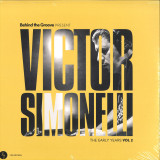
Victor Simonelli - Behind The Groove Present Victor Simonelli The Early Years Vol. 2 LP 2x12"

In the words of Bill Brewster - DJ History

‘At the turn of the 1990s, there were few more successful New York house producers than Victor Simonelli. Under a dizzying array of aliases – Solution, NY’s Finest, Groove Committee, Critical Rhythm and Cloud 9 being amongst the better-known – the Brooklyn-born DJ/producer delivered a string of underground club hits during the city’s early ’90s house boom.’

BTG presents “Victor Simonelli: The Early Years Vol 1” a collectors edition double Vinyl release - 2 X 12’s in each Vol

Launching the first Behind The Groove collectors edition vinyl series is New York’s finest Victor Simonelli with ‘The Early Years Vol 1 & 2’ double Vinyl releases. Featuring seminal house tracks such as Cloud 9’s ‘Do You Want Me’, Solution’s ‘Feel So Right’, Instant Exposure’s ‘Wanna Be With You’ and rare mixes of Raiana Page and EZ-AL, this collection brings together classic and rare Victor Simonelli cuts that reflect the early raw energy and buzz of the New York House scene. With ‘Vol 2” scheduled to follow shortly after, this is the most comprehensive collection of rare Simonelli cuts that firmly establishes his esteemed role in 90s House Music as well as introducing new fans to his inimitable sound.

Victor Simonelli is one of the early kings of NYC sampling In house music. The real deal - Victor danced at the legendary David Mancuso’s Loft sessions and developed a serious appreciation for good music. He interned for Arthur Baker at his renown Shakedown Studios (where Arthur worked with the iconic Afrika Bambatta on the seminal dance floor ’Planet Rock’ track) and went on to release hugely influential releases on seminal NYC labels 4th Floor and Nu Groove. Victor’s music was championed by the hugely celebrated iconic House Music DJ pioneers, Larry Levan and Tony Humphries at Paradise Garage & Zanzibar/WBLS/Kiss FM respectively.

Revered as a New York house heavyweight and prolific producer since the turn of the 1990s, Victor Simonelli grew up in Brooklyn, NYC, nurtured by a music loving family, with an avid record collecting father who also worked as a local party DJ. He took music lessons in piano, drums, guitar and bass, before discovering his first love, tuning into NY’s Radio Mix Shows on WBLS, WKTU and WRKS,98.7 Kiss FM) where he discovered the art of mixing and in his own words, ’I just simply got lost in the music’.

Graduating from NYC’s Centre For Media Arts, Victor got an internship in the legendary producer, Arthur Baker’s Shakedown Studios. Soon graduating to editing, mixing and then producing he worked for artists David Bowie, Quincy Jones, Debbie Harry, Sinead O’Connor and Talking Heads. Teaming up with fellow NYC producer Lenny Dee to become the Brooklyn Funk Essentials, they released records ‘Critical Rhythm’ and ‘Subliminal Aurra’ on 4th Floor before Victor went solo as Groove Committee releasing the classic ‘I Want You To Know’ on the legendary Nu Groove Records. Paradise Garage legend, Larry Levan broke ‘I Want You To Know’ rocking 2 copies on his last tour of Japan whilst King of NY House Music,Tony Humphries broke Victor’s new ‘Feels So Right’ across New York on his WBLS/Kiss FM Mastermix show and at his legendary Zanzibar club sessions. It was only a matter of time before Victor’s name became synonymous with quality House music ensuring a worldwide platform for his productions.

In the early 90s alongside his own productions, Victor Simonelli worked on high profile projects, including James Brown’s album, “Love Overdue” BeBe and CeCe Winans single featuring Mavis Staples “I’ll Take You There” and Quincy Jones’ “I’ll Be Good To You” featuring Chaka Khan and the legendary Ray Charles. Never straying too far from his clubland roots, Victor worked with Danny Tenaglia on his classic “The Harmonica Track”.

DJ gigs across the world started flooding in and Victor found himself recording for a dizzying array of labels including Tribal America, Sub-Urban, Bassline, King Street Sounds and Vibe, under a wide range of aliases. He also produced, wrote and remixed for artists such Nile Rodgers (Chic), Afrika Baambata, Hall & Oates, Frankie Knuckles, Kerri Chandler, Madonna and Michael Jackson. Famed for his own productions “It’s So Good” by Creative Force, “I Know A Place” as Sound Of One - the first release on Roger Sanchez One Records -, “Dirty Games” as well as the “Street Players Vol 1 EP”, Victor went on to set up Suburban Records with Tommy Musto and Bassline Records with two other partners. Notable releases on this label include “Do You Feel Me”, Connie Harvey’s gospel inspired, “Thank You Lord”, Urban Blues Project’s “Deliver Me”, Colonel Abrams “Not Gonna Let”, and Mone’s “Better Way”. Never ceasing to produce, DJ, run his own label and host radio shows like Groove Lift, Victor has worked with virtually every NYC producer and has nurtured a next generation talents including Angel Moraes, Jazz ‘N’ Groove, Urban Blues Project, Harlem Hustlers, Jay Jay and Julius Papp. Victor’s releases have also been used on M&S’s “Salsoul Nuggett” hit and Eddie Amador’s underground smash ‘House Music’.

In the late 90’s Victor launched his new Westside Productions, notable for the “Latin Impressions 1 & 2” releases, opened up a studio in Italy as he found himself increasingly working in Europe and now divides his time between New York and Italy. Suffice to say his unique sound of uplifting and spiritual music has kept him at the forefront of House Music and he is credited as one of its leading exponents with his string of classic releases and remixes.

Behind the Groove, branches out from its digital platform to embark on a programme of releases from the iconic pioneer producers of House Music. Esteemed for their high quality features and mixes that continue to explore, celebrate and venerate the contributions of highly respected, scene-shaping Labels, Artists, DJs and Special Events, BTG seeks to bring these talents and tales to the attention of the wider community. Unlocking the stories surrounding the pivotal roles they played and continue to play today in shaping the underground music scene we have come to know and love.

BTG presents “Victor Simonelli: The Early Years Vol 1” a collectors edition double Vinyl release, released on May 12th 2023. ‘Vol 2” follows on May 26th 2023 . These releases are the most comprehensive collection of rare Victor Simonelli cuts that firmly establish his esteemed role in 90s House Music and introduces new fans to his carefree sound.

нет на складе

Закажите сейчас, и мы закажем товар для вас у нашего поставщика.

33,40

Последний логин: 7 мес. назад
Charlie Morrow, Sten Hanson, Carles Santos - The Heavyweight Sound Fight LP 2x12"

A precedent of sorts to, erm, Armand van Helden vs Fatboy Slim’s 1999 bout, ‘The Heavyweight Sound Fight’ takes pride of place among iDEAL’s hall of oddities with one of the zaniest recordings by three international leaders of the avant-garde. Double LP with an LP-sized 12-page booklet designed by Sean McCann of Recital.

Adapting all the pomp and ceremony of a boxing match to ludicrous ends - including a flier depicting each artist with their dukes up - they produced what sounds like a great night out for NYC’s experimental cognoscenti with Charlie Morrow (USA) vs Carles santos (Spain) each backed by a band - Soho Baroque Opera Company with the assistance of the New Wilderness Foundation - while Sweden’s Sten Hanson acts as referee, and Armand Schwerner takes the role of announcer in thick, nasal New York brogue. It’s brilliantly daft and subversive but accomplished in a witty way that maybe escapes too many solemnly po-faced avant-garde conceptualists nowadays, and remains a strange outlier in the history of NYC avant garde and beyond.

“Operating as an aural window into an happening that occurred more than 40 years ago, “The Heavyweight Sound Fight” unveils a different context of experimental music than is not often encountered today. Running across the album’s four sides, within all the seriousness of art and technique, is the unmistakable presence of humor, play, and the absurd. The audience can’t help but laugh and cheer as the announcer - effecting a deep New York accent and nodding toward notable attendees like Allison Knowles, Dick Higgins, and Jackson Mac Low - takes an active role in the fight, each artist delivering an array of vocalizations - from extended technique utterances to rants - against the next, with the bands weighing in and engaging in their own battles, ranging from big band dirges and marches, to outright experimental electronic madness. It’s a trully raucous affair that brings that radicalism carried by its sounds into entirely new zones.

According to Marrow, he was deemed “winner” in an “off-script” move by the judges, and Santos never spoke to him again, continuing the wild and wonderful mystery and humor of the performance into the present day. Who knows what Santos, who sadly passed away in 2017, would say.”

Сделать предзаказ05.05.2023

он должен быть опубликован на 05.05.2023

41,39
BOOKER T & THE MGS - Green Onions 60th Anniversary LP

One of the most popular instrumental songs ever, “Green Onions” started out as a band jam at a demo recording session for rock’n’roll singer Billy Lee Riley with the famed Stax Records house band. Stax label head Jim Stewart liked what he heard and recorded what would become the basis for the band’s debut album. Christened Booker T. & The M.G.s, they released “Green Onions” with original members Booker T. Jones (organ, piano), Steve Cropper (guitar), Lewie Steinberg (bass), and Al Jackson Jr. (drums) in October 1962. The title track became a worldwide hit, covered by dozens of artists including the Blues Brothers, the Ventures, the Shadows, Deep Purple, Mongo Santamaria and Count Basie.

The deluxe 60th Anniversary Edition of “Green Onions” releases as a 1LP 180g vinyl in a green translucent colorway similar in hue to the vegetable it celebrates plus a 4-page insert, including band photos, Stax Records ephemera and David Ritz’s new liner notes.

Сделать предзаказ24.02.2023

он должен быть опубликован на 24.02.2023

36,56
Booker T.&The Mg`s - Green Onions 60th Anniversary

2022 jährt sich die Veröffentlichung der ersten Single
und des ersten Albums der internationalen Supergruppe
des Soul/Funks, die mit ihrem Memphis-Sound die
Soul-Landschaft neu erfunden hat.
"Green Onions", einer der populärsten Instrumentalsongs
aller Zeiten, begann als Band-Jam bei einer
Demo-Aufnahme für den Rock'n'Roll-Sänger Billy Lee
Riley mit der berühmten Stax Records Houseband.
Stax-Labelchef Jim Stewart gefiel, was er hörte, und er
nahm auf, was die Grundlage für das Debütalbum der
Band werden sollte.
Unter dem Namen Booker T. & The M.G.s
veröffentlichten sie "Green Onions" mit den
Originalmitgliedern Booker T. Jones (Orgel, Klavier), Steve
Cropper (Gitarre), Lewie Steinberg (Bass) und Al Jackson
Jr. (Schlagzeug) im Oktober 1962. Der Titelsong wurde
ein weltweiter Hit, der von Dutzenden von Künstlern wie
den Blues Brothers, den Ventures, den Shadows, Deep
Purple, Mongo Santamaria und Count Basie gecovert
wurde.

Сделать предзаказ24.02.2023

он должен быть опубликован на 24.02.2023

33,57
PARANOID PYRAMID - The Acid Quest

Jackson Lee's Mystical Disco label unveils a new singing here in the form of Paranoid Pyramid. The mysterious outfit enchants us from the off here with the sleazy, meandering acid lines of the opener drawn out over dusty, dubby and deep house drums. 'Water Temple' is another proudly analogue cut with wispy pads way off in the distance and slow but lumpy drums get you into a groove. There is more hazy and horizontal depth to 'Analog Joint' and 'Memphis Prophet' pairs vaporous synths with mystic drum sounds before 'Birdspeak' making for another perfectly lo-fi world of cosmic melodic wonder.

нет на складе

Закажите сейчас, и мы закажем товар для вас у нашего поставщика.

14,24

Последний логин: 3 г. назад
Pawz One & Evolve - Random Act Of Violence

Composed of rhyme-vets Pawz One and Evolve are Random Act Of Violence! The duo's self-titled release is chock-full of grimy bars over bangin' beats for the head-nodders.

Lead single "Sixteen Shots" is a boom-bap bar-brawl set to a crackin' instrumental (produced by EQ) with DJ Eyeball adds cuts to and featuring additional lyrical firepower from none other than Copywrite.

Another track from the project is "Vaultures". Speaking on that track Pawz revealed "the concept of that one was inspired by seeing a lot of these types in the game. The hook was inspired by Mobb Deep, these half-way-crooks bunched up to make each other feel tough and validate themselves."

Hailing from Los Angeles Pawz One has been repping the real and releasing music for the past decade. Most recently he teamed up with 90's West Coast vet Mykill Miers for the aptly named "Double Homicide" album and has also appeared on tracks with such notables as Ruste Juxx, Sadat X, Percee P, Shabaam Sahdeeq and DJ Rhettmatic.

Based out of Donna, Texas, Evolve has released over twenty albums through his Boom Bap Masterpiece Records label. He has collaborated on tracks with such notables as Chino XL, Fatlip (of the Pharcyde), Esoteric, Mickey Factz, Blueprint and many more. Touring the country over the past decade he has also shared stages with the likes of Raekwon, Murs, R.A. The Rugged Man, Masta Ace and Immortal Technique among others.

Сделать предзаказ20.01.2023

он должен быть опубликован на 20.01.2023

25,17
Freddie Gibbs & Madlib - Pinata: The 1964 Version LP

Single-LP edit of Piñata lacquered at half speed master by Metropolis Mastering in London for the highest fidelity.

After the original release Freddie Gibbs & Madlib's Piñata in 2014, cover artist Jeff Jank made a new sleeve for the album in the style of a 1964 Blue Note album.

Featuring Danny Brown, Mac Miller, Earl Sweatshirt, Raekwon, Scarface, Domo Genesis, Ab-Soul, Polyester the Saint, BJ The Chicago Kid, Big Time Watts, G-Wiz, Casey Veggies, Sulaiman, Meechy Darko & Freddie Kane.

Freddie Gibbs is the product of violent, drug-laden streets but unlike most rappers with similar resumes, he brings the block to the booth without inhibition or an exaggerated rap persona. Piñata, a 17 track collaboration with producer Madlib, is the best distillation yet of his transparent approach to making music, combining an at times stark honesty with electrifying talent as a lyricist and performer.

Piñata is a gangster Blaxploitation film on wax, says Gibbs, who came up on the streets of Gary, Indiana, the disregarded city previously best known for producing Michael Jackson. Here he is joined by Mac Miller, Earl Sweatshirt, Raekwon, Scarface, Domo Genesis, Ab-Soul and a host of others in setting his soliloquies of the streets alongside film snippets and dusted funk, soul and prog musical tapestries. While this is the latest in a series of single-artist collaborations for Madlib, after Jaylib (J Dilla), Madvillainy (MF Doom) and the street-centric O.J. Simpson with Detroits Guilty Simpson, the pairing is unique as it is the first time for Gibbs working with just one producer.

On Piñata, where Gibbs can shift from textbook lessons in robbing and drugging on trackslike Scarface and Knicks, to perhaps the albums most personal song, Broken, a collaboration with Scarface, who, along with Tupac, DMX and 50 Cent, make up the rappers own Mount Rushmore of MCs (Youre getting a hurricane of all those motherfuckers hitting you at once when you listen to Freddie Gibbs, he says). Deeper, a Gibbs favorite and the third single from the album after Thuggin (2012) and Shame, (2013) is an ode to hip-hop in the mold of Commons I Used to Love H.E.R.; High, featuring Danny Brown, is self-explanatory and just what you would expect from Gibbs, Madlib and one of Detroits finest; while on Real, Gibbs addresses an old score just as Michael Corleone settled all family business on baptism day.

As a producer, Madlib, quite simply, is music, and ten years into his career-a time when other artists become comfortable-Gibbs remains restless, focused, with an eye on the competition and their position relative to his ascent. This is because mentally, hes still on the corner hustling, which would be the downfall of the average rapper. With Piñata, Gibbs confirms that he is anything but average.

нет на складе

Закажите сейчас, и мы закажем товар для вас у нашего поставщика.

37,44

Последний логин: 3 г. назад
Ahem - Ahem LP 2x12"

Ahem

Ahem LP 2x12"

2x12inchHCRFT164
Housecraft Recordings
16.12.2022

Ahem is a new project from Housecraft Recordings head Jeffry Astin (aka Xiphiidae, Digital Natives) along with co-conspirators J.P. Wright and Brian Kinkade. Recommended for fans of smoked out dub-bient and deep Appalachian drones.


-Cover art by Joe Roberts (LSD Worldpeace)

-Housecraft Recordings has been active as a cult favorite ambient/tape label for ~20 years now.


Quotes and reactions:

-“Jeffry Astin was the Dominique Wilkins of the early 2000s tape scene” -Tabs Out Podcast (episode #92)

-“Honestly too fire” -Ian Kim Judd (Fifth World/NTS)

-“Great record!” -Hank Jackson (Anno Records)

-“Super nice” -Jacob Gorchov (Palto Flats)

-“Massive” -Eli Libman (Quiet Time Tapes)

нет на складе

Закажите сейчас, и мы закажем товар для вас у нашего поставщика.

23,74

Последний логин: 3 г. назад
Journey - Live In Concert At Lollapalooza 3x12"

Line-Up:
Neal Schon - Guitars, Keyboards & Background Vocals
Jonathan Cain - Keyboards & Background Vocals
Jason Deralta - Background Vocals
Arnel Pineda -Lead Vocals
Deen Castronovo - Lead Vocals on "After Glow"
Randy Jackson - Bass, Background Vocals
Narada Michael Walden - Drums & Background Vocals

Сделать предзаказ09.12.2022

он должен быть опубликован на 09.12.2022

38,61
Marja Ahti & Judith Hamann - A coincidence is perfect, intimate attunement

Second Editions presents a new collaborative work by Marja Ahti and Judith Hamann.

After their distinguished duet ‘Portals’ for Cafe Oto's Takuroku label, ‘A coincidence is perfect, intimate attunement’ is a wonderful sophomore collaborative work pieced together over two years of changing seasons, ideas, moods, and feelings. The release is formed from a shifting field of sound correspondence that pivots on moments of coincidence, of a tuning in.

What are we opening ourselves to when we tune in to sound? How can one be truly open to a sound? How can the activity of recording move beyond notions of capture and release into more generative frames? Rather than a tool purposed for preservation or ‘conservation’ of memory, of time and place, can recording sound instead form new vibrant or vibratory spaces of attunement?

‘A coincidence..’ is an LP length composition of multiple interlocking parts, created through exchange, alignment, unpredictability: the title borrowed from poet Fanny Howe falling right into place, a flock of birds in flight, pitches matched and moved across different geographies and temporal frames. Marja & Judith have created an intuitive, lyrical longform piece that considers the idea of attunement itself as, in some sense, the smallest form of measure or denominator connecting their respective practices: across field recording, just intonation, electronic sonorities and instrumental bodies. ‘A coincidence..’ reflects a sense of a willingness to tune in to impulses given, or gifted to the other, a position that embraces an intimate synchronicity.

Recordings & correspondances between 2020-2022. Mixed by Marja Ahti & Judith Hamann. Mastered and cut by Anne Taegert at Dubplates & Mastering in Berlin, 2022. Title quotation from Night Philosophy by Fanny Howe, Divided Publishing, 2020. Photogrpahy by Joshua Bonnetta. Thanks to Nino Bulling, Niko-Matti Ahti and leo. The work was supported by Kone Foundation, Akademie Schloss Solitude and NEUSTART KULTUR.

Marja Ahti (b. 1981) is a Swedish-Finnish composer and sound artist based in Turku, Finland. Ahti works with field recordings and other acoustic sound material combined with synthesizers and electronic feedback in order to find the space where these sounds start to communicate. She makes music that rides on waves of slowly warping harmonies and mutating textures – rough edged, yet precise compositions, rich in detail. Ahti has presented her music in many different contexts around Europe, in Japan and the United States. She is currently active in the duo Ahti & Ahti with her partner Niko-Matti Ahti and in the artist/organizer collective Himera.

Judith Hamann is a cellist and performer/composer from Narrm/Melbourne in so-called Australia, currently based in Berlin. Their work encompasses performance, improvisation, electro-acoustic composition, field recording, electronics, site specific generative work, and micro-tonal systems in a deeply considered process based approach to creative practice. Currently Judith’s work is focused on an examination of expressions and manifestations of 'shaking’ in solo performance practice, a collection of works for cello and humming, as well as ongoing research surrounding ‘collapse’ as a generative imaginary surface, and the ‘de-mastering’ of bodies (human and non-human) in European settler-colonial heritage instrumental practice and pedagogy. Judith likes working with and thinking-with other artists which sometimes includes people like Joshua Bonnetta, Dennis Cooper, Charles Curtis, Golden Fur (with James Rushford and Sam Dunscombe), Lori Goldston, the Harmonic Space Orchestra, Sarah Hennies, Yvette Janine Jackson, and Anike Joyce Sadiq.

Сделать предзаказ25.11.2022

он должен быть опубликован на 25.11.2022

22,98
Kasper Bjørke Quartet - Mother 2x12" + DL

For over two decades Bjørke has cut his own path, as a solo artist and enthusiastic collaborator. Bjørke’s Copenhagen home may be one of Europe’s great cultural hubs, and he’s certainly added a paragraph or two to that story, but his music is distinctly international. Even a cursory listen exposes an impressive, ever-evolving career. However, few expected him to initiate the collaborative ambient / neo-classical project Kasper Bjørke Quartet. In 2018 The Fifty Eleven Project was released on Kompakt Records, a deeply personal record that musically documents Bjørkes encounter with, and triumph over, cancer. The album topped many critics' lists, and was included among The Guardian’s Best Contemporary Albums of the year.

Mother, which will be released on October 28th, represents a quantum leap forward. Literally, when you consider the terrestrial shifts that informed it. Six compositions explore what the evolution of our planet sounds like. While Holst may have gotten there first, Mother singularly focuses on the orb where we reside, from its formation, to its likely conclusion. Other artists have tackled song cycles that parallel a day, a year, or even a lifetime. Mother spans a timeframe from 4.5 billion years ago up to humankind’s impending demise. It hints at how that may be sooner than we think, as well as the earth’s resilience, and the promise of another chapter.

Additional gravity comes courtesy of evocative choir arrangements - - and marimba recorded at the Copenhagen Opera House. “Formation” condenses 20 million years of runaway accretion into 20 minutes. It is sublimely padded by feature artist Sofie Birch’s gentle synths. “Abiogenesis” intimates a different type of emergence: the first life to inhabit our nascent planet. The entire cosmos is condensed into the layered vocals of Philip|Schneider. Birch returns on “Miocene,” which signals the divergence of proto-humans from primates not with foreboding, but rather cascaded notes and swells adumbrating a pure and curious being, revealing nothing of what the Catch-22 of knowledge will bring. That’s addressed in the diptych of “Anthropocene” and “Tipping Points,” respectively marking the dawn and foreshadowing the probable downfall of homosapians, through wondrous advancements and their climate damaging byproducts. It’s tempting to think the album’s finale, “Requiem,” implies only a dark conclusion, owing to its sparkling verrillon’s coronach, and the return of Philip|Schneider’s empyrean vocals, but its juxtaposition with revolving, enigmatic piano chords infers the earth will enter its next act.

Mother is a staggering achievement, encouraging contemplative thought. The album is released October 28th on Kompakt Records, both digitally and on limited edition double vinyl. The atwork is designed by multidisciplinary artist Trevor Jackson.

Seit mehr als zwei Jahrzehnten folgt Kasper Bjørke seinem ganz eigenen Weg, sowohl als Solokünstler als auch als umtriebiger Kollaborateur, während er gleichzeitig das Beste aus Techno, Pop, Elektro, New Wave, House, Ambient, Italo und klassischer Disco aufgreift und in seinen Produktionen zusammenfügt. Bjørke’s Heimat Kopenhagen gilt als eines der großen kulturellen Zentren Europas, und die Stadt hat dieser Geschichte sicherlich den einen oder anderen Absatz hinzugefügt, aber Kasper’s Musik ist eindeutig international. Schon ein flüchtiges Hineinhören gibt den Blick frei auf eine beeindruckende, sich ständig weiterentwickelnde Karriere. Nur wenige hätten jedoch erwartet, dass dieser Werdegang 2018 in der Gründung eines neoklassischen Quartetts gipfeln würde. In diesem Jahr wurde “The Fifty Eleven Project” auf KOMPAKT veröffentlicht. Ein sehr persönliches Album, das musikalisch dokumentierte, wie Bjørke seinen Kampf gegen den Krebs gewonnen hatte. Es wurde unter anderem in die Liste der besten zeitgenössischen Klassik-Alben des Jahres von The Guardian aufgenommen.

“Mother”, das am 28. Oktober erscheint, ist ein Quantensprung für das Kasper Bjørke Quartett. Im wahrsten Sinne des Wortes, wenn man die tektonischen Bewegungen bedenkt, die dem Album zugrunde liegen. Sechs Kompositionen erforschen, wie sich die Evolution unseres Planeten anhört. Gustav Holst (englischer Komponist, dessen bekanntestes Werk die Orchestersuite “Die Planeten” darstellt; Anm. des Übersetzers) war vielleicht zuerst da, aber “Mother” konzentriert sich ausschließlich auf die Erdkugel, auf der wir uns befinden, von ihrer Entstehung bis zu ihrem wahrscheinlichen Ende. Andere Künstler haben sich mit Songzyklen beschäftigt, die einen Tag, ein Jahr oder sogar ein ganzes Leben abdecken. “Mother” umfasst etwa 4,5 Milliarden Jahre, vom Anfang aller Zeit bis zum bevorstehenden Untergang der Menschheit. Das Werk deutet an, dass dies schneller geschehen könnte, als wir alle denken, aber auch die Widerstandsfähigkeit der Erde und das Versprechen auf ein neues Kapitel.

Für zusätzliche Erdanziehung sorgen stimmungsvolle Chor Arrangements und eine Marimba-Sektion, die im Kopenhagener Opernhaus aufgenommen wurde. "Formation" verdichtet 20 Millionen Jahre unkontrollierter Akkumulation in 20 Minuten, subtil untermalt von den sanften Klängen der Ambient-Künstlerin Sofie Birch. "Abiogenesis" beschreibt das erste Leben, das entsteht und unseren Planeten besiedelt. Der gesamte Kosmos verdichtet sich hier in den vielschichtigen Vocals von Philip|Schneider. Birch taucht erneut im Track "Miocene" auf, in dem das evolutionäre Streben des Proto-Menschen weg vom Primaten noch keine böse Vorahnung enthält, sondern mit kaskadenartigen Sounds und langsam anschwellenden Klängen musikalisch vom reinen und neugierigen Wesen des Menschen erzählt, in dem noch nichts von der Zwickmühle zum Vorschein kommt, in die ihn sein Wissen bringen wird.

Das wird im Diptychon "Anthropocene" und "Tipping Points" thematisiert, die den Anfang vom Ende, den Beginn des wahrscheinlichen Untergangs des Homo sapiens durch die Folgen des Fortschritts und seiner klimaschädlichen Nebenprodukte vorhersagen. Es ist naheliegend zu denken, dass das Finale des Albums, "Requiem", nur das düstere Ende von allem darstellt. Doch as funkelnde Glockenspiel und Philip|Schneiders eindringlicher Gesang in Gegenüberstellung mit sich windenden und erratischen Klavierakkorden deuten an, dass die Geschichte der Erde ein neues Kapitel aufschlagen wird.

Mother ist eine beeindruckende Performance, die zum Nachdenken anregt.

нет на складе

Закажите сейчас, и мы закажем товар для вас у нашего поставщика.

26,01

Последний логин: 12 мес. назад
Lee Tracy & Isaac Manning - Is it What You Want

As the sun sets on a quaint East Nashville house, a young man bares a piece of his soul. Facing the camera, sporting a silky suit jacket/shirt/slacks/fingerless gloves ensemble that announces "singer" before he's even opened his mouth, Lee Tracy Johnson settles onto his stage, the front yard. He sways to the dirge-like drum machine pulse of a synth-soaked slow jam, extends his arms as if gaining his balance, and croons in affecting, fragile earnest, "I need your love… oh baby…"

Dogs in the yard next door begin barking. A mysterious cardboard robot figure, beamed in from galaxies unknown and affixed to a tree, is less vocal. Lee doesn't acknowledge either's presence. He's busy feeling it, arms and hands gesticulating. His voice rises in falsetto over the now-quiet dogs, over the ambient noise from the street that seeps into the handheld camcorder's microphone, over the recording of his own voice played back from a boombox off-camera. After six minutes the single, continuous shot ends. In this intimate creative universe there are no re-takes. There are many more music videos to shoot, and as Lee later puts it, "The first time you do it is actually the best. Because you can never get that again. You expressing yourself from within."

"I Need Your Love" dates from a lost heyday. From some time in the '80s or early '90s, when Lee Tracy (as he was known in performance) and his music partner/producer/manager Isaac Manning committed hours upon hours of their sonic and visual ideas to tape. Embracing drum machines and synthesizers – electronics that made their personal futurism palpable – they recorded exclusively at home, live in a room into a simple cassette deck. Soul, funk, electro and new wave informed their songs, yet Lee and Isaac eschewed the confinement of conventional categories and genres, preferring to let experimentation guide them.

"Anytime somebody put out a new record they had the same instruments or the same sound," explains Isaac. "So I basically wanted to find something that's really gonna stand out away from all of the rest of 'em." Their ethos meant that every idea they came up with was at least worth trying: echoed out half-rapped exhortations over frantic techno-style beats, gospel synth soul, modal electro-funk, oddball pop reinterpretations, emo AOR balladry, nods to Prince and the Fat Boys, or arrangements that might collapse mid-song into a mess of arcade game-ish blips before rallying to reach the finish line. All of it conjoined by consistent tape hiss, and most vitally, Lee's chameleonic voice, which managed to wildly shape shift and still evoke something sincere – whether toggling between falsetto and tenor exalting Jesus's return, or punctuating a melismatic romantic adlib with a succinct, "We all know how it feels to be alone."

"People think we went to a studio," says Isaac derisively. "We never went to no studio. We didn't have the money to go to no studio! We did this stuff at home. I shot videos in my front yard with whatever we could to get things together." Sometimes Isaac would just put on an instrumental record, be it "Planet Rock" or "Don't Cry For Me Argentina" (from Evita), press "record," and let Lee improvise over it, yielding peculiar love songs, would-be patriotic anthems, or Elvis Presley or Marilyn Monroe tributes. Technical limitations and a lack of professional polish never dissuaded them. They believed they were onto something.

"That struggle," Isaac says, "made that sound sound good to me."

In the parlance of modern music criticism Lee and Isaac's dizzying DIY efforts would inevitably be described as "outsider." But "outsider" carries the burden of untold additional layers of meaning if you're Black and from the South, creating on a budget, and trying to get someone, anyone within the country music capital of the world to take your vision seriously. "What category should we put it in?" Isaac asks rhetorically. "I don't know. All I know is feeling. I ain't gonna name it nothing. It's music. If it grabs your soul and touch your heart that's what it basically is supposed to do."

=

Born in 1963, the baby boy of nine siblings, Lee Tracy spent his earliest years living amidst the shotgun houses on Nashville's south side. "We was poor, man!" he says, recalling the outhouse his family used for a bathroom and the blocks of ice they kept in the kitchen to chill perishables. "But I actually don't think I really realized I was in poverty until I got grown and started thinking about it." Lee's mom worked at the Holiday Inn; his dad did whatever he had to do, from selling fruit from a horse drawn cart to bootlegging. "We didn't have much," Lee continues, "but my mother and my father got us the things we needed, the clothes on our back." By the end of the decade with the city's urban renewal programs razing entire neighborhoods to accommodate construction of the Interstate, the family moved to Edgehill Projects. Lee remembers music and art as a constant source of inspiration for he and his brothers and sisters – especially after seeing the Jackson 5 perform on Ed Sullivan. "As a small child I just knew that was what I wanted to do."

His older brother Don began musically mentoring him, introducing Lee to a variety of instruments and sounds. "He would never play one particular type of music, like R&B," says Lee. "I was surrounded by jazz, hard rock and roll, easy listening, gospel, reggae, country music; I mean I was a sponge absorbing all of that." Lee taught himself to play drums by beating on cardboard boxes, gaining a rep around the way for his timekeeping, and his singing voice. Emulating his favorites, Earth Wind & Fire and Cameo, he formed groups with other kids with era-evocative band names like Concept and TNT Connection, and emerged as the leader of disciplined rehearsals. "I made them practice," says Lee. "We practiced and practiced and practiced. Because I wanted that perfection." By high school the most accomplished of these bands would take top prize in a prominent local talent show. It was a big moment for Lee, and he felt ready to take things to the next level. But his band-mates had other ideas.

"I don't know what happened," he says, still miffed at the memory. "It must have blew they mind after we won and people started showing notice, because it's like everybody quit! I was like, where the hell did everybody go?" Lee had always made a point of interrogating prospective musicians about their intentions before joining his groups: were they really serious or just looking for a way to pick up girls? Now he understood even more the importance of finding a collaborator just as committed to the music as he was.

=

Isaac Manning had spent much of his life immersed in music and the arts – singing in the church choir with his family on Nashville's north side, writing, painting, dancing, and working various gigs within the entertainment industry. After serving in the armed forces, in the early '70s he ran The Teenage Place, a music and performance venue that catered to the local youth. But he was forced out of town when word of one of his recreational routines created a stir beyond the safe haven of his bohemian circles.

"I was growing marijuana," Isaac explains. "It wasn't no business, I was smoking it myself… I would put marijuana in scrambled eggs, cornbread and stuff." His weed use originated as a form of self-medication to combat severe tooth pain. But when he began sharing it with some of the other young people he hung out with, some of who just so happened to be the kids of Nashville politicians, the cops came calling. "When I got busted," he remembers, "they were talking about how they were gonna get rid of me because they didn't want me saying nothing about they children because of the politics and stuff. So I got my family, took two raggedy cars, and left Nashville and went to Vegas."

Out in the desert, Isaac happened to meet Chubby Checker of "The Twist" fame while the singer was gigging at The Flamingo. Impressed by Isaac's zeal, Checker invited him to go on the road with him as his tour manager/roadie/valet. The experience gave Isaac a window into a part of the entertainment world he'd never encountered – a glimpse of what a true pop act's audience looked like. "Chubby Checker, none of his shows were played for Black folks," he remembers. "All his gigs were done at high-class white people areas." Returning home after a few years with Chubby, Isaac was properly motivated to make it in Music City. He began writing songs and scouting around Nashville for local talent anywhere he could find it with an expressed goal: "Find someone who can deliver your songs the way you want 'em delivered and make people feel what you want them to feel."

One day while walking through Edgehill Projects Isaac heard someone playing the drums in a way that made him stop and take notice. "The music was so tight, just the drums made me feel like, oh I'm-a find this person," he recalls. "So I circled through the projects until I found who it was.

"That's how I met him – Lee Tracy. When I found him and he started singing and stuff, I said, ohhh, this is somebody different."

=

Theirs was a true complementary partnership: young Lee possessed the raw talent, the older Isaac the belief. "He's really the only one besides my brother and my family that really seen the potential in me," says Lee. "He made me see that I could do it."

Isaac long being a night owl, his house also made for a fertile collaborative environment – a space where there always seemed to be a new piece of his visual art on display: paintings, illustrations, and dolls and figures (including an enigmatic cardboard robot). Lee and Issac would hang out together and talk, listen to music, conjure ideas, and smoke the herb Isaac had resumed growing in his yard. "It got to where I could trust him, he could trust me," Isaac says of their bond. They also worked together for hours on drawings, spreading larges rolls of paper on the walls and sketching faces with abstract patterns and imagery: alien-like beings, tri-horned horse heads, inverted Janus-like characters where one visage blurred into the other.

Soon it became apparent that they didn't need other collaborators; self-sufficiency was the natural way forward. At Isaac's behest Lee, already fed up with dealing with band musicians, began playing around with a poly-sonic Yamaha keyboard at the local music store. "It had everything on it – trumpet, bass, drums, organ," remembers Lee. "And that's when I started recording my own stuff."

The technology afforded Lee the flexibility and independence he craved, setting him on a path other bedroom musicians and producers around the world were simultaneously following through the '80s into the early '90s. Saving up money from day jobs, he eventually supplemented the Yamaha Isaac had gotten him with Roland and Casio drum machines and a Moog. Lee was living in an apartment in Hillside at that point caring for his dad, who'd been partially paralyzed since early in life. In the evenings up in his second floor room, the music put him in a zone where he could tune out everything and lose himself in his ideas.

"Oh I loved it," he recalls. "I would really experiment with the instruments and use a lot of different sound effects. I was looking for something nobody else had. I wanted something totally different. And once I found the sound I was looking for, I would just smoke me a good joint and just let it go, hit the record button." More potent a creative stimulant than even Isaac's weed was the holistic flow and spontaneity of recording. Between sessions at Isaac's place and Lee's apartment, their volume of output quickly ballooned.

"We was always recording," says Lee. "That's why we have so much music. Even when I went to Isaac's and we start creating, I get home, my mind is racing, I gotta start creating, creating, creating. I remember there were times when I took a 90-minute tape from front to back and just filled it up."

"We never practiced," says Isaac. "See, that was just so odd about the whole thing. I could relate to him, and tell him about the songs I had ideas for and everything and stuff. And then he would bring it back or whatever, and we'd get together and put it down." Once the taskmaster hell bent on rehearsing, Lee had flipped a full 180. Perfection was no longer an aspiration, but the enemy of inspiration.

"I seen where practicing and practicing got me," says Lee. "A lot of musicians you get to playing and they gotta stop, they have to analyze the music. But while you analyzing you losing a lot of the greatness of what you creating. Stop analyzing what you play, just play! And it'll all take shape."

=

"I hope you understood the beginning of the record because this was invented from a dream I had today… (You tell me, I'll tell you, we'll figure it out together)" – Lee Tracy and Isaac Manning, "Hope You Understand"

Lee lets loose a maniacal cackle when he acknowledges that the material that he and Isaac recorded was by anyone's estimation pretty out there. It's the same laugh that commences "Hope You Understand" – a chaotic transmission that encapsulates the duality at the heart of their music: a stated desire to reach people and a compulsion to go as leftfield as they saw fit.

"We just did it," says Lee. "We cut the music on and cut loose. I don't sit around and write. I do it by listening, get a feeling, play the music, and the lyrics and stuff just come out of me."

The approach proved adaptable to interpreting other artists' material. While recording a cover of Whitney Houston's pop ballad "Saving All My Love For You," Lee played Whitney's version in his headphones as he laid down his own vocals – partially following the lyrics, partially using them as a departure point. The end result is barely recognizable compared with the original, Lee and Isaac having switched up the time signature and reinvented the melody along the way towards morphing a slick mainstream radio standard into something that sounds solely their own.

"I really used that song to get me started," says Lee. "Then I said, well I need something else, something is missing. Something just came over me. That's when I came up with 'Is It What You Want.'"

The song would become the centerpiece of Lee and Isaac's repertoire. Pushed along by a percolating metronomic Rhythm King style beat somewhere between a military march and a samba, "Is It What You Want" finds Lee pleading the sincerity of his commitment to a potential love interest embellished by vocal tics and hiccups subtlely reminiscent of his childhood hero MJ. Absent chord changes, only synth riffs gliding in and out like apparitions, the song achieves a lingering lo-fi power that leaves you feeling like it's still playing, somewhere, even after the fade out.

"I don't know, it's like a real spiritual song," Lee reflects. "But it's not just spiritual. To me the more I listen to it it's like about everything that you do in your everyday life, period. Is it what you want? Do you want a car or you don't want a car? Do you want Jesus or do you want the Devil? It's basically asking you the question. Can't nobody answer the question but you yourself."

In 1989 Lee won a lawsuit stemming from injuries sustained from a fight he'd gotten into. He took part of the settlement money and with Isaac pressed up "Saving All My Love For You" b/w "Is It What You Want" as a 45 single. Isaac christened the label One Chance Records. "Because that's all we wanted," he says with a laugh, "one chance."

Isaac sent the record out to radio stations and major labels, hoping for it to make enough noise to get picked up nationally. But the response he and Lee were hoping for never materialized. According to Isaac the closest the single got to getting played on the radio is when a disk jock from a local station made a highly unusual announcement on air: "The dude said on the radio, 107.5 – 'We are not gonna play 'Is It What You Want.' We cracked up! Wow, that's deep.

"It was a whole racist thing that was going on," he reflects. "So we just looked over and kept on going. That was it. That was about the way it goes… If you were Black and you were living in Nashville and stuff, that's the way you got treated." Isaac already knew as much from all the times he'd brought he and Lee's tapes (even their cache of country music tunes) over to Music Row to try to drum up interest to no avail.

"Isaac, he really worked his ass off," says Lee. "He probably been to every record place down on Music Row." Nashville's famed recording and music business corridor wasn't but a few blocks from where Lee grew up. Close enough, he remembers, for him to ride his bike along its back alleys and stumble upon the occasional random treasure, like a discarded box of harmonicas. Getting in through the front door, however, still felt a world away.

"I just don't think at the time our music fell into a category for them," he concedes. "It was before its time."

=

Lee stopped making music some time in the latter part of the '90s, around the time his mom passed away and life became increasingly tough to manage. "When my mother died I had a nervous breakdown," he says, "So I shut down for a long time. I was in such a sadness frame of mind. That's why nobody seen me. I had just disappeared off the map." He fell out of touch with Isaac, and in an indication of just how bad things had gotten for him, lost track of all the recordings they'd made together. Music became a distant memory.

Fortunately, Isaac kept the faith. In a self-published collection of his poetry – paeans to some of his favorite entertainment and public figures entitled Friends and Dick Clark – he'd written that he believed "music has a life of its own." But his prescience and presence of mind were truly manifested in the fact that he kept an archive of he and Lee's work. As perfectly imperfect as "Is It What You Want" now sounds in a post-Personal Space world, Lee and Isaac's lone official release was in fact just a taste. The bulk of the Is It What You Want album is culled from the pair's essentially unheard home recordings – complete songs, half-realized experiments, Isaac's blue monologues and pronouncements et al – compiled, mixed and programmed in the loose and impulsive creative spirit of their regular get-togethers from decades ago. The rest of us, it seems, may have finally caught up to them.

On the prospect of at long last reaching a wider audience, Isaac says simply, "I been trying for a long time, it feels good." Ever the survivor, he adds, "The only way I know how to make it to the top is to keep climbing. If one leg break on the ladder, hey, you gotta fix it and keep on going… That's where I be at. I'll kill death to make it out there."

For Lee it all feels akin to a personal resurrection: "It's like I was in a tomb and the tomb was opened and I'm back… Man, it feels so great. I feel like I'm gonna jump out of my skin." Success at this stage of his life, he realizes, probably means something different than what it did back when he was singing and dancing in Isaac's front yard. "What I really mean by 'making it,'" he explains isn't just the music being heard but, "the story being told."

Occasionally Lee will pull up "Is It What You Want" on YouTube on his phone, put on his headphones, and listen. He remembers the first time he heard his recorded voice. How surreal it was, how he thought to himself, "Is that really me?" What would he say to that younger version of himself now?

"I would probably tell myself, hang in there, don't give up. Keep striving for the goal. And everything will work out."

Despite what's printed on the record label, sometimes you do get more than one chance.

нет на складе

Закажите сейчас, и мы закажем товар для вас у нашего поставщика.

11,72

Последний логин: 3 г. назад
Kenny Neal - Stright From The Heart

The Southern state’s musical giants have always had their own distinct recipe for
American roots: spiced with jazz, steeped in swamp-blues and cooked up a little
differently by every artist who performs it. As a second- generation child of the
Bayou State, Kenny Neal has taken his own inimitable guitar, gale-force harp and
roadworn voice all over the globe. But in 2022, the Grammy- nominated blues
master’s latest album, Straight From The Heart, finds him drawn by the siren call
of his hometown and musical ground zero, Baton Rouge.“This is the first album
I’ve ever recorded on my own turf, and it truly came straight from the heart,” says
Neal, who both led and produced a crack team of local musicians at his own
Brookstown Recording Studios. “All the tributaries of the blues converge here,
flowing into one rich tradition.”You’ll hear all of Neal’s travels in Straight From The
Heart, but this latest album brings it all back home in every sense. Lining up in the
studio alongside his Baton Rouge compadrés, the respect that Neal commands
on the scene also drew some special guests, including hot- tip blues sensation
Christone ‘Kingfish’ Ingram (who co-writes and plays stinger guitar on Mount Up
On The Wings Of The King), pop royalty Tito Jackson (on Two Timing) and two
songs with Rockin’ Dopsie Junior & The Zydeco Twisters. You’ll even hear Neal’s
supremely talented daughter Syreeta drive the vocal outro of Two Timing.“It was
like a family reunion,” says Neal of the good-natured sessions. “It was excellent
because I had all the musicians that grew up under me here in Baton Rouge. And
just being in my own studio, not worrying about the clock.”Straight From The
Heart is a fitting title for a record that salutes the many loves of Neal’s life.
There’s the brass-driven opener Blues Keep Chasing Me, which tips a hat to his
recently departed friend, Lucky Peterson. There’s the touching piano-led Someone
Somewhere, which salutes his beloved father, harp master Raful Neal, who put
him on this path. Elsewhere, Neal’s deep love for every side of his home state is
underlined by the zydeco chop of Bon Temps Rouler and New Orleans, whose
lyrics reference everything from “sippin’ on Hurricane” to “sittin’ on the Bayou
catching catfish”. Faced with such an open-hearted record, it’s impossible not to
reciprocate. And as the world opens up and Kenny Neal embraces his natural
habitat of the road, this Louisiana icon will bring a little bit of that Baton Rouge
spirit onto every stage he treads. “It don't cost nothing to share a little love and a
little respect,” he says. “And we can all rise above…”

Сделать предзаказ14.10.2022

он должен быть опубликован на 14.10.2022

43,28
VARIOUS - SOUL DIGGIN' LP

Various

SOUL DIGGIN' LP

12inch3419776
Wagram
30.09.2022

Some are looking for gold or oil and others are passionately looking for forgotten music treasures! Those who can be described as "sound gold diggers" criss cross record shops or confidential places to unearth musical nuggets previously kept in the dark. This practice began with sampling in the 80s and has now become a way of safeguarding the world's musical heritage. With our new "Diggin' Collection", we invite you to discover soul, funk or disco gems from the 70s and the 80s available on three nice vinyls for your pleasure.

Сделать предзаказ30.09.2022

он должен быть опубликован на 30.09.2022

15,34
Lee Tracy & Isaac Manning - Is it What You Want LP

As the sun sets on a quaint East Nashville house, a young man bares a piece of his soul. Facing the camera, sporting a silky suit jacket/shirt/slacks/fingerless gloves ensemble that announces "singer" before he's even opened his mouth, Lee Tracy Johnson settles onto his stage, the front yard. He sways to the dirge-like drum machine pulse of a synth-soaked slow jam, extends his arms as if gaining his balance, and croons in affecting, fragile earnest, "I need your love… oh baby…"

Dogs in the yard next door begin barking. A mysterious cardboard robot figure, beamed in from galaxies unknown and affixed to a tree, is less vocal. Lee doesn't acknowledge either's presence. He's busy feeling it, arms and hands gesticulating. His voice rises in falsetto over the now-quiet dogs, over the ambient noise from the street that seeps into the handheld camcorder's microphone, over the recording of his own voice played back from a boombox off-camera. After six minutes the single, continuous shot ends. In this intimate creative universe there are no re-takes. There are many more music videos to shoot, and as Lee later puts it, "The first time you do it is actually the best. Because you can never get that again. You expressing yourself from within."

"I Need Your Love" dates from a lost heyday. From some time in the '80s or early '90s, when Lee Tracy (as he was known in performance) and his music partner/producer/manager Isaac Manning committed hours upon hours of their sonic and visual ideas to tape. Embracing drum machines and synthesizers – electronics that made their personal futurism palpable – they recorded exclusively at home, live in a room into a simple cassette deck. Soul, funk, electro and new wave informed their songs, yet Lee and Isaac eschewed the confinement of conventional categories and genres, preferring to let experimentation guide them.

"Anytime somebody put out a new record they had the same instruments or the same sound," explains Isaac. "So I basically wanted to find something that's really gonna stand out away from all of the rest of 'em." Their ethos meant that every idea they came up with was at least worth trying: echoed out half-rapped exhortations over frantic techno-style beats, gospel synth soul, modal electro-funk, oddball pop reinterpretations, emo AOR balladry, nods to Prince and the Fat Boys, or arrangements that might collapse mid-song into a mess of arcade game-ish blips before rallying to reach the finish line. All of it conjoined by consistent tape hiss, and most vitally, Lee's chameleonic voice, which managed to wildly shape shift and still evoke something sincere – whether toggling between falsetto and tenor exalting Jesus's return, or punctuating a melismatic romantic adlib with a succinct, "We all know how it feels to be alone."

"People think we went to a studio," says Isaac derisively. "We never went to no studio. We didn't have the money to go to no studio! We did this stuff at home. I shot videos in my front yard with whatever we could to get things together." Sometimes Isaac would just put on an instrumental record, be it "Planet Rock" or "Don't Cry For Me Argentina" (from Evita), press "record," and let Lee improvise over it, yielding peculiar love songs, would-be patriotic anthems, or Elvis Presley or Marilyn Monroe tributes. Technical limitations and a lack of professional polish never dissuaded them. They believed they were onto something.

"That struggle," Isaac says, "made that sound sound good to me."

In the parlance of modern music criticism Lee and Isaac's dizzying DIY efforts would inevitably be described as "outsider." But "outsider" carries the burden of untold additional layers of meaning if you're Black and from the South, creating on a budget, and trying to get someone, anyone within the country music capital of the world to take your vision seriously. "What category should we put it in?" Isaac asks rhetorically. "I don't know. All I know is feeling. I ain't gonna name it nothing. It's music. If it grabs your soul and touch your heart that's what it basically is supposed to do."

=

Born in 1963, the baby boy of nine siblings, Lee Tracy spent his earliest years living amidst the shotgun houses on Nashville's south side. "We was poor, man!" he says, recalling the outhouse his family used for a bathroom and the blocks of ice they kept in the kitchen to chill perishables. "But I actually don't think I really realized I was in poverty until I got grown and started thinking about it." Lee's mom worked at the Holiday Inn; his dad did whatever he had to do, from selling fruit from a horse drawn cart to bootlegging. "We didn't have much," Lee continues, "but my mother and my father got us the things we needed, the clothes on our back." By the end of the decade with the city's urban renewal programs razing entire neighborhoods to accommodate construction of the Interstate, the family moved to Edgehill Projects. Lee remembers music and art as a constant source of inspiration for he and his brothers and sisters – especially after seeing the Jackson 5 perform on Ed Sullivan. "As a small child I just knew that was what I wanted to do."

His older brother Don began musically mentoring him, introducing Lee to a variety of instruments and sounds. "He would never play one particular type of music, like R&B," says Lee. "I was surrounded by jazz, hard rock and roll, easy listening, gospel, reggae, country music; I mean I was a sponge absorbing all of that." Lee taught himself to play drums by beating on cardboard boxes, gaining a rep around the way for his timekeeping, and his singing voice. Emulating his favorites, Earth Wind & Fire and Cameo, he formed groups with other kids with era-evocative band names like Concept and TNT Connection, and emerged as the leader of disciplined rehearsals. "I made them practice," says Lee. "We practiced and practiced and practiced. Because I wanted that perfection." By high school the most accomplished of these bands would take top prize in a prominent local talent show. It was a big moment for Lee, and he felt ready to take things to the next level. But his band-mates had other ideas.

"I don't know what happened," he says, still miffed at the memory. "It must have blew they mind after we won and people started showing notice, because it's like everybody quit! I was like, where the hell did everybody go?" Lee had always made a point of interrogating prospective musicians about their intentions before joining his groups: were they really serious or just looking for a way to pick up girls? Now he understood even more the importance of finding a collaborator just as committed to the music as he was.

=

Isaac Manning had spent much of his life immersed in music and the arts – singing in the church choir with his family on Nashville's north side, writing, painting, dancing, and working various gigs within the entertainment industry. After serving in the armed forces, in the early '70s he ran The Teenage Place, a music and performance venue that catered to the local youth. But he was forced out of town when word of one of his recreational routines created a stir beyond the safe haven of his bohemian circles.

"I was growing marijuana," Isaac explains. "It wasn't no business, I was smoking it myself… I would put marijuana in scrambled eggs, cornbread and stuff." His weed use originated as a form of self-medication to combat severe tooth pain. But when he began sharing it with some of the other young people he hung out with, some of who just so happened to be the kids of Nashville politicians, the cops came calling. "When I got busted," he remembers, "they were talking about how they were gonna get rid of me because they didn't want me saying nothing about they children because of the politics and stuff. So I got my family, took two raggedy cars, and left Nashville and went to Vegas."

Out in the desert, Isaac happened to meet Chubby Checker of "The Twist" fame while the singer was gigging at The Flamingo. Impressed by Isaac's zeal, Checker invited him to go on the road with him as his tour manager/roadie/valet. The experience gave Isaac a window into a part of the entertainment world he'd never encountered – a glimpse of what a true pop act's audience looked like. "Chubby Checker, none of his shows were played for Black folks," he remembers. "All his gigs were done at high-class white people areas." Returning home after a few years with Chubby, Isaac was properly motivated to make it in Music City. He began writing songs and scouting around Nashville for local talent anywhere he could find it with an expressed goal: "Find someone who can deliver your songs the way you want 'em delivered and make people feel what you want them to feel."

One day while walking through Edgehill Projects Isaac heard someone playing the drums in a way that made him stop and take notice. "The music was so tight, just the drums made me feel like, oh I'm-a find this person," he recalls. "So I circled through the projects until I found who it was.

"That's how I met him – Lee Tracy. When I found him and he started singing and stuff, I said, ohhh, this is somebody different."

=

Theirs was a true complementary partnership: young Lee possessed the raw talent, the older Isaac the belief. "He's really the only one besides my brother and my family that really seen the potential in me," says Lee. "He made me see that I could do it."

Isaac long being a night owl, his house also made for a fertile collaborative environment – a space where there always seemed to be a new piece of his visual art on display: paintings, illustrations, and dolls and figures (including an enigmatic cardboard robot). Lee and Issac would hang out together and talk, listen to music, conjure ideas, and smoke the herb Isaac had resumed growing in his yard. "It got to where I could trust him, he could trust me," Isaac says of their bond. They also worked together for hours on drawings, spreading larges rolls of paper on the walls and sketching faces with abstract patterns and imagery: alien-like beings, tri-horned horse heads, inverted Janus-like characters where one visage blurred into the other.

Soon it became apparent that they didn't need other collaborators; self-sufficiency was the natural way forward. At Isaac's behest Lee, already fed up with dealing with band musicians, began playing around with a poly-sonic Yamaha keyboard at the local music store. "It had everything on it – trumpet, bass, drums, organ," remembers Lee. "And that's when I started recording my own stuff."

The technology afforded Lee the flexibility and independence he craved, setting him on a path other bedroom musicians and producers around the world were simultaneously following through the '80s into the early '90s. Saving up money from day jobs, he eventually supplemented the Yamaha Isaac had gotten him with Roland and Casio drum machines and a Moog. Lee was living in an apartment in Hillside at that point caring for his dad, who'd been partially paralyzed since early in life. In the evenings up in his second floor room, the music put him in a zone where he could tune out everything and lose himself in his ideas.

"Oh I loved it," he recalls. "I would really experiment with the instruments and use a lot of different sound effects. I was looking for something nobody else had. I wanted something totally different. And once I found the sound I was looking for, I would just smoke me a good joint and just let it go, hit the record button." More potent a creative stimulant than even Isaac's weed was the holistic flow and spontaneity of recording. Between sessions at Isaac's place and Lee's apartment, their volume of output quickly ballooned.

"We was always recording," says Lee. "That's why we have so much music. Even when I went to Isaac's and we start creating, I get home, my mind is racing, I gotta start creating, creating, creating. I remember there were times when I took a 90-minute tape from front to back and just filled it up."

"We never practiced," says Isaac. "See, that was just so odd about the whole thing. I could relate to him, and tell him about the songs I had ideas for and everything and stuff. And then he would bring it back or whatever, and we'd get together and put it down." Once the taskmaster hell bent on rehearsing, Lee had flipped a full 180. Perfection was no longer an aspiration, but the enemy of inspiration.

"I seen where practicing and practicing got me," says Lee. "A lot of musicians you get to playing and they gotta stop, they have to analyze the music. But while you analyzing you losing a lot of the greatness of what you creating. Stop analyzing what you play, just play! And it'll all take shape."

=

"I hope you understood the beginning of the record because this was invented from a dream I had today… (You tell me, I'll tell you, we'll figure it out together)" – Lee Tracy and Isaac Manning, "Hope You Understand"

Lee lets loose a maniacal cackle when he acknowledges that the material that he and Isaac recorded was by anyone's estimation pretty out there. It's the same laugh that commences "Hope You Understand" – a chaotic transmission that encapsulates the duality at the heart of their music: a stated desire to reach people and a compulsion to go as leftfield as they saw fit.

"We just did it," says Lee. "We cut the music on and cut loose. I don't sit around and write. I do it by listening, get a feeling, play the music, and the lyrics and stuff just come out of me."

The approach proved adaptable to interpreting other artists' material. While recording a cover of Whitney Houston's pop ballad "Saving All My Love For You," Lee played Whitney's version in his headphones as he laid down his own vocals – partially following the lyrics, partially using them as a departure point. The end result is barely recognizable compared with the original, Lee and Isaac having switched up the time signature and reinvented the melody along the way towards morphing a slick mainstream radio standard into something that sounds solely their own.

"I really used that song to get me started," says Lee. "Then I said, well I need something else, something is missing. Something just came over me. That's when I came up with 'Is It What You Want.'"

The song would become the centerpiece of Lee and Isaac's repertoire. Pushed along by a percolating metronomic Rhythm King style beat somewhere between a military march and a samba, "Is It What You Want" finds Lee pleading the sincerity of his commitment to a potential love interest embellished by vocal tics and hiccups subtlely reminiscent of his childhood hero MJ. Absent chord changes, only synth riffs gliding in and out like apparitions, the song achieves a lingering lo-fi power that leaves you feeling like it's still playing, somewhere, even after the fade out.

"I don't know, it's like a real spiritual song," Lee reflects. "But it's not just spiritual. To me the more I listen to it it's like about everything that you do in your everyday life, period. Is it what you want? Do you want a car or you don't want a car? Do you want Jesus or do you want the Devil? It's basically asking you the question. Can't nobody answer the question but you yourself."

In 1989 Lee won a lawsuit stemming from injuries sustained from a fight he'd gotten into. He took part of the settlement money and with Isaac pressed up "Saving All My Love For You" b/w "Is It What You Want" as a 45 single. Isaac christened the label One Chance Records. "Because that's all we wanted," he says with a laugh, "one chance."

Isaac sent the record out to radio stations and major labels, hoping for it to make enough noise to get picked up nationally. But the response he and Lee were hoping for never materialized. According to Isaac the closest the single got to getting played on the radio is when a disk jock from a local station made a highly unusual announcement on air: "The dude said on the radio, 107.5 – 'We are not gonna play 'Is It What You Want.' We cracked up! Wow, that's deep.

"It was a whole racist thing that was going on," he reflects. "So we just looked over and kept on going. That was it. That was about the way it goes… If you were Black and you were living in Nashville and stuff, that's the way you got treated." Isaac already knew as much from all the times he'd brought he and Lee's tapes (even their cache of country music tunes) over to Music Row to try to drum up interest to no avail.

"Isaac, he really worked his ass off," says Lee. "He probably been to every record place down on Music Row." Nashville's famed recording and music business corridor wasn't but a few blocks from where Lee grew up. Close enough, he remembers, for him to ride his bike along its back alleys and stumble upon the occasional random treasure, like a discarded box of harmonicas. Getting in through the front door, however, still felt a world away.

"I just don't think at the time our music fell into a category for them," he concedes. "It was before its time."

=

Lee stopped making music some time in the latter part of the '90s, around the time his mom passed away and life became increasingly tough to manage. "When my mother died I had a nervous breakdown," he says, "So I shut down for a long time. I was in such a sadness frame of mind. That's why nobody seen me. I had just disappeared off the map." He fell out of touch with Isaac, and in an indication of just how bad things had gotten for him, lost track of all the recordings they'd made together. Music became a distant memory.

Fortunately, Isaac kept the faith. In a self-published collection of his poetry – paeans to some of his favorite entertainment and public figures entitled Friends and Dick Clark – he'd written that he believed "music has a life of its own." But his prescience and presence of mind were truly manifested in the fact that he kept an archive of he and Lee's work. As perfectly imperfect as "Is It What You Want" now sounds in a post-Personal Space world, Lee and Isaac's lone official release was in fact just a taste. The bulk of the Is It What You Want album is culled from the pair's essentially unheard home recordings – complete songs, half-realized experiments, Isaac's blue monologues and pronouncements et al – compiled, mixed and programmed in the loose and impulsive creative spirit of their regular get-togethers from decades ago. The rest of us, it seems, may have finally caught up to them.

On the prospect of at long last reaching a wider audience, Isaac says simply, "I been trying for a long time, it feels good." Ever the survivor, he adds, "The only way I know how to make it to the top is to keep climbing. If one leg break on the ladder, hey, you gotta fix it and keep on going… That's where I be at. I'll kill death to make it out there."

For Lee it all feels akin to a personal resurrection: "It's like I was in a tomb and the tomb was opened and I'm back… Man, it feels so great. I feel like I'm gonna jump out of my skin." Success at this stage of his life, he realizes, probably means something different than what it did back when he was singing and dancing in Isaac's front yard. "What I really mean by 'making it,'" he explains isn't just the music being heard but, "the story being told."

Occasionally Lee will pull up "Is It What You Want" on YouTube on his phone, put on his headphones, and listen. He remembers the first time he heard his recorded voice. How surreal it was, how he thought to himself, "Is that really me?" What would he say to that younger version of himself now?

"I would probably tell myself, hang in there, don't give up. Keep striving for the goal. And everything will work out."

Despite what's printed on the record label, sometimes you do get more than one chance.
нет на складе

Закажите сейчас, и мы закажем товар для вас у нашего поставщика.

23,49

Последний логин: 3 г. назад
AJAY MATHUR - Talking Loud LP (2x12")

Ajay Mathur

Talking Loud LP (2x12")

2x12inchYAK004LP
AMM
27.08.2022

Ajay Mathur lässt sich nicht in irgendwelche stilistischen Schubladen pressen. Statt sich auf nur ein einziges Genre zu limitieren, lebt der charismatische Sänger und Musiker seine fast kindliche Experimentierfreude und Forscherdrang furchtlos aus. Eine Eigenschaft, die ihn wohlmeinende Vergleiche mit Legenden wie Jackson Browne, Bob Dylan, David Bowie, Tom Petty, Leonard Cohen oder den Beatles einbringen.

Сделать предзаказ27.08.2022

он должен быть опубликован на 27.08.2022

46,22
MANU DIBANGO - ELECTRIC AFRICA LP

* Comes with the original 1985 artworks & obi strip. * All-star line-up featuring Herbie Hancock, Mory Kante & Bernie Worrell. * 180g blue Vinyl repress. Manu Dibango needs little introduction, born in Cameroon in 1933, Manu developed a musical style fusing jazz, funk, and traditional Cameroonian music. He's definitely among the best known African artists outside of Africa. Collaborations were numerous and include top acts like Fela Kuti, Herbie Hancock, Bill Laswell, Sly & Robbie, Don Cherry and Bernie Worrell. In addition to selling hundreds of thousands of copies of the albums he recorded, he played such huge venues as Yankee Stadium and Madison Square Garden. In 1972, at 40 years of age, Manu Dibango did something almost unheard of for an African artist - he had a pop hit. His song "Soul Makossa" became an enormous hit which influenced popular music for decades to follow. First picked up by David Mancuso (The Loft), "Soul Makossa" took New York dance floors by storm & in July 1973 it became the first disco record to enter the Billboard Top 40_an early instance of Western pop experiencing a paradigm shift thanks to Africa. The song's chant of "ma-mako ma-ma-sa mako-mako sa" echoes through the greatest-selling pop album of all-time, Michael Jackson's Thriller, and it's in the DNA of the music of Kanye West, Rihanna, A Tribe Called Quest, Akon and The Fugees. By 1985, Dibango was back in Paris, one of the most successful African artists in the world, to start on the recordings for the Electric Africa album. This album hooked Manu and the Soul Makossa Gang up with New York avant garde producer Bill Laswell, jazz pianist Herbie Hancock, Parliament-Funkadelic keyboard player Bernie Worrell, Pan African synthesist Wally Badarou, New York guitarist Nicky Scopelitis, African drummer Aiyb Dieng and Malian kora virtuoso Mory Kante. This means of working gave Manu and Laswell license to fuse synthesizers and kora, talking drums and samples, ngoni and electric guitar. What it all boils down to is world beat in its truest sense. Electric Africa remains one of Manu's strongest albums. His deep growl of a honey and sandpaper voice and the energetic honk of his saxophone merge with the seamless samples and the myriad hand percussion and overt funkiness of his band. Herbie Hancock plays on three tracks, contributing an amazing electric piano solo on the title track and interacting with Manu's sax while weaving to the warp of Mory Kante's kora during "L'arbre a Palabres." Similarly but more subtly, Laswell, Badarou and Worrell play dueling synthesizers in and around the band throughout "Pata Piya." All of this makes the album an hypnotic & upbeat Afro-Funk classic that will rock every part your body (and mind). Now finally back available as a limited vinyl edition (Blue vinyl, limited to 500 copies) for the first time since 1985.

Сделать предзаказ15.07.2022

он должен быть опубликован на 15.07.2022

39,03
IMPERFECT STRANGER - EVERYTHING WRONG IS RIGHT LP 2x12"

Imperfect Stranger is the pseudonym of Glasgow based soundtrack composer and producer Kenny Inglis. “Everything Wrong is Right” is his debut solo album for Castles in Space.
Born in 1975, Kenny didn't listen to much music, unless it was the opening credits to a TV show or a film score that had caught his ear. "I loved the pre-title music on a lot of those 80's U.S. TV shows. From the family orientated stuff like The A-Team, to darker dramas such as The Equalizer. My mother would let me stay up to watch the opening sequence of the latter then send me to bed because the story would be too heavy for a kid. That left me with this hanging sense of ambiguity as to what would happen in that hour after the titles came up.”
Exposure to a work colleague’s tiny project studio in a kitchen cupboard was a lightbulb moment for him and the experience of utilising music technology as a way of writing and producing entire tracks stirred a wave of determination to chase a career in music using the opportunities that technology could offer. Kenny figured the best way to move forward was to start a small project studio and learn his craft as a recording engineer. "It was a bit of a shock to the system. I literally had no idea how to work any of the equipment. Kenny focused on learning as much about the craft as he could whilst winging his way through recording and mixing everyone from the likes of singer/songwriters to bands, to voiceovers artists and anything in between. "Eventually, I stopped writing the music I thought people would want to hear, and started writing the music I wanted to make. I didn't come from a music loving background, but I was always obsessed by the way music and film would interact - how music brings this atmosphere and tone to even the most mundane visual stuff. I wanted to capture that. I wanted to grab some of that ambiguity I felt from the TV shows of my childhood and make it into a project of some sort". That project was Spylab. A dark, downtempo project with a cinematic edge. The initial demo consisted of three tracks, with the melancholic 'This Utopia' leading the playlist.
"At the time you did demos on normal cassette tapes. I remember having this endless battle with the bias control to try and get the best sound I could on these little tapes. Ten went in the post one Monday morning, and the following Monday there were three offers from three different labels. Studio K7 were interested in a singles deal, as was Flying Rhino in London. But then there was an offer from a Chicago based label by the name of Guidance Recordings. They wanted an album, and were offering a $15,000 advance. It wasn't a difficult decision to make"
Writing and recording Spylab 'This Utopia' began in 1999. The album took a whole year to produce. The album was to catch the attention of Mary Anne Hobbs at Radio One. At the time Mary Anne was presenting The Breezeblock - a late Sunday night show with an eclectic playlist of alternative electronic music. Picking out the album's title track 'This Utopia', Mary Anne would go on to play it no less than 8 weeks in a row. A request for Spylab to DJ on the show was to follow. "I had never DJ'd before. I think I had a week to figure out how to do that and put a playlist together. I'm not entirely sure how I pulled that off.” In March 2001 the Spylab album was finally released to a hoard of excellent reviews. A North American live tour would follow. From the launch party in Los Angeles, to a sell out show at SXSW in Austin. "I then started a new project under the name Cinephile. It had some of the core elements of the Spylab sound but it was deeper, more cinematic.” Kenny received news that a track from the previous project Spylab had been requested by HBO for the first episode of a new TV drama called Six Feet Under. This was to become a major turning point in Kenny's career. The Spylab track 'Celluloid Hypnotic' dropped during a poignant party scene of the first Six Feet Under episode. Within a couple of days Kenny was getting requests for music from other music supervisors. "It was a chain reaction. The Six Feet Under sync was like the tip of an iceberg. One day I called CBS in America and they put me on to the CSI music supervisor and I managed to get on a call with him. I sent the Cinephile stuff out and within a few months I got this fax through from CBS - a quote request for one of the tracks for a potential use on CSI. It changed my life."
The tone and style of Kenny's music sat perfectly with the CSI score requirements. So much so he found himself part of a pool of incidental writers who worked on all three aspects of the franchise - CSI, CSI: NY, and CSI: Miami. This would continue until 2013, when the last of the series would come to an end.
"I was juggling a bunch of stuff for those ten years. Writing material for CSI, whilst releasing new Cinephile stuff and playing live. As Cinephile continued to gather pace, one of the tracks from Kenny's efforts on CSI was chosen for the Hollywood trailer for the Samuel L. Jackson film 'Lakeview Terrace'. Further trailers would follow, from Gangster Squad to Dead Man Down, Spike Lee's Undisputed Truth, to Fifty Shades Freed.
At the same time, Kenny picked up his first factual commissions in the UK, and this too would be the beginning of a regular run of fully scoring factuals and documentaries. By 2021, six of these had won BAFTAs. He also would find himself soundtracking adverts for the likes of Nike, Audi, and American AirlinesIn early 2020, Kenny made a return to focusing on his own music under the pseudonym Imperfect Stranger. A tweet from Colin Morrison from Castles In Space regarding a charity compilation album 'The Isolation Tapes' caught his eye. Kenny had made a start on his debut album as Imperfect Stranger and submitted the track 'Hymn To The Sun' (which would become the lead track on the album). Further discussions ensued, and the album found a home on CiS. "I had been doing TV and film stuff for almost ten years. It paid the bills and was as close to a 'real job' as I'd had, but I yearned to get back to writing for myself, so doing an album for Castles in Space was a joy.
“The music I write is like a diary. There's an authentic narrative to everything i do. I don't write tracks for the sake of writing. I write tracks to diarise and process the stuff that I've lived through, and the experiences that have come along with the passing years. That's what makes me tick. It's a very public and vulnerable way of expressing myself. If people want to know the real me, all they have to do is listen."

Сделать предзаказ08.07.2022

он должен быть опубликован на 08.07.2022

33,40
Продуктов на странице:
N/ABPM
Vinyl

