A deep and sophisticated addition to the catalogue of one of Germany’s oldest House labels. With Rhythm Puzzle, Bass Cab returns to Cabinet Records, one of Germany’s longest-standing and most respected House labels, continuing a legacy that has shaped underground dance music with quiet confidence and unmistakable identity for decades. Few labels have managed to preserve such a clear artistic vision over such a long period of time. Cabinet Records has always stood for depth over trends, substance over spectacle, and a deeply rooted connection to the essence of House music.
Поиск:dee la
Все
- 1: God Save Me
- 2: What Happened Us
- 3: Sexy Freestyle
- 4: High
- 5: Make Luv
- 6: Never Getting Back Together
- 7: Kaash’s Thoughts
- 8: Stuck On Stupid
- 9: F.u
- 10: Cheaters Anthem
- 11: 305
Kaash Paige’s 2 LATE TO BE TOXIC is a R&B heartbreak story told in real-time. The focus track, “What Happened 2 Us,” is a raw and hazy reflection on broken love, written from the wreckage of what once was. With her signature slow-burn cadence and a voice full of ache, Kaash peels back the ego and lets the pain speak. This track marks a shift into deeper, darker R&B while fans flock to her digital diaries and hotline for catharsis. The album closes the chapter that KAASHMYCHECKS cracked open.
- Opnun
- Gattir Allar
- Bu Er Betra
- Ar Skal Risa
- Frysta
- Pagalt Og Hugalt
- Veit-A Hinn
- Pat Er Pa Reynt
- Fyrsta Vindur
- Ravnfjord
For the first time, this landmark album of ritualistic dark folk and shamanic soundscapes is pressed into Double LP, and the result is a breathtaking artifact that transcends the boundary between music and mysticism. Presented in a deluxe edition LP with a lavish 30x30 insert, brought to life by Rune Serpent Europa, this release is a kind of talisman. The packaging itself feels like a gateway: ornate, otherworldly, and perfectly attuned to the spirit of Havamal , where Nordic tradition, animistic ritual, and primal sound converge in a timeless invocation. Spinning Havamal on vinyl unleashes the full incantatory power of NYTT LAND 's music. The analog warmth deepens the resonance of the throat-sung mantras and the droning instrumentation, pulling the listener into a world that is equal parts ancient ritual, frozen landscape, and whispered prophecy.
Every track becomes a rune carved in sound, vibrating with hidden meaning, echoing the eternal cycles of life, death, and rebirth. There is a romance in this edition that goes beyond mere presentation. The act of lowering the needle becomes an invocation, a summoning of ancestral voices and forgotten gods. The record itself feels alive, as though the spirits of the sagas reside within its grooves. Each listen is a ritual, each flip of the vinyl a turning of the cosmic wheel. With Havamal now available on LP, collectors and devotees of dark folk finally hold in their hands a relic worthy of the album's mythic aura. This is music to be inhabited, to be carried into dreams and into shadows, to be used as a key that unlocks the hidden chambers of the soul. A triumph of art, craft, and spirit, this vinyl edition is destined to become a coveted treasure.
Calibre announces his new album 'Tricklemore Sea', set for release on vinyl and digital on 1st May via Signature Recordings.
A deeply personal and exploratory body of work, the album moves through ambient, shoegaze, electronic, blues and folk, all subtly shaped by the low-end sensibility that has defined his music for decades. It resists easy categorisation, reflecting an ongoing interest in blending bass culture with forms that sit outside it. Following the release of 'They Want You' at the end of 2025, this new project marks a clear shift in tone. Where that record leans into intensity and forward momentum, 'Tricklemore Sea' turns inward, occupying a more introspective space. Featuring entirely his own vocals and production, it carries a more exposed and vulnerable quality.
The album has taken shape gradually, drawing from material written in the years after 'Planet Hearth'. Rather than forming around a fixed concept, it emerges as a collection of pieces connected by tone and instinct. Tracks move between simplicity and abstraction, with piano-led compositions sitting alongside field recordings, improvisations and bass-driven works. Ideas often begin quickly, then evolve over long periods of revisiting and reworking. His voice takes on a more central role throughout, bringing a heightened sense of vulnerability. Lyrics and delivery are often left open, allowing space for interpretation. His process remains fluid and instinctive, with ideas written quickly, revisited over time and combined across different periods.
Moments such as 'Little Blend' carry a quiet melancholia balanced with hope, while 'Free One' reflects on the pressures of contemporary life. The title track considers the scale of human existence within a wider universe, framing individual lives as small but meaningful within something larger. Elsewhere, 'Deflower' and 'Pigeon Luncheon' draw from recordings made in Berlin at the end of lockdown, capturing a sense of movement and return. Older material, including 'Living In Your Head' and 'Hyndsight', is recontextualised and sits naturally alongside newer work. Threads from his wider catalogue remain present. 'Able Son Dub' nods to longstanding reggae influences, while 'Bit Broken Stream' appears here in a downtempo form alongside its drum and bass counterpart from 'They Want You'. Tracks like 'United Pull' and 'Mizzle Mine' lean further into abstraction, using minimal language and space to suggest mood rather than define it.
Over more than 30 years, Calibre has built a catalogue that moves across drum and bass, ambient, dub, techno, house, jazz, soul, blues and folk. His work is marked by restraint, quiet melancholy and a singular approach that continues to evolve. Complete authorship remains central, with all vocals, lyrics and production on both 'They Want You' and 'Tricklemore Sea' created solely by him. This breadth extends into his DJ sets, where he draws heavily from his own catalogue, often performing entirely self-produced material across a wide range of tempos and styles. His ability to move between contexts has seen him play at Boomtown, Houghton and Atonal Berlin, delivering distinct sets while maintaining a clear identity.
With 'Tricklemore Sea', that identity leans toward stillness, introspection and emotional depth. It is a record that prioritises feeling over definition, holding space for ambiguity while remaining grounded in a strong sense of authorship. Each release carries an element of exposure, a moment of vulnerability in letting the work go. At its core, the album seeks to capture something fleeting but recognisable, a sense of beauty that sits just beyond language.
He describes it simply: "The river inside of me flowing into the sea."
Repress!
Belgian techno powerhouse Charlotte de Witte has unveiled brand-new EP ‘Apollo’, out 14th October on her own KNTXT label.
An uncompromising collection of club tracks, ‘Apollo’ opens with ‘Missing Channel’, a turbo-charged acid techno cut pairing pumping kick drums with squelching 303s. Next up, the title track shifts things into warehouse techno territories, juxtaposing bludgeoning kicks with haunting, ethereal vocals, while ‘Mercury’ cultivates a striking interstellar energy. Closing things out, ‘PPC’ is by far the record’s most experimental track, a shimmering, beatless creation laced with samples of space transmissions.
"The vastness and solitude of space always interested me. A compelling contrast between monumental power and the vacuum in between.” Charlotte explains. “This diversion can also be found in techno music, a pure simplicity divergent in power."
Charlotte de Witte has become known for her dark, stripped-back brand of techno, acid and anything high energy. She’s often crossing borders but maintains a deep form of respect for the underground. Highlight performances across the continents - including being the first techno (and female) DJ to headline the mainstage at Tomorrowland - Mixmag and DJ Mag covers, high-ranking positions in the charts and lists confirm her status as nouveaux techno royalty.
Heavy, breakneck club fodder, ‘Apollo EP’ is Charlotte de Witte at her bold and brilliant best.
Glenn Underground is the founding member of the Strictly Jaz Unit. He was raised on disco classics and freeform jazz in Chicago's Southside, the place where house music was born. Taking inspiration from Chicago's original pioneers, Larry Heard, Ron Hardy, Lil' Louis, and the like, Glenn has produced many sought after house gems for some of the most well respected deep house labels such as Prescription and Guidance.
‘Atmosfear’ Glenn Underground’s debut album was originally released in 1996 and set the standard for sophisticated dance music. Dreamy melodies, heavy bass lines and acid grooves blend beautifully with jazz vibes and Detroit techno. Essential!
The Owl (real name John Deevechis) has long used his Owl imprint to deliver high-grade, inventive and irrepressibly addictive re-edits. Here, the York-based producer hands over the reins to the previously unheard Nite Hawk, an artist whose identity has so far been a closely guarded secret. Our shadowy hero begins with the superb 'Disco System', an infectious, effects-laden revision of a low-slung, turn of the 80s disco workout rich in dubbed-out vocal samples, super-funky bass and piano loops, and tease-and-release dynamics that only add to the track's inherent energy. On flip-side 'Search Lite', Nite Hawk makes merry with a boogie-era workout, turning it into a glorious fusion of non-stop dub disco bass, rolling house beats and chanted vocal snippets.
- A1: Bluebell
- A2: Japan Greatly (Feat. Reek0 And S.i)
- A3: Turn Me On
- A4: Dinero (Feat. P Wavey)
- A5: Down 4 (Feat. Osquello)
- A6: Strike A Pose (Feat. Camille Munn)
- B1: Longest Road (Feat. Pk)
- B2: Komodo
- B3: Somebody Jump (Feat. Reek0)
- B4: Wonderluv
- B5: Tek Control (Feat. Liam Bailey)
- B6: Guiding Star (Feat. Reek0)
East London producer and DJ IZCO announces his debut solo studio album ‘POWERSCROFT’, set for release on 1st May via Brownswood Recordings. The album’s first single, ‘Strike a Pose’ featuring the vocals of Camille Munn offers an early glimpse into the project. To celebrate the release, he will go on a run of UK dates from March to May, culminating at London’s Jazz Cafe.
Named after the road where he grew up, ‘POWERSCROFT’ marks a defining new chapter for an artist who has spent the past decade shaping the sound of UK dance music. Drawing from jungle, broken beat, grime, garage, soul and dub, the album channels the energy of the dancefloor while remaining deeply rooted in memory, instinct and identity. It captures what it feels like to be inside IZCO’s world, where thoughts, memories and influences collide.
Hailing from East London, IZCO is a producer and DJ spearheading a new generation that is bringing soul back to the dancefloor. Shaped by the rich musical heritage of his hometown, he has developed a sound that feels familiar yet forward-looking, diverse yet distinctly his own. That sound has taken him across the globe, from New York to Tokyo, alongside standout sets at We Out Here, Outlook and Glastonbury.
IZCO began his journey making grime beats for local rappers including Capo Lee, Novelist and Reek0, before becoming a key figure in the UK’s evolving garage and dance music landscape. In 2018, he launched his long-running Rinse FM show and released his debut EP Tek 5, earning early underground acclaim. His production credits include PinkPantheress’ breakout track ‘Passion’, created alongside Jkarri, as well as collaborations and remixes for artists such as Katy B and Greentea Peng.
Beyond his solo work, IZCO is a label head, promoter and co-founder of the Brighter Days Family, a collective built on community, craft and cooperation. With ‘POWERSCROFT’, he steps fully into the spotlight, presenting his most personal and fully realised body of work to date. “This album is about channeling my true musical personality and character,” he says. “I’m marking a new chapter by paying tribute to my foundations.”
- A1: Pro-Log
- A2: Wap (What A Predicament)
- A3: The Wake Up Call
- A4: Meat Machines
- B1: Troll Bait
- B2: Simplest Of Deeds
- B3: Heart Of Chrome
- B4: Through The Horizon
- C1: Mantra Of The Manatee
- C2: The Golden Egg Of Empathy (Feat. Willow)
- C3: Cliptopia
- C4: Cliptron Scuttle
- D1: Melody Of Entropy
- D2: It’s A Wrap
Leinenbezogene, foliengeprägte Tip-on-Gatefold-Hülle mit 24-seitigem Comicbuch im LP-Format.
The 3rd collaborative album between Les Claypool (Primus) & Sean Lennon (the previous sold over 150,000 combined) is an elaborate concept record reflecting on morality, the warnings of A.I., and the slippery slope of optimization without empathy. Told across 14 songs - which ooze with classic psychedelic / progressive rock stylings - and the accompanying comic book by Rich Ragsdale, The Great Parrot-Ox and The Golden Egg of Empathy is a peak for both The Claypool-Lennon Delirium and rock music at large.
2025 Repress
First released in 2011 on Winding Road Records, Lovebirds Feat. Stee Downes – “Want You In My Soul” hit No. 1 in the dance charts for 6 weeks and has since become a deep house classic with nearly 30M Spotify streams.
Still championed by legends like Gilles Peterson (closing track at Worldwide Festival multiple times), Groove Armada (Glastonbury 2025), and praised in a recent post by Kevin McKay (Glasgow Underground) as “the song of any summer,” demand has kept original vinyl copies selling for up to £250 on Discogs.
Now, for the first time since its 2011 release, this timeless classic is back. Winding Road have re pressed from the original lacquers with the same artwork, mixes, and etching—identical to the 2011 issue.
A-side: iconic vocal mix on the B-Side: rare bonus track Give Me A Dubf*ck + Hot Toddy’s Detroit-inspired remix
Limited stocks – grab it while you can - before you have to resort to the Discogs mafia again!
Gap Mangione's monumentally influential Diana In The Autumn Wind. AKA BEWITH200LP. And, without question, Be With's White Whale.
They said it could never be done. And with good reason.
We've spent the past 12 years trying to license this legendary 1968 recording from Gap and, after much work, it's finally here. Remarkably, this is the first ever vinyl reissue of Gap Mangione's Diana In The Autumn Wind, produced with the full and extensive participation of Gap. An exceedingly rare album, it's been coveted by funk, soul, jazz and hip-hop sample fiends for decades.
It's unarguably *the* most sought after album for J Dilla / Madlib sample collectors. It has also been brilliantly sampled by A Tribe Called Quest, Large Professor, Ghostface Killah, Kendrick Lamar and Talib Kweli.
But this record is so much more than a sample-spotters curio. It's solid gold throughout. Bursting with killer funky-jazz grooves and tracks adorned with warm electric piano, the release is notable for featuring some extremely significant players at the very outset of their careers; Tony Levin, at 21, whose superb playing on both acoustic and electric bass was the harmonic mainstay of the trio and Steve Gadd, at 23, one of the greatest drummers of his generation.
With acceptable copies of this holy grail changing hands for $400, to call this reissue "much-needed" underplays just how vital it is. Gap's story is told in his words alongside rare photos across a sumptuously designed 2-page insert and, to augment this deluxe edition further, its all wrapped up in a beautiful, no-expense-spared luxury tip-on sleeve, as per the original hens-teeth release. And, while we're talking packaging, just take a look at that cover - a work of art in and of itself.
The tracks are short but complex, with that extraordinary rhythm section backing the beautiful piano, organ and electric piano work of Gap. It's like the best ever library funk breaks record you never heard - but all your favourite golden age rap producers were all over it, long ago. It's a stunning blend of the vibrant, driving music of the Gap Mangione Trio coupled with the sensitive composition and superb orchestration of Gap's legendary brother, Chuck Mangione, who helmed an amalgam of seemingly disparate elements – rock, big band jazz, solo improvisation and "classical" music - into a spectacularly cohesive whole that has aged wonderfully well. As Gap himself notes in the liners, "with this group I was able to explore and add new and exciting elements from rock, Brazilian and then-current pop music."
Opener "Boy With Toys" triumphantly swaggers out the gate, all big band horns, flutes and dextrous organ work. The synthesis of everything going on is nothing short of stunning. When one wise YouTube commentator called this tune "old school superhero music", Gap agreed. Rap luminaries did, too, amongst them Talib Kweli, who rapped over DJ Scratch's chopped up intro for "Shock Body" on his Quality album back in 2002.
You've barely recovered from that incredibly affecting opener when you get hit over the head with the exquisite title-track. And now you see how two of the greatest beats of all time emerged from one single track produced nearly 50 years earlier. Unforgettably utilised by Dilla for Slum Village's heartbreakingly good "Fall In Love" and then Madlib for his "Official" beat for Dilla to rap over, on the Jaylib record. Regardless of the records it went on to spawn, this is just a staggering tune in its own right. Be beguiled by the flutes and the flutter tonguing, the counter-melody from the trombones, the soprano sax solo. All of it. Simply beautiful.
The questing organ and horn workout "Long Hair Soulful" deserves a lot more attention, overshadowed somewhat by the opening two monsters but no less fantastic. It swings, it grooves and Gadd and Levin truly cook. Up next, Gap's wonderfully percussive, mellifluously piano-heavy cover of "Yesterday" by some fellas called The Beatles. It's a subtly arresting gem. "The XIth Commandment" is damn fine, with thick, gorgeous electric piano and snappy drum work underpinning chaotic soundtracky horns. To close out the side, "St. Thomas" showcases the "fourth" member of the Gap Mangione Trio, conga drummer Dhui Mandingo. Having performed with the Trio since 1965, Dhui‘s African-based and jazz-latin-influenced style amazed listeners and its way to hear why.
Opening the B-Side, standard "You're Nobody Till Somebody Loves You" breezes along in the late-night jazz club fashion before things get super deep with the outstanding and - up to now - un-sampled "Pond With Swans". It's simply heavenly, and how its moody, melancholic intro has yet to be pilfered is anybody's guess. It oscillates between gentle, sombre movements and bombastic grooves, equally hypnotic and joyous. The rendition of "You Are My Sunshine" is yet another showcase for Gap's virtuoso playing and Gadd's mastery of the pocket. Indeed Gadd's drumming on "Free Again" is nothing short of neck-SNAPPING! Ghostface took it for not one but two "Iron's Theme" tracks across his seminal Supreme Clientele. It's got that Galt MacDermot "Coffee Cold" feel. Suuuuuper cool. The frantic "Dream On Little Dreamer" hurtles along and must've surely had the whole room absolutely swinging from the chandeliers back in Rochester in the late 60s. The album closes with the magnificent Graduate Medley, featuring memorable renditions of "Scarborough Fair", "The Sounds of Silence" and "Mrs. Robinson". The warm electric piano lines of the former were sampled by The Ummah (Dilla again!) for Tribe's "Pad & Pen" from their reappraised final album, The Love Movement, as well as by Large Professor on his much-loved "The LP (For My People)".
Under the watchful eye - and extremely attentive ears - of Gap Mangione himself, the audio for Diana In The Autumn Wind has been carefully remastered by Be With regular Simon Francis, with a few much needed tweaks here and there, according to the artist's wishes. At the prestigious Abbey Road Studios, Cicely Balston's expert skills have made sure nothing is lost in the cut whilst the records have been pressed to the highest possible standard at the always stellar Record Industry in Holland. The artwork restoration has taken place here at Be With HQ and has that drop-dead gorgeous cover artwork popping like new. Buy on sight!
Wasteland is a record that is unafraid to plunge into the darkness of the modern world and embrace the weirder, edgier and more unnerving moments that come from doing so. It is an album that captures all the enormity of life from the micro to the macro, zooming in on the personal as well reflecting on broader societal issues.
“Wasteland is about the idea of a place once known or familiar that is now broken down and unrecognisable,” says Ghedi. “It’s about exploring the process of watching someone’s surroundings and environment collapse.” And within that you have a lot going on. “It also explores death, personal loss, grief, mental health and how the natural world provides solace and meaning for that loss and how these worlds blur into one another.”
Ghedi has always been an artist that in many ways perfectly encompasses folk music in its purest form but he is also someone that frequently pushes the boundaries of that label and no more so is that apparent than on this record. As like previous albums, such as 2018’s A Hymn for Ancient Land and 2021’s In the Furrows of Common Place, Ghedi uses traditional folk songs as a means to explore contemporary issues via modern and experimentally-leaning music. “With the traditional material on this album I wanted to find songs with content that resonated with me,” says Ghedi. “But also that were based roughly around the north of England.” This is a central underlying theme to the album for Ghedi. The feelings of loss, erosion, and degradation are often most pronounced in working class communities and this was something he wanted to weave in. “It was important to voice and choose material that represented or expressed issues that correlated with things going on around me.”
However, as remarkable as some of the traditional material is, some of the most arresting work on the album is Ghedi’s entirely original compositions. Lead single ‘Wasteland’ is a stunning piece of work that while rooted in an environment being corrupted and broken – “there’s violence on these hills” Ghedi sorrowfully sings, before claiming this is no longer somewhere that can be called home – it is also a stirringly beautiful composition that soars and glides as it opens up, as sweeping strings swoop and in and out of Ghedi’s twangy electric guitar.
The decision to incorporate more fuller sounds, such as electric guitar and huge drums, results in a notable shift and evolution in tone for Ghedi. “The lyrical content needed something more band-driven and loud to deliver them,” he explains. “Incorporating the electric guitar in my songwriting was also a big part of opening the sound up, using drop tunings pushed me to use my voice in a wider range, which forced me to use falsetto a lot which I haven’t previously done before. That then opened the sound up and gave me creative ideas for bigger arrangements and to sonically really push things.”
What Ghedi has done in creating his masterpiece is construct a remarkable space where deeply intimate and personal feelings coexist with reflections on environment, place and society, while also interweaving historical context via traditional songs. Wasteland is as much of a world to explore and exist in as much as it is an album, with Ghedi carving out his distinctly unique sonic language and voice to explore that singular environment.
Wasteland is a record that is unafraid to plunge into the darkness of the modern world and embrace the weirder, edgier and more unnerving moments that come from doing so. It is an album that captures all the enormity of life from the micro to the macro, zooming in on the personal as well reflecting on broader societal issues.
“Wasteland is about the idea of a place once known or familiar that is now broken down and unrecognisable,” says Ghedi. “It’s about exploring the process of watching someone’s surroundings and environment collapse.” And within that you have a lot going on. “It also explores death, personal loss, grief, mental health and how the natural world provides solace and meaning for that loss and how these worlds blur into one another.”
Ghedi has always been an artist that in many ways perfectly encompasses folk music in its purest form but he is also someone that frequently pushes the boundaries of that label and no more so is that apparent than on this record. As like previous albums, such as 2018’s A Hymn for Ancient Land and 2021’s In the Furrows of Common Place, Ghedi uses traditional folk songs as a means to explore contemporary issues via modern and experimentally-leaning music. “With the traditional material on this album I wanted to find songs with content that resonated with me,” says Ghedi. “But also that were based roughly around the north of England.” This is a central underlying theme to the album for Ghedi. The feelings of loss, erosion, and degradation are often most pronounced in working class communities and this was something he wanted to weave in. “It was important to voice and choose material that represented or expressed issues that correlated with things going on around me.”
However, as remarkable as some of the traditional material is, some of the most arresting work on the album is Ghedi’s entirely original compositions. Lead single ‘Wasteland’ is a stunning piece of work that while rooted in an environment being corrupted and broken – “there’s violence on these hills” Ghedi sorrowfully sings, before claiming this is no longer somewhere that can be called home – it is also a stirringly beautiful composition that soars and glides as it opens up, as sweeping strings swoop and in and out of Ghedi’s twangy electric guitar.
The decision to incorporate more fuller sounds, such as electric guitar and huge drums, results in a notable shift and evolution in tone for Ghedi. “The lyrical content needed something more band-driven and loud to deliver them,” he explains. “Incorporating the electric guitar in my songwriting was also a big part of opening the sound up, using drop tunings pushed me to use my voice in a wider range, which forced me to use falsetto a lot which I haven’t previously done before. That then opened the sound up and gave me creative ideas for bigger arrangements and to sonically really push things.”
What Ghedi has done in creating his masterpiece is construct a remarkable space where deeply intimate and personal feelings coexist with reflections on environment, place and society, while also interweaving historical context via traditional songs. Wasteland is as much of a world to explore and exist in as much as it is an album, with Ghedi carving out his distinctly unique sonic language and voice to explore that singular environment.
- 1: Urn Burial
- 2: The Redness In The West
- 3: The Third Migration
- 4: They Came Like Swallows
- 5: The Living Theater
- 6: The Oceans Are Crying
- 7: Insight
Black Vinyl[30,67 €]
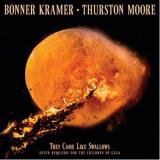
They Came Like Swallows is the first album-length collaboration between Thurston Moore and Kramer (now officially Bonner Kramer), two giants of alternative/ experimental music. The accomplishments and influence of these two artists in the world of independent music cannot be overstated and the result of their artistic union is a startlingly cohesive statement that burns through landscapes of primitive outsider rock, avant-garde composition, progressive ambient and further locales boldly and beautifully unnamable. “Kramer and I reconnected in Miami, Florida, a few years back, many many years after each of us had departed NYC on separate life adventures. It was only a matter of time before Kramer and I started making plans to record together and with his irrepressible due diligence he quickly set up a mobile recording contraption in the pad I was decamped in, the Florida sunshine flowing through the palm leaves, lithe lizards skittering across the windowsills, and we just went for it.
Kramer had the idea to cover a Joy Division tune, a left turn from the improvisations we had been tracking, though wholly in keeping with both our sensibilities of light and dark unifying in transcendent songwriting, both of us devotees of 'the song' as well as 'the freedom.’ What transpired is They Came Like Swallows, a session we immediately felt should exist as a prayer to the war-torn souls of the families of Palestine continually decimated by the brutality of genocide. We agreed beyond words to offer our music as a sonic activism and as a beneficent energy. This album is our duo exchange for human dignity, it is our soul music for any semblance of a peaceful planet.” ~ Thurston Moore “For the first time in our nearly 45 years of friendship, we had identical time windows open to make a record together,” recounts Kramer. After all this time not a moment is wasted as the duo immediately taps into the heightened core of improvisational tension across these seven offerings. Volcanic opener “Urn Burial” notches a similar historic union (John Cale and Terry Riley) to meet the circumstances of the moment, with swirling mists of organ and pounding toms over guitar that thickens the atmosphere with jagged, grimy dissonance.
Solemn strings open the second track, “The Redness In The West,” with Kramer’s cello and viola in dueling bow beneath the high tension drive and sustain of Thurston’s electric guitar, tapping out a Morse code of tension that mounts endlessly into a fog of inevitable war by the end. Moore and Kramer’s sense of experimentalism is in free and full grandeur throughout They Came Like Swallows, though the duo keep a strong and constant sideways eye on melody, composition and architecture, to the ends that any strict lines between song and improvisation are blurred beyond qualification.
As if to punctuate this point, Swallows closes with a nightwork cover of Joy Division’s “Insight,” a doleful coda that breathes out with a solemn inner grace under Thurston’s instantly stylistically recognizable guitar melodies as they weave into he and Kramer’s unison voices. As the lone vocal piece and only traditional ‘song’ form on the album, “Insight” is unique to this set and as a closing statement draws connective lines back to the kind of dynamic, electrified melodicism that wove deep, melancholy patterns into the untamed fire of Sonic Youth’s Sister and Daydream Nation. In the album’s final moments, the two voices repeat the lyric “I’m not afraid anymore” as mantra, underscoring the heavy, unsettled themes and methods that preceded it. Kramer describes the creative process of They Came Like Swallows: “I had composed and recorded a few pieces at my home studio over the course of a couple weeks. Thurston was spending the winter in South Florida, so I flew down and spent a few days recording his guitar parts in his home there. Watching him spontaneously compose his parts was pretty astonishing, to say the least. Once we'd finished working on those pieces, we began improvising and following wherever the music pointed us, and another few pieces were born. We got straight to it, without anything driving us other than the joy of finally working together.
My personal goal was to remain present and catch as many surprises as I could from Thurston's guitar work, and there were plenty during those few days. We had a fucking blast.” Thurston’s contributions here will be readily familiar to any acolytes of his other works, the through-line between his inspired playing, cradled in Kramer’s meticulous, solid arrangements. “If I had to make this record again, I'd do it all exactly the same way,” Kramer says. “It’s like jazz, you don't think about it. You just do it. It was miraculous, and you don't fuck with a miracle.”
They Came Like Swallows is the first album-length collaboration between Thurston Moore and Kramer (now officially Bonner Kramer), two giants of alternative/ experimental music. The accomplishments and influence of these two artists in the world of independent music cannot be overstated and the result of their artistic union is a startlingly cohesive statement that burns through landscapes of primitive outsider rock, avant-garde composition, progressive ambient and further locales boldly and beautifully unnamable. “Kramer and I reconnected in Miami, Florida, a few years back, many many years after each of us had departed NYC on separate life adventures. It was only a matter of time before Kramer and I started making plans to record together and with his irrepressible due diligence he quickly set up a mobile recording contraption in the pad I was decamped in, the Florida sunshine flowing through the palm leaves, lithe lizards skittering across the windowsills, and we just went for it.
Kramer had the idea to cover a Joy Division tune, a left turn from the improvisations we had been tracking, though wholly in keeping with both our sensibilities of light and dark unifying in transcendent songwriting, both of us devotees of 'the song' as well as 'the freedom.’ What transpired is They Came Like Swallows, a session we immediately felt should exist as a prayer to the war-torn souls of the families of Palestine continually decimated by the brutality of genocide. We agreed beyond words to offer our music as a sonic activism and as a beneficent energy. This album is our duo exchange for human dignity, it is our soul music for any semblance of a peaceful planet.” ~ Thurston Moore “For the first time in our nearly 45 years of friendship, we had identical time windows open to make a record together,” recounts Kramer. After all this time not a moment is wasted as the duo immediately taps into the heightened core of improvisational tension across these seven offerings. Volcanic opener “Urn Burial” notches a similar historic union (John Cale and Terry Riley) to meet the circumstances of the moment, with swirling mists of organ and pounding toms over guitar that thickens the atmosphere with jagged, grimy dissonance.
Solemn strings open the second track, “The Redness In The West,” with Kramer’s cello and viola in dueling bow beneath the high tension drive and sustain of Thurston’s electric guitar, tapping out a Morse code of tension that mounts endlessly into a fog of inevitable war by the end. Moore and Kramer’s sense of experimentalism is in free and full grandeur throughout They Came Like Swallows, though the duo keep a strong and constant sideways eye on melody, composition and architecture, to the ends that any strict lines between song and improvisation are blurred beyond qualification.
As if to punctuate this point, Swallows closes with a nightwork cover of Joy Division’s “Insight,” a doleful coda that breathes out with a solemn inner grace under Thurston’s instantly stylistically recognizable guitar melodies as they weave into he and Kramer’s unison voices. As the lone vocal piece and only traditional ‘song’ form on the album, “Insight” is unique to this set and as a closing statement draws connective lines back to the kind of dynamic, electrified melodicism that wove deep, melancholy patterns into the untamed fire of Sonic Youth’s Sister and Daydream Nation. In the album’s final moments, the two voices repeat the lyric “I’m not afraid anymore” as mantra, underscoring the heavy, unsettled themes and methods that preceded it. Kramer describes the creative process of They Came Like Swallows: “I had composed and recorded a few pieces at my home studio over the course of a couple weeks. Thurston was spending the winter in South Florida, so I flew down and spent a few days recording his guitar parts in his home there. Watching him spontaneously compose his parts was pretty astonishing, to say the least. Once we'd finished working on those pieces, we began improvising and following wherever the music pointed us, and another few pieces were born. We got straight to it, without anything driving us other than the joy of finally working together.
My personal goal was to remain present and catch as many surprises as I could from Thurston's guitar work, and there were plenty during those few days. We had a fucking blast.” Thurston’s contributions here will be readily familiar to any acolytes of his other works, the through-line between his inspired playing, cradled in Kramer’s meticulous, solid arrangements. “If I had to make this record again, I'd do it all exactly the same way,” Kramer says. “It’s like jazz, you don't think about it. You just do it. It was miraculous, and you don't fuck with a miracle.”
- Sea Ceremony (With Karen Vogt)
- Coral And Bones (With Laryssa Kim)
- Heartsea (With Vargkvint)
- Naiade (With Mt Fog)
- Moon And Mirrors (With Elska)
- Daughter Of The Abyss (With Singer Mali)
- Serpentine (With Nightbird)
- Their Voices Rise Above The Waves (With Yellow Belly)
- For All The Sea-Girls (With Nadine Khouri)
- Ondine (With Astrid Williamson)
- Coda (With Camilla Battaglia)
Oceanine, Jolanda Moletta’s third album and her first for Beacon Sound, is a powerful and ethereal statement of artistic community. Expanding on her previous work, each track represents a collaboration with a different female vocalist, with the foundational elements being generated entirely by her own voice. By turns haunting, enchanting, and inspiring, you won’t want to come up for air once you’ve been pulled under. Representing a
musical practice that is distinctly feminist, this is an album with a longer view in mind, to an age when the altars were to goddesses and women were centered as powerful beings representing the earth’s cycles of regeneration and renewal. Oceanine then, in all its beauty, can be viewed as an album of survival. It is deeply transportive, accessing something that lies within all of us. As the late, great Lithuanian folklorist and archaeologist Marija Gimbutas noted, “We must refocus our collective memory. The necessity for this has never been greater as we discover that the path of 'progress' is extinguishing the very conditions for life on earth.”
Jolanda Moletta is a multimedia artist and one-woman electronic choir. She creates wordless compositions through extended vocal techniques, integrating wearable-controlled live processing, alongside symbolic visuals. Moletta considers her performances to be a collective ritual and creates her Sonic & Visual Spells following the cycles of nature and the moon. Jolanda's 2022 critically acclaimed album Nine Spells was released on the Ambientologist label, followed by Night Caves on Whitelabrecs in 2025. Moletta’s artistic practice is a radical and spiritual journey through sound art, ritual, and the symbolic archaeology of the feminine.
Oceanine is inspired by sirens, water nymphs, and the timeless call of the sea. At its core lies Jolanda’s deep, lifelong connection to the Mediterranean Sea and to the ancient and modern myths and folklore that have emerged from its waters. Growing up by the Mar Ligure, Jolanda was surrounded by stories carried by salt, wind, and waves: legends of sirens, echoes of ancient voices, and the sea as both origin and oracle. This intimate relationship with the Mediterranean is not merely a backdrop, but a living source that shapes Oceanine’s emotional, symbolic, and sonic world.
Each track features a different female vocalist, creating a rich tapestry of voices, styles, and perspectives. This artistic choice not only broadens the album’s sonic palette, but also deepens its narrative core: celebrating the power, beauty, and mystique of feminine energy through myth, history, and sound.
The entire album is built exclusively from the human voice, processed and layered, yet always remaining voice, and nothing else. For each piece, Jolanda invited every vocalist involved to contribute a raw stem: a short, unedited melodic fragment of just a few seconds, inspired by the album’s themes. These intimate vocal seeds became the foundation of each track: the guest artists’ voices appear as brief, melodic stems, while the entire surrounding “orchestral” fabric is created solely from Jolanda’s own layered and processed voice. In this way, Jolanda’s voice becomes the Ocean itself, embracing, absorbing, and carrying the sirens’ calls within a vast, immersive soundscape. Every song is a unique expression of the feminine experience, revealing its depth, complexity, and emotional range, echoing the call of the sea and the many faces of the siren archetype.
The figure of the siren has transformed across centuries. In myths of Ancient Greece and Rome, sirens were hybrid beings, part woman, part bird, whose irresistible songs lured sailors to their doom. During the Middle Ages, the image shifted toward the half-woman, half-fish figure, often associated with temptation and danger. Historically, the voice of women has often been feared. Sirens were considered harbingers of misfortune not simply because they seduced or destroyed, but because they were powerful liminal beings.
In Ancient Greek, sirens functioned as psychopomps: figures who existed between worlds and guided souls, especially between life and death. Their songs were believed to carry forbidden knowledge, including prophetic insight and the ability to reveal truths about fate and the future. The danger of the sirens lay in what they revealed: knowledge that humans were not meant, or ready, to hear.
Oceanine confronts this legacy head-on. The voices heard throughout the album are not merely beautiful: they are dark and luminous, wild and enchanting, magical, soothing, dreamy, and at times fractured or distorted. They whisper, lament, beckon, and enchant. Like sirens, they skim the surface of the water and sink into its depths, hovering on the edge between tenderness and danger, vulnerability and power. They rise toward the sky, dissolve into mist, and return as echoes charged with raw, elemental emotion: voices that seduce, warn, mourn, and remember. They refuse to be reduced to decoration.
Alongside the album’s release in May, Oceanine will also unfold as a visual and performative work through a short art film. The film includes a live session recorded inside a sea cave facing the Mar Ligure, the very coastline where Jolanda spent her childhood, dreaming of sirens and listening to the sea as if it were speaking directly to her. This site-specific performance reconnects the music to its place of origin, allowing the voice to resonate within stone, water, and air, and transforming the cave into both a sanctuary and a threshold between myth and reality.
What if the sirens’ songs were considered dangerous because they carried another truth, an ancient truth long forgotten?
Oceanine embraces the idea that we are still deeply woven into myth. Though we may see ourselves as rational and modern beings, our world is saturated with ancient symbols and archetypes, often distorted, simplified, or stripped of their original meaning. And if those symbols are allowed to shift, if the mirror once held by the siren becomes an invitation to look beyond appearances and into what has been obscured, then we may finally uncover a deeper truth and reclaim the voice that was always ours.
Oceanine is not just an album. It is a reclamation, a spell, and a call from the depths.
- A1: Cyril - Stumblin' In
- A2: Tiësto & Kshmr - Secrets
- A3: Afrojack & Eva Simons - Take Over Control
- A4: Sander Van Doorn - Riff
- A5: 4 Strings - Take Me Away (Into The Night)
- A6: Beatfreakz - Somebody's Watching Me (Hi_Tack Radio Edit)
- A7: Carlos - The Silmarillia (4 Strings Radio Edit)
- A8: Cheat Codes & Dante Klein - Let Me Hold You
- B1: Martin Garrix - Animals
- B2: Nicky Romero - Toulouse
- B3: Sandro Silva & Quintino - Epic
- B4: Watermät - Bullit
- B5: Hi_Tack - Say Say Say (Waiting 4 U)
- B6: Ian Carey - Keep On Rising (Feat. Michelle Shellers)
- B7: Kshmr & Bassjackers - Memories (Feat. Sirah)
- B8: Erick E - The Beat Is Rockin
- C1: Dvbbs & Borgeous - Tsunami
- C2: Bingo Players & Far East Movement - Get Up (Rattle)
- C3: Showtek - Booya (Feat. We Are Loud & Sonny Wilson)
- C4: Peter Gelderblom - Waiting 4
- C5: Ron Van Den Beuken - Timeless
- C6: Makj & Timmy Trumpet - Party Till We Die (Feat. Andrew W.k.)
- C7: Randy Katana - In Silence
- D1: Sam Feldt - Show Me Love (Edx Radio Mix)
- D2: Don Diablo - Cutting Shapes
- D3: Nadia Ali & Starkillers - Pressure (Alesso Radio Edit)
- D4: Sidney Samson - Riverside
- D5: Sander Van Doorn, Martin Garrix & Dvbbs - Gold Skies
- D6: Parra For Cuva - Wicked Games (Feat. Anna Naklab)
- D7: Firebeatz & Schella - Dear New York
Chapter 2[40,29 €]
Spinnin' Records, one of the most influential dance music labels, celebrates its 25th anniversary with the Chapter 1 compilation featuring a selection of iconic hits that have shaped the global electronic music scene. Since its founding in 1999, Spinnin' has been a trendsetter in electronic dance music (EDM), nurturing superstar artists and groundbreaking tracks across house, future bass, big room, and deep house genres.
This edition of Spinnin' 25 Years...Chapter 1 double vinyl LP collection includes memorable tracks from legends like Martin Garrix with the chart-topping hit “Animals”, "Stumblin' In" by CYRIL, "Secrets" by Tiësto & KSHMR, "Tsunami" by DVBBS & Borgeous, “Bullit” by Watermat, “Toulouse” by Nicky Romero, "Show Me Love" by Sam Feldt and 23 more tracks showcasing the signature sound and major contributions to the label.
Spinnin' 25 Years...Chapter 1 is available as a limited edition on green vinyl. The iconic Spinnin' logo is printed with an uv spot varnish on the gatefold sleeve.
- A1: Tiësto - Lay Low
- A2: Sam Feldt Feat. Rani - Post Malone
- A3: Alok, Bruno Martini Feat. Zeeba - Hear Me Now
- A4: Bingo Players - Cry (Just A Little)
- A5: Dr Kucho! & Gregor Salto - Can’t Stop Playing (Oliver Heldens & Gregor Salto Remix)
- A6: Joe Stone - The Party Ft. Montell Jordan (This Is How We Do It)
- A7: Imanbek & Byor- Belly Dancer
- A8: Gabry Ponte X Lum!X X Prezioso - Thunder
- B1: Afrojack & Martin Garrix - Turn Up The Speakers
- B2: David Guetta Vs Benny Benassi - Satisfaction
- B3: Hardwell & Kshmr - Power
- B4: Tujamo - Drop That Low (When I Dip)
- B5: Blasterjaxx & Timmy Trumpet - Narco
- B6: Lum!X, Gabry Ponte - Monster
- B7: Lucas & Steve - Where Have You Gone (Anywhere)
- B8: Dubdogz & Bhaskar - Infinity
- C1: Martin Solveig & Gta - Intoxicated
- C2: Öwnboss, Sevek - Move Your Body
- C3: Maverick Sabre Feat. Jorja Smith - Slow Down
- C4: Camelphat - Constellations
- C5: Grooveyard - Mary Go Wild
- C6: Oliver Heldens - Gecko
- C7: R3Hab, Inna, Sash! - Rock My Body
- C8: Clokx - Overdrive
- D1: Cheat Codes X Kris Kross Amsterdam - Sex
- D2: Jason Derulo X Puri X Jhorrmountain - Coño (Ft. Adje)
- D3: Kris Kross Amsterdam X The Boy Next Door - Whenever (Feat. Conor Maynard)
- D4: Alok & Alan Walker - Headlights (Feat. Kiddo)
- D5: Mike Williams X Mesto - Wait Another Day
- D6: Dzeko & Torres - L'amour Toujours (Feat. Delaney Jane) (Tiësto Edit)
- D7: Aeroplane & Purple Disco Machine - Sambal
Chapter 1[40,29 €]
Spinnin' Records, one of the most influential dance music labels, celebrates its 25th anniversary with the Chapter 2 compilation featuring a further selection of iconic hits that have shaped the global electronic music scene.
Since its founding in 1999, Spinnin' has been a trendsetter in electronic dance music (EDM), nurturing superstar artists and groundbreaking tracks across house, future bass, big room, and deep house genres.
This edition of Spinnin' 25 Years...Chapter 2 double vinyl LP collection includes the hits "Lay Low" by Tiësto, "Turn Up The Speakers" by Afrojack & Martin Garrix, "Satisfaction" by David Guetta & Benni Benassi, "Intoxicated" by Martin Solveig & GTA, "Gecko" by Oliver Heldens, "Sex" by Cheat Codes x Kris Kross Amsterdam and 25 more tracks showcasing their signature sound and major contributions to the label.
Spinnin' 25 Years...Chapter 2 is available as a limited edition on blue vinyl. The iconic Spinnin' logo is printed with an uv spot varnish on the gatefold sleeve.
- A1: Cherry Moon Trax - Acid Dream
- A2: The Jeyênne - Xpq-21
- A3: Jamie Dill - Engine
- B1: Laurent Garnier - Wake Up
- B2: Drax Ltd. Ii - Amphetamine
- A1: 3 Phase Feat. Dr. Motte - Der Klang Der Familie
- A2: Acrid Abeyance - Dynamique Twins (Remix)
- B1: Private Productions - Looped
- B2: Marc Acardipane Aka T-Bone Castro - The Women Here (Are All So Cute)
- A1: Bradley Strider - Bradley's Beat
- A2: Suburban Knight - The Art Of Stalking (Ludovic's Favorite Mix)
- B1: Aura - Energy Transepose
- B2: District 1 - See The Light (Basi Dog Mix)
- A1: Planetary Assault Systems - Surface Noise
- A2: Dj Edge - Hold
- B1: Dj Bountyhunter - Short Circuit
- B2: Armani & Ghost - Airport
- B3: Marc Acardipane Aka Ace The Space - 9 Is A Classic
- A1: The Mod Wheel - Spiritcatcher
- A2: Belgica Wave - The Wave
- B1: Equus - Lava Flow
- B2: Aurora Borealis - Raz (Carl Mmr's Mix)
- A1: Thc - Sizzle
- A2: Dj Fred H - Won't Give Up
- B1: Dexter Moore - Pump!
- B2: Frankie Bones - The Way U Like It
- A1: Bjørn Svin - Mand Over Bord
- A2: Silvio Ecomo - No Dip
- B1: Nygel Reiss & Ghost - Fear & Loathing
- B2: The Subjective - Tremmer
- A1: Dima - Soaked
- A2: Digital Express - The Club
- B1: The High Tech Child Aka Jerome Isma-Ae - Tribal Storm
- B2: E-Dancer - World Of Deep
- A1: Sharpside - Space Cruising
- A2: Dj One Finger - One Finger
- B1: Thomas Schumacher - When I Rock (Dj Rush's Rock Da Beat Remix)
- B2: Bolz Bolz - Take A Walk (Dima Neo-Romantic Remix)
- B3: Global Concept - Beep Attraction
- A1: Umek - Gatex (Dj Tiësto Remix)
- A2: Starchild - Codec
- B1: Vitalic - La Rock 01
- B2: Definitely N.o.t. - Take A Tablet
Relive three decades of Belgian clubbing history.
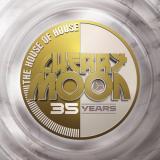
We're celebrating the 35th anniversary of Cherry Moon withan essential collection of the anthems that defined a generation. Hard to find tracks, classics and sounds from the underground combined in a splendid 10x12" Vinyl Box Set.
From the first beats of 1991 to the peak of the "House of House", this is the ultimate tribute to a legendary venue.
Deep cuts for early and late hours. Caldo Verde opens warm and inviting, setting the tone with slow-burning depth. Bacalhau steps in with richness and weight, built for extended rotations. Medronho eases the pace, hazy and smooth, before Pastel De Nata delivers a soft, sweet release. Bica closes the circle, dark, sharp, and made to linger long after the last note.