»Rosacea« sounds as strange and demented as all the previous albums by this Norwegian one-man project (on Feeding Tube and Ultra Eczema). But it sounds right. Just like he claimed in a recent interview about his untraditional approach to writing songs: »I just make stuff until it sounds right«. It sounds absolutely right in fact.
As puzzling and lunatic as he may seem, yet a sense of order emanates from the idiosyncrasies featured on this album. Ghédalia Tazartès is a cursory reference. Especially on »Carmelade«. However, the spectrum of sound and compositions on »Rosacea« manage to actually transcend the late French eccentric composer and singer.
Buscar:dee la
- 01: Cross Fire
- 02: Barrio Bueno
- 03: African Jewel
- 04: Borderland
- 05: The Smallest Share
- 06: Max&Apos;S Movida
- 07: Devilry Time
- 08: Habana Keynote
- 09: Softly Sonora
- 10: Kigis Konar Story
The Cabildos remain one of the most enigmatic names to emerge from the 1970s library music scene. Little is known about the group, except that their name was inspired by Johnny Cabildo, an Italian keyboardist and composer who had relocated to Florida. Their recorded legacy is strikingly concise: just three albums—Yuxtaposición (1972, released under the name Cabildo's Three), Cross Fire (1974), and the later Where Is the Cat? (1979).
Entirely instrumental, the Cabildos' music is driven by deep grooves and a vibrant blend of Latin influences, funk, and jazz fusion, often enhanced by Afro-tribal percussion. Conceived primarily for use in films, documentaries, and advertising, their work naturally belongs to the world of synchronization music.
Cross Fire stands out as a particularly compelling chapter in their catalog, distinguished by an impressive range of textures and moods achieved through the minimalist interplay of bass, drums, and keyboards alone.
Now reissued by Redi Edizioni on clear red vinyl, this excellent record returns with a faithful reproduction of the original artwork, offering a renewed opportunity to appreciate one of library music's most elusive gems.
Six years after his Grammy-nominated LP5, Sascha Ring - aka Apparat - takes a bold dive into the complexities of life with his sixth studio album.
A Hum Of Maybe is detailed, finely crafted, and wonderfully unpredictable. At its core, the record is about love - for himself, his wife, and his daughter - and holding onto it, protecting it, and constantly recalibrating as it is in a constant state of flux. As the title suggests, the songs explore being stuck in between: not a clear yes or no, but A Hum Of Maybe.
Ring elegantly combines the perspectives of an electronic producer and a classical composer, working closely with long-time collaborators Philipp Johann Thimm (cello, piano, guitar) - who also co-wrote and co-produced the record - Christoph “Mäckie” Hamann (violin, keyboard, bass), Jörg Wähner (drums), and Christian Kohlhaas (trombone). The album also features Armenian-American artist KÁRYYN - Apparat’s Mute labelmate - on ‘Tilth’, and Berlin-and Rome-based musician Jan-Philipp Lorenz (aka Bi Disc) on ‘Pieces, Falling’.
A Hum Of Maybe is complex, deeply personal, and embraces a state of limbo, marking an exciting new chapter for Apparat.
- A1: Arco Arca
- A2: Spiral 2097
- A3: A Good Brainwash
- A4: Ca Va
- A5: Core Feat Claude Violante, S Diamah, Len, Fiona Walden, Serguei Spoutnik, Janis, Silly Boy Blue
- A6: Deconstruire
- A7: Nobody On The Floor
- B1: Patternity
- B2: Resting Is Working (Slow Mix)
- B3: Resting Is Working (Fast Mix)
- B4: Thedral
- B5: Shame
Like a crusader, Apollo Noir relentlessly pursues his noble cause: pushing modular and analog experimentation ever further while remaining irresistibly accessible. Here is CORE, his 4th studio album, fusing post rave techno Detroit à la Drexciya and Manchester early Autechre (Spiral), OPN’s most epic era (Nobody On The Floor), futuristic UK jungle (A Good Brainwash), letfield amen-breaked ambient (ça va), a mega massive cadaver exquis song (CORE) featuring Remi Sauzedde’s very close friends (Janis, Ley, Claude Violante, Silly Boy Blue, S Diamah, Serguei Spoutnik and Fly HQ), diving deeper - as a true obsessive lover of drum machines (TR909, TR808 and TR606) - in the raw deconstruction of techno rhythms (Déconstruire), unleashing a dark and heavy Bassline at 145 bpm with grime vocal samples (Patternity), heavy modular beats blending perfectly with soft and voicy Korg M1 pads (Shame)... Apollo Noir knows his classics and contemporaries inside out, forging his own path with deranged yet beautiful twists (Thedral, Arco Arca).
- A1: Why Don’t You Do Right - Cleo Jons & Dick Reynolds Orchestra
- A2: Fiche Le Camp Jack - Richard Anthony & Les Angels, Dir. Christian Chevallier
- A3: I Pawned Everything - Walter Spriggs & Jesse Stone Orchestra
- A4: Don’t Play No Mambo - The Charioteers & Sid Bass Orchestra
- A5: Mr. Sandman - Chris Powell & The Blue Flames
- A6: Teen Age Rock - Pete Rugolo & His Orchestra
- A7: The Rhinoceros - Osie Johnson & His Orchestra
- B1: Lady Be Good - Knud Jörgensen & The Metronome Singers
- B2: Walk Softly Children - Elizabeth Lands, Orchestra Cond. By Dave Martin
- B3: Timber’s Gotta Roll - The Deep River Boys Feat. Harry Douglass
- B4: Blues In The Closet - The Tritones
- B5: The Baggage Room Blues - Tom Kennedy
- B6: Write Me Baby - The Metrotones
- B7: Rat Race - Little Norman (Norman Kaye)
Auf dem komplett unübersichtlichen Markt der Vinyl-Wiederveröffentlichungen rarer Aufnahmen aus dem im weitesten Sinne Rock & Roll/Rhythm & Blues/Popcorn-Umfeld hat sich die Serie DOWN AT THE UGLY MEN’S LOUNGE mit einer komplett eigenständigen konzeptionellen Farbe etabliert. Das authentische 10“-Format und die Covergestaltung mit obskuren und anonymen Musikerfotos der ersten fünfzig Jahre des 20. Jahrhunderts sind gleichermaßen unverkennbar wie unwiderstehlich.
Das stilistische Spektrum der neuen Auswahl rarer und rarster Trouvaillen aus dem legendären Archiv von Prof. Bop bleibt dem Ursprungskonzept treu: Zwischen Boogie und Mambo, zwischen Blues und Bop, zwischen Exotica und Egozentrik...weniger amateurhaft gespielter Teenager-Rockabilly, eher Rock & Roll etc. von musikalisch versierten und Jazz-geschulten Vollprofis. Allesamt Aufnahmen der goldenen Epoche 1950 – 1962.
- 1: Jacob Miller – Keep On Knocking
- 2: Junior Delgado – Away With You Fussing And Fighting
- 3: Hugh Mundell – Africa Must Be Free By 198
- 4: Jacob Miller – Baby I Love You So
- 5: Delroy Williams – Think Twice
- 6: Spliffy Dan – No Justice Place
- 7: Tetrack – Let’s Get Together
- 8: Sister Erica – One In The Spirit
- 9: Dillinger – Brace A Boy
- 10: Jacob Miller – Who Say Jah No Dread
- 11: Earl Sixteen – Changing World
- 12: Paul Blackman – Earth Wind & Fire
As the meteoric rise of reggae began to captivate listeners around the globe in the 1970s, innovative artist Augustus Pablo emerged as vital creative force pushing the genre forward. An important figure in the Jamaican music scene during this remarkable era, Pablo was not only a skilled musician but an influential producer who shaped the sound of countless classic recordings. While his instrumental work and legendary dubs remain essential, Pablo was also responsible for iconic vocal tracks from a wide range of local talent, many of which were released on his own label Rockers. Now, Nature Sounds is proud to present Rockers United!, a collection of classic and rare vocal selections from the Rockers archives, all produced by Augustus Pablo. Deeply rooted in hypnotic, bass-heavy instrumentation, the album features remastered audio transferred from the original master tapes, with vocals by Jacob Miller, Delroy Williams, Hugh Mundell, Tetrak, Junior Delgado, Earl Sixteen, Spliffy Dan and more.
Kyoto-based Stones Taro is a producer and DJ who has established a unique standing within the global dance music scene. After operating the NC4K label since 2017, he embarks on a new challenge by launching his own self-release series.
The inaugural release, titled "Foglore," is characterized by its foggy sound design and timeless arrangements reminiscent of folk tales.
In this four-track release, Stones Taro explores a fresh interpretation of the fusion between Dub, Techno, and Deep House. These tracks capture the essence of contemporary music in intriguing ways, yet feel as familiar as if they have existed since ancient times.
Heady French minimal and tech producer Janeret makes his debut on reliable Leeds label 20/20 Vision in early 2026 with four slices of pure late-night propulsion and deep introspection. The French producer stays true to his usual balance of groove and emotion while sculpting a sound that feels weightless yet grounded. It's forward thinking but with some hints of familiarity that makes it all the more engaging from the off. Side A brings the lift as 'Xpress' shimmers with euphoria, while 'Wiggy' locks into a playful, percussive swing. Flip it, and 'A Certain Era' slides into acid-touched reverie before 'Ocean Dreams' drifts home in layered, meditative bliss. This is Janeret at his best.
- A1: Stop Crying - Feat. Cappadonna & Elaine Kristal
- A2: Butterfly Effect - Feat. Rj Payne
- A3: Black Ops - Feat. Hanz On
- A4: Guillotine
- A5: Live From The Meth Lab - Feat. Redman, Krs-One & Jojo Pellegrino
- A6: Switch Sides - Feat. Jadakiss, Eddie I, 5Th Pxwer
- B1: Act Up - Feat. 5Th Pxwer
- B2: Training Day - Feat. Cortez
- B3: King Of New York - Feat. Carlton Fisk & Chunk Bizza
- B4: Find God - Feat. Intell & Iron Mic
- B5: Last 2 Minutes - Feat. Iron Mic
- B6: K.a.s.e. - Feat. Hanz On & Carlton Fisk
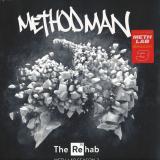
The Meth Lab returns for its third instalment with “Meth Lab Season 3: The Rehab,” a sharp, hard-hitting chapter that cements Method Man’s place as one of hip-hop’s most consistent and enduring voices. Executive produced by longtime collaborator Handz On, this project finds the Wu-Tang legend in rare form—polished, precise, and laser-focused.
“The Rehab” pulls listeners back into the world Meth has been building since the first Meth Lab sessions: a mixtape-style showcase blending razor-sharp lyricism with streetwise storytelling, packed with energy and attitude. Method Man’s flow remains timeless, weaving between gritty boom-bap, polished modern production, and the unmistakable Wu-Tang aesthetic. A strong lineup of guests brings extra fire to the set—Cappadonna, RJ Payne, Redman, KRS-One, JoJo Pellegrino, Jadakiss, Carlton Fisk, Hanz On, Intell, Iron Mic, 5th Pxwer, Chunk Bizza, Eddie I, Cortez, and more—each stepping into Meth’s world with their own hard-edged energy. Behind the boards, producers like P. Version, Rockwilder, Eric Sermon, Adam McLeer, Daniel C. Wells, Darnell Norman McConnell, and Joshua D. Zimmerman craft a gritty yet refined sonic framework that elevates every performance.
More than just another chapter, Season 3: The Rehab feels like a victory lap: a culmination of decades of craft, a celebration of the Staten Island movement, and a reminder that Method Man still out-rhymes rappers half his age. It’s a must-own for Wu-Tang fans, East Coast purists, and anyone who appreciates sharp writing and decades-deep mastery.
Following the widely acclaimed release of Body Shell in Spring 2025, Carré returns to Tempa, for a new EP, ‘Hibiscus’, featuring a collaborative track with LA-artist Bbyafricka, highlighting the synergy of West Coast Rap & London Soundsystem culture.
Connected by warmth and groove that define where Carré is musically right now, each of the four tracks on ‘Hibiscus’ stands on its own, yet together they continue to showcase Carré’s flair for producing sleek dubstep with melodic verve. From the shimmering ‘Warm Light’, the razor-sharp edge of ‘X Effect’, the deep stepper ‘Ride It Out’ to the stripped back ‘Hibiscus’ which glows with the addition of Bbyafricka’s sultry vocals, the EP is a concise statement of Carré’s evolving sound.
Speaking about the collaboration, Carré says, “I’d been a fan of Bbyafricka’s sound, style, and tone — tracks like ‘Baton Rouge’ and ‘Dumbo’ really stood out to me — and I could already imagine how her voice would fit with my production. The fact that she’s from LA made the connection feel even more natural. When I reached out, she was down straight away and came back with something I genuinely loved. She captured the energy of the track perfectly, and together I think we created something that feels authentic and even better than I’d imagined.”
For Bbyafricka, working on ‘Hibiscus’ was a moment of overcoming writer's block, “this song was me coming out of it on a weekend spent in Joshua tree, sitting outside looking at the view and the solar panels. I think you can envision what my view was when you play the song,” she explains.
Carré’s next outing on Tempa is a welcome return, signifying the home run she’s on as a producer and marking another impressive instalment in the producer's growing catalogue. In the last three years, Carré has quickly become a leading figure in the contemporary wave of artists pushing the true school Dubstep sound to new places and new audiences, expanding on the roots laid down by the likes of Skream, Benga, and Loefah.
“Tubby did three original dub albums, ‘Dub From The Roots’. ‘The Roots of Dub’ and the third is ‘Brass Rockers’ with Tommy McCook ‘pon the flying cymbals. Where he mixed it with the horn going in and out in a dub way and one named ‘Shalom Dub’ you can call Tubby’s too because he mixed the versions as they were off forty fives’’
Bunny ‘Striker’ Lee
King Tubby and Producer Bunny ‘Striker’ Lee are intertwined in the birth of Dub Music. After discovering a mistake that made a ‘serious joke’ (more of which later...) they went on to release the first pressings of this new musical genre namely ‘Dub Music’. Tubby’s vast knowledge of electronics and Bunny’s vast catalogue of rhythms would lay the foundations of what today is taken as a standard... the Remix / Version cuts to an existing vocal tune.
Osbourne ‘King Tubby’ Ruddock was born in Kingston, Jamaica on 28th January 1941 and grew up in the High Holborn Street area of downtown Kingston. He studied electronics at Kingston’s National Technical College and also on two correspondence courses from the U.S.A... When he had qualified Tubby began repairing radios and other electrical appliances in a shack in the back yard of his mother’s home. His work in the early days included winding transformers and building amplifiers for Kingston’s Sound Systems. Tubby built his first Sound System in 1957 playing jazz and Rhythm & Blues at local weddings and birthday parties. His reputation as a man who knew and understood both electronics and music grew steadily and as the sixties drew to a close. Tubby
purchased his own basic two track equipment. He installed this alongside his dub cutting machine, a home-made mixing console, and his impressive collection of jazz albums in the back bedroom of his home at 18 Dromilly Avenue which he christened his music room.
Tubby and Striker were at Treasure Isle Studio’s one day while Ruddy from Spanish Town was working with the engineer Byron Smith....
“Tubby and myself was talking when Ruddy was cutting some dub but Smithy (engineer) made a mistake through we were talking and forgot to put in the voice. It was two track recording in those days. Ruddy said ‘No Man! Make it stay! and so they cut the rhythm. When I went over to Ruddy’s that Saturday night a dance was in progress and when they played the vocal to the tune... then he said we’re going to play ‘Part Two’. They never called it ‘Version’..and then he played the rhythm track. The song was a catchy song and everybody started to sing along and the deejay started to toast so everything went down well. On Monday morning I went up and I said ‘Tubbs the mistake we made was a serious joke.It mash up Spanish Town! The people went wild. So you have to start to do that now ‘cause when the man put on the ‘Part Two’ everyone start singing this song. It played about twenty times. I said you try Tubbs!’...Well the next Saturday night now when Tubby strung up down the farm U Roy said he’s going to play ‘Part Two’ but Tubby did it different now. He started with the voice then dropped it out and let the rhythm run and then he brought in the voice in the middle and from there Tubby started to get really popular.’’
Bunny ‘Striker’ Lee
Dynamic Sounds upgraded to sixteen track recording in 1972 and Tubby purchased, again with the help of a deal brokered by Bunny Lee. The old four track equipment and the MCI console from their Studio B. The four tracks now gave him far wider scope to work with and he began to create a new musical form where the bass and drum parts were brought up while the faders allowed Tubby to ease the vocal and rhythm in and out of the mix. It was only a matter of time before Tubby’s dub plate experiments began to make it on to vinyl and the first ever long-playing King Tubby releases would feature a collection of his mixes to a selection of Strikers rhythms. So please sit back and enjoy this historic set of sounds. Lovingly restored and with a few extra gems added to the CD Editions. These releases were the first to carry the name of King Tubby and the first to credit the great musicians that contributed so much to the rhythms that made these albums possible.
Malena Zavala is an Argentinian-born, London-based artist, producer, and filmmaker, known for crafting ethereal, genre-blending music that navigates the space between her Latin heritage and her British upbringing. With the forthcoming album If This Life Could Start Again set for release on 30 January 2026 on Paraná Records, Zavala presents her most intimate, cohesive, and accomplished work to date, marking a significant evolution in her artistic journey.
With her new album, Malena creates an atmospheric dream pop world, weaving singer-songwriter intimacy with synth pop, Argentine folk, indiepop, rock and experimental music, threaded together by her blissful vocals and dreamy guitar work. Gorgeously warm and vivid, If This Life Could Start Again charts the journey from pain to acceptance, mapping out the non-linear nature of healing through a sonic landscape. Each song embodies a distinct emotion within that journey, from grief and chaos to feeling lost, seeking refuge, finding confidence, and finally acceptance and letting go. Drawing on her Argentinian roots, Malena uses the Andes mountains as both a visual and thematic anchor – the difficult climb towards higher ground becomes a metaphor for healing, whilst being lost at rock bottom reflects the darkest moments of the journey.
Completely composed and performed by Malena herself, the album was recorded in Girona’s L’Empordà countryside in Spain with producer Luke Smith. As a professional producer and audio engineer, this was Malena’s first time relinquishing production control – an intimate creative shift that allowed their shared vision to shape the album’s rich, enveloping sound.
However, Zavala’s career to date has been a testament to self-sufficient artistry. Her critically acclaimed debut, Aliso (2018), was written, recorded, and produced alone in her parents’ garage, which honed her dreamy bedroom pop sound. The album, praised by The Guardian for its “gently warped and beguilingly melancholy guitar pop,” ****, immediately catapulted her from DIY beginnings to prestigious stages, supporting acts like Lord Huron at London’s Roundhouse and Men I Trust at Village Underground and subsequently continuing on their UK/EU tours. Later with standout performances at Latitude, Green Man, and All Points East. Her consistent radio support from key influencers including BBC Radio 6 Music, BBC Radio 1's Huw Stephens, and Steve Lamacq has solidified her presence on the airwaves.
Her second album, La Yarará (2020), saw Zavala delve deeper into her roots, exploring Latin traditions like Cumbia and Bolero. This exploration of identity continues powerfully on the new album, but with a newfound lyrical depth and sonic confidence. The new album, If This Life Could Start Again, is a raw and transformative eight-track journey that maps the emotional landscape of healing. Written after a period of personal upheaval, the album traverses themes of grief, hereditary trauma, and self-discovery. The record’s narrative is structured like a mountain ascent. A challenging climb through varied emotional terrain, posing the central question: “Will you join the journey?” Sonically, this journey mirrors the non-linear path to acceptance, evolving from acoustic folk and synth-pop to funk-infused rhythms and rock anthems.
As a formidable live performer, Zavala has built a robust touring profile across the UK and Europe. She will embark on an extensive tour in February and March 2026 to support the album, with dates spanning major cities from London and Glasgow to Berlin, Paris, and Barcelona.
With If This Life Could Start Again, Malena Zavala fully realizes her artistic vision as a self-taught producer to an autonomous artist commanding her career through Paraná Records whilst reflecting the vast landscapes of her heritage and affirming her place as a compelling and evolving voice in contemporary music.
- A1: This Doesn't Exist Anymore
- A2: It Started To Hurt And Then It Just Continued
- A3: Everything You've Ever Dreamt Of And Less
- A4: A Substitute For Experience
- A5: Cyclopentane Fantasy
- A6: Post Sport Principle
- A7: Reverse Nightmare
- A8: 100 Feet To Burn On The Ground
- B1: Dumb Milestone
- B2: I'm Noticing The Blossoms More This Year
- B3: The Extremes
- B4: Terminally Online (For You)
- B5: Underachievers Anonymous
- B6: I Have Been To Heaven Once
- B7: Old Love, Old Fears
Inspired by witnessing the broken tension and renewed possibilities of a laptop breaking down at a gig – not to mention the void left behind by the sudden end of a relationship – Pentu’s latest release is a jump-cut menagerie of musical moments. Sewn together into ‘And I Saw My Devil And I Saw My Deep Blue Sea’, these fifteen tracks continue the London-based producer’s active departure from the soundscapes and song structures that dominated their previous writing style. These disparate pieces slice themselves off into sudden silence, or veer into unpredictable sidebars, hopping from hyperactive instrumentals to beautifully deconstructed YouTube samples. Described by Pentu as “emotionally intuitive to write”, this is music by and for the endlessly scrolling modern mind – “navigating the world alongside the splintered, interruptive emotional hyper realities of social media.”
The sudden silences, drones, and interruptions are perhaps less surprising than the guitar-based textures of metal & shoegaze woven into several vital passages by Pentu. The result is a collage that encapsulates the erratic feeling, not only of a relationship’s end, but simply of navigating online mediascapes.”I found myself realising that my phone, the constant interrupter of nothingness and silence, was both a cause of depression (reliving memories, dating apps) and a relief from it (creating new friendships, distractions, also dating apps)”, says Pentu.
Pentu’s attempt to overcome content overload by actively curbing his setup of laptop-guitar--synth does little to reduce the scope of this album’s sonic palette. YouTube vlog samples (from videos with next-to-no views) are an attempt to recontextualise and dramatise material that “would have otherwise been throwaway moments lost in the internet”, adding staccato moments of reality to Pentu’s beautiful and jarring album-length paean to overstimulation.
repressed !
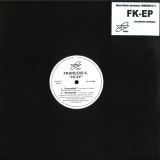
Francois Kevorkian is a name that should need no introduction. With over 40 years in the game FK has occupied numerous roles in his long and storied career - drummer, DJ, A&R man, remixer and producer - his skills know no boundaries. Having DJ-ed during the nascent days of club culture in NYC alongside Walter Gibbons, Larry Levan and more, Kevorkian has been there from day one. Years spent in the seminal clubs of the day sharpened his ears and his prowess behind the mixing desk saw him become the A&R man at the legendary Prelude records in the early 80's, this in turn led to him working with everyone from The Eurythmics, Depeche Mode, Erasure, D-Train, Yazoo, The Smiths, Kraftwerk and many many more. A true NYC original and legend, Kevorkian is still active today and the respect he commands amongst his peers has never waned, his adventurous extended DJ sets, seminal mixes and remixes and his open ears and open mind have ensured that he will go down in history as a musical pioneer.
Rewind to 1995. Kevorkian's 'Wave Music' imprint has come into existence with a handful of releases. No-one could imagine that his self-produced 'FK EP' - the next release on the label - would be a stone cold classic. Easily one of the most consistent, exciting and solid EP's to come out of NYC during this golden era of dance music. Across 4 tracks we are taken on a sound journey through a world that is undoubtedly informed by FK's time as an engineer, DJ and most importantly, a music lover.
EP opener 'Hypnodelic' brings us into this world, a deep, driving cut that fuses the dubbed out vocals of Freddie Turner against FK's keyboards and immaculate drum programming, oozing cosmic electronic soul, this track was destined to be a future classic. 'Mindspeak' also boasts some tough drums and with a respectful nod to Chicago is an incredibly mixed and arranged peak-time cut that will drive your dancefloor into deep space again and again. 'Edge Of Time' welcomes us to the flipside of the EP, wild Latin percussions, tablas and old school horn stabs drive this monstrous cut, not to mention cavernous dub FX and that huge bassline that just doesn't let up. Essential. 'Moov' rounds things out on a more subdued, stripped back vibe. Reversed percussions and spaced-out synth chords lace this beautifully understated and warm track, one that builds into a crescendo of melodies and hypnotic rhythms and the perfect way to close what has been a truly special musical journey.
This essential reissue of the 'FK EP' has been fully licensed, sanctioned and remastered in conjunction with FK from the original master sources by Optimum Mastering, Bristol UK, repressed onto high quality vinyl and packaged as the 1995 release was. A truly classic record indeed, available again for 2018. Welcome back Wave Music!
Very limited repress. Buy or cry!
Opening the release we have one of the most interesting, boundary-pushing artists - Bawrut, who twists Burning Up into outer space. Never one to shy away from a bit of high drama in his tracks, he squeezes every ounce of the original through his sonic mangle resulting in a bass bin wobbling slice of intergalactic house music which confidently stands out in the crowd. Next up, and in perfect contrast, we have UK producer Telfort flipping Becoming Cyclonic on its head. He has well and truly stamped his mark with a fresh sound which takes influence from golden era 90’s deep house but adds a solid, bass-heavy Detroit edge.
He delivers a moody, late-night excursion dripping with fat strings, crisp hats and chiming arps. Flipping over you have the master of deep, iconic and prolific UK producer Charles Webster, who pushes Burning Up to a new sonic level. A sublime rework which is unmistakably his sound, cerebral and dark yet also uplifting, warm and enveloping.
A chance meeting in Mexico City set Points of Inaccessibility into motion. When Ibero-American composer Rafael Anton Irisarri crossed paths with Dutch media artist Jaco Schilp at MUTEK in 2024, a conversation about how technology shapes perception revealed an unexpected common ground. Schilp invited Irisarri to a spring 2025 residency at Uncloud, the Utrecht-based collective he co-founded, where Irisarri's sound began to take form amid an environment shaped by Schilp’s visual research.
The Uncloud studio was located inside the former Pieter Baan Centre, a forensic psychiatric prison where suspects of violent crimes were once confined. Its long history of silence and containment shaped the atmosphere in which the project developed. Within this setting, Irisarri coaxed long bowed-guitar tones through a network of pedals and looping systems. The raw gestures thickened into a vaporous and architectural field of sound. Schilp processed the material through a custom point-cloud software patch that produced images in continuous flux. The visuals flickered, dissolved and reformed like memories that resist coherence, functioning as a digital Rorschach that reflected the observer’s own perception.
Amid these spectral echoes, the project evolved into an examination of how the past persists within present signals. Memory endures as residue and interference, continually shaping perception even when its source has faded.
Schilp’s visual process required a continuous stream of sound in real time. Irisarri improvised throughout the residency, generating material that allowed the visuals to develop in parallel. Once back in his New York studio, he began shaping the recordings by carving pathways through the improvisations and mapping selected passages into MIDI. This process allowed him to build outward from the bowed-guitar material with minimal overdubs, adding Prophet 5 textures, Moog bass and strings that expanded the harmonic field while keeping the original performances at the center. To refine the structure, Abul Mogard provided editorial input, working with Irisarri’s stems to guide transitions and strengthen the overall pacing. The material, originally created under conditions of immediacy and constraint, evolved into a fully realized work through careful revision, patience and sustained reworking.
The title engages the geographic concept of the Poles of Inaccessibility, locations defined solely by their distance from all surrounding points. Irisarri adapts this idea to the conditions of digital life, where new forms of inaccessibility arise through the informational enclosures that structure perception. What appears to be a fully connected network often produces a deeper kind of separation, one shaped by the filtering logic of the systems that mediate experience. In this sense, the digital sphere mirrors its geographic counterpart. We inhabit spaces saturated with signals, yet the possibility of genuine contact becomes increasingly remote.
At its core, Points of Inaccessibility considers what can be understood as the new rituals of capitalist realism. Irisarri uses the term digital shamanism to describe the forms of simulated connection that organize contemporary life. These systems promise comfort through algorithms, influencers and AI interlocutors, yet they often reproduce the same conditions that generate loneliness in the first place. What appears as connection becomes the echo of connection, a sequence of gestures that imitate solidarity while withholding it. Like the geographic poles, these rituals are defined by distance. They pull us into environments where everything is illuminated, yet meaningful proximity becomes increasingly rare. In this sense, the work approaches a hauntology of the present, a reflection on futures that have stalled and intimacies that have been thinned by the algorithmic infrastructures that surround us.
This thematic tension unfolds across the album’s four movements. Faded Ghosts of Clouds introduces the work with textures that rise and dissipate in slow cycles, creating an atmosphere that resists clear definition. Breaking the Unison occupies a pivotal position in the sequence and focuses on the moment when the individual and the system fall out of alignment. Its shifting patterns trace the scattering of signals that once suggested connection, revealing the instability at the heart of contemporary perception. Signals from a Distant Afterglow forms the center of the album and features vocals by Karen Vogt, whose presence enters the sound field like a fragile transmission shaped by distance and delay. The closing piece, Memory Strands, follows motifs that appear, recede and briefly intersect before returning to quiet. Across these movements, the album outlines a landscape in which emergence and disappearance continually inform one another.
Listening to Points of Inaccessibility is an encounter with a sound field that is constantly in flux. Elements surface briefly, shift position and recede, creating a sense of motion that resists stable interpretation. The music moves between closeness and vastness, carrying traces of memory while withholding a clear point of resolution.
The album’s visual identity completes the project’s conceptual arc. In Mexico City, where Irisarri and Schilp first met, Daniel Castrejón transformed stills from Schilp’s point-cloud visuals into the cover image. The final artwork captures a single suspended frame of the digital material, a moment extracted from a field that is normally in constant motion. Its surface recalls the texture and abstraction found in the work of Catalan artist Antoni Tàpies, where material presence and erasure coexist within the same plane.
What emerges is a work that examines the tension between technological systems and human presence. Points of Inaccessibility asks whether connection is still possible within environments shaped by mediation and delay, or whether we have become isolated points within the very networks that promise proximity. What possibilities for relation persist within environments organized by algorithms and interruption? And how are we meant to understand presence when so much of it is constructed at a distance?
Points of Inaccessibility will be released on BioVinyl on February 6, 2026, with audiovisual performances planned throughout 2026.
Mastered by Stephan Mathieu
Artwork by Jaco Schilp
Design and layout by Daniel Castrejón
Artist photo by Iulia Alexandra Magheru.
“Short Story” is the new album by Restive Plaggona. Eight new tracks of industrial techno beats and raw atmospheres. Over the course of 40 minutes the album takes us through different territories and landscapes of immense bass weight sound, sometimes dark and raw, sometimes droning and minimal, always energic.
Restive Plaggona is the music project of the Corfu-based artist Dimitris Doukas, known for his heavy and deep industrial soundscapes with subtle traces of darker forms of techno music. Dimitris is a particularly productive musician, having released more than a dozen records including his own imprint Several Minor Promises.
A year and a half has passed since Slovak-Hungarian artist Adela Mede self-released her debut album ‘Szabadság’. Its liner notes described it as “a navigation”, a search through “the personal, familial, cultural, folkloric and geographic of her past and present.” Her second album, ‘Ne Lépj a Virágra’ no longer searches; here, she puts down roots and delves deeper into the earthy reality of her home, Central Europe. Mede sings in three languages with newfound conviction and grace – this is an album of profound faith and confidence in the potential of this fertile soil.
Composed and recorded during the last 18 months in Bratislava, Slovakia – a city where three countries meet, where the East and the West collide – 'Ne Lépj a Virárga' translates to “don't step on the flower”. Its themes – budding potential, recognizing the beauty in the ordinary, solidarity, turning despair into hope – emerged through Mede's wholehearted involvement with her community, teaching singing to both children and adults, and various grassroots volunteering initiatives. It features collaborations with local artists, Mede's singing students, as well as fellow Eastern European contemporary artists Martyna Basta and Wojciech Rusin.
Adela Mede embellishes carefully crafted songs with minimalist and folklore influences, but also embraces more experimental approaches. The result is a collection of quite varied yet consistent pieces which highlight Mede's proficiency as a singer, arranger, producer and improviser. It is a grounded, confident next step for the Bratislava-based artist. Whether her vocals are naked, heavily processed, warped and reversed, or looped and layered; whether the production is sparse and minimalist or overwhelming and swampy; none of that changes the fact that the gentle tentativeness of her debut is gone. This is “Central European music”, at its most striking and meaningful: patient, determined, embracing both complexity and possibility.
There is a breaking point where the mind yields and the body takes command. This is precisely the territory of Frenetic Habits EP.
Asymetric80 lands at INDUSTRIAS MEKANIKAS with an unapologetic statement: a direct immersion into the aesthetics of collapse and extreme habits. The work places you in the center of a post-apocalyptic scenario, where survival no longer relies on calm, but on your ability to endure mechanical tension.
The sound is built upon solidity and saturation. You won’t find fragility here, but rather an architecture of EBM, New Beat, and Industrial Techno designed to dominate any sound system that dares to play it.
Side A establishes the hierarchy with Frenetic Habits. Far from linear, the track unfolds a broken, demolishing rhythm, generating a devastating sonic pressure that completely envelops you. It is a piece of constant drive, an armored machine advancing over the very ground you stand on. It is followed by Exile and Unmasked, which shifts the strategy towards depth: a hypnotic immersion where industrial textures densify, creating a dark atmosphere that traps you with no escape.
On Side B, Bleak materializes the heaviness of the environment. A slow-burning, corrosive track with deep bass, which you can feel advancing with the force of concrete. To close, Dementia releases the accumulated tension with overflowing kinetic energy; a final outburst of controlled aggression that closes the cycle with maximum intensity.
Frenetic Habits EP is a record of ironclad textures and terminal atmosphere. A work that documents not defeat, but the brute force needed to remain standing when everything around has come crashing down.
- A1: Rock Around The Clock - Bill Haley And His Comets
- A2: Sixteen Candles - The Crests
- A3: Runaway - Del Shannon
- A4: Why Do Fools Fall In Love - Frankie Lymon & The Teenagers
- A5: That'll Be The Day - Buddy Holly & The Crickets
- A6: At The Hop - Danny & The Juniors
- A7: He's So Fine - The Chiffons
- A8: See You In September - The Tempos
- A9: I Only Have Eyes For You - The Flamingos
- B1: Surfin' Safari - The Beach Boys
- B2: Little Darlin' - The Diamonds
- B3: Almost Grown - Chuck Berry
- B4: (He's) The Great Imposter - The Fleetwoods
- B5: Smoke Gets In Your Eyes - The Platters
- B6: Peppermint Twist (Part 1) - Joey Dee & The Starliters
- B7: Barbara-Ann - The Regents
- B8: Book Of Love - The Monotones
- B9: A Thousand Miles Away - The Heartbeats
- C1: Do You Wanna Dance - Bobby Freeman
- C2: Party Doll - Buddy Knox
- C3: Come Go With Me - The Del-Vikings
- C4: You're Sixteen - Johnny Burnette
- C5: Love Potion #9 - The Clovers
- C6: Since I Don't Have You - The Skyliners
- C9: Get A Job - The Silhouettes
- D1: Come Back My Love - The Wrens
- D2: Crying In The Chapel - The Orioles
- D3: Cupid - Sam Cooke
- D4: Earth Angel - The Penguins
- D5: Freight Train - Rusty Draper
- D6: Gee - The Crows
- D7: I'm Sorry - Brenda Lee
- D8: Johnny B. Goode - Chuck Berry
- D9: The Locomotion - Little Eva
- E1: Mr. Lonely - Bobby Vinton
- E2: Reet Petite - Jackie Wilson
- E3: Runaround Sue - Dion
- E4: Searchin' - The Coasters
- E5: A Teenager In Love - Dion & The Belmonts
- E6: To The Aisle - The Five Satins
- E7: Whispering Bells - The Del-Vikings
- E8: Will You Love Me Tomorrow - The Shirelles
- E9: Hey Little One - Dorsey Burnette
- F1: Diana - Paul Anka
- F2: The Girl Can't Help It - Little Richard
- F3: It's All In The Game - Tommy Edwards
- F4: A Kiss From Your Lips - The Flamingos
- F5: Oh What A Night - The Dells
- F6: Rock And Roll Music - Chuck Berry
- F7: Sh-Boom - The Crew Cuts
- C7: Chantilly Lace - Big Bopper
- F8: The Stroll - The Diamonds
- F9: Walking Along - The Solitaires
- C8: Tutti Frutti - Little Richard
Inspired by the soundtrack from the motion picture American Graffiti, this 3LP collection captures the sound of late night cruising, jukebox romance and early rock ’n’ roll rebellion. Spanning doo wop, rockabilly and classic pop, the set brings together era defining hits from the mid 1950s to early 1960s, featuring timeless favourites by Chuck Berry, The Beach Boys, Dion, Little Richard, Sam Cooke, The Platters and many more. Pressed across three vividly coloured vinyl records, red, blue and yellow, this set is both a nostalgic listening experience and a striking collector’s piece, celebrating the golden age of American rock and pop in authentic style.