The latest release on An’archives, Suikyō, documents a first-time meeting between three Japanese improvisers: Takashi Masubuchi on guitar and harmonica; Ayami Suzuki on voice and electronics; and Tomo on hurdy-gurdy. Recorded at Permian on the 29th of January, 2023, it’s a stunning, forty-minute long improvisation of rare artistic sympathy. Notably, it was the first time the trio had performed together, though Masubuchi and Suzuki have prior form as a duo; on the evening itself, the trio performance was preceded by solo sets from Suzuki and Tomo, which served as a kind of introduction, of sorts, to the broader aesthetic visions of two of the musicians on Suikyō.
Masubuchi, Suzuki and Tomo make for a fascinating trio, not only due to the shared musical sympathy that’s clear from their performance, but also due to their histories, and the way these dovetail on the music you hear on Suikyō. Masubuchi has recorded a number of stunning solo albums for guitar and has also improvised with a number of musicians: you can hear his responsiveness and thoughtful playing on albums alongside Suzuki, Taku Sugimoto, Straytone, Shizuo Uchida, Takahiro Kawaguchi, and more. Suzuki’s work for voice has been documented on several solo cassette releases, and in consort with Tetuzi Akiyama, Rob Noyes, Leo Okagawa, Aidan Baker and Tobias Humble. And Tomo’s music can be heard on a small clutch of solo CDs, as a member of Tetragrammaton and Archeus, and in collaboration with Junzo Suzuki.
The way their instrumental voices meld together on Suikyō, though, is evidence of a capacity both to draw from these histories, and to take these collective knowledges to new places. And sometimes, unexpectedly old places: Masubuchi notes that his guitar on this set took him back to the rock and blues he used to play, perhaps in earlier groups like Pelktopia, which he suggests contributes to “the psychedelic mood” of Suikyō. Tomo’s hurdy gurdy matches this by pulling drones out of the air or allowing melodies to slowly morph and envelop the listener – their development, at times, reminds me of troubadour music from Occitanie.
Suzuki’s presence is equally compelling and curious. Her voice is an eternally flexible instrument, and whether it sits unadorned within the soundworld magic’d into space by Masubuchi and Tomo, or slips between the cracks thanks to subtle use of electronic effects, it has a quality about it that is both otherworldly – at times, the voice soars and pirouettes – and thoroughly, deeply grounded, of this earth, a most human and intimate encounter. There is a lovely consort between Suzuki and Tomo, the voice and hurdy-gurdy shadowing each other: as Tomo notes, “the hurdy gurdy has been an instrument played to accompany singing since the Middle Ages.” For Suzuki, the performance was “psychedelic and hedonistic in a good way,” but it wasn’t simply given in to that experience: “we were at the same time looking at it from an objective point of view.”
That feels like the right way to approach Suikyō: as a performance that both sets the mind and ears spinning, but with a careful, thoughtful, and considerate objectivity to its moment-by-moment development. It’s also incredibly gorgeous. As a first encounter, it’s surprising in both its comfort and its challenge: and as Masubuchi says, the playing together feels just the way it had to be: “instinctive, unintentional, and inevitable.”
Buscar:dee magic
Up the mountains, deep in the forest, I found these plants that live on sound and water. They don’t need light and therefore are unlike any other plants on this planet. Their peek of activity is during the night, when they are covered with a thin, black layer of nocturnal light. Night lies on these plants like a thin membrane. Their roots absorb drops, waves of sound and its vibrational intonation. When humans eat this plant they fall asleep and start dreaming instantly.
In this dream they become these plants, who are unnamed, and are able to feel the pulsation of their — now own — roots. Many years ago, when language was more sounds than codes, these plants were everywhere to be found in the planetary landscape. Nobody knows yet why these plants are only to be found in the high mountain in its deep forest. It is said that once you enter this forest it will not be easy to find your way out. Like in a dream, you need to be guided by a strong wave of consciousness to find your way out and back to the ground.
- A1: Gary's Gang - Keep On Dancin’
- A2: John Davis & The Monster Orchestra - I Can't Stop - Album Version
- A3: Rhyze - I Found Love In You
- A4: B B.c.s. & A. - Rock Shock
- B1: Greg Henderson - Dreamin
- B2: Vicky 'D' - This Beat Is Mine
- B3: Convertion - Let's Do It
- B4: Komiko - Feel Alright
- C1: John Davis & The Monster Orchestra - Love Magic
- C2: Gary's Gang - Let Lovedance Tonight
- C3: Lucy Hawkins - Gotta Get Out Of Here
- C4: Mike & Brenda Sutton - Anyway You Want My Love
- D1: John Davis & The Monster Orchestra - Up Jumped The Devil
- D2: K I.d. - Hupendi Muzik Wangu?! (You Don’t Like My Music)
- D3: Steve Shelto - Don't You Give Your Love Away
- D4: Glen Adams Affair - Just A Groove - Single Edit
This is the story of the one the great disco labels, a legendary label who were at the forefront of a genre during it fruition and creative peak. Sam Weiss started SAM Records in Long Island City, New York in 1976. Sam, and his brother Hy, were born in Romania before moving to the Bronx in New York City when they were young. Sam and his brother were no strangers to the music business having been in the industry since the mid-50s running labels Old Town and Parody Records. • During the mid-1970s Disco took New York by storm and emerged into a revolutionary musical force that re-shaped the face of the City. It was however a genre major labels largely ignored initially. It was the smaller, independent labels that led the way in disco’s early years. Founded in 1974, Salsoul was the first. Sam’s new label SAM Records arrived a year later, followed by West End and Prelude in 1976: four labels from which umpteen disco classics emerged. • This compilation compiles all of the classic material that SAM release during the years 1975 and 1983. Offering up a treasure trove of disco essential this compilation features tracks from Gary’s Gang, John Davis & The Monster Orchestra, Komiko, Rhyze, Convertion, Vicky “D”, Greg Henderson alongside deeper cuts by Lucy Hawkins, K.I.D and more. • The audio used here has been sourced from the SAM archives and in many cases the mixes are appearing in their truest 12-inch form. The set is complete with extensive liner notes by The Guardian’s chief music critic and disco authority Alexis Petridis. • SAM Records has forever left its footprint on the Disco and music history, and this compilation is an essential addition to anyone’s collection.
The Spellbound EP serves as a profound exploration into GIDEÖN's artistic soul. Commencing with politically charged tracks, "Study War No More" on side A is an acid-garage hybrid rallying support for emergency aid in Gaza. On side B, the euphoric "Marcus Garvey" urges a reconsideration of the life and teachings of the Jamaican activist. "Spellbound" delves into an ultra-deep meditation on black magic, while "Hora De Bailar" transforms into a Latin sleaze-fest, embodying the label's steadfast commitment to militant queer Deep House.
GIDEÖN describes the EP as a faithful representation of his worldview, stating, "Two of the tracks were written to soundtrack the struggles of our time. Both 'Study War No More' and 'Marcus Garvey' are pieces of music created to motivate, elevate, activate, and educate the dance floors of today in preparation for the struggles immediately before us. I see music as a weapon, a weapon in our dance music community’s arsenal that we can use to lubricate, incentivize change around us."
In addition to the politically charged tracks, the EP features two deeper, sleazier offerings that vividly capture the essence of underground queer dance floors and darkrooms. These tracks resonate with GIDEÖN's experiences at renowned clubs like Bassiani in Tbilisi, K41 in Kyiv, Berghain in Berlin, Basement in New York, and Adonis in London.
GIDEÖN boldly declares, "I set out to do EXACTLY what the global religious right-wing extremists are so opposed to: the PROMOTION of homosexuality." This sentiment underscores the EP's mission to advocate for diversity in the face of opposition.
A counterculture movement united by an expansive, experimental and deeply soulful sensibility, Japan’s rebel protest music challenged the status quo and changed the country’s music industry in the process.
The birth of Japan’s nascent acid folk scene was rooted in the messy and invigorating political climate of the late 1960s. It is a story of Dadaists, communists, pharmacists and cult leaders, led by a young generation of upstart students, artists and dreamers hellbent on turning their world upside down.
Born on the campuses of Tokyo, Kyoto and Osaka, and centred around newly formed independent label and left-wing stronghold URC, this uniquely Japanese form of folk expression provided an outlet for musicians who were tired of aping Western sounds and instead found ways to sing in Japanese and integrate traditional forms in new ways.
At the forefront of this movement was Yellow Magic Orchestra’s Haroumi Hosono, a polymath innovator whose band Happy End released the first Japanese language rock album, and whose influence would go on to be felt across Japanese music for decades. Alongside, and informed by the Kansai scene’s Takashi Nishioka and Happy End collaborator Ken Narita, they experimented with cadences and accents of the Japanese language to open the door for others to experiment with their own forms of psychedelic folk too.
Some, like Nishioka, were more inspired by Dadaism than drugs, while others, like Kazuhisa Okubo, would ultimately find work as a chemist, having founded two further folk groups that flirted with varying levels of success. Obstinately uncommercial, relentlessly creative, the music featured on Time Capsule’s Nippon Acid Folk represents a broad church of influences.
Perhaps the wildest addition to this congregation however was Hiroki Tamaki, a classically-trained violinist and committed iconoclast, whose synth-prog odysseys hinted at his obsession with the divine. Subsumed by the teachings of Bhagwan Shree Rajneesh, he penned an album in praise of the infamous religious leader of which two superbly mind-bending tracks are featured on this compilation.
Charting the decade from 1970 to 1980 as the dreams of political and spiritual liberation seeded in the ‘60s turned to dust, Nippon Acid Folk surveys a little explored corner of Japanese music history, but one which ultimately laid the foundations for an independent music industry, launching the careers of Hosono and others in the process.
Nippon Acid Folk 1970-1980 is pressed on 12” vinyl and represents the start of Time Capsule’s deep dive into Japan’s rich history of folk and psychedelic soul music.
Ashara is a deeply personal and generational body of work, showcasing Jason's innate aptitude for storytelling through poetic lyrics and beautiful imagery. The award- winning musician, who is renowned for his stellar vocals and inimitable skill on acoustic guitar and piano, brings together an exceptional lineup of musicians for this album. His band Ashara, after which the album is named, includes legendary Jamaican- Canadian guitarist Carl Harvey (Toots & The Maytals), woodwind specialist Marcus Ali, vocalist Laurel Tubman, drummer Vince Reel and bassist Michael Shapinko. The album also features the musical contributions of Scottish talents including Ross Ainslie and Ali Hutton on whistles, Jack Smedley on fiddle, and John Somerville on accordion.
Ashara was recorded over a ten- month period and captures the essence of the band's chemistry. The initial recordings took place at Toronto's renowned Canterbury Music Company, allowing them to capture the authentic magic of live performances. The contributions of the Scottish musicians were recorded in their own respective locations, adding another layer of diversity to the album's sonic tapestry. The album features predominantly original compositions by Jason, with notable exceptions being a heartfelt rendition of Roy Harper's "When an Old Cricketer Leaves the Crease" and an inspired musical interpretation of Alexander Montgomerie's sixteenth-century poem "The Night is Near Gone".
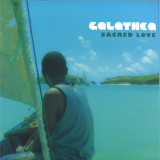
Two years after the release of his first self-titled album, DJ producer Massimo Napoli aka Galathea presents the new 'Sacred Love', in which he once again avails himself of the collaboration of his friend producer and bass player Salvo Dub, as well as a combo of respected musicians: singer Kadi Koulibaly - originally from Burkina Faso - already featured on the first album, Giulia La Rosa, author of the lyrics and performer of the title track, pianist Mario Pappalardo, percussionist Sergio Spitaleri and drummer Luciano Cantone.
'Sacred Love' is definitely a more mature, intense and profound journey than the previous album of the same name, which enhances the magical dreamlike and spiritual atmospheres of a certain African culture.
The album guides the listener along a path of multi-ethnic contaminations: "Divinité", "Ouaga" and "Koloko", well interpreted by Kadi, touch on the sacredness and mysticism of the African continent and blend well with the Spiritual Jazz sounds that have evolved in the West.
"Divinité", through the spoken word of French poet Diego Hernandez, tackles the themes of faith, life and the relationship with one's 'self', with references to French chanson productions, in which Kadi's spiritual song, at times 'Saharan', intersects and expands into cosmic space.
The title track, the first single from the album, also released on 7" (45rpm) in two versions, is an Afro-American gospel with a typically afrobeat rhythm, vaguely reminiscent of Nina Simone's 'See-Line Woman'.
North Africa is represented by "Equator", while we climb further north into the middle of the Mediterranean Sea with "Medican Blues", to land in Stromboli with the Deep Jazz of "Ginostra", whose title recalls the village of the marvellous island in the Aeolian archipelago.
Then we have the Cuban track "Caminito", a sort of Cha-Cha with a romantic piano melody (à la Chucho Valdez) well performed by maestro Mario Pappalardo; and then again "Eos", strongly Balearic with a Brazilian mood; "Impression", a dreamy journey of impact; "Sirens", already present on the first album and here reworked in a new Spiritual-Ambient version produced by Agosta.
"Sacred Love" is thus an original and musically borderless album, which expands a certain African sacred culture and naturally blends Afrobeat, Jazz and Blues atmospheres with the Balearic sounds of Mediterranean culture.
Enjoy listening!
- 1: Afrique - House Of The Rising Funk
- 2: Blue Mitchell - Soul Village
- 3: Sarah Vaughan - Magical Connection
- 4: Art Farmer - Soulsides
- 5: Shelly Manne - Mask 7:30
- 6: Alice Clark - Never Did I Stop Loving You
- 7: Buddy Terry - Abscretions
- 8: Maxine Weldon - Right On
- 9: Barry Miles - Scatbird
- 10: Jack Wilkins - Red Clay
- 11: Clark Terry - Rum And Mumbles
- 12: Ellerine Harding - I Ain't Got Much (But Whatever I Got It's Yours Baby)
- 13: Blue Mitchell - Granite & Concrete
- 14: Hadley Caliman - Quadrivium
- 15: Carmen Mcrae - Feelin' Good
A compilation of rare spiritual jazz and funk grooves culled from the archives of producer Bob Shad's Mainstream Records. Alice Clark's cult classic Never Did I Stop Loving You' features here alongside many gems uncovered for the first time.
Bob Shad worked with titans such as Charlie Parker and Lightnin' Hopkins in the 40s, founded the EmArcy jazz label in the 50s, and discovered Janis Joplin in the 60s, and started the Mainstream label in 1964.
From Afrique's classic House of the Rising Funk' and its funky wah wah frenzy, to Hadley Caliman's deep jazz Flute ode, From one of Clark Terry's famous Mumbles (Shad produced the original with Oscar Peterson) to Jack Wilkins' Red Clay' sampled by both A Tribe Called Quest and Chance the Rapper. A Soul Music lover, Shad also excelled in soul divas and produced Ellerine Harding, Maxine Weldon and of course the mighty Alice Clark. Carmen McRae, one of Shad's long time collaborators, gives a soulful, conga-led version of the classic Feelin' Good, originally made famous by Nina Simone
- 1: O Astronauta (Baden Powell / Vinicius De Moraes)
- 2: Tristeza De Nos Doi (Bebeto, Durval Ferreira, Mauricio Einhorn)
- 3: Chuva (Durval Ferreira, Pedro Camargo)
- 4: Tema Para Martin (J. Demonte)
- 5: Consolação (Baden Powell, Vinicius De Moraes)
- 6: Canto De Ossanha (Baden Powell, Vinicius De Moraes)
- 7: Pro Forma (Arnaldo Costa, Mauricio Einhorn)
- 8: Samba Do Avião (A. Carlos Jobim)
- 9: Niña No Divagues (Agustin Pereyra Lucena)
- 10: Berimbau (Baden Powell, Vinicius De Moraes)
Following Far Out’s reissue of Agustin Pereyra Lucena Quartet’s La Rana, the label continues its memorialisation of the late, great Argentinian guitarist’s music, with the first ever direct from tape, audiophile reissue of Pereyra Lucena’s self-titled debut album from 1970.
One of the outstanding South American guitarists, Agustin Pereyra Lucena commanded a unique position in Latin music history. He hailed from Buenos Aires, but was obsessed with the music of Brazil. A disciple of Antônio Carlos Jobim, Baden Powell and Vinicius De Moraes, the nature of Agustin’s Argentinian roots combined with the nurture of Brazil and its music to give Agustin a sound entirely his own.
After being scouted in a nightclub, by musician and guitar craftsman Jorge Demonte, Agustin was invited for an audition at Argenitinian label Tonodisc. Before he knew it, aged 22, he was in the studio recording his first album.
Agustin enlisted fellow Argentinian Brazilophiles Mario "Mojarra" Fernandez who played bass and drummer Enrique "Zurdo" Roizner. He had first heard the duo backing Vinicius de Moraes, Toquinho and Maria Creuza on their legendary La Fusa live album, also recorded in Buenos Aires. For vocals, Agustin brought in his old friend, a French teacher called Helena Uriburu, who at the time had (unbelievably) never sung in a studio before.
The atypical bossas and spiritual swinging sambas, composed by many of Agustin’s aforementioned heroes, were elevated to new heights by Agustin’s dazzling arrangements and phenomenal guitar playing. The almost cosmic reaches Agustin achieved with his sound are balanced against the stylish sophistication and breezy nature of the music.
Moments of calm serenity include Agustin’s own composition “Nina No Divagues”, Durval Ferreira and Pedro Camargo’s “Chuva” and the Brazilian bossa classic “Tristeza Nos Dois”, which feels like it draws equally upon exotica and early library records. Accompanied by Roizner’s shuffling samba jazz drums, opener “O Astronauta” is Agustin’s cover of the Brazilian guitar standard composed by Baden Powell. Another Baden Powell classic, “Consolacao” is an extended full-band set, which features Agustin’s crisp guitar dancing around a hypnotic rhythm section. Upright bass is swapped out for a big, round-sounding electric one, which sits loud in the mix for almost seven minutes of deep, groovy, distinctively early-seventies magic.
Agustin passed away in 2019, and it is only in recent years that he is starting to gain his plaudits as one of South America’s greats. On the liner notes of the album Vinicius De Moraes writes: “I think I never saw, with the exception of Baden Powell and Toquinho, anyone more linked to his instrument than Agustín Pereyra Lucena. It would give the impression that if the guitar were taken away from him, he would fade into music as one dies from the amputation of an arm.”
Agustin Pereyra Lucena will be released on audiophile vinyl LP, CD and digitally on the 26th January 2024 via Far Out Recordings.
"Sleater-Kinney is one of the most iconic female-fronted rock bands of the last 30 years. Corin Tucker and Carrie Brownstein formed Sleater-Kinney in Olympia, WA in 1994. They were at the forefront of the riot grrrl movement and have grown into one of the most influential and enduring indie bands of all time. This is Sleater-Kinney's 11th studio album and first with producer John Congleton. It’s a roaring return to form that reaches the raw emotional depths of their seminal album Dig Me Out. Over the course of their career they have pushed themselves in and out of comfort zones, grown as musicians, grown as writers, grown apart and then back together again. This is a deeply personal record that is about grief, desperation and human connection. This is the new era of Sleater-Kinney. MEDIA SECURED: The Guardian Film+TV, Dork Magazine Cover (confidential), Kerrang! Joint cover band (condidential), Off Menu Podcast, The Telegraph, NME Feature, 6Music Maida Vale Session, DIY feature, Loud + Quiet feature, Record Collector feature, MOJO Q+A Feature, UNCUT Feature, Sodajerker Podcast, BEAT Magazine feature, Polyester Zine feature, Port Magazine, Hero Magazine, The Forty Five feature. CLASH - “Less a band, more a force of nature, they’ve always been – and continue to be – one of rock’s most electrifying experience.” The Telegraph - “Sleater-Kinney: the riot grrrls are riot women now – and they’re fiercer than ever” Loud + Quiet - “Little Rope should bring the focus back to what they still have: genuine magic, in the form of the shared musical language that Tucker and Brownstein have spent 30 years developing” MOJO – ‘ferocious, intelligent, and fore-grounding Corin Tucker’s elemental howl” (on ‘Hell’) "
A Bad Diana is a project from Diana Rogerson, someone I first became aware of aged 12 when I read about Nurse With Wound and their United Dairies label in Smash Hits magazine. I was confused, mystified and intrigued in equal measure, and a couple of years later as a result I bought my first Nurse With Wound album. This led to an interest in all things NWW related. I guess Diana could be described as the matriarch of the Nurse With Wound world but she also had her own very distinguished pre-history with Fistfuck, an early-80s extreme noise outfit. She then made two mid 80s cult classic albums as Chrystal Belle Scrodd, both far out there rollercoaster rides of audio wildness, highly recommended to anyone with wide open ears. She then moved to rural Ireland and raised a family. There was the odd collaboration and then in 2007 A Bad Diana’s “The Lights Are On But No-One’s Home” was released on CD. I feel this is her meisterwerk and it has become something of a cult favourite over the years. Now for the first time, almost two decades later it is available on vinyl on Optimo Music Archiv. Produced in association with Steven Stapleton and Colin Potter from Nurse With Wound and irr. app. (ext.)’s Matt Waldron this is some seriously beautiful and strange listening. Next level sound design means this is an incredible headphone record but it is also a deeply warm and engaging home listening gem. Beautiful, magical, ultra hypno, soulful reverberations with the deep emotion of Diana’s voice tones and bio-vibrations.
Serene, invoking imagery of darkness, sweeping soundscapes tear and twist at
the emotions. The latest album by THE ANSWER LIES IN THE BLACK VOID is a
work of magical beauty. The duo, a collaboration of Martina Horvath from avantgarde metal project Thy Catafalque and Jason Kohnen from Celestial Season,
The Lovecraft Sextet, Bong- Ra, ex- The Kilimanjaro Darkjazz Ensemble, have
followed up on their 2021 debut "Forlorn" with a haunting sophomore release that
is of exceptionally high quality.
The prevalent element here is doom, but there is so much more buried deep
within the dark vaults of this compelling record. The opening song "Ataraxia" is a
deep, richly layered song, with Horvath demonstrating her stunning vocals over
the complex creativity of Kohnen, the multi- instrumentalist who takes
responsibility for everything instrument- driven here. There are crushing riffs,
harrowing passages which send shivers down the spine, and all the time the
atmosphere builds. Tendrils of darkness curl around the throat on "To Kill The
Father", with Horvath's shimmering vocals duelling with the echoing lead guitar
work.
EP compilation of essential UK house cuts recorded between 1987 - 1990. TIP!
Before British house and techno found its’ distinctive groove at the turn of the 1990s, one act led the way: Bang The Party, a trio who emerged from London’s vibrant underground party scene in the mid 1980s and proved, beyond any doubt, that UK producers could make music every bit as magical as the pioneering productions put forward by their counterparts in Chicago, Detroit and New York.
By the time long-running DJs and party promoters Kid Batchelor and Leslie Lawrence joined forces with trained engineer Keith Franklin at legendary North-West London reggae studio Addis Ababa in 1987, they’d spent years as DIY dance music activists in Britain’s capital city. They channelled these experiences and their love of imported house and techno sounds into a new project, Bang The Party, in the process becoming the first British act to appear on Transmat, a reflection of the quality and authenticity of their music.
The latest Rush Hour Reissue Series release offers a snapshot of some of the numerous gems nestled in the Bang The Party catalogue, delivering a much-deserved celebration of one of Britain’s most significant early acid house collectives. It features four fully remastered cuts recorded and released between 1987 and 1990 – on-point and far-sighted club workouts that sound as fresh and timeless now as they did when Britain was sweltering under its infamous ‘second summer of love’.
Fittingly, the EP begins with ‘I Feel Good All Over’, the group’s ground-breaking debut single. Dedicated to their home city and one of the earliest UK interpretations of house music, the track exists in the grey area between Chicago house and New York ‘garage house’ – all jaunty organ stabs, jacking Windy City beats, restless bass and soulful vocalizations. ‘Jacques Theme’, which follows, originally nestled on the B-side of that single release. An early, acid-flecked expression of hip-house with a British twist, breakdance-friendly bongo patterns and a dose of Larry Heard-inspired deep house dreaminess, the track remains an under-appreciated classic whose rap verses reflect the popularity of hip-hop in London at the time.
1988’s ‘Release Your Body’, Bang The Party’s most celebrated early release, was reissued in the United States by Transmat, reflecting the strong working relationship between Derrick May and Kool Kat Records’ Neil Rushton. A hypnotising affair propelled forwards by sweat-soaked drum machine beats, jacking fills and an addictive bassline, the track offers another near perfect distillation of the band’s Black American musical influences while delivering something genuinely new and fresh.
Rounding off the EP is a choice cut from Bang The Party’s sought after 1990 album Back To Prison. Doused in the star-lit synth sounds of the Motor City with jaunty organ stabs inspired by the kind of New Jersey jams championed at East Orange institution Club Zanzibar, ‘Let It Rip’ is a superb slice of deep house soul featuring a lead vocal every bit as emotive as anything laid down by Robert Owens. Like the rest of Bang The Party’s output, it has stood the time better than anything laid down by their London contemporaries.
I see lucid blue flames moving before my eyes.
I hear voices melting. Voices somewhere from within.
Speaking words I do not know but feel connected to, almost as if I have known the meaning once..
Noises that obscures the multiple pictures hidden in these digital compositions.
Iku Sakan have created a set of five tracks that takes the listener on a
trip deep into the human psyché. Emotional flickering movements that twists and turns. The albums have a darker, much more intense feel than some of Ikus earlier magical and often hypnotic music. A myriad of different voices creates pulsing patterns and constantly morphing pictures for my inner eye. It's an album that might work as a hack to our lingual structures, pushing limits, pushing possibilities of meaning.
A pool of over-saturated information boils and out of the vapor new contours take form.
The magical and hypnotic is not gone, I still recognise the softer aspects of Ikus highly detailed hybrid sound design. But I no longer see where it takes me. It excites me. It feels like the world is expanding again, breathing. The sounds on the album asks us questions and points in several directions at once. In the shadows, weeds of lucid dreams grow deeper roots, reaching for my inner ear.
The faint sounds on the track Nature Morte reminds me of expeditions to the local witch house ruins as a child. Something almost not there, something felt. History, Memories and the connection between the two seems to have played a part in these compositions. Emotional reactions that plant reactions in other people, all around creating soft movements on the face of our planet.
Whether our collective psyché is an open field or an impenetrable dark forest, is of less concern with a key like Omnitopoeia, that works like an enhanced mirror, reflecting the dreams of the words we speak everyday, reflecting the emotional charges of significant places. Unrecognisable but still remembered.
- A1: Roscoe Robinson - You Don't Move Me No More
- A2: Lamp Sisters - No Cure For The Blues
- A3: Lh & The Memphis Sounds - Out Of Control
- A4: Marvin Preyer - Climbing Up To Love
- A5: Oscar Toney Jr - A Love That Never Grows Cold
- A6: Lee Rogers - The Same Things That Make You Laugh (Make You Cry) (Make You Cry)
- A7: Shortkuts - Your Eyes May Shine (Feat Eddie Harrison)
- A8: Bobby Womack - Take Me
- B1: James Fry - Tumblin' Down
- B2: Joe Simon - Looking Back
- B3: Lc Cooke - Half A Man
- B4: Masqueraders - Sweet Lovin' Woman
- B5: Bart Jackson - Dancing Man
- B6: Homer Banks - Foolish Hearts Break Fast
- B7: Double Soul - I Can't Use You
- B8: Terry Felton - I Don't Want To Have To Wait
- B9: Ted Ford - You're Gonna Need Me
Most southern soul fans will tell you that that the music produced in Memphis in 1967 and 1968 was the pinnacle of quality. So following on from our look at the River City’s soul output in 1967, we now turn our attention to an album covering the next year. As before, the singers here are a heady mixture of local Tennessee talent and welcome soulful guests who journeyed down south hoping that a little of the famous Memphis magic would rub off on their songs. There are soul genres to suit all tastes here – from the deepest ballads to upbeat tracks that will rock your socks off. Soul doesn’t get much better than the artists and their tunes on this LP!
Originally released as a hand-numbered CD on New Year's Eve of 2004, Last Light captures Tor Lundvall 's hushed songcraft at its most ghostly and grayscale, stripped bare like branches bracing for winter. Initially conceived of as "a piano album with sparse electronics" (with the working title November), Lundvall's palette steadily expanded, incorporating synthesizer, samples, bass, metronomes, and his signature spectral vocals. A journal entry from the spring of 2002 proved formative to his evolving vision: "I remember watching the blueish-grey light shimmering outside and hearing distant sounds echoing far away, eventually sinking into silence and stillness." The album's 12 tracks are steeped in this sense of autumnal transience, of bearing witness to what fades. The music moves in whispered swells, between dirge, drift, and devotional. Synths chime like slow-tolling bells; percussion shuffles and shivers, icy and isolated; bass traces a low-lidded plod - it's a mode both austere and seductive, lulling the listener into its landscapes of deepening dusk. Lyrically, Lundvall's language skews observational and depressive ("through lace curtains / grey light falls / dark clouds gather / in my soul" ), with each song like a gauzy glimpse into a different tableau framing winter's descent: rust - colored leaves, frozen ponds, cold crescent moons. Lundvall has long considered Last Light a "personal favorite" in his discography, and it's easy to hear why. In texture, finesse, and pacing, it vividly evokes the rare mood of fragile, frosty pastoral noir depicted in his iconic oil paintings. His is an art of the half-seen and half-remembered, of fleeting figures, shapes and shadows, and gathering darkness. Of all that disappears, and the ghosts that never leave: "So I wait / as the years / slowly drain the magic and the light / and the girl / I never loved / haunts me through the dark roads of my life."
Soul To Burn features highly inventive and memorable avant-rock songs by trio of celebrated musicians, Reciprocate. The germ of the notion that would flower into Soul To Burn came when Reciprocate’s vocalist/guitarist Stef Kett reflected on the idea of funk rock. It ought, he thought to himself, be the best of genres but so often in practice it ends up being the poorest. True enough. Kett decided to approach the problem from a fresh angle, multiple fresh angles, grinding angles, creating an “alt-soul” in which the soul gets to stretch and burn, applied with the power of a rock’n’roll trio but dynamism and agility, rather than cumbersome bulkiness. Reciprocate is a super-group made up of highly celebrated musicians from the UK DIY music scene – their singular, searing-hot power conjured by Stef Kett (Shield Your Eyes) in tandem with drummer Henri Grimes (Shield Your Eyes, Big Lad) and Marion Andrau (The Wharves, Underground Railroad) on bass. The result is the excellent Soul To Burn, which proceeds at a cadence all of its own, halting and blasting, ducking and weaving, zooming away from its distant cousins: Taste era Rory Gallagher or Mr Zoot Horn Rollo of Captain Beefheart’s Magic Band. That’s particularly evident on “Self Regarding Floor Sweepings”, with echoes of “When Big Joan Sets Up” from Beefheart’s Trout Mask Replica, especially with Kett’s added harmonica as the trio hit the winding dirt track, slaloming and swerving. Here is an album of full throttle soul, an avant-rock made up of ear worms so intoxicating they borrow from deep in the mind down deeper into the heart – it’s the cool, weighty groove of Tony Joe White leathering it at full throttle, fuelled by virtuosic back beats that remind of somewhere between the rolling rock of Mitch Mitchell and the fractured noisebeat of Lightning Bolt’s Brian Chippendale: immediate, innovative, virtuosic, exhilarating. Key to the impact of Soul To Burn is Grimes’ drumming, a force unto itself, which sometimes feels like it’s engaged in a creative and playful tussle with Kett’s virtuosic vibrato guitar. Take “Rhodia”, which sounds initially like a radical reworking, an anagram of Free’s “All Right Now”, on which Grimes doesn’t so much hit the groove as hammer it into the ground. Reciprocate tend to be averse to mere repetition, too full as they are of ideas, possibilities. But they know how to hit a riff, as on “Pissed Hymn”. Kett’s vocals are unconventionally impassioned - no vibrato or performative hollering. Rather they climb, up and and again up from the pit of the soul. There’s a sense throughout that this music is hard wrought, squeezed through small apertures, produced against the odds, born to trouble as the sparks fly upwards. There are quieter moments, however, such as the exquisitely beautiful “Ressypressocate”, which affirm the ultimately tender place from where this album proceeds, notes plucked like black flowers, twisted and cherished. Reciprocate demonstrate an astonishing virtuosity, nuance and musical sensitivity manifested through their deep mutual understanding and synergetic interactions. There are moments of sync and camaraderie that remind of the very late Beatles, those rare moments during the Let It Be Era when they loosened up, reassumed their old understanding. But then Kett’s lets fly with a long, looming note and suddenly we’re somewhere else again. With Soul To Burn, Reciprocate set out their stall of intoxicating, super catchy good-time, big heart music – a human album delivering a human message of love and love lost. By the album’s end, you’ll feel pushed and pulled through the mill, wiped out, blissfully exhausted, strangely serene
KID FRANCESCOLI, leader of the French Riviera Touch is back with the stellar album SUNSET BLUE out Sept 22nd 2023.
After a first sold-out world tour (over 200 concerts in Europe, USA, Asia...), and successful hits such as Nopalitos, Blow Up or Moon (now certified diamond, with more than 200 millions streams), the Marseille-based producer, crooner and multi-instrumentalist, Mathieu Hocine, is eager to share his most accomplished LP ever. This fine collection of soulful songs honor his Mediterranean roots, with elegant and pop melodies. His most recent success and the creation of his first original soundtrack with AZURO, installed him as one of the best French songwriters of his generation, with a unique signature sound.
"I live in Marseille, I spent my childhood in Corsica, I have Algerian origins, my first vacations with friends were in Barcelona, vacations with my first girlfriend in Roma,... Then, I had the chance to perform in Morocco, Greece, Turkey and Egypt: each time I spent time in the Mediterranean region, the people I met there made me feel like I was part of the same country. This shared multiculturalism is really comforting, it has its own poetry and strength, bringing uniqueness and empathy to the people. It is essential for me. I love my city: it’s the perfect place to feel good with sun, sea, family, friendships, love... It gets me emotional, bringing tears with a smile".
With his new musical gem, Mathieu Hocine unveils 11 elegant tunes of his finest craft: sunbathed French Touch (Run Run, 1986), romantic chillwave (Corsica), uplifting synthpop (You Are Everywhere, Like Magic), electronic-soul (Casino Soul), cinematic disco (Solaris), cosmic R&B (Sweet and Sour, Take Time), … Everything is in this record.
For the first time ever, Kid Francescoli paid tribute to his mixed origins with his collaboration with world-renowned lute and mandolin player Hakim Hamadouche (Rachid Taha, Patti Smith, Brian Eno, Tricky...), whom added Algerian patterns to the introspectives songs Drift in Blue and The Morning After.
"My ambition is to create pictures in people's heads with music, to transport them instantly into a movie"
SUNSET BLUE is an instant-crush album: crystal-clear, strong, personal but universal at the same time.
It's an ecstatic soundtrack for this moment when time is suspended, the golden hour when everything seems possible. It feels like Love is in the air, you're living your best life and you're at the right place at the right time. This album embodies this magic moment where we would like to last forever… Like an epiphany, Kid Francescoli's new album is a moment of pure pleasure, a soothing way to escape reality.
"I see myself as a melodist.I would like my music to feel like velvet. There's something cinematic, classy about it, and yet comforting. It's very simple, popular and synonym of love and passion"
His friend French 79 co-produced the album, while the american rapper Bamby H2O brought his NYC swag (on Sweet & Sour), Stan Neff (Polo & Pan, Kungs, Christine and the Queens...) took care of the mix and Alex Gopher (Daft Punk, The Blaze, Bon Entendeur...) added a final touch of magic when mastering. Nicolas Despis (known for his work with Etienne Daho, Hoshi, Juliette Armanet... and many famous French rappers) later joined this dream-team to craft custom-made artworks. SUNSET BLUE is a deeply personal quest, a human adventure for Mathieu Hocine (whom explores his maghrebian origins, his feminine side, his subconscious space, ...). It's a male's work, but don't get it wrong, this LP would be nothing without women’s touch : Julietta (on Run Run and Take Time), Sarah Gaugler from Turbo Goth (on You Are Everywhere and Like Magic), and iOni (on Drift in Blue).
“Music has this magical power to broaden your vision of the world. It's fascinating because, like dreams, it's the kind of irrational things science can't explain and that makes life exciting."
Planets aligned perfectly on this project and thanks to this five-star cast of collaborators, Kid Francescoli achieved his personal holy grail : he orchestrated a great 21st century pop-music album.SUNSET BLUE is a new turning point between organic and electronic, both a mediterranean travel and a Californian dream, a bridge between Ennio Morriconne and modern electronic music.
Also, while it might be called SUNSET BLUE in honor of the sea and the Portuguese / Brazilian concept called “saudade”, but it is a really optimistic album, whose true colors would rather be "yellow-orange-red" in nod to the sun.
Created in the midst of the world tour, SUNSET BLUE is a direct result of the lives’ energy and fans’ joyful vibes: going back in the studio after smiling, singing and dancing with people all around the world inevitably gave Kid Francescoli the desire to retranscribe this ecstatic feeling in music. This album is a sensitive experience, from sunrise to sunset, from first track to last one. It’s an exploration of an everlasting summer, reaching its climax in the very final seconds of the track Corsica, making us want to press play and dive into this jewel all over again.
A beautiful cosmic trip, whether you like to stay in bed cocooning, to travel far, far away or to dance ‘till dawn, to catch the first rays of light.
Make sure to catch Kid Francescoli on his next world tour to have a good time.
Impex Records is celebrating the 35th anniversary of this seminal audiophile classic with our final and finest collaboration with long-time partner and raconteur Jennifer Warnes. This ultimate authorized production of Famous Blue Raincoat is getting the complete Impex 1STEP treatment! After Bernie Grundman cuts the last lacquers, Jennifer's analogue master tapes will return to her personal vault for good.
Impex has always treasured our work with Ms. Warnes, from the original Famous Blue Raincoat 45 Box, The Well, The Hunter, and her latest LP, Another Time, Another Place. Each of these releases celebrates Jennifer's singular legacy of musical excellence combined with exceptional craft in coordination with the original production team of Jennifer, C. Roscoe Beck, and Bernie Grundman.
For FBR's ultimate release, Impex returned to Jennifer's first-generation analog "slave" master tapes and let Bernie work his magic within the laborious 1STEP mastering process on BG Mastering's tube-cutting lathe. We will cut as many refs and test pressings as needed to get the quietest surfaces and intimate detailing. Final discs will be pressed at RTI on VR-900 super vinyl, illuminating every note and nuance of this cherished masterwork.
The three 1STEP LPs and the elegant new 24-page booklet are housed in a deluxe four-sleeve Monster Pack tip-on jacket and booklet with metallic accents and spot gloss applications. Even if you have every version of this pop classic, you will find considerable value and new benefits from this unbeatable production!
The 1STEP Process:
The Impex 1STEP process relies on short, tightly controlled runs that require a new lacquer after each run of 500 pressings. This unforgiving format has the lacquer skipping the regular father-mother process, going right to a single convert and then pressing. Though this dramatically increases mastering and production costs, it also assures each run is more consistent from disc to disc, with less noise, clearer details, and deeper bass.
Reducing production complexity to just a single "convert" disc between the lacquer and the press greatly improves groove integrity, diminishes non-fill anomalies, and increases signal integrity from the master tape to your system.
- A1: Donna Summer - I Feel Love
- A2: Earth, Wind & Fire With The Emotions - Boogie Wonderland
- A3: The Trammps - Disco Inferno
- A4: Chic - Good Times
- A5: Sister Sledge - He's The Greatest Dancer
- A6: Tavares - More Than A Woman
- A7: Yvonne Elliman - If I Can't Have You
- A8: Odyssey - Native New Yorker
- B1: Gloria Gaynor - I Will Survive
- B2: Village People – Ymca
- B3: Sylvester - You Make Me Feel (Mighty Real)
- B4: Patrick Hernandez - Born To Be Alive
- B5: Grace Jones - I Need A Man
- B6: Liquid Gold - Dance Yourself Dizzy
- B7: Kelly Marie - Feels Like I’m In Love
- B8: Leo Sayer - You Make Me Feel Like Dancing
- C1: Amii Stewart - Knock On Wood
- C2: Candi Staton - Young Hearts Run Free
- C3: Chaka Khan - I'm Every Woman
- C4: A Taste Of Honey - Boogie Oogie Oogie
- C5: Alicia Bridges - I Love The Nightlife (Disco 'Round)
- C6: Cheryl Lynn - Got To Be Real
- C7: Labelle - Lady Marmalade
- C8: Diana Ross - Love Hangover
- E5: Mcfadden & Whitehead - Ain't No Stoppin' Us Now
- E6: The Whispers - And The Beat Goes On
- E7: Baccara - Yes Sir, I Can Boogie
- E8: Sheila & B Devotion - Singin' In The Rain
- F1: Eruption - I Can't Stand The Rain
- F2: Boney M - Daddy Cool
- F3: Ottawan - D I.s.c.o
- F4: Village People - In The Navy
- F5: Viola Wills - Gonna Get Along Without You Now
- F6: Gloria Gaynor - Never Can Say Goodbye
- F7: Lipps Inc - Funkytown
- F8: Space – Magic Fly
- G1: Dee D Jackson - Automatic Lover
- G2: Sarah Brightman And Hot Gossip - I Lost My Heart To A Starship Trooper
- G3: Frankie Valli & The Four Seasons - December, 1963 (Oh, What A Night)
- G4: Meco - Star Wars Theme / Cantina Band
- D1: Melba Moore - This Is It
- G5: Leif Garrett - I Was Made For Dancin
- D3: Odyssey - Use It Up And Wear It Out
- G6: The Michael Zager Band - Let's All Chant
- D5: Patrick Juvet - I Love America
- G7: Kc & The Sunshine Band - That's The Way (I Like It)
- D7: Elton John - Are You Ready For Love
- G8: Heatwave - Boogie Nights
- E1: Barry White - You're The First, The Last, My Everything
- H1: Kool & The Gang - Ladies Night
- E3: The Real Thing - Can You Feel The Force
- H2: Dan Hartman - Instant Replay
- H3: Frantique - Strut Your Funky Stuff
- H4: Musique - Keep On Jumpin’
- H5: The Three Degrees - Givin' Up Givin' In
- H6: Sparks - Beat The Clock
- H7: Voyage - Souvenirs
- H8: Chic - Le Freak
- I1: Sister Sledge - We Are Family
- I2: Sheila & B Devotion - Spacer
- I3: Diana Ross - Upside Down
- I4: Earth, Wind & Fire - September
- I5: Candi Staton - Nights On Broadway
- I6: The Emotions - Best Of My Love
- I7: Amii Stewart - Light My Fire
- I8: Belle Epoque - Black Is Black
- J1: Amanda Lear - Follow Me
- J2: Patsy Gallant - From New York To La
- J3: Vicki Sue Robinson - Turn The Beat Around
- J4: Andrea True Connection - More, More, More
- J5: Rose Royce - Car Wash
- J6: Tina Charles - I Love To Love
- D2: Rose Royce - Is It Love You're After
- D4: Irene Cara - Fame
- D6: Stephanie Mills - Never Knew Love Like This Before
- D8: George Mccrae - Rock Your Baby
- E2: The Spinners - Working My Way Back To You / Forgive Me, Girl
- E4: Edwin Starr - Contact
- J7: Cher - Take Me Home
- J8: Thelma Houston - Don't Leave Me This Way
NOW Music is proud to announce NOW Presents…Disco, a stunning 5LP boxset featuring 80 of the greatest Disco classics ever!
Kicking off with the genre defining #1 from Donna Summer ‘I Feel Love’ followed by Earth, Wind & Fire with The Emotions and their timeless hit ‘Boogie Wonderland’, this boxset features the most enduring tracks from dance-floor legends, including Chic, Sister Sledge, Gloria Gaynor, Village People, and Grace Jones - together with Saturday Night Fever gems - ‘Disco Inferno’, ‘More Than A Woman’, and ‘If I Can't Have You’.
LP 2 opens with Amii Stewart’s stunning version of ‘Knock On Wood’, followed by Candi Staton’s ‘Young Hearts Run Free’ and Chaka Khan’s hugely successful debut solo single ‘I'm Every Woman’. Other massive debuts include ‘Boogie Oogie Oogie’ from A Taste Of Honey, Alicia Bridges’ ‘I Love The Nightlife (Disco 'Round)’, and Cheryl Lynn’s ‘Got To Be Real’. Up next is the often-covered ‘Lady Marmalade’ together with Diana Ross’ ‘Love Hangover’ which lead into #1s from Frankie Valli & The Four Seasons, (‘December, 1963 (Oh, What A Night)’), Tina Charles (‘I Love To Love’), Odyssey (‘Use It Up And Wear It Out’) and Irene Cara (‘Fame’).
LP 3 Side A is packed with groovy and romantic chart-toppers from Elton John (‘Are You Ready For Love’), George McCrae (‘Rock Your Baby’), Barry White (‘You're The First, The Last, My Everything’), and The Spinners with their ‘Working My Way Back To You / Forgive Me, Girl’ medley. Flipping over to the other side, we have the timeless smash from Baccara ‘Yes Sir, I Can Boogie’, Boney M. with ‘Daddy Cool’, and Village People’s ‘In The Navy’. Viola Wills’ Hi-NRG cover of ‘Gonna Get Along Without You Now’ and Gloria Gaynor’s ‘Never Can Say Goodbye’ bring LP 3 to a close.
Lipps Inc., Kool & The Gang, Frantique, and KC & The Sunshine Band keep the dance-floor energy levels high on LP 4 with ‘Funkytown’, ‘Ladies Night’, ‘Strut Your Funky Stuff’, and ‘That's The Way (I Like It)’. The disco-mania of the late-70s also saluted the late-70s craze for Space themed movies & tv with early Electro-pop-dance, and included here from Space and Dee D. Jackson, before Sarah Brightman’s debut with Hot Gossip, ‘I Lost My Heart To A Starship Trooper’, and Meco’s remake of the ‘Star Wars Theme / Cantina Band’ as a dance-floor classic… Giorgio Moroder productions for Sparks with ‘Beat The Clock’ and The Three Degrees with ‘Givin’ Up Givin’ In’ lead the side to a close with ‘Souvenirs’ from Voyage.
LP 5 is filled with truly monster sized dancefloor-fillers, beginning with a run of Nile Rodgers & Bernard Edwards productions: ‘Le Freak’, ‘We Are Family’, ‘Spacer’ and ‘Upside Down’ from Diana Ross. It wouldn’t be a Disco album without Earth, Wind & Fire’s ‘September’, the Bee Gees-written ‘Nights On Broadway’ covered by Candi Staton, and the Grammy award-winning ‘Best Of My Love’ from The Emotions, before another hit cover from Amii Stewart, ‘Light My Fire’. Side B features some fabulous European Disco, including Belle Epoque and Amanda Lear, and signature hits from Patsy Gallant and Vicki Sue Robinson before drawing to a close with Rose Royce’s celebrated ‘Car Wash’, and Cher’s biggest disco hit ‘Take Me Home’ – and the last dance is left to Thelma Houston with her defining anthem ‘Don’t Leave Me This Way’.
NOW Presents…Disco – the perfect collection and collector’s item for every 70s Disco lover.