AI-32 signals the arrival of ‘The Fifth World Recordings’, by Son of Chi (Hanyo van Oosterom) and long-term collaborator Arthur Flink. A tribute to the late Jon Hassell, who passed away in 2021, the album connects a deep running thread that goes back to the source of Chi project. Carrying on from where Hassell left off, the album takes inspiration and references from his Fourth World music concept and the ancient Hopi tradition of Native America. Illuminating the subliminal space of the arising Fifth World, Son of Chi pays respects to an inimitable force in contemporary music.
Hassell’s ‘Dream Theory in Malaya’ forms a touchstone to Hanyo van Oosterom’s musical journey, which soundtracked long, deep and reflective periods living in the cave of the Kallikatsou (Patmos, Greece) back in the early 80s. This period resulted in Hanyo’s track as Chi - ‘Hopi’ - in 1984. Hanyo met Hassell shortly after in 1987 at his “The Surgeon in the Nightsky” concert in Rotterdam - it wasn’t until twenty years later that Hanyo invited him for two magic nights of “Instant Composing Sessions” with the Numoonlab Orchestra (with a host of other artists) at the LantarenVenster, the very same stage where Hassell had performed in 1987 and also where Chi did their first live performance.
Dreamful, mysterious, prophetic, the Fifth World Recordings features the quiet yet elaborate sound of Chi awash with rich instrumentation, field recordings, and old stories by the firelight. Sketches were created with drones, loops, and soundscapes, with which Arthur Flink (also a member of the Numoonlab Orchestra) jammed on trumpet. Channelling Hassell’s idiosyncratic style, floating melodies and lyrical improvisations are parsed into the mix, where Hanyo has processed and manipulated the recordings, also referencing Hassell’s exotic scales and unique harmonics.
Additionally, the wah Bamboo flute at the closing piece is an homage to the works of Chi co-founder Jacobus Derwort (1952-2019). For this piece Hanyo used his first bamboo flute he made at the cave of the Kallikatsou in 1984. Arthur Flink answers in counterpoint with the wah trumpet, almost like the intuitive communication of the nightbirds..
Suche:dee magic
What Are People For? make the perfect kind of dystopic dance music for our times. Born from a collaboration between artist Anna McCarthy and musician/producer Manuela Rzytki, the band could be the illicit lovechild of Tom Tom Club and Throbbing Gristle, displaying the ideal balance of hip shaking vibes and dark provocative content.
On their collaborative debut, McCarthy and Rzytki share songwriting duties. The album was produced by Rzytki herself. They are joined by Paulina Nolte on backing vocals and Tom Wu on drums, while Keith Tenniswood mastered the record.
The whole project stems from a publication and exhibition by McCarthy laying the foundations for the content and lyrics of the album, which is humorous, poetic and political. As a lyricist, McCarthy uses her storytelling ability to explore anxieties and desires, digging into free surreal word associations reminiscent of Su Tissues’ tongue in cheek experiments with Suburban Lawns, but also explosive and gripping like a Kae Tempest rap.
Rzytki’s precise sonic palette and talent at penning structured bangers perfectly complement McCarthy’s playful and subversive language manipulations. Rzytki's beats are rooted in old school Hiphop loop principles and an authentic love for the analog. Her use of an array of synthesizers and other "real" instruments adds to WAPF's depth, soul and sincerity.
The album opens with a joyful anthem, full of energy and melodic hooks. The audience is confronted with the quintessential titular question What Are People For? and told that they are just a mere disposable commodity. Throughout the album, lyrical themes revolve around underground aspects of society, violence, political ideologies, sexuality and mysticism. The content is deep but the album is as danceable as it is biting.
73, with its drum machine hysteria and hypnotic synth basses is a a text collage written on the 73 bus through London, consisting of situations and conversation snippets encountered along the way. Drones indulges in the narrator’s paranoia as they feel they are being watched by cigarette machines, whilst the haunting choir is half spoken, half sung, ending on the orgasmic chanting of the word “mummy”. Nursery Rhyme brings more soothing incantations. There is definitely an affinity for fairytales, albeit adult ones and especially the anarchistic ones such as The Moomins, who were a consistent influence on the band. The artwork for the record, created by McCarthy, is a beautiful children's book-style painting of the group in a forest, seemingly about to engage in a magical encounter to which we are invited.
WAPF? have absorbed and digested a variety of influences. Trip hop, Punk and Techno are rubbing shoulders on Party Time. 1977 was coined “Summer of Hate” in the UK and unsurprisingly in WAPF?’s Summer of War, ethereal singing alternates with a powerful marching Garage/Grime chorus reminiscent of street protests and UK culture.
Mz. Lazy starts like an invitation to meditation and references Gertrude Stein’s book Ida in which she develops the idea that publicity is a new religion and people are now famous for being famous. Repressed anger explodes into violence and freedom at the end of the song as our heroine eventually grabs an axe to destroy her oppressors.
Fantasize, on its part, is raw, sexual and liberating while the closing track Bring Back the Dirt is a welcome hymn into a world that is becoming more and more sanitised.
While exploring deep subject matters throughout their album, WAPF? manage to remain satirical, exciting and funny. Each and everyone of their songs have a cathartic quality.
The visual identity of the band is intrinsic to their appeal. Live, they are eccentric, wild and unapologetic, wearing see-through costumes, bright miniskirts and intricate headpieces while delivering their songs with sharp intensity. Their performances radiate queer sexiness and transcend B52's thrift store aesthetics, creating a space for collective dreaming.
WAPF? is a rare combination of contemporary punk energy, irresistible groove, absurdist dry humour and astounding depth of field. They have the mighty power to create a party with their music and soon you will find yourself lifting your arms as if controlled by an external force, to chant: WAPF? WAPF? WAPF?
– Marie Merlet (Malphino, Little Trouble Girls, London)
Among the rarest albums from Jim Kirchstein's Wisconsin-based Cuca label, 1964's Birdlegs & Pauline runs a playful gamut of girl group soul, sultry R&B, bluesy torch songs, and junk shop doo-wop. The Rockford, Illinois-based husband and wife duo struck gold with their Top 20 R&B hit "Spring" the year prior and frequently returned to Sauk City to see if there was any additional magic up Cuca's sleeve. Gathered here are the best of Birdlegs & Pauline's family album of songs, featuring several previously unissued songs found deep in the Cuca vault.
A prehistoric tribe dances around the fire. Young revelers lose themselves on a packed dancefloor. Explorers fly a rocket toward another galaxy. In the TIMEBEING universe, these things are all connected. From the earliest days of humanity, people have strived to expand their reality beyond the limitations of the here and now_and have used technology to make it happen. Their methods and machines may have changed across the centuries, but the drive remains constant, vibrating through history and occupying a space where time loses all meaning. "The art of making music is the art of manipulating time," says Uji. "I have had experiences where time shifts dramatically; sometimes it slows down to a halt, while moments seemingly become infinite. This is where the magic happens. This is when the fabric of what we call reality begins to show its seams." An Argentintian electronic producer and ethnomusicologist, Uji has been navigating those seams for more than two decades, initially as one half of the pioneering duo Lulacruza, but more recently with his own solo work. TIMEBEING continues that lineage, but also elevates it, taking shape as a interdisciplinary multimedia journey that includes a new album, an accompanying short film, an immersive live show and the birth of a new decentralized community of like-minded artists, creators, seekers, and dreamers. Mesmerizing and deeply psychedelic, the TIMEBEING LP certainly reflects the rich sound palette of Latin America_and its intersection with various strains of electronic music_but Uji taps into traditions_both musical and spiritual_that can't be hemmed in by borders and boundaries. Transcendence is the goal, and the album moves through fantastical spaces that may or may not exist: a metallic jungle, a Balkan spaceship, a cloud that morphs into a tumultuous whirlpool. All the while, Uji criss-crosses history, consulting elders and futurists alike as he throws open the doors of perception and pens a new mythology about what it means to be human. FOR FANS OF: Floating Points, Four Tet, Oneohtrix Point Never, Actress, Nicola Cruz, Dengue Dengue Dengue, Nicolas Jaar, Mount Kimbie, Mucho Indio.
Originally from France and now based in Berlin Isolated Material has dropped a steady run of heavy hitting releases on labels including; Brokntoys, Haws, Ukonx, 909 Connection and Mind Controlled Rectifier before joining us for his debut EP on 20/20 Vision.
'Hidden Node' kicks off the wax with a jarring excursion of futuristic breaks and abrasive sound design firing on all cylinders with complex drum patterns, bleeps and glitches. 'Asynchronous Funk' sees Isolated Material serve up an abstract slice of electro funk with a solid broken beat groove peppered with unexpected moments of off-kilter magic.
On the flip side - title track 'Hidden Node' offers up a dose of Drexciyan inspired funk primed for a set on the dark side of the moon with; high octane breaks, quick fire drum programming, intricate synth patterns and ominous undertones. Wrapping up the EP 'Unmarked Sequence' is an equally potent chaser for the wide eyed deep space traveller in need of body jerking breaks.
Following on from last year’s acclaimed Sylva Sylvarum, the epic double LP from Ora Clementi (her collaborative project with James Rushford), crys cole returns to Black Truffle with Other Meetings. Originally commissioned and released on cassette by Boomkat Editions in 2021, Other Meetings is a major addition to the body of carefully hewn solo work cole has released over the last decade, offering up two side-long suites of her radically intimate approach to sound. After many years dominated by touring and travel, cole found herself in lockdown in her Berlin apartment, working in a limited space with minimal equipment. Digging through archives of recordings taken overseas and exploring the sonic potential hidden in the objects surrounding her (including a coffee pot and a vase of dying flowers), she crafted what in her liner notes she calls ‘an internal dérive, a journey that drifted through many places without a defining compass’. Totalling over 50 minutes, the two pieces unfold at an unhurried pace, each containing four individually titled subsections. Beginning with a sequence of the highly amplified small sounds characteristic of much of cole’s work, the opening moments of ‘The time between two durations of sleep’ are underpinned by a gentle rocking motion, weaving together contact mic crunch, metallic resonance, glimpses of bird song, and isolated drum machine hits, the sonic space expanding and contracting as focus moves between elements. Briefly side-lined by a tactile but unplaceable sizzling, this complex weave of voices then returns in a kind of dubbed-out ‘version’, the percussive accents echoing around the stereo space. In one of the record’s most beautiful and unexpected moments, these sounds are joined by a sparse melodic line performed on a broken 1980s digital synth, the vaguely New Age timbres being taken on a long, tonally ambiguous wander. Cole’s immersion in memories of travel comes to the fore in the final section of the first side, titled ‘Wat Paknam’ after a royal temple in Bangkok, where snatches of voices, ringing bells and distant waves of chanting blur together with synth tones into an increasingly abstracted wave of sound. The second side, ‘Slices of cake’, opens in a similarly hallucinatory outdoor space of echoing bird song and liquified traffic before abruptly zooming in on a microscopic world of subtly processed and highly amplified objects, explored with a starkness and quiet insistence that calls to mind the fringe not-quite-concrète of outsiders like Paul A.R. Timmermans or Knud Viktor, whose obsessive interrogation of dripping water might also serve as a point of reference for the following sub-section, the aptly titled ‘magischer Abfluss’ (magic drain).
While Other Meetings develops many aspects of cole’s previous work – the hyper-magnification of small gestures, the unsettling edits and fades partly inspired by hypnagogic states, the location recordings smeared into oneiric haze – it is almost as if these pieces are somehow songs, the remnants of an evaporated music of which nothing remains except isolated hits from a synthetic drum, a handful of notes, or simply a duration of emptied atmosphere. Radically reductive yet deeply musical, Other Meetings is a major work from an artist driven by an uncompromising and idiosyncratic vision.
Presented with an inner sleeve with photos and liner notes from the composer and remastered audio.
- A1: Mad Town
- A2: Ultima Caccia
- A3: Amboseli
- A4: Space And Freedom
- B1: Zoo Folle
- B2: Chains
- B3: Red Old Skies
- B4: Slaves
- B5: Roma Londra Parigi
- C1: Amboseli (Versione Completa)
- D1: Zoo Folle (Titoli)
- D2: Red Old Skies (Versione Chitarra)
- D3: Roma Londra Parigi (Seconda Versione)
- D4: Chains (Versione Archi)
- D5: Space And Freedom (Versione Piano)
(Extended Reissue)
Double vinyl LP | Extended reissue
All tracks remastered from the original master tapes.
And here it is! For the first time ever, Zoo Folle in its full, extended glory.
This double LP contains both the soundtrack as released in 1974 (sides A and B) and previously unreleased gems (sides C and D).
Back in 2016 we put out the first official reissue of Zoo Folle. It sold out in a matter of months, leaving many vinyl collectors hungry for more. Quite serendipitously, the following year we found ourselves digging through Giuliano Sorgini's personal archives to prepare what would become Africa Oscura and stumbled upon a few mysterious reels that could be traced back to Zoo Folle. Imagine our joy when we realized that they contained the complete recording sessions of the original soundtrack, including unreleased material and never-before heard alternate versions! It was a no-brainer to start planning this extended reissue.
Already a phenomenon among collectors and experts, not only does Zoo Folle it keep winning more and more recognition, but, together with The Living Dead at Manchester Morgue and Under Pompelmo, it has established Sorgini as one of the great Italian composers of his generation.
And this is no coincidence. Zoo Folle is Sorgini's most committed and personal work. It reflects at once his beliefs as an animal rightist and his deep friendship with TV director and long-time collaborator Riccardo Fellini (brother of La Dolce Vita director Federico). It was Fellini himself who asked Sorgini to score his documentary on the living conditions of animals in zoos in Western metropolises (Rome, London and Paris in particular).
Originally broadcast by RAI in three primetime episodes, Fellini's exposé sharply contrasts the lives of caged animals with the freedom they experience in nature and wildlife reserves such as the Amboseli National Park in Kenya, Africa.
For his part, Sorgini offers perhaps his grandest score ever – a magnificent, multifaceted soundtrack that brings together a variety of instruments and the best musicians available at the time, from the lavish string orchestra recorded at the Fono Roma studios (a dream come true for someone who had not penetrated the inner circle of A-list composers like Morricone), to the angelic voice of Edda Dell'Orso, who conveys the sweetness and melancholy of the African sunset in Red, Old Skies.
Also performing on the soundtrack are exquisite soloists – all long-time friends of the composer. Nino Rapicavoli, for instance, whose flute adds a magical touch to the psycho-funk of Mad Town and the groove of Slaves, as well as Enzo Restuccia, whose afro-tribal percussions have made Ultima caccia a legendary track especially among lovers of Balearic grooves, and Enrico Ciacci, whose classical guitar soars beautifully over the nostalgic and poignant Chains. Not to mention the fact that Sorgini himself laid down the foundation tracks for the album in the small studio he had in the Prati neighbourhood in Rome, playing the piano, drums and several synthesizers.
So, what are you waiting for? Get your turntables ready for the full version of Amboseli (14 minutes of sheer bliss versus less than 6 in the original record) and for stunning, previously unreleased alternate versions of many other themes composed by Sorgini to celebrate the beauty of the savannah.
- A1: Wide Open Space Motion (2:19)
- A2: Incessant Efforts (2:28)
- A3: Pink Sails (2:09)
- A4: Relaxed Mood (4:18)
- A5: Transiency (1:14)
- A6: Driving Sequences (3:26)
- A7: Action And Suspense (2:06)
- B1: Southern Mentality (2:43)
- B2: Hovering (2:13)
- B3: Bows (4:30)
- B4: Outset (1:39)
- B5: Constellation (1:38)
- B6: Changing Directions (2:39)
- B7: Neutral Position (1:49)
- B8: Departure For Universe (2:10)Or Universe (2:10)
They say: "Contemporary synthesizer sounds illustrating wide open space activities, environment and research."
We say: Panoramic proto-techno underwater-electro library dynamite.
One of the hardest pulls on the seminal Coloursound, Open Space Motion (Underscores) isn't just regarded as one of the best releases from library-funk overlord Klaus Weiss. It's one of the very best library records ever.
As cult as it gets when it comes to library music, the Klaus Weiss sound was built on top of sometimes funky, sometimes frenetic, but always hard-hitting drums. AND YET! Open Space Motion departs from his drum-heavy approach by being completely...BEATLESS! That's right, the virtuoso beat smith, Mr "drumcrazy of Deutschland", a man known for snapping necks at will, crafted one of the most horizontally sumptuous, elegantly sweeping electronic masterpieces, sans-drums, a good decade before chill-out rooms became a thing. It features organic instruments married to pulsing synth bass atop brilliantly subdued yet irresistibly funky percussion. Possessing a very special vibe, that's at once futuristic yet cinematic, it overflows with atmosphere.
The highlights - unsurprisingly - are many. The very first track - the unstoppable "Wide Open Space Motion" - is a sinister, string-fried electro bomb that rides an unrelenting bass loop. "Incessant Efforts" is more reflective, with pastoral yet probing flutes atop strutting synth chords and head-nod percussion that really swings. The heavenly, uber-kosmiche "Pink Sails" hovers over swirling neon-synthy-strings and yet more unobtrusive percussion. The beautiful "Transiency" is a dramatic piano-led underscore, its creeping unease created by patient strings, unhurried percussion and some wonderfully strident keys. "Driving Sequences" is perhaps the key tune here, and if the Detroit crew weren't listening to this staggering piece then, well, imagine if they *were*.
The bubbling rhythms of "Southern Mentality", at first ominous, give way to a more optimistic vibe as the movement progresses. The lush, gorgeous "Bows" is deep-sea slow-motion magic whilst the bright-eyed "Outset" feels as fresh as the dawn, and no less beautiful. How these tracks haven't been gobbled up by sample-driven producers is beyond us. Equally calming is the sweeping majesty of "Constellation", again conjuring images of being at one with and fully beguiled by the wonders of nature, of space, of underwater worlds. "Changing Directions" is another fidgety, propulsive non-Detroit beatless bomb.
As with all our library music re-issues, the audio for Open Space Motion comes from the original analogue tapes and has been remastered for vinyl by Be With regular Simon Francis. Richard Robinson has brought the original Coloursound sleeve back to life in all its metallic silver glory.
Double LP documenting a realtime collaboration between Terrence Dixon (Metroplex/Tresor/Rush Hour) and Jordan GCZ (Off Minor/Minimal Detroit/Rush Hour). Finally the full results of these special sessions see the light of day (a ltd edition 12" of exclusive tracks owas released in 2020).
BIG TIP!
"In September 2019, Motor City techno legend Terrence Dixon made a rare trip to Europe. He was introduced to Jordan Czamanski AKA Jordan GCZ, a serial collaborator and electronic music improviser best known for his work as part of Juju & Jordash and, alongside David Moufang and Gal “Juju” Aner, as Magic Mountain High.
The pair hit it off immediately, so Czamanski powered up his studio and the pair began to jam. Over the following five days, the pair improvised extensively, stopping only periodically to drink coffee and discuss music, life and much more besides. While in the studio, they barely uttered a word to each other, instead responding almost psychically to the rhythms, grooves, riffs and musical motifs the other was spinning into the mix.
The results of these surprisingly magical 2019 studio sessions are showcased on Keep In Mind, I’m Out of My Mind, the pair’s first joint album and Dixon’s most significant musical collaboration since the Detroiter’s 2018 hook-up with German techno and ambient veteran Thomas Fehlmann.
In keeping with the project’s improvised roots, the six-track set is notable for its immediacy, pleasing looseness – it was mostly created using outboard equipment including synthesizers, drum machines and effects units – and sonic fluidity. It offers a neat, symmetrical blend of the two producers’ trademark styles, with Czamanski’s attractive chords, melodies and jazz-flecked motifs rising above hypnotic, cymbal-heavy rhythms that have long been the hallmark of Detroit’s sci-fi-fuelled techno sound.
This unique and appealing, dancefloor-focused sound ripples through album opener ‘Fretless’, an ultra-deep chunk of heady liquid techno, and the breathless bustle of ‘Operation Delete’, where bubbly synthesizer motifs, cascading ambient electronics and urgent bass cluster around a killer broken techno groove.
It’s there, too, throughout the surging, deliciously percussive ‘Space Chime’, an alien-sounding concoction that sounds like it was beamed down from some distant galaxy, the warming-but-intoxicating minor key swirl of ‘Axis Mundi’ – a two-part slab of techno psychedelia full of trippy electronics, dystopian jazz riffs and intergalactic intent – and the pitched-down, mind-altering oddness of closing cut ‘Above Ground’, when the pair goes all-out in pursuit of leftfield techno perfection.
Created from scratch in a few days by two of electronic music’s most accomplished improvisers, Keep In Mind, I’m Out of My Mind is an exemplary meeting of musical minds and sonic sensibilities."
Matt Annis
Comes with insert with photographs by Atelier Fantasma (Jop Verberne).
Debut solo album from Julia Kugel (The Coathangers). Limited edition first LP pressing on heartbeat pink color vinyl, includes DL (1500 copies). If you can’t trust yourself, who can you trust? This is the crucial question at the core of Julia, Julia, the moniker for Julia Kugel, founding member of garage punk icons The Coathangers and the dream pop duo Soft Palms. On her first solo full-length album Derealization, Kugel shifts her focus from collaboration and band dynamics towards a singular artistic vision and private self-discovery. Steeped in the beguiling pop elements of her past work, Derealization is a meditative deep dive into the mind of a person struggling to understand a crumbling internal and external world. The album traverses a landscape of ethereal folk, atmospheric deconstructed pop, and dubbed-out country ballads, all centered around straight forward and direct lyrics. This juxtaposition of nebulousness and lucidity gives the album a sense of clarity emerging from the haze, an apt refection of Kugel's personal growth and journey toward self-acceptance. Derealization is based on weaving the unreal, unsaid, and unknown into an undulating sonic fabric. Vocal layering and abstract instrumentation convey a blurred desperation to connect to an emotional and psychological focal point. Moody, dark, and sumptuous, the record is a flow chart of Julia Kugel coming into herself as an artist and songwriter. The album finds Julia playing almost all the instruments and taking her first stab at engineering at COMA, her and her husband's home recording studio in Long Beach, CA. “You know how touring musicians often speak of whether home is real or tour is real? Well, it can lead you to lose grasp on ‘reality,’ especially when touring is taken away and you are left to wonder if anything was ever real, including yourself. Like you we're just playing a character,” Kugel says of her headspace leading up to the creation of Derealization. “Honestly, I kinda lost it, and through making this record I made peace with it and reconciled myself as a real person. I forgave myself and in turn forgave those around me. The song ‘Forgive Me’ is the apology I wanted to say and to hear. I wrote every song from that place and gained the confidence I was pretending to possess.” This raw and personal approach to the lyrics is present throughout Derealization. On the opening track "I Want You," Kugel creates a woozy sense of space with reverb-soaked drums and spaghetti western guitars while she lists off her desires for a mysterious “you.” Is she actually listing off her desires for herself? For the people around her? As she repeats "do you feel it?" in the song’s chorus, it feels as if she’s conjuring a magical thread by which we are all connected, showing us how our desires are all the same. On "Fever In My Heart" the listener is treated to a lush, acoustic techno track detailing the exhilarating madness of an emotional breakdown. Simple truths percolate to the surface on "Words Don't Mean Much,” as if clearing away the murk of platitudes and empty gestures. The journey continues on the detached and conflicted "Do It Or Don't,” an alluring walk through the winding road of lonely choices. The name for the project Julia, Julia is a look in the mirror, a reflection of what is hidden and unanswered, of what is real and what is transient. The experience of living life not as you planned it but as it unfolded, and the mysterious, magical pain that creates meaning.
Tracklisting 1. I Want You 2. Forgive Me 3. Impromptu 4. Fever In My Heart 5. Words Don’t Mean Much 6. Do It Or Don't 7. No Hard Feelings 8. Big Talkin' 9. Paper Cutout 10. Where Did You Go 11. Corner Town
restock
Hearttheartrecords presents Dangirl and Demo DC who with their combined talents form Ghost N the Wai bring a fresh take on the electronic music scene. Dangirl's musical mastery of keyboard melodies and composition and Demo's unconventional wizardry of electronic sounds and drumming creates an alchemy of aural delight. The Wai (Aka Dangirl) begins this magical experience with her Debut track Between worlds, a celebraton of life, a sparkling tribute to all that exists. With a combination of orchestral magic, arpeggiated droplets and deep groovy basslines, we are taken on an immensely beautiful journey through the cosmos dancing with the intricate layers of the emotional spectrum and rejoicing at what it is to be a living being in the multiverse. Finding beauty and sacredness in even the most testing moments as we are cushioned by an unrelenting and loving consciousness. Some mind made limitations were overcome in the writing of this and as a result caused a significant shift in Dangirl as an artist, hence the effect of this track may be deeply healing. By exploring the pure deliciousness of arpeggiation and marimba sounds The Wai discovered her own unique style of electronica. When the World Sleeps, is an ambient fairy tale of a little girl who ventures out under the starry night sky and is filled with a sense of peace and wonder as the rest of the world wind down to sleep. Big sister to Between Worlds, The Wai's first electronic baby was the original inspiration for Ghost 'N' the Wai starting a whole new venture for Demo Dc and Dangirl. This piece is the tale of a girl who travels to places of unimaginable beauty, exploring the vast cosmos with her star friends. The healing energy of pure childish joy permeates the universe and balances all in existance. As dawn approaches she returns to bed and earth's inhabitants start their routines like a production line. Reminiscent of the Indonesian gamelan (one of Dangirl's lifetime musical inspirations) we are taken on a meditative journey, with haunting bells and dreamy frequencies revealing unfamiliar worlds but maintaining a sense of peaceful slumber. Resting in the womb. Our home. Nap is Over mix is a collaboration of the Wai aka Dangirl and Ghost Foreigner aka DemoDc which when the two unite, form Ghost N the Wai. This track manifested when the Wai asked for Ghost’s feedback on her ambient piece When the world sleeps. After a day of Ghost having it in his grasp, Nap is Over was born effortlessly, giving insight into the power that simmers beneath the surface of these two aspiring artists. The Wai, with her deep, still, meditative grace brings contemplative composition along with Ghost bringing organic yet organised chaotic experimental beats. Nap is over questions reality as it stands, giving the listener the opportunity to ponder their own existence .... the world no longer sleeps ... the Nap is Over.
‘Amorpha’, a side-long shower of synthetic bells and bass, as
patterns interlock and repeat and the beat within the bar lines
shifts constantly, forms a new, latest miniature of infinity. You flip
it, and ‘Geomancy’ resets you, starting anew, with heavy drift and
drone leading into a space of shorter broken lines and Middle
Eastern tonalities, that roll back into ether again - new spaces, but
mysteriously consonant with the vibe.
‘Bajascillators’ arrives almost five years since their last official fulllength, 2017’s ‘Bajas Fresh’. In the eight years prior to ‘Bajas
Fresh’, Bitchin Bajas issued seven albums, plus cassettes, EPs,
singles… wave after wave of analogue synth tones and zones
extending into a stratospheric arc. Each release its own
headspace, shape and timbre, each one sliding naturally into their
implacable, eternal gene pool.
Following the flow, always, the Bajas went ever-deeper-and-higher
on these records, whether making soundtracks or collaborating
with Bonnie ‘Prince’ Billy, using only fortune cookie fortunes as a
libretto. Plus engagement, with a steady stream of shows and
tours around the world; live re-airings and expansions of the space
captured in their records as they continued to grow and flow - all
the way through, really, to the present moment.
Plus, there have been releases since 2017 - a split 12”, a 7”
single, digital track release and two ‘Cuts’ cassettes, plus the allcovers cassette release ‘Switched On Ra’. But the overall number
of releases, plus the five years between long players, implies a
potential distance between phases, a new line in the sand. The
sound of Bajascillators bear this out. How couldn’t it? Compared to
2017, this is a different world.
Mastered directly from half-inch analogue tape, ‘Bajascillators’
floats transparently from the speakers, its expansive grooves
gathering resonance and building momentum over the four sides,
from genesis to re-conclusion, cascading ecstatically. The elastic
magic of time at its brightest. As the world keeps turning, so too do
Bitchin Bajas, in the same unknowable way. You can’t explain it -
just keep turning.
Micah is a special one. His playing has a restlessly inventive and futuristic tilt while simultaneously remaining deeply rooted in the history of the music – all delivered with curiosity, patience, humor and care. I make a point to hear him as often as I can, as he always inspires and is constantly evolving. Micah is one of the most exciting musicians of his generation. One who has a unique style as well as all the tools needed to make a major contribution to the world of jazz piano.
"When we decided to produce Micah Thomas, the project involved a recording of five titles only. In the first part of an approximately one hour session, Micah beautifully played first takes of up to ten titles, with fantastic artistic fervor and great freshness. Taken by surprise, joy and admiration, we decided on the spur of the moment to change our initial plans, so we could capture the magic of that
session for a little longer. Here is the result, a 12 titles double vinyl that takes you back to October 31st, 2020 at Big Orange Sheep studio in Brooklyn, NY. Twelve songs when we encountered the art of Micah Thomas as a solo pianist for the first time."
Glenn Fallows and Mark Treffel released their first album, ‘The Globeflower Master Vol. 1’, on Mr Bongo in September 2021. With its lush, warm and timeless productions paying homage to classic 60s and 70s soundtrack composers, it was very well received and struck a chord with the scene’s connoisseurs. Louder Than War emphatically stated, "It’s impossible not to like The Globeflower Masters Vol. 1.”, with Gigwise echoing that praise “slickly compelling retro vibes”.
The Globeflower Master Vol. 2 is the slightly edgier and more grown-up sequel to Mark and Glenn's 2021 debut album. For this excursion, the Brighton-based duo wanted to lean a little further into their European film soundtrack influences, with particular inspiration mined from the works of Stefano Torossi, David Shire, and Roger Webb. This expansion of their sound builds upon the rich tapestry of cinematic funk à la David Axelrod, Serge Gainsbourg and Morricone that fashioned Vol. 1. Here the arrangements, melodies, and harmonies have been refined; only what is needed is left. Pulled into its vortex for the ride. This record doesn’t pull any punches.
The recordings are drenched in visual imagery; they stimulate the senses and invite the imagination to roam. Ethereal, hazy memories of lost summers are triggered; the beauty of listening to music when driving along a deserted road in the Italian countryside lined with cypress trees heading towards the sun, and beyond. As the musical journey progresses, we even take a voyage to another planet. Whether these memories are real or constructed recollections of scenes from film and television, the tracks evoke a feeling of nostalgia and comfort. Like all the best music, 'The Globeflower Masters Vol. 2' takes us out of ourselves even if it's only temporarily.
To consolidate the shape of the sound, drummers Timmy Rickard and Ollie Boorman (who also featured on Vol. 1) and John Maiden (Tricky collaborator) sprinkled their magic and forged their stamps onto the recordings. Collaborating with other talented musicians contributed to the picture Mark and Glenn wanted to paint. The ‘Globeflower Master Vol. 2’ is a fitting tribute to the music they love and care deeply about and a glorious addition to their musical world.
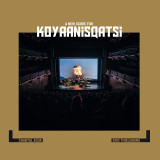
Dark-folk songwriter Chantal Acda and beyond drums-percussion musician extraordinaire Eric Thielemans propose a new score for Koyaanisqatsi, re-actualising the incredibly beautiful, raw, rhythmic and touching images of this 80-ties cinematographic masterpiece. Slow deep electric waves, lonely synths in sonic desert landscapes, rhythmic pulses, transporting drums and bells, and deeply longing sounds and voices make up the audible fundamentals of this imagined, neo shamanic, ritualistic music to accompany the Earth as it keeps on supporting our post human frenetics even today. This release contains a selection of the musical material scored for a live performance together with the screening of the movie. The live performance premiered on Film Festival Gent and Vooruit in the fall of 2022.
Currently based in Belgium, Dutch-born Chantal Acda (b. 1978) has worked under the Sleepingdog moniker since 2006, making three acclaimed albums that closed on the 'With Our Heads in the Clouds and Our Hearts in the Fields' (2010) album for which she collaborated with Adam Wiltzie (Stars of the Lid, A Winged Victory For The Sullen). They toured the UK and Benelux with Low in 2011. After all this, it was time for her first real solo record. Playing in various formations (Isbells, True Bypass, Marble Sounds) had made her conscious of the patterns that we all, as humans, share in. So, she sought out kindred spirits with whom she might record an album filled with freedom and intensity, and who were conscious of the patterns we so often fall back on. Nils Frahm was the first of these to cross her path. The inventive German pianist and producer is an intense and adventurous performer and was a perfect match for it. Acda also experienced a direct bond with Peter Broderick, a multi-instrumentalist known from his solo work (on labels such as Bella Union and Erased Tapes) and from his work with, among others, Efterklang. Cellist extraordinaire Gyda Valtysdottir from Icelandic group Múm had previously worked with Chantal as a member of the Sleepingdog live band. And lastly, Shahzad Ismaily stumbled into this picture by chance, but when Acda and he found themselves in the same room they formed an instant rapport. After this first record, 3 other solorecords followed. Chantal kept on searching for a deeper connection with the outside world and recorded "The Sparkle In Our Flaws" (2015) and "Bounce Back" (2017). She also released some live recordings with her band and also Bill Frisell, a highly respected jazz guitarist.(2018). These records were released on the German label Glitterhouse. Chantal and her band toured with these records in Europe. In 2019 Chantal created her first music/theatre performance P_wawau for Oerol Festival, The Netherlands. She worked with Valgeir Sigurdson (Björk, Bonnie Prince Billy,...) and singers from Het Nederlands Kamerkoor. As a result of this, she released the recorded music: Puwawau (2019). In 2021 Chantal released her most recent album Saturday Moon. (2021) For this album she worked with her band (Eric Thielemans, Alan Gevaert, Gaetan Vandewoude and Niels Van Heertum) but also with Bill Frisell, Shahzad Ismaily and Mimi and Alan Sparhawk (Low). Saturday Moon was very well received, internationally, by the press.
Eric Thielemans is a drummer and percussionist. Travelling across music scenes and disciplines, Thielemans navigates by means of his own compass. Most known for his resonant solo works like a Snare is a Bell, Sprang, Aural Mist and Bata Baba Loka and many collaborations with musicians in the experimental music scene, as well as the Jazz scene, and indie folk/pop/rock scenes Thielemans keeps on pushing the borders and expanding conscious aural spaces and territories. Recently, Thielemans has collaborated with PVT - a trio together with Mika Vainio & Charlemagne Palestine (album released April 2020) , PAT - a new trio together with Oren Ambarchi and Charlemagne Palestine, A new duo together with Oren Ambarchi, Billy Hart ("Talking about the Weather"), Chantal Acda ("The Sparkle in our Flaws", "Bounce Back", "Puwawau", "Saturday Moon"), Marshall Allen (Sun Ra), Tape Cuts Tape, Distance Light & Sky, Jozef Dumoulin, Trevor Dunn, Shahzad Ismaily, Vaast Colson, Nico Dockx, and many more. Currently Thielemans is working on r-e-s-o-n-a-n-c-e , a culminative work that encompasses and brings to the surface the underlying currents within his life in and with music. Withing r-e-s-o-n-a-n-c-e he investigates the everyday magic through conversations, writing and score writing to invite as many souls as possible to experience and co create the magic in the everyday.
Middle Eastern psych-rock collective Al-Qasar"s debut album is an explosive mix of heavy Arabian grooves, global psychedelia and North African trance music. The band calls it "Arabian fuzz." Brazenly electric yet deeply connected to their roots, guests include Lee Ranaldo (Sonic Youth), Jello Biafra (Dead Kennedys) and Alsarah (Alsarah & The Nubatones). Mixed by Alain Johannes (Queens of the Stone Age, PJ Harvey). Al-Qasar was born in the Barbès neighbourhood of Paris," explains band leader Thomas Attar Bellier. "I"ve lived in Los Angeles, Paris, New York, Lisbon... I wanted to start a project that was in tune with the daily life of people living in these international cities, something diverse, radically colourful, with a fresh, contemporary outlook on what societies really look like today". The musicians came together from France, Morocco, Algeria, Egypt, and the United States. Shows followed, first in France, then in Europe and the Middle East. They put out an EP, the widely-lauded Miraj, recorded in Cairo. In the same time frame, Attar Bellier collaborated with the likes of Emel Mathlouthi and Dina El Wedidi, two of the most exciting names in contemporary Arab music. Drawing on years of experience working in Los Angeles studios, Attar Bellier produced the album. Who Are We? translates the sound that inhabited his head into something physical that stirs spirit, heart and feet. It is relentless and insistent, like a psychedelic celebration on the dancefloor, bristling with the kind of deep energy that makes Al-Qasar sound like the world"s most dangerous wedding band. During those years spent behind the control board, Attar Bellier made some good friends in the US, and they"ve been eager to help out on the project. Alain Johannes (Queens of the Stone Age, PJ Harvey) mixed the record, and Grammy-winner Dave Collins mastered it. The Dead Kennedys" Jello Biafra was a natural addition to "Ya Malak," his inimitable voice reciting a translation of Egyptian revolutionary poet Ahmed Fouad Negm, elevating the record"s social critique while showcasing the first-ever English recording of Negm"s work. Jello Biafra is not the only punk hero to appear on Who Are We? Lee Ranaldo of Sonic Youth layers textured, brooding guitar over the first two cuts, "Awtar Al Sharq" and "Awal." The sweeping drones embrace the Moroccan bendir groove to magical results. "Lee sent me upwards of eighteen guitar tracks," says Attar Bellier in amazement. "It was enough for an entire EP, and all so good. The hard part was deciding what not to use. Lee"s vibe just fit perfectly with what I was trying to do with the track." Who Are We? is an exhilarating album. Its intensity never wavers, music that pulls from the hypnotic roots of North African trance and threads it into a fabric with the elaborate beauty of Arabic scales and the shock and thrill of rock"n"roll. It is modern folklore, a reflection of the cross-cultural societies we"ve become.
Micah is a special one. His playing has a restlessly inventive and futuristic tilt while simultaneously remaining deeply rooted in the history of the music – all delivered with curiosity, patience, humor and care. I make a point to hear him as often as I can, as he always inspires and is constantly evolving. Micah is one of the most exciting musicians of his generation. One who has a unique style as well as all the tools needed to make a major contribution to the world of jazz piano.
"When we decided to produce Micah Thomas, the project involved a recording of five titles only. In the first part of an approximately one hour session, Micah beautifully played first takes of up to ten titles, with fantastic artistic fervor and great freshness. Taken by surprise, joy and admiration, we decided on the spur of the moment to change our initial plans, so we could capture the magic of that
session for a little longer. Here is the result, a 12 titles double vinyl that takes you back to October 31st, 2020 at Big Orange Sheep studio in Brooklyn, NY. Twelve songs when we encountered the art of Micah Thomas as a solo pianist for the first time."
Dirtiness and Divergency
It's a mystery what the handwriting of an artist is made of. What are the ties between artist and art? Why do we recognize the sound of a music producer even if they suddenly create music of a differnet genre?
On his new album "Kiss Dance Kiss" F.S.Blumm remains unmistakably himself, even if he assembles dub- infected, saturated, overdriven instrumental tracks. It may be his signature guitar sound, the disarmingly straightforward melodies, or the irresistible groove: This groove is compelling but unobtrusive. Three, sometimes four notes create timeless melodies.
F.S.Blumm unleashes his love for beats and dub by allowing the bone-dry riddims to dive deeply into the genre typical echo-chamber, combined with sweet guitar arpeggios and melodic basslines. These are friendly dub monsters. It doesn’t all fit seamlessly into the homogeneous sound. Take "Nimbb" with it's angular electronic groove, devoid of any melody, or the surprising horn timbres on "Twistert".
As with all of Blumm‘s works, there is a familiar intimacy even within big echo chambers.
His music searches for the sweet spot. He waits for the right time to record a piece, allowing for the exact degree of maturity of an idea, the magical moment when guest musicians meet, the collision between a well-planned process and happy coincidence. Finding the perfect spot for microphone placement, walking the fine-line between too slow and too fast, pinpointing the right delay-time are all inherent in Blumm's craft. It is a music full of these fragile constellations, interferences and synergies.
The concept of 'composition through duplication' is repeated visually on the cover:
Repetition creates blur and noise. Patterns rub against each other. Sound waves flutter in the wind. A simultaneous sunrise and sunset indicate the search for the perfect overlap.
Each track acts like a rhythmic serving suggestion for individual dance moves. Music for the daily dance around the kitchen table. A lookbook for kraut-dub, analog-electro or adult-instrumental-pop.
.. and now out into the sun.
Ryuichi Sakamoto, Daniel Lanois, Loscil, K Leimer, Deaf Center, Tangerine Dream, Arvo Pärt Wake is a distillation and reflection of the work of three Portland musicians thrown, like the rest of the world, into forced isolation by the continually-mutating curse of a natural world in disequilibrium. The product of involuntarily inward-looking emotional landscapes, Wake emerged sounding surprisingly expansive and confident. The trio uses a variety of instruments –including harp, fretless bass, piano, and a variety of synthesizers– to conjure sparkling panoramas of the imagination that are deep-pooled and impressionistic, bracing yet comforting. Mike Grabarak and Joshua Ward have performed together for years as a duo under the moniker of Location Services, while Derek Hunter Wilson has primarily worked as a solo composer in the classical realm. For the Points Of No Return compilation, Beacon Sound's 50th release and a benefit for the Beirut Musicians Fund, they recorded a collaborative piece entitled "Interdependence In Solitude" that was so promising the label offered to release an album if they continued down the path they had started upon. The resulting eight songs are simply mesmerizing. Made during a period of change and upheaval in the world and society where many people were disconnected from others, the album is the product of a collage-like dialogue built on trust and patience. While the musicians couldn’t physically be together for much of this time, they began sending musical ideas to one another in a conversational back-and-forth that acted as an anchor of stability – something they found they could turn to and depend on when things felt uncertain elsewhere. This comfort zone led to some transcendent moments of experimentation. “Delicate Need”, for example, features recordings of exaggerated pizzicato that were sampled and then run back through processing effects, which were then subsequently performed live over the original track. As things became less risky on the Covid front, they would occasionally meet for backyard rehearsals. Indeed, a recording of one of these rehearsals became the basis for the opening track “Photo Aware”. Wake will be available later this summer as a limited edition LP, with design work by Berlin-based Studio Bernhardt. The cover painting was created by Portland artist Nate Ethington. Highlights: – Derek was invited by the artist Gregory Euclide (Bon Iver, Erased Tapes) to participate in his label project, Thesis, along with artists such as Benoit Pioulard, Loscil, and Julianna Barwick. – Derek‘s first and second albums as a solo artist were released by Beacon Sound (Travelogue, 2017; Steel, Wood, & Air, 2019). – Location Services likewise released their 2019 album Reincorporate on the label. – The artists plan to tour together in 2023. Cascadia release shows TBA. Bios: Location Services is the Portland-based project of multi-instrumentalist Mike Grabarek (Magic Fades) and harpist Joshua Ward. They’ve released music on Beacon Sound and Beer On The Rug. They perform both written and improvised music. Derek Hunter Wilson is a composer and multi-instrumentalist based in Portland. He has released two solo albums on Beacon Sound and has also collaborated with visual artist Gregory Euclide for his Thesis Project label, resulting in a split 10" with Spanish musician Rauelsson. He has additionally collaborated with poets Zachary Schomburg and Brandi Katherine Herrera for several sound and performance pieces. He has performed live on the West Coast and in Berlin, sharing the stage with artists such as Colleen, Amulets, and Liima.