Spectre is the third album by the late West Coast composer, healer, and medium Pauline Anna Strom. First released in 1984, the album finds Strom exploring the darker corridors of human mythology under the influence of vampiric lore, evoking a hushed gothic solitude and showcasing
her breathtaking dexterity of sound design. Despite its shadowy hues, Spectre offers generous glimpses of a vivid light that could only have come from a heart wide open to the cosmos. Restored and mixed from the original reels by Marta Salogni, and newly remastered, this is the album’s first ever official reissue, and the definitive edition of a visionary statement.
Search:pauline
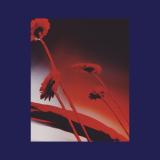
Plot Zero is the second album by the late West Coast composer, healer, and medium Pauline Anna Strom. First released in 1983, Strom envisioned the album as a “mind
trip without chemicals,” utilizing boundless imagination to cover a canvas with brilliant synthesized shapes and tones. The pieces on Plot Zero flow freely and infinitely, evoking a transportative momentum with Strom’s distinctive synthesizers soaring across infinite horizons into vast, colorful nebulas. Restored and mixed from the original reels by Marta Salogni, and newly remastered, this is the album’s first ever official reissue, and the definitive edition of a visionary statement.
Pauline Hogstrand's music – and Áhkká, in particular – is deeply inspired by both inner and outer influences, by the mystical as well as the rock-solid, by fictitious conversations and the queen mountain of Lappland (Áhkká).
Meaning "the old lady" in Lule Sámi, Áhkká is a barren, wild, exciting, beautiful, and sometimes grumpy mountain regardless of the season. Over the years, the mountain peaks, moss, birch forests, paths, streams, birds and people have shaped the surroundings, and the massif changed them in return - a reflection of a constantly ongoing development and emerging into greatness, surrounding and within. Speaking about why this mountain is so dear to her, the Denmark-based musician shares: "The nature there is harsh and raw and you can easily feel how it's so much bigger than you. Some people might feel overwhelmed or intimidated, but I feel that when acknowledging the greatness and the power nature consists, I can feel one with it. We come from the same source: I am a part of universe, and universe a part of me."
The music appearing on Áhkká (the album) simulates the dualities of ascent and descent, tension and release, inhale and exhale. Through implementing extended structures for analog and digital synthesis and processed acoustic instrumentations – strings, recorder, pipes and field recordings – Hogstrand expertly navigates these dual motions across two side-long pieces.
The opening "Herein" is slow, difficult, at times jagged and unwelcoming; just like climbing up a mountain early in the morning. Hogstrand shares that this piece is "about surrendering and letting go of control", especially during the last 10 minutes of the track which consist almost solely of an insistent and pulsating drone leading you to no man's land. "Magnitude" offers a release, glimpses of beauty, a softer, easier presence; descending, you're able to see beauty where previously you saw obstacles, perhaps the sun is up, breathtaking views in every direction... This piece is "about all that becomes available after letting go. Suddenly sight clears up in front of your eyes," shares the Swedish composer.
The magic ultimately lies in Hogstrand's perception and portrayal of contrasts – she does not view the two as opposites, but as one reality. "One greatness is not compromised by another greatness." In fact, the opposite is true – one without the other loses meaning, depth and context.
Trans-Millenia Consort is the near mythical debut album by the late West Coast composer, healer, and medium Pauline Anna Strom. First released in 1982, the album is a bold and beautiful evocation
of a life that exists between and beyond time. Evoking ancient rituals and primordial futures, the music of Trans-Millenia Consort glows with a strange iridescence; its pulsing embryonic waveforms flutter and drift, tones fall like raindrops of the long- ago, and melodies shimmer and dance across the ages like fireflies of a lost world. Restored and mixed from the original reels by Marta Salogni, and newly remastered, this is the album’s first ever official reissue, and the definitive edition of a visionary statement.
- 01: Emerald Pool
- 02: The Unveilin
- 03: Cult Of Isis
- 04: Phantom Dancer
- 05: Energies
- 06: Century C
- 07: Morning Splendor
- 08: Gossamer Silk
- 09: Untitled Track 1 (Cd Only)
- 01: Mushroom Trip
- 02: Freebasing
- 03: Symphonic Industry
- 04: Organized Confusion
- 05: Plot Zero
- 06: Untitled Track 2 (Cd Only)
- 01: Tenement Stairwell
- 02: Spatial Spectre
- 03: Blood Thirst
- 04: Virgin Ice
- 05: Blood Celebrants
- 06: Freedom At The 45Th Floor
- 07: Alpine Flight
- 08: Untitled Track 3 (Cd Only)
- 01: Ancient Sea Ritual*
- 04: Summer Rain
- 05: Midnight Velvet*
- 06: At The Water Stairs
- 07: Timeless Grief*
- 02: Quiet Joy
- 03: Domestic Peace
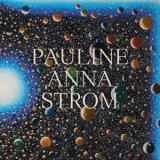
Echoes, Spaces, Lines collects Trans-Millenia Consort, Plot Zero, and Spectre, the first three albums by the late West Coast composer, healer, and medium Pauline Anna Strom. Exploring all corners of the multiverse through transpersonal form and freedom, Strom’s first three albums share a singular sensibility, different streams flowing from the same oracular font. Echoes, Spaces, Lines establishes Strom’s rightful place in the canon of great synthesists. Restored and mixed from the original reels by Marta Salogni, newly remastered, and adding Oceans of Tears, a fully realized but previously unreleased album exclusive to this box set, these are the first official reissues and the definitive encapsulation of Pauline Anna Strom’s prolific and visionary early work. These four-disc LP and CD box sets include 12 and 16 page booklet containing liner notes, an unearthed interview with Strom, and unseen ephemera.
The Well & The Gentle, two of the major works of Pauline Oliveros, are presented here in a first time reissue on double vinyl in a gatefold sleeve with extensive liner notes.
If Oliveros had followed a more conventional path she may have, all social obstacles aside, been considered among the major composers of her time. However, Oliveros approached composition in a more egalitarian manner. She wrote music for musicians to interact with or, in the composers words, she wished to create "an inclusive and interdependent and unfolding world of relationships."
Oliveros' propensity towards inclusion is part of what makes this work so remarkably distinctive. The Well & The Gentle is carefully crafted, allowing performers to participate in the creation of the work. Players are asked to collaborate, focus, react and make imaginative choices. Only then can the performers "pass through stages of awakening to the possibilities inherent in making music, working together, leading to the essence of what can shape musical impulses and individual freedom simultaneously."
Unlike most major composers of the era, Oliveros' work focuses on collaboration and improvisation. For Oliveros, the processes involved in making music are as fundamental as the music itself. Oliveros creates, as Arthur Sabatini put it so eloquently in the liner notes, "A world in which sound and the practices entailed in making music merge; become, at once, source and atmosphere, energy and essence, presence and dynamic."
Pauline Oliveros was an electronic music pioneer, accordionist, composer and educator who resided in Kingston, New York. Her instrument was tuned in Just Intonation and she often included it in her meditative improvisational music. Her music is not meditative in the sense that it is intended for listening to while meditating, rather each piece is a form of meditation, such as her aptly titled Sonic Meditations.
A central figure in post-war electronic art music, Oliveros is one of the original members of the San Francisco Tape Music Center (along with Morton Subotnick, Ramon Sender, Terry Riley, Steve Reich and Anthony Martin), which was the resource on the U.S. West coast for electronic music during the 1960s. The Center later moved to Mills College, where she was its first director, and is now called the Center for Contemporary Music. Oliveros often improvised with the Expanded Instrument System, an electronic signal processing system she designed, in her performances and recordings.
With ‘Angels By My Side', Sophie Lloyd delivered another exceptional release on Classic Music Company, powered by a leading topline from Pauline Taylor over a disco-driven, stomping bassline. Pegged as an anthem in waiting, father-daughter duo Robert and Lyric Hood, best known as Floorplan, now gear up to deliver their remix package, including a floor filling Main Mix and synth padded Dub. Classic Music Company veterans, the two consistently deliver evergreen records on the imprint, providing multi-dimensional cuts bursting with club appeal much like their 2021 releases ‘Right There / Holy Ghost’ and ‘Get My Mansion Ready / Out Of Control’. Born out of a desire to explore Robert’s soulful, spiritual influences, the project continues to evolve into a wondrous family affair as daughter Lyric moves further into the fold. Floorplan are well versed in the value of records that pump the dancefloor with life, with this remix being no exception.
Among the rarest albums from Jim Kirchstein's Wisconsin-based Cuca label, 1964's Birdlegs & Pauline runs a playful gamut of girl group soul, sultry R&B, bluesy torch songs, and junk shop doo-wop. The Rockford, Illinois-based husband and wife duo struck gold with their Top 20 R&B hit "Spring" the year prior and frequently returned to Sauk City to see if there was any additional magic up Cuca's sleeve. Gathered here are the best of Birdlegs & Pauline's family album of songs, featuring several previously unissued songs found deep in the Cuca vault.
Pauline Oliveros' The Wanderer is available on LP for the first time since it was originally released in 1984. Cut at Golden and pressed at RTI for maximum fidelity.
An utterly essential document of early American minimalism from this Pauline Oliveros. The Wanderer is the sister record to Accordion & Voice, also available on LP from Important Records.
The Wanderer is based on a single modal scale (B C# D D# E F# G#) and rhythmic modes based on a meter consisting of ¾ and ⅜. Part I, Song, is intended to explore the unique resonant qualities of accordion reeds through long sounds. Subtle variations come about from differences in tuning and air pressure. Part II, Dance, demonstrates the sharp accenting power of the accordion bellows in a mixture of cross-rhythms characteristic of jigs, reels, batucadas, Bulgars, klezmer forms, Cajun dances, and music of other diverse cultures.
The Wanderer was composed in November, 1982 especially for the Springfield Accordion Orchestra, directed by Sam Falcetti. This recording documents The Wanderer's world premiere, as it was performed 27 January, 1983 at Marymount Manhattan Theatre. The orchestra consists of twenty accordions, two bass accordions, and five percussionists, with Pauline Oliveros as soloist, Sam Falcetti conducting.
Horse Sings From Cloud, written in 1975, is one of Oliveros' best known works. Like most of her Sonic Meditations, it can be performed vocally and/or instrumentally, solo or in collaboration. A solo version of Horse Sings From Cloud has been recorded on Accordion & Voice. An early version of the score reads, “Sustain a tone or sound until any desire to change it disappears. When there is no longer any desire to change the tone or sound, then change it.” This time, Horse Sings From Cloud is performed in ensemble. Joining Pauline Oliveros on bandoneon are Heloise Gold on Harmonium, Julia Haines on accordion, and Linda Montano on concertina. This quartet version incorporates the microtonal differences in tuning of the selected instruments, creating shimmering reed sounds somewhat similar to the shimmering of a Balinese gamelan.
Pauline Oliveros' Accordion & Voice is available on LP for the first time since it was originally released in 1982. Cut at Golden and pressed at RTI for maximum fidelity.
Pauline Oliveros was an electronic music pioneer, accordionist, composer and educator who resided in Kingston, New York. Her instrument was tuned in Just Intonation and she often included it in her meditative improvisational music. Her music is not meditative in the sense that it is intended for listening to while meditating, rather each piece is a form of meditation, such as her aptly titled Sonic Meditations.
A central figure in post-war electronic art music, Oliveros is one of the original members of the San Francisco Tape Music Center (along with Morton Subotnick, Ramon Sender, Terry Riley, and Anthony Martin), which was the resource on the U.S. West coast for electronic music during the 1960s. The Center later moved to Mills College, where she was its first director, and is now called the Center for Contemporary Music. Oliveros often improvises with the Expanded Instrument System, an electronic signal processing system she designed, in her performances and recordings.
“Accordion & Voice was the first of my recordings as a soloist. I was living in an A-frame house in a meadow just below Mount Tremper at Zen Mountain Center. I had a wonderful view of the graceful saddle mountain top. When away on a performance trip I would imagine the mountain as I played Rattlesnake Mountain. I followed the feelings and sensations of my many experiences of the mountain - the changing colors of the season, the breezes and winds blowing through the grasses and trees. Horse Sings From Cloud taught me to listen to the depth of a tone and to have patience. Rather than initiating musical impulses of motion, melody and harmony I wanted to hear the subtlety of a tone taking space and time to develop. The tones linger and resonate in the body, mind, instrument and performance space. My thanks to Important Records for bringing these pieces to be heard again.” ~ Pauline Oliveros, 2007
Recorded back in 1999, 'Half a Dove in New York, Half a Dove in Buenos Aires' is the recorded debut of a NetCast improv between deep listening pioneer Pauline Oliveros and Argentinian free music trio Reynols >> a fascinating early example of the internet’s capacity to foster remote creativity in-the-moment that deploys the slowest electronics, accordion, voice, trombone and computer sounds on a next level ritual drone incantation recorded in another era, but made for our time.
As the story goes, Oliveros first met Reynols in the mid ‘90s at a Deep Listening workshop she held in their home city, Buenos Aires, where they impressed her with an improvised brass serenade. Years later, in 1999, they met again via NetCast - a series of very early online live improvisations - to explore the Internet’s potential for collaborations between artists thousands of miles apart. Finally mixed down in 2021 and mastered by Helge Sten (aka Deathprod) after marinating in the archive for 22 years, the album resonates with the late, great Oliveros’ legendary work in exploring alternate tunings, spatial dynamics and methods of intuitive performance - a remarkable slab of omnidirectional drone bearing traces of Miguel Tomasin's vox and Oliveros’ just-intoned accordion embedded in its cosmic roil.
Broadcasting from fabled record shop The Thing in NYC, with Oliveros (Accordion) joined by Jennifer McCoy (ICR), Kevin McCoy (Computer processing), and Monique Buzzarté (Trombone), and Reynols revolving Miguel Tomasin (Electronics, subliminal voice & Alclorse drums), Rob Conlazo electronics, leather gloves & e-gtr), and Anla Courtis (electronics, rubber foot & e-gtr) and dialling-in from Florida 943 in Buenos Aires, the results are an incredibly absorbing and consistently surprising testament to vanguard, experimental spirits prizing the internet’s nascent, unprecedented ability to connect minds and art across continents, language barriers, and modalities.
The album's first side, titled 'Micro Macro Wind Dance', puts Oliveros' accordion under a microscope, enhancing it with lower case rumble and noise from Reynolds' arsenal. Shifting glacially over 22-minutes, Oliveros plays subtly and slowly at first, letting the accordion breathe in-and-out like a sleeping mythical beast, before she transitions to fluttering bird-like phrases by the end of the side.
'Astral Netcast Pigeon' expands the dissonant drones to widescreen, submerging Oliveros' trills and drones beneath layers of dirt and grit. It's time-altering music that dissasembles yr head before you've completely worked out what's happening >> basically the perfect mid-point between Oliveros' deep listening practices and Reynols' wildly inspirational free-noise-drone freakouts.
Sophie Lloyd returns to Classic Music Company for another stunning soulful delivery, this time teaming up with Faithless vocalist Pauline Taylor on ‘Angels By My Side’. Much like Sophie’s previous works on Luke Solomon’s imprint, this record brims with the same joyous energy sure to uplift, as live recorded strings, horns and keys give an added richness to the release. With Sophie’s Classic debut ‘Calling Out’ a modern day dancefloor anthem with 10 million streams and counting, and her latest offering garnering early support from the likes of NYC legend Danny Krivit, there is no doubt ‘Angels By My Side’ will follow suit as an essential record for discerning selectors.
Tape
Pauline Oliveros and Guy Klucevsek's "Sounding / Way" was originally released on cassette in 1986 and has been out of print ever since. This LP was cut by John Golden and pressed at RTI in order to achieve a quiet, dynamic pressing.
The Sounding / Way concept was simple. Each artist would write a piece for two accordions and then they would perform them together. Thus, side A contains Guy Klucevsek's Tremolo No. 6 performed by Guy Klucevsek and Pauline Oliveros. Side B contains Pauline's composition The Tuning Meditation, also performed by both Pauline and Guy.
This is the second release in an on-going effort between Important Records and the Pauline Oliveros Trust to maintain and promote the music, philosophy and legacy of Pauline Oliveros.
Guy Klucevsek is one of the world’s most versatile and highly-respected accordionists. He has performed and/or recorded with Laurie Anderson, Bang On a Can, Brave Combo, Anthony Braxton, Anthony Coleman, Dave Douglas, Bill Frisell, Rahim al Haj, Robin Holcomb, Kepa Junkera, the Kronos Quartet, Natalie Merchant, Present Music, Relâche, Zeitgeist, and John Zorn.
Pauline Oliveros, composer, performer and humanitarian is an important pioneer in American Music. Acclaimed internationally, for four decades she has explored sound - forging new ground for herself and others.
Through improvisation, electronic music, ritual, teaching and meditation she has created a body of work with such breadth of vision that it profoundly effects those who experience it, and eludes many who try to write about it. Oliveros has been honored with awards, grants and concerts internationally. Whether performing at the John F. Kennedy Center in Washington D.C., in an underground cavern, or in the studios of West German Radio, Oliveros' commitment to interaction with the moment is unchanged. She can make the sound of a sweeping siren into another instrument of the ensemble.
"On some level, music, sound consciousness and religion are all one, and she would seem to be very close to that level." John Rockwell
"Through Pauline Oliveros and Deep Listening, I now know what harmony is. It's about the pleasure of making music." John Cage
Tape
Pauline Oliveros' Tara's Room has long been a favorite in the Imprec office and it's a great honor to be able to release it on LP for the very first time. Tara's Room was cut by John Golden and pressed at RTI in order to achieve a quiet, dynamic pressing. Originally released on cassette in 1987 following the 1986 release of "Sounding / Way" with Guy Klucevsek which is also available on LP via Imprec.
"Both pieces are intended to aid the listener in times of spiritual change, but are just fine for 'everyday' use as well. Highly recommended." Charles S. Russell, Ear Magazine
This LP features two long sides of infinite depth and sensitivity. Oliveros performs these pieces using a Just Intonation accordion and her Expanded Instrument System in order to bend both time and pitch.
Pauline Oliveros, composer, performer and humanitarian is an important pioneer in American Music. Acclaimed internationally, for four decades she has explored sound - forging new ground for herself and others. Through improvisation, electronic music, ritual, teaching and meditation she has created a body of work with such breadth of vision that it profoundly effects those who experience it, and eludes many who try to write about it. Oliveros has been honored with awards, grants and concerts internationally. Whether performing at the John F. Kennedy Center in Washington D.C., in an underground cavern, or in the studios of West German Radio, Oliveros' commitment to interaction with the moment is unchanged. She can make the sound of a sweeping siren into another instrument of the ensemble.
"On some level, music, sound consciousness and religion are all one, and she would seem to be very close to that level." John Rockwell
"Through Pauline Oliveros and Deep Listening, I now know what harmony is. It's about the pleasure of making music." John Cage
Angel Tears in Sunlight is Pauline Anna Strom's first album in over thirty years; an assemblage of music that refracts the expansiveness, and minutiae, of imagined realms while embracing the kaleidoscopic echoes of our distant epochs. The capacity to collapse time might elucidate the enigma of Pauline Anna Strom. A mystic force in music, emerging during the dawn of new age as the Trans-Millenia Consort, the pioneering synthesist channelled primordial energies into future-facing sound through a series of full-length releases between 1982 and 1988. Little was known about her, except by a constellation of devoted followers who saw a unique legacy forming amidst the (mostly male) synthesist canon of the time. Following the 2017 release of Trans-Millenia Music, an anthology revitalizing the most evocative parts of Strom's catalog, the Bay Area visionary sensed the universe telling her to return to music. As with her work in the 80s, Angel Tears in Sunlight was composed and recorded in the same San Francisco apartment where Strom has lived for almost four decades in synthesis with her machines and "dinosaurs." Populated by a compact array of modern instruments that streamline the sound of her analog past and her beloved iguanas, Little Soulstice and Ms Huff, the terrarium of her home forms an intimate yet limitless ecosystem that defies the constraints of the outside world. Within this sanctuary, Strom becomes lost in time, drawing on the ancient energies of her inner visions. Her hardware forms the crux of translating these ideas into sound. "It's the only way this stuff can be pulled out of myself, the universe, Little Soulstice, an ammonite_," Strom notes. "It couldn't be done without this machinery, because there's no other way to draw and capture these frequencies into sonic interpretation." Strom's process of recording transient live-takes enriches the mystery of her work. She renders the machinery a composer itself, a cohabitation with a living other. "Many musicians wouldn't go that far because of ego," Strom muses. "The equipment has to become part of you and your creativity. That's how I think it all comes together." Music-making becomes a harmonic language of intuition with an instrument, where Strom cultivates sound for a harvest that defies season. Shaped by circadian contours, Angel Tears in Sunlight is a celestial observatory of earthborn phonic mosaics. Strom uncovers a symbiosis between hardware frequencies and apparitions of nature in the record's arena of organic tones, emulating the melodic pulses of primeval terrain. The album transcends both shadow and light, falling to hushed stretches of sound as if not to awaken antediluvian animals, before soaring through the treetops where ancient skies peer over reptilian traffic and unsparing rains.
Estimated shipping date: 18.01.2019
In 2012 Important Records released a historic 12 CD box set compiling much of Pauline Oliveros' early and unreleased electronic work. Reverberations 1 is the first release in an ongoing series dedicated to releasing the entire 12 CD box set on vinyl.
Organized chronologically by studio (here: Pauline Oliveros Home Electronic Music Studio, 1961 & San Francisco Tape Music Center, 1964-1966), the complete Reverberations not only documents Pauline's earliest electronic music but it also functions as an early history of electronic music itself.
Pauline Oliveros, composer, performer and humanitarian was an important pioneer in American Music. Acclaimed internationally, for four decades she explored found, forging new ground for herself and others. Through improvisation, electronic music, ritual, teaching and meditation she has created a body of work with such breadth of vision that it profoundly effects those who experience it and it eludes many who try to write about it.
In partnership with the Pauline Oliveros Trust, Imprec will be releasing essential titles from Pauline Oliveros' catalog on vinyl including the complete Reverberations box set, Tara's Room, Sounding/Way (with Guy Klucevsek) and many more.
"On some level, music, sound consciousness and religion are all one, and she would seem to be very close to that level." John Rockwell
"Through Pauline Oliveros and Deep Listening, I now know what harmony is. It's about the pleasure of making music." John Cage
- A1: Screaming In The Darkness
- A2: Dream Sequence
- A3: European Eyes
- A4: Shoot You Down
- A5: Sympathy
- A6: Time Slipping
- B1: Drummer Boy
- B2: Thundertunes
- B3: When Will We Learn
- B4: Mr X
- B5: Judgement Day
- C1: Searching For Heaven
- C2: The Visitor
- C3: Animal Crazy
- C4: Dream Sequence Ii
- C5: Two Shots
- D1: Dream Sequence (Peel 3/1980)
- D2: Shoot You Down (Peel 3/1980)
- D3: Sympathy (Peel 3/1980)
- D4: When Will We Learn (Peel 3/1980)
PAULINE MURRAY , LEGENDARY VOCALIST OF MUCH LOVED PUNK BAND PENETRATION.
GUEST MUSICIANS JOHN MAHER (BUZZCOCKS) and VINI REILLY (DURUTTI COLUMN).
PRODUCED BY THE GOD-LIKE MARTIN HANNETT.
ARTWORK BY PETER SAVILLE AND TREVOR KEY
LINER NOTES BY JON SAVAGE
The double vinyl edition also includes a bonus CD featuring instrumental versions of all the album tracks (a must for students of Hannett's unique production sound), along with alternate takes of key singles.
Les Disques du Crepuscule presents a deluxe remastered edition of Pauline Murray and the Invisible Girls, the debut album by post/punk icon Pauline Murray, produced by revered sonic architect Martin 'Zero' Hannett.
Recorded at the famous Strawberry Studios in July 1980, the album offered epic electronic pop written by Pauline and partner Robert Blamire and marked a radical departure from their shared past in pioneering punk band Penetration. 'This is sophistication,' enthused Paul Morley in NME. 'Lovely songs of anxiety, malaise and self-doubt.' According to Melody Maker the album was 'unquestionably a musical highpoint of this year or any other.'
As well producer/arrangers Martin Hannett and Steve Hopkins (aka the Invisible Girls), the album features a stellar cast of guest musicians including John Maher (Buzzcocks) and Vini Reilly (Durutti Column). Indeed Pauline Murray and the Invisible Girls presents almost a Factory record, exquisitely sleeved by Peter Saville and Trevor Key. Stand-out tracks include the popular singles Dream Sequence and Mr X, with the newly remastered Hannett tracks now augmented on CD by a wealth of bonus material including non-album singles, live recordings (from tours in 1980 and 1981) and a John Peel session (1980). The liner note is by Jon Savage.
'It's a bit of a missing link album,' says Pauline today. 'Written and recorded after punk, but before Martin Rushent and the Human League made airy pop respectable again. We chose the other Martin in 1980 because we wanted the incredible sounds he achieved for Joy Division and Magazine. Thundertunes, basically.'
- 01: Pokal
- 02: Unzertrennlich
- 03: Birnbam
- 04: Hotel Kovèl
- 01: Baaz
- 02: Venedig
- 01: Käfer
- 02: Zug
- 03: Ballon
- 04: Heute Bin Ich Froh
- 01: Annoraaq
- 02: Loopmachine
- 03: Pauline
- 04: Tropfen
- 1: Heartbeat (Lucky Marlo Allen) / Barrelhouse (Pauline Allen)
- 2: Blood Sucking Maniacs
- 3: Bloodlines
- 4: Peaches And Sap
- 5: A Pogo Is A Logo
- 6: Dirt Road
- 7: Down To The River
- 8: Kru Jam
- 9: Just Pray
- 10: Let It All In
- 11: Little Baby Boy
- 12: Mahalabalapurem-Poppa-Oo-Maumau
- 1: Blues (Pauline Allen)
- 2: No Rush To Fly
- 3: Red Leg Boy
- 4: Santa Fe
- 5: Arroyo Nights
- 6: These Four Rocks / Shuck Some Corn (Jo Harvey Allen)
- 7: When Things Go Wrong
- 8: Kru Jam 2
- 9: Where We Belong
- 10: Family Tree / Heartbeat (Lucky Marlo Allen)
Blood Sucking Maniacs, die Band der Familie Allen, geleitet von Patriarch und Matriarchin Terry Allen und Jo Harvey Allen, umfasst fünf Generationen und 121 Jahre, darunter (unter anderem) ihre Söhne Bukka und Bale Allen, ihre Enkel Kru, Sled und Calder Allen, die Hauptakteure der Panhandle Mystery Band, Charlie Sexton, Lloyd Maines und Richard Bowden, sowie den häufigen Mitwirkenden Will Sexton. Die wilden und vielfältigen Songs auf ihrem gleichnamigen Album sind bunt und vielschichtig und umfassen herzzerreißende Balladen und ironische Insider-Witze, die von erhaben bis unverhohlen sentimental reichen. Das verbindende Prinzip ist hier weniger die Harmonie des Blutes als vielmehr die Entropie des Blutes. Lass dich mitreißen.
- D2: Baseball Cap; Backing Vocals
- A1: Reverence; Guitar – Paulie*
- A2: Don't Leave; Engineer, Mixed By – Dave Burnham; Lead Vocals
- B1: Salva Mea; Keyboards – Mr V*
- B2: If Lovin' You Is Wrong; Backing Vocals, Other
- C1: Angeline; Accordion – Vince Decicco
- C2: Insomnia
- C3: Dirty Ol' Man
- D1: Flowerstand Man; Vocals, Written-By – Dido; Written-By – Rollo
- D3: Drifting Away; Vocals – Penny Shaw
b A2 Don't Leave; Engineer, Mixed By – Dave Burnham; Lead Vocals Additional, Backing Vocals – Pauline Taylor
d B2 If Lovin' You Is Wrong; Backing Vocals, Other Adlibs – Pauline Taylor
i D2 Baseball Cap; Backing Vocals A Little Bit Of Backing – Jamie Catto
b A2 Don't Leave; Engineer, Mixed By – Dave Burnham; Lead Vocals Additional, Backing Vocals – Pauline Taylor
d B2 If Lovin' You Is Wrong; Backing Vocals, Other [Adlibs] – Pauline Taylor
[i] D2 Baseball Cap; Backing Vocals [A Little Bit Of Backing] – Jamie Catto
'Don't Turn Your Back On Me feat. Pauline Taylor' originally featured on US house innovator and Basement Boys co-founder Teddy Douglas's ‘I’m Here’ album in late 2024. It's a true soulful house anthem with funky bass and a glorious vocal that was primed for a A-list remix package. Douglas himself opens up this package with joyous organ chords and soft melodies lighting up the smooth, seductive drums. Swiss DJ and producer Shaka goes next as an artist who has spent decades blending acid, Chicago, and Detroit influences into his own tunes on top labels like Nervous, GooD MooD, and Mister Bear Records. His 12-inch Club version strips things back to go deep and dubby before rebuilding with sunny melodies, expressive organs, and proggy guitar licks that bring joyous energy and real dance floor unity.
Next is NYC DJ Tedd Patterson, a true originator, resident at Ladyfags’ Battle Hymn party and a regular at Horse Meat Disco, Berghain’s Panorama Bar, and Glitterbox, as well as releasing on Strictly Rhythm, Nervous, Defected, and more. His sophisticated remix boasts a warm and bouncy sound, complemented by soulful vocals that lend richness. Then it's seminal NYC favourite Danny Krivit, who is part of the cult Body and Soul crew, is a renowned remixer and editor with hundreds of credits to his name on the most important labels in the scene, and is resident DJ at New York’s legendary 718 Sessions. He draws on his vast experience to edit the original into a playful disco stomper, complete with neat guitar riffs and zippy synths, all bursting with joy as the funky beats roll on and the lush vocals soar to new heights.
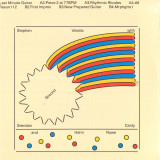
When you’re running a label, a demo occasionally comes across your desk that makes you reconsider everything you thought your label was all about. For Balmat, such was the case with this stunning album from Stephen Vitiello, Brendan Canty, and Hahn Rowe. It sounds like nothing we’ve released so far—and that very otherness opened up a whole new world of possibilities for us.
Fans of ambient, experimental electronic music, and sound art will be familiar with Vitiello, a New York native, long based in Virginia, who has collaborated with a cross-generational list of greats: Taylor Deupree, Steve Roden, Lawrence English, Tetsu Inoue, Nam June Paik, Ryuichi Sakamoto, Pauline Oliveros, and many more. On labels like 12k, Room40, and Sub Rosa, he has explored a wide range of minimalism, microsound, lowercase, ambient, improv, and other styles. But this album is something different. It may begin in ambient-adjacent territory, but it quickly veers off, and it just keeps zigzagging, taking on elements of krautrock, post-punk, dub, and the groove-heavy interplay of groups like Natural Information Society and 75 Dollar Bill.
This stylistic turn is thanks in large part to Vitiello’s choice of collaborators. “We’re coming from three different schools,” Vitiello says: “sound art, art rock, and punk rock.”
Active since the early 1980s, Rowe—a violinist, guitarist, and producer/engineer—has played with, or manned the boards for, a frankly jaw-dropping list of musicians: Herbie Hancock, Gil Scott-Heron, the Last Poets, Roy Ayers, John Zorn, Glenn Branca, Swans, Live Skull, Brian Eno, David Byrne, Anohni, R.E.M., Yoko Ono, and many more. But he might be most closely associated with Hugo Largo, a one-of-a-kind New York quartet—two basses, vocals, and Rowe’s violin—that in the late 1980s helped lay the groundwork for what would eventually become known as post-rock.
Canty, of course, is the legendary drummer of Fugazi, the visionary DC post-hardcore group, as well as Rites of Spring before them, and, currently, the Messthetics, a Dischord-signed instrumental trio with guitarist Anthony Pirog and Fugazi bassist Joe Lally.
Vitiello’s trio first collaborated on First, a 17-minute piece released on the Longform Editions label in 2023. Second picks up where the freeform drift of First left off, channeling the trio’s exploratory energies into more intentionally structured tracks and—in a real first for Balmat—some almost shockingly muscular grooves. “Sometimes my projects are more conceptually driven,” Vitiello says, “but I think this was more musically geared. I just wanted to open up the references and bring in an incredible drummer, bring in some melodies, and I’m sort of the center.” But his collaborators, he stresses, are “vastly creative in making anything I might suggest better.”
Like its predecessor, Second took shape in phases, shifting between improvisation and collage. Vitiello laid down the skeleton of the music at home, sketching out initial ideas on Rhodes keyboard and acoustic and electric guitar; he then fed the parts through samplers and his modular system, recording 10- or 20-minute jams. Once he had edited them into more structured forms, he hit the studio with Canty, who added not just drums but also bass and piano; finally, Vitiello took the results of those sessions to Rowe, who played violin, viola, electric bass, and 12-string acoustic and bowed electric guitar, and assisted in some of the final structuring and mixdown.
A few more surprises along the way: Reanimator’s Don Godwin, the studio engineer where Vitiello recorded with Canty, contributed what he calls “resonant dustpan”; and none other than Animal Collective’s Geologist, who just happened to be in the studio that day, sits in on hurdy gurdy on “Mrphgtrs1,” the album’s gorgeous, stunningly atmospheric drone closer. “I love these chance encounters,” Vitiello says. “Somebody I admire, a group I admire—that was an unexpected gift.”
An unexpected gift is a great way of describing Second as a whole: three veteran musicians venturing outside their usual zones and finding a new collaborative language together. The results can’t be neatly slotted into any given genre; they belong not to any given category, but to the spirit of conversation itself.
CINEMATIC VOYAGE THROUGH COSMIC RITUAL AND ETERNAL SOUND - a work that exists outside time—equally at home in the temples of antiquity and the neon-lit voids of speculative futures, merging ceremonial percussion, interstellar synthwaves, and wordless incantations into a 31-minute ritual for the infinite. Born from a three-year metamorphosis between studio and stage and rooted in a Takhmira (a Zar ritual poem), Ninety Nine Eyes channels the archetypal quest—a search for the “land where light is seated.” Its soundscapes evoke the grandeur of forgotten civilizations and the hum of celestial machinery: droning mizmar lines and drowning tombak and duff rhythms dissolve into maximalist synth storms; choirs of phantom voices rise like starlight through the static of ages. - Sound: Structured like a Sufi Hadra, the LP’s undulating peaks pull at old ways of communing with the divine - Part I builds tension, a breath before the storm, while Part II erupts into unfettered synth-drenched trance, gates flung open - only the listener can close the circle through their own interpretation.- For fans of Vangelis’ Blade Runner, Jon Hassell’s Fourth World, Alice Coltrane’s spiritual jazz, Autechre’s glitch rituals, and Pauline Oliveros’ deep listening.- Production: Mixed by VII, mastered by Heba Kadry (Björk, Ryuichi Sakamoto).- Artwork: Features a portrait of Yunis by Cairo underground photographer Kafrawy and hand-sewn costume design by Alaa Eideh, with graphic design by Giovanni Murolo (Countersubject). EU Tour spring 25
- A1: Edges (Christian Wolff)
- A2: Six For The New Time (Pauline Oliveros)
- B1: Having Never Written A Note For Percussion
- B2: Six (John Cage)
- B3: +- (Takehisa Kosugi)
- B4: Voice Piece For Soprano (Yoko Ono)
- B5: Piece Enfantine
- B6: Four 6
- C1: Treatise (Page 183)
- D1: Six (4Th Take)
- D2: Burdocks
- D3: Piano Piece #13 (Carpenter's Piece)
- D4: Pendulum Music (Steve Reich)
"Goodbye 20th Century", a double album originally released in 1999, features versions of pieces by avant-garde composers such as John Cage, Yoko Ono, Steve Reich and Christian Wolff played by Sonic Youth and various collaborators such as Christian Marclay, William Winant, Wharton Tiers and Takehisa Kosugi.
Since its founding back in 2014, Blume has carved a unique place in cultural landscape, issuing free-standing works, spanning the historical and contemporary, that represent singular gestures of creativity within the field of experimental sound. Joining their broad efforts in building networks of context and understanding that already includes the works by Werner Durand, Sarah Hennies, Bruce Nauman, John Butcher, Jocy de Oliveira, Mary Jane Leach, Valentina Magaletti, Alvin Curran, Julius Eastman, Alvin Lucier, and others, Blume return with the first ever vinyl release to attend to James Tenney’s legendary “Postal Pieces”, Marking the first ever appearance of five of the suite’s works - “Maximusic, for Max Neuhaus” (1965), “Having Never Written a Note for Percussion, for John Bergamo” (1971), “FFor Percussion Perhaps, or... Night, for Harold Budd” (1971), “Cellogram, for Joel Krosnick” (1971), and “Beast, for Buell Neidlinger” (1971) - on vinyl, drawing upon recordings made in 2003, by the Amsterdam based ensemble, The Barton Workshop, under the direction of James Fulkerson. Among the most important and highly regarded efforts in Tenney’s canon of compositions, as well as within the history of 20th Century music, these five pieces represent a crucial bridge between Fluxus-oriented conceptualism, minimalism, and the microtonal complexities that would emerge in their wakes. Issued in a highly limited vinyl edition of 300 copies, it includes exact replicas of the original postcard graphic scores, and features newly commissioned liner notes by Bradford Bailey, Blume’s brand new edition takes great steps to centring Tenney at the eye the storm during some of experimental music’s most important years.
A student of composition under Carl Ruggles, John Cage, Harry Partch, and Edgard Varèse - remaining close to all of them, and later performing in both Cage and Partch’s ensembles - as well as acoustics, information theory, and tape music composition under Lejaren Hiller, James Tenney carved a wide path within the contexts of experimental and avant-garde music during the second half of the 20th Century. Not only was he a tangible bridge between the generations of composer’s who laid much of the groundwork and the later movements of Fluxus, Minimalism, and the broader practices of experimental music, but Tenney is credited as having contributed one of the earliest applications of gestalt theory and cognitive science to music in 1961, before helping to pioneer the field of computer music at Bell Labs, during the following years.
Over the course of his career, Tenney produced music of such complexity and sophistication - paying little mind to the seductions of taste or dominant tropes of its own moment - that his work and legacy have largely remained under-recognised by the broader publics that have attended to most of his peers. Perhaps more pertinently, the body of work he produced can be perceived as too varied and complex to fit neatly within standard creative histories or critical frameworks, comprising harmonically complex works for acoustic instrumentation, musique concrète, the groundbreaking 1961 “plunderphonic” composition, “Collage No.1 (Blue Suede) (for tape)” - sampling and manipulating a recording of Elvis Presley - as well as algorithmic and computer synthesized music. Even here, within this single decade, a clear image of Tenney’s endeavours remains elusive. In addition to penning important theoretical texts, he collaborated and / or played with Max Neuhaus, La Monte Young, Steve Reich, Philip Glass, Michael Snow, Terry Riley, and numerous others; was an active member of Fluxus; starred in and composed music for Stan Brackage’s films; regularly worked with the Judson Dance Theater; co-founded and played in the ensemble, Tone Roads, with Malcolm Goldstein and Philip Corner; was a vocal advocate of the works of Conlon Nancarrow and Charles Ives, playing a significant part in the revival of both of their legacies; and regularly collaborated as a composer, musician, and actor with his then-partner, the artist Carolee Schneemann, notably co-starring in her film, “Fuses” (1965) and her legendary 1964 performance, “Meat Joy”, as well as creating sound collages for her films “Viet Flakes” (1965) and “Snows” (1970). Curiously, for a relatively absent figure in the historical and critical narratives, Tenney seems to have been the thread that bound multiple generations and disciplines of avant-garde practice in New York during this period.
Tenney was deeply invested in the quality and perception of sound. By 1970, this led him back to composing exclusively for acoustic instrumentation (though sometimes processed with tape delay) - in most cases utilising non-well tempered tuning systems to explore harmonic perception - a practice that he would remain steadfast to for the remainder of his life. This development roughly corresponded with his relocation to California, at the outset of the 1970s, following an invitation to teach at the newly founded music department at California Institute of the Arts (CalArts) in Valencia. Finding himself in regular contact with the harpist Susan Allen and the artist Allison Knowles, as well as at a great distance from many of his friends, in 1971 he completed (with the assistance of Knowles and Marie McRoy) “The Postal Pieces”, a project he had begun in 1965.
A suite of eleven compositions, “The Postal Pieces”, stands among Tenney’s well known and celebrated compositions, and illuminates the dualities embraced by the composer, notably his use of sound to develop consciousness in and of others, and his willingness to draw on elements and observations of everyday life; citing his strong dislike of writing letters as being the primary inspiration for their inception. In lieu, he conceived to send his friends - John Bergamo, Allison Knowles, Pauline Oliveros, La Monte Young, Harold Budd, Philip Corner, Joel Krosnick, Buell Neidlinger, Susan Allen, Max Neuhaus, and Malcolm Goldstein - short scores on the back of postcards. The suite is composed around three themes: Tenney’s concept of swell form (utilizing repetition and progressing through a structurally symmetrical arch), intonation, and the desire to produce “meditative perceptual states”.
A hugely important addition to Blume’s ever expanding efforts in context building and networks of creative practice, James Tenney’s “Post Pieces” is issued in a highly limited vinyl edition of 300 copies, which includes a exact replicas of the original postcard graphic scores, and features newly commissioned liner notes by Bradford Bailey.
“Sainen Hildo” is an album based on Miguel’s original compositions, recomposed and rearranged for accordion and voice by the two composers. Using the natural resonance and harmonics of these two instruments to influence their introspective interactions, resulting in evolving drones and tones and puzzling percussive outbursts. Unusual and at times unsettling, they manage to create a calibrated, deep and complex exploratory universe of ambience and drone where listening becomes a ritual. Highest recommendation for fans of Pauline Oliveros, Eliane Radigue or Phill Niblock.
Garazi Navas (accordion + voice). Original compositions by Miguel A. García. Recomposed and rearranged by Garazi Navas & Miguel A. García. Recorded by Ibon Rg at Azkuna Zentroa (Contemporary Art Centre in Bilbao) in June 2022, as part of the associated artists program. Mixing and mastering by Juan Carlos Blancas. Compiled by Mikel Acosta.
Acrylic painting on heavyweight paper by Maite Mugerza Ronse. Limited edition of 300 black vinyl LP’s housed in a coloured matt laminated cover. Released by Hegoa Diskak.
Dopelganger is the project in collaboration between classically trained accordion player and singer Garazi Navas (Usansolo, Bizkaia-Biscay, 1995) and Miguel A. Garcia (Vitoria-Gasteiz), an artist living in Bilbao with an extensive career in the fields of experimental music and sound art.
Garazi Navas / Classically trained at Musikene School of Music in San Sebastian with a masters in traditional music, Garazi, is a restless accordionist who, despite her young age, has taken part in a multitude of projects in theater, poetry, ballet, art installations and even playing with the Bilbao Symphony Orchestra. Her works are a personal interpretation of the close relationship which she feels exists between cutting-edge and traditional music.
Miguel A. García / Has performed extensively in Europe, America and Asia, both as a solo artist, improvising and in multiple ensembles. He has collaborated with dozens of artists (Al Karpenter, Jean Luc Guionnet, Sébastien Branche...) in studio and live, and appeared in more than a hundred albums. At the same time, he is organizer and curator of events, being founder of Club Le Larraskito, director of Zarata Fest, and part of the coordination of the cycle Hotsetan at Azkuna Zentroa itself
GRAILS don’t mince words. Awesomely communicative but entirely instrumental, this dynamic band’s violin, guitars, piano, and drums collide with sober melodies and massive emotion. At alternate moments, Grails can sound vaguely classical, Eastern European, Irish, like the lost tapes of Pauline Oliveros, and, you know, rock. They’re not really like anything else on the Neurot roster, but they’ve got something in common with all the Neurot bands: a commitment to intense music that forges new paths and, yeah, communicates in the most real way possible.
Grails have their fair share of ambient noise - shivery violins, a trickle of a high-hat, the amplified scrape of a guitar string - but their music is based on strong, narrative melodies that resonate in the heart. At times it sounds delicate, but they never cower; Grails ROAR, even when they’re being quiet.
The Burden of Hope is the debut LP, following a pair of self-released, eponymous ep’s in 2000 and 2002. The LP is the culmination of a year’s worth of recordings, including a reinterpretation of Sun City Girls’ classic “Space Prophet Dogon.”
Grails are gathered in Portland, Oregon from Baltimore, Little Rock, Louisville, Chapel Hill, and Reno. As an ensemble, their respective backgrounds in hardcore, classical, folk, and rock blend seamlessly. Formed in late 2000 to execute live the bedroom recordings of guitarist Alex Hall, the once-tentatively-assembled group found unexpected success with both audiences and local press. Originally formed under the moniker Laurel Canyon, the name of the group was changed to Grails to coincide with the release of The Burden
- A1: Luna Rossa - Vincenzo De Crescenzo / Antonio Vian
- A2: Nature Boy - Iben Ahbez
- A3: Kommissar Maigret - Ernst August Quelle
- A4: Te Reto A Ser Mi Amante - Mulo Francel
- A5: Für Pauline - Mulo Francel
- A6: Our Spanish Love Song - Charlie Haden
- B1: Tango - Paul Barentsen / Mulo Francel
- B2: Valse Lento - Peter Ludwig / Mulo Francel
- B3: Valse Vivace - Mulo Francel
- B4: Bei Dir War Es Immer So Schön - Theo Mackeben
- B5: El Paño Moruno - Manuel De Falla
- B6: Il Sorriso D´amor - Pietro Frosini
- C1: Bonsoir Juliette - Mulo Francel
- C2: Flor De La Noche - Robert Wolf
- C3: Susannata - Mulo Francel
- C4: Gracias A La Vida - Violeta Parra
- C5: Allez, Glissez! - Joe Priva
- C6: La Palummella - Traditional Canzone Napoletana, Arr. Francel
- C7: Torna A Surriento - Ernesto De Curtis / Arr: Mulo Francel
- D1: Dimme ´Na Vota Si - Traditional Canzone Napoletana / Arr. Francel
- D2: Affaccete Nunziata - Traditional Canzone Romana / Arr. Francel
- D3: El Choclo - Angel Villoldo / Arr. Mulo Francel - Special Version With Jaime Liemann (Vocal)
- D4: Quiereme - Mulo Francel - Special Version With Jaime Liemann (Vocal)
- D5: Chitarra Romana - Eldo Di Lazzaro & Bruno Cherubini - Live Version
“ It’s like a more psychedelic , organic KLF Chill Out with deep roots and cosmic overtones“ Richard Norris
“ A beautiful trip “ Jem Finer
D.E.N 01 LAND - Composer Danny Hammond
Land is the first in a series of earth inspired sonic journeys , part sound meditation , part immersive psychedelic nature trip. Incorporating field recordings , shack instruments and spoken words from cosmic adventurers .
It originated as an installation at the 14 Hour Technicolor Drone event in Sept 2025 whereby all listeners fell into a deep nature/dream slumber.
For fans of Pauline Olivieros ,Brian Eno , Terry Riley , Don Cherry , Barbara Hepworth , Alice Coltrane , John Betjemin and all other ambient adventurers.
D.E.N
Deep Earth Network is a long term sound project exploring deep-listening , drone and sonic adventure , all inspired by the earth in all its manifestations , land , water , space , consciousness. Initiated by Danny Hammond , D.E.N will present different sonic projects and collaborations from vinyl / audio releases to sonic installations with the aid of The Deep Earth Soundsystem and the Sonic Heads ( S.H ) a collection of sculpted head audio transmitters.
Experimental musician Greg Stasiw presents his debut album of radiant, free-flowing electronics ‘Guesswork’. Music for psychoactive exploration made over a four year period, incorporating ambient, minimalism, intricate sound design & Japanese environmental music. An exceptional listening experience of wonder, tranquility, melancholy & discovery, contemplating the relationship between sound & space.
Greg Stasiw is an experimental musician, visual artist and writer from New England, Northeastern USA. An itinerant polymath, Stasiw has spent time living, working and traveling in New York, Tokyo, Toronto, Paris, Boston, and Bratislava. As well as studying anthropology, animation and illustration, Stasiw has always had a close connection with music.
His earliest musical involvements started with ambient music on Sunday drives, microcassettes, the Windows 98 Sound Recorder and free play with Casio keyboards. Then came a formative procession of piano lessons, orchestras, choirs, taiko, metal, indie rock, tinnitus, and ultimately; the acquisition of music production software.
With his debut album ‘Guesswork’, the aural and visual inspirations that underpin Stasiw's creative life intersect, in a pure, radiant soundworld of space, depth and immaculate clarity. Futuristic, pellucid soundscapes incorporating ambient, minimalism, intricate sound design, and Japanese environmental music are deftly arranged with evanescent chimes, serene tone float, suspended organ notes and curious sci-fi resonances.
Like stepping into some space age meditation garden, if soundtracked by the likes of Hiroshi Yoshimura, Harold Budd, Norman McLaren, and Pauline Anna Strom, the thirteen tracks of ‘Guesswork’ create an exceptional listening experience of wide-eyed wonder, sleek tranquility, gentle melancholy, and singular discovery.
*Cover Picture: Pauline Oliveros
Practitioner, educator, DJ, and researcher, Femke Dekker (also known as Loma Doom) has long been immersed in both sound and education. Across lecture halls, archives, festivals, art galleries, independent radio stations, and dance floors, she orbits a central question: What if listening itself were an artistic practice? What might unfold when listening becomes method, medium, and material?
Open Field Listening takes shape around these ideas. Presented as a collaboration between Page Not Found—an artist-run platform dedicated to publishing and experimental practices—and the record label Osàre! Editions, the text originates from Dekker’s graduation thesis for the Master Education in Arts at the Piet Zwart Institute, Rotterdam.
There, she honed her skills as a pedagogue, inviting students into improvisational jam sessions, radio-making, and exercises that activate new modes of attention and a heightened sense of sonic curiosity.
Drawing on the work of scholars and artists—most notably Pauline Oliveros—Dekker approaches listening as a call to action: a way of tuning into one’s surroundings, one’s body, and the urgencies that contour our political and social worlds. She emphasizes the radical potential of reorienting knowledge toward collective attunement: the we rather than the I (or the eye). Inspired by Oliveros’s concept of Deep Listening—a way of expanding awareness through focused, embodied perception—Dekker acknowledges the composer as a foundational feminist figure whose insights continue to reverberate through the classroom, the studio, and beyond.
~~~
Page Not Found kindly thanks Mondriaan Fonds and the Municipality of The Hague for their generous support. Page Not Found is a centre for artistic and independent publishing, approaching these practices as vital, collaborative forms of cultural exchange.
Osàre! Editions is a music label founded by Elena Colombi. With a passion for diverse and experimental sounds, Osàre! Editions showcases unique artists and performers from around the world.
- C'est Simple
- A Cabo (Feat. Larry Goldings)
- Angélique
- Tu Peux Pas Savoir (Feat. Larry Goldings)
- On Est Bien Là (Feat. Laura Cahen)
- Nuclear Kittens
- False D'antan (Feat. Larry Goldings)
- Tu Me Manques
- Julie
- Pauline
- Nulle Part
- Félicitations!
For the last three years, Pomplamoose has shared the making of ‘Photogénique’, a lush and groovy French bossa-pop album produced by Jeremy Most (Emily King), Jack Conte and Philip Etherington (Lizzy McAlpine)
It’s a romantic, playful and deeply nostalgic coming-of-age story steeped in Dawn’s childhood memories of France and Belgium. Collaborations include legendary jazz organist Larry Goldings and French singer songwriter Laura Cahen.
The Chimes is the only studio album by the Scottish trio The Chimes. Spearheaded by the strong and soulful vocals of Pauline Henry, their style overlaps with acid jazz, R&B, house, and downtempo much in the vein of Soul II Soul and Brand New Heavies.
It's no surprise then that for their second single "1-2-3" they teamed up with Soul II Soul's producers Jazzie B and Nellee Hooper, with great success. But it was their follow-up single "I Still Haven't Found What I'm Looking For", a contemporary gospel-tinged R&B remake of the song by U2, that thrust them into the spotlight. Their debut album was a minor hit in the UK and a college radio favorite in the US but the trio parted ways regardless to pursue solo careers. This 35th anniversary edition is the first reissue since 1990 and available as a limited edition of 500 numbered copies on gold coloured vinyl.
- Tokyo 1
- Osaka
- Nagoya
- Matsumoto (Beginning)
- Matsumoto (Ending)
- Hokkaido
- Tokyo 2
- Each Story
Black Vinyl[22,27 €]
Emily A. Sprague's Cloud Time traces an audio-spiritual journey through time and place, recorded across a long-awaited debut tour of Japan in the fall of 2024. Compiled from environmental improvisations captured in and for the moment, material at once welcoming, responsive, and inimitable, the album distills a voyage guided by psychic wayfaring, unbound presence, and activating performance for a reciprocal exchange with space, listener, and each fully engaged instant. The Japanese tour documented on Cloud Time held an almost mythic significance for Sprague, taking on properties of her own sonic white whale. After many near-departures and dropped plans to play in the country, "the empty spaces of cancelled trips and forgotten music turned into strange little misty spirits that I felt followed by," she says. "When I began preparing for the tour, I couldn't shake a sense that the invitation to Japan was more about opening myself up to this new place instead of bringing something into it tightly under my control. Improvisation has always been such a pillar in my music practice, and I really wanted to meet the country, spaces and people through that process." To amplify these intuitive whispers on-stage, Sprague reimagined her time-tested live rig, designed to be as free from error as possible, as a looser, more flexible set up that would allow her to interface with what was essentially a blank sonic canvas every night. Each performance became a collaboration between environment and instinct, Sprague processing the events, energies, and emotions informing the evening through her new sound ecosystem, and projecting an entirely present and unique version of herself to each open-eared and hearted crowd. "It was very much more than just an act of playing for me, but a total experience of time and place," she says. The seven long-form pieces that plot the course of Cloud Time, excerpted from over eight hours of recordings archived on the artist's on-stage recorder and generously shared on the album with no additional mixing and only minimal editing, invite listeners to become still in these deep-rooted moments of presence as the album moves from city to city, venue to venue. Cloud Time chronicles material recorded at each tour stop, Sprague selecting and sequencing the album around mood-based storytelling more so than linear chronology. "I tried to make the whole album flow in the way that any one of the complete live performances did," she explains, "while also keeping the spirit of the whole thing as a journey." The result is equal parts travelog, love letter, and impressionistic collage channeled from the potent ferment of a now encased in the glowing amber of memory. Intrinsically inspired by kankyo ongaku, an environmental music philosophy, known both in and widely outside of Japan that tunes into the similarly expansive ethos as Pauline Oliveros' deep listening practice and posits the listener as composer, Cloud Time is ambient music that seems to be listening right back, grounded in heartfelt synthesized frequencies that abundantly hold and heal. Pieces like "Nagoya," "Tokyo 1," and the ten minute "Matsumoto" in particular hum with the atomic resonance of gently tended landscapes, offering space for tuning way in and dropping far out from perspectives that stifle and bind. Cloud Time is an invitation to embrace each moment as both fleeting and eternal, floating by with nothing to grasp onto and absolutely everything to gain. The exercise in acceptance and letting go that Sprague practiced throughout the tour deeply impacted her understanding of self as both a guest and venerable performer. "The process of loving wherever I am, being present and focusing on a clear channel of communication for mind and emotion, rooted so deeply in respect for the space, those within it, and myself, ended up being profoundly healing," she says. "My vision and hope is that this album can be released as a gift back to anyone who either was or wasn't there. A cloud time of life passing by."
- A1: Cadux Plectere I
- A2: Lacinia Off Axis
- A3: Maris Stella Plectere Ii
- A4: Ere
- B1: Arborea Plectere Iii
- B2: Eve
- B3: Sidereus Plectere Iv
- B4: Lacinia In Axis
- C1: Veris Plectere V
- C2: Nova Pt I
- C3: Eve For String Orchestra
- C4: Nova Pt Ii
- D1: Matrix Plectere Vi
- D2: Maris Stella Plectere Vii
- D3: Lacinia Off Axis
- D4: Cycle Plectere Viii
Returning to Die Schachtel with his fourth full-length with the label, the Genoa born, Bologna based, guitarist and electroacoustic composer, Stefano Pilia, delivers “Lacinia”, a new, immersive cycle of compositions, delving deeper into the realm of metaphysical, spiritual, and divine meaning, weaving astounding arrangements of sonority from a palette of synths, strings, brass, organ, various electroacoustic instruments, and percussion. Resting at a refined intersection of the acoustic and electroacoustic, drone, and chamber music - overwhelmingly beautiful, delicate, and bold, - “Lacinia” stands as a high-water mark in Pilia’s already remarkable and forward-looking career.
Since its founding in Milan during the early years of the new millennium, Die Schachtel has occupied a singular place in the landscape of experimental music, issuing a carefully curated body of reissues and archival releases by historically significant figures and projects like Christina Kubisch, Luciano Cilio, Marino Zuccheri, Prima Materia, Claudio Rocchi, Lino Capra Vaccina, Gruppo di Improvvisazione Nuova Consonanza, Roland Kayn, and numerous others, balanced against bristling contemporary counterparts by the likes of Jim O'Rourke, Giovanni Di Domenico, Nicola Ratti, Luigi ArchettI, Valerio Tricoli, etc. Running like a spine through the label’s output is a deep dedication to the work of the Italian guitarist and electroacoustic composer Stefano Pilia. Now Die Schachtel returns with “Lacinia”, Pilia’s forth full-length with the label and their first release of 2024. Building on the ground of deeply personal engagement with metaphysical, spiritual, and divine meaning, explored within his previous LP with Die Schachtel, 2022’s “Spiralis Aurea”, “Lacinia” encounters the composer working in close calibration with various ensembles, including the Bologna based Ensemble Concordanze and Comunale di Bologna String Orchestra, weaving synths, strings, brass, organ, various electroacoustic instruments, and percussion into an astounding reconfiguration of immersive, contemporary minimalism that stands among Pilia’s most noteworthy releases to date. Issued by Die Schachtel in two special double vinyl editions and a CD edition, “Lacinia” features artwork by Bruno Stucchi/Dinamomilano, and is an absolute marvel that draws you in and doesn’t let go.
First emerging during the early 2000s, over the past two decades – via solo releases and numerous collations with artists like Oren Ambarchi, Valerio Tricoli, Alessandra Novaga, Z'EV, Andrea Belfi, David Grubbs, and numerous others - the Genoa born, Bologna based, guitarist and electroacoustic composer, Stefano Pilia has presented a singular voice within Italian experimental music, harnessing visceral energy and hands-on immediacy within delicately woven tapestries of sonority, each investigating the sculptural properties of sound and illuminating its relationship to space, memory, and the suspension of time. “Lacinia”, Pilia’s forth solo venture with Die Schachtel, encounters the composer reentering his longstanding practice of collaboration with various ensemble forms, including the Bologna based Ensemble Concordanze, for the albums central piece, “Lacinia Off Axis”, spinning stunning string confirmations by Pietro David Carami and Elena Maury on violin, Alessandro Savio on viola, and Mattia Cipolli on cello.
A new, important cycle of compositions by Pilia, “Lacinia” (meaning "lace" in Latin) builds upon the exploration of the metaphysical, spiritual, and divine dimensions through numbers, geometry, and the creation of tonal forms explored by 2022’s “Spiralis Aurea”, mirroring archetypal, immutable forms at the juncture of the abstract realm of mathematics and architectural structures in the physical world, expands the poetics and compositional ideas featured in its predecessor. Regraded by Pilia as both a series of individual compositions and a single work, “Lacinia” was conceived to “define a circular path (a sort of "rhizomatic lace") where the beginning and end touch, suggesting the concept of time not only as linear but also cyclical and ritualistic—an eternal return, a process of transformation where matter changes, its state changes, but without altering the invisible internal principle of mutation”, embarking upon a a series of “steps, degrees, and energetic quanta in a progression of archetypal whole numbers and transcendent creation.”
The resulting 16 tracks unfold as a series of complex sonic meditations. While deeply resonant with the minimalism of composers like Arvo Pärt, LaMonte Young, Pauline Oliveros, and Eliane Radigue, Pilia digs deep and moves far beyond the predictable tonal relationships and structures of that idiom, echoing the ancient liturgical and devotional music of composers like Gesualdo da Venosa, Monteverdi, and John Dowland, at a refined intersection of the acoustic and electroacoustic, drone, and chamber music.
Fascinatingly structured as a whole to include a number of motif returns, across which we encounter works like “Lacinia Off Axis” appearing in slightly different rendering, states, or evolutions three times, and compositions like “Eve” appearing twice in subtly different forms and arrangements - first for four oscillators, guitar and voice and then for string orchestra - as well “Maris Stella”, which similarly makes two appearances, first for horn trio, organ and percussion, and then for string orchestra, with “Lacinia” Pilia delves further into the world of chamber music than ever before, creating a deeply inward, mediative body of work the totality of which, guided by its rich string arrangements of arching, sorrowful tone, feels almost like a mass for some unproclaimed loss; simultaneously locked in the nuances of a moment, while managing to suspend time.
Perhaps most remarkable is Pilia's ability to create a remarkable sense of sonic cohesion while using such a varied number of ensembles and instrumentation. From the sprawling string arrangements delivered by Comunale di Bologna String Orchestra, under the direction of Paolo Mancini, and Ensemble Concordanze, and a flute trio (Cadux / Plectere) brilliantly played by Manuel Zurria, to pieces for sax, organ and percussion, violin duo and percussion, organ and percussion, Pilia manages to create a sense of singular, encompassing world that flows forward like a shifting stream.
Overwhelmingly beautiful, delicate, and bold, “Lacinia” is unquestionably a high-water mark in Stefano Pilia’s already remarkable, forward-looking career. Nothing short of a marvel of contemporary Minimalism that, through its shifting arrangements of harmonics, tonality, and texture draws flickering images of ancient forms of music into the present day, “Lacinia” is Issued by Die Schachtel in two special editions on double vinyl and a CD edition, featuring artwork by Bruno Stucchi/Dinamomilano. This is an immersive all-consuming listen that can’t be missed.
- Tokyo 1
- Osaka
- Nagoya
- Matsumoto (Beginning)
- Matsumoto (Ending)
- Hokkaido
- Tokyo 2
- Each Story
Cloudy White Vinyl[31,89 €]
Emily A. Sprague's Cloud Time traces an audio-spiritual journey through time and place, recorded across a long-awaited debut tour of Japan in the fall of 2024. Compiled from environmental improvisations captured in and for the moment, material at once welcoming, responsive, and inimitable, the album distills a voyage guided by psychic wayfaring, unbound presence, and activating performance for a reciprocal exchange with space, listener, and each fully engaged instant. The Japanese tour documented on Cloud Time held an almost mythic significance for Sprague, taking on properties of her own sonic white whale. After many near-departures and dropped plans to play in the country, "the empty spaces of cancelled trips and forgotten music turned into strange little misty spirits that I felt followed by," she says. "When I began preparing for the tour, I couldn't shake a sense that the invitation to Japan was more about opening myself up to this new place instead of bringing something into it tightly under my control. Improvisation has always been such a pillar in my music practice, and I really wanted to meet the country, spaces and people through that process." To amplify these intuitive whispers on-stage, Sprague reimagined her time-tested live rig, designed to be as free from error as possible, as a looser, more flexible set up that would allow her to interface with what was essentially a blank sonic canvas every night. Each performance became a collaboration between environment and instinct, Sprague processing the events, energies, and emotions informing the evening through her new sound ecosystem, and projecting an entirely present and unique version of herself to each open-eared and hearted crowd. "It was very much more than just an act of playing for me, but a total experience of time and place," she says. The seven long-form pieces that plot the course of Cloud Time, excerpted from over eight hours of recordings archived on the artist's on-stage recorder and generously shared on the album with no additional mixing and only minimal editing, invite listeners to become still in these deep-rooted moments of presence as the album moves from city to city, venue to venue. Cloud Time chronicles material recorded at each tour stop, Sprague selecting and sequencing the album around mood-based storytelling more so than linear chronology. "I tried to make the whole album flow in the way that any one of the complete live performances did," she explains, "while also keeping the spirit of the whole thing as a journey." The result is equal parts travelog, love letter, and impressionistic collage channeled from the potent ferment of a now encased in the glowing amber of memory. Intrinsically inspired by kankyo ongaku, an environmental music philosophy, known both in and widely outside of Japan that tunes into the similarly expansive ethos as Pauline Oliveros' deep listening practice and posits the listener as composer, Cloud Time is ambient music that seems to be listening right back, grounded in heartfelt synthesized frequencies that abundantly hold and heal. Pieces like "Nagoya," "Tokyo 1," and the ten minute "Matsumoto" in particular hum with the atomic resonance of gently tended landscapes, offering space for tuning way in and dropping far out from perspectives that stifle and bind. Cloud Time is an invitation to embrace each moment as both fleeting and eternal, floating by with nothing to grasp onto and absolutely everything to gain. The exercise in acceptance and letting go that Sprague practiced throughout the tour deeply impacted her understanding of self as both a guest and venerable performer. "The process of loving wherever I am, being present and focusing on a clear channel of communication for mind and emotion, rooted so deeply in respect for the space, those within it, and myself, ended up being profoundly healing," she says. "My vision and hope is that this album can be released as a gift back to anyone who either was or wasn't there. A cloud time of life passing by." Emily A. Sprague's Cloud Time will be released Friday, October 10th in vinyl, Japanese import CD (via Plancha), and digital editions.
Born from a chance encounter in a Villejuif squat over a decade ago, Ciccio & 2mo have cultivated a singular musical language through spontaneous and genre-defying collaborations — notably around cult French band Cheveu.
The duo brings together two key figures from the fringes of the European underground: Olivier Demeaux (aka 2mo), a pioneer of France’s electronic avant-garde, leading projects like Heimat and Accident du Travail (Teenage Menopause, Bruit Direct), known for his explorations across lo-fi synthwave, spectral post-punk, and drone-infused textures; and Francesco Pastacaldi (Ciccio), a jazz-punk drummer and member of the explosive trio Jean-Louis and the angular groove unit Abacaxi (Carton Records), also a longtime collaborator of the maverick performer Fantazio.
Their debut album 24 96 (The Trilogy Tapes, 2021), born from a series of abrasive studio improvisations, was followed by a sold-out show at London’s Café OTO. That performance, released as Maremoto, captured the duo’s raw, physical energy in its purest form.
Since then, Ciccio & 2mo have brought their visceral live act to stages across Europe — from Sonic Protest in France to the Meakusma Festival in Belgium, where their live set was released as Live at Meakusma Festival 2024.
Now, the duo returns with Bouc & Rouages, a bold and hallucinatory second album commissioned by Hublotone. This new opus introduces three singular voices into the mix: operatic singers Léa Trommenschlager and Bianca Iannuzzi, and genre- blurring rapper Pauline Sampler (aka Frizzy P, known for her work with M. Cole). The result is a soundscape in constant tension — pulsing drum machines, organic percussion, saturated synth layers, and hypnotic, looping riffs.
Equal parts physical and disenchanted, the music of Ciccio & 2mo traces a thrilling, unstable path through noise psychedelia, industrial memory, and experimental pop.
Imagine Cosey Fanni Tutti rubbing up against pop, with Charles Hayward (This Heat) on drums — and you’re getting close.