
Search:dee sub

How does it start? It starts off trippy... Immediately pulling you into a web of bleepy CV signals and finely tuned modulations. Ukrainian-born, Warsaw-based Shjva sounds fully in control under her new Esq alias, appearing on the second release from Delirious records (the label curated by Karine & Shakolin) with the extended play Data::From::Deep
She delivers a sound that’s stripped back, focused and intentional. A quiet confidence runs through the record - the kind of tunes that work best when you let them breathe in a mix, gradually locking listeners into a hypnotic flow. Jay Tripwire’s involvement as a remixer adds extra depth, subtly bending and reshaping the groove as it moves. The Canadian legend brings his signature minimal discipline: clean structures, acid-tinged tweaks and small, unpredictable turns that keep the track alive and gently off-balance.

Hot’n’Spicy returns with Vol. 8, carrying the same DNA that built the label’s reputation: deeply curatedselections and HOLDTight’s very personal approach to late nigh grooves & timeless music.Side A opens with a warm late-night disco-boogie groove, wrapped in a beautiful vocal and a crispdriving rhythm. Unmistakably Hot’n’Spicy.A2 drifts into a different atmosphere with a romantic slow-disco mover around 105 BPM, glowing withquiet tension and late-night charm — a piece built for listeners who appreciate subtlety and emotionaldepth. On the flip, B1 lifts the energy with a vibrant high-energy disco cut featuring a superb vocal,full of colour, uplift, and that joyful spirit that makes disco endlessly addictive.Vol. 8 continues the Hot’n’Spicy story — carefully chosen grooves for selectors, vinyl collectors, andhappy diggers.

2026 Repress
Baby Ford is back being reissued again and we couldn't be happier about it. Few have ever matched the matter levels he achieved when it comes to deep minimal and tech house fusions. This latest on his own Trelik takes the form of three classic cuts from two much sought-after EPs - Built In and All That Nothing. The title cut is a shimmering and sublime fusion of rubbing low ends and icy hi-hats. 'All That Nothing' then picks up the pace with more dub influences and swaying drums and 'Plaza' has a tech house edge that makes for more driving grooves.

With our 12th anniversary approaching, we invited Dutch artist Human Space Machine, who delivered Perception Field, a five track EP built around the idea that perception is never fixed.
Across a wide tempo range, the record explores how the same material can shift depending on focus and context. Foreground and background exchange roles. Subtle textures and negative space shape the impact as much as the main rhythmic elements. Perception Field approaches club music as something fluid and responsive, where meaning forms through the act of listening itself. It’s an impressive showcase from an artist that shows once again he’s capable of merging layers of his excellent sound design with deeper feelings.

4
Infinity EP is Devilish Affair at its core: deep house music crafted with elegance, a soundtrack for late-night minds and uncertain times. Devilish Affair returns with its sixth vinyl chapter: Infinity EP, a deeply personal and elegant statement from Alex V.
Born in Barcelona and shaped by the late-90s deep house spirit, Alex has spent decades refining a sound that feels both timeless and intimate, music built on warmth, subtle swing, and an unmistakable sense of romance.

UK producer and DJ Huxley return’s to Rekids with the ‘Pinball Skizzard’ EP, arriving 10th April 2026.
It follows last year’s ‘MIND G%MES’ EP, which marked his debut on Radio Slave’s label and won support from artists including Enzo Siragusa, Jennifer Loveless, Carista, and Laurent Garnier. Active for over two decades, the Dumb Safari label boss has left his mark, founding the online
R Trybe community with Ramin Rezaie/BAKKIS, while boasting label credits including Aus, 20/20 Vision, and collaborator Steve Bug’s Poker Flat.
Huxley opens the ‘Pinball Skizzard’ EP with ‘Pinball’, setting the tone with a hefty House groove, anchored by cavernous bass, and brought to life by old-school vocal touches and bright sax motifs that inject warmth and energy into the mix. ‘Heaven’ follows with a buoyant rhythm, pairing glowing chords and twinkling melodic details with deep, dubby low-end pressure designed to keep bodies locked in motion. ‘Deep Down’ shifts into a slinkier back-room groove, rich in atmosphere and soulful vocal fragments that underline its timeless house feel. Closing track ‘Felix’ rounds things out with a percussive roller built around vocal snippets and subtle tribal accents, delivering a stripped-back but effective finale that fits neatly within the Rekids aesthetic.

12
A guitar stands alone in Wedding, that metropolitan biotope in the western center of Berlin, caught in constant transformation between idyll and abyss. It lets its gaze wander, unsettled, almost shy, until it encounters a trumpet, with which it begins a cautious, then ever more intimate pas de deux.
Welcome to the second studio album by the Berlin-based band Conic Rose.
The album title Wedding is no coincidence. The story of Conic Rose is closely intertwined with the Berlin neighborhood that gives the record its name. The band's studio is located here, and both studio albums were created in the immediate vicinity of the small river Panke. This place settles over the music like a warming patina. The album feels as though the musicians and the neighborhood have invited one another to get to know each other. Not least because Wedding also means marriage. These marriages between a band and an urban landscape, a fading past and an emerging future, fear and hope - unfold in every single song on Wedding.
For their second album, Conic Rose repositioned themselves completely. Not in terms of personnel, but in the question of how to move forward. Conic Rose still sound like Conic Rose; their distinctive blend of cinematic jazz, ambient textures and guitar-led contemporary music remains untouched. And yet Wedding is, in many ways, the conceptual counterpart to their debut album Heller Tag. Where the debut documented movement within an urban setting, Wedding describes a state of being. Behind every piece seems to hover a large question mark.The group opens up its palette, allowing more influences, becoming at once more subtle, more profound, more filigree. It is less about definition than about the spaces in between. The most immediately striking difference from the previous album is the strong presence of the guitar. In Bertram Burkert's playing, many voices seem to converge. His yearning openness forms an equal counterpoint to Döben's trumpet and flugelhorn. Blurred and layered sounds occasionally make the ground seem to slip away beneath one's feet, while Döben's gliding lines create both closeness and distance. Together, the band express in a deeply subtle way a sense of life that corresponds precisely to our time. Something lurks in the background, omnipresent yet still unnameable. Conic Rose need no words to convey this feeling of uncertainty with remarkable eloquence. Perhaps this has something to do with Wedding being a place of confrontational introspection, but Conic Rose confront the escape from escape itself. With the recording and release of Wedding, this process is far from complete. The seed only begins to grow in the listener's ear. With every listen and the echo it leaves behind in memory, the studio bud continues to bloom. The album is merely the point of departure. What ultimately matters is what it sets in motion within those who encounter it.
8
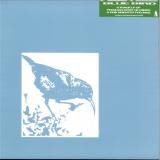
Following the critical success of last year’s ‘Cold Feet’ LP, producer, DJ, and multi-instrumentalist Alek Lee returns to Isle of Jura with his most introspective work to date, the ‘Blue Bird’ album. Across eight tracks, the Athens-based artist explores what he describes as a "Peculiar state of minds & Dub Orientated Feelings," blending his signature guerrilla style production with deep, organic soul.
The album’s centerpiece and title track, ‘Blue Bird’ features the haunting vocals of singer-songwriter Keren Ilan. It is a raw, heartfelt exploration of the aftermath of a breakup. The lyrics speak of a "desert heart" and a "loss that grows tall and loud," eventually finding a path toward healing as the "blue bird sings the dawn." Musically, the track is anchored by hazy, sun drenched guitars, a central instrument that weaves a consistent Balearic thread throughout the LP.
The journey through ‘Blue Bird’ is one of shifting shadows and unexpected textures. ‘Treasures’ is a standout instrumental, leaning into a grit-flecked, bluesy "twang" reminiscent of Duane Eddy, while ‘The Beach Road’ sees long time collaborator and ‘Shame On Us’ bandmate, Yovav, lending his magical bass and guitar work to a track that feels like a slow drive toward the horizon.
Side B shifts the energy toward the dancefloor and the sophisticated leftfield pop of the 80s. ‘First Rain’ is a subtle house leaning gem underpinned by a kick drum and lush, synth heavy emotive chord progression. ‘Thanks to Sade’ is a seductive downtempo groove with epic guitar lines shifting through, while ‘Remember the Good’ brings a subtle reggae skank and a French-influenced organ sound into the mix. The LP comes full circle with a smoked out Dub version of the title track ‘Blue Bird’.
A 180 gram pressing in a 3mm spine full colour sleeve and sticker designed by Bradley Pinkerton.

12
For over four decades, Mr. Fingers has been shaping the core of house music. Now he returns with a new album that continues his timeless journey through deep rhythms, soulful melodies, and immersive atmospheres. Crafted with the warmth and musicality that define him, the record blends deep house, jazz-infused harmonies, and subtle R&B textures. Mr. Fingers once again reminds us why his music remains essential: hypnotic grooves and heartfelt compositions. Not just music for the club, but also for the quiet spaces...

From Wisdom Teeth’s recent compilation nagoyaka na kaze / 和やかな風 (quiet wind)—which cast a spotlight on the Japanese city of Nagoya—emerges “2++”, a new label launched by abentis, who curated the compilation alongside Facta and K-LONE as a central figure in the scene. Conceived as a series introducing facets of Nagoya’s underground electronic music to the world on vinyl, its inaugural release is abentis’ debut album, Dim Grow.
Across the album, intricately designed electronic mallet sounds—created using Ableton Live’s physical-modeling synthesizer—take center stage. Fresh and percussive like marimba or kalimba, yet simultaneously carrying an otherworldly, unreal quality, these tones form the core of the record’s sonic identity. In moments of near-silence, a crystalline resonance poised between glass and metal shimmers with subtle shifts in temperature, giving the album its distinctive texture.
While resonating with the sonic sensibilities of fellow Wisdom Teeth affiliates such as K-LONE, Tristan Arp, and Salamanda, abentis’ uniquely strange palette can be traced back to one of his strongest influences: Haruomi Hosono. In particular, Hosono’s mid-’70s tropical-infused solo albums — Tropical Dandy (1975), Bon Voyage Co. (1976), and Paraiso (1978) — serve as a key reference point. Symbolically reflected in Hosono’s marimba and vocal performance at a 1976 live show in Yokohama Chinatown, the marimba functioned as a central instrument for constructing imagined exotic landscapes inspired by Martin Denny and Hawaiian music.
For abentis—who worked at a local jazz bar before becoming active as a hip-hop beatmaker—the language of “tension chords,” a harmonic vocabulary rooted in jazz and R&B that hovers ambiguously between brightness and darkness, forms a consistent grammar throughout Dim Grow.
Behind the album’s core theme of “mallets + tension chords” lies a broad musical lineage: the harmonic sensibility of Claude Debussy, who anticipated the tensions of jazz; the proto-minimalist spirit of Erik Satie; the marimba-centered structures of Steve Reich; their continuation in Japan through Mkwaju Ensemble (with Midori Takada and production by Joe Hisaishi); and the subsequent branches into post-rock, electronica, and ambient music.
Growing up in Nagoya—an industrial city where creative independence is deeply valued—and being rooted in punk and hip-hop counterculture scenes naturally fostered abentis’ affinity with these predecessors. His practice between genres, combined with an encounter with the highly cross-pollinated musical perspective cultivated around Wisdom Teeth, provided the framework through which his own musical language crystallized. Dim Grow stands as the natural culmination of that journey.

Ultra Knites Records welcomes Mike Sharon for UKR058, a refined and deeply effective 4-track statement shaped for the late-night hours. Subtle in detail, hypnotic in flow, and built with the kind of understated pressure that stays with you long after the record stops spinning. Pressed on 180g black vinyl, Genetica EP fits perfectly into that classy underground space: functional for the floor, but rich enough for close listening. A versatile release for selectors who value precision, atmosphere, and timeless dancefloor design.
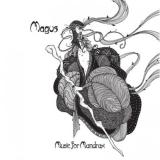
- 1: Through Darkened Glass
- 2: Very Heavy Greening
- 3: Wet Skull
- 4: The Magus
- 5: Exodus
- 6: Music For Mandrax
- 7: Return To Earth
- 8: The Middle Way
A magus is a wizard…a sorcerer. Magus, the band, is certainly interested in such things (who isn’t), but the name is especially apt due to the band’s approach to alchemy, the blending of rock, gothic, proto metal, and psychedelic styles to create a sound that is, ultimately, unique. Part of that uniqueness comes from the instrumentation. While guitar is often a dominant instrument of the rock oeuvre, the Fender Rhodes generally plays a supportive role. Not so here, where Jessica Weeks’ deft use of the keyboard dovetails with Greg Weeks’ more standard six-string approach. Not standard is the band’s sound. Doomy yet inspirational, dour yet vibrant, the duo’s tunes map sinister realms whose subjects span metaphysical creatures to enigmatic portals. You know, the typical stuff that rubs elbows with a magus.
Formed in late 2024, Magus sprung from a desire by both artists to experiment with darker, heavier sounds. Long enamored of artists like Flower Travelling Band,, Black Sabbath, and Deep Purple, the duo delved deeply into trance like riffs and euphoric solos to create the backbone of what has become their debut album, Music for Mandrax. This thirteenth Language of Stone offering features grounded, metronomic grooves, organic, lugubrious synth lines, and tandem vocals (supplied by both Weekses) that, in total, weave a heavy, trancelike spell sure to entice fans of bands as disparate as Sabbath is to Pink Floyd. Recorded at Weeks’ Hexham Head studio (to analog tape, of course), the band enlisted long-time counterparts Jesse Sparhawk (bass) and Ben McConnell (drums) to round out their sound and lock down the grooves that propel the album.
Mixed by Brian McTear and Amy Morrisey at Miner Street in Philadelphia, the band’s fully realized vision came to fruition, which left only the album art to contemplate. The band, wishing to further the gothic aesthetic of their sound, enlisted fashion designer and artist extraordinaire Hogan McLaughlin (Game of Thrones) to create the starkly beautiful line drawings of the front and back covers. The duo travelled to Salem, MA to complete the package with Courtney Brooke Hall, who shot the moody and evocative photographs that grace the gatefold release’s inner panels.

The recordings on Volume II were captured in Copenhagen, Denmark on January 18, 2020. Guided as much by human instinct as by musical intention, the ensemble moved through the evening with a shared sensitivity…listening, responding, and trusting the moment as it unfolded. Though Morten McCoy admits to having felt quite ill that evening, nothing in the music suggests restraint. Instead, what remains is a vivid, playful exchange, where McCoy and Johannes Wamberg carry both Part I and Part II as a flowing conversation, speaking through sound rather than words.
Part I begins abruptly, almost throwing the listener back in time to the exact moment the improvisation was born. Jonathan Bremer steps to the forefront, providing a solid, melodic bassline as Kristoffer and Eliel, perfectly in sync, lay down a steady foundation for whichever voice chooses to rise above the rhythm.
This is also one of the few I Am An Instrument recordings to feature two guitarists. Johannes Wamberg leads the way, shaping the harmonic direction, while Steven Jess Borth II adds subtle rhythmic textures through muted palm work, deepening the groove without ever stepping into the foreground.
Part II unfolds with Morten McCoy on his Moog One, delivering a beautiful, expansive solo. Using a carefully chosen patch, the sound pulses through the rhythm, moving with the groove rather than above it, riding the beat like a wave through the ocean.
Shaped by trust, presence, and collective improvisation, Volume II captures a group deeply attuned to one another, allowing intuition and momentum to guide the unfolding form.
——
Volume III was recorded in Copenhagen on March 5, 2020. Little did anyone know that only days later, the world would be placed on pause for years. Captured just before that moment of global stillness, this session carries a heightened sense of presence, a final gathering before silence reshaped everything. Recorded in a space more commonly associated with a club atmosphere, the music draws on a different kind of energy and immediacy. With Eliel Lazo unable to attend, the group invited Victor Dybbroe of Girls In Airports to join on percussion, subtly reshaping the ensemble while preserving its core spirit. Part I opens with Steven Jess Borth II calling out on tenor saxophone, answered by Morten McCoy on Wurlitzer electric piano. The piece gradually unfolds into a meditative groove, patient and expansive, carrying the listener through an eight-minute journey of layered rhythm and restraint.
Part II begins with Jonathan Bremer on stand up bass, slowly joined by the rest of the ensemble as each voice enters with intention. Midway through, an unexpected vocal melody from Borth emerges, drenched in reverb and delay, later reappearing as a melodic line on the tenor saxophone.
Part III is led by Morten McCoy on Wurlitzer electric piano. His signature melodic language sets the direction, guiding the ensemble while leaving ample space for the music to breathe and evolve through collective improvisation. Reprise returns to the closing moments of Part II, its title reflecting its origin. The familiar groove reappears, transformed into a distinctly Jamaican-influenced rhythm, over which Borth delivers a final tenor saxophone solo, bringing the conversation to rest.
Any questions about any of these products feel free to get in touch and we'll help you out!
[a] a1. Part I [Vol.2]
[b] a2. Part II [Vol.2]
[c] a3. Part I [Vol.3]
[d] b1. Part II [Vol.3]
[e] b2. Part III [Vol.3]
[f] b3. Reprise [Vol.3]

4
SOULFUL03 brings another deep and beautifully understated chapter from Soulful Dubs straight out of Finland with a special collaboration between Tm Shuffle, Monoder, and Tapani Rinne. warm, organic, and timeless. The record carries a quiet emotional depth, balancing hypnotic groove structures with spacious textures and subtle melodic detail. There’s a strong sense of atmosphere throughout, but always with enough movement and rhythm to keep the floor engaged. The collaboration feels natural and refined: you can hear the musical sensitivity in every layer, from the gently rolling low-end to the airy, dubwise treatment and the beautifully restrained arrangement style.

10
BCUC – Bantu Continua Uhuru Consciousness – have been channeling the spirit of Soweto for over twenty years. Indigenous funk, hip-hop consciousness, and punk rock energy fused into something utterly original and deeply rooted. Their mantra: Music for the people, by the people, with the people. From humble beginnings rehearsing in a shipping container, a stone's throw from the church where Desmond Tutu organized the escape of the most wanted anti-Apartheid activists, they kept believing in their dream of self-empowerment. Today they command festival stages worldwide: Glastonbury West Holts, Roskilde, Afropunk Brooklyn, WOMAD, Fusion, Sziget, FMM Sines, Beaches Brew, Boomtown, Colours of Ostrava, Couleur Café – to name just a few. In 2023, BCUC were honoured with the prestigious WOMEX Artist Award, an accolade usually reserved for more established artists, in recognition of their fearless work and transcendent live performances.
THE ROAD IS NEVER EASY
The Road Is Never Easy is BCUC's fifth album and their debut on Outhere Records. On this new offering, BCUC take listeners on another Afro-psychedelic journey into the soul of Soweto. It feels like a gospel sermon colliding with a punk concert, "guaranteed to touch untapped corners of your soul" (OkayAfrica). BCUC's music is deeply rooted in history and echoes the voices of the ones who came before. The road was never easy for the people of Soweto who originally came to work in the mines of Egoli, the City of Gold, Johannesburg. When apartheid finally ended after a long struggle, it was hoped that life would improve. But more than 30 years later, many of those initial hopes and dreams are still waiting to be fulfilled. This album is about that struggle. The album contains 10 brand new songs – a record for BCUC, whose previous albums featured an average of 3 songs. It represents the culmination of more than two decades of performing together and building a reputation as a powerful live act. These ten songs encapsulate that same live energy, each one building gradually and drawing you into BCUC's Afro-psychedelic stream of consciousness. It's a seismic tour de force through life in Soweto today. Songs like Amakhandela (Breaking All the Chains) connect history to daily life: "How is this precious metal inflicting so much pain in us," sing BCUC, "this government has been telling us we are free, but we don't benefit from being free." The album also talks about all the hopes and dreams that remain: "I have too many wishes and dreams in my head," BCUC sing in Um duma khanda, "I think I am losing my mind". The album ends with the soothing Matla a rona ke Bophelo, "our strength is life", praising the spirits and thanking the elders for protection. The Road Is Never Easy is about the harsh reality of life in Soweto, where "people always carry heavy loads". BCUC are street poets trying to deal with that burden: sometimes revolutionary, sometimes soothing, but always hopeful and compassionate. "When you are from Soweto you can't retreat nor surrender." (Sebenzela)
RECORDING
The album was largely recorded in Munich, Germany during tour breaks over two sessions, each three days long. It took place in a small studio located in a German WW II bunker converted into rehearsal spaces. The songs were recorded in one take altogether in one room, with only a few overdubs added, mainly backing vocals, by BCUC at Fourways studio in Johannesburg. BCUC have created their own distinctive way of writing, or rather, finding and creating their songs. The recording process is like an improvised live performance. They bring their ideas into a zone where the music, the rhythm and the spirits take over until the song starts to form. In this Afro-psychedelic zone BCUC create their unique poetry that feeds on the dreams still dreamt, the hopes, the fears and the temptations lingering everywhere. BCUC's songs need to breathe and time to build. The right take was the one when the song took over, and just like their live performances, no one knew beforehand where the song would take them. During the recording, BCUC just let it all flow out: inner turmoil, cries of rebellion, but also resilience and a search for healing, love, unity and compassion. You don't have to be from Soweto to feel the deep meaning and impact of this music. In these times of so much hate and division, BCUC are like a campfire for people to gather around.
PRODUCTION & ARTWORK
"BCUC have a unique magic," says Outhere's Jay Rutledge, who produced the album. "It blew our minds. It's like punk and pure gospel at the same time. Their music can make you dance and it can make you cry, all at the same time. And when the song is over, you feel you're not alone in this world anymore. We felt compelled to do this." The album cover is based on a matchbox design, matches being a common household item in South Africa even today. "These were the matches people used to burn government buildings and cars," explain BCUC. Little messages, addresses, or phone numbers used to be scribbled on the back of these boxes; each one a reminder of the strength, resilience, and resistance that once drove the struggle for freedom in Soweto. BCUC keep this flame burning. The Road Is Never Easy is a heavy spiritual road trip, a deep dive into the subconscious of Soweto and a quest for truth, justice and sanity in this crazy world. BCUC tackle the harsh realities of the voiceless, guided by the spirit world of their ancestors. Rather than reinforcing stereotypes of poverty, BCUC's portrayal of Africa is one rich in tradition, rituals and beliefs. "We bring fun and Afro-psychedelic fire from the hood," says vocalist Kgomotso Mokone.

_NRV011 welcomes Romanian craftsman Firesc for a deep, stripped and deliberate three-track journey built for long blends and late-hour tension.
“Travelling Monk” unfolds across eleven patient minutes — a rolling, meditative groove anchored by subtle low-end pressure and finely detailed percussion. The arrangement breathes, evolves and locks into a steady hypnotic stride designed for extended transitions and heads-down floors.
“Resiclap” tightens the focus. Snapping drums and elastic rhythm work drive the groove forward with crisp minimal precision, balancing restraint with just enough swing to keep things playful.
On remix duties, Andrei Ciubuc reinterprets “Resiclap” with a darker, more driving edge. His version sharpens the rhythmic framework and reinforces the low-end weight, turning it into a focused, late-night weapon without sacrificing the original’s subtlety.
A refined, functional release that stays true to the understated aesthetic _NRV is becoming known for — built for selectors who value patience, space and control.

7
Peace World Records returns with Hidden Atmospheres, the debut release produced by Max F and mixed by Space Ghost. Drawing from classic deep house and esoteric club sounds of the '90s and early 2000s, this seven-track collection channels these influences into fresh territory while preserving the digital grit and dreamlike essence of the era.
The release strikes a delicate balance between the meditative and the kinetic. On the A Side, tracks “Soul Control” and “Zone 6” highlight subtle yet hard-hitting percussion grooves and deep basslines that anchor the mix beneath ethereal pads and sweeps. Each track builds through hypnotic, evolving arrangements that reward close listening. On the B side, “Dream Channel” and “Earth Effects" both feature airy, spectral synth progressions that interweave with ephemeral yet decisive melodies, demonstrating a refined insight of space and dynamics. To round things off, Space Ghost took a crack at an energetic club remix of “Dream Channel. ” Carried by a classic 909 house rhythm and a bubbly bassline, the remix offers a fun, uplifting take on the original, complete with organ stabs and MIDI sax!
As a whole, Hidden Atmospheres delivers something new for fans of 90s and 2000s era house music. Think Ronin, Hanna, Chris Brann, Wamdue Kids—artists whose work holds its own in the club while remaining equally suited for intimate late-night listening. Throughout the record, tracks drift seamlessly between shimmering dancefloor functionality and liminal, introspective ambience, inviting repeat listens that reveal new details and "hidden atmospheres" with eachpass.
Hidden Atmospheres lands on Peace World Records April 9th, 2026.
g B3. Dream Channel Space Ghost Club Remix

Love For Love Vol.1 is a sumptuous two-tracker that takes you into both the unknown and the familiar.
On Side A, Mauritzio’s mesmerising, swirling ‘Sympathy’ (Gamma Reshape Boot) acts like a sonic shower that hits your body wherever it aches. The track kicks off with a subtle beat and acid-tinged backbone, spreading out into a deep, bass-laden symphony of sounds, detached vocals and warm synth chords. One for the late-night crowd searching for the darker corners of the dance floor for inspiration.
Flip over to Side B and Luber's ‘Somebody’ is waiting in the alley for you. At 124 bpm, ‘Somebody’ chugs along from the off with a curiously swingy beat, complete with perfectly trimmed hi-hats and a heavy double bassline. The familiar vocal acts as the track’s calling card – melancholic yet soaringly beautiful. ‘Somebody’ hits your nostalgia nodes with the flick of an ethereal finger, delivering low-end shuffle and hypnotic rhythms to lose yourself in.
Love For Love Vol.1 feels like the start of something special – and it would be wise to have these first steps in your record bag.

José González has delivered a new album, Against the Dying of the Light, a companion and further meditation on the themes of his critically acclaimed album, Local Valley. Where Local Valley turned inward toward place, language, and personal reflection, this new record widens its gaze, becoming an urgent call to preserve the light of humanity with all its flaws, at a moment when, technology increasingly shapes how we think, feel, and relate to one another.
While José has always embraced technological advancement, he questions the assumption that every new possibility must be pursued to its maximum potential, especially when progress comes at the expense of human flourishing, attention, and empathy.
Keeping in the tradition of folk music as protest, José’s new single — sharing its title with the forthcoming album — urges listeners to resist systems that dehumanize and divide: “Disconnect from every algorithm, every perverse incentive that drags you down. Let’s rebel against the replicators, against the dying of the light. Kill the codes that feed the hate, keep the codes that make you thrive, celebrate the **king fact that we’re alive.”
Across the album, González works within a deliberately minimal framework, pushing his familiar palette to new heights through subtle variation, restraint, and detail. Each song unfolds with its own distinct character, proving how much emotional and musical range can be achieved within self - imposed limitations. Written in English, Swedish, and Spanish, the record reflects his Swedish - Argentine roots and frames its humanist message as a global one rather than a purely personal or political statement.
José González is one of the most quietly influential artists of our generation. The Swedish - Argentine artist has built a singular musical world from hypnotic, minimal guitar work and his unmistakably gentle voice — a sound that has become deeply personal to millions of listeners worldwide. With billions of streams across platforms and hundreds of thousands of physical records sold, González’s songs often act as emotional landmarks. Ask almost anyone, and they can name at least one of his tracks tied to a defining moment in their lives.
