Over a decade has passed since this was released, and it has truly aged like fine wine. This release features 2 timeless cuts from the mind and soul of intrusion, mixed and recorded near the heart of Detroit. This was beautifully remastered by dub innovator and pioneer, Stefan Betke POLE @ scape mastering in Berlin, DE. The recordings were pulled from the session masters conducted by Bazza @ Alchemy Mastering in London to ensure a perfectly balanced mix and preserving the soul and spirit of the original tape master. The first incarnation of "A Gentle Embrace" came in the form of three extended reshapes from cv313 & variant and now we're proud to offer the original work on beautiful crystal/silver mixed clear 150 gram wax! :)
On side A the most pristine of dub techno is on offer here, this is Detroit techno stripped down to its most minimal core. A gorgeous subtle ambient soundscape exploring the deepest end of dub and house with gentle surges of organic elements, field recordings and modular movements simply out of this world. The "Reduction" mix on side B captures those chilling glacial soundscapes, trademark basslines and mesmerizing gaseous atmospheres subtly layer into the mix. Otherworldly to say the very least, this is music to swim in, breathe in and to pray to - for the spirit and the soul. Essential!
quête:deep breath
Presenting the 2nd in the series of Persian remix EPs, following the bumping Dub House remakes from Picasso, the label is joined by Yorkshire’s own young electronic folklore master, a fast-rising name, Miles J Paralysis.
Whereas Picasso took the first Dubplate ‘Space Within Art’, here Miles J delves in to the follow up ‘Smoke Dub’, turning out a selection of dubwise cuts that build on the dark electronics of his excellent debut releases for his Crying Outcast label.
Yorkshire born and based, with a love for the Moors, as well as the teachings of lore, magick and mysticism, this young producer has been emersed in music since a young age, with a penchant of Dub, Hip Hop and Reggae.
Starting with Survival Dub, the anthemic Ragga Dub original morphs into 2 parts, first heading down Paralysis’s alley of dark and brooding production marrying perfect touches of the vocal samples, before the amen break builds the track to the light.
Smoke Mari follows, the languid Digibreaks chugger, utilizing Linval Thompson’s iconic vocals, now comes as a deep meditative Dub excursion. Stripped back to a raw essence, the vocals whirl, while hypnotic keys and dub bass complete the psychedelic mosaic.
There Is No Love is modern dub style, off beat syncopation, reverb, tape delays and heavy vocal sampling all in the mix. The breakbeats of the original are jettisoned for a Dub (Drug) Chug, the atmospherics seeking the dark corners. “These are the last days; can’t you see the sunshine…”
Zatoichi’s Troubles ends the pack, the trip hop, Depth Charge dub bass cut transforms at the mixing desk of Miles J in to Dub Techno territory, haunting, melodic. Miles J’s love of the deeper side of electronic music expanded. Club music but not produced for clubs. Made for the discerning.
Paralysis the Mystery.
With "Jamaican (Bam Bam)," HUGEL and SOLTO breathe new life into Sister Nancy's iconic anthem - a bold, rhythm-charged reinterpretation built for the modern dancefloor. It grips from the first beat: dynamic drumming, crisp claps, and a bassline that rolls deep with sway and sensuality. Layers tighten and unfold, teasing the body as electronic tinctures flicker beneath, building lift and slow, simmering tension. Through it all, Sister Nancy's voice cuts steady and alive, grounding the track in its roots while driving it forward. The energy keeps rising vibrant, climactic, and free. "Jamaican (Bam Bam)" smolders from within, a kinetic force that turns motion into release.
Artwork by Rachael D’Alessandro. Words by Marie Floro. Executive Producer Mimmo Falcone. Distribution by Muting The Noise.
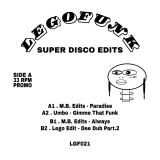
Legofunk Records has returned with “Super Disco Edits”, continuing its signatureapproach of breathing new life into vintage grooves. This release fits right into the label’s niche: carefully crafted edits of classic disco and funk tracks, often extending breaks, enhancing rhythm sections, and making them more DJ-friendly while preserving the soul of the originals. Legofunk has built a reputation among collectors and selectors for digging deep and delivering versions that feel both nostalgic and fresh.
With no compromises on sound quality and an exclusive pressing designed for true vinyl enthusiasts, KRONERT002 is more than just a record—it's a collectible statement of artistry and innovation. Don’t miss your chance to own a piece of this journey.
Pushing sonic exploration even further, KRONERT002 embodies the raw essence of underground house music, capturing its energy, groove, and timeless appeal. This limited Coloured Splatter/Split vinyl is more than just a record—it’s a statement, a collector’s piece for those who live and breathe the rhythm.
Kronert crafts a hypnotic blend of rolling basslines, shuffled drum patterns, and atmospheric pads, seamlessly fusing classic house elements with a forward-thinking approach. The EP’s warm textures and intricate grooves ensure its versatility—whether igniting peak-time dance floors or setting the tone for deep, late-night sessions.
- 1: Urn Burial
- 2: The Redness In The West
- 3: The Third Migration
- 4: They Came Like Swallows
- 5: The Living Theater
- 6: The Oceans Are Crying
- 7: Insight
Black Vinyl[30,67 €]
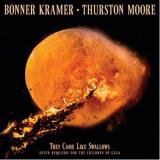
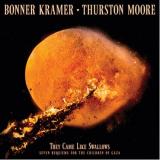
They Came Like Swallows is the first album-length collaboration between Thurston Moore and Kramer (now officially Bonner Kramer), two giants of alternative/ experimental music. The accomplishments and influence of these two artists in the world of independent music cannot be overstated and the result of their artistic union is a startlingly cohesive statement that burns through landscapes of primitive outsider rock, avant-garde composition, progressive ambient and further locales boldly and beautifully unnamable. “Kramer and I reconnected in Miami, Florida, a few years back, many many years after each of us had departed NYC on separate life adventures. It was only a matter of time before Kramer and I started making plans to record together and with his irrepressible due diligence he quickly set up a mobile recording contraption in the pad I was decamped in, the Florida sunshine flowing through the palm leaves, lithe lizards skittering across the windowsills, and we just went for it.
Kramer had the idea to cover a Joy Division tune, a left turn from the improvisations we had been tracking, though wholly in keeping with both our sensibilities of light and dark unifying in transcendent songwriting, both of us devotees of 'the song' as well as 'the freedom.’ What transpired is They Came Like Swallows, a session we immediately felt should exist as a prayer to the war-torn souls of the families of Palestine continually decimated by the brutality of genocide. We agreed beyond words to offer our music as a sonic activism and as a beneficent energy. This album is our duo exchange for human dignity, it is our soul music for any semblance of a peaceful planet.” ~ Thurston Moore “For the first time in our nearly 45 years of friendship, we had identical time windows open to make a record together,” recounts Kramer. After all this time not a moment is wasted as the duo immediately taps into the heightened core of improvisational tension across these seven offerings. Volcanic opener “Urn Burial” notches a similar historic union (John Cale and Terry Riley) to meet the circumstances of the moment, with swirling mists of organ and pounding toms over guitar that thickens the atmosphere with jagged, grimy dissonance.
Solemn strings open the second track, “The Redness In The West,” with Kramer’s cello and viola in dueling bow beneath the high tension drive and sustain of Thurston’s electric guitar, tapping out a Morse code of tension that mounts endlessly into a fog of inevitable war by the end. Moore and Kramer’s sense of experimentalism is in free and full grandeur throughout They Came Like Swallows, though the duo keep a strong and constant sideways eye on melody, composition and architecture, to the ends that any strict lines between song and improvisation are blurred beyond qualification.
As if to punctuate this point, Swallows closes with a nightwork cover of Joy Division’s “Insight,” a doleful coda that breathes out with a solemn inner grace under Thurston’s instantly stylistically recognizable guitar melodies as they weave into he and Kramer’s unison voices. As the lone vocal piece and only traditional ‘song’ form on the album, “Insight” is unique to this set and as a closing statement draws connective lines back to the kind of dynamic, electrified melodicism that wove deep, melancholy patterns into the untamed fire of Sonic Youth’s Sister and Daydream Nation. In the album’s final moments, the two voices repeat the lyric “I’m not afraid anymore” as mantra, underscoring the heavy, unsettled themes and methods that preceded it. Kramer describes the creative process of They Came Like Swallows: “I had composed and recorded a few pieces at my home studio over the course of a couple weeks. Thurston was spending the winter in South Florida, so I flew down and spent a few days recording his guitar parts in his home there. Watching him spontaneously compose his parts was pretty astonishing, to say the least. Once we'd finished working on those pieces, we began improvising and following wherever the music pointed us, and another few pieces were born. We got straight to it, without anything driving us other than the joy of finally working together.
My personal goal was to remain present and catch as many surprises as I could from Thurston's guitar work, and there were plenty during those few days. We had a fucking blast.” Thurston’s contributions here will be readily familiar to any acolytes of his other works, the through-line between his inspired playing, cradled in Kramer’s meticulous, solid arrangements. “If I had to make this record again, I'd do it all exactly the same way,” Kramer says. “It’s like jazz, you don't think about it. You just do it. It was miraculous, and you don't fuck with a miracle.”
They Came Like Swallows is the first album-length collaboration between Thurston Moore and Kramer (now officially Bonner Kramer), two giants of alternative/ experimental music. The accomplishments and influence of these two artists in the world of independent music cannot be overstated and the result of their artistic union is a startlingly cohesive statement that burns through landscapes of primitive outsider rock, avant-garde composition, progressive ambient and further locales boldly and beautifully unnamable. “Kramer and I reconnected in Miami, Florida, a few years back, many many years after each of us had departed NYC on separate life adventures. It was only a matter of time before Kramer and I started making plans to record together and with his irrepressible due diligence he quickly set up a mobile recording contraption in the pad I was decamped in, the Florida sunshine flowing through the palm leaves, lithe lizards skittering across the windowsills, and we just went for it.
Kramer had the idea to cover a Joy Division tune, a left turn from the improvisations we had been tracking, though wholly in keeping with both our sensibilities of light and dark unifying in transcendent songwriting, both of us devotees of 'the song' as well as 'the freedom.’ What transpired is They Came Like Swallows, a session we immediately felt should exist as a prayer to the war-torn souls of the families of Palestine continually decimated by the brutality of genocide. We agreed beyond words to offer our music as a sonic activism and as a beneficent energy. This album is our duo exchange for human dignity, it is our soul music for any semblance of a peaceful planet.” ~ Thurston Moore “For the first time in our nearly 45 years of friendship, we had identical time windows open to make a record together,” recounts Kramer. After all this time not a moment is wasted as the duo immediately taps into the heightened core of improvisational tension across these seven offerings. Volcanic opener “Urn Burial” notches a similar historic union (John Cale and Terry Riley) to meet the circumstances of the moment, with swirling mists of organ and pounding toms over guitar that thickens the atmosphere with jagged, grimy dissonance.
Solemn strings open the second track, “The Redness In The West,” with Kramer’s cello and viola in dueling bow beneath the high tension drive and sustain of Thurston’s electric guitar, tapping out a Morse code of tension that mounts endlessly into a fog of inevitable war by the end. Moore and Kramer’s sense of experimentalism is in free and full grandeur throughout They Came Like Swallows, though the duo keep a strong and constant sideways eye on melody, composition and architecture, to the ends that any strict lines between song and improvisation are blurred beyond qualification.
As if to punctuate this point, Swallows closes with a nightwork cover of Joy Division’s “Insight,” a doleful coda that breathes out with a solemn inner grace under Thurston’s instantly stylistically recognizable guitar melodies as they weave into he and Kramer’s unison voices. As the lone vocal piece and only traditional ‘song’ form on the album, “Insight” is unique to this set and as a closing statement draws connective lines back to the kind of dynamic, electrified melodicism that wove deep, melancholy patterns into the untamed fire of Sonic Youth’s Sister and Daydream Nation. In the album’s final moments, the two voices repeat the lyric “I’m not afraid anymore” as mantra, underscoring the heavy, unsettled themes and methods that preceded it. Kramer describes the creative process of They Came Like Swallows: “I had composed and recorded a few pieces at my home studio over the course of a couple weeks. Thurston was spending the winter in South Florida, so I flew down and spent a few days recording his guitar parts in his home there. Watching him spontaneously compose his parts was pretty astonishing, to say the least. Once we'd finished working on those pieces, we began improvising and following wherever the music pointed us, and another few pieces were born. We got straight to it, without anything driving us other than the joy of finally working together.
My personal goal was to remain present and catch as many surprises as I could from Thurston's guitar work, and there were plenty during those few days. We had a fucking blast.” Thurston’s contributions here will be readily familiar to any acolytes of his other works, the through-line between his inspired playing, cradled in Kramer’s meticulous, solid arrangements. “If I had to make this record again, I'd do it all exactly the same way,” Kramer says. “It’s like jazz, you don't think about it. You just do it. It was miraculous, and you don't fuck with a miracle.”
There is a strong sense of craftsmanship throughout this release, hardware-driven, deeply textured, and full of character. MS14 brings together Myles Serge and Jamie Bissmire for a powerful journey into wonderfully raw, analog-rooted techno. And When the Sky Was Open captures the spirit of classic Detroit-infused machine music while pushing it forward with depth, soul, and precision. The record feels both timeless and immediate, balancing driving rhythm structures with a spacious, atmospheric edge that gives it a distinctive emotional weight. Rather than relying on sterile functionality, these cuts breathe with warmth, movement, and a human touch, making the record equally effective for deep listening and focused dancefloor moments. It is techno with substance: hypnotic, elegant, and uncompromising.
DISPLACES represents Fabris' most personal musical journey to date, inspired by the concept of hyperobjects and cartographic practices. The album sculpts a high-dimensional phased time-space composed of concrete materials and digital archetypes in a state of constant displacement. It delves into the symbolic and philosophical realms of mapping as one of the greatest sense-making mechanisms for life, in dialogue with object-oriented environments, superimposition and non-locality applied to cosmic, temporal, and emotional memory.
The sonic ecosystem expands on the image of navigating a path through a set of places, from the microcosm of quanta to the macro force of dark matter, from underwater depths to overland terrains, encapsulating the cyclical flow between birth and death, both in ecological and anthropological sense. The intersection of these shifting states is explored through the extensive processing of the langspil, Iceland's only traditional instrument, intertwined with manipulated field recordings of biophonies and geophonies captured across Icelandic and Venetian territories. These recordings form the backdrop for a meditative process that relocate familiar objects into unfamiliar realms, reflecting on the transformative power of self-reflection while encapsulating the fragmentation and entanglement found in nature and the human state. The record plunges the listener into a disconcerting and physical soundscape, as a “ghostly spectrality that comes in and out of phase with normalized human spacetime,” evoking sensations of suffocation and release as each layer continuously unfolds the palimpsest of the enclosed labyrinth.
“Extraction of the I” embodies a subatomic reaction—erupting as a molecular force that rises, only to re-submerge with a solitary exhale underwater. In this mutated dark space, beluga whales breathe into "Xanadu Phasing," creating a pulsating tension that releases only to unveil a frozen landscape.
In “Barricading the Ice Sheets” the glacial material morphs into a liquid tunnel of digital artifacts, building a wall of noise that shatters into scattered fragments of ice, resembling bird calls from another world.
A moment of stasis is offered with the appearance of an asymmetrical loop in Monolith I, evoking a primitive rite before an unknown force emerges.
The physical intensity of subsonic material in "A Quake in Being" interrupts the hieratic tone, detuning into polluted sonic matter sourced from relics of the First World War in the Venetian Prealps. The geography of this place reconciles with the original homeland in "The Map is the Territory," blending negative space with anthropogenic elements and exploited sounds of the langspil.
The burning density of "Wolf-Rayet" projects into the void, echoing the residual sounds of a local church as relics of fossilized religions. Wolf tones are the remains in Monolith II, introducing the final track, "Topography of Extinction," where evolving psilocin textures invite the listener to uncover deeper layers of meaning and dislocation.
The mysterious Pirka Vinyl Cuts series continues, digging deeper into the crates to reframe the classics. This chapter presents four broken-beat interpretations, blending deep textures with familiar samples. Features sophisticated reconstructions of material by Telepopmusik, Depeche Mode, Chemical Brothers and Limp Bizkit.
Few producers age into deep house with this level of ease. From Switzerland, Shaka's latest EP feels authentic and lived-in rather than retro while drawing on 90s jazz-inflected house without leaning on pastiche. The opener main vocal mix drifts in on flutes, soft keys and Eve's voice, setting a loose, late-night mood that favours feel over flash. The instrumental flute version pares things back, letting swing and detail breathe. Flip it and 'As If Eternity Belonged To Us', featuring Cate Acupar, locks into a warmer, early-2000s pulse, while 'Life Is Brighter With You' cools the room with sax, piano and patient restraint. Dancefloor-ready but also nice and reflective.
VA – Memories. Untold is a delicate and emotionally rich compilation from TAMIZDAT, capturing the subtle beauty of deep and tech house with a gentle, melancholic twist. Thoughtfully curated for sunset sessions and introspective moments, this four-track vinyl release drifts between ambient textures, melodic phrasing, and dubby undertones—crafted for open-air environments and graceful transitions.
A1. Joshua Pendergrass – The Leopard (Frederick Ansgar Remix) opens the record with an ambient-infused deep house piece—warm, slow-moving, and deeply involving. It invites the listener into a calm, curious, and emotionally attentive state.
A2. Dubsud – Memories (BarBQ Remix) follows with a more upbeat, melodic character. Playful yet refined, it offers a bright continuation of the journey, carrying momentum without losing its emotional depth.
On the flip, B1. Heward, Kirill Matveev – Your Gentle Breath emerges like a breeze—floaty, nuanced, and ideal for that golden-hour moment. It’s an elegant piece full of space, subtlety, and feeling.
B2. Nj Helder – Gazi closes the release with dubby warmth and light breakbeat elements, a soothing yet rhythmically engaging finale—like the last light fading over a distant horizon.
Featuring label mastermind Kirill Matveev, MixCult regulars Heward, Joshua Pendergrass, BarBQ, and Dubsud, the record is further elevated by South African talent Nj Helder, whose presence brings a soulful character to its closing chapter.
Memories. Untold is evocative, chilled, and designed for those who seek emotional connection through sound—a graceful companion for deep listening and open skies.
TAMIZDAT is a division of MixCult Records
DJ Support: Garnier, Opolopo, Worldwide FM, Marcia Carr, Bill Brewster, Timeout Moscow, Craig Smith, Delfonic, Tony Nwachukwu, Marcel Dettmann, DJ Rocca, Shuya Okino, Borrowed Identity, Titonton Duvante, Alex Attias, Rainer Truby, Sol Power All-Stars, Kyri R2, Robert Luis, Severino Panzetta, Lars Behrenroth, Kassian, Alkalino, Getdown Edits, Moodymanc, Gerd, Lea Lisa, Young Pulse, Mark de Clive-Lowe, Mark Grusane, Alex Barck….
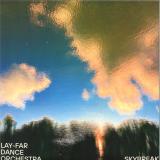
International dance music heavyweight, producer and DJ Alexander Lay-Far returns with a powerful new chapter - Lay-Far Dance Orchestra (LFDO) - a fully-fledged live band project that reconnects him with his jazz-funk and fusion DNA while pushing dance music forward with unmistakable groove, musicianship and emotional weight. Formed in early 2024, LFDO is no nostalgia exercise. With Lay-Far at the helm as bassist, bandleader, composer, arranger and sound engineer, the orchestra has already been turning heads with explosive live performances, reinventing classic Lay-Far cuts, and now unveil their first album “Skybreak” with all new and original material written and produced by Lay-Far together with his bandmates and star guests, including Lipelis, Antoha MC and Seven Davis Jr. This work shows the departure from the predominantly electronic sound of Lay-Far's previous solo albums in favour of live instrumentation recorded to analogue tape and effortlessly bridging the gap between Jazz, Library Music, Disco-Funk, House, Broken Beat and Drum’n’Bass. “Skybreak” is dynamic, passionate, spiritual, cinematic, playful, heartfelt, life-affirming, dreamy and deeply romantic. Ultimately, there’s something profoundly romantic in recording and releasing such music in this day and age!
“Take Flight (Part 1)” is opening the album with style. It takes us on a beautifully orchestrated journey, blending the sensuality of Library Music with high-octane Jazz-Funk and raw b-boy breaks, propelled by breathtaking flute and Rhodes solos of Timur Nekrasov and Maxim Glonti. This aural symbiosis of “beauty and the beats” will become more and more prominent as the album unfolds.
It’s time for “Aquarius Love” created with the inimitable artist and vocalist Seven Davis Jr. (Secret Angels, Ninja Tune). In this composition cinematic soul and heavy jazz meet the restless energy of live drum & bass with deep and heartfelt vocals - timeless sound combined with a timeless message about love and life!
Next is “Head In The Clouds” - a theme for an imaginary rom-com, an ode to all the dreamers - sweet, light, naive and heartwarming. Space-Disco-Funk at its best!
“Where You From” is a fiery Soulful House number with heavy Afro-Latin influences recorded in collaboration with Lipelis. It’s full of Sun, joy and passion. Its irresistible rhythm is emphasised by funky octave bass, wah-wah guitar, catchy piano riffs, guitar solo by Lipelis and seemingly light conscious message delivered by Lay-Far and Maryag. Summer is here!
Now the album takes an unexpected twist in the form of “The Harp of Boom” which at first glance appears to be a classic-sounding Boom-Bap banger. Yes, It’s loud, raw, and gritty, yet it gradually evolves into something delicately-touching and deeply-soulful thanks to a memorable flute melody and lush string arrangement. Definitely recorded with tongue in cheek.
Next is “Feel The Moment” a remarkable collaboration with one of the most recognisable and distinctive Russian artists, singer, trumpeter and cultural icon Antoha MC. It’s a feel-good song, hopeful, life-affirming and bittersweet. A stylish excursion into Brit-Funk and Soviet Jazz-Fusion sound, drawing inspiration from the likes of Atmosfear, Light Of The World or Soviet Jazz bands like Allegro and Arsenal, but reimagining the influences through the modern West London broken beat lens.
The spectacular music journey continuous with “Take Flight (Part 2)” - it’s all about the deep infectious jazz-funk groove, heavy beats, rolling percussion and the glory of the soloing instruments - saxophone and flute by Timur Nekrasov, demonstrating the wide range of emotions from thoughtful and lyrical to restless and borderline vicious. One for freestyle dancing!
As the album draws to an end a vibrant musical triptych “Soul Constant” awaits, mixing together the deep and sensual mood of spiritual jazz with heavy syncopated drum’n’bass rhythms by Michail Fotchenkov, lush orchestration, expressive saxophone solos and the ending which can simply be described as “aural bliss”. It’s breath-taking!
A pleasant bonus is the exclusive version of “Where You From” by Lipelis himself, who is taking it into dub territories, further enhancing the rhythm section and enriching the song with his trademark playful synth flourishes and dreamy guitar solos for maximum effect (and appeal).
The album “Skybreak” by Lay-Far Dance Orchestra is the work of real artistry and craftsmanship with timeless sound that’s not only deeply-rooted but also forward-thinking.
Blanche Biau, the enigmatic solo project blending 80s wave, post-punk, and shoegaze into a dreamy yet melancholic soundscape, is set to release a remix album of her sophomore record ‘Heartcore’. The new album, titled ‘Heartcore (Remixes)’, will be released via the Zurich based label Subject To Restrictions Discs.
Following the success of ‘Heartcore’, released in July 2025, the remix album brings together a group of artists to reimagine Blanche Biau’s hauntingly beautiful tracks. The remixers include Danzinger99, Donna Haringwey, Lumpex, Lust For Youth, Spear Flower and Milan STHC.
Blanche Biau on the remix album: «Heartcore is deeply personal to me, but I also imagined it as a living, breathing entity that could evolve. Collaborating with these incredible artists has been a dream – they’ve taken my songs to places I never thought possible. This remix album is a celebration of reinterpretation and connection.»
Blanche Biau is a solo project hailing from Zurich, Switzerland. Known for her DIY approach and ability to channel influences from 80s wave, post-punk, and shoegaze into a sound that is both nostalgic and forward-thinking, Blanche Biau has quickly established herself as a rising star in the alternative music scene. Her music combines raw emotion with dreamy atmospheres, resonating deeply with audiences worldwide.
An instrumental counterpart to ‘Man Kill Man’ by Lone Ark meets The 18th Parallel, ‘Kanata’ marks the debut solo release of Japanese saxophonist extraordinaire Yuko Arakawa.
A member of ZIONHILL SESSION—the collective led by Mr. Saito, who also lends his trombone to this recording—Yuko Arakawa channels a deep reverence for the legacy of Count Ossie and the pioneers of Nyahbinghi instrumental reggae. Her playing moves with a spiritual intensity, echoing the meditative roots sound of Cedric 'Im' Brooks, while igniting flashes of raw, untamed energy reminiscent of Sugar Belly. The result is a living, breathing sound—both grounded in tradition and reaching beyond it.
Roberto Sánchez delivers a deep Mutron Bi-Phase dubby mix that expands the sonic horizon of the track. True to its title, ‘Kanata’ (彼方)—a Japanese word meaning ‘far beyond’ or ‘in a distant place’—invites the listener into a meditative journey, drifting across time, space, and memory.
After the well-received Kreme de la Kreme EP, D3 Classic Edition returns with another essential vinyl release. This time, they present four rare and highly sought-after tracks from the talented Toyin Agbetu—all newly re-mastered from the original DAT tapes. Showcasing some of his finest work as The Dark Knights, this collection is a treasure trove for fans of deep, soulful grooves and classic, old-school rhythms. Featured are four must-have tracks: I Do Believe, Party Time, Piece of Time, and U Gotta Slow Down—the latter released under Agbetu’s other alias, Nemesis, and making its debut on vinyl.
But there’s more: the release also includes a brilliant reinterpretation of Piece of Mind by London producer K15, who adds his signature spacious, broken-beat style to the original, breathing new life into a classic track. For vinyl collectors and true aficionados, this is an absolute must- own.
Memory Remains unveils a deeply emotional and intimate Unknown Artist release, a record driven by feeling rather than form.
Shaped and refined through careful dancefloor testing across 2025, these tracks revealed a rare sensitivity: minimalist structures wrapped in warm grooves, gentle tension, and soulful, intimate vocals that connect on a subconscious level.
This is music that doesn’t demand attention. It breathes, resonates, and stays.
Free from names and narratives, the release invites the listener into a private emotional space, where sound speaks louder than identity.
The journey is visually completed by an original artwork from Alisa Kirik, capturing the same fragile beauty and timeless mood that defines this release on Memory Remains.
The ‘Haris – Fourtrack EP’ marks the debut release from Shimmy, a new reissue label with a sharp ear for overlooked gems. Originally released 25 years ago and long coveted on Discogs, this sought-after EP finally returns to the shelves, breathing new life into a classic of the tech house underground.
Haris made his mark in the late ’90s and early 2000s with releases on iconic labels like Oblong and his own imprint, Laus Records, collaborating with scene heavyweight, Terry Francis. Renowned for his mastery of rolling, groove-led tech house, Haris crafted a sound that remains timeless and endlessly playable.
Each of the four tracks delivers a distinct flavour for different dancefloor moments, offering real depth and versatility across the EP. Expect snappy tribal percussion, eerie synths, haunting vocals and deep, driving basslines - all the essential ingredients for a late-night shimmy.
NUTRIA Sounds proudly welcomes Leo Kal to the family with his debut EP, The Roots EP (NUTRIA 004). Across five tracks, Leo Kal delivers a deeply musical statement—grounded, expressive, and rich with intention—perfectly aligning with what NUTRIA Sounds continues to cultivate: organic sound, essential rhythm, and soulful movement.
The Roots EP showcases Leo Kal’s true musicianship, blending groove, harmony, and texture into a body of work that feels both timeless and forward-thinking. Each track is driven by feel and craft, emphasizing connection over excess and allowing the music to breathe naturally on the dancefloor and beyond.
Celba opens the EP with an uplifting, bouncy groove—light on its feet yet firmly rooted, setting a joyful and inviting tone.
Station Verlaine soars effortlessly, carried by smooth, flowing keys that glide across a warm, rhythmic foundation. Roots, the EP’s title track, shines with warm piano lines and earthy percussion, embodying the spirit and intention behind the project.
Round 50 delivers the EP’s most club-friendly moment, channeling a spacey, late-’90s feel with a modern, refined touch.
Second Eyes closes the EP on a downtempo, junglesque note, wrapping the listener in texture and atmosphere while leaving them wanting more.
With this release, NUTRIA Sounds continues its mission to highlight nutrient sounds for the soul and the feet—music that is honest, rooted, and deeply connected. Leo Kal’s debut stands as a confident and inspired entry into the catalog, reinforcing the label’s commitment to artistry, balance, and musical integrity.
ANNE is proudly presents her new imprint Blind Harmonies, shaped by intuition, patience, and a self-taught approach to music creation. The name reflects a journey built without formal training, producing music "blind," guided by listening, experimentation, and trust in instinct rather than rules. The label is built on the belief that harmony is something you sense before you understand. By closing your eyes, sound becomes more honest, rhythms breathe, textures speak, and emotion takes the lead.
With her first release, ANNE presents four dynamic, dance floor - oriented cuts-emotional and seductive at the same time. Opening with A1. Daydream, the EP sets a melancholic yet driving tone, drifting deep into the listener's mind and emotions. A2. Castles in the Air follows with a propulsive rhythm, led by Detroit-influenced synth soul and percussive energy that carries the track forward.
On the B-side, B1. Metallic Tapes delivers a hypnotic, percussive, and trippy groove, maintaining a steady yet intense rhythmic flow. Closing the record, "In the Blink of an Eye" blends powerful drums with a sharp, striking lead-proving that potent techno can be both intense and beautiful. The release it's a personal journey, produced with detail and love and focusing on the dynamic but timeless approach of techno music.