Spandau20, an imprint named after the Western Berlin district and focused on artists from the area, delivers techno in all diverse forms - from warehouse and electronic peak time beats to breaks and IDM, balancing the old and new school sounds flawlessly. With a focus on vinyl releases, for the collectors, Spandau20 has lately also focused on its label nights, with showcases at Fabric, Bassiani and many others. The label's 10th release features 10 tracks that epitomise the musical diversity of Spandau20 and the progressive musical mindset of its roster, calling on the label favourites and Spandau natives to deliver brand new and exciting music. This special release even features one track that all artists have worked on together: 'Come Closer', a swarming, slithering beginning featured as the VA's opener. Its barely coherent female vocal echoing amidst a cacophony of demon-like effects. The chilling ambience captured at the offset transcends into the first full length track by Elli Acula, 'Floating Eyes', a cur characterised by an authoritative, pounding bass featuring calculated percussive rolls and metallic overtones to make for a face-scrunching opener to this devilish collection of works. FJAAK follow for the first of twin cameo appearances, partnering up with fellow live supremo and hardware aficionado KiNK. On 'Overbridge' the trio deliver a cavernous, rolling number driven by a deep thrumming bass in addition to a razor-edged lead synth, and pulsating technopattern. Dajusch is known for incorporating his years of classical study in with his immersive musical style - and with his VA effort the Berlin native neatly showcases this. Easing the energy slightly, 'Move' escalates from its warm, melodic intro into rumbling goliath of a beat comprising a looping, slew of gassy harmonics. The momentum of the release shifts considerably with the introduction of acutely versatile producer, DJ and sound artist Claus. The artist from Spandau leans his track 'Bloomscroll' towards sparse, dubby sonics in which he intricately ties together to form churning, burgeoning soundscape. FJAAK jolt proceedings back into the techno groove with their signature blend of arresting sub-bass and reverberating rhythms, which come thick, fast and heavy on 'Jackfruit'. The abstract wonder of Anna Z's broken-beat like stylings is fully explored on 'Icy Liq'. It's outlandish and amorphous in its execution, causing a clattering percussive chaos that's choicely pieced together by the modular-extraordinaire. Nikk stealthy moves into breaks territory with his track 'Down In The Shadows', packing a trap-like snare with an acid-flecked melody and dawn-breaking, dream-like textures. The penultimate track on the VA is 'Tufted'. J.Manuel expertly employs a chorus of robot-like sonics that course through a short-circuiting low-end to produce a pacy, inescapable journey via a whirling, merciless beat. He is joined by the legendary producer Tobi Neumann for their menacingly ambient number titled 'Fennec.' In parts a nod to UK dubstep, the duo concocts a fierce admixture of styles bolstering tribal-like components with industrialised overtones and methodically crafted drum-fills.
Поиск:deep choice
Все
- 01: Icarus Phase
- 02: The Last Picture I Took
- 03: Filter Coffee At The Heliopause
- 04: I Am The Furthest Thing
- 05: What Will They Say About Me?
- 06: Interstellar Disco
- 07: Focused Flight
- 08: Durutti Columns On The Astrobelt
- 09: And Then I Saw The Gas Giants
- 10: Super Infinite
- 11: Time Is The Simplest Thing
- 12: I Touched The Empyrion
Martin had been a surprise choice for the commission.
It was the Spring of 1977 and two Interstellar Mariners were to be sent hurtling into deep space. Glass was to provide weekly "sonologues" of their progress, audio diarist for a pair of mute mechanical adventurers.
Delivered with a near fanatical diligence over the course of nearly three decades, these stuttering musical biographies would soon bewilder those who had first asked for them.
Martin's work, they judged, had begun to plot its own eccentric orbit, charting more than just the ships' material progress, but rather their imagined psychogeography ("What will they say about me?" "I will never conserve my instruments" "Nobody has gone further").
With his sonic dispatches increasingly ignored and unheard, all funding for the project swiftly fell to dust.
The very best of these scores, chosen from a vast compendium of source material, are now assembled here for the first time. Their muses, two arthritic spacecrafts now nearly half a century old, limp on through deep space, forever onwards and onwards forever...
- A1: Caravan (Tizol, Ellington) 5:50
- A2: Wishes (F. Sotgiu) 3:05
- A3: Ballad For Aisha (Tyner) 5:11
- A4: Stranatole (F. Sotgiu) 2:50
- B1: Black Bats And Poles (Walrath) 4:14
- B2: 7Th Street (F. Sotgiu) 4:48
- B3: Wise One (Coltrane) 3:24
- A1: Afro Blue (Santamaria) 3:37
- A2: Duke Ellington’s Sound Of Love (Miingus) 4:48
- A3: Take Five (Desmond) 5:00
- A4: Lotus Blossom (Strayhorn) 1:06
- B1: Passing (F. Sotgiu, L. Bonafede) 7:09
- B2: Calm (F. Sotgiu) 4:35
- B3: My Foolish Heart (Washington, Young) 6:37
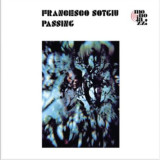
Francesco Sotgiu has forged a unique and very swinging project of songs. With a quintet consisting of Luigi Bonafede on piano, Emanuele Cisi and Riccardo Luppi on woodwinds, Salvatore Maiore on bass, Francesco on drums, and with special guest Paolo Fresu on trumpet to cap off this heartfelt collection. There is also a nice diversity of groups within this larger collection. A nice trio piece called “Calm” featuring Paolo Birro sitting in with Marco Micheli and Francesco. And one called “Lotus Blossom” where Francesco shows his considerable skills and soul on violin. But the bulk of the material is straight-ahead jazz and is totally swinging and soulful, proving that jazz has no borders and is a worldwide language to which Francesco has added to that tradition with this project and all the great voices he has included here. Bravo maestro.
This is the comment of Gil Goldstein, American accordion player who won 5 Grammys and collaborated with giants such as Gil Evans, Wayne Shorter, and Michel Petrucciani.
This record was recorded in the middle of the pandemic times, and most of the work for preparing this record took place via the telephone: the selection of the songs on paper, the exchange of ideas on arrangements, staff and instruments, a sort of “phone rehearsal” of the structure of the songs, with the choice of a solo; everything else, everything that will happen in the recording sessions, is the result of a controlled improvisation, a jam session masterfully captured in the studio through the use of well-positioned ribbon microphones.
This is why “Passing,” literally “passing” or “crossing”: because the musicians have gone through listening to these songs as teenagers, and find themselves today, as a mature meeting of old friends who create an informal game made of nostalgic fun, great personality, confrontation, and deep spirituality. In the classic “Caravan” by Ellington and Tizol or “Afro Blue” by Mongo Santamaria, Coltrane toning, the Latin accent of the rhythm section supports the interpretation of the theme and the interplay in the solos between the soprano and tenor saxophones by Cisi & Luppi, and the piano by Bonafede.
A certain elegance in the execution distinguishes pieces such as Duke Ellington’s “Sound of Love,” yet another tribute by Mingus to the Duke, with a calibrated solo on the double bass of Maiore and the flute by Luppi, the immortal “Take Five” by Paul Desmond, with the highlighted soprano by Cisi, “Wishes,” “7th Street,” and the eponymous “Passing,” all pieces composed by Sotgiu, characterized by the precise medium/fast drive of the drums and a certain “cinematic” taste of the main themes.
In songs such as “Black Bats and Poles,” composed by trumpeter Jack Walrath for the Mingus Orchestra, and in “Stranatole,” an original piece in which Sotgiu writes a theme of Monk’s influence and enjoys overturning the traditional “Anatole Jazz” structure, the quintet opts for an effective hard bop language, with exciting moments of dazzling virtuosity in Bonafede’s solo. While in Coltrane’s “Wise One” and McCoy Tyner’s “Ballad for Aisha,” we enter a modal, mystical, and ceremonial jazz, of a cosmic depth, which seems to hover in the sweet volume of the great hall of the recording studio. These are truly magnificent interpretations.
A special separate mention for two classics such as “My Foolish Heart” by Victor Young, performed in trio by Sotgiu, Maiore, and the unmistakable trumpet by Paolo Fresu, and the (unfortunately very short) “Lotus Blossom” by Billy Strayhorn and Duke Ellington, which in the piano-violin duo of Birro and Sotgiu, in a minute gives a suspended momentary magic, sums up the roots of African-American jazz music, and also referencing an old-fashioned Italian musical sensitivity, typical of Nino Rota’s music for Federico Fellini’s films.
Worldship Music returns for 2025 with a brand new various artists EP sure to set all soulful dancefloors on fire. The second installation of the Herald Traccs series welcomes back label stalwarts Roberta and Trilaterals while bringing Reelsoul into the fold as well, of course alongside a cut by imprint head Teflon Dons.
Reelsoul kicks proceedings off with a stunningly beautiful version of an all time classic jazz inflected dance jam “La Costa”. Leaning into the sophisticated vocal harmonies, a bed of warm instrumentation carries this familiar joint seamlessly into the modern era. New crowds and veterans alike will be swept away on an unforgettable lover’s holiday to the seashore.
Trilaterals come through in full on party mode on “Flo Jo”. Filtered and chopped samples from a funk staple are twisted into a swinging groove that will have house dancers going off. The stripped back arrangement teases with energy before exploding into dancefloor ecstasy. Adept sample spotters will be sure to get the title reference, a wink and a nod to two legends of black American culture.
Teflon Dons can’t help but put their underground edge into the music, with “DONTWANTU2GO”’s tough drums immediately signaling the late nite intentions of this banger. Pleading vocals and pitched chords add a twinge of that distinctive deep house melancholy before the strings drop in and take the jam to the next level.
Roberta is a perfect choice to end the EP with the smoky jazz club vibes of “Hang Back”. Gritty drums and electric piano riffs provide the hypnotic backbone, while flute and vibes add funky flourishes on top. This is the kind of cut that is sure to elicit whoops of joy from exhausted dancers catching a second wind thanks to its undeniable electricity.
Mesmeric, confessional alt-folk with hints of americana - weaving beautiful stories with deep and poignant lyricism and relatable storytelling, creating a sense of familiarity even in the ambiguous, leaving no choice but to feel everything with her. Mann’s debut album,
- Clara Mann’s evocative debut album Rift navigates the fractured environment of the in-between—those liminal spaces exposed between light and dark, growth and remorse, loss and reclamation. It is a record that makes a strong case for hope, those luminescent silver linings in the dark. With Rift, Clara Mann acknowledges the cracks through which both despair and hope can seep. It is a deeply personal record, yet it is universally resonant, holding the mirror up to herself and to the world around her. It is a record that reflects on embracing our fault lines, navigating the ruptures that can erupt from them and moving forwards, in motion, with a renewed sense of self and aliveness. Mann’s debut album, Rift is all of her—her past, her present, her emotions, her experiences—and now, it is for you.
- Influenced by artists like Jacques Brel, Edith Piaf, Judee Sill, and Tom Waits, Mann has a deep love and care for songwriting
- The album was primarily recorded at the 4AD Studios in London, produced and mixed by Fabian Prynn (Martha Skye Murphy, Ex:Re, Fabiana Palladino) who carefully facilitated an imaginative space for Mann to express the playful, strange and real parts of herself
- She has previously toured and collaborated with the likes of Daniel Rossen (Grizzly Bear), Billie Marten, Skullcrusher, Bill Ryder-Jones, Youth Lagoon and Willie J Healey
- A1: On Being Ft. Felix Gerbelot
- A2: Peace Exists Here
- A3: I Am In A Church In Gravesend Listening To Old Vinyl And Drinking Coffee
- B1: A Sense Of Getting Closer
- B2: Exist Inside This Machine Ft. Aneek Thapar
- C1: My Choices Are Not My Own Ft. Tawiah And May Kaspar
- C2: The Sun In A Box
- D1: True Under Certain Conditions
- D2: When I Am Alone With My Thoughts. I Am Crushed Ft. Aho Ssan
- E1: You Couldn't Love Me Enough And I've Spent My Whole Life Making Up For It Ft. Niels Orens
- E2: My Mind Is Slipping
- F1: Mother Nature Must Have A Different Plan For Me Ft. Tom Vr
- F2: The Missing Piece
- F3: It's Up To You, What You Do In The Void
Powerful works of art have traditionally sprung from some source deep within an artist and, if they strike the right tone, resonate with an audience to leave a lasting mark. But what if that equation were reversed: what if an artist were to draw their inspiration from deep within their audience, and use that to reflect those ideas, emotions, hopes, fears, pains and aspirations back to us?
Over a two year journey, audio-visual artist and electronic innovator Max Cooper has inverted the creative process by collecting hundreds of anonymous quotes, posing deep but open questions such as "What would you like to express which you cannot in everyday life?" and "What is it like to exist inside your head?"
The goal: to understand what it is truly like to be human right now. The result: his new album On Being, to be released in February 2025 with the first single "Sun In A Box" coming this September 4th.
With On Being, Cooper aimed to probe under the synthetic surface of social media to "create a snapshot of our minds these days," as he puts it by asking people to share anonymously what they dare not ever say publicly. The result is an emotionally raw and shockingly honest kaleidoscope of confessions, ranging from suicide contemplations to miserable marriages to simple pure loneliness, contrasting with hundreds of anonymous confessions of love and longing.
"I was interested in the way I interact with people for my writing process, which usually involves a one-way communication of feelings and ideas that I later find out whether they resonate with others or not," says Cooper.
"With this I could start instead with people's thoughts and feelings, what resonates for them, and make my own interpretations of those musically and visually, and then send those back out to everyone. It's more of a collaborative approach to making an album, and more intense."
Grief, hope, regret, joy, hurt and love form the basis for each track, taking Cooper's ever-evolving creative process in a completely new direction - with profoundly intense results.
"Rendering the experience of being is at the core of what I do musically - but I hadn't realised the impact that other people's words on being would have on me until I started reading the database of thoughts," he says.
"It was like finding a secret window into everyone's minds, and discovering amongst the chaos, pleasure and pain, the experiences that we all share at different times of our lives, and overwhelming emotions and connections that call out to be explored."
Despite what we see in the maelstrom of rage in the echo chambers of society ‘On Being’ reveals that humans still have an innate need to trust one another and express communal generosity - more easily done from the safety of an anonymous portal.
"The quotes carried so much weight for me - I interpreted them with my usual musical tools, but as you can hear in the music, everything got more extreme as I dove into the depths of what everyone had to say later in the record," says Cooper.
The result is a unique work of art that demonstrates unequivocally not only the power of using music without words to express emotions, but the power of words to express what seemed to be inexpressible.
On Being will continue to evolve as Cooper gathers more confessions to feed into this ecosystem of emotions and to create a new range of art projects and other accompanying works which hopefully will speak truthfully to humanity today - and of who we are and who we can become.
On October 15th & 16th 2020, drummed Daniel Villarreal was joined by guitarist Jeff Parker and bassist Anna Butterss for two afternoons of recording in the backyard of Chicali Outpost in Los Angeles. For all three musicians, it was the first ensemble recording session they"d done in-person since the pandemic locked the world down just seven months prior. Some choice moments from the sessions made it onto Villarreal"s critically-acclaimed 2022 album Panamá 77, bust most of the music remained unreleased. Lados B is a deep dive into the high-level spontaneous music made by Villarreal, Parker and Butterss across those two days in 2020. Villarreal is heard leading the group through various rhythmic modes and structures for improvisation - flow as informed by the Latin soul of Fania Records as it is by the otherworldly trance of Brain Records - while Parker and Butterss draw on their extensive experience playing free together (as heard on Parker"s recently-released Mondays at the Enfield Tennis Academy, and the LA side of Makaya McCraven"s 2018 LP Universal Beings) to build harmonic buoys for their spontaneous melodicism. The result is a beautifully vivid illustration of context, creativity, and collective composition from a particularly rich moment in history.
- A1: Where Is My Man (Vocal) / Eartha Kitt
- A2: I Need You (Extended 12” Mix) / Sylvester
- A3: Was That All It Was (12” Version) / Jean Carne
- A4: After The Rainbow (12” Version) / Joanne Daniëls
- B1: Searchin’ (I Gotta Find A Man) (12” Version) / Hazell Dean
- B2: Native Love (Step By Step) (12” Version) / Divine
- B3: He’s A Saint, He’s A Sinner (Extended Version) / Miquel Brown
- B4: Danger For Love (Full Length Version) / Deborah
- C1: Voyage Voyage (Pwl Britmix) / Desireless
- C2: Self Control (Extended Version) / Laura Branigan
- C3: Get Lost Tonight (12” Version) / Fancy
- C4: Brother Louie (Special Long Version) / Modern Talking
- D1: Stop… Bajon (Club Mix) / Tullio De Piscopo
- D2: Dolce Vita (Extended Version) / Ryan Paris
- D3: I’m So Hot For You (Dance Mix) / Bobby “O”
- D4: This Girl’s Back In Town (Extended Vocal Remix) / Raquel Welch
- E1: Paninaro (Italian Remix) / Pet Shop Boys
- E2: Sub-Culture (Remix) / New Order
- E3: Homosapien (Elongated Dancepartydubmix) / Pete Shelley
- F1: The Anvil (Dance Mix) / Visage
- F2: Fantasy (“Short” Album Version) / Hotline
- F3: The Dominatrix Sleeps Tonight (Dominant Mix) / Dominatrix
- F4: Duel (Bitter-Sweet) / Propaganda
- G1: Love On Top Of Love (Killer Kiss) (The Funky Dred Club Mix) / Grace Jones
- H3: Can’t Stop The Music (12” Version) / Village People
- G2: Pink Cadillac (Club Vocal) / Natalie Cole
- G3: Heat It Up (Acid House Remix) / Wee Papa Girl Rappers
- H1: Deep In Vogue (Banjie Realness) / Malcolm Mclaren And The Bootzilla Orchestra
- H2: Pistol In My Pocket (12” Version) / Lana Pellay
Box 1[96,01 €]
4LP set containing 29 original / extended / full-length / 12” versions of Queer club classics – 1980-1989
‘More Sin’ features Pet Shop Boys, Sylvester, Divine, New Order, Eartha Kitt, Grace Jones, Hazell Dean, Desireless and many more.
Highlights include the hard-to-find 12” version of ‘Can’t Stop The Music’ by Village People and the rarely compiled underground club anthems ‘Pistol In My Pocket’ by Lana Pellay and ‘After The Rainbow’ by Joanne Daniëls.
All tracks fully annotated and with a foreword by Ian Wade – author ‘1984: The Year Pop Went Queer’. Following the success of the first ‘Box Of Sin’ in 2023, Demon / Edsel and Disco Discharge are proud to announce the sequel – ‘More Sin: Box of Sin 2’ will be released on 31st January 2025.
Over 4 LPs, ‘More Sin’ presents 29 choice selections from the music you might have heard on Queer dancefloors between 1980 and 1989 – a decade of dance in all its devilish delights. Meticulously researched from the published gay club charts at the time, the LP set encompasses full-length versions of Diva, High Energy, Alternative, Pop, Europop and House classics. Not only were the ‘80s Queer clubs where you were most likely to hear the latest groundbreaking developments in dance music, there was a lot of diversity on offer – on a given night you might hear a legendary soul singer’s new opus right next to some post-punks from Manchester and the latest European pop chart topper.
‘More Sin’ aims to reflect this. On ‘More Sin’, the space-age soulful club sound of Jean Carne rubs up against the widescreen Europop beauty of Desireless and cutting-edge house music from London courtesy of Wee Papa Girl Rappers… and along the way come some of the most important and era-defining artists of the decade – from Sylvester to Siouxsie & The Banshees, from Pet Shop Boys to Divine, from Hazell Dean to Grace Jones. Producing and mixing these classics is like a roll-call of the era’s studio giants – Trevor Horn, Larry Levan, Clivillés & Cole, Ian Levine, John Luongo, Bobby “O”, Martin Rushent and Stock, Aitken & Waterman to name a few. It’s time to give in to sin again.
Agonis debut album Neutropia gets a high profile and well deserved remix treatment. Originally released in 2021 on his own co-founded amenthia recordings, the album was a strong statement in terms of sound. Formerly known for his excellent deep and incantatory techno, Neutropia opened the door to show more of his far reaching musical interests. It became a vital document of genre bending electronics, fusing half paced drum & bass, rolling amen breaks, forceful frequencies, dreamlike trip-hop and futuristic techno all together. For Neutropia Remixed the sound palette even got wider. Four artists that are highly appreciated by the amenthia camp were asked to rework their track of choice and make it their own. Carrier drops the pace of 'Thermo' and adds a brilliant touch of his stripped down half-time rhythm excellence. Christina Vantzou continues to build on the powerful frequencies that were present at the full original album with a mesmerizing drone trip. Amsterdam resident upsammy adds her glistering dynamics to the dark 'Algoflash' and Felix K does what he does best.. The Hidden Hawaii/Nullpunkt originator turns the rolling 'Pyrchid' into a heady drum work out.
Poet, novelist, musician and academic, Anthony Joseph teams up with legendary UK producer Dave Okumu for forthcoming album, ‘Rowing Up River To Get Our Names Back’
Dave Okumu, known perhaps best as frontman for The Invisible, though digging deeper into his production credits, huge names emerge such as; Grace Jones, Amy Winehouse, Jesse Ware, Rosie Lowe and Eska. On this album, the magic and alchemy of Dave’s production style showcase subtle sonics and deep layering resulting in a contemporary sound to carry Anthony’s afrofuturistic metrical meanings.
Anthony and Dave first came across each other when working with Shabaka Hutchings during Covid broadcasts, and then after Anthony performed some poems on Dave’s 2023 album ‘I Came From Love’, the seeds of collaboration were sown.
With a little more psychedelia, a little more experimentation, Dave’s eclectic vision focuses on the actual sounds on these pieces. Anthony stated that “The best producers guide you, not push you” now add to that the fact that both these humans were born on the same day, a concoction of laid back attitudes in people with strong purpose, some real magic can happen, naturally.
Early writing sessions for this record took place in 2022, around Mount Blanc in France. Anthony was away touring with long-time collaborator, Jason Yarde. Ideas were a little thin and they found themselves somewhat repeating previous work resulting in Anthony rethinking things a little, and so entered Dave Okumu.
LP opener ‘Satellite’ is a fine example of how this new partnership pans out. New musicians have been enlisted; Dan See (Drums), Aviram Barath (Synths), Nick Ramm on Fender Rhodes and Byron Wallen (Trumpet). Add to that the mighty vocal power house of Eska and we have a whole new dimension of soul and depth, to carry Anthony’s statements. “You build a wall, we go under, you build it higher, we go higher, like a satellite” .
On the album's second single, ‘Tony’ - there’s a nod to all drummers and creators of African rhythms, from the point of view of Afrobeat legend Tony Allen. Highlighting this is drummer’s drummer Richard Spaven as Dave’s choice of skin beater. He successfully reminds us that Tony was someone who understood the real power of rhythm and how it is used to unite people.
As well as the new musicians on this LP, Dave Okumu played all the guitars and used the studio as his tool. On ‘A Juba for Janet’ - a poem to Joseph’s mother, and a track so bass heavy that it feels as though it could sit in a deep dubstep set in Plastic People days, - Anthony’s voice reaches straight down your ear canals next to dark drums, huge synths and delayed saxophone stabs from Colin Webster. Slightly more introspective verses on ‘An Afrofuturist Poem’ see Dave’s beats show off the real future sound of this record, kalimba, moog bass and guitars all played by the man himself.
Mellower and deeper moments are also present, Anthony’s cryptic yet informative storytelling is at its absolute best on ‘Churches Of Sound (The Benetiz-Rojo)’ - Caribbean and Windrush history reeled off alongside a linear musical timeline of Black music in the diaspora.
A reminder that this body of work is first of 2 volumes, ‘Rowing Up River To Get Our Names Back’ is not a follow up to Anthony’s previous album, but more a development of his 2006 novel, ‘The African Origins of UFOs’ a book where experimental elements of afro-futurism, metafiction, science fiction, surrealism, mythology are rewritten in Anthony’s innovative language. Look out for Volume 2 also coming in 2025.
Anthony Joseph releases, ‘Rowing Up River To Get Our Names Back’ (Vol. 1) via Heavenly Sweetness 7th February 2025 and he will play live at Ronnie Scotts in London on 14th March 2025, with Dave Okumu as a special guest.
CREDITS:
Vocals - Anthony Joseph
Additional vocals, vocal arrangements - Eska Mtungwazi
Producer - Guitars, Bass, Moog, Synthesisers, Programming, Percussion - Dave Okumu
Drums - Dan See
Drums on ‘Tony’ - Richard Spaven
Synthesiser - Aviram Barath
Fender Rhodes, Synthesisers, Nick Ramm
Trumpet - Byron Wallen
Saxophones - Colin Webster
Trombones - James Wade Sired
Astro returns with a high-octane collection of tracks, peaking at the dizzy heights of 138 BPM, engineered for late night club moments and steeped in early 00s/90s influences. We were fortunate to have Cape Town's own Biodive for a remix, bringing a driving yet minimal sound, effortlessly captivating listeners.
A1, Subatomic, seizes the spotlight with its relentless, driving energy. It immerses us in a 2001 trance soundscape, featuring sharp synth lines and dynamic vocal chops, while echoing, panned stabs enhance the track's deep, otherworldly ambiance.
River Torque, panning UFO pads from a different dimension, shifting gears with precision. A tunnelling groove locks in, firing us straight into peak-time. Direct, relentless, and built for the highest intensity—this one drives everything forward. No escape, just pure momentum.
A3 sees Astro reconnect with his dub-techno origins, pulling in the deep, atmospheric vibes of his early work. Basic Channel-inspired textures are unmistakable, but here they surge. Reverb-soaked layers cascade over a pumping 909, while razor-sharp hats slice through the fog, propelling the track into a hypnotic, futuristic drive.
Wormhole is your go-to for testing low-end limits—bass-heavy, deep, and undeniable. This might be the most floor-shaking, post-pumping Astro track yet. The rich, undying textures crafted from the Blofeld Waldorf deliver sweeping alien FX, creating a soundscape that feels both immersive and extraterrestrial.
Biodive is one of those rare artists who can take a track to another level, almost transcending into another dimension. This remix embodies a minimal yet fierce Detroit sound—stripped down but powerful, hitting with precision and intensity. It’s the perfect choice to close out the EP, leaving a lasting impression with its raw energy and driving beat.
- A1: The Sweet Vandals – Too Much
- A2: Diesler – Revelations (Jazzinvaders Remix)
- A3: The Bamboos Feat Ohmega Watts – Get In The Scene
- A4: Naomi Davis & The Knights Of Forty First Street – Forty First Street Breakdowne
- A5: Eli Goulart E Banda Do Mato – Sunny
- B1: Daddy-O Of Stetsasonic – Drumma Man
- B2: The Supersonics – The Chosen One
- B3: Sharon Jackson & The Soul Destroyers – Fakin' It
- B4: Carlton Jumel Smith And Cold Diamond & Mink – Remember Me
- B5: Jay Are Feat Tiffany Page – It's Jay Are
This Is DJs Choice Vol. 4 brings you a great selection of Funk, Soul, Latin and Hip Hop.
Five years after the last installment of the series, Volume 4 is compiled by Gu, a long-time friend and DJ partner of Unique label founder Henry Storch, and the tracks represent the two decades they have known each other and played records together, as well as the music they enjoyed.
All choices are originally 7 Inch records from Gu's crates put together like a DJ-Set for you to enjoy: The Soul of The Sweet Vandals and Carlton Jumel Smith, the Deep Funk of Naomi Davis & The Knights Of Forty First Street, The Supersonics and Sharon Jackson & The Soul Destroyers, the Latin sounds of Diesler and Eli Goulart E Banda Do Mato and the Hip Hop grooves of Jay Are (aka J.Rawls and John Robinson), The Bamboos featuring Ohmega Watts and Daddy-O of Stetsasonic.
This compilation is a celebration of music from beginning to end.
About This Is DJs Choice:
The series started as a friendship project by Henry Storch, who wanted to immortalise friends and allies from the DJ scene, who picked vinyl as their format of choice. The genre didn't matter, as long as the vibe was right. In 2008 Vol. 1 featured a selection of organic Club Sounds and Break Beats put together by Soulinus & Pun, followed by Keb Darge & Lucinda Slim and their favorite Rhythm & Blues, Rockabilly and 60s Soul tunes on Vol. 2 in 2009. In 2019 Les Intouchables aka Marc Hype and DJ Suspect presented a variety of funky and soulful music with an addition of the occasional Boogie, Reggae and Hip Hop track.
About Gu:
Gu is a DJ, musician, label owner, producer, writer and producer from Northern Germany. His dedication to music started in his pre-teens in the late eighties and he is playing vinyl ever since. Over the years he has worked with a number of his favorite DJs and artists like Keb Darge, Andy Smith, Snowboy, The New Mastersounds, Osaka Monaurail, The Sweet Vandals, The Allergies, Andy Cooper of Ugly Duckling, Daddy-O of Stetsasonic and Chuck D of Public Enemy to name a few. His DJ career took him all over Europe again and again.
In 2005 he started Our Label Records with his brother Tom to release new Funk music on 7 Inch vinyl and added the Hip Hop 45 imprint Origu in 2015. Since 2009 and he is on air every week with his radioshow Home Diggin', which was also picked up by Chuck D's Rapstation in 2019. Additionally he is lead singer/rapper for the Songcore duo Sorry We're Closed and the Hip Hop outfit Alder Ego. He also does readings of his book of one-liners and competing on Slam Poetry stages.
“My introduction to “noise” came from a record shop in Lake Worth, Florida ran by a musician named Kenny 5. Kenny had left Detroit sometime in the mid nineties and had begun selling used records and CD’s from the downtown strip of this tiny southern Florida city in a humble shop sandwiched between a deli and a dog grooming business. Kenny previously was on labels like Amphetamine Reptile and timeSTEREO, and the records and videotapes that would be on repeat at his shop were a vast sonic expanse that spoke to the eclecticism of his experience as a touring musician participating and adjacent to American noise culture through the early to late 90’s. In 1998, I was eleven years old and I would order a pizza with him and watch VHS tapes of Japanese noise and deathmatch bootlegs, as well as any other sonic and subcultural rarities that far outstripped my age to comprehend (notably the RRR “Journey Into Pain” compilation and various Vanilla Tapes videos). This widecast net of information formed an introduction to a reality that did not fall deaf on me, but it took many years later for me to reorient the specific freedoms of what this dense and cathartic sound culture had imparted on my life and would continue onward to.
What does this have to do with this selection of choice recordings from the Secret Boyfriend catalog for the enmossed label? For the uninitiated, Secret Boyfriend is the long running moniker of Ryan Martin, North Carolina musician and label proprietor of the Hot Releases imprint. For over a decade from this writing I have watched Secret Boyfriend, and Hot Releases by extension as a curatorial and archival effort, embodying the multiplanal capacity that noise loosely functions from as an umbrella ideology and formalist avenue for sound creation. For anecdotal purposes, from (before) 2006 until roughly 2023 the East Coast of the United States showcased a vibrant network of eclectic regional festivals that saw wide swaths of artists addressing and negotiating the notion of what qualified “noise” from a conceptual and ideological perspective. Some festivals honed in on particularities in aesthetics and tropes, and others had a kind of “catch-all” implementation that allowed for a salvation of the sort of alienated and singular artistry that was amassing throughout these territories. While clear guidelines had been set from regional predecessors as to how noise with a capital “N” should maneuver, Secret Boyfriend is emblematic in the spirit of fluidity that was either implicitly coupled to the notion of the genre, or grew to evolve towards or devolve from.
Within Secret Boyfriend performances, I have seen and admired a mirroring from a ravenous appreciator of this culture at large back towards itself. Typical of a Secret Boyfriend set is an interchangeable narrative arc wherein blistering feedback laden scrap metal improvisations are forayed into naive ambient or “pop” songs, or skipping CDs, or mixer feedback play, or delayed Roland 707 drum workouts all at once and in a unique hegemony. Secret Boyfriend's stylistic mastery of each endeavor is at once an homage to a history of loving listening and enacting, while a brave step into the realm of actualizing the unique fluidity of his own practice. In performance and the action of network engagement, Secret Boyfriend operates a survey of that which he sought to hear and that which he cultivates around his work. His operations are mirrors, and the project (alongside his other peers) is a reflection on the ethos of his time.
Conversely his recording practice narrows in on these moments and allows for a different kind of intimacy or alienation for the non live listener. This record of selected “pop songs” (let's call them that) is particularly poignant at a time when the culture Martin mirrors is at a strange crossroads with itself. The aforementioned festival networks necessarily change and shift. The onlookers become the artists, the artists find new horizons, and the spaces for these cycles fade into locales of a distant memory. It seems, from my perspective, that audiences currently yearn for a more bottlenecked experience, searching for some ontologically vetted manifestation of an idea, of a sound and less for an experience that functions in opposition to our collective banalities. This makes sense in the face of general global catastrophism that plagues us. We need certainty of what something is somewhere, don’t we? Noise as an idea has expanded and contracted to so many iterations of itself it is hard to tell what it even is, and it is particularly difficult to identify in the absence of solid network activations a moment to reflect on its own complexities and nuances. In the face of so much change, I argue that the language of noise culture at large has on one hand become increasingly didactic and predictable, and laughably inclusive and non linear on the other. Probably has always been this way, but now we are in the midst of a moment of extreme access and indexicality, which somehow cauterizes expansion and naivety and chance.
This record highlights the Secret Boyfriend that obscures didacticism by highlighting output that opens up for more challenging catharsis and emotive signal processing. It provides an entry to the materialism of a cultural field full of ecstatic complexity and beautiful inconsistency. In these muted moments Secret Boyfriend has given us over his career we have an argument for evolving languages that further challenge our notions of what is supposed to happen and how it is supposed to be presented. In his more song oriented expansiveness, we can punctuate the ability to think in new modalities. Listening to these recordings reminds me of the polarity of sitting in the record store as a kid and understanding that His Name Is Alive is on 4AD and (gasp!) timeSTEREO. This trite early impression that nothing is really as different as our imaginations might want them to be, and that we can do whatever we want mostly within the creative realms we work through is an important filter to look through Secret Boyfriend as a project and a vessel. If we can achieve abandon and vulnerability through our artistic endeavors, then we have a sound model for, maybe, new potentialities. If that’s too much projection, or just complete liberal bullshit, I am fine with that. Secret Boyfriend's oeuvre at best offers us moments of reprieve to ponder these complexities, or at least a moment to zone out on a drive through North Carolina Highway 54.
You have one pocket of life that you must do whatever you want to inside of. Secret Boyfriend does it affectionately, in a variety of forms, and always with deep sentimentality. These recordings are a wonderful set of songs to begin further investigation from. Thank you Ryan for allowing as many avenues as possible to continue a broad cultural exchange and conversation that intersect and refract while being the kind of artist that is brave enough to not phone in the effort.”
- Nick Klein , May 2024
- 1: Steps On The Globe
- 2: The Choice (Featuring Mike Stern)
- 3: Prairie Morning
- 4: Neo (Featuring Randy Brecker
- 5: Love And Nothing Less (Featuring Lalah Hathaway)
- 6: Luminescence (Featuring Kirk Whalum)
- 7: Rosso Cantabile
- 8: Legend Of Yaguarón
- 9: Mossy Mountain
- 10: Blue Water
- 11: Euphoria (Featuring Joel Ross)
- 12: New Passage
Euphoria, Keiko's most inspired release yet, elevates the artist to new heights. Featuring a full string orchestra and horn ensemble, performances that transcend musical genres and stellar, Grammy-winning special guests, Euphoria transcends musical genres while still maintaining Keiko's classic listener-friendly sound!! The first single, "Steps On The Globe," will be released to contemporary jazz radio. Other highlights include "Love and Nothing Less," Keiko's passionate collaboration with R&B icon Lalah Hathaway, the deeply moving "New Passage" and many more superb originals
"This is the time that we, who have benefitted from the Last Poets shouldbe able to say, 'it's the Last Poets. It's them we should be honouring, because we did not honour them for so many years_"
KRS One wasn't just addressing the hip hop fraternity when he uttered
those words by way of introducing the video for Invocation - a poem
written thirty years ago, around the time of the Last Poets' last significant comeback. He was speaking to everyone who's been affected by the word, sound and power issuing from the most revolutionary poetry ever witnessed, and that the Last Poets had introduced to the world outside of Harlem at the dawn of the seventies.
In 2018 the two remaining Last Poets, Abiodun Oyewole and Umar Bin
Hassan, embarked on another memorable return with an album -
Understand What Black Is - that earned favourable comparison with theirseminal works of the past, whilst showcasing their undimmed passion andlyrical brilliance in an entirely new setting - that of reggae music. Trackslike Rain Of Terror ("America is a terrorist") and How Many Bullets demonstrated that they'd lost none of their fire or anger, and their essential raison d'etre remained the same.
"The Last Poets' mission was to pull the people out of the rubble o f their lives," wrote their biographer Kim Green. "They knew, deep down that poetry could save the people - that if black people could see and hear themselves and their struggles through the spoken word, they would be moved to change."
Several years later and the follow-up is now with us. The project started when Tony Allen, the Nigerian master drummer whose unique polyrhythms had driven much of Fela Kuti's best work, dropped by Prince Fatty's Brighton studio and laid down a selection of drum patterns to die for. That was back in 2019, but then the pandemic struck. Once it had passed, the label booked a studio in Brooklyn, where the two Poets voiced four tracks apiece and breathed fresh energy, fire and outrage into some of the most enduring landmarks of their career. Abiodun, who was one of the original Last Poets who'd gathered in East Harlem's Mount Morris Park to celebrate Malcolm X's birthday in May 1968, chose four poems that first appeared on the group's 1970 debut album, called simply The Last Poets. He'd written When The Revolution Comes aged twenty, whilst living in Jamaica, Queens. "We were getting ready for a revolution," he told Green. "There wasn't any question about whether there was going to be one or not. The truth was many of us still saw ourselves as "niggers" and slaves. This was a mindset that had to change if there was ever to be Black Power." He and writer Amiri Baraka were deep in conversation one day when Baraka became distracted by a pretty girl walking by. "You're a gash man," Abiodun told him. The poem inspired by that incident, Gash Man, is revisited on the new album, and exposes the heartless nature of sexual acts shorn of intimacy or affection. "Instead of the vagina being the entrance to heaven," he says, "it too often becomes a gash, an injury, a wound_" Two Little Boys meanwhile, was inspired after seeing two young boys aged around 11 or 12 "stuffing chicken and cornbread down their tasteless mouths, trying to revive shrinking lungs and a wasted mind." They'd walked into Sylvia's soul food restaurant in Harlem, ordered big meals, then bolted them down and run out the door. No one chased after them, knowing that they probably hadn't eaten in days. Fifty years later and children are still going hungry in major cities across America and elsewhere. Abiodun's poem hasn't lost any relevance at all, and neither has New York, New York, The Big Apple. "Although this was written in 1968, New York hasn't changed a bit," he admits, except "today, people just mistake her sickness for fashion." Umar is originally from Akron, Ohio, but had arrived in Harlem in early 1969 after seeing Abiodun and the other Last Poets at a Black Arts Festival in Cleveland. That's where he first witnessed what Amiri Baraka once called "the rhythmic animation of word, poem, image as word- music" - a creative force that redefined the concept of performance poetry and stripped it bare until it became a howl of rage, hurt and anger, saved from destruction by mockery and love for humanity. When Umar's father, who was a musician, was jailed for armed robbery he took to the streets from an early age where he shined shoes and raised whatever money he could to help feed his eight brothers and sisters. By the time he saw the Last Poets he'd joined the Black United Front and was ready to join the struggle. Once in Harlem, Abiodun asked him what he'd learnt in the few weeks since he'd got there. "Niggers are scared of revolution," Umar replied. "Write it down" urged Abiodun. That poem still gives off searing heat more than fifty years later. In Umar's own words, "it became a prayer, a call to arms, a spiritual pond to bathe and cleanse in because niggers are not just vile and disgusting and shiftless. Niggers are human beings lost in someone else's system of values and morals." And there you have it. It's not just race or religion that hold us back, but an economic system that keeps millions in poverty and living in fear - a system born from political choice and that's now become so entrenched, so bloated on its own success that it's put mankind in mortal danger. It was many black people's acceptance of the status quo that inspired Just Because, which like Niggers Are Scared Of Revolution, was included on that seminal first album. Along with their revolutionary rhetoric, it was the Last Poets' use of the "n word" that proved so shocking, but it would be wrong to suggest that they reclaimed it, since it never belonged to black people in the first place. There's never any hiding place when it comes to the Last Poets. They use words like weapons, and that force all who listen to decide who they are and where they stand. Umar's two remaining tracks find him revisiting poems first unleashed on the Poets' second album This Is Madness! Abiodun had left for North Carolina by then where he became more deeply enmeshed in revolutionary activities and spent almost four years in jail for armed robbery after attempting to seize funds related to the Klu Klux Klan. Meanwhile, the 21 year old Umar was squatting in Brooklyn and had developed close ties with the Dar-ul Islam Movement. A longing for purity and time-honoured spiritual values underpins Related to What, whilst This Is Madness is a call for freedom "by any means necessary," and that paints a feverish landscape peopled by prominent black leaders but that quickly descends into chaos. "All my dreams have been turned into psychedelic nightmares," he wails, over a groove now powered by Tony Allen's ferocious drumming. Those sessions lasted just two days, and we can only imagine the atmosphere in that room as the hip hop godfathers exchanged the conga drums of Harlem for the explosive sounds of authentic Afrobeat. Once they'd finished, the recordings and momentum returned to Prince Fatty's studio, since relocated from Brighton to SE London. This was stage three of the project, and who better to fill out the rhythm tracks than two key musicians from Seun Anikulapo Kuti's band Egypt 80? Enter guitarist Akinola Adio Oyebola and bassist Kunle Justice, who upon hearing Allen's trademark grooves exclaimed, "oh, the Father_ we are home!" Such joy and enthusiasm resulted in the perfect fusion of Nigerian Afrobeat and revolutionary poetry, but the vision for the album wasn't yet complete. He wanted to create a new kind of soundscape - one that reunited the Poets with the progressive jazz movement they'd once shared with musicians like Sun Ra and Pharoah Sanders. It was at that point they recruited exciting jazz talents based in the UK like Joe Armon Jones from Mercury Prize winners Ezra Collective, also widely acclaimed producer/remixer and keyboard player Kaidi Tatham, who's been likened to Herbie Hancock, and British jazz legend Courtney Pine, whose genius on the saxophone and influence on the UK's now vibrant jazz scene is beyond question. The instrumental tracks on Africanism are in many ways as revelatory and exciting as the Last Poets' own. It's important to remember that the kaleidoscope of styles and influences we're presented with here aren't the result of sampling but were played "live" by musicians responding to sounds made by other musicians. That's where the magic comes from, aided by Prince Fatty's peerless mixing which allows us to hear everything with such clarity. Music fans today have grown accustomed to listening to all kinds of different genres. Their tastes have never been so broad or all- encompassing, and so the music on this new Last Poets' album is as groundbreaking as their lyrics, and perfectly suited to the era that we're now living in. John Masouri
Highly regarded as a former resident at Salon Des Amateurs at his native Düsseldorf, Tolouse Low Trax/Detlef Weinrich has carved one of the most distinctive sounds in contemporary leftfield club music thanks to his deeply unusual grooves and hypnotic arrangements over the past 15 years as a solo artist.
Fung Day is his first album with entirely new material since Leave me alone which was released through Bureau B in 2022. Fung Day was written and recorded over the course of two years, slowly mutating and progressing from one state to another. Mixed, produced and finally mastered in Paris, his new domicile by choice.
A few words by Yvan Smagghe about Fung Day:
„He pretended he was in exile from Germany but he was a French lover like all of us; his MPC Sampler was smoking hot, an Enigma machine, an ashtray full of ghosts. I had left Paris for the same reasons he came. I could strangely relate. We’d met before he left Düsseldorf, and I knew of him through his oeuvre, his art over words (they were few) and piercing blue eyes.
He was now texting me on a night train from Warsaw going East, as in a Greene novel, asking me to go over his file. He sent me a spontaneous, fun, brave and bold record which is his new album - one that curiously smelled of mechanical grease - machinery of the soul, broken transport rhythms, samples like memories, noise at peace. Referenced yet uncoded. I don’t believe in ulterior motives and complex explanations. Not here at least. On the other hand, I do believe that works can be exposure - especially with the silent type or mistaken identities - and I knew about these too.“ - London, 2024
- Lost At Rue Rue Lemon
- Traction Avant
- A Girl Vanished
- No Pick Up Version
- Fung Day
- Well Build Communities On Crusoe Islands
- Late Pick Up
- Copy Machine
- Guide To Move
Highly regarded as a former resident at Salon Des Amateurs at his native Düsseldorf, Tolouse Low Trax/Detlef Weinrich has carved one of the most distinctive sounds in contemporary leftfield club music thanks to his deeply unusual grooves and hypnotic arrangements over the past 15 years as a solo artist. Fung Day is his first album with entirely new material since Leave me alone which was released through Bureau B in 2022. Fung Day was written and recorded over the course of two years, slowly mutating and progressing from one state to another. Mixed, produced and finally mastered in Paris, his new domicile by choice.
- A1: The Dub Band - Dub Land
- A2: Dennis Matumbi - Blood Dem
- A3: Dennis Bovell Dub Band - Suffrah Dub (Sufferer Sound Disco 45)
- B1: Pebbles - Positive Vibrations
- B2: Cosmic Idren - Compelled
- B3: Dennis Curtis - Come With Me
- B4: Matumbi - Dub Planet
- C1: African Stone - Run Rasta Run
- C2: Matumbi - Fire Dub
- C3: Errol Campbell - Jah Man
- C4: Young Lions - Take Dub
- D1: Dennis Bovell / Janet Kay - Game Of Dubs
- D2: African Stone - Dub Choice
- D3: Angelique - Cry
- D4: Db At The Controls - Crying
Dennis Bovells produktive und vielseitige Karriere umfasst ein riesiges Spektrum an Musik: von Dub Poetry über Lovers Rock und Post-Punk bis hin zu Disco, Pop und mehr. Seine Produktionsarbeit umfasst so unterschiedliche Persönlichkeiten wie The Slits, I Roy, Maximum Joy, Fela Kuti, The Pop Group, Janet Kay, Saada Bonaire, Orange Juice, Golden Teacher, Steel Pulse und mehr.
Diese Zusammenstellung konzentriert sich auf die Zeit während und unmittelbar nach Bovells Engagement beim Jah Sufferer Sound System und gräbt tief, um deepe Cuts und weniger bekannte Versions zu finden, hauptsächlich aus den Jahren 1976-1980, samt eines umwerfenden und weniger bekannten Dub des ikonischen Tracks "Silly Games". Sorgfältig restauriert und remastered bei Dubplates & Mastering in Berlin, sodass diese Jahrzehnte alten Tracks makellos und dynamisch klingen und so angeordnet sind, dass sie den Hörer auf eine Reise durch Bovells Produktions- und Arrangement-Genie mitnehmen.
Die beiliegenden Sleevenotes sind das Ergebnis eines langen Gesprächs mit Dennis über diese Zeit seines Lebens, mit Erinnerungen an jeden einzelnen Track und faszinierenden biografischen Anmerkungen. Die Vinyl- und CD-Versionen weisen unterschiedliche Cover auf, wobei jedes Format ein einzigartiges Foto von Syd Shelton verwendet.
Many happy returns to Detroit's Rocksteady Disco, an undeniably consistent label that has reached the ripe old age of ten years old. To celebrate, they're releasing a series of anniversary EPs containing fresh jams from the label's roster of artists. Mainstays Sol Power All Stars get things going with off-kilter Afro-house scorcher 'Solsibisa' - all heavy horns, hot-stepping drum machine beats, squelchy synth-bass and heady vocal snippets - before Eddie Logix combines lightly pitched-down First Choice vocal samples with Balearic guitar bursts and plenty of deep house nous on '2nd Choice (It's Still Not Over)'. Over on the reverse, Blair French gets summery on the Latin-tinged deep house joy of 'Whispers of You', while Topher Horn reaches for dense drums (acoustic and electronic), sparse melodic motifs and heavy bass on 'Gratiot Dub'.
Maelstrom returns to Central Processing Unit for the fourth time, and it's the one born Joan-Mael Péneau's lengthiest drop on the Sheffield label yet. The French artist has been a mainstay in the European electro game since the 2000s, and Malestrom brings that experience to bear on new LP The FM Tapes. He goes about this album with the assurance of a seasoned pro, combining his mastery of electro production techniques with a trademark guile to craft an expertly-paced eleven-track affair.
The first section of The FM Tapes sets out the album's stall with style and aplomb - listeners are in store for a rich feast of off-kilter machine-funk which will feature no shortage of intriguing detours. On opener 'Ondes Courtes' the mix throbs with all manner of strange electronic gristle: a distorted bass hum rattles the monitors; wisps of distortion float across the mix; eerily pretty keys wax and wane before giving way to a radar pulse.
'Ondes Courtes' is an ominous slouch of a scene-setter, and it lines things up perfectly for following cut 'Alt50ser' to lock in. This track's churning, gurgling mid-tempo rattle brings to mind the wacky insistence of Modeselektor. Maelstrom repeats the slow-fast one-two again directly afterwards - 'La Vie Sociale Des', a strange nugget that sounds like an early Eski instrumental stripped for parts and blasted into the cosmos, is an ideal prelude to the twitchy space-funk of 'My Digitone'.
Maelstrom's staying power in the electro world comes, in no small part, from his ability to apply his delightfully idiosyncratic choices to some of the genre's staple production tropes. On The FM Tapes, he marks himself out once more as a pleasingly unorthodox talent by taking tracks in unexpected directions to produce surprising - and often rather moving - results.
There are multiple cuts here which channel the more cerebral end of Richard D. James' AFX/Analord output: 'My Digitone' may be a quicksilver techno-electro number, but there's still something cinematic about the synth treatment here which softens the edges; 'Suede's minor-key oscillations bring other CPU veterans like Cygnus and Bochum Welt into view; 'Res 06', one of two Fasme collaborations on the record, is full of pathos even as the beat programming bangs and whirrs throughout.
While there's a deep emotional undercurrent to The FM Tapes, though, Maelstrom's commitment to bringing the thrills surfaces time and again. If 'Res 06' had Maelstrom and Fasme getting wistful, the album's other Fasme link-up 'Trempo' is one of the hardest club joints here, a piece of old-school Detroit energy replete with some great cascading drum production. Indeed, 'Trempo' comes in the middle of a run towards the album's end where Maelstrom takes the handbrake off - there's a wild-eyed sense of fun to 'The Operator' and 'Upside Down DX7' which has one thinking of the zany cut-and-thrust of KiNK's best work.
Maelstrom's latest drop for Sheffield's Central Processing Unit label is an album of leftfield electro numbers that bring both pounding beats and poignant production.
RIYL: KiNK, Modeselektor, Cygnus, Bochum Welt, AFX