Following on from his sort of nihilistic but also maybe kind of apocalyptic Inherit The Earth LP (April 2017), Slugabed's Pandæmonium EP appears to be the result of him tumbling deeper into his own insides and nding some pretty hellish things. It has a nice front cover, painted by Parker S Jackson. Look him up on the internet!
Pandæmonium is the Capital City of Hell, according to John Milton's Epic Poem, Paradise Lost. It is all full of beasts and demons and stuff. It's AWFUL! But it's also very well designed (by an architect from Heaven, no less!) and fairly well-run. There's a nice John Martin painting of Satan, like, presiding at, um, the infernal council. It's based on Paradise Lost. This EP is about fallen Angels and stuff. Big, grand horridness. The devil in us all, or something. There's a track called Boney Horse.
There's some jazzy bits, sure. There's some noisy bits, yeah. Overall, a slightly unsettling atmosphere, okay! But it's also quite a beautiful lil record, and I'm hoping Slugabed has worked through some stuff and feels a bit better. Pandæmonium features two remixes from Sluga's sworn enemies, Kai Whiston & IGLOOGHOST respectively.
quête:deep city
In the sweltering North-Eastern Brazilian state of Pernambuco lies the coastal city of Recife, where Amaro Freitas is pioneering the new sound of Brazilian jazz. For the prodigious young pianist, the spirit of his hometown runs deep. From the Afro-Brazilian maracatu born on the sugar plantations of slavery, to the high intensity carnival rhythms of frevo and baião, Amaro's heavily percussive approach to jazz is as indebted to these Pernambuco traditions as it is to Coltrane, Parker and Monk.
As with many of the greats before him, Amaro began playing piano in church aged 12, under the instruction of his father, leader of the church band. As his natural talents became obvious, the young prodigy quickly outgrew his father's instruction. He won a place at the prestigious Conservatório Pernambucano de Música but had to drop out as his family could not spare the money for the bus fare. Undeterred, Amaro gigged in bands at weddings and worked in a call centre to fund his tuition. The transformative moment came at age 15 when Amaro stumbled across a DVD of Chick Corea concert, 'he completely blew my mind, I'd never seen anything like it but I knew that's what I wanted to do with a piano'.
Despite not actually owning a piano, Amaro devoted himself to studying day and night - he would practice on imaginary keys in his bedroom, until eventually striking a deal with a local restaurant to practice before opening hours. By the age of 22 Amaro was one of the most sought-after musicians in Recife and resident pianist at the legendary jazz bar Mingus. It was during this time he met and begun collaborating with bassist Jean Elton and the pair went in search of a drummer. 'We kept hearing about this crazy kid who was playing in 7/8 or 6/4, we knew we had to meet him'. Hugo Medeiros joined, and the Amaro Freitas Trio was born.
'I want to show the simplicity of music, to break the stigma that the piano is for a particular social class. Yes, it's a difficult instrument, which many people do not have access to, but with it you can express everything.'
Following his critically acclaimed debut album Sangue Negro (black blood), the title of his sophomore release Rasif is a colloquial spelling of Amaro's home town. A love letter to his native northeast, Amaro explores its traditional rhythms through the jazz idiom, employing complex mathematical patterns reminiscent of some of the most challenging works by fellow Brazilian masters Hermeto Pascoal, Egberto Gismonti and Moacir Santos.
Preferring to see the piano as a though it were a drum with 88 unique tones, Amaro's intelligence and emotion intertwine on every track, from album opener 'Dona Eni': a scorching reconstruction of the baião rhythmic structure, played in seven measures instead of two, to the serene homage to the coastal reef and its ecosystems on the title track 'Rasif'. 'Aurora' is a suite of three parts, representing the sun's journey from the light and soft of the rise, to the aggressive dissonance at its midday zenith and descending chromatic cadences as the sun sets.
Due for an Autumn release on Far Out Recordings, Rasif sees Amaro Freitas take a deserved step onto the world stage. Having already made a name for himself in Brazil, Amaro and his phenomenal band will embark on their first European tour later this year.
Amaro Freitas - Piano
Hugo Medeiros - Drums & Percussion
Jean Elton - Double Bass
Henrique Albino - Baritone Sax, Flutes & Clarinet
All compositions by Amaro Freitas
Produced by Amaro Freitas
Recorded by Bruno Giorgi @ Carranca Studio, Recife, Brazil
Mixed and mastered by Bruno Giorgi @ Quarto Studio, Rio de Janeiro, Brazil
Executive producer and management: Laercio Costa
HIKE: Cristal clear lakes, impressive mountains, soothing forests and Berlin techno music The Hike 007 Vinyl comes from SCHMUTZ, rooted in Belfast. Belfast is Northern Ireland's capital. It was the birthplace of the RMS Titanic, which famously struck an iceberg and sunk in 1912. This time we present you the Divis Ridge Trail. The Divis Ridge Trail is an approximately four-mile walk from the Long Barn to the Black Mountain and the Mournes. The route overlooks Belfast, with a 180-degree view of the city on one side, and of the Mournes on the southern side. Spot birds of prey, like peregrine falcons, along the way.
Batida is to release his new album "Dois" via Soundway Records.
Strands of Afro-House, Kuduro, Benga, Semba, samples from old Angolan movies and Afrobeat tracks, African MCs and musicians from all over the world are all deftly mixed together by Pedro Coquenão.
Inspired by the multicultural hotbed of his home city of Lisbon and trips to Nairobi and Luanda, 'Dois' was predominately produced in his own garage-studio over a two-year period.
In 2012 Batida's explosive self-titled debut came out on Soundway Records. Mixing the syncopated rhythms of Kuduro with elements of 1970s Semba and Congolese-influenced guitar licks, Pedro Coquenão won fans for an album that "demanded movement" (The Line of Best Fit) and "gave a view of the old and new, the West and Africa." (The Guardian)
Much of the remix and sampling spirit from the first record remains but 'Dois' also features live instrumentation along with a host of different guests.
English, Portuguese, Quimbundo and Zulu languages all feature on 'Luxo' with Spoek Mathambo (South Africa) & his crew contributing the lyrics together with Angolan MC Sacerdote and a guitar riff by Duncan Lloyd (Maximo Park). On 'Céu' Coquenão pushes things in a deeper direction, dis-assembling and reforming elements of the Francois & The Atlas Mountains studio sessions of the track 'Les Plus Beaux' .
His widely acclaimed live show, featuring dancers, MC's, visuals and live electronics has seen him perform at Africa Express and on the Ten Cities project, live on the Boiler Room and all across Europe at some of the biggest festivals.
- 1: Folly
- 2: Better In My Day
- 3: Little Lambs
- 4: Old Thorn
- 5: Dieu Et Mon Droit
- 6: Throne
- 7: Mongrel
- 8: Glory
- 9: Tea Rooms
- 10: Jerusalem
- 11: Dance Of The Peddlers
- 12: Hobby Horse
- 13: Sunny Stories
- 14: Over The Hills
Coloured[16,77 €]
'Bound to shake your walls and rattle your windows' Max Reinhardt, BBC RADIO 3 "The first bit of evidence that Elizabeth Bernholz's next album Pastoral - due out in September - could be her best to date". THE QUIETUS "Will likely be one of the year's very best records.' CLASH 'What species is this What century' Forged in a rural idyll in Middle-England, the new album Pastoral, by Gazelle Twin, exhumes England's rotten past, and shines a torch over its ever-darkening present. Told through a troupe of multi-gender voices, in vernaculars old and new; from the shrill echo of folksong to tabloid-tinged jaunts, the artist aka Elizabeth Bernholz, presents the notion that 'there is horror in every idyll, and danger lurking beyond the 'quaint' '. The village square - once host to centuries of public torture - becomes a floral framed postcard, dolled-up for the Summer Fête. A sunny, afternoon walk over the hills unsettles a cloud of angry flies feeding from unidentifiable remains. Bigoted vitriol gently murmurs amidst tearoom chatter, as the neatly framed pastoral picture dissolves into a solemn ennui. Four years in the making, amidst life-changing events, including a move far out of the city, Pastoral will be the first major release by the artist since her widely acclaimed LP UNFLESH (2014, Anti-Ghost Moon Ray) and is seamlessly on-theme, together with Bernholz's J.G. Ballard-inspired A/V show 'Kingdom Come' (soundtrack released November 2017, Anti-Ghost Moon Ray) - a fascism-infused hellscape, this time set in deepest Old England. As its sole creator, Gazelle Twin 'The Composer, Musician and Producer' has crafted an album overflowing with a frenzy of traditional and contemporary musical tropes; from early music instrumentation - the harpsichord and the humble recorder, fed through myriad electronics - to the compelling, ritualistic application of found sample-looping. Beyond Bernholz's signature choral-infusions, here reverberating like a warped Sunday Service, there are even shades of '90s house and the once-thriving rural rave scene, albeit recalled as a watery, second-hand memory. In its consummation it is an album that feels pan-century, even pan-species. Set against a verdant backdrop of hedgerows and steeples, Gazelle Twin 'The Artist and Performer', constructs an eccentric and commanding visual embodiment of all-of-the-above - a costume fit for a court Jester of the 21st Century. The colours of Neo-Nationalism. Coke cans, and DANGER. 'It' (not 'she') hints at folkloric traditions with a footy mascot twist. The 'Ye Olde' and 'The Everyman' of the English cliché. Brandishing a sneer and a hobby horse. A riddle and a recorder. A jeer and a square dance in red, Adidas Gazelle's, and a mad, fixed GRIN - first glimpsed in the single, 'Hobby Horse' (22 June, Anti-Ghost Moon Ray). A deranged, absurd reflection of deranged and absurd times.
- A1: Emad Youssef - Al Bareedo Ana (The One I Love)
- A2: Abdel El Aziz Al Mubarak - Ma Kunta Aarif Yarait (I Wish I Had Known)
- B1: Kamal Tarbas - Min Ozzalna Seebak Seeb (Forget Those That Divide Us)
- B2: Madjzoub Ounsa - Arraid Arraid Ya Ahal (Love, Love Family)
- B3: Khojali Osman - Malo Law Safeetna Inta (What If You Resolve What's Between Us)
- C1: Zaidan Ibrahim - Ma Hammak Azabna (You Don't Care About My Suffering) (Live)
- C2: Saied Khalifa - Igd Allooli (The Pearl Necklace)
- C3: Taj Makki - Ma Aarfeen Nagool Shino! (We Don't Know What To Say!)
- D1: Hanan Bulu Bulu - Alamy Wa Shagiya (My Pain And Suffering) (Live)
- D2: Abdelmoniem Ekhaldi - Droob A Shoag (Paths To Love)
- D3: Samira Dunia - Galbi La Tahwa Tani (My Heart, Don't Fall In Love Again)
- E1: Mohammed Wardi - Al Sourah (The Photo)
- E2: Abdullah Abdelkader - Al Zaman Zamanak (It's Your Time)
- F1: Mustafa Modawi & Ibrahim El Hassan - Al Wilaid Al Daif (The Youth Who Came As A Guest)
- F2: Ibrahim El Kashif - Elhabeeb Wain (Where Is My Sweetheart)
- F3: Mohammed Wardi - Al Mursal (The Messenger)
In Sudan, the political and cultural are inseparable. In 1989, a coup brought a hardline religious government to power. Music was violently condemned. Many musicians and artists were persecuted, tortured, forced to flee into exile — and even murdered, ending one of the most beloved music eras in all of Africa and largely denying Sudan's gifted instrumentalists, singers, and poets, from strutting their creative heritage on the global stage.
What came before in a special era that protected and promoted the arts was one of the richest music scenes anywhere in the world. Although Sudanese styles are endlessly diverse, this compilation celebrates the golden sound of the capital, Khartoum. Each chapter of the cosmopolitan city's tumultuous musical story is covered through 16 tracks: from the hypnotic violin and accordion-driven orchestral music of the 1970s that captured the ears and hearts of Africa and the Arabic-speaking world, to the synthesizer and drum machine music of the 1980s, and the music produced in exile in the 1990s. The deep kicks of tum tum and Nubian rhythms keep the sound infectious.
Sudan of old had music everywhere: roving sound systems and ubiquitous bands and orchestras kept Khartoum's sharply dressed youth on their feet. Live music was integral to cultural life, producing a catalog of concert recordings. In small arenas and large outdoor venues, musical royalty of the day built Khartoum's reputation as ground zero for innovation and technique that inspired a continent.
Musicians in Ethiopia and Somalia frequently point to Sudan's biggest golden era stars as idols. Mention Mohammed Wardi — a legendary Sudanese singer and activist akin to Fela Kuti in stature and impact in his music and politics — and they often look to the heavens. A popular story is of one man from Mali who walked for three months across the Sahel to Sudan because the father of the woman he wanted to marry would only allow it if he got him a signed cassette from Wardi himself. Saied Khalifa is said to be the one of the few singers to make Ethiopian emperor Haile Selassie smile.
Such is the stature of Sudanese singers and the reputation of Sudanese music, particularly in the "Sudanic Belt," a cultural zone that stretches from Djibouti all the way west to Mauritania, covering much of the Sahara and the Sahel, lands where Sudanese artists are household names and Sudanese poems are regularly used as lyrics until today to produce the latest hits. Sudanese cassettes often sold more in Cameroon and Nigeria than at home.
But years of anti-music sentiment have made recordings in Sudan difficult to source. Ostinato's team traveled to Ethiopia, Somalia, Djibouti, and Egypt in search of the timeless cultural artifacts that hold the story of one of Africa's most mesmerizing cultures. That these cassette tape and vinyl recordings were mainly found in Sudan's neighbors is a testament to Sudanese music's widespread appeal.
With our Sudanese partner and co-compiler Tamador Sheikh Eldin Gibreel, a once famous poet and actress in '70s Khartoum, Ostinato's fifth album, following our Grammy-nominated "Sweet As Broken Dates," revives the enchanting harmonies, haunting melodies, and relentless rhythms of Sudan's brightest years, fully restored, remastered and packaged luxuriously in a triple LP gatefold and double CD bookcase to match the regal repute of Sudanese music.
A 20,000-word liner note booklet gives voice to the singers silenced by an oppressive regime.
Take a sail down the Blue and White Nile as they pass through Khartoum, carrying with them an ancient history and a never-ending stream of poems and songs. It takes two Niles to sing a melody.
Brooklyn trio Forma's latest LP continues their mission to 'broaden the idea of what an electronic music ensemble can sound like.' Semblance emerged from exploratory sessions at The Schoolhouse, the Bushwick loft where members Mark Dwinell and John Also Bennett live, then was tracked at Gary's Electric studios, where their previous album Physicalist was also recorded.
Inspired by polyrhythmic composition, the human voice, and conceptual improvisation strategies, the songs are striking in their textural detail and emotional nuance, alternately synthetic and sentient, futuristic and intuitive. Incorporating flute, piano, guitar, saxophone, acoustic drums and cymbals alongside an array of synthesizers, the record persuasively demonstrates the group's unique playing abilities and fluid chemistry - attributes they credit to 'techniques we've developed to trick our electronic machines into mimicking the spontaneous character of live instruments.'
Members George and John Also Bennett also cite as an influence their recent stint in minimalist composer Jon Gibson's ensemble, performing his 1973 proto-ambient masterwork Visitations. The long- form modal piece requires restraint and deep listening to execute, qualities especially apparent in the more muted moments of Semblance, such as 'Rebreather' and 'New City.'
The group states the intent of the new album as 'to be more direct and exacting', which it is. Over half a decade spent writing and recording together has distilled Forma's hybrid electro-acoustic interplay into an attuned and astounding language, capable of articulating impossible symmetries and reflective states.
The stunning visuals of the artwork are by frequent collaborator of the group Peter Burr.
Aussteiger is a Berlin based German DJ / Producer. He runs the Dub Disco label in Berlin and DJ's around the world. Zusammenkunft is his debut album released on Copenhagen's Music For Dreams. Once upon a time a golden boy came back from the shadows. Rumors were told that he once left the big city in a time where the music scene and clubs were dominated by cold music and average beats. He left behind civilisation, living withdrawn in the woody mountains of a covert place. From there on people talked about him as Aussteiger. Connected to the nature and deeply rooted in the harmonic essence, Aussteiger became a part of the great whole. In a full moon illuminated clear night while experimenting with various unique herbs he accidentally found a recipe to create warm and ravishing music. He firmly believes that music is his infinite source to gather strength and positive energy After years of strengthening himself and shaping vibrant sounds Aussteiger decided to share his delightful music with the world. He returned from his retreat in order to enchant the music lovers all over the world with his feel good approach and supernatural sounds. Coming back to the city, he also co-founded the awesome Dub Disco Label with his buddy Serj Nosé.
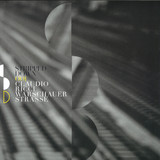
With new track 'Warschauerstrasse', Claudio Ricci has created an expansive seven minute workout of twisted synths and deep house drums. The first remix comes from long time techno heavyweight Timo Maas and the prolific and inventive Basti Grub. Their singular remix speeds up the original and layers in fluttering toms and percussive sounds as well as broad, groaning synths and the distant sound of a bustling city at rush hour. Sudam label boss and Ibiza based artist Kintar flips the track into something spacious and haunting. Eerie keys and sweeping synths keep you on edge as the rubbery techno groove rolls on into the night. Bulgarian based Metodi Hristov loves to experiment and has a distinctive techno style that gains support from the likes of Richie Hawtin, Carl Cox and Adam Beyer. In his hands the track becomes a peak time tech banger.
Echocord sub-label Echo Echo continues this July with Orbite's 'Interstellar' EP, a threetracker from the Berlin- based producer. Orbite is a brand new project founded in Berlin, Germany with a nod towards the raw, dubby sounds often heard across the clubs in the city, and where better to inaugurate things than the recently launched sub-label of Copenhagen's Echocord, one of the leading imprints in the realms of Dub Techno, home to pioneering acts like Rod Modell/Deepchord, Pole and Fluxion who have paved the way for Orbite's own twist on the genre. The ethereal pad textures of 'Skylar' lead on the package, deftly evolving alongside bubbling synth tones, swelling chords and shuffled percussion to create a create dynamically unfolding six and a half minute cut. 'Moment' follows, edging things further into dubbed-out territories with heavily delayed dub echoes and mesmeric spoken word poetry intertwining to create a, hypnotic beatless soundscape. 'Organi' closes the record with emotive, billowing pads, warm bell like tones and vocal murmurs running alongside swinging shakers and stripped-back micro-house percussion.
While notorious in the Chicago streets, RP Boo's music had been unfairly confined to a few white labels and self-released mixtapes until his two archival Planet Mu LPs Legacy and Fingers, Bank Pads & Shoe Prints introduced broader audiences to his sonic history, some of it fifteen years after it was first recorded. I'll Tell You What! is the next step in his mission, and the first time he's released an album of contemporary material. The title, a favorite maxim of his, welcomes listeners to sit down and let him narrate in the unforgettable abstract fashion he's known for. He explores familiar motifs such as the cosmos, movement, and opposition, using densely interwoven vocals, unpredictable percussion, and evil humming bass as his tools of choice. RP Boo's music doesn't follow the traditional rules that most compositions do. Layering decades of samples from yesteryear to the present over his commanding vocal cut-ups, he transports the listener to their own realm of the space-time continuum. The main difference between this record and his prior work is now we hear Boo tell new stories about preaching his gospel outside of Chicago, from his experiences frantically touring the globe over the last five years. The words 'things ain't been the same / since I hopped the plane' are repeated on top of engine sounds and rumbling bass on Flight 1235, a glorious paean to his new jet-setting adventures. The spirit of competition runs through RP's veins as much as blood does, something you can't unlearn when you've been making music for Chicago's footwork circuit as long as he has. The local culture has served as a shelter from the violence that has plagued the city, pitting kids against each other with their feet rather than weapons. On At War Boo reminds us 'we are at war in the streets', a double meaning to both the mayhem in this world and the sweetness of rivalry on the dance floor. Another battle-themed track Cloudy Back Yard, one of the spacier moments on this album, is an abstract on the state of footwork's home. Chicago remains the backyard of this artform even though it's left the porch and traveled to new neighborhoods worldwide. Back at home though, competition among the DJs and dancers continues, and as the man himself says, 'with all this hate, there's smoke, and it's cloudy'. I'll Tell You What! throws more than a few curveballs into the mix. Footwork has always borrowed from hip-hop, and many vocal tracks are almost condensed raps, dating back to the street chants pioneered on Dance Mania Records in the ghetto house days. On Bounty, Boo grabs the mic and brazenly lays down a full-on verse of terror over a thick atmosphere of his signature sweltering low-end and erratic Roland R-70 patterns. While he's most famous for his confrontational battle anthems, his melancholy moments are just as powerful. You get the best of both of those worlds on U-Don't No, with soulful samples finishing his own cocky sentences, one of the most elegant tracks RP has made to date. Deep Sole closes the record out, with the words 'It's always beautiful at the end' looping over waves of hypnotic synthesis, confidently looking death straight in the eyes.
BIOTIC is our first release on ALLFEELINGS MUSIC, a label focused on emotive dance music. All releases will be available exclusively on vinyl. AF01 is the first self release from London based DJ and Producer ALLFEELINGS. This is a 2 track DJ tool release very reminiscent of Detroit Techno. You can hear crisp and warm sounds alongside Jazz and Funk influenced rhythms. The A side soundtracks a big city during rush hour while the B Side pulls you in with deep synths and percussion.
This release has the support from Mark Broom.
- A1: There's A Break In The Road
- A2: 12 Red Roses
- A3: Mean Man
- A4: I'm Gonna Git Ya
- B1: Ride Your Pony
- B2: Show It
- B3: I Don't Wanna Hear It
- B4: Bad Luck
- C1: Hook, Line 'N' Sinker
- C2: Lonely Hearts
- C3: What A Sad Feeling
- C4: What'd I Do Wrong
- D1: Trouble With My Lover
- D2: Sometime
- D3: I'm Evil Tonight
- D4: Nearer To You
- D5: All I Want Is You
Betty Harris' The Lost Queen of New Orleans Soul collects together the steady stream of amazing soul and funk singles issued by Betty Harris from 1964 to 1969, under the musical guidance of legendary composer, musician and producer extraordinaire Allen Toussaint, a collection which truly captures the heart and soul of the city of New Orleans during this era.
Betty Harris's powerful, fiery soulful vocals found a perfect accompaniment with the New Orleans' players that Toussaint put together to back her, which by the time of her funk classic 'There's A Break In The Road' were the legendary super-tight, super-funk New Orleans group The Meters.
With the extraordinary song-writing skills of Allen Toussaint alongside the powerful, soaring, confident and emotive singer and the groove of The Meters, you have an unbeatable combination. That Harris never in fact lived in New Orleans (she flew in from Florida for all her sessions with Toussaint's local in-house players) seems almost an irrelevance, a geographical aside to the defining New Orleans sound captured on the recordings featured here.
All of these singles featured here were released on Allen Toussaint and his business partner Marshal Sehorn's local New Orleans label Sansu, widely distributed in the southern city but in only limited quantities elsewhere. As a consequence, Betty Harris' music failed to achieve the commercial success of other New Orleans artists such as Lee Dorsey (who she recorded with) and The Meters (who backed her). And so at the end of the decade she stopped recording, retired from the music business to raise her family in Florida.
This is no reflection of the stunning musical quality of all these songs which encompass everything from southern soul, heavy funk, deep soul ballads and northern soul. Betty Harris has been a cornerstone of Soul Jazz Records' New Orleans Funk and New Orleans Soul compilations. Always soulful and always funky, Betty Harris' music contains the essence of New Orleans music. She is the Lost Soul Queen of New Orleans.
This collection is released on CD, heavyweight gatefold double LP vinyl (+ download code) and digital and comes complete with full biography, original label artwork.
Peter Croce takes the baton back from Blair French for Rocksteady Disco's 9th release entitled Agape. It's vision is similar to Standing Still Is An Illusion, with Peter's unique take on this Afro-Brazilian deep house three-tracker. The a-side holds "Agape (Love Wins)", a deep and emotive house cut, with driving drums and lush strings that tease until they climax. Kicking off the b-side is "Maracatu Detroit", an upbeat love letter to Peter's home city produced through a bouncy Brazilian-funk lens, a track that is sure to bring a smile to the dancers. "Bufe Bufe" closes the release, featuring Peter on live electric bass/guitar and afro-stomp drum execution, brought to a peak with Yoruban talking drum + vox. Mr. PC roots the growing effervescent world beat sound with an explicitly Detroit and Chicago voice.
* Arikon is a solo project of Berlin-based drummer & producer, Arik Hayut - half of doom-tech duo Gainstage with Pierce Warnecke. Loyal to the sonic concepts of Gainstage, Arikon presents The Prophet's Blood Is Boiling, a solo enterprise into deepest 'drum & drone'. Hypnotizing distorted polyrhythms puncture through shards of fragmented melodies, producing potent mixtures of desperate tin can banging, a panoramic sonic scope, and the bleakest of soundsystem nightmares. Across the album, Arikon deploys an arsenal of samples plus electronic, acoustic, and self-constructed percussion instruments, constructing eight powerful productions that manage to embody both brute force and delicate decay.
* Formerly active in Tel Aviv's leftfield experimental scene during the 90's, Hayut made Berlin his permanent home for working on his own projects while composing and performing music for off-theater and contemporary dance. In 2004, a severe health crisis initially threw Hayut into crisis, slowing down his activity to a standstill. However, the precarious process of his fortunate recovery contributed to Hayut involving himself more deeply with concepts of time, death, and decay.
* Inspired by the decadent still life paintings of the Flemish Baroque, the cover artwork for The Prophet's Blood Is Boiling comprises a bowl of decomposing fruit. Like the music, its aim is to illustrate the beauty and perfection of the decay process, whilst also referring to the West's hyper-capitalistic, technology-centric culture. In recent years a new form of 'digital life' has been born, whereby all data - regardless of its worth or importance - is mummified, reproduced, and distributed with no real disintegration or loss in quality. This new digital life is resulting in a sort of 'frozen death', ending the hitherto natural cycle of life.
* The songs on themselves are inspired by the 'beasts of holiness' - mythological monsters that appear in the Hebrew bible and the Jewish apocrypha (non-canonical scriptures). There's the punching of bassy thuds out of an oceanic ambient swell throughout 'Tanin Gadol', named after the ancient water monster of Babylonian times. The dense net of fumbling scrapes and amp-busting hits of noise on 'Nahash Akalaton' similarly refer to a titular sea-snake monster, its tendrils lashing out of the speakers aggressively. These demons symbolize a force of evil equal in power, yet in direct opposition to the monotheistic deity of their time. They were therefore neither acknowledged nor canonized in much dominant scripture. Arikon invokes these demons across The Prophet's Blood Is Boiling, setting them loose across these gnarled noisy chambers of pummeling percussion and cracked sampled detritus.
teppas Records presents 'Osaka Steppas' Vol. 3, the third in a series of releases showcasing the Japanese underground dub movement. This edition features Osaka producers Hiroshi and Roots Masashi in collaboration with Spanish producer Ojah and well-respected UK singer Rudey Lee. The Osaka Steppas' raw and unrelenting sound developed in the subterranean clubs of Osaka, a port city famous for its counterculture night life. Inspired not only by the sounds of Jamaica, but also drawing inspiration from UK and European soundsystem culture with enough bassweight to test even the toughest of soundsystems. Presented in a beautifully designed full colour sleeve inspired by the works of the legendary ukiyo-e woodblock artist, Hokusai. This release is not to be missed.
Side A features an earth rocker riddim from Ojah & Hiroshi, with conscious lyrics sung by the legendary Rudey Lee.
Side B features a much sought after dubplate from Osaka producer Roots Masashi, a deep, dark & mystical steppa.
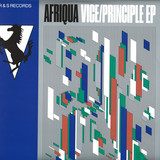
Following his R&S debut, Afriqua (aka Adam Longman Parker) presents Vice/Principle, his second release for the renowned Belgian label.
Recorded in the summer of 2017, Vice/Principle began as one of Afriqua's seasonal music packs, a quarterly offering of original tracks shared privately with a small cohort of friends and collaborators. R&S quickly picked up the collection, which expands on the melodicism and textural depth explored on his previous release for the label, Aleph.
The extended EP sees Parker veering into psychedelic territory, inspired by the cosmic departures of '70s krautrock and jazz. The title, Vice/Principle, more a coy bit of humor than a philosophical statement, reflects a wittiness that Parker often embeds into even the brawniest of his productions. This offbeatness is active in the music as well, which makes use of his voice, and edges past familiar four-on-the-floor patterns with interwoven polyrhythms and modality. Vice/Principle is confident in its curiosity, harnessing a wealth of artistic threads into a tightly knit, futuristic vision.
Parker currently resides in Berlin, Germany, where he works from his home studio in the city's quiet Charlottenburg neighborhood. Born and raised in Hampton, Virginia, Parker developed his craft as a producer while studying classical piano and practicing hip-hop turntablism from a young age.
After several years developing a hefty catalog of releases, Parker has embraced his R&S signing as an opportunity to dive deeper into his signature, yet versatile sound. His successful winter 2017 tour through the U.S. was a career first, and preceded international events at Comunité in Mexico, Concrete in Paris, and The Block in Tel Aviv.
- A1: Dyl - Opening Credits
- A2: Boot - Welcome To Meta City
- A3: Broken Promise - The Mission
- A4: Survey - Fermi Paradox
- A5: Rakoon - The Hidden Agenda
- A6: Robotic - The Dose
- A7: Survey - Secret Journey
- B1: The Subdivision - Voyage To Charon
- B2: Hlz - Asteroid Belt
- B3: Rakoon - The Void
- B4: Commit - Sita's Theme
- B5: Fre4Knc - Arrival
- B6: Fre4Knc - Outpost D37
- B7: Bisweed - Dark Matter Manipulation
- C1: Rak - The Gates Of Charon
- C2: Dyl - The Betrayal
- C3: Murmur - Droid To The Void
- C4: The Subdivision - Interdimensional Flashback
- C5: Gremlinz - Confrontation Pt. I
- C6: Survey - Into The Rabbit Hole
- D1: Dyl - Strategy
- D2: Gremlinz & Jesta - Confrontation Pt. Ii
- D3: Twisted - The Void Answers
- D4: Rakoon - Isolation
- D5: Boot - Closing The Gates
- D6: Aeon Waves - Order Of The Sixth Chakra (Closing Credits)
2x12"
The Gates of Charon, an original soundtrack, is the long-awaited result of two years of work by a multitude of outstanding producers from the bass music and drum 'n bass scenes. This deep, dark and weighty release comes at you with 26 tracks of professional soundscape production to tell a story of the fusion of the mystic and scientific to manipulate dark energy and explore the multiverse. This unique project will take listeners on an interplanetary journey of the highest order through sound and emotion. This is a limited edition release in a double gatefold full-art cover with 2 X 12" two-color 180g vinyl (limited to first 300 copies), with download codes (including bonus instrumental versions).
Norm De Plume has been quietly making a name for himself the last eight years with remixes for Tornado Wallace and Ben La Desh and EP's for Kolour LTD and his own vinyl only imprint Plumage winning him a solid fol- lowing along the way. His passion for all things disco and deep, dubby, un- derground house inspired by his musical hero Ron Hardy feeds through into his production style as well as his recently formed Peaches & Prunes party which boasts an audiophile sound system and vinyl-only sets from the DJ's. So when the opportunity arose to do a full EP with Norm we jumped at it. Here we present you with the Castlecrag EP, a nod to the Londoner's new adoptive home of Sydney, Australia, and whilst his sound may be more akin to the recent musical movements of Melbourne, the laid-back sun-kissed melting pot of The Harbour City certainly shine through in the two originals and Folamour remix on offer here.
Title track Castlecrag leads the charge with a deep mood-setter driven by a cowbell riff and filtering pads. The spacious mix and less is more arrange- ment ensures that the drums and rolling bassline punch through making for a track that sounds both unique yet accessible and demonstrates Norm's sense of musicality as well as DJ instinct for setting the right mood on the dancefloor. Next up we have Whole In One which treads a similar path whilst dropping the BPM's a touch and building up layers of synth strings to create a subtle yet engaging track to immerse yourself in. Finally, man of the moment Folamour gets busy on the remix of Whole In One working his magic by upping the tempo and going heavy on the jazz- inspired drums. By laying down a driving groove and pushing the string stabs to the fore, the Lyonnais producer behind the wonderful Moonrise Hill Material label has delivered a fresh-sounding take that will work like magic on discerning dance floors out there.