Making Covid-19-references when writing about popular culture can feel tiresome, living in the midst of it but let “Taken From A Fixed Point” by In Fields console you in this age of pandemic. This album pierces through you like sunbeams through the blinders of your quarantine-ridden apartments’ windows.
This isn’t In Fields first appearance on the label. In 2019 the artist released a collaboration with Golden bug and the exiting dynamics of that album resounds in this one. Though a little easier on the disco influences and a turn towards ambient, In Fields’ music is still “tension and release” dance music produced to perfection. In Fields characteristic sound contain contrasting elements where soft airy synth pads meet more frightening sounds dug up from somewhere deep and dark like in “Ghostnights”.
The tracks are dynamic where growing crescendos fast and suddenly fades out and you realize your mind have been focusing on a completely different part of the sound. Underneath those surprising elements sits a skeleton of well-sounding bones keeping the songs together tight and steady.
“Taken From A Fixed Point” is dance music for a dance floor in your head and triggers the muscle memory in quarantinenauts tired of hard lock-down. Though produced in a dark place, this album gives a somewhat positive vision of the future and life on the other side.
Cerca:deep disco culture
“This is the time. And this is the record of the time.”
Laurie Anderson’s 1982 debut album, Big Science, will return to vinyl for the first time in 30 years with a new red vinyl edition on Nonesuch Records. The release includes the re-mastered original album first released on CD for the 25thanniversary in 2007.
In the early 1980s, Laurie Anderson was already respected as a conceptual artist and composer, adept at employing gear both high-tech and homemade in her often violin-based pieces, and she was a familiar figure in the cross-pollinating, Lower Manhattan music-visual art-performance circles from which Philip Glass and David Byrne also emerged. While working on her now-legendary seven-hour performance art/theater piece United States, Part I–IV, she cut the spare ‘O Superman (For Massenet)’, an electronic-age update of 19th century French operatic composer Jules Massenet’s aria ‘O Souverain’, for the tiny New York City indie label 110 Records. In the UK, DJ John Peel picked up a copy of this very limited-edition 33⅓ RPM 7” and spun the eight-minute-plus track on BBC Radio 1. The exposure resulted in an unlikely #2 hit, lots of attention in the press, and a worldwide deal with Warner Bros. Records.
’Cause when love is gone, there's always justice.
And when justice is gone, there's always force.
And when force is gone, there's always Mom. Hi Mom!
At the time of its original release, the NME wrote of Big Science, ‘There’s a dream-like, subconscious quality about her songs which helps them work at deeper, secret levels of the psyche.’ With instrumentation ranging from tape loops to found sounds to bag pipes, Big Science anticipated the tech-savvy beats, anything-goes instrumentation and sample-based nature of much contemporary electronic and dance music. On the album’s 25th anniversary, Uncut noted, ‘The broader themes of alienation and disconnection still resonate, while Anderson’s use of loops and traditional/synthesized instrumentation is prescient.’
“In the ’70s I travelled a lot,” Anderson recounts. “I worked on a tobacco farm in Kentucky, hitchhiked to the North Pole, lived in a yurt in Chiapas, and worked on a media commune. I had my own romantic vision of the road. My plan was to make a portrait of the country. Big Science, the first part of the puzzle, eventually became part two of United States I–IV (Transportation, Politics, Money, Love). My goal was to be not just the narrator but also the outsider, the stranger. Although I wasfascinated by the United States, this portrait was also about how the country looked from a distance. I was performing a lot in Europe, where American culture was simultaneously booed and cheered. But the portrait was also a picture of a culture inventing a digital world and learning to live in it. Big Science was about technology, size, industrialization,shifting attitudes toward authority, and individuality. It was sometimes alarmist, picturing the country as a burning building, a plane crash. Alongside the techno was the apocalyptic. The absurd. The everyday. It was also a series of short stories about odd characters – hatcheck clerks and pilots, preachers, drifters and strangers. There was something about Massenet’s aria ‘O Souverain’ – which inspired ‘O Superman’ – that almost stopped my heart. The pauses, the melody. “O souverain, ô juge, ô père” (O Lord, o judge, o father). A prayer about empire, ambition, and loss.”
Laurie Anderson is one of America's most renowned – and daring – creative pioneers. Her work, which encompasses music, visual art, poetry, film, and photography, has challenged and delighted audiences around the world for over 40 years. Anderson released her first album with Nonesuch Records in 2001, the critically lauded Life on a String. Her subsequent releases on the label include Live in New York (2002), Homeland (2010), the soundtrack to Anderson’s acclaimed film Heart of a Dog (2015), and her Grammy-winning collaboration with Kronos Quartet, Landfall (2018). Additionally, Anderson’s virtual-reality film La Camera Insabbiata, with Hsin-Chien Huang, won the 2017 Venice Film Festival Award for Best VR Experience, and, in 2018, Skira Rizzoli published her book All the Things I Lost in the Flood: Essays on Pictures, Language and Code, the most comprehensive collection of her artwork to date.
- A1: Idrissa Soumaoro Et L´eclipse De L´ija - Nissodia
- A2: Rail Band - Mouodilo
- A3: Ambassadeurs Du Motel De Bamako - M’bouram-Mousso
- B1: Super Tentemba Jazz - Mangan
- B2: Sory Bamba - Yayoroba
- B3: Super Djata Band - Worodara
- C1: Zani Diabate Et Le Super Djata Band - Fadingna Kouma
- C2: Salif Keita, Ambassadeurs International - Mandjou
- C3: Alou Fane & Daouda Sangare - Komagni Bela
- D1: Super Djata Band De Bamako - Mali Ni Woula
- D2: Idrissa Soumaoro Et L´eclipse De L´ija - Fama Allah
Malian music is arguably deeper, more sophisticated and lyrical than any other form of African music. Those of us deeply entranced by Malian culture, and, in particular, the immense hypnotic beauty of Malian music, have put together a selection of songs from across the country.
Compiled by Vik Sohonie & Dave 'Mr Bongo’ Buttle, the story of this release began in 2015 when Dave happened upon the Soul Bonanza blog. A treasure chest of rare finds from around the world! One mix in particular stood out and totally enthralled Dave - le monde à change: a tribute to mali 1970 - 1991. He already knew of Malian legends such as the Rail Band, Salif Keita, & Les Ambassadeurs du Motel de Bamako, but this mix was something else! Deep & culled from the collections of some of the heaviest African music collectors in the world; legends like Vik Sohonie, Hidehito Morimoto, Philippe Noel, Gregoire Villanova, and Rickard Masip. Dave immediately contacted Vik and a journey of discovery tracking down the rights-holders began. He also turned to the font of Malian music knowledge; Florent Mazzoleni. Florent has written the definitive book about Malian music – 'Musiques modernes et traditionnelles du Mali’. He proposed some incredible tracks to include and provided the back bone of the sleeve notes and photos that are used in the album. No Malian album would be complete without a striking front cover photo, and ours is sourced from the late great Malian photographer Malick Sidibé.
On this album you will find well-known artists sitting next to rarer discoveries. The Rail Band, who are one of the best known of all the big bands in Mali, gave us the stars Mory Kanté and Salif Keita. Les Amabassedeurs du Motel de Bamako were another big act that had Idrissa Soumaoro, Kanté Manfila, and for a while Salif Keita in their ranks. Sometimes Salif would play in both bands in one night, quite a feat considering the bands were fierce rivals. As an albino Salif has had to face considerable prejudice from society, focusing on his musical career to help overcome this.
A major discovery on the album has been Idrissa Soumaoro et L'Eclipse de L’Ija. L'Eclipse de l'Institut des Jeunes Aveugles was a Blind teenagers institute and their record was produced by the German association that took care of blind Malian teenagers in Bamako. It was never properly released commercially and was the first recordings by the legends of Malian music Idrissa Soumaoro, Amadou Bagayoko and Mariam Doumbia. Amadou & Mariam later got married and became household stars, including making an album with Manu Chao.
This album is a concerted global effort to showcase the most vital cornerstone of Malian culture in an attempt to preserve its reputation in the face of its current, grim reality. We hope our highlights of Mali's rich history of musical innovation will serve as a starting point for reclaiming an image tainted by unnecessary conflict. May peace and music return to Mali soon.
In his essay ‘The Meaning of My Avant-Garde Hillbilly and Blues Music’, Henry Flynt talks about how his music should be analysed as an intellectual tribute to the music of the autochtone, setting aside plain folk references, but adopting academic insights to mold the music one makes as a folk creature. Much of Flynt’s discourse applies to the music of Glen Steenkiste’s Hellvete. Over the past twenty years he has been thoroughly investigating both the ethnic musical language of various regions as well as the contemporary pioneers that preceded him as a drone musician, internalizing concepts such as e.g. deep listening or just intonation. Casting off any redundant ideas or sounds, and stripping down the focus to develop singular concepts, his working method lead to pieces such as ‘Droomharmonium’, in which he shapes the endless variations on a theme, emphasizing detail and nuance rather than multitude. The Indian harmonium here serves as the main device to worship ancient ghosts and masters, and to preserve a continuum in a tradition that touches both folk and avant-garde culture. The materialisations are sustained tone compositions which become a means of appreciation of the people and cultures that paved the way for forms of mutual escapism. This might well be the core of what Hellvete’s music is about. As much as it is a form of self-entertainment – like folk music in the old days – it also invites the listener to a shared experience of sonic reverie, it is a casual gift to the community.
This is certainly true for the pieces presented on this album. They were first presented in a smoke filled and darkened art space in Ghent, Steenkiste surrounded by only a couple of candles and just enough stage light to see him erratically moving to the rhythm of the piece, occasionally twiddling the knobs of a Doepfer synth that processed the prerecorded harmonium tracks. Unlike most of his other performances this piece embraced the audience in a trance that was similar to that of an old-school rave club. Flynt writes: ‘The music should be intellectually fascinating because the listener can perceive and participate in its rhythmic and melodic intricacies, audacity of organization, etc. At the same time, the music should be kinesthetic, that is, it should encourage dancing.’ ‘Voor Harmonium’ does exactly that; it builds on the artistic ideas that have long been established in Hellvete’s oeuvre, but the ecstatic nature of these pieces merges the usual spiritual transcendence with one of determined physical bliss. It encourages both mind and body to step into the sound, to be enraptured, to celebrate.
Kumail is a musician, producer, performing artist Mumbai, India. Over the last four years, he has ascended to the very top of India's burgeoning culture of electronic music on two parallel paths - as a gifted musician and bandleader drawing expansive canvases of rhythm, texture and emotion, and as a roughneck DJ notorious for breaking ankles. Having started off plunging deep into lo-fi ambient electronica, Those paths have led him to a DJ set at Dimensions Festival 2018 in Croatia, a string of several live festival dates across India, and extensive touring across the country. In the past, he has shared the stage with the likes of Shigeto, Four Tet, DJ Koze, Teebs, Ratatat, Mount Kimbie and Kutmah, and been featured on Boiler Room, Sofar Sounds and COLORS
The new album "Yasmin" was always meant to be the birth of a new sound for Kumail. After spending his formative years delving into textural lo-fi electronica and textural ambient music, he went searching for a new sound more in-tune with his older, more mature, and more thoughtful self. What began as a study of modern soul music – drawing heavily from R&B, jazz and hip-hop – eventually sprawled to include flavours from across the world and time. 80's Japanese funk, crackling gospel, shiny disco, cutting-edge LA beat music and the omnipresence of Dilla, all leave their faint but indelible mark.
But deep within, Yasmin is a gritty world in which not much is going right. That world borders on real-life struggles with sleeplessness and anxiety, and being cooped up in a room in Bombay, India, which is where (and how) most of this album came to life. Countless nights spent making music to distract from a lack of inner calm and rest.
Despite deliberately steering clear from sampling for his career thus far, a day spent digging in Istanbul ended up inspiring much of the album – not only did that day yield a discovery of Pierre Akendengue's 'Olatano, w'intye so du s' Afrika' (a sample of which appears on 'Obota') but also a range of 80's soul records that transformed Kumail into a student for the next two years. With a renewed focus on musicality, practising playing the piano, learning new songs and improving production skills, Yasmin evolved into a 30 minute mood-board of lush voicings and explorations beyond just beat-making. The ensuing recording sessions featured a line-up of both all-star local session musicians as well as invited collaborators - Sid Vashi and Pink Siifu both deliver memorable features. Despite vocal performances eventually making their way onto nearly all songs on the record, Yasmin was never meant to feature Kumail's singing. With or without vocals, Yasmin's triumph is that it is nevertheless unmistakably the sound of Kumail finding his voice.
The first vinyl release of 2020 on Nang, belongs to the Parisian producer and newcomer to the label, Kelton Prima. The veteran artist has been producing and Djing since the late 80's, also releasing under the alias of D_Tekt. Prima has released on the Belgian label Disco Praline, Chicago based imprint Mathematics Recordings, Pizzico Nobel and also has contributed remixes for Thieves Like Us and Plastique de Rêve among others. Along side him on this release features Hard Ton, the Italian artist, who released previously on NANG188. The duo deliver a cover version of Culture Club's 1983 hit, Miss Me Blind. The release sticks with a retro aesthetic, yet given a modern high impact make-over and features 4 edits.
The "Miss Me Blind" original takes you you on a voyage, straight to a dance floor worthy of the infamous New Dance Show in the late 80's. The upbeat, nu-disco grooves, with Solid bass lines (that later trans into squelchy acid affair) are counter balanced with Hard Tons sublime vocals. The Vintage drum machine sequence is perfectly matched with shimmering synths and guitar riffs.
Second on the release is the The Caribbean House "Vision". This edit takes things a little deeper with a modulating bass arpeggio, that pans across the stereo field. Spliced and pitched down vocal cuts feature in this version alongside chime bell melody and pads that creates a emotional ride.
DJ Rocca, the Italian producer a Nang Records regular, delivers a rhythmic and percussive remix. This is classic Rocca style with retro drum machine programming, and a variety of smooth and silky Italo synth patches. The final edit of "Miss Me Blind" consists of Club Domani's bouncy, bass heavy club version. This upbeat and energetic remix keeping things rolling with break-downs and snare filled drops.
b 02: Miss Me Blind (The Caribbean House Vision) feat. Hard Ton
[c] 03: Miss Me Blind (DJ Rocca Italo Vocal Remix) [feat. Hard Ton]
[d] 04: Miss Me Blind (Club Domani Remix) [feat. Hard Ton]
‘Débuts’ is France-via-Brussels duo, Nikitch & Kuna Maze’s aka Nicolas Morant & Edouard Gilbert first full length album. Building on their collaborative EP “Mush”, ‘Débuts’ continues to explore the melting point between jazz and club culture, interspersed with the signature sounds of broken beat, Chicago footwork, UK garage, Detroit house, and underpinned by their road-tested new live format.
‘Débuts’ see’s the band push their musical and creative development even further, a result of touring extensively around Europe with a live drummer, from high-brow jazz festivals to sweaty basement clubs. “We would be lying if we said our gig experience didn’t influence us on this record” Edouard explains. “We discovered new aspects to songs such as “Bruk” and managed to push forward the energy side of the music from the rawness of the live shows. This energy empowered to produce and compose new material in the same vein”.
Fantastic first album of Tunisian producer Azu Tiwaline, melting psychedelic dub, industrial and hypnotic techno deeply rooted in her berber culture, supported by Lena Willikens, Nicola Cruz, Toma Kami and Violet, to name a few!
Azu Tiwaline is a new name for a new spirit: one of a producer inspired by the need to explore her origins, rooted in the Tunisian Sahara. The Call to a different sound, organic and raw, vibrating in the great spaces of the African desert where trance music resonates... Ecstatic ritual.
Her first album, Draw Me A Silence, conceived as a diptych, reveals the multiple facets of her identity. Uniting the bonds that connect Berber music, dub culture and techno hypnosis, Azu Tiwaline invites us to refocus on our senses and our Nature. She knows how to use contrasts between light and the invisible, exploring the complexity of our emotions and the mystery that emanates from them, in a polyrhythmic chiaroscuro that runs through each one of her tracks, and of which we discover, as we go along, all the outlines.
Draw Me A Silence Part. I (to be released in February 2020), delivers the most hypnotic variant of her music, centered on dark percussive rhythms and a skillful use of repetition; each of the 5 tracks ineluctably carrying the listener into a trance. Two major tunes particularly illustrate the artist's imagination: "Itrik" and "Berbeka", perfectly synthesizing the heritage of Berber trance music and her techniques derived from minimalist and repetitive electronic music.
The continuation, Draw Me A Silence Part. II (to be released in April 2020), gives prominence to a deep heritage drawn from the dub culture and its numerous bass music filiations. This second part thus gives a new breath in the use of sound space, exploited in a much broader way, leaving all their space to complex syncopated percussive lines, supported by massive basslines dedicated to the best sound-systems. Omok, the first of the five tracks of this Part II is the perfect demonstration of this, playing here the essential role of a bridge to the darker waters of this album's end.
Each of these two parts exist as an Entity, and it is only when they are united that they will reveal their full meaning. Thus, in May, Draw Me A Silence will find its final form in a double-vinyl unifying them. Listening to this album in its entirety offers us a wide panorama of the sound landscapes visited by Azu Tiwaline, who seems to breathe primitive sounds of a faraway desert into a music with modern tones - and vice versa. A resolutely hybrid sound and a singular experience, playing with contrasts and nuances to catch the listener in vast and so far unexplored territories.
- A1: Opening Skit
- A2: Float
- A3: Before The World Ends
- A4: Na Na Drift
- A5: When The Saints (Interlude)
- A6: Sad Slutty Baby Wants More For The World
- A7: Ropeburn
- A8: W/Me (Interlude)
- A9: W/Me
- A10: No Freedom
- A11: Breaker Of Chains
- B1: Sanaa Lathan
- B2: Honey, Sweetie, Baby
- B3: Bbygurl
- B4: Brand Nu
- B5: Believe (Interlude)
- B6: No Weapon Formed Against You Shall Prosper
- B7: When The Saints (Reprise)
Mhysa, the newest addition to the Hyperdub roster, is ‘a popstar for the cyber resistance’ hailing from Maryland via New York. ‘Nevaeh’ is lo-fi R&B with a bedroom feel and challenging lyricism focussed on identity and black experience for the online generation.
She started ‘Nevaeh’ in late 2017, shortly after the release of debut album ‘Fantasii’, recording at home with some input from Lawd Knows, a frequent collaborator on her Scraaatch project. It is Mhysa’s intimate reflection on the black femme experience from multiple vantage points : sex and sexuality, self-love and self-discovery, black empowerment and lineage, and pleasure or the lack of it.
She describes the album as “a prayer for Black women and femmes to be taken to or find a new and better world away from the apocalypse ... a safe space, a sort of negro heaven.” ‘Nevaeh’ is deeply personal but easily relatable, its intimacy heightened by scattered acapella moments and interludes referencing black pop culture, where Mhysa’s delicate voice is laid bare, while other tracks reprise the melancholic R&B her mother raised her on, updated through a queer lens.
Conversely, several of the album’s tunes have found space in Kode9’s club sets over the last year, like the mischievous ‘Sanaa Lathan’ and skeletal ‘w_me’. Of this record’s progression from the last, Mhysa sought “to be more vulnerable and experiment with vocal range … to write more complicated vocal melodies that would be harder to do”, with her production now experimenting with new techniques, and (often self-taught) live instrumentation, as is her family tradition.
Elkka - the London based DJ, producer and founder of record label and DIY art collective femme culture - has announced her latest EP ‘Every Body Is Welcome’ on her imprint, following a very strong year constallated of live perfromances and DJ sets throughout Europe, and a growing radio presence in London and beyond.
‘Every Body Is Welcome’ will be released on 22nd of November. Smudging the boundaries between eras and styles, Elkka’s free-wheeling dance tracks float between club beats, earthy sounds, full of warmth, soft edges and lovely instrumentation which all lead to a completely captivating and blissful listen. The infectious new five-track EP looks set to further solidify her status as one of the artists changing the shape of dance music in 2019.
The EP kicks off with an acid-sounding dance thumper that elegantly moves along the piano melody, for a beautiful house start to the whole project. In typical Elkka style, the EP moves from the atmospheric, sun-soaked rhythms of ‘Compromise for What’ and ‘LVURSLF’ Interlude, to the more club-oriented, 4am nightscapes of ‘Avant Garde’ - ending with ‘Breathe’, the perfect union to these two different sides of her artistry in one elegant, thumping, soulful track.
‘Every Body Is Welcome’ was informed by Elkka’s own deeper understanding of who she is as an artist and what the dance floor means to her, claiming that “Arriving in London in my early 20s I was a completely different person in every possible way and discovering club culture, the rave scene and queer spaces allowed me to explore myself fully as a woman and as queer person. For me, the dance floor has been a place where I have felt the most liberated, the most myself, unified with friends and strangers by the music and moment we are sharing. This EP is a celebration of those moments, of the dance floor, of dance music that has inspired me creatively and personally. Every Body Is Welcome symbolises what I hope the dance floor to be - a music utopia or haven, somewhere for everyone to feel safe to express themselves, to find themselves, to be whoever they want to be and feel part of a community of acceptance and tolerance. Idealistic? Yes but I think art should be a space to express idealism and where we hope to be.”
Her previous EP ‘Full Circle’, released via femme culture, received acclaim and support from Annie Mac, Pete Tong, Tom Ravenscroft and Elkka was also named as one of the artists to watch in 2019 by Mixmag. In addition, Elkka has garnered playlist and radio plays from acclaimed producers Four Tet, Floating Point’s and George Fitzgerald.
Elkka founded the femme culture label and collective in 2016 in response to the lack of support for womxn DJs, producer and artists, later teaming up with fellow DJ and creative Ludo who she now co-runs the platform with. Since then, the progressively minded collective have been swiftly gaining recognition with their boundary-free ethos that champions women, women-identifying, artists and the LGBTQ+ community whilst pushing forward-thinking music through their carefully, curated club nights and events.
Earlier this year they released their second label compilation ‘HeForShe x femme culture.’ Compiled in aid of the UN Women, the compilation featured fresh new sounds from the likes of Lone, Elkka herself, Martin Bootyspoon, India Jordan, Ouri, Nightwave and more - and earlier this summer they hosted their annual alternative Pride after-party ‘PROUD’, in which all the proceeds went to The Albert Kennedy Trust (a charity for homeless LGBTQ youthsworthy causes).
My Music is a stellar spiritual soul / jazz-funk gem, recorded by keyboardist-singer Samuel Jonathan Johnson in 1978. The epitome of a cult classic, it didn't do much upon its release but steadily found an audience over the decades that followed. It eventually worked its way into the culture, and latterly the wantlists, of wave after wave of soul aficionados.
This is music that shares the jazzy R&B DNA of contemporaries like Roy Ayers and is an intoxicating blend of mellow moments and more groove-heavy tracks. Spacey keys and lush production give it a luxurious, enveloping warmth.
My Music opens with the gorgeous title track: an indulgent slow jam opus. Introducing us to Johnson’s compelling musical vision, it features a rich mélange of production techniques. Dripping in strings, horns, backing singers, popping funk bass lines and swooshing synth waves, it’s an unusually structured cosmic two stepper that has an irrepressible groove. Accordingly, it’s been a favourite with the diggers and it was sampled by The Alchemist for Jadakiss’s “We Gonna Make It” (and it was also used on Ras Kass’s “Home Sweet Home”… but that’s a story for another time).
The up-tempo “Sweet Love” bubbles over with joy, its uplifting lyrics backed by infectious bass and jazzy Fender Rhodes lines. It follows a cover of “What the World Need’s Now Is Love”, taken at a funereal pace that transforms it into a heartfelt plea for love and understanding. Essential in these dark days.
After a full-minute-long opening of lush cinematic strings and horns, “Because I Love You” makes space for Samuel’s voice, accompanied by some keys and just a sprinkle of guitar. It builds back up and then mellows its way out to a jazz lounge finish (in all the right ways). The feel-good ebullience of the Stevie Wonder-esque “It Ain’t Easy” closes out the LP’s first side.
The second side bursts open with the heavy bounce and disco-funk basslines of “You”, a slightly off-beat string-laden dancer with insistent horns and a piano-assisted groove. Next up is “Just Us”, a legendary steppers track that could be heard oozing out of deep soul radios and funk sound systems back in the late 80s.
“Yesterdays and Tomorrow” is a moving original ballad that is followed by an exquisite high-stepping paean to mom in the form of “Thank You Mother Dear”. The thumping easy-glide of “Reason For The Reason” brings the album to a close.
Respectfully mastered by Simon Francis and cut by the master Pete Norman, this reissue of Samuel Jonathan Johnson’s sole LP sounds as sumptuous as that scarlet gown on the front cover. The sleeve artwork was lovingly restored by the Be With team. My Music is a luxurious and rare collection of songs that now has an opportunity to reach beyond its cult audience.
From Far Out Recordings’ in-house producer, Daniel Maunick’s debut solo album Macumba Quebrada conjures scenes of collective hedonism from start to finish. Spanning Afro-Brazilian spiritual dance ceremonies, late-eighties Detroit techno parties and jungle and broken beat raves in nineties London, Maunick celebrates our instinctive, age-old desire to come together and lose our sense of self.
Daniel Maunick practically grew up behind the mixing desk. As the son of Brit-funk legend Jean-Paul ‘Bluey’ Maunick (of Incognito fame), he found himself immersed in music from an early age, and quickly became involved in London’s drum n’ bass, acid-jazz, house, broken beat and soul scenes, releasing his first production at the age of sixteen on Gilles Peterson and Norman Jay’s Talkin’ Loud label. Since then, he has produced albums by the likes of Azymuth, Marcos Valle, Terry Callier, Incognito, Ivan ‘Mamao’ Conti and Sabrina Malheiros.
Reflecting his dual residence between Rio de Janeiro and East London, Macumba Quebrada features deep house stompers and broken bangers littered with Brazilian rhythms - in the form of both dusty percussion and Maunick’s intricate drum programming. But the album sees Daniel draw inspiration from across the black music continuum, and the rich histories of communal celebration in Detroit techno, Chicago house, London D’n’B and New York disco. Bringing all this together in explosive peak-time club tracks, moments of eerie ambience, South American swing and tribal earthiness, Macumba Quebrada expands on Maunick’s recent vinyl-only EPs ‘A Vicious Circle’ and ‘Sombra Do Dragao’, with a 13-track double LP and 14-track CD and digital release.
Taking its title from a syncretism of South American spiritual practices, the cover art is photograph taken by acclaimed French photographer and self-taught ethnographer Pierre Verger, who travelled the world documenting civilizations that would soon be effaced by progress. Settling for good in Salvador, Brazil, Verger became initiated into the Candomblé religion, eventually officiating rituals and ceremonies within the community. Without having become an ordained priest, Daniel Maunick shares both Verger and Far Out Recordings’ love for Brazil: its people, its culture and its music.
"He's been producing Azymuth and all kinds of great musicians in Brazil, and finally his debut album is about to be released." Gilles Peterson (BBC 6 Music)
"This one is a good one. Thanks!" Derrick Carter
"Wow couple of killers on there so it sounds!! Thanks a lot" ?? San Soda
"He is always brilliant!" Voclov (Neroli)
"Energetic, summery and full of groove. "It's like Theo Parrish went to Brazil and never decided to come back." Errol (Touching Bass)
"Super dope release from Daniel! proper Venom / Viper Squad vibes!!" Pablo Valentino (MCDE/Faces Records)
"Organic and bumpy...healthy dance music!" Mad Mats (Local Talk)
"really diverse, great sound" Chris Todd (Crazy P)
"super dope" Nick Tyson (XOA)
"Keep em coming man! ... Nice one" Earl Jeffers
"Feeling this! As always with Mr Maunick." Opolopo
"Dirty Trix is real nice!" Jkriv (Razor N' Tape)
"This is great!" Danny MoodyManc
"He's right on the money with this one, isn't he? Deep, profoundly funky stuff that Larry Heard would be proud of. You can feel it!!!!" Mark Webster (BBC 5 LIVE)
"this is so dope" Alex Attias (Visions Recordings)
"Love these tracks" Serkan Cetin (SunSplash)
"Great release, I love It! I-Robots approved!" I-Robots
"This is excellent. Dirty Trix and Somra Do Dragao are the ones!" Dane (The Love Below)
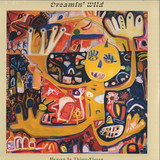
Dreamin' Wild's second album Heaven in Thirty Eleven owes a lot to Footscray. The inner-western suburb of Melbourne features not only in the album title (its postcode is 3011) but goes deeper to form a central part of the record's narrative and reflection.
For all six members - Chris Jennings (Swazi Gold, Sagamore, Sledgehammer), Sam Cooper (Crepes, Swazi Gold, Sagamore, Sledgehammer), Tim Karmouche (Crepes, Swazi Gold, The Murlocs), Sarah Quirk, Monty Hartnett (Sleep Decade, Miris, Sagamore) and James Guida (Laguna, Environments) - Footscray buoyed periods of music exploration and discovery. After more than six year of writing, rehearsing and recording in the suburb, there's no doubt that Footscray is home for the band.
Jennings adds that the album is, "a bit of a recap of the last three years for Dreamin' Wild," drawing attention to the change and growth many of the eight songs have undergone since creation.
"I Don't Disagree" is an album highlight; an almost seven-minute track that struts along calmly, taking life as it is. Quirk's soulful refrain soars atop Jennings' laconic vocals, carrying the song to its end. "Dynon Life" is another album gem, reminiscent of summer in the city, and happy seeking excess.
Heaven in Thirty Eleven is an ode to a Melbourne suburb brimming with culture and stories, made by artists who are proud to call it home.
All producers on this timeless EP known for their contribution to NuDisco/Deep House Music. 1 Life records has enlisted the services of top talents. U.S deep house veteran Vincent Floyd wrap drifting deep spheres, lilting electronics & warm synth rhodes chords around a chunky groove on his fine beat interpretation for a brighter & breezier deep house vibe on a remix that benefits greatly from a squeezable synth bassline & some undulating TB-303 style acid motifs, while Rico De Almenda deliver a driving chunk of dub-disco/deep house fusion rich in sparkling synthesizer lines, sun-kissed chords & his own rubbery post-punk bass. Studio don Vincent Inc always bring unforgettable impressions & inspiration for mind, body & soul. 4 tracks came together to tell music stories about hypnotic deepest stuff, depression, happiness, loneliness, love, miracles & magical experiences. And now we're asking other's to join the sound conversation
Juan Ramos opens his debut album with The Problem With Ambiguity and Finding Space—speaking to a societal confusion, a fragmented sense of self, and a pull toward many (often unwelcoming) directions—this turmoil in which he’s spent considerable time, sees him invest grave efforts to express the inexpressible. Changing Hands is a time capsule of that dark period in his life, an overtly honest musical diary which puts his emotional coming-of-age on full display, hoping to reach kindred listeners. While his previous output for the ESP Institute used a certain level of complication to push limits on the dancefloor, this immersive work cuts deep in to a frayed psyche, dismantling our preconceptions of Juan and plunging listeners deep into a stew of jarring textures, incomplete phrases, and circus-like abstractions of pop culture. There is a nonchalant and unhurried experimentation that accumulates over the album’s first half—disconnected and anxiety-riddled personality traits constitute various musical roles, sporadically converging in fleeting moments of optimism although never fully climbing out from the abyss—and yet amidst this chaos there is a watershed moment in which the artist successfully gleans a golden morsel of hope from his emotional junkyard, guiding us across the threshold into the album’s second half while diligently protecting the glow of this rock bottom treasure. Juan begins to reveal his inner b-boy—a distorted view on golden-age Hip Hop roots, an affinity for muddy break-beats, sultry loops and metaphoric interludes—the crown prince of a newly-found safe space. It’s as if he had us searching on all fours for a misplaced joint, but now that it’s finally lit, he assures us that everything’s going to be alright.
Soundway Records presents the eponymous debut LP from in-demand Amsterdam five piece The Mauskovic Dance Band – fusing no-wave dance punk, Afro-Caribbean rhythms and space disco in a “controlled explosion” (The Quietus).
Entirely self-produced, the band has reiterated their favourite elements of the 70s and 80s legacy of the Afro-Latin psychedelic music of Colombia and Peru, interpreting it through the context of modern day Amsterdam. The output is a lo-fi No Wave groove all its own - rooted in a deep love of champeta, Palenque, psychedelic cumbia, chichi, classic afrobeat and picó soundsystem culture.
Since the release of their “Down In The Basement” EP on Soundway Records in early 2018, the band have found themselves on a hectic European touring schedule – not to mention being involved in other side projects. Following stints with Turkish psychedelic folk rock group Altin Gün, and touring with the re-formed 70s Zamrock outfit W.I.T.C.H., Nic Mauskovic also teamed up with Dutch neo-psychedelic artist Jacco Gardner to form the “cinematic Balearic disco” duo of Bruxas (released by Dutch institution Dekmantel) – and together, they mixed The Mauskovic Dance Band debut album in Lisbon.
Lead single Space Drum Machine encapsulates the band’s prototypical brand of busy rhythmic patterns interwoven with insistent synth stabs and vibrant disco toms, layered with an elastic guitar riff drawing inspiration from Kenyan kikuyu and benga styles. High-pitched vocals describe being on a flight together and inciting each other to press a button of unknown consequence with “push it, push it” - and push it they do, at breakneck pace. And of course, the undeniable influence of Amsterdam’s hotbed of underground dance producers shines through as it does on all tracks - with the vintage psychedelic swirl of synthesiser, lo-fi drum machines and tape recording.
Best known to the world at large for their disco evergreen “Lady Marmalade,” the powerhouse trio of Sarah Dash, Nona Hendryx and Patti LaBelle are revered in the deeper dance underground for a couple of epic soulful rock workouts that have been known to provoke life-changing moments on the dance floor. With New Orleans legend Allen Toussaint producing and leading an all-star band with the Meters at its core, “What Can You Do For Me” and “Messin’ With My Mind” crackle with energy and rise to thunderous crescendos that rival a gospel revival. Mr. K’s edits acknowledge these songs’ long history in NYC DJ culture, dating from the Gallery and the Loft in the mid-‘70s and running unbroken to today, with masterful extensions that push the inherent energy even further without ever becoming repetitive or obvious. Most Excellent Unlimited is proud to present these sure shots on loud and carefully mastered 7-inch pressings, an essential addition to any gig box or collection.
- A1: Converters - I've Been Converted
- A2: Harrison Jones - On That Other Shore
- A3: Wisdom - Change
- A4: Johnson Family Gospel Singers – Imitations
- B1: Calvin B. Rhone - I Believe
- B2: Psalms - Praise The Lord
- B3: Mr. Jesse R. Mcguire – Jesus Is On The Mainline
- B4: Paradise - Keep The Fire
- C1: Wisdom - Let The Lord Come In Your Life
- C2: Prophecy - Take It To The Streets
- C3: New Creation - Ain't No Right Way To Do Wrong
- D1: Calvin B. Rhone - That's How Much He Loves You
- D2: Harrison Jones & The Voices Of Harmony - On
- D3: Mr Jesse R. Mcguire – Jesus Is On The Mainline (Steve Cobby Remix)
Available april 30th
Heavy heavy heavy gospel compilation.. Including a few tracks that are under the radar or recently discovered such as Harrison Jones - On that Other Shore, Converters, I've Been Converted and the super limited self-released 45 by Mr Jesse R. McGuire – Jesus Is On the Mainline. Only 50 copies were ever pressed... Also holds Paradise's brilliant "Keep the Fire.".. TIP!!
Although gospel and disco music seem like polar opposites—one is secular while the other has embraced a hedonistic culture—the marriage of the two genres has birthed the uplifting spirituality and dance floor thump found in gospel disco. By the mid-'70s many established and independent gospel artists started creating records with a tight four-on-the-floor beat that touched both churchgoers as well as patrons of the drug-fueled establishments of the '70s.
Cultures of Soul Records is proud to present the second installment of Greg Belson's Divine Disco. Belson is one of the world's leading authorities on the funky gospel sound; for this collection he dug deep into his crates to
undercover the rarest independent and private press gospel disco records ever recorded. Greg Belson's Divine Disco sound is one that's been heard around the world from his DJ appearances at Glastonbury's NYC Donwlow stage to LA's Funky Sole to soul nights across
Europe.
Many tracks are under the radar or recently discovered such as Harrison Jones - On that Other Shore, Converters, I've Been Converted and the super limited self-released 45 by Mr Jesse R. McGuire – Jesus Is On the Mainline. Only 50 copies were ever pressed. This volume even includes gospel disco from the UK with Paradise's brilliant "Keep the Fire." This compilation also includes remixes and edits by Steve Cobby (who was a member of Fila Brazillia) and the Divine Situation production duo of Greg Belson and Paulo Fulci.
Life is all about rhythms. We don't know what we're dancing to until we're in so deep we can no longer control ourselves. The rhythm controls us.
Right now both Guti and the Martinez Brothers are dancing to the conga rhythm. Guti's third album, they've been dancing to it since the summer, teasing us with a whole slew of percussive new... And they'll continue throughout 2019. Chance are you will, too. Eventually the rhythm will control all of us. It's too infectious not to.
Here's the 411: 'The Year Of The Conga' is Guti's third and most rooted album to date. It came about through a personal request from brothers Chris & Steve Martinez. Both unapologetic Guti fans they wanted the very first album on their Cuttin' Headz label to be his. The result is a total reconnection back to his Argentinian foundations, his club roots and everything that first lured him to the dancefloor...
'I'm back to my roots and found my Latino groove again,' says Guti who wrote the album throughout 2018, starting it whilst bulleting through Japan by train, the majority crafted in the jungle of Dominican Republic, having collected and sampled native percussion instruments, and then finally mixing down on his return to Europe. 'Every song is full of rhythm and created to make you dance...'
He's not messing around; from the writhing snakelike percussion and rousing calls and cries of opener 'Aee' right through to the final mesmerising waves and farewell struts of finale 'Voladora' this an album is born both for and from the dancefloor. No overthinking, no purism, no exclusion; just unabashed physical hypnosis, fuelled for the floor, guided with gut instinct and years of groovecraft. It's the sound of an artist who's disconnected, explored and reconnected. He's older, he's wider and more in tune with his own pace and palette. One of the most diverse and explorative artists to come from Loco Dice's Desolat stable, this is Guti simplifying his passions down to an essence of everything that's magic about his roots and our shared dancefloor culture.
The highlights are in abundance; those hazy-but-persistent New Jersey organs on 'Telling The Truth', that wobbly sub on 'Red Eye', that shimmering sinewy acid line on 'Se Baila', the spicy pianos and wet horns of 'La Orchestra Fantasma', the list goes on. Each cut designed for deep mix pleasure, each cut rolling with a strong organic flavour and alluring percussive dynamics, each cut showing Guti at his most inspired, warmest, playful and ready to wrap you up so deep in a conga you'll soon lose yourself.
Cuttin Headz, cuttin straight to the chase but never cutting it fine... Let us be the first to wish you happy new year with the first ever album on the currently unstoppable label. We'll wish you a happy new conga, too. 2019's going to be a vintage and Guti and the Martinez Brothers are leading the charge.
- A1: Not Drowning, Waving - Frogs
- A2: Mark Pollard - Quinque Ii
- A3: Blair Greenberg - Beach
- A4: John Heussenstamm - Sawan
- A5: Beyond The Fringe - Guitar Fantasia
- B1: Meera , Atkinson - White
- B2: Free Radicals - My Lips Are Moving
- B3: John Elder - Again
- B4: Helen Ripley-Marshall - Under The Sun
- B5: Blair Greenberg - Rainforest
- B6: Sam Mallet - Westgate Bridge At Dawn
- C1: Gary Havrillay - Temple
- C2: Ros Bandt - Starzones
- C3: John Elder - Wayayisma Petra
- D1: Sam Mallet - Stream Daimons' Speak
- D2: Blair Greenberg - Gleaming
- D3: Robert Bleeker - Glowing Trombones
- D4: Tom Kazas - Blankets Of Ice
- D5: Errol H. Tout - As Darkness Falls
Midday Moon is a survey of ambient and experimental music that emerged from Australia and New Zealand between 1980 and 1995. These recordings are sourced from a rich variety of micro-labels, private pressings, theatre soundtracks and artists' personal archives. Curated by Melbourne based DJ and archivalist, Sanpo Disco (a.k.a Rowan Mason), the collection delves deep into the world of outsider music that emerged in Australia and New Zealand in the latter half of the twentieth century, as synthesisers and early workstations began to enter the consumer marketplace. The record is an odyssey in itself, a journey that takes listeners into the unsung world of Australian new age composers. There are stories abound within this volume, from the mysterious disappearance of Helen-Ripley Marshall after the release of her 1988 album 'Green Chaos', to the journey of American-born, Perth based blues/rock guitarist John Heussenstamm, who unexpectedly turned his finger to 'ambient' music in the late 80's; and again from Melbourne based Ros Bandt, who made a series of recordings exploring the resonance of a hollow concrete cylinder 5 stories beneath busy Collins Street in Melbourne's CBD. Compiled by Sanpo Disco / Mastered by Mikey Young . '(Ambient music is) a surrounding influence that induces calm and a space to think... it can accommodate many levels of listening attention without enforcing one in particular.' - Brian Eno / 'A richer and more diverse ambient genre began to form. Music that crafts a unique cultural geography of landscapes and atmospheres: real and imagined, natural and man-made. Some artists turned their attention to the singular acoustic ecologies of overlooked spaces around the country. Others fostered interests in non-Western music cultures and instruments. The common thread is their use of new technologies to conjure interior and exterior regions, through acoustic and synthesised sounds.' - Sanpo Disco