Mit ,Happy Hour" reift HOLLIE COOK endgültig zur Königin des modernen ,Lovers Rock", dem opulenten wie harmoniebetonten Reggae-Stil, der in Großbritannien seit den 1970er Jahren beliebt ist. Als Teenagerin tourte sie mit den Punk-Legenden THE SLITS (auf deren EP ,Revenge Of The Killer Slits" sie 2006 mitsang) und entfachte so die wilde Seite ihrer liebenswürdigen Persönlichkeit. HOLLIEs Mentorin war Ari Up, die inzwischen verstorbene Leadsängerin der legendären Punk-Formation und eine lebenslange Freundin von COOKs prominenten Eltern. Sie ist die Tochter des Sex Pistols-Schlagzeugers Paul Cook und der Culture Club-Sängerin Jeni Cook (ihr Patenonkel ist Boy George!). ,My father always said I would be a singer. But I discovered lovers rock on my own. I heard it on pirate radio and with friends, and I was bewildered, enchanted," erinnert sich COOK. "The Slits are the reason I have pursued this career. I was surrounded by powerful women at a young age, and when my time came, I was never fazed by male dominance. They were my wall of courage." Auf diesen kämpferischen Fundament ist HOLLIEs Liebe zur Musik entstanden. Ihre gefühlvolle Direktheit auf ,Happy Hour" ist so nachvollziehbar wie authentisch. ,I can't get away from it" sagt sie. ,Making this music that I love, I do turn deep inside myself. It makes me explore a lot of human truths and feelings that we should not shy away from, and it feels like a release to turn them into songs."
Suche:deep disco culture
Mit ,Happy Hour" reift HOLLIE COOK endgültig zur Königin des modernen ,Lovers Rock", dem opulenten wie harmoniebetonten Reggae-Stil, der in Großbritannien seit den 1970er Jahren beliebt ist. Als Teenagerin tourte sie mit den Punk-Legenden THE SLITS (auf deren EP ,Revenge Of The Killer Slits" sie 2006 mitsang) und entfachte so die wilde Seite ihrer liebenswürdigen Persönlichkeit. HOLLIEs Mentorin war Ari Up, die inzwischen verstorbene Leadsängerin der legendären Punk-Formation und eine lebenslange Freundin von COOKs prominenten Eltern. Sie ist die Tochter des Sex Pistols-Schlagzeugers Paul Cook und der Culture Club-Sängerin Jeni Cook (ihr Patenonkel ist Boy George!). ,My father always said I would be a singer. But I discovered lovers rock on my own. I heard it on pirate radio and with friends, and I was bewildered, enchanted," erinnert sich COOK. "The Slits are the reason I have pursued this career. I was surrounded by powerful women at a young age, and when my time came, I was never fazed by male dominance. They were my wall of courage." Auf diesen kämpferischen Fundament ist HOLLIEs Liebe zur Musik entstanden. Ihre gefühlvolle Direktheit auf ,Happy Hour" ist so nachvollziehbar wie authentisch. ,I can't get away from it" sagt sie. ,Making this music that I love, I do turn deep inside myself. It makes me explore a lot of human truths and feelings that we should not shy away from, and it feels like a release to turn them into songs."
180g vinyl pressing.
During the late 2010s, music lovers around the world began obsessively listening to increasingly esoteric albums on Youtube. More often than not, they’d leave the browser on autoplay. This was how Facundo Arena, the composer and producer behind The Kyoto Connection, discovered the technonaturalistic pleasures of Kankyō Ongaku (environmental music), a distinctly Japanese interpretation of European, British and American minimalist composition and ambient music. “It was a kind of algorithmic magic,” he says.
Upload by upload, the utopian music of Hiroshi Yoshimura and his 80s Japanese contemporaries transported Facundo back to his childhood. When he was five, his father placed him in karate lessons and began watching martial arts movies with him. From those early experiences, Facundo became fascinated Japanese history, tradition, and culture, particularly that of Kyoto - the cultural capital of Japan. Kankyō Ongaku reminded him of hearing the sounds of Japanese folkloric instruments as a young boy, and suddenly, the way the influence of Japan had manifested in his music made sense. “I had the sensation that for many years, I’d been doing something similar to the style,” he explains.
Inspired, Facundo used an iPad and an old Akai cassette deck to record Postcards, his homage to Japanese minimalism and Kankyō Ongaku. By this stage, he was twelve years deep with The Kyoto Connection, the musical project he launched in 2005 in his hometown of Buenos Aires, Argentina. Over that late 2000s and 2010s, Facundo, later on joined by collaborators Rodrigo Trado (drums), Jesica Rubino (violin) and Marian Benitez (vocals, now his wife), released numerous D.I.Y albums. Project by project, they followed the threads between 80s synth-pop, ambient, new age, house, techno and acoustic composition.
Postcards introduced The Kyoto Connection to listeners around the world and brought Facundo into our orbit. During Argentina’s covid lockdown, Facundo received a set of soundscapes recorded in Kyoto by the Japanese musician and sound designer Masafumi Komatsu. Over several insular months, he decorated them with synthesisers, samples and subtle rhythms, creating The Kyoto Connection’s next album, The Flower, The Bird and the Mountain to be released via Isle Of Jura offshoot Temples Of Jura.
Ostensibly made up of twelve distinct tracks, listening to The Flower, The Bird and the Mountain feels more akin to spending calm, meditative time in twelve specific environments. Although the foundations they rest on are recordings made in geographic locations around Kyoto, Facundo has yet to visit Japan. As a result, the landscapes he paints sit somewhere between fiction and fact, richly pictorial sonic imagination juxtaposed with echoes of reality. Regardless, as his bubbling melodies and glistening synthesisers glide against Masafumi Komatsu's recordings, Facundo guides us into a blissful zone of tranquillity well worth spending time within.
FROM MUSIC COMES HARMONY
HARMONY BRINGS BALANCE
BALANCE RESTORES PEACE
Enter the heart of drums ..
With obvious intent Nui and Simon set out to create an album that encompasses all of their influences and experiences as musicians and journeymen in the world of African inspired rhythm and sound and have arrived at a work that is at once global, innovative and deeply funky !
It’s been an incredible journey that has taken them from the wilds of the northern hinterlands of New South Wales in Australia to the dreamy secret gardens of Marrakesh, from the onsite recordings of Afro-Cuban choirs of Havana, to the Gnawa street sounds of Moroccan medinas.
Nui and Simon have traversed the globe to create these recordings and have collected diverse and international group of artists to collaborate with in the making of Heart of Drums.
Artists such as Cazeaux Oslo, who is an African-American Mc and vocalist hailing from California.
Olugbade Okunade , Nigerian trumpeter and vocalist , was formerly a member of the Femi Kuti Positive Force band.
Members of Clave y Guaguanco, One of Cuba’s foremost folkloric groups, who have been around since the 60’s.
Lalita Yagnik, Portuguese Speaking Indian, vocalist and martial artist.
Radouan Naim, Traditional Moroccan vocalist and instrumentalist .
And
Close Counters, Australian Up and coming Electronic duo.
Digital Afrika is made up of two main protagonists:
Zhonu ‘Nui” Moon (Future Roots)
An African-Australian producer, percussionist and Dj that has performed and recorded all over the world.
With a strong focus on African music,He has worked with the likes of Femi Kuti , Mulatu Astake and Tony Allen.
And Simon Durrington (Si Fixion ) who is an Australian based producer, keys player and DJ. With extensive experience of working with Melanesian , Indian and world musicians.
Drawing on these influences, Si weaves these styles together seamlessly with his unique high quality electronic production.
This album ‘Heart of Drums’ is a synergy of lush analog electronica and fiery African percussion, vocals and instrumentation.
With occasional reinvented throwbacks to the Disco and Funk era as well as forward thinking Afro-futuristic Record bag essentials, Heart of Drums really brings the party!
These are constructed dance floor motivators for any environment.
The artwork for this record deserves special mention as the mask was handcrafted by the interesting and talented artist Ju Mu Monster. Based in Berlin, the studied fashion designer creates colourful, wildly dancing image-worlds, in which beings from diverse cultures are combined with shamanism and spiritual worlds. Her enchanting works of art include murals and canvases as well as magical masks.
All tracks produced and arranged by Zhonu (Nui) Moon & Simon Durrington
Legendary Italian musician Sergio Messina serves up his 13 track Sensual Musicology on Hell Yeah this March. It comes a couple of years after he first released on the label's Buena Onda compilation and takes in everything from demented waltz to grown-up jazz, groovy beach music to heart-aching melancholia with artwork by virtuoso Italian AD DeeMo.
Now based in Lombardy, Sergio was there at the birth of pirate radio in the mid-seventies and eventually produced Radio art for national broadcaster Rai. At the same time, his DJ career took off and he helped establish Hip hop in Rome before taking his own live show to the stage with a mix of PCs, samplers and tape recorders as early as 1989. Frank Zappa declared himself a fan and in the years since Sergio has done everything from radio art to producing Neapolitan reggae and hip hop band 99 Posse, producing his own solo albums and writing for monthly music magazine Rumore. On top of this, he has both written books about and delivered lectures on the digital porno revolution, as well as teaching History of Pop Culture at the Istituto Europeo di Design in Milan. All this makes him a truly original creative thinking who has long been immersed in many niche facets of popular culture.
Sensual Musicology took several years and four different locations to happen. Its release has been delayed by the pandemic, during which Sergio lost many friends and relatives close to him. As a result, the album is dedicated to all of them. It is a record that addresses many topics from economic migration to jazz piano, 60s blues motifs to corruption, pollution and racism via Michael Jackson covers, odes to West Coast guitar albums and spaced-out pieces of electronica.
Opening with the beautifully delicate Mingus melodies of 'Goodbye Porkpie Hat' the album roams through the bluesy Italo-American-Jamaican groove of 'Amara,' slow melancholy of 'Sometimes Remember' with classy vocals from chanteuse Valeria Rossi and 'The Way You Make Me Feel', an acoustic rebuild of Michael Jackson's hit song. Then comes the serenade that is 'Just Because You're Dead,' and ‘Sono Stufa di Tutto’ which is based around a protest speech recorded from the radio in the 1980s. Jon Hassell Beach Bar' is a musical hybridisation for dancing pleasure.
The second half of the album takes in 'Ouana Di lambo' which is the Four Twenties taking you to a cocktail bar in the tropics, 'Benjamino Placido' which is a melody for a man who inspired Sergio to start writing his columns, and 'Nowhere Special' which is a tribute to West Coast guitar albums. Closer ‘Switchblade Bolero' has a Zappaesque theme.
Sensual Musicology is a rich and diverse musical world that is as thought-provoking and deep as it is emotionally rewarding.
Early DJ Support:
Leo Mas, Phat Phil Cooper, Calm, Chris Coco, Andy (We are The Sunset), Severino (Horse Meat Disco)
“Whether it is traditional or contemporary, we need to be authentic,” says Gözen Atila who performs as Anadol. “I don't claim that I am authentic, but this is what I want to achieve.”
A sense of authentic exploration, introspection and celebration coats every inch of Anadol’s latest album. After 2019’s Uzun Havalar, the Turkish artist returns with an album that continues to explore a variety of deeply embedded musical traditions while also hurtling into new terrain.
The music and influences - as well as the history, culture and geography behind them - that make up Atila as an artist all coalesce to create something entirely new. The result is something that is simultaneously exploring history and tradition, while harnessing innovative modern sounds and techniques. “If there is any tradition I am somehow connected to, or influenced by, then it’s multi- genres,” she says. “Such as Turkish Pop and Arabesk music from this country where I grew up. There is a connection to Folk and also French pop or Flamenco, Middle Eastern melodies and orchestration, Greek adaptations, Kenny G. solos, American guitars.”
This can be heard on Felicita, not in as much as you can link up the influences directly but in the way it glides across genres, eschewing convention and predictability along the way, to result in a kaleidoscopic experience. For the album, Atila found a talented roster of Jazz musicians in Istanbul who she recorded on top of her synth productions and field recordings. Soon enough saxophone, drums and strings began to stack up against preset drum loops from vintage organs. It’s a record where woozy psychedelic excursions bleed into dreamy synth lines, immersive ambience and the occasionally disconcerting yet incredibly tactile use of field recordings.
If it’s an album that feels like it travels through a variety of feelings, then it’s because the concept is loosely rooted in such a journey. Felicita translates as “happiness” and this album is something that explores the complexities of such an emotion. “I did not name the album like this because I just wanted to call it happiness,” Atila says. “A song like ‘Felicita Lale’ is a sad and confused song about a female character who can't get out of bed. It’s a funny rumination, in her thoughts, saying to get up and lie down repeatedly. At some point the lyrics say: "hep agla, felicita", meaning: "Cry all the time, Felicita". Like she is talking to happiness itself and telling it to cry. So it is not about happiness, it is more about the concept of happiness which can be very sad.”
First Word Records is very pleased to welcome back Quiet Dawn with a brand new EP entitled 'Movements'.
Parisian multi-instrumentalist Will Galland has been with First Word since late 2014, providing several releases for us over the years, from his acclaimed debut album 'The First Day' to his last EP release, the organic opus 'Human Being - The Short Story Of The Reed'. Collaborations have included Makaya McCraven, Oddisee, Miles Bonny and First Word crew such as Eric Lau, Bastien Keb and Sarah Williams White, who he teamed up with on his classic remix of the track 'Hum' and most recently on the track 'One By One' which appeared on the compilation EP 'A Family Affair' at the start of 2021.
For his latest project, 'Movements' sits firmly in the realms of broken beat, after being heavily inspired at First Word's infamous 14th birthday party at Total Refreshment Centre, where he played alongside label-mates such as Kaidi Tatham and Children of Zeus. This delectable six-track EP encompasses a series of deeply percussive grooves and squelchy synths. This is a predominantly instrumental affair, though does feature the supremely soulful vocals of Oliver Night on the track 'Change Must Come', following on from Oliver's work with the CoOp Presents crew amongst others.
Quiet Dawn says "after the birth of my son, I took the time to get back to making new music.
And when I started to work on new tracks, I wanted to compose something without concept, unlike my previous records, just because time is precious and I wanted to find pleasure again when I composeand not be fixed to a concept, or a story.
These new tracks are instinctive; made with my main instruments, rhodes & piano, synths, percussions, vocals, bass and guitars. They are naturally oriented towards my big musical crush, BRUK, along with different rhythms, vibes and grooves. For me, it's definitely a record for the dancers. For this reason, the new EP is called 'Movements'. Aside from the dancer's element, the title relates to everything that is happening in the world at the moment, working on this record over the pandemic. Affecting people in all countries, friendship, mutual aid, solidarity and movements in many instances are very important to me, my family and my musical family, First Word.'
The influences on this particular EP come largely from the West London music scene; DKD, Bugz, Neon Phusion, 2000Black, Domu, IG Culture, Jazztronik, MdCL, the First Word fam and many many more artists. There are also heavy vibes inspired by 70's jazz, funk, disco, latin & african music."
'Movements' by Quiet Dawn is released on First Word Records on vinyl & digital in late 2021.
New school techno pioneer Avision will release his debut album ‘In My Mind’ on Ellum Audio this winter.
Avision grew up around the rich club culture of New York City and is now part of a new wave of artists defining the contemporary techno landscape. In just a couple of years, the American has become an absolute mainstay on labels like Drumcode, Machine, and We Are The Brave. His hard-hitting productions have found their way into the record bags of tastemakers like Adam Beyer, Maceo Plex and Chris Liebing. At the same time, he has been featured everywhere, from The Brooklyn Mirage and Time Warp in New York to festivals like Elrow, The BPM Festival, Electric Daisy Carnival and Dockyards. Now he offers up ‘In My Mind’, a widescreen artistic statement across 13 immersive tracks.
Says the artist, “I’m truly proud to share ‘In My Mind’ with the world, as I feel like this is another side of music that people haven’t heard from me. This album touches on a little bit of everything, and I wanted it to represent where I’m from. 90% of the album was written during the time we couldn’t be ourselves and do what we love, but I turned that frustration and disbelief into an album with emotion and meaning. I couldn’t be happier with the final outcome, and I hope everyone enjoys it.”
The LP kicks off with ‘Real Talk’, wasting no time getting going on a lush wave of Detroit-style techno full of hi-tek soul. 'Cut The Rope' features Robert Owens, the legendary house vocalist who lights up the deep, driving house drums with a typically impassioned vocal. The energy levels stay high on 'No Disco' with its oversized hi-hats, nimble bassline and chattery claps, while 'Baby' traps you in metallic techno loops with a playful vocal sample. After the bright lights of lead single 'Contrast,' and grinding peak time weapon 'In My Mind' is ‘Ground Rule’, an atmospheric spoken word interlude about NYC.
The album’s second half kicks off with the far-sighted cosmic pads of 'I'll Take You' with Xander and has you lost in another world. There is angst in the tense synth loops of interplanetary techno cut 'Your Soul' and hands-in-the-air trance energy on 'Where I Want To Be.' The monstrous 'All Night' is another wall of rich synth sound over big drums, and 'Lost Symmetry' then releases the pressure with a more dreamy melodic vibe built on tumbling breakbeats. 'In Your World' closes in an uplifting fashion across eight minutes of cantering techno and epic synth work.
‘In My Mind’ is an accomplished and adventurous album that takes melodic techno in bold new directions.
Unrelenting but utterly charismatic across four tracks, Valerie Ace's debut EP blends her lived experience intertwined with today's increasingly complex politics of club culture with a thirst for experimentation, unpicking and subverting the strains of toxic masculinity that still run deep through contemporary culture. This is first-rate dancefloor discourse with little room for chin-stroking.
Four Flies' new record series, ITALIAN LIBRARY SONGBOOK - Masters of Cinematic Music Reimagined into Song, hopes to build a bridge between the modern and the contemporary. Producers and songwriters from today's music scene put their spin on hidden tracks and outtakes from the catalogues of Italian soundtrack maestros, reimagining them into new, previously unheard songs poised between pop and club culture – a sound nestled somewhere in between Balearic, downtempo, and organic grooves.
Volume I focuses on Alessandro Alessandroni, a composer whose trajectory is emblematic with respect to Four Flies' journey as a label and publisher. Despite being best known in his lifetime for his unmistakable whistle in Ennio Morricone's soundtracks for Sergio Leone's spaghetti westerns, Alessandroni was way more than that. He was a refined composer and multi-instrumentalist, and one always ahead of his time. Partly thanks to Four Flies and its contribution to the rediscovery of the Maestro with releases such as the EP "Afro Discoteca" and the compilation album "Lost & Found", this has become unquestionably clear in the past few years, which have seen his name climb to the top of collectors' want lists and gain recognition in the international music industry.
This release goes back to one of Alessandroni's lesser known film scores, Sangue di sbirro (written for Alfonso Brescia's 1976 poliziottesco Cop's Blood), where he created his own version of the soul-infused jazz-funk music typically found in 70s Blaxploitation movies.
More specifically, Neapolitan producer pAd and London singer-songwriter Jessica Duncan reimagine the original "Philadelphia", which appears on Side B and whose title clearly refers to the city that, back in the 70s, saw the birth of (mellow) disco. The result of their collaboration is "Do You Wanna Get Close?" on Side A, a downtempo, jazz-funk and Balearic gem pervaded by warm, sexy and elegant pop-soul vibes that make it a perfect club track to enjoy the night until the early hours of the morning.
To ensure maximum audio quality, the mastering was done by Fabrizio De Carolis at his Reference Mastering studio in Rome's Prati neighborhood (the same neighborhood that was once the epicenter of Roman library music) while the vinyl cut at the The Carvery, the multiple Grammy-nominated London studio behind some of the best organic grooves records of the past decade. The result is a deep, full, rich and three-dimensional sound that enhances the beauty of both tracks.
The series and volume artwork is by graphic designer and calligrapher Luca Barcellona, an artist used to working with analog tools such as ink, brushes and pencils. He drew inspiration from the world of literature, imagining each release as one of the volumes in an elegantly bound classics book series - an analogy that reminds us of the tactile element that makes vinyl records so unique and precious, while also suggesting the cultural value of a music that aims to connect the legacy of the past and the creativity of the present.
- A1: Sagittarius A (Right Ascension) 05 15
- A2: Pleasure Discipline 05 57
- A3: Ertrinken 05 38
- B1: Growth Cycle (Featuring Robert Owens) 05 52
- B2: Zahlensender 08 04
- B3: The Approach 03 27
- C1: Nylon Mood 06 26
- C2: Alphabet City 05 43
- C3: Don't Ask, Don't Tell 06 10
- D1: No Entiendes 06 56
- D2: Kurzstrecke 06 43
- D3: Golden Dawn (Featuring Stefanie Parnow) 07 14
- E1: Interdimensional Interferenc 05 58
- E2: Distant Paradise 08 05
- F1: Be (Featuring Robert Owens) 04 50
- F2: Vampir 06 29
- G1: Downtown | 161 11 38
H- side is etched
The American cable-television industry exploded in the 1980s, pushing broadcasts of diverse programming and emissions of low-laying cultures into homes. Community stations piggybacked on the digital developments of the time, extending their existence through telephony and broadcast a iliates. For those growing up in this time, in locations such as New York City, the localized communications beamed into their homes exposed them to an impressionable array of disparate sounds and visions.
Move into the 1990s and New York was filled to the brim of emergent cultures drawing from this ebullition of communication. From Rammellzee’s shapeshifting to the late Judy Russell and Frank and Karen Mendez’s Nu Groove imprint fusing reggae, poetry and house, nascent ideas emanated from the city walls, from within stores such as Sonic Groove store and on VHS releases such as Stakker’s The Evil Acid Baron Show, a legendary technicolor psychedelic trip along the wildest frontiers of acid house. As scenes expanded and identities developed, such individuals weather the events of the visceral now, expressing themselves right into an unpredictable future.
Function’s long career has seen him uncover a vast range of sonic identities, a mainstay through house, techno and industrial with collaborations with the likes of Regis, Damon Wild alongside his highly influential Infrastructure imprint. With influences deeply tied to pop art, rave and gay scenes, and early memories of block-parties emitting Kraftwerk and Strafe, he found himself seeking out the undercover illegal nights of the 90s on a quest of sexual unearthing, mixing the ever-yearning escapology mission of disco with the influential DJ sets of Jeff Mills.
For his new album Existenz, he marks a clear step away from the corporeal techno of his recent releases. Pivoting around themes of religion, sexuality, trauma and healing, it is a work expansive and celebratory, a clear liberation from a deeply internalized past. Formed from a collection of recordings made in a period from late 2016 to mid 2019, Existenz takes the form of a creative outburst in reaction to a number of traumas - recent, childhood and throughout Function’s life. Life partner Stefanie Parnow assisted the production process in its entirety, providing inspiration, spiritual healing and featuring vocal contributions.
Cosmic synths soar and swoop in ‘Pleasure Discipline’ through towering stacks of rhythm that stutter and creak to a halt before rebooting, a firm robotic response to human intervention. ‘Zahlensender’ reflects a spatial tetris of urban life, as digitalization set within an XYZ matrix confronts the sprawling city. Constant arpeggiated meditations echo synaptic transmissions, e ecting a dissolution of boundaries. ’The Approach’ recalls the unification of the self, a state of delirium non-subjective and smooth, as all connections and functions give way to simple intensities of feeling, crossing the threshold into spirituality. ’Golden Dawn’, featuring Stefanie Parnow, marks a further elevation of dubbed-out euphoria, as once more positive rays emerge. His ode to the effortless short-trip urban navigation 'Kurzstrecke' finds Function in motion, upfront and bold, snapshots of conversation and flickers of light. 'Ertrinken' finds metallic bass jabs swamping snipped synthetic voices, with hidden stores of emotion set as a nod to the history of vocoders as a tool for encrypted military communication. House icon Robert Owens features on 'Growth Cycle' and 'Be', entrenching a celebratory atmosphere over Function's clubwise leanings. Closing track 'Downtown 161' reflects the unmistakeable filtered and squashed interjections of television, and sampled dance vocals - a sound for the curious, dreamers and dancers.
With Existenz, Function reveals an essential body of work, spread over 4LP - thought experiments on the role of identity and spirituality after a lifetime of upheaval and trauma. Leading up until the release date, Function will undertake an album promo tour with select dates - A/V shows at Berlin Atonal and Rural festival in Japan, and three dates as part of his Bassiani residency.
For his first solo EP, Tushen Raï designed a record in the form of a colorful patchwork of sounds, a meticulous collage of samples, surrounding noises and synthesizers. Here, Maori percussion dug on field recording discs from the late 60s and 70s meet Indonesian chants recorded on phones and posted anonymously online. A nostalgic yet deeply contemporary testimony to an imagination weakened resulting from the cultural globalization.
With Drums Circles, Tushen Raï wants to reconnect with the adventure novels, from Jules Vernes to Barjavel, which nourished his childhood. Thought out as an ode to the diversity of our cultures, our practices and our beliefs, Drums Circles is a cry in favor of open-mindedness and curiosity. It is an invitation to discovery rather than to conquest.
A humble invitation to embark on a journey and to collective trance.
Legendary Brazilian group Orquestra Afro-Brasileira are reborn for first new album in over fifty years, produced by Beastie Boys collaborator Mario Caldato Jr.
Led by maverick composer Abigail Moura, Orquestra Afro-Brasileira were one of the most influential yet overlooked groups in Brazilian music history. Operating for almost thirty years until 1970, they released just two albums - the first of which, Obaluayê, has recently been reissued by Day Dreamer Records - and left behind a legacy of Afro-Brazilian consciousness that continues to resonate today.
Combining Yoruba spirituality, folk tales, Candomblé chants and West African percussion with the instrumentation of the big band jazz tradition in the United States, the Orquestra placed Afro-Brazilian heritage in a new and vital context. Weaving emancipatory narratives into complex poly-rhythms and powerful, syncopated horn lines, the group educated and enlightened all those who saw them perform.
For Abigail’s protégé and percussionist on the group’s 1968 album Carlos Negreiros, the message of the group’s music had a profound impact: “I became aware of what it is to be black,” he says, “discovering the extraordinary potential of the Afro-Brazilian culture in the making of the national ethos.” Now the last remaining member of the original Orquestra, Carlos was tracked down by producer Mario Caldato Jr. - whose credits include Beastie Boys, Marcelo D2 and Seu Jorge among others - to oversee the first new album of Orquestra Afro-Brasileira material since 1968.
“I was overwhelmed with the percussive rhythms, beautiful deep vocals and combined energy,” Caldato Jr. explains. “It felt like the most authentic Brazilian roots music I had ever heard. It was raw and dynamic, a pure organic sound and energy. It was a spiritual experience.”
Alongside arranger Caio Cezar, Carlos assembled his Orquestra to record five tracks at Berna Ceppas’ Estudio Maravilha 8 studio in Rio De Janeiro. With percussion, horns and vocals cut in single takes over three days, the session captured the intuitive, pure and natural spirit of the group in full flow.
Following the success of the initial session, five additional tracks were recorded at the iconic Estudio CIA dos Tecnicos in Copacabana to complete the album. Mixed by Caldato Jr., 80 Anos is a contemporary incarnation of Abigail Moura’s vision, bristling with the flair of the original recordings.
- A1: Mon Amour Tu Bois Trop - 3 27
- A2: Les Chants De Maldoror (Kraut Koto) - 4 37
- A3: À Rebours (Hang Bôté) - 3 33
- A4: Intérieur Négro - 3 13
- A5: Vowel - 2 33
- B1: Hard Billy - 3 41
- B2: La Mort De Pierre - 2 38
- B3: Le Cirque De Consolation - 3 40
- B4: Il Pleut Des Hommes - 3 43
- B5: Dandelion (Piano Solo) - 2 15
- B6: Missing Love - 3 22
Léonie Pernet's second album Le Cirque de Consolation, to be released November 19th on InFiné & CryBaby, inhabits a world where borders dissolve and everyone makes their own unique and singular utopia. Hereby, the record questions the links between pop music, African cultures and electronic music, neo-classical music or the role of voice, whether human or synthetic. Sophomore albums can be a painful process for an artist - how refreshing it is to hear one so decidedly optimistic.
Textextext - (add your write up)
The sought after whirlwind of French Pop that exploded onto the scene with her debut "Crave", Leonie Pernet, returns with her second album, "Le Circque de Consolation", a sort of double negative of her first. While the yearning that sat at the center of "Crave"might not have been resolved, the young multi-instrumentalist and singer has found a new perspective - a more open and positive outlook on her own life and work. Perhaps telling, then, that the title was the first element of the album to exist: as it is and has always been a journey of personal (and collective) consolation first, a musical confrontation with the self.
"This record parallels my life's journey," confirms Léonie, "it reflects what has happened in my life since 'Crave' came out and how I feel today. There's still a lot of melancholy, but a lot more sunshine and light. In four years, I've become sober, which has saved me; I've worked a lot on my voice, which is a part of a desire to speak, to address my audience more directly, and also a more pronounced pop desire." In line with her new-found "openness", Leonie invites another musician into her creative process for the first time on "Le Cirque de Consolation": Jean Sylvain le Gouic, who lended his coproduction and perspective to her, while Leonie still plays almost all instruments herself with an astounding prowess.
Leonie's voice oozes with a new-found self-confidence and takes center stage amidst eclectic, distinctively fun and open-minded production. Sometimes she sings in English, mostly in French: "I worked a lot on my voice," confirms Léonie, "I didn't dare to sing before, neither live, nor on record, nor in the studio." Surrounding her astounding, intoxicating voice are forays into any direction imaginable: from harsh, experimental electronics to the more sombre, organic and quiet moments - and everywhere, there is the vision of Africa, (also Middle East) it's many sonic gifts and cultures.
Leonie has found a universal utopia that she craves for - a musical, cultural amalgamation that is decidedly non-western, political and poetic, rooted in self-discovery and the connection with other humans: African and oriental percussion, synthesizers, drum-machines; Léonie mixes genres and instruments with ease and precision. The French novelist and philosopher Édouard Glissant - whose work and writing had a big influence on Pernet - coined the term "Creolization ", the "bringing together of several cultures or at least several elements of distinct cultures, in one part of the world, resulting in new data, totally unpredictable in relation to the sum or the simple synthesis of these elements."
From "Hard Billy ", a techno-influenced rebellious anthem, to "Les Chants de Maldoror," a club and dance song propelled forward by feverish derboukas, to the deeply moving "A rebours" and its Afro-electronic rock. Léonie Pernet inhabits a world where borders dissolve and everyone makes their own unique and singular utopia. Hereby, the record questions the links between pop music, African cultures and electronic music (Intérieur Négro), neo-classical music (Le Cirque de consolation, Dandelion), or the place of the voice, whether human or synthetic as in the atmospheric "Vowel". Sophomore albums can be a painful process for an artist - how refreshing it is to hear one so decidedly optimistic.
- A1: The Mebusas Good Bye Friends
- A2: Georges Happi Hello Friends
- A3: Black Reggae Darling I'm So Proud Of You
- A4: Christy Essien I'll Be Your Man
- A5: The Lijadu Sisters Bobby
- B1: Tala Andre Marie Hop Sy Trong
- B2: Essama Bikoula I'll Cry
- B3: Carlos And Miki All This Nonsense
- B4: Pasteur Lappe Babette D'o (Rastawoman)
On 18th April, 1980, after decades of anti colonial struggle, the Zimbabweian flag was finally raised at midnight at the Rufaro Stadium in Harare. Not long after, the words "Ladies and Gentlemen, Bob Marley and The Wailers!" rang out, and Zimbabwe's independent future began.
In the years that followed, Africa was to produce it's own reggae superstars, as the likes of Alpha Blondy, Majek Fashek and Lucky Dube swept across the continent and beyond, and there's no doubting Bob Marley's explosive impact on this particular narrative.
Marley's unswerving commitment to liberation and unity ranged from the sweeping spiritual sentiments of iconic hits such One Love and Redemption Song to the galvanising, focused tone of 1979's 'Zimbabwe', and his status as global superstar ensured that his (self funded) part in the countries' epochal celebrations meant that the history of reggae in Africa would always be viewed through the prism of his influence ( Wiki/African Reggae : "In 1980, world-famous Jamaican reggae musician Bob Marley performed in Harare, Zimbabwe, and that concert is often credited as marking the beginning of reggae in Africa")
But in fact, the recorded history of reggae produced in Africa stretches back over a decade before Marley's arrival on the continent, and showcases broad pan - diasporic interflows between the Carribean and Africa, with the UK and the US communities playing influential supporting roles, all helping shape the evolution and development of the genre in Africa from late 60's inception to Marley's arrival in 1980, and then well beyond.
Reggae Africa : Roots and Culture, 1972 - 1981 tries to capture a sense of that evolution, starting in 1972 as Mebussa's ultra rare 'Good Bye Friends' effortlessly captures triangular, transatlantic cultural interflows, with the short lived Nigerian group's bitter sweet chords echoing classic US soul, but laid over a gritty, skanking Jimmy Cliff - esque proto reggae rhythm.
Trying to work out the precise provenance of Black Reggae's 'Darling I'm So Proud of You' (1975) isn't easy, but involves Paris based / African focused label Fiesta, some proper OG co-branding exercise with Bols Brandy ( "Bols Brandy presents Black Reggae") - and deeply infectious, lilting Rocksteady.
By 1976, glorious Nigerian sister duo Lijadu Sisters are echoing the chunky roots of a Dennis Brown or U Roy on 'Bobby', and in 1977, bespoke Nigerian drummer Georges Happi is introing 'Hello Friends' with the soon to be universal signature reggae tom roll intro, before veering leftfield with snatches of spoken Afro - English vocal in between the hooky choruses.
Nigerian giant Chrissy Essien's 'I'll Be You Man' (1979) combines floaty Lovers vibes with catchy ska shuffle, and in the same year, Cameroonian afro-funk/disco heavyweight Pasteur Lappe' drifts seamlessly into skanking, Lovers infected reggae on 'Babbette D.O. ( Rastawoman )' (before a sprawling electric guitar solo reminds us how unselfconsiously eclectic so much African music of the era was.)
And finally bookending the compilation, in chronological terms, fellow Cameroonian Tala AM also swaps his funk and soul for the rootsy and infectious 'Hop Sy Trong' (1981), again highlighting the diverse and eclectic approach to this timeless Carribean musical genre taken by African musicians in the years before that Bob Marley year zero event in Zimbabwe.
Bosconi welcomes Cosimo D'Amicis aka Cixxx J with his first EP on the tuscany's finest imprint.
The artist explains here the essential meaning of the release with his own words:
"Music gives people the gift of connection by making people mirror into each other. Here the recipe is simple: feed your sequencers all the feelings, and let them become grooves you can dance to. These four psycho-synthetic streams are deeply rooted in italo disco classics, and filtered through that whole culture that originated in Chicago and Detroit and that keeps un-becoming. All the ingredients are carefully selected to bring you to another dimension, because there is no such thing as glorious as love at first BITE"
Flankup welcomes Ankle Release to the roster, with a stunning release full of disco / nu disco cues across 3 warm & deeply grooving house cuts. The meeting of the HipHop-Underground culture of Triplex and the more Disco-Funk side of Fabietto Delgado are the perfect fusion of styles that combine these killer disco tracks. With only a release on Masterwork Music (2018), the Italian producer duo is only just getting started. And as far as starts go: This release on Flankup will definitely open some eyes & ears across the house scene.
- A1: Africa Is My Root - Osayomore Joseph And The Creative Seven
- A2: Ta Gha Hunsimwen - Akaba Man The Nigie Rokets
- A3: Popular Side - Akaba Man And The African Pride
- B1: Iranm Iran - Victor Uwaifo And His Titibitis
- B2: Sakpaide No 2 - Victor Uwaifo And His Titibitis
- B3: Ta Ghi Rare - Akaba Man The Nigie Rokets
- C1: My Name Is Money - Osayomore Joseph
- C2: Ogbov Omwan - Akaba Man The Nigie Rokets
- C3: Aibalegbe - Victor Uwaifo And His Titibitis
- D1: Who Know Man - Osayomore Joseph And The Ulele Power Sound
- D2: Obviemama - Victor Uwaifo And His Titibitis
- D3: Ororo No De Fade - Osayomore Joseph And The Ulele Power Sound
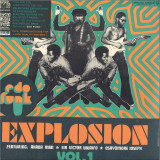
Analog Africa Presents Edo Funk Explosion Vol. 1, available on
2xLP/Gatefold LP with 20-page booklet / CD with 36-page booklet. It was
in Benin City, in the heart of Nigeria, that a new hybrid of intoxicating
highlife music known as Edo Funk was born.
It first emerged in the late 1970s when a group of musicians began to experiment with different ways of integrating elements from their native Edo culture
and fusing them with new sound effects coming from West Africa s night-clubs.
Unlike the rather polished 1980 s Nigerian disco productions coming out of the
international metropolis of Lagos Edo Funk was raw and reduced to its bare
minimum.
Someone was needed to channel this energy into a distinctive sound and Sir
Victor Uwaifo appeared like a mad professor with his Joromi studio. Uwaifo
took the skeletal structure of Edo music and relentless began fusing them with
synthesizers, electric guitars and 80 s effect racks which resulted in some of the
most outstanding Edo recordings ever made. An explosive spiced up brew with
an odd psychedelic note known as Edo Funk.
That’s the sound you’ll be discovering in the first volume of the Edo Funk Explosion series which focusses on the genre’s greatest originators; Osayomore
Joseph, Akaba Man, and Sir Victor Uwaifo: Osayomore Joseph was one of the
first musicians to bring the sound of the flute into the horn-dominated world
of highlife, and his skills as a performer made him a fixture on the Lagos scene.
When he returned to settle in Benin City in the mid 1970s - at the invitation of
the royal family - he devoted himself to the modernisation and electrification
of Edo music, using funk and Afro-beat as the building blocks for songs that
weren’t afraid to call out government corruption or confront the dark legacy of
Nigeria’s colonial past.
Akaba Man was the philosopher king of Edo funk. Less overtly political than Osayomore Joseph and less psychedelic than Victor Uwaifo, he found the perfect
medium for his message in the trance-like grooves of Edo funk. With pulsating
rhythms awash in cosmic synth-fields and lyrics that express a deep personal
vision, he found great success at the dawn of the 1980s as one of Benin City’s
most persuasive ambassadors of funky highlife.
Victor Uwaifo was already a star in Nigeria when he built the legendary Joromi
studios in his hometown of Benin City in 1978. Using his unique guitar style as
the mediating force between West-African highlife and the traditional rhythms
and melodies of Edo music, he had scored several hits in the early seventies,
but once he had his own sixteen-track facility he was able to pursue his obsession with the synesthetic possibilities of pure sound, adding squelchy synths,
swirling organs and studio effects to hypnotic basslines and raw grooves. Between his own records and his production for other musicians, he quickly established himself as the godfather of Edo funk.
What unites these diverse musicians is their ability to strip funk down to its
primal essence and use it as the foundation for their own excursions inward to
the heart of Edo culture and outward to the furthest limits of sonic alchemy.
The twelve tracks on Edo Funk Explosion Volume 1 pulse with raw inspiration,
mixing highlife horns, driving rhythms, day-glo keyboards and tripped-out guitars into a funk experience unlike any other.
Social Joy records is very pleased to present Burkina Azza's debut Album Wari bo - a musical tale that covers every aspect of Burkina Azza's values and world view. The album takes us to the very soul of Burkina Faso, giving us a taste of the deep connection of the artists to the beauty and culture of this country.
The Burkinabe collective, from Nayerina in the Djibasso region, was born from a lineage of Balafonist and Percussionist musicians called "The Griots", often referred to as a "living archive of the people's traditions". Wari bo was Produced in January 2020 on the brink of the coronavirus pandemic in Ouagadougou, after Label owner Guilhem Monin discovered an outstanding street performance via the African Drumming Facebook group. Two years later, this release is the result of a friendship and love of music that connects two continents and travels across borders, space and time.
One of the busiest keyboardists in Tel Aviv today, Yonatan Daskal plays with the biggest names in the local scene as a composer, producer and keyboardist.
His classical background combined with a love for synthesizers as well as a curious and open-minded musical vision make Daskal’s music such a deep, culturefusing and timeless experience. Daskal’s debut solo album and first release on
Raw Tapes titled ‘Romantican’ reveals a colorful, rhythmically driven universe of gentle atmospheric nebulas as well as more uplifting disco planets.
Created using skillful analog synthesis, sequencers, vinyl sampling and of course good old keyboard playing. Conceived and played by Yonatan Daskal.
Co-Produced by Yonatan Daskal and Rejoicer