The always superb Sounds Of The City comes through here with some freshness and newness here via their newly minted 'Sounds Of The City, Dark' series. It finds the French outfit Catalogue debuting on the label with a sound that brings a different perspective to the new post-punk movement. Their sound is a mixing pot of an array of different influences and what you get is music that will get you nodding to the grooves while your mind gets lost exploring synthetic elements, angular guitar riffs, robotic rhythms and lovely deep bass.
Поиск:deep groove
Все
Pink Blue Marbled Vinyl
Angelo is an EP, named after a car, featuring nine songs Brijean have crafted and carried with them through a period of profound change, loss, and relocation. It finds percussionist and singer Brijean Murphy and multi-instrumentalist/producer Doug Stuart processing the impossible the only way they know how: through rhythm and movement. The months surrounding the acclaimed release of Feelings, their full-length Ghostly International debut in 2021 which celebrated tender self-reflection and new possibilities, rang bittersweet with the absence of touring and the sudden passing of Murphy's father and both of Stuart's parents. In a haze of heartache, the duo left the Bay Area to be near family, resetting in four cities in under two years. Their to-go rig became their traveling studio and these tracks, along with Angelo, became their few constants. Whereas Feelings formed over collaborative jams with friends, Angelo's sessions presented Murphy and Stuart a chance to record at their most intimate, "to get us out of our grief and into our bodies," says Murphy. They explored new moods and styles, reaching for effervescent dance tempos and technicolor backdrops, vibrant hues in contrast to their more somber human experiences. Angelo beams with positivity and creative renewal _ a resourceful, collective answer to "what happens now?". Angelo the car is a 1981 Toyota Celica they got off Craigslist during their first stint in Los Angeles, where Murphy and Stuart have since settled. "Such a bro-y, `80s dude car, it's been super fun to drive around in a new town," Murphy says. "He's older than us, he's a classic, he's got a story." It is a spiritual vehicle with a cinematic appeal, first dropping them off in an alleyway for the scene-setting intro, "Which Way To The Club." The question is quickly resolved by "Take A Trip" as a cruising bassline mingles with crowd sounds, hand-claps, cuíca hiccups, whip-cracks, even a horse neigh. Brijean have found some club on this cross-dimensional trip - the kind of imagined space or chamber within one's self capable of "shifting a fraction of who you are," says Murphy. They wrote the track with the simple intention to be "as free as we could be," adds Stuart, likening the flip on the B section to a realm unlocked: "What if the world changed completely? You open the door to a new room." Next is "Shy Guy," a motivational anthem for the wallflowers among us. Murphy sets up the daydream: "We are in junior high, we're on the dance floor, what's going down, who is dancing, who is not, how are we gonna make them dance?" The narrator, the MC, hypes up the room as conga-driven rhythms bounce between languid synth and guitar lines. "Show me how to move...I feel something...I know you feel it too," Murphy sings sweetly, calling back to the opening lines of Feelings, and this time the audience chants it back. It is easy to picture Brijean performing this one - something they only got to do a handful of times until more recently, opening shows for Khruangbin and Washed Out, an experience they found informative. Murphy explains, "It was inspiring to be out there and let loose more. To see how people can expand their expression on stage gave me more liberty with how I viewed my musicianship. My role for so long was to be a backup percussionist, so why would I ever leave the drums, you know? But then after playing all these runs, you see these artists and realize you can, you have permission." "Angelo" and "Ooo La La" deliver the danciest stretch in Brijean's catalog to date. The title track adopts a deep house pulse replete with strings, hi-hats, and kicks. The latter opts for a funkier groove that foregoes verses in favor of warbled hums and extended breakdowns. What follows is perhaps the duo's dreamiest run, a comedown initiated with the honey-hued interlude "Colors" drifting into "Where Do We Go?", a tropicália reverie where Murphy contemplates the passage of time and space. It all culminates in "Caldwell's Way," a fond farewell to their Bay Area community - "a part of my life that I knew couldn't come back," says Murphy. Above shimmering organ sounds, lush strings, and the birdcall of their former neighborhood, she wistfully articulates the uncertainty of moving on by remembering the characters dear to them. There's the wisdom of their neighbor, Santos, who refused payment when helping them move out: "I'd rather have 100 friends than 100 dollars." And the song's namesake, Benjamin Caldwell Brown, a friend and club night cohort for many years. "I'm only miles away, maybe I'm just feeling lonely," the line resigns to warm nostalgia, and "Nostalgia" runs the closing credits to this healing and transportive collection.
Nicola Dal Sacco treats us to an acid-soaked quartet for his debut solo EP on Aquaregia, a tantalizing follow-up to the Italian producer's contribution to the Acid Analects VA series.
Setting the tone, the title track, "Wirrwarr", revs up with driving drums and swirling pads - a sunrise escapade along a mountain pass. As daybreak approaches, the breakdown hits, introducing warm beaming pads. On the second leg, the journey continues with "Gelato", a spellbinder that melds serpentine acid lines with a vintage flair, navigating hairpins and snaking through narrow hillside corridors; vertigo ensues.
"Parapiglia" continues the trip with an eerie and enchanting lowlight drive. Melancholic acid whines while lush ethereal pads swaddle; a haunting mist rolling over the road. A deep closer, "Linea" guides us down the final stretch through the foothills with a viscous groove and chilled out atmosphere; the final knock back down into first gear.
LNS and DJ Sotofett return to Tresor Records with The Reformer EP. This new record moves forward with a crystal clear, direct and controlled output, leaving their debut album "Sputters" as an end-mark of a sonic era. Here they evolve into a topography full of contrasts, where harsh digital artefacts, scanner sounds, and vocoder voices cast melodic colors across cold landscapes of club-ready electro.
"Reform" plunges deep into an electro sound splintered by binary bits and submerged pads that beckon a serene melody, which echoes and loops to entangle with mutant voices, noises and buzzes. "Plexistorm" leads with synthesized strings and arpeggiated acidic bleeps until a thick bass emerges, sounding almost like a long-lost Analord record. Heavily shapeshifting with eects processing, it proves primitive movements in dubbing are the perfect counterpart to this precise electro sound.
With "Electric Terraforming", the duo uncover charged energy sources required for life on another planet, as broad synth pads
and memorable vocoder harmonies draw this earworm to a close. Mighty washes of dub rule on "909 The Controller" as a skipping beat invites a slow, rippling melody and percolating reverberated synths.
The vinyl record has significantly dierent sonics to the digital release, and, exclusively, each side ends in a locked groove produced by DJ Sotofett.
Mammal Hands announce spell-binding new album 'Gift from the Trees', their fifth studio album, pointing to subtle shifts and exciting new departures for the unique trio
"We're at a point now where playing and writing together can sometimes feel almost telepathic, that as individuals we can tune in to a collective resonance..."
Mammal Hands fifth album 'Gift from the Trees' offers a fresh perspective on the unique trio's singular music. The first to be recorded in a residential studio, the band enjoyed the opportunity to go late into the night searching for a deeper, more organic experience, closer to both their writing process but also their trance-like live performances. While some of the music was pre-composed and had even been performed live, the band also enjoyed the opportunity to improvise ideas in the studio. Drummer Jesse Barrett explains:
We wanted to have a more immersive experience that felt closer to our writing process. One thing that was really important to us was feeling free to jam out ideas as they came to us. We're at a point now where playing and writing together can sometimes feel almost telepathic, that as individuals we can tune in to a collective resonance and just follow that thread where it wants to go. Sometimes it's something as simple as a rhythmic, textural flow, like in Sleeping Bear.
There was also a conscious decision to move away from the sound and ambiance of the recording studio, with the band opting to engineer the record with their go-to live engineer Benjamin Capp before mixing the sessions with Greg Freeman in Berlin. The idea was to try and capture more of the energy of the band's captivating shows, saxophonist Jordan Smart explains:
Considering the group of tracks we had, it made sense to try and capture this process as organically and honestly as possible, and so a change in studio environment felt like the right move to us. Some of the tracks have a raw joy and energy that came with being able to play together again after a long period of time of having been apart, and capture that feeling of just being happy to be in a room with our instruments altogether again.
Whereas for pianist Nick Smart there was also the chance to really go deep into the band's music:
The new studio environment really opened us up to different ways of working and thinking because we could record at any hour of the day or night. I think this allowed us much more freedom to try unusual ideas and push elements of the music to extremes because we had the time to really focus in on the detail and work on things without time pressure. With some tracks, we were trying to find the boundaries of our playing ability and push beyond that point. With others, it was just getting into the right mindset and putting as much energy and emotion into the take as possible.'
The Welsh environment outside the studio doors seeped into the music presented on Gift from the Trees, with two recording sessions (one in winter and one in the spring) bringing different moods: one bleak and wintery, the other more hopeful and bright – an energy that permeates through tracks such as Kernel and Dimu.
Gift from the Trees opens with wonderfully elevating The Spinner which grew from one of Nick's piano parts and was developed and arranged into a complete tune without losing the feeling of constant flow and motion. It is almost like a dance, with the interaction of different melody parts and the doubling of certain parts melding together and fitting into the overall energetic flow, while Jesse's drums are both floating and deeply melodic. Riser aims to capture the band's raw energy and intriguingly is influenced by both breaks and modern drum production but also minimalist classical composition. Nightingale features the band at their most delicate and lyrical – a band favourite it draws heavily on modern folk with a beautifully realised melody that came unforced to pianist Nick Smart before being jammed out together. It was recorded early one morning, bringing an extra light and brightness to this beautiful performance.
Another album highlight is Dimu which utilises one of drummer Jesse Barret's favourite rhythmic devices from the Tabla repertoire and draws inspiration from Indian, Greek and Arabic music as well as modern folk arrangements. Dimu starts with saxophone over a bed of drones and percussion and moves through many different sections that frame and present the melodies in unique ways. The beguiling, intimate Deep within Mountains aims to place you in the room with the band as they play; it was recorded late at night to capture a dreamlike, liminal ambiance. The piano solo really reflects this mood and energy while the tenor is some of the softest and closest on the recording. Elsewhere, the remarkable Labyrinth started with what Nick describes as "some weird recording on my phone from a soundcheck, where Jordan was playing some crazy sounding bass clarinet part and I quickly recorded him", giving birth to a captivating, complex slice of propulsive 'almost' contemporary classical that like so much of the music on Gift from the Trees really couldn't be any other band than Mammal Hands.
Finally, the album draws to a close with the glorious Sleeping Bear, a tune that was wholly improvised in the studio. Nick and Jesse entered a simple but 'weird' locked groove and Jordan improvises melodies over the top. The track came about without any planning or thought; it was one of those special things that came by surprise and the band felt offered the perfect ending to their latest gift to us all: a deeply enthralling album that captures so much of what makes Mammal Hands a special band while mapping out new routes and paths for their beautiful, beguiling music.
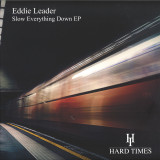
Its been some years since HARD TIMES dropped new music in our laps, but having kick started a new wave with March’s release of Steve ’Silk’ Hurley’s stunning ‘All I Need’, featuring Sara Garvey on vocal duty, the label follows up swiftly with more precision groovemanship.. this time from Hudd Traxx label boss and core HARD TIMES family member, Eddie Leader.
As a DJ, producer, promoter and label boss Eddie has, over a twenty five year career, become a standard bearer for UK House Music. His own productions have graced seminal labels including Classic, Robsoul, Plastic City, Morris Audio and Balance Alliance, while his own Hudd Traxx imprint has become a go-to for many a discerning disc jockey. Its roster boasts releases that feature Matthew Herbert, Rolando, Jovonn, Rick Wade, Agnés and More.
Fresh from remixing Hurley’s ‘All I Need’, Leader now looks to ’Slow Everything Down’ with four fresh jams of his own that all stay true to the Hard Times ethos of quality, deep underground sounds.
Preaching from the front is ’Stand Up’, with its warm groove, piercing piano chords and soulful sermon. So come on… Stand up, to get down. On ‘Gratitude Power’ a seismic kick drum and bass combo pave the way, garnished with keys, synth stabs, bongos and a sprinkling of vocal as the track winds things on smoothly.
‘Slow Everything Down’ is where its at. A calmer, warmer groove, built from raw beats, spoken word and glistening piano. Coolness personified. This is where we're at. Leader slows and closes with final cut ’To Me To You’, icing the EP to perfection with its drowsy and hypnotising keys.
HARD TIMES continue to deliver the good times.
Hell Yeah heads to Brazil and the cultured sounds of Pedro Bertho for a hot new 12" that features Mariana Gehring and remixes from Romain FX and My Friend Dario. The digital version includes two bonus cuts while the vinyl is the first to have all-new artwork by FJD.
Now based in France, inclusive party promoter Pedro Bertho’s music is a melting pot of sound that draws on his own personal heritage and a life spent digging for records. That means that afro rhythms, Italo melodies, rolling reggae, deep house, and plenty more all get mixed up into something new.
They have come on the likes of Cracki Records and always search out innovative ways to bring euphoria to the dance floor.
For the first tune, he works with Mariana Gehring, a Sao Paulo-based singer and composer influenced by new MPB and other signature Brazilian sounds like Forro, Maracatu and Samba.
Their excellent 'Tornei' is a mix of full-fat bass and sensuous vocals. Fizzing synths, percussion and FX bring the energy while Gehring arrives in the breakdowns to bring the spine-tingling soul. Romain FX is a scene mainstay, label head at fauve, boiler room veteran and has released on the likes of Kalahari oyster cult and many more.
His version is a retro workout with lush cosmic melodies and slinky grown-up grooves sure to get the floor full.
Next is 'Elephants au 5eme', a busy mix of analogue drums and hits, wild elephant trumpets and fleshy synths that bring unusual tropical heat to any party. The same track is remixed by label regular and new school Balearic boss my Friend Dario.
He plays with the vocals, layers in shimmering chords, and keeps things dubby to make for another of his signature grooves.
Everything eventually turns to dust. Everyone knows this, but few want to acknowledge that our time on this mortal coil is fleeting, preferring to remain in stasis, in hopes that "the end" will pass them by. Chicago trio FACS (guitarist Brian Case, bassist Alianna Kalaba & drummer Noah Leger) have been perfecting their brand of intense, cathartic post-punk over the course of four ever-evolving albums, beginning with 2017's "Negative Houses" thru 2021's landmark "Present Tense', which saw the trio dig deep into the gaping maw of a black hole & pulling back whatever debris they could grasp onto. Their newest "Still Life In Decay" comes as an addendum to the last album - a "post-event review" if you will. "Still Life In Decay" starts with a squall of white noise before collapsing into the band already locked into "Constellation"s lumbering groove, with Case's guitar a ghostly presence, appearing & disappearing in washes of gauzy feedback throughout the track. FACS have never been more locked in as a unit, and "Still Life In Decay" is a decidedly more focused effort. The apocalyptic chaos that defined their previous album "Present Tense" is waved away in favor of an examination of events with cumbrous clarity. FACS are a heavy band, but they don't necessarily FEEL like one (see side two's "Still Life", where Case's fluttering, melodic guitar lines are buoyed by the insistent, underlying pulse of the bass & drums). As a rhythm section, Kalaba & Leger dance & twist around each other like a double helix, forming the DNA of what makes FACS special. Collectively they approach rhythm from outside the groove as opposed to inside it, creating a lattice where Case weaves guitar lines like creeping vines, which makes the moments on "Still Life In Decay" where the band DOES lock in even more powerful. When the guitar punctures the lock-step swing of "When You Say", it hits like a hammer. Case utilizes his lyrics like a person suffering from anterograde amnesia; repeating phrases & holding onto old memories in a desperate attempt to avoid the slide into oblivion. Freeform poetic missives touching on themes of resignation, cynicism, class warfare, and a search for identity & meaning in a crumbling society; A primal desire to hold onto anything in a post-pandemic barrage of sensory overload. The album is a decidedly local affair; recorded once again at Chicago's famed Electrical Audio by renowned engineer Sanford Parker & mixed at his Hypercube Studio in Chicago's Ravenswood neighborhood & mastered by Matthew Barnhart at Chicago Mastering Service.
Belgian junk jazz trio schroothoop (which translates as 'junk yard') bring together multi-instrumentalists Rik Staelens (wind & string instruments), Timo Vantyghem (bass & thumb piano) and Margo Maex (percussion). Their new album called 'MACADAM' will be out April 7 via Sdban Records, home of many strongholds in the lively contemporary Belgian jazz and groove scene.
In 2020, schroothoop first emerged with their much-acclaimed and infectious debut album Klein Gevaarlijk Afval (Small Hazardous Waste). "Music on homemade instruments with a surprisingly good result" (De Standaard). "Schroothoop show that material limitation can be liberating and that sometimes the source of new sounds is just old junk."(Written in music). "We assure you that this "scrap heap" is worth gold!" (Le Grigri).
On their second album, to be released on April 7, schroothoop explore the vast sounds of discarded objects found on the macadam streets of Brussels. Wooden crates turn into guitars and lyres. Scrap metal becomes a thumb piano, a cimbalom, or percussion bells. Their compelling collection of semi-improvised songs is born out of several fruitful residencies and live performances during which Margo Maex, Rik Staelens and Timo Vantyghem dive deeper into the possibilities and unique timbres of their DIY instruments.
The junk jazz trio find inspiration in traditional Afro-Cuban and North-African rhythms, New Orleans second line grooves, and Arabic Hijaz scales. On Macadam, the band also explore the realms of electronic music, not shunning hints of drum and bass, dub riddims and ambient soundscapes, using pitch shifting delays or gauzy reverbs. The album delivers a mesmerizing trip through the most diverse capital of Europe, mixed and post-produced by none other than sound wizard Dijf Sanders.
The trio originally met in the Brussels street orchestra scene. One night they found themselves jamming on trash cans, buckets and other illegally dumped materials. Soon after, they started building their own DIY instruments from street trash. Imagine flutes made out of pvc pipes, a scrap metal drum kit, thumb pianos made out of old kitchen knives, a tin can violin, worn-out cutting discs as gongs, and a washtub bass. Delivering their own brand of "junk jazz", Schroothoop literally gives junk a second life by immortalizing a whole range of lost and found objects through music. The Brussels-based group effortlessly incorporates jazz, Northern African music, and Afro-Cuban rhythms, resulting in a danceable and hypnotic trip through the city's melting pot.
Belgian junk jazz trio schroothoop (which translates as 'junk yard') bring together multi-instrumentalists Rik Staelens (wind & string instruments), Timo Vantyghem (bass & thumb piano) and Margo Maex (percussion). Their new album called 'MACADAM' will be out April 7 via Sdban Records, home of many strongholds in the lively contemporary Belgian jazz and groove scene.
In 2020, schroothoop first emerged with their much-acclaimed and infectious debut album Klein Gevaarlijk Afval (Small Hazardous Waste). "Music on homemade instruments with a surprisingly good result" (De Standaard). "Schroothoop show that material limitation can be liberating and that sometimes the source of new sounds is just old junk."(Written in music). "We assure you that this "scrap heap" is worth gold!" (Le Grigri).
On their second album, to be released on April 7, schroothoop explore the vast sounds of discarded objects found on the macadam streets of Brussels. Wooden crates turn into guitars and lyres. Scrap metal becomes a thumb piano, a cimbalom, or percussion bells. Their compelling collection of semi-improvised songs is born out of several fruitful residencies and live performances during which Margo Maex, Rik Staelens and Timo Vantyghem dive deeper into the possibilities and unique timbres of their DIY instruments.
The junk jazz trio find inspiration in traditional Afro-Cuban and North-African rhythms, New Orleans second line grooves, and Arabic Hijaz scales. On Macadam, the band also explore the realms of electronic music, not shunning hints of drum and bass, dub riddims and ambient soundscapes, using pitch shifting delays or gauzy reverbs. The album delivers a mesmerizing trip through the most diverse capital of Europe, mixed and post-produced by none other than sound wizard Dijf Sanders.
The trio originally met in the Brussels street orchestra scene. One night they found themselves jamming on trash cans, buckets and other illegally dumped materials. Soon after, they started building their own DIY instruments from street trash. Imagine flutes made out of pvc pipes, a scrap metal drum kit, thumb pianos made out of old kitchen knives, a tin can violin, worn-out cutting discs as gongs, and a washtub bass. Delivering their own brand of "junk jazz", Schroothoop literally gives junk a second life by immortalizing a whole range of lost and found objects through music. The Brussels-based group effortlessly incorporates jazz, Northern African music, and Afro-Cuban rhythms, resulting in a danceable and hypnotic trip through the city's melting pot.
A1 - French artist aka Dylan Dylan hits first on the record with energetic groove, breaks and deep synths - that's how we do it!
A2 - HATT.D is a Belgian music maker. A truly moving track with a soothing bass and both broken and straight rhythms. The tune may conjure up images of tropical flora and fauna.
A3 - Dawn Again, a faraway Australian artist, hits with the charming track “I’m Like a Bird" - a minimalistic style house tune with catchy rhythms.
B1 - Manhood is a collaboration of two Russian artists, Denis Kazakov and Lachetto.
The boys wrap us in delicate breaks with cosmic sounds, as if to remind us that we are not alone in this universe.
B2 - German musician Palmate continues the vibe with his dreamy and slightly lo-fi deep house "departure," which sounds like you're going home with happy recollections after a fantastic time with old friends.
B3 - The conclusion of this story will be presented to us by Dj Bigspin, a musician originally from France who now lives in Copenhagen.
He reminds us with his melancholic deep acid hous
Takeshi Fukushima, better known as Takecha, is an electronic music artist from Shiga, Japan. This producer with tons of experience has been creating music since the 1980s and running the label “Groove with Machine” since 1995. His expertly crafted sound is deep and thoughtfully layered, blending elements of electronic besides ambient music to create a unique and captivating story. From the pulsing rhythms and soaring synths to the immersive melodies and ambient soundscapes, makes it a must-discover to any fan of electronic music.
Sakskøbing is proud to celebrate its 20th release anniversary and welcome Takeshi’s latest offering, a collection of deep electronic music that is sure to captivate and entice. With his technical prowess and musical vision, Takecha has crafted a sonic journey that is both thought-provoking and mesmerizing.
Following in the footsteps of "Mind Palace" and "Lost Spirits", respectively issued in 2018 and 2021, Hidden Empire return to Stil vor Talent with their eagerly anticipated third studio full-length, "Momentum". Going the same route that came to define their sound throughout the years, Branko Novakovic and Niklas Schäfers cook a savvy mix of deep electroid flavours and prog techno magnitude which flourishes in the long-playing format. Orbiting the frontier between proper no-nonsense, floor-focussed effectiveness and a trademark exploratory take on electronics, Hidden Empire here delivers one of their most accomplished slices to date, which not only spans the largest span of their many-faceted influences, from tribal anchorage to hypermodern escapology, but breathes a truly epic wind into it.
Draped in luscious, silken envelopes and easternmost ambiences, "Dawn" gets the ball rolling on a mystique-imbued note, halfway meditation-friendly material and square-shouldered club busting wares. Moving into Afro-infused house grounds, "Modesty" finds Branko and Niklas heading for the deeper end of the spectrum, as they pull out a clinically precise blender of rattling percussions, opaque incantations, lush synth swashes and verbed-out machine talk, tailored for nightly boogie rituals in the forest. "Avalanche" opts for a more brooding, deadlier approach. Cutting its path away from prying eyes, this one finds Hidden Empire pulling the stealth weaponry to absolute hypnotic effect - perfect for serious in-between peak time business with its thick, thriller-like tension, mist-shrouded atmosphere and surgical focus. Featuring Felix Raphael on vocals, "Who We Are", is a pop-influenced chugger that perhaps best defines Hidden Empire's ambivalent style, both hi-NRG and innervated with a melancholy that infuses down to the bass and most functional elements. Geared up for big-room traction with its seesawing synths and clinical drumwork, Raphael's moving timbre does more than offer a sensible counterpoint to the track's overall sturdy backbone, it takes it to a whole other dimension completely.
"Repeat The Good" ft. Wolfson balances out a fast-ticking groove with those subtle melodic lines Hidden Empire champion to astounding vibrancy, offering a particularly satisfying glimpse into their vortical imaginarium, whereas "Last Call" has us journeying to straight out Moroder-esque territories, flush with the aptly configured palette of fuzzy space disco bass, fast-paced Italo churn and vocodized talk for good measure. All in breaks and chopped-up euphoria, "Vivid" runs the hoodoo down in muscular fashion and with impressive levels of energy throughout, all set at cranking up the heat one notch further, while "Rebel" provides us with the kind of rough-around-the-edges EBM horsepower and neon-clad synth engineering that'll get the basement in a state of alert. Encompassing all of the pair's idiosyncratic merger of styles - from pop-laced Italo to spaced-out techno wares, through jagged motorik and heavily mecched-out jacking house, "Alright" shows off Hidden Empire's wide arsenal of pyrotechnics under the most compelling of lights. A more openly jagged and quirky weapon that hatches into a full-fledged solar number around the half, "Momentum" roars up the club's highway at full throttle, proving a formidable asset when it comes to plunging dancers into a state of weird, left-of-centre euphoria.
A stroboscopic eclipse is predicted as "Dark Sun" enters the room, deploying its obscure wingspan over the ravers, not quite a bad omen as it lets more light in with every bar, its brittle piano lines and heart-wrenching vocals cutting a path into the crowd's pulsating hearts. Graceful as Hidden Empire's music can be, a moment of utter exhilarating beauty. "Savasana" wraps up the voyage with a pure slab of cyphered 4x4 seduction, as an ASMR-like voice guides us across the soul-questioning haze that blankets our pathway onto a luminous finale. A piece of elusive nature, clearly designed for the club and yet telling a tale of off-piste initiation through twelve fascinating movements, "Momentum" will undoubtedly etch on the listeners' mind as one of the German pair's most strikingly powerful emanations.
Download:
1. Hidden Empire - Dawn Interlude
2. Hidden Empire - Modesty
3. Hidden Empire - Avalanche
4. Hidden Empire & Felix Raphael - Who We Are
5. Hidden Empire & Wolfson - Repeat the Good
6. Hidden Empire - Last Call
7. Hidden Empire - Vivid
8. Hidden Empire - Rebel
9. Hidden Empire - Alright
10. Hidden Empire - Momentum
11. Hidden Empire - Dark Sun
12. Hidden Empire - Savasana
13. Hidden Empire & Felix Raphael - Who We Are (Instrumental)
Hot on the heels of last year’s Mermaids reissue retrospective, Hull’s deep listening house forerunners return: this time revisiting a pair of originals as well as previously unreleased versions.
It’s testament to the depth of feeling that Steve Cobby and David McSherry can conjure, that these tracks sound as potent and impactful as they did when they first came out - and not just for the dance. Throughout their 30+ years, the Yorkshire duo have produced ten albums amid many more collaborations, and transformed the remix into an artform, putting their fingerprints on everyone from Busta Rhymes to The Orb to Radiohead.
This EP collection finds them at the full scope of their powers: from disembodied mood music, to tripped-out dubby beats and raw house sessions for the club. The title track Subtle Body sounds like it drifted in through the window in the middle of a snowy night. Its layered chimes, looped delay feedback and floaty chords (played on a Wurlitzer Electronic Piano that Steve bought from Bill Nelson), mark it out as an enduring piece of ambient music, and a favorite for film-makers, able to soundtrack both haunted memories and afterparty comedowns with finesse. It precedes an unreleased instrumental version of Nightfall from Fila Brazillia’s 2002 album Jump Leads (named Mixmag’s chill album of the year), and as an instrumental, the chunky electro bass and mix of ephemeral tones and bird-like chirrups are brought clearly into focus. The attention to detail is what makes Fila Brazillia’s sound palette so rich, and Nightfall a certified smokers’ anthem.
On the B side, the tempo and temperature rises, and we’re treated to The Light Of Jesus, a favorite from Fila Brazillia’s 1994 debut LP Old Codes: New Chaos. Atop a bumping house groove, the song weaves together smooth organ pads and electrified guitar licks with syrupy bass and gospel-tinged exaltations from Charles Bukowski. The EP rounds out with Room ‘96, a live house jam from Hull’s Room nightclub, and a veritable time capsule back to the halcyon ‘90s rave days, when the lights were still on, everyone was home, and anything seemed possible.
The songs here on Subtle Body might be a window into a time long past, but they remain in the present: and as long as bodies seek pleasure, and dancers want to keep going til sunrise, Fila Brazillia will endure, and soundtrack those moments for us all to get lost in.
The compilation "Get Together" enters a new round and gathers four artists to take a journey into electronic music together again. Maxie König opens the gathering with warm basses and sparkling
chords in her track "TenTen".
The unmistakable groove immediately carries us away and drives us straight onto the dance floor, where the no less deep track "Dezest" by Dip resounds through the speakers. Here we float on the smooth strings of the recurring sound waves, which one can hardly resist. Ana Antonova takes up this beautiful flow in her fascinating track "Naked Neighbour" and adds jazzy melodic elements that are interwoven with original sounds to create a fabulous, versatile sound story.
Finally, Cie picks up the bass and groove again and reflects the wonderful atmosphere of this gathering with the harmonic strings in "Haus Im Turm", making you want to put this record on „again“ and „again“.
A four track full colour special edition vinyl from Mella Dee.
The lead ‘Riptide’, features original vocals from synth-pop trailblazer and founder of New Order/Joy Division Bernard Sumner. A slice of euphoria streaked with melancholy,
'Big Eff Off Groove' was the first track of the EP to be released as a single, following on it's massive Summer of 2022 where it garnered support across some of the biggest festival stages and clubs internationally. Mella Dee speaking on the record describes it as “Exactly what it says, heavy hitting no frills groove, complete with full on dubbed out effects. Enjoy.”!
Followed up with two cuts of rolling house music on track 'Find Love Yourself', the 'Deeper Love Mix' explores Mella Dee’s affinity for the murkier corners of dance music, whilst the original mix is a deep-in-the-dance groover paired with a haunting Little Dragon vocal sample.