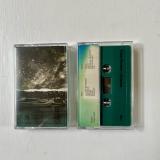
Zürich-based musician Angelo Repetto returns with his new album Between Worlds: Interference, released on Subject to Restrictions Discs. The record is the result of a unique collaboration with Argentinian visual artist Clara Grabowiecki, extending their immersive live project Between Worlds into a sonic and tangible form.
«This album is a continuation of the deep conversations Clara and I had about concepts of perception that led us to question silence, time, transcendence, and the future», says Repetto. «It’s not about finding answers, but about opening spaces where sound, image, and emotion can flow freely.»
Between Worlds: Interference oscillates between hypnotic rhythms, kraut-inspired synth layers, and psychedelic atmospheres – hallmarks of Repetto’s style that listeners may recognize from earlier releases such as Sundown Explosion and Kamiokande. At its core it is an invitation into an open dimension where disciplines, experiences, and realities dissolve into one another. It is both a deeply personal statement and a collective journey into new perceptual spaces.
Buscar:deep image
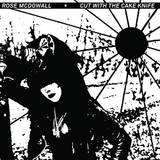
Cut The With The Cake Knife was recorded by Rose McDowall in 1988/89 following the break up of her group Strawberry Switchblade. Produced with the aid of several musicians in several studios, the album features songs written for the fabled second Strawberry Switchblade album. More importantly perhaps it showcases the honest, direct and life-affirming songs of one of the greatest unsung songwriters of the modern pop era at a tumultuous time in her career.
Tibet opens the set and could be one of the best pop songs you've never heard. The innate sadness of the songs' content - the loss of a friendship, impending sorrow - is heightened to heart-melting level by McDowall's pop nous and melodic sensibility. Choruses and hooks are everywhere on Cake Knife, from the outsider take on stadium 80s pop in Wings Of Heaven to the spiraling, ecstatic So Vicious, a glorious anthem that highlights the human fragility in McDowall's vocal performance, an instrument that has never lost the naïve purity it first exemplified in Strawberry Switchblade's early 80s recordings. The centerpiece of the album, the title-track, is the greatest Switchblade pop chart hit that never was. Like the veiled melancholy of her former group's hits, Cut With The Cake Knife hints at a darkness beneath the gloss, a darkness that saw McDowall delve into more esoteric territory with her subsequent recordings and collaborations. Cut With The Cake Knife serves as the bridge between the pop music McDowall had been making with her friends Jill Bryson, Lawrence from Felt and Primal Scream to what became a more extreme, deep sound informed by neo-folk and post industrial music.
Rose McDowall's role in the canon has always been one of an outsider. Beginning in Glasgow's East End in the avant proto-noise group The Poems, achieving fame briefly in the 80s and then disappearing into counter-cultural folklore, the emphasis in the internet-age has been skewed towards her image and cultural significance. Unseen to many, her solo work, her groups Sorrow and Spell and her collaborations with a whole host of underground luminaries have still touched lives. As McDowall elucidates: 'They're real sad songs, about real life. I've had people come up to me to say I'd connected with them and helped them. I remember a gig in America when we made a whole room cry. It was bizarre. A couple at the front of the stage started crying and then these two boys beside and suddenly everyone was crying. And I thought, "that's power."
Night School's issue of Cut With The Cake Knife includes unpublished photographs, extensive sleeve notes from Rose McDowall and 2 bonus tracks culled from the bootleg 7' 'Don't Fear The Reaper.' First vinyl pressing is Clear w/ Black swirl; 500 only / has DL card and booklet, with a poster
CD has extensive booklet and is packaged in anO-Card.
Hanagasumi, or "flowering haze," is a Japanese term that poetically describes the smoky, blurred appearance of numerous cherry blossoms visible from a distance. This image is often compared to a floral mist or fog. Through this word, the Japanese convey the visual effect created by a large number of flowers forming a soft, diffused, and ethereal picture. Such a description beautifully resonates with the musical palette of the new release. Introducing the long-awaited album Agera by the mysterious musician Jon'Smu. The record combines elements of classic deep house and ambient music, creating a unique atmosphere and the author's distinctive signature. The album features 8 stunning tracks, carefully selected and compiled into a cohesive story. A few words from the author: "This album, spanning a vast timeline of creativity, is about how important and interesting it is to be in motion and in constant search of something new. The recordings presented cover a significant interval of my musical journey through the diversity of genres and sound experimentation. At the core of the music lies Nature - it is the primary source of inspiration for me, and Action is a key moment of life for everything in nature. A wide range of instruments was used in the recording process, whether fully digital compositions or those featuring vintage analog instruments. I hope my love for an immense variety of genres is reflected in this album and brings joy to the listeners."
The electronic producer Franz Kirmann returns to Bytes for his eighth solo album. The “Almadies” are long wooden boats used by Senegalese fishermen. It is also the name of the neighborhood where Kirmann grew up, in the suburbs of Dakar, Senegal, near the Atlantic Ocean. "These new compositions are the result of sound experiments conducted over the past few months and reflections on the concept of mind-constructed geographies," Kirmann explains. "The way memories and souvenirs shape an image of a place or country that is part reality, part fantasy, part cliché, yet also deeply personal. This experience is influenced by education, social background, history, and other socio-economic factors. " The ten tracks are crafted from collages of electronic sounds blended with field recordings from various places Kirmann has visited — from Dakar to the Caribbean, as well as London and Paris. His aim is to blur the line between electronically generated sounds and real soundscapes, creating music where it becomes difficult to distinguish the real from the constructed. All the sounds on the album were produced using synthesizers and field recordings. No drum machines, percussion or traditional acoustic instruments were used. Influences include Brian Eno and John Hassell’s Fourth World, Vol. 1: Possible Musics (1980), described by Hassell as "a unified primitive/futuristic sound combining features of world ethnic styles with advanced electronic techniques" , which also works in the context of Almadies. Another big influence was Ariel Kalma’s Le Temps Des Moissons (1975) as well as artists including O Yuki Conjugate and Robert Aiki Aubrey Lowe to Susumu Yokota and Michael Banabila.
- A1: Hopeful Color Feat Amaru
- A2: Moula Si
- A3: Dumble Face Feat All My Cousins
- A4: Lonely Bromance
- B1: Six Figures Check Feat Tora Meishi
- B2: Deep Breath Feat Goldie B
- B3: Cheval De Troy
- B4: On En Était Là Feat Ppj
- C1: Ampex Both
- C2: Shanti Flower
- C3: 3Rd Date
- D1: Attente Instable Feat All My Cousins
- D2: Green Sphere
- D3: So Power
Mangabey presents “Hopeful Color”, his debut album, set for release on October 10 on DSP and October 31 on vinyl, via Cracki Records !
Fourteen tracks composed over nearly two years, blending the polished house of his early days (Moula Si) with genres such as Bicep-style electronica (Ampex Both), punchy acid (Attente Instable – Green Sphere), alternative R&B (Dumble Face), hip-hop (Six Figures Check), and neo-soul (Hopeful Color – Deep Breath).
The album reflects Mangabey’s sonic curiosity: between hypnotic grooves, percussive rhythms, and atmospheric flourishes, he creates the perfect bridge between club music and introspection. A generous record in the image of the artist himself, it multiplies collaborations to complete this vividly colorful patchwork of influences, with contributions from Ghanaian collective ALL MY COUSINS, Brazilian-Parisian group PPJ, producer and DJ Goldie B, and Franco-Congolese singer Amaru — each adding to the album’s rich and ever-evolving identity.
At the crossroads of genres and influences, Mangabey’s debut album showcases his multifaceted talent and his ability to turn each track into a distinctive sonic experience.
Western Australian label Hidden Liaison Recordings returns in 2025 for their second release. This EP kicks off with French producer Robotnik3000's deep, techy piano-laden jam. Local underground producers round out the rest of the EP, starting with sn33ze's blippy, dubby "Siofra River". On the B-side, things take a dark electro turn with Late Night Protocol's scifi-esque "Animus." Label-owner Ian Daniels closes the release with an ambient piece and the upbeat 2step "Soft Image." An amazing variety of electronic productions drawn from the Australian underground.
- A1: Running To The Nearest Body Of Water
- A2: Perfect & Learning
- A3: I Could’ve Cried
- A4: Umlaut
- A5: Windows
- A6: Seven Less Functions (Feat Chloë Lestage)
- A7: Song | 6
- A8: Luca’s Song
- A9: Signs
- A10: A Wish Slanted
- B1: Storytime
- B2: The Primate
- B3: Texas Sundial V1
- B4: Quick Before Something Drastic Happens
- B5: Better Now
- B6: Uptown Lovebug
- B7: Talk / Pleasure
- B8: Cardinal
- B9: Window Seat
- B10: +Ad
For its second anniversary, Samba Jean-Baptiste’s 2023 LP, ‘Cardinal' arrives on vinyl and CD. Two years on from its original release on Samba’s own AM Radio imprint, this physical release via Scenic Route Records celebrates an album that’s quietly built a devoted following for its intimate songwriting, cinematic arrangements, and deeply human detail.
This edition features alternative artwork by Rafi Goudy and, for CD buyers, a 32-page lyric booklet featuring images captured by Samba himself.
An intimate, richly textured record that’s grown into a modern cult classic, ‘Cardinal’ stands as a deeply personal snapshot of a singular artist - now a tactile home experience.
Milian Mori shares his deep interest in combining mathematics, geometry, and data with emotion, dance, and fulfillment: technology meets nature, binary meets fluids, algorithm meets spirituality, dualism meets triality, machine meets human, randomness meets self-similarity.
His second album, »Triality«, consists of 16 tracks and is being released via raster as a double LP vinyl, CD, and digitally. Composed to be experienced seamlessly, the 53-minute-long album can be listened to from beginning to end like an audiobook, with no pauses between tracks, creating a continuous sonic experience.
Triality explores the ›unspeakable third in the second‹—a quality that is present everywhere but remains immeasurable. This concept strongly influenced Milian Mori during the composition of the album. In his live performances, he attempts to visualize this unique relationship through the strobe light, which exaggerates the interplay between light and darkness, creating a non-binary space between 0 and 1. The album can be experienced like a film without images—a film that speaks of a vision yet to unfold.
Devianza, leading artist and owner of the label, returns to production by launching a new series of single-sided vinyl releases, each featuring only two tracks. The first instalment is a sonic catharsis rising from the very depths of a generous land, abundant with new seeds ready to sprout.
‘Le Piante di Elena’ is a dreamlike homage to a primordial world — untouched, pure, and still fertile. A tribute to a newborn bearer of the most radical values of a necessary humanism: a call to return to nature in its most spiritual and purest form. Devianza appears to be evolving into a higher, more spiritual dimension, where spirituality itself becomes the guiding force behind his musical production.
The single side opens with ‘Betullae’, a hypnotic ride between deep and leftfield, characteristic of Devianza’s sound, but this time enriched with an Indian tonal and modal flavour. Forest landscapes are traced by piano motifs that evoke interstellar journeys among endless birch trees.
‘Sunflower Sunset’ continues the hypnotic drift with a melodic crescendo that conjures the image of a sunflower field bathed in the warm glow of a summer sunset without wind. Here, where everything stands still yet everything is, this eight-minute piece becomes proof of the rarefaction of time — an instant that, though fleeting, feels infinite.
For fans of: Donato Dozzy, Voices From The Lake, Luigi Tozzi, Claudio PRC.
Related labels: Spazio Disponibile, Hypnus, Semantica, Silent Season.
Acclaimed Swedish multimedia artist and electronic music visionary TOBIAS BERNSTRUP returns with his highly anticipated new 7th studio album, “Shadow Dancer”, on German indie label Nadanna Records.
Known for his fusion of visual art, retro-futuristic aesthetics, and Italo-inspired synthpop, BERNSTRUP’s latest offering dives deep into the shadows of the dancefloor—where desire, danger, and digital nostalgia collide. “Shadow Dancer” marks a bold evolution in BERNSTRUP’s sound, channeling pulsating analog synths, icy vocal hooks, and cinematic atmosphere into a darkly euphoric collection of tracks. The album explores themes of identity, transformation, and nocturnal seduction, blending BERNSTRUP’s signature 1980s stylings with a sharply contemporary edge.
“This album explores the tension between appearance and reality—how we perform identity, desire, and memory in a world flooded with simulation,” says BERNSTRUP. “It’s both a personal and cultural reflection, rooted in the shadowy edges of nightlife, surveillance, and performance.”
Standout single tracks like “Chiaroscuro”, “Legend”, “And The Smile” and “Jackie 60” showcase BERNSTRUP’s unique ability to fuse melancholic nostalgia with dancefloor-ready energy. The album’s visual aesthetic is just as striking, featuring dystopian glam imagery, gothic noir, and sleek, gender-fluid costuming.
Originally released following his acclaimed sophomore album, HYBRIDISM finds Ecuadorian producer Nicola Cruz at the height of his exploratory powers. Now reissued on limited editon green vinyl, this expansive EP re-emerges with renewed relevance—blending North African rhythms, ethereal Persian motifs, and vocal fragments that evoke both ancient traditions and imagined worlds. A contemporary take on global exotica, HYBRIDISM is a vital entry in Cruz’s ever-evolving sonic journey.
'Aima’, named after the refrain sung by Igbo girls from Nigeria, creates the illusion that you’ve dusted off a lost LP. The aesthetic details recall expertly produced French exotica from the 70s, an overall feeling of warmth and character rarely pulled off with such panache.
‘Naeku,' in Cruz’s words, is "a sorrowful song in minor tonalities, but with a warrior energy, strength and forward vision: a soul departs, but a new one arrives in the name of Naeku, a maasai child. Not all grief needs to be a suffering; a feeling which I can relate to the place I come from with a Quechua word: Llaquilla - triste, pero feliz (sad, but happy). As always, the 303 adds that heart touching feeling.” If there’s a template for Multi Culti’s ethos, Cruz has synthesized the formula: Masai lamentation filtered through Quechua wisdom with a touch of 303 for the soul.
'Drom Tradisie' is a nostalgic vignette that captures the fantasy of a scenic horizon on a lost beach, a portrait done with the FM domain of synths that somehow associates with tropical imagery.
'Third Eye Dub’ takes things deeper, exploring the fractal realm of concentration, a point where the Oud (played by Nasiri) acts on the pineal gland. This inward journey through the cavernous depths of the subconscious sails on a smooth modular groove that transports the listener across this psychic expanse, a filigree of Persian harmonies (in Shur, to be exact) tracing outlines in the dark.
Finally, 'Kawe’s Dream’ ventures even further into the imaginary spaces of the mind. It is an aural reconstruction of the Tibetan Bardo Thodol, or ‘Book of the Dead’, a sacred text that guides the spirit through the passage out of the body. In Nicola’s words "To paint that depth, I had these Tibetan chants in mind, that I ended up crafting with Ableton's vocoder over a piece of Ayan’s vocals (sung in a made-up language). A few notes, and it gave the gravity I was looking for in the song.” Stuff that only a producer as capable as Cruz could pull off.
Hybridism’s five tracks are sonically diverse, yet all possess an ephemeral quality, a pastoral, transitory feeling that travels through the music - we listen to the sounds pass us by, we might even catch a hook or two, but the feeling is of sand running through our hands, deep, elusive, beautiful.
Like a metaphor for life, the progressive sounds of « Tree of Life » evoke the image of a tree that never stops evolving and growing. With its deep and captivating melodies, Nurse Erica takes us on a cosmic journey to the outer edges of Trance and Progressive House.
As its name suggests, « Being Trance » brings together all the elements of a Trance classic: soaring melodies, spacey leads, and groovy percussion. It’s the perfect introduction to the first side of the vinyl, a metaphor for the birth of the tree.
« Do My Stuff (Ears in Space Mix) » picks up right where the opening track leaves off. Striking a balance between dreamy and nostalgic, its deep bass and driving percussion lay down the rhythm, while the airy melodies scatter like autumn leaves.
With « Take The Heartbreak », Nurse Erica explores a universal rite of passage. The first half of the track, broken and introspective, gradually gives way to a brighter second half : a glimmer of hope for every broken heart.
And with spatial vocals and cosmic atmospheres, what better way to close the journey than with the title track « Tree of Life » ? In this piece, Nurse Erica blends Trance-infused melodies with Progressive House percussion, enriched by luminous, nostalgic piano notes, like the blossoming of a tree. Deep.
Gradually, the latest album by Julien Mier, is a sonic journey that delves into the transitions of life, identity, and the blurred boundaries between art and personal growth. With a trilingual brain, Mier reflects on how language shifts have shaped his sense of self throughout his life and the music that he writes. Gradually is his exploration of shapelessness—an urge to break free from rigid musical genres and get closer to his most fundamental expression. The album is composed of nine tracks, each representing a distinct cultural and linguistic influence, all tied together by the theme of gradual evolution.
The first section, Ciel, Soleil, and Espace (French for Sky, Sun, and Space), draws on Mier’s French heritage, evoking the feeling of childhood memories bathed in a warm, nostalgic glow. This fluid, atmospheric section mirrors the soft, ever-changing air, symbolising a time of pure, untainted intention. It feels like a hazy, sepia-toned dream, as fleeting and elusive as the scent of an old friend. The gentle flow of the music mirrors the flow of wind, effortlessly shifting from one element to the next, a reflection of the innocence and clarity of youth.
The second section, Steen, Zee, and Zand (Dutch for Stone, Sea, and Sand), channels the influence of Mier’s childhood in a small Dutch dune village. These tracks are grounded in the hard-edged textures of electronic dance music, a genre that introduced him to a world of rhythm and movement. With a sonic palette of blues, greys, and more defined shapes, this section captures the solid, enduring forces of nature—earth, water, and stone. It’s a sonic landscape rooted in stability, a foundation from which everything can grow. The tracks build from the fluidity of the first section into more structured, rhythmic territories, mirroring the natural transition from childhood innocence to the discovery of deeper, more grounded musical influences.
The final section, Scrap (a collaborative track with the Japanese producer Daisuke Tanabe), Soil, and Spark, dives into the exploration of the world beyond familiar borders. Mier’s relocation from the Netherlands to Australia in 2016 is reflected in these pieces, which grapple with the contrast and complexity of different cultures and environments. These tracks are tinged with rust-red hues and a sense of eroded beauty, evoking a more fragmented, distorted view of the world. The music here is marked by tension, conflict, and the erosion of once-solid forms—symbolic of the digital and ecological storms that shape our modern existence. The closing piece, Spark, signals a new beginning, a hopeful initiation into the cycle of renewal.
The album artwork for Gradually is a conclusive visual representation of this journey, captured in the final frame of an analog film roll that began in the Netherlands and concluded with an image of the streets of Sydney, Australia—a perfect metaphor for the album’s narrative of gradual transition and discovery.
I turned the page and will never forget what I then saw.
The fountain pen scratched against the paper, whistling like fur on an abandoned tire in the
middle of the night at the centre of the universe in the core of whatever it is I’m trying to believe.
I am a patient human and I live and breathe. I know this for sure.
I read about a whispering stillness of the Stadsnacht as my blood levels gradually even out again. Beneath the ink, the words take shape. This is a secret correspondence with the Book of Change – a dialogue not meant for eyes or ears, but for the soul. Are you still with me?
The Snake Rope tightens, its Coils Dive into the deep well of patience, where waiting is an art, a
dance with the unseen. The Scientists Say we should measure, predict, contain—but here, in
the shadow of the deepest of nights, the only truth is the Celebration of Ignorance. Love is the
force that binds as it untangles the invisible thread that refuses to sever. The next page quotes the mystical figure Daim: “Never Dissever Us.”
There, in the dawning light, the Dageraad reveals the Icequeen in her frigid throne, the Topiary Man standing guard in his sculpted silence. In this quiet landscape, I wait. I continue to wait, for I have good fortune on my very hands.
If You Won’t, I Will.
Can we exhibit the power to possess conformity? Can we redeem the benefits of crossing the water? Yes. The choice, the act of breaking through the barrier of convenience, is both a burden and a liberation.The words swirl, abstract and concrete, like action and inaction. The Book of Change is a paradox to puzzle over.
The evening cool rests its shoulders on my fluffy neck. I inhale as my pen lifts itself from the
paper once more, shedding ink as though it were tears of joy. I know that I have touched the
edge of something vast, something that moves beyond the grasp of reason into the heart of the
I Ching, the ever-turning wheel of change. This is the correct orientation. This is the vivid
imagery of clouds falling from the heavens and into our laps. This was never meant for your
ears. This was meant for you to feast on as the seasons bestow upon us
Diving into Onyx Witchcraft with its mystical multiverse and richly layered textures ~ evolving, spellbinding soundscapes and ethereal synth lines ~ shifting, transforming and drifting into another dimension.
As the EP progresses,multilayered themes enhance the feeling of extraterrestrial exploration in an enigmatic cosmos, infused with mysterious whispers and gloomy horizons.
The interplay between different euphonic elements creates a sense of movement and progression, making each track a hallucinogenic journey in itself, evoking images of distant sanctuaries and taking you deeper into the psychedelic realm of CRUDE
Fashion Flesh tears the fabric of space and time. This is his first offering for the ESP Institute. With side A’s 'Atoms Revolt', ESP cordially introduces Fashion Flesh, AKA John Talaga, to the deepest corners of your mind. Using largely homemade electronics, circuit-bent gadgets, and tape manipulation, John manages to tap into the innate character of these otherwise introverted machines, eavesdropping and documenting their buried inner dialogue. His command of distortion is multi-tiered. On a micro level, he induces happy accidents and shepherds stray elements. Zooming out a bit, we begin to understand the sonic meat grinder that equalizes his bag of disparate ingredients. And from a macro vantage point, we fully recognize the greater tool that sculpts all of the above into form. Side B’s 'New Freedom' conjures a specific dystopian image—the byproduct of an artist involuntarily conditioned by the commute between up-river Bay County, Michigan and the Detroit metropolitan area. Like cutting away at flesh and muscle, breaking through the bone to suck the marrow, John depicts both the contrast and parallels between two post-industrial urban landscapes, the banal trek across The Thumb between them, and the gradual disintegration of agriculture as one nears the Techno city. Voice fragments begin to stutter in syncopation like radio frequencies interfering with our psyche, Geiger counters wail and moan, untamed oscillations mimic caged primates rioting at the zoo, and a steady-firing piston of drums struggles to break through a dense harmonic soot. The depth of personality John extracts through his manipulation process is remarkable— a point-of-view that foreshadows humanity’s looming technological singularity while hinting that it may have always been here, hiding in plain sight, waiting to be given a voice. These two songs will trip your circuit breakers.
- A1: New Flower! (Feat. Leon Thomas)
- A2: Feels So Good
- A3: Sage Time
- A4: I Think It’s You
- B1: Cool About It (Feat. Lido)
- B2: History (Feat. Waxahatchee)
- B3: Vacay
- B4: Familiar
- C1: Doing The Best I Can
- C2: Temptations
- C3: Be Easier On Yourself (Feat. Yebba)
- C4: Raspberry Kisses
- D1: 13Mos
- D2: Changer (Feat. Chlothegod)
- D3: Arc De Triomphe
- D4: Images (Feat. 454 & Toro Y Moi)
Black[28,15 €]
“13 Months of Sunshine” is more than just a slogan for Aminé. Ethiopia’s marketing campaigns of the 60s and 70s used the phrase to entice Western visitors to the country, but for the Portland-born rapper raised by an Eritrean father and an Ethiopian mother, it holds deeper meaning. “13 Months of Sunshine,” a phrase adorned on posters in homes of his aunts and uncles, cousins, and family friends, became something more, a declaration of shifting perspectives and a reinvigorating jolt to one of rap’s most celebrated discographies. He's returned with a new offering, featuring artists as varied as 454, Toro y Moi, and Waxahatchee, that will go down as one of the most exiting rap releases of 2025.
The first release to document the solo cello work of musician and composer Lucy Railton, the 40-minute composition Blue Veil recorded at Église du Saint-Esprit in Paris invites listeners into the realm of precision-tuned states of resonance: states made manifest through Railton's careful traversal of her cello's most subtle acoustic characteristics as they harmonically interlock with mind's embodied modalities of attention and imagination. Blue Veil arises out of, is sustained in and finally dissolves back into Railton's momentary presence with her intimate connection to the cello, a way of hearing that allows for a deeper engagement with harmonic resonance, one that opens a space for immediate encounters of mind and sound. Railton's exploratory practice of harmonic perception emerges from a focus on the physical qualities of intervallic and chordal sounds, their textural qualities, degrees of friction, and inner pulsations. Composing in the moment guided by resonances within the cello's body, her own, and their shared vibrational space, Railton moves through Blue Veil by giving sounds what they ask for: sounds of pure texture manifesting as a move through temporal transparency, sounds of rough texture marking regions of dimensionally dense space. Railton's creative and highly refined use of just intonation harmony deforms sound's inner movements in ways that suggest a mode of listening that actively supplies imagery of sounds implied or completely absent rather than merely savouring those fully present. This active mode of "listening-with", playfully and semi-metaphorically referred to by Railton as "sing-along music", allows listening to reflexively participate in the music's movement as it gradually passes through richly saturated domains of harmonic imagination. And just as the precision-tuned tones of Blue Veil lose their individuality when fusing multifaceted uniformity, listening's structures of reference and recognition dissolve into nameless waves of intensity, continuously unfolding themselves upon and merging with the listener. Blue Veil is the result of a deep exploration of the inner worlds of tuning, an undertaking in turn informed by and emerging out of Railton's realisations of the music of Catherine Lamb and Ellen Arkbro, her collaborative work with Kali Malone and Stephen O'Malley as well as her interpretive practice in performing the work of Maryanne Amacher, Morton Feldman and others.
Christian Kleine continues to unearth long-lost transmissions with Electronic Music From The Lost World: Vol.2 - another batch of pristine artifacts from his personal DAT archive. Much like its predecessor, this release serves as both a time capsule and a reminder of Kleine’s effortless blend of melodic warmth, intricate rhythm programming, punk influences, and a deep-rooted love for the fringes of electronica.
Where Vol.1 felt like an invitation back to the late ‘90s, a time when IDM was still an evolving conversation, this second volume extends the dialogue, revealing more of the sonic experiments and fully-formed pieces that never saw the light of day. Tracks recall specific moments from Kleine’s time living in Berlin, an era of minimal comforts but maximal creativity, where all that really mattered was that the PowerPC, sampler, and synths kept running. This period of introspection, coupled with the musical freedom afforded by cheap rent and late-night school classes, shaped the deeply personal and solitary sound of these recordings.
Visually, Vol 2 shares its origins with the first volume, as Midori Hirano’s stark Berlin photography forms the foundation, and Noah M / Keep Adding pushes the imagery into a brighter, more reflective final space. Final touches remain in familiar hands, with LOOP-O on mastering and lacquer duties, bringing new life to Christian’s OG DAT recordings.
And much like the classic City Centre Offices era that shaped this sound and Kleine’s early career, this release nods to that legacy. A special limited 7” EP with two bonus tracks, designed in tribute to CCO’s iconic DIY aesthetic, will be available on release day direct from the label’s Bandcamp.
Brussels-based artist Adja Fassa releases her debut album, two years after her well-received EP IRONEYE - and it is promising to be quite a ride.
This contemporary body of work showcases 11 stories, each telling their story of the impact our capitalistic society has on our most intimate moments: from dystopian neo-soul tales of Deliveroo-drivers being stalked by telemarketers (both of them selling/delivering literal 'hope and dreams'), to re-imagined jazz standards and classical songs about conditional friendships, based on time and money. We even get her take on the 'stick-it-to-the-man-sing-along-rock-song', which she called 'Sucking on my Emphatitties'. And then we have the title song 'Golden Retrieve Her' which is as much an accumulation of feelings as of musical curiosities
" 'Golden Retrieve Her' is a wordplay on wanting to retrieve my kindness in a violent social system. Simultaneously, it is criticizing the fact that we, the masses, are often asked to either be naive or pretend we are. All of this accumulated in a visual image of what our social system considers 'the perfect, obedient nuclear family': a kind couple with 2.4 children, a house in the suburbs and... a Golden Retriever." ~ Adja
Serious and concrete topics, wrapped up in a symbolic package, as Adja values both straightforwardness, critical thinking and, paradoxically, a bit of mysticism. For her visual artwork, she created four, self-made tarot cards, that represent the four themes on the album:
'The Wheel Of Fortune', embodies the desire to get the upper hand in a system that doesn't align with your values. 'The Mirror', represents projection and likeness within lost connections (whether with strangers or with friends), 'The Dark Wheel' embodies the turning point of the wheel of fortune, where one is completely surrendered to their own moral demise and 'The Cave' stands for the - sometimes painful, sometimes blissful - return to one's own mind and heart.
Musically, this album contains as much variety as song titles, as Adja continues to explore her own depths as an artist and musician, together with her partner-in-crime, guitarist, composer and jazz-arranger Alexis Nootens. She collaborated with music producer Adam Scrimshire, who was featured in the Guardian as UK's one of three most significant soul music producers alongside Swindle and Inflo, and renowned Belgianproducer, mixer and musician Koen Gisen, who both mentored her into deepening her own productional skills. Last but not least, she gathered 13 musicians to deliver the sound she brings to her album, among them her 5 steady band members and 8 studio musicians from all over Europe. As we said: it promises to be quite a ride.
LIVE:
09/05 : Ancienne Belgique, Brussels
11/05 : Jazz à Liège
More tba.