"Wilson Records proudly presents the new LP by Fabio Monesi, an artist known for his uncompromising analog approach and his ability to merge heritage with innovation. This latest work draws from a rich palette of influences--new wave atmospheres, raw electronic structures, and the unmistakable pulse of Chicago house while projecting a distinctly future-facing vision. Crafted entirely through hardware sessions, the album showcases Monesi's deep command of analog equipment and his instinct for blending grit with elegance. On You Are The One For Me, Fabio lends his own voice, adding a personal touch that shapes the emotional core of the record. A profound and reflective body of work, the LP explores themes of self-awareness, resilience, and inner transformation. Based on a true story."
Поиск:deep influence
Все
Matryoshka has already built a reputation as a producer for DJ Loser's Magdalena's Apathy imprint as well as work for the Nostalgians, an under-the-radar ambient rap collective featuring Yungwebster, Mdb, tnotsobad, Nopaprr and ogpra1. Her musical roots – dubstep, trance and hard dance – tell some of the story here, but she transmogrifies those influences into haunted, Basinski-esque memories like the gaseous traces and decelerated remnants of the club.
On album opener »Lifelover«, Burial's hazed interludes spring to mind, or perhaps the 4am cityscapes of Space Afrika's now mythical »Somewhere Decent to Live«. Background ambiance simmers below Lawson's pensive FM pads, but once she establishes the mood, things take an unexpected turn with a pitch-bent bassline that might have been lifted straight from a 6LACK loosie, and a rhythmic pulse that traces the thin red line of Shinichi Atobe. If it's dub techno, it's a strand that hasn't been codified quite yet.
»Surface Tension« uses deep, Maybach Music-coded bass womps to twist through her skittering slow rhythms and sadcore pads. But it’s Matryoshka’s harmonic instinct that stands out; if you heard the airy »otr« or »fantasize« from Yungwebster's '»II' you'll know exactly what we mean«, and she takes it even further here, weaving cinematic, languid harmonies that bridge the gap between Steve Roach and Future.
Check »Where the Dancers are Spinning« with its levitational, almost orchestral sweeps that Lawson counterbalances with thudding subs, or the brief title track, an Akira Yamaoka-style save room loop that dissipates into a dreamy, dissociated fog, for further proof. Then there's the second side's centrepiece »Parted by the Sea«, where a ratcheting Chain Reaction-style rhythm builds to a tense crescendo only to get splintered unrecognisably in the second half, its broken pieces pillowed by Lawson's billowing time-stretched chords.
This is the debut release on Superflux — a label out of New York run by DJ Brisket and Tamahori. It’s a dubby, pad-driven, deep house EP from four artists who all lived in the Midwest before landing in Brooklyn.
A1 – “Slow String (original mix)” is a straight-ahead deep house groover from Daniel Chavez, who has releases on Deep Club, Muted Noise, and Sole Aspect. Floaty pads, intricate drums and smart bass programming make for a warm and chunky tune. For fans of Brawther, Alton Miller, Ron Trent
A2 – “Slow String (Adam Raphael Dub)” is a remix from Chavez’s longtime friend and collaborator, Adam Raphael. He injects a heavy dose of West Coast tech-house into the original, like a combination of Bluem, Grayhound, and Tweekin’ for a 2025 audience
B1 – “The Blue Line (fleet.dreams remix)” is from the Mansions resident who also helms his own vinyl label, Vinezza. He takes a really driving and lush focus on this remix which evokes styles of Dana Kelley, Eddie Richards and Terry Francis Jr. He secured the coveted Hardwax “tip” on his solo EP last year, and delivers that level of discerning taste and skill here.
B2 – “The Blue Line (original mix)” is the track from IT-XPO that has anchored the release since day one. A thoughtful way to start the night, or for a soft landing in the morning sun. Heavy Shinichi Atobe and DJ Sprinkles influence here.
- 1: Göm Dig
- 2: Djur
- 3: Under Staden
- 4: Härlig Är Jorden
- 5: Misstag
- 6: Avgrunden
- 7: Ditt Rike
- 8: Alla Sover
Svarta Havet's sophomore album out in February via Svart Records Hailing from Turku, Finland, SVARTA HAVET are set to release their sophomore album Månen ska lysa din väg for the European market via Svart Records on February 27th, 2026. Originally released by the US based Prosthetic Records in May 2025, Månen ska lysa din väg casts a critical eye over the negative effects of Western colonialism, capital greed and convenience at the cost of sustainability, presenting a rallying cry for change whilst never losing sight of the light that this world has to offer. Formed in 2018, SVARTA HAVET is a self-described dyster (gloomy) post-hardcore group born from the Finnish DIY punk and hardcore scene, with the members bonding over a shared affinity for punk music and community-first ideals with a focus on antifascist, feminist, trans and queer politics.
Where their 2021 debut full-length, JORD/VATTEN, served as an introduction to SVARTA HAVET’s amalgam sound of post-metal, hardcore punk and black metal, Månen ska lysa din väg is a deftly woven together panorama of their respective influences and a captivatingly urgent political and compassionately personal case for humanity’s course correction. With communities residing at the heart of their purpose, on a localised and a broad scale, SVARTA HAVET are not ones to lay idle in their hopes of a better world. 2026 will continue to see the band both touring their home country and beyond, as well as being deeply involved in organizing gigs and events through the collectively-run venue, Kirjakahvila ("Book Cafe") – a queer feminist, anti-capitalist DIY community space in Finland. In addition to hosting local acts, the group’s tireless efforts to support international bands will continue to see SVARTA HAVET helping to foster a vibrant underground scene in the process. SVARTA HAVET is: Lotta (she/her) - vocals Joakim (he/him) - guitar Anders (he/him) - bass Jara (she/her) - drums
Pioen is the second album by Elisabeth Klinck & Nils Vermeulen, released on blickwinkel. It was recorded in a small chapel of a monastery in the city center of Ghent. A chapel by nature is a place of contemplation and meditation, which automatically had influence on the music. Movements slow down, attention is sharpened and the overwhelming silence of the space becomes part of the music. Sound and silence are meticulously woven into each other. Even when the music grows at times dense and heavy, there is an ever-present sense of closeness and intimacy. This is reinforced by the use of the voice, which naturally appears throughout the album, not as a separate layer but as an extension of the instruments.
The pieces – this time more curated than on their previous album Pair, Paire – arose from hours-long improvisations where sound became space and space became sound. Bringing together violin, double bass and voice, Pioen unfolds as a serene and honest journey, inviting the listener into a state of contemplation.
Elisabeth Klinck is a contemporary violinist, composer and performer based in Brussels, known or her timeless, deep-listening sound worlds. Her album Picture a Frame (2023) and Chronotopia - selected by The Quietus as one of the best albums of 2025 - were released on the Swiss label Hallow Ground. A big part of her work revolves around tactility, fragility, and a very physical approaches to sound.
Nils Vermeulen is a Belgian double bass player active in all varieties of adventurous music. He has played with Paul Lytton, Martin Küchen, Seppe Gebruers, William Parker, John Dikeman, Luis Vicente, among others. He works across many scenes, from free improv to jazz to contemporary classical music, and in many distinct constellations, such as his own groups Kabas and Jukwaa, a Norwegian free jazz trio with Tollef Østvang and Heidi Kvelvane, a string duo with Elisabeth Klinck, and as the double bassplayer of Nemo ensemble. In 2023, he released his debut solo album on Aspen Edities.
Synthpop, minimal wave, post-punk, goth, new romantic - fans and critics alike have dug deeply into their vintage thesauruses to describe the beguiling work of Nation of Language. And if you can't precisely define the band, that's the point. Frontman Ian Richard Devaney has become prodigious in expanding what synthesizer-driven music can evoke, such that his output is as much an extrasensory journey as it is an all-too-human destination. With that experience in mind, he wrote the band's fourth album - the spectral, spacious Dance Called Memory - in the most humble of ways: chipping away at melancholia by sitting around and strumming his guitar. Nation of Language's first two albums, Introduction, Presence (2020), and A Way Forward (2021), came as pandemic godsends: gorgeous, relatable soundtracks to our collective doldrums. But it was their last LP, Strange Disciple (2023), that catapulted the group from cultural standouts to critical darlings, with the album being named Rough Trade's Album of the Year. With that release, Pitchfork wrote that the band "are learning what it means to get bigger and better." This is Devaney's calling: soulfully translating individual despair into a comforting, collective mourning. The single "Now That You're Gone," which radiates and reverberates with a devastating wistfulness, was inspired by witnessing his godfather's tragic death from ALS, and his parents' role as caretakers for this ailing friend. At its heart, the song is a reflection of how friends can be there for each other, and also highlights a theme throughout the record: the pain and lost promise of friendships that fall apart. On Dance Called Memory, the band once again collaborated with friend and Strange Disciple producer Nick Millhiser (LCD Soundsystem, Holy Ghost!). "What's so great about Nick is his ability to make us feel like we don't need to do what might be expected of us," says synth player Aidan Noell, who, along with bassist Alex MacKay, rounds out the Nation of Language lineup. They imbued Dance Called Memory with a shifted palette - sampling chopped-up drum breaks on "I'm Not Ready for the Change" for a touch of Loveless-era My Bloody Valentine or smashing all of the percussion of "In Another Life" through a synthesizer to cast a shade of early-2000s electronic music. Ultimately, the hope was to weave raw vulnerability and humanity into a synth-heavy album. "There is a dichotomy between the Kraftwerk school of thought and the Brian Eno school of thought, each of which I've been drawn to at different points. I've read about how Kraftwerk wanted to remove all the humanity from their music, but Eno often spoke about wanting to make synthesized music that felt distinctly human," Devaney says. "As much as Kraftwerk is a sonically foundational influence, with this record I leaned much more towards the Eno school of thought. In this era quickly being defined by the rise of AI supplanting human creators I'm focusing more on the human condition, and I need the underlying music to support that_ Instead of hopelessness, I want to leave the listener with a feeling of us really seeing one another, that our individual struggles can actually unite us in empathy."
- A1: Single Version
- B1: Reimagined Version
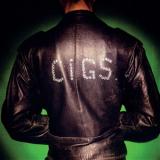
Dharmacide is a Spanish band known for their eclectic fusion of genres, blending elements of shoegaze and dreampop music. Their sound is marked by intricate guitar riffs, powerful drumming, and deep, emotive vocals that create a unique atmosphere under the influence of today's bands like Diiv, Warpaint or Beach House but also by classic artists like Cocteau Twins, Nick Cave and the Bad Seeds or Tom Waits. The band, with members of Alcalá Norte and Depresión Sonora, has made a huge impact on various stages, performing at renowned venues and festivals, including iconic spots in their home country as well as internationally, earning praise for their high-energy performances and thoughtful compositions. Their latest singles have been produced, mixed and mastered by Mark Gardener from Ride. 'The Cigs, The Light, The Coffee and Crying' is the first single taken from their awaited soon-coming second album in which we find a powerful reverb-laden riff with a solo vocal melody in the middle of the chaos until breaking into a powerful chorus.
For the next SlapFunk outing, the Amsterdam stronghold welcomes fellow Dutchmen Malin Genie and Frits Wentink for a joint adventure down synth-lane.
A 4-tracker crafted in the depths of the underworld: gritty, wall shaking frequencies stay true to the SlapFunk style whilst pushing their best foot forward. On all 4 tracks, techno influences run deep, relying on hypnotic builds for a no-thrills experience powered by two of the most revered producers of the modern era. The duo went all out, flexing their knowledge for a release built for any dancefloor ready to blend both the past and the future.
Trademark sounds-- a Blood Meal for anyone looking to get the function jumping.
- A1: Blue Prelude
- A2: Children Go Where I Send You
- A3: Tomorrow (We Will Meet Once More)
- A4: Stompin’ At The Savoy
- A5: It Might As Well Be Spring
- A6: You’ve Been Gone Too Long
- B1: That’s Him Over There
- B2: Chilly Winds Don’t Blow
- B3: (Theme From) Middle Of The Night
- B4: Can’t Get Out Of This Mood
- B5: Willow Weep For Me
- B6: Solitaire
The Amazing Nina Simone reveals Nina Simone at the dawn of her recorded legacy—already assured, deeply expressive, and impossible to categorize. Moving effortlessly between jazz, blues, folk, and classical influences, Simone delivers performances of striking intimacy and emotional precision, pairing a distinctive, searching voice with elegant, commanding piano work. This special repressing on 180g orange vinyl brings renewed warmth and presence to these recordings, enhancing their dynamic range and tactile immediacy. A timeless listening experience, The Amazing Nina Simone remains a powerful introduction to one of the most singular voices in modern music
Savy Records celebrates its fifth year with Lumo, a new vinyl-only series built around the darker corners of the dance floor. The first edition gathers four artists whose productions move naturally through the night -- from tension and space to drive and release. The record opens with Andy Martin, a Mexican-Jamaican artist whose dub-infused ''Wicked Tune You Know'' nods to UK bass influences, with a percussive undertow and an addictively off-kilter synth line. Finnish favourite Sansibar makes his return to the label with ''Innerwelt,'' a twisted electro cut laced with acid paranoia and washed-out vocals, slightly unsteady but always in motion. On the flip, IDA -- fellow Finnish export and SAVY label founder -- keeps things tight with ''Electrostatic Rest,'' a straight-up electro roller built on clean drums and a classic electro bass, one to lock in the dancefloor groove with. Lewski closes with ''Glakk,'' a machinated, bass-heavy analogue banger, driving up the tempo as it heads up the peak time. Lumo presents a darker, deeper side of Savy: one that nods to the underground, and cut for purpose as a vinyl-only release.
- A1: Bienvenue
- A2: Allo
- A3: Ca Va, Ca Va
- A4: Yparcho
- A5: Bon Ben Bon
- A6: Asunsan
- A7: Dodo
- A8: Hop
- A9: Pouf
With four albums already behind them, Sababa 5 have earned global support, from Songlines magazine and BBC Radio 6 Music tastemakers including Gilles Peterson, Jamz Supernova and Iggy Pop to France’s FIP Radio and Radio Nova, for their unique blend of traditional Middle Eastern celebration music with psychedelic grooves, funk, jazz, rock, and international vocal collaborations spanning Japan to India. The Paris-based group have taken this sound to stages across Europe, including Reeperbahn Festival and Dresden’s Super Fest.
Ça Va Ça Va is the band’s hafla album – a return to the wedding and event celebration music that first shaped Sababa 5. Recorded in Paris, it draws directly from the sounds of hafla – the joyful, communal music heard at Middle Eastern weddings, parties and festive gatherings – with a sprinkling of influences from the wider Mediterranean. The group utilise their classic combination of electric guitar, bass, drums, organ, and synths to transform these ideas into vibrant melodies, dance-ready rhythms, and a spirit of abundance and
togetherness.
Opening track “Bienvenue” sets the tone with a mysterious, longing guitar solo before bursting into an irresistible rhythm and jubilant guitar motif. It flows seamlessly into “Allô”, straight into wedding-riot territory – a fast-rising instrumental that showers the dancefloor with energy as it builds around a hypnotic, arpeggio-driven riff. The album is almost entirely original material, with two key exceptions: “Ypárcho” (I Exist), a beautiful instrumental journey inspired by a classic Greek song traditionally performed by Stelios Kazantzidis, and “Asunsan”, an instrumental flip of the much-loved Sababa 5 collaboration “Nasnusa” with Yurika Hanashima. Another impressive step in the Sababa 5 story, Ça Va Ça Va captures both joy and longing – the unmistakable warmth of Eastern Mediterranean celebration and the band’s surf-rock edge – sounding more confident, spirited and deeply rooted than ever.
- A1: Concrete City Breakdown (19:55)
- B1: Omgs (7:09) B2. Demagog (8:29)
- C1: A Day In The Planet Orange Part1 (22:44)
- D1: A Day In The Planet Orange Part2 (12:21)
LIMITED EDITION (500 COPIES) 20TH ANNIVERSARY REMASTER, AVAILABLE ON VINYL (2LP) FOR THE FIRST TIME IN ALMOST TWO DECADES. HOUSED IN GORGEOUS GLOSSY GATEFOLD SLEEVE AND PRESSED ON RED & ORANGE VINYL TO COMPLIMENT THE ARTWORK
City Calls Revolution is our second full-length album, created as we absorbed the new wave revival and math rock movements that emerged in the early to mid-2000s, while simultaneously reconstructing elements of classic progressive rock, hard rock, and experimental music in our own way.
The album strongly reflects the attitude we cultivated as a live band—deeply influenced by the American and Japanese bands we shared stages with at the time—and embodies the punk spirit that shaped us.
Recorded and mixed in March 2005 at Headgear Studio in Brooklyn, New York, by Paul Mahajan (known for his work with Yeah Yeah Yeahs, TV on the Radio, and others), the album was originally released in May of the same year on both LP and CD by Beta-lactam Ring Records, then based in Portland, Oregon. Long out of print, it now returns two decades later as a newly remastered edition to be released by Riot Season Records in the UK.
In 2026, GREEN MILK FROM THE PLANET ORANGE celebrates its 25th anniversary—and also marks 10 years since Damo joined as our current bassist. It is a joy and an honor to have this album, filled with songs we still play live today, reissued in such a milestone year.
Starting January 2026, we will bring this LP on tour across 27 shows in 11 European countries, including the UK. We look forward to seeing all of you at the venues.
/// 2026 Winter European Tour ///
- 01: Cross Fire
- 02: Barrio Bueno
- 03: African Jewel
- 04: Borderland
- 05: The Smallest Share
- 06: Max&Apos;S Movida
- 07: Devilry Time
- 08: Habana Keynote
- 09: Softly Sonora
- 10: Kigis Konar Story
The Cabildos remain one of the most enigmatic names to emerge from the 1970s library music scene. Little is known about the group, except that their name was inspired by Johnny Cabildo, an Italian keyboardist and composer who had relocated to Florida. Their recorded legacy is strikingly concise: just three albums—Yuxtaposición (1972, released under the name Cabildo's Three), Cross Fire (1974), and the later Where Is the Cat? (1979).
Entirely instrumental, the Cabildos' music is driven by deep grooves and a vibrant blend of Latin influences, funk, and jazz fusion, often enhanced by Afro-tribal percussion. Conceived primarily for use in films, documentaries, and advertising, their work naturally belongs to the world of synchronization music.
Cross Fire stands out as a particularly compelling chapter in their catalog, distinguished by an impressive range of textures and moods achieved through the minimalist interplay of bass, drums, and keyboards alone.
Now reissued by Redi Edizioni on clear red vinyl, this excellent record returns with a faithful reproduction of the original artwork, offering a renewed opportunity to appreciate one of library music's most elusive gems.
- A1: Touch Of Gold
- A2: Génie
- A3: All I Have To Say
- A4: Now, Pause .. (Feat. Ursula Rucker)
- A5: Long Way From Home (Feat Pete Josef)
- A6: Palau
- A7: La Vie
- B1: Time Of Day (Feat Oli Hannaford)
- B2: Bop
- B3: This Won't Do (Feat Cézanne)
- B4: La Parisienne
- B5: Midnight
- B6: That Blew My Mind
Alchemist is the debut full-length album from Alexander IV, the jazz-influenced beat project of Dutch producer and multi-instrumentalist Joris Feiertag. Known for his club-ready solo productions under the name Feiertag, this project sees Joris stepping into a more introspective and cinematic space-merging beat culture with live musicianship, sample-based craftsmanship, and a deep love for soul and jazz.
Malena Zavala is an Argentinian-born, London-based artist, producer, and filmmaker, known for crafting ethereal, genre-blending music that navigates the space between her Latin heritage and her British upbringing. With the forthcoming album If This Life Could Start Again set for release on 30 January 2026 on Paraná Records, Zavala presents her most intimate, cohesive, and accomplished work to date, marking a significant evolution in her artistic journey.
With her new album, Malena creates an atmospheric dream pop world, weaving singer-songwriter intimacy with synth pop, Argentine folk, indiepop, rock and experimental music, threaded together by her blissful vocals and dreamy guitar work. Gorgeously warm and vivid, If This Life Could Start Again charts the journey from pain to acceptance, mapping out the non-linear nature of healing through a sonic landscape. Each song embodies a distinct emotion within that journey, from grief and chaos to feeling lost, seeking refuge, finding confidence, and finally acceptance and letting go. Drawing on her Argentinian roots, Malena uses the Andes mountains as both a visual and thematic anchor – the difficult climb towards higher ground becomes a metaphor for healing, whilst being lost at rock bottom reflects the darkest moments of the journey.
Completely composed and performed by Malena herself, the album was recorded in Girona’s L’Empordà countryside in Spain with producer Luke Smith. As a professional producer and audio engineer, this was Malena’s first time relinquishing production control – an intimate creative shift that allowed their shared vision to shape the album’s rich, enveloping sound.
However, Zavala’s career to date has been a testament to self-sufficient artistry. Her critically acclaimed debut, Aliso (2018), was written, recorded, and produced alone in her parents’ garage, which honed her dreamy bedroom pop sound. The album, praised by The Guardian for its “gently warped and beguilingly melancholy guitar pop,” ****, immediately catapulted her from DIY beginnings to prestigious stages, supporting acts like Lord Huron at London’s Roundhouse and Men I Trust at Village Underground and subsequently continuing on their UK/EU tours. Later with standout performances at Latitude, Green Man, and All Points East. Her consistent radio support from key influencers including BBC Radio 6 Music, BBC Radio 1's Huw Stephens, and Steve Lamacq has solidified her presence on the airwaves.
Her second album, La Yarará (2020), saw Zavala delve deeper into her roots, exploring Latin traditions like Cumbia and Bolero. This exploration of identity continues powerfully on the new album, but with a newfound lyrical depth and sonic confidence. The new album, If This Life Could Start Again, is a raw and transformative eight-track journey that maps the emotional landscape of healing. Written after a period of personal upheaval, the album traverses themes of grief, hereditary trauma, and self-discovery. The record’s narrative is structured like a mountain ascent. A challenging climb through varied emotional terrain, posing the central question: “Will you join the journey?” Sonically, this journey mirrors the non-linear path to acceptance, evolving from acoustic folk and synth-pop to funk-infused rhythms and rock anthems.
As a formidable live performer, Zavala has built a robust touring profile across the UK and Europe. She will embark on an extensive tour in February and March 2026 to support the album, with dates spanning major cities from London and Glasgow to Berlin, Paris, and Barcelona.
With If This Life Could Start Again, Malena Zavala fully realizes her artistic vision as a self-taught producer to an autonomous artist commanding her career through Paraná Records whilst reflecting the vast landscapes of her heritage and affirming her place as a compelling and evolving voice in contemporary music.
Very limited repress. Buy or cry!
Opening the release we have one of the most interesting, boundary-pushing artists - Bawrut, who twists Burning Up into outer space. Never one to shy away from a bit of high drama in his tracks, he squeezes every ounce of the original through his sonic mangle resulting in a bass bin wobbling slice of intergalactic house music which confidently stands out in the crowd. Next up, and in perfect contrast, we have UK producer Telfort flipping Becoming Cyclonic on its head. He has well and truly stamped his mark with a fresh sound which takes influence from golden era 90’s deep house but adds a solid, bass-heavy Detroit edge.
He delivers a moody, late-night excursion dripping with fat strings, crisp hats and chiming arps. Flipping over you have the master of deep, iconic and prolific UK producer Charles Webster, who pushes Burning Up to a new sonic level. A sublime rework which is unmistakably his sound, cerebral and dark yet also uplifting, warm and enveloping.
A chance meeting in Mexico City set Points of Inaccessibility into motion. When Ibero-American composer Rafael Anton Irisarri crossed paths with Dutch media artist Jaco Schilp at MUTEK in 2024, a conversation about how technology shapes perception revealed an unexpected common ground. Schilp invited Irisarri to a spring 2025 residency at Uncloud, the Utrecht-based collective he co-founded, where Irisarri's sound began to take form amid an environment shaped by Schilp’s visual research.
The Uncloud studio was located inside the former Pieter Baan Centre, a forensic psychiatric prison where suspects of violent crimes were once confined. Its long history of silence and containment shaped the atmosphere in which the project developed. Within this setting, Irisarri coaxed long bowed-guitar tones through a network of pedals and looping systems. The raw gestures thickened into a vaporous and architectural field of sound. Schilp processed the material through a custom point-cloud software patch that produced images in continuous flux. The visuals flickered, dissolved and reformed like memories that resist coherence, functioning as a digital Rorschach that reflected the observer’s own perception.
Amid these spectral echoes, the project evolved into an examination of how the past persists within present signals. Memory endures as residue and interference, continually shaping perception even when its source has faded.
Schilp’s visual process required a continuous stream of sound in real time. Irisarri improvised throughout the residency, generating material that allowed the visuals to develop in parallel. Once back in his New York studio, he began shaping the recordings by carving pathways through the improvisations and mapping selected passages into MIDI. This process allowed him to build outward from the bowed-guitar material with minimal overdubs, adding Prophet 5 textures, Moog bass and strings that expanded the harmonic field while keeping the original performances at the center. To refine the structure, Abul Mogard provided editorial input, working with Irisarri’s stems to guide transitions and strengthen the overall pacing. The material, originally created under conditions of immediacy and constraint, evolved into a fully realized work through careful revision, patience and sustained reworking.
The title engages the geographic concept of the Poles of Inaccessibility, locations defined solely by their distance from all surrounding points. Irisarri adapts this idea to the conditions of digital life, where new forms of inaccessibility arise through the informational enclosures that structure perception. What appears to be a fully connected network often produces a deeper kind of separation, one shaped by the filtering logic of the systems that mediate experience. In this sense, the digital sphere mirrors its geographic counterpart. We inhabit spaces saturated with signals, yet the possibility of genuine contact becomes increasingly remote.
At its core, Points of Inaccessibility considers what can be understood as the new rituals of capitalist realism. Irisarri uses the term digital shamanism to describe the forms of simulated connection that organize contemporary life. These systems promise comfort through algorithms, influencers and AI interlocutors, yet they often reproduce the same conditions that generate loneliness in the first place. What appears as connection becomes the echo of connection, a sequence of gestures that imitate solidarity while withholding it. Like the geographic poles, these rituals are defined by distance. They pull us into environments where everything is illuminated, yet meaningful proximity becomes increasingly rare. In this sense, the work approaches a hauntology of the present, a reflection on futures that have stalled and intimacies that have been thinned by the algorithmic infrastructures that surround us.
This thematic tension unfolds across the album’s four movements. Faded Ghosts of Clouds introduces the work with textures that rise and dissipate in slow cycles, creating an atmosphere that resists clear definition. Breaking the Unison occupies a pivotal position in the sequence and focuses on the moment when the individual and the system fall out of alignment. Its shifting patterns trace the scattering of signals that once suggested connection, revealing the instability at the heart of contemporary perception. Signals from a Distant Afterglow forms the center of the album and features vocals by Karen Vogt, whose presence enters the sound field like a fragile transmission shaped by distance and delay. The closing piece, Memory Strands, follows motifs that appear, recede and briefly intersect before returning to quiet. Across these movements, the album outlines a landscape in which emergence and disappearance continually inform one another.
Listening to Points of Inaccessibility is an encounter with a sound field that is constantly in flux. Elements surface briefly, shift position and recede, creating a sense of motion that resists stable interpretation. The music moves between closeness and vastness, carrying traces of memory while withholding a clear point of resolution.
The album’s visual identity completes the project’s conceptual arc. In Mexico City, where Irisarri and Schilp first met, Daniel Castrejón transformed stills from Schilp’s point-cloud visuals into the cover image. The final artwork captures a single suspended frame of the digital material, a moment extracted from a field that is normally in constant motion. Its surface recalls the texture and abstraction found in the work of Catalan artist Antoni Tàpies, where material presence and erasure coexist within the same plane.
What emerges is a work that examines the tension between technological systems and human presence. Points of Inaccessibility asks whether connection is still possible within environments shaped by mediation and delay, or whether we have become isolated points within the very networks that promise proximity. What possibilities for relation persist within environments organized by algorithms and interruption? And how are we meant to understand presence when so much of it is constructed at a distance?
Points of Inaccessibility will be released on BioVinyl on February 6, 2026, with audiovisual performances planned throughout 2026.
Mastered by Stephan Mathieu
Artwork by Jaco Schilp
Design and layout by Daniel Castrejón
Artist photo by Iulia Alexandra Magheru.
A year and a half has passed since Slovak-Hungarian artist Adela Mede self-released her debut album ‘Szabadság’. Its liner notes described it as “a navigation”, a search through “the personal, familial, cultural, folkloric and geographic of her past and present.” Her second album, ‘Ne Lépj a Virágra’ no longer searches; here, she puts down roots and delves deeper into the earthy reality of her home, Central Europe. Mede sings in three languages with newfound conviction and grace – this is an album of profound faith and confidence in the potential of this fertile soil.
Composed and recorded during the last 18 months in Bratislava, Slovakia – a city where three countries meet, where the East and the West collide – 'Ne Lépj a Virárga' translates to “don't step on the flower”. Its themes – budding potential, recognizing the beauty in the ordinary, solidarity, turning despair into hope – emerged through Mede's wholehearted involvement with her community, teaching singing to both children and adults, and various grassroots volunteering initiatives. It features collaborations with local artists, Mede's singing students, as well as fellow Eastern European contemporary artists Martyna Basta and Wojciech Rusin.
Adela Mede embellishes carefully crafted songs with minimalist and folklore influences, but also embraces more experimental approaches. The result is a collection of quite varied yet consistent pieces which highlight Mede's proficiency as a singer, arranger, producer and improviser. It is a grounded, confident next step for the Bratislava-based artist. Whether her vocals are naked, heavily processed, warped and reversed, or looped and layered; whether the production is sparse and minimalist or overwhelming and swampy; none of that changes the fact that the gentle tentativeness of her debut is gone. This is “Central European music”, at its most striking and meaningful: patient, determined, embracing both complexity and possibility.
A house is something that is so deeply temporary, yet it can hold so much energy. How do we carry or leave behind those energies while transitioning into new spaces? How does each space we occupy for some time shape us and how do we tear ourselves away from it and its influence once it’s time to go? These are some of the core questions behind CC Sorensen’s new album for mappa, ‘Phantom Rooms’ – it’s a record about movement, change, transformation, family, juxtapositions… but most of all, home.
CC Sorensen was reflecting a lot on their childhood home in rural Kansas, USA while working on this music. The album could be characterised by a familial, chamber feel and both of CC Sorensen’s brothers, Ryan and Nyal Ruehlen, make an appearance on ‘Phantom Rooms’, among other instrumentalists. Using a wide palette of sounds – CC Sorensen alone in charge of keyboards, software instruments, voice, electronics, percussion, trumpet, guitar and field recordings, in addition to guests on pedal steel, voice, chimes, saxophone and drumset – the American musician crafts music as mysterious as it is inviting. The idea behind it would be almost surrealist – ghostly rooms in houses where we live – if we all didn’t know exactly what CC Sorensen means. Home isn’t something concrete, but it’s also not just an abstract concept. It’s a space beyond space; home in itself is a phantom room we enter. And what enables us to enter is the object of exploration here.
CC Sorensen’s approach is playful – tracks like “Beat Bot” and “Plastic Portals” are almost fun – but also contemplative. They make thoughtful, meandering chamber music intertwined with field recordings and electronics. Reeds, strings and percussion often set the atmosphere – sometimes airy, gentle, at other points more insistent – as the music grapples with departure, instability, deep reflection and imagined future spaces. Especially in the closing “Bexar” there’s a tangible yearning for a stable home, a longing to rekindle and keep ablaze this beautiful familial connection to a physical place. It’s both music that invites to reflect and music that in itself reflects; desires, hopes and dreams.
Quite out-of-the-blue, a stunning debut album from Movement And Soul's Nonna Fab...
An exceptional musicality permeates the cuts here, from Claussell / Trent style Deep House meditations, to tripped-out Jazz influenced electronica akin to Mills' recent Spiral Deluxe output.
We're also immersed in Minimal Vision type early 90's dream-House vibes, a dash of Broken Beat and a beautiful beatless piece to wrap it all up.
Incredibly accomplished work from this young new talent !!