Two records came out in 1988 that forever changed the perception of "experimental" or "serious" music produced in Portugal. These were "Plux Quba" by Nuno Canavarro and "Música de Baixa Fidelidade" by Tózé (António) Ferreira. Both were released by the same label - Ama Romanta -, an influential independent imprint closely linked to avantgarde pop band Pop Dell'Arte. Because those records appeared in what could be perceived as an "alternative pop" framework, they rescued this difficult music from Academia. It helps that Canavarro played in a successful new wave pop band (Street Kids) during the period 1980-83. By association, being a friend since 1976, António was in close contact with many of the musicians and bands that were part of the equally celebrated and detested Portuguese Rock Boom (roughly 79-82).
He was not a musician then but through his friendship with Canavarro, who had the means to acquire electronic equipment, António became involved with that equipment and shared Canavarro's passion for experimentation and curiosity for knowledge. They tried to get hold of as many technical magazines as possible and learn while testing ideas. In 1983, Street Kids were about to break up, young lives drafted into the Army and maybe, in Canavarro's case, a whole new passion for challenging music similar to his bandmate Nuno Rebelo, by then in the process of discovering a wide range of "other" music mainly through Jorge Lima Barreto. Barreto, who had started Telectu with Vítor Rua, possessed a huge book and record collection and, like Rua before them, Canavarro, Rebelo and Ferreira became fascinated by the pool of knowledge they now had access to by frequenting Barreto's house in Lisbon. He was roughly a decade older, had published several books and other writings throughout the 1970s, cultivated an anarchic stance and a penchant for cultural indoctrination. Rebelo was the first to be introduced via his contact with Rua (who had invited him to play in his other band GNR).
Overwhelmed, he felt the need to share his enthusiasm with friends and eventually took a few to the house in true pilgrimage fashion. To see the Light. Among the few he led there was even João Peste, founder of Ama Romanta. Canavarro and Ferreira preceded him.
Ferreira recalls an exciting learning process added to his experiments with Canavarro's array of synths such as the Korg Ms 20, Korg polysix, ARP Axxe, Roland SH-01, the Ensoniq Mirage sampler... He read in a magazine article about someone who had studied at the Institute of Sonology (then in Utrecht, Netherlands) and went there during a vacation trip in the Summer of 1983. He became excited by the prospect of studying at the Institute but money was a problem. Canavarro, on the other hand, was admitted there in the following year. Back in Portugal, Ferreira eventually abandoned his Chemical Engineering studies in Lisbon's Technical Institute in favour of a more focused music practice. He collaborated with Telectu during 1984 and 85 as a sort of technical engineer, implementing some recording solutions and background tapes and went to work at a thermoelectric power plant in Sines, hoping to make enough money to fund his musical studies. He did and proceeded with the paperwork for admission at the Institute of Sonology, now based in The Hague. António studied there in 1986-87 and the present album includes two compositions developed at the Institute: "More Adult Music" and "This Is Music, As It Was Expected", both featuring the voice of Rodney Waschka II. Among other activities and talents, Rodney is an expert in computer music and to António his voice sounded similar to Robert Ashley's, whose work he admired.
What happened at the Institute was a systematization of António's self-taught practice. Computer software, Musique Concrète, noise and silence, organisation of abstract ideas and sounds. The original notes on the back sleeve of the LP give some indication of process and thinking, but a more detailed account was given by António in the liner notes of the CD reissue in 2002, which are also included in this 2025 LP reissue.
The music sounds deep and detailed, despite the fact of António calling it low-fi ("Baixa Fidelidade"). It flows like an improvised performance where several musicians might be responding to each other, respectful of their mutual space. Drama occurs, as a natural emotional connection is sought by the listener. Piano, bells, drone, processed voices, even the clear narrative of Rodney Waschka II, contribute to create a sort of alternative perceptual reality. The sounds are almost tangible, more a part of the physical world than ethereal manifestations and thus it would not be correct to invoke "ambient music" as a selling point. But although "physical" and distinct, this music is still alien, more so in Portugal's 1988 environment. In March, helped by Canavarro, António set up a home studio and there he recorded the remaining material for this album: "Algumas Pessoas Olharam O Sul E Viram Deserto", "Um Som, Seguido De Uma Cena Negra E Malva" and "O Verão Nasceu Da Paixão De 1921".
"Música de Baixa Fidelidade" stands not only as a proof of great resilience but as one of those magnificent works of art coming from someone who balanced technical inclination and emotional sensibility. Because of that, Tózé Ferreira is able to decode the phantom world of sound for anyone who cares to experience the sensation of inhabiting a version of the Future. First ever vinyl reissue, reproduction of the original artwork with an additional insert. Made in collaboration with the artist and the support of Paulo Menezes (Plancton Music), who provided valuable assistance. Remastered by Taylor Deupree.
quête:deep learning
Denmark"s leading outlet for jazz April Records presents their first debut of 2025 from a brand new quintet of some of the country"s most well known and respected young musicians - collectively called Oh People. Inspired by the works of Duke Ellington in the 20"s and combining them with sounds that came to life over half a Century later with a palpable sense of joy and love, "Part-Time Elegance" is set to release on January 17th on April Records. Exploring the idioms and tropes of the golden age of jazz, the record is built from deep pocket swing, lovesick ballads, percolating latin grooves, and upbeat melodies that can"t help but bring a smile to one"s face. With undertones of contentment and playfulness, each song evokes a sound and style of some of the 20th"s Century"s greatest jazz composers before evolving into passages of animated improvisation from Denmark"s finest new-generation soloists. Anyone who has been keeping up to date with Denmark"s prolific scene will recognize the members of "Oh People" from their solo projects and contributions to many of the nation"s leading jazz innovations. Jonas Due"s trumpet can be heard in the DR Big Band, and popular modern outfit OTOOTO. Andreas Toftemark cut his teeth working and learning as a musician in New York, before returning to Denmark to establish himself with two releases under his own name, receive the prestigious Bent Jædig Prize, and become one of the country"s busiest artists. Casper Christensen"s deep roots in the jazz tradition and Brazilian, coupled with the warm, acoustic sound of his guitar have seen him perform with the likes of Nana Rashid, Jesper Lodval and his own quartet. Lasse Morck has released three albums under his own name, drawing on South American musical traditions as well as literature and mythology. Henrik Holst has spent over a decade contributing his talents to Danish outfits like the Kathrine Windfeld Big Band and Jeppe Zacho Quintet, as well as international jazz legends Mike Stern, Gilad Hekselman and Immanuel Wilkins.

Jabu return with ‘A Soft and Gatherable Star’, an LP that sees the Bristol-based trio evolve from a uniquely spectral take on trip hop to proffer a singular vision between cloudy, downered dream-pop, off-kilter ambient, and the warm, low-end throb of sound system culture. This development is aligned with contemporaries like HTRK, Dean Blunt, Tarquin Manek, YL Hooi and Rat Heart Ensemble, whilst also harkening back to the likes of AR Kane (with whom they are set to play shows and release a collaborative single), the languorous drift of 'Victorialand' era Cocteau Twins or The Cure circa ‘Disintegration’. Comprising Jasmine Butt (vocals, guitar), Alex Rendall (vocals, keys) and Amos Childs (production, bass guitar), the trio’s method may have shifted but the feel remains consistent - slow, spatial, sensuous and gently melancholic. With a career arc unlike almost any other current guitar outfit, Jabu sit within a strong lineage of off-centre Bristolian music, and a very British strain of home-spun DIY bands. Self-recorded between Jas and Amos’ home in South Bristol and Amos’ mum’s house in rural North Somerset, the album came together via a process of trial and error - learning to play on borrowed instruments, using the equipment “wrong”, staying up late recording and slipping into strange, semi-conscious sleep deprived/inebriated headspaces. Having captured over 50 tracks, they honed in on those they liked most, shaping them further, whilst carving out space to allow input from people they love and admire - Daniela Dyson’s voice and Will Memotone's clarinet on ‘Ashes Over Shute Shelve’, Birthmark's synth on ‘Gently Fade’ and ‘Sea Mills’, Rakhi Singh (Manchester Collective) and Sebastian Gainsborough (Vessel)’s strings and arrangements on ‘All Night’, Josh Horsley’s cello on ‘If I Asked You, You'd Tell Me’, and Lorenzo Prati’s sax, again on ‘Sea Mills’. The album was mastered by Amir Shoat (HTRK, ML Buch, Dean Blunt, Carla Dal Forno). Influence-wise, the guitar-based material recalls the bands Amos listened to when younger, and Jas’ more folk-leaning inspirations. Deep-lying dub, hip hop and soul influences are also evident in both the way the LP was mixed, and the space ingrained in their subconscious. Tinged with melancholy, the songs cohere as a set of soliloquies and ruminations on love and tenderness. The album’s title comes from a poem by Amos’ late father which hangs on his wall and seeped into the record. ‘Ashes Over Shute Shelve’ is formed of lines from another poem of his. Recited by longtime collaborator Daniela Dyson and with Will Yates (Memotone) playing his mother’s clarinet, the track was imagined as a conversation between his parents. Geography and location also play a big part in the record, with several significant places name-checked in songs. Shute Shelve itself is a hill near Amos’ mum’s house, who explains “There’s a tree at the top with a 360° view of the Mendips, where my dad’s ashes were scattered. We used to go up there when we could first buy booze from the petrol station down the road, get drunk, light a fire, listen to music from my little battery powered CD player and sleep out without tents.” Titled after a Bristol suburb near where Amos’ grandparents lived and where Jas would spend time as a teenager, ‘Sea Mills’ references her being abandoned by friends on the Downs while high on mushrooms, stranded and missing the bus back. ‘Kosiše Flower’ references the city in Slovakia where Amos and Jas holidayed shortly after getting together and a flower he gave her, which she pressed in a book after an argument. ‘Oceanside Spider House’ is a location in Nintendo 64 game The Legend of Zelda: Majora’s Mask, where someone seeks shelter from the falling moon. Genre: Electronic / Ambient / Dream-pop
On this new LP Harry Bertoia shows why he may have been the first industrial musician. Bertoia often referred to his sound sculptures as a "collaboration with industry" and on this LP Bertoia is intentionally creating heavy, rhythmic music he described as "mechanized," "mechanical" and "factory like."
Recorded in 1971, percussion and repetition emulate the pounding rhythms of machinery on this unique pair of conceptual Bertoia compositions. Bertoia utilizes innovative performance techniques to create new sounds unheard in his ouevre. Even in the busy factory of Bertoia's mind, distant stillness rises up as Bertoia exhibits the massive amount of control he possesses over his many looming sculptures.
"Mechanization" is just one of the many sonic directions Bertoia took while composing and recording between the late 1950's and his death in 1978. He documented all of his ideas and directions in notes accompanying the hundreds of tapes discovered in his barn.
Bertoia's recordings are as much a celebration of sustained tones, intervallic relationships, healing vibrations, deep listening and shimmering harmonics as Indian Classical music, singing bowls, The Well Tuned Piano or Benjamin Franklin's glass armonica. Through these rich harmonics and pulsing pure tone, Bertoia was able to more clearly articulate his inner spirit than he could with sculpture alone – a point he made himself many times in interviews.
Harry Bertoia first came into artistic prominence in the late 1930s and his sculptural, ergonomic chairs, produced by Knoll Furniture beginning in 1952, were soon modernist furniture classics. Inspired by the resonant sounds emanating from metals as he worked them and encouraged by his brother Oreste, whose passion was music, Harry restored a fieldstone "Pennsylvania Dutch" barn as the home for this experiment in sounding sculptures which he had begun in the 1950s. Bertoia was an obsessive composer and relentless experimenter, often working late into the night and accumulating hundreds of tapes of his best performances; Oreste, too, would explore and record the sculptures' sounds during his annual visits to his brother's home in rural Pennsylvania.
Learning by experimentation was common for Bertoia and he mastered the art of tape recording, turning the Sonambient barn into a sound studio with four overhead microphones hanging from the rafters in a square formation. He would experiment with overdubbing by performing along to previous recordings, sometimes backwards, constantly improving his methods while also honing his performance skills. Bertoia was a careful editor of his own work and only chosen recordings remained, each with a date and carefully considered observations written on a note included with each tape. Through these pieces of paper a greater logic can be uncovered, a careful approach to composition, ideas, feelings and forms. The story of Sonambient barn collection will slowly be told through the release of recordings from the archive as well as installations and performances built from Bertoia's own recordings, lectures and a book.
For soul-reggae artist Natty, music isn’t just pleasure, it is also a healing power.
The London-raised singer-songwriter has been on a remarkable journey of creative and personal discovery in recent years, moving his partner and children to rural Jamaica to live off-grid and off the land, while delving deep into studies on music’s mental and physiological properties .
The result of this journeying is Natty’s expansive, fourth album, The Divine Trinity.
Across nine tracks he employs his trademark vocal power and uplifting melodies to explore everything from earthy funk grooves to guitar-strummed yearning, emphatic spoken word entreaties and spacious, dubbed-out reggae.
Partnering with his longtime band The Rebelship once more, Natty also expands his reggae-influenced sound through the instrumental frequencies of South Asian tablas, Zimbabwean mbira and wooden flutes. “There’s so much that I’ve never done before in this record,” he explains. “We have a song in 5/4, inspired by my time learning music in Zimbabwe, as well as sound bowls, the song of the crickets from the land we live on in Jamaica and hand drums from all over. Its ancient frequencies combined with classic songwriting, allowing people to tune into the power of music.”
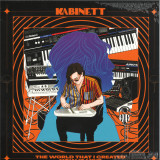
Colombian artist Kabinett brings a soul and harmonic proposal in the many forms of alternative disco and house through embellished productions and DJ sets finding himself every time as medium for all possibilities.
Involved in music from an early age through classical music, while being exposed and inspired by his older brothers in the many forms of what electronic music was developing, Nicolás, his given name, knew that his future and purpose was only going to be around what matters him the most, music. After learning different instruments in the early years and through a mix of self-education and formal education in contemporary music and music production, as well his first steps as a DJ, at age 20 he was ready to get involved in Colombia's capital electronic music scene as curator, DJ, label owner and music producer.
Founder of vinyl house label Nómada Records next to established artist such as Felipe Gordon & Joint4nine, his mentors, Kabinett have been fed enough to developed a full curation career working for Kaputt Club, El Coq & W Hotels, and more recently Casa Cruxada where he has helped to develop an identity for each which as of today has only enriched the local scene.
More recently as head of Kaputt.wav, his new label, which is now house of artist such as Curses, Iñigo Vontier, Theus Mago, Dombrance, Damon Jee, among many more, promises to keep growing and develope music overseas.
As of his personal artist career, have count on releases in labels such as Glitterbox, Midnight Riot Records, Partyfine, Platino Records, Duro, Playground, Sonido Moderna and more recently in Prins Thomas own label, Intersnajonal which will release his third solo EP in summer 2024.
With a deep understanding and experience on the music scene and a strong influence on dance genres, Kabinett and his music transcends the listeners souls and dive deep into a conscious dance.
The Post-Punk Synth Alchemists return with new album ‘Strange Loops’. With blistering rhythms and searing bass, AK/DK return with their highly anticipated fourth album, ‘Strange Loops’. It builds on the momentum of their previous release; Shared Particles, which sold out of the Dinked edition even before its release and achieved no. 7 in the Indie Record Store charts. Known for their trademark motorik energy and riotous joy, AK/DK are back, and for the first time, they’ve introduced guest vocalists into the fray. This new release sees the drum and synth duo collaborate with three exciting artists: the musician TVAM, punk poet - Thick Richard, and I Am Fya; sound artist. The angular guitars and spaced-out vocals of TVAM intertwine with the duo’s driving beats and convulsing synths, resulting in the pulsating Devo-esque powerhouse of ‘Square Route’. The two bands have been crossing paths on festival line ups for a while now and it seemed inevitable that they should join forces. I Am Fya’s usual experimental textures and sound-collage is temporarily put to one side on ‘Pull Up’. For this deep and heavy sub-rattling cut; I Am Fya and AK/DK lean heavily into sound system bass and dancehall style. Her febrile and powerful vocals interweave with tectonic sub bass and stuttering rhythms, sounding like Missy Elliot jamming with a modular synth. Manchester’s very own Thick Richard adds his lyrical, jet-black humour to the track ‘Nobody Shouts’. Their collaboration began when the band invited the punk poet up for an impromptu improvisation during their set at Beatherder festival 2020. It went down so well that they had to record it; learning the track from fan footage online. This is nothing new for AK/DK, creating powerful improvised moments for those lucky enough to be in the audience. Strange Loops presents two distinct halves of music. The A side offers sure-fire bangers that will linger in your ears and have you pounding the dance floor, while the B side delves into more experimental and ambient territories with completely live takes from the studio, reflecting the duo’s love of ‘70s German Kosmische bands. “We always had more ambient experimental tracks on our records, and wanted to give them a spotlight on this release” says the band’s Gee Sowerby. Their previous releases have earned accolades such as BBC 6 Music’s ‘Album Of The Day’ and impressed judges on Steve Lamacq’s Roundtable, solidifying their reputation as pioneers in their genre. It’s on stage where AK/DK truly come to life. Their electrifying performances, characterised by joyous live-looping of keyboards, drums, and distorted whoops, have made them a fervent fan favourite for over a decade. They’ve left an indelible mark on audiences at festivals like End Of The Road, Blue Dot, and Green Man, winning over new audiences wherever they play. With Strange Loops, AK/DK continue to push boundaries and defy expectations, reinforcing their status as one of the most dynamic and innovative acts in the scene
What does it mean to be perfectly blue? Perhaps it means swimming contently in the waters of deep, complex emotions, or simply learning to spin low moments into casual days. For Luka Seifert, who makes music as RIP Swirl, the idea of being fine with not being happy all the time was the catalyst for his second album, Perfectly Blue. The two words captured something: learning to embrace being blue, while using music as a way of processing emotions.
The Well is the second album by the duo So Sner, composed of Susanna Gartmayer (bass clarinet) and Stefan Schneider (electronics). Recorded over nearly two years in various studios and spaces, the album reflects So Sner's extensive touring across Europe. The final mixing took place in Vienna at the studio of Martin Siewert, who served as both co-producer and mastering engineer. Known for his meticulous attention to sonic detail, Siewert brings his unique techniques and distinctive sound enhancements to the album, resulting in a work that is both stylistically cohesive and daringly uncompromising.
So Sner’s critically acclaimed debut album REIME (TAL26, 2021) was celebrated for its innovative fusion of bass clarinet and electronic sounds in unexpected and surprising ways. With The Well, the duo explores both fluid and dissonant sonic landscapes, embracing different structural and sonic challenges. The result is a quieter, more introspective set of compositions than many might have anticipated. The album is a statement of two confident collaborators crafting complex, spatial musical moments in their own distinct manner.
The music on The Well generates a multiplicity of effects that transcend conventional oppositions such as hand-played versus programmed, composition versus improvisation, or analog versus digital. The album suggests a re-articulation of these categories, allowing the ten tracks to gradually blend one musical idea into another, and one musician into another, in a circular and complementary fashion. The polymetric permutations and exploratory reed components create a soundscape where all elements coexist harmoniously, without compromising or diminishing each other’s presence.
With its sparse sound architecture, The Well invites listeners into a space of effective emptiness, offering room for the mind and body to explore—a sonic island where one can develop sensuality through patient movement.
For So Sner, live performance is a passion of the mind, and since they began working together in 2020, their music has taken them to many different places. The live experience has deeply influenced the recorded music on this album, with the interplay between live performance and studio work informing their creative process. The Well captures the genuine act of exploring new territories, serving as a storage place for the time and space shared by the duo, re-filtering their experiences of performing and traveling together.
The Well is a lucidly playful and ambitious album by two contemporary musicians who are continually learning to create and respond to the subtle and significant changes in their music, maintaining momentum throughout the entire work.
In addition to her work with So Sner, Susanna Gartmayer has recently collaborated with artists such as Joe McPhee and Maria Portugal, and remains a member of her long-running band, the Vegetable Orchestra. Stefan Schneider, founder of the label TAL, has recently performed with Garth Erasmus from Cape Town and fine art luminary Katharina Grosse.
Forgetting You Is Like Breathing Water, the self-titled debut from the duo of trumpeter Will Evans and guitarist, synthesist, producer and multi-instrumentalist Theo Trump, arrives like a vault revelation. It feels like a decades-old yet newly unearthed masterwork of gorgeous ambient improvisation, the sort of thing scholars live to research and shepherd into deluxe reissue.
The patient, crystalline chords that swell and resonate like a series of confessions; the textured brass murmurs that suggest a ’60s or ’70s Fire Music master at their most poignant. Provocative found-sound experiments threading arcane religious recordings through dystopian soundscapes. Ear-shattering free-noise tumult. Where and when did this music come from? Who are these voices?
As it turns out, Forgetting You Is Like Breathing Water springs from an engrossing human story, though it isn’t necessarily the one you’d expect. This work of stunning maturity is in fact an entrance by two little-known explorers in their early 20s, who grew up together in Virginia, in the shadow of the Blue Ridge Mountains. It documents one of those perfect, sparkling moments in post-adolescence when big decisions and responsibilities are right around the corner, but for a spell, two young artists are able to create among the comforts and nostalgia of their shared past.
It also represents a reunion of sorts, as Evans and Trump connected as toddlers, became inseparable as boys, then pursued independent lives and creative paths as young adults. “Theo is my oldest friend,” Evans says, “and I feel like that’s what this band is — us meeting right in the middle of our interests.”
Now, having conjured this magic, they’ve detached once again: Evans, whose other works include the indie/avant-jazz unit Angelica X, is currently based in New York City. Trump recently moved to England, where he’d participated in his family’s theatre company, to go to school and further his solo ambient project. “This album didn’t start out as something super ambitious,” Evans explains. “It was more just an excuse to spend time together again and make music.”
***
In conversation, Evans and Trump are a delight, especially for cynics who might think that Gen-Z is only capable of doomscrolling. They come across as kindly young intellectuals who grew up using the internet as it was intended, for exposure to ideas and art across genres and generations. Trump points to indie-folk and the oracular post-rock of late Talk Talk, Bark Psychosis and Gastr del Sol. Pressed for his guitar heroes, he cites Bill Orcutt, Mary Halvorson and Marc Ribot, and mentions his devotion to alt-country. Heyday electro-industrial stuff like Skinny Puppy and Nine Inch Nails also meant a lot to him.
Evans is equally intrepid, though his background has a greater jazz focus. Ambrose Akinmusire, among today’s most thoughtfully commanding trumpeters, is a favorite. As for the soulful murmur he offers throughout Forgetting You, Pharoah Sanders’ wistful and lyrical contributions to Floating Points’ work is a touchstone.
The two grew up down the street from each other in the northern Piedmont town of Batesville, Virginia. Their families were friends, holidays were celebrated together and they became the most loyal of pals. As children they had a pretend band.
Then life unfolded, they attended different schools and their paths diverged. Evans discovered John Coltrane and became a jazz obsessive, as Trump found punk and hardcore and later began making ambient music. As a dedicated jazz trumpeter, Evans studied formally and widely; Trump was an autodidact, teaching himself guitar and absorbing synthesis and production techniques. The late teens and very early 20s brought moves away from home and back to home, as well as plenty of listening and learning. The Covid pandemic meant an opportunity to reconnect on long walks. Through it all, together and apart, they remained reverent of each other.
By early 2023, they found themselves living again among the Blue Ridge Mountains. In the evening, after giving trumpet lessons in Charlottesville, Evans would make the eerily beautiful trek “over the mountain” to Trump’s home in Staunton, Virginia. They’d talk and eat and begin to improvise, deep into the night. Evans played trumpet and sometimes drums. (Given the wee-hours recording schedule, the neighbors didn’t appreciate the latter.) Trump plugged a rickety, junk-store Telecaster-style guitar into a cheap solid-state amp and explored open tunings; he also layered on lap steel, electric bass, synths and electronics.
They locked in and relished each other’s gifts. In Trump, those include patience and intentionality and sonic decision-making; for Evans, a distinctive trumpet sound that both musicians think of as a singer’s voice. “Will’s playing is so thoughtful and well placed,” Trump says. “My goal from a producer’s mindset is that the trumpet will occupy the space that vocals would take.”
Often, they got lost in the best way. “The thing I look for most when I’m playing is that feeling of disappearing into what you’re doing,” Evans says. “Usually when that happens, the music is good.”
By the same token, they didn’t pursue free improvisation as an ethic, or as a pure process. Their goal was something closer to spontaneous composition. “We were trying to make good songs,” Evans says simply. Later, Trump did brilliant post-production work, expanding a modest setup into an enthralling soundworld. Under his judicious editorship, music that was wholly improvised sounds at times like a carefully composed new-music commission.
The results speak for themselves. “A Happy Death” summons up a swath of American desolation through the viewfinder of Wim Wenders. “Flesh of Lost Summers” and “Partings” are highlights from an essential ECM LP that never was. “A Collapse of Horses” infuses those seminal post-rock influences with the plod of doom metal or slowcore. The album’s final track, “The Mountains Are a Dream That Calls to Me,” was in fact the first thing the duo recorded, as an evocation of those twilit drives across the Blue Ridge Mountains. “Looking back at what we chose to name the songs,” Evans says, “and some of the sounds and how they make me feel, there is an air of impermanence and loss to this album.”
“I’m excited for everything that’s to come,” he adds, “but I recently thought, ‘Damn — that’s not going to happen again.’ It was a privilege for us to have that time together.”
First Word Records are very proud to present a brand new album from Kaidi Tatham!
'An Insight To All Minds' is Kaidi's 3rd solo album under his own name, following several EPs and two albums for First Word; 2018's acclaimed 'It's A World Before You' and the re-press of his seminal 2008 sophomore album 'In Search Of Hope' last year.
For those that don't know, Kaidi Tatham is a legendary multi-instrumentalist. Once dubbed "the UK's Herbie Hancock" by Benji B, he's a virtuoso on the keys and a true innovator in sound production as one of the original creators of the Broken Beat sound. Over the years his musical prowess has blessed numerous projects, initially with the likes of Bugz In The Attic and The Herbaliser, and more recently with DJ Jazzy Jeff (through the PLAYlist projects), Andrew Ashong (on the acclaimed 'Sankofa Season' EP last year) and with longtime accomplice, Dego. This in addition to session work for artists such as Mulatu Astatke, Slum Village, Amy Winehouse, Soul II Soul and Leroy Burgess, along with First Word label mates such as Eric Lau, Children of Zeus and Darkhouse Family. Kaidi is also a revered DJ known for rocking parties globally, whilst his solo catalogue spans tons of EPs and releases for labels such as 2000 Black, Eglo and Theo Parrish's Sound Signature.
On 'An Insight To All Minds', Kaidi says it's "not about a destination, but a process. It's about how you drive, not where you're going. Nothing in this world can torment you as much as your own thoughts… We are all going through it. We can all feel what the next person is feeling, believe it or not. It's learning how to tap into it".
The album is comprised of an assortment of Kaidi's unique flavours - uptempo jazz-funk bruk, laced with rhodes, flutes, live bass and delicious percussion. Using that blueprint he moves effortlessly through latin and samba, half-step, deep afro house and a sprinkle of curveballs, all presented in Kaidi's inimitable way.
'Intergalactic Relations' brings with it some 110bpm synthed-out spacey electro-breaks, 'Could It Be' sets off sounding like a Morricone film score, whilst 'Rodney' is some serious heads-down business; stark and punchy off-kilter broken beat and vocal stabs. There are a few guests too - 'Chungo' sees the return of Uhmeer (who previously appeared on 'Cupid' on the album 'It's A World Before You'); here the young Philly MC deftly rides a 9/4 time signature beat. Meanwhile 'Stro Kyat' invites in another supreme talent, Stro Elliot (The Roots), who provides a suitably crisp & crunchy riddim to accompany Kaidi's key play over a mind-bending 5/4 time signature.
With this new album, Kaidi Tatham adds further to his already impressive catalogue, a body of work that falls within the cracks of jazz and dance music, exemplifying modern British black brilliance once again; uncompromising, innovative, groundbreaking, intricately sophisticated and deeply funky. His fanbase expands on every release and it's no surprise that that fanbase includes peers such as Madlib ("ahead of his time"), Gilles Peterson ("a key part of an entire movement"), K15 ("a limitless source of inspiration"), Alexander Nut ("a true virtuoso") and Kyle Hall.
Most of the writing of Naima Bock's second album, Below A Massive Dark Land, was a solitary affair. It may not sound like it - it's made up of strong, purposeful arrangements with a huge host of musicians, filled with cradling space and warm light. This will also come as a surprise to anyone who has seen Naima perform in the time since the release of her 2022 debut Giant Palm, which was undoubtedly a communal experience. But there's power in the solitary, too. Giant Palm was arranged with collaborator Joel Burton, but going this one alone in search of something that was truly hers, Naima found she was capable of more. "After me and Joel stopped working together", she remembers, "it was an impossibility to even fathom doing arrangements myself but then I started learning violin and it was possible". Finding that she could go it alone was incredibly powerful for Naima: "I think I needed it, to be able to feel proud of something". Beyond the writing process, however, the record is not a stark, stripped back affair. Below_ still has the majesty that made Giant Palm so remarkable. Having tugged the first record down from the skies and spreading it across the earth, Naima finds a newfound vocal power and confidence born from hundreds of hours on stage, and the music sounds fuller, more tangible, and no less enveloping. This can be heard on the album's lead singles: "Kaley" feels fresh and surprising in its rug-pull choppiness but is distinctly Naima in its swinging, jubilant choruses. The accompanying "Further Away" takes a different tack, drawing you in with its simplicity. Finally, the hazy, luxurious beauty of "Feed My Release" draws on the sepia-toned traditions of The Roches, John Prine and Loudon Wainwright III and imbues them with the kind of stark confessional songwriting of Mount Eerie. These are ambitious, rich arrangements that reach deeper and darker lyrically than Giant Palm. Below a Massive Dark Land was predominantly produced by Jack Osborne (Bingo Fury) and Joe Jones, and recorded at The Crypt in north London, with additional production and arrangement by Oliver Hamilton (caroline, Shovel Dance Collective) and Naima herself. Six of the tracks on Below_ were mixed by Jason Agel, with the remainder done by Osborne and Jones. The album was mastered by Kevin Tuffy.
EP on 12" vinyl with insert. Pianist Orson Claeys is a refreshing new presence on the Belgian jazz scene.The music takes cues from the rich sounds of the Middle East, influenced by artists like Dhafer Youssef and Anouar Brahem, and also from the fresh, creative styles of contemporary jazz musicians.
Pianist Orson Claeys is a refreshing new presence on the Belgian jazz scene. After being featured on the third instalment of the 'Lefto presents Jazz Cats' compilations with his track 'Conversations', Orson Claeys is set to release his 5-track debut EP 'Odyssey to Self' on Sdban Ultra.
Spellbound by the allure of the piano at a young age, Claeys joined art school, where his more profound exploration really began. However, it wasn't until a later age, when he discovered the melodies of Herbie Hancock, that he was drawn to jazz and changed his musical course. Under the guidance of renowned artists, Claeys had the opportunity to immerse himself in this new sound atthe Royal Conservatory of Music in Brussels. He developed his own style, learning to weave different cultural influences and musical genres. These days, Claeys is constantly searching for his own unique sound in today's modern jazz, fusing different musical traditions into one harmonious expression.
"Odyssey to Self" isn't just an EP; it's a story about life-the ups, downs, and the personal journey we all experience. "From the start, I wanted this project to go beyond my own artistry and connect with more people. That's why I decided to create a visual counterpart to the music, a way to see the journey that you hear in the record."
This is Orson Claeys' first EP, released under Ghent's well-known Sdban Records. It's a deep dive into Claeys' own life, honestly sharing his path through major changes. "Odyssey to Self" captures his personal journey, giving listeners a look at the universal human experience of dealing with life's challenges and embracing change.
The music takes cues from the rich sounds of the Middle East, influenced by artists like Dhafer Youssef and Anouar Brahem, and also from the fresh, creative styles of contemporary jazz musicians such as Aaron Parks, Brad Mehldau, and Ambrose Akinmusire. Claeys aimed to blend these diverse musical influences into one cohesive sound. "Odyssey to Self" invites listeners to experience Claeys' emotions, experiences, and artistic vision, weaving stories that touch on themes we all understand.
Jaz Karis is getting ready to take off. The South London singer and songwriter has been making waves with her silky voice and lyrical, candid pen since her first EP back in 2017, building herself up steadily over the years. 2024 will see the long-awaited arrival of Jaz Karis' debut album, Safe Flight, . It's a record that spans a breadth of sonics: slinky Afrobeats, gleaming R&B, warm gospel, shimmering flecks of pop, hiphop, jazz and amapiano, all woven through with the glowing thread of Jaz's signature soulful feeling. "Soul to me is a feeling," she explains, "All I want to do with my music is evoke feelings."
The imagery for this album all pertains to identity and travel - IDs, lanyards, nostalgia-tinged film footage - and in turn, it all alludes to the path that Jaz Karis is on. Safe Flight finds an accomplished, assured artist reflecting on where she's been and ready to step up to the next level: a star on the rise but still deeply down to earth. At once soulful, vibey and poignant, this is an album about embracing possibility, admitting mistakes, and trusting the process. "It's about getting free," Jaz says with a smile, "And it's not that I have it all figured out now or anything, but I'm on this learning curve. There's something exciting about being on the journey."
Black Is Golden', the first full length release from Wyn Starks, isn't just the name of a record, it's his truth as a black man living in modern America. "I decided to call the album 'Black Is Golden' because throughout history black and brown people have gone through so much injustice in this country and yet contributed so much to society. I think it's important that we celebrate each other and all our differences." But the songs aren't all centered on social justice- the album features upbeat tracksk like "Circles" and "Dancing My Way" which showcase Stark's vocal range and sunny disposition; juxtoposed with "At The End Of The River", a deeply emotional track about the tragic loss of Wyn's twin brother. Starks' feels his journey to self-love is captured in this body of work. He shares, "I'm learning how to celebrate these accomplishments in my life and to love myself, flawa and all.
After Prince Istari finished the Dub Encounter with Erik Satie, he
immediately set to work on expelling the evil curse of artificial intelligence. While the encounter with Satie was guided by the original
compositions, this album delves deeper into dub science.
The opening track is "Curse Of Machine Learning," a grinding cumbia dub track that sucks you into the curse of machine learning. It's followed by "Artificial Neural Network," arguably the album's most nerve-wracking track, with wild snare rolls colliding with offbeat echoed riddim sections. "Large Language Models" offers a more relaxed, arabesque one-drop riddim with speech synthesis vocals. "Fake Image" closes the first side with a full trombone solo contributed by Eugene Rosebud.
Side B starts with the one-drop killer tune "Haunted By Delusion,"
featuring an organ solo by Prince Istari. Drum and bass in your face.
"Evil Forces," on the other hand, is a fusion of jazz and dub; after the
brass section breakdown, it rolls into a crazy synth solo. Then next „I
Want Your Data" pulls your data into the AI's guts with a vibraphone.
This is maybe the ambitious tune on the record speaking of chord
progressions. The final track sees Eugene Rosebud return with a double trombone solo in "Transhuman Feedback Rock" assisted by a saz cooling the blues pattern with a hookline. Here we have beautifull springreverb and harmonizer dub effects on the snare twirrling around the trombone solos.
All tunes composed, arranged, conducted and engineered by Prince Istari and played by his house band The Virtualistics. Trombone Solos by Eugene Rosebud. Packaged in a nice cover drawn by Markus Schäfer and frequency shift and cut by LXC.
The latest full-length from Kishi Bashi, Kantos is a work of exquisite duality: a party album about the possible end of humanity as we know it, at turns deeply unsettling and sublimely joyful. In a sonic departure from the symphonic folk of his critically lauded 2019 LP Omoiyari - a career-defining body of work born from his intensive meditation on the mass incarceration of Japanese-Americans during World War II - the Seattle-born singer/songwriter/producer's fifth studio album encompasses everything from Brazilian jazz and '70s funk to orchestral rock and city pop (a Japanese genre that peaked in the mid-'80s). Informed by an equally kaleidoscopic mix of inspirations - the cult-classic sci-fi novel series Hyperion Cantos, the writings of 18th century enlightenment philosopher Immanuel Kant, a revelatory trip to ancient ruins on the island of Crete - Kantos ultimately serves as an unbridled exaltation of the human spirit and all its wild complexities. During the earliest stages of creating songs for the album, Ishibashi's main intent was to return to his highly eclectic musical roots, in part by tapping into his jazz background and by delving into the dance-rock-leaning sensibilities he previously embraced as co-founder of Brooklyn-bred indie band Jupiter One. But not too long into the songwriting process, he stumbled upon an AI-equipped website capable of composing catchy song hooks based on a prompt - a turn of events that quickly catalyzed the existential inquiry at the heart of Kantos. Although his ruminations on AI, transhumanism, and humanity's troubled fate indelibly guided the making of Kantos, Ishibashi nonetheless views the album as "less of a warning about this kind of hubris but more a celebration of the very characteristics that make us human: desire, passion, empathy, and love." "If there's anything I want people to come away with when they hear this record, it's a feeling of excitement about the possibilities of human-created art," he says. "Even as we're learning more about all the amazing things AI can do, I think humans will always be one step ahead in terms of our creativity and innovation. There's still no limit to what we have to offer."
sentiment is a meditation of the poignant emotional terrains of loneliness, nostalgia, sentimentality, guilt, and sex. The album"s narrative arc is guided by delicate musical gestures and artistic vulnerability, audaciously synthesizing disparate and unexpected influences. claire rousay is a singular artist, known for challenging conventions in experimental and ambient music forms. rousay masterfully incorporates textural found sounds, sumptuous drones and candid field recordings into music that celebrates the beauty in life"s banalities. Her music is curatorial and granular in detail, deftly shaped into emotionally affecting pieces. rousay"s vocals and guitar take center stage on sentiment. Her intimate, diaristic lyrics contrast with her mechanical-inflected vocal effects, emphasizing a powerful desire for connection, a deep yearning and a lingering sense of separation. The spare guitar playing and laconic tempo both drive the songs and exude a sense of resignation. Her delicate mastery of nuance draws on her explorative musical past that she, with sincerity and admiration, seamlessly interweaves into her adventurous textures and distinctive compositions. "I want to belong to the worlds and communities I look up to. Same as someone using a Fender guitar or dressing like Kurt Cobain. Emulate your heroes," says rousay. The album balances the poetic soul of her influences with a documentarian heart, rousay capturing moments of her life while living alone in houses across the country, learning to play guitar, and reconnecting with pop music. Her innate ability to conjure pure feeling from sound derives from her delightful embrace of pop forms, the vulnerability found in field recordings, minimalistic arrangements and innovative sound choices. sentiment is blissfully, achingly melancholic, and an undeniably sensual listening experience.
Legalize Lambada is back and there ain’t no moldy gorgonzola in this Italo homage! Legendary cosmic captain Albion returns to Lambada-land and starts this edit compilation with 'Nucleare', a robotic jam seasoned with Italian vocals which serves as a great intro to the release. Ric Piccolo’s 'Disco teacher' on A2 and 'Alright' on B1 are serious floor fillers, possibly ready to injure part of the Boston dynamics fleet after inducing uncontrollable dance moves. At the end it’s Hysteric’s 'Moment' on B2 that prompts a soulful side of italo for some deep machine learning.
YESYESPEAKERSYES is the first vinyl release of the remarkable collaboration between Chicago foot-work founder Kavain Wayne Space (aka RPBoo) and London duo experiment XT (drummer Paul Abbott and saxophonist Seymour Wright). The trio’s synthesis of rhythms, sounds, strategies, technologies and traditions collapse genre, distance, boundaries and preconceptions into a total, and totally unique, brain-body music.
Its two 15-minute vinyl sides are cut from a 60-minute live set at Cafe OTO, London on Friday 8th October, 2021 also available as digital download. This was the fourth meeting of the trio followed, instead of being followed by*, an RPBoo DJ set.
Each time the trio play it pushes further into new technical, emotional and creative space. The collaboration needs ears, instruments, imaginations and bodies to be used in new ways. This need is transformative. Together they – and we – learn. This unique trio combination is rooted in deep conceptual foundations, that push into real and imaginary spaces of innovation and learning in a creative practice of 'interruption' far beyond genres or what is supposed to be. And what emerges each time is a trio technology - a total dance technology for any and all bodies.
Kavain, Paul and Seymour share a fascination with the musical history of Chicago – a source of which is of continual nourishment to their ongoing practice. While Kavain’s pioneering footwork work develops the rhythmic structures of Chicago house and the samples, grooves and melodies of 60’s/70’s Chicago soul, disco and R&B, Seymour and Paul share a fascination with these musics, and bring to this lineage a long-term engagement with Chicago’s jazz traditions, from Baby Dodds to the AACM through their unique prism of club, dance, free-jazz and improvised club structures, technologies and musics.
The LP was expertly mixed by Billy Steiger and mastered by Amir Shoat. Every purchase comes with a bonus download of the full, unedited live set from Cafe OTO.
The album includes artwork by Benedict Drew and text by Edward George.
- A1: Shook Ones Pt 1
- A2: Giving Up The Goods
- A3: Shook Ones Pt 2
- A4: Survival Of The Fittest
- A5: Emperatures S Rissing
- B1: Survival Of The Fittest Remix
- B2: Thrife Life
- B3: Still Shinin
- B4: Front Lines
- B5: G O.d. Pt.3
- C1: Drop A Gem On Em
- C2: Back At You
- C3: Quiet Storm
- C4: It S Mine
- C5: Spread Love
- D1: Outta Control (Remix)
- D2: The Learning (Burn)
- D3: Got It Twisted
- D4: Get Away
- D5: Have A Party
- D6: Give It To Me
Mobb Deep was a legendary 1990s rap duo formed in Queensbridge, New York, by Havoc and Prodigy. They are considered the foremost progenitors of hardcore rap and one of the most influential hip hop groups in history. Their music reflects the hostile reality of an era when poverty, drugs and gang violence plagued the streets of New York. Their music is characterised by dark samples, the drums, snares and bass are defined and the raw lyrics are of a very high standard, in the most competitive era in rap history. With their albums The Infamous (1995) and Hell On Earth (1996) they achieved fame within and outside the hip hop community, including hits such as "Shook Ones (Part II)" and "Survival of the Fittest". They would later collaborate with top East Coast rappers such as Notorious B.I.G., members of the Wu-Tang Clan collective, Jay-Z, Nas and 50 Cent, on whose label G-Unit they would release their album Blood Money (2005). Prodigy's sad death in 2017 due to a long and cruel illness only has amplified an already existing legacy. On this album we will be able to enjoy the instrumentals and acappellas of many of their best tracks throughout their career.
Following a ten-year hiatus, multi-instrumentalists Rafael Anton Irisarri and Benoît Pioulard return with »How to Color a Thousand Mistakes«, their third LP together as Orcas. Building on the electronic minimalism of »Orcas« (2012) and the Twin Peaks-inspired haze of »Yearling« (2014), the duo have expanded their sound and vision into a full-spectrum ensemble.
In the time since their last major collaboration, Irisarri and Pioulard have done plenty on their own, while also traversing significant life changes: relocation from Seattle to New York, separation and divorce, illness, hospitalizations, and the loss of siblings, parents, and friends. Yet from these tribulations, they gleaned inspiration to reconstruct their lives, creating music with new collaborators and partners. Recorded in a variety of studios and cities including Brooklyn, Cambridge, Oxford, Seattle, and upstate New York, the resulting album, under the tutelage of UK producer James Brown (Arctic Monkeys, Kevin Shields, Nine Inch Nails), is a patiently-crafted beast, equally inspired by impressionism, British new wave, and dream pop.
With Irisarri’s guidance and Brown’s encouragement, Pioulard brings his velvety voice to its harmonized peak on songs like »Wrong Way to Fall« and the Durutti Column-indebted »Fare«. Where his most recent solo albums for Morr Music (»Sylva« and »Eidetic«) navigated foggy forests of ambient pop and stacked tape loops, here his characteristic blur shifts into focus with a unique degree of clarity and confidence. »How fare against balance do I / Navigate my errors?«, Pioulard sings in a heartbreaking tenor, echoing the album’s broader themes of introspection, grief, loss, trial and trauma.
Lead single, »Riptide«, is a summary of Pioulard’s life changes and personal upheavals in the past decade, »flitting eastward toward a yen deep in the past« and learning to glide through the tumult of ocean waves, as a metaphor for the punches one takes in pursuit of grace. Its towering, key-changing midsection arrives with the monumental drumming of Slowdive’s Simon Scott, a long-time friend and cohort who appears on most songs in the set. Scott’s quintessentially English, jazzier approach offers a balance of force and restraint as the backdrop for Irisarri’s majestic guitars, analog synth lines, and Martin Heyne’s Fender Rhodes counterpoints.
Second single, »Next Life«, began as a sketch by Scott, and reached its final form in the hands of Pioulard and Irisarri, at a point that each had endured major concurrent losses, finding a commonality in the need to gaze over the horizon while acknowledging the unavoidable bittersweetness of letting go – not only of people, but of routines, places, and expectations. It’s one of Orcas’ most nuanced pieces, with a mid-tempo, sunset glow that unfolds into a sparkling, slide-guitar finale as it disappears in the rear view.
On third-act highlight, »Bruise«, Scott is doubled on the drum kit by MONO’s Dahm Majuri Cipolla, whose Liebezeit-influenced metronomy anchors a nimble bass groove from Andrew Tasselmyer (of Hotel Neon), and some of the album's most syncopated, spaced-out interplay, courtesy of Puerto Rican guitar player Orlando Méndez (a childhood friend of Irisarri’s). Originally a droney, fingerpicked guitar demo, »Bruise« is the most storied composition here, having gone through almost a dozen versions and lyrical edits, with Brown distilling hours of improvised performances into the final arrangement.
Throughout »How to Color a Thousand Mistakes«, Irisarri uses his deep well of production experience to paint the stereo field with meticulously designed textures, exemplified on the slow burn of »Heaven’s Despite« and the heady rush of »Swells«. As a mixing and mastering engineer with Black Knoll, he has built a client list that reads as a who’s-who of modern, forward-thinking composition, including Temporary Residence, All Saints Records, and Ghostly International, among many others.
As with previous collaborations, Irisarri and Pioulard bring disparate styles and specialties to the table, but with an interpersonal dynamic that transcends friendship into brotherhood, their open-minded workflow and mutual respect are evident at every turn. »How to Color a Thousand Mistakes« brims with tight, complex art rock songwriting, masterful production, and sonic versatility, informed by a plethora of genres and tonal hues. The title might promise answers, but the gravitational center of the album is the dawning realization that, as you reckon with the infinite whims of the cosmos, there could be none.
- 1: Betty Baker
- 2: Blackberry Blossoms
- 3: Pompey Ran Away
- 4: Cluck Old Hen
- 5: Chimes
- 6: Lost Girl
- 7: Can't Jump Josie
- 8: Red Bird
- 1: Rockingham
- 2: Prettiest Little Girl In The County
- 3: Drunken Hiccups
- 4: Hog Went Through The Fence, Yoke And All
- 5: Polly Put The Kettle On
- 6: Shortening Bread
- 7: Billy In The Lowground
Past collaborators of Decosimo include indie/folk artists Jake Xerxes Fussell, Wye Oak, and Hiss Golden Messenger. Past collaborators of Schrey include experimental/sound artists Alvin Lucier, Gordon Mumma and Yasunao Tone. In April 2021, Joseph Decosimo, Luke Richardson, and Cleek Schrey three of the most compelling interpreters in the American traditional music scene gathered at a cabin in Tennessee to explore their collective repertoire of Old-time fiddle and banjo tunes, gleaned from visits with older players, field recordings, and vintage 78s. Working with fiddle, hardanger d’amore (a fiddle with sympathetic strings), banjos, and a 19th-century pump organ, the trio captured both the sonic details of their instruments and a generous musical interplay rooted in a dozen years of collaboration. Their debut album, Beehive Cathedral, presents resonant, thoughtful, and expansive explorations of Appalachian and American music. The results showcase deep Details study and enveloping, exhilarating performances. A rich vein of stories and relationships to people and places underpin Beehive Cathedral. Much of the album draws on Decosimo’s experiences learning the music of Tennessee’s Cumberland Plateau, where he grew up and worked as a folklorist. A key source of inspiration was fiddler Clyde Davenport (1921-2020), “Clyde was a social and musical trickster who knew hundreds of old tunes and had an uncanny ability to recall each piece in exquisite detail,” says Decosimo. “During my visits, he’d play breathtaking local pieces from his father Will, who was born in 1868. His father had learned some of them from a neighbor who was born in 1829.” "This record expresses some of what we hear in Southern traditional music: the ring of the strings, the buzz of the tunings, the hum of the organ,” explains Schrey. Spending time listening to old recordings and imagining how those sounds were made has made the trio keenly interested in the relationship between physical motion and sound in their source material. The result is a dense layering of sounds and interaction. Of this sonic interplay, Irish fiddle luminary Martin Hayes observes, “The sound of a beehive conveys the idea of a unified harmonious soundscape which is how this recording sounds. Beehive Cathedral is a sonic delight, a beautiful blend of Old-time soundscapes and more. This is a hypnotic recording that is grounded, subtle and refined
Gambian kora virtuoso Dawda Jobarteh and Danish master drummer Stefan Pasborg join forces to release their exhilarating live album, "Live In Turku"Turku". A captivating fusion of traditional West African sounds and contemporary improvisation. Jobarteh was born and raised in Brikama, Gambia into a musical legacy - his uncle and grandfather before him are recognized as great masters of the kora. Initially learning calabash and all other kinds of percussion at the feet of his uncle, it wasn t until Dawda s travels to Denmark that he picked up the 2121-stringed kora. He s since gone on to tour worldwide with the famous Pierre Dorge & New Jungle Orchestra and release five albums under his own name to rave reviews from leading magazines such as Songlines. Stefan Pasborg, godson and protege of famous Danish drummer Alex Riel, is a world class drummer with a deep understanding of African music few western musicians possess, evidenced by his many collaborations with the likes of Morocco s Majid Bekkas and their joint project Magic Spirit Quartet, as well as Danish trio Ibrahim Electric. Drawing on their rich musical backgrounds and extensive experience, Jobarteh and Pasborg deliver an electrifying performance that transcends borders and genres. Recorded during a mesmerizing live set at a festival in Turku, Finland in April of 2023, the album captures the essence of their collaborative spirit and explorative energy. A followup to their landmark 2016 release "DUO"", at the heart of "Live In lies a deep connection between two extraordinary musicians. Jobarteh brings his soul soul-stirring melodies and innovative approach to the traditional instrument - going electric and drawing from the explosive energy of Jimi Hendrix in jangling improvisations soaked in psychedelic futurism. Meanwhile, Pasborg, renowned for his dynamic drumming style and eclectic musical palette sits somewhere between Art Blakey, Mitch Mitchell and John Bonham, providing a rhythmic foundation that propels the music to new heights. The album"s repertoire spans a diverse range of influences, from traditional West African rhythms to contemporary jazz and beyond. Tracks such as " first recorded in 1979 by a band of Ornette Coleman alumni, pay homage to the Jazz s origins in African music, while originals like "Communication of a Kind" showcase the duo"s improvisational prowess and boundless creativity.
Ltd. Purple & Black Splatter Vinyl. It's been four years since Zach Saginaw, aka Shigeto, returned home to Michigan from a stint in Brooklyn, NY, and since then, the multi-faceted musician has become a part of the fabric of Detroit's music scene. While always having a personal approach to his projects, Saginaw's influences for his third album, The New Monday are more about the community of Detroit than anything else. Named after a weekly DJ event called Monday is the New Monday that Saginaw does at the unassuming Motor City Wine with a group of friends, The New Monday is the result of Saginaw diving into the city's deep record culture, where there legacy of artist's of the past help Saginaw embrace his own contributions. "It's focused on a couple things and they all kind of come together to represent dierent things," explains Saginaw. "My time back in Detroit, back living in Michigan and spending time with a lot of kind of original people who have always been here, learning from them, hearing stories from them, being influenced by them, and inspired by them." While, in the past, projects like Lineage or No Better Time Than Now were rooted in strong personal messages, family and relationships respectively, The New Monday represents a communal eort where solidarity is the key. Going for a simplified approach of just trying to make good tracks, The New Monday is diverse in its styles leaning more into a dance music direction - new ground for a Shigeto project. A new air of confidence in Saginaw has expanded his horizons since his return to Detroit, but traces of his past work will continue to be present. "I don't want people to think I'm leaving anything," says Saginaw. "I'm still me. It's a result of me being immersed in the culture, and inevitably making music that is influenced by that culture whether it be house, techno, jazz, rap. It doesn't matter. It's all coming from what I love about Michigan." While The New Monday still features the jazz textures long associated with Shigeto projects, the varied elements that make up the album cohesively come together to show the distinct inspiration that Saginaw has drew from since his return home to Detroit. Like on "Barry White", which features Detroit hip-hop artist ZelooperZ (a member of Danny Brown's Bruiser Brigade crew who Saginaw also has a side project with called ZGTO), Saginaw captures everything he's been doing all on one track. As much as it's hip-hop influenced, it's a mutant that encompasses elements of dance music, jazz, and ambient sounds. Throughout The New Monday, Saginaw poignantly references the musical influences that have either always been with him or newly discovered. It is Saginaw's interpretation of Detroit's rich culture of innovative artistry, but done so with respect for the history and to contribute, not disrupt. "I think over the past four years, I can confidently say that I found my place here," describes Saginaw. "I'm happy here and I feel that I have the respect from the people I need respect from, that I want respect from. It's all of the result of embracing it and embracing, not Detroit, but embracing community, embracing family,
f A2D (FT. ZEELOOPERZ & SILAS GREEN) AAPV
f A2D (FT. ZEELOOPERZ & SILAS GREEN) [AAPV]
Described as an "intensely British" record, Peanuts is a wry and observational album, with a newfound sense of compassion and reflection on Liz's inner feelings and their projection on the outside world. Peanuts is a playground game, also known as Mercy, where two kids twist each other's fingers until one cries out, 'Peanuts!', signaling that they have met their pain threshold. From 2013, Liz was performing as a backing singer for Bombay Bicycle Club up to their hiatus in 2016, and again when they reformed in 2019, touring the world. Liz has been a regular collaborator with the band ever since, "It was a life-raft for me. It was such a natural fit, and they became my friends for life" says Liz. Peanuts is Liz Lawrence's first album release with Chrysalis Records, spanning 11 tracks full of topics spanning from plant names to the gender wealth gap. "Peanuts is Cate Le Bon meets Primal Scream going off on one about landowners. It's learning the names of different trees and sweating over being polite in emails. It's a petition to stop Elon Musk from spacejunking up the atmosphere so we can't see the stars anymore and it's a big deep breath after going under." -Liz Lawrence
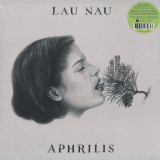
The title of the Lau Nau's 10th album, Aphrilis, derives from the Latin word aperire, meaning "to open." A fitting verb for the month of the year it is closely associated with — April. And while the images of plants and blossoms coming back to colorful life after a long, cold winter feels appropriate when listening to the rich and lustrous bloom of music on Aphrilis, another definition of open feels even more apt. For under the abundance lies the memory of times of austerity, the friction of hard choices, the acceptance that nothing is fixed and the future is unknown. This literal and metaphorical exploration of complexity and contradiction makes Aphrilis a multi-dimensional antidote for our troubled times, one that emphasizes the quiet and communal over noise and spectacle. Laura Naukkarinen, the Finnish artist behind this project, has long kept her mind and spirit open to whatever sounds and creative ideas felt appropriate for the moment. For the past six years that has meant primarily working with modular synthesis — learning how to build modules and releasing acclaimed work centered on its sounds like 5x4 (2023) or Puutarhassa (2022). Running parallel to this work, however, has been a continued exploration of acoustic instruments and group performances with her trio Lau Nau ja Seitsemäs Taivas. Aphrilis arrives then like fresh growth in a creative season cycle. A companion to her brilliant 2017 release Poseidon, the album, says Naukkarinen, "felt like a needed moment to embrace songs with lyrics again." And through the creation of this work, she remained open not only to her own creative muse, but also the input of her chosen collaborators. Each player on Aphrilis — Matti Bye on celesta and synths, Pekko Käppi on jouhikko, Hermanni Yli-Tepsa on violin and contrabass, Topias Tiheäsalo on electric guitar, Samuli Kosminen (Múm) on various instruments — was given free reign to arrange their own parts to accompany Naukkarinen's compositions. Kosminen’s lush fingerprint can also be heard in the mixing and production of the album, as with Poseidon six years ago. The moniker of this project may be taken from Naukkarinen’s own name, but Lau Nau feels more like a band than ever before. The delicacy and softness of the music is reflected in Naukkarinen’s lyrics. Each song is rife with imagery and creatures from the natural world. The spiders in the forest. The animals that keep a young woman company in her refuge in the woods. Wet grass. The feeling of the music is almost tactile, as if listening to the album will leave a bit of dew or sap on your fingers. The theme of this material, says Naukkarinen, runs even deeper. “The songs tell about cracks and changes of direction in different histories: personal, societal, planetary,” she says. “About moments when a yes can become a no and vice versa. The album wants to propose that at the moment of a crisis there is a possibility to influence the histories by our choices.” That may feel like a lot for such a fragile sounding collection of songs to bear. But Aphrilis is an album of surprising strength and resilience
sentiment is a meditation of the poignant emotional terrains of loneliness, nostalgia, sentimentality, guilt, and sex. The album"s narrative arc is guided by delicate musical gestures and artistic vulnerability, audaciously synthesizing disparate and unexpected influences. claire rousay is a singular artist, known for challenging conventions in experimental and ambient music forms. rousay masterfully incorporates textural found sounds, sumptuous drones and candid field recordings into music that celebrates the beauty in life"s banalities. Her music is curatorial and granular in detail, deftly shaped into emotionally affecting pieces. rousay"s vocals and guitar take center stage on sentiment. Her intimate, diaristic lyrics contrast with her mechanical-inflected vocal effects, emphasizing a powerful desire for connection, a deep yearning and a lingering sense of separation. The spare guitar playing and laconic tempo both drive the songs and exude a sense of resignation. Her delicate mastery of nuance draws on her explorative musical past that she, with sincerity and admiration, seamlessly interweaves into her adventurous textures and distinctive compositions. "I want to belong to the worlds and communities I look up to. Same as someone using a Fender guitar or dressing like Kurt Cobain. Emulate your heroes," says rousay. The album balances the poetic soul of her influences with a documentarian heart, rousay capturing moments of her life while living alone in houses across the country, learning to play guitar, and reconnecting with pop music. Her innate ability to conjure pure feeling from sound derives from her delightful embrace of pop forms, the vulnerability found in field recordings, minimalistic arrangements and innovative sound choices. sentiment is blissfully, achingly melancholic, and an undeniably sensual listening experience.
finally repressed !
ARCHIELONG LP album consists of 8 intensely rolled tracks dating between 2012-2020. The release unfolds on 4 discs of 180gr, with gatefold covers, coated in Sani Stranskiʼs artwork.
Throughout ARCHIELONG LP, we are absorbed by what typically characterizes his narrative: a peculiar style of story in constant development. Structure and flow are a hallmark feature of his selections, adding one more trippy, eerie minimal style on top of the other, creating a rich and quirky haunted sphere.
A – The opening track, I HEAR VOICES THROUGH THE PIPE sets the scene for whatʼs to come, stirring the imagination with its dreamy, cinematic, organic sounds in disguise. The track provides a guidebook to distilling story, emotion and image into sonic form.
B – EXCESS ALL AREAS – hypnotizes the dancers with endless, reverberating grooves and a punchy 4/4 beat, introducing the audience to his gloomy world of emotions.
C – LA MANIA – lights up some dark pitched atmosphere around you and makes you feel like you are on the mythical La Mania club dancefloor in complete harmony, surrounded by strange and beautiful trippers. The song is like a painting, with frames that evoke flashbacks.
D – NEW LIFE – is a perfect minimalist setup of a percussion loop, throbbing chords and a sinewy walking bass, and itʼs almost intimidatingly heady. Its militant kick and incessant hi-hats propel the beat – definitely a dancefloor highlight.
E – MELODROM – percolates with Latin percussion and shuffling snares, which commingle with an array of voices and whispers that come from every corner of the song. From toolish to melodic, itʼs the diversity that creates the magic.
F – SING AND RUN – is one of those tracks that gives you nostalgia and reminds us of early mornings at the end of the party when the sun would be coming in through the windows and the dancefloor was in total harmony. Could easily cast a spell with the right audience.
G –RUMBLING DREAM – is a ritualistic-sounding slice, crossing towards the kind of slow-burning, atmospheric cuts that doubtless inspire his intricate studio productions. The vocals are unusually illustrative and make a lasting impression.
H – KLAUS DID IT – is an intriguing interplay between dark functionality and high velocity grooves — the type of deep, trippy, IDM-tipped tunes. Its warped tones are forming dank, lurching rhythms that trap you like a spiderweb, venturing into a bizarre, rewarding territory. The conclusion? You can spend a decade honing a very particular personal vision and not run short of inspiration. Mihigh is a world-builder: everything he does is about further extending and reinforcing that world.
ARCHIELONG LP is capturing the beauty at the intersection of experiment and perpetual learning
Legendary Hip Hop Producer and Emcee Large Pro aka The Large Professor returns with his highly anticipated 3rd instrumental album, BEATZ VOLUME 3. Back with his traditional signature Boomp Bap sound, LP brings you more well-crafted soulful BEATZ that you can rhyme to, DJ with, skateboard, or even dance to! This album features 10 bangers that are sure to make DJs want doubles to back spin!
Large Professor states:
"Beatz Vol. 3 was made to lift the spirits. From the youthful "Let It Fly" to the ghetto love story sounds of "Rooftop Love", all of the Beatz on this project were made to make the listener feel good. After learning more about my family history, I had to dedicate the song "Ancestors" to my predecessors who are in the "Friendly Skies". Overall, I want to keep that original Boomp Bap style of hip hop alive for my generation, and the real ones to follow."
Large Professor is a founding member of the Hip Hop group Main Source. In 1991 their classic debut album "Breaking Atoms" introduced the world to NAS, who was featured on the track "Live at the Barbeque". LP's debut solo album "The LP" (PSP006) was finally released in 2009 featuring hits like "IJuswannachill", "Mad Scientist" & More.
Some of Large Pro's production and remix credits include tracks for NAS, Eric B. & Rakim, A Tribe Called Quest, Slick Rick, Pete Rock & CL Smooth, Tragedy Khadafi, Mobb Deep, Busta Rhymes, Big Daddy Kane, Lord Finesse, Akinyele, Masta Ace, Czarface, Cormega and many more. Recent production credits: RawWattage "Eyez" (2020), "Pressure" Soundtrack (2020), The Lox/Westside Gunn & Benny "Think of the Lox" (2021), Al Skratch "Be Original" (2021), Neek The Exotic ft. Large Pro "XtraExotic" (album) (2021), K.McGyver Hemisphere (2021), Papoose "Represent" (2021), Papoose "Cold Winter" (2021) and the "All The Streets are Silent" Motion Picture Soundtrack (2021).
Legendary Hip Hop Producer and Emcee Large Pro aka The Large Professor returns with his highly anticipated 3rd instrumental album, BEATZ VOLUME 3. Back with his traditional signature Boomp Bap sound, LP brings you more well-crafted soulful BEATZ that you can rhyme to, DJ with, skateboard, or even dance to! This album features 10 bangers that are sure to make DJs want doubles to back spin!
Large Professor states:
"Beatz Vol. 3 was made to lift the spirits. From the youthful "Let It Fly" to the ghetto love story sounds of "Rooftop Love", all of the Beatz on this project were made to make the listener feel good. After learning more about my family history, I had to dedicate the song "Ancestors" to my predecessors who are in the "Friendly Skies". Overall, I want to keep that original Boomp Bap style of hip hop alive for my generation, and the real ones to follow."
Large Professor is a founding member of the Hip Hop group Main Source. In 1991 their classic debut album "Breaking Atoms" introduced the world to NAS, who was featured on the track "Live at the Barbeque". LP's debut solo album "The LP" (PSP006) was finally released in 2009 featuring hits like "IJuswannachill", "Mad Scientist" & More.
Some of Large Pro's production and remix credits include tracks for NAS, Eric B. & Rakim, A Tribe Called Quest, Slick Rick, Pete Rock & CL Smooth, Tragedy Khadafi, Mobb Deep, Busta Rhymes, Big Daddy Kane, Lord Finesse, Akinyele, Masta Ace, Czarface, Cormega and many more. Recent production credits: RawWattage "Eyez" (2020), "Pressure" Soundtrack (2020), The Lox/Westside Gunn & Benny "Think of the Lox" (2021), Al Skratch "Be Original" (2021), Neek The Exotic ft. Large Pro "XtraExotic" (album) (2021), K.McGyver Hemisphere (2021), Papoose "Represent" (2021), Papoose "Cold Winter" (2021) and the "All The Streets are Silent" Motion Picture Soundtrack (2021).
“I wrote these six new pieces with simple French words that a student learning French can understand. It is always intended for fanciful dances and musical fantasies” - Bernard Fevre
Legendary Parisian disco pioneer and producer, Black Devil Disco Club is back and has announced the release of a new album via UK independent imprint Lo Recordings on the 1st December.
‘Etincelles’, which translates as ‘sparks’ in English, is the follow up to 2020’s ‘Lucifer Is A Flower’ and will be digitally available and released on limited edition coloured vinyl wrapped in screen printed sleeves with lazer cut triangles designed by the award winning Non Format team. A truly future perfect and infectious collection of electronic sounds and beats, the new album features six brand new tracks including the lead single ‘L Mer Sur L’enfer’ which was inspired by Salvador Dali and will be available from the 3rd of November.
With a story as deep and strange as the music itself, Black Devil is the alter ego of Bernard Fevre, a French composer of electronic library music with a highly sought after back catalogue that includes the magnificent ‘Strange World Of Bernard Fevre’.
Having grown up and worked in Paris, it was the African clubs and rhythms in the city that inspired him to make his celebrated debut album ‘Black Devil Disco Club’ with only a small arsenal of electronic keyboards, a vocoder and looped conga drums. One of the most enigmatic electronic masterpieces ever made, the record was so ahead of it’s time that no one could believe it was made in 1977 on it’s release in ‘78. When it was re- issued in 2004 on the Rephlex label many thought it was a hoax and that the music was made by Aphex Twin or Luke Vibert but when Lo Recordings put out the ‘28 After’ album in 2006, the truth was finally revealed.
Black Vinyl[19,75 €]
S A R R A M, the ambient and post-rock vessel of Sardinian solo artist Valerio Marras, announces the release of his fifth album "Pathei Mathos" on Subsound Records, and presents the captivating title track featuring revered multi-faceted artist Lili Refrain on vocals. S A R R A M is a dark ceremony inspired by the wild, ancient landscape of Sardinia A crushing but yet graceful composition where drone, electronica, doom, postrock blend to invite the listener to an intense sound journey. Dealing with learning through suffering as a central theme,"Pathei Mathos" -- which features appearances from renowned experimentalists Lili Refrain, Dalila Kayros, Tobias Vethake (Sicker Man) -- is a deep trip in the darkness surrounded by pulsating soundwaves, crushing droning layers, ethereal voices and floating cellos. About the album, S A R R A M says: "As every record, it describes a part of my living, my existence through sound and frequencies. It's something deep and authentic, something that can be felt, something real. The experience of my last two records "Silenzio" and "Albero" brought me to "Pathei Mathos": I needed to go further once again, pushing my borders even more and doing something I've never done before: composing. Nevertheless: sometimes it's just about floating together into huge waves of sound.
- The Great Big No
- Into Your Arms
- It's About Time
- Down About It
- Paid To Smile
- Big Gay Heart
- Style
- Rest Assured
- Dawn Can't Decide
- I'll Do It Anyway
- Rick James Style
- Being Around
- Favorite T
- You Can Take It With You
- The Jello Fund ( + Lenny - Hidden Track)
- Big Gay Heart (Demo)
- Being Around (Alternative)
- Into Your Arms (Acoustic)
- Down About It (Acoustic)
- Deep Bottom Cove
- Acoustic Rick James Style
- It's About Time (Acoustic)
- Miss Otis Regrets
- Learning The Game
- Little Black Egg
- Streets Of Baltimore (Acoustic)
- Frying Pan
- He's On The Beach
- Favorite T (Live In Session)
Zum 30-jährigem Jubiläum erweiterte Neuauflage des nächsten Klassikers der Lemonheads aus dem Jahr 1993, inklusive neuem Cover-Artwork. Die bahnbrechende Platte, die auf It's A Shame About Ray und "Mrs. Robinson" folgte, den amerikanischen Alt-Rock weltweit bekannt machte und Evan Dando in die Herzen einer ganzen Generation katapultierte. Mit einer Fülle von unveröffentlichten Demos, alternativen Versionen und Raritäten - darunter Coverversionen von Victoria Williams, Buddy Holly und den Flying Burrito Brothers sowie The Lemonheads' Interpretation des Cole Porter-Standards "Miss Otis Regrets". In den 90er Jahren produzierten Evan's Lemonheads einen Alternative-Hit nach dem anderen, eine Reihe von wirklich guten Singles: 'Big Gay Heart', 'Into Your Arms', 'It's About Time' und 'The Great Big NO'. Pures Genie, das über's Radio ging und die Indie-Herzen eroberte. Heute ist Evan immer noch ein Meister des Songwritings und 'Come On Feel The Lemonheads' klingt nebenbei noch so frisch wie eh und je. Inmitten der Hits der Originalplatte findet sich aber für noch mehr magische Musik, und diese Deluxe-Edition fügt nun eine zweite Disc mit Demos und Akustikversionen hinzu, sowie eine Vielzahl von Tracks aus Sessions und von Compilations, die dem Mythos und seiner Entstehung weitere Farbe verleihen. So covert die Band liebevoll Victoria Williams' "Frying Pan" von ihrem "Sweet Relief"-Album. Dazu gesellen sich eine Reihe von Flipsides und Out-Takes, wie ihre Version des Garagen-Punk-Knüllers "Little Black Egg" von The Nightcrawlers, Evans Hommage an Gram Parsons "Streets Of Baltimore" und Buddy Hollys melancholisches "Learning The Game". Evan erkennt einen guten Song, wenn er ihn hört, und wie 'Come On Feel The Lemonheads' beweist, kann er auch selbst gar keine schlechten schreiben. Unabhängig davon, dass der Vorgänger ,It's A Shame About Ray" als der Klassiker der LEMONHEADS dargestellt wird, hat der Nachfolger ... seine ganz eigene Geschichte. Erneut gab Juliana Hatfield mit den Ton an, ... auch wenn auf diesem Album Nic Dalton hauptsächlich den Bass einspielte. Es geht insgesamt ruhiger zur Sache, orientiert man sich nur an den Singleauskopplungen ,Into your arms", ,The great big no", ,It's about time" oder ,Big gay heart"." - OX 2015 "Dabei hat Evan Dando seine musikalische Palette wieder erweitert: Neben reinen Country-Songs mit Slide-Gitarre und den poppigen Parts, blitzen plötzlich doch wieder nach vorne treibende punkige Tracks auf. Und diese Mischung passt so gut, dass selbst Pop-Göttin Belinda Carlisle (!) mal singen und auch Punk-Ikone Rick James seinen Part beisteuern darf." - Visions 1993
Violet and Black Vinyl[21,43 €]
S A R R A M, the ambient and post-rock vessel of Sardinian solo artist Valerio Marras, announces the release of his fifth album "Pathei Mathos" on Subsound Records, and presents the captivating title track featuring revered multi-faceted artist Lili Refrain on vocals. S A R R A M is a dark ceremony inspired by the wild, ancient landscape of Sardinia A crushing but yet graceful composition where drone, electronica, doom, postrock blend to invite the listener to an intense sound journey. Dealing with learning through suffering as a central theme,"Pathei Mathos" -- which features appearances from renowned experimentalists Lili Refrain, Dalila Kayros, Tobias Vethake (Sicker Man) -- is a deep trip in the darkness surrounded by pulsating soundwaves, crushing droning layers, ethereal voices and floating cellos. About the album, S A R R A M says: "As every record, it describes a part of my living, my existence through sound and frequencies. It's something deep and authentic, something that can be felt, something real. The experience of my last two records "Silenzio" and "Albero" brought me to "Pathei Mathos": I needed to go further once again, pushing my borders even more and doing something I've never done before: composing. Nevertheless: sometimes it's just about floating together into huge waves of sound.
South London soul artist Andrew Ashong returns with his first full release since 2014 - an expansive six-track collaboration with Kaidi Tatham, the unrivaled underground virtuoso described as the UK's Herbie Hancock. 'Sankofa Season' takes both artists to new heights as they seamlessly complement each other's musical language, giving voice to productions that criss-cross genre and time to move into their own distinct lane. Expect deep jazz funk, hazy contemporary soul, jazzy broken beat, breezy latin soul, organic deep house and much more.
“I’m still learning how to experience joy, how to be free, how to be comfortable in my own
skin,” says Jaime Wyatt. “A lot of us grow up feeling like we have to hide who we are just
to be accepted, but that comes from a place of fear and judgment. I wrote these songs as
a way of letting go of all that, as permission to feel good.” Feel Good, Wyatt’s extraordinary
new album, is more than just a permission slip, though: it’s an invitation. Recorded with
Black Pumas’ Adrian Quesada, the record is bold and ecstatic, built on tight, intoxicating
grooves that belie the songs’ substantial emotional stakes. Wyatt’s writing is raw and
intuitive here, tapping into the deep recesses of her subconscious as she reckons with
grief and growth, and her delivery is visceral to match, cutting straight to the bone with
equal parts sensitivity and swagger. Taken as a whole, the collection stands as a radical
act of creative liberation from an artist already known for pushing limits, a genre-defying
work of healing and self-love that tips its cap to everything from Al Green and Otis
Redding to Waylon Jennings and Bobbie Gentry in its relentless pursuit of peace and
pleasure.
In March of 2020, after learning that a dear friend’s life was coming to an end, Johansing sat down and in one sitting wrote the song “Daffodils”. An elegiac tribute to someone facing death with grace and curiosity, the lyrics confront Johansing’s own mortality by observing the brief lifespan of a Hlower. Only a week later when the world came to an abrupt standstill, she soon found herself processing this recent loss while trying to make sense of a new global reality. Across the ensuing months, Johansing found herself increasingly untethered by a world of isolation and political upheaval.
Having been a frequent touring member of bands like Hand Habits and Fruit Bats, and often being called into the studio to lend her harmonies and multi-instrumental talents to records, Johansing’s phone no longer rang. Living in Los Angeles she feared her musical community was vanishing, as friends and collaborators continually announced they were leaving the city. It was in returning to her piano nightly that she found the greatest solace, feverishly writing the songs that would be collected on her next album. Resulting from this new sense of time and focus was a deepening of her songwriting. As Johansing recalls, “I felt like a metamorphosis happened during that time. There was a lot of personal growth and healing.”
Throughout Year Away Johansing traverses uncharted emotional landscapes brought upon by the changes occurring all around her. The forced self-reflection of the moment is aptly captured by “Old Friend”, featuring an aching melody and swooning production that recalls the best of Harry Nilsson. The epic piano and saxophone-driven “Smile with My Eyes” addresses the loss of community as friends became distant and political divides between family grew. On “Smile” Johansing pushes her vocals further than ever, expanding her range and using her peerless voice as the singular instrument it is. Facing the loss of a family home due to environmental destruction, “Shifting Sands” is marked by soaring Hlutes, Hield recordings and glassy synthesizers that nod to Japanese New Age.
“Daffodils”, the stunning album centerpiece, is built from a pastiche of looping samples, swirling Mellotron and dazzling vibraphone. “Keep your heart open wide, you never know your time / Keep your heart wild, true Hlower child”, Johansing sings as she says goodbye to an elder, while the band reaches a grief-stricken crescendo of woodwinds and chiming bells. On the title track, Johansing takes listeners on an eerily meditative journey of collective experiences. “I wanted to keep the progression simple and repetitive so that musically we could add new elements little by little, while the emotional tone of the lyrics becomes increasingly more strained and expressive”. The song grows to a fever pitch as Johansing sings higher than she thought possible; the tension of the repeating chords Hinally resolving into a hopeful coda as multiple soloists weave around each other.
Amidst heavier themes, Johansing still leaves room for her love of irresistible pop melodies and lush production. The driving “Last Drop” and mid-tempo “Valley Green” are two of her catchiest songs to date. On the former Johansing sings the anthemic chorus, “As if it were the last drop, and nothing ever lasts forever / As if it were the last stop, too far out to come back ever”, longing for a love that she’ll never take for granted, while also admitting that she doesn’t always know how good she has it. “Valley Green” features shimmering layers of 12- string guitars, stacked horns and an impeccable solo by co-producer and multi- instrumentalist Tim Ramsey (Vetiver, Fruit Bats), hinting at a love for bands like NRBQ.
Having been eager to capture the initial spark of songwriting, Johansing booked time at Highland Park’s 64 Sound Studio the week that it reopened. Over the course of three days, she and her band gathered basic tracks for 10 songs, before returning home to Hinish the record with Ramsey. Setting forth to make an album that paid homage to the music that kept them company during the months spent alone together, the duo pulled inspiration from a wide net including Burt Bacharach, John Carroll Kirby & Haruomi Hosono. Ramsey’s newfound love of early digital synthesizers dovetailed effortlessly with Johansing’s fondness for classic 70’s horn and string arrangements, creating a sound that is distinctly modern yet warm and familiar.
Once again Johansing called upon some of the Hinest players of Northeast Los Angeles’ vibrant music community to lend a hand with the record. The 70s R&B-folk of “Watch It Like a Show” features an electric guitar solo from Hand Habits’ Meg Duffy, while album closer “Endless Sound” boasts backing vocals from electronic musician Kaitlyn Aurelia Smith and swooping Indian-inspired violins from Amir Yaghmai (HAIM, The Voidz). The record shines brightly thanks to an ace mix from veteran producer Rob Schnapf (Beck, Elliott Smith, Cat Power), woodwinds from Logan Hone (John Carroll Kirby, Eddie Chacon), and a featured rhythm section of drummer Josh Adams (Jenny Lewis, Bedouine) and bassist Todd Dahlhoff (Feist, Devendra Banhart). Recorded across multiple studios including LA’s famed Sunset Sound, the album remains steadfastly buoyed by the adept engineering of Tyler Karmen (MGMT, Alvvays).
Though born of turbulent times, Year Away is ultimately interested in moving forward. The album ends with “Endless Sound,” where Johansing laments seismic global changes, (“The water is hotter, the mighty thaw / The current’s reversing, the last are lost”) but vows to keep going (“No storm can take me down / Endless light, endless sound”). It’s Year Away’s resilience that shines through despite the darkness. It’s a sound all her own and Johansing’s most cohesive set of songs yet.
Didattica is the first album from Zetas, a female rap duo coming straight out of the city of Salerno, on the south west coast ofItaly. Entirely produced by beatmaker, rapper and DJ/producer Tonico 70, a true veteran of Southern Italian hip-hop,the full-lengthdebut isreleased on DJ's Choice, a partner label of Four Flies Records.
Born between the 90s and 2000s, rappers Annarella and Miriade were exposed to the world of underground hip-hop from an early age, jamming and freestyling. Rather than going for the sounds of trap and auto-tune that are so popular in their age group, however, they immediately embraced the spirit of old school rap, withitsboom bap vibes. As suggested by the album's title itself (which translates as 'teaching' or 'learning') they view of rap as a school – that is, as an art form where constant training is key if you want to stay true to your values and identity.
With the help of producer Tonico 70, Zetas have created a record that is fresh and contemporary, while paying tribute to the past.They rap about everyday urban life in the exuberant dialect and slang of their native city, delivering raw rhymes with a tightand very expressiveflow, while Tonico70 uses a classic sampling approach but also incorporates real instruments into his beats–Antonio D'Apolito's guitar, Peppe Maiellano's keyboards, Giuseppe Desiderio's bass and Giuseppe Limpido's drums.
The result is an excitingcombination of funk, soul, dub, R'N'B, reggae, and even electronic influences,one where deep bass and syncopated rhythms blend wonderfully with the melody, urgency and authenticity of dialect rhymes.