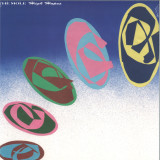
A1 Northern Lights
Darkly, tense tones take center stage as Northern Lights kicks the LP off, introduced with an eerie synth before classic, striking old school breaks that aficionados will recall from the likes of John Bs Secrets drop, chopped expertly by our Spatial duo to create a quietly vengeful beat pattern with heavy kicks and a unique stuttering detail. Circling menacingly around the mix we are treated to swathes of choral detail, subtle vocal samples and shimmering ambience..
A2 Sunset on Mars
Showcasing the strengths of both producers through a delightfully rich atmosphere, Sunset on Mars opens with soothing echoed effects that ooze a welcoming sense of wonder. Delicate in composition yet still packing a punch, the breaks sit over a sumptuous deep sub bassline which carries our journey through simple key melodies, vivid mood-changing synths superbly to create a pure, wholesome atmospheric bliss.
B1 Totality
Dominant hats and cymbals surf the peaks of the mix early in Totality, detailed old school breakbeats quickly seizing our attention constructed with an effortless attention to detail. A stark, thick atmosphere is carved from a broad backdrop of sound blending vocals and synths, enveloping the listener with a dense, bleak soundscape that develops continually as the breaks roll on with memorable intent.
B2 Reincarnation
A deeply evocative, interstellar intro opens Reincarnation, generating images of lonely spacewalks with trademark Spatial aplomb. The vibe continues through a barrage of heavy analogue amens which crush the mix, edited with a chunky, commanding panache. The listener can picture pillars of isolation and thundering defiance dancing in duality as the elements weave their way fluidly throughout.
C1 Seraphim
Into an intense, epically atmospheric piece next as Seraphim channels the spirit of yesterday for a journey into the souls core via scene-trademark Hot Pants breaks, a moody 808 bassline and swirling atmospheric pads, melodies & synths. Layered with detailed FX demanding repeated listens to soak it all in, Seraphim is a special track which will take over your setlist and the journey home.
C2 Prism of Light
Sit back and relax to another slice of classic atmospheric bliss with Prism of Light, opening with a DJ-friendly hi hat intro before melodic synths generate an instantly unforgettable late-90s vibe. Hot Pants breaks drive us forward with a wondrously simple yet effective mix of 2 step and double kick edits, as blissful ambient washes and vocal hits are drizzled over the mix. Delightful.
D1 Harmonic Function A uniquely constructed beat pattern guaranteed to move you opens Harmonic Function, building up from rushing cymbals and hats intertwined with a fantastic crunchy, metallic half-time snare. Throw in a slew of mournful melodies and blanketed pad work around the mix and youre left with a superbly laid back yet danceable piece from ASC & Aural Imbalance, continually innovating in their music as ever on Spatial.
D2 Fade to Grey
Old school rhythms are on the agenda as our duo close out the album with a tense, meandering exploration through space, circling the planets through mellowed out beats before a layer of dense, analogue breaks are added to the mix as the atmosphere escalates. Exquisitely programmed vocals provide texture and feeling, while an understated bassline rumbling on below, completing a timeless collage of sound.
Words by Chris Hayes (Spatial / Red Mist)
quête:deep north
- Once Upon A Time
- Come To Me
- Premonition
- Herr Knock
- Ellen's Dream
- Incantation
- Goodbye
- The Inn / Moroi
- Shrine
- A Carriage Awaits
- Come By The Fire
- Destiny
- The Castle
- Covenant
- The Crypt
- Lost
- Hysterical Spell
- Devourance
- The Monastery
- Solomonar
- Increase Thy Thunders
- The Professor
- Dreams Grow Darker
- Possession
- An Arrival
- A Return
- Grünewald
- Despair In My Coming
- A Curious Mark
- Orlok's Shadow
- The Vampyr
- The First Night
- Death, All Around Us
- I Know Him
- The Second Night
- These Nightmares Exist
- A Priestess Of Isis
- Last Goodbye
- Never Sleep Again
- The Third Night
- The Prince Of Rats
- Daybreak
- Liliacs
Oxblood Vinyl[30,04 €]
Robin Carolan's latest soundtrack for Robert Eggers' highly anticipated Nosferatu is a haunting, gothic-infused and meticulously crafted work that draws from a vast palette of sounds, instruments, and inspirations. Following their successful collaboration on The Northman, Carolan reunites with Eggers to bring the legendary tale of Nosferatu to life, infusing the film with a score that is as complex and nuanced as the story itself. With Daniel Pioro, one of Britain's most exciting young classical musicians, at the helm as the orchestra leader and first chair for a vast majority of the recording, the soundtrack features a vast orchestration, including 60 string players, a full choir, various horns and woodwinds, a harpist, and two percussionists. Despite the grandeur of the orchestration, one of the most challenging pieces was the music box used at the film's beginning. Carolan and Eggers struggled to perfect its sound, a process marked by their meticulous attention to detail, which Carolan describes as almost telepathic. Set in the 1800s, Nosferatu allowed Carolan to incorporate contemporary instrumentation, though he made a deliberate effort to ensure the score didn't sound overly modern. Letty Stott, who also worked on The Northman, contributed ancient horns and pipes, enhancing the soundtrack's eerie atmosphere. Additionally, percussionist Paul Clarvis custom-built a toaca-like instrument for added authenticity. Carolan's inspirations for the soundtrack were as eclectic as they were profound. He frequently drew upon the works of Bartok and Coil, while films like The Innocents, Angels and Insects, and Eyes Wide Shut provided cinematic inspiration. Additionally, he explored the more obscure side of Hammer Horror soundtracks and found a deep connection to the music of the Ukrainian film The Eve of Ivan Kupalo, which helped shape the score's otherworldly tone. Carolan intentionally moved beyond the typical horror score, focusing on capturing the tale's melancholy and tragic elements while weaving in a sense of warped romanticism. The result is a soundtrack that not only complements the film but also stands on its own as a testament to Carolan's artistry and the enduring power of collaboration.
- A1: Once Upon A Time
- A2: Come To Me
- A3: Premonition
- A4: Herr Knock
- A5: Ellen's Dream
- A6: Incantation
- A7: Goodbye
- A8: The Inn/Moroi
- A9: Shrine
- A10: A Carriage Awaits
- A11: Come By The Fire
- A12: Destiny
- A13: The Castle
- B1: Covenant
- B2: The Crypt
- B3: Lost
- B4: Hysterical Spell
- B5: Devourance
- B6: The Monastery
- B7: Solomonar
- B8: Increase Thy Thunders
- B9: The Professor
- B10: Dreams Grow Darker
- C1: Possession
- C2: An Arrival
- C3: A Return
- C4: Grunewald
- C5: Despair In My Coming
- C6: A Curious Mark
- C7: Orlok's Shadow
- C8: The Vampyr
- C9: The First Night
- C10: Death, All Around Us
- C11: I Know Him
- D1: The Second Night
- D2: These Nightmares Exist
- D3: A Priestess Of Isis
- D4: Last Goodbye
- D5: Never Sleep Again
- D6: The Third Night
- D7: The Prince Of Rats
- D8: Daybreak
- D9: Liliacs
Black Vinyl[28,78 €]
Robin Carolan's latest soundtrack for Robert Eggers' highly anticipated Nosferatu is a haunting, gothic-infused and meticulously crafted work that draws from a vast palette of sounds, instruments, and inspirations. Following their successful collaboration on The Northman, Carolan reunites with Eggers to bring the legendary tale of Nosferatu to life, infusing the film with a score that is as complex and nuanced as the story itself. With Daniel Pioro, one of Britain's most exciting young classical musicians, at the helm as the orchestra leader and first chair for a vast majority of the recording, the soundtrack features a vast orchestration, including 60 string players, a full choir, various horns and woodwinds, a harpist, and two percussionists. Despite the grandeur of the orchestration, one of the most challenging pieces was the music box used at the film's beginning. Carolan and Eggers struggled to perfect its sound, a process marked by their meticulous attention to detail, which Carolan describes as almost telepathic. Set in the 1800s, Nosferatu allowed Carolan to incorporate contemporary instrumentation, though he made a deliberate effort to ensure the score didn't sound overly modern. Letty Stott, who also worked on The Northman, contributed ancient horns and pipes, enhancing the soundtrack's eerie atmosphere. Additionally, percussionist Paul Clarvis custom-built a toaca-like instrument for added authenticity. Carolan's inspirations for the soundtrack were as eclectic as they were profound. He frequently drew upon the works of Bartok and Coil, while films like The Innocents, Angels and Insects, and Eyes Wide Shut provided cinematic inspiration. Additionally, he explored the more obscure side of Hammer Horror soundtracks and found a deep connection to the music of the Ukrainian film The Eve of Ivan Kupalo, which helped shape the score's otherworldly tone. Carolan intentionally moved beyond the typical horror score, focusing on capturing the tale's melancholy and tragic elements while weaving in a sense of warped romanticism. The result is a soundtrack that not only complements the film but also stands on its own as a testament to Carolan's artistry and the enduring power of collaboration.
High Hopes - New album from the Mole.
High Hopes is 17 songs across 40 minutes on one slice of wax that, as advertised, sounds nothing like last month’s Ep, High Dreams. Here, rather than the long form dance form, is a continuation of the beat tape pacing from the last album, a collection of moments posing as ideas posing as a narrative stuffed with oddities and surprises that reward the close listen.
What’s heard on High Hopes is the Mole’s exploration of a love letter, from one person to a family, from the northern Pacific to the southern Atlantic, from a boy to a painted bird. Vancouver Island to Manantiales. The songs range from ambient sound bath and hip hop sludge, up to micro boogie and almost House before tumbling back down and forth again. Bubbling synths, MPCs swung out, samples chopped and chewed, bass and violins from Rick and Sophie, field recordings of birds and frogs and beaches, friends and family and fiestas. Did we mention the love ?! This album has got it all! Original collages from Antonio Carrau envelope this wax: jacket, sleeve and cookie. Antonio’s work is typified by playful combinations and bold statements about living in a embrace of analog and digital health. His co lages marry the corporeal world with an updated, digitalized age of reproduction, inducing feelings of gratitude for the simple everyday scenes we sometimes lose touch with when we forget to slow down. Good living, like breathing, requires inhaling as well as exhaling.
We can’t always produce content, make art, we must also pause, and listen. And enjoy. The Mole is joined by friends and colleagues on several songs included on High Hopes. Rick May plays bass on both Que Rico and album stand out GoinF4er. Sophie Trudeau (Godspeed You Black Emperor) plays and arranges violins on GoinF4er and Danuel Tate (Cobblestone Jazz) and Julz Chaz (Wagon Repair) both play Vibes and Emaxx throughout the album. Working with these incredible talents not only enriched this album, but fulfilled a long standing goal of the Mole’s; to work again with the musicians from whom he learned so much. People who helped inform the shape of Mole to come.
The Mole who was As High As The Sky. The Mole has been ‘recognized’ by the ‘global underground’ since his critically celebrated premiere album, As High As The Sky, but his earlier Eps (Wagon Repair, Philpot, Musique Risquee) got the attention of Top DJs, clubs, and festivals around the world first. His sound remains unique, fresh and deep: enjoying plays in a wide variety of spaces and places.
High Hopes is the Mole’s 5th solo album and his 2nd album for Circus Company (The River Widens) who have also proudly released two eps of Mole magic (Little Sunshine, High Dreams).
*Isn’t that too much time for one record? Short answer - No. Long answer - depends on the material. Due to the many quiet passages in the album, the groove spacing can be modulated and the needle can slow it’s progress towards the center/end resulting in longer sides with continued high gain and low distortion.
High Hopes - New album from the Mole.
High Hopes is 17 songs across 40 minutes on one slice of wax that, as advertised, sounds nothing like last month’s Ep, High Dreams. Here, rather than the long form dance form, is a continuation of the beat tape pacing from the last album, a collection of moments posing as ideas posing as a narrative stuffed with oddities and surprises that reward the close listen.
What’s heard on High Hopes is the Mole’s exploration of a love letter, from one person to a family, from the northern Pacific to the southern Atlantic, from a boy to a painted bird. Vancouver Island to Manantiales. The songs range from ambient sound bath and hip hop sludge, up to micro boogie and almost House before tumbling back down and forth again. Bubbling synths, MPCs swung out, samples chopped and chewed, bass and violins from Rick and Sophie, field recordings of birds and frogs and beaches, friends and family and fiestas. Did we mention the love ?! This album has got it all! Original collages from Antonio Carrau envelope this wax: jacket, sleeve and cookie. Antonio’s work is typified by playful combinations and bold statements about living in a embrace of analog and digital health. His co lages marry the corporeal world with an updated, digitalized age of reproduction, inducing feelings of gratitude for the simple everyday scenes we sometimes lose touch with when we forget to slow down. Good living, like breathing, requires inhaling as well as exhaling.
We can’t always produce content, make art, we must also pause, and listen. And enjoy. The Mole is joined by friends and colleagues on several songs included on High Hopes. Rick May plays bass on both Que Rico and album stand out GoinF4er. Sophie Trudeau (Godspeed You Black Emperor) plays and arranges violins on GoinF4er and Danuel Tate (Cobblestone Jazz) and Julz Chaz (Wagon Repair) both play Vibes and Emaxx throughout the album. Working with these incredible talents not only enriched this album, but fulfilled a long standing goal of the Mole’s; to work again with the musicians from whom he learned so much. People who helped inform the shape of Mole to come.
The Mole who was As High As The Sky. The Mole has been ‘recognized’ by the ‘global underground’ since his critically celebrated premiere album, As High As The Sky, but his earlier Eps (Wagon Repair, Philpot, Musique Risquee) got the attention of Top DJs, clubs, and festivals around the world first. His sound remains unique, fresh and deep: enjoying plays in a wide variety of spaces and places.
High Hopes is the Mole’s 5th solo album and his 2nd album for Circus Company (The River Widens) who have also proudly released two eps of Mole magic (Little Sunshine, High Dreams).
*Isn’t that too much time for one record? Short answer - No. Long answer - depends on the material. Due to the many quiet passages in the album, the groove spacing can be modulated and the needle can slow it’s progress towards the center/end resulting in longer sides with continued high gain and low distortion.
Lili Holland-Fricke and Sean Rogan’s debut album “dear alien” is a constellation of radiant improvised impulses, imagined in lucent fragments of cello, guitar and voice. Spacious, tender and glistening with rich electronic distortion, the record melds a spectrum of processed and natural sound as the artists invite listeners into their dreamlike world of synergetic introspections.
Cultivated through a shared spirit of resourcefulness and play, “dear alien” emerges as an organic meeting place in the compositional output of British-German experimental cellist Lili Holland-Fricke and Manchester-born guitarist and producer Sean Rogan. Having studied their respective instruments at the Royal Northern College of Music, both artists have flourished in eclectic solo and collaborative projects, creating intricate and intimate spheres of sound with a deep appreciation for songwriting and improvisation.
Holland-Fricke’s transition from the classical world to writing her own material, and later vastly expanding her palette with electronics, first converged with Rogan’s distinctive flair for production in 2022 on her EP “birdsong for breakfast” and single ‘draw on the walls’. Now, the duo present an album envisioned through true ‘50/50’ collaboration during the summer of 2023, written across two intensive weeks of improvising and experimenting at Rogan’s Greenwich home studio. A convergence of the artists’ sounds and influences, the music was fostered by the idea of making an album with ‘no plan’ and their shared recent discovery of Arthur Russell, to whom the final track is dedicated.
“dear alien” assembles eight compositions that emerged naturally as the duo created sketches with cello and pedals, guitar, tape loops and poetic vocal musings, forming songs that explore themes of waiting, circling back around, and glitchy communication. Moments of drifting through pillowy layers of sound contrast with saturated visions of electronic modification, where the record’s glowing instrumental contours are pushed to the extremes.
The plaintive shades of ‘half blue’ and meandering deliberations of ‘slow thing’ are teased by the friction of static signals and a sense of ever-mutating sonic mass – a sensibility most acutely realised in ‘dawning’, where cello-vocoder eruptions grow in magnitude, the absence of sound between them burdened with something sinister and unspoken. As the artists expand on this piece, ‘It’s the sound equivalent of squeezing your eyes shut to shield against the brightness of something you don’t want to see, only to find that each time you open them again the world is not softening but getting more relentlessly overwhelming, to the point of being totally blinding.’
Three tracks with lyrics – ‘at first’, ‘dear alien’ and ‘seem asleep’ – refract the album’s wistful and melancholic colours into poetic imagery and metaphors, ushering in reflections on relationship tensions and someone close feeling unknown, with hints towards wider unsettled feelings about climate change. In the spirit of lyrical improv, ‘seem asleep’ compiles lone lines from Holland-Fricke’s journals into a cut-and-paste collage around hopeful patience or futile lingering – either way conjuring a softness that welcomes the hazy ambience of ‘for a. r.’, the final composition which soundscapes the summer days spent making the album. As the artists describe of this track, ‘The music kind of leads somewhere, but then kind of leads nowhere, and just meanders around where it is, content to just be walking in a circle back to where it started.’
For Caleb Klauder & Reeb Willms, country music is soul music. Just as soul music resonates the mind, body, and spirit with powerful rhythms and expressive vocals, so too does the reflective storytelling and crooning country music on their latest record, Gold In Your Pocket. Blending classic country, bluegrass, old-time, and Cajun influences, Caleb & Reeb offer a refreshing departure from the often sorrowful themes found in traditional music. In fact, love–particularly remembering, giving, and receiving it–is the thematic glue connecting all 13 tracks. Celebrated for their charismatic performances and deeply-rooted musical style, the duo’s pared-down approach is supplemented by pedal steel and electric guitar, channeling classic country duos of old. Legendary Cajun musician and engineer Joel Savoy, along with Nashville session savant Chris Scruggs, added tasteful performances to Gold In Your Pocket at sessions in Louisiana and Nashville. As a vocally-led band, Caleb & Reeb focus on the art of harmony, capturing listeners with the joy of telling a universal story through song. Their creations also honor the communal side of country and honky-tonk music. These longtime leaders of the vibrant Pacific Northwest underground country scene prove that getting us to dance and sing together is more important than ever.
- A1: In A Blaze Of Fame
- A2: Racefietsen In De Polder
- B1: Ghost Stories From A New House
- B2: Satyricon Pandemonium
- C1: Come And See Your Misery
- C2: Ritmo Siniestro Embrujado
- D1: Ethics Synths Morality
- D2: I Got Lost In The Tool Shed
- D3: A Million Exoplanets Without Djs
- E1: A Vast Comfortless Universe
- E2: North Rhine Westphalia Theme
- F1: Taping A Broken Heart
- F2: Tears From A Manta
Legowelt returns to Clone Records with yet another sonic journey that defies conventional electronic music boundaries, offering an album that is as eclectic as it is immersive. Blending different styles and textures seamlessly and proving that electronic music can still be creative and that function doesn't always prevail style. He delivers a collection that transports listeners through a kaleidoscope of retro-futuristic sounds, deep grooves, and cosmic melodies. Despite being in the music game for more than 25 years the music from Danny Wolfers remains playful and refreshing. Stylistically taking elements from his whole musical career and not commiting to the latest trend or any genre specifically, and low-key taking the piss with everyone who takes themself to seriously. While many electronic music artists are stuck in their own void, busy pleasing the big room, Legowelt meticulously crafts rich textured soundscapes, balancing between cosmic exploration and the dancefoor, that evoke both nostalgia and futuristic visions. His ability to fuse elements of house, techno, disco and electro with cinematic influences results in an album that is not only ready for club use but also gratifying at home. Each track offers something unique--whether it's the hypnotic rhythms, the lush synth lines, or the subtle, eerie undertones that creep in unexpectedly. Legowelt's attention to detail and passion for his craft shine through, making this album a worthy follow up to his last album on the Clone Jack For Daze series.
Having spent their formative years in São Paulo Brazil, as a teenager, Lau Ro found themself uprooted from their home. Moving with their family to Europe in search of a better quality of life, their story was like that of many immigrants in the same position. Lau Ro's parents found work in factories and cleaning jobs, for the first few years in the North of Italy and then in Brighton on England's Southern coast. "We never managed to visit back home, so my connection to Brazil became largely made up of childhood memories and my fascination with all the 60s and 70s music I could find from there."
In Brighton, the young non-binary singer and composer would immerse themself amongst the city's vanguard of free-thinking artists and musicians. Lau Ro formed Wax Machine whose prefigurative, psychedelic community provided a glimmer of countercultural hope amid a backdrop of national political decline. From 2020-23, Wax Machine birthed three cult-favourite albums in as many years; indebted in part to their British psychedelic forebears from progressive folk, rock and jazz yore. But the kernel of Lau's Brazilian sound was already beginning to blossom across Wax Machine's releases. Now, taking root deeper still, Lau Ro steps forward with their debut album: Cabana.
Named after the small wood cabin at the bottom of their garden where the album was recorded, Cabana is a deeply personal record of memory, self-discovery and imagination. Melancholy and hope combine across ten tracks of dreamy bossa, ambient folk, fuzzy tropicalia and majestic MPB. The music is swathed in masterful string arrangements and trippy electronics in equal part, while Lau Ro's delicate, yet quietly confident voice takes acerbic aim (in both English and Portuguese) at polluted city life, while dreaming of a utopia, rich with nature and wildlife.
Like the musical equivalent of semantic drift, Lau Ro's displacement led to the creation of another Brazil. A mythic place in Lau's soul, as they put it, "where the sunshine and joy of my childhood remained untapped." Lau continues: "It's music that might sound as if it came out of a parallel universe Brazil, rather than its modern day landscape. I am nowadays rediscovering Brazil, going back as often as I can and trying to stay connected to these different parts of the world and myself."
Quantum Baby is the second instalment of Tinashe’s BB/ANG3L trilogy following last fall’s first instalment, BB/ANG3L. The album includes the explosive single “Nasty” which is currently rising up the charts and has become the song of the summer amassing over 200M+ global streams. Billboard Hot 100 - #61, Top 5 Rhythm Radio, Spotify Viral US - #1, TikTok Billboard Top 50 - #2. The genre-blending album contains elements of R&B, Pop, Electronic and Hip-Hop. This album features production from Grammy Award Winning producer Ricky Reed, along with Nosaj Thing and more! Tickets are currently on sale for the North American leg of Tinashe’s Match My Freak World Tour, which kicks off October ‘24. The vinyl is housed in a gatefold jacket with printed sleeve and insert booklet. Available in standard black and a limited Indie Exclusive Edition pressed on Blue & Orange Swirl colored vinyl. Quantum Baby is the second instalment in Tinashe’s BB/ANG3L album trilogy. The first in the series, BB/ANG3L, was released Fall ‘23 and was followed by the BB/ANG3L tour and Tinashe’s first Tiny Desk performance. Tinashe began teasing the hit single “Nasty,” this past Spring, debuting the song at Coachella 2024. The song quickly went viral, to become the song of the summer. This led to everyone asking the most prevalent question of the summer: “Is somebody gonna match my freak?” “Quantum Baby is about getting to know me on a deeper level. It's about exploring who I am as a person and who I am as an artist. I’ve never been one to be put into a box, so the name Quantum Baby encompasses all the different parts that make up who I am as a creative,” says Tinashe, describing the album as “forward, hot and lots of bass
- A1: Dee Dee Sharp - Comin' Home, Baby
- A2: Chubby Checker - (At The) Discotheque
- A3: Christine Cooper - Heartaches Away My Boy
- A4: Bobby Paris - Night Owl
- A5: Vickie Baines - Country Girl
- A6: The Tymes - Here She Comes
- A7: Orlons - Envy (In My Eyes)
- A8: Jerry Jackson - It's Rough Out There
- B1: Yvonne Baker - You Didn't Say A Word
- B2: Chubby Checker - You Just Don't Know (What You Do To Me)
- B3: Bunny Sigler - Girl Don't Make Me Wait
- B4: Frankie Beverly & The Butlers - Because Of My Heart
- B5: Damon Fox - Packing Up
- B6: Janie Grant - My Heart, Your Heart
- B7: Dee Dee Sharp - Deep Dark Secret
- B8: Evie Sands - Picture Me Gone
For the Northern Soul collector few places rival Detroit as a source for quality, rare records. But Philadelphia comes pretty close and it is the city of brotherly love that produced America's number one independent record label... the mighty Cameo-Parkway. Here, for the first time, we present the very best that that iconic company has to offer.From the Wheel to Wigan, to the Weekender and beyond, the sound of Cameo-Parkway has packed the dance floors across the UK for over 50 years. From the opening bars of Dee Dee Sharp's driving cover of Mel Tormé's Comin' Home Baby' it's easy to see why the label is so highly prized by collectors and dancers alike and why this unique vinyl tribute will touch the hearts of the faithful! All of the classics are here: Chubby Checker, Christine Cooper, Bobby Paris, Yvonne Baker, Bunny Sigler, Jerry Jackson etc etc. The difficulty has been in deciding what to leave out, not what to include, maybe a second volume later in the year One thing is for certain, 1.2 million YouTube viewers just love Cameo-Parkway!
Strange Power!, the fifth record from Durham, NC-based songwriter and poet Anne Malin Ringwalt, emerges from the darkest waters of the self into a world remade. Releasing in conjunction with her second book of poetry, What Floods (Inside the Castle, Oct. 2024), Strange Power! overflows with Ringwalt's teeming and sensuous personal symbolry: glowing lilacs and gentle queens, dolphins wild and girls who grew up brave _ T.S. Eliot sung by Cat Power, backed by Mount Eerie. She sings: "I rose up from water." Ringwalt writes and performs with the authority of a lifetime spent harnessing the alchemy of storytelling; her belief in the power of words to heal and transform is palpable in each achingly- delivered lyric. Made amidst profound inner and outer change, Strange Power! also sees Ringwalt taking up the role of self-producer for the first time, mirroring and supporting the record's Orphic quest by gathering contributions from a coterie of friends wielding an electric range of American instruments. Violins, vibraphones, drum machines, electric guitars dappled with spring reverb, wind-blown shells, and a host of other numinous sounds form an unfurling and shadowy world which was then carefully honed during the mixing process (shepherded by Michael Cormier-O'Leary and Lucas Knapp) _ settling the final record in an eerie meridian between spareness and verdancy. The result is a beguiling and darkly blooming realm: the sound of a personal cosmos being remade, piece by piece. Ringwalt is at the height of her spirit as both songwriter-poet and singer, her willowy voice by turns conjuring and keening as she reckons with her deep past and the stories told since. Opening track "The Pines" sets the stage for a record of truly life-long scope: "I was a child, now I hold her / I was asleep for many years." Some songs, like the gorgeous "North Carolina" and "The Saint," were written as early as 2013 but, Ringwalt says, "insisted upon being remembered" as the record took shape; in its final form, they serve as inciting moments of self-discovery before the journey to come. "The Visionary" recalls one of Ringwalt's earliest musical breakthroughs _ her re-rendering of an Emily Brontë poem into a song at age 15 _ and, she says, "`cites' the melody of that song in the context of this new one _ a holding of the past and present and every layer in between/beyond, in utter solitude _ a solitude that reflects certain aspects of abandon as a child and an adult..." This unusually lengthy time-scale lends Strange Power! a deeply moving sense of narrative fullness. Stretches of the record _ particularly the "Judgment Day" ? "River" ? "Lilac Bloom" trifecta that form the black heart of Side 1 _ may recall familiar wanderings of personal underworlds such as Mount Eerie's Lost Wisdom Pt. 2 or Neil Young's Ditch Trilogy. Yet this hollowed landscape is in turn exorcized by the a capella "I Know," in which Ringwalt sings "I won't be gutted by you / For giving and trying to heal / I won't be gutted, I am not a fool / I deserve a love that is new" before the song concludes with a piano passage that recalls hymnal music _ suggesting a faith in life itself to offer new beginnings. Side 2 features some of Ringwalt's most powerfully introspective writing to date, as the songwriter casts off myth after myth in her search for personal transformation. By the final song, "Stories," the energy that has been gathering all throughout the record breaks loose as Ringwalt reflects: "I wrote so many stories, not knowing what the end was." But at this stage in the journey, we know there is no such thing as an ending; if the healing process is never complete, the storyteller's strange power is what finally offers liberation.
Katie Gavin's debut What A Relief taps into the unguarded self-possession and homespun pop sensibility of singers like Alanis Morissette, Fiona Apple and Ani DiFranco, and uses their tenacity as a north star for Gavin's own trek towards self-discovery. "This record spans a lot of my life - it's about having a really deep desire for connection, but also encountering all the obstacles that stood in my way to be able to achieve that, patterns of isolation or even boredom with the real work of love" they say. Written over the course of seven years, What A Relief comprises a set of songs that Gavin always loved but which "had something in them" that she and her bandmates felt didn't quite fit within the universe they were trying to cultivate with MUNA. Many of them were written on acoustic guitar, and are rooted in "a style of music that's very much in my blood, and natural for me," as typified by the Women & Songs CDs that Gavin loves, which compiled music by artists like Tracy Chapman, Tori Amos and Sarah McLachlan. That openness of spirit is the overwhelming character of What A Relief, an album that's refreshing in its willingness to accept people as they come, even as it remains in dogged pursuit of a life that's kinder, wiser and more loving. Gavin's explorations of desire and intimacy feel time-worn and necessary - songs that might teach a generation if not how to live, exactly, then at least how to look within oneself for guidance about how to move forward.
Wick Records is proud to present the debut single from SoCal's newest hit-makers, The Emkays. Comprised of songwriter/ producer/ multi-instrumentalist extraordinaires Alec Kersenboom and Anthony Masino (Lee Fields, Thee Sacred Souls, Jensine Benitez, Junior Scaife et al), the group delivers a pair of pop nuggets that draw from the deeper end of the British Invasion spectrum. Similar to some the American teen combos that were blaring out of suburban garages throughout the mid-sixties, The Emkays deliver their brand of anglophilic rock with a soulful earnestness that was absent from many of their British counterparts. The irony of which notwithstanding, The Emkays shine like the North Star, ready to guide a whole new generation of kids to their side of the pond.
"“There are times in life when you’re so present, so fully immersed in the moment that you can catch a glimpse of another universe, of a realm beyond our own,” says Louisa Stancioff. “It might last for a second or an hour, it might come in the midst of bliss or sadness, you might be alone or with a lover, but when it happens, there’s nothing quite like it.”
When We Were Looking, Stancioff’s stunning Yep Roc debut, is full of those moments. Written and recorded through a period of deep heartbreak and uncertainty, the collection is the raw and unflinching work of a nomadic soul who spent stints living in Alaska, California, New York, and North Carolina before returning home to her native Maine, one that holds nothing back in its bittersweet reckonings with pain, healing, acceptance, and growth. Stancioff writes with a cinematic eye here, conjuring up richly detailed stagings for her emotionally-charged character studies, and the guitar-and-synth-focused arrangements are immersive and nuanced to match, thanks in part to the evocative sonic landscaping of producer/keyboardist Sam Kassirer (Josh Ritter, Craig Finn), who proves to be an ideal creative foil on the record. Add it all up and you’ve got a dreamy, nostalgic Polaroid of an album that blurs the lines between indie stoicism and folk sincerity, a lush, cathartic work that hints at everything from Phoebe Bridgers and Arlo Parks to Big Thief and Waxahatchee as it learns to find the beauty in grief and rebirth."
“Friends, they are my ticket out of this place I am in… feels like nothing more than a dirt bike vacation stop between Phoenix and San Diego.” Dirt Bike Vacation—for Worried Songs Records—explores the sonic world of the late amateur guitar player, Charles ‘Poppy Bob’ Walker, through a captivating set of instrumental songs made in the mid-1980s. Recorded on a single-track, Marantz field recorder, the project is a transportive document of Walker’s days spent as a meatpacking employee in Yuma, Arizona and the dailiness of that existence: driving to work, sitting in his backyard, walking around drunkenly, unwinding on the couch with a friend. These sketches, showing an experimental tendency, are surprisingly ahead of their time; some exhibit ad hoc tape delay (“Granite Bluffs,” “Goodbye YMCA”), while others make use of primitive overdubbing (“Continuation to Moon Doctor”). Not dissimilar to works such as Bruce Langhorne’s The Hired Hand soundtrack, Walker’s guitar playing is melodic, texturally rich and beautifully sober. On a musical tour from Nashville to Los Angeles, musician-archivist, Cameron Knowler, uncovered these songs from a series of dusty cassette tapes housed at a branch of the Yuma County Library. Originally tipped off by cryptic metadata entries found through an online finding aid, Knowler requested a sound sample and was immediately drawn in by their eerie, yet hopeful nature: “I didn’t care what they sounded like at first, but once I heard just a few seconds, I had to find out everything I could about Charles, who he was, and if he was still alive.” As it turns out, the two had miraculously crossed paths over 20 years prior when Cameron was a young boy accompanying his mother, a gem trader, on a biyearly sojourn to Quartzsite, a town 80 miles north of Yuma: “Charles, sitting down and smoking in a recliner, withdrawn, held what I now understand to be a mid-1990s Martin D-28 guitar. Unlike other old-timers, his instrument was sharply tuned and had a nice sound, even to my young and uncalibrated ears. Though his left hand showed signs of highly developed arthritis, his musical ideas were animated by a palpably deep understanding of fretboard anatomy, arrangement and harmony.” Sorting through the index cards associated with these tapes, Knowler was able to gain a detailed sense of most recording’s provenance, whereabouts and time: Walker’s Datsun pickup truck chugging along boiling hot Interstate 80, the Marine Corps Air Station parking lot, the Eastern Wetlands on the banks of the Colorado River, a fishing trip to Martinez Lake. Trying to reduce the amount of his own subjectivities coloring the work, Cameron constructed titles and track sequences by borrowing information gleaned from Charles’ handwritten notes: “I tried to organize everything by time of day, giving the listener the sense of how a Yuma day might sound and feel like, and each song title—even the record itself—is borrowed from his own words.” This proved no small task, as many notecards had to be deciphered and then coupled with their native tapes which needed extensive restoration treatments. The result is a project very much out of the blue, and one that is intensely personal to Knowler, having grown up in the same town under similar circumstances. “It feels like a part of my own journey as a guitarist reckoning with the defining marks of a gothic border town,” he remarks. “At the time I would’ve met Walker, I didn’t have much outside influence, but he has been in there all the while.” In their current form, the tracks combine to create a sonic journey that boldly contributes to the traditions of acoustic guitar soli, archival digs and field recordings all the same; most importantly, it is a creative document which shows a day-in-the-life of a man grappling with the human experience under a ubiquitous Yuma sun.
Ohm and Octal Industries debuted on this label to great acclaim back in 2022 and now they're back on Lempuyang with Northwest Passage, a first album-length collaboration. This double 12" continues with their themes of failed arctic explorations and mythological creatures and, after 12 previous outings together, might be their best work yet: the sounds are mature and powerful, bleak yet deep. Dubbed-out chords roll to infinite horizons, frozen tundras are detailed with wispy melodies and pulsing, supple techno both soothes the soul and gets the head nodding. This is more stylish, subversive and superbly executed electronic music.
Derwin Daniels, Soprano Sax player and composer, made this little R&B 45 in 1989. Recorded with vocals by the unfortunately passed away La Donna Wells who brings a Mary J Level performance 3 years before "What's The 411" hit the streets. Slick, deep R&B that's soulful enough for modern soul and disco sets, what's not to love. Flipped with some Jazz Bizznes from Derwin, utter gold!
Distance as a measure of time and place informs Kelly Finnigan's, A Lover Was Born with a grit and grace that turns passion into virtue. The latest solo release from The Monophonics frontman roots itself in the best traditions of midwest soul labels like King, Curtom, Dakar, and the Bodie Recording Company. A Lover Was Born is a testimony that these deep cut grooves are not resigned to nostalgia, instead, they are at the burning heart of longing and hope. The journey Finnigan takes listeners on over Lover's eleven tracks echo the state of motion and growth since his solo debut, The Tales People Tell (2019). These two records bookend a prolific period of output, including a pair of Monophonics albums, a Christmas album, a mixtape, and a full slate of producing other artists (The Ironsides, Alanna Royale, the Sextones). "There's nothing like making records," says Finnigan. "It feels like that's my purpose _ the reason I was put on this earth." Written in California, Ohio, and Staten Island, Kelly Finnigan collaborated with old friends in and outside the studio. "I enjoy working alone but it's not how you want to make a record_almost everybody I brought in for this album I've worked with, toured with or spent a great deal of time with." Max and Joe Ramey (The Ironsides), Jimmy James (Parlor Greens), Sergio Rios (Orgone), Joey Crispiano (Dap Kings) and Jay Mumford (aka J-Zone) all contribute to the overall sound of A Lover Was Born. Dramatic influences like Isaac Hayes (check out the piano on "Be Your Own Shelter") and Jerry Ragovoy are chopped and folded into Northern Soul uptempo numbers to create stompers like "Get a Hold of Yourself" or "Chosen Few". Finnigan's take on Deep Soul is captured brilliantly on "Walk Away from Me" and "Love (Your Pain Goes Deep)", while Boom Bap pervades on hard hitters "His Love Ain't Real" & "Cold World". Slower songs such as "Let Me Count the Reasons", the emotional "All That's Left", and the soul-stirring album closer "Count Me Out" show the honest and tender side that has become Finnigan's calling card. All the while, the voice is raw and earthy _ in the best tradition of R&B shouters like Otis Redding, Lee Moses, and David Ruffin. The songs on A Lover Was Born reconfigure the spliced and sampled DNA of hip hop (extracted by crate diggers like Dilla and RZA) to create something new, underscoring both the spectrum and depth of soul while making a case to the timelessness of Finnigan's sound.