DJ Hockey co-runs PPRZ alongside Adam 2 in Vancouver and has been holding it down in the vibrant Pacific Northwest techno scene for some solid years now. He has released on PPRZ, Modelfuture, RF, and Amphiboly, and here we have his vinyl debut for Fixed Rhythms. Four deep, psychedelic, heavy yet groovy, techno bumpers.
Mystery. Evolution. Tumbling with your eyes closed into the Void.
These are the right equipment for when you’re putting an open-eared and closed-eyed crowd to work.
Search:deep north
Greenhouse Recordings label head and long-time master of deep house Andrew Macari steps up to his own imprint with a bunch of fine originals. The opener is a deep tech cut with steely drums that are tight and compelling and offset by smooth chords. Manuel Sahagun then steps up to remix and brings a touch of jazz to his chords which swirl around over heavyweight bass rumbles. 'U Got Me' is then a house sound that harks back to the DIY heyday of Nottingham with its bumping drums and lush chord work and 'When I Want' closes out with more fresh synths and an alluring female vocal.
Aerials live, dials tuned, Transmission Towers broadcasting. On either side of the river Mersey, transcendental communications are traded back and forth. Two late-night revellers, one firing messages filled with music, the other returning them laced with lyrics. The result, a dopamine hit of oddball machine soul, melded with a highlife, Afrofuturist touch. Wonky and murky yet deeply emotional, Transmission One, is a debut album that also marks the first release on Luke Una’s É Soul Cultura label, encompassing expertly the off-kilter atmosphere the label sets to orbit.
A synthesised landscape with a Northern charm, Transmission Towers marry the musical worlds of two artists that last collaborated over a decade ago. 10 years have passed, lives have been led, but a gravitational pull has placed Mark Kyriacou and Eleanor Mante back in each other’s spheres on opposite sides of the city of Liverpool. Energised with a newfound desire to strip it all back to the sounds that influenced their formative years in the late ‘80s and ‘90s - astral travelling, intoxicated on Motor City techno, Black Dog IDM and mystical Sun Ra.
Mark half Irish, half Greek Cypriot, Eleanor half Nigerian, half Ghanian, the music contained within is an alchemy of those roots and the pivotal acts that buried deep into their minds. A cosmic contrast, part machine-made, part distinctly human. Take the opener ‘UP’, an ESG-channelling, sci-fi punk beatdown or the polychromatic hyperspace anthem ‘Roller Skater 23’.
Transportive throughout, you ride the solar waves, pace and emotion ebbing and flowing. Tracks like ‘Go Slow Heart’ and ‘Cosmic Trigger’ step to a slower beat but hit with a punch. The former, a slo-mo blast of celestial tenderness, the latter an otherworldly, chugged-out lunar excursion, micro-dosing on whacked-out Wah Wah and Eleanor’s ethereal vocals. Beaming love letters to space and back, ‘Sparse’ marries the organic with the artificial, pianos and percussion circling around synth pads and broadcasting bleeps.
Elsewhere, vibrations move faster. ‘Mega’ strikes, fusing sonic tribalism with psychedelic swirls, as ‘Everything’ sweeps you up in its extra-terrestrial new wave grip. Synth stabs and basslines fizzing from every angle.
Demos of Transmission Towers music surfaced on Luke Una’s radar, making him stop in his tracks. Something magical was emerging, perfectly aligned with the E Soul guardian’s tastes. Guidance followed, quickly turning into conversations about Transmission One becoming the first release on Luke’s own label.
Escapist and futurist yet grounded and relatable. Transmission One is synthesis meets sentiment with a deep, spine-tingling soul at its core.
- A1: 53°31’41 2”N 9°58’25.7”E
- A2: 28°05’53 3”N 37°49’34.2”W
- A3: 31°46’29 9”N 32°31’22.1”W
- A4: 35°04’50 5”N 34°13’24.0”W
- A5: Wildness Of Waves I
- A6: 38°24’10 8”N 28°27’19.4”W
- A7: 38°36’07 4”N 28°49’43.5”
- B1: 34°55’35 4”N 36°16’14.3”W
- B2: 17°01’15 0”N 61°45’41.2”W
- B3: 30°53’47 0”N 46°52’31.8”W
- B4: 25°22’17 8”N 54°09’20.2”W
- B5: Wildness Of Waves Ii
- B6: 32°24’23 2”N 41°13’35.9”W
- B7: 54°53’17 8”N 8°18’06.4”E
- B8: 17°01’11 5”N 61°45’35.3”W
Drawing from her compositions for Helena Wittmann's film DRIFT (2017), Nika Son creates a sonic journey across the Atlantic Ocean. Following a weekend at the North Sea, one of Wittmann's two protagonists embarks on a journey across the Atlantic to the Caribbean, during which unpredictable waves and deep sleep foster a transformative experience. Capturing the essence of this cinematic encounter through sound, Nika Son's compositions allow the water itself to become a storyteller, immersing listeners in the resonating body of the boat and plunging them into the profound depth of the ever-shifting ocean. Whether illuminated by daylight or veiled by night, the nature of this material world emerges through an exploration of the ocean as a distinct and tangible space, inviting contemplation of its transformative power. The line between reality and imagination blurs, and the waves echo the emotions of the voyage.
Mary Lattimore and Walt McClements are two of contemporary music"s most renowned innovators. Each has managed to expand the perception of their instrument"s capabilities. Lattimore inventive harp processing and looping has brought the instrument to a new audience. Her prolific run of celestial solo albums and evocative film scores have redefined the instrument in the modern consciousness. Her genre-agnostic collaborations include work with Kurt Vile, Steve Gunn, Jeff Zeigler, Meg Baird, and Thurston Moore. McClements, who tours as a member of Weyes Blood, is an acclaimed composer in his own right, sculpting glacial atmospherics from the accordion. The Los Angeles based duo became quick friends on overlapping tours, sharing both a drive to push the sonic possibilities of their instruments and roots in North Carolina. Mary Lattimore and Walt McClements debut collaboration Rain on the Road blossomed out of that time spent on the road together, capturing the liminal existence of touring life in deeply cinematic compositions. Recorded in the cozy setting of McClements" apartment during a rainy December in LA, Rain on the Road unfurls as a series of sonic vignettes, rolling landscapes hewn from longform improvisations for harp and accordion. Embellished with additional instrumentation such as the shimmering constellations of hand bells on "Stolen Bells" that glisten like lights on wet pavement, or the stately piano figures on "The Top of Thomas Street"; their pastoral pieces manage to paint vivid images.
Introducing the next release in Names You Can Trust's long-running collaboration with the prolific and symbiotic musical universe of Bogotá, Colombia. Mau Gatiyo y Los Años Maravillosos formed in 2021, arising from the very same fertile ground of the Teusaquillo neighborhood that has spawned many records and musical mischievousness. At the heart of this experimental movement is what can only be described asTropicanibalismo, where a deep hunger for the roots of Colombian tropical music are only satiated by dissecting it, consuming it and ultimately creating something new again as some kind of untraditional, unholy, and yet referential form of musical sustenance.
Within this concept, there's a clear lineage of inspired and visionary artists that have been featured throughout NYCT's record catalog for the last 15 years that includes luminaries Frente Cumbiero, Meridian Brothers, and Romperayo. Each of these artists' tentacles have touched several parallel projects from their talented neighbors and friends, and whether through production, playing, engineering, or mixing, these collaborations have heavily contributed to a very fruitful and colorful scene that could only exist within Colombia's capital, while also gaining notoriety in the nooks and crannies of northern latitudes like New York, Chicago, and Los Angeles.
Mau Gatiyo, a talented accordian player and vocalist, together with his group (translated as The Wonder Years), is precisely one of these projects, a collective that has found their calling in the echoes of thevallenatosandcumbiasthat once populated the nation's airwaves throughout the 20th century. It's a traditional format that has always lent itself to storytelling, whether it be anecdotes about daily life, or using one's voice to raise uncomfortable questions in protest against the system. This is where Mau Gatiyo's poetic, almostnew wavetimbre finds a lane of its own, straddling a 2020s societal landscape under the guise of ostensibly old-time accordion music.
The debut 7-inch from the group, an excerpt from their recently released album Baño Unisex, was recorded at Mambo Negro studios by Ivan Medellin (La Sonora Mazurén) and mixed by Eblis Alvarez of Meridian Brothers, both familiar names and contributors to the NYCT catalog. Alvarez himself, who has emerged in recent years as an international beacon of this new tropical avant-garde, is no stranger to flipping traditional styles on their head, or at least respectfully off-kilter. Mau Gatiyo y sus Años Maravillosos proves to be another great vessel for this veryBogotano expression, draping the classical playing of its group members in a modern day cosmopolitan expression of righteousness, both outwardly in their dashing, performative fashion sense, and lyrically with their cheeky "420, Reloj"ganja-tune promotion – or even their outward dissenter objections to paramilitary and firearm power in "Poder Militar."
Ultimately, these songs lie at the crossroads where two cultural eras connect and become something unique, a protestation one with performance, dance, and artistic expression. This cathartic ritual of protest has a storied history in music, and these two new entries into the NYCT catalog will hopefully find their place amongst a modern day canon, or at the very least, have your feet moving and your head nodding in just approval.
Finland's UNEARTHLY RITES are preparing to release their debut album. On Ecdysis UNEARTHLY RITES' potent old school death metal songwriting offers a rallying cry against corporate greed and environmental negligence, with a scathing rebuke of those culpable of ecocide and climate destruction. At the beating heart of Ecdysis lies UNEARTHLY RITES' insistence for a better world, with the perilous effects of capitalist interests taking precedence over nature and human life at the core of the group's concerns. Through their collective work in environmental activism, including anti-mining campaigns in the arctic north that focuses on the challenges faced by the indigenous Sámi peoples, Ecdysis is less a despairing cry as it is a plea for change. The band's caustic approach to extreme metal and punk adds a feverish urgency to proceedings, with the rhythm section of bassist Vikman and guitarists Simo Perkiömäki and Santtu Markko evoking the genre's most brutish traits against Sisli Piisilä's visceral vocal delivery. Despite their rage and despondency at institutional apathy on the title track and the harrowingly doomy highlight cut Sacrifice Zones, album closer Doomed shuns inaction and resigned complicitly by directly challenging the listener to choose their side for humanity's sake and future.
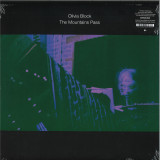
Black Truffle is pleased to announce The Mountains Pass, a major new work from Olivia Block. A key player in Chicago’s vibrant experimental music scene since the late 1990s, Block has developed an extensive body of work grounded in a personalised, at times emotive approach to the studio-based practices of the musique concrète tradition, while also encompassing improvisation, orchestral pieces, sound installations, and a sustained engagement with the piano. On The Mountains Pass, recorded by Greg Norman at Steve Albini’s Electrical Audio and meticulously edited and constructed over the course of three years, Block pushes into new terrain, introducing her singing voice and drums played by Jon Mueller into flowing assemblages that move seamlessly from ruminative organ tones and fragmented piano airs to explosions of sizzling synths and thundering percussion. Like many of Block’s past works, which include, for example, a sculptural installation using the sound of oyster beds, The Mountains Pass draws inspiration from nature and the animal world. Time spent in a particular mountain range in Northern New Mexico informs this suite of pieces, whose lyrics and titles refer particularly to animal life in the area. Beginning with bursts of white noise and delicate synthetic pops and squeaks, opener ‘Northward’ very soon reveals the special direction the album will take, as lyrical piano lines are joined by Block’s fragile voice, singing words written from the perspective of f2754, an endangered Mexican gray wolf who wandered more than five hundred miles from Arizona to New Mexico in 2022. The fragment of song quickly breaks off, leaving us with a ghostly electronic hum. ‘The Hermit’s Peak’ follows, one of two epic pieces at the album’s core. Beginning with chiming, almost harpsichord-like tones, it moves through episodes of spacious, ruminative piano, Jon Mueller’s sparkling cymbals, stuttering cut-up piano sounds, and a climax of keening organ and trumpet tones (performed by Thomas Madeja). Continuing the exploration of vintage keyboard and synth tones heard on Block’s Innocent Passage in the Territorial Sea (Room 40, 2021), the music sometimes suggests the great outer-limits works of 70s Italian prog figures like Franco Battiato or Arturo Stalteri in the languorous drift of synthesizer, organ, and piano tones and the meticulous yet organic flow of its construction. ‘Violet-Green’ opens the second side with another epic journey, its lyrical content concerning ‘a mysterious bird die-off and a forest fire’. Block’s crystalline voice and rich piano chords at times call up the restrained chamber songs of Janet Sherbourne, but fragmented and threaded through passages of woozy pitch-bent keyboards, hypnotic distant thuds, tinkling bells, and searing distorted synth tones. On ‘f2754’, the freedom of the roaming wolf surges through dense layers of rapid keyboard attacks and long organ tones over a propulsive drum performance straight out of Animal Magnetism-era Arnold Dreyblatt. This distinctive sound world is then reencountered in a darkened mirror image in the uneasy, metallic shimmer of the closing ‘Ungulates’, named in reference to a heard of elk roaming through the mountains. Like Battiato’s Clic or Gastr del Sol’s Upgrade & Afterlife, The Mountains Pass inhabits the underexplored terrain where the beauty of song coexists with a radical formal openness, illuminating the deep musicality and warmth that have been present in Block’s work all along.
Advitam Aeternamour, Cléa Vincent's third album, will be released on 29 March 2024 by Midnight Special.
If the 90s gave us “French touch,” then the 2010s ushered in “French pop,” and it was in the midst of this revival that Cléa began her artistic journey. As early as the music video for
“Achète-le-moi” from her debut LP Retiens mon désir (2016), we witness the singer striking selfie-like poses with her French pop comrades (La Femme, Bertrand Burgalat), appearing pell-mell on screen in the form of their vinyl records. Since then, whether singing with Philippe Katerine or co-producing (and composing) Jeanne Balibar's D'ici là tout l'été (2023), Cléa Vincent has effortlessly carved out a niche for herself in the French pop scene. The advantage of being a “jack-of-all-trades” — Cléa is a writer, composer, and producer — is that her music casts a wide net. Both highly acclaimed in the indie circuit and “as seen on TV” (on Quotidien, among others), she has also enjoyed a stint as the host for web-TV show Sooo Pop, for which she regularly interviewed a plethora of French artists. Beyond France, the singer tours extensively. After a run of concerts in Europe, Asia, North and South America, it was her visit to Latin and Central America that inspired Tropi-cléa (2017-2020-2022). The three EPs bathed in a tropicalist glow do more than just dip their toes in the water; they mark a deep desire to escape in a post-lockdown world.
In between these projects emerged Cléa’s LP Nuits sans sommeil (2019). The album quickly became an instant classic and lives up to its name, since Clea never seems to stop — writing, composing, singing, or dancing. Mixed by Stephane ALF Briat, who has lent his magic touch to records by Phoenix, Bonnie Banane, Air, and Flavien Berger, Cléa Vincent's third LP Advitam Aeternamour proves once again that her music is in perpetual renewal. The artist takes risks both in her pursuit for innovative sounds and in the themes she tackles: coming out, incest, grief...and of course, she will always be a true romantic at heart; there’s no need to be ashamed of loving love. Cléa’s songs are full of “explicit lyrics,” but not in the typical sense: rather than ringing harsh and raw, her words are tinged with sweetness and melancholy, at the risk of shocking less sentimental listeners.
Written hand-in-hand with Raphaël Léger, her creative soulmate for the last ten years who also recorded and produced the album, Advitam Aeternamour features lyrics charged with Epinal and equinox imagery. On the poignantly sober title track, sudden flashes of light are padded by tinkling synthesizers swathed in the voices of an angelic choir, as also heard on “Nuit de Yalda.” Cléa offers a modern take on 90s house music (“C'est Ok”) and 2-step garage (“Free Demain”). Particularly influenced by The Beloved, she is not above dipping pop songs into the electronic melting pot to get them through the club door (“État Second,” where we “turn up the BPM”). And whether on “Shut down ma tête,” or “Douce Chavirée,” Cléa pushes the champagne cork down even further so that the party never stops. The bass gets louder, the rhythm intensifies — the melodies of these eternal hits are an invitation onto the dance floor, lit up by her smile.
As depicted in the soothing embrace that appears on the album artwork, the bright psychedelic hues are the perfect complement to her therapeutically inclined synthetic pop. Even if they tackle themes such as breakups, Cléa's songs, which are vitamin-packed and deep on the surface, are intended to heal and repair. “Se laisser partir,” with its light vocoder echoes, emulating the vocal shadow of a loved one, is an optimistic breakup song. Advitam Æternamour gives us life, from birth to grief — and in the middle, wild, beating passion. If her songs resonate with us, it's because Cléa speaks to us in her songs, as heard on the girl power anthem “Free demain,” where she addresses the listener as a friend (“put the pedal to the metal and you’ll take off for the stars”). When she shares the microphone with Jacques on “État Second,” enveloped by the sounds of unidentified musical objects, the complementary nature of the two artists is evident. The album is as much a tribute to the healing virtues of music as it is a self-portrait of Cléa inhabited by her art. Ad vitam æternam and with love.
Khôra is the medium Matthew Ramolo uses to delve deeply into initiatory world-building by way of sound, image, and lyrical prose. Figuring wholly realized art-myths which distill and rouse the numinous while provoking the visceral and cathartic, Khôra intricately collages studio documents of ritualized instrumental performances, introducing overdubs by transient, heteronymic personae which dismantle stable points of reference in the music and open uncommon planes of consciousness.
"Gestures of Perception" is Khôra’s first double album with a supporting artbook and features a fascinating array of sources subjected to patterned assembly, poetic layering, and the elevations of the heart. Deft handling of modular synthesis is palpably central, while feedback, erhu, keys, flute, contact electronics, guitar, field sounds, and various percussion objects (rattle and frame drums, seed pod sticks, random metal objects, meditation bowls, kalimbas, bells) all serve to provide breathing structures and energetic contours that guide and scaffold inner and outer journeys into the far-near. Prominent across the record's span is a home-built, solenoid drum machine, responsible for the alive and askew techno-archaic flows and conceived as the album’s "rhythm seed”. The music on Gestures is teeming with organic and alien textures, soaring drones, inter-dimensional noises, and emotionally resonant melodies; balanced on the fringes of exotica and meditative trance, with capacities that untether the listener from the ballast of limited reality.
Operating hermetically in the penumbra of Toronto's cultural scene for well over a decade, Khôra has been invested in self-publishing handcrafted editions of spiritually driven recordings which led to the LP/CD reissue of inaugural album "Silent Your Body Is Endless" by Constellation. Khôra has toured extensively in North America and Europe both solo and in collaboration with Picastro, Nick Kuepfer (Hrsta,1/4 Tonne), and Brandon Valdivia (Mas Aya, Lido Pimienta), generated over a hundred hours of unreleased, bewildering drone through durational performance with experimental outfit Nidus (Marc Couroux, Jason Doell), composed for live dance and independent film, been commissioned by MaerzMusik, and seeded and co-run the now defunct music and art venue Ratio in Toronto.
Nia Archives is the star at the forefront of the latest era of jungle. Since her emergence in 2020, her collagist soundscapes have helped bring the sound to a new generation of clubgoers (though fair warning: don’t call her a “revivalist” – she’s the first to point out that the scene never went away). So when it comes to talk of the 24-year-old producer, DJ, singer and songwriter’s much-anticipated debut album, the odds are you’re thinking of a full-length record of weightless jungle tracks with basslines so intense they’ll leave your ears ringing.
But the reality of the Bradford-born, Leeds-raised artist’s first ever album – while very much replete with that exquisite jungle sound she does so well – is also doing something a little different. On the thrilling and freeing Silence Is Loud, Nia Archives is looking to make music for beyond the rave. As she explains: “I think music can be experienced in different ways, and there’s different kinds of music for different scenarios. Say you’re at a festival listening to music with thousands of other people, that can feel really uniting. But then you might listen to an album on your own in the bus, or in a taxi; and this project is definitely more a record to sit and listen to than a collection of club tracks.” Nia is intent that Silence Is Loud is taken in as a full body of work of something “more song-focussed, putting interesting sounds on jungle.” It means that this is a record which finds gloomy Britpop, warm Motown, soaring indie, a love for Kings of Leon’s Aha Shake Heartbreak, skittering IDM, Madchester, classic rock, old skool hardcore and more, woven and fused into her ragga and junglist tapestry, all layered with feeling, imbued with her songwriterly lyricism about loneliness, relationships, family, navigating her 20s, and the intense potential power of silence.
The vast sonic palette on Silence Is Loud comes down to Nia’s broad array of influences through her life. With her Jamaican heritage, Nia remembers hearing jungle as a child via her nana, as well as at Bradford Carnival, where she was drawn to the soundsystem culture, dancing carefree on the floats in the parade. The first album she ever bought was Rihanna’s debut, Music of the Sun, and she also went to Pentecostal church back then, and was obsessed with gospel. Aged 16, she moved to Manchester, where she didn’t really know anybody: and so, her solution to meeting people was going out. “Partying was a huge part of my life,” she says, “They used to do little freestyle cyphers at the house parties and I would join in – that’s kind of how I got into singing.” She had found music boring at school, but in meeting all these new people she became interested in making her own music as a hobby. “I was making boom-bap kind of stuff which I didn’t really like in the end,” she laughs, “My lyrics are quite deep, so on a hip-hop beat it all sounds really depressing. I wanted people to dance to my music.” And so she began experimenting with faster tempos alongside that melancholy songwriting, teaching herself how to make beats on Logic: “It’s all been a lot of trial and error, really.”
Nia went to study music in London, and was also interested in visual art, making collages and VHS: “Before the music, I was trying to make a visual archive of my life and the people around me,” she explains, “And then my music was like my diary, and a sonic archive, as well.” Hence, she paired the word “archives” with her middle name, Nia. To this day, in her spare time she’s working on pulling together a documentary on the global nature of the jungle scene.
Back on those first two EPs, Headz Gone West (2021) and Forbidden Feelingz (2022), she honed that junglist sound, painting it with new flecks of colour and vibrance. It was only after she started releasing work that she realised pursuing music could be a viable life path for her. The decision has been paying off ever since. Nia Archives placed third in the prestigious BBC Sound Poll for 2023, alongside garnering a nomination for the Brit Awards’ Rising Star prize, plus wins at the DJ Mag, NME, the MOBOs and Artist and Manager Awards. She has also toured the world – be it North America, Europe or Asia – and even opened a show in London as part of a little something called Beyoncé’s Renaissance World Tour. She’s renowned as a party-starter in her own right, too, with takeovers at Glastonbury, Warehouse Project and her own Bad Gyalz day event. She’s done official remixes for the likes of Jorja Smith, had a huge summer hit with her Yeah Yeah Yeahs rework ‘Off Wiv Ya Headz’, and worked with brands like Corteiz, Nike, Flannels, Burberry, FIFA and Apple. In just three years, it’s fair to say that Nia Archives has become a need-to-know name in dance music.
But Nia is not interested in being one fixed thing. Building on the terrain from her third EP, Sunrise Bang Ur Head Against Tha Wall, the universe of Silence Is Loud is not totally unfamiliar territory; but it’s still emblematic of a bolder scope than we’ve heard from the artist before. Working with Ethan P. Flynn (the songwriter and producer known for his work with FKA twigs and David Byrne), the resulting record is an impressive feat of deftly-sculpted textures; sometimes big and euphoric, like the wobbly, lusty bass of ‘Forbidden Feelingz’, or elsewhere notably gentle and quiet – see: the gorgeous, surprisingly drumless ‘Silence Is Loud (Reprise)’, a heartfelt number that sits somewhere in the school of Adele. “I really sharpened my songwriting skill on this project,” Nia says, “I was really intentional about what I was writing about, and I really loved co-producing with Ethan. His process is so different to anyone I’ve worked with before, and he’s got a kind of DIY set-up like me.” Flynn’s flat overlooks the Barbican, adding that unquantifiable futurist urban quality that the area holds to the music. The pair enjoyed the collaborative process so much that the album was done within three and a half months.
Perhaps this is why Silence Is Loud maintains an exuberant immediacy while still being sleek and spacious, interspersed with flourishes of metallic beats, lush melody and topped with her sugary but powerful vocal, floating over it all. There is an intimacy to the record, perhaps in part due to Nia writing most of her lyrics while sitting in bed in her flat in Bow (once a bedroom producer, always a bedroom producer). You can hear it on the refrain for lead single ‘Crowded Roomz’, which finds rippling guitar lines cutting taut through the beats as Nia refrains: “I feel so lonely crowded rooms.” The song is an examination of life on tour, constantly surrounded by people, but not necessarily those she can be herself around; more than that, the track is exemplary in the category of sad bangers.
Silence Is Loud often finds itself in that push and pull between melancholy and euphoria. There’s a celebration of her unconditional love for her younger brother (the title track), a rumination of an evening with an Irish boy she met by Temple Bar (‘Cards On The Table), or a letter to herself on the light and airy ‘Unfinished Business’, even coming to terms with a lover having a past they haven’t quite processed yet (“nobody comes with a clean slate”). The latter was recorded the week after a music festival, and accordingly captures Nia’s vocal in its not quite healed, husky state.
Nia’s work is always a snapshot of where she’s at when she’s making it. This might not be the debut album you were expecting, but that’s what makes Silence Is Loud so special. Nia Archives has learned the rules of her sound, and is unafraid to break them, pushing jungle and herself into new, unchartered territories that, in turn, go some way to map the history of the greats of British dance music. More than that, it plants her firmly in that lineage.
HoneyLuv impresses on her Crosstown Rebels debut with ‘Right Spot’, accompanied by remixes from house heavyweights Dennis Ferrer and Byron The Aquarius Unveiling her first solo production of 2024, the DJ Mag North America ‘Best Breakthrough Producer’ 2023 winner showcases a deeper side to her growing sound, backed by a pair of unorthodox remixes from two of house music’s favourite names.
One of the most hotly-tipped artists within the current house landscape, it’s safe to say Cleveland-born, London-based DJ/producer HoneyLuv arrived in 2023 and hasn’t looked back since. Riding high following a whirlwind twelve months, featuring as one of Radio 1’s Future Stars, Tomorrowland’s ‘20 of 2023’, and as a DJ Mag North America cover star, plus being selected as one of Beatport’s ‘Beatport Next: Class of 2023’ and most recently as one of Spotify’s ‘Mint Artists To Watch’, her 2024 account opens with a big label debut as she heads to Damian Lazarus’ iconic Crosstown Rebel for the first time. Paying homage to the rich house history of Chicago, she unveils her latest single, ‘Right Spot’ - joined by a double-dose all-star remix cast in the form of house icons Dennis Ferrer and Byron The Aquarius, two individuals who need little introduction.
Groove-laden and rich, harnessed by the alluring vocal at the heart of the production, ‘Right Spot’ is an excellently crafted trip through varying shades of house music as slick percussion and vibrant leads accent hazy textures to offer up a future-focused cut with nods to the past.
Dennis Ferrer’s interpretation sees the NYC icon switch things up as he veers towards the after-hours with a bubbly, stripped-back take that leans on colourful stabs, sweeping melodies and off-kilter drum shots. To close, Alabama’s finest, Byron The Aquarius’ remix ups the tempo and launches right into the action as tunnelling grooves and skippy hats take hold for an energy-charged ride.
• In the 70s ‘Happiness Is Here’ was the standard, Motown-influenced, Northern Soul play by legendary Detroit artist Tobi Lark. By the 80s and 90s soul fans tastes had matured and the slower and deeper ‘Challenge My Love’ took over to such an extent that it was the go-to Lark recording. The final twist was the discovery that its flip, the moody and bluesy ‘Sweep It Out In The Shed’ was a new floor-filler to spin to the R&B-loving dancers.
• What was considered a moderately-priced collector’s item is now fetching four figure sums. Our Repro recreates that longed-for pressing, but with a colourful twist.
To abandon animals for music – and avant-garde jazz at that –, could seeming shocking to some people. However, it is exactly what Manuel Villarroel did, as he was a vet for three years before leaving his native Chili for Europe and a career in music. And though the animals may have suffered, the world of music can be grateful.
Born in 1944, Manuel Villarroel lent an ear to the best pianists from North America: Oscar Peterson and Erroll Garner then Herbie Hancock, McCoy Tyner and Cecil Taylor. Manuel left Santiago in September 1970 to participate in the Contemporary Music Workshop in Berlin. To pursue his musical career, he rapidly decided to remain in Europe.
The following year in Paris, Manuel began a quartet with saxophonist Jef Sicard (who would also play with his brother Patricio, in the Dharma Quintet). But the group would rapidly expand: Villarroel and Sicard added Gérard Coppéré (saxophone), William Treve (trombone), François Méchali (bass) and Jean-Louis Méchali (drums). And with the arrival of Sonny Grey, a Jamaican trumpeter heard ten years earlier with Daniel Humair, the Matchi-Oul Septet was complete.
Complete and ready: on May 8th, 1971, Matchi-Oul was in the studio for Gérard Terronès’ Futura label. The septet recorded seven of the pianist’s compositions. A succession of tracks which flow magically from one to the next: from the first drum strokes to the last deep notes of the bass, the successive waves roll over the piano and whistle through the wind instruments. And when they all come together it gives even greater force to Villarroel’s beautiful songs. Terremoto is a masterpiece of collective expression: but what else could we expect from a “supergroup’’ of this stature?
Anna Gréta goes gentle...into her second album on ACT, “Star of Spring”. The Reykjavik-born pianist, singer and a songwriter, who has lived in Stockholm since 2014, has her own way of approaching the art of quiet, artful, deeply personal songs, often drawing inspiration from the beauty and power of Iceland’s natural landscape. Her 2021 ACT debut "Nightjar in the Northern Sky" was named after a bird, and this follow-up album lands gracefully on a flower, the “glory of the snow”, also known as the "star of spring", which symbolises the ending of winter and the arrival of spring.
But look closer, and there are always other levels of meaning. Her "Nightjar”, the rare bird she once saw in front of the northern sky, was a metaphor for the search for the things which are special and essential. In fact, almost all of Anna Gréta's lyrics have more than one significance, and her storytelling has now taken a leap forward on "Star of Spring". She says of the little flower on the title track: "I wasn't just inspired by the way it takes over the meadows in spring and turns them from green to blue, but also by the fact that it blooms because it is compelled to do so. It cannot do anything else."
Anna Gréta's starting point to creating music was and is the piano. She first studied classical music, then switched to jazz. She only started singing later, when she was writing the songs for Nightjar and wanted to express herself in words. Anna Gréta's debut as a singer, pianist and songwriter earned her international acclaim: Downbeat Magazine called it „an album with the metamophoric diversity of a year’s seasons and a voice like the everchanging colours of the Northern lights“, France Musique “a remarkably immersive experience” and Jazzwise “starkly beautiful”.
On "Star Of Spring" Anna Gréta has further developed her individual style. Her vocal lines can resemble piano motifs, often doubling them and resonating with an impressively quiet vibrato, sometimes quirkily reminiscent of Björk, at other times with the brooding ease of Norah Jones. The album also bears a very distinctive production style. For each of the songs, Anna Gréta has created her own little world of choirs, rhythmic textures and various smartly used keyboard instruments. The album ranges from the hymnal and elegiac - in "She Moves" or in the title track - to the playful and cheerful "Space Time" or the extremely pared-down melancholic ballad "Denouement". And even if the general mood of the music exudes above all warmth and comfort, Anna Gréta also deals with serious topics, such as the forced birth control of women in Greenland during the 60s and 70s in the song "The Body Remembers".
There is a directness of expression and emotionality, even sensuousness about the new album, and that is not least because Anna Gréta’s band has developed and become a properly played-in unit with the experience to take this album’s more complex arrangements in its stride. The sheen and brightness of her piano playing is contrasted with a deeper voice, that of her father Sigurður Flosason's bass clarinet, on three tracks. "This album is more playful and experimental," she says. "A lot of things were easier for me than on the first album. And while I was still completely focussed on my own world then, now I was even more conscious and aware of what was going on around me."
The result is music that is rooted in jazz, but at the same time goes far beyond it in a very subtle and deeply touching way.
In 2005, an 18-year-old Raphael Gimenes left the sunny shores of Brazil behind, embarking on a journey to a distant and wintry land. "Dinamarca," the Portuguese name for Denmark, became his new home, where he has lived for almost two decades. Today, he presents his third album, a deep exploration of his life in Scandinavia. Rather than being a nationalistic tribute, "DINAMARCA" tells chapters from Gimenes" life story as a Brazilian living in the northern corners of the world. It guides us through the enchanting nordic woods, the vast fields stretching to the horizon, and the timeless sea resting beneath an endless sky. The melodies of blackbirds, the dances of red deer, and the whispers of ancient oaks form the backdrop for his musical stories. Within his songs, we experience moments of deep solitude and boundless inspiration, moments where reflection and creative passion intertwine. Gimenes skillfully turns the power of love into harmonies, dedicating songs to both his companion and his closest friends. Beyond these experiences, he leads us on journeys to Denmark"s neighboring lands, Norway and Sweden, where revelations and encounters with the mystical found their way into the lyrical fabric of his songs. The album"s orchestration includes Gimenes" vocals and the resonant chords of his classical guitar. Accompanying him throughout the album are Jan Kadereit"s multilayered percussion, and Lucas Delacroix"s bass synth, who also plays the electric guitar at times. The music further unfolds with the nuances of a string quartet, and a brass quintet, both recorded in the tropical highlands of Minas Gerais. Other guest musicians feature on individual songs, such as pianist Sebastian Macchi, flautist Flavia Huarachi, cellist Lucas Almeida, and singers Gaby Echevarria, Cecilia Pahl, and Cris Ferro. Gimenes has garnered acclaim and accolades across continents. His debut release, "Raphael Gimenes & As Montanhas de Som," delved deep into the rhythms and traditions of Brazil. It rose to prominence as the top Brazilian release in 2016 in Holland and was hailed as a "conceptual masterpiece" in Japan. His second album, "A Tongue Full of Suns," co-produced with Faroese multi-artist Teitur, ventured into the English language, blending Gimenes" inspirations from the world of prog-rock. Danish rock legend TimChristensen praised it as "top-shelf neo-folk," while Brazilian website80minutos described it as "hypnotizing." The music within "DINAMARCA" delves deep into the soul of a man who embraced a new land with open arms, while staying true to his roots. It unites elements from both of Gimenes" prior works, embarking on a journey across new musical horizons. The result is music that transcends borders, weaving itself into an intricately beautiful tapestry - a soul that has learned to harmonize with two worlds.
- A1: Moon's Milk Or Under An Unquiet Skull (Part One)
- A2: Moon's Milk Or Under An Unquiet Skull (Part Two)
- B1: Bee Stings
- B2: Glowworms/Waveforms
- B3: Summer Substructures
- B4: A Warning From The Sun (For Fritz)
- C1: Regel
- C2: Rosa Decidua
- C3: Switches
- C4: The Auto-Asphyxiating Hierophant
- C5: Amethyst Deceivers
- D1: A White Rainbow
- D2: North
- D3: Magnetic North
- D4: Christmas Is Now Drawing Near * Featuring – Robert Lee, Rose Mcdowall
- E1: Copal
- E2: Bankside
- F1: The Coppice Meat
- F2: Ü Pel (Insense Offering)
Red in Clear Vinyl[57,35 €]
First compiled as a double CD in 2002, Moon's Milk (in Four Phases) is a suite of four EPs that Coil released seasonally via their in-house Eskaton imprint across 1998. The line-up for these sessions were John Balance, Peter "Sleazy" Christopherson, Drew McDowall, and William Breeze. Recorded primarily at their home studio in Chiswick, London on the eve of a permanent relocation to the small seaside town of Weston-Super-Mare, the collection has long loomed as a pivotal and pinnacle work in the group's discography, but has never been officially reissued, or repressed on vinyl. Time has only ripened its tapestry of regal strangeness. Arranged sequentially in tribute to the equinoxes and solstices, Moon's Milk captures Coil at a revelatory crossroads, leaning deeper into improvisation, spontaneity, and sound design. "Moon's Milk or Under an Unquiet Skull" initiates the proceedings on Spring Equinox, a two-part netherworld organ séance woven from vocal drones, cathedral keys, seasick strings, and opiated undertow. From there, Summer Solstice skews lighter but no less incantational, with Balance embracing his voice-as-instrument across lucid dream torch songs ("Bee Stings"), purgatorial spoken word ("Glowworms/Waveforms"), sultry chamber pieces ("Summer Substructures"), and falsetto ravings ("A Warning From The Sun (For Fritz)"). Autumn Equinox exudes more of a pensive and twilit mood, from the Rose McDowall-sung folk ballad "Rosa Decidua" ("I hear your voice sing near to me / I've put away the poisoned chalice (for now) / And lie down amongst the flowerbeds") to hall-of-lords hallucination "The Auto-Asphyxiating Hierophant" to the liminal string-plucked classic "Amethyst Deceivers," featuring excellent alien guitar by Breeze layered with Balance's oft-quoted couplet: "Pay your respects to the vultures / For they are your future." The album's final chapter, Winter Solstice, is its most swooning, remote, and ceremonial. Opener "A White Rainbow" stirs strings, layered choral vocals, and shivering rhythm into an imploding burial hymn. "North" oscillates bleakly, a ghost in the machine murmuring opaque prophecy ("This black dog has no owner / This black dog has no odour"), while "Magnetic North" is its inverse, a guided meditation of gently flickering software and surreal chakra poetics ("Red rose filling the skull / Yellow cube in the lower pelvis / Silver moon crescent below the navel"). The suite fades to grey with a traditional English carol ("Christmas Is Now Drawing Near"), rendered like an executioner's song by Rose McDowall's doomed, beautiful voice. The Dais box set includes the entirety of the rare Moon's Milk Bonus Disc CD-R / 2019 Threshold Archives Copal CD, which includes three collaborations with Thighpaulsandra. This material is as rich and intoxicating as the previous four phases, ranging from electro-acoustic singing bowl rituals ("Copal") to dissonant electronic recitations of visionary Angus MacLise poetry ("The Coppice Meat") to ominous classical melancholia ("Bankside"). Once again, Coil confirm the vastness of their confounding, infinite alchemy, explored and refined across decades of experimentation - both sonic and bodily. From postindustrial to post-everything, theirs is an art untethered, in the wilds of its own design.
Steffi's fourth solo album, The Red Hunter gets remixed! This killer package with remixes by 9 artists close to Steffi's heart, represent her musical bandwidth with a very diverse mix from ambient, IDM, broken beat to electro, techno, and drum & bass! The special vinyl version opens with Convextion aka E.R.P who delivers his signature with a 10 minute ultra deep, beautiful, techno/electro journey. Italian talent Rosati drops a high energy chord techno monster and UK duo Tracing Xircles throw us in a deep trippy bath with their mixture of IDM with a lush broken beat banger!
Except from Rachid Taha, who allowed himself a few forays into the teeming, vibrant heaths of techno, no raï singer other than Cheb Malik has ever ventured into this terrain known for its abundance of sound. If you know about Malik Adouane's ancestry, this is hardly surprising. Born in Librecourt, near Lens, he comes from a union between an Italo-Celtic mother who instilled Western sounds into his ears and a father, a former miner born in Biskra (north-east Algeria), a palm grove near the desert, musically renowned for its lively diwan that could be called Saharan opera. In addition, the town is renowned for its chakhchouka, a dish called after its rich blend of various ingredients and spices. Just like Malik’s music, as he was a fan of James Brown, Barry White, classical Arabic and raï music. He had been thinking about it from the beginning, but the dream took a long time to materialize. In January 1986, many raï idols turned up in Bobigny, France, for a historic and seminal festival. In the midst of the audience, the young man, dressed in black leather, provided security for the concerts of many stars before becoming one himself. He would rub his eyes, not because he was dazzled, but because they were clouded by a nostalgia that remained him of itself. So, with his head full of sounds warmly recommended by the best DJs, he set out, a little provocatively, to position himself at the cutting edge of music with a new concept called "After raï". It combined the sweet and precious past with an almost uncontrollable creative audacity. It's a balm made in a test-tube-studio from a mix of Arabic melodies and lyrics - a kind of "Arabeat", and the arrogant modernity produced by samplers, electronic spinning, roaring bass and guitars made for house music. The pinnacle of the record is a masterful cover of Isaac Hayes' Shaft, which set dancefloors on fire in Paris, London, Ibiza and New York, and became internationally known thanks to its presence on a Paris Dernière compilation curated by French musician and DJ Béatrice Ardisson along with Claude Challe's iconic Buddha Bar series. Now, shall we dance?