“I wanna wake up brand new” Enumclaw lead-singer / guitarist Aramis Johnson sings to begin Save the Baby, their massive-sounding debut full-length, out via Luminelle Recordings. The album is a swing for greatness; a collection of life-affirming and deeply personal songs about the importance of chasing after your dreams. Enumclaw is Aramis, guitarist Nathan Cornell, drummer Ladaniel Gipson, bassist (and Aramis’ younger brother) Eli Edwards. Working alongside producer Gabe Wax (Soccer Mommy, Crumb, Fleet Foxes), Enumclaw's Save the Baby delivers an album where on each track the band plays with dynamics while taking their songwriting to the stratosphere. Save the Baby is an album about stepping into your purpose, about the determination it takes to not give up on yourself in the midst of heartbreak and setbacks. It’s not a stretch to imagine a younger version of the band getting a glimpse of the future and freaking out by knowing their destiny of making it as a rock star has landed on their doorstep. For fans of all things J Mascis / Dinosaur Jr, Built to Spill and all things 90's Pacific Northwest.
Поиск:deep north
Все
Hailing from Asheville, North Carolina, Town Mountain is the sum of all its
vast and intricate influences — this bastion of alt-country rebellion and
honky-tonk attitude pushed through the hardscrabble Southern
Appalachian lens of its origin
With their latest album, Lines in the Levee, Town Mountain creates a collage of
sound and scope within the same template of freedom found in the round-robin
fashion of the musical institution that is The Band — a solidarity also found in the
incendiary live shows Town Mountain is now revered for from coast-to-coast, this
devil-may-care gang of strings and swagger.Recorded at Ronnie's Place (part of
the Sound Stage Studios) on Music Row in the heart of Nashville, Lines in the
Levee is a bona fide workshop in the seamless blend of Americana, country,
bluegrass and folk roots — this crossroads of deep influences and cultivated
visions each member of Town Mountain brings to the table.
3am Recordings brings you its debut album, from label boss Al Bradley. While it would be much easier to get some huge name in for this who is previously unrelated to 3am, it was never going to be like that here. Staying true to the ethos of the label, it was important that this milestone was a reection of the label and what it has always stood for. The move back to vinyl in 2015 has rmly planted the label back
in its place as one of the UK's most consistent for house music, retaining its value of working with artists who have been involved with the label over its 19-year history, or who have been rm supporters of 3am during its time. Over the 9 cuts there are a variety of vibes, 'Little Treasures' aims to cover a selection of sounds that represent Al's inuences & styles, having been buying records since the mid-80s &
playing vinyl as DJ since he got his decks in 1991. The past is important as it represents where we started, the future is equally important, as it's the area of the unknown & we have to embrace it...
Covering deep house, dub techno, broken beats, raw machine funk, beatless ambience & more, the album is one that is danceoor-aimed, but works beyond that area too. With support from the likes of Placid (We're Going Deep), Carlo Gambino (We_R_House), Lolu Menayed
(Rawtrax), Lars Behrenroth (Deeper Shades of House), Loz Goddard (Oath), James Reid (Sonet), Moodymanc (2020Vision) & many more, the album reaches right across the spectrum of electronic music.
B. Bravo (aka Adam Mori) returns to Bastard Jazz with the long-awaited follow-up to his 2017 debut LP, "Paradise," with a fresh full-length offering: "Vizionz." Replete with his signature future funk vibes, infectiously soulful grooves, and talkbox excursions, "Vizionz" sees the multifaceted artist take the classic West Coast into outer space. If B. Bravo's last album sought to get lost in paradise - enjoying the moment here and now - "Vizionz" looks forward, feet placed firmly in an established LA vibe, while the matured eyes of a veteran producer gaze keenly to the future.
"Vizionz" arrives following a slew of diverse singles, which highlight B. Bravo's stunning versatility as a songwriter, producer, and collaborator. Last year's "Lifted (What U Waiting 4)" came first, at the end of May, 2020, pairing g-funk talk-box verses and synth lines with rich vocal harmonies and a dance-floor-ready beat. Frequent collaborator Reva DeVito (Miami Horror, Kaytranada) makes a standout vocal appearance on "Fly Bye," the second single. Here, Adam surrounds Reva's vocals with ambient pads, a Dilla-inspired beat, and an irresistible bassline, while Reva's dreamily sings about getting away from it all. The final single, "Believe," sees Chuck Inglish (of the famed duo The Cool Kids) rhyme in his distinctive baritone over a bass-heavy instrumental meant to rattle some car stereos.
The singles offer a view into the rest of the album: Solo B. Bravo joints include "Moon Bounce," a talk-box boogie jam begging for late-night drives with the top down; the largely-instrumental synth improvisation, "Midnight Rider;" the upbeat "Penelope," which showcases Adam's vocal and harmonic prowess; a bumping g-funk interlude, with "Flip Out;" as well as the laid back album opener, "Da Essence."
Further vocal assists come by way of Sally Green on the flirty "10/10," and Rojai on the slow jam ""No Regrets" . Both singers have worked on B. Bravo projects in the past, with Rojai additionally joining forces with Adam to form the duo Kool Customer, whose self-titled debut album was released on Bastard Jazz in 2018. Two more hip-hop-leaning tracks are aided by Def Sound ("Back Times Two") and Nico Fasho ("Ms. Stardust"); leaning heavy into outerspace G-Funk Hip-Hop vibes.
Taken as a whole, "Vizionz" is a much needed boost of serotonin: Uncompromisingly positive, sometimes nostalgic, sometimes aspirational, but always funky. The range of styles is a testament to Adam's indelible production chops, songwriting skill, and ability to collaborate. While it has been a long 5 years since "Paradise," "Vizionz" proves more than worth the wait.
Born and raised in California, with roots in Japan, B. Bravo's signature style of Cosmic Funk and late night synth grooves have made him a favorite among DJ's, dancers, and music lovers worldwide. A tasteful producer, sought after remixer, party rocking DJ, master of the talkbox, band leader, and alumnus of the Red Bull Music Academy, Mr. Bravo is an accomplished performer both at home and abroad.
Heavily inspired by the synthesizer-enhanced R&B grooves of the late '70s and early '80s, B. Bravo debuted in 2009 with the seven-track "Analog Starship" EP. A deeper impression was made the following year with a shorter extended play, "Computa Love," the title track of which was supported by BBC DJ Benji B months prior to release. Additional strides were made with a batch of singles and EPs that followed throughout the next few years, as Bravo toured and performed at numerous festivals around the world.
His relationship with the Brooklyn tastemaker label, Bastard Jazz Recordings, began in 2016 with the 7" single "I'm For Real / Stay The Night' (which notably featured a Mr. Carmack remix of the latter). Bravo's debut solo LP quickly followed with 2017's critically acclaimed "Paradise" - which shone a light on vocalists and frequent collaborators Reva DeVito, Trailer Limon, Kissey, and Lauren Faith - with a remix album appearing six months later.
Additional solo releases have found a home on Gilles Peterson's Brownswood Recordings and Frite Nite, while production credits have appeared on releases from the legendary Blue Note Records, HW&W, All City, Friends of Friends, and Tokyo Dawn. B. Bravo has worked on projects with the likes of Salva, Mr. Carmack, Teeko, DJ Lean Rock, Reva DeVito, Lauren Faith, and Kate Stewart.
Having toured throughout the US, Latin America, Europe and Asia, he's shared the stage with performers like Erykah Badu, Flying Lotus, DāM-FunK, Hudson Mohawke, at a world-spanning range of festivals such as Detroit Electronic Music Fest, HARD LA, Northern Nights, Laneway Singapore, Sonar in Barcelona, Snowglobe, SXSW, Basscoast, Do-Over, Low End Theory, Boiler Room, and Soulection.
B. Bravo's "Vizionz" LP is out on Brooklyn's Bastard Jazz Recordings Spring, 2022.
The debut 7” vinyl from bloody/bath ‘Idle Hands’ is also the debut release by Kooky>Too, an offshoot of Kooky Records est 1996 (previous output including the acclaimed Durutti Column album ‘A Paean To Wilson’). This limited 7” is a peach – a gloomy neu wave banger for our gloomy fin de siècle death-spiralling age. And it’s increasingly relatable - previous bloody/bath digital single ‘Washed Out’ was championed by Lauren Laverne on 6 Music. Limited to 300 distro copies – black vinyl – 300gsm spined sleeve – reverse board printing. Sonically a bout of sleep paralysis, emotionally a midnight text from your favourite ex, bloody/bath are feverish, infectious and bewitching taking a post-punk passage that sounds distinctly their own. Catchy melodies dance throughout the tracks, disguising a heaviness, a desperation, drowning somewhere beneath the surface. Louder Than War describe the bloody/bath sound as “Stop-The-Clocks pop. Music to submerge yourself in. Wallow deep, then count your blessings”. Summoned initially by Northampton singer-songwriter Kailan Price, but now a fully fledged five-piece band, interest has been soaring following their incendiary live sets invited to play for Slow Dance at the Brixton Windmill, and other shows in London, Bristol and Bedford with Ritual Howls, Do Nothing and Minor Conflict. Bloody/bath have steadily created a large following on spotify with over 1.8 million streams and over 36,000 monthly listeners - particular streaming numbers in London, Berlin and across Eastern Europe - their sparse expanses, concrete homogeny and heavy atmospheres - perhaps testament to what bloody/bath are creating and why people are listening. Bruised and beaten down, a whole load of listeners can’t get enough of bloody/bath.
- A1: Rock This Mother
- A2: Talk To Me Girl
- A3: You Can Find Me
- A4: Check This Out
- A5: Jesus Going To Clean House
- A6: Hope You Understood
- A7: Is It What You Want
- A8: Love Is Everlasting
- A9: This Is Hip-Hop Art
- A10: Opposite Of Love
- A11: Do You Know What I Mean
- B1: Saving All My Love For You
- B2: Look Out Here I Come
- B3: Girl You Always Talking
- B4: Have A Great Day
- B5: Take My Hand
- B6: I Need Your Love
- B7: Your Town
- B8: Talk Around Town
- B9: Booty Head/Take A Little Walk
- B10: I Love My Mama
- B11: I Never Found Anyone Like You
Cassette[11,72 €]
As the sun sets on a quaint East Nashville house, a young man bares a piece of his soul. Facing the camera, sporting a silky suit jacket/shirt/slacks/fingerless gloves ensemble that announces "singer" before he's even opened his mouth, Lee Tracy Johnson settles onto his stage, the front yard. He sways to the dirge-like drum machine pulse of a synth-soaked slow jam, extends his arms as if gaining his balance, and croons in affecting, fragile earnest, "I need your love… oh baby…"
Dogs in the yard next door begin barking. A mysterious cardboard robot figure, beamed in from galaxies unknown and affixed to a tree, is less vocal. Lee doesn't acknowledge either's presence. He's busy feeling it, arms and hands gesticulating. His voice rises in falsetto over the now-quiet dogs, over the ambient noise from the street that seeps into the handheld camcorder's microphone, over the recording of his own voice played back from a boombox off-camera. After six minutes the single, continuous shot ends. In this intimate creative universe there are no re-takes. There are many more music videos to shoot, and as Lee later puts it, "The first time you do it is actually the best. Because you can never get that again. You expressing yourself from within."
"I Need Your Love" dates from a lost heyday. From some time in the '80s or early '90s, when Lee Tracy (as he was known in performance) and his music partner/producer/manager Isaac Manning committed hours upon hours of their sonic and visual ideas to tape. Embracing drum machines and synthesizers – electronics that made their personal futurism palpable – they recorded exclusively at home, live in a room into a simple cassette deck. Soul, funk, electro and new wave informed their songs, yet Lee and Isaac eschewed the confinement of conventional categories and genres, preferring to let experimentation guide them.
"Anytime somebody put out a new record they had the same instruments or the same sound," explains Isaac. "So I basically wanted to find something that's really gonna stand out away from all of the rest of 'em." Their ethos meant that every idea they came up with was at least worth trying: echoed out half-rapped exhortations over frantic techno-style beats, gospel synth soul, modal electro-funk, oddball pop reinterpretations, emo AOR balladry, nods to Prince and the Fat Boys, or arrangements that might collapse mid-song into a mess of arcade game-ish blips before rallying to reach the finish line. All of it conjoined by consistent tape hiss, and most vitally, Lee's chameleonic voice, which managed to wildly shape shift and still evoke something sincere – whether toggling between falsetto and tenor exalting Jesus's return, or punctuating a melismatic romantic adlib with a succinct, "We all know how it feels to be alone."
"People think we went to a studio," says Isaac derisively. "We never went to no studio. We didn't have the money to go to no studio! We did this stuff at home. I shot videos in my front yard with whatever we could to get things together." Sometimes Isaac would just put on an instrumental record, be it "Planet Rock" or "Don't Cry For Me Argentina" (from Evita), press "record," and let Lee improvise over it, yielding peculiar love songs, would-be patriotic anthems, or Elvis Presley or Marilyn Monroe tributes. Technical limitations and a lack of professional polish never dissuaded them. They believed they were onto something.
"That struggle," Isaac says, "made that sound sound good to me."
In the parlance of modern music criticism Lee and Isaac's dizzying DIY efforts would inevitably be described as "outsider." But "outsider" carries the burden of untold additional layers of meaning if you're Black and from the South, creating on a budget, and trying to get someone, anyone within the country music capital of the world to take your vision seriously. "What category should we put it in?" Isaac asks rhetorically. "I don't know. All I know is feeling. I ain't gonna name it nothing. It's music. If it grabs your soul and touch your heart that's what it basically is supposed to do."
=
Born in 1963, the baby boy of nine siblings, Lee Tracy spent his earliest years living amidst the shotgun houses on Nashville's south side. "We was poor, man!" he says, recalling the outhouse his family used for a bathroom and the blocks of ice they kept in the kitchen to chill perishables. "But I actually don't think I really realized I was in poverty until I got grown and started thinking about it." Lee's mom worked at the Holiday Inn; his dad did whatever he had to do, from selling fruit from a horse drawn cart to bootlegging. "We didn't have much," Lee continues, "but my mother and my father got us the things we needed, the clothes on our back." By the end of the decade with the city's urban renewal programs razing entire neighborhoods to accommodate construction of the Interstate, the family moved to Edgehill Projects. Lee remembers music and art as a constant source of inspiration for he and his brothers and sisters – especially after seeing the Jackson 5 perform on Ed Sullivan. "As a small child I just knew that was what I wanted to do."
His older brother Don began musically mentoring him, introducing Lee to a variety of instruments and sounds. "He would never play one particular type of music, like R&B," says Lee. "I was surrounded by jazz, hard rock and roll, easy listening, gospel, reggae, country music; I mean I was a sponge absorbing all of that." Lee taught himself to play drums by beating on cardboard boxes, gaining a rep around the way for his timekeeping, and his singing voice. Emulating his favorites, Earth Wind & Fire and Cameo, he formed groups with other kids with era-evocative band names like Concept and TNT Connection, and emerged as the leader of disciplined rehearsals. "I made them practice," says Lee. "We practiced and practiced and practiced. Because I wanted that perfection." By high school the most accomplished of these bands would take top prize in a prominent local talent show. It was a big moment for Lee, and he felt ready to take things to the next level. But his band-mates had other ideas.
"I don't know what happened," he says, still miffed at the memory. "It must have blew they mind after we won and people started showing notice, because it's like everybody quit! I was like, where the hell did everybody go?" Lee had always made a point of interrogating prospective musicians about their intentions before joining his groups: were they really serious or just looking for a way to pick up girls? Now he understood even more the importance of finding a collaborator just as committed to the music as he was.
=
Isaac Manning had spent much of his life immersed in music and the arts – singing in the church choir with his family on Nashville's north side, writing, painting, dancing, and working various gigs within the entertainment industry. After serving in the armed forces, in the early '70s he ran The Teenage Place, a music and performance venue that catered to the local youth. But he was forced out of town when word of one of his recreational routines created a stir beyond the safe haven of his bohemian circles.
"I was growing marijuana," Isaac explains. "It wasn't no business, I was smoking it myself… I would put marijuana in scrambled eggs, cornbread and stuff." His weed use originated as a form of self-medication to combat severe tooth pain. But when he began sharing it with some of the other young people he hung out with, some of who just so happened to be the kids of Nashville politicians, the cops came calling. "When I got busted," he remembers, "they were talking about how they were gonna get rid of me because they didn't want me saying nothing about they children because of the politics and stuff. So I got my family, took two raggedy cars, and left Nashville and went to Vegas."
Out in the desert, Isaac happened to meet Chubby Checker of "The Twist" fame while the singer was gigging at The Flamingo. Impressed by Isaac's zeal, Checker invited him to go on the road with him as his tour manager/roadie/valet. The experience gave Isaac a window into a part of the entertainment world he'd never encountered – a glimpse of what a true pop act's audience looked like. "Chubby Checker, none of his shows were played for Black folks," he remembers. "All his gigs were done at high-class white people areas." Returning home after a few years with Chubby, Isaac was properly motivated to make it in Music City. He began writing songs and scouting around Nashville for local talent anywhere he could find it with an expressed goal: "Find someone who can deliver your songs the way you want 'em delivered and make people feel what you want them to feel."
One day while walking through Edgehill Projects Isaac heard someone playing the drums in a way that made him stop and take notice. "The music was so tight, just the drums made me feel like, oh I'm-a find this person," he recalls. "So I circled through the projects until I found who it was.
"That's how I met him – Lee Tracy. When I found him and he started singing and stuff, I said, ohhh, this is somebody different."
=
Theirs was a true complementary partnership: young Lee possessed the raw talent, the older Isaac the belief. "He's really the only one besides my brother and my family that really seen the potential in me," says Lee. "He made me see that I could do it."
Isaac long being a night owl, his house also made for a fertile collaborative environment – a space where there always seemed to be a new piece of his visual art on display: paintings, illustrations, and dolls and figures (including an enigmatic cardboard robot). Lee and Issac would hang out together and talk, listen to music, conjure ideas, and smoke the herb Isaac had resumed growing in his yard. "It got to where I could trust him, he could trust me," Isaac says of their bond. They also worked together for hours on drawings, spreading larges rolls of paper on the walls and sketching faces with abstract patterns and imagery: alien-like beings, tri-horned horse heads, inverted Janus-like characters where one visage blurred into the other.
Soon it became apparent that they didn't need other collaborators; self-sufficiency was the natural way forward. At Isaac's behest Lee, already fed up with dealing with band musicians, began playing around with a poly-sonic Yamaha keyboard at the local music store. "It had everything on it – trumpet, bass, drums, organ," remembers Lee. "And that's when I started recording my own stuff."
The technology afforded Lee the flexibility and independence he craved, setting him on a path other bedroom musicians and producers around the world were simultaneously following through the '80s into the early '90s. Saving up money from day jobs, he eventually supplemented the Yamaha Isaac had gotten him with Roland and Casio drum machines and a Moog. Lee was living in an apartment in Hillside at that point caring for his dad, who'd been partially paralyzed since early in life. In the evenings up in his second floor room, the music put him in a zone where he could tune out everything and lose himself in his ideas.
"Oh I loved it," he recalls. "I would really experiment with the instruments and use a lot of different sound effects. I was looking for something nobody else had. I wanted something totally different. And once I found the sound I was looking for, I would just smoke me a good joint and just let it go, hit the record button." More potent a creative stimulant than even Isaac's weed was the holistic flow and spontaneity of recording. Between sessions at Isaac's place and Lee's apartment, their volume of output quickly ballooned.
"We was always recording," says Lee. "That's why we have so much music. Even when I went to Isaac's and we start creating, I get home, my mind is racing, I gotta start creating, creating, creating. I remember there were times when I took a 90-minute tape from front to back and just filled it up."
"We never practiced," says Isaac. "See, that was just so odd about the whole thing. I could relate to him, and tell him about the songs I had ideas for and everything and stuff. And then he would bring it back or whatever, and we'd get together and put it down." Once the taskmaster hell bent on rehearsing, Lee had flipped a full 180. Perfection was no longer an aspiration, but the enemy of inspiration.
"I seen where practicing and practicing got me," says Lee. "A lot of musicians you get to playing and they gotta stop, they have to analyze the music. But while you analyzing you losing a lot of the greatness of what you creating. Stop analyzing what you play, just play! And it'll all take shape."
=
"I hope you understood the beginning of the record because this was invented from a dream I had today… (You tell me, I'll tell you, we'll figure it out together)" – Lee Tracy and Isaac Manning, "Hope You Understand"
Lee lets loose a maniacal cackle when he acknowledges that the material that he and Isaac recorded was by anyone's estimation pretty out there. It's the same laugh that commences "Hope You Understand" – a chaotic transmission that encapsulates the duality at the heart of their music: a stated desire to reach people and a compulsion to go as leftfield as they saw fit.
"We just did it," says Lee. "We cut the music on and cut loose. I don't sit around and write. I do it by listening, get a feeling, play the music, and the lyrics and stuff just come out of me."
The approach proved adaptable to interpreting other artists' material. While recording a cover of Whitney Houston's pop ballad "Saving All My Love For You," Lee played Whitney's version in his headphones as he laid down his own vocals – partially following the lyrics, partially using them as a departure point. The end result is barely recognizable compared with the original, Lee and Isaac having switched up the time signature and reinvented the melody along the way towards morphing a slick mainstream radio standard into something that sounds solely their own.
"I really used that song to get me started," says Lee. "Then I said, well I need something else, something is missing. Something just came over me. That's when I came up with 'Is It What You Want.'"
The song would become the centerpiece of Lee and Isaac's repertoire. Pushed along by a percolating metronomic Rhythm King style beat somewhere between a military march and a samba, "Is It What You Want" finds Lee pleading the sincerity of his commitment to a potential love interest embellished by vocal tics and hiccups subtlely reminiscent of his childhood hero MJ. Absent chord changes, only synth riffs gliding in and out like apparitions, the song achieves a lingering lo-fi power that leaves you feeling like it's still playing, somewhere, even after the fade out.
"I don't know, it's like a real spiritual song," Lee reflects. "But it's not just spiritual. To me the more I listen to it it's like about everything that you do in your everyday life, period. Is it what you want? Do you want a car or you don't want a car? Do you want Jesus or do you want the Devil? It's basically asking you the question. Can't nobody answer the question but you yourself."
In 1989 Lee won a lawsuit stemming from injuries sustained from a fight he'd gotten into. He took part of the settlement money and with Isaac pressed up "Saving All My Love For You" b/w "Is It What You Want" as a 45 single. Isaac christened the label One Chance Records. "Because that's all we wanted," he says with a laugh, "one chance."
Isaac sent the record out to radio stations and major labels, hoping for it to make enough noise to get picked up nationally. But the response he and Lee were hoping for never materialized. According to Isaac the closest the single got to getting played on the radio is when a disk jock from a local station made a highly unusual announcement on air: "The dude said on the radio, 107.5 – 'We are not gonna play 'Is It What You Want.' We cracked up! Wow, that's deep.
"It was a whole racist thing that was going on," he reflects. "So we just looked over and kept on going. That was it. That was about the way it goes… If you were Black and you were living in Nashville and stuff, that's the way you got treated." Isaac already knew as much from all the times he'd brought he and Lee's tapes (even their cache of country music tunes) over to Music Row to try to drum up interest to no avail.
"Isaac, he really worked his ass off," says Lee. "He probably been to every record place down on Music Row." Nashville's famed recording and music business corridor wasn't but a few blocks from where Lee grew up. Close enough, he remembers, for him to ride his bike along its back alleys and stumble upon the occasional random treasure, like a discarded box of harmonicas. Getting in through the front door, however, still felt a world away.
"I just don't think at the time our music fell into a category for them," he concedes. "It was before its time."
=
Lee stopped making music some time in the latter part of the '90s, around the time his mom passed away and life became increasingly tough to manage. "When my mother died I had a nervous breakdown," he says, "So I shut down for a long time. I was in such a sadness frame of mind. That's why nobody seen me. I had just disappeared off the map." He fell out of touch with Isaac, and in an indication of just how bad things had gotten for him, lost track of all the recordings they'd made together. Music became a distant memory.
Fortunately, Isaac kept the faith. In a self-published collection of his poetry – paeans to some of his favorite entertainment and public figures entitled Friends and Dick Clark – he'd written that he believed "music has a life of its own." But his prescience and presence of mind were truly manifested in the fact that he kept an archive of he and Lee's work. As perfectly imperfect as "Is It What You Want" now sounds in a post-Personal Space world, Lee and Isaac's lone official release was in fact just a taste. The bulk of the Is It What You Want album is culled from the pair's essentially unheard home recordings – complete songs, half-realized experiments, Isaac's blue monologues and pronouncements et al – compiled, mixed and programmed in the loose and impulsive creative spirit of their regular get-togethers from decades ago. The rest of us, it seems, may have finally caught up to them.
On the prospect of at long last reaching a wider audience, Isaac says simply, "I been trying for a long time, it feels good." Ever the survivor, he adds, "The only way I know how to make it to the top is to keep climbing. If one leg break on the ladder, hey, you gotta fix it and keep on going… That's where I be at. I'll kill death to make it out there."
For Lee it all feels akin to a personal resurrection: "It's like I was in a tomb and the tomb was opened and I'm back… Man, it feels so great. I feel like I'm gonna jump out of my skin." Success at this stage of his life, he realizes, probably means something different than what it did back when he was singing and dancing in Isaac's front yard. "What I really mean by 'making it,'" he explains isn't just the music being heard but, "the story being told."
Occasionally Lee will pull up "Is It What You Want" on YouTube on his phone, put on his headphones, and listen. He remembers the first time he heard his recorded voice. How surreal it was, how he thought to himself, "Is that really me?" What would he say to that younger version of himself now?
"I would probably tell myself, hang in there, don't give up. Keep striving for the goal. And everything will work out."
Despite what's printed on the record label, sometimes you do get more than one chance.
Glenn Fallows and Mark Treffel released their first album, ‘The Globeflower Master Vol. 1’, on Mr Bongo in September 2021. With its lush, warm and timeless productions paying homage to classic 60s and 70s soundtrack composers, it was very well received and struck a chord with the scene’s connoisseurs. Louder Than War emphatically stated, "It’s impossible not to like The Globeflower Masters Vol. 1.”, with Gigwise echoing that praise “slickly compelling retro vibes”.
The Globeflower Master Vol. 2 is the slightly edgier and more grown-up sequel to Mark and Glenn's 2021 debut album. For this excursion, the Brighton-based duo wanted to lean a little further into their European film soundtrack influences, with particular inspiration mined from the works of Stefano Torossi, David Shire, and Roger Webb. This expansion of their sound builds upon the rich tapestry of cinematic funk à la David Axelrod, Serge Gainsbourg and Morricone that fashioned Vol. 1. Here the arrangements, melodies, and harmonies have been refined; only what is needed is left. Pulled into its vortex for the ride. This record doesn’t pull any punches.
The recordings are drenched in visual imagery; they stimulate the senses and invite the imagination to roam. Ethereal, hazy memories of lost summers are triggered; the beauty of listening to music when driving along a deserted road in the Italian countryside lined with cypress trees heading towards the sun, and beyond. As the musical journey progresses, we even take a voyage to another planet. Whether these memories are real or constructed recollections of scenes from film and television, the tracks evoke a feeling of nostalgia and comfort. Like all the best music, 'The Globeflower Masters Vol. 2' takes us out of ourselves even if it's only temporarily.
To consolidate the shape of the sound, drummers Timmy Rickard and Ollie Boorman (who also featured on Vol. 1) and John Maiden (Tricky collaborator) sprinkled their magic and forged their stamps onto the recordings. Collaborating with other talented musicians contributed to the picture Mark and Glenn wanted to paint. The ‘Globeflower Master Vol. 2’ is a fitting tribute to the music they love and care deeply about and a glorious addition to their musical world.
Middle Eastern psych-rock collective Al-Qasar"s debut album is an explosive mix of heavy Arabian grooves, global psychedelia and North African trance music. The band calls it "Arabian fuzz." Brazenly electric yet deeply connected to their roots, guests include Lee Ranaldo (Sonic Youth), Jello Biafra (Dead Kennedys) and Alsarah (Alsarah & The Nubatones). Mixed by Alain Johannes (Queens of the Stone Age, PJ Harvey). Al-Qasar was born in the Barbès neighbourhood of Paris," explains band leader Thomas Attar Bellier. "I"ve lived in Los Angeles, Paris, New York, Lisbon... I wanted to start a project that was in tune with the daily life of people living in these international cities, something diverse, radically colourful, with a fresh, contemporary outlook on what societies really look like today". The musicians came together from France, Morocco, Algeria, Egypt, and the United States. Shows followed, first in France, then in Europe and the Middle East. They put out an EP, the widely-lauded Miraj, recorded in Cairo. In the same time frame, Attar Bellier collaborated with the likes of Emel Mathlouthi and Dina El Wedidi, two of the most exciting names in contemporary Arab music. Drawing on years of experience working in Los Angeles studios, Attar Bellier produced the album. Who Are We? translates the sound that inhabited his head into something physical that stirs spirit, heart and feet. It is relentless and insistent, like a psychedelic celebration on the dancefloor, bristling with the kind of deep energy that makes Al-Qasar sound like the world"s most dangerous wedding band. During those years spent behind the control board, Attar Bellier made some good friends in the US, and they"ve been eager to help out on the project. Alain Johannes (Queens of the Stone Age, PJ Harvey) mixed the record, and Grammy-winner Dave Collins mastered it. The Dead Kennedys" Jello Biafra was a natural addition to "Ya Malak," his inimitable voice reciting a translation of Egyptian revolutionary poet Ahmed Fouad Negm, elevating the record"s social critique while showcasing the first-ever English recording of Negm"s work. Jello Biafra is not the only punk hero to appear on Who Are We? Lee Ranaldo of Sonic Youth layers textured, brooding guitar over the first two cuts, "Awtar Al Sharq" and "Awal." The sweeping drones embrace the Moroccan bendir groove to magical results. "Lee sent me upwards of eighteen guitar tracks," says Attar Bellier in amazement. "It was enough for an entire EP, and all so good. The hard part was deciding what not to use. Lee"s vibe just fit perfectly with what I was trying to do with the track." Who Are We? is an exhilarating album. Its intensity never wavers, music that pulls from the hypnotic roots of North African trance and threads it into a fabric with the elaborate beauty of Arabic scales and the shock and thrill of rock"n"roll. It is modern folklore, a reflection of the cross-cultural societies we"ve become.
) Mark Peters releases a second solo album Red Sunset Dreams on September 16. The follow-up to his hugely acclaimed debut Innerland, which was one of Rough Trade’s albums of the year when it came out in 2018, it features a number of guest musicians, including former One Dove singer and songwriter Dot Allison and pedal steel legend BJ Cole. Like its predecessor, Red Sunset Dreams is an album about an imaginary landscape. Whereas Innerland was an introspective psychogeographic trip inspired by Mark’s move back to his hometown of Wigan and the memories it stirred up, Red Sunset Dreams looks outwards, across the Atlantic to the United States of America, but very much through a UK prism; a representation of the subconscious Americana that’s buried deep in our collective psyches. The result is an incredibly evocative trip through the landscapes of old Western movies, exploring their links with the North West of England while touching on wider themes such as isolation, freedom and dementia. Sonically, it builds on the palette of the previous record with instrumentation equally inspired by the ascendant ambient Americana movement and classic country-rock. As a result it ends up somewhere between Acetone’s peerless I Guess I Would, Diamond Head-era Phil Manzanera and the dusty instrumentals on the second disc of David Sylvian’s 1986 classic Gone To Earth.Mark has spent the four years since Innerland recording and releasing Destiny Waiving, his third collaboration with Ulrich Schnauss, and recently followed up 2020’s new Engineers recordings (the ambient perambulations of Pictobug) with a reissue series of the band’s much sought after early albums. He has recently put a brand new band together and will be playing a series of live shows following the release of Red Sunset Dreams.
Restock
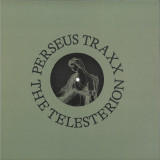
Northern powerhouse Perseus Traxx is on spaced out form with this four-tracker celebrating ancient Greek mysticism. Basslines as deep as sunken treasure, acid that’s worthy of the psychedelic origins of its name, and synths that spin off into infinity make up an uncompromising, mesmerising EP. As the sample on ‘Star Destroyer’ proclaims, “It’s all about the soul."
Nine-piece West Africa-via-Melbourne ensemble Ausecuma Beats and improvised collective Zeitgeist Freedom Energy Exchange, also known as Z*F*E*X, reveal a new collaborative EP out August 19 via Music in Exile.
Call it a match made somewhere in musical heaven, the minds behind Ausecuma Beats, comprised of members from Senegal, Mali, Cuba and Guinea, found they melded easily with Z*F*E*X following weeks of recording and sharing material remotely together.
Z*F*E*X themselves, an ensemble comprised of drummer Zeke ‘Ziggy’ Zeitgeist, keyboardist and producer Lewis Moody, bassist Matthew Hayes, and a rotating cast of guests, are prolific musicians themselves with weighty credentials spread across their base locations of Australia, the United Kingdom, and Europe.
Thus, from a backyard shed in Dandenong North, Australia, some of West Africa’s finest would record simple percussive tracks, which then surfed the airwaves via studios in Melbourne, Berlin and London, to finally land back on listeners doorsteps as a forthcoming collaborative EP, Deep Heat/Tropical Storm.
Starring two guest vocalists who are some of the most invigorating in their respective scenes - Latin America via Berlin star Gotopo, and Melbourne’s own Rara Zulu - the EP’s beginnings in percussive exploration are transformed into a must-have record of all bangers.
Expect the duelling minds of two highly respected acts to reveal a combined EP of complex compositions that remain wholly accessible thanks to addictive harmonies and melodies. Emotionally thrilling, and easy to love, listen and dance to.
Repressed !
Fuzzed out and psychedelic covers of rare and classic tracks performed by San Francisco's Monophonics.
Monophonics are back with a six-song EP that fuses the complimentary and explosive soul, rock and funk influences, proving themselves to be the rightful inheritors of the Bay Area’s impressive psychedelic soul sound. Mirrors is comprised entirely of cover tunes, except that I doubt you’ve ever heard of half the deeply funky and soulful originals that inspired these soulful, tastefully produced, and timeless Monophonics treatments. “We wanted to do a couple songs that were more familiar to people and then shine some light on groups we’re big into,” lead singer, keyboardist and co-producer Kelly Finnigan explains. It takes a lot of guts to cover your favorite songs, your van jams, that song you play as a shot of inspiration to break-up a marathon studio session. “Not only are these great songs, but these are artists that we listen to and are influenced by.”
“It’s not about making records that sound old, it’s about making records that sound cool,” Kelly says. Not that he and the other five members of Monophonics mind if you confuse their albums for classic-era recordings. Even musician friends regular mistake a sweaty and greasy Monophonics original for an unheard Bar-Kays’ side, or a deep soul cover tune might pass for an original to a novice ear, except that Kelly makes sure to give credit where credit is due, which is what they do explicitly on this EP, Mirrors.
Even the familiar tunes, iconic, better said, receive a fresh treatment as instrumentals, despite their ubiquity as vocal songs. The EP opens with a ‘tip of the cap’ to The Main Ingredient’s version of “Summer Breeze” before the band unfolds a hazy, mellow-funk opus worthy of inclusion on a Bob James CTI album. The next four songs, all featuring vocals, range from the lowrider soul ballad, a cover of the The Invicibles’ “My Heart Cries” with a pleading and plaintive vocal by Nicole Smith, to the psychedelic blues stomp, “Lying,” originally by the archetypical psychedelic soul band nearly signed to Motown, Black Merda. Add in Kelly’s monster vocal take on Frankie Valli and the Four Seasons Northern Soul classic, “Beggin” (to be released as a 7” single with an instrumental version on the b-side), and the deep-funk pop-soul of Nu People’s “I’d be Nowhere Without You” with back-up vocals by Jeanine Jones and Veronica Johnson, and you have a highly-entertaining, toe-tapping, backbone-slipping, masterclass in deep funk and soul.
The final tune is the band’s singular take on the Mamas and the Papas hippie standard, “California Dreaming,” as an explicit and heartfelt tribute to their fans in Greece. The discerning music lovers of Greece fell in love with Monophonics after their 2012 hit “Bang Bang” resulting in multiple tours of the Mediterranean, where these native Californians imbibed on the fine ouzo, good vibes, and Grecian hospitality. Gifted a prized bouzouki (a traditional Greek guitar) by a local fan, Monophonics’ guitarist Ian McDonald and band infused this classic pop song with a soulful cinematic air and Mediterranean flavor, evoking a tune from an imagined Fellini film with a soundtrack by David Axelrod.
Catch the band on the road this Spring to hear some of these songs, favorites and new tunes from their forthcoming LP.
- Sundown (Theme I)
- Pictures Of The Past
- Threat - Outskirts
- Urban Jungle
- Threat - Heavy Industrial
- Black Moonlight
- Garbage Worms
- Threat - Garbage Wastes
- The Coast
- Threat - Shoreline
- The Captain
- Moondown (Theme Ii)
- Floes
- White Lizard
- Threat - Superstructure
- Random Gods (Theme Iii)
- Stargazer
- Grey Cloud
- Threat - Chimney Canopy
- Lovely Arps
- Kayava
- Threat - Sky Islands
- Stone Heads
- Threat - Farm Arrays
- Albino
- Else I
- Pulse
- Deep Light (Theme Iv)
- Raindeer Ride
- Deep Energy
Color Vinyl[32,35 €]
2LP im Gatefold-Sleeve. 100% recyceltes & zufällig gefärbtes Re-Vinyl. "Black Screen Records, Videocult, Akapura Games und Komponist James Primate freuen sich darauf, euch erneut bei der akustischen Reise durch die seltsame "Rain World" zu begleiten. Nachdem der Soundtrack jahrelang ausverkauft war, wird er nun endlich neu aufgelegt. Dieses Mal auf 100% recyceltem & random-coloured "Re-Vinyl". Die Musik stammt von Videocult-Level-Designer und Komponist James Primate - mit Unterstützung von Lydia Esrig (die andere Hälfte des Chiptune-Duos BRIGHTMATE) und Rain World-Schöpfer Joar Jakobsson.Die Platte erscheint in einem Gatefold-Sleeve mit atemberaubenden Artwork von Allegra "Del" Northern. Zusätzlich enthalten ist ein 12" Kunstdruck mit weiteren Illustrationen von Del.
Milwaukee, Wisconsin's post-metal powerhouse, Northless returns after 5
years to create their most crushing and expansive effort to date, "A Path
Beyond Grief
" Seven songs of sludge and doom infused metal that expands on the deepest
recesses of depression and heartache.
For Fans Of… Dr. John, Allen Toussaint, The Faces, Joe Cocker, Leon Russell, Buddy Miles, The Meters, Father John Misty. "I just wanted to be honest about everything, from my musical influences to my story," muses Neal Francis. After years of dishonest living - consumed by drugs, alcohol, and addiction - such sincerity is jarring from the 30-year-old Chicago-based musician. Liberated from a self-destructive past and born anew in sobriety, Francis has captured an inspired collection of songs steeped in New Orleans rhythms, Chicago blues, and early 70s rock n' roll. There is a deep connection between Francis's childhood - his obsession with boogie woogie piano, his father's gift of a dusty Dr. John LP - and the songs he's created. The result is an astonishing collection of material without parallel in the contemporary funk and soul scene. The influences are unmistakable: the vocal stylings of Allen Toussaint and Leon Russell; the second line rhythms of The Meters and Dr. John; the barroom rock 'n' roll of The Rolling Stones; the gospel soul of Billy Preston; the roots music of The Band. Francis pays tribute to the masters but has his own story to tell: "It's the life I've lived so far." After playing his first live show in November 2018, Francis was signed by veteran agents Joshua Knight and Phil Egenthal of Paradigm Talent Agency. 2019 brought a North American tour supporting Australian band The Cat Empire as well as radio play on KEXP, KCRW's The Morning Becomes Eclectic, and BBC Radio 6. Francis and his four-piece band performed at festivals such as Summer Camp and the New Orleans Jazz & Heritage Festival and shared the stage with The Meters and Lee Fields & The Expressions. Francis continues to tour relentlessly to promote his own music. "I'm doing this to fulfill a drive within myself, but also to pay tribute to the gifts I've been given. And it comes from a place of immense gratitude. I've been given so much in my life, especially in the last two years, that this feels like a bonus." Also Available From Neal Francis: These Are The Days 7”.
Mr. K transports us to the golden era of the Loft with two disparate, but equally heavyweight classics from the Mancuso oeuvre mastered and cut loud, deep, and clear for club play.
First up is an edit of a track that embodies the spirit of early ’80s downtown New York City. Released in 1982, “Konk Party” was the band’s calling card and first hit, and represented their multicultural, no wave, hip-hop/disco hybrid perfectly, the opening sax riff itself a sly nod to Wild Sugar’s breakbeat classic “Bring It Here” that the Beastie Boys would later sample. A Loft staple — the video was even filmed there — “Konk Party” was also played widely across the influential clubs of the day, becoming an instant staple at Danceteria, Mudd Club, and other hot spots. The easy-going groove, heavy on the percussion and low-slung bass, complimented by bilingual lyrics from Angel Quiñones, has dated well, and sounds especially ready for action in this new edit from Mr. K, largely inspired by the original 12-inch’s choice Uptown Breakdown Mix. This is the first time “Konk Party” has been available on 7-inch.
The heavy percussion backing is perhaps the only similar element that links our A-side to its flip, but that only goes to show the breadth of styles that coexisted in the audio landscape of the Loft. “Hold On To Your Mind,” first released in 1970 by Northern Irish rock group Andwella, is a heavy, psychedelic tour de force that more than lives up to its cautionary, heady title. Mr. K has outdone himself with his new mix, a supercharged blend of extended percussion breaks — absent on previous 7-inch mixes — driving vocals, and fuzz guitar. For those who have never been able to track down the original single, an expensive proposition, and even for those who have, this new edit is certainly the definitive version.
Now onto its fourth volume, NuNorthern Soul’s annual Summer Selections EP is fast becoming a must-check for fans of slow-motion sunshine sounds, contemporary Balearic beats and sumptuous downtempo grooves.
Summer Selections Four showcases six hand-picked tracks from EPs and albums to be released by NuNorthern Soul in 2022. A genuine ‘cream of the crop’ or ‘best in class’ feel, with NNS label boss and curator Phil Cooper putting together a varied EP piled high with evocative melodies, atmospheric chords, tactile grooves and ear-catching instrumentation.
First to step up to the plate is experienced producer James Bright, whose cut ‘Amber’ offers a bubbly, colourful and analogue-rich stroll through mid-tempo Balearic house territory. The track is one of the highlights of Bright’s forthcoming Totem EP. It’s quickly followed by ‘Nana a Leon’ from Be.Ianuit’s Entre Dos Islas EP, a gorgeous mixture of deep bass, twinkling pianos, sultry synth-strings, sparkling synthesiser arpeggios, echoing machine drums and spoken word vocals from guest performer Marcos de la Fuente.
San Francisco’s Cole Odin offers a snapshot of his forthcoming Songs For Suns EP via ‘Growing’, a slow-motion sunset soundscape built around ethereal chords, chiming melodies and head-nodding drums, while Gold Suite’s ‘The Cowboy’ – taken from the On My Horizon EP – brilliantly joins the dots between jangling Americana, mid-‘80s Balearic reggae and sun-soaked instrumental synth-pop. While brand-new, it could easily be mistaken for the kind of obscure, hard-to-find gem that gets Balearic record collectors so hot under the collar.
Next up is another new signing to NuNorthern Soul, North of the Island, whose debut EP Feeling Free is undoubtedly a highlight of the label’s 2022 release schedule. ‘I Feel’, the track showcased here, adds attractive, sunset-ready musical flourishes to a chugging, delay-laden rhythm track and the kind if squelchy bass-line most often found in proto-house and early ‘80s electro-funk cuts. It’s a spaced-out, mind-altering delight.
Rounding off another sizzling Summer Selections excursion is ‘Smoke & Fly’ from fast-rising twosome Residentes Balearicos, an Ibiza-based Italian duo who impressed many with their 2021 EPs on Balearic Ensemble. Dusty, bass-heavy, drowsy and picturesque, the track is a simply gorgeous chunk of Balearic dub piled high with organic percussion, undulating acid lines and mazy solos. It provides a fittingly triumphant conclusion to another essential sampler EP from NuNorthern Soul.
Taking inspiration from the likes of Isaac Hayes and Lonnie Liston Smith, ‘Piggyback’ is up-tempo and simmering from the off, with synth strings building tension in the intro alongside a menacing guitar riff and haunting brass stabs.
‘Piggyback’ is a social commentary on the idea that we all become more successful only by associating with people higher up the ladder than ourselves.
‘Deeper In Love’ sees Corbin return to his soulful roots, drawing influences from the likes of Al Green, Syl Johnson and Leroy Hutson to create a smooth groove helped along by some stunning horns and backing vocals.
Speaking about the song Nick says, “Lyrically it was partly inspired by John Legend’s ‘Ordinary People’ - I wanted to write a love song about how challenging times can bring people closer together. The last year or so has really tested a lot of relationships and I felt it was important to have light and shade.”
Recorded at Ernie McKone’s Boogie Back studio in North London, Nick is supported by a stellar line-up of musicians including Mick Talbot on Hammond and Wurlitzer and the dream team horn section of Tom White (Labrinth) and Paul Jordanous (Rag 'n' Bone Man).
Picture the scene if you can. It’s Sunday evening at the Meakusma Festival, 2019. A small audience (in varying states of inebriation and recovery) sit patiently on the floor, drenched in soft sunlight. Fizzy Veins is set up to play - his guitar resting on his knees while he stares into his laptop with an expression displaying amusement and fear in equal measure. He tentatively speaks into the microphone. There’s a lot of reverb. I don’t think anybody has the slightest idea what he’s saying. I assume he’s delivering a joke, but it’s very hard to tell. People laugh. After yet more tweaks to his gear he starts to play some loose, bendy phrases on the guitar, and we are all gently vaporised up Mount Effervescent. Our benevolent guru sits at the peak, speaking in tongues to the freshly formed congregation. The beats start to roll out and the sun begins to set in the evening sky. Fizzy transitions and he continues his long distance narration from deep inside his own reverb. It sounds like he’s in another room. On another planet, more like.
Witnessing the show, as I did, left me wondering how he even manages to boot-up his computer.. let alone produce an album as brilliantly formed and coherent as this!
Yours sincerely,
A. Fizzyfan
Debut full-length collaboration from Jack Burton and Rory Glacken (Tourist Kid)
Follows Jack Burton's solo LP on Analogue Attic and Tourist Kid's solo LP on Melody As Truth
Early support from Ben Fester, Best Effort/DJ Earl Grey, Biscuit (Good Morning Tapes), Brian Not Brian, Ewan Jansen, Kato, Merve, Sleep D & Wax'o Paradiso
Dentistry is the dual energies of Rory Glacken and Jack Burton, Boorloo originals now living in Naarm. The pair have previously released an EP, "Ribbons," on their own Deep Water label, and a track on its local showcase comp "Greenhouse Vol. I" at the end of 2021. This transmission is their debut full length offering, channeled through hometown beacon Good Company Records.
"LP1" was created in unusual conditions between September and December of 2020, when the duo's shared Northcote studio became a site of remote collaboration. One person would start working on a track and leave the session open for the other, with no overlap of physical space shared. Responding to an invitation from GCR to make a record, the initial impulse was to write dance music. But what dance floor were these incorporeal partners writing for?
The album takes a spectral approach to the dance space, wrapping up air in a strata of textural tech, pulsing dub house and fractal illbience. Drawing on dub production techniques, "LP1" combines the structure of an ambient record with intricate percussive elements. Results are both atmospheric and material, abstract and palpable: a synthesis which expresses sonic relations of surface and depth, with the correlating mirage of light and shadow.
At times tinkering methodically and others in mercurial lurch, there is an immediacy to this album that stems from the way it was produced, using a mixing desk and outboard gear to rich and living effect. When we listen, we commune with the artists in the heat of working out of an otherworldly space, and feel every tweak and and turn. "LP1" is a current which carries the substance of process in communicable form. Intuitive and moving, breathing, dancing.