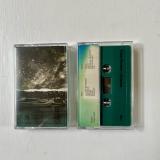
Ocean Moon - alias of producer Jon Tye (MLO).
In addition to running the long-standing label Lo Recordings, Tye has recorded under various names and been involved in numerous projects over the past three decades. Keen fans of the label may also notice that this isn't Tye's first collaboration with MFM; his work during the 1990's as part of UK ambient group MLO captured our attention years ago, leading to the release of their retrospective album 'Oumuamua' in 2021.
Releasing archival work alongside new material from an artist has been a fundamental aspect of Music From Memory's identity since we began the label, and is something that continues to bring us immense joy. With Jon continuing to produce work under a wide range of names to this day, the short step to releasing this new work was organic and natural. Working under the name Ocean Moon Jon carries echoes of his work with MLO into the modern day, weaving an ambient electronic music that radiates gentle positivity.
The title 'Ways To The Deep Meadow' is inspired by the poem 'Universal Solar Calendar' written by poet, mystic, shaman, and visionary Angus Maclise. Maclise began as the percussionist in an early iteration of La Monte Young's Theatre Of Eternal Music and later played with the Velvet Underground before moving to Nepal, where he wrote and published an impressive collection of poetry and music.
Side one of the album was created at a time when Tye had been exploring ideas around artificial intelligence, delving into books such as 'The Physics Of Immortality' by Frank J. Tippler, 'Novacene' by James Lovelock, and '12 Bytes' by Jeanette Winterson, seeking an alternative to the prevalent, negative views of AI. He was also inspired by the Buddhist perspective of AI as an integral part of consciousness evolution, as evidenced by the creation of a Buddhist robot that preaches in the Kodaiji Temple in Kyoto.
Side two consists of two long-form pieces, one composed for Janine Rook's 'Made In Dreams' exhibition and the other for Vix Hill Ryder's 'Wild Edges' film. For 'Made In Dreams', text from the exhibition catalogue was processed via the Holly Herndon Holly + app to create an environment that is simultaneously otherworldly and warm.
As with much of Jon's work, this music seeks to nurture an optimistic outlook in the listener, something he achieves here with subtlety and a truly delicate touch. The immersive ambient music of 'Ways To The Deep Meadow' reaches out to the listener like gentle trails of light, offering it's spells,invocations and enchantments to all who choose to listen.
'Ways To The Deep Meadow' will be released on 31st January 2025 on LP as well as digitally. Sleeve art and design by Michael Willis.
Search:deep ocean
Analog Fingerprints Vol. 0 is a compilation bringing together the early 2000s works of Marco Passarani under his Analog Fingerprints alias, collecting key tracks originally released on Rome’s Plasmek and Pigna labels.
For Numbers, the story starts long before the label itself. In their formative years, digging in Glasgow’s Rubadub, Passarani’s records felt like dispatches from a future city. Releases on his own Nature Records and on labels such as Generator and Interr-Ference Communications were mind blowing: rooted in Detroit techno, Chicago house and electro, yet pushing somewhere new. Much like fellow travellers Autechre, who would remix him in 2001, Passarani’s music balanced machine funk with restless experimentation.
Information was scarce, and you would hear these records first on the dancefloor or at listening stations in shops like Rubadub. Print fanzines like Ear and early web outposts such as Forcefield offered only fragments. But there was a palpable axis forming between Detroit techno and a new European wave of record labels including Skam, Rephlex, Clone, Viewlexx and Nature itself. It was the sound that defined Saturday nights at Rubadub’s ‘69’ parties in Paisley, just outside of Glasgow.
Passarani’s records, in particular, were instrumental in bringing together the future Numbers co-founders. Richard had already booked him pre-Numbers; meanwhile Calum (Spencer) and Jack (Jackmaster), then 16/17 year olds working alternate Saturdays in Rubadub, were so enamoured with the Roman sound that they travelled to Rome for the Bitz Festival in 2003 to seek out Passarani and Lory D at their source.
The first Analog Fingerprints release landed as a 12” on Plasmek in 2001, following the fractured, IDM-leaning 6 Katun material. For Passarani, the project marked a recalibration. A DJ first and foremost, he had moved into production via early computer setups, from a Commodore Amiga through primitive PC audio, Cubase and Logic, later experimenting with Ableton. The IDM scene had offered a playground for trial and error, but there was always a tension between abstraction and the dancefloor. Analog Fingerprints became the bridge: still intelligent, but with more dance than distance. After years of broken beats and complex arrangements, he wanted directness without surrendering identity.
Working closely with Francesco de Bellis and Mario Pierro in the Pigneto district, the trio formed Pigna as a vehicle for reclaiming a more accessible dance sound, deliberately steering away from the minimal wave beginning to dominate Europe. Sessions were fast, instinctive, often stretching late into the night with friends dropping by. It was a studio as social space, production as collective energy.
“In that constant search for balance, Analog Fingerprints was my way of expressing something closer to the classic dance floor. The track 'Tribute' - a tribute to my favourite early Detroit techno track of all time, 'First Bass' by Separate Minds - came after I realised I had almost lost my connection with the dance floor. The simplest step was to take inspiration from early Chicago and Detroit and twist it in our Roman ‘Pigna’ way. My goal was to create more accessible dancefloor tracks by mixing my unconscious Italo roots with my teenage love for that early US sound, ensuring the result was as far as possible from the minimal sound that was starting to dominate everywhere.” - Marco Passarani
Technically, the Analog Fingerprints tracks span a transitional era: Roland TR-909, SH-101 and Alpha Juno hardware met early software experiments. A Novation Drumstation rack stood in for the unattainable TR-808, syncing with TB-303 and TR-606. Yet the true secret weapon was Jeskola Buzz, a tracker-style modular environment that allowed step-by-step parameter control and strange melodic constructions, later exported into the audio sequencer. Even the lead on ‘Tribute’ came from an early PPG Wave-style plugin. It was hybrid thinking at a moment when digital tools still felt unstable but full of possibility for technologists like Passarani.
Behind the music sat Finalfrontier, a loose Roman collective orbiting Nature and Plasmek. Distribution and production were intertwined; importing obscure records into Italy built connections with like-minded outsiders across Europe and the US. Expensive phone bills and fax machines forged an “electronix network” that linked Rome to Clone, Viewlexx, Skam, Rephlex, Rubadub and Detroit’s Underground Resistance. There was a shared sense of survival and resistance, of operating against commercial systems.
Passarani recalls “The first time I found a sheet of paper inside an Underground Resistance 12” with info about upcoming releases... and a huge picture of Spock on the back. Imagine that: you love the music, you love Star Trek, and there’s someone on the other side of the ocean sharing those same values and sounds. It was the perfect match. We even gave our original company the suffix ‘Finalfrontier’: that says it all.”
Feedback in that era arrived physically: distributor faxes, conversations with visiting DJs, the experience of playing abroad and meeting kids who had connected with the records. Glasgow became a key node in a scattered outlier network. Passarani personally brought the first two Nature releases to Fat Cat in London, playing them in-store. Shortly after, a fax arrived from Rubadub in Glasgow requesting copies.
“I still remember that phone buzz and the fax paper slowly sliding out, with someone I didn’t know saying they wanted 75 copies of Nature 001. Or like the time we got a fax from the Rephlex crew just saying, “Hello Nature Records, Keep up the good work.” That was how we knew the message was getting through. It was a fantastic feeling; just one piece of thermal fax paper as an analog notification - the mood for the entire week would change.” - Passarani
The connection to Glasgow has since stretched across generations. As Passarani reflects, links often fracture as scenes renew themselves, but in Glasgow something different happened. New and old mixed seamlessly. There was a visible trust in what came before, and a willingness to carry it forward rather than discard it. Observed from Rome, it was deeply encouraging.
Analog Fingerprints Vol. 0 captures that moment of exchange: Rome to Glasgow, Detroit to Europe, experiment to dancefloor. It documents an artist recalibrating his sound and a network of scenes discovering one another in real time, connected by vinyl, faxes and shared intent.
- A1: Core
- A2: Anticipate
- A3: War Game
- A4: Mantra
- A5: Unlearn
- A6: Disarm
- B1: Open
- B2: Safe
- B3: Heal
- B4: Dmz
Demilitarize follows Nazar’s remarkable 2020 debut Guerrilla, which reprocessed Angolan kuduro music with rough textures, field recordings and media clips, telling a personal story of the civil war that exiled his family to Europe, while his father, a rebel General, fought a losing battle in the jungle back home. After Guerrilla, and an extended period of serious illness, now Demilitarize is motivated by a reckoning with mortality and the flowering of new love, turning the ‘rough kuduro’ of Guerrilla inside out.This is a deep sound world, genuinely dreamy, the arc of the album describing shedding the armour of trauma and surrendering to this new situation. A constant and unexpected aspect of Demilitarize is Nazar's gentle, submerged vocal. Insistent and mantra-like, it’s like a cross between Elisabeth Frazer, Arthur Russell and Frank Ocean, and the music is fragile and opaque in response. The rhythms of kuduro are still here,but move around his voice like fish around a swimmer, while precise sound design illuminates from different angles. Chords spiral, ripple and shoot through the beats giving tracks the loosest of settings; songs disassemble; vocals float off-centre.
2026 Repress
since his first ep tips' on luciano's label cadenza in 2007 producer and dj petre inspirescu emerged into one of the key figures of the romanian electronic music scene.
so far he released music on labels such as vinyl club, lick my deck or amphia. together with his buddies rhadoo and raresh he also launched in 2007 the label (a:rpia:r) - a platform where he, his two friends and many producers from romania and abroad released detailed grooving house and techno, that stands out with delicate structures and one-of-a-kind grooves.
both of his more dance floor oriented solo albums intr-o seara organica...' and gradina onirica for (a:rpia:r) are enlarged with melodies, sounds and harmonies that go beyond the usual characteristics of a dance album.
furthermore his love for classic musicians like mily alexejewitsch balakirev, alexander porfiryevich borodin or or nicolai andrejewitsch rimsky-korsakow can be felt in the album padurea de aur (opus 2 in re major) and two more eps that he released under the alias pensemble on the romanian label yojik concon in order to unite classical spheres with analogue electronic music production.
in february 2013 he also released his highly acclaimed fabric mix cd that only features dance floor leaning music produced by himself. with talking waters' he published in late 2014 his first 12inch on mule musiq that is now followed by the full-length album vin ploile' which he produced without the intention to entertain with easy to hook up rhythms, melodies and harmonies.
even tough he established himself as a internationally playing house dj that regularly performs at all major clubs, festivals and other party destinations around the globe: as a musician petre inspirescu always tries to enter new territories to explore with a heartfelt human touch the infinite space of sound.
for his latest album the man that originally comes from the eastern romanian town braila stepped away from his former experiments of melting classical spheres with electronic music. instead the 36-years old man from bucharest only used some piano, string and wind instrument elements and analogue electronics to arrange a gracefully deep ocean of sound.
all slow grooving tracks spread the atmosphere of live improvised sessions that are edited, tweaked and mixed to perfection. in-the-moment moods of strange and unusual analogue synth sounds groove in a fluid quality with subliminal bass shapes, latinate percussions, jazz rhythms and acoustic melodies.
together they create a gaseous kinetic atmosphere full of tangible rhythm patterns, delicate chords and ghostly modular synth pads - all mixed subtle to create space for the tones between the tones.
you can call it a hypnotic after hour album for after hours that are dedicated to a deep listening experience. you can tag his arrangements as brilliantly textured and musically super-charged ambient, which goes beyond the usual definition of the genre.
all nine suspenseful compositions seduce with a deep melodic sensibility, harmonic adventures and an overall rhythmic ambiance of freshness and laidback enthusiasm. together they represent a challenging auditory experience that will resonate in your mind long after the music has finished.
Following the celebrated reissue of Classics Vol. 1, Metroplex unveils Model 500 - Classics Vol. 2, a powerful new collection of essential works from Juan Atkins--pioneer of Techno and architect of some of the most forward-thinking electronic music ever recorded. Bringing together key cuts, rare mixes, and long-sought favorites from across Atkins' groundbreaking output, this compilation highlights the full spectrum of his sonic universe: deep, rolling machine funk, shimmering electro-techno hybrids, and timeless futurist grooves that helped shape generations of electronic artists. Each track has been carefully remastered to enhance its original energy while preserving the raw spirit and space that define the Model 500 sound. From expansive, atmospheric journeys to soulful vocal transmissions and Detroit-powered rhythmic science, Classics Vol. 2 presents Juan Atkins at his most inspired--an essential document of a visionary whose influence continues to echo across dancefloors worldwide. Three decades on, these tracks have lost none of their immediacy, imagination, or futuristic pull. Restored for a new era, Classics Vol. 2 celebrates the legacy of Model 500 with pristine sound and renewed force. Pure Detroit heritage. Eternal future music.
2026 Repress, LIMITED PEARL-DEEP-OCEAN COLORED VINYL
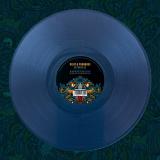
Dilby and Pornbugs team up on ‘Between Us’. Pornbugs celebrate 20 years of Bondage in 2026 and 21 years as a DJ/production team. Moving in fresh circles has always been an important part of their longevity, so signings so Selador and Sudbeat have exposed them to new ears showcasing their crossover sound.
Equally, on-form Dilby is having something of a renaissance with his chunky deep house sound now, finding increasing favour with the progressive house elite. Signed to a bewildering selection of labels from Glasgow Underground to Sudbeat, the world is his oyster.
Opening with ‘Hear Me Out’ their combined bumpy deep sound marries incredibly well. Uptempo and lively, this is the future sound of retro, and we are here for all of it. Next up, ‘Hold The Line’ joins the dots between deep and progressive house, keeping the funk and soul intact. Bass-led and groovy as hell, this is your new secret weapon. Play it loud!
‘Fade Into You’ is the first of the vinyl only tracks and marks a stark change of pace. Deeper, more soulful and markedly more thoughtful, this is modern deep house in its glittery new rave clothes. Pairing nicely is the flipside track ‘Beyond Fear’ which rumbles along with techy bass and a chunky groove.
The recordings on Volume II were captured in Copenhagen, Denmark on January 18, 2020. Guided as much by human instinct as by musical intention, the ensemble moved through the evening with a shared sensitivity…listening, responding, and trusting the moment as it unfolded. Though Morten McCoy admits to having felt quite ill that evening, nothing in the music suggests restraint. Instead, what remains is a vivid, playful exchange, where McCoy and Johannes Wamberg carry both Part I and Part II as a flowing conversation, speaking through sound rather than words.
Part I begins abruptly, almost throwing the listener back in time to the exact moment the improvisation was born. Jonathan Bremer steps to the forefront, providing a solid, melodic bassline as Kristoffer and Eliel, perfectly in sync, lay down a steady foundation for whichever voice chooses to rise above the rhythm.
This is also one of the few I Am An Instrument recordings to feature two guitarists. Johannes Wamberg leads the way, shaping the harmonic direction, while Steven Jess Borth II adds subtle rhythmic textures through muted palm work, deepening the groove without ever stepping into the foreground.
Part II unfolds with Morten McCoy on his Moog One, delivering a beautiful, expansive solo. Using a carefully chosen patch, the sound pulses through the rhythm, moving with the groove rather than above it, riding the beat like a wave through the ocean.
Shaped by trust, presence, and collective improvisation, Volume II captures a group deeply attuned to one another, allowing intuition and momentum to guide the unfolding form.
——
Volume III was recorded in Copenhagen on March 5, 2020. Little did anyone know that only days later, the world would be placed on pause for years. Captured just before that moment of global stillness, this session carries a heightened sense of presence, a final gathering before silence reshaped everything. Recorded in a space more commonly associated with a club atmosphere, the music draws on a different kind of energy and immediacy. With Eliel Lazo unable to attend, the group invited Victor Dybbroe of Girls In Airports to join on percussion, subtly reshaping the ensemble while preserving its core spirit. Part I opens with Steven Jess Borth II calling out on tenor saxophone, answered by Morten McCoy on Wurlitzer electric piano. The piece gradually unfolds into a meditative groove, patient and expansive, carrying the listener through an eight-minute journey of layered rhythm and restraint.
Part II begins with Jonathan Bremer on stand up bass, slowly joined by the rest of the ensemble as each voice enters with intention. Midway through, an unexpected vocal melody from Borth emerges, drenched in reverb and delay, later reappearing as a melodic line on the tenor saxophone.
Part III is led by Morten McCoy on Wurlitzer electric piano. His signature melodic language sets the direction, guiding the ensemble while leaving ample space for the music to breathe and evolve through collective improvisation. Reprise returns to the closing moments of Part II, its title reflecting its origin. The familiar groove reappears, transformed into a distinctly Jamaican-influenced rhythm, over which Borth delivers a final tenor saxophone solo, bringing the conversation to rest.
Any questions about any of these products feel free to get in touch and we'll help you out!
[a] a1. Part I [Vol.2]
[b] a2. Part II [Vol.2]
[c] a3. Part I [Vol.3]
[d] b1. Part II [Vol.3]
[e] b2. Part III [Vol.3]
[f] b3. Reprise [Vol.3]
Back in 2022, Is It Balearic? Recordings founders Coyote (AKA long-serving producers Richard Hampson aka Ampo and Timm Sure) took time out from releasing music on their own labels to deliver a near perfect mini-album on Phil Cooper’s similarly mind-ed NuNorthern Soul imprint, Everything Moves, Nothing Rests.
A superb exploration of their trademark sound, where gentle downtempo rhythms and nods to dub came cloaked in colourful ambient chords, sun-bright melodic motifs, organic instrumenta-tion and quirky spoken word samples, Everything Moves, Nothing Rests deserved a sequel. So, three and a half years on, the duo has delivered just that: a fine six-track EP that offers an even deeper and more atmospheric exploration of their signature sound.
It is a sonic approach that should now be familiar to Balearic en-thusiasts the world over. Aside from delivering a steady stream of singles, albums and remixes on their own imprint, Hampson and Sure have also showcased their skills and loved-up musical mis-sives on International Feel, Music For Dreams, Needwant, MM Discos and Citizens of Vice.
The Higher The Sky, The Deeper The Ocean, their hotly anticipated NuNorthern Soul return, is named in honour of a quote from Ped-ro Alonso’s documentary series On the Ship of Enchantment, an extended voyage in which the Money Heist movie star meets healers and masters of ancestral medicine across his native Mexi-co.
There’s naturally a meditative and slightly psychedelic sound to much of The Higher The Sky, The Deeper The Ocean, which offers a subtly varied exploration of Coyote’s style and influence. Yearning, soft-focus opener ‘Muted Beauty’ – the kind of immersive, effects-laden and sample-sporting ambient bliss found nestling on Fila Brazillia albums of the mid 1990s – is followed by the similarly gentle ‘Go All The Way’, where delay-laden acoustic guitars, spo-ken word snippets and gaseous chords stretch out atop a languid, slow-motion groove.
‘A Drop in the Ocean’ picks up the pace a little via a glorious hat-tip to turn of the 90s ambient house – all dub-wise bass, heady deep house sonics, spaced-out chords and half-buried references to sunrise-ready Balearic synth-pop records of the late 1980s. Late psychedelic guru Terrence McKenna appears in sampled form on ‘Dolce Far Niente’, a tabla-driven drift and musical hallucination which conjures mental images of lying in the Mexican desert, gazing intently at a starry sky.
In contrast, ‘Riviera Sound’ is a chunkier, brighter and more sun-splashed affair – all deep, dubby bass, sustained piano parts, punchy downtempo breaks and the duo’s trademark ambient pads – while superb closing cut ‘No Coincidences’ fixes jazzy double bass samples, twinkling keyboard motifs, subtle acid lines and Latin-laced percussion to a street soul-adjacent beat.
Heady, impeccably crafted and thoroughly enveloping, The Higher The Sky, The Deeper The Ocean is Coyote at their dazzling best. It marks another significant chapter in their ever-evolving musical journey.
Chronicle continues his journey through the cosmos on Spatial bringing a stunning array of inspired atmospheric bliss with Aqua Pura. A1 - Pure Alchemy Chronicle opens his latest EP for Spatial with a sprightly track, introduced with purposeful synthwork, echoing effects and a wonderful 808 bassline reminiscent of the late 90's Progression Sessions era. Energetic, layered breaks drive and build throughout Pure Alchemy with joyous vigor, while a cluster of subtle melodies intertwine across a varied and memorable mix from the label regular. A2 - Endless Ocean Next up Chronicle treats us to an amazing array of atmospheric synthwork with Endless Ocean, notes yoyoing across the soundscape through a gorgeous intro. Flecked with shimmering, buoyant melodies and bringing an immediate injection of pace, the breaks drop delivering a driving, distinctively head-nodding energy punctuated by a blippy micro melody and suitably deep bass. AA1 - Shared Consciousness Opening with a playful intro featuring subtle hi hats, twisted bells and a classic film sample, Chronicle deftly juggles excitable effects with his inimitable cheery atmospheric style before a real feast for the ears and the feet arrives - breaks reminiscent of those long lost nights at Shepherd's Bush in 1998 bring an essential hypnotic energy to a track simply dripping with style and rhythm. AA2 - Water World Straight into the action with crisp two-step breaks, Water World needs no introduction as a myriad of atmospheric effects, samples and quirky melodies seize your attention for a decidedly dancefloor-friendly track for 160bpm heads. Beautiful breakdowns play their part as well as the subtle yet room-filling 808 bass, rumbling persistently beneath another remarkable track from one of Bristol's finest.
- A1: Starbase 17
- A2: Hold It Tenderly (Feat. Ernesto & The Basement Gospel)
- A3: L'arrivée (Feat. Fred Everything)
- A4: Horizon (Feat. Jorge Bezerra & Nathan Haines)
- B1: Enough... (Feat. Sarai Jazz & Dwaine Hayden)
- B2: Tentative (Feat. Sio)
- B3: Oceans Apart (Feat. Audrey Powne & Karizma)
- B4: You've Got This (Feat. Lyricl & Peacey)
- B5: Keep It Light (Feat. Amalia)
- C1: Biome (Shwayvertath) (Feat. Si Tew)
- C2: Can I? (Feat. Pete Simpson)
- C3: Cardiac (Feat. Oveous)
- C4: Falling Apart (Feat. Charles Webster)
- D1: Change The Rules (Feat. Kaidi Tatham)
- D2: English Gentleman (Feat. Clyde Beats. Jorge Bezzera & Octavio N. Santos)
- D3: Honey Bee (Feat. Natasha Watts, Omar, Jd73 & Octavio N. Santos)
- D4: Give Love (Feat. Erin Buku)
- D5: Beginnings (Feat. Aart Iveson & Rudi Iveson)
- E1: Grey (Feat. Sarai Jazz)
- E2: Let's Talk (Feat. Omar & Max Beesley)
- E3: Greed (Feat. Clyde Beats)
- E4: Twin Flame (Feat. Josh Milan)
- E5: Shine (Feat. Rona Ray)
- F1: Soul To Soul (Feat. Ziyon)
- F2: Youniversal Love (Feat. Osunlade)
- F3: Endless (Feat. Clara Hill)
- F4: World We Know (Feat. Imaani)
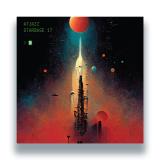
Atjazz presents his long-awaited 27-track long player "Starbase 17" — an epic odyssey through song and sound, offering a rich tapestry of styles that draws listeners into a wondrous sonic realm where rhythm, harmony, and imagination intertwine.
Taking inspiration from his extensive body of work, Martin "Atjazz" Iveson fuses his signature deep musicality with cutting-edge production to reach new creative heights. This time, he brings an exceptional ensemble of world-renowned collaborators aboard his cosmic vessel, each adding their own distinct brilliance to the voyage
Together, this stellar lineup consisting of Fred Everything, Nathan Haines, Sio, Karizma, LyricL, Peacey, Pete Simpson, OVEOUS, Charles Webster, Kaidi Tatham, Clyde Beats, Natasha Watts, Omar, Max Beesley, Josh Milan, Rona Ray, Osunlade, and Clara Hill joins Atjazz on a journey through sound, space, and emotion — where each track is a world of its own, yet all are united by a shared creative vision and boundless imagination.
Duality Trax welcomes the newly formed 9 Hours Ahead to the label with their debut release, complete with a remix from progressive royalty Bliss Inc. Landing in early 2026, Smooth Sailing traces a blissed-out sonic journey from the combined minds of San Francisco’s Namastrange and Amsterdam’s Breeze. Their cross-continental connection threads throughout the EP, with subtle nods to the vast ocean that separates them. The title track opens the release with a gentle drift: airy synths, angelic pads, and tribal percussion guiding listeners steadily out to sea. Meridian Space picks up the momentum, driven by a pulsating, everexpanding bassline. Namastrange’s whispered vocals weave between swelling orchestral pads, before the track mutates into a mind-bending acid line - perfect for a heads-down, eyes-closed dancefloor moment.
The B-side turns up theenergy with Transatlantic Dreams, a dancefloor-minded cut that nods to the golden era of San Francisco progressive and the Hardkiss legacy. Lush piano melodies, breakbeat interludes, rave stabs, and glimmering gated vocals collide in a warm, nostalgic swirl. Closing the EP, Bliss Inc. delivers a psy-tinged reinterpretation of Meridian Space - a dark, brooding acid workout that pulls the original into deeper, murkier waters.
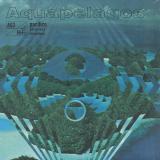
Presenting the third thematic volume on the “Aquapelagos" series - a collection of split LPs where selected artists offer their own take into water surrounded cultures and communities. After the initial release of the Anthology compilation Aquapelago in 2022 (Discrepant ,CREP91) and the split LP Atlantico by Lagoss & Banha da Cobra (Keroxen, KRXN027) as well as the direct collaboration LP Índico by Mike Cooper & Pierre Bastien we proudly introduce an the third volume in the series in the shape of no other than two inspiring artists, Vica Pacheco and Pak Yan Lau. Two different sound journeys inspired by the majestic and peaceful Pacific Ocean, the vastest, largest and deepest ocean of our planet.
Vica Pacheco’s composition takes a calm meditation approach where water flutes and synths brush shoulders to create a ever expanding mind journey whereas Pak Yan Lau’s ambitions Neo classical piece, The Ocean in Us, talks about that grand overwhelming feeling, that vast space deep under, on the bottom of the Pacific. Both compositions were recorded and created with the particular wet acoustics of the Tank in Santa Cruz de Tenerife in mind.
From Philip Hayward and Matt Hill’s liner notes: ‘’The Pacific is a complex space, comprising a third of the Earth’s surface. A cascade of islands runs along its eastern flank, down from the Kamchatka peninsula, through Japan, Taiwan, The Philippines, Melanesia and on to Australasia. In its watery heart the islands of Micronesia and Polynesia stretch across huge distances, north-east to the Hawaiian archipelago, south east to Rapa Nui and south west to Aotearoa and Chatham island. Closer to the shores of the Americas lie Tierra del Fuego, the Galapagos Islands, Haida Gwaii and the Aleutians. This is a space that resists easy characterisation. The Pacific laps the shores of Japan and Chile, the beaches of Australia’s East Coast and the cold, damp coasts of British Colombia and Alaska alike. Indeed, the space is so vast that it is a world in itself and one rarely navigated in its entirety. In this manner, strands of genres and the songs that reflect them are components in an intricate mesh of associations.‘’ Philip Hayward and Matt Hill, April 2022
- 1: Urn Burial
- 2: The Redness In The West
- 3: The Third Migration
- 4: They Came Like Swallows
- 5: The Living Theater
- 6: The Oceans Are Crying
- 7: Insight
Black Vinyl[30,67 €]
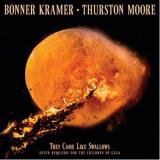
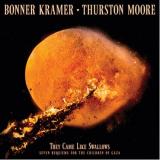
They Came Like Swallows is the first album-length collaboration between Thurston Moore and Kramer (now officially Bonner Kramer), two giants of alternative/ experimental music. The accomplishments and influence of these two artists in the world of independent music cannot be overstated and the result of their artistic union is a startlingly cohesive statement that burns through landscapes of primitive outsider rock, avant-garde composition, progressive ambient and further locales boldly and beautifully unnamable. “Kramer and I reconnected in Miami, Florida, a few years back, many many years after each of us had departed NYC on separate life adventures. It was only a matter of time before Kramer and I started making plans to record together and with his irrepressible due diligence he quickly set up a mobile recording contraption in the pad I was decamped in, the Florida sunshine flowing through the palm leaves, lithe lizards skittering across the windowsills, and we just went for it.
Kramer had the idea to cover a Joy Division tune, a left turn from the improvisations we had been tracking, though wholly in keeping with both our sensibilities of light and dark unifying in transcendent songwriting, both of us devotees of 'the song' as well as 'the freedom.’ What transpired is They Came Like Swallows, a session we immediately felt should exist as a prayer to the war-torn souls of the families of Palestine continually decimated by the brutality of genocide. We agreed beyond words to offer our music as a sonic activism and as a beneficent energy. This album is our duo exchange for human dignity, it is our soul music for any semblance of a peaceful planet.” ~ Thurston Moore “For the first time in our nearly 45 years of friendship, we had identical time windows open to make a record together,” recounts Kramer. After all this time not a moment is wasted as the duo immediately taps into the heightened core of improvisational tension across these seven offerings. Volcanic opener “Urn Burial” notches a similar historic union (John Cale and Terry Riley) to meet the circumstances of the moment, with swirling mists of organ and pounding toms over guitar that thickens the atmosphere with jagged, grimy dissonance.
Solemn strings open the second track, “The Redness In The West,” with Kramer’s cello and viola in dueling bow beneath the high tension drive and sustain of Thurston’s electric guitar, tapping out a Morse code of tension that mounts endlessly into a fog of inevitable war by the end. Moore and Kramer’s sense of experimentalism is in free and full grandeur throughout They Came Like Swallows, though the duo keep a strong and constant sideways eye on melody, composition and architecture, to the ends that any strict lines between song and improvisation are blurred beyond qualification.
As if to punctuate this point, Swallows closes with a nightwork cover of Joy Division’s “Insight,” a doleful coda that breathes out with a solemn inner grace under Thurston’s instantly stylistically recognizable guitar melodies as they weave into he and Kramer’s unison voices. As the lone vocal piece and only traditional ‘song’ form on the album, “Insight” is unique to this set and as a closing statement draws connective lines back to the kind of dynamic, electrified melodicism that wove deep, melancholy patterns into the untamed fire of Sonic Youth’s Sister and Daydream Nation. In the album’s final moments, the two voices repeat the lyric “I’m not afraid anymore” as mantra, underscoring the heavy, unsettled themes and methods that preceded it. Kramer describes the creative process of They Came Like Swallows: “I had composed and recorded a few pieces at my home studio over the course of a couple weeks. Thurston was spending the winter in South Florida, so I flew down and spent a few days recording his guitar parts in his home there. Watching him spontaneously compose his parts was pretty astonishing, to say the least. Once we'd finished working on those pieces, we began improvising and following wherever the music pointed us, and another few pieces were born. We got straight to it, without anything driving us other than the joy of finally working together.
My personal goal was to remain present and catch as many surprises as I could from Thurston's guitar work, and there were plenty during those few days. We had a fucking blast.” Thurston’s contributions here will be readily familiar to any acolytes of his other works, the through-line between his inspired playing, cradled in Kramer’s meticulous, solid arrangements. “If I had to make this record again, I'd do it all exactly the same way,” Kramer says. “It’s like jazz, you don't think about it. You just do it. It was miraculous, and you don't fuck with a miracle.”
They Came Like Swallows is the first album-length collaboration between Thurston Moore and Kramer (now officially Bonner Kramer), two giants of alternative/ experimental music. The accomplishments and influence of these two artists in the world of independent music cannot be overstated and the result of their artistic union is a startlingly cohesive statement that burns through landscapes of primitive outsider rock, avant-garde composition, progressive ambient and further locales boldly and beautifully unnamable. “Kramer and I reconnected in Miami, Florida, a few years back, many many years after each of us had departed NYC on separate life adventures. It was only a matter of time before Kramer and I started making plans to record together and with his irrepressible due diligence he quickly set up a mobile recording contraption in the pad I was decamped in, the Florida sunshine flowing through the palm leaves, lithe lizards skittering across the windowsills, and we just went for it.
Kramer had the idea to cover a Joy Division tune, a left turn from the improvisations we had been tracking, though wholly in keeping with both our sensibilities of light and dark unifying in transcendent songwriting, both of us devotees of 'the song' as well as 'the freedom.’ What transpired is They Came Like Swallows, a session we immediately felt should exist as a prayer to the war-torn souls of the families of Palestine continually decimated by the brutality of genocide. We agreed beyond words to offer our music as a sonic activism and as a beneficent energy. This album is our duo exchange for human dignity, it is our soul music for any semblance of a peaceful planet.” ~ Thurston Moore “For the first time in our nearly 45 years of friendship, we had identical time windows open to make a record together,” recounts Kramer. After all this time not a moment is wasted as the duo immediately taps into the heightened core of improvisational tension across these seven offerings. Volcanic opener “Urn Burial” notches a similar historic union (John Cale and Terry Riley) to meet the circumstances of the moment, with swirling mists of organ and pounding toms over guitar that thickens the atmosphere with jagged, grimy dissonance.
Solemn strings open the second track, “The Redness In The West,” with Kramer’s cello and viola in dueling bow beneath the high tension drive and sustain of Thurston’s electric guitar, tapping out a Morse code of tension that mounts endlessly into a fog of inevitable war by the end. Moore and Kramer’s sense of experimentalism is in free and full grandeur throughout They Came Like Swallows, though the duo keep a strong and constant sideways eye on melody, composition and architecture, to the ends that any strict lines between song and improvisation are blurred beyond qualification.
As if to punctuate this point, Swallows closes with a nightwork cover of Joy Division’s “Insight,” a doleful coda that breathes out with a solemn inner grace under Thurston’s instantly stylistically recognizable guitar melodies as they weave into he and Kramer’s unison voices. As the lone vocal piece and only traditional ‘song’ form on the album, “Insight” is unique to this set and as a closing statement draws connective lines back to the kind of dynamic, electrified melodicism that wove deep, melancholy patterns into the untamed fire of Sonic Youth’s Sister and Daydream Nation. In the album’s final moments, the two voices repeat the lyric “I’m not afraid anymore” as mantra, underscoring the heavy, unsettled themes and methods that preceded it. Kramer describes the creative process of They Came Like Swallows: “I had composed and recorded a few pieces at my home studio over the course of a couple weeks. Thurston was spending the winter in South Florida, so I flew down and spent a few days recording his guitar parts in his home there. Watching him spontaneously compose his parts was pretty astonishing, to say the least. Once we'd finished working on those pieces, we began improvising and following wherever the music pointed us, and another few pieces were born. We got straight to it, without anything driving us other than the joy of finally working together.
My personal goal was to remain present and catch as many surprises as I could from Thurston's guitar work, and there were plenty during those few days. We had a fucking blast.” Thurston’s contributions here will be readily familiar to any acolytes of his other works, the through-line between his inspired playing, cradled in Kramer’s meticulous, solid arrangements. “If I had to make this record again, I'd do it all exactly the same way,” Kramer says. “It’s like jazz, you don't think about it. You just do it. It was miraculous, and you don't fuck with a miracle.”
- Sea Ceremony (With Karen Vogt)
- Coral And Bones (With Laryssa Kim)
- Heartsea (With Vargkvint)
- Naiade (With Mt Fog)
- Moon And Mirrors (With Elska)
- Daughter Of The Abyss (With Singer Mali)
- Serpentine (With Nightbird)
- Their Voices Rise Above The Waves (With Yellow Belly)
- For All The Sea-Girls (With Nadine Khouri)
- Ondine (With Astrid Williamson)
- Coda (With Camilla Battaglia)
Oceanine, Jolanda Moletta’s third album and her first for Beacon Sound, is a powerful and ethereal statement of artistic community. Expanding on her previous work, each track represents a collaboration with a different female vocalist, with the foundational elements being generated entirely by her own voice. By turns haunting, enchanting, and inspiring, you won’t want to come up for air once you’ve been pulled under. Representing a
musical practice that is distinctly feminist, this is an album with a longer view in mind, to an age when the altars were to goddesses and women were centered as powerful beings representing the earth’s cycles of regeneration and renewal. Oceanine then, in all its beauty, can be viewed as an album of survival. It is deeply transportive, accessing something that lies within all of us. As the late, great Lithuanian folklorist and archaeologist Marija Gimbutas noted, “We must refocus our collective memory. The necessity for this has never been greater as we discover that the path of 'progress' is extinguishing the very conditions for life on earth.”
Jolanda Moletta is a multimedia artist and one-woman electronic choir. She creates wordless compositions through extended vocal techniques, integrating wearable-controlled live processing, alongside symbolic visuals. Moletta considers her performances to be a collective ritual and creates her Sonic & Visual Spells following the cycles of nature and the moon. Jolanda's 2022 critically acclaimed album Nine Spells was released on the Ambientologist label, followed by Night Caves on Whitelabrecs in 2025. Moletta’s artistic practice is a radical and spiritual journey through sound art, ritual, and the symbolic archaeology of the feminine.
Oceanine is inspired by sirens, water nymphs, and the timeless call of the sea. At its core lies Jolanda’s deep, lifelong connection to the Mediterranean Sea and to the ancient and modern myths and folklore that have emerged from its waters. Growing up by the Mar Ligure, Jolanda was surrounded by stories carried by salt, wind, and waves: legends of sirens, echoes of ancient voices, and the sea as both origin and oracle. This intimate relationship with the Mediterranean is not merely a backdrop, but a living source that shapes Oceanine’s emotional, symbolic, and sonic world.
Each track features a different female vocalist, creating a rich tapestry of voices, styles, and perspectives. This artistic choice not only broadens the album’s sonic palette, but also deepens its narrative core: celebrating the power, beauty, and mystique of feminine energy through myth, history, and sound.
The entire album is built exclusively from the human voice, processed and layered, yet always remaining voice, and nothing else. For each piece, Jolanda invited every vocalist involved to contribute a raw stem: a short, unedited melodic fragment of just a few seconds, inspired by the album’s themes. These intimate vocal seeds became the foundation of each track: the guest artists’ voices appear as brief, melodic stems, while the entire surrounding “orchestral” fabric is created solely from Jolanda’s own layered and processed voice. In this way, Jolanda’s voice becomes the Ocean itself, embracing, absorbing, and carrying the sirens’ calls within a vast, immersive soundscape. Every song is a unique expression of the feminine experience, revealing its depth, complexity, and emotional range, echoing the call of the sea and the many faces of the siren archetype.
The figure of the siren has transformed across centuries. In myths of Ancient Greece and Rome, sirens were hybrid beings, part woman, part bird, whose irresistible songs lured sailors to their doom. During the Middle Ages, the image shifted toward the half-woman, half-fish figure, often associated with temptation and danger. Historically, the voice of women has often been feared. Sirens were considered harbingers of misfortune not simply because they seduced or destroyed, but because they were powerful liminal beings.
In Ancient Greek, sirens functioned as psychopomps: figures who existed between worlds and guided souls, especially between life and death. Their songs were believed to carry forbidden knowledge, including prophetic insight and the ability to reveal truths about fate and the future. The danger of the sirens lay in what they revealed: knowledge that humans were not meant, or ready, to hear.
Oceanine confronts this legacy head-on. The voices heard throughout the album are not merely beautiful: they are dark and luminous, wild and enchanting, magical, soothing, dreamy, and at times fractured or distorted. They whisper, lament, beckon, and enchant. Like sirens, they skim the surface of the water and sink into its depths, hovering on the edge between tenderness and danger, vulnerability and power. They rise toward the sky, dissolve into mist, and return as echoes charged with raw, elemental emotion: voices that seduce, warn, mourn, and remember. They refuse to be reduced to decoration.
Alongside the album’s release in May, Oceanine will also unfold as a visual and performative work through a short art film. The film includes a live session recorded inside a sea cave facing the Mar Ligure, the very coastline where Jolanda spent her childhood, dreaming of sirens and listening to the sea as if it were speaking directly to her. This site-specific performance reconnects the music to its place of origin, allowing the voice to resonate within stone, water, and air, and transforming the cave into both a sanctuary and a threshold between myth and reality.
What if the sirens’ songs were considered dangerous because they carried another truth, an ancient truth long forgotten?
Oceanine embraces the idea that we are still deeply woven into myth. Though we may see ourselves as rational and modern beings, our world is saturated with ancient symbols and archetypes, often distorted, simplified, or stripped of their original meaning. And if those symbols are allowed to shift, if the mirror once held by the siren becomes an invitation to look beyond appearances and into what has been obscured, then we may finally uncover a deeper truth and reclaim the voice that was always ours.
Oceanine is not just an album. It is a reclamation, a spell, and a call from the depths.
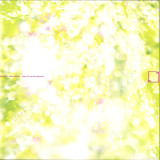
It's pretty wild to think this is in fact Carli’s debut solo album, considering the Swedish producer’s long and illustrious career, defined by eclectic hits ranging from underground grime scorchers to straight-up Eurovision goodness, not to mention him being a cornerstone of acclaimed outfits like Off The Meds, Savage Skulls, and Marcus Price & Carli.
On Sea Of Love, the Stockholm-born former breakdancer takes listeners on a journey through a vast ocean of musical influences, effortlessly blending rave nostalgia, bass-heavy experimentation, and contemporary club sounds. Carli skilfully navigates from raw UK hardcore bonkerisms to the crisp rhythmic pulses of modern-day dancehall, always upholding a vibe that's at once futuristic and reverent of club music’s storied past.
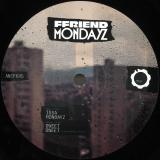
Filled with intricate production techniques and an irresistible sense of joy, Sea Of Love showcases Carli’s unique ability to merge styles without losing coherence or authenticity. This is club music crafted by someone who’s not only seen it all from the booth, but also been on the dancefloor himself, resulting in tracks that feel deeply personal yet universally appealing.
With Sea Of Love, Carli firmly establishes himself as a visionary solo artist, proving that after decades of shaping the sound of Stockholm’s underground, his best is still ahead.
A future classic - a project resurrected from a collaborative effort of the minds of late and great tastemaker and creator Mike Huckaby & Echospace's, Stephen Hitchell. Coming up on over 15 years since this project was conceived while working together on the Model 500 "Starlight" remix project back in 2008, this project truly captures a beautiful moment in time. During this period there was something magical in the air, a creative synergy and understanding of all things deep! The original mix (2008) results from a few sequences and patterns developed out of Wavetable ideas Mike was creating for a sample library he was curating at the time. The sweeps and transients found in these lofi wavetables truly add to the Detroit sound Mike's legacy was built upon, always staying true to his roots. After a few projects together (and more forthcoming) another collaboration was born with SF based (via Glasgow) producer, Federsen who simply put gives us a deeper than deep tribal stomper we're certain Huck would be dropping at peak hour! On the flip, cv313 + federsen reunite to surf Mike's wavetables once more, creating an addictive hook with a sick DETROIT saw bass deeper than the ocean floor! Intrusion's Dub closes out the EP and sends the listener deeper into the abyss, offering sonic designs from another planet, dubbed out into eternal bliss! We truly hope this project resonates and captures some of Mike's creative spirit and sound design. This 12" is a tribute to a true Detroit hero who's contributions to music and the culture are few and far between, a true legend.
R.I.P. HUCK
- A1: Chihei Hatakeyama / Gloaming Western Ocean
- A2:
- A3: Kaoru Inoue / A Distant Coast
- A4: Yakenohara / Heavenly Pale Waves
- A5: Calm / Shiono Ka
- B1: Natural Calamity / Wipe Out
- B2: Shimon Hoshino / Blue Horizon Memory
- B3: Hiroto Taniguchi / Still
- B4: Moshimoss / Unsaid
- B5: Yosuke Konuma / In Harmony With The Flow
■ The latest installment in the popular ocean themed compilation series “SALT... meets ISLAND CAFE”, curated by the beach life magazine/media SALT...,
is DEEP BLUE the series’ first ever ambient music compilation. Centered around the title concept inspired by the deep, tranquil blue of the ocean, the album
presents soothing music tailored to modern lifestyles, spanning chillout, Balearic, meditation, and healing sounds.
■ Ten artists each highly trusted by discerning listeners across the ambient, chillout, Balearic, and surf‑music scenes have created brand‑new, original ambient
tracks inspired by the theme. From pioneers active since the ’90s to cutting‑edge trackmakers, this compilation brings together a stunning collection of
ocean‑themed ambient music.
■ Mastering is handled by ambient/Balearic maestro Calm, who is also featured as one of the contributing artists, delivering an exceptional sonic experience.
Enjoy all ten tracks, each expressing its own unique interpretation of DEEP BLUE.
■ The artwork features an artistic photograph by Pedro Gomes, a Brazil born, Japan based surf photographer, with design by Masato Maekawa (tAnkers inc.),
known for his work across apparel and outdoor brands. Under the supervision of SALT..., the visuals perfectly capture the compilation’s immersive world.
[b] a2. [.que] / deeply
- 1: Private Symphony (Feat. Stuart Murdoch)
- 2: The Cold Collar (Feat. Gruff Rhys)
- 3: Love Is A Life That Lasts Forever (Feat. Molly Linen)
- 4: First Moonbeams Of Adulthood
- 5: Road To The Amber Room
- 6: Hachi No Su (Feat. Saya From Tenniscoats)
- 7: In Portmanteau (Feat. Field Music)
- 8: Irreparable Parables
- 9: Spectators In The Absence Of God (Feat. Kathryn Joseph)
- 10: Soul Enters The Ocean Sun Climbs Out The Sea
Pink Vinyl[26,26 €]
Very limited numbers, orders will need to be confirmed.
For his new album, Irreparable Parables, Andrew Wasylyk felt a strong desire to write a set of songs featuring an element hitherto rare in his work: the human voice. Equally strong was the conviction that he did not want to sing them himself.
The Scottish multi-instrumentalist and composer set about assembling a group of guest singers, sending out the songs to wherever they were in the world. The vocals were recorded remotely and then, like migrating birds, winged their way back to Scotland. The result is an album of great beauty which, perhaps preeminently in Wasylyk’s work, expresses the vulnerability and resilience of the human spirit.
Six singers appear on the record, represented by six songbirds illustrated on the sleeve by Clay Pipe Music’s Frances Castle. The cuckoo is a nod to Belle and Sebastian’s 2004 single ‘I’m A Cuckoo’, that band’s Stuart Murdoch being the first voice you hear on the new album. When the vocal for ‘Private Symphony #2’ arrived, says Wasylyk, “it was everything that I was looking for and more. But this is Stuart Murdoch. Of course he’s going to make something incredibly beautiful and thoughtful.”
The song lyrics were, for the most part, written by the singers. The music is Wasylyk’s creation. He navigates a sound world that lies somewhere beyond the borders of classical and jazz, ambient and abstract. It is difficult to describe, but easy to understand, which is to say to feel. That is the way Wasylyk’s work is experienced: as a feeling. It takes you back to childhood, perhaps, to feelings of comfort and safety, or to memories of walks at sunrise and sunset, or to the way a shadow falls on a particular field in a particular place at a particular time in your life. This is consoling music. That is why, though pretty, it is not merely pretty. These are songs to shore up the soul.
Wasylyk writes in a room, in his native Dundee, full of “half broken” instruments. He picks these up, plays a little, seeking an idea, a feeling, a door that lies ajar. The musical palette of Irreparable Parables includes brass and woodwind, a six-piece string section, guitar, bass, drums, vibraphone, Mellotron, Fender Rhodes, tape loops, synthesisers and percussion. The strings were arranged by the cellist Pete Harvey, a long-term collaborator.
Among the other guest vocalists are Gruff Rhys of the Super Furry Animals, Saya Ueno from Japan’s Tenniscoats and Peter Brewis from Field Music. Wasylyk himself takes the lead vocal on the title track, though a throat infection and touch of pitch-shifting have altered his singing in a way that even he, having fallen out of love with his own voice, finds acceptable.
The heart of the record can, arguably, be found in two tracks, ‘Love Is A Life That Lasts Forever’ and ‘Spectators In The Absence of God’, sung respectively by Molly Linen and Kathryn Joseph. The former, bright with trumpets, was inspired by the writing of Derek Jarman. “I was feeling deeply upset about the world and wanted to try and write some- thing that was obviously hopeful,” Wasylyk says.
‘Spectators …’ offers an emotional counterpoint. It is an “apocalyptic hymn” that seems to grapple with watching human suffering from afar, too distant to be at physical risk, but experiencing the psychological wounding, and feelings of helplessness, even complicity, that come with constant awareness of other people’s pain. “Kathryn’s a pal, I love her dearly, and she’s a brilliant artist who really feels what she writes,” Wasylyk says. “The cracked tenderness of her voice is spellbinding.”
The album closes with an instrumental piece, ‘Soul Enters The Ocean Sun Climbs Out Of The Sea’, all piano and strings, that offers a sense of resolution and ascension. A good moment, too, for Wasylyk to reflect upon the artistic companionship that he enjoyed while making this record – the songbirds that answered his call: “These humans are incredible at what they do. I’m deeply grateful and feel so lucky. It blows my mind.”
Repress
R&S proudly presents brand new signing Felix Manuel AKA Djrum.
Djrum is a perennially acclaimed underground artist, since his first release in 2010 who's quietly built a list of fans that reads like a who's who of contemporary dance music.
As an artist, Djrum has formed a reputation for his unique fusion of a range of genres ranging from jazz, hip hop and dubstep to ambient and techno. His music swells with oceanic bass laded beats, cavernous atmospherics and deeply emotive melodies. An accomplished DJ his compositional approach feels like a natural collage of his influences which has seen him release for the likes of the Zenker Brothers Ilian Tape imprint as well as the influential 2nd Drop label, plus remixes for Ninja Tune and Domino.
Felix now steps up to the plate at R&S with one of his most visionary releases to date. Deeply meditative melodies twist and turn through stuttering rhythms and pulsing low bass, hypnotic pads and woozy atmospherics. Manuel's music somehow manages to retains the urgency and dynamic pressure of the dance floor with the intimacy and elegant detailing of the best headphone music.
A natural fit for R&S, there is a full length Djrum album in the pipeline in 2018 - looks like it's going to be an exciting year ahead.
On June 5th, Tectonic Recordings will release Beatrice M.’s debut LP, Sinking, on a vinyl triple pack and digital download. The vinyl edition will be split across 3 separate 12” vinyl releases, packed in matching printed disco bags. This is part 1 of 3.
Beatrice M. pushes the needle forward for a sound and scene that nestles among a niche that blends UK dubstep, techno, and the golden era of tech house. The Paris-born artist is in their mid-20s and has been building up a grassroots following and plenty of momentum over the last few years, through their Bait label and its output of sonically resonant artists, alongside numerous remixes and collaborative and solo releases for labels such as Tectonic, Tempa, and Rinse. There are plenty of accolades coming in for Beatrice's work too, with notable DJ mixes for respected heavyweights such as Mixmag as well as featuring in Resident Advisor’s best mixes of 2025.
Beatrice is known for making deep explorations into the history of the scenes that have interested them, tracking and highlighting connections between dubstep, tech house, jungle and beyond across various self-produced, one-off radio shows, often taking a journalistic approach to subjects of true passion. They travel across Europe on a packed-out DJing schedule, avoiding air travel, and doing it mainly by train. Many of the LP's tracks started life as sketches put together on these long journeys, as the sights of different countries rolled past the window.
Having taken inspiration from Tectonic artists such as 2562, the label – a home to music that was originally placed in the dubstep-techno crossover spectrum—feels like the perfect place to host Beatrice M.'s debut album Sinking, beginning a new chapter for this kind of sound.
Opening track ‘Ever’ plunges us into deep waters with a sense of dubwise command. The momentum picks up on ‘Ocean’, where the vocal snippet "everyday life" circles around reverbed stabs and intricate hi-hat moves. ‘Motion’ sets the pace with its jumpy but rolling rhythm, leading straight into the eyes-down, party-time energy of ‘Disco Corner’.
How about a volley of hydraulic heaters from one of Denmark’s finest?
Already a man of many projects, both on the label side and in the studio, Natal Zaks has minted a brand-new alias… Enter Aquafaba, the ocean floor operator kicking it on a subaqueous tip.
Not many moving like this today. Properly submerged techno, masterful and ultra-essential by Aquafaba, self-monikered after the starchy, liquid byproduct of cooking chickpeas. Patrick Star would be proud for sure.
From Aarhus to the deepest ocean trenches in pursuit of that fathoms-below sound. Nods to the Midwest – chiefly mid-’90s Robert Hood and Cajmere’s ‘Percolator’ – felt in parts, but it’s also riddled with ultra-engrossing detail. Zaks goes heavy with the effects as tracky rollers are propelled to new mesmeric heights, even allowing for a moment of proper widescreen ascension.
Heads-down dynamixxx in full effect as we harness immense hydraulic power. Eschewing instant dancefloor gratification, Zaks emerges with tension and funk, like only the finest strains of techno can achieve.
Hailed as "one of the finest ambient and dub techno albums around," Deep Ground earned Purl a place in the hearts of many lovers of the deeper side of electronica. Enthusiasts on Discogs describe it as "one of the best dubtech albums ever - hypnotic, mesmerizing & deep" - and compare it to luminaries like Biosphere and bvdub for its "warm deep calming sounds and atmospheres." Reminiscent of Wolfgang Voigt's GAS project, the seminal 2011 album by Purl (Ludvig Cimbrelius) is finally reborn in a remastered 3xLP vinyl reissue on LILA ART. Originally released on the revered Silent Season label based in British Columbia, this ambient techno masterpiece has continued to captivate listeners year after year. In many ways like a darker sister to 154's ethereal techno epic "Strike", Deep Ground echoes the misty forests and quiet expanses of Cimbrelius' youth in Sweden. As the artist reflects in a poem accompanying the release: "We are consciousness, rooted in the deep ground of being. The deep ground of being is where all things begin and end. The deep ground of being is eternal." This ethos permeates every layer of Purl's expression; crafting sonic sanctuaries that remain intimate while evoking the infinite.
Delicately remastered for vinyl by Giuseppe Tillieci (Neel) in collaboration with Purl. Limited to 300 copies worldwide.
2026 Repress
Atmospheric Vol 2 is the second single to be taken from Deepchord's latest full length but sees him stray from the album tracks, bringing 3 exclusive pieces to the vinyl, keeping in the same musical vein as Ultraviolet Music.
Exploring the North & Pinewood Lodge see Rod Modell on more Deep Techno excursions as beautifully sweeping pads and glistening synths drift by ever evolving, perfectly processed atmospheres. Deepchord's unique use of subtle field recordings throughout give both of these tracks a real heady/druggy quality and his seamless loops allow you to drift of into his fully developed dream world. Shot Point delves into straight up ambient territory with Deepchord striking an unearthly balance between the natural and synthetic world. Yet more flawlessly collected field recordings wash away on an ocean of reverb soaked pads, drowning the listener within its mesmerising tides.
Elations Recordings presents "Tairen", an evocative cello recording marking the debut solo release of Melbourne/Naarm-based cellist LEM (Lauren Meath). This deeply personal work is an impressionistic reflection on place, memory and self at the intersection of classical technique and folk sensibility; expanding Meath's lateral, avant garde approach to sound with piano and textural percussion, resulting in a work that unintentionally falls into the post-minimalist tradition.
Conceived as a single piece across five movements and recorded between 2022 and 2024, "Tairen" reflects on memories of a formative place and period for Meath. Each movement scores part of an imagined landscape, mirroring the cliffs and expansive southern ocean of the coastal Otway ranges, remembered and reinterpreted. While tied to a place and time, ultimately "Tairen" is an exploration and expression of self.
Each piece explores this landscape, retaining its own identity while unified by recurring themes, moods and motifs. Meath emphasises restriction in her approach, creating subtly shifting layers of slowly evolving cello lines with expressive unstructured free playing bursting out. In all but one movement ("Bird"), cello is performed in a single take, utilising joined looping pedals on a semi acoustic cello from luthier Paul Davies. Equal parts meditative and expressive, uplifting and melancholic, the instrument becomes a proxy for the human voice creating a work that is intensely beautiful.
While Meath has a background in classical and pop, LEM has always been a more interior, personal project on the boundaries of minimalism and folk; in the past only as a live project featuring only herself, taking a lateral approach to sound through bow, harmonics and voice. While built on this foundation, "Tairen" expands Meath's typically minimal live approach with piano ("Sky") and additional textural percussion. Produced and engineered by James Tom and Danny Smith and with additional percussion from Dylan Lieberman. Mixed and mastered by Cam Parkin.
Originally released in the mid-’90s, Entropy EP by O.H.M. stands as one of the most iconic and sought-after releases from the golden era of electronic music. Home to the legendary track “Oceanic,” this record showcases O.H.M.’s unique ability to merge diverse sonic worlds — moving seamlessly from deep, hypnotic atmospheres to raw, hardcore energy, all infused with unmistakable acid vibrations. Now, for the first time ever, Entropy EP is being reissued in a fully remastered edition, bringing new life and clarity to its timeless sound. Carefully restored from the original sources, this reissue preserves the warmth and energy of the original pressing. A cornerstone of mid-’90s electronic innovation — finally available again, sounding better than ever.
The electronic producer Franz Kirmann returns to Bytes for his eighth solo album. The “Almadies” are long wooden boats used by Senegalese fishermen. It is also the name of the neighborhood where Kirmann grew up, in the suburbs of Dakar, Senegal, near the Atlantic Ocean. "These new compositions are the result of sound experiments conducted over the past few months and reflections on the concept of mind-constructed geographies," Kirmann explains. "The way memories and souvenirs shape an image of a place or country that is part reality, part fantasy, part cliché, yet also deeply personal. This experience is influenced by education, social background, history, and other socio-economic factors. " The ten tracks are crafted from collages of electronic sounds blended with field recordings from various places Kirmann has visited — from Dakar to the Caribbean, as well as London and Paris. His aim is to blur the line between electronically generated sounds and real soundscapes, creating music where it becomes difficult to distinguish the real from the constructed. All the sounds on the album were produced using synthesizers and field recordings. No drum machines, percussion or traditional acoustic instruments were used. Influences include Brian Eno and John Hassell’s Fourth World, Vol. 1: Possible Musics (1980), described by Hassell as "a unified primitive/futuristic sound combining features of world ethnic styles with advanced electronic techniques" , which also works in the context of Almadies. Another big influence was Ariel Kalma’s Le Temps Des Moissons (1975) as well as artists including O Yuki Conjugate and Robert Aiki Aubrey Lowe to Susumu Yokota and Michael Banabila.
A year on from Aura Safari and Jimi Tenor's Sensory Blending and DJs and dancers are still lost in its summer charms, but there have also been a series of standout remixes taken from the originals, which now get assembled on one vital 12": Sensory ReBlending features Willie Graff, Reverso 68 Dub, Jazz N Palms and Luminodisco.
First up is Ibiza favourite Willie Graff, who tackles the spellbinding original 'Bewitched By The Sea'. He brings a signature Balearic beat perfect for cruising around the island as the sun blazes with its dubby, swaying drums and more prominent vocal, all brought to life with delicate percussion and gentle synth pulses. Label regular Federico Costantini aka Luminodisco also returns with a mature post-Balearic touch that douses the track in an ocean of dubby echo. Gorgeous Spanish guitars and jumbled percussion form a life raft which floats out to sea under the sultry wind motifs.
Reverso 68 is the studio-based project of Pete Herbert and Phil Mison, and over the last decade-plus, they have mastered the art of making music for swimming pools. Their version of 'Your Magic Touch' is low-slung and deep with a mid-tempo four-four groove sprinkled with tropical percussion. The muted chords are gloriously dreamy and the whole thing is perfect for early evening warm-ups.
Jazz N Palms is Hell Yeah family and is currently riding a wave of acclaim for his See Rodes (Revisades) album on his own Jazz N Palms Recordings. He flips 'Lunar Wind' into poolside perfection with heart-melting sax notes and rippling keys, soothing female tones and dubby breaks. It's a perfect soundtrack to heavenly ascent.
These remixes perfectly extend the soul-soothing pleasures of Sensory Blending with plenty of fresh but sympathetic perspective.
For our ninth offering we have ventured out of our small but fertile swamp in search of another source of magick. Meandering across boggy pastures new, we crossed paths with Steevio, who sat hovering serenely in the fern covered shade of a nearby valley. Instantly recognising the singular vision of this fabled artist, we hastily gathered our nets and cast them under Steevio’s branches, capturing four beautiful offerings as they wriggled towards us. Upon the return to our mulch, it became clear that we could not contain Steevio’s creations, so willful was their vitality. It was therefore all we could do to release them back to the universal dance from whence they came.
The dance germinates with the writhing polyrhythmic ‘Apricity’. Hearing the crunch of frost laden grass beneath our webbed toes, we look above us to search for the sun. Angular beams of light escape over the horizon, as the warmth of Steevio’s machines coalesce. A glistening hi hat breaks through the membrane to bind his creation and anchor its ever shifting arms.
‘Octopus’ glides gracefully through a sun-dappled kelp forest. Sub frequencies rumble up from the shadowy darkness below, rippling along the fronds as they ascend. As the ocean begins to churn, a wriggling melodic tentacle parts the foliage, gleaming with primordial energy. Its joyful visit to the surface realm leaves us with a brief yet powerful reminder of the mystery beneath.
The glow of the midwinter sun warms our bones on ‘Apricity (Sunrise Mix)’. Percussive elements bubble out of the depths, forming intricate cascading patterns as they grow over the perfectly formed kicks. The moog filter tames the brew with Steevio’s intuitive restraint , until he releases its mighty power upon the gleeful forest dwellers, to their rapturous gratitude.
With ‘Adref’ we return home. The sedate tempo provides oceanic space for a melody which inhales and exhales over a familiar landscape of perfectly tuned percussion. With each breath the melody seems to increase its reach, until it’s buried deep within our bones, its memory resonating on long after it’s gone.
Steevio’s music reflects the universal moments where seemingly chaotic and disparate elements are suddenly revealed to be perfectly harmonious. Of course examples of this are always universally present in nature, and have been eternally, but we have to be reminded to appreciate them. In the same way that a wave deposits a perfect line of shells on a beach, dew freezes on grass, or individual strands of mycelial hyphae bind together to form incredible patterns, Steevio’s music is likewise; effortlessly considered. For us, it has more in common with the unrelenting flow of a river than it does with dance music. It is psychedelic music in the same sense that nature is intuitively psychedelic; without ever leaning into any tried tropes of what is culturally considered ‘psychedelic’ music.
Wally Badarou is a synth pioneer and musical polymath. But rarely does he sing over his sumptuous tracks. The 6 songs that comprise new record Simple Things finally realise Wally's vision for select backing tracks from his beloved Colors Of Silence.
The tracks were originally developed back in 2001 for the release of the original CD; here, Wally has “simply" added overdubs and vocals to their mastered mixes with some discerning edits. Simply put, Simple Things is another slice of simply stunning Wally Badarou genius.
Simple Things has been decades in the making. Indeed, Wally struggled not only with the idea of singing these wonderful songs himself but singing them in English and writing his own lyrics, while wrestling with the sensational backing tracks, which themselves seemed to have taken on a life of their own.
As Wally explained to us: "In addition to the instrumental artist I have been known as, so far, there has always been a singer who simply was not sure he was, up until now. Even though “Back To Scales Tonight”, my very first album, was, indeed, a song album."
Opener "It Couldn't Be You" embellishes the uptempo groove of soca-funk gem "The Lights Of Kinshasa". As Wally explained to us, it's about “a simple love story somewhere, one rainy night, under the lights of Kinshasa. A woman, a man, online dating, quite usual in our times. Then they meet, almost missing each other." The guide vocal Wally had laid for Colors Of Silence - with an organ sound - seemed striving for words in Linguala, a Congolese language he could not speak. Therefore the decision to do it himself was not an easy one, for it had to be in English to fit his singing. We think it turned out pretty good!
"You Can't Hide Always" vocalises Wally's deep concerns set to the propulsive "Smiles By The Millions": "Populism, ostracism, radicalism, ethics and values all turned upside down worldwide, are they all inevitably exacerbated by our social networks? It could all melt down one day, like a house of cards in the ocean of fake news and false prophecies”. Wally wanted to keep the track as bare as possible but, inevitably, the backing vocals and the synth-brass arrive ultimately to present a welcome 70s flavour, with no snare-drum added.
The bright and breezy "We'll Make It Again" adds vocals to "Where Were We", a tropical, reggae-tinged bounce through the islands. Here's Waly: "Where were we when we last said: "I love you"? Simple words to express something quite common, but never quite simple to deal with. A simple song about the resilience of the broken hearts.” The reggae came from it being conceived when Wally was scoring for “Third World Cop”, a 1999 Jamaican action movie.
"Walk Straight Ahead" provides Wally's gorgeous, contemplative and idiosyncratic vocals to the deep serenity of Colors Of Silence highlight, "Amber Whispers". It's a gliding, divine, mini melodic masterpiece. It'll make you swoon in its extreme beauty. As Wally describes, "it started as just whispers, sweet amber whispers. Then the colour turned darker, as darker skies seemed to fall upon us while the whole world keeps on walking ahead, straight ahead, regardless of the blatant warnings, feeling much too comfortable in conformity. Initially, the verses were to be spoken only. I realised they could be sung all the while, without overshadowing the ethereal atmosphere." Amen.
The serene, celestial "Painting My Life Blue" presents the vocal version of "Days To Wonder". Says Wally, "how does it feel when your second half is gone after decades of riding life together? Past the temporary loss of your bearings, you come to realise you've been blind to the essential, and suddenly you can see...For this most intimate song of mine, I had tried to come up with a melody on top of the existing backing track, long before realising the melody was in the keyboard part already. It just needed to be properly mixed with it."
The profoundly emotional "Just Two Lovers" works up the formerly-too-brief and glorious "Crystal Falls" into a much fuller masterpiece and features acoustic guitar sparkle before fully glistening with some gentle head-nod percussion. Waly explains further: "Dear little green men, please tell me, what is it about us that makes you want to come and visit us so often (contrary to Fermi's assertion)? And here is the reply I believe I heard them sing: "You've got the key you've been searching for: Love”. I reverted to the initial backing track I had made around 1985, which already bore the melody, and which I added acoustic guitars to, before singing it." An astounding closer.
A synth specialist, there can be few artists more under-appreciated given their vast influence than Wally Badarou. His solo work practically defined the sound of the Balearic DJs of the 1980s, and thus the more sophisticated sound of dance culture thereafter. He was one of the Compass Point All Stars (with Sly and Robbie, Barry Reynolds, Mikey Chung and Uziah "Sticky" Thompson), the in-house recording team of Compass Point Studios responsible for a series of albums in the 1980s recorded by Grace Jones, Tom Tom Club, Mick Jagger, Black Uhuru, Gwen Guthrie, Jimmy Cliff and Gregory Isaacs. Badarou's keyboard playing could also be heard on albums by Robert Palmer, Marianne Faithfull, Herbie Hancock, M (Pop Muzik), Talking Heads, Manu Dibango and Miriam Makeba. He also produced Fela Kuti. Phew!
When we asked Wally about the significance of this collection's title, he explained: "These are "Simple things” that everyday’s life seems to build upon. The simplest are the harder to describe, but when satisfactorily described i.e. with simple words, they are the more genuine and authentic to express and share. I’ve immersed myself in other classic song lyrics, something I hardly did before, just to appreciate the genius behind the simple words they were made of, and had a great time studying how powerful they were in expressing complex ideas such as love."
Recording was twofold: first, most of the backing tracks were recorded in 2001, in Wally's studio in Normandy, mostly using hardware synths and Yamaha digital consoles. Then, he fine-tuned the melodies and wrote the lyrics in late 2023, then added some overdubs and sang them all during summer 2024. States Wally, "Digital Performer was and remains the DAW I’ve been using throughout, ever since the 80s."
Wally's sophisticated synth textures and expressive keyboard runs are so full of character, so full of life, that this work of art transcends any easy genre categorisation. Meticulously remastered and cut by both Simon Francis and Cicely Balston respectively, it has been pressed to the highest possibly quality at Record Industry in Holland. Sometimes, the simple things are the most extraordinary.
Several years after a 12” for the Unrelatable imprint, Marco Passarani opens a new chapter with F.F.O.M., a work of extra-terrestrial tales that feel grounded, where the hard, dirty work of the people continues on a different planet. The scenery changes, but the story stays the same: broken dreams on arid ground.
Linking back to his early Nature Records releases, Passarani blends experimentation with an unshakable sense of groove, weaving a more abstract narrative without losing the dancefloor pulse. While distinct from his Studiomaster output, the project shares the same DNA, fusing digital and analog textures until the boundaries dissolve.
True to the raw spirit of pure techno and imbued with the unmistakable nuances of the Roman school, F.F.O.M. is both a nod to the past and a step into uncharted territory, where Martian dust meets earthly sweat.
Each track paints a fragment of this imagined frontier: Tales Of Truth reveals shadowy landscapes hiding the real nature of the so-called new promised land; Alone in the Depth drifts through liquid scenery, a classic TR-808 pulsing deep beneath unknown oceans; Clouded Shore distills the numeric essence of groove in a subtle nod to Kraftwerk; Dominion erupts into the fierce struggle for supremacy over the new territories; Passione Orbitale tells of love for the unknown and voyages toward otherworldly sunsets; Exploration Noises echoes the spirit of Ixora from Passarani’s first Nature Records release, with manic, melancholic SH-101 lines riding electro rhythms.
The digital edition includes two exclusive miniatures, fleeting transmissions from the edge of this Martian settlement.
After an initial European release in 1976 on the Isadora label Age Of Earth was re-issued on Virgin Records in Summer 1977 and fast became a beacon for electronic music and what was becoming known as ambient - Some cite its very title as helping introduce 'new age' music - This re-issue faithfully replicates the original 1977 Virgin Records release and is pressed on 180g heavyweight vinyl.
Guitarist and synthesiser player Manuel Göttsching formed Ashra after disbanding Ash Ra Tempel, the outfit he had led since 1971. Moving away from the space rock of his previous group, Ashra was a far more electronics-based project. Recorded in Berlin, between March and June 1976, the four pieces on the album represent the very best of what became known as Kosmiche: dreamily repetitive, glancing to the stars while keeping feet firmly on the ground.
New Age Of Earth is a record full of contrasts: the throbbing, techno-predicting Sunrain opens the album; with its waves and crickets sound effects, Ocean Of Tenderness pulses gently like a space-age early Fleetwood Mac; Deep Distance brings elements of surf music into glacial electronica. At 21 minutes long, Nightdust occupies all of the album's second side, a ruminative, slowly unfolding piece that, after its crescendo, gives way to Göttsching's impressively celestial electric guitar solo.
Since his earliest days, Ben Frost has been fascinated by the cinematic qualities of the guitar. His output to this point has hinted at this, but with »Steel Wound« he makes a bold statement of intent.
Finding his way to a deserted stretch of Johanna Beach along the Great Ocean Road (Victoria, Australia) in early 2003 Frost set up a remote studio at a derelict cabin overlooking the icy waters of Bass Strait. With a constant wind flowing off the sea his only companion, Frost started work on a series of improvisations that would eventually become »Steel Wound«. A few months go by and Frost has made his way back to civilization. He begins editing the masses of treated guitar from the Johanna Beach improvisations and before long a theme takes hold - one that very much reflects the isolation of the environment where the tracks were created.
Each of the pieces on »Steel Wound« is a epic journey, coloured with a deep sense of filmic narrative and suggested dialogues. The textural quality of the works, laced with field recordings and lost vocal fragments, sketches out the emotional soundscapes Frost had unwittingly gathered during his time at Johanna Beach. Each piece is a splintered fragment in time – a forgotten memory beautifully rediscovered in a moment of introspection.
Do you remember Cush?
A nod to the enigmatic Danakil warrior from Corto Maltese — wise, fierce, and fiercely free. That spirit is back, and this time, it speaks through sound.
Welcome to Cush — a bold sonic territory where the elegance of myth meets the urgency of noise.
Across 14 tracks, this power trio delivers a raw, immersive journey that bends genre boundaries and stirs the imagination. A soundscape emerges, somewhere between dystopia and liberation: windswept grooves, fractured brass, buzzing machines, explosive drums. Think improvisation at its most daring, textures at their most tactile, and themes that haunt like echoes from the future.
Cush is a cry. A rebellion. A pulse.
It’s where musique concrète collides with free jazz and industrial atmospheres — and something new is born.
For listeners drawn to Pierre Henry’s audacity, Alain Damasio’s visions, industrial ASMR, or sonic voyages à la Corto: this is your next deep dive.
Unbuckle your seatbelts. You’re in Cush territory.
An album that demands to be heard — and experienced — live.
Slowly yet firmly blooming into focus, An Unfinished Rose is the new album from Australian duo Troth.
This is their first since relocating to Hobart, Tasmania and their introduction to Night School Records. With a detailed web of past releases on labels A Colourful Storm, Mammas Mysteriska Jukebox, Knekelhuis and Bowman’s own Altered States Tapes imprint, An Unfinished Rose is the group’s most realised and composed work thus far. While still drawing on the improvisatory and DIY practices that informed Troth’s beginnings, it points to a new incarnation of the duo’s music; an intentional language emerging from the fog of obfuscation and mists of uncertainty.
Over these 9 meditations on change, acceptance, renewal and rebirth, An Unfinished Rose finds Amelia Besseny and Cooper Bowman peeling back some of the roughhewn architecture that defined their earlier releases to reveal a masterful - if auto-didactic - use of space and melody. Composition and improvisation compliment and feed each other throughout, with locked-loop earworms providing the springboard for lines of clarinet or synth melody, and the negative space between chord clusters giving ample room for Besseny’s most confident vocal performances to date. Shaving off a little of the defining dissonance and tape compression of old reveals Troth’s music in radiant daylight, humbly accepting of its place in the world while yearning for better, more sympathetic modes of living. Leaning more heavily on acoustic instrumentation and post-production processes than previously, the result is a transcendent body of work infused with an almost zen-like presence.
Troth’s music exists in the border between forming and becoming, its goal to project a kind of preternatural beauty, leaving interpretation open to the listener. Field recordings, happenstance and improvisation may provide seeds for the duo’s compositions, particularly on Side A, but there is a deft touch of songcraft on show. Loam Loom Leaf Litter opens An Unfinished Rose, directly referencing natural cycles of life, death and regeneration, before the blissed-out drum machine groove of Gold Plum continues a discussion concerning the totality of nature and one’s place in it. Besseny’s vocal, swelling like an ocean churn in duet with itself is adorned with synthesised harp and a revolving synth pattern, conjuring plumes of medieval smoke. Thistle’s rounded, bass-heavy drums, nodding to the vast echo of dub, is a relatively new terrain for Troth. It’s propulsive and thumping, pulsing with a meaning and symbolism consistent with Troth’s past work, referenced overtly in Bessey’s lyrics - “Say it too much and it loses its meaning…”. Similarly, the sprawling modern-classical suite, Tides Reflected In Her Eyes, is intentional in its lyrical themes while traversing new ground, revelling in layers of bowed cello and vocal intonations. Side B’s 4 tracks feel like Troth’s most thoroughly accessible and affecting music to date. Leaning into their own detoured version of Synth Pop, Cocoonist explores downtempoisms via a crunchy low frequency synth, and dream-like, fuzzy trip-hop modalities, not unlike Besseny and Bowman’s other group, Th Blisks. Following on, Myrtle Mystes is an open and searching DIY pop song, forged out of drum machine, bass guitar and cello. (An) Unfinished Rose’s title-track is a clear stand-out, built upon an evocative rhythm sample that appears to change emotional resonance with each undulating repetition. Its cascading waves of affect, interjected with a subtle breeze of synth, bowed instrumentation and soaring, densely-layered vocals.
An Unfinished Rose is enveloping, warm, forgiving. Difficult, yet retaining a unique beauty. Troth’s music aims to celebrate the duo;s shared experiences of being in the world, despite the complexity often surrounding us all. Theirs is a message of hope and perseverance, learning and patience.
From concept to format Analog Concept is delighted to bring you the sharp, stimulating electro and techno sounds of the talented yet mysterious Ffriend.
A lysergic cloaked story is told in the Mondayz EP; your audio travel visa will be initiated on the A side of the ride through lush permeating pads, epileptic arpeggios, and the 808 jammed program of Issa, while the title track Mondayz and its dub dipped stabs of pleasure with conga percussion is the type of electro that moves the mind and physical in addictive mysterious ways.
Side B takes a detour to the peaks of Deep courtesy of the driving deep techno house style, charming chirps, and oceanic vibes of Dweet. In addition we have included a stripped back yet magnetically atmospheric and percussive perked remix delicacy from Command D. (Animalia).
“Mondayz” EP suited for home and the DJs, right on time for the future summer sun days.
- A1: Wulomei – Takoradi
- A2: Conjunto Ana N’gola – Puxa Odoette
- A3: Zeal Onyia & His Music – Egbe Ne Lueli
- A4: Los Corraleros De Majagual – Remanga
- A5: Aquí Suena – Abel Llinas
- B1: Peacocks International Highlife Band – Igbala Oso
- B2: Pedro Lima Et L’orchestre Os Leonenses – Philomene
- B3: The Shoe Laces – Isitha Somunthu
- B4: Claudio Y Su Combo – Como Sea
- B5: Pa’ Entro Mi Gente – Ángelo El Auténtico
- C1: Zaire – I’m Tired Of Living In The Shack
- C2: Afous - Anavdhou (Edna Martinez Extended Edit)
- C3: Zaïko Langa Langa – La Tout Neige (Edna Martinez Edit)
- C4: Erick Cosaque Et Les Voltage 8 – Ajaccio (Edna Martinez Remix)
- C5: Picó Sin Fronteras – Abel Llinas
- D1: La Calandria – Como Duele Una Traición
- D2: African System International – Amina
- D3: Carlos Díaz Y Su Orquesta – Tres Meses De Vida
- D4: No Puedes Conmigo – Ángelo El Auténtico
Berlin-based Colombian DJ, producer, and curator Edna Martinez presents a sonic journey into the electrifying world of Picó—the vibrant and dynamic sound system culture that has defined the streets of Cartagena and Barranquilla for decades. More than just a musical movement, Picó is a way of life, a bold expression of identity, community, and resistance. From its roots in the working-class neighbourhoods of Colombia’s Caribbean coast to its deep connections with Africa and the Caribbean, this compilation captures the pulse of a culture where music is played at full volume, rhythms travel across oceans, and dance is both a form of celebration and storytelling. For those unfamiliar, Picós are hand-painted sound systems, often adorned with dazzling colours and striking imagery, each with its own name and sonic identity. These mobile discos became the heart of neighbourhood bailes, where the sounds of champeta, highlife, soukous, mbaqanga, zouk, soca, and cumbia would turn every street corner, market, and terrace into a dancefloor. Initially built by local craftsmen using modified speaker components, Picós became legendary for their powerful bass and exclusivity, with DJs sourcing rare vinyl from African and Caribbean ports and rebranding them with unique piconemas—new names adapted to local slang, making the tracks instantly recognisable within the community.
This compilation brings together a carefully curated selection of these rare and sought-after tracks, tracing the deep-rooted musical exchanges between Colombia, West and Central Africa, and the Caribbean. Featuring artists like Los Corraleros De Majagual, Peacocks International Highlife Band, Pedro Lima, Zaïko Langa Langa, and more, the album also includes edits by Edna Martinez, reimagining these timeless rhythms for contemporary audiences while staying true to their original spirit.
Strut presents ‘Picó! Sound System Culture From The Colombian Carribbean’ across 2LP Vinyl, 1CD & Digital focusing on a celebration of the raw, undiluted energy of Picó culture. Through Edna Martinez’s curation, and extensive liner notes, this compilation offers a powerful and authentic glimpse into one of the most vibrant musical traditions of the Colombian Caribbean