Born of a thousand nights lost in a surrender to stillness and contemplation, In The Air is Anna St. Louis’ second full length album and her most considered work yet. St. Louis’ debut If Only There Was a River seemed to emerge fully formed out of the recesses of her mind; a gritty, mesmerizing affair, filled with jagged edges and ghostly apparitions. The type of record that announces a new voice; one haunted by what has come before.
But this time, St. Louis is no longer concerned with what could have been and sets her sights to exploring what could be. It’s an outlook on the world that was formed when her immediate one was small. The intervening years since her last album found St. Louis in a small one-bedroom cabin in the middle of the woods of upstate New York with a new love and time to think of what she wanted to express with her music. For weeks on end, the only trips she took were to and from her job as the front desk clerk at a nearby hotel. The previous years she had spent on tour and performing constantly in the venues of Los Angeles felt like they had occurred in another lifetime.
“It really compelled me to surrender to the unknown,” she says. And in this surrender, she found liberation. St. Louis is more self-assured, open-hearted and ready to say what she wants. St. Louis describes the writing period as one of a slow harvest; a fertile time but one that required a newfound patience. Instead of documenting her first thoughts, she spent more time with each song, going deeper with the themes and ideas she wanted to express.
This slower approach also guided the sonic textures of the album. Working with producer Jarvis Taveniere (Purple Mountains, Woods) in two extended recording sessions in Los Angeles in 2021, St. Louis used the studio in a previously unexplored way, opening up her songs to more experimentation featuring brighter tones and a more orchestral sound to accompany her new perspective. To that end, she was aided by a cast of friends and collaborators including Jess Williamson, Kacey Johansing, Oliver Hill (Kevin Morby, Vagabon) on strings, Alex Fischel (Spoon) on piano, Josh Adams on drums (Bedouine, Tim Heidecker) and Keven Lareau (Cut Worms, Hand Habits).
In the Air has the sound of a joyous consideration of the present moment; a quiet morning revealing a new snowfall outside, steam coming from the kettle, just before it whistles, St. Louis with her guitar, staring out the window, with a few free hours before work. She’s reflecting on the scene in front of her, imagining the times yet to come. You can hear it; she’s a long way from the noisy bars of Los Angeles, the rigors of the road. As she intones in “Rest”: “You spend your whole life believing in the chase. And then you realize that being somewhere doesn’t matter like it used to.” She doesn’t need a river to carry her anymore ... She’s in the air.
Cerca:deep sound express
Clear LP[22,65 €]
Blue Lake is the musical moniker of American born, Copenhagen based multidisciplinary artist and musician Jason Dungan, who signs to the Tonal Union imprint for the release of his new longform album ‘Sun Arcs’. It follows 2022’s release ‘Stikling’, earning a nomination for ‘Album of the Year’ at the Danish Music Awards plus warm praise from The Hum blog and musicians and DJs alike including Jack Rollo (Time is Away/NTS) and Carla dal Forno. A self taught player, Dungan began freely experimenting with self-built multi-string instruments, preferring to build his own hybrid 48-string zither and working in the realms of left-field ambient music, off kilter folk and improvised acoustic minimalism.
The starting point of ‘Sun Arcs’ saw Jason travel for a week alone to Andersabo, a cabin set in the idyllic Swedish woods just outside of Unnaryd, known also as the music project, festival and residency space which has been run by Dungan since 2016, hosting artists like Sofie Birch, Johan Carøe and Ellen Arkbro. Whilst writing 1-2 pieces per day, a conscious decision was made to leave behind everyday distractions and shut out the outside world to instead focus on the natural passage of time as Dungan recalls: “My only sense of time came from these daily walks out in the woods with my dog, and an awareness of the sun’s path as it moved across the sky each day.”
The album’s immersive world unfolds with the opener ‘Dallas’, an ode to his home state and a musical synthesis of these two disparate spaces (Texas and Denmark), the touchstones of Dungan’s life. A folk-esque single acoustic builds to a flowing arrangement of clarinets, organ and cello drones coupled with percussion. ‘Green-Yellow Field’ chimes in as the first of two solo oriented zither recordings twinned with the dreamlike title track ‘Sun Arcs’, both densely rich as cascading and overlapping harmonic tones resound. ‘Bloom’ emerges with a krautrock psyche before an eruption of cello drones, slide guitar and free-ranging zither playing, ushering in the anticipation of spring. With half of the recordings conceived in Andersabo, Jason returned to Copenhagen to form the album's centre piece ‘Rain Cycle’ which features a tempered Roland drum machine alongside shifting zither improvisations. ‘Writing’ explores the shimmering harp-like qualities of sweeping playing figurations with Dungan mapping out adjusted tuning “zones” on the zither for unconventional but creatively liberating effects. ‘Fur’ captures the feeling of openness and the momentum of time, seeing Dungan perform waves of solo clarinet, often in one takes and embellished with textural drones, a zither solo, and layers of guitar. ‘Wavelength’ the album's closer is fondly inspired by the film works of Michael Snow and Don Cherry’s seminal live album ‘Blue Lake’ (1974), as it builds out from a drone-generated zither chord and features an alto recorder solo. Dungan found a deep connection to Cherry’s stripped back performance ethos, focusing on the core beauty of minimal instrumentation creating a genre-less meeting between folk and jazz. A dialogue is formed between the solo and the bandlike performances, interlinked in a geographical duality with all finding a sense of commonplace as musical sketches of visited landscapes. The bountiful instrumentation ebbs and flows as further layers emerge with Dungan constructing his material much like an artist would, recording and reviewing, adding and subtracting.
Musically it portrays a form of double life led by an American-identifying person living in Scandinavia, and a new found presence in Denmark, seeking out underdeveloped marshlands and barren stretches of beach adrift from other rhythms and distractions. Highlighting their individual and potent importance Dungan concludes: “Both places feel like “me”, I think on some level the music is always some kind of self-portrait.” ‘Sun Arcs’ depicts the intricate balance of nature’s cycles and the paths outlined by the seasons, from a winter dormancy to a warm sun drenched scene. The album scales new glorying heights and further defines Dungan’s musical narrative, inhabiting a unique space in left-field, improvised and experimental music, borning his most accomplished compositions to date. A singular and visionary expression, drawing on an array of instruments and sound worlds with a renewed sense of joy and discovery.
The album's rich tapestry was mixed by Jeff Zeigler (Laraaji, Mary Lattimore, Kurt Vile /Steve Gunn) and mastered by Stephan Mathieu (Kali Malone, KMRU, Félicia Atkinson).
- A1: Day In, Day Out
- A2: A Foggy Day
- A3: Stars Fell On Alabama
- B1: One For My Baby (And One More For The Road)
- B2: Just One Of Those Things
- B3: I Didn't Know What Time It Was
It is undeniable that Billie Holiday's singing changed in her later years. Her voice darkened and shifted to a lower range. Her economy of expression distilled her sound to its essence — a kind of heightened speech. The classic LP Songs for Distingué Lovers — her best work of the 1950’s — has also deepened and become burnished with time. Verve’s Acoustic Sounds Series features transfers from analog tapes and remastered 180-gram vinyl in deluxe gatefold packaging
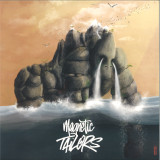
Introducing the freshest entry to our Little Beat More family with the very debut album by Magnetic Tailors out now!
The self-titled 'Magnetic Tailors LP' showcases the diverse influences that have shaped the style of this emerging project straight from Marseille's deepest underground, in a perfect blend of two unique sounds that represent the very soul of the group. Half hip hop and soul, half reggae the album features some of the most talented African artists such as Bhekiwe, Indigo Saint and Adam Raad, as well as leading exponents of underground hip hop such as Blurum13, DJ Vadim's partner in the Oneself project, and Blacc El, protagonist, among others, of an exceptional duet with the amazing voice of Giulietta Passera, from Sweet Life Society and Mangaboo.
A sound that reflects the influences and roots of the Magnetic Tailors and their city, a vibrant place of encounter and contamination for very different cultures and realities that come together in a unique and original artistic expression.
Superb Gatefold printed sleeve...
Conceptual inside brain travel...
To express the mental acid sounds to check...
First track announces the style with a long Break intro... mental tune... Superb ambiances... very Cinetic and good to mix.
Second track goes 128 BPM acid progressive techno... Excellent Dj tool at a rare speed... flirting with the Trance.
Last track of the A side grow the speed up to 150 BPM with a long break intro tunring after a while more/less 4/4... The sound is very acid and industrial. A big tune !
B side goes up to 160 BPM : Minimal acid sound.
...And finishes in a dark 170 BPM progressive acid track. Mentalcore aera starts here....
Second record opens with a 146 BPM techno mental acid stabilizer. Deep.
Second track is mentalcore big acid overdrive dancefloor pearl from Mr Gasmask !
Last Track of C side from Emetic is a Hardcore splendid exciting tune... maybe the best of this record. Quiet minimal and banging at 170 BPM it reminds the A*Symetric Spivey style:)
... Last side, opens with Minus Polaris and a pure mental acid grower
Last tune of this jewel is from Scandal Orchestra, a Hardcore frontier Hardtek acid track in the classic french good vibe style... Enjoy !
Dear friends, music is more than just the sum of its individual parts. It also has a metaphysical character, which is particularly determined by its sociality. Kerrier Collective, a group of friends from Cornwall in England, lives this social aspect by making music together and ¦nding relaxation from their stressful everyday lives. With their worldbuilding
"dreams of the sea" Ep, the collective presents us with dance music not often heard like this. It is inspired by classic folk, pop, jazz, UK garage, latin, disco, house and techno. Imagine The whitest boy alive together with Giorgio Moroder interpreting Dylan songs with musical means of the hardcore continuum in a South American bar - Ok, take that with a wink, but you know what is meant. The title track is a sound journey into the depths of the ocean, where we encounter an
underwater party. A fat Reese bass forms the foundation of this piece, which is complemented by a rich arrangement of shimmering bells, guitar plucking, strings and female vocals.
This breathtaking mood leads into a driving beat accompanied by acid arpeggios. It's all so deep that you think you can hear the call of a whale from somewhere. "Paddington Express" is a slow march accompanied by heavy bass. All around you, a piano ghosts up and down and mysterious vocal snippets create a perfect symbiosis with an acid line. Should you be accompanied "On your last day" by this eponymous track, it will be a good day - a day that may begin with a gloomy, heavy foreboding, but will dissolve into a joyful, peaceful lightness. The guitar lick of this track issimply irresistible. On your last day, you will de¦nitely dance!
The record closes with "Friday afternoon". The name says it all. We all know how it feels. Let this euphoric disco tune carry you into the weekend! P.S.: Physical release comes with handcrafted, screen printed artwork by fabulous graphic artist Zatina Kessl.
Assured UK house producer Andy Ash takes care of the next EP on SAFTX while the equally esteemed Mark E steps up to remix.
For well over a decade now, Andy Ash has been turning out high-quality house music on a range of labels. Last year he served up a tasteful full-length on Quintessentials, the year before he dropped a double 12" on Still Music and he is also a regular at the likes of Delusions Of Grandeur. From deep and dusty to disco-tinged and dynamic, he has a stylish sound that is well-versed in the classics but always his own twist. He shows that again here with four fresh tunes which cannot fail to make you feel good.
Opener 'You:Me' features Faber and os brilliantly warm house groove. The drums and hi-hats are prefectly designed, the vamping chords bring a playful funk and swirling pads add diffuse late-night energy. It's timeless cut with nods to the US midwest and subtle vocal sounds.
Remixer and Merc label boss Mark E has a rich history of edits and originals on the likes of Running Back, Delusions Of Grandeur and Studio Barnhus. On this version, he lays down hazy, heavy kicks for a beatdown workout that comes alive with gorgeous synt work akin to all the best Detroit dons.
Ash's 'Momentary Days' is a slow and roomy, dubbed-out house swinger. Well-placed samples - vocal coos, guitar riffs, jazzy chords - all peel off the loose drums and can't fail to get you moving. 'Reach' is another humid house cut for cosy back rooms and basements. The Scruffy drums have frayed edges while dreamy melodies loop up top. It's a heartfelt sound that slowly turns you to deep inward reflection.
Last of all is 'Rico! Rico!', a downtempo jazz-funk jam with crisp broken beats, keys that take you to the Riviera and strings so lush you can almost feel the sun on your face.
This deep house music as it should be - raw, expressive and full of human soul.
Following the partnership between Altrimenti and Quindi for a suite of remixes of Cabaret du Ciel, the two Italian labels collaborate once again to explore three vivid versions of tracks from Woo's exquisite album Paradise In Pimlico. The verdant, delicate musicality of Woo's original material offers an abundance of riches for remixers, and the results are true to Altrimenti's stated purpose to explore and experiment in the fusion of different approaches to electronic music.
On the A side, Joseph Tagliabue offers up a snaking, psychedelically charged dancefloor vision of 'Cadenza d'Innocenza'. Milan-based Tagliabue has developed a potent sonic signature across releases for labels like Invisible Inc. and Sound Metaphors before starting his own Blue Sea Studio as an outlet for his expanding work into the field of contemporary soundtracks. That cinematic sensibility comes through in waves on this subtly trance-licked epic - a soaring set piece for the most dramatic of party situations.
On the B side, Leeway opens proceedings with his remix of 'Even More Notes'. As the founder of Wain Records and the Scram club night, the London-based producer is fostering a culture of leftfield dance music with an organic sensibility. On his interpretation of Woo, he offers up a more experimental, dub-informed strain of 4/4 club rhythms.
Completing the set, Other Lands & Linkwood join forces for their approach to 'Gold Star'. Other Lands is also known as Fudge Fingas, and alongside Linkwood he helped shape the warm, deeply rooted house sound of seminal label Firecracker Recordings. The duo's affinity for soulful musicianship and the disco roots of house music comes through in this spiralling, hazy rendition perfectly pitched at moments when a softer, more spiritual approach is needed without losing the guidance of an insistent groove.
Once again the overarching theme on this collection of remixes remains quality - a pursuit of meaningful expression, originality and open-hearted musicality. From the source material to the resulting remixes, the pursuit was a successful one.
'Malombo music is an indigenous kind of music. If you listen to it, you can feel that it can heal you, if you’ve got something wrong. It’s healing music.'
Lucky Ranku
"Lucas ‘Lucky’ Madumetja Ranku (1941-2016) was one of the greatest African guitarists of his generation. He first made his name with the Malombo Jazz Makers – the successor group to the legendary Malombo Jazzmen, formed in Mamelodi township by guitarist Philip Tabane, drummer Julian Bahula and flautist Abbey Cindi. When Tabane left the Jazzmen in 1965, Bahula and Cindi called on Lucky to replace him, and the Malombo Jazz Makers were born. Building on the popularity and success of the original Malombo Jazzmen, the Malombo Jazz Makers become immensely popular, touring widely, winning numerous jazz competitions, and recording two successful albums for the Gallo label.
The deep and hypnotic Down Lucky’s Way was their third album. Recorded in 1969, it was the first Malombo Jazz Makers album to feature additional instruments, and the first to feature Abbey Cindi on soprano saxophone as well as flute. But more than anything else, Down Lucky’s Way is a transfixing showcase for Lucky Ranku’s sui generis guitar virtuosity. Quite different from their previous recordings, the album shifted the Jazz Makers’ sound toward hypnotic, extended compositions, layered by organ bass and guitar overdubs. Of all the Malombo Jazz Makers recordings, Down Lucky’s Way is the deepest of mood, and the richest of vision.
However, through one of the erasures that are ubiquitous in South African musical history under apartheid, it seems that the record may not ever have been properly issued. Original copies are outrageously rare – only a few are known among collectors. When we asked Lucky about the album, he was unaware it had ever been released, and had never seen a copy. Perhaps it was pulled; perhaps it was pulped; perhaps Gallo simply took their eye off the ball. Nobody knows, but it is not impossible that the apartheid authorities were involved, for by 1969, the Malombo Jazz Makers were well known to them.
Julian Bahula’s introduction of malopo drums to the music of the original Malombo Jazzmen was a moment of crucial political and cultural radicalism for South African jazz. Traditionally used by BaPedi people for healing, the malopo drums of Malombo music re-centered jazz
around indigenous sounds and culture, and over the next decade, the Malombo Jazz Makers became deeply involved in political opposition to apartheid. Their recovery of indigenous sounds made them the musical standard bearer for the Black Consciousness movement, and they toured South Africa clandestinely with the writer and anti-apartheid activist Steve Biko. They also broke apartheid laws by playing with the white rock group Freedom’s Children, sometimes appearing on stage in masks or made up with UV paint to avoid detection by the authorities; they appeared regularly at the rule-bending Free People’s Concerts organized by David Marks, where Marks’ clever exploitation of a loophole – mixed audiences were prohibited from attending ticketed concerts where anyone was being paid, but the law said nothing about private functions played by artists for free – meant people could come together in defiance of apartheid laws. The notorious Special Branch would raid their concerts; Lucky remembered police storming an auditorium, throwing smoke bombs.
Eventually the political situation became too dangerous, and the band were being actively sought by the police. Though Abbey Cindi remained in South Africa, both Julian Bahula and Lucky Ranku went into political exile in the UK, where Bahula founded the group Jabula with Lucky and former members of Cymande, Steve Scipio and Michael ‘Bami’ Rose. With Jabula, Julian and Lucky worked tirelessly for the anti-apartheid movement, raising funds and awareness all over Europe and in the US. They played with Dudu Pukwana’s Spear in the joint formation Jabula-Spear, and worked together in Bahula’s Jazz Afrika formation, and Bahula organized the first Concert for Mandela in 1984 (it was Jabula that supplied the chorus for The Special A.K.A.’s hit single ‘Nelson Mandela’). Lucky also played and recorded with Chris McGregor’s South African Exiles Thunderbolt group. After the fall of apartheid, they both remained living and working in the UK. In 2012 the South African government awarded Julian Bahula the Gold Order of Ikhamanga for his cultural work during the struggle against apartheid.
Until his death in 2016, Lucky continued to play with countless groups and musicians. putting together the band Township Express with Pinise Saul, and leading his own African Jazz Allstars. The influence of his playing on the international perception of South African township music was immense, and he was held in the highest regard by his peers – ‘Lucky was a guitarist who could bring any house down’, said Michael ‘Bami’ Rose.
But despite his continuous presence on the UK live circuit over four decades, Lucky Ranku never recorded an album as leader. And so as well as restoring an important lost piece of South African musical heritage, Down Lucky’s Way is a precious opportunity to hear one of Africa’s foremost guitarists stretching out, in focus and in his element."
First issue since 1969 of the Malombo Jazz Maker’s unknown third album.
Liner notes featuring interviews with Julian Bahula and Lucky Ranku.
Fully licensed from Julian Bahula.
Pointillist club rhythms and dense, porous dub clouds encircle the Wrecked Lightship as Laurie Osborne and Adam Winchester set sail for phantom islands once more. The nocturnal boatswains chart a course guided by pronounced percussive impulses, using physicality to navigate the looming atmospheric pressure that has become their signature style.
Opening tracks ‘Arial’ and ‘Third Law’ speak to the roots of Osborne and Winchester’s respective work as Appleblim and Wedge, dealing in dancefloor abstractions where techno, electro and dubstep once stood, but there’s much more at play than simple genre tags could ever express. ‘Third Law’s electro-static interference calls back to Winchester’s work in Dot Product, while the twitchy urgency and gnarly bass echoes Osborne’s ALSO project with Second Storey.
Wrecked Lightship is an anchorless concern, free to drift into experimental waters if the currents surge that way, and so ‘Kill Mirror’ and ‘Hydrotower’ head away from forthright structures to play around with sound design and full-frequency manipulation. It’s too kinetic and jagged to be considered ambient, even if it willfully shirks the dancefloor. But for every starboard swerve there’s a prevailing wind, and the likes of finely-tuned club weapon ‘Take It Back’ whip ahead with laser-eyed focus.
Nailing their split interests between immediacy and the avant-garde to the mast, Wrecked Lightship deepen the reach of their project on their second album. Whatever shape a specific track might take, Oceans & Seas serves as a paean to the art of sonic manipulation and spatial processing.
Written and produced by Adam Winchester and Laurence Osborne
Artwork by Chloe Grove
Layout by Takashi Makabe
Text by Oliver Warwick
Mastered and cut by Simon at The Exchange
‘Where is Agartha? What is the specific region in which it lies? Along what road, through what civilizations, must one walk in order to reach it?.’ Saint-Yves d’Alveydre in 1886
Agartha, the debut full-length album by Japanese producer Wata Igarashi, is a mysterious, divine thing. Named for the mythical secret kingdom, understood as a complex maze of underground tunnels, perhaps designed by Martians who colonised the Earth tens of thousands of years ago, it’s a similarly mystical, perhaps even cosmic trip – but this time, exploring an inner, deeply personal cosmos. Beautifully detailed and bustling with rich incident, it takes Igarashi’s music to new places, which still retaining his unique sonic imprimatur; in this respect, it’s perfectly at home with Kompakt, a label that’s always encouraged artists to make the visionary music they need to create, to take risks and make sideways steps into uncharted territory.
An eloquent producer and DJ, Igarashi has been releasing techno for eleven years now, appearing on such imprints as The Bunker NY, Delsin, Midgar, and Time To Express; he has also self-released his productions via his WIP net label. Throughout, Igarashi has consistently explored his unique approach to techno and electronic music, one that’s eloquent and poised, even when it shifts into more psychedelic terrain; he’s a master at balancing the sensual and the functional, and he has an unerring ear for the right texture, the right tone, at the right time. He brings all of this into Agartha, his most thorough-going expression of self to date.
For Agartha, Igarashi had a strong concept he wanted to explore. Visualising specific scenes from an imaginary film based on the titular secret kingdom, he created soundtracks for those scenes, spending time during the pandemic in his studio, working away carefully at the ten tracks here. Given his background in creating music for television and advertisements, Igarashi is well-placed to explore the marriage of the sonic and the visual in such intimate ways, but freed from commercial concerns, he let his imagination run riot. He also drew on a rich palette of musical influences – techno is in there, of course, but you can also hear the smoky, improvised jazz of the likes of Miles Davis (to whom the album’s title is an indirect nod), and the minimalism and systems music of Steve Reich.
The latter is particularly pronounced on the gorgeous, beatless drift of “Floating Against Time”, where an arpeggiated sequence lingers, lovingly, around your ears for nine blissful minutes, coasting across swooning drones and waves of ambient noise. “Ceremony Of The Dead”, originally composed as part of a Sony 360 Reality Audio spatial sound concert, is a deep pass into systems composition, with various patterns overlaid and interlocking, before a wordless vocal rises from the depths, a gorgeous counterpoint to the swarming textures that gather across the track. On the other hand, tracks like “Burning” and “Subterranean Life” nudge toward Fourth World territory, painting deluxe dreamscapes of uncertain provenance; the title cut is an abstract drift-world, Igarashi painting an alien tableau dotted by shape-shifting creatures.
Agartha’s conceptual framework means that everything on the album sits perfectly together; listening to it in one sitting is a dizzying, lush experience. Its imaginings of inner landscapes recall, in some respects, the nautical, aqueous mythologies of the Drexciyan universe, though from different perspectives. But the result is Igarashi’s own creation, a deluxe, enchanting trip through the visionary Agartha of this unique producer’s cinematic mind’s-eye.
Wo liegt Agartha? In welcher spezifischen Region liegt es? Auf welchem Weg, durch welche Zivilisationen muss man gehen, um dorthin zu gelangen?'
Saint-Yves d'Alveydre im Jahr 1886
Agartha, das Debütalbum des japanischen Produzenten Wata Igarashi, ist ein geheimnisvolles, göttliches Ding. Benannt nach dem mythischen, geheimen Königreich, das als ein komplexes Labyrinth unterirdischer Tunnel verstanden wird, die vielleicht von Marsmenschen angelegt wurden, die vor Zehntausenden von Jahren die Erde kolonisierten, ist es eine ähnlich mystische, vielleicht sogar kosmische Reise - aber dieses Mal erforscht es einen inneren, zutiefst persönlichen Kosmos. Wunderschön detailliert und voller reichhaltiger Begebenheiten, führt es Igarashis Musik an neue Orte, die dennoch seine einzigartige klangliche Handschrift bewahren. In dieser Hinsicht hat es bei Kompakt ein perfektes Zuhause gefunden - einem Label, das Künstler immer ermutigt hat, jene visionäre Musik zu machen, Risiken einzugehen und seitwärts Schritte in unbekanntes Terrain zu tun.
Der eloquente Produzent und DJ Igarashi veröffentlicht seit elf Jahren Techno auf Labels wie The Bunker NY, Delsin, Figure und Time To Express; außerdem hat er einige Produktionen über sein Label WIP net selbst veröffentlicht. Dabei hat Igarashi stets seinen einzigartigen Ansatz für Techno und elektronische Musik verfolgt, der kontrolliert und ausgeglichen ist, selbst wenn er sich in psychedelisches Terrain begibt; er ist ein Meister der Balance zwischen dem Sinnlichen und dem Funktionalen und hat ein untrügliches Gespür für die richtige Textur, den richtigen Ton zur richtigen Zeit. All das bringt er in Agartha ein, dem bisher umfangreichsten Ausdruck seiner selbst.
Für Agartha hatte Igarashi ein starkes Konzept, das er erforschen wollte. Er stellte sich bestimmte Szenen eines imaginären Films vor, der auf dem titelgebenden geheimen Königreich basiert, und schuf Soundtracks für diese Szenen. Während der Pandemie verbrachte er Zeit in seinem Studio und arbeitete sorgfältig an den zehn Tracks. Mit seinem Hintergrund als Komponist von Fernseh- und Werbemusik ist Igarashi prädestiniert dafür, die Verbindung von Klang und Bild auf solch intime Weise zu erforschen, aber frei von kommerziellem Dünkel ließ er seiner Fantasie freien Lauf. Er schöpfte auch aus einer reichen Palette musikalischer Einflüsse - Techno ist natürlich dabei, aber man hört auch den rauchigen, improvisierten Jazz von Miles Davis (an den der Titel des Albums eine indirekte Anspielung ist) und den Minimalismus und die Systemmusik von Steve Reich.
Letzteres ist besonders ausgeprägt in dem wunderschönen, beatlosen "Floating Against Time", wo eine arpeggierte Sequenz neun Minuten lang liebevoll um die Ohren fliegt und über schwelende Drones und Wellen von Umgebungsgeräuschen gleitet. "Ceremony Of The Dead", ursprünglich als Teil eines Sony 360 Reality Audio-Raumklangkonzerts komponiert, ist ein tiefes Eintauchen in eine Systemkomposition, bei der sich verschiedene Muster überlagern und ineinander greifen, bevor sich ein wortloser Gesang aus der Tiefe erhebt, ein wunderschöner Kontrapunkt zu den wimmelnden Texturen, die sich über den Track legen. Andererseits bewegen sich Tracks wie "Burning" und "Subterranean Life" in Richtung der Vierten Welt und malen luxuriöse Traumlandschaften ungewisser Herkunft; der Titeltrack ist eine abstrakte Scheinwelt, in der Igarashi ein außerirdisches Tableau malt, das von formwandelnden Kreaturen übersät ist.
Der konzeptionelle Rahmen von Agartha ermöglicht, dass alles auf dem Album perfekt zusammenpasst; es in einem Zug durchzuhören ist eine schwindelerregende, opulente Erfahrung. Wata's Vorstellungen von inneren Landschaften erinnern in gewisser Hinsicht an die nautischen, wässrigen Mythologien des drexciyanischen Universums, wenn auch aus einer anderen Perspektiven betrachtet. Aber das Ergebnis ist Igarashis ureigene Schöpfung, ein luxuriöser, bezaubernder Trip durch das visionäre Agartha dieses einzigartigen Produzenten mit seinem cineastischen Blick.
An explorative sonic landscape with the beautifully eclectic sounds of drum and bass at its core, Sustance’s debut album is every bit as thought-out, polished, and innovative as we’ve come to expect from one of drum and bass’ brightest prospects.
Having grown up listening to seminal Shogun albums like Spectrasoul's 'Delay No More' and Icicle's 'Under The Ice', ‘Perceived Connections’ acts as a full circle moment for the producer, who now finds himself following in the footsteps of the artists who profoundly influenced his approach to creating music.
Written between London and Berlin across a twelve-month period, 'Perceived Connections' encapsulates both of the alluring sides of Sustance's sound. In the same fashion that the album's writing process pivoted between two capital cities, Sustance's debut album presents both deep and expressive tracks such as 'I Want You' and 'Sweet Relief', as well as showcasing heavy, sound system-destroying tunes like 'Undercurrent' and 'Ten Ton’.
“The album title comes from the Zen idea that everyone perceives the world through their own perspective. Two people can listen to a record side by side and have totally different experiences. I really liked that idea as music is inherently so subjective. Sustance
Accompanying Sustance on this LP voyage is a plethora of D&B’s hottest talent, with Pola & Bryson, Visages, Flowdan, Strategy, Duskee, T-Man, Catching Cairo & Zara Kershaw all sprinkling their own flavours across the album.
Traversing an array of sounds, styles, and genres throughout, 'Perceived Connections' is nothing short of an exceptional extended body of work from a producer whose razor-tight approach to music has seen him emerge with one of the crispest and most captivating sonic palettes in drum and bass music.
»Picture a Frame,« the debut album by the Belgian composer Elisabeth Klinck, was born out of strict isolation and is nonetheless a result of a collaborative process that saw her working closely with artist Oscar Claus. Enriching her compositions for violin with electronic soundscapes and field recordings from their surroundings, the two entered an artistic dialogue that took place inside its own idiosyncratic space outside of conventional time. It is an intimate record in which Klinck’s expressive playing that incorporates unconventional techniques forms the basis of something much bigger: an invitation to inhabit a specific space at a specific time together with the two of them.
For an entire week in the spring of 2021, Klinck and Claus stayed at an abandoned monastery surrounded by beautiful gardens, but with no power or running water. The intention was to record some of Klinck’s musical ideas on violin, experiment with electronics and acoustic spaces and to get to know each other on a musical level. This proved to be an inspiring and deeply moving process—and the starting point for more. In the winter of that year, the duo set out to the Spanish Pyrenees to build a DIY studio in a small village on a mountain top and record the eight pieces that form »Picture a Frame.« The idea of losing track of time and space is a theme that found its way in these recordings. The two spent their days and nights reading, walking, talking, cooking and taking care of the animals living there but also experimenting with sound, improvising together and making field recordings.
This deep focus on being present in the moment, listening to the world around them and each other resulted in a holistic experience that was translated into music and sound. Klinck and Claus understand this album as a collage, an attempt to evoke the implicit, an essay that suggests a time and space, and a gentle collision between two people that deeply resonate with one another. It’s impossible to argue with that, and even harder not to be drawn into it.
Vinyl release compiling both Nukuluk EPs on one LP. Curating their own unique sound and captivating crowds with their refreshing approach to hip-hop, electronica and indie, Nukuluk return with their new EP ‘SUPERGLUE’ on 21 April. The writing and recording process has never been executed in a conventional style for the group, a series of laptops and bedrooms manifesting the groups’ studio, aspiring to a fundamentally collaborative process as they piece their separate parts together in ever surprising ways. Respective members lead through a variety of formats, bringing a demo, a motif or concept in what can be a deeply stimulating process, ensuring the sound is ever-evolving. The EP acted as an educational vehicle that held the group together as they learned how to overcome certain challenges, and hold it together as one, hence the title SUPERGLUE. It presents a fractured journey and chaotic growth of five individuals trying to create the new together; honest vulnerable expression married with complex soundscapes, pulling from whatever genre feels natural and trying new combinations of internal collaborations in the group. The release spans genres from hip-hop to alternative rock, ambient to metal, dance music to r’n’b in what the band note as: “a kaleidoscope of sonics, songs, beats, noises and stories lurching between vulnerability and bravado, as a body of work growing in all directions at the same time.” Their latest single ‘I Just Wanna Luv U’, the follow up to the high octane ‘Covered In Gold’, marks a charged change of pace; an introspective, meditative trip-hop piece, with creeping synths, electronic drums and gruff vocals transitioning into acoustic guitars, live drums and rap verses. It tells the story of wrestling with childhood trauma, isolation and self-acceptance. Vocalist/producer Syd Nuku explores an eerie modern condition before conversing with an inner child’s trauma and memory - “be slow kid, go and take a place below the ceiling where it won’t fall”. The accompanying video was co-directed by Luke Kulukundis (Syd Nuku) and Iso Attrill, and takes reference from the likes of Michel Gondry, Charlie Kaufman and David Lynch. Nukuluk are Monika, Syd, Mateo, Louis and olivia. Entirely self made the collective successfully blend genres and styles to reach new spaces through a broad range of influences (including JPEGMAFIA, Jockstrap, SOPHIE, Wu-Lu and Yves Tumor as well as esteemed groups like Massive Attack, Portishead and Gorillaz). Formed in the midst of lockdown, the collective played their first show in July 2021 before releasing their debut EP DISASTER POP to critical acclaim in November, which subsequently led to multiple festival appearances and a 3-night sold out residency at Bermondsey Social Club in 2022. Their release campaign was littered with videos and creative visuals that were constructed by the collective and its extended family of artists - this multifaceted creative output of the group making them a unique prospect; directing and producing their own videos, exploring many avenues of creation and trying to exist in a unique contemporary DIY space. With nods across the spectrum of the music media – including The Quietus, CLASH, NME, Ransom Note, DIY, DORK, So Young and many more – Nukuluk are steadily carving out their own space in the British leftfield.
Puce Moment is part of the French contemporary music scene. Their music is climatic, often inhabited by a strong emotional power. A procession of harmonic structures organized in a ritual way, sometimes close to trance. It can be written or improvised, vocal or instrumental. The electronic and electroacoustic arrangements summon new spaces and abstract landscapes, which can go from the purest sound to the most raw distortions. Vast, slower, deeper - distant echoes of half-faded things - and when we are lost, voices appear. Voices whose only reference would be the timeless SeeFeel.
Nicolas Devos and Pénélope Michel are visual and sound artists, one trained at the Beaux-Arts and the Fresnoy studio national des arts contemporains and the other a classically trained cellist, singer and multiinstrumentalist. They created Puce Moment, envisaged as a sound research laboratory open to experimentation, to multi-disciplinary encounters and to decompartmentalization. Their work is akin to a fictional ethnology expressed through protean projects and mutant visual, sound and musical creations.
»Epic Ellipses« is their 4th album.
They have composed the original soundtracks of more than a dozen dance performance, fiction or documentary films, virtual reality in variable formats (Christian Rizzo, Mylène Benoit, Vania Vaneau, Benjamin Nuel, Laurent Pernot, Carolina Gonçalves). Or in the form of film-concerts including David Lynch's cult film 'Eraserhead' with which they have toured intensively since 2012 in France and Europe, and since 2019 »Koyaanisqatsi«, the cult experimental documentary by Godfrey Reggio.
Veteran artist Sebra Cruz releases his debut album ‘Don't Worry Psy Happy’ on DJ Tennis’ revered Life & Death imprint. The daring eleven track LP is as experimental as it is definitive and encapsulates the Italian spirit in perfect style.
The LP follows two previously teased singles; ‘Margaret’, an ode to Cruz’ girlfriend which is a deeply passionate and expressive melodic house offering and album title ‘Don’t Worry Psy Happy’ a hedonistic, tripped out soundscape.
The lead track ‘Sunfish’ is a melange of powerful synths overlaid with sporadic vocals and a swinging breakbeat which make the record the perfect soundtrack for early morning dancefloor euphoria.
The album continues its genreless motif and is hard to pin down. It broaches a variety of styles including cinematic and ambient leaning sonics such as ‘Optimist’ and ‘Poliziesco’, the latter which includes Gabriele Fabbri’s atmospheric guitar riff throughout.
‘The Siebel Road To Mars’ is a similarly powerful yet emotive record which samples current Italian President Sergio Mattarella between the piano and the extraterrestrial sound palette. Continuing with the more abstract tracks ‘Flying Junior’, which was named after Cruz’ own sailboat, emulates the peacefulness and tranquillity of the sea. It’s yet another reflection of Sebra Cruz’ artistic personality.
Juxtaposing the calm and serene records from the album, ‘AltreCose’, inspired by the energy of the Neapolitan people during Sebra’s DJing residency in the 90s, is a more high energy disco-infused record. Similarly ‘When Life Was Slow’, released on Life & Death back in 2020, is another upbeat dance interpretation and a tribute to Cruz’ passion for Italian composers from the 60s and 70s.
Speaking about the album Sebra says: “What emerges is in my opinion an album with predominantly Italian spirit, disco, house with both edgy and gentle influences. I never decide what to do first, I simply follow my spur of the moment instinct. Releasing an album for Life & Death is cool because I've always had huge respect for Manfredi.”
Sebra Cruz and DJ Tennis have a long lasting and trusting collaborative relationship exhibited by the former's numerous releases on Tennis’ Life and Death label. DJ Tennis’ encyclopaedic musical brain and shared passion for Italian composers perfectly complements Sebra’s stylings.
Striking an impeccable balance between abstract and obscure sonics and more methodical and conventional melodies, 'Don't Worry Psy Happy’ is a body of work that exquisitely expresses Sebra Cruz’ personality via different worlds and mediums.
"Plastic Music For Deep Thinkers" is a peculiar fusion of electronic music inspired by a cross-section of Warp Records releases, enriched with intelligently used elements of jazz, hip-hop and experiment. This multicolor creates an original mixture with a very emotional expression. Post-hip-hop, irregular beats intertwine with the club pulse and jazz harmonies, and the omnipresent sounds of synthesizers meet organic samples.
"Conceptually, this album is the result of an insight into the current state of the apogee of "plasticity" and confusion of the world, and at the same time its downfall in shape we know it. The title, full of contradictions, speaks of an artificial and exaggerated reality, but also of necessary, deeper reflection on it. Plastic, integrated circuits and synthetic sounds tell the story of human transformation in modern realities."
As the author himself admits with a grain of salt: "This record sounds familiar, but it is similar to nothing - like the reality I observe."
Szymon Burnos is a pianist/keyboardist, composer, producer and improviser. With his eclectic sensitivity he combines various, often extreme, musical worlds and his inclinations and inspirations reach many languages - from electronic music, through jazz, hip-hop, ambient, to avant-garde. He's known mainly for his activities on the Tri-City improvised music scene and from groups such as Algorhythm, delay_ok, Nene Heroine, Tomasz Chyła Quintet or Mu and the Alpaka Records label.
"Plastic Music For Deep Thinkers" is a peculiar fusion of electronic music inspired by a cross-section of Warp Records releases, enriched with intelligently used elements of jazz, hip-hop and experiment. This multicolor creates an original mixture with a very emotional expression. Post-hip-hop, irregular beats intertwine with the club pulse and jazz harmonies, and the omnipresent sounds of synthesizers meet organic samples.
"Conceptually, this album is the result of an insight into the current state of the apogee of "plasticity" and confusion of the world, and at the same time its downfall in shape we know it. The title, full of contradictions, speaks of an artificial and exaggerated reality, but also of necessary, deeper reflection on it. Plastic, integrated circuits and synthetic sounds tell the story of human transformation in modern realities."
As the author himself admits with a grain of salt: "This record sounds familiar, but it is similar to nothing - like the reality I observe."
Szymon Burnos is a pianist/keyboardist, composer, producer and improviser. With his eclectic sensitivity he combines various, often extreme, musical worlds and his inclinations and inspirations reach many languages - from electronic music, through jazz, hip-hop, ambient, to avant-garde. He's known mainly for his activities on the Tri-City improvised music scene and from groups such as Algorhythm, delay_ok, Nene Heroine, Tomasz Chyła Quintet or Mu and the Alpaka Records label.
Brazilian experimental multi-instrumentalist Carla Boregas follows plates for Bokeh Versions and Hive Mind with a ghostly set of deep listening electronics that plays like a symphony for an imagined woodwind orchestra.
Carla Boregas is best known from her tenure in São Paulo's genre-bending experimental post-punk scene, playing in long-running outfit Rakta as well as other related offshoots. Her solo material has been knottier to unpick, here developing ideas from a collection of unfinished fragments and notebook scribbles exploring the possibility of finding a wind instrument that could be played collectively by several musicians. Coinciding with the pandemic, however, she soon realised the inherent risks involved with sharing breath and so the concept took a different direction, with added resonance.
Boregas developed a synthetic alternative, layering vocals and environmental recordings to suggest wind instrumentation without attempting to mimic it. The sounds here are airy, but rarely diegetic - on the title track, Boregas uses analog arpeggios and plucked, sustained tones to approximate the kosmische world of Ash Ra Tempel or more recently Emeralds, as if trapped in a wind tunnel, moved forward by an unseen force.
There's a whisper of the ancient past that harmonises with Wojciech Rusin's speculative medieval gasps, and Bloedneus & de Snuitkever's severely underheard ‘Milli Mille’, an examination of the ancient Greek aulos. On ’Grafia Do Invisível' the sound is completely different again, but the concept remains, using precise analog drones and minuscule timbral shifts to imitate the character of a wind instrument and simultaneously harmonise with the deep listening meditations of Éliane Radigue and Kali Malone.
A voice enters the frame on 'Sopro’, chopped into deviated gulps and syllables, creating a language that's unfamiliar and percussive. The use of breath is subtle, and vocalisations criss-cross between synths and faint whistles, forming an expression that's different from its predecessors but intrinsically interlinked. This is where ‘Pena Ao Mar’ excels, by viewing breath and its application in electronic music from multiple angles simultaneously. Fans of Lucy Duncombe, Lucrecia Dalt, or Sarah Davachi - don't miss this one.
Pink Blue Marbled Vinyl
Angelo is an EP, named after a car, featuring nine songs Brijean have crafted and carried with them through a period of profound change, loss, and relocation. It finds percussionist and singer Brijean Murphy and multi-instrumentalist/producer Doug Stuart processing the impossible the only way they know how: through rhythm and movement. The months surrounding the acclaimed release of Feelings, their full-length Ghostly International debut in 2021 which celebrated tender self-reflection and new possibilities, rang bittersweet with the absence of touring and the sudden passing of Murphy's father and both of Stuart's parents. In a haze of heartache, the duo left the Bay Area to be near family, resetting in four cities in under two years. Their to-go rig became their traveling studio and these tracks, along with Angelo, became their few constants. Whereas Feelings formed over collaborative jams with friends, Angelo's sessions presented Murphy and Stuart a chance to record at their most intimate, "to get us out of our grief and into our bodies," says Murphy. They explored new moods and styles, reaching for effervescent dance tempos and technicolor backdrops, vibrant hues in contrast to their more somber human experiences. Angelo beams with positivity and creative renewal _ a resourceful, collective answer to "what happens now?". Angelo the car is a 1981 Toyota Celica they got off Craigslist during their first stint in Los Angeles, where Murphy and Stuart have since settled. "Such a bro-y, `80s dude car, it's been super fun to drive around in a new town," Murphy says. "He's older than us, he's a classic, he's got a story." It is a spiritual vehicle with a cinematic appeal, first dropping them off in an alleyway for the scene-setting intro, "Which Way To The Club." The question is quickly resolved by "Take A Trip" as a cruising bassline mingles with crowd sounds, hand-claps, cuíca hiccups, whip-cracks, even a horse neigh. Brijean have found some club on this cross-dimensional trip - the kind of imagined space or chamber within one's self capable of "shifting a fraction of who you are," says Murphy. They wrote the track with the simple intention to be "as free as we could be," adds Stuart, likening the flip on the B section to a realm unlocked: "What if the world changed completely? You open the door to a new room." Next is "Shy Guy," a motivational anthem for the wallflowers among us. Murphy sets up the daydream: "We are in junior high, we're on the dance floor, what's going down, who is dancing, who is not, how are we gonna make them dance?" The narrator, the MC, hypes up the room as conga-driven rhythms bounce between languid synth and guitar lines. "Show me how to move...I feel something...I know you feel it too," Murphy sings sweetly, calling back to the opening lines of Feelings, and this time the audience chants it back. It is easy to picture Brijean performing this one - something they only got to do a handful of times until more recently, opening shows for Khruangbin and Washed Out, an experience they found informative. Murphy explains, "It was inspiring to be out there and let loose more. To see how people can expand their expression on stage gave me more liberty with how I viewed my musicianship. My role for so long was to be a backup percussionist, so why would I ever leave the drums, you know? But then after playing all these runs, you see these artists and realize you can, you have permission." "Angelo" and "Ooo La La" deliver the danciest stretch in Brijean's catalog to date. The title track adopts a deep house pulse replete with strings, hi-hats, and kicks. The latter opts for a funkier groove that foregoes verses in favor of warbled hums and extended breakdowns. What follows is perhaps the duo's dreamiest run, a comedown initiated with the honey-hued interlude "Colors" drifting into "Where Do We Go?", a tropicália reverie where Murphy contemplates the passage of time and space. It all culminates in "Caldwell's Way," a fond farewell to their Bay Area community - "a part of my life that I knew couldn't come back," says Murphy. Above shimmering organ sounds, lush strings, and the birdcall of their former neighborhood, she wistfully articulates the uncertainty of moving on by remembering the characters dear to them. There's the wisdom of their neighbor, Santos, who refused payment when helping them move out: "I'd rather have 100 friends than 100 dollars." And the song's namesake, Benjamin Caldwell Brown, a friend and club night cohort for many years. "I'm only miles away, maybe I'm just feeling lonely," the line resigns to warm nostalgia, and "Nostalgia" runs the closing credits to this healing and transportive collection.