Smile your way through two songs by The Teacher Haters — in fact, we challenge you to get through these tracks without smiling. Even the name of the band invokes a chuckle as it suggests what these guys are about — and that’s the P-A-R-T-Y. Straight out of the 60s comes a group that could have been played with Sam The Sham & The Pharaohs back in the day. These whimsical works are deceptively deep as they take us to a time when garage punk fused with R&B.
Big Pig Alley is uncomplicated, and that’s what makes it great — it sounds like a bunch of college guys having a good time, writing lyrics on the spot: “If you’re lookin’ for romance, take a train, take a plane...or a raft to France.” The guys have something other than romance on their minds as they chug along on acoustic guitar and trash can drums (and possibly other things). What really makes the track, though, is the witchy background voice — the performance is loose enough, while the witch is doing his own thing entirely.
The witch returns on side B in the up-tempo, dance-ready Cut Loose. No obscure artistry here — these guys tell you exactly what the song is for in the title. In fact, just in case you missed it, they state their thesis in the opening lines: “I wanna shake all night, I wanna do it right, I wanna dance, dance, dance with you…” All of their collegiate effort is put toward getting you to move your hips in this groovy, rockabilly-flavored mix.
Snap up the mid-century college party in a box that is PP006 — and hope your tables don’t get too scuffed up from people dancing on them. The fun that The Teacher Haters had in making these tracks is all here and available to you — whether you want to go on a nostalgic trip through a 60s coed party, or host your own shindig where dancing is mandatory. Get your hands on this disc before the regents show up.
Suche:deep sounds
- A1: Chasing Shadows - Deep Purple
- A2: One Way Glass - Manfred Mann Chapter Three
- A3: Hold Onto Your Mind - Andwella
- A4: Hot Pants - Alan Parker & Alan Hawkshaw
- A5: Do It - Pink Fairies
- B1: Tomorrow Night - Atomic Rooster
- B2: Taken All The Good Things - Stray
- B3: Out Demons Out - Edgar Broughton Band
- B4: For Mad Men Only - May Blitz
- B5: Back Street Luv - Curved Air
- C1: Ejection - Hawkwind
- C2: Meat Pies ’Ave Come But Band's Not ’Ere Yet - Stackwaddy
- C3: Lovely Lady Rock - James Hogg
- C4: Third World - Paladin
- C5: Taking Some Time On – Barclay James Harvest
- D1: Ricochet - Jonesy
- D2: Led Balloon - Steve Gray
- D3: Big Boobs Boogie - Slowload
- D4: Freelance Fiend - Leaf Hound
- D5: Confunktion - Dave Richmond
“Incident At a Free Festival” is a tribute to the mid-afternoon slots at Deeply Vale, Bickershaw, Krumlin, Weeley, and Plumpton – early 70s festivals that don’t get the column inches afforded the Isle of Wight or Glastonbury Fayre, but which would have been rites of passage for thousands of kids. Bands lower down the bill would have been charged with waking up the gentle hippies and appealing to both the greasy bikers and the girls in knee-high boots who wanted to wiggle their hips. And the best way to do that was with volume, riffs and percussion.
Compiled by the venerated Bob Stanley and Pete Wiggs of Saint Etienne, this is the heavier side of the early 70s they summarised on the acclaimed “English Weather” collection. There’s an air of menace and illicit thrills among tracks by Andwella, Stack Waddy and Leaf Hound (whose “Growers of Mushroom” album is worth well over £1,000). Bigger names include the rabble-rousing Edgar Broughton Band and kings of the festival freakout, Hawkwind. They are represented by their rare version of ‘Ejection’
For every mystical Tyrannosaurus Rex performance there was something like Atomic Rooster’s Tomorrow Night or Curved Air’s Back Street Luv to capture the spirit of the day and stir the loins of festival goers; the tracks on “Incident At a Free Festival” were inspired by both Chicago’s percussive wig-outs and the Pink Fairies’ anarchic spirit. The sounds were heavy and frequently funky, with a definite scent of danger. Their message was clear and simple: clap your hands, stamp your feet, hold on to your mind.
So, put on your wellies in your living room, drop the needle and enjoy...
- A1: Blue Jeans And A Boy's Shirt - Glen Glenn
- A2: The Woman I Love - Gene Terry & His Kool Kats
- A3: Sweet Love - Orangie Ray Hubbard
- A4: Jello Sal - Benny Ingram
- A5: Lonesome Baby Blues - David Ray
- A6: Do Me No Wrong - Pat Cupp & The Flying Saucers
- A7: Cool Off Baby - Billy Barrix
- Side Two
- B1: Let's Go Bopping Tonight – Al Ferrier & His Bopping Billies
- B2: Jitterbop Baby - Hal Harris
- B3: Raw Deal - Junior Thompson With The Meteors
- B4: Nuthin' But A Nuthin' – Jimmy Stewart & His Nighthawks
- B5: I'm Doing All Right - Jerry Hanson
- B6: Where There's A Will (There's A Way) – Carl Trantham & The Rhythm All Stars
- B7: All Dressed Up – Jimmy Johnson
Legendary international DJ, Keb Darge, fell under the spell of this music when his Japanese girlfriend forced him to go down to a ‘Rockabilly’ night back in 1989. As soon as the DJ dropped the needle on Johnny Burnette’s ‘Rockabilly Boogie’ Keb was mesmerized. He was soon hunting down the hideously rare top tunes and slipping thousands of pounds into specialist collectors like Boz Boorer’s back pocket, when the legendary guitarist was not recording or touring with Morrissey. Of course, Keb was then taking these records and introducing them to new audiences in his DJ sets worldwide.
Although it has taken an age to persuade him, Keb has now applied his perfectionist compiling skills to pick 14 killers to grace this fantastic collection. Ranging from the bopping Glen Glenn’s ‘Blue Jeans and A Boy’s Shirt’ to the almost hillbilly Jimmy Johnson’s ‘All Dressed Up’. This is a must-have compilation not only for those who have been oiling their quiffs for decades, but also those wondering what this “rockabilly” is all about. Keb drops you in at the deep end with no easy-going fillers, and you’ll be glad he did.
Keb has written the sleeve notes and with cover art by the legendary Robin Banks – this album looks as good as it sounds.
C"mon Tigre, the innovative music collective known for their genre-blending compositions, releases their highly anticipated fourth album Habitat. Drawing inspiration from the concept of an ecosystem where various forms of life, both animal and vegetal, thrive and coexist, the album takes listeners on a sonic journey through the intricate and ever-evolving nature"s theater. C"mon Tigre"s ability to blend inï¬éuences from distant corners of the world enriches their music and visual imagery. The album is deeply inï¬éuenced by rhythms coming from Brazilian tradition, the backbone is rooted in samba, forro, through instruments and tempos that come from this cultural magnificence. However, it retains the African jazz, electronic, and mixed inï¬éuences that have characterized the project thus far. Connecting the dots, the result is a richly layered and genre-defying soundscape. The record boasts a stellar lineup of collaborations. Among these are Seun Kuti, heir to the legacy of the legendary Fela Kuti, whose afrobeat roots infuse the album with a potent and infectious energy. The record also features Xenia Franca, a dynamic Brazilian artist hailing from Sao Paulo, Arto Lindsay, recognized as a pivotal figure in the world of experimental music, Giovanni Truppi and the Californian collective Drumetrics which featured on C"mon tigre"s records since their debut in 2014.
- Ramybė
- Autoportretas
Santaka is truly the sound of a culture. The name means “confluence” in Lithuanian, and the project has been exactly that from the moment DJ/producer Manfredas and drummer/producer Marijus Aleksa resolved to work together in the early days of 2020.
Not only does it bring together the talents that Manfredas and Marijus have individually honed over their own illustrious international careers in the club underground and young jazz worlds – but their recordings have drawn on talents from across styles and generations within Lithuania, creating a fusion of experimental sounds that represents the living nation. The highest common factors of post rock, jazz, dancefloor and abstract electronics, classical and more all flow together. Now, they are deepening this further, by reworking recordings by composer Rytis Mažulis and the avant-garde choir Melos Collective.
Over two tracks, they create haunting but hopeful, weird but truly wonderful atmospheres that look back to the deep history of their home nation’s music and culture but also forward to sonic science fictions of their own. In “Autoportretas”, disembodied voices emerge from the air around Marijus’s percussion subtly at first but becoming more and more corporeal as the ritual takes shape.
The eight-minute “Ramybė” is less linear, more dreamlike, with orchestral drones, free jazz fluttering and retro electronics joining the voices and drums. But for all their eeriness and oddness, both are built on the pleasure principle too: this exploratory music joining past and future is thrilling and sustaining in the moment.
»Tropic of Capricorn« is the second album by Lawrence English and Werner Dafeldecker. Based on field recordings made by the prolific Room40 owner that were subtly but decisively altered with electroacoustic techniques through the German improv legend, these two long-form pieces blur the lines between acoustic ecology and aesthetic interventions, concrete local sound worlds and boundary-defying art. They put a focus on our relationship with nature as listeners as much as they call into question where nature ends and human perception begins. They are deeply confusing, disorienting perhaps, in the most beautiful ways.
English recorded the material that form the basis of the duo’s Hallow Ground debut on two different field trips. One led him from the Western coast to the Pilbara region in the North of the country called Australia, the other to the central desert into the lands of the Arrernte people. »These are vast spaces, and in some respects they shun contemporary ideas of civilisation which seek not to listen to the country,« says English. When recording the soundscapes, the artist put a focus on the residues of failed colonial aspirations. »The buildings and objects that remain from the failed cattle pastures and other endeavours create uneasy sound worlds of their own,« he says of the regions that are also places of extraction, especially the heavily mined Pilbara. »There is a distant drone of industry in even the most remote of places; an unsettled sense of heavy breath on the land.« He brought home a document of natural reclamation in time.
The rich source material was then given to Dafeldecker. Spatialising the recordings with transducers applied to different surfaces such as wood, stretched animal skin, glass, or metal surfaces and also re-recording parts of the recordings, he created discrete events that were inserted into, or rather enmeshed with English’s recordings. You’ll hear plenty of birdsong, insect noises and the sound of rain during these 39 minutes; the sounds of a life you can tap into if you tune into your environment. But there are also other things, things that are impossible to categorise even after repeated listens and that call into question whether or not those were really birds, insects, or the sound of rain in the first place. What »Tropic of Capricorn« invites its listeners to listen beyond the preconceived notions of how nature is supposed to be represented in sound and to instead embrace the immediacy of the sensation.
Malian and French pairing Siraba return to Secret Teachings with a third superb single, ‘Nase’, from their forthcoming debut album, accompanied by US talent Joeski on remix duties.
Malian hunter Boubacar Samake and Damien Vandesande, one half of the French electronic band dOP, use their Siraba project to bring the traditional sound of the Wassoulou - a river valley of West Africa - to the electronic world. They have been friends for 20 years and look to fuse Mali’s rich musical traditions with cutting-edge electronic music, always with an underlying message of love and respect for all. Their stunning work has found a perfect home on Damian Lazarus’ Secret Teachings imprint, a left-of-centre and experimental alternative to his club-focussed Crosstown Rebels, and the pair return in excellent fashion once again to drop the penultimate single ahead of their debut album release.
Joining the package is US house legend Joeski, whose roots in the scene date back to the early 90s. A founding member of The Chocolate Factory DJ collective, he has been a vital part of the scene ever since with releases on Crosstown Rebels, Relief and an array of other heavyweight labels. His sympathetic remix elongates the groove into immersive, deep house sounds richly layered with elegant synths and soul-rousing chords that are delicate yet impactful.
Two leading lights of UK house join forces for a special collaboration which delivers every bit as much as you would expect from anything with the Jimpster & Crackazat stamp on. Having been introduced to Crackazat’s vocal and lyric writing on his acclaimed Evergreen LP from last year Jimpster was keen to team up to bring some of that flavour to his own sound. Born out of a desire to stretch outside of their comfort zones, and with a mutual respect for each others productions, the Natural Child EP brings us two original vocal tracks and two dub versions covering a spectrum of moods from classic soulful to deep, atmospheric, contemporary house.
Opening track Natural Child leads the charge with Crackazat’s trademark jazz-influenced piano part, swirling moog lines and vocal being complimented with Jimpster’s punchy drums and warm, rounded bassline. The result is a spacious and deceptively simple track which will wrap you up in its warm confines.
Next up we have a completely different take on Natural Child which ups the BPM and adds a more live, percussive and rolling vibe which will no doubt get the house dancers throwing down.
My Harmony comes next with its slick and soulful sound which draws inspiration from golden era NYC sounds of Blaze and Louie Vega while Nick Cohen’s live bass brings a bounce to the chunky, shuffling house beats.
Closing out the EP we have a dub version of My Harmony which loops up the Rhodes part, strips back the groove and adds layers of FX and arpeggiating synths resulting in a heads-down deep and soulful track to warm up the dance floor.
Hidden Spheres supplying the fruits once again. More tried and tested club material from the Fruit Merchant main man. Love Hate EP is a tale of two sides.
On Side A Hidden Spheres proves there’s no messin’ with ‘Step to me’ & ‘Don’t Front. Flipping over to the B we see that he’s really just a lover at heart, not a hatter, with the swung out sounds of ‘LUVR MAN’ and the deep sleaze of ‘SO SXY’..
Bradley Zero, DJ Absolutely Shit., Moxie,
The first album on ohne kommerziellen Wert comes from label co-founder Stute. After several appearances with hard-hitting club material on the OHNE EP series, Stute’s debute LP “Petra” demonstrates a beyond-genre approach that shows a different and more introverted side of the Hamburg-based producer. Far from being a collection of stand-alone gems that have accumulated over the years, the 12 stages of “Petra” sound like they were formed in a single cast. It is a personal and intimate journey through a unique man-machine mindset that has been manifested in music and sound.
Stute isn’t new to the game, but he has been producing under the radar for far too long. He started DJing and producing more than 20 years ago and found himself progressively drawn to different genres like Hip Hop, Breakbeat, Drum & Bass and Techno. And all of those experiences culminate in “Petra”, where Stute maneuvers his production skills through a wide range of styles and tempi somewhere between leftfield and rave. Urgent techno coldness, promising downtempo dystopia, restless acid dreams, floating breakbeat pleasure or hopeful leftfield romance – every track represents a different phase of a long-time companionship with music and making music, resulting in “Petra” being filled with conflict and drama as well as bliss and belonging.
Like all of Stute’s releases, his first LP is shaped by a very high level of production paired with a rare sensitivity for harmonies and arrangements. Every sound is made from scratch with analogue equipment – heavy dragging beats surrounded by glistening synths and bleeps built on a pure love for music and hardware. “Petra” sounds unlikely complete: nothing is missing, nothing is overdone. Nevertheless… or maybe because of that, the 12 arrangements offer you enough space to conjure up images of distant worlds or let you turn inwards to dive deep into your inner self.
‘A Concrete Pasture’ by Coen Oscar Polack is the follow-up to ‘Haarlemmerhout’ (2020), an album named after a park close to his home in Haarlem in the Netherlands. ‘A Concrete Pasture’ brings Polack’s interest in exploring the larger world around him back into his music. Polack is a magician in combining field recordings from all over the world, be it a temple in Bangkok, the Dutch Wadden Islands or a the percussive Gamelan instruments, and electronic processing of these recordings. With all these ingredients he creates a vivid, nostalgic, futuristic but familiar world of sounds and emotions.
At first, the colors of the recordings seem scattered, the sounds unrelated, but there is a deeper train of thought running through the music. It is the persistent impression of a travelogue; of places, family and friends, helping Polack in co-creating his music. In ‘Cuore Nero’, nostalgic powerchords are composed into tapestries of ambient-noise, ‘Unseen Shores’ uses a recomposed recording of Polack’s children on the Dutch island of Schiermonnikoog and develops into visceral, almost spiritual music, and a field recording of Wat Po in Bangkok in ‘Phra Buddhasaiyas’ becomes a luminous homage that the incorporated guitar sound burns into your skull.
While listening, it becomes evident that Polack is being reflective in auditive images and memory, giving a meaning to a music that is liberated of its formalities and charged with a poignant imagery by transformation, one that is bright and lucid and respects the process from recording until ornamentation.
The longest piece of the album ‘Kraaiennest’, starts with the recording of a Hong Kong traffic light, later to be cut up and transformed into a technoid Musique Concrète piece, with a slow progression into a warm crescendo-decrescendo themed electroacoustic piece, which takes on a life on its own. The finale is Polack on this tenor saxophone putting a stamp on the completion of his work, a performance reminiscing of the raw expressiveness of Albert Ayler.
‘A Concrete Pasture’ points to a landscape, or to a person’s current situation in life. Coen Oscar Polack did himself justice by writing an elegant, vibrant album, a tribute to his reflection of reality, his aesthetics, and with raw authenticity and skill, leaving a great space for the audience’s imagination.
Cycles is a concept which is deeply intertwined with everyday life, both on a micro and macro level. They manifest in various natural, biological and societal processes, influencing our daily routines, behaviours and the world around us. Unconventional rhythms and time signatures, complex patterns, evolving modulations and shifting textures were created and used to present it (Cycles) as an integral part of our existence, shaping how we navigate to the world, make decisions and experience the passage of time..." Kostas Giazlas (Onepointwo). Kostas hails from Thessaloniki, Greece, and describes himself as a keen record collector, who is "always trying to emulate a musical journey into space, time, memories and frequencies". With Influences ranging from late 50s electronic experimental sounds, motorik krautrock bands, lush shoegaze melodies and modern electronica, Onepointwo seeks to crystallise this musical backdrop via judicious use of minimal arrangements, abstract and distorted shortwave radio signals, dystopian soundscapes made up of both digital and analogue sources, all punctuated with heavily affected percussive sounds. The listener is drawn in by the psychedelic impact achieved through repetition. Onepointwo's previous discography ably demonstrates his consummate skill in this field. Keene (Poeta Negra) / SANS (Lotus RecordShop Editions), plus various appearances / remixes in domestic label compilations. He has also clocked up an number of releases on UK labels, including Miracle Pond, Woodford Halse, Werra Foxma and Subexotic Records across various formats; plus several live performances/dj sets and a host of rave reviews including Electronic Sound Magazine.
The composer behind one of the most sensational breakthroughs in Danish music invites you on a crackling, ever-changing and deeply personal journey. His third album Atmospherics drops after a decade in which Mike Sheridan has searched deeply to find and capture his inner sound.
Films, theatres and art museums have benefited from Mike Sheridan‘s sense of sound and melody for the past 10 years. An album has been a long time coming because, in the wake of his breakthrough at the age of 16, he needed to listen extra closely to his inner sounds.
With Atmospherics, he unfolds the music in a meeting between who he once was and who he is today.
Three years ago, he began to create what is now the album Atmospherics. The term refers to electrical disturbances in the atmosphere, such as during a thunderstorm, which can interact with and distort wireless signals. Here, the title refers to both the sound of the album itself, where computer collages, classical instruments crystal clear melodies and heavy rhythms collide, and to the electronic processing and reworking. But really, he thought it would be a quiet release, almost devoid of melodies. Themes and music slide in and out of each other on the album. There are moments of dub, techno, pop and modern compositional music.
There are sounds and beats that crackle, dissolve, replace each other, or connect with each other in new ways.In this way, Atmospherics can be listened to as a long exhalation from an artist who has dared to hold his breath longer than most.
Atmospherics features both Danish and international guests such as Agnes Aldén (a singer, songwriter and producer from Falun, Sweden), Indra Rios-Moore (a singer, songwriter and arranger, from the Lower East Side of Manhattan), BYLJA and Janus Rasmussen - as well as a host of Sheridan‘s regular musicians.
The artwork for Atmospherics is created by visual artist Nicolai Howalt.
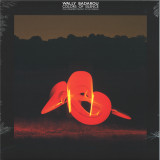
Synth pioneer and musical polymath, Wally Badarou is a genius. But you know that already. A vinyl version of his majestic Colors Of Silence has been craved by the Balearic cognoscenti ever since its low-key 2001 release. Indeed, when we first started work on Be With, we asked some pals with exquisite taste what their dream release would be. We asked Balearic legend Moonboots and, without hesitation, he said Colors Of Silence by Wally Badarou. We didn't know Wally had made this album. And most still don't. But that's about to change.
Colors Of Silence is ostensibly a new age album. As ever though, Wally's sophisticated synth textures and expressive keyboard runs are so full of character, so full of life, that this work of art transcends any easy genre categorisation. It's simply stunning, throughout. It sounds like A.r.t. Wilson or Suzanne Kraft, with traces of CFCF and Jonny Nash. But it was made a good decade earlier than the work of these modern giants. Sometimes, it doesn't seem far from some Larry Heard albums.
Island Records founder Chris Blackwell's friend Nathalie Delon asked Wally to provide music for the yoga DVD she was to release. Lack of time on both sides made them agree on using "quality demos" Wally had in his ideas bank. It's understandable why Colors Of Silence remains somewhat of a lost gem. As Wally explains: "Total lack of promotion made it an 'intimate' release, which was exactly what I was looking for: just a buzz-maker and time-buyer that would allow me to concentrate on the real thing as soon as I'd have time, which could also turn into a rare collecting item later, once the final versions made their way to success. You never know."
Over the years, Colors Of Silence has become a true cult record for the ambient/Balearic heads.
The beguiling but brief "Dance In The Dust" is the shuffling, hyper-percussive, hypnotic opener. It gives way to the deep serenity of "Amber Whispers". It's a gliding, divine, mini melodic masterpiece. It'll make you swoon in its extreme beauty. The bright and breezy "Where Were We" follows, a tropical, reggae-tinged bounce through the islands.
The uptempo groove is maintained on the keys-drizzled soca-funk of "The Lights Of Kinshasa" before Side A is rounded out with "Pictures Of You". It starts with stately, melancholic, unadorned piano and this alone would make for a beautiful song. But Wally always gives us that bit extra and he effortlessly introduces warm, dreamy pads and minimal, slo-mo percussion to augment a frankly stunning piece of work.
Ushering in Side B, Wally's mesmeric piano playing is to the fore again, in the intro to uber-chilled "Serendipity For Two". The playing becomes more mellifluous as the track progresses and adds warmth through exotic percussion, woodwind, sweeping synths and digi-drums. It has echoes of, er, Echoes. It segues seamlessly into the more propulsive, wavy "Smiles By The Millions". If you're not nodding and grinning along widely to the gently throbbing bassline underpinning this, we can't help you. The meditative "Higher Still" follows, cinematic in feel and ever so slightly sinister with the strings. It sounds particularly Badalamenti-esque, if you ask us.
That unmistakable, almost peculiar Badarou funk - so lyrical, so texturally rich and so rhythmically spacious - is all over "Oriental". Next up, "Days To Wonder" brings the serenity back, insistent yet melodic keys, as if played in a place of worship, coupled with birdsong, conjure a kind of instant nostalgia for halcyon days of youth. The contemplative "Dawn Of Europa" is a sombre, beatless, ambient journey whilst the glorious, too-brief "Crystal Falls" features soft percussion and sparkle before fully glistening with some gentle head-nod beats. Wally brings this incredible collection to a mellow, tender close with the graceful "Purple Lines".
There can be few artists more under-appreciated given their vast influence than Wally Badarou. His solo work practically defined the sound of the Balearic DJs of the 1980s, and thus the more sophisticated sound of dance culture thereafter. A synth specialist, Badarou was the long-time associate of Level 42. He was one of the Compass Point All Stars (with Sly and Robbie, Barry Reynolds, Mikey Chung and Uziah "Sticky" Thompson), the in-house recording team of Compass Point Studios responsible for a series of albums in the 1980s recorded by Grace Jones, Tom Tom Club, Mick Jagger, Black Uhuru, Gwen Guthrie, Jimmy Cliff and Gregory Isaacs. Badarou's keyboard playing could also be heard on albums by Robert Palmer, Marianne Faithfull, Herbie Hancock, M (Pop Muzik), Talking Heads, Manu Dibango and Miriam Makeba. He also produced Fela Kuti. Phew!
Meticulously remastered and cut by both Simon Francis and Cicely Balston respectively, it has been pressed to the highest possibly quality at Record Industry in Holland. Special thanks must go to Apiento from Test Pressing who first introduced us to Wally and facilitated all those early zoom meetings. It couldn't have happened without his help. Not least on pulling the art together, too, which features striking original photography by Mads Perch. Benji Roebuck of Roebuck Press did his thing brilliantly in art working the whole package to completion. All in all: essential.

An introduction to our next release that we name DOUBLE JOURNEY.
Featured When we are all truly Free composed by Kuniyuki Takahashi. Taken from the forth coming Translate Pt 2 by Joe Claussell. When we are all Free takes one on a journey into cosmic landscapes and deep though provoking sounds. Residue I Believe by Joaquin Joe Claussell of deep tech house that continues to tap into and express the darker side of Joe Claussell
SORA
It is times such as these that further supports our choice of remedy and why our pursuit to delve deeper into the creative process remains relentless and of profound importance. Due to the unfortunate and dangerous constant overlooking the special gift bestowed upon all of us by the higher power, it calls upon us to continue forward with our mission for productive change which has become ever more crucial to reach. What we're referring to isn't exactly in plain sight for all to see, but obvious enough to those who care to pay attention. However, what has become undeniably apparent to us; is the powerful moving vibration that emits from sound and art and how we connect with them. It is a higher calling that cannot be neither denied nor questioned, and we can only praise the wisdom, truth and love that they bestow upon us. Thoughts like the aforementioned is how and why SORA; an extension of Sacred Rhythm Music & Cosmic Arts, came into existence. Enjoy the Double Journey…
Most of Gen X-ers who grew up in the mid-1980s Indonesia must have seen Soedjarwoto Soemarsono, known with his nom de guerre “Gombloh” performing on a state-run television station, playing some of his biggest hits from that era, pop gems like “Kugadaikan Cintaku (I Pawn Off My Love)”, “Setengah Gila (Half-Crazy).”
But of course, it is not fair to judge Gombloh only from these hits. Dig deeper and you will find buried treasure in his early stuff from Indra Records, and there are many of them.
His album with the band Lemon Tree’s Anno ‘69 (yes, that’s the name of the band) is all remarkable, but what he did for Chandra Records was no less spectacular. How can you go wrong with songs like “Kebyar-Kebyar”, the unofficial national anthem for Indonesia, dan “Berita Cuaca” one of the better epic songs in a catalogue full of epochal songs? These were all long out of print and in our journey to source the original master for these albums we met Bob Djumara of Nirwana Records, the Surabaya, East Java-based label which broke Gombloh into the mainstream in the mid-1980s. Almost all albums Gombloh recorded for his early labels, Indra Records and Chandra Records were critically acclaimed, but commercially they bombed, big time. Nirwana Records came up with an ingenious plan. What if they recorded Gombloh performing live and release it as is. After all, the first song in Gombloh debut record Nadia & Atmospheer is him strumming on his guitar backed by the cheering of a crowd, who could be heard going wild when he hurled that epithet “bastard” at the end of the song
The end result is a brilliant recording which despite being recorded live the sound quality so pristine leading many to doubt the claim of being live. Regardless, Nirwana shipped a decent number of units and Gombloh could buy his first car, a Katana Jeep, with money from the royalty.
One of the best things about Live Gila is its perfect sequencing, beginning with Gombloh’s social commentary on the rich’s debauched lifestyle of preying on young boys and girls, one of the most popular subjects allowed by the censoring machine of the New Order authoritarian government. The second song “Untuk Persada” is a soaring ode to the nation. For this song, Gombloh could be heard drawing his inspiration from The Police, which was undoubtedly popular in the early 1980s, even in a faraway port city like Surabaya.
Listening to this record as a whole (we omitted the last song from the original master tape “Bagimu Negeri” which sounds too jingoistic), we could not help but point to some of similarities it has with Bob Dylan’s Blood on the Tracks. Not a single composition in this record sound indigenous (the Malay-influenced rock of Panbers or Koes Plus come to mind); they all sound modern and effortlessly catchy, and had it not been for the language, this album could be mistaken for a musical output from someone growing up in Laurel Canyon or Southern France.
There are only limited copies of vinyl records in the second-hand market today available for Gombloh music, if at all. For his ardent fans, they have to scavenge for old cassettes to continue to be able to enjoy his music and have to pay top dollar for that. In Indonesia, where he was a superstar in the early 1980s, Gombloh was largely forgotten. With this project, we can only hope that the time is ripe for Gombloh to reemerge and now, more than ever, his music could speak to a bigger audience.
Ancient Infinity Orchestra is a 14-member jazz ensemble led by double-bassist and composer Ozzy Moysey, based in the bustling creative city of Leeds in the North of England – home to one of the most innovative and community-based jazz scenes in the UK. Saxophonist Matt Cliffe who also performs with Matthew Halsall is a key member and the rotating line-up which includes drums, two bassists, keyboards, harp, violin, cello, two tenors, alto, oboe, flute and percussion. "River of Light’ drinks deep from the well of spiritual jazz and is especially inspired by the soulful sounds of Pharoah Sanders, Alice and John Coltrane but also channels a certain Northern sensibility that can be heard in the music of Matthew Halsall or Alabaster de Plume. Melodic, warm and honest this is music that is happy to wear its heart on its sleeve.
A Flor de Piel, the new album from singer-songwriter and composer Maria Monica Gutierrez (aka Montañera), is a meditative journey of self-discovery across oceans, time, and the traditional confines of genre. Originally from Bogota, Colombia, Gutierrez began the album as a way to explore her identity after a difficult move to London left her feeling untethered in a strange new place. The result is an examination of the immigrant's experience through a rich sonic lens of ambient pop textures, inspired by sources as disparate as Colombian traditional music, traditional Senegalese music, and whalesong from the depths of the Atlantic. The album begins with the title track "A Flor de Piel," Gutierrez's indelible vocals floating above a vast expanse before being joined by deep, silky bass and the plucks of a koto-like stringed instrument. "The song was inspired by traditional Japanese music," Gutierrez explains, "It's about making my heart a little lighter; I know that inside of me I can be as light as mist in heat, I can be fragile as the song of a sparrow." That sentiment perfectly encapsulates much of what makes A Flor de Piel so special. The album comes with a message of healing for all people, without forgetting the centuries of struggle and hurt that form the bedrock of modern society. The track "Santa Mar," for instance, is inspired by the musical traditions of afro-pacific women in Colombia, and the crucial role that they play as peacebuilders in the region. Backed by a hypnotic beat, the song features contributions from marimba player Cankita, alongside Las Cantadoras de Yerba Buena, an all-female vocal group that utilizes traditional Afro-Colombian music to preserve their history and promote peace. Standout track "Como Una Rama" is a futuristic take on bullerengue, a traditional style of music and dance originally developed by Maroon communities on Colombia's Caribbean coast. Deeply affecting, the song combines Gutierrez's indomitable voice with electronics that recall Steve Reich's rhythmic minimalism. "Cruzar," the final track on the album, feels almost like a lullaby, with a meditative harmonic style and trance-like vocal melody. "The lyrics," Gutierrez explains, "are a personal reminder of what is important to me: healing, letting go, breathing, evaporating, forgetting, changing, crystallizing." Across the 40-odd minutes of A Flor de Piel, Gutierrez triumphs at recontextualizing traditional sounds and sentiments into a modern form using synth-based and electronic textures. It's a fitting representation for the personal struggles that the artist endured during her move to London. Rather than dwelling solely on the past Guitierrez uses A Flor de Piel to summon the strength of past generations, and forge a new path forward. As she describes it, "The album has accompanied me through inner journeys of finding myself in a new territory _ of redefining myself, of remembering who I am _ in a strange place." As we drift towards an increasingly frightening and uncertain future, perhaps Montañera's A Flor de Piel is exactly what we need: something to give us strength, to bring us peace, and to accompany our journey into a strange new place.
New West Records is proud to present Strange Country, the new full-length album from the young and gifted cousin-duo Kacy & Clayton. The ten-song collection was recorded over seven freezing Canadian winter days at Ghetto Box Studios, a historic community hall turned studio. The product of a lifetime of deep kinship, the record showcases the purity and astounding beauty of Kacy Anderson's voice, one that has been notably compared to Fairport Convention's Sandy Denny. Only Clayton Linthicum's intricate guitar work, expert time changes and vocal harmonies could forge the foundation for Kacy's voice to soar even higher - the result being an enormously satisfying and organic album. Drawing a wide swath of inspirations ranging from the Greenwich Village folk scene to the ancestral music of Southern Appalachia and the British Isles, the cousins fashion songs steeped in those traditions, simultaneously paying homage and building on those sounds.
Istanbul born performing artist, producer, composer and instrument builder Berke Can Ozcan, in collaboration with critically acclaimed Norwegian trumpet mastermind Arve Henriksen and Brooklyn-based baritone saxophonist Jonah Parzen-Johnson, takes you on a captivating journey through the depths of nature on the Lycian Way, immersing the listener in a mesmerizing soundscape that echoes the wonder and mystery of the trail leading to the ancient Lycia As Ozcan ventures deeper into uncharted territory, he stumbles upon a sight that would spark an artistic flame - the Twin Rocks. This collaboration weaves together a tapestry of sonic explorations that capture the essence of Ozcan's journey. The ambient-jazz album's delicate balance between organic sounds and electronic manipulation creates a dreamlike atmosphere that transports the listener to the rugged terrain of the Lycian Way. Mastered by three time Grammy winner Dave Darlington, each track on this ethereal album mirrors a different aspect of the journey to the Twin Rocks, meticulously composed by Ozcan, Parzen-Johnson and Henriksen with each section of the trail in mind. The album is infused with melodic bird songs and sound walk memories that add depth and texture to the ethereal soundscape. Ozcan's array of self- crafted instruments made out of bamboos, soda bottle caps, straws, house keys, terracotta flower pots alongside with his long time companions like his steel drums, chimes, gongs, and vibraphone, serve as the medium through which he expressed the reflections of his encounters in his own world of rhythm and melody