Limited to 1000 copies.
Pressed on Blue Vinyl.
Includes postcard and poster.
The Bluebells have dug deep into their archive to give us the earliest recordings of these tracks, which have never been released before and are exclusive to this 7”
‘Everybody’s Somebody’s Fool’ is longer and more vibrant containing an extra verse and guitar solo which are not on previous versions. This is the closest recording to the one that was originally intended to be released on Postcard in 1981. The sleeve, designed by Bobby Bluebell features 2 of the earliest photos of the band.
THE BLUEBELLS were formed by songwriter / guitarist Robert Hodgens aka Bobby Bluebell in 1980. When deciding to form a group to start performing his songs, Hodgens remembered two punk musicians from Bothwell (brothers Ken and David McCluskey) he had interviewed for his fanzine, 10 Commandments. David (drums/ backing vocals) and Ken (vocals / harmonica) joined Robert and The Bluebells started performing live in and around Glasgow.
The Bluebells were soon involved in the burgeoning scene coalescing around Postcard Records in Glasgow (Orange Juice, Josef K, Go Betweens, Aztec Camera, Jazzateers), and it wasn’t long before The Bluebells were sharing stages throughout the UK with some of the Postcard groups. A single (Everybody’s Somebody’s Fool) was scheduled for release on Postcard, however after appearing on the
front page on Melody Maker and in NME / Sounds etc, major record companies started making serious offers to sign the group. The Bluebells appeared on BBC music program The Old Grey Whistle Test, the first unsigned group to do so, and it wasn’t long after this television appearance that the group signed a major record contract with London Records.
The Bluebells were soon in the studio working on songs for their debut album, with Elvis Costello producing. They were invited to open on UK tours for Haircut 100 and Elvis Costello & The Attractions, and started releasing singles to critical acclaim (Forevermore, Cath, Sugar Bridge). However it was their fourth single I’m Falling (co-written by Robert and Ken) that finally resulted in commercial success, chart success, and appearances on Top of the Pops.
The Bluebells released their debut album, Sisters, in 1984 to further commercial chart success, which was continued when their next single, Young At Heart, gave the group their second big hit single. However, when Young At Heart was reissued
in 1993, it reached number 1 in the chart for a month, making The Bluebells regular fixtures on Top Of The Pops
Search:deep sounds
Kapriole is the debut album by Zurich- and Hamburg-based artist Leo Hofmann after working in music theatre, sound art, and performance contexts. Central to the album, which refers in its title to a joyous jump, is the ambition to translate an ephemeral practice into recorded matter. Fixed but never static, Kapriole is informed by intimate and detailed listening situations and sound practices like ASMR or the acoustically sheltered world of noise cancelling headphones. And while it is apparent that Hofmann has a deeply rooted understanding of technology and its abundant possibilities, Kapriole is a tender and almost analogue feeling affair. The human voice occupies a central role in the musical configuration of the album: quirky repetitions, hushed fragments and poetic statements, circling topics like communication, mobility, and immersion occupy the album’s eight tracks. The result is a sonorous sensation, which, in its scarcity, paves the way for meticulously crafted and delicate soundscapes. Kapriole as a joyous jump which is technological as much as it is emotional.
Memento catalogue number 046 will be the first release of the label for 2022, a solid way to celebrate its sixteenth birthday.
Dj Rocca is a veteran Italian producer whose first releases came out in the late 90s, ad drum&bass and breakbeat cuts under the moniker Maffia Soundsystem, representing the legendary Italian club withe same name.
His four tracks for Memento are dance floor essentials grooves with a fine arrangement and an exquisite sonic flavour. Blending together retro drums and futuristic synth lines, dj Rocca has achieved to bring on vinyl a touch of freshness with a super organic arrangement.
A massive E.P. with brighter moments and darker excursions, bounded by a deep clubbing awareness.
- A1: The Children Of Scorpio
- A2: The Road To The Hills
- A3: Path Through The Forest
- A4: Searching For June (Interlude)
- A5: June
- A6: Scorpio's Waltz
- A7: The Invitation (Interlude)
- B1: The Ritual '70
- B2: Scorpio's Garden
- B3: The Turning
- B4: Plan Your Escape
- B5: The Deserted Compound (Interlude)
- B6: Buried In The Woods
- B7: Closing Theme
Good things come to those who wait. The album 'The Children of Scorpio' by Project Gemini aka Paul Osborne is a result of his steeped 30-year musical journey that’s seen him dig deep, study his record collection and re-emerge to fine-tune his craft.
A cinematic musical journey that plays out like a long-lost soundtrack (think cult B-movies of the 60s and 70s); 'The Children of Scorpio’ was formed from Paul's love of a myriad of genres; from European library music, acid folk, psych-funk, vintage soundtracks and the contemporary breaks scene. The album draws on iconic classics such as the masterful cinematic funk of Lalo Schifrin's 'Dirty Harry', Ennio Morricone's 'Vergogna Schifosi’ and Luis Bacalov’s 'The Summertime Killer’, to name but a few. You can also hear the folk sounds of Mark Fry's iconic 'Dreaming With Alice', the Britsh folk-jazz of The Pentangle and the David Axelrod-produced 'Release Of An Oath' by The Electric Prunes, woven into the cultural tapestry of this gem. The influence of these vintage productions of the 60s and 70s is evident; however, it could be argued that there’s also echoes of the funkier psychedelic moments of bands such as The Stones Roses and The Charlatans, alongside contemporaries such as The Heliocentrics and Little Barrie, thus giving the album a broader crossover potential beyond the world of crate digging and vintage soundtracks.
A bass player and musician since the age of 16, the arrival of his first child in 2010 saw Paul move away from live performance and retreat to his home studio, recording a wealth of music that was destined to never be heard. One of the first tunes to be made was a demo entitled ‘The Children Of Scorpio’, inspired by his long-time obsession with Lalo Schifrin’s soundtrack to violent Clint Eastwood cop classic 'Dirty Harry'. Recorded for fun, the track was fated to sit in the archives untouched. However, like a phoenix rising from the ashes, connections to a wealth of inspirational musicians and labels would re-ignite Paul's musical fire and give him the impetus to develop his slept-on ideas into something more concrete. Firstly resulting in releasing two limited 7'' records on Delights Records and now the long-player for Mr Bongo.
Assisting in the recording of the record were several close friends that have helped spark Paul's musical creativity along the way, including well-renowned guitarist and Little Barrie frontman Barrie Cadogan (who contributes killer six-string guitar to four tracks), Delights Records head-honcho Markey Funk (who adds spooked out keyboards to ‘Path Through The Forest’), Kid Victrola, the chief songwriter and guitarist with French psych girl group Gloria who added wild 12-string to ‘Scorpio’s Garden’, Haifa-based multi-instrumentalist and producer Shuzin who brings the heat behind the drum kit, and Paul Isherwood, co-founder of Nottingham’s The Soundcarriers, who mixed the album on his wealth of vintage gear.
We are delighted to be releasing this slowly-brewed timeless classic that manages to achieve that rare feat of keeping one foot firmly in the past whilst still sounding totally contemporary.
Curtis Electronix is proud to present "Destroy Your Future", the new LP from the one and only Galaxian. In the last years Mark Kastner aka Galaxian has become a prominent figure in the underground scene because of his high quality productions and his unique take on electro. We all know electro started with futurism and well, this work is pure futurism. Each cut is a trip into his restless creativity. Each track is a mind altering exploration of a deeply cinematic soundscape with a massive number of elements perfectly fused together with his "one of a kind" sci-fi aestethic that immediately pulls you out of the schemes. Caustic distortions, post industrial environments, mind expanding electronics and primitive drum patterns are only the main elements of this sci-fi masterpiece. There is no "Detroit Nostalgia" in it. This is sonic militance. The same that inspired the originators back in the days. When you play it, time runs faster and future looks closer. We are on board, but Galaxian is the only pilot of the ship.
- A1: Sampuesana - Los Dinners
- A2: La Borrachita - Junior Y Su Equipo
- A3: Paga La Cuenta Sinverguenza - Manzanita
- A4: Infinito - Hugo Blanco Y Su Arpa Viajera
- B1: El Jardinero - Manzanita Y Su Conjunto
- B2: Feito Parrandero - Los Feos
- B3: Bien Bailadido - Junior Y Su Equipo
- B4: Saturno 2000 - Los Santos
- C1: La Danza Del Mono - Lucho Gavilanes
- C2: Capricho Egipcio - Conjunto Tiupico Contreras
- C3: El Chacarero - Los Gatos Blancos
- C4: Pa Oriente Me Voy - Los Atomos De Paramonga
- D1: Alegrate - Junior Y Su Equipo
- D2: Todo Lo Tengo De Ti Menos Tu Amor - Grupo Celeste
- D3: La Fuga Del Bandido - Los Ecos
Analog Africa delves deep into the scene of the Mexican's sonideros (sound-system operators) to present the "Rebajada" movement they've created using locally made pitch controls, speakers and sound effects.
"In 2010, I had asked Eamon Ore-Giron - aka DJ Lengua - if he would be interested in compiling a Latin project for Analog Africa, and if so, if he had a theme in mind. He replied, “Have you ever heard of rebajada?“ The question mark above my head, together with the wall of China, must have been the only other object visible from out of space because Eamon, probably noticing I got paralysed, continued, “Rebajada in Spanish means “to reduce, to lower”. It’s basically Mexican sonideros (soundsystem operators) slowing down the beat of a Cumbia to create a much more tangible music to dance to. I’ll send you a mix I made last year and let me know what you think.“ And so he did.
That mix was called Rebajada Mota Mix and I began listening to it on a loop. Although I was not immediately hooked it was intriguing from the get-go, and so I kept listening until magic began unfolding. Slowed down music allows you enough time to hear right through it, revealing itself in ways I had rarely experienced before. Everything became more transparent and I was noticing sounds normally only perceptible by bats. A near psychedelic experience. That mysterious mix included a few Ecuadorian songs by Junior y su Equipo - aka Polibio Mayorga (a cult figure in the sonidero scene), a couple of Mexican tunes, one Colombian, and various Peruvian songs, undoubtedly the driving force behind this project.
The sonidero who brought Peruvian and Ecuadorian music to Mexico was the legendary Pablo Perea from Sonido Arco-Iris, and although his fingerprints are all over the compilation Saturno 2000, this selection of songs in rebajada is exclusive to DJ Lengua. With the exception of a few classics from Polibio Mayorga and La Sampuesana – the queen of all rebajadas – most of these songs were probably never performed as such before, let alone released.
So how did rebajada come to be? In a nutshell; Rebajada started with two families of brothers – the Pereas and the Ortegas – who travelled all over Latin America and returned to Mexico with heavy loads of records which they would sell to the various sonideros always on the lookout for new tunes. Colombian beats especially seemed to fit almost perfectly with the Mexican dance steps – but they were just a bit too fast. As a result some sonideros began experimenting with equipment, and Marco Antonio Cedillo of Sonido Imperial created a revolutionary pitching system that could slow records down to an extent other players could only dream about. And so rebajada was born . . . or so we thought.
At the same time in north of the country, in Monterrey, sonidero Gabriel Dueñez almost got electrocuted by a short circuit that nearly set his record player on fire. As a result the platter started spinning in slow motion for the rest of the party, turning Cumbia into a different affair altogether. The youngsters went crazy for it and started harassing the sonidero with requests to record cassettes for them. Reluctant at first, Dueñez finally began recording a series of pirated cassettes called “Rebajada” which included mainly Colombian cumbia and porro in slow-mo exclusively. Those tapes took the city by storm and turned rebajada into a celebrated and defiant movement of the youth.
Of course it would not be a Mexican urban legend if it didn’t include dramaturgical elements, and so for nearly 30 years, until this day and probably for ever, both cities have been arguing and claiming ownership the creation of rebajada for themselves. But sonidera Joyce Musicolor, who never has time for such trivial arguments, got straight to the point: “Rebajada, and the equipment to perform it, is from here Mexico City but it was Monterrey that popularised it.“
FLAPAAaaam!!! the first snare roll leaves no doubt: this is a dub album, reminiscing the pioneers of the genre like King Tubby, Lee "Scratch" Perry and Scientist and of course, it's a tribute to the revolutionary music of Bob Marley and the Wailers. The original record from which these dubs derive - "Bob" by Kapelle So&So feat. Cpt. Yossarian - was recorded in 2020, the year of Bob Marley's 75th birthday. Due to the strict lockdown all the tracks were recorded separately - which perfectly qualifies them for a dub rework. The musicians involved took great care to dig deeply into the original music, absorbing every note of the Wailers' recordings and translating it to their own instrument. But at this point we leave common paths, because what would be Aston Barrett's electric bass turns out to be a tuba and his brother Carly's distinguished bassdrum sound resurges on an old leather suitcase. We are talking of a traditional bavarian folk band (trumpet, cornet, tuba, accordion, guitar, drums) playing Bob Marley's sacred music. Simultaneously seriously sticking to the original score and adding color to the music by the masterful use of their rather uncommon instruments. What sounds like an impossible -almost blasphemous- endeavour actually sounds pretty neat and leads to the next big venture: A dub album paying tribute to the music of Bob Marley and the Wailers. The dub versions naturally lead on the abstract that was introduced by the uncommon orchestration by muting or emphasizing single instruments and sending them into the sonic orbit. The melody itself is almost completely left out. Nevertheless one never loses one's orientation since the defining elements of the songs alternate skillfully, vanishing in clouds of reverb, losing themselves in echo feedbacks and then popping up again, guiding us through the song. Despite being focused mainly on bass and drums you will catch yourself singing along Marley's part more than once thereby proving the profound impact of this divine music on our souls and our common musical knowledge. Bob Marley in Dub is the abstract of an abstract and still manages to transport the heart and soul inherent of the music. With all due respect to the original, Cpt. Yossarian manages to illuminate nuances of the material yet unheard and takes us on a trip through his conception of this otherwise well known material. Following the tradition of the before mentioned mentors of dub music he uses his mixing desk, a couple of studio effects and whatever odd sounding kids toys to present us with his approach to a musical genre that defined so many styles of music that followed.
Even in trying times, “there is no love without electricity.” Electricity is the fourth and most progressive album from Ibibio Sound Machine, and like all good Afrofuturist stories, it begins with an existential crisis. “It’s darker than anything we’ve done previously,” says Eno Williams, the group’s singer. “That’s because it grew out of the turbulence of the past year. It inhabits an edgier world.”
Electricity was produced by the Grammy Award and Mercury Prize nominated British synthpop group Hot Chip, a collaboration born out of mutual admiration watching each other on festival stages, as well as a shared love of Francis Bebey and Giorgio Moroder. The fruits of their labor reveal a gleaming, supercharged, Afrofuturist blinder. Electricity is the first album Ibibio Sound Machine have made with external producers since the group’s formation in London in 2013 by Williams and saxophonist Max Grunhard. True, 2017’s Uyai featured mixdown guests including Dan Leavers, aka Danalogue, the keyboard jedi in future-jazz trio The Comet Is Coming, but Hot Chip and Ibibio Sound Machine worked together more deeply throughout the process, collaborating fully. Along the way, the team conjured a kaleidoscope of delights that include resonances of Jonzun Crew, Grace Jones, William Onyeabor, Tom Tom Club, Kae Tempest, Keith LeBlanc, The J.B.’s, Jon Hassell’s “Fourth World,” and Bootsy Collins.
The hook of opener “Protection From Evil” has Williams wielding a massive synth line from Hot Chip’s Al Doyle like a spiritual shield against unspecified, malign forces unspecified because Williams is speaking in tongues. Her lyrics are onomatopoeic: their meaning is defined in her energetic delivery. As Electricity takes off, so do Williams’ words towards a brighter future, alternating between English and Ibibio, sometimes within verses, and propelled by Joseph Amoako’s unabating afrobeat. She digs into this sentiment further on single “All That You Want,” coolly assuring her romantic interest while also requesting reciprocity. Meanwhile, Scott Baylis’ playful Juno synth guides the listener’s feet along the dancefloor.
Electricity is a deep and seamless realization of Williams’ and Grunhard’s ambitious founding manifesto to combine the singularly rhythmic character of the Ibibio language which Williams spoke growing up in Nigeria with a range of traditional West African music and more modern electronic sounds. While the band enjoys veering further into electronic territory with the help of mutuals like Hot Chip, Grunhard emphasizes, “For us, it’s not just a matter of embracing new technology. What’s key is to keep the music grounded in African roots.” Ibibio Sound Machine best exemplify this on Electricity’s “Freedom.” That track was inspired by the water-drumming rhythms of Cameroon’s Baka women, which in turn fueled its lyrics, which in turn prompted Hot Chip and Ibibio Sound Machine to layer joyfully kinetic electronic counterparts on top in the studio. As the track culminates with the mantra of “rage, hope, cope, soul,” it’s clear that Ibibio Sound Machine have channelled, harnessed, and distilled these words as guiding principles, both for the album and for the turbulent world that awaits it.
FROM MUSIC COMES HARMONY
HARMONY BRINGS BALANCE
BALANCE RESTORES PEACE
Enter the heart of drums ..
With obvious intent Nui and Simon set out to create an album that encompasses all of their influences and experiences as musicians and journeymen in the world of African inspired rhythm and sound and have arrived at a work that is at once global, innovative and deeply funky !
It’s been an incredible journey that has taken them from the wilds of the northern hinterlands of New South Wales in Australia to the dreamy secret gardens of Marrakesh, from the onsite recordings of Afro-Cuban choirs of Havana, to the Gnawa street sounds of Moroccan medinas.
Nui and Simon have traversed the globe to create these recordings and have collected diverse and international group of artists to collaborate with in the making of Heart of Drums.
Artists such as Cazeaux Oslo, who is an African-American Mc and vocalist hailing from California.
Olugbade Okunade , Nigerian trumpeter and vocalist , was formerly a member of the Femi Kuti Positive Force band.
Members of Clave y Guaguanco, One of Cuba’s foremost folkloric groups, who have been around since the 60’s.
Lalita Yagnik, Portuguese Speaking Indian, vocalist and martial artist.
Radouan Naim, Traditional Moroccan vocalist and instrumentalist .
And
Close Counters, Australian Up and coming Electronic duo.
Digital Afrika is made up of two main protagonists:
Zhonu ‘Nui” Moon (Future Roots)
An African-Australian producer, percussionist and Dj that has performed and recorded all over the world.
With a strong focus on African music,He has worked with the likes of Femi Kuti , Mulatu Astake and Tony Allen.
And Simon Durrington (Si Fixion ) who is an Australian based producer, keys player and DJ. With extensive experience of working with Melanesian , Indian and world musicians.
Drawing on these influences, Si weaves these styles together seamlessly with his unique high quality electronic production.
This album ‘Heart of Drums’ is a synergy of lush analog electronica and fiery African percussion, vocals and instrumentation.
With occasional reinvented throwbacks to the Disco and Funk era as well as forward thinking Afro-futuristic Record bag essentials, Heart of Drums really brings the party!
These are constructed dance floor motivators for any environment.
The artwork for this record deserves special mention as the mask was handcrafted by the interesting and talented artist Ju Mu Monster. Based in Berlin, the studied fashion designer creates colourful, wildly dancing image-worlds, in which beings from diverse cultures are combined with shamanism and spiritual worlds. Her enchanting works of art include murals and canvases as well as magical masks.
All tracks produced and arranged by Zhonu (Nui) Moon & Simon Durrington
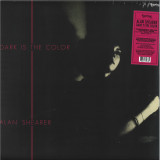
Favorite Recordings presents Dark Is The Color, the first LP by Alan Shearer reissued on vinyl for the first time. Despite being initially composed and produced for the French library label PSI, this rare
and obscure in-demand gem from 1985 sounds retrospectively like a proper album with great coherence and sophistication all along. Indeed, these 11 tracks will delight synthesizers addicts. Expect deeply emotive instrumental compositions, with ingenious analogue sequencing on stimulating chord progressions. The result is a highly retrofuturistic album, sometimes almost anticipating 90's videogames
scores. Just imagine Wally Badarou in a bunker with Talking Heads watching New York 1997 from John Carpenter.
Composed mostly step by step on a Sequential Pro-One synthesizer, Dark Is The Color is the product of the exciting state of mind from the 80's era with new sounds, new tools and new trends on the music spectrum. Influenced by bands like Talking Head or Japan, the sirens of the new wave scene strongly resonate here with Alan Shearer's familiarity and craftmanship with synthesizers.
Back in the days, Alan Shearer aka Frédéric Viger was working for his father’s music label, “Musique Pour L'image”, and their sublabel “PSI”. He started with Marathon Life under his real name before taking the Alan Shearer monitor. These records were produced for radio, TV and cinema industries but as well for companies’ internal communication. They represented a real investment from the label and these catalogues are usually full of amazing music from great artists such as Martial Solal, Vladimir Cosma, Joël Fajerman, Harlem Pop Trotters and even Manu Dibango.
About his musical illustration process, Alan Shearer tells: "Soundtracks are indeed my biggest influences and I'm a real fan of American composers as Jerry Goldsmith or Elmer Bernstein. I've always considered soundtracks as the new classical music or classical music of our century. There is a real state of mind producing music for illustration: you have to stick to the video. You should not tell what the image is saying but accompany what it is saying. You have to find a unique link, people always told me music should not be noticed for itself in a movie, that's what makes it good.”
French artist Trudge returns to Lobster Theremin with his debut LP No More Motivation arriving on March 18th with a genre-bending and original masterstroke; charged as it is cerebral. The album's concept points to the artist's tumultuous relationship with music; plagued by life events and the looming shadow of tragedy. That same relationship however, has led to an album of nuance, a cathartic whirlwind that pushes and pulls from one part of the psyche to the next.
From the laden house sounds found in his earlier work, to the hard-hitting emotive techno we hear today, both Trudges’ personal and artistic evolution runs parallel, drawing between the lines of introspection and dance music’s modern functionality. Bangkok Radio kicks off proceedings with a reminiscent drive through the city's bustling landscape, as space unfolds the further we travel from the hustle and bustle of daily life. No Motivation, Meaningless is a nod to the producer's headspace - burdened by the unpredictability of reality and it’s governing influence on art; echoing throughout the entire album.
Mazzomba explores the duality of light and dark; heavily submerged sounds can be heard melting below the surface, as airy synths create an ethereal glow - acting as our torch through the crud-infested trench. The album's interlude Berserk provides a rest bite, an ambient dreamscape laced with deeply layered textures - casting warm fluorescent light amongst the clouds as balance is restored.
Dead Orange and Gradient demonstrate the artist's knact for intelligent sound-design and world-building soundscapes, while Unghosted and Punishments sees Trudge venture into raw and unwavering compositions created for the dance-floor. Closing the album is Blue Ritual, a thought-provoking piece that has the ability to transport and heal. It’s introspective layers point to the changing winds to come - rounding off an album not binded by genre, but an eclecticism that characterizes an artist true to his craft.
- A1: Please The Nation
- A2: Angel Face
- A3: I Am Selfish
- A4: Eniweth
- A5: No More Crying
- A6: Making Life Out Of Music
- B1: Walking Down The Street
- B2: Rock & Roll Soul
- B3: Lovely Lady
- B4: Widow
- B5: Worthless Woman
- B6: Looking For The Day
- C1: Lonely
- C2: No More Crying
- C3: Beginning
- C4: Good Turning Bad
- D1: I Am Selfish
- D2: Dancing
- D3: Are You Satisfied
- D4: Worthless Woman
- D5: Rock & Roll Soul
- D6: Waiting For The Chance
The Effect Of Heavy Music: Rock Music And Revolution In 70s Zimbabwe. Eye Q’s music has never been collated and issued outside of its country of origin. Now, as part of the Now-Again Reserve series, their rare singles and even rarer album are presented in full. Just as the hippie era came to an end in America, a second 60s was beginning: in what is now Zimbabwe, young people created a rock and roll counterculture that drew inspiration from hippie ideals and the sounds of Hendrix and Deep Purple. The kids in the scene called their music “heavy,” because they could feel its impact, and it resonated from Zambia to Nigeria. At its peak in the mid-70s, the heavy rock scene united tens of thousands of young progressives of all racial and social backgrounds. The country was called Rhodesia then, one of the last bastions of White rule in Africa, and heavy rockers defied segregation laws and secret police to make a stand for democratic change. Eye Q is one of the greatest bands of the scene: their rock stands on par with the early Zamrock of WITCH and Ngozi Family. Please The Nation encapsulated Eye Q’s desire to forge forth, in a new, free country, and this set collates their 7” singles, ultra-rare album and songs from master tape and presents their music for the first time outside of Zimbabwe. In the accompanying oversized booklet, a trio of authors collaborate to tell the Eye Q story, and to investigate the genesis of the heavy rock scene under Ian Smith’s racist, oppressive government, and its dissipation after Zimbabwe’s liberation. The set also includes a download card for WAV files for all vinyl tracks, as well as bonus tracks.
Historically informed violin player, prize-winning street musician, new age experimentalist, chamber ensemble performer and conservatoire deviant. The career of Valentina Goncharova (b. Kyiv 1953) shares parallels with those associated with the broader new music movement of the 20th century and the dissemination of home recording technologies.
Valentina’s was a youth spent immersed in the world of classical music study under soviet rule, first in Kyiv- later in Leningrad & now St. Petersburg, from the age of 16. With the supervision of professors M. Vayman and B. Gutnikov she learned concert violin and developed alternate playing styles alongside skilled pianists. A student of the Leningrad conservatoire during the years 1969 - 1983, her repertoire included music for violin and later expanded to contemporary music composition.
The improvisatory nature of free jazz and then-budding experimental rock circles also intrigued Valentina during this period in Leningrad. Departing from the rules of the conservatoire, she briefly performed in underground rock clubs alongside future members of the industrial group Pop- Mechanika (Popular Mechanics). This perpetual state of flux is central to the variety found within ‘Recordings Vol. 1’, though as opposed to any degree of uncertainty Valentina’s practice is one
in flux by way of earnest curiosity.
Pushing further into an exploration of solo electro-acoustic sounds, she took to home taping on a modified Olimp reel to reel recorder. Intrigued by the manipulability of dubbing and the fresh sounds of DIY effects chains, Goncharova developed pickups alongside her husband Igor Zubkov. Her infatuation with the music of Stockhausen, Xenakis, Ganelin Trio and Pierre Boulez channels through considerations of space and erratic sound design, the 3 movements of ‘Metamorphoses’ embodying this textural approach to musique concrete.
The compositional skills developed in Leningrad unfold in the romantic gestures of ‘Higher Frequencies’, whilst manipulated cello combines with synthesise keys across ‘Passageway To Eternity’.
The slow, pulsating drone soundscapes recall the likes of Robert Rutman’s US Steel Cello Ensemble or even deep listening pioneer Pauline Oliveros.
The juxtaposition of written notation and improvisatory flare is central to Goncharova’s sound world. This period of home recording documents a confluence of minimalism, free form and flirtations
with new age tropes (inc. bell chimes and cavernous vocal mantras).
Experimenting with unusual performance techniques, such as shouting into amplified cello strings, Valentina’s home studio functioned as a place to foster full artistic and creative freedom
away from any academic strictures.
Relocating to Estonia in 1984, and in parallel to the deeply personal music of ‘Recordings Vol. 1’, Valentina performed at jazz festivals and gave classical concerts across Eastern Europe. In a sense, the recordings on these discs offer only a glimpse into her lifelong body of work. Over the past few decades she has taught at Tallinn Music College, expanded and updated post- Soviet popular music repertoire, collaborated with the Russian Philharmonic Society of Estonia and given concerts and charity events alongside the Catholic Church.
Hers is a life dedicated to the exploration of sound, a career forged through careful study and ceaseless intrigue. In a time where technological interconnectedness has allowed for music of the pas
to be continually mined and evaluated through new lenses, Shukai present an artist whose tendency for private home-taping had allowed recordings to go unheard for thirty years.
- A1: Janai̚na Cesar Da Silva Reads Fernando Anto̚nio Nogueira Pessoa - Nuvens (Part One)
- A2: Sergio Fernandez Pan, Lebison, Aznar - Si Conociera Brasil
- A3: Faraualla - Masciare (Eraldo Bernocchi Mix)
- A4: Dj Pippi Ft. Antonio Jimenez Mun╠Âoz - Ibiza World Inspiration (Dub Version)
- B1: Infradisco Ft. Giovanni Santucci - Mother Earth
- B2: Djale - World Tour (O Mundo Inteiro)
- B3: Jose̚ Soberanes - Espo̚ra
Sounds move across the limits of space and time to leave imprinted in the mind an album of memories full of colors and emotions, a travel journal that from the farthest corners of the world burns every kind of distance and returns through warm and strongly evocative sounds the colors, scents, rhythms, the atmospheres of distant lands. The result is a rich and evocative soundscape, where images become sounds and sounds images, where the elements of nature echo voices of different places and cultures, distant in space but deeply similar and intimately connected.
Imaginária Records has commissioned the refined experience of Giovanni Santucci and LucaEffeSunset a journey through the sounds of the world, which from the enveloping wave motion of the warm Iberian beaches carry us to the crystalline dripping of waters and voices of the Mexican jungle, crossing Balearic rhythms and Brazilian brilliance, letting ourselves be captured by the persuasive voices and the chasing rhythm of the magical formulas of the masciare, ancient mysterious witches of southern Italy. In this journey, which represents the first stage of a wide-ranging project (a trilogy that will take the shape of new musical experiences gathered around the themes of the places first and then of the return), an exciting centrifugal movement that attracts towards a single center: the beating heart of a single Mother Earth; voices, suggestions, rhythms, emotions from the far/near, in order to confirm, together with Raymond Murray Schafer, that in the end "the whole world is sound".
Interior sounds from Madalyn in an album that flits between eerie ambience, environment, and hermetic logic. The music’s timing and sequencing feels distant, the elegant constructions conjured and organised semi-consciously, drawing the listener deeper into the dream and towards a zone where watch hands tick forward accurately and their perception of time unspools. Here each neatly tuned conversation and clockwork assemblage harmonises, spinning tantalisingly just out of range and understanding.
“Puzzle Music is the desire to create images out of diverse pieces of sound. To collect timbral colours in a gradient procession and connect them until they create reason. Principally not knowing how the image will turn out, or what the picture even is. It is the act of placing sound shapes next to one another in the hope that clarity will gradually be revealed.
When grouping the songs together I was thinking of them as mechanisms in a timepiece. I have something of an obsession with Swiss watchmaking, although I think this stems from a desire for creative mastery and the design of an energy source independent of electronic needs. Hopefully the songs all serve a purpose towards the end goal of the album... but also, the way the Oberheim Xpander pans sounds is in a very clear circular pattern, which makes me think of gears turning.”
Gondwana Records sign LA bassist and composer Seth Ford-Young's Phi-Psonics project and announce a remastered deluxe-edition of The Cradle featuring bonus material
Phi-Psonics is a meditative, immersive instrumental group from Los Angeles, led by bassist Seth Ford-Young and featuring Sylvain Carton on woodwinds, Mitchell Yoshida on electric piano, and Josh Collazo on drums. Their deeply soulfulmusic draws on jazz and classical influences together with Ford-Young's own musical experiences, relationships, and his introduction to spirituality, yoga and philosophy at a young age, to create something uniquely its own. Phi-Psonics' name and ultimate aim is to find 'Phi' – the golden mean – in art, nature and self. Ford-Young explains:
"It's a bit of a cliché, but music saved my life many times and instilled in me a belief in the great power of healing through art. It is my hope and intention that this music provides healing to someone somewhere."
Originally from Washington DC area, Ford-Young moved to California in the early 90s and fell in love with the deep sounds of the upright bass and the music of Charles Mingus, John and Alice Coltrane, and Duke Ellington along with Bach, Chopin, Pärt, and Satie. He immersed himself deeply in music and keen to learn combinedintense personal study with collaborations, tours, and recordings with artists such as Tom Waits, Beats Antique, and John Vanderslice. In 2010 he moved from the San-Francisco Bay area to the Los Angeles hills and continued his explorations. But great music is rarely just about music and Ford-Young's meditative, soulful music draws on more than just the twin wellsprings of jazz and classical music:
"My mother was a yoga teacher from the early 70's until recently and taught me yoga and meditation at an early age, my stepfather is an Aikido instructor and student of the teachings of Gurdjieff. Those were all early areas of study that I came back to many times throughout my life. Phi-Psonics has been a project that unapologetically synthesizes some of these ideas into our music".
It's this mixture of influences, musical and extramusical, that gives the music of Phi-Psonics it's immersive quality and quiet power. Revealingly the music that would becomeThe Cradle, wasn't written specifically for an album, originally Ford-Young was just writing down what was coming through. As time went by and the album began to take shape, the world situation seemed to be getting darker and his compositions aim to offer hope as a response to the negative influences that abound today. Remarkably for such a beautiful sounding record, it was recorded at the composer's home, rather than in a studio, but the relaxed nature of this process gives the music an airy lightness that propels the music to some magical spaces.
Originally self-released on vinyl in a limited run just as the world went into lockdown, The Cradle reached Matthew Halsall (founder of Gondwana Records) when he aws looking for music for his Worldwide FM show and he was blown away, hearing a kindred spirit at work. Halsall explains:
"Phi-Psonics make beautiful, humble and honest music, it's not showy, but it has a deep vibe that will elevate your mind and soul if you let it. When we heard The Cradle we reached out and are really super delighted to welcome Seth and his band to our label". Whereas for Ford Young: "Connecting with Matthew and the Gondwana records family has been a light in the darkness of the last years - to have my music make connections even as we are more isolated."
Ford-Young is currently putting the finishing touches to the second Phi-Psonics record, but aware that only a select few had heard The Cradle, let alone had the chance to buy a copy, and entranced by its deceptive simplicity and elevating energy, Halsall suggested that Gondwana present the album as a remastered 'deluxe edition' with an extended running time featuring extra tracks and new artwork from Daniel Halsall.
The Cradle starts with First Step, perfectly setting the tone for the whole album, it is a beautiful, soulful slice of musical calm gently propelled by Ford-Young's resonant bass and elevated by sublime flute and Wurlitzer electric piano solos. The seductive title track The Cradle was written way back in 2011 during a time of great personal change that led the composer to a feeling of newness and nurture. The magical, winsome Desert Ride is inspired by many rides through the grandly cinematic Mojave Desert. You can experience how incredibly full of life it's harsh landscape is if you slow down to its tempo. The gentle, sublime Mama is a tribute to mothers of all kinds, beautiful and heroic. Drum Talk was largely improvised, Ford-Young and the band agreed on a topic and recorded their conversation. Choosing their notes based on how Josh's drums were tuned. Like Glass is named for the special properties of Glass. Like some music, glass is delicate, yet has structure. The first of the two bonus tracks Still Dancing was written during the early days of 2020 in response to the challenges we all were facing then. It's a reminder that the figurative dance continues and that real dancing is essential. And the second, The Searcher, also written as a response to 2020, is a gently hypnotic song about the introspection and growth that can spring from a difficult situation.
This then is The Cradle, a quiet self-contained masterpiece, life-affirming and elevating in equal measure and the first offering from a wonderful new voice in spiritual jazz and the latest members of the global Gondwana Records family.
To a degree, all musicians are a product of their environment, the places they record and the venues they play. For proof, check out the alumni of the n-wave era CBGBs venue in New York, Cabaret Voltaire’s Western Works studio in Sheffield or more recently London’s Total Refreshment Centre.
We can now add to that list the Constellations Workshop in Colwick, Nottingham, a project that provides employment through making studio furniture, for out-of-work musicians. It was here, after-hours, that the music on Brown Fang’s impressive and ear-catching debut album took shape.
Both members of Brown Fang, bassist John Thompson and guitarist Henry Scott AKA Henry Claude, have a long association with the Constellations Workshop. Though their musical projects are manifold – Thompson having toured with the likes of The Nectarine No9 and The Selecter, with Scott being both a mainstay of Nottingham jazz circuit and recording ambient music as Fang Jr – the work provided by the community-minded project has kept their heads above water and allowed them a space to record in when the shutters go down and the bandsaws get switched off.
Yet the music showcased on Sherwood Pines is more morning-fresh and sun-kissed than industrial and sawdust-sprinkled. Combining the pair’s brilliant musicianship – think languid bass guitars and Pat Martino-esque jazz guitar licks – with saucer-eyed electronics, occasional downtempo drum machine rhythms and plenty of glistening special effects, the set’s eight tracks are as blissful and becalmed as an early morning saunter through Sherwood Forest on a misty autumn morning.
For proof, check epic opener ‘Tracing Paper’, a slow-build ambient soundscape in which bubbly electronic lead lines and colourful chords sashay around Scott’s sparkling, laidback guitars, and the beguiling ‘That’s All You Can Think’, a subtle tribute to Steve Reich masterpiece ‘Electric Counterpoint’ in which slow-burn, stretched out synthesizer sounds wave in and out of a gradually evolving cycle of delay-laden electric guitar motifs.
The band’s love of classic American minimalism – as well as a shared love of the Duratti Column and Robert Fripp – comes to the fore on ‘HDMI I Love You’, which boasts a deliciously dubby bassline, Tangerine Dream style synths and the deepest of ambient chords, while ‘I Nearly Married a Human’ and ‘Fridgewords’ balance bespoke electronics – languid, dewy eyed and comforting – with Scott’s gorgeously laidback, slow-release guitars.
Every great album needs a triumphant conclusion, and Sherwood Pines is no different. You can hear everything that makes Brown Fang great on ‘Goodbye Donkey Jacket’, from the pin sharp, effects laden jazziness of Scott’s guitars and the fluid dexterity of Thompson’s bass, to the pleasingly spacey pulse of the synths and the gentle rhythms of the soft-focus machine drums. It’s a confident, ear-catching conclusion to a debut album that’s been years in the making.
- A1: Strange Days
- A2: Sad Swan (Feat. Lilla Clara)
- A3: Don’t Speak So I Can Hear You
- A4: Trigger
- A5: Once Again I Felt I Wanna Escape
- A6: Mind Fog (Feat. Aparde)
- A7: What’s Wrong With You
- A8: Forest (Feat. Lilla Clara)
- B1: Bench And Cats
- B2: Happy Here (Feat. Lilla Clara)
- B3: Hallucination
- B4: Make No Attempt (Feat. Thistlemorse)
- B5: Shelter
- B6: Take Your Jacket With You
- B7: Cloud Peels (Feat. Lilla Clara)
Haze - released via Ki Records - is Greek producer and composer, Hior Chronik's latest creation. Aligning with his previous critically acclaimed album, Descent, Haze creates an electro-ambient world which accentuates modern classical minimalism. It is an album which deeply embodies tranquility, fulfilment and meaningful connection, aspirations born out of Hior Chronik's past in Athens, and realised by his relocation near to a forest in Berlin, where he can truly feel at-home, surrounded by the awe-inspiring beauty of nature. Through 15 tracks, Hior Chronik guides his listeners in an immersive journey which features magical soundscapes built using DX7 and Roland synthesizers, beats from the Lofi drum machine and Volca samples. Inspired by the best of his previous work in moody electro soundscapes, alongside his own history as a listener and lover of early 90's electronic music, artists like, Lali Puna, Solvent and Remote Viewer, this album demonstrates a new dimension to Hior Chronik's artistry which exudes light optimism.
Vinyl Edition of 300 copies
Aesthetical in collaboration with Sync presents "Detect" by Marco Monfardini.
Originally developed as an audio/video live performance, Marco Monfardini based his research for Detect on the decoding of inaudible sounds, sound generated by electromagnetic emissions left from electronic devices and inaudible to the human ear. By using various electro-smog detectors Marco Monfardini creates a sort of detection mapping where electromagnetic emissions are the starting point for the sonorous development of each single composition.
A path that creates a parallel with our lives by questioning how much these emissions affect unconsciously our choices, tastes and perceptions, seeking a relationship between the massive use of technology in everyday life and our emotional state.
The album Detect is developed in 15 tracks in continuous play, an imperfect, faulty mosaic inhabited by invisible beings manifesting themselves in the form of sound streams, mutable entities that find a definitive form in the pattern of the compositional structure.
The album opens with “aR1 detection", sounds of pure detection place themselves in the sound space giving the initial coordinates for the exploration of unconscious parallel areas. The boundaries transform and gradually expand until they flow into the structure of "kernel variations", a growing rhythmic pattern decodes the impulses projecting a perspective that dissolves in the unstable and fluctuating electromagnetic emissions of the subsequent "[a]3020t detection", "binary defect "and "core[2] ". “[A.box]emission” confronts the use of sound downloaded random from internet sample banks and the emissions generated during the download itself, micro sound fragments arrange themselves in an organized and regular pattern, shaping a rhythmic structure. The first part ends with the short “[sa]6030” and “[det]x1a”, absence and presence provide an alternation of movements, inaudible and elusive signals all trying to establish a contact with our perception. “det : scan” opens the second part of Detect, a sort of scanning, leaving EMF (electromagnetic field) textures, a static multilayer that progressively expands until it dissolves into the rhythmic emissions of a common smartphone “[4s]detection”.The track “[rs]zone” " is pushing itself deeper, two minutes of sound speleology that reveal the existence of sound artifacts that seem to vanish getting in contact with the light accented by the bass drum of "[det] 0100+" a constant, rhythmic pumping, a luminous pulsation that reveals an apparent void, which seems to subside entering in the winding and waving atmosphere of "conductive [area]" and "[s3] microfunktion". Detect comes to the end with “[emf]terminal” a mirror of the unarrestable technological acceleration intercepting the flow of data that feeds the system of communication , digital micro waste suffocates the living space by centering up the invisible in an unconscious map.
[a] A1
[c] A3
[e] A5 core[2]
[f] A6 [A.box]emission (2)
[g] A7
[i] B2 [4s]detection
[j] B3
[k] B4 [det]0100+
[l] B5 conductive[area]
[m] B6 [s3]microfunktion
[n] B7 [emf]terminal
Back in stock !
There is geological time and deep-space time. The natural world's time, and quantum time. Humans started measuring time with the stars and seasons. Then came hourglasses and sundials. The first mechanical clocks weren't in Europe until the late 13th century. Then came industrial time, a wristwatch for all and then everything had a time. A time for everything. All feeding into our recently digitised time and its marching nanoseconds. Let us not forget however another way to measure time: That would be K&D time.
Yes, you can rush, but isn't it so much nicer to amble? This onception of time may well have its roots in those smoke mists, softly blowing through the pre-history of 1995, and if that was time - then we need space. In particular, one Viennese front room that has turned its bass bins out to the cosmos. That sweet smoke, shrouding the desk and sampler. A few old keyboards (as a friend skins up at the back) unnoticed on the couch - just passing through...
Those days of K&D time had been thought to have gone. But one of times tricks is to hide itself in music. Not long ago (after a box of DATs had been found, and a DAT player prised back into service) back through the music wormhole our heroes fell into that smoke laden room of 1995. The remix time hadn't arrived nor the intense touring schedule. It was before the K&D sessions release and all that came with it, before the solo projects of the Peace Orchestra and Tosca. This was a time before all of that. A time for literally living in the studio and experiencing the joy of creating tune after tune. Just the sound and the smoke and no boundaries.
It was before people started asking about when the album was coming out. Which developed its own time specific answers. The 90s answer was soon, 00s answer was not sure and then: never! from 2010 onwards. The truth was, an album had been finished by the spring of '95 and all recorded onto DAT and placed in a box. K&D pressed up 10 copies and gave 4 away to some suitably eccentric individuals. Then the room's doors opened and in a tremendously big cloud of smoke time rushed in, K&D rushed out, and the years went rolling by. The days got filled with remixes, touring and life.
Then in early 2020 that chance moving of a box at the back of a room exposed the DATs and their time transporting properties. As K&D went through them they ended up comfortable and back in the room and that wonderful haze of 1995. The music was transferred from the DATs and K&D painstakingly rebuilt every molecule that made up the original 10 copies. From the very first takes of the mixes printed onto tape, to the solid slab of black virgin vinyl, to the abused by many plays, white cover. Even down to the labels that says "'Unverkäufliche Musterplatte" (Testpressing - Not For Sale) in rather rude German.
It now looks, feels and sounds pretty much exactly the same as those original 10 copies did in 1995. The only thing that couldn't be don is the original clouds of smoke those 10 copies were bathed in. That will be left to the listener to wrap it in the fresh harvest of 2020. In one way it's a musical time warp space travel. In another, if the music becomes classic and timeless, then it's of its time, whatever the time. So as the rooms bass bins are once again turned out towards the cosmos, K&D are happy and proud to release what they thought were lost moments. Drop through the worm hole, take your place on the couch. The friend who is skinning up, always just passing through, listening to an album for the future called 1995. It all makes sense if you measure in K&D time.