From the depths of Greyscale’s acclaimed Mood Series, a new chapter rises to the surface: Deemkeyne – Ending Dynasty.
Across four immersive cuts, Deemkeyne sculpts a sound world rooted in the foundations of dub techno yet unafraid to push into fresh territories. Each track is built with raw textures and spatial awareness, weaving hypnotic patterns that echo through space like sonic architecture. Sub-bass pulses anchor the body while hazy chords and shifting atmospheres guide the mind into a deeper state.
This is dub techno and house at its most essential- music for true heads who understand the beauty in restraint, the subtle power of repetition, and the art of detail. Whether in the intimacy of a late-night set or the solitude of a headphone journey, Ending Dynasty unfolds with timeless weight and precision.
Pressed with care and presented on vinyl for the first time, this release is not just another record, it’s an invitation to step inside Deemkeyne’s world of shadows, echoes, and infinite space. A must-have addition to the shelves of anyone dedicated to the underground continuum.
Поиск:deep space 5
Все
Dot / Stephan Bazbaz - Split EP Vol. 2 (Depthful002)
Depthful returns with its second release, following the success of the first release by label owner and artist Dotan Bibi aka Dot.
In the second release, Dot returns to collaborate with his close friend and artist Stephan Bazbaz for their second split EP, following the great success of the first one released back in 2017 on Stephan's label, "No waves"
A1. opening With Dot's track 'Hoag’s Object'. is an intriguing fusion of house and dub influences, balancing the pulsating energy of house with the relaxed, spatial vibes of dub. From the start, listeners are greeted with a deep, groovy bassline and lovely acid line, that immediately establishes a rich foundation for the track.The rhythm section and congas is tight and persistent, with the signature rolling beats of Dot's sound laying the perfect backdrop for the track's sonic landscape.
A2. 'Fading Fast' isn't just a track; it's an experience. If Hoag’s Object laid down the groove with subtlety, 'Fading Fast' fully submerges you in its rich, atmospheric depths. From the very beginning, there’s a sense of movement - like something slowly emerging from the mist, with deep, resonating bass frequencies that pull you into the track.The rhythm section feels almost submerged, like you’re hearing it from underwater. The inclusion of short, scattered vocal samples in 'Fading Fast' adds an extra layer of intrigue and emotional depth, without pulling focus from the track's atmospheric core. Rather than traditional, lyrical verses, these vocals appear like fleeting whispers - fragments of a larger story, almost like half remembered phrases.
B1. opening with Stephan's track 'Overload' and it feels like an immediate shift in energy, where the vibe ramps up with pure house power. This track is all about the rhythm, the groove, and, most importantly, that bassline that keeps you locked in.
From the first beat, it’s clear 'Overload' isn’t messing around. The drums hit with a sharp, punchy attack, but it’s the bassline that truly makes this track shine. Deep, low, and relentless, the bassline pulses in a way that feels almost like it’s driving the entire track forward. There’s something about the way the low end sits in this track that makes it feel alive especially with the warmth of the lovely deep pad Holding the whole track underneath.
B2.'Better in Space' is the closing track of the record, it feels like a natural continuation of the vibe that’s been built, but also a final statement that allows the listener to fully sink into the deep, spacious world Stephan is known for. With this track, we’re stepping into a place where dub and deep house collide seamlessly, creating an atmosphere that's both expansive and intimate - taking us out there but also pulling us inward. From the very first moment, 'Better in Space' sets the stage with a warm, enveloping bassline that instantly grounds you.
Mastered By Pheek
Designed By Idan Am-Shalem
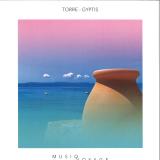
Musiq Voyage sets sail with its debut release by TORRE Bros, a producer duo from Aix-en-Provence. A heartfelt tribute to Marseille and the Mediterranean through two shimmering Space Disco cuts: Gyptis and La Pointe Rouge.
Remixed by the legendary Moplen, Alex From Tokyo, and Julien HBT, this EP blends house, boogie, and balearic vibes into a warm and elegant sonic journey.
//
After cruising their native Provence and spinning on the mythical shores of Ibiza with their iconic pink-and-blue DJ truck, the Musiq Voyage crew is proud to launch their new label with a sun-soaked debut EP.
Rooted in Mediterranean soul, Phocaea Vol. 1 features longtime friends and local legends TORRE Bros (Jean-Marc & Patrick Torre), producers from Aix-en-Provence with over two decades of musical exploration—from disco and house to hybrid electronic jams. Known for underground hits like Corps à Corps and Baleora, supported by artists such as Carl Craig, the duo now pays tribute to Marseille, their beloved coastal city.
A1 – Gyptis
Named after the legendary princess said to have founded Marseille, Gyptis is a lush space-disco homage to the city’s ancient roots—where Greek sailors met local tribes, and myth met the Mediterranean.
A2 – Gyptis (Moplen Remix)
Italian disco don Moplen (Chaka Khan, Talking Heads, Loose Change) delivers a floor-ready rework—elevating the groove with cosmic flair while keeping the original’s dreamy vibe.
B1 – La Pointe Rouge
A sonic postcard of one of Marseille’s most iconic seaside spots—sunsets, sailing, and slow walks by the sea. Built on a strong boogie beat, 80s synths, and balearic textures.
B2 – La Pointe Rouge (Alex From Tokyo & Julien HBT Remix)
Legendary DJ/producer Alex From Tokyo (Tokyo Black Star, Innervisions) teams up with Parisian underground figure Julien HBT (Demented, with François X) for a deep, syncopated reimagining. Infused with Chicago house and leftfield boogie influences, this remix flips the original into a spaced-out late-night groover.
More than just a legendary DJ, Alex From Tokyo has built a global career bridging cultures and sounds. After growing up in Japan, he returned to Paris in the early ’90s and co-founded A Deep Groove with DJ Deep and DJ Gregory, launching one of France’s first underground dance radio shows on FG 98.2 FM.
A key link between Europe and Japan, Alex worked with labels like F Com, Mr Bongo, and Yellow Productions, before living in NYC, Berlin, and beyond.
Four years on from their landmark Grassroots, visionary half-time heavyweights The Untouchables return with their third album, Lost Knowledge. The duo of Kate McGill and Ajit 'Nitrox' Steyns have carved out a space in modern D&B all their own, building on a legacy that reaches back to the late 00s to keep pushing into unexplored terrain with an assured and deadly line in rhythmic intrigue and atmospheric immersion.
Lost Knowledge launches into action instantly with the high-pressure drum science and dubby splashes of 'Drunken Bells', capturing the loopy techno propulsion and rolling intensity that drives so much of the output on Samurai Music. Where The Untouchables excel is in finding variety and nuance in their relatively forbidding, pared down sound. The heads-down groove of 'Mafia Town' owes as much to dembow and dancehall as D&B, while 'Lost Knowledge' spirals out into psychoactive flurries of synth strafes and organic percussion slathered in tight-locked delay trails. There's no light relief from strident hooks or riffs, just a pure, unshakeable commitment to the power of the beat and deeply designed layers of sound shaping out the space around.
'Busy Bones' makes space for carefully deployed hints of pad tone while the snares snap out of the mix with a sharp set of teeth. 'Four Eared Demon' baits the gabber crowd with its rapid-fire 4/4 hats atop seasick creaks across the midrange, keeping subtlety and patience in the lower frequencies to maintain the signature elegance readily associated with The Untouchables. 'Phase Correlation' teases an artfully unhinged ripple of synth that stands out amongst the murky murmurs filling out the middle distance, but it's still exercised with brutal precision.
Nothing happens by accident or feels out of place - McGill and Steyns are in total control, and they demonstrate incredible range and inventive approaches within their focused style. The accent of the grooves shifts, and individual sounds carry all kinds of artefacts, yet everything gets folded into the exacting Untouchables sound with a liberal dubwise sensibility. Brimming with inspiration and immaculately produced, on Lost Knowledge their one-of-a-kind sound is stronger than ever.
Chicago's premier boogie purveyors STAR CREATURE dig deep with 4 extremely rare cuts, 3 of them being white whale level impossible to find & the 4th commanding big bucks online! Includes songs by TIGER JACK, SOUL INVADERS, MOTHERFOX, and PYRAMID PLUS. Heavyweight vinyl and heavyweight reverse board jacket. Due out Nov. 10.
“Let’s Bounce” was originally issued on Ajana as one of their only 2 releases, the first being earlier from Central Power System on Numero Group’s The Chicago Party compilation. Tiger Jack remained elusive, both Jack and a copy of his record until we stumbled upon a contact and were able to get in touch and stitch together the fully extended mix of this Punk Funk Boogie Bopper. Speaking of Numero Group, The 2nd track of Side 1 comes from an assist from the reissue Gods themselves as they blessed us with this never-sold-on-discogs soulful side of Boogie Slap issued on one-and-done label Magikal. When asked about the track, songwriter CA Williams said they recorded it for a restaurant jingle. Probably the best one we’ve ever heard.
Side 2 starts off with an absolute Modern Soul Monster with Motherfox’s Hot Shot. John Harris came by Star Creature’s South Side of Chicago HQ to chop it up and share some stories on Motherfox and his other passion project most deep funkers would known as Carver High. This record has reached insane demand the past few years as it’s a certified floor filler for all scenes - peak big budget sound packed into a small DIY package, total package. Track 2 delivers the full version of the ever mysterious Pyramid Plus providing the Titular Tune “Comin’ At Ya’” as vocoded talkboxed low slung, spaced out Boogie Banger.
Alkaline is sound forged in FM — metallic surfaces, syncopated pulses, and cinematic structures. An alternative path that doesn’t reject acid, but moves into a realm less warm, more mineral, more futuristic.
With CT012, Cosmic Tribe takes the Alkaline Sound into the uncharted: music as a tool for deep-space and hidden-dimension exploration. Each track is a fragment of an expedition beyond known frontiers — charting invisible territories, intercepting signals from other worlds, and navigating encounters that alter the course of the mission.
From EC13 and Calagad 13 comes a radical, visionary approach: not just tracks to hear, but cinematic sonic devices designed to remodel the listener’s inner architecture, ignite their imagination, and expand the very map of perception.
A work of meticulous sound and mastering, paired with exceptional artwork, presented in a strictly limited edition of 150 copies on crystal-clear transparent vinyl.
Eudemonia marks a significant milestone with its 20th release: Cerebral Waves, the debut EP from Irish sound engineer and producer Kevin O'Reilly, known under his alias Otherend. This four-track collection dives deep into the electro continuum, weaving together cerebral rhythms, acidic textures, and cosmic atmospheres.
The EP includes three original tracks built around crisp drum patterns and spacious synths, offering a thoughtful take on electro with subtle cosmic touches. It closes with a remix from Sound Synthesis, who brings a smooth melodic drive while keeping the release’s spacey character intact.
Cerebral Waves is a bold introduction to Otherend’s sonic universe and a fitting landmark for Eudemonia’s evolving catalog. Electro heads, space voyagers, and acid lovers—this one’s for you.
“sitting in the terminal at Barcelona airport, health safety warnings echo through empty architecture. feeling slow, and fast, out of sync with rituals and routines. structure and rhythm disintegrate into micro gestures appearing in random order, a daily psychedelia... amid all of the chaos and distraction in the last few years, it’s only through letting go that I've found solid ground to stand on.”
These are some of the experiences and reflections that gave shape to Slipstream, a hallucinatory mini-album by the artist PVAS and the fourth release on Objekt's label, Kapsela. Slipstream is an aural document of PVAS's interior life, conceived not as a grab-bag of DJ-friendly tracks (although it’s clearly inspired by the club) but as a single, delicately crafted artistic statement. The entire record is shrouded in a flickering haze, worn through by smudged breakbeats and wiry drum machines. “Wetland”, with its swampy percussion and crystalline arps, echoes T++ and Kraftwerk. The radiant incandescence of “Gathering Drift” recalls GAS or Monolake's “Hong Kong.” Sampled breakbeats dip and swerve asymmetrically through “Boba” and “Terminal”. Across the record, textures and voices are reshaped by PVAS's homemade algo-software, UMT, which, in PVAS’ own words, “reconstructs one audio file by sampling another, resulting in output that merges their aesthetic qualities, creating rhythm with non-rhythmic sound files and abusing the stereo field.” But the most striking union of technology and poetic self-exploration comes at the end of the record, in the title track, from words murmured through a classic vocoder:
“when i stop framing myself as a boundaried stone
immovable, and powerful, and heavy
when i stop figuring my deepest space as my own
something which i am solely responsible
i surrender, i surrender”
PVAS is Jordan Juras, a Berlin-based artist who grew up outside of Windsor, Ontario. He has released solo EPs on Isla and xpq?, and is half the duo NUG (3XL, West Mineral Ltd.). In addition to developing music software professionally, he has used his UMT software on records by Lyra Pramuk and Dylan Kerr. Slipstream was recorded from 2022 to 2025.
Written and produced by PVAS
Mixed by TJ Hertz
Mastered by Anne Taegert at D&M
Artwork and design by Brodie Kaman
One of contemporary ambient’s preeminent figures lands on its leading label, enacting a transition into a new phase of rhythmic noise and tonal shadowplay laced with peculiar sensitivities, wrangling Dilloway-influenced tape noise thru ASMR ambience, fritzed dub techno, layered vocal drone and ritualistic mantras.
Perila steps up solo with a heavily satisfying debut for West Mineral, investigating negative space and states of subconsciousness. The shift in tone feeds forward into arcane realms of resonant dark ambient and dream-pop, harnessed in amorphous structures using dub-as-method. It’s wholly immersive stuff in a way that’s long been Perlia’s calling card, but here more careful in its command of personalised, atmospheric physics from the Coil-esque ‘cheerleader’, thru the deeply smudged and sexy trip hop of ‘lava’, and the oozing, sloshing OOBE-like spectres of ‘give it all’.
The title of the album is a reference to Carl Jung’s phrase "all haste is of the devil” which informs Perila’s writing process here; she slows down in an attempt to feel more and tap into her shadow self. Album opener 'cheerbleeder' is a doomed, tremolo-heavy mass of ghost notes, while the rattling chains and strangulated voices on ‘metal snax' sounds like they belong on a Wolf Eyes tape. 'grain levy tep dusk' strikes closer to recently unearthed industrial plates from Tolerance and Mentocome, with rusted clangs threaded into deflated, half-speed pulses. The album keeps growing from there, shifting and expanding as Perila exhales and absorbs her cognitive blind spots. She credits "trance states" for helping her let go, and we broadly get to experience that on the mantra-like 'thunder me' and the blurry all-vocal highlight 'hold my leg', which sounds like it could have been snatched from Grouper's 'Way Their Crept' sessions.
As with all of Alexandra Zakharenko’s work under various aliases - Aseptic Stir, Baby Bong, Wedontneedwords, Perila - her allure is self-evident to lovers of textured, diffuse electronics, and never more so than on this lip-bitingly potent suite of delicacies and primordial urges, perfectly balancing ancient and techngnostic aspects with an x-amount of seductive strangeness left in the margins.
Bringing together the elder statesman of the Zulu guitar Madala Kunene and internationally acclaimed Sibusile Xaba, kwaNTU pulls two generations of South African guitar mastery into a single point of focus. Under-represented on recordings outside of South Africa, Madala Kunene (b. 1951), the ‘King of the Zulu Guitar’, is revered as the greatest living master of the Zulu guitar tradition. Sibusile Xaba, whose collaboration with Mushroom Hour Half Hour reaches back to his first recording in 2017 (Open Letter To Adoniah/Unlearning), has garnered international acclaim for his unique voice and virtuoso guitar stylings, which bring together multiple South African guitar lineages in an original, spiritualised fusion. Collaborating with Mushroom Hour and New Soil for kwaNTU, the two players come together to weave a filigree sonic fabric which reaches down to the heartwood of Zulu guitar music but moves resolutely outward, building on the past to create a deeply rooted statement about present conditions and future travels. kwaNTU – which can be roughly translated ‘the place of the life-spirit’ – is also conclave of teacher and student, as Xaba has been taught by Kunene for the last decade. Meditative, rich and sonically sui generis, kwaNTU finds these two musicians linking up within the inimitable space of sound and spirit that they share through Kunene’s teaching.
The great masters of South African music have not all had equal exposure. For many years the generation of musicians who were exiled during apartheid took centre stage, as the regime made it very difficult for those at home to be heard. More recently, a new cohort of important voices, especially in jazz, has broken through to international consciousness. But for the generation of musicians in between – those who shone like beacons in the most difficult final years of apartheid and immediately afterward – international recognition has been slow in coming.
Madala Kunene, ‘the King of the Zulu Guitar’, is among this number. A revered figure for current generations of South African musicians, Kunene began his recording career in 1990, at the bitter end of apartheid, with a now classic self-titled LP for David Marks’ storied Third Ear imprint. Born in 1951 in Cato Manor, near Durban, he had determined to be a musician from early childhood, and by the time he first entered a recording studio he had already had a long career as a popular performer. His virtuoso absorption and transformation of the venerable Zulu maskanda guitar tradition and his richly spiritualised approach to music immediately marked him out as someone special, and in the years that followed, Kunene cemented his position as one of South Africa’s musical elders. He is without doubt the grand master of the Zulu guitar tradition, but his sound and sensibility ranges far beyond it into varied sonic terrain, and he has collaborated with a wide range of musicians both at home and abroad. Now in his mid-seventies, he remains a shining light for those that are making music in contemporary South Africa.
‘He is really an amazing person,’ says the guitarist Sibusile Xaba, who has been mentored by Kunene for over a decade, and now invites a collaboration with him on kwaNTU. ‘As a mentor, he's really powerful in showing us the way. For us to have this opportunity to make music together and have a project together is really a blessing to me.’
Xaba himself grew up in Newcastle, KwaZulu-Natal, where his mother had been in a band and his father sang in a church choir, and from early childhood Xaba played homemade tin guitars. He only later realised that music was his calling. ‘I just loved music. I was fortunate. My parents loved music. And when it was time for me to leave home and go to study outside Newcastle, I knew that music was what I wanted to do. There was no second option. It was just music.’ Moving to Pretoria to study music formally, Xaba committed himself to his craft, developing a unique style that draws on both US jazz masters such as Wes Montgomery and Jim Hall, and the rich and varied heritage of the South African guitar, from inspirational jazz players such as Allen Kwela and Enoch Mthalane, to the music of the Malombo groups and Dr. Philip Tabane (Xaba has previously collaborated with Dr. Tabane’s late son, Thabang), and the Zulu guitar tradition embodied by Kunene.
‘I was really in love with the jazz guitar, I really admired it, and I was digging a lot in that direction,’ says Xaba, recalling his first encounter with Kunene’s music, over a decade ago. ‘And then one day on my timeline, Kunene popped up, and I was like – “What's this sound?” I was so connected to it. It really touched me deep. I started checking out his records, and then I found out he's from the same region as I am, which is Zululand.’ After Kunene played a show at the Afrikan Freedom Station in Johannesburg, Xaba make contact with him, and visited him at home in Durban. They struck up a friendship, and Xaba became the elder’s student, as Kunene began to pass on his knowledge and his inimitable way of playing.
kwaNTU is a tribute to this relationship and the deep learning that has defined it. The album was recorded in Zululand in the town of Utrecht, at a cultural centre called Kwantu Village, which gives its name to the album. ‘It's such a broad word,’ Xaba says, ‘but the elders teach us that Ntu is basically an energy, almost chi, an energy, a force that all living beings have within them. It's a living energy, so kwaNTU is like, almost the place of this energy.’ The two men sequestered themselves for five days of jamming, improvising and planning, and then the session was recorded in one take over a single night, with Gontse Makhene joining on percussion and backing vocals and Fakazile on vocals. Other voices and overdubs were later added in the studio in Johannesburg.
The result is a rich and meditative recording that finds two generations in a deeply engaged dialogue. Teaching and passing on his knowledge, the elder Kunene has brought Xaba into a space of sound and knowledge that they now share; Xaba’s own practice of deep communion with nature and his dedication to his musical craft make him the perfect interlocutor for Kunene. The result is an album that foregrounds the two musicians engaged at the highest levels of responsive listening, sympathetic unity, and collaborative concentration. Bringing an elder statesman of South African music to an international listening audience for the first time in decades by pairing him with one of South Africa’s most important new voices, kwaNTU is a meeting of generations and a powerful demonstration of musical lineage and continuity.
‘Before music, there is sound,’ Xaba observes, speaking of Kunene’s unique approach to music. ‘And sound is like a common compartment…it's not restricted to particular people or particular geographic places, you know what I mean? It's sound. Everybody can hear it. So when he constructs that sound into music, I think everybody resonates with the energy behind his construction of sound into song. Here at home, we really love him for preserving our history through the guitar, through his stories as well the music, the songs that he writes. We really, really admire him.’
Peter Ivanyi is Ghost Warrior, and it's an apt name for a producer who operates in the shadows between several drum & bass sub styles. His sophisticated sound designs and impeccable rhythms have taken him to the likes of 31 Records, re:st and The Collection Artaud but here he lands on regular home Well Street. 'Black Box' pairs deft drum programming with jazzy cymbals and blasts of textured bass, and 'REM' is then backlit with a celestial synth glow. A Josi Devil remix brings some low-end hustle and bustle and 'Dream Transmission' is a minimal stepper with an eerie deep space edge and absorbing sense of late-night tension.
Leeds based IMAGINARIUM announce their record label delivering a four track EP featuring music from residents Pete Melba (Planet Orange), Phil Warner (Plant & Deck / Pic N’ Mix), and Roya Brehl (Creatures of the night / Last days of Rome). Joining the crew is rising star and one half of duo Le Frequency, James Geeson.
Pete Melba kicks things off in his signature style of groovy tech house with skipping percussion, twinkling melodies and a touch of darkness. Phil Warner takes the A2 into techno leaning tech house territory sporting spacey pads, acid licks and spooky vocal snippets. On the B1, Roya Brehl moves into darker realms utilising cascading synths, eerie vocals and jangling percussion. Closing out the EP James Geeson continues the dark theme of the B-side warping the classic moonraker vocal into a deep dance floor chugger.
A well-rounded EP for cultured diggers bound to scintillate dance floors and after parties across the globe.
Interception, the second long player from Jensen Interceptor following 2018's Mother, is something of a state-of-the-nation that finds Melas consolidating several eras of his career, past and present, to form a distinct new sound that is the most experimental work he has produced to date.
In 2024, a freak accident at an event he was playing left him with multiple broken bones in his foot. The forced downtime became an opportunity for introspection, allowing him to revisit earlier projects and explore new musical territories. Blending his signature electro with genres such as IDM, footwork, and baile funk, Melas used this recovery period to fuse old influences with fresh global sounds. "Since I started making music I've always made music geared towards use in my DJ sets but there's always been an urge to explore the deeper side of electronic music.
That time off after the accident gave me the space to dive into genres and really experiment.
" The accident came at a time when he had already spent time, like so many others though the COVID-19 pandemic, assessing his next move. A full tour schedule had left him feeling constrained by the limitations of working in a single genre. As such, Interception is the end point of this reassessment and the start point of what Melas sees as the next stage of his musical evolution.
"I really wanted to challenge and, I guess, prove myself in other spheres, to take my music to a new place. I've never wanted to be too repetitive and found that expectations, imagined or real, were forcing me to get stuck on a specific sound both in my productions and DJ sets." This renewal is reflected in the title of the album, which eagle-eyed fans will note is the same as the first EP that was released under the Jensen Interceptor moniker, and the emotional and personal nature of the LP is likewise mirrored in the abstract impressionism of the artwork created by fellow Australian, Brodie Kaman, the artist behind the visual look of Lady Gaga's recent Mayhem LP as well as works for FKA Twigs, Nine Inch Nails, and more.
The design-resembling oil drifting across a microscope slide-uses a mix of vivid pastels and moody darks to express the album's emotional depth: a collection of distinct elements coalescing into something richer and more evocative.
- A1: Herbert - Got To Be Movin' (On The Dancefloor)
- A2: Chris Nazuka - Somewhere Between Distance And The Impossible
- B1: Blaze - Lovelee Dae (Beloved Vocal Rmx)
- B2: Gemini - In My Head (Freaks Move This Way Vocal Dubby)
- C1: Seven Davis Jr. - One (Live Edit)
- C2: Red Rack'em - Wonky Bassline Disco Banger
- D1: Eli Escobar - Happiness Pt. 2
- D2: Kenny Hawkes & Louise Carver - Play The Game (Space Children Love Mix)
To mark three decades of Classic, this special edition double vinyl comes housed in a raw reverse board sleeve, calling back to the very first ‘Season’s’ release on the label. The inner sleeves feature stunning orange and pink GMUND card stock, complete with embossed detailing—a tactile nod to Classic’s design-led legacy and attention to craft.
Volume 1 of the 3-part compilation series dives into Classic’s most cherished moments—spanning both foundational tracks from the label’s early years and key highlights from its post-2011 rebirth.
Record One celebrates some of the first outings of Classic's original era.
It opens with Matthew Herbert’s sought-after 1996 cut ‘Got To Be Movin’—a raw, Chicago-inspired groover that captures the sound of Classic’s roots.
Also featured is the monumental ‘Somewhere Between Distance and the Impossible’ by Chris Nazuka (of Rednail Kidz with Derrick Carter), a 1997 masterpiece steeped in atmosphere and widely regarded as one of the label's most transcendental releases.
Flip to Side B for Blaze’s legendary ‘Lovelee Dae’, remixed into a club ready, ethereal dreamscape by Jon Marsh of The Beloved.
To finish we have Gemini’s hypnotic ‘In My Head’, transformed by prolific remixers on Classic - Freaks (Luke Solomon & Justin Harris) into a dubbed-out vocal trip that oozes character.
Record Two picks up the story with Classic’s reawakening in 2011.
Seven Davis Jr’s ‘The One’ (Live Edit) was the track that caught Luke Solomon’s ear, paving the way for his Friends EP and long-standing connection with the label.
Red Rack’em’s infectious and eccentric ‘Wonky Bassline Disco Banger’ found its perfect home on Classic in 2016, quickly becoming one of the most talked-about records of the year.
Then there’s Eli Escobar’s ‘Happiness Pt. 2’—a rich, emotive standout from his Classic album work, showcasing his skill at blending deep grooves with raw soul.
Rounding out the release is the iconic ‘Play the Game’ by Kenny Hawkes & Louise Carver. A pillar of UK house history, this essential track was reissued in 2019 with a powerful remix from his best buddy’s The Space Children (Luke Solomon, Jonny Rock & Leon Oakey), honouring Kenny’s lasting influence.
Despite immense challenges, SOYUZ have delivered a career-defining album in KROK.
“Krok” means “step” in Belarusian - and for Alex Chumak and his band this word comes with a lot of meaning. It’s the title and theme that ran throughout СОЮЗ (SOYUZ)'s fourth album, reflecting the journeys the band has navigated in recent years, having moved to Warsaw due to political unrest in their homeland of Belarus and the outbreak of war in Ukraine. Embracing the uncertainty became both the inspiration and main lyrical theme for Alex Chumak, SOYUZ’ composer and arranger, who also decided to go a step further and change the language in which he writes songs from Russian, which is used as lingua franca in many post-Soviet countries, to his native Belarusian. The result is nine songs about dreams and outer space, ordinary miracles, things very close and very distant at the same time.
In early 2022, Chumak and original members, Mikita Arlou and Anton Nemahai, joined tens of thousands of Belarusians seeking safety abroad. Resettling in Warsaw, the band released Force of the Wind in October 2022, garnering widespread acclaim, a string of major European gigs, and led to Polish musicians Albert Karch and Igor Wiśniewski joining the band.
Deeper and more melancholic than previous works, KROK is quintessentially SOYUZ, laced with hope, dreams and a celebration of life. Given the difficulties with finding rehearsal and recording spaces in Warsaw and the departure of the drummer Anton Nemahai from the band, Chumak explored alternative options. He reached out to friend and fellow musical collaborator, Sessa, about the possibility of recording the new album in his recently finished studio in São Paulo, with Sessa and Biel Basile coming onboard as recording engineers.
At the tail end of 2024, Chumak and SOYUZ’ new drummer, Albert Karch, made the trip to São Paulo to record the first sessions for KROK. Laid down directly to tape, these sessions featured prominent Brazilian musicians Sessa, Biel Basile, and Marcelo Cabral, with a guest vocal feature by Tim Bernardes recorded at a later date. The final touches were then added back in Europe. Lush string and woodwind arrangements written by Chumak and Karch were recorded at the Polish Radio studio in Warsaw, and Rhodes parts were added by Chumak at Sven Wunder’s studio in Stockholm.
Though primarily recorded in Brazil, KROK is not a Brazilian or MPB album. It blends the band’s Eastern European roots with jazz, folk and global influences. The genre of the music is hardly identifiable: there are folk ballads and jazz-driven pop compositions covered in lush and often dissonant string and woodwind arrangements where each note is placed with care and meaning behind it.
The title track was the first song Chumak wrote in Belarusian as an adult, making for a fitting opener and one of the band’s finest tracks. Darker than most of SOYUZ’ songs, the tensions lift and lighten as the track progresses. The cinematic library jazz of 'Voo Livre', with ghostly vocals sung by Ciça Góes and Ina, feels like a modern twist on the Italian library composer Alessandro Alessandroni through its sublime choir and woodwind orchestration. Elsewhere, the heartfelt 'Lingua Do Mundo', composed, written, and sung by Chumak and the incredible Tim Bernardes, features one of the standout string arrangements from Chumak and Karch. 'Cichi Karahod' is an instant SOYUZ classic, almost Pat Metheny-esque as it opens, with the acoustic guitar and bass riff transitioning into jazzy AOR / pop-folk territory. The record closes with 'Smak žyćcia', a gentle, dreamy spoken-word poetry piece in Japanese by singer-songwriter Manami Kakudo.
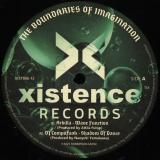
The darker side of Arbilla well known since the Moving Forward EP released. “Wave Function” is absolutely mind-melting here, classy Detroit Techno elements inviting with FM bass line, intensive stabs build and complete the track.
“Shadow Of Dance” is the track for those closed eye moments - a perfect opening track...
The Japanese DJ/producer, label owner who released music on Yore, Motech and Compufunk Records now signed to an another great label.
What more is there to say? It’s a soulful techno thing…
Biz (Peter Elmaloglou) is back to Xistence Records with a track “Everything Changed”.
It’s with full of energy, heavenly melodies, frenetic acid and heavy stabs that builds up and down the track. SuperB!
“Lost In Space” as the title says is a spacey techno track of the highest order, Aubrey brings his signature sound with a massive distorted kicks and destroying bass that perfectly fits the dark atmosphere.
This is definitely a must have for every deep techno fans out there.
Milian Mori shares his deep interest in combining mathematics, geometry, and data with emotion, dance, and fulfillment: technology meets nature, binary meets fluids, algorithm meets spirituality, dualism meets triality, machine meets human, randomness meets self-similarity.
His second album, »Triality«, consists of 16 tracks and is being released via raster as a double LP vinyl, CD, and digitally. Composed to be experienced seamlessly, the 53-minute-long album can be listened to from beginning to end like an audiobook, with no pauses between tracks, creating a continuous sonic experience.
Triality explores the ›unspeakable third in the second‹—a quality that is present everywhere but remains immeasurable. This concept strongly influenced Milian Mori during the composition of the album. In his live performances, he attempts to visualize this unique relationship through the strobe light, which exaggerates the interplay between light and darkness, creating a non-binary space between 0 and 1. The album can be experienced like a film without images—a film that speaks of a vision yet to unfold.
On H008 Len Faki goes back to his crate for a unique journey through synth-led landscapes, carefully selected and bolstered up for the dancefloor.
Starting with 2000 And One - Edge Of No Return from the mid 2000s, when it was just a standout synth-line - no beats. The Hardspace Mix takes this masterclass in building tension, adds a driving beat and searing percussion while keeping the iconic synth-play intact -layered with big, booming bass for that full-bodied, dancefloor-ready energy.
The flip boasts two of longtime Figure-collaborator Viers' productions. Re-L, released almost 10 years ago, it delivered that unmistakable pulse of deep, dubby, shimmering synths. Hardspace picks up these potent elements and injects them with a new low-end, dramatic rises and tight rhythms, creating a high-energy yet hypnotic flow.
Equally energetic but much more brooding in atmosphere is the Hardspace version of Free Your Mind. An elusive original, this mix builds on dense percussion, subdued vocals and droning horns while carrying some seriously spaced-out acid synth textures. One for the wee hours and those special memorable moments in a set.
Skylax Records is proud to welcome one of Germany’s deepest and most respected producers to the family: Sascha Dive, with his stunning Cosmic Ritual EP, featuring house music legend Robert Owens and Zimbabwean vocal virtuoso Vusa Mkhaya. From Frankfurt to the world, Dive has spent nearly two decades carving a unique space where deep house, Detroit techno, and spiritual soul converge—this new release is a testament to that lifelong mission. On A1, Owens delivers an uplifting sermon on the irresistible "Don’t Let No One Or Nothing Stop You", a timeless piece of motivational house drenched in analog warmth. A2’s “Deep Connection To Detroit” is exactly that: a hypnotic, percussive journey into Motor City groove science. Flip the record for “Take Your Time”, another Robert Owens collab that slows things down into deeper, more introspective terrain. Then comes "Cosmic Ritual (Vocal Mix)", where Vusa Mkhaya’s voice channels ancestral energy over shimmering pads and tribal percussion—pure transcendence. Closing things off is “Ultimate Mind”, a stripped-back, late-night cut for meditative floors and after-hours revelation. All tracks are deeply rooted in the vinyl tradition, made for DJs, dancers and dreamers. With this EP, Sascha Dive reaffirms what real house music is all about: soul, message, rhythm, and ritual. Limited 12” vinyl – no repress.
Trance Pearlz presents you again a fresh selection of trance anthems. True to its name, this release brings together four carefully selected trance gems, presented in their full-length versions for maximum impact. Expect a perfect blend of commercial favorites and hidden treasures from the deeper side of the scene.