Pruillip is a new Belgian band founded by Louis Evrard (Bert Dockx Band, Grid Ravage, Ottla) and Annelies Van Dinter (Echo Beatty, Takh & Naga Ghost). The duo started about 2 years ago after a request to play at De Nor, the open air sculpture park and venue of Dennis Tyfus. For this occasion Annelies and Louis decided to do a position switch and play each other's instruments: Annelies beating the hell out of the drums and Louis ripping up the guitar.
Pruillip: the record
Visceral meditation: that's what the self titled debut album of Pruillip is all about. Eight songs channeling elemental emotions, kickin' deep into the internal organs of the body. Low end frequency swagger droning up from Louis Evrard's amp, ready to slip into 'Place All Your Cards', slow burning sludge nugget, bolstered by the steady drum kicks of Annelies Van Dinter, where every note and strike seems to carry the weight of the world. Navigating through life, seducing you with her gloomy voice. Entering a quest into the unknown, a place you don't want to leave. A feeling increased by the abrasive and brutal 'Boterham': a punk sludge anthem for the hungry and the wild at heart, countered with the reverb-shrouded murmur 'Distracted Enthusiasm'. The lonely 'Zonnedauw' sets the mark of an apparently more resigned B-side, stretching the Pruillip universe with primitive, but so addictive, riffs in 'Mirrors', echoing vibes of 90's desert sessions while 'Offload' and the lucid state of Ataraxia seems to drift on raw emotions and a sweaty claustrophobic tension, which would fit perfectly in Wim Wenders Paris Texas movie. A whirlwind of a record, straight to the bone, leaving you flabbergasted and wanting for more.
Search:deep voice
An’archives presents Kagome Kagome, the first collaboration between France’s Delphine Dora and Japan’s Ayami Suzuki. Curious listeners might know Dora from the string of lovely, idiosyncratic albums she’s released over the past two decades, most recently for labels like Modern Love, Morc and Recital; she’s also worked with the likes of Michel Henritzi and Sophie Cooper. Suzuki’s performances, predominantly for voice, place her within a tradition of Japanese improvised music – see the music she’s made with artists such as Takashi Masubuchi, TOMO and Leo Okagawa – but her approach also takes in folk song, ambience and claustrophobic drone.
On Kagome Kagome, Dora and Suzuki play to their many strengths: a gentle, free-willed folksiness; long, aerated drone constructs; ghostly, time-warping explorations for voice. They met on Dora’s May 2024 tour of Japan, though they’d been in touch beforehand, with Dora proposing the collaboration to Suzuki, developed around “concepts of ‘otherworldliness’ and ‘impermanence’,” the latter says, “and explored the relationship between ‘the invisible’ and sound in Japanese culture – a common interest we share.”
They recorded across several days that month, with the sessions for Kagome Kagome taking place in Kanumi, in Tochigi prefecture, at a space named Center. “I was particularly looking forward to seeing Delphine encounter the vintage 104-year-old harmonium from Nippon Gakki Seizo Co. that had just been repaired at Center,” Suzuki recalls. “It was as if the harmonium had been waiting for Delphine to draw sound from it. I felt it was a beautiful relationship where they could guide each other.”
Indeed, there’s something channelled about the music that Dora and Suzuki made together in the session that constitutes Kagome Kagome. Dora’s harmonium might be the spine of the album, but Suzuki’s free- floating voice, and gaseous, muddied banks of electronics, wrap around the wheezing, ancient tonality of the harmonium beautifully – they, too, sound as though they were just waiting to be willed out of the daytime air. Their voices nestle together beautifully – “when we sang together in a tunnel,” Suzuki says, “there were times when we sang the exact same melody without planning. It happened so naturally that the boundaries between us became blurred.”
And that title? It’s drawn from a Japanese children’s song, and the song titles themselves constitute the song’s lyrics, in alternating Japanese (Romanized) and French language. Urban legend connects the song “Kagome Kagome” to the Nikko Toshogu Shrine, nearby Center, that Suzuki and Dora visited while they were in Kanumi. “The mysterious lyrics of ‘Kagome Kagome’ and its puzzle-like connection to Nikko Toshogu were a perfect fit for this mysterious album,” Suzuki reflects, “which I think has its own kind of puzzle-like elements.”
A deep album of prayer and magic, of divination and ritual, Kagome Kagome’s sense of serious play, its rich beauty, feels somehow dislocated from our time. If you’ve ever enjoyed the music of Nico, Kendra Smith, Charalambides, or other channelers of ghostly mystery, its eerie otherness will, somehow, feel oddly familiar.
Shadows fold into colour. Memory dissolves into noise. You brush up against the walls of the mind. Touch is soft as breath. On ‘B side’, Areliz Ramos follows her work’s current into its more “fantastic and elusive… and even romantic” side; a place where fantasy loosens the bolts of reality and memory, and emotion is alluringly refracted into musical collages and loose-strung compositions. Across the album, voices drift in and out of an intimate space, while pensive guitar lines stumble and bloom like scribbled unresolved notes in a diary. Beneath its icy, often chaotic surface, ‘B side’ radiates a deep sense of joy and fragility. Ramos sketches out an entire world by free association, collaging notions and echoing quiet thoughts into deeply honest snapshots of daydreams.
Areliz Ramos is a Peruvian producer living in London, recognized for an evocative palette weaving lo-fi and downtempo threads into dreamlike, abstract emo narratives. While her debut ‘Frío’ (Where to Now?), orbited around homesickness and estrangement, ‘B side’ embraces imperfection, incorporating her guitar (named "Frank"), pedals, synthesizers, and her own vocal textures for the first time, privileging emotional immediacy over technical precision. The creative process behind this album reflects a conscious decision to let go, loosen control, let intuition lead, and engage her own ‘B’ side.
Rather than constructing a safe haven from hardship, Ramos offers a cracked mirror, staring right at it, embracing that vulnerability. The gentle and beautiful ‘B side’ explores fleeting satisfaction, or the elusive comfort sitting just out of sight.
- 1: Reintroduction
- 2: Employees Of The Year
- 3: Your Mans And Them
- 4: Lisa (Never Easty On My Nextel)
- 5: Morris Day
- 6: Dirty Girl
- 7: Early Mornin' Tony
- 8: Breaker Down Like A Shotgun
- 9: Marvin Gaye
- 10: Life Vegas
- 11: Bonet (Cement Angels)
- 12: Woman Tonight
- 13: Gangster Ass Anthony
- 14: The Biggest Lie
- 15: I Shot A Warhol
Cassette[21,43 €]
In 2005, Felt 2: A Tribute to Lisa Bonet brought together two of underground hip-hop’s most respected voices of the time—Murs and Slug—for a second collaboration that felt looser, livelier, and more charismatic than its predecessor. The album captures a moment of creative freedom, where both MCs were firing on all cylinders, trading verses with sharpness, humor, and effortless chemistry. Their interplay reflects a deep mutual respect and a shared drive to push boundaries while keeping things rooted in style and substance.
Working with different producers for each volume allowed Murs and Slug to bring a unique energy to each release, and Ant’s masterful production was central to the chemistry of Felt 2.
With roots in classic soul and West Coast bounce, his beats created a warm, funk-laced foundation that allowed both rappers
to experiment with new cadences and ideas. Rather than lean on moodiness or melodrama, the soundscape of Felt 2 is expansive, colorful, and rooted in rich, infectious rhythm—an aesthetic that has aged gracefully and continues to draw new listeners into its orbit. While undeniably fun, Felt 2 is also structurally tight and full of moments that reward repeat listens. The chemistry between Murs and Slug is effortless, and their shared sense of humor, timing, and respect for the craft creates a lasting impression. It’s a standout entry in the canon of early-2000s indie hip-hop, and one that’s long overdue for a proper vinyl reissue.
Developed over three years across residencies, tours, and periods of deep listening, “Your Whistle Tells of Landscape” finds Australian sound artist Alexandra Spence continuing her investigations into the perceptual entanglements of sound, place, memory, and imagination. Like much of the artist’s work, it unfolds at the liminal edge between the real and the imagined — between what is heard and what is remembered.
Composed from a constellation of materials gathered across sites and seasons — snowscapes recorded in Vancouver, insect choruses from a Sydney backyard, ceramic fragments unearthed while mudlarking with tinysound — it renders an intimate cartography of experience: one shaped equally by ecological resonance and internal drift. Each piece traces a kind of imaginary geography, where sonic ephemera become proxies for topography, weather, or myth.
The album is informed by time spent at EMS (Stockholm) and MESS (Melbourne), where Spence deepened her engagement with microtonality and tuned feedback systems, and by dialogues with sympathetic artists such as Tashi Wada and Patrick Farmer. Sound materials were sourced from Serge Modular systems, a custom lyre built by Tim Wall, amplified objects, handmade electronics, and Spence’s own field recordings captured within rockpools, beneath sand, and among a flock of sheep in the French Pyrenees. On “Magenta,” a collaboration with Delphine Dora, the domestic and mythic intertwine, as layers of voice, environmental recordings, and Halldorophone feedback drift in and out of one another like overlapping weather systems.
Despite its diverse material palette, the album resists spectacle or accumulation. Instead, it moves with a quiet sense of continuity and a rich interiority — less a sequence of compositions than a set of situated attunements. Across its duration, sounds seem to murmur, glint, or hover right at the edge of presence, invoking a listening practice that is as much about orientation as it is about reception. These are pieces not simply about place, but of place — etched with the grains of time, vibration, and breath.
- 1: Reintroduction
- 2: Employees Of The Year
- 3: Your Mans And Them
- 4: Lisa (Never Easty On My Nextel)
- 5: Morris Day
- 6: Dirty Girl
- 7: Early Mornin' Tony
- 8: Breaker Down Like A Shotgun
- 9: Marvin Gaye
- 10: Life Vegas
- 11: Bonet (Cement Angels)
- 12: Woman Tonight
- 13: Gangster Ass Anthony
- 14: The Biggest Lie
- 15: I Shot A Warhol
Vinyl[26,01 €]
In 2005, Felt 2: A Tribute to Lisa Bonet brought together two of underground hip-hop’s most respected voices of the time—Murs and Slug—for a second collaboration that felt looser, livelier, and more charismatic than its predecessor. The album captures a moment of creative freedom, where both MCs were firing on all cylinders, trading verses with sharpness, humor, and effortless chemistry. Their interplay reflects a deep mutual respect and a shared drive to push boundaries while keeping things rooted in style and substance.
Working with different producers for each volume allowed Murs and Slug to bring a unique energy to each release, and Ant’s masterful production was central to the chemistry of Felt 2.
With roots in classic soul and West Coast bounce, his beats created a warm, funk-laced foundation that allowed both rappers
to experiment with new cadences and ideas. Rather than lean on moodiness or melodrama, the soundscape of Felt 2 is expansive, colorful, and rooted in rich, infectious rhythm—an aesthetic that has aged gracefully and continues to draw new listeners into its orbit. While undeniably fun, Felt 2 is also structurally tight and full of moments that reward repeat listens. The chemistry between Murs and Slug is effortless, and their shared sense of humor, timing, and respect for the craft creates a lasting impression. It’s a standout entry in the canon of early-2000s indie hip-hop, and one that’s long overdue for a proper vinyl reissue.
- Robespierre?
- Berio
- Kaldur Vindur
- Cipher
- Well, Actually
- Oslo
- Fount
- Ry
- Sneaking Around
Leading Danish contemporary jazz label April Records is proud to present Well, actually..., the third album from Polish acoustic jazz quartet O.N.E. Grounded in the spirit of democracy andcollective improvisation, the album offers a tightly woven set of original compositions that blur the lines between modal jazz lyricism and the raw energy of free improvisation.The band name O.N.E. is a clever double entendre: in Polish, "one" (pronounced oh-neh) means "they" in the feminine plural - an apt nod to the all-female lineup. In English, of course, it signifies unity. Both meanings reflect the band"s egalitarian, leaderless approach and cohesive group sound.Almost three years after the recording of their previous release Entoloma(Audio Cave), the group reunited in December 2024 at Studio S4 in Warsaw to record a fresh set of ten compositions. Spread over two sides, the album captures the continued evolution of a band that thrives on interaction, trust, and shared purpose - even in a society fractured by post-pandemic socio-economic uncertainty and political ambiguity. Featuring contributions from all four members - pianist Kateryna Ziabliuk, saxophonist Monia Muc, bassist Kamila Drabek, and drummer Patrycja Wybranczyk - the recordreflects their commitment to artistic democracy. Each voice is given space, yet the music always feels greater than the sum of its parts. Even on the miniature solo track solo form, the other three players remain present, supportive, and responsive. From Ziabliuk"s percussive piano textures and dreamlike voicings on tracks like Osloand Berio, to Muc"s expressive, woody tone on alto and baritone sax, each piece explores dynamic interplay and shifting emotional landscapes. Drabek"s resonant, grounded bass - by turns lyrical and propulsive - provides a central thread, while Wybranczyk"s drumming fizzes with precision and imagination, as heard on Cipherand the angular closer Sneaking Around.Together, these four distinctive creative forces have developed a shared language built on mutual respect, long-term collaboration, and deep listening. Their concerts across Europe (including Jazzahead, B-Jazz, Umea, and the Edinburgh Jazz & Blues Festival) haveaffirmed their standing as a boundary-pushing group with something new to say.
[f] [SOLO FORM]
Another sureshot heater from a magnificent underground label with a cult following, Adeen Records drops AR026, a landmark release uniting two titans of house music: New York's legendary Pal Joey (Joseph Longo) and Chicago's iconic voice Robert Owens. Side A's 'The Me Inside' is a masterclass in deep, soulful club music. Joey lays down a signature groove-hard-hitting drums and lush piano chords-while Owens bares his soul, asking listeners to witness the vulnerable core of his artistry. It's a heartfelt vocal performance rooted in classic Chicago house, paired perfectly with Joey's unmistakable production style. An instrumental follows, ideal for DJs keeping the vibe deep and emotive. Flip to Side B and you'll find Paolo Aniello aka New Digital Fidelity bringing the heat. Known for his work on Snuff Trax and collaborations with house luminaries, Paolo delivers a pulsing, bass-heavy dub remix that's built for peak-time floors. When legends align, magic happens-AR026 is a future classic.
- A1: I Cube – Disco Cubism (Daft Punk Mix)
- A2: I Cube – Disco Cubism
- B1: Josma – Voices In Los Angeles (Disco 70)
- B2: Mondo Grosso – Souffles H (King Street Club Remix)
- C1: Cricco Castelli – Life Is Changing Again (Main Mix)
- C2: Cricco Castelli – Life Is Changing
- D1: Janet Jackson – Go Deep (Masters At Work Spiritual Flute Remix)
- D2: Jo Boyer – Isabelle And The Rain (Da Funkie Junkie & Cosmic Girl Caviar Jazz Remix)
- A1: Rollin’ At Twilight
- A2: It’s My Ego
- A3: So Sensitive
- A4: She’s Sanctified
- A5: Not Like Them
- A6: 5150
- A7: No Cap
- A8: 3 Lil Piggies
- A9: Ghetto Story
- A10: Facts
- B1: Fighting For My Life In Paradise
- B2: Let’s Get Money Together
- B3: I’mma Burn Rubber
- B4: Especially You
- B5: Break The Mirror
- B6: Talkin ‘Bout These Rappers
- B7: Scary Movie
- B8: Take Me To Your Leader
- B9: Ego Maniacs
Hip-hop legend Ice Cube finally returns with his latest studio album “Man Down” – a hard-hitting statement that once again proves why he remains one of the most vital voices in rap today. With “Man Down”, Ice Cube delivers a powerful project that dives deep into today’s social realities, both musically and lyrically. Fans can expect raw lyrics, strong production, and real stories from one of the most inflfluential MCs of all time.
Exclusively for collectors and true fans: “Man Down” is available in several formats: Black Double Vinyl, Limited Marbled Double Vinyl, Music Cassette
Having worked together on his 2024 album Colours & Light, Project Gemini aka Paul Osborne joins forces once again with Wendy Martinez, French singer and composer, and also part of renowned psych-girl group Gloria on a new collaborative EP. Landing on Mr Bongo, ‘Time Stands Still / Le temps s'arrête’ is a sonic exploration that shows a shared love of the progressive music emanating out of France in the ‘60s and ‘70s and the celebrated film soundtrack composers of the time. A more melodic and romantic excursion than Paul’s previous recordings, this EP marries his richly textured, cinematic psych rock with Martinez’s captivating vocal presence.
A body of work born during the period Paul was finishing up his last LP Colours & Light, he penned an album’s worth of instrumental library-style music and had the idea of having Wendy add vocals and lyrics to a selection of them. The instrumental record got scrapped, but thankfully ‘Time Stands Still’ grew out of it.
Paul was a fan of Wendy’s work as both a solo artist and in the band Gloria, and her inclusion on the Project Gemini tracks ‘Entre chien et loup’ & ‘Extra Nuit’ showed a clear synergy to their musical approaches and sounds. For ‘Time Stands Still’ he sent over instrumental tracks one by one, with Wendy taking time to find melodies and French poetry she was happy with and returning her ideas from her home just outside of Lyon.
Drawing inspiration from French soundtrack composers such as François de Roubaix, Frances Lai and Michel Colombier, as well as French female artists including Léonie and Laurence Vanay, these productions are a contemporary love letter to this sound, not a homage. Mixing psych, folk, chanson, and French new wave, it’s music that pulls you in deeper, with groove, grit and passion at its core.
'Je n'ai plus peur' kicks things off with a sultry energy. It’s a psych-funk production drenched in attitude, swagger, and edge, which nods to the left-field side of Serge Gainsbourg’s music. Elsewhere, 'Âme contre âme' feels like the opener from a forgotten new-wave film, managing to be at both beautiful yet sinister and longing. 'The Crawler' could be incidental music from the same film, with Wendy using her voice as an instrument layering the backing track as Paul's bass takes centre stage. The ghostly spoken word of 'Ce qui est intact' echoes a funky version of what the Théâtre du Chêne Noir d'Avignon may have recorded.
A transportive journey ‘Time Stands Still’ is nostalgic yet new in the same smoke-filled breath. Fuzzed-up guitars and driving basslines meld with folk-leaning organs and mellotron vibrations to give that eerie, otherworldly edge. All of which are seasoned by the sensuous, layered vocal tones of Wendy Martinez, alongside crisp drums from Tony Coote and considered percussive touches by Paul Elliot.
- A1: Cadux Plectere I
- A2: Lacinia Off Axis
- A3: Maris Stella Plectere Ii
- A4: Ere
- B1: Arborea Plectere Iii
- B2: Eve
- B3: Sidereus Plectere Iv
- B4: Lacinia In Axis
- C1: Veris Plectere V
- C2: Nova Pt I
- C3: Eve For String Orchestra
- C4: Nova Pt Ii
- D1: Matrix Plectere Vi
- D2: Maris Stella Plectere Vii
- D3: Lacinia Off Axis
- D4: Cycle Plectere Viii
Returning to Die Schachtel with his fourth full-length with the label, the Genoa born, Bologna based, guitarist and electroacoustic composer, Stefano Pilia, delivers “Lacinia”, a new, immersive cycle of compositions, delving deeper into the realm of metaphysical, spiritual, and divine meaning, weaving astounding arrangements of sonority from a palette of synths, strings, brass, organ, various electroacoustic instruments, and percussion. Resting at a refined intersection of the acoustic and electroacoustic, drone, and chamber music - overwhelmingly beautiful, delicate, and bold, - “Lacinia” stands as a high-water mark in Pilia’s already remarkable and forward-looking career.
Since its founding in Milan during the early years of the new millennium, Die Schachtel has occupied a singular place in the landscape of experimental music, issuing a carefully curated body of reissues and archival releases by historically significant figures and projects like Christina Kubisch, Luciano Cilio, Marino Zuccheri, Prima Materia, Claudio Rocchi, Lino Capra Vaccina, Gruppo di Improvvisazione Nuova Consonanza, Roland Kayn, and numerous others, balanced against bristling contemporary counterparts by the likes of Jim O'Rourke, Giovanni Di Domenico, Nicola Ratti, Luigi ArchettI, Valerio Tricoli, etc. Running like a spine through the label’s output is a deep dedication to the work of the Italian guitarist and electroacoustic composer Stefano Pilia. Now Die Schachtel returns with “Lacinia”, Pilia’s forth full-length with the label and their first release of 2024. Building on the ground of deeply personal engagement with metaphysical, spiritual, and divine meaning, explored within his previous LP with Die Schachtel, 2022’s “Spiralis Aurea”, “Lacinia” encounters the composer working in close calibration with various ensembles, including the Bologna based Ensemble Concordanze and Comunale di Bologna String Orchestra, weaving synths, strings, brass, organ, various electroacoustic instruments, and percussion into an astounding reconfiguration of immersive, contemporary minimalism that stands among Pilia’s most noteworthy releases to date. Issued by Die Schachtel in two special double vinyl editions and a CD edition, “Lacinia” features artwork by Bruno Stucchi/Dinamomilano, and is an absolute marvel that draws you in and doesn’t let go.
First emerging during the early 2000s, over the past two decades – via solo releases and numerous collations with artists like Oren Ambarchi, Valerio Tricoli, Alessandra Novaga, Z'EV, Andrea Belfi, David Grubbs, and numerous others - the Genoa born, Bologna based, guitarist and electroacoustic composer, Stefano Pilia has presented a singular voice within Italian experimental music, harnessing visceral energy and hands-on immediacy within delicately woven tapestries of sonority, each investigating the sculptural properties of sound and illuminating its relationship to space, memory, and the suspension of time. “Lacinia”, Pilia’s forth solo venture with Die Schachtel, encounters the composer reentering his longstanding practice of collaboration with various ensemble forms, including the Bologna based Ensemble Concordanze, for the albums central piece, “Lacinia Off Axis”, spinning stunning string confirmations by Pietro David Carami and Elena Maury on violin, Alessandro Savio on viola, and Mattia Cipolli on cello.
A new, important cycle of compositions by Pilia, “Lacinia” (meaning "lace" in Latin) builds upon the exploration of the metaphysical, spiritual, and divine dimensions through numbers, geometry, and the creation of tonal forms explored by 2022’s “Spiralis Aurea”, mirroring archetypal, immutable forms at the juncture of the abstract realm of mathematics and architectural structures in the physical world, expands the poetics and compositional ideas featured in its predecessor. Regraded by Pilia as both a series of individual compositions and a single work, “Lacinia” was conceived to “define a circular path (a sort of "rhizomatic lace") where the beginning and end touch, suggesting the concept of time not only as linear but also cyclical and ritualistic—an eternal return, a process of transformation where matter changes, its state changes, but without altering the invisible internal principle of mutation”, embarking upon a a series of “steps, degrees, and energetic quanta in a progression of archetypal whole numbers and transcendent creation.”
The resulting 16 tracks unfold as a series of complex sonic meditations. While deeply resonant with the minimalism of composers like Arvo Pärt, LaMonte Young, Pauline Oliveros, and Eliane Radigue, Pilia digs deep and moves far beyond the predictable tonal relationships and structures of that idiom, echoing the ancient liturgical and devotional music of composers like Gesualdo da Venosa, Monteverdi, and John Dowland, at a refined intersection of the acoustic and electroacoustic, drone, and chamber music.
Fascinatingly structured as a whole to include a number of motif returns, across which we encounter works like “Lacinia Off Axis” appearing in slightly different rendering, states, or evolutions three times, and compositions like “Eve” appearing twice in subtly different forms and arrangements - first for four oscillators, guitar and voice and then for string orchestra - as well “Maris Stella”, which similarly makes two appearances, first for horn trio, organ and percussion, and then for string orchestra, with “Lacinia” Pilia delves further into the world of chamber music than ever before, creating a deeply inward, mediative body of work the totality of which, guided by its rich string arrangements of arching, sorrowful tone, feels almost like a mass for some unproclaimed loss; simultaneously locked in the nuances of a moment, while managing to suspend time.
Perhaps most remarkable is Pilia's ability to create a remarkable sense of sonic cohesion while using such a varied number of ensembles and instrumentation. From the sprawling string arrangements delivered by Comunale di Bologna String Orchestra, under the direction of Paolo Mancini, and Ensemble Concordanze, and a flute trio (Cadux / Plectere) brilliantly played by Manuel Zurria, to pieces for sax, organ and percussion, violin duo and percussion, organ and percussion, Pilia manages to create a sense of singular, encompassing world that flows forward like a shifting stream.
Overwhelmingly beautiful, delicate, and bold, “Lacinia” is unquestionably a high-water mark in Stefano Pilia’s already remarkable, forward-looking career. Nothing short of a marvel of contemporary Minimalism that, through its shifting arrangements of harmonics, tonality, and texture draws flickering images of ancient forms of music into the present day, “Lacinia” is Issued by Die Schachtel in two special editions on double vinyl and a CD edition, featuring artwork by Bruno Stucchi/Dinamomilano. This is an immersive all-consuming listen that can’t be missed.
A hill repeating its own name.
Ben Beinn — mountain mountain — an imagined summit, recursive and unstable.
Poole’s new album Ben Beinn follows 2024’s In a River Shadow, and deepens his exploration of environment, voice, and abstraction. If the previous record moved with flowing water and submerged hymns, Ben Beinn climbs into elemental instability: passing storms, coded skies, and sodden ground.
Across ten tracks, Poole entangles the Celtic New Age sound world — traditional instrumentation (flute, low whistle, bagpipe, piano, strings) — with synthesis, environmental recordings, and abstracted voice. The sound palette is tactile — marked by microtonal harmony, swelling dissonance, and a breathy naïvety. Voices in Gaelic, Norwegian, and English surface and dissolve, stretched beyond recognition — more weather than word.
The album’s title refers to a tautological hill — Ben Beinn, or “mountain mountain” — a recursive site where motifs surface, fracture, and re-emerge. On 365 Days of Rain, rainfall data becomes a rhythmic lattice that slips from metrical order. 1000 opens the record in cinematic emergence: mountain icicles and frozen streams swell into strings and breathy melodic weight. Pulling from the connective folktales of hill and mountain trolls — “Dance for a thousand years,” Poole writes, “for jeg har sovet tidlig så lenge.”
Recorded in Scotland between 2024–2025, Ben Beinn draws from environmental recordings of frozen hill passes, storm drains, and peat bogs using contact mics and hydrophones. Rather than simply reflecting place, these recordings press against it — layering the sonic materiality of landscape with synthesis and song. An inflection point between fabrication — folk music as performed identity, a carrier of story — and its obfuscation through digital networks, where tradition is refracted into plural forms.
Musical reference points include the emotionally saturated textures of Inoyama Land, the folk-electronic hybrids of Eli Storbekken, the hyperrealist collage practices of Noah Creshevsky, and the disquieting sonic simulations of James Ferraro. While Ferraro captures the uncanny surfaces of networked life, Ben Beinn turns inward — toward a located listening, shaped by weather, memory, and terrain.
The second in a triptych that began with In a River Shadow, Ben Beinn continues Poole’s excavation of environmental and folk material through contemporary methods. If the first record submerged itself in flowing water and submerged hymns, this one is shaped by the slow pressures of land and sky — a music of erosion, recurrence, and elemental presence.
Furthering the passionate exploration of cinema that has guided her two previous LPs - 2017’s ‘Fassbinder Wunderkammer’ and 2020’s ‘I Should Have Been a Gardener’ - the Milanese guitarist/composer, Alessandra Novaga, returns to Die Schachtel with ‘The Artistic Image Is Always a Miracle’, two sides off shimmering, tense compositions – culminating as one of her most creatively ambitious and conceptually rich outings to date – freely inspired by the life and work of the Russian director Andrej Tarkovsky and the music of Johann Sebastian Bach.
Classically trained at the Musik Akademie in Basel, Switzerland, over the last decade Alessandra Novaga has emerged as one of the leading figures within northern Italy’s thriving new, experimental, and improvised music scene, rendering striking solo efforts, in addition to collaborations with Loren Connors, Stefano Pilia, Elliott Sharp, Nicola Ratti, Paula Matthusen, Sandro Mussida, Kid Millions, Travis Just, Francesco Gagliardi, and others. Remarkably ambitious and forward thinking, her approach to the guitar embarks upon a relentless deconstruction and rethinking of her instrument’s unique properties through distinct applications of structure, resonance, space, and tone, creating in a deeply personal and emotive music, seeking narrative and meaning within the abstractions of sound.
In 2017, with the LP, ‘Fassbinder Wunderkammer’, issued by Setola Di Maiale, Novaga embarked upon the exploration of her love of film. Having begun with Rainer Werner Fassbinder, this was followed in 2020 by Die Schachtel’s release of ‘I Should Have Been a Gardener’, a deeply intimate mediation on the life and work of Derek Jarman. Rather than focusing on a fixed point of inspiration or a single film to work from, these pieces achieve a form of abstract portraiture, distilling elements drawn from these filmmaker’s life and work into ambient networks of texture and tonality. ‘The Artistic Image Is Always a Miracle”’ freely inspired by the Russian director Andrej Tarkovsky and the music of Johann Sebastian Bach, finds Novaga radically expanding her sonic palette within this approach.
The seeds of ‘The Artistic Image Is Always a Miracle’ can be traced to a conversation that Novaga had with Alan Licht (contained in the highly regarded Common Tones: Selected interviews with artists and musicians 1995–2020, Blank Forms, 2021), relating to the connections between music and cinema, which led her to consider Andrej Tarkovsky’s use of Bach's music within a symbiotic framework: how the music illuminates the imagism of the films, and the film illuminates new dimensions of the music. Slowly developing over the subsequent years, the resulting album comprises six individual works, some of which draw directly upon pieces of Bach’s music that Tarkovsky used in his films – specifically 'Erbarme dich, Mein Gott', 'Das alte Jahr vergangen ist', and 'Ich ruf zu dir, Herr Jesu Christ' - while others draw upon the sensibilities and moods evoked in the imagination by the director’s films.
As a point of departure and illumination into the process and spirit that underscored the creation of the album, Novaga points toward a passage in Tarkovsky’s "Sculpting in Time”:
“Art is born and takes hold wherever there is a timeless and insatiable longing for the spiritual, for the ideal: that longing which draws people to art. Modern art has taken a wrong turn in abandoning the search for the meaning of existence in order to affirm the value of the individual for its own sake. What purports to be art begins to look like an eccentric occupation for suspect characters who maintain that any personalized action is of intrinsic value simply as a display of self-will. But in artistic creation the personality does not assert itself, it serves another, higher and communal idea.”
‘The Artistic Image Is Always a Miracle’ can be understood as a realisation of the collectivism of which Tarkovsky speaks, in the service of something far beyond the expression of self. Encountering Novaga moving into fairly uncharted waters, three of the album’s pieces incorporate the human voice we encounter the voices of others: that of the poet Arsenij Tarkovsky, the director’s father; a singer from Bach’s ‘Erbarme dich, Mein Gott’, capturing a broadcast in an underground parking lot, and Novaga’s own, rendering the melody from Bach’s “Ich ruf zu dir, Herr Jesu Christ”. Roughly alternating between solo excursions on guitar and bristling electroacoustic pieces, over the course of the album’s two sides Novaga weaves one of her most abstract and ambitious bodies of recordings to date, shifting between the complex tonal mediations generated by the six strings of her instrument, and phycological densities activated by the expanded pallet of sonority made possible by the tactics and approaches of musique concrète.
An immersive, deeply engaging meeting of beauty and melancholy within a labyrinth of voices and ideas, ‘The Artistic Image Is Always a Miracle’ transfigures the life and work of Andrej Tarkovski – one of the greatest auteurs in the history of cinema – into a singular, experimental statement of collective truth. Belonging to recent, ambitious stream of contemporary new music releases on Die Schachtel that’s already included Novaga’s ‘I Should Have Been a Gardener’, Stefano Pilia’s ‘Spiralis Aurea’, Jim O'Rourke & Giovanni Di Domenico’ ‘Immanent In Nervous Activity’, Claudio Rocchetti’s ‘Labirinto Verticale’, and Damāvand’s ‘As Long As You Come To My Garden’, among others, ‘The Artistic Image Is Always a Miracle’ is available on as a limited edition of 300 dark turquoise vinyl LPs released on June 21, 2024. The LP, designed by Bruno Stucchi / dinamomilano, comes with an 8-pages insert illuminated by Alessandra’s text as well as the lovely and intense photographs of Matilde Piazzi.
- 1: Shy Girl
- 2: Ooh Baby
- 3: Rockaway
- 4: Night Night
- 5: Holding On
- 6: In The Pictures
- 7: Frontline
- 8: Take Me In Your Arms
- 9: Crying Wolf
- 10: River Runs Deep
- 11: Hello Operator
- 12: We Share Love
Orange Vinyl[27,10 €]
Almost fifteen years since the release of her self-titled debut LP on Mr Bongo, reggae’s orator of love Hollie Cook is returning to the label for Shy Girl, her fifth studio album and her most authentic yet. Woven with tight grooves, beautiful vocals and catchy melodies, Shy Girl hears singer and songwriter Hollie Cook revel in her contemporary lovers rock sound, more confident and open to vulnerability than ever before.
A sun-drenched exploration of love in all its guises, Shy Girl tells stories of the magical and the melancholy, the heart-lifting and heart-breaking, across 12 luscious, analogue reggae compositions - the culmination of a soft-hued and instantly recognisable “tropical pop” sound that Cook has made her own.
Put together across three years and four cities – from LA and NYC, to Vejer de la Frontera in Spain and Cook’s hometown London – Shy Girl was written with long-time collaborators, The General Roots Band, and features a contribution from legendary dub MC Horseman, who lends his voice to the album’s first single ‘Night Night’.
The album opens with the title track ‘Shy Girl’, a buoyant and elastic slice of lovers rock that was written in a moment of spontaneous intuition, and bubbles with a charisma and positivity that Cook radiates. “I’m not a natural show-off,” Cook explains. “The Shy Girl theme is me. It’s just about being my most vulnerable self and being as true to the music that Iove as possible.” It is this honesty which shines throughout, from the chugging deep dub of ‘Frontline’, complete with raking electric guitar lines, to the bittersweet roots ballad ‘We Share Love’, which closes out the album.
It's clear to see that Cook’s songwriting draws on a lifetime of musical influences and inspirations. From her father, Sex Pistols drummer Paul Cook’s record collection and touring with post-punk icon Ari Up’s The Slits, to her love for strong female-led pop music and the bassweight of London’s sound system culture. Enamoured with the music of Janet Kay and Phyllis Dillon, Shy Girl represents a homecoming and a coming-of-age for Hollie Cook, distilling and refining a shimmering reggae sound that will capture your heart, as it first captured hers.
Almost fifteen years since the release of her self-titled debut LP on Mr Bongo, reggae’s orator of love Hollie Cook is returning to the label for Shy Girl, her fifth studio album and her most authentic yet. Woven with tight grooves, beautiful vocals and catchy melodies, Shy Girl hears singer and songwriter Hollie Cook revel in her contemporary lovers rock sound, more confident and open to vulnerability than ever before.
A sun-drenched exploration of love in all its guises, Shy Girl tells stories of the magical and the melancholy, the heart-lifting and heart-breaking, across 12 luscious, analogue reggae compositions - the culmination of a soft-hued and instantly recognisable “tropical pop” sound that Cook has made her own.
Put together across three years and four cities – from LA and NYC, to Vejer de la Frontera in Spain and Cook’s hometown London – Shy Girl was written with long-time collaborators, The General Roots Band, and features a contribution from legendary dub MC Horseman, who lends his voice to the album’s first single ‘Night Night’.
The album opens with the title track ‘Shy Girl’, a buoyant and elastic slice of lovers rock that was written in a moment of spontaneous intuition, and bubbles with a charisma and positivity that Cook radiates. “I’m not a natural show-off,” Cook explains. “The Shy Girl theme is me. It’s just about being my most vulnerable self and being as true to the music that Iove as possible.” It is this honesty which shines throughout, from the chugging deep dub of ‘Frontline’, complete with raking electric guitar lines, to the bittersweet roots ballad ‘We Share Love’, which closes out the album.
It's clear to see that Cook’s songwriting draws on a lifetime of musical influences and inspirations. From her father, Sex Pistols drummer Paul Cook’s record collection and touring with post-punk icon Ari Up’s The Slits, to her love for strong female-led pop music and the bassweight of London’s sound system culture. Enamoured with the music of Janet Kay and Phyllis Dillon, Shy Girl represents a homecoming and a coming-of-age for Hollie Cook, distilling and refining a shimmering reggae sound that will capture your heart, as it first captured hers.
Zelienople frontman Matt Christensen returns to Miasmah with Constant Green - a record of reverberant country inspired songs that puts the weight somewhere between Johnny Cash and Slowdive. Matt pours out his soul through flashes of life - small and large. His voice roaming over the guitars in a way which feels like a floating poetic deluge.
Appearing fresh from last years Zelienople album Hold You Up, Matt has made a very personal record that arrives as perfectly as it could be. It is full of beautiful sparse moments that capture the feeling of time standing still while simultaneously flashing in front of your eyes. As a child of the 70ies, growing up with country influenced AM rock on the radio, riding around in cars without seatbelts, Matt creates this nostalgic feeling of free riding through the city streets at dusk : a dream world where one can see green as a symbol for humanity and optimism. Not to say the album doesn't have it's share of darkness. Christensen always lingers deep in melancholy, driving his fears and anxieties out through music.
Visions of being able to move anywhere, picking his mother up from jail, family matters, change, the small things in life - all outtakes from what he sings about. Although it's hard to pick up on unless you really listen, as his ramblings can at one moment be fully clear while in the next drowned or muffled - becoming a mere meditative element to the music. Steady collaborators Brian Harding and Eric Eleazer from Zelienople accompanies on pedal steel and keys to further fill the sound into a warm dream, following in the footsteps of Matt ́s previous Miasmah album Honeymoons (2016). That said, while Honeymoons used drum machines and vast open spaces, Constant Green is another step closer towards the classic singer-songwriter folklore. Timeless gold from an artist that never stops creating.
“Oh damn I got fired suddenly, replaced by a hydraulic pump with life long guarantee”.
The undefinable Kaboom Karavan returns to the dusty Belgian roads with a total Fiasko! - or a full blown disaster if you will (seen from a minimalist perspective), although one that might be the antidote to the sterilised and scattered world that increasingly surrounds us. Fiasko! represents a musical chaos that feels both ecstatic, fun, as well as deeply melancholic. Like an overwhelming moment where the world seems to touch you on all senses. This is music for a new underground of black tie workers raising up to the dullness of societal norms by connecting to their inner child. It’s protest music towards the new normal, where the rules are thrown out of the window and unpredictable sense of joy prevails. Shortly said, Fiasko! Is contemporary exotica made by a madman with too much time on his hands.
As usual, Kaboom Karavan releases contains a conglomerate of strange, mostly home made instrumentation, which will be too long to list here. To shorten it down… Bram Bosteels himself, the captain of the ship, plays all kinds of acoustic instruments, guitars, electronics and uses his voice. Additionally we have Bart Maris on trumpet, tuba and trombone. Stefaan Smagghe plays violin and sarangi. Lastly we have Raphael de Cock on such typical instruments as igir, jadagan and uillean pipes. All that remains to be said is: Bring your neighbour, let yourself loose and have some fun. Listen to Fiasko!
- 1: A Believable Boy
- 2: Sugar
- 3: You're No Man
- 4: Don't Hurt Me, I'm Trying
- 5: Dad Made Toast!
- 6: My Fault My Fault
- 7: Who Made You This Sweet?
- 8: But You Want Him
- 9: Nara
- 10: Let It Die
When Are You Leaving? is the second full-length album from LA-based Korean-American artist NoSo (Baek Hwong), and it marks a bold evolution in both sound and storytelling. Where their 2022 debut Stay Proud of Me introduced a deeply earnest voice navigating identity and belonging - earning praise from NPR's All Songs Considered, Paste, The Guardian, and a stunning performance at Tiny Desk - this follow-up turns the lens inward with even greater clarity and confidence.
Across a vibrant palette of disco grooves, jagged guitars, and atmospheric ballads, NoSo captures the quiet power of letting go - of fractured relationships, old narratives, and the need to be understood by others. The album is rich with emotional contrast: thorny truths wrapped in dreamy production, vulnerability delivered with the assuredness of an artist coming fully into their own.
Self-produced and sonically fearless, When Are You Leaving? is a coming-of-age record for anyone still in the process of becoming, and a testament to NoSo's place among the most compelling songwriters of their generation.
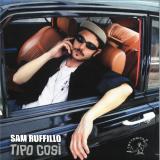
Italian producer, musician, DJ, and groove architect Sam Ruffillo drops his long-awaited debut album Tipo Così on Toy Tonics – a sun-drenched, genre-blurring statement that blends classic house with Mediterranean flair, romantic funk, and tongue-in-cheek Italo vibes. Over 11 expertly crafted tracks, Ruffillo delivers a dancefloor-ready, emotionally rich LP that connects deep musicality with irresistible rhythm and light-hearted elegance.
After three acclaimed EPs and collaborations with revered artists such as Barbara Boeing, Kapote, and Fimiani, Ruffillo has firmly cemented himself as a core artist on the Berlin-based label. Known for his unmistakable signature sound — a warm mix of vintage disco, 90s house, and Italian vocals — Sam’s music has garnered widespread DJ support from tastemakers like Gerd Janson, Palms Trax, Seth Troxler, and DJ Tennis, while becoming a staple on Italian airwaves. His infectious summer anthems like Danza Organica and Perfetta Così have soundtracked countless club nights and festivals, creating a loyal following that eagerly awaited this full-length debut.
Tipo Così is the natural culmination of a musical journey that’s both playful and profound — a travel diary written in grooves, synth stabs, and melodies that feel like postcards from a parallel Mediterranean universe. The album expands and deepens Ruffillo’s world into a fully immersive experience: lush emotional chords meet tight syncopated grooves, vintage synth textures collide with irresistibly catchy pop refrains, and the boundary between sincerity and playful irony is exquisitely blurred.
Entirely written, produced, and recorded in Italy, in his beloved hometown of Bologna, the album finds Ruffillo at the helm on keys, drum machines, and production, supported by a talented cast of musicians contributing live bass, guitar, and other organic elements — further enriching his trademark fusion of electronic grooves and natural instrumentation. There’s a tactile warmth in these tracks, a hands-on feel that adds soul and depth to every beat.
This album also marks Ruffillo’s heartfelt return to singing in Italian, with standout tracks like House Tipo Così, Mi Fa Volare, Ancora, and Dentro Di Me, where romantic naïveté meets pulsing club energy in a way that feels both timeless and refreshingly new. The vocal performances add an intimate, human touch to the music, reinforcing the personal stories woven into each song. There’s poetry in the casual, a bittersweet elegance in the way the lyrics float over groove-heavy production.
Having toured extensively across Europe, Australia, Indonesia, New Zealand, and Mexico — with sets at iconic venues like Panorama Bar and festivals such as Sónar Barcelona — Ruffillo has fine-tuned much of this album in front of live audiences. The real-world testing ground infused the record with a dynamic energy and immediacy that only comes from genuine crowd interaction. These songs weren’t just made in the studio — they were lived on dancefloors around the world.
Tipo Così is not just a collection of tracks. It’s a philosophy — playful, stylish and unmistakably personal. A modern club album bursting with heartfelt emotion and sophistication. Music for dancers with taste; for lovers of beauty, rhythm, and the little imperfections that make things feel real.
But what exactly is Tipo Così? More than just a phrase, it’s a way of being. It’s about embracing elegance without effort, mixing irony with sincerity, and letting nostalgia slip into the room without taking over the party. It’s Sam Ruffillo’s signature language: relaxed, confident, meticulous yet never rigid — where a chord progression can say as much as a lyric, and every beat carries intention.
The album’s visual identity complements this vision perfectly. The artwork and promotional materials lovingly reference Italian design from the ’80s and ’90s, combining bold graphic elements with playful pop culture nods. This aesthetic mirrors Ruffillo’s music — a fusion of vintage warmth and contemporary freshness, delivered with authenticity and charm.
Sam Ruffillo belongs to a new generation of European artists who are reshaping electronic music by blending past and present, analog and digital, groove and emotion — without nostalgia or pose. His artistic universe is coherent, vibrant, and alive; a rich tapestry of sound, images, and stories that coexist with lightness, precision, and a distinctive voice.
Reflecting on his artistic journey, Sam describes music as a vital, deeply human impulse — a tribal connection to rhythm and body that has driven him since he was a teenager. His creative process balances meticulous planning with room for spontaneity, usually sparked by clear melodic ideas that evolve naturally. Collaborations with close friends, especially vocalists like Ninfa, add warmth and authenticity, exemplified in tracks like “House Tipo Così.” For Sam, music is honest self-expression — crafted for listeners who crave memorable melodies and rhythms imbued with genuine feeling.
While technical perfection is tempting, Sam prioritizes emotion, knowing that what truly resonates is the soul behind the sounds. His long-standing partnership with Toy Tonics has been key in nurturing his vision, offering a blend of creative freedom and professional support. Looking ahead, Sam Ruffillo is excited to broaden his live performances, and release new projects that continue to blend electronic grooves with organic, heartfelt sounds — maintaining the delicate balance between playful irony and sincere emotion that defines Tipo Così.
Kurzversion:
Italian DJ, producer and musician Sam Ruffillo drops his debut album Tipo Così on Toy Tonics - a sunny blend of house, funk, Italo and pop, full of groove and emotion. Written and recorded in Bologna with live instruments and Italian vocals, it’s a playful, elegant journey shaped on dancefloors worldwide. A stylish, sincere club album where nostalgia, irony and rhythm meet in perfect harmony.
- Mi Fa Volare
Road-tested across continents and now finally released, “Mi Fa Volare” channels 90s uplifting euphoria with big breakbeats, lush chords, and Italian vocals built to stick. Somewhere between balearic bliss and piano house nostalgia, it’s a feel-good club weapon made for peak-time moments - already sung back by crowds after just one listen.
- Ancora
“Ancora” is a vibrant hi-NRG track inspired by 80s Italo disco, sung entirely in Italian. It blends driving rhythms with dreamy melodies, capturing the radiant spirit of the decade. This fresh yet nostalgic song delivers euphoric vibes and timeless energy, making it a perfect fit for both dancefloors and reflective listening moments worldwide.
- Dentro Di Me
“Dentro Di Me” channels ‘90s sensuality through a fast-paced, UK house-inspired lens. Entirely in Italian, it’s a bold and contemporary dance track where hypnotic vocals meet high-energy grooves. Blending nostalgic textures with forward-thinking production, the result is a seductive and euphoric trip - equal parts emotional and club-ready.
- Amigo
“Amigo” blends Latin groove, acoustic guitar-driven rhythm, and Mediterranean flair into a warm, magnetic, cross-cultural dance anthem. Sung in Spanish and Italian, it celebrates connection, inclusivity, and the joy of moving together - whether stranger or friend. With its unstoppable rhythm and vibrant energy, it’s a feel-good track with a unifying spirit.
- Ma Sei Fuori
“Ma Sei Fuori” is a tongue-in-cheek dancefloor bomb blending raw house energy with catchy vocal phrases and a nod to classic French touch. Driven by hypnotic vocal lines and a playful attitude, it doesn’t take itself too seriously - while still proving serious club impact. Built for late-night moments, it’s bold, bouncy, and impossible to ignore.