A killer fusion of bass, poetry and social consciousness from the King Midas Sound vocalist.
Roger Robinson is one of the most versatile voices in the dub poetry scene today, seamlessly blending the power of the written word with the raw energy of the soundsystem.
Teaming up once again with Dub wizard Disrupt to conclude an album trilogy that began with “Dis Side Ah Town” and “Dog Heart City“, Robinson pulls a wide range of riddims straight from the Jahtari vaults to create “Heavy Vibes“, a killer fusion of bass, poetry, and social consciousness.
With a voice oscillating between soulful falsetto and deep poetry thunder Robinson’s verses hit as hard as the bass, challenging the listener to confront uncomfortable truths, while Disrupt’s richly textured, dub-heavy production ensures the music moves both body and mind. You’ll find yourself dancing, but more importantly, you’ll find yourself thinking.
Coming with stunning cover art by Kiki Hitomi and featuring deadly riddims by Tapes, Naram, Jura Soundsystem, Maffi and Bo Marley, “Heavy Vibes” balances the weight of oppression with a glimmer of hope – the belief that change is possible, that the beat goes on, and that through solidarity and art, new futures can be forged.
Поиск:deep voice
Все
On December 6, 2024, Randomer will return with a new EP titled MTY-012: Everything Happens for No Reason, released via Anetha’s label, Mama Told Ya.
After a reflective hiatus, the UK prodigy is highly anticipated and ready to deliver meaningful music. The EP features five emotionally charged tracks—four produced by Randomer and one co-produced by Randomer and Anetha. Presented on a single vinyl, the release conveys a deeper message: life’s unpredictability can be embraced, reminding us that we can find our way even in chaos and randomness.
Torn between the meaningful and the meaningless, Randomer channeled his time into crafting music shaped by his extensive study of melodies, subconsciously
seeking to bring harmony to the world. The result is a cathartic journey across five tracks, each evoking a broad spectrum of emotions and inviting listeners to explore the depth of their feelings. Drawing from the music that deeply influenced him, Randomer traverses various genres and moods, seamlessly blending techno, trance, techstep, and sacred choral music in a perpetual act of personal reinvention.
Let the choir sing I Saw the World Melt (A1) right before my eyes, and let the people chant my melancholic melody. Nervous Breakdown. Lost in the riffs with dis ting from London, DHM Jam (A2) fuels me with adrenaline, I’m flying through memories, urged to move on. Yet, I’m still trapped : the clock shows Home Invasion (A3)—better start running. We will survive. But where’s my harmony? I Can’t Believe (B1) it. Why me? Why us? In this trance state of mind, I have so many questions, but those voices on the other side won’t answer. We’re doomed anyway, so why not plug in like the Two Perfect Machines (B2) we are, until the end.
For this new EP, Australian visual artist Nic Hamilton has been commissioned to create a poignant artwork alongside two melting teasers for MTY-012. As always, the design is expertly crafted by Diplomatie Studio, while the mastering is entrusted to Six Bit Deep, ensuring a polished and immersive listening experience.
- A1: Megan Leber - Tides
- A2: Mattheis - Swell (Pye Corner Audio Remix)
- A3: Marie K - Silver Lining
- B1: Mattias El Mansouri - Transcendence
- B2: Cooper Saver - Cloudburst
- C1: Kems Kriol - Blimund
- C2: Martinou - Glider
- D1: Human Space Machine - Second
- D2: Koraal - This One
- E1: Eversines - Rhapsodia
- E2: Erik Luebs - Toward Entropy
- F1: Mathilde Nobel - May + Be (Oceanic Remix)
- F2: Mary Lake - Evergloom
- F3: Gotu Jim - De Last
Standard Edition[28,36 €]
***Limited edition with clear vinyl, white inners, printed centre labels and holographic sticker on B-, D- and F-side*** Nous'klaer Audio proudly presents Paerels III (aka Pearls 3), the third and final edition of its beloved 3x12'' compilation series. This release brings together a refreshing splash of sounds, unbound by genre, blending deep-listening pieces with driving techno, rave-tinged house, and a few playful surprises. Contributions come from both familiar faces and new voices on the label, with some tracks pulled from the archives and others fresh out of the studio - curated by label-head Oberman. Featuring artists like Megan Leber, Mattheis with a remix from Pye Corner Audio, Marie K, Mattias El Mansouri, Cooper Saver, Kems Kriol, Martinou, Human Space Machine, Koraal, Eversines, Erik Luebs, Mathilde Nobel with an Oceanic remix, Mary Lake, and lastly Gotu Jim. A1. Megan Leber - Tides A2. Mattheis - Swell (Pye Corner Audio Remix) A3. Marie K - Silver Lining B1. Mattias El Mansouri - Transcendence B2. Cooper Saver - Cloudburst C1. Kems Kriol - Blimund C2. Martinou - Glider D1. Human Space Machine - Second D2. Koraal - This One E1. Eversines - Rhapsodia E2. Erik Luebs - Toward Entropy F1. Mathilde Nobel - May + Be (Oceanic Remix) F2. Mary Lake - Evergloom F3. Gotu Jim - De Last
In addition to the unique musical proposals and the large body of work that they have developed separately, Amelia Cuni and Werner Durand have been performing together as a duo as well as in collaborations (Tonaliens, Born of Six) for more than 20 years. Fusing her Indian Raga singing in the Dhrupad style with his minimalist and experimental approach, they have expanded the reach of their soundworlds as well as proposed new paths for contemporary music.In this occasion, Uli Hohmann joins them in a range of hand drums from the Middle East and North Africa, plus a dulcimer-sounding hammered guitar. Durand's various self-made wind instruments, soprano sax, and blown kalimba shine along with Cuni's astounding vocals, which are sometimes sung through a mirliton (a medieval type of kazoo). Clearing is the trio's first published recording.
Seconds of Thirst, recorded in one session at Uli´s studio in Bavaria in early 2014, is truly a conjuring where distinctive balances come to gather. A deep drone unfolds patiently in a hypnotic manner, comprised by Werner's characteristic PVC clarinets, a hammered guitar played by Hohmann, and subtle electronic tones. Above all, Amelia's singing voice, filtered through the mirliton, drifts buzzing along the gradually shifting harmonic waves, meandering through serpentine melodic lines and microtonality.
In the middle pieces, vocals turn into an ethereal multi-layered chorus, an exotic and astonishing instrument pulsing delicate and vaporously, like a gliding silk sail without a mast to bind it. Misty ambiances linger on as the soft atmosphere disperses the weight of undelivered syllables. Just intonation aligns the pan-ney's winds with vocal navigation. Foe to scattering, hurry, and affectation, Clearing's pace has lifted a fog translucent enough to reveal treetops calmly appearing, efficiently condensing damp into definite drops that fall drumming, forecasting what's yonder.
With a condensing sound going from Buddhist morning chants down to Indian festive traditional music, the title track, which closes the album, is the most vibrant of all, permeating a bit of commotion through buzzing drones and galloping percussion. Without disorder, yet without measure. Clearing is therefore this shuttle into the distance, this space that weaves, unites, and tenses the different cords that we are made up of.
When the clouds advance silently, gray, until they become dark in a few minutes, it means that the monsoon is coming. It reaches us without apparent noise, but then resounds in its images, leaving behind lightness, freshness, clarity, and a tremendous luminosity that comes from so far away: from the Himalayas, from so ancient, from Sanskrit, from a sound where the darkness and the divine, where the concrete and the landscape, where the rock and the humidity leave a mark that brings together and ties a sky loaded with new clouds.
"This is the time that we, who have benefitted from the Last Poets shouldbe able to say, 'it's the Last Poets. It's them we should be honouring, because we did not honour them for so many years_"
KRS One wasn't just addressing the hip hop fraternity when he uttered
those words by way of introducing the video for Invocation - a poem
written thirty years ago, around the time of the Last Poets' last significant comeback. He was speaking to everyone who's been affected by the word, sound and power issuing from the most revolutionary poetry ever witnessed, and that the Last Poets had introduced to the world outside of Harlem at the dawn of the seventies.
In 2018 the two remaining Last Poets, Abiodun Oyewole and Umar Bin
Hassan, embarked on another memorable return with an album -
Understand What Black Is - that earned favourable comparison with theirseminal works of the past, whilst showcasing their undimmed passion andlyrical brilliance in an entirely new setting - that of reggae music. Trackslike Rain Of Terror ("America is a terrorist") and How Many Bullets demonstrated that they'd lost none of their fire or anger, and their essential raison d'etre remained the same.
"The Last Poets' mission was to pull the people out of the rubble o f their lives," wrote their biographer Kim Green. "They knew, deep down that poetry could save the people - that if black people could see and hear themselves and their struggles through the spoken word, they would be moved to change."
Several years later and the follow-up is now with us. The project started when Tony Allen, the Nigerian master drummer whose unique polyrhythms had driven much of Fela Kuti's best work, dropped by Prince Fatty's Brighton studio and laid down a selection of drum patterns to die for. That was back in 2019, but then the pandemic struck. Once it had passed, the label booked a studio in Brooklyn, where the two Poets voiced four tracks apiece and breathed fresh energy, fire and outrage into some of the most enduring landmarks of their career. Abiodun, who was one of the original Last Poets who'd gathered in East Harlem's Mount Morris Park to celebrate Malcolm X's birthday in May 1968, chose four poems that first appeared on the group's 1970 debut album, called simply The Last Poets. He'd written When The Revolution Comes aged twenty, whilst living in Jamaica, Queens. "We were getting ready for a revolution," he told Green. "There wasn't any question about whether there was going to be one or not. The truth was many of us still saw ourselves as "niggers" and slaves. This was a mindset that had to change if there was ever to be Black Power." He and writer Amiri Baraka were deep in conversation one day when Baraka became distracted by a pretty girl walking by. "You're a gash man," Abiodun told him. The poem inspired by that incident, Gash Man, is revisited on the new album, and exposes the heartless nature of sexual acts shorn of intimacy or affection. "Instead of the vagina being the entrance to heaven," he says, "it too often becomes a gash, an injury, a wound_" Two Little Boys meanwhile, was inspired after seeing two young boys aged around 11 or 12 "stuffing chicken and cornbread down their tasteless mouths, trying to revive shrinking lungs and a wasted mind." They'd walked into Sylvia's soul food restaurant in Harlem, ordered big meals, then bolted them down and run out the door. No one chased after them, knowing that they probably hadn't eaten in days. Fifty years later and children are still going hungry in major cities across America and elsewhere. Abiodun's poem hasn't lost any relevance at all, and neither has New York, New York, The Big Apple. "Although this was written in 1968, New York hasn't changed a bit," he admits, except "today, people just mistake her sickness for fashion." Umar is originally from Akron, Ohio, but had arrived in Harlem in early 1969 after seeing Abiodun and the other Last Poets at a Black Arts Festival in Cleveland. That's where he first witnessed what Amiri Baraka once called "the rhythmic animation of word, poem, image as word- music" - a creative force that redefined the concept of performance poetry and stripped it bare until it became a howl of rage, hurt and anger, saved from destruction by mockery and love for humanity. When Umar's father, who was a musician, was jailed for armed robbery he took to the streets from an early age where he shined shoes and raised whatever money he could to help feed his eight brothers and sisters. By the time he saw the Last Poets he'd joined the Black United Front and was ready to join the struggle. Once in Harlem, Abiodun asked him what he'd learnt in the few weeks since he'd got there. "Niggers are scared of revolution," Umar replied. "Write it down" urged Abiodun. That poem still gives off searing heat more than fifty years later. In Umar's own words, "it became a prayer, a call to arms, a spiritual pond to bathe and cleanse in because niggers are not just vile and disgusting and shiftless. Niggers are human beings lost in someone else's system of values and morals." And there you have it. It's not just race or religion that hold us back, but an economic system that keeps millions in poverty and living in fear - a system born from political choice and that's now become so entrenched, so bloated on its own success that it's put mankind in mortal danger. It was many black people's acceptance of the status quo that inspired Just Because, which like Niggers Are Scared Of Revolution, was included on that seminal first album. Along with their revolutionary rhetoric, it was the Last Poets' use of the "n word" that proved so shocking, but it would be wrong to suggest that they reclaimed it, since it never belonged to black people in the first place. There's never any hiding place when it comes to the Last Poets. They use words like weapons, and that force all who listen to decide who they are and where they stand. Umar's two remaining tracks find him revisiting poems first unleashed on the Poets' second album This Is Madness! Abiodun had left for North Carolina by then where he became more deeply enmeshed in revolutionary activities and spent almost four years in jail for armed robbery after attempting to seize funds related to the Klu Klux Klan. Meanwhile, the 21 year old Umar was squatting in Brooklyn and had developed close ties with the Dar-ul Islam Movement. A longing for purity and time-honoured spiritual values underpins Related to What, whilst This Is Madness is a call for freedom "by any means necessary," and that paints a feverish landscape peopled by prominent black leaders but that quickly descends into chaos. "All my dreams have been turned into psychedelic nightmares," he wails, over a groove now powered by Tony Allen's ferocious drumming. Those sessions lasted just two days, and we can only imagine the atmosphere in that room as the hip hop godfathers exchanged the conga drums of Harlem for the explosive sounds of authentic Afrobeat. Once they'd finished, the recordings and momentum returned to Prince Fatty's studio, since relocated from Brighton to SE London. This was stage three of the project, and who better to fill out the rhythm tracks than two key musicians from Seun Anikulapo Kuti's band Egypt 80? Enter guitarist Akinola Adio Oyebola and bassist Kunle Justice, who upon hearing Allen's trademark grooves exclaimed, "oh, the Father_ we are home!" Such joy and enthusiasm resulted in the perfect fusion of Nigerian Afrobeat and revolutionary poetry, but the vision for the album wasn't yet complete. He wanted to create a new kind of soundscape - one that reunited the Poets with the progressive jazz movement they'd once shared with musicians like Sun Ra and Pharoah Sanders. It was at that point they recruited exciting jazz talents based in the UK like Joe Armon Jones from Mercury Prize winners Ezra Collective, also widely acclaimed producer/remixer and keyboard player Kaidi Tatham, who's been likened to Herbie Hancock, and British jazz legend Courtney Pine, whose genius on the saxophone and influence on the UK's now vibrant jazz scene is beyond question. The instrumental tracks on Africanism are in many ways as revelatory and exciting as the Last Poets' own. It's important to remember that the kaleidoscope of styles and influences we're presented with here aren't the result of sampling but were played "live" by musicians responding to sounds made by other musicians. That's where the magic comes from, aided by Prince Fatty's peerless mixing which allows us to hear everything with such clarity. Music fans today have grown accustomed to listening to all kinds of different genres. Their tastes have never been so broad or all- encompassing, and so the music on this new Last Poets' album is as groundbreaking as their lyrics, and perfectly suited to the era that we're now living in. John Masouri
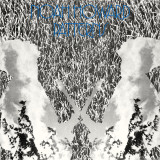
This Incredible new EP by Fred P brings a definitive futurist vision of Dance floor mayhem of the late night variety. Singular Point of Focus is a ep packed with weapons of mass euphoria for the discerning selector and enthusiast alike. Incorporating augmented vocals by the Artist himself with a character that can’t be pinned to his natural rich deep voice yet an exact fit that represents the current moment in time. Fred P seems to be entering a zone most dare to tread boldly going beyond in service of the music that he so dearly loves to provide the everlasting sonic voyage for the people who understand there is more than meets the eye.
Debut collaborative album from Troth, the Nipaluna-based duo of Amelia Besseny and Cooper Bowman, and kindred spirit and legendary Mancunian free-form guitarist Jon Collin. A lavish dreamscape conjuring the dramatic beauty of uncharted mountains and streams, it documents both the crystilisation of ideas first shared during an Australian encounter in early 2023 and years of mutual appreciation.
Troth’s sonic universe, a constellation of drifting atmospherics, bedroom pop impulse and modern classical motifs, is deeply intimate and never rushed. Recent sides Forget The Curse and Idle Easel and live performances supporting the likes of Maxine Funke and Treasury of Puppies have seen Besseny’s soaring, celestial voice take centre stage, delicately adorned with Bowman’s synthesiser flourishes and homespun instrumentation. At their heart lies Bowman’s tireless collaborative instinct: his decade-long involvement in the Australian underground and his countless musical outfits (including contemporary trio Th Blisks, with Besseny and Yuta Matsumura).
Summer 2023 saw the duo host two shows for Collin in their former home of Mulubinba, regional New South Wales. Collin is perhaps best known for his playing, deconstructing and reconfiguring of the guitar and other stringed instruments, realised in solo works on his own Early Music and Winebox Press imprints, and collaborations on a trio of albums with Demdike Stare and live sessions with Sarah Hughes and Bill Nace. His unique style of playing, sometimes delicate, at other times frictional, refutes expectations of traditional instruments and fits perfectly within both Troth’s ethos and their lush sonic mise-en-scène.
The objects of devotion perhaps symbolise the group’s devotion towards each other during their music-making process, and the fruits from which they are borne. “I think, any music I have a hand in, is a dialogue with by the people I'm making it with. It's an ongoing conversation between people and sound”, reflects Bowman. The sacredness and ominousness of remote Tasmania is just as affecting, the interplay of Besseny’s haunting vocal washes, Bowman’s sparse instrumentation and Collin’s ritualistic strum evoking the eeriness that lurks beneath the seemingly limitless Australian landscape. “When I think about it, it sounds like being together at the bottom of the Earth. Watching, listening and playing together with no-one else in sight."
- A1: Distorted Clamor 21 52
- B1: Sweet Elephant 08 43
- B2: The Horizon Did It 05 45
- B3: Electromagnetic Ride 09 58
- C1: Your Hand In My Peace 05 27
- C2: And The Volcano 07 18
- C3: Hat Lives In Me 04 54
- D1: Quiet Races 06 59
- D2: Reen Stones 04 09
- D3: Look For What Is In Me From The Earth 05 04
- D4: Memory Crusher 06 45
'Distorted Clamor', the latest full-length album from legendary Spanish ambient composer Suso Saiz. Marking his eighth release with our label, the album showcases Saiz at his spellbinding best, continuing a prolific creative phase in a career that spans over 40 years.
Building upon 'Resonant Bodies' and 'Nothing Is Objective', his most recent full length releases for Music From Memory, Saiz's dedication to experimentation and conceptual approach to sound lie at the centre of 'Distorted Clamor'.
Discussing his process and the concept behind the album, Saiz says: “Thousands of beings cry out for their lives, for the sustainability of their habitats, for their future. Their
clamouring together generates a distorted, deafening and incomprehensible noise. Trying to go deeper into that distortion and understand all the voices and discover the strength and beauty in all of them. This was the first image I had when I started composing Distorted Clamor. Can distortion and all those sounds (clicks, clips, ticks, tocs, pluks, crashes) that we normally discard, generate beauty? This question has also accompanied the entire whole project.”
The transit of sound through various materials is also central to the work, with Saiz using water, wood, and metals as filters and sound-transforming pedals. The album was created without the use of synthesizers, relying entirely on acoustic sounds that were transformed in an unnatural way to achieve something completely new.
Spanning eleven compositions, Saiz's mastery of timbre and ability to paint layers of sound with the subtlest of touches stand out unmistakably to the listener. As always, his radiant drones are a nest of hidden feelings; they glisten with complex emotions and textures, teasing out moods of vulnerability and hope.
Sleeve art and design by Michael Willis.
Classic free jazz album reissued for the first time since the 70s. Old-style gatefold sleeve LP, with liner notes by Ed Hazell.
Noah Howard, an alto saxophonist and composer, was known for weaving intricate and innovative musical patterns, often likening his work to "sound paintings." His 1971 album Patterns, the first LP he self-produced on his Altsax label, stands as a testament to his experimental and spiritual approach to music. In interviews, Howard frequently used visual terms like "patterns" and "shapes" to describe his compositions, emphasizing the importance of melody and structure even in highly improvisational settings. For Howard, patterns and melodies were essential to guiding listeners through his explorations without alienating them, maintaining a balance between innovation and accessibility. Howard's quest for an original sound was deeply influenced by jazz greats like Charlie Parker, Ornette Coleman, and Jackie McLean. While he admired these legends, Howard avoided imitation, striving instead to develop his own distinct voice. His sound was unmistakably his own, and he felt a deep obligation to carry the jazz tradition forward through personal expression, not by mimicking others. His music was also rooted in spirituality, a legacy he traced to his upbringing in the Black Baptist Church. He believed jazz had always contained a spiritual essence, from Louis Armstrong to John Coltrane, and his work aimed to channel this cosmic, spiritual energy.
Patterns was recorded in the Netherlands during Howard's second stint in Europe, where he found a more open, less racially charged environment compared to the U.S. For the album, Howard collaborated with Dutch musicians such as Misha Mengelberg (piano), Han Bennink (drums), and Earl Freeman (bass). Despite the challenges faced by guitarist Jaap Schoonhoven, who felt out of place in the session, the album came together as a powerful mix of blues, jazz, and classical elements.
The music on Patterns is a high-energy fusion of American free jazz and Dutch improvisation. Howard's saxophone work alternates between leading with passionate, lyrical lines and blending into the collective improvisation. The album’s dynamic interplay, particularly between Mengelberg’s dissonant piano clusters and Bennink’s thunderous drumming, creates a vivid "sound painting" full of contrasting forms and colors. Patterns remains one of Howard’s most unique and celebrated recordings, showcasing his visionary approach to jazz.
One of the most legendary voices in grime, Footsie is without a doubt a true don. From his early link up with fellow Newham General D Double E to his solo output, the influence of sound system culture has always been prevalent. Having grown up as the son of a system operator obviously had a deep impact, so much so that he now runs Father Waz's renowned King Original Sound himself, playing roots reggae and dub. Making a welcome return to the label is Nottingham's Adam Prescott, who released his very first single with us back in 2010 (the massive "On A Dubstep Tip") who provides the deep and heavy dubwise riddim for Footsie to let loose on. credits
Jabu return with ‘A Soft and Gatherable Star’, an LP that sees the Bristol-based trio evolve from a uniquely spectral take on trip hop to proffer a singular vision between cloudy, downered dream-pop, off-kilter ambient, and the warm, low-end throb of sound system culture. This development is aligned with contemporaries like HTRK, Dean Blunt, Tarquin Manek, YL Hooi and Rat Heart Ensemble, whilst also harkening back to the likes of AR Kane (with whom they are set to play shows and release a collaborative single), the languorous drift of 'Victorialand' era Cocteau Twins or The Cure circa ‘Disintegration’. Comprising Jasmine Butt (vocals, guitar), Alex Rendall (vocals, keys) and Amos Childs (production, bass guitar), the trio’s method may have shifted but the feel remains consistent - slow, spatial, sensuous and gently melancholic. With a career arc unlike almost any other current guitar outfit, Jabu sit within a strong lineage of off-centre Bristolian music, and a very British strain of home-spun DIY bands. Self-recorded between Jas and Amos’ home in South Bristol and Amos’ mum’s house in rural North Somerset, the album came together via a process of trial and error - learning to play on borrowed instruments, using the equipment “wrong”, staying up late recording and slipping into strange, semi-conscious sleep deprived/inebriated headspaces. Having captured over 50 tracks, they honed in on those they liked most, shaping them further, whilst carving out space to allow input from people they love and admire - Daniela Dyson’s voice and Will Memotone's clarinet on ‘Ashes Over Shute Shelve’, Birthmark's synth on ‘Gently Fade’ and ‘Sea Mills’, Rakhi Singh (Manchester Collective) and Sebastian Gainsborough (Vessel)’s strings and arrangements on ‘All Night’, Josh Horsley’s cello on ‘If I Asked You, You'd Tell Me’, and Lorenzo Prati’s sax, again on ‘Sea Mills’. The album was mastered by Amir Shoat (HTRK, ML Buch, Dean Blunt, Carla Dal Forno). Influence-wise, the guitar-based material recalls the bands Amos listened to when younger, and Jas’ more folk-leaning inspirations. Deep-lying dub, hip hop and soul influences are also evident in both the way the LP was mixed, and the space ingrained in their subconscious. Tinged with melancholy, the songs cohere as a set of soliloquies and ruminations on love and tenderness. The album’s title comes from a poem by Amos’ late father which hangs on his wall and seeped into the record. ‘Ashes Over Shute Shelve’ is formed of lines from another poem of his. Recited by longtime collaborator Daniela Dyson and with Will Yates (Memotone) playing his mother’s clarinet, the track was imagined as a conversation between his parents. Geography and location also play a big part in the record, with several significant places name-checked in songs. Shute Shelve itself is a hill near Amos’ mum’s house, who explains “There’s a tree at the top with a 360° view of the Mendips, where my dad’s ashes were scattered. We used to go up there when we could first buy booze from the petrol station down the road, get drunk, light a fire, listen to music from my little battery powered CD player and sleep out without tents.” Titled after a Bristol suburb near where Amos’ grandparents lived and where Jas would spend time as a teenager, ‘Sea Mills’ references her being abandoned by friends on the Downs while high on mushrooms, stranded and missing the bus back. ‘Kosiše Flower’ references the city in Slovakia where Amos and Jas holidayed shortly after getting together and a flower he gave her, which she pressed in a book after an argument. ‘Oceanside Spider House’ is a location in Nintendo 64 game The Legend of Zelda: Majora’s Mask, where someone seeks shelter from the falling moon. Genre: Electronic / Ambient / Dream-pop
This band, and this album, function as critical missing links that takes one from The Fall to Yard Act, from Television and The Minutemen to Parquet Courts and Sleaford Mods, from punk as a sound to punk purely as an ethos. While any Van Pelt album is a stand alone album, the unique approach they take begs one to enter their world and dig deep in.
RELATED TO: The Lapse, Native Nod, St Vincent, Blonde Redhead, Enon, Jets to Brazil, Vague Angels, Ted Leo and the Pharmacists, American Football, Texas is the Reason.
‘The lines between post-hardcore, indie rock, and emo blurred on the two mid-’90s full-lengths from the Van Pelt.’ Pitchfork
‘New York City’s The Van Pelt are an influential, but too often overlooked indie rock band -- cult favorites for many an emo-inclined crate digger.’ Consequence of Sound
‘...should be mentioned a lot more than they are when you talk about the history of emo.’
Washed Up Emo
Back in the day there was this thing called an A&R guy. They would hang out at small venues looking to throw money at the next big thing. In the early 90s, everyone was looking for the next Nirvana of course. NYC's The Van Pelt had just released an album of anthems called "Stealing From Our Favorite Thieves" that seemed to be just that. The only thing is, they didn't want to sign. Legend has it $2 million was turned down over pierogies and coffee one Monday morning because The Van Pelt didn't want to risk crashing and burning. Instead, they were gunning for a long and stable stride even if that meant they would largely remain out of the public's eye forever.
Lack of willingness to play the game didn't mean people weren't waiting with baited breath for their follow up album though. In 1997 The Van Pelt released "Sultans of Sentiment", an album nearly devoid of the anthems and licks people were expecting. In fact, it's a complete bummer of an album that subjects the listener to the point on life's curve where the hubris of youth gives way to a cresting crashing defeat no kid with heart could ever have seen coming. Seeing as humanity are sick fuckers who revel in the misery of both themselves and others, the popularity of Sultans grew and grew and continues to win new loyal fans even today. It's for this classic album The Van Pelt has never fallen off the radar.
That being said, their swan song "The Speeding Train" was recorded while they were working on their third album. In any other age, in any other way, this song would have been a hit. The Van Pelt broke up mid-recording, released Speeding Train as a single, and the rest of the songs from that session didn't see the light of day until they were released in 2014 as the "Imaginary Third" lp.
Why are we here talking about them today in 2023? Because in preparation for the release of "Imaginary Third" The Van Pelt started playing some reunion shows. Soundchecks revealed to them that this band has a voice that was prematurely muted by their inability to see clearly in the thick of it. Returning to explore just what that is 25 years later has led to this first collection of 9 songs, "Artisans & Merchants". This is not a reunion album. This is vindication for that decision made over pierogies and coffee decades ago. The Van Pelt is a band in it for the long haul, free from whatever trappings the mayflies of trends and markets may bring.
For lovers of The Van Pelt, listening to "Artisans & Merchants" is like hearing the voice of a dear friend you haven't seen in years, a friend you used to share countless beers with over banter that went nowhere other than delivering a solid night. Your friend is older, they've changed. In some ways you're worried for them, looks like they might be teetering on the brink of something. In other ways it's the same old them, a nugget of a soul too unique to ever be altered. It's for those unfamiliar with The Van Pelt though for whom we should be truly jealous. This is a stand alone album, incredible vital song writing in and of itself regardless of the long history this band has. The climax of the single "Image of Health" perhaps describes the beautiful desperation best: "And you never felt more alive / Than when the priest came to read you your rites!"
Who is Isabelle Lewis, anyway?
What kind of music does she make? Is she an opera singer? Does she write pop songs? Does she compose ethereal ambient soundscapes? Does she play chamber music on the violin? Is she producing dark, electronic beats?
Well… yes. But Isabelle Lewis is not so much a person as a project. Isabelle’s debut album, Greetings, credits a trio of composer–performers at its heart: producer Valgeir Sigurðsson, vocalist Benjamin Abel Meirhaeghe, and violinist Elisabeth Klinck. The sound of the elusive Isabelle Lewis is heard most clearly in the push and pull between them, the three-way tension that gives the album its musical and emotional drive.
Each of the three brings more to the collaboration than those epithets might imply. Elisabeth’s solo performance practice incorporates composition, improvisation, live electronics, and a close command of bowing and fingering techniques that make her fiddle sing, whisper or whistle as required. Benjamin is a self-taught countertenor - keening, crooning, and swelling to a voluptuous sensuality—but also an interdisciplinary stage director and performer. Well known for his work as a producer and studio collaborator, and as a composer of scores for film and stage, Valgeir’s solo discography interweaves meticulously crafted electronics, drones, noise, and other digital elements with acoustic instruments and vocals recorded with naked, unflinching clarity.
But the extravagant theatricality Benjamin brings to the aptly titled “Drama”—also featuring a heroic violin solo from Elisabeth—grapples against the thudding bass of the implacable digital backdrop. On “Mother, Shelter Me” Valgeir’s austere and detailed production throws the hushed violin and vocals into stark relief. The result is an exquisitely uncanny juxtaposition of past and present, human and mechanical, like a Rococo treasure viewed under cold fluorescent lights, or an 18th-century automaton slowly opening its clockwork eyes.
Even the lyrics seem somehow out of time. On “O Solitude,” Benjamin goes so far as to quote an entire song by the first great English opera composer, Henry Purcell, verbatim. No stranger to Purcell’s music, which has made its way into Benjamin’s theatrical productions as well, here Isabelle Lewis removes Purcell’s melodies and harmonies and sets the text, Katherine Phillips’s 17th century translation of a poem by Antoine Girard de Saint-Amant, to new music whose heightened, archaic character nevertheless seems haunted by Baroque ghosts.
Throughout the album, the outsized emotions and timeless archetypes of Benjamin’s lyrics feel like relics from some half-forgotten past—from the neatly rhymed couplets of “Fisherman,” a seemingly straightforward (but still somewhat askew) character study, to the abstraction of “Moonshell,” whose words seem like the fragments of some ancient, lost lament. It is just another of many ways in which Isabelle Lewis carefully distorts the listener’s notions of time. On a more micro level, time can stop for a moment of weightless, drifting ambience, and then plunge forward as the cloud of harmonies suddenly lock into tempo with the drop of the bass or the change of a chord. Or else that weightless moment is allowed to be, as in the aptly named prologue and epilogue to these Greetings (“Voicemail”/“…and farewell”), or in the interstitial tracks that bind the album together, connecting its dramatic peaks with expanses of meditative stasis.
The album as a whole is elegantly shaped, swelling from an intimate, interpersonal statement into something deeper and more spacious. The first half of the album leans slightly towards self-contained pop songcraft and ticking beats, while side B jumps off from “O Solitude” into the almost symphonic grandeur of songs like “Moonshell” or the instrumental “Not the water, air, or the dirt.”
But as it progresses, the contrasts only grow more sublime: antique and postmodern, human and machinelike. The ominous weight of the droning sub-bass and trombone (guest player Helgi Hrafn Jónsson) only makes the interplay between vocals and violins (guest player Daniel Pioro joining Elisabeth) seem more delicate and vulnerable. The ethereal string tremolos of “Moonshell” seem to pull against the heavy, shuddering electronics and layers of crooning vocals.
And that, in short, is where you will find Isabelle Lewis. Like an ancient stone archway, or a delicate house of cards, the architecture of Greetings is held together by the tension between opposing forces. Not just in Elisabeth’s playing, Benjamin’s singing, or Valgeir’s arrangements and production but in the conflict and contrast that generates the synergy between them.
Oh—Isabelle says hi, by the way. She’s looking forward to meeting you.
KRÆK makes his debut onto Flexout's main label with a powerful and deeply personal collaborative EP, joining forces with Ukrainian artist NickBee. Born from an extraordinary connection forged in the crucible of war, this release transcends music. NickBee's contributions were crafted amidst the chaos and danger of his homeland, making this EP a testament to resilience and the enduring power of friendship.
Their shared creative journey became a lifeline, offering a much-needed escape and a channel for processing the turmoil of conflict. The result is a sonic experience charged with raw emotion and an undeniable narrative force. Each track pulses with the energy of survival, frustration, anger, and hope.
This EP is not just a musical statement, but a reminder that the war in Ukraine continues. It stands in solidarity with NickBee and all Ukrainians, amplifying their voices and their unwavering spirit.
With output on Ubiquity, Wonderwheel and Razor-N-Tape, London’s Tigerbalm has truly come into her own production voice recently, bringing forth a colorful vision of tropical influences filtered through modern club sounds. With the Profunda Alma EP, the Tiger focusses her attention on Brazil, coaxing out two gorgeous original songs that pay homage to the sizable impact the country has had on her musical sensibilities. Profunda Alma features the vocalist Joy Tyson (who appeared on Tigerbalm’s earlier Nina EP), and creates an atmosphere of deep emotional mystique through driving percussion, an insistent bassline and dramatic guitar stabs. Vem Ca goes for a more bouncey retro samba vibe and features the incredible vocals of Joao Selva, who delivers a hook that feels almost canonical, as if we’ve known it forever. Ever consistent French producer Yuksek takes Vem Ca straight to the club with his remix, and London upstarts Make-A-Dance deliver two trippy dancefloor takes on the title track to make this record a powerful 5-tracker!
"Raw, deep and spiritual Gnawa music from Morocco to carry you through the night...
Recorded in a single late night session in a house in Casablanca, using a Tascam field recorder and 2 microphones, Dead of Night is the incredible new solo album from Maalem Houssam Guinia, the son of Maalem Mahmoud Guinia, and one of Morocco's most exciting young Gnawa masters.
The album was recorded live on the night of 3rd January 2022 in a relaxed session that lasted into the early hours of the next morning, and it captures Houssam at his most natural, singing and playing the Gnawa songs that have been with him since his birth, completely solo and free without percussion or backing vocals. Houssam described the album as containing the songs he knows best as these were the pieces his father would play and sing late into the night in their home when he was an infant.
What you'll hear on Dead of Night is raw, deep Gnawa music in its purest form played by a young Maalem who has been immersed in the culture his whole life and is a master of his craft. The whole performance has been beautifully and sympathetically captured by bassist and producer Karl-Erik Enkelman."
Voice & Guimbri by Maalem Houssam Guinia.
Recording & Production by Karl-Erik Enkelmann.
Mastering by Julian Tardo.
Photography by Bader Naggay.
Design by Marc Teare.
With thanks to Hamza Guinia, Khalil Mounji, Karl-Erik Enkelmann & Karl Jonas Winqvist.
- A1: Leandro Fresco / Thore Pfeiffer - Goldwasserfluss
- A2: Pass Into Silence - Mirage
- A3: Tamarma & Sebastian Mullaert - Follow Me
- A4: Sono Kollektiv Feat Nathalie Brum - Periadriatische Naht
- A5: Andrew Thomas Feat Julia Parr - Sunshine Night
- A6: Segensklang - Artifacts Of Synthese
- B1: Ümit Han - Im Delirium
- B2: Max Würden - Circles
- B3: Blank Gloss - Jennifer’s Convertible
- B4: Hendrik Meyer - Grün War Die Klamm
- B5: Triola - Zum Renngraben
Hello Everybody,
In recent years, the introductory texts for the Pop Ambient compilation series, which is released every year on Kompakt as the last release before the Christmas break, often began with the sentence "Every year again...".
“Every year again”, a quiet, almost unnoticed maxim of self-evidentness. Because this is already the 25th issue to be published this year.
25 years in increasingly fast-moving times in the even faster-moving music business is an eternity that doesn't just feel like it. It is all the more remarkable how I, as someone who is always restless and often driven by this fast pace himself, pleasantly almost haven’t realised how - in pop-ambient contexts - time does not pass (or passes differently) in the best sense.
When compiling the 25th edition I was asked, among other things, what it was like that I was still doing this and whether I had a favorite track. In the spirit of bringing all the tracks together I don't have a favorite track, or all of them. But I have a favorite part (moment) that I played. In this case it was a broad chord in a change of key at minute 2:55 in the piece Circles by Max Würden. A moment of majesty and familiarity that, at that moment, contains the entire Pop Ambient cosmos, that just works and doesn't explain anything - and I said: “...that's the reason why I'm still doing this.. .”
Pop Ambient is a statement without demands. Is promise without expectation. Is a path without a destination. Every year again.
Wolfgang Voigt, October 2024
And so to the facts:
01. Leandro Fresco / Thore Pfeiffer – Goldwasserfluss
The intercontinental collaboration between the two long-standing Pop Ambient artists Leandro Fresco from Argentina and Thore Pfeiffer from Mainz is a regular part of the series. They open this year's anniversary edition with the usual filigree.
02. Pass Into Silence – Mirage
The Japanese artist Tetsuo Sakae aka Pass into Silence returns to Kompakt 20 years after his legendary album “Calm Like A Millpond”. A master of tones that are as fine as they are stoic and crystal clear.
03. Tamarma & Sebastian Mullaert – Follow Me
For the first time, the well-known Swedish producer and DJ Sebastian Mullaert will be performing on Pop Ambient in cooperation with the Georgian sound artist Tamara Davitashvili. Their piece “Follow Me” fits confidently into the intimate, familiar sound cosmos.
04. Sono Kollektiv feat. Nathalie Brum – Periadriatische Naht
Sono Kollektiv is now a fixture on Pop Ambient, this time with Nathalie Brum. In particular, Luis Reich's characteristic flugelhorn always gives their sound that special jazzy touch.
05. Thore Pfeiffer – Phase Locked Loop 1
Thore Pfeiffer is a master of shimmering surfaces and hypnotically meandering loops.
06. Andrew Thomas feat. Julia Parr – Sunshine Night
An old friend from New Zealand is back with spherical sounds. Andrew Thomas, in collaboration with Julia Parr, sprinkles finely placed piano tones into distant soundscapes and even more distant voices.
07. Segensklang – Artifacts of Synthesis
We are pleased that Segensklang will be there again this year after his brilliant Pop Ambient debut last year. Deep and beautiful.
08. Ümit Han – Im Delirium
The Cologne producer Ümit Han is back for the third time. While he has so far explored the more emotional, soundscape aspects of the Pop Ambient universe, this year's piece "Im Delirium" rises to a pulsating mountain of sound with pearly, clear, effervescent sound crystals.
09. Würden & Schäfer – Analysis Of Variance II
In their track Analysis Of Variance II, Max Würden and Lukas Schäfer embed a finely placed beat impulse in a soft bed of modulating soundscapes and pleasant psychedelic spaceyness.
10. Max Würden– Circles
Max Würden once again shows his special feeling for one of the core statements of the Pop Ambient style spectrum. The abstract chord and soundscape movement between formal construction and emotional touchability, which seems like “pop music” under the microscope.
11. Blank Gloss – Jennifer’s Convertible
The Californian guitar-ambient duo takes us into their sublimely beautiful sound cosmos with their usual aplomb. Maximum condensed transparency. Lightness - heavy as gold.
12. Hendrik Meyer – Grün War Die Klamm
Another new addition is Hendrik Meyer. The versatile musician, also known for his MYR project distributed by Kompakt, leads us with a glistening, beautiful “wall of sound” determination into the eternity of a sunset that is only ended by the following track. Filmy Music.
13. Triola – Zum Renngraben
Jörg Burger aka Triola combines his typical “handmade” impulses and accents with a multi-dimensional, digital sound scenario in a pleasantly smoky, blurred stonewashed aesthetic.
As always, the indispensable final mastering by Jörg Burger ensures that everything is brought together and the sound is fine-tuned.
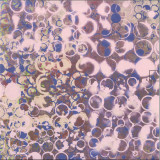
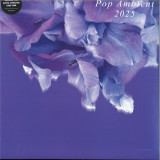
And like every year, the 25th edition is of course wrapped in an abstract, floral magic creation by Veronika Unland. Over the years, the grace of her imagery has increasingly merged with the musical aura to form an unmistakable magical symbiosis.
Hallo Leute,
In den vergangenen Jahren begannen die Anmoderationstexte zur Pop Ambient Kompilation-Reihe, die jedes Jahr als letzte Veröffentlichung vor der Weihnachtspause auf Kompakt erscheint, sinnigerweise immer mal wieder mit dem Satz “Alle Jahre wieder...".
„Alle Jahre wieder”, eine leise, fast unbemerkt zur Formel gewordene Maxime der Selbstverständlichkeit. Denn in diesem Jahr erscheint bereits die 25ste Ausgabe.
25 Jahre in zunehmend schnelllebigen Zeiten im noch schnelllebigeren Musikgeschäft, sind gerne mal eine nicht nur gefühlte Ewigkeit. Umso bemerkenswerter wie mir, als ewig Rastlosem und oft selbst von dieser Schnelllebigkeit Getriebenem, auf angenehme Weise fast entgangen ist wie sehr, in pop ambienten Zusammenhängen (gedacht), die Zeit im besten Sinne nicht (oder anders) vergeht.
Beim Kompilieren der 25sten Ausgabe wurde ich u.a. gefragt, wie es ist, dass ich das immer noch mache und ob ich ein Lieblingsstück hätte. Im Sinne des Zusammenbringens von allen Stücken habe ich kein Lieblingsstück, oder alle. Aber ich habe eine Lieblingsstelle, die ich dann gespielt habe. In dem Fall war es ein breit gesetzter Akkord in einen Tonartwechsel bei Minute 2:55 im Stück Circles von Max Würden. Ein Moment der Erhabenheit und Vertrautheit, der in diesem Moment den gesamten Pop Ambient Kosmos in sich trägt, der einfach nur wirkt und nichts erklärt - und ich habe gesagt: „...das ist der Grund, warum ich das immer noch mache...“
Pop Ambient ist Statement ohne Forderung. Ist Verheißung ohne Erwartung. Ist Weg ohne Ziel. Alle Jahre wieder.
Wolfgang Voigt, Oktober 2024
Und damit zu den Fakten:
01. Leandro Fresco / Thore Pfeiffer – Goldwasserfluss
Die interkontinentale Kollaboration der beiden langjährigen Pop Ambient Stamm-Künstler Leandro Fresco aus Argentinien und Thore Pfeiffer aus Mainz, ist regelmäßiger Bestandteil der Serie. Gewohnt filigran eröffnen sie die diesjährige Jubiläumsausgabe.
02. Pass Into Silence – Mirage
Der japanische Künstler Tetsuo Sakae aka Pass into Silence meldet sich 20 Jahre nach seinem sagenhaften Album „Calm Like A Millpond“ auf Kompakt zurück. Ein Meister der ebenso feinen wie stoisch-glasklaren Töne.
03. Tamarma & Sebastian Mullaert – Follow Me
Zum ersten Mal gibt sich der bekannte, schwedische Produzent und DJ Sebastian Mullaert in Kooperation mit der georgischen Klangkünstlerin Tamara Davitashvili auf Pop Ambient die Ehre. Ihr Stück „Follow Me“ fügt sich souverän in den intim-vertrauten Klangkosmos ein.
04. Sono Kollektiv feat. Nathalie Brum – Periadriatische Naht
Mittlerweile eine feste Größe auf Pop Ambient ist das Sono Kollektiv, diesmal mit Nathalie Brum. Insbesondere das charakteristische Flügelhorn von Luis Reich gibt ihrem Sound immer wieder diesen besonderen jazzigen Touch.
05. Thore Pfeiffer – Phase Locked Loop 1 Thore Pfeiffer ist ein Meister der flirrenden Flächen und hypnotisch mäandernden Loops.
06. Andrew Thomas feat. Julia Parr – Sunshine Night
Ein alter Bekannter aus Neuseeland meldet sich mit sphärischen Klängen zurück. Andrew Thomas, in Kooperation mit Julia Parr, sprenkelt fein gesetzte Klaviertöne in weit entfernte Flächen und noch entferntere Stimmen.
07. Segensklang – Artifacts of Synthese
Wir freuen uns, dass auch Segensklang nach seinem fulminanten Pop Ambient Debut im letzten Jahr auch dieses Jahr wieder mit dabei ist. Deep and beautiful.
08. Ümit Han – Im Delirium
Zum dritten Mal dabei ist der Kölner Produzent Ümit Han. Hat er bisher eher die emotional-flächigen Aspekte des Pop Ambienten Universums ausgelotet, schwingt sich sein diesjähriges Stück „Im Delirium“ mit perlend-klaren, sprudelnden Soundkristallen zu einem pulsierenden Klanggebirge auf.
09. Würden & Schäfer – Analysis Of Variance II
Max Würden und Lukas Schäfer betten in ihrem Stück Analysis Of Variance II einen fein gesetzten Beat-Impuls in ein weiches Bett aus modulierenden Flächen und angenehmer psychedelischer Spaceyness.
10. Max Würden – Circles
Max Würden zeigt einmal mehr sein besonderes Gefühl für eine der Kernaussagen des Pop Ambient Stilspektrums. Die wie „Popmusik“ unter dem Mikroskop anmutende, abstrakte Akkord- und Flächenbewegung zwischen formaler Konstruktion und emotionaler Berührbarkeit.
11. Blank Gloss – Jennifer’s Convertible
Das kalifornische Gitarren-Ambient Duo entführt uns mit gewohnter Souveränität in ihren erhaben-schönen Soundkosmos. Maximal verdichtete Transparenz. Leichtigkeit - schwer wie Gold.
12. Hendrik Meyer – Grün War Die Klamm
Ein weiterer Neuzugang ist Hendrik Meyer. Der vielseitige Musiker, u.a. auch bekannt durch sein über Kompakt vertriebenes MYR Projekt, führt uns mit gleißend-schöner „wall of sound“ Entschlossenheit in die Ewigkeit eines nur vom nachfolgenden Stück beendeten Sonnenuntergang. Film(Musik)reif.
13. Triola – Zum Renngraben
Jörg Burger aka Triola kombiniert die für ihn typischen „handmade“ Impulse und Akzente mit mehrdimensionalem, digitalen Soundszenario in angenehm rauchig-verwischter Stonewashed Ästhetik.
Für den alles zusammenführenden, klanglichen Feinschliff sorgt, wie immer, das unverzichtbare, finale Mastering von Jörg Burger.
Und wie in jedem Jahr ist auch die 25ste Ausgabe natürlich in ein abstrakt-florales Zaubergebilde von Veronika Unland gehüllt. Die Anmut ihrer Bildsprache ist über die Jahre immer mehr mit der musikalischen Aura zu einer unverkennbaren magischen Symbiose verschmolzen.
- Vintage Collection
- La Flare
- Deep Ain't It
- Sooth Sayings
- Mollyamory
- Over The Phone
- Candyman
- Supanatural
- Brick That Broke The Window
- Space Blue
- Buttaflies & Brownies
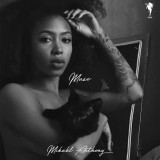
Hailing from the West side of St. Louis, Missouri, Mikahl Anthony’s sonic roots spread far across the global Alt-Soul / Hip-Hop scene. A highly soughtafter multidisciplinary artist (who has collaborated with the likes of Mick Jenkins, Chance The Rapper, Joey Purp, Smino and more), as well as being a founding member of Chicago’s THEMpeople collective, he now prepares to unveil his masterful full-length debut Muse via R&S Records.
Accompanied by several beautiful, self-directed film pieces, Muse is a record with storytelling at its core. Interspersed with commentary from a range of sources telling their stories to Mikhal, whilst collaboratively analysing their personal experiences, it speaks a candid and honest narrative, which reinforce the heartfelt lyrics within. With the project’s name anchored around a dual meaning acronym (1. Ms. Using sensual energy and 2. Making use of seclusion every day). The record is an audio version of docufilm, that creatively interprets the idea of self-therapy, an internal/interpersonal reflection of life experiences that serendipitously connect to Mikahl’s personal romantic relationships. Mikahl explains: ‘I wanted to use a unique style of songwriting, arrangement and filming with the intention of soundtracking my self-development/maturation process’.
On the project’s lasting impression on the listener, Mikahl elaborates ’The exploration of inner truth and vulnerability is key to the future of good music. I want this project to act as symbolism that highlights the mantra that honest approaches and authenticity still has the most value. I also want people to see how important the use of community is when you can connect them to your subject matter...I'd like my audience to observe and engage in their own self-reflections, approaches by way of listening or interacting with the story.’
Drifting to an elevated state of consciousness, Muse is a deeply intoxicating and engrossing listening experience from front to back. From the sliding, kaleidoscopic shadows of opening track ‘La Flare’, via the trepidation-laced atmosphere of ‘Polyamorous’ and the hazy, reverb drenched saxophone notes of LP closer ‘Eddie Kane’ - Mikahl channels moments of joy and pain, infused with spirit enriching instrumentation and gritty textures.
Visual stimuli play an integral role within Mikahl’s music. His songs represent transparency and openness dipped in funk. Layers of soft velvety vocals emerge from jazz harmonies, trap rhythms, and social commentary sourced from voiceovers/excerpts. His creations are the musical representation of documentary films. His art is imagery embodied.
Emilia Sisco returns with a stunning new vinyl single, "Your Girl" b/w "Too Late" featuring two captivating tracks written by Sisco herself and performed by the exceptional Cold Diamond & Mink studio band. On the A side, "Your Girl" introduces listeners to a breezy and mellow soul ballad that radiates warmth and optimism. This track showcases Sisco's ability to craft heartfelt lyrics paired with a soothing melody that effortlessly captures the essence of a perfect soul record. Flipping to the B side, "Too Late" offers a more somber and introspective ballad, characterized by its minor key mood. This track continues Sisco's tradition of delivering emotionally resonant music that speaks to the complexities of love and heartache. The subtle yet powerful arrangement by Cold Diamond & Mink provides the perfect backdrop for Sisco's poignant vocals, making it a standout addition to her growing discography on Timmion Records. With these two new songs, Emilia Sisco solidifies her place as a forceful creator in the contemporary soul scene. "Your Girl" and "Too Late" highlight her ability to convey deep emotion through her music and pave the way for more upcoming work together with the Timmion crew. Sisco's voice alone is starting to signify a stamp of quality that makes this record an essential addition to any soul buffs collection.
Roberto Cacciapaglia is an Italian composer and pianist who started out in the fertile Milan avant-garde scene of the 1970s, which included Franco Battiato, Giusto Pio, Lino Capra Vaccina, Francesco Messina, among others. After studying at the conservatory, he worked at RAI's Studio of Musical Phonology – an electronic music laboratory similar to NDR/WDR in Germany, GRM/IRCAM in France or BBC Radiophonic Workshop.
Originally released in 1979, Sei Note In Logica (Six Notes In Logic) is Cacciapaglia's second album. While his debut, Sonanze, offers a series of ambient mini-soundtracks, Sei Note presents a singular, sinuous piece. The composition is based on a finite set of musical notes, yet this limitation is the point of departure for a grand tour of possible combinations and enthralling timbres (marimbas, strings, reeds and human voice).
Like Steve Reich's Music For 18 Musicians, the joyous experiment of Sei Note is grounded in constant variation. Often doubled by multiple instruments, non-repeating patterns are exquisitely layered, while electro-acoustic signals transform and further refract through visceral effects. Within this conceptual framework, Cacciapaglia does not so much juxtapose rigid dichotomies – acoustic vs. electronic, melodic vs. dissonant, simple vs. complex – as fuse them into an expansive whole.
What started as an inspired study in Minimalism becomes a bold feat of 20th century music. Sei Note In Logica is deeply sincere and, at the same time, quite playful. With one foot firmly planted in the past and the other steeped in technology, Cacciapaglia's influence can be heard in the work of Jim O'Rourke, Fennesz and Ben Vida.