Suche:degrees of freedom

Styles
Alle
  • 1
phase space - Degrees of Freedom LP

Gwenan Spearing, known for her perceptive, groove-oriented DJ sets, and more recently as a live performer working with hardware improvisation, launches a new imprint, Phase Space, with Degrees of Freedom, a debut album diving deep into generative electronics, modular systems, and real-time response. Composed and recorded in 2019-2020, the album treats constraint as creative fuel, floating between ambient,
sonic sculpture, and improvisation, mapping Gwenan’s path from rural Wales to Berlin’s outer zones of experimental sound.
Sync opens with a theme on a slow triangle wave, expanding the space as it evolves. Some Pluck explores generative counterpoint using LFOs and Euclidean rhythms. Generator I unfolds in an oscillating time where keyboard and bass circuits cross-modulate. Sleep Pressure is a lullaby for grown-ups, capturing that eerie threshold before sleep, followed by Loper, where time flows fluid and unstable. The closer, Generator II, holds machine heartbeats in delicate equilibrium before unraveling into graceful decay, a soft farewell. (That’s the Universe waving.) Degrees of Freedom is algorithmic music with a pulse: visceral, hand-wired, and built for deep listening.

Auf Lager

Bei uns am Lager und sofort versandfertig

27,31
Degrees of Freedom - Degrees of Freedom

Degrees of Freedom is a Canadian musical group founded in 1984 in Montreal by Janet Cadman (vocals and percussion), Martin Chartrand (bass, guitar, rhythm programming and vocals) and David Curtis (keyboards, vocals, and percussion). Established as a 5-piece New Wave cover band, Degrees of Freedom evolved into its classic quartet configuration following the departure of the original guitarist and drummer, and the subsequent enlistment of Santino Mastrocola on drums. With this lineup change came a new musical mission: the writing, recording and live presentation of original material only. Since Santino's withdrawal from the band in 1988, Degrees of Freedom has carried on as a trio in the studio while augmenting concert performances with additional musicians. In February 1985, Degrees of Freedom performed at the newly formed S.O.S. (Save Our Songwriters) Club in Montreal. Like other participants in the S.O.S. project, Degrees of Freedom was rewarded with studio time to record some of its own songs. One of these, "August is an Angel" was selected to close out the locally produced 1985 band anthology album "Listen - A Faze Compilation of Montreal Music." The next year, a new track "In This Room," was included in the follow-up release "Listen 2." Both songs, with four newly recorded works, were issued in 1988 as Degrees of Freedom's eponymous sole vinyl release, informally known as the “China” album. In 2015, the music of Degrees of Freedom experienced a renaissance thanks to a new generation of club DJs, traditional and internet-based radio hosts, vinyl disc collectors, and other aficionados of synth-based music. Local and international recognition has come in the form of record sales to fans in Canada as well as in the USA, Germany, Scotland, England, Ireland, Belgium, The Netherlands, France, Spain, Lithuania, Sweden, Bulgaria, Australia, Vietnam, and Japan. Responding to the resurgence of interest, Degrees of Freedom has twice re-issued the disc (2017 and 2019). Today, with eyes on the future and the past, Janet, Martin and David continue to collaborate on new material including the songs, "Metal Flesh" and "Be This Way" both accessible on the band's YouTube channel.

nicht am Lager

Bestelle jetzt und wir bestellen den Artikel für dich beim Lieferanten.

21,22

Last In: vor 23 Monaten
Miles Davis - Agharta LP 2x12"

Miles Davis

Agharta LP 2x12"

2x12inchMOVLP134C
Music On Vinyl
Release unknown
  • A1: (Part I)
  • B1: Prelude (Part Ii)
  • B2: Maiysha
  • C1: Interlude
  • C2: Theme From Jack Johnson

The capstone of Miles Davis’ electric period, Agharta reigns as a funk-rock fireball — a blazing comet streaked energy and elan, a fearless organism feasting on adventure and freedom, a seven-headed Godzilla stomping its way through Osaka, Japan. Recorded on February 1, 1975 at Osaka Festival Hall at the first of a two-show stand, the double album offers an endless abundance of surprises and shifts — as well as a road-proven ensemble whose chemistry and abilities equal that of any of Davis’ celebrated bands. If the true measure of jazz is the capacity to adapt to the moment and challenge perception, Agharta is consummate.

Sourced from the original master tapes, housed in a Stoughton gatefold jacket, and pressed at Fidelity Record Pressing in California, Mobile Fidelity’s numbered-edition 180g 33RPM 2LP set of this epic live release presents it in audiophile sound on a domestic pressing for the first time. Offering greater degrees of separation, detail, and richness than the compressed CD editions and more clarity, openness, and presence than older vinyl copies, this version of the 1975 release helps bring the concert stage to your home. Just make sure your turntable and speakers are up to the challenge of Davis and Co.’s explosive performances — and producing the decibels they demand.

Teeming with vibrant colors, tones, and pace, Mobile Fidelity’s reissue captures the hear-it-to-believe-it flow, sweep, and moodiness of the music. Though the group honors looseness and freedom with religious verve, the specificity and scale rendered by this remaster allows you to detect methods behind the alleged madness that are often otherwise harder to discern. This insight extends to the understated changes in volume, harmonics, and phrasings. In many ways, you can listen as Davis himself did that early February evening as he helped coordinate the overall direction and decided on whether to blow his wah-wah-wired trumpet or take a turn on the organ.

Tellingly, Agharta would likely never have been made if not for Davis’ ventures overseas and, specifically, to the Land of the Rising Sun. Having for years faced a backlash on his native soil for his choices to experiment and blow past all known borders, Davis was welcomed with open arms in Japan. The concert documented on Agharta — as well as the day’s later show, captured on the equally exciting Pangea — stemmed from a sold-out three-week tour that would ultimately mark Davis’ final public appearances for years, as he soon settled into semi-retirement and nursed the wounds connected to an unprecedented stretch of restless and relentless output.

For all the band-fueled merit of Agharta — and there’s plenty, given the cast of saxophonist Sonny Fortune, bassist Michael Henderson, drummer Al Foster, percussionist James Mtume, and guitarists Reggie Lucas and Pete Cosey seemingly blasts off to outer space and travels distant galaxies by the time this minimally edited record runs its course — Davis’ own playing often remains overlooked. As critics Richard Cook and Brian Morton observed, it is “often fantastically subtle, creating surges and ebbs in a harmonically static line, allowing him to build huge melismatic variations on a single note.” He attacks like a man on a mission, out to prove naysayers wrong and bent on trailblazing another new path forward. Convention and skeptics be damned.

Noisy and furious, dark and discordant, abstract and off-balance, radical and intense, abrasive and atmospheric, strangely beautiful and hypnotically eccentric: Agharta evades simple description, and refuses to be pinned down in any established category — rock, jazz, punk, ambient, prog, avante-garde, or otherwise. Shot through with trench-deep grooves, screaming riffs, scalding solos, and free-improv leads, its cosmic thrust comes on as the equivalent of an animated pointillist painting comprised of millions of textured dots, dashes, and dabs that hold your attention so raptly you want to revisit the ideas again and again.

Always steps ahead of everyone else, Davis knew what he was doing even when Agharta debuted in Japan before later hitting U.S. markets. Though “Maiysha” and “Theme from Jack Johnson” are identified in the track listing, the record contains a number of uncredited references to other Davis works, including a nod to “So What.” This decision to bypass labels only adds to the art of the reveal — the rare black magic in which Agharta expertly deals.

vorbestellen

Der Artikel ist noch nicht erschienen. Du kannst den Artikel jetzt vorbestellen, dieser ist nach Wareneingang für dich versandbereit.

46,18

Last In: vor 2026 Jahren
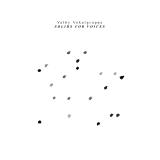
Valby Vokalgruppe - Solids For Voices

Valby Vokalgruppe was initiated in 2008 by Anja Jacobsen, the Danish collective’s current line-cup is completed by Lil Lacy, Sonja LaBianca, Cæcilie Trier and Laura Marie Madsen. The group has written and performed a large number of cross-aesthetic pieces over the years, including an album Bah New Era released in 2012 on Eget Værelse.

Sharpened to its core, the group dives deep into rhythmical architectures built almost solely from the voice - think Platonic solids reimagined as sound objects. Think trance without electronics. These new compositions are compressed, sparkling forms — vocal geometries that spin, collide, and dissolve through repetition. From inside the circle: radical precision, soft dissonance, and playful intuition guide the way. The group explores the voice not as melody alone, but as material — vibrating, modulating, refracting.

Solids For Voices transcends into deep concentration calling for a clear state of mind, in recognition of an increasingly fragmented and incoherent reality. Valby Vokalgruppe endeavours a total absorption into the voice, the rhythm and the trance.

vorbestellen14.11.2025

erscheint voraussichtlich am 14.11.2025

22,65

Last In: vor 2026 Jahren
Repetition Repetition - Fit for Consequences: Original Recordings, 1984–1987
 
2

Fit for Consequences: Original Recordings, 1984–1987 is the first ever archival release from Repetition Repetition, the “two-man electric minimalist band” consisting of Ruben Garcia and Steve Caton hailing from Los Angeles in the mid 1980’s. Repetition Repetition’s unique blend of cosmic art-rock minimalism / maximalism was self-released across a series of cassettes produced in micro editions, and while garnering the attention and participation of luminaries such as Harold Budd, remained under the radar during the band’s existence. Fit for Consequences: Original Recordings, 1984–1987 collects select material from across the duo’s catalog.

It was over a plate of Mexican breakfast food when Ruben Garcia and Steve Caton first told Harold Budd of Repetition Repetition and the worlds they intended to explore by respective way of synthesizers and guitars --- a rendezvous instigated by the former’s fan mail to the legendary composer. If the upstarts entered this restaurant from a one-way street of admiration, they would leave with not only Budd’s interest but, sometime later, a blessing in the wake of many hours shared by the three in Garcia’s Los Angeles home recording studio: “This is going to be difficult, but God help them, I think they’re great,” noted Budd in a USC lecture in 1985. Now several degrees removed from prior rock music aspirations, the real game was afoot.

Between 1984 and 1988, Repetition Repetition operated within something akin to the underground of the experimental underground, although even that designation perhaps overstates the case. The duo’s sparse output consisted of three cassettes self-released on Garcia’s Third Stone Music label: Repetition Repetition (1985), Lakeland (1987), and The Machinist (1987). Their songs would also be included during this period on Trance Port Tapes’ vital scene-scanning compilations assembled by A Produce. Live performances occurred with similar infrequency, but Garcia and Caton counted converts in quality over quantity, numbering among them the aforementioned Budd, a Chambers Brother, and, judging by a memorably drop-jawed reaction following a rare Repetition Repetition gig, Jackson Browne.

Likewise, critical support materialized in the form of KCRW deejays Brent Wilcox and Dean Suzuki, whose steady airplay positioned Repetition Repetition’s music amidst fearless company like Jon Hassell, Hiroshi Yoshimura, and Richard Horowitz. Yet, to hear fellow Trance Port featured players like Tom Recchion and Bruce Licher of Savage Republic tell it, Garcia and Caton moved as ghosts --- a notion more vexingly endorsed by the silence of record companies that failed to come knocking --- and therein lies an overarching truth to the work itself.

Journey to the heart of Repetition Repetition and one discovers a collective ear impossibly attuned to the hypnotic possibilities of stylistic convergence, the resulting music possessed of seamless multimodalities which beckon to a glimmering plane of the disembodied. Where Caton sought his artistic fixes at an intersection of popular genres, Garcia zoned in on the sonically spare, drawing from the same wellspring as the Enos and Rileys of his personal avant-garde pantheon, and in their coming together the two tapped into a deeper cosmic source. Synthetic walls of keyboard sound in forever states of reprise met waves of shimmering --- and at times even punishing --- guitar in reply, their soundscapes hovering convincingly between, as suggested in fittingly dualistic fashion in a press kit assembled by Garcia, such disparate sensations as bird flight in one song and oil drilling in the next.

But don’t call it a push-pull dynamic, as this was a creative partnership founded upon fluidity and organicism by way of, naturally, repetition. In contrast to, say, the Bressonian ideal of repetitive motion as a great stripping away, the concept in the hands of Garcia and Caton equated to ascendancy via continuous unfolding, a maximal route to minimalism. To be sure, their recording philosophy morphed over the course of the act’s short history, and what started as a process defined by consistent in-person interplay developed into a more isolated method formulated by Garcia, who eventually took to his own one-man bedroom-studio sessions in order to fully chart any and all potential ostinato-loaded paths which he could travel down, the Tascam-captured resonances subsequently provided to Caton as blueprints from which to take flight himself, adding layer upon layer of steel to the proceedings.

If the practice and execution changed, however, the evidence certainly didn’t rest in the results: The seamlessness remained, and, despite the brevity of their time together, so has Repetition Repetition. With this finely calibrated collection of songs in Fit for Consequences: Original Recordings, 1984–1987, Freedom To Spend sees to it that the private worlds of Garcia and Caton can now be visited by all rather than just the count-‘em-on-both-hands lucky few whose musical endeavors or collector vocations carried them into this once-distant dimension.

Repetition Repetition’s Fit for Consequences: Original Recordings, 1984–1987 will be released on Freedom To Spend in vinyl and digital editions on May 30, 2025. The collection includes extensive liner notes from Bill Perrine, and wil be offered alongside Over & Over, a supplemental collection of music available exclusively as a mail order cassette from Freedom To Spend and RVNG Intl.

vorbestellen30.05.2025

erscheint voraussichtlich am 30.05.2025

26,01

Last In: vor 2026 Jahren
MILES DAVIS - On The Corner LP

Miles Davis' boundlessly influential On the Corner was so far ahead of its time upon release in 1972, the jazz cognoscenti rejected its groundbreaking concoction as middling in nature. Yet time has a way of righting wrongs and shifting views by adding needed context and perspective to visionary ideas, music, and approaches — the likes of which fill Davis' boldest and most controversial — undertaking. Designed to bring the focus back on the groove and bottom-end frequencies, the funk-loaded On the Corner revolutionized jazz. It also set new standards for record production, presaging remixing and electronica by more than a decade. And the work has never sounded more thrilling thanks to this very special pressing.

Sourced from the original master tapes and pressed on MoFi SuperVinyl, Mobile Fidelity's numbered-edition 180g 33RPM SuperVinyl LP of On the Corner exposes the internal mechanisms, free-associated playing, and then-unmatched studio techniques in vivid fashion. The low end, crucial to every composition here, is both heard and felt, with locked-in bass lines and low-range percussion conveyed as taut, solid, and visceral passages. You can discern the multiple layers of rhythm Davis employed on complex tracks such as "Black Satin," as On the Corner stands as his first effort to use overdubbing and multiple tape machines. As a pioneer, Davis likely would’ve loved MoFi’s groundbreaking SuperVinyl profile that features the lowest-possible analogue noise floor as well as pristine transparency, dead-quiet surfaces, and superb groove definition.

New degrees of spaciousness and airiness — equally important to the musique concrete arrangements — give the impression Davis and Co.'s creations float in space. Instruments are portrayed in three-dimensional manners, rhythmic loops retain tonal purity, and horn solos skitter across an extra-wide soundstage that takes listeners into Columbia's Studio E. Mobile Fidelity's SuperVinyl LP captures Teo Macero's innovative production — and the trumpeter's cutting-edge aural collages — in definitive fashion.

Heavily inspired by Sly and the Family Stone, On the Corner portrays street vibes and remains Davis' Blackest-sounding record. The conscious attempt to connect with youthful audiences tapped into rock and funk is evident not only on the colorful cartoon cover art depicting hot-pants and zoot-suit revelers, but in the music's emphasis of recurring drum and bass grooves. Distinct from Davis' earlier fusion experiments, the record's long-misunderstood set dials back improvisation in favor of beats, loops, and atmospherics that generate trance-like effects. While Davis utilizes his band for core duties — Chick Corea and Herbie Hancock prominently figure — he also relies on an all-star cast of side-men for concentrated soloing and additional support.

With rhythm providing the basic foundation, other notes fall into place, with their positioning steered by Macero and Davis' editing-room techniques. Looking to the manipulation-based work of Karlheinze Stockhausen and teaming with Stockhausen disciple Paul Buckmaster, Davis re-imagines what grooves constituted and could accomplish throughout On the Corner. The shapes of the songs become completely transformed as they progress. Faint melodies, spacey chords, chunky riffs, wah-wah fills, and repeated motifs bounce in and out of a sonic funhouse that wouldn't be out of place at a Harlem block party.

Exotic, intrepid, and filled with Davis' "jungle sound," On the Corner remains daringly hip more than four decades later.

vorbestellen31.03.2024

erscheint voraussichtlich am 31.03.2024

74,75

Last In: vor 2026 Jahren
Black Angels - Directions To See A Ghost LP 3x12"

- The Black Angels' classic sophomore album - Special color edition pressed on Metallic Silver Wax. - Triple LP housed in a Stoughton tri-fold gatefold jacket // "The Black Angels bring the aura of mid-1966 the drilling guitars of early Velvet Underground shows, the raga inflections of late-show Fillmore jams, the acid-prayer stomp of Austin avatars the 13th Floor Elevators everywhere they go, including the levitations on their second album, Directions to See a Ghost. Mid-Eighties echoes of Spacemen 3 and the Jesus and Mary Chain also roll through the scoured-guitar sustain and Alex Maas' rocker-monk incantations. But he knows what time it is. 'You say the Beatles stopped the war," Maas sings in `Never/Ever.' `They might've helped to find a cure/But it's still not over.' Even so, this medicine works wonders." - David Fricke, Rolling Stone Last time we met The Black Angels, they were staring into the desert sun somewhere outside of Austin, Texas. Two years later, night has fallen and the spirits have come out. It's time for The Black Angels to provide Directions On How To See A Ghost. If you're familiar with Passover, the band's 2006 debut, you'll know that The Black Angels's music alone is enough to invoke spirits. There's a name for the band's sound; they call it `hypno-drone 'n roll'. It's the sound of long nights on peyote, of dreams of a new world order, and of half-invented memories of the seamy side of '60s psychedelia. While the Iraq war is still a major influence on the band's lyrics, there are new forces at work here, including Eugene Zamyatin's dystopian novel We and in Christian Bland's words "psychic information from the past and future." See, The Black Angels really are in contact with ghosts. "Civil War battlefields are prime spots for seeing ghosts," says Bland. "One time at Kennesaw mountain in Georgia, I was climbing the mountain in the middle of June and it must have been close to 100 degrees, but in this one particular spot it was very cold. The hairs on my neck stood up and I knew something strange was happening. Then the wind whispered something like `retreat,' and I did. I later learned that the spot where I was on the battlefield was known as `the dead angle', the place where the fiercest fighting took place. The confederates ended up retreating from the mountain towards Peachtree Creek." The Black Angels formed in Austin, Texas, in 2004, comprising from six people (now five) from very different backgrounds. Singer/vocalist Christian Bland is the son of a Presbyterian Pastor and was raised in a devoutly religious household. Bassist / guitarist Nate Ryan was born on a cult compound and drummer Stephanie Bailey claims she's a descendent of Davy Crocket. She and Alex Maas (vocals/guitar) believe a little girl in a red linen dress haunts the group's home. The band released Passover in 2006 to critical acclaim for both the album and the song "The First Vietnamese War". Most of all, Passover established The Black Angels as a band with brains, balls and a strong message. And this time around, the message is there to read in a 16-page booklet that comes with the album. "Our central theme is that people need to open up their minds and let everything come through, and to learn from past mistakes," says Christian. "Only then will we understand the reality of this world and progress beyond where we are now as humans. We've built upon that theme with Directions to See a Ghost. We want people to study the booklet we are providing with the album in hopes that they will be able to relate each song to something in their life." _"War is Peace. Freedom is Slavery. Ignorance is Strength. Keep Music Evil."_

vorbestellen23.02.2024

erscheint voraussichtlich am 23.02.2024

68,03

Last In: vor 2026 Jahren
String - Last Index Of.... LP 2x12"

String

Last Index Of.... LP 2x12"

2x12inchV I S008
VIS
26.09.2022

Nothing is explained in the mysteries around us, but some art touches their soul: last year, Justin Tripp, one half of the US-American impro electronic duo Georgia and London-based electronic artist Zaheer Gulamhusein man behind projects like Waswaas and XVARR -joined forces as STRING. Together they went on a virtual vacation and never came back. As the virtual is fully real due to its virtuality, they created a truly authentic aural hardware journey, hauntingly adventurous, calm, and surprising.
Without defining the scope, STRING tumbled through a dark musical zone that stretched to the horizon, letting the sound shape itself while falling discreet into an appealing abstract space. Hovering clockwise shortly above the ground, they formed impossible geometric musical figures - weightless, fluid clouds, made up of relations between asymmetrical elements. Like in nature, their collaborative work avoids identical characteristics. In an expression of respectful admiration, they softly celebrate the irregularities between their specific genetic musical fingerprints, creating eight light binding clouds of dawn. A meditative musical voyage that transports cosmic particles of idealistic Berlin school ambient right into the heart of their electronic machines. All tunes swing calm but constitutive, dancing around synthesized surfaces that form obsessed flaming orbs of fear and hope, of matter and antimatter.
A shared love for hardware and the ethos of improvisation guided STRING into an experimentation, in which each party aligns closely to the core ideas of co-operative, in-the-moment electronic music, tied across the eight tracks in a sequence.
Finding a home with the highly esteemed Hamburg based label V I S, STRING’s debut “Last Index Of…“ will enter the earth in double vinyl and cassette format, plus tripping on at the digital platforms.
(Text written by Michael Leuffen) the sound shape itself while falling discreet into an appealing abstract space. Hovering clockwise shortly above the ground, they formed impossible geometric musical figures - weightless, fluid clouds, made up of relations between asymmetrical elements. Like in nature, their collaborative work avoids identical characteristics. In an expression of respectful admiration, they softly celebrate the irregularities between their specific genetic musical
fingerprints, creating eight light binding clouds of dawn. A meditative musical voyage that transports cosmic particles of idealistic Berlin school ambient right into the heart of their electronic machines. All tunes swing calm but constitutive, dancing around synthesized surfaces that form obsessed flaming orbs of fear and hope, of
matter and antimatter.
A shared love for hardware and the ethos of improvisation guided STRING into an experimentation, in which each party aligns closely to the core ideas of co-operative, in-the-moment electronic music, tied across the eight tracks in a sequence.
Finding a home with the highly esteemed Hamburg based label V I S, STRING’s debut “Last Index Of…“ will enter the earth in double vinyl and cassette format, plus tripping on at the digital platforms.
(Text written by Michael Leuffen)

nicht am Lager

Bestelle jetzt und wir bestellen den Artikel für dich beim Lieferanten.

23,49

Last In: vor 12 Monaten
STRING - Last Index Of…2x12"

String

Last Index Of…2x12"

2x12inchVIS0
VIS
15.04.2022

Nothing is explained in the mysteries around us, but some art touches their soul: last year, Justin Tripp, one half of the US-American impro electronic duo Georgia and London-based electronic artist Zaheer Gulamhusein man behind projects like Waswaas and XVARR -joined forces as STRING. Together they went on a virtual vacation and never came back. As the virtual is fully real due to its virtuality, they created a truly authentic aural hardware journey, hauntingly adventurous, calm, and surprising.

Without defining the scope, STRING tumbled through a dark musical zone that stretched to the horizon, letting the sound shape itself while falling discreet into an appealing abstract space. Hovering clockwise shortly above the ground, they formed impossible geometric musical figures - weightless, fluid clouds, made up of relations between asymmetrical elements. Like in nature, their collaborative work avoids identical characteristics. In an expression of respectful admiration, they softly celebrate the irregularities between their specific genetic musical fingerprints, creating eight light binding clouds of dawn. A meditative musical voyage that transports cosmic particles of idealistic Berlin school ambient right into the heart of their electronic machines. All tunes swing calm but constitutive, dancing around synthesized surfaces that form obsessed flaming orbs of fear and hope, of matter and antimatter.

A shared love for hardware and the ethos of improvisation guided STRING into an experimentation, in which each party aligns closely to the core ideas of co-operative, in-the-moment electronic music, tied across the eight tracks in a sequence.

Finding a home with the highly esteemed Hamburg based label V I S, STRING’s debut “Last Index Of...“ will enter the earth in double vinyl and cassette format, plus tripping on at the digital platforms.

vorbestellen15.04.2022

erscheint voraussichtlich am 15.04.2022

25,50

Last In: vor 2026 Jahren
Emigrate - THE PERSISTENCE OF MEMORY

Emigrate. The one-time project has become more than that. Much more. The three studio albums, EMIGRATE (2007), SILENT SO LONG (2014) and A MILLION DEGREES (2018), prove that squarely behind Emigrate stands Richard Zven Kruspe – an extremely creative mind who needs the freedom to explore his music and his vision in ways outside of Rammstein. With Emigrate there are no limits, no barriers. Everything is possible, nothing held back, and it’s this ethos that underlines THE PERSISTENCE OF MEMORY, the new studio album, set for release on November 5th. THE PERSISTENCE OF MEMORY is a special jewel indeed, with the nine featured songs bringing together ideas that Richard has collected across the last two decades. Industrial Rock, Rock with electronic elements, however you choose to describe it, there’s no question that the songs here always contain a strong sense of melody, as rousing as they are deep. At one stage, it seemed that the tracks might be part of a bigger project – a vinyl box set of the first three albums with an additional LP included. On this bonus LP would be a selection of unreleased songs dating from 2001 right through to 2018. In the end, however, this material was considered too precious to sit beneath the ‘bonus’ heading, so THE PERSISTENCE OF MEMORY was born... Richard reacquainted himself with his hard drives, coming across ideas, songs and lyrics that deserved to be brought into the light, material too good to remain in the archives. He threw himself fully into the task at hand, as he always does, working on the basis that "A good idea remains a good idea”, and if he felt that there was more to be gained he was open to taking another look at the arrangements and the lyrics; new parts were also recorded here an’ there, after which the entire mix was given a fresh polish, ensuring that the nine songs have a contemporary yet timeless coat of paint. This time, Richard tried to keep things as simple as possible, allowing the creativity to flow, keeping his sights firmly set on pure, raw Emigrate songs. Says Richard: "These songs were created at a certain point in my life, but ideas don't have an expiration date. Sounds, lyrics and themes, on the other hand, do." "Freeze My Mind", for example, is one of the first Emigrate songs ever written, going right back to 2001. Now, 20 years later, it sounds fresh, of the moment, yet Emigrate through & through, something that is true of the album as a whole. Some of the elements are forged in a familiar heat, but these are married to new ways of working, new influences and challenges.

vorbestellen21.01.2022

erscheint voraussichtlich am 21.01.2022

22,06

Last In: vor 2026 Jahren
UMAN - CHALEUR HUMAINE

Uman

CHALEUR HUMAINE

12inchFTSLP21
Freedom to Spend
17.09.2021

UMAN is the project of French musicians and sibling duo Danielle and Didier Jean. "Chaleur Humaine" is their debut album, resurfacing for the first time on vinyl and remastered CD since its original release in 1992. UMAN experienced varying degrees of recognition with Chaleur Humaine at the time of its release, specifically around tracks plucked for various New Age / Chillout compilations, but ultimately the album defies genre in its exploration of voice and sampling / synthesizer technology and places it alongside the futurist works of Ryuichi Sakamoto, Nuno Canvarro, and even Enya. UMAN resembles human' in many Romance languages but signals a spirit from a deeper earth force that the duo channel throughout Chaleur Humaine, manifesting in a mantra found throughout the album reimagined in various languages across different tracks: "It's this force, almost animal, warm, like a kiss, fresh like the morning dew, that we call human warmth.ü" Chaleur Humaine has become a leftfield classic since its initial release, and long sought after on vinyl (the album was only available on CD until now). RIYL: Nuno Canavarro's Plux Quba, Piero Milesi and Daniel Bacalov's La Camera Astratta, Cocteau Twins and Enya

vorbestellen17.09.2021

erscheint voraussichtlich am 17.09.2021

22,48

Last In: vor 2026 Jahren
CHRIS KORDA - POLYMETER

Chris Korda

POLYMETER

12inchMG131
Mental Groove
08.06.2020

Chris Korda's new album "Polymeter" is unique as entirely composed in complex polymeter sequences, a unique way to compose music with a new generation of algorithm, inside which Chris injects DNA of neo classical, ambient and jazz music.

This refreshing album will please both those who are into complex musical composition, conceptual music and who are just seeking for a beautiful, emotional and accessible, unique, musical moment.

This is a "In your hearts not the charts" album, as Irdial Discs once said.

Chris Korda is a transgender, vegan and relentless critic of consumerism, leader of The Church of Euthanasia (willing to halt the overpopulation through suicide, sodomy, abortion and cannibalism) and composer/performer of electronic dance music. She has previously released albums on Kevorkian, International Deejay Gigolo Records and Perlon.


Please read below Chris Korda's introduction to his new album "Polymeter":

Polymeter is an album of virtual solo instrumental performances. They're mostly piano pieces, along with a couple of guitar pieces. They sound uncannily similar to human performances, but they aren't. On the contrary, they are algorithmic music, pure applied mathematics.


The compositions are generated by elaborate networks of polymeter modulation. This sounds complicated and will need some explaining. But the most important point is that these are compositions I didn't write in any usual sense of the word. I created systems of rules, and the compositions emerged from those rules. The rules that generated these pieces can be conceptualized as kinetic sculptures that produce intricate non-random patterns of musical interference. The resulting patterns repeat themselves over long periods, measured in hours, days, or in some cases years.


In order to create this album, I had to write my own MIDI sequencer from scratch, because commercial MIDI sequencers lack the necessary degrees of freedom. My sequencer is also called Polymeter, and I started writing it in 1994. I used a relatively primitive version of it to create my earlier techno and electro releases, but the rapid evolution of computer technology made my original so ware hopelessly obsolete by the 21st century. Like its immediate predecessor "Akoko Ajeji" (Perlon) this album was created using a much more sophisticated version of my sequencer. It took me many years to learn the programming skills I needed to modernize my sequencer, which is one reason why such a long hiatus occurred between my older and newer releases.


Chris Korda

nicht am Lager

Bestelle jetzt und wir bestellen den Artikel für dich beim Lieferanten.

19,96

Last In: vor 5 Jahren
DON SLEPIAN - NEW DAWN

Don Slepian

NEW DAWN

12inchMT003
Morning Trip
23.10.2019

360 degrees of freedom is overwhelming in music, and you need not truly begin to find freedom until you put yourself under extremely narrow constraints.” It was with this quote that Don Slepian laid the groundwork for over 40 years of musical output. Slepian’s work draws equally from the harmonic terrain he explored while performing with a Javanese gamelan ensemble, as well as his time spent building and modifying electronic audio equipment for studios and fellow musicians. Gravitating towards improvisation and experimentation, Slepian built a breathtaking sound-world that stretched the briefest of moments into an eternity of detail and depth. In 1980, Slepian self-released a series of cassette albums that built upon and perfected this practice, offering “New Music for Digital Orchestra”.

New Dawn is one of those albums - an enthralling example of New Age euphoria, and early-electronic
experimentation.

New Music For Digital Orchestra? An ironic subtitle for an album without any traces of digital technology found within. The instruments, tools, and recording techniques are entirely analog. A Korg PS3100, Mellotron voices, Mellotron flutes, analog tape echo and analog recorder were used to create both of the pieces found on New Dawn with both tracks being recorded live with no overdubs

nicht am Lager

Bestelle jetzt und wir bestellen den Artikel für dich beim Lieferanten.

21,64

Last In: vor 6 Jahren
Mitch Von Arx - Pyramids

Pyramids. Jagged Teeth Pushing Through Immaculate Skies. The Ever-changing Light. The Expansive Sense Of Freedom. The Wide Open Spaces. The Textured Landscape Seen From Above. Mountains. Watchful And Immobile For Thousands Of Years, Weathering Seasons, Transcending Change.
It's December 2016. I've Left The London Madness To Hit The Reset Button And Compose New Music In A Tiny Village In The Swiss Alps. I'm Over 10,000 Feet High, It's Minus 15 Degrees And The Snow Is Scintillating Under A Rich Blue Sky. I Turn Around And Suddenly This Gigantic Pyramid-shaped Peak Is Towering Over Me, Staring Me In The Face. Mind Blown. Senses Overwhelmed. Perspective. Lightbulb Moment. I Have My Album Concept.
I Wanted To Put Into Sound My Cathartic Experiences Of The Mountains. Every Track Title Was Chosen Before Composing. The Title Would Be A Catalyst For Visual Memories, Narrative And Overall Vibes. I Continued Developing The Tracks On Occasional Trips To Switzerland, But Mainly Back In The Gritty Habitat Of London's Hackney Wick. The Urban-nature Contrast Had An Impact On The Music Too.
I Use A Lot Of Found Sound, Stuff I Have Collected Over The Years, And A Lot Of Resampled Guitar Sounds And Textures. I Love Imperfections In Sound. Detuned Synths. Distortions And Glitches. Rhythmic Flutters And Percussive Frenzy. 'manual' Cut-ups. I Love Moving To House And Disco And Getting Lost In The More Melodic Side Of Techno. I Love Polyrhythms And Melodic Counterpoints. I Love The Energy And Rawness Of A Live Rock Band. I Channel All This To Create My Own Sonic Palette.

Artwork By Jimmy Turrell, Graphic Artist And Video Director Who Combines A Love Of Handmade Collage, Drawing, Screen Printing And Painting Alongside Digital Techniques. He Has Worked For Universal Music, Nike, Lexus, Levis, Mtv, The New Yorker, Intro, Capitol Records, The New York Times, Green Peace, Beck, The Prodigy/xl Recordings, Channel 4, The Guardian, Gq, The Times, La Times, Newsweek, Getty Images, Adidas, Sony Music, New York Magazine, Wired, Glastonbury Festival, And Vanity Fair Amongst Others.

The Debut Album 'pyramids' Comes Out Worldwide On Limited Double, Green Vinyl (including Download Code).

nicht am Lager

Bestelle jetzt und wir bestellen den Artikel für dich beim Lieferanten.

20,63

Last In: vor 7 Jahren
Billy Parker's Fourth World - Freedom Of Speech

Most of the musicians who gathered to record this fantastic spiritual jazz record for the Strata-East label on May 24th, 1974 had crossed each other's paths in various musical pairings over the preceding few years. Husband and wife team Dee Dee Bridgewater (vocals) and Cecil Bridgewater (trumpet) had been working together on albums like Frank Foster's "Loud Minority", and Roy Ayers' "Coffy" and "Virgo Red". Ten weeks before the "Freedom Of Speech" session, the couple had been joined in Tokyo by Cecil's brother Ronald Bridgewater (tenor saxaphone) to record Dee Dee's debut album, the beautiful "Afro Blue". Also in the studio on May 24th, 1974 was Donald Smith, (piano, vocals), fresh from recording on his older brother Lonnie Liston Smith's "Cosmic Funk" - on which Ronald Bridgewater had also played percussion. Cecil McBee (bass) was also there - just two weeks before, he'd completed his own Strata East date "Mutima", and in February he'd played on Mtume's "Rebirth Cycle" - with both albums also featuring Dee Dee Bridgewater on vocals. He'd also played on Lonnie Liston Smith's "Astral Travelling".

So 1974 was a huge year for all five of these people. Donald Smith and Cecil McBee were six months away from recording on Lonnie Liston Smith's massive "Expansions", with McBee fitting in a few Pharoah Sanders albums in between.

AND THEN, THE MYSTERY ... So with all this fervent activity, the question has to be asked ...Who was Billy Earl Parker Jr (drums), the leader of this session

Billy Parker remains unlisted as a musician on all major jazz sites. His only other recording appears to be as a percussionist on Charles Tolliver's "Impact" in 1975. Then there's nothing.

Finally, by backtracking one of those Zoom info pages, I found a summary of a "SUNY Rockland Community College" 2002 press release that no longer exists :

"Billy Parker's Fourth World Legacy Concert ...The concert, Billy Parker's Fourth World Legacy, is the eighth annual tribute honouring the late percussionist and RCC educator, Billy Parker. A long-time Rockland County resident, Parker began his affiliation with RCC in 1987, building its jazz program and maintaining his life-long tradition of teaching and inspiring others. A lifelong student himself, Parker was near completion of his doctorate in music education at New York University when he died in 1996.

But then people began to read this blog post, and in the comments, Aaron Fuller said :

"Billy Parker was my uncle. He was an incredibly talented, smart, and kind man. I'm very happy to see that folks are still enjoying his masterpiece. Just to give you a bit more information about him... He was born and raised in Buffalo, NY and then attended college at Michigan State University. He met my aunt in Lansing. They lived in NY and toured in Europe for quite a while. Sometime later they relocated to Nyack, NY and he ended up on the faculty of the community college while he pursued advanced degrees from NYU. He was an Ellington scholar. Although his name isn't well-known even among the most avid jazz fans, I think that if you were to talk to some of the great NY musicians that were around in the late 60s and 70s you would find that most knew him. He also had a huge impact as a music educator and I have no doubt that his former students are all over the place, continuing to put his love of the art into practice."

nicht am Lager

Bestelle jetzt und wir bestellen den Artikel für dich beim Lieferanten.

28,95

Last In: vor 7 Jahren
  • 1
Artikel pro Seite:
N/ABPM
Vinyl