Ursprünglich im Januar 2015 erschienen hat ‚Curse Of The Damned‘ – nach der selbstbetitelten Debüt-EP von 2012 – den charakteristischen Night
Demon-Sound endgültig manifestiert. Die Scheibe löste eine geradezu fanatische Begeisterung der Heavy Metal-Anhänger aus, erntete überall
großartige Presse-Echos und wurde von den Hörern der WCJU-Radioshow ‚Metal on Metal‘ in Cleveland, Ohio zum besten Album des Jahres 2015
gewählt. Um das Werk angemessen zu promoten, tourten Night Demon fast zwei Jahre lang auf beiden Seiten des Atlantiks sowie in Mexiko,
Lateinamerika und Südamerika. Mit jeder weiteren Tournee hat sich der Ruf von Night Demon als grandiose und überaus explosive Live-Band, die
man unbedingt gesehen haben muss, ebenso rasant vergrößert wie die Zahl ihrer Fans. ‚Curse Of The Damned‘ umfasst viele Songs, die bis heute
fester Bestandteil ihres Live-Sets sind, darunter ‚Screams In The Night‘, ‚The Howling Man‘ und ‚Heavy Metal Heat‘ sowie ebenso beliebte,
eindringliche Stücke wie ‚Mastermind‘, ‚Satan‘ und ‚Save Me Now‘.
Auf der 2024er Deluxe Edition von ‚Curse Of The Damned‘ findet man das komplette Originalalbum, neu remastert von Night Demon-Gitarrist
Armand John Anthony. Sie enthält zusätzlich einige Bonustracks aus unterschiedlichen früheren Editionen, wie etwa die Coverversion von Riots ‚Road
Racin`‘ und eine Neuaufnahme des Night Demons-Klassikers ‚The Chalice‘ mit dem prägnanten Titel ‚The Chalice ´15‘.
Поиск:del rio
Все
Ursprünglich im Januar 2015 erschienen hat ‚Curse Of The Damned‘ – nach der selbstbetitelten Debüt-EP von 2012 – den charakteristischen Night
Demon-Sound endgültig manifestiert. Die Scheibe löste eine geradezu fanatische Begeisterung der Heavy Metal-Anhänger aus, erntete überall
großartige Presse-Echos und wurde von den Hörern der WCJU-Radioshow ‚Metal on Metal‘ in Cleveland, Ohio zum besten Album des Jahres 2015
gewählt. Um das Werk angemessen zu promoten, tourten Night Demon fast zwei Jahre lang auf beiden Seiten des Atlantiks sowie in Mexiko,
Lateinamerika und Südamerika. Mit jeder weiteren Tournee hat sich der Ruf von Night Demon als grandiose und überaus explosive Live-Band, die
man unbedingt gesehen haben muss, ebenso rasant vergrößert wie die Zahl ihrer Fans. ‚Curse Of The Damned‘ umfasst viele Songs, die bis heute
fester Bestandteil ihres Live-Sets sind, darunter ‚Screams In The Night‘, ‚The Howling Man‘ und ‚Heavy Metal Heat‘ sowie ebenso beliebte,
eindringliche Stücke wie ‚Mastermind‘, ‚Satan‘ und ‚Save Me Now‘.
Auf der 2024er Deluxe Edition von ‚Curse Of The Damned‘ findet man das komplette Originalalbum, neu remastert von Night Demon-Gitarrist
Armand John Anthony. Sie enthält zusätzlich einige Bonustracks aus unterschiedlichen früheren Editionen, wie etwa die Coverversion von Riots ‚Road
Racin`‘ und eine Neuaufnahme des Night Demons-Klassikers ‚The Chalice‘ mit dem prägnanten Titel ‚The Chalice ´15‘.
Amputechture Beneath the technical flash, the fury, the fearless creative brinkmanship of the first two Mars Volta albums lay a potent seam of the blues, an existential vexation that powered every twist and turn of Omar and Cedric’s imaginations. That mournful vibe would come to the surface of the group’s third full-length Amputechture, a simmering/blistering set that was unquestionably the group’s darkest yet. There was no overarching theme here, no interlinking concept binding the songs together, though Cedric concedes that, lyrically, the album was influenced “by a lot of stuff I was going through, a really bad break-up and a lot of other crazy stuff, and trying to put that feeling into the record.” But Amputechture – its name another of the late Jeremy Michael Ward’s invented words – was no downbeat bummer. Opener Vicarious Atonement might’ve been a deliciously gloomy, slow-burning thing, capturing Cedric in delirious duet with Omar’s swooning guitar lines, accompanied by squalling saxophone by Adrian Terrazas-Gonzales and dream-frequency fuckery by the group’s new sonic manipulator, former At The Drive- In member Paul Hinojos. But second track Tetragrammaton swiftly set pulses racing, an epic-in-miniature and containing more ideas within its 16 minutes than most bands manage over an entire career, its proggy, complex guitar figures tessellating in infinite configurations and converging as if conforming to mathematical formulae from another reality. The raw material Amputechture was hewn from started life on the road. Omar now travelled with his own mobile recording studio – a little Neve ten-channel tape recorder and an array of microphones – and was able to work on new ideas on tourbuses, in hotel rooms and during soundcheck (and, occasionally, after the show was done). After touring for Frances The Mute was complete, Omar relocated to Amsterdam, staying with his photographer friend Danielle Van Ark and her partner, Nils Post. It’s here that he demoed Amputechture, flying in engineer Jon DeBaun, drummer Jon Theodore and his brother, Chino, to work on these raw sketches. He later returned to Los Angeles, where the album was finally recorded. Omar ceded guitar duties to his dear friend and kindred spirit John Frusciante, instead assuming the role of musical director. “I wanted to hear the sound of the band,” he says. “I thought, I’ll be able to sit at the console, feel the air of the speakers moving, the unified sound of everything, and not feel distant from it. It was fun, but it was also challenging.” Part of Omar’s new method was to teach the musicians their parts only moments before the tapes rolled. “To keep things fresh, and to keep everyone on edge,” he says, before chuckling. “No, not on edge – on their toes. Amputechture would prove The Mars Volta’s most diverse set yet, drawing into the group’s tornado of influences moments of fiery jazz spirituality and esoteric folk introspection, finding space for passages of devastating subtlety and also their most fierce and full-on moments to date. The aforementioned Vicarious Atonement found its meditative mood echoed by Asilos Magdalena, an intimate, acoustic piece that invoked traditional Latin folk music, as Cedric sang in Spanish a sorrowful tale of a lost soul’s quest for sanctuary within a Magdalen Asylum, a refuge set up by the Catholic church for “fallen women”. The shadowy, sinister closer El Ciervo Vulnerado, meanwhile, tapped into the darker side of spiritual jazz to further explore the album’s themes of redemption and religious myth and magick. Elsewhere, the interplay between guitar and clarinet on Viscera Eyes created complex, unsettling counter-melodies, while the coiling, ornate Meccamputechture – Cedric’s wild fusion of sacred texts, occultism and dystopian science fiction – proved a great showcase for Ikey Owens’ swarming, infernal organ runs, in concert with Frusciante’s arcane guitar-play. But it was Day Of The Baphomets that would prove Amputechture’s most ambitious and most defining epic. Cedric’s lyrics tore into the hypocrisy of religious cant and myths of sin and punishment. “I wanted to make a song that was like the movie The Believers, where this cabal stole kids and did some occult shit with them,” he explains. “But I wanted it to be like, ‘What if the people you hire to do jobs you don’t wanna do rise up one day and then pull some shit like that?’ Like it was the guerrilla warfare, them taking over – wouldn’t that be some fucked up shit? And the music just lent itself to that – the big intro, the bass solo, and all of the ruckus that occurs.” That ruckus was some of the most thrilling Mars Volta music yet, as Omar directed his musicians to rumble through fiery modes of wild tribal groove, ransack-the-palaces riot- rock and supreme progressive experimentalism. Amputechture, then, is the sound of The Mars Volta in imperial mode: fearless, insatiable, unstoppable.
Rage Queen Delilah Bon is a force to be reckoned with blending elements of hip-hop, nu-metal, and riot grrrl ethos into her signature "Brat Punk" style. Her music serves as a fierce anthem for marginalized communities, particularly women, non-binary and the LGBTQ+ community. Her performance at the 2023 Glastonbury festival garnered acclaim from Kerrang!, who hailed her as a ‘standout voice in the rise of bold and bratty heavy music’. This recognition secured her a coveted spot on Kerrang!'s 'Sound of 2024' artist list and further recognition as ‘New Noise’ artist in Metal Hammer magazine and full feature in Clash Magazine. 2024 promises to be a monumental year for Delilah Bon, with a series of highly successful single and video releases to date and her highly anticipated album ‘Evil, hate Filled Female’ due for release in September. She’s also playing a host of Summer festivals including Download, Glastonbury, 2000 Trees and several European festivals including Rock For People in Czech Republic and Metropolis Festival in the Netherlands, with more to be announced! Her singles from the upcoming album, “Maverick” and "Finally See Me” have received widespread support from BBC Radio 1 and Kerrang! Radio, earning coveted spots as Track of the Week’ on Alyx Holcombe’s BBC Radio 1 Introducing Rock Show, ‘Future Flavour’ on Nels Hylton’s BBC Radio 1 Future Alternatives and ‘Track of the week’ on Kerrang! New Noise with Hope Lynes. She’s also had major editorial support from Spotify, Apple Music, Deezer and Amazon Music, including her 3rd Misfits 2.0 playlist Cover artist. Delilah Bon's international appeal was further solidified by her support slot on US artist Scene Queen's UK tour in 2023 and performances at sold-out arena shows in France earlier this year supporting French band Shaka Ponk. Notably, she made National television appearances on Le Late Show and Taratata TV in France, showcasing her magnetic stage presence to a global audience. With her bold persona, genre-defying sound, and unwavering commitment to amplifying marginalized voices, Delilah Bon continues to cement her status as a trailblazer in the music industry.
What an unbelievable record. From the wild cover to the iconic breakbeats, Roots from Ian Carr’s Nucleus is one of the dopest albums we know. This is seriously thick, funky-prog jazz-rock heaven. Originally released on Vertigo in 1973, other than a couple of versions at the time for other territories, Roots was never re-pressed since so it’s gone on to become another one of those impossible to find records.
Maybe it was a little too out there for the time, but it’s aged very, very well indeed and this Be With re-issue, re-mastered from the original analogue tapes, shows off just why this deserves to be back in press.
Genius trumpeter and visionary composer Ian Carr was one of the most respected British musicians of his era. He was a true pioneer and saw the potential in fusing the worlds of jazz with rock, just as Miles Davis and The Tony Williams Lifetime did in the US. In late 1969, following the demise of the Rendell-Carr quintet, and tiring of British jazz, Carr assembled the legendary Nucleus. Regarding music as a continuous process, Nucleus refused to “recognise rigid boundaries” and worked on delivering what they saw as a “total musical experience”. We can get behind that.
Under bandleader Carr, Nucleus existed as a fluid line-up of inventive, skilled musicians. This constant evolution and revolution was all part of the continuous musical exploration and discovery that took jazz to new levels.
Working together with producer Fritz Fryer and engineer Roger Wake, the seven compositions by Carr, Brian Smith and Dave MacRae that make up Roots flirt with perfection, and Nucleus at that time made up of the cream of 1970s UK jazz with Brian Smith on tenor saxophones and flutes, Dave MacRae on piano and electric piano, Jocelyn Pitchen on guitar, Roger Sutton on bass, both Clive Thacker and Aureo De Souza on drums and percussion, Joy Yates delivering the vocals and of course Carr on trumpet.
The spellbinding title track immediately renders the album indispensable. Riding the illest of loping breakbeats, “Roots” is low-slung, doped-out heist-funk. An absolute monster. If it sounds familiar then that’s likely down to it being sampled by Madlib for Lootpack and Quasimoto’s “Loop Digga”, as well as by a whole host of beat manipulators. “Roots” conjures prime instrumental hip-hop / beat music, only 20 years ahead of its time. Truly, these are the roots. Through sinuous bass, twinkling keys and a hypnotic guitar riff, a smoky brass motif weaves its way into a gloriously deep haze around Carr’s solos. “Roots” is over 9 minutes long, but there’s not a single wasted second, not surprising given that this is a condensed version of an originally 40 minute long commissioned composition.
The soothing vocal fusion delight of “Images” follows. Meticulously constructed, with gorgeous flute work from Brian Smith, with Joy Yates’ silky vocals and Dave MacRae’s Rhodes never sounding better. The cool, driving “Caliban” closes out the first side. Originally the third movement in a four part commission to celebrate Shakespeare’s birthday it stands up on its own, all robust rhythms and blended brass. Keyboard colour and Carr’s trumpet are splashed across the funk drums and basslines (and there’s even some bamboo flute). This really is fusion: the elements of jazz and rock coming together in beautifully synthesis.
Side two opens in riotous fashion with the short, thrilling samba of “Wapatiti”. Next up, “Capricorn” forms a smoothed-out, jazzy constellation. Mellow and dreamy, its twinkling percussion and languid horns slowly build the vibe before head-nod drums and a killer bassline enter the fray. With a distinct heaviness that Black Sabbath would’ve envied, “Odokamona” is a venomous slice of riff-soaked jazz metal (yes, you read that right), elevated by Carr’s wah-wah horns.
The album closes with MacRae’s exceptionally cosmic “Southern Roots and Celebration”. Very much in conversation with Weather Report, it opens as a languorous, spiritual jazz of chiming keys and serene guitar that turns slowly, gorgeously into a mid-paced, brass-laced banger. It’s another sure-fire party starter and the sound of the band having a righteous blast, building an ecstatic chaos that ends with Yates screaming.
And of course we need to talk about Keith Davis’ cover for Roots. Perhaps the coolest record cover of all time? Certainly one of the most bonkers. Just your run-of-the-mill high-gloss, acid-tinged airbrush dystopian/utopian living-room party scene. Consider this your chemical flashback trigger warning.
Front-and-centre the hip-to-death green robot holds court with their giant ball of yellow barbwire wool, hooked up to… something(?) being teased out from under the stairs (probably best not to ask). A thoroughly zoned-out, long-legged Pop Art party-goer lounges half-plugged in to the painting behind her as a pair of legs flail into shot from the the top of the stairs opposite. We won’t even begin to guess what the chap’s up to in the middle, but the view out of the windows is rather nice, and someone’s already got the hoover out ready to tidy up. All of the Nucleus sleeves are something special, but this particular one? Crikey.
This Be With edition of Roots has been re-mastered from the original Vertigo master tapes, Simon Francis’ mastering working together with Pete Norman’s cut to weave their usual magic with these wonderful recordings. The crazy cover has been restored at Be With HQ as the finishing touch to this long overdue re-issue.
The mighty U Roy is the originator, the man who put the DJ phenomenon on the map and made it an artform. From Kingston Jamaica to the corners of all the Dancefloors, Clubs and Sound Systems across the world. U Roy (B. Ewart Beckford, 1942, Kingston, Jamaica) began his musical career spinning records for Doctor Dickies Sound System way back in 1961. The mid sixties saw him working for Sir George The Atomic before moving in 1967 to the man who best shaped his sound King Tubby on his Home Town HI - FI. Tubbys work in the dub field, dropping out vocals on his versions for the Sound Systems allowed U Roy to voice over these spaces adding to the excitment of the Dance!!!
U Roy moved into the recording arena firstly cutting two disc's for Producer Lee Perry 'Earths Rightful Ruler' and 'OK Corral' and then following this with 'Dynamic Fashion Way' and 'Riot' for Producer Keith Hudson. Producer Duke Reid seeing the protential in this new found form brought U Roy to his Treasure Isle Studios to voice over his back catalogue of Rocksteady Hits. His first three releases for Duke Reid 'Wake The Town', 'Rule The Nation' and 'Wear You To The Ball' held the Top 3 positions for 12 weeks in early 1970's.
We have compiled some of U Roy's best loved cuts from his mid 70's period when all were still looking at him for guidence. The opening cut Call On Me sees him working over Delroy Wilson's 'Got To Be There'. You Never Get Away gets U Roy answering Delroy Wison's 'Keep On Rocking'. Johnny Clarke's 'Time Gonna Tell' with rootsy bassline turns into Every Knee Shall Bow. Cornell Campbell the Gorgon himself gets his 'Check Mr Morgon' turned into Gorgon Wise. Johnny Clarke's Hold On gets reworked. Jeff Barnes 'Blowing In The Wind' tuned into Number 1 and alongside King of The Road which sees Lennox Brown blow his saxophone over the instrumental 'In The Swing of Things', was one of U Roys first releases. Linval Thompson's 'Let Jah Arise' is versioned to Joyful Locks. I Originate which lends us to the title of this compilation, says it as it is, a classic built over Dave Barker's 'Shocks of Mighty'. Linval Thompson again provides the backbone with his Cool Down Your Temper cut for U Roys version. The mighty Burning Spear's Creation Rebel although providing our next track, it is Johnny Clarke's version that gets worked over. Leo Graham's 'Birds of A Feather' turns into Stick Together. Soul Syndicates instrumental 'Goliath' grows into Riot. A big hit for Max Romeo Wet Dream sounds great under U Roy's new rendition.
Two extra tracks for the CD release of this album sees the great voice of Slim Smith on his 'Let's Stick Together' becomes ‘Ain’t To Proud To Beg’ and Cornell Campbell's 'Stand Firm' works with
U Roy to sign us off with ‘I Shall Not Remove’. A fine collection i hope you agree to the Daddy of all DJ's who in his own words ''I Originate, so you must appreciate, while the others got to imitate'' says it all really……
- A1: Damon Ramsey&Dj Spen - Back To Africa (Club Mix)
- A2: House Rules - Hyena
- A3: Olivia De Lanzac(Feat Kawele Multimanwa) - Chocolate
- A4: Bob Sinclar - Sea Lion Woman (Tiago Maioli Remix)
- B1: Rio Dela Duna - En La Mar (Erik Hagleton Rework) (The C
- B2: Gregory Cabyan - Carnaval
- B3: Nick Chatelain&Danny Chatelain(Feat Yerichö - Ya Te
- C1: Martin Solveig - Edony (Alaia & Gallo Remix)
- C2: Dj Gregory - Block Party (Federico Scavo Remix)
- C3: Eddie Amador&Rio Dela Duna - Underground
- D1: Bart & Baker(Feat Ashley Slater) - Satchmo's Tears
- D2: Erik Hagleton - Together Forever (Erik Hagleton & Chris
- D3: Bob Sinclar - Samba In Hell (Roger Sanchez Reboot)
Entdecken Sie zum ersten Mal auf Vinyl, das 4. Album der großartigen Crew von Yellow Productions: Africanism All Stars. Unter der Leitung von Bob Sinclar und mit dJ Spen, Federico Scavo, Roger Sanchez, Eddie Amador, Bt&Baker, Martin Solveig, DJ Gregory...
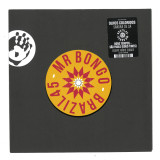
Two 1980s Brazilian boogie bombs from Sandra de Sá and Equipe Rádio Cidade get a remastered reissue as part of Mr Bongo Brazil 45’s series.
Sandra de Sá’s ‘Olhos Coloridos’ is an ‘80s MPB/boogie jam, taken from her self-titled 1982 LP on RGE Brazil, that sits perfectly alongside the likes of Tim Maia, Marcos Valle, Robson Jorge and Lincoln Olivetti. No surprise then that Lincoln Olivetti and Robson Jorge feature on the track, backed by some of the members from Banda Black Rio. A joyous combination of funk basslines and dreamy Rhodes that marry with jubilant horns and Sá’s incredible vocal tones.
On the B side, Equipe Rádio Cidade ‘Bons Tempo Sao Paulo (Good Times)’ was originally released on a rare promo only 7 inch from 1980. Giving a Brazilian boogie makeover to Good Times by Chic / Rapper’s Delight by Sugarhill Gang, the track is voiced by radio DJs from Sao Paulo wishing their listeners a Merry Christmas and Happy New Year.
This replayed version, heavy on the clavinet with a samba-infused, cuica-laced percussion breakdown, gives a true Brazilian spin on one of the most distinctive melodies out there.
Remastered with refreshed artwork.
At once a spiritually-charged journey and a shit-kicking party record, American Cream Band comes to Quindi covering all the bases.
American Cream Band was formed by Twin-Cities musician Nathan Nelson around 10 years ago, taking the form of improvised live shows and albums Frankensteined from these sessions into exultant, fully-formed records you can sink your teeth into. The trick with improvised music is to start with intentions, however abstract they might be, and Nelson leads his rolling cast of collaborators into the creative fray with subtle guidance which drives the impulsive musical moment forward.
The band's previous records have manifested on labels like Moon Glyph and Medium Sound, and now Presents arrives in a freewheeling flash of snappy new wave, skronky sax, call and response sass and some krautrock-minded sonic cosmology. The album came together in December 2021, when Nelson took ten musicians to legendary studio Pachyderm in Cannon Falls, Minnesota. Living together, eating together, and with Nelson quietly setting up his low-key magick intentions around Jupiter's planetary frequency and the studio's abundance of elephant statues and carpets, they laid down some drum-heavy sessions that became the building blocks of the record.
'Taste What We Taste' is the perfect example of an exuberant groove pounded on skins as a vessel for a joyous get-down, with the singers and players free to freak out on top. Nelson remains at the centre of the melee, throwing half-sardonic, half-heartfelt calls out for connection. 'Banana' celebrates nonsense and holds down the most serious of beats - a disco-not-disco deadeye dripping in late night sleaze and lysergic potential. On 'Royal Tears', the jagged guitar chops call back to Gang Of Four, while the hot n' heavy sax from Cole Pulice baits James Chance and all the other angular New York un-jazz misfits.
Amongst his other implied intentions for the recordings, Nelson wanted to channel opposites, not least the distinct male-female energies in his vocal sparring with the girls on assistance duties. It wouldn't be right to call them backing singers as they shoot back at his punchy mantras, bringing a certain fierce femininity that tips its hat to The B-52's Cindy Wilson and Kate Pierson, not to mention iconic post-punk bands like Au Pairs, Delta 5 and Bush Tetras.
There's space for the dreamier kosmische which has crept into the American Cream oeuvre in the past, as 'Sirens' opens the album up in a swirling pond of rag tag percussion and molten synths. 'Words Would Handcuff Us' cools the whole riotous assembly down in unmoored perfection, a strung-out Bossa nova seance dusted with celestial drips from analogue spaceships.
Equally treading the line between light and dark, conscious and unconscious, the sacred and profane, Presents is a life-affirming, creep-under-the-skin listening experience - a joyously transient chapter in the evolution of American Cream Band.
- A1: My Last Stand
- A2: Liberation
- A3: Rude And Reckless
- A4: The Decisive Blow (Normal)
- A5: The Decisive Blow (Climax)
- B1: Neo City (Normal)
- B2: Neo City (Climax)
- B3: Tamashii (Normal)
- B4: Tamashii (Climax)
- C1: Colosseum (Normal)
- C2: Colosseum (Climax)
- C3: Hangar Rules (Normal)
- C4: Hangar Rules (Climax)
- D1: Storm Rising (Normal)
- D2: Storm Rising (Climax)
- D3: Kakuri-Yo Kagura (Normal)
- D4: Kakuri-Yo Kagura (Climax)
- E1: Volcanic Bomb (Normal)
- E2: Volcanic Bomb (Climax)
- E3: Twilight Party Cruise (Normal)
- E4: Twilight Party Cruise (Climax)
- F1: Deep Space (Normal)
- F2: Deep Space (Climax)
- F3: Golden Meadow (Normal)
- F4: Golden Meadow (Climax)
- F5: Baroque Attack (Normal)
- F6: Baroque Attack (Climax)
- G1: Silenty Boisterous (Normal)
- G2: Silenty Boisterous (Climax)
- G3: Delusional Reality (Normal)
- G4: Delusional Reality (Climax)
- H1: Our Tekken Ball (Normal)
- H2: Our Tekken Ball (Climax)
- H3: Be Stylish
- I1: Time Will Reveal
- I2: Silent Signal
- I3: Dive Into The Arcade
- I4: Game Changer
- J1: Back To Kids
- J2: Neon Ramp
- J3: Mars' Gravity
- J4: Hibiscus
Bandai Namco Europe S.A.S. und Laced Records haben sich zusammengetan, um die Musik des brandneuen Teils des legendären 'TEKKEN 8'-Franchise auf Vinyl zu bringen.
Diese komplette OST-Box enthält 42 Tracks, die speziell für Vinyl gemastert wurden. Sie werden in einem Schuber aus festem Karton geliefert und sind in Spined Sleeves untergebracht. Das atemberaubende Cover-Artwork stammt von Bandai Namco Entertainment Inc. und Illustrator Samuel Donato und zeigt Jin und Jun Kazama, Kazuya Mishima sowie die Neuzugänge Azucena, Victor Chevalier und Reina.
Das 'TEKKEN 8'-Musikteam hat für den Soundtrack einen Knaller nach dem anderen abgefeuert und dabei den für die Serie typischen Sound aus knallharter Dance-Musik und Electronica beibehalten. Viele der Komponisten sind langjährige Mitarbeiter der Serie, das gesamte Team besteht aus mifumei, Hiroshi Okubo, AJURIKA, Yoshihito Yano, Go Shiina, sanodg, Rio Hamamoto, Sho Okada, Yuu Miyake, Shogo Nomura, Ayako Saso, Mitsuhiro Kitadani, Shinji Hosoe, Yoshinori Hirai und Qing Yan.
Dank des soliden und einzigartigen Gameplays und der epischen Geschichte verkaufte sich die TEKKEN-Reihe über 57 Millionen Mal und ist damit die meistverkaufte 3D-Kampfspielserie aller Zeiten.
Katharine Whalen of Squirrel Nut Zippers fame, makes a triumphant return with her Jazz Squad featuring Austin Riopel on guitar, Danny Grewen on trombone, and the great Griffanzo on pianos. This time the chanteuse delivers an entire album of breezy west coast jazz sounds in the form of a tribute to Chet Baker. It was around 1996 when Katharine Whalen first made her grand entrance onto culture’s collective radar as the sultry, yet effervescent voice of the Squirrel Nut Zippers, where she remained until their initial disbandment around the turn of the century.
In addition to the Zippers putting dixieland jazz on the pop charts in the 1990s, they sneakily introduced an unsuspecting "alternative" crowd to jazz music. Her cultural impact was also felt when she voiced the song "You You You You You" a standout track from Stephin Merritt's (The Magnetic Fields) project titled The 6ths. That song would also find its way into commercials and the film Pieces of April. After recording one solo album for Mammoth Records shortly after leaving the Zippers, Whalen stepped out of the public eye.
However, she’s remained very much in the spotlight of one unique small town; Hillsborough, NC, which has been referred to as Twin Peaks meets Northern Exposure. It’s a surreal literary, liberal Mayberry. If you find yourself in this Southern portal, you can find Katharine Whalen's Jazz Squad playing monthly in a cocktail bar appropriately named Yonder. The album was recorded in an old chapel in Hillsborough by North Carolinian royalty, Jerry Kee (Polvo, Superchunk, The Kingsbury Manx). Each song was recorded with the band all playing together in the same room, the way the old jazz records used to be put to tape.
Montevideano: Luciano Supervielle and the Montevideo Philharmonic Orchestra" puts together a collection of pieces which, through a subtle accompaniment of electronic programming and synthesizers, generates a unique merge of orchestral music, Rio de la Plata music and new tendencies in electronic music and hip-hop. Montevideano could be considered a fundamental milestone in the career of Luciano Supervielle, who, together with the Philharmonic, managed to unite the worlds of classical music, hip hop and Montevidean roots with his compositions as never before. But more than a culmination, this album is at the same time the beginning of new paths and the continuation of the constant search for his own style.
- October 28, 1967, Koningin Elizabethzaal Antwerp, Belgium
- A1: Agitation
- A2: Footprints
- A3: ‘Round Midnight
- October 28, 1967, Koningin Elizabethzaal Antwerp, Belgium
- B1: No Blues
- B2: Riot
- B3: On Green Dolphin Street
- October 28, 1967, Koningin Elizabethzaal Antwerp, Belgium
- C1: Masqualero
- C2: Gingerbread Boy
- C3: Theme
- November 2, 1967, Tivoli Konsertsal Copenhagen, Denmark
- D1: Agitation
- D2: Footprints
- D3: ‘Round Midnight
- November 2, 1967, Tivoli Konsertsal Copenhagen, Denmark
- E1: No Blues
- E2: Masqualero
- November 6, 1967, Salle Pleyel Paris, France
- F1: Agitation
- F2: Footprints
- November 6, 1967, Salle Pleyel Paris, France
- G1: ‘Round Midnight
- H1: Masqualero
- H2: I Fall In Love Too Easily
- November 6, 1967, Salle Pleyel Paris, France
- I1: Riot
- I2: Walkin’
- November 6, 1967, Salle Pleyel Paris, France
- J1: On Green Dolphin Street
- J2: The Theme
- G2: No Blues
- November 6, 1967, Salle Pleyel Paris, France
Bootleg Series 4[190,71 €]
Bootleg Series 3[152,90 €]
Bootleg Series 2[115,92 €]
Live In Europe 1967 - The Bootleg Series Vol. 1 showcases the ex- plosive transformation of Miles Davis’ “second great quintet” with Wayne Shorter (tenor sax), Herbie Hancock (piano), Ron Carter (bass), and Tony Williams (drums). Miles’ Quintet lineup during that time is acknowledged as one of the high reference points in 20th century jazz, and its influence continues to reverberate in small group jazz today. It was the quintet’s live performances, as they evolved into Miles’ ideal of a “leaderless” jamming ensemble, that truly immortalized them.
Culled from original state-owned television and radio sources in Belgium, Denmark, and France, this set contains three northern European performances over the course of nine days in October and November 1967. Live In Europe 1967 - The Bootleg Series Vol. 1 is the best historical album of 2012, according to the Downbeat Critics Poll 2012.
Live In Europe 1967 – The Bootleg Series Vol. 1 is available as a deluxe 5LP boxset, housed in a lift-off box. The set includes printed inner sleeves and a 16-page booklet with exclusive photos and liner notes by jazz-historian Ashley Kahn.
Marking sixty years of Bossa Nova, and twenty years since Marcos Valle’s first release for Far Out Recordings, what better time to bring back this era-defining classic from the Brazilian master composer?
Throughout his astounding six-decade career, infiltrating pop, bossa nova, samba, delicate psychedelia, jazz and funk, Marcos Valle has consistently shown a dogged determination to transcend the traditions and structures of bossa nova, whilst never veering away from the movement’s inherent, fundamental spirit. To some extent, his epithet ‘the original Rio beach boy’ is a handy one: it reflects the origin and character of his often sun-soaked sound, but expounding his importance in the lineage of Brazilian music, he is more discerningly known as ‘the renaissance man of Brazilian pop’. He is indeed one the very greatest and most important composers, arrangers, writers and performers in Brazil.
Up until Nova Bossa Nova, Marcos Valle hadn’t released an album for well over a decade. After 1983, he resented the way the music industry had changed with commercialisation and new demands curtailing his creative freedom. This was until 1994 when Marcos met Far Out boss Joe Davis and they recorded a track for Far Out’s first Friends From Rio album. This new collaborative partnership resulted in a new solo album, which commenced recording in 1996.
Nova Bossa Nova brought Marcos bouncing back into the 90s, slotting nicely in place alongside the acid jazz movement as well as a voracious new demand for Brazilian music on dancefloors from London to Tokyo. It was witnessing the London club scene’s growing appetite for Brazilian music, as well as a lack of new sounds coming out of Brazil at the time, that a young Joe Davis put in a proposal to record a new album with one of his musical idols. Joe wanted to facilitate an album which would combine the latest technologies and production techniques, with live to analogue tape recording: a Marcos Valle album tailor-made for London’s clubs. Always open to modern influences and possibilities, Marcos agreed to the project, and Joe and his production partner Roc Hunter flew to Rio in ‘96. The record wasn’t released until ’98, as the original ½ inch tapes were stolen from Far Out’s London studio, meaning parts of the album had to be re-recorded.
Nova Bossa Nova was unveiled at the peak of the of the Brazilian movement, the record would also prove to be something of a revolution, inspiring a new generation of artists like Bebel Gilberto, Sabrina Malheiros, Da Lata and Bossacucanova, who continued to fuse Brazilian influences with modern electronic sounds.
180g vinyl + Deluxe hard-cardboard sleeve + OBI + resealable outer sleeve
This isn’t just a seminal album. It is an estuary. All the black rivers that would form Brazilian funk/hip-hop flow through it. Led by Paulista pianist Salvador Silva Filho – Dom Salvador – “Som, Sangue, e Raça” from 1971, one year after the explosion of Tim Maia on the scene, catalyzed the bossa nova and jazz background of its leader with the rhythm and blues of its members like saxophonist Oberdã Magalhães, nephew of samba-enredo master Silas de Oliveira and future leader of Banda Black Rio, who since the group Impacto 8 (which had, among others, Robertinho Silva on drums and Raul de Souza on trombone) had already been trying to reconcile MPB with Stevie Wonder and James Brown. Add to all this a mixture of samba, Nordestino accent, and even the black side of the Jovem Guarda represented by the authorial presence of Getúlio Cortes (older brother of Gerson King Combo, our James Brown “cover”) in ‘Hei! Você’. Alongside these elements and the presence of Rubão Sabino (bass), who still called himself ‘Rubens’, drummer Luis Carlos (another member of Black Rio), the record enlists the trumpet and flugelhorn of symphonic musician Darcy in place of the original Barrosinho (yet one more founder of Black Rio), who was traveling during the recording but would end up being a leading force of the band.
The album ‘Som, Sangue e raça’ paves the way for future generations of musicians and producers of the Carioca scene at the beginning of the 1970s. The lyrics that dealt with the question of race and the explosive fusion of samba, soul, jazz, and funk, elaborated by Dom Salvador and his troupe, Abolição, established the bases for the development of new sounds and tendencies in Brazilian music.
Over 10 years ago, Leon Michels released his first full length record, Sounding Out The City. It was Michels' first full length record under the moniker El Michels Affair. At the time, the budding retro soul scene consisted of mostly organ quartets a la The Meters and of course, Sharon Jones & The Dap Kings were in the early days of their ascent to world domination. Leon Michels, who was 18 when recording Sounding Out The City began, had just released Thunder Chicken, the first record by his high school band The Mighty Imperials. At the time of SOTC, Michels was just discovering early rocksteady, afrobeat, and 60's garage rock, which inevitably crept its way into the songwriting. He purchased a Tascam 388, an 80's 1/4" reel to reel 8 track intended for home recordings, and began recording music in a 10x10 box with no windows that also doubled as his childhood bedroom. Along with fellow Mighty Imperials Nick Movshon, Homer Steinweiss, and Sean Solomon, and Michael Leonhart, Thomas Brenneck, and some of the musicians from The Dap Kings, Michels recorded the LP over a two year period. Upon it's release, it received some rave reviews and the small deep funk community ate it up, but due to the lack luster promotion and distribution the rest of the world was slow to catch on to the instrumental gems featured on SOTC, which Michels appropriately labelled as "cinematic soul". However, in 2005 it found it's way into the hands of the people who were organizing a series of concerts for Scion that paired bands with MC's. El Michels Affair was contacted about playing one show with Raekwon The Chef of Wu Tang Clan fame. The show was such a success it led to a tour, and then to another set of concerts that featured multiple members of the Wu-Tang Clan. This eventually led to the release of El Michels Affair's second record, "Enter the 37th Chamber" which introduced them to a much larger audience and has been their most successful release to date. Michels has since gone on to produce and co-produce numerous records for powerhouse soul artists like Lee Fields. He shares songwriting credits with Adele, Jay-Z, Ghostface Killah, Aloe Blacc, and has played on records by Ray LaMontagne, Lana Del Rey, The Black Keys and Dr. John.
Type B[335,71 €]
2 box design options
Includes faithful reproductions of 17 issues of the legendary TRIBE MAGAZINE
Limited serial numbered edition
Deluxe editions of all three versions of A Message From The Tribe housed in special edition gatefold jackets with OBI
(LP+7") + (LP+10") + (45RPM 2LP)
Includes the world’s first analog pressing of recently uncovered instrumental tracks
180g heavyweight vinyl!
A poster featuring album and magazine artwork
(The back side is TRIBE x Pharoah Sanders or Herbie Hancock from Tribe Magazine.)
Detroit, 1972. The events of one of the most violent riots in American history were still fresh in the minds of Detroit citizens when Wendell Harrison and Phil Ranelin formed the pioneering jazz collective “Tribe”. First compiled by P-VINE in 1997, with a following reissue project, Tribe’s discography would see a re-evaluation from the club music scene, followed by long-deserved acclaim from the larger music scene.
This release contains PHIL RANELIN and WENDELL HARRISON’s “A Message From The Tribe”, Tribe’s inaugural release – and perhaps their most famous. We’ve collected all three editions, as well as 17 issues of Tribe Magazine, a seminal afro-centric magazine published by Tribe in a limited edition box set.
Type A[335,71 €]
2 box design options
Includes faithful reproductions of 17 issues of the legendary TRIBE MAGAZINE
Limited serial numbered edition
Deluxe editions of all three versions of A Message From The Tribe housed in special edition gatefold jackets with OBI
(LP+7") + (LP+10") + (45RPM 2LP)
Includes the world’s first analog pressing of recently uncovered instrumental tracks
180g heavyweight vinyl!
A poster featuring album and magazine artwork
(The back side is TRIBE x Pharoah Sanders or Herbie Hancock from Tribe Magazine.)
Detroit, 1972. The events of one of the most violent riots in American history were still fresh in the minds of Detroit citizens when Wendell Harrison and Phil Ranelin formed the pioneering jazz collective “Tribe”. First compiled by P-VINE in 1997, with a following reissue project, Tribe’s discography would see a re-evaluation from the club music scene, followed by long-deserved acclaim from the larger music scene.
This release contains PHIL RANELIN and WENDELL HARRISON’s “A Message From The Tribe”, Tribe’s inaugural release – and perhaps their most famous. We’ve collected all three editions, as well as 17 issues of Tribe Magazine, a seminal afro-centric magazine published by Tribe in a limited edition box set.
- A1: Deià Dream
- A2: Ọ̀sanyìn (Feat Maikel Alberto Salazar)
- A3: La Mujer Serpiente (Feat Lido Pimienta &Amp; Oliwa)
- A4: Quiero Que Mami (Feat Verito Asprilla)
- A5: Limones (Feat Oliwa, Numu &Amp; Semblanzas Del Rio Guapi)
- B1: Deià Dream Ii
- B2: Selam (Dub)
- B3: Salta La Cuerda (Feat Huaira)
- B4: Song Of The Wind
- B5: Selam (Feat Etsegenet Mekonnen)
- B6: Waves
"We Can Live Together is the first full LP by Earthtones on Wonderwheel. The title is a message, a prayer, and a vision for humanity. It is a reminder that we are in this life together, that love binds us all, and it is only the ideologies and social systems built to prohibit our ability to recognize how close we are that hold us back. We can live, together. The record is based in Folkloric Futurism, a movement that explores the convergence of global folk traditions with technology. Channeling the influence of proto House & Techno pioneers like Mr. Fingers, Kevin Saunderson and Inner City, Earthtones combines analog synthesizers & vintage drum machines with folkloric vocals and instrumentation in a way uniquely his own. It's a celebration of the intersection of past and future, here and there, ancestry and technology. It celebrates themes of spirituality, feminism, love, and most of all, peace. Highlights include "Ọ̀sanyìn", a prayer to the Orisha Ossain, with Maikel Alberto Salazar of rumba super-group Obbatuké on vocals. Recorded in Santiago De Cuba, the track is evocative of Mala's classic "Mala In Cuba" album that broke down barriers between electronic music & traditional music. "La Mujer Serpiente", having seen a sellout 7" last year features Polaris prize winning artist Lido Pimienta-behind the live cumbia rhythms, bass synths, analog keys, 808 drums & guitars, the vision of this track is one of uplifting womxn and femmes everywhere. Ancestral and contemporary Colombian voices are present on the mid-tempo dancefloor track that is the single "Limones" with Semblanzas Del Rio Guapi, Oliwa & the chugging analog rap soundscapes of "Quiero Que Mami" with Verito Asprilla . The album also touches into ambient moments ("Song of the Wind" , Waves") – inspired by friends Carlos Nino, Matthew David, Colloboh and the vibrant West Coast environmental sound movement. credits
g 07: Selam (Dub) [feat. Etsegenet Mekonnen]
A journey, in 16 tracks, through the career of this pioneer band of the Latin American Punk 'n' Roll scene, active since 1987 and founded in the city of Quilmes (Argentina). Punk 77, Street Punk and Punk 'n' Roll on glorious vinyl and for the first time in Europe. DESCRIPTION Doble Fuerza is a pioneering band of the Latin American punk 'n' roll scene that has been active since 1987 (hence the title of the LP). Founded in the city of Quilmes (Argentina), south of the Buenos Aires metropolitan area, they have built their own recognizable sound, influenced by punk 77, street punk and punk 'n' roll. For the first time in Europe, on a long-playing record, on glorious vinyl, 16 tracks that represent a detailed tour through Doble Fuerza's 35-year career, remastered for the occasion. The result is most entertaining and activating. Primitive sonorities of angry young men doing street-punk without concessions in "Disturbios" Riots and "La Vida Se Va" Life Goes, give way to heartfelt street love in a hard-power-pop vein ("¿Por Qué No Me Llamas?" [Why Don't You Call Me?], "Encontrarte" [Find You], "Sola" [Alone]) and Ramonesian essences in "Desocupado" [Unemployed]. And all of this leads to their personal punk 'n' roll sound with a Buenos Aires accent, i.e. punk-rock clearly influenced by punk 77 and the rock 'n' roll of the 50s and 60s. In "Leave Me Alone", "Anestesiado" [Anaesthetised], "Grito de Revolución" [Revolution Yell], "Almas Gemelas" [Twin Souls] and "Canción de Libertad" [Song of Revolution] you can sense some of the many bands of the three decades that are part of their wide musical background and that have served as teachers to forge their style. Nor do they forget the cheerful tavern hymns to sing loudly and to overcome the struggle and heartbreaks with good humor, "Otra Vuelta de Cerveza" [Another Round of Beer] and "El Rey del Fernet" [The King of Fernet]. The three covers of this collection deserve special mention. Three adaptations sung in Spanish that the quintet led by Hugo Irisarri makes totally their own: "Pibes de Barrio" (Cockney Rejects), "Laburando" (Cock Sparrer) and "Spanish Bombs" (The Clash). The accent may be different, but the situations, the sound references, the messages... become immediately familiar and recognizable. "1987" is a careful presentation letter on this side of the pond of the Argentinean band's wide repertoire that unites commitment, fun and enthusiasm in equal parts