During 2019, Blondie was invited to perform in Havana, Cuba as part of a cultural exchange through the Cuban Ministry of Culture. This was a 40 year ambition come especially for songwriter & guitarist Chris Stein, who had longed to visit Cuba for most of his life. Artist and director Rob Roth documented this special moment and career highlight by shooting a short film titled “BLONDIE: VIVIR EN LA HABANA”.
The film is broken up into 3 parts — Water, Fire and Air — and present a meditation on the experience as well as highlights from the two-night live musical performances with special guests Alain Perez, David Torrens and Cuban Fusion Pioneers Sintesís at Havana’s famous Teatro Mella.
With narration from Blondie founding members Debbie Harry, Chris Stein, and Clem Burke, providing a glimpse into the passion and beauty they discovered in Havana and the magic moments of performing alongside incredible Cuban artists. “BLONDIE: VIVIR EN LA HABANA” goes beyond the atypical short form film and live music documentary by presenting a portrait of the legendary band’s first experience in Havana and of the magical exchange between musicians from the two cities each call home and their intertwined influences.
The sound track for the film features Cuban musicians Carlos Alfonso, Ele Valdés, María del Carmen Ávila, Alejandro Delgado, Juan Carlos Marin, Jamil Schery, Degnis Bofill, Adel González
Released in July on limited edition pale blue vinyl to accompany the film which will feature throughout 2021 in many prominent Film Festivals inc the Tribeca Film Festival.
quête:delgado
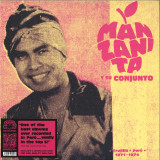
Following the 70s Peruvian cumbia compilation by Ranil last year, Analog Africa returns to Latin America to highlight the work of one of Perú’s undisputed masters of the electric guitar: Manzanita. This 13th release in the Limited Dance Edition Series includes 14 mostly instrumental compositions of electrifying Peruvian cumbia and guaracha. Manzanita's unique guitar lines rest on confident foundations that shifts gears effortlessly. Limited Edition LP in Gatefold Cover pressed on 180g high quality virgin vinyl
"I was in Lima, hanging out with collector-extraordinaire Victor Zela, who had spent the previous few years pouring his passion for Peruvian Cumbia into the blog „la cumbia de mis viejos“, a trove of incredible music. But after the birth of his first child, his priorities shifted and he decided to part with some of his rarest LPs. I was one of the lucky few given an early chance to examine his treasures, and when I picked up the album Manzaneando com Manzanita, Victor said: “Take it! its one of the best LPs ever recorded in Perú … easily in the top five”. That was all the encouragement I needed … two years later many of the songs from that masterpiece have made it onto Manzanita y su Conjunto, a compilation of electrifying Cumbia sides from Manzanita’s golden era.
Berardo Hernández – better known as Manzanita – first surfaced during the psychedelic Cumbia craze. At the head of the scene were the magnificent Los Destellos, whose leader, Enrique Delgado, was such a six-string wizard that other guitarists found it impossible to escape his shadow. But when Manzanita arrived, his electric criollo style sent shockwaves through Lima’s music scene and posed a serious threat to Delgado’s dominance as king of the Peruvian guitar.
Manzanita had come to Lima from the coastal city of Trujillo, five hundred miles up the coast – a place where Spanish, African and indigenous populations had been living and making music together for centuries – and came of age at a time when the first wave of psychedelic rock from the US and UK was starting to sweep the airwaves. But the sounds of Cream and Hendrix disappeared from the radio just as quickly in 1968 when Juan Velasco seized control of the country in a military coup. The new regime, which favoured local traditions over cultural ‘imports’ from the north, was a blessing in disguise for the Peruvian music scene.
Record labels flourished as new bands, raised on a hybrid diet of electric guitars and Cuban rhythms, rushed in to fill the vacuum created by the lack of imported rock. A new genre, known as Peruvian cumbia, was born and Manzanita quickly became one of its most original voices.
Starting in 1969, Manzanita y su Conjunto released a steady stream of singles that used Cuban guaracha rhythms as the foundation for dazzling electric guitar lines. After countless 45s and several years on the touring circuit, the band signed to Virrey, an important Peruvian label, and recorded two LPs acknowledged as masterpieces among aficionados of tropical music. Most of the songs on Analog Africa’s new compilation Manzanita y su Conjunto are drawn from those legendary sessions of 1973 and 74.
Although he scored a few more hits in the later 70s, his dissatisfaction with the music industry caused him to withdraw from the scene for several years; and when he finally retired for good, the golden age of Peruvian cumbia was a distant memory. But when Manzanita was at the top of his game he had few equals. Victor Zela was right: this is some of the best music ever recorded in Perú."
A sonic clash of Tropical, On-U and Eastern proportions, t-woc drops 6 tracks of dope sound system bashment for Strangelove. Informed by Mick's musical wanderlust and prolific digging, Pentangle deftly blends a mélange of influences where Caribbean steel drum, Anatolian melodies and the sounds of the Maghreb all float through the mix.
Like his work for Macadam Mambo/ Emotional Response- its a sound hard to pin down and all woven into a heady brew percolating somewhere in the dance-floor twilight zone. With early works created pre-lockdown at an artist residency in The Dock in County Leitrim, the heads down groove of 'Crazy Bronco' & 'Goddy' don't sound out of place with an early 90's Uk bass culture. Elsewhere the deeper cuts rub against a little sunshine as the late night swing of Midnight Magic riffs off Junior Delgado's roots classic.
With killer artwork c/o Marius Houschyar Strangelove is super stoked to release this collection of outernational rhythms from the Irish vinyl wallah, mix engineer and producer
Vital Sales Points:
Follow up to the labels previous exotic waves of Scribble & Sjunne Ferger,
Afrosound's mission was to emulate the guitar-heavy tropical sounds emanating from Perú and Ecuador at the time. To add to the hippie vibe, there were plenty of whacky improvised vocal asides (called 'inspiraciones'), plus custom fuzz, wah-wah, flange and echo effects boxes for the guitar and keyboards. A barrage of odd sounding synths, drum machines and other electronic flourishes were also sprinkled in to spice up the proceedings. The dozen tracks on Afrosound's debut long play make for a surprisingly diverse palette from which these Colombian musicians painted their daring portrait of Peruvian cumbia, returning the favor in bold colors that still resonate almost 50 years later. "La danza de los mirlos" kicks off with most famous Afrosound hit of all, 'Caliventura', a genius blend of funk and cumbia. Aside from the cumbia amazónica title tune, there are several other covers including three popular songs by Nelson y Sus Estrellas, plus radically reimagined versions of various Colombian costeño classics published by Fuentes. Mario "Pachanga" provides a sad but still groove-oriented Christmas son montuno / cumbia hybrid while Fruko brings us the bomba-funk ditty 'El chorrillo' and the rocking cumbia andina gem 'Cabeza de chorlito' where Sepúlveda channels Enrique Delgado. Fruko collaborator Hernán "Hercovalle" Colorado Vallejo rounds things out with the melancholic psychedelic cumbia 'Esperando por ti', proving that every tropical party has to have its down side as well. The record was also released in the US, Ecuador, Perú, Panamá, Mexico and Venezuela, and probably had an influence of its own, at least in South America. The cover of this lovingly restored reissue features the artwork for the Peruvian edition, which was licensed and issued by Lima's El Virrey label in 1974. The original Fuentes artwork, with a far more outrageous "cheesecake" image, can be seen on the back cover.
- A1: 1 Eddie Palmieri & Ismael Quintana - Conmigo
- A2: 2 Ray Barretto - Guajira Y Tambo
- A3: 3 Tito Puente - Ran Kan Kan
- A4: 4 Issac Delgado - El Macao
- A5: 5 Orlando Marvin & His Orchestra - Ritmo Bembe
- A6: 6 Johnny Pacheco Y Su Charanga - Acuyuye
- A7: 7 Orquesta Araga3N - El Paso De Encarnacia3N
- B1: 8 Mon Rivera Y Su Orquesta - Lluvia Con Nieve
- B2: 9 Celia Cruz Con La Sonora Matancera - El Que Siembra Su
- B3: 10 Noro Morales Y Su Orquesta - Saona
- B4: 11 Cachao Y Su Combo - Cogele El Golpe
- B5: 12 Compay Segundo - El Gallo E'jando
- B6: 13 The Alegre All Stars - Ay Camina Y Ven
- B7: 14 Willie Rosario - Dame Tu Amor Morenita
14 of the top salsa hits by Edddie Palmieri,Ray Baretto, Celia Cruz...
Mecanica Popular is back 9 years after their LP “Neguentropia” and 4 years after Dead Cert reissued their first LP “”Que Sucede Con El Tiempo”
Mecánica Popular is ’s an experimental and industrial band formed in the late 70s by Luis Delgado (Finis Africae, Ishinohana...) and Eugenio Muñoz (Randomize), who rapidly gained cult status between the genre fans. The band experienced a renovated international success after their record "Que Sucede Con El Tiempo" (1984) was repressed in 2015 in Andy Votel and Demdike Stare's Dead Cert imprint.
Arriving 9 years after “Neguentropia”, “Estridentismo” is the group’s fourth record and the product of new material that was developed over the last 3 years.
“Estridentismo” is based on the avant-garde movement of the same name that was born in Mexico during the early 1920s (known as Stridentism in English). Each track uses this lens to explore a different thematic concept, from “Jouer Avec Schaeffer,” based on musical pioneer Pierre Schaefer, to “Mikado,” which draws inspiration from the sounds of Mikado steam locomotives.
Following the sound of their previous releases while also introducing elements that reflect their continued evolution, “Estridentismo” is a record that owes as much to the Industrial movement as it does to the work of early electronic pioneers.
Mecánica’s inventive style, and their blending of older techniques like tape manipulation with newer digital technology, allows the record to incorporate Industrial and experimental aesthetics to create a sound that plays with categories and ultimately creates its own.
The record has received praise from the press and artist alike, and it has been played by the likes of JASSS, Demdike Stare, Cera Khin and Ossia.
“Estridentismo” comes in a luxury vinyl edition with a printed inner sleeve full of text and pictures.
Southern Lord announce the next Caspar Brötzmann Massaker reissues in the ongoing series, continuing with Der Abend Der Schwarzen Folklore and Koksofen this July. Read on for more insight into these albums, and for information about incoming live dates supporting Sunn O))).
Caspar Brötzmann is one of the most unique and innovative guitarists of the last 40 years. With his Berlin-based trio Massaker, he evolved a whole new autonomous approach to writing rock songs, starting from sounds that were widely considered ornamental if not detrimental ‘sonic waste’, such as shrieking feedback and droning overtones. This plethora of sounds were arranged into tracks to sound like breaking concrete, grinding metal, or bursting glass, at once monumental and threatening, impenetrable and hermetic, yet also archaically tender and loving.
Even today, as the art of noise has reached a level of sophistication that no one could have imagined 30 years ago, Caspar Brötzmann Massaker’s music is resoundingly singular. Ultra heavy riffs and beats, ominous tribal chants and a raw physical force is conjured up by these three sinister and proud minds of their era. Their unhinged, unified stream of energy is captured on these remastered reissues and the results are thrilling.
Koksofen (which translates as blast furnace), originally released in 1993, has become one of Massaker’s most popular albums. Like it’s predecessor, ...Schwarzen Folklore, the album took shape in Massaker’s rehearsal room below the Berlin subway station Schlesisches Tor, and was recorded at Conny Plank’s studio near Cologne, with Plank’s former associates Ingo Krauss and Bruno Gephard producing.
There’s a different kind of intensity to Koksofen. The features of Massaker’s sound are in full bloom. Mountainous noises tower up and crash down, and tormented sounds rise from ominously seething grounds, haunting the entire song-scape. The feel of doom and dread hangs heavily over the five songs, and the title song rumbles, shrieks and wails, plagued by Caspar’s guttural growls of war, suffering and death.
Caspar recalls one anecdote from shortly after the original release whereby Bassist Edu Delgado called him asking to turn on the TV, thus discovering that “Hymne“ was being used as background music to a report about the death penalty in the US. A different kind of intensity indeed.
Reflecting on the album to this day Caspar remarks “Koksofen is still a mystery to me,'' he continues “I can still feel the troubled times in these songs.” - the effects are certainly potent for the listener too. And the album undoubtedly affirms Massaker as the fiercely original and compellingly raw musicians that they are.
Originally released on Illuminated Records in 1983, "Viral Shedding" is surely one of the most important references for the industrial/funk dance music.
Between pure noise and electronic beats, 'Viral Shedding' is creating a twisted and percussive rhythmic urge, a funky disco sound permeated by digital industrial beats. Nigel Ayers and Caroline K take their inaccessible best and thrown it into the melting pot with a set of pumping rhythms. The result is the frustrated son of mutant disco, swimming in the same waters of Cabaret Voltaire, 23 Skidoo, Tackhead, Meat Beat Manifesto and Hula.
As Nigel Ayers recalls, "Popular music picked up on what we were doing 1983-1984, which helps explain why records such as -Viral Shedding- sound clubbier today than they did at the time, but the technology of music making locked in a seat of aesthetics in those days that shaped pop as a whole more than industrial music itself did. Whether by synthesizer manufacturers' musical design or through engineering limitations, the more automated a band allowed their music to become, the dancer it was likely to be."
Features the classics 'Suffering Stinks', 'Going Under' and 'No Separation'.
- A1: Arcueil
- A2: Gymnopedie Iii - 1888
- A3: Etre Jaloux De Son Camarada Qui A Une Grosse Tete - 1913
- A4: Gnossienne I - 1890
- A5: Lui Manger Sa Tartine - 1913
- A6: L'initiation Fragmento - 1891
- A7: Valse Du Chocolate Aux Amandes - 1913
- A8: Gnossienne Ii - 1890
- B1: Gymnopedie I - 1888
- B2: Gymnopedie Ii - 1888
- B3: Gnossienne Ii - 1890
- B4: Le Chant Guerrier Du Roi Des Haricorts - 1913
- B5: Profiter De Cel Qui'il A Des Cors Aux Pied Pour Lui Pendre Son Cerceu - 1913
- B6: Petite Prelude A La Journee - 1913
- B7: Prelude A La Porte Heroque Du Ciel Fragmento - 1894
- B8: Arcueil
Originally released in 1986 under Luis Delgado's cult imprint El Cometa de Madrid'
Produced by Luis Delgado (Finnis Africae, Mecánica Popular) and performed by Patricia Escudero, this beautiful record dives into Erik Satie's compositional work thru an experimental optic.
Entirely recorded on Synthesizers, and making heavy use of FX and timbral manipulation, this recording brings out a Satie that's never heard before.
-This record was remastered and cut from the original tapes. However, those tapes were highly affected for what is known as the Sticky Shed Syndrome, and were very deteriorated.
Even though that was professionally taken care of, it was a very long process to get a result that exceeded our standards to be pressed. That being said, there are very few parts were you might find an slight change on sound that was impossible to eliminate completely, due to the above mentioned issue
- A1: Juaneco Y Su Combo - Perdido En El Espacio
- A2: Los Wembler's De Iquitos - Bola Bola En El Tres
- A3: Los Orientales De Paramonga - La Danza Del Mono
- A4: La Mermelada' De Jose L. Carballo - Olvidate De Mi
- A5: Grupo Rosado - En El Campo
- B1: Jaime Gale Y Sus Profetas - Cumbia Profeta
- B2: Anarkia Tropikal Feat. Los Chapillacs - El Silbido Del Tunche
- B3: Sonido Gallo Negro - Inca-A-Delic
- B4: Afrosound - María Isabel
- B5: Chicha Libre - Alone Again Or
- B6: Bareto - No Hay Vuelta Atrás
This Rough Guide features deeply cool cumbia influenced by 1960s Western rock and the hippy movement, spanning the spectrum of psychedelic cumbia from the 1960s pioneers to today's innovators. A classic selection ranging from the vintage Peruvian recordings to classic contemporary bands from Colombia, Chile, Mexico and beyond highlighting how cumbia was reborn in the 1960s to make it relevant to the younger generation.
Includes a FREE download card allowing you to download the full album
Peru has had its share of great electric guitarists bending strings to the rolling beats of cumbia - from Enrique Delgado to José Luis Carballo - who came from its own important domestic tradition of criollo guitar music as much as rock). So it's not an exaggeration to say cumbia peruana (and regional variants at times referred to as cumbia andina, cumbia selvática, and more recently chicha) has had the lion's share of Carlos Santana influences evident in the mix.
Interestingly the Peruvian psych sound so prevalent in the early 1970s had a profound effect on the originators of cumbia; hence we offer the two fine examples from 1970s Colombia that follow. We round out the mix with a gaggle of contemporary artists from Chile, Mexico, USA, Peru, Colombia, Argentina, and Germany, bringing the psychedelic tropical vibe up to date while still retaining the trippy trappings of yesteryear.
- 1: Plastic Ashtray (Evening Session 5/8/96)
- 2: First Day On A New Planet (Peel Session /4/96)
- 3: Kewpies Like Watermelon (Live Radio Scotland 1995)
- 4: Phasers On Stun (Evening Session 5/8/96)
- 5: Siamese (Evening Session /8/96)
- 6: No No Girl (Evening Session 21/1/98)
- 7: Hello Tiger (Peel Session 29//9)
- 8: Exidor (Peel Session 29/7/97)
- 9: Slain By Elf (Evening Session 21/1/8)
- 10: Flaming Skull (Peel Session 29/7/97)
- 11: Dice/Nae Dice (Peel Session 29/7/97)
It means Noisy Stars'' - Fergus Lawrie.
So it's coming up for the 20th anniversary of the We Are Urusei Yatsura' album, so what better time to look back at the broken Woolworths guitars, damaged eardrums and bleeding knuckles of Glasgow's lo-fi, Tokyo dreaming geek rock quartet
You could say it all began at the Glasgow Sound City event, when legendary BBC DJ John Peel came along to check out Urusei Yatsura at the 13th Note at the invitation of future Franz Ferdinand front-man Alex Kapranos. Liking the chaos that he saw, Peel invited the band to record a session for his show, asking live on air while guitarist and singer Graham Kemp was visiting the studio to talk about his Kitten Frenzy' fanzine the next day.
Peel arranged for us to record the session in Glasgow' says Kemp, We didn't have any amps or any money to get to London.' Producer Stewart Cruickshank told the band that it was the first Peel Session recorded outside of Maida Vale since the Undertones. So no pressure there then.
This began a long association with John Peel and the BBC, which saw the band record 5 Peel Sessions, 3 Evening Sessions for Steve Lamacq, play live to air for Mark Radcliffe, and appear regularly on Radio Scotland for John Cavanagh and Mark Percival. Digging through old C-90's that had been partly taped over with that week's charts, the band have pieced together a compilation of the best tunes for you, the discerning 90's indie rock aficionado.
..they sounded a bit like the Saints' - Thurston Moore, SELECT
Some of the recordings we did for the BBC, I think, are better than what eventually made it onto vinyl. We did Kewpies Like Watermelon' live in the control room for Radio Scotland and we had just learned it so it sounds really fresh and exciting. The version of Siamese' is the best we ever captured, and I love the Dice/Nae Dice' tune we wrote especially for Peel'. - Kemp
The challenge of recording and mixing four songs in a single day brought out the best in the band, and suited their impulsive, DIY rock n' roll spirit. The album, available on CD and vinyl, features 11 songs, including session versions of 6 singles, choice album tracks and live favourites from the only band who have been threatened by both the Yakuza and the Mafia (the latter incident generating the hilarious headline Nerds Threatened With Death' in the Sun newspaper'). The band have decided to call this hand-picked selection of the highlights of an eight year career', You Are My Urusei Yatsura, BBC Radio Sessions.
Other highlights of said career include, a number one indie single with a video shot in a Star Trek themed bar (Phasers On Stun), a Peel Festive Fifty placing (Kewpies Like Watermelon) an actual top 40 hit (Hello Tiger), numerous chaotic tours of Europe, UK and USA ,narrowly surviving a collapsing stage at Benecassim and a tent fire at Phoenix Festival, releasing three studio albums and 13 singles (including splits with Mogwai, the Delgados and the Blisters), taking Mogwai, Eska and Pink Kross on their first UK tours, supporting Super Furry Animals, Pavement and Teenage Fanclub, playing at Roskilde, Reading and T In The Park festivals, The CMJ festival in New York and MIDEM in Cannes.
The band consisted of the writers Fergus Lawrie (guitar and vocals) and Graham Kemp (guitar and vocals), with brother and sister rhythm section Elaine and Ian Graham on bass and drums respectively.
- A1: Niney* - Blood & Fire
- A2: Big Youth - Whole Lot Of Fire
- A3: Max Romeo & Lee Perry - Rasta Bandwagon
- A4: Delroy Wilson - Rascal Man (False Rasta)
- A5: Sang Hugh & The Lionaires - Rasta No Born Yah (Extended)
- A6: Michael Rose - Guess Who's Coming To Dinner / Clap The Barber
- A7: Delroy Washington - The Way To Reason
- B1: Slim Smith - I Need Your Loving
- B2: Gregory Isaacs - Rock On
- B3: Ken Boothe - Silver Words
- B4: Dennis Brown - Here I Come
- B5: Johnny Clarke - Warrior
- B6: Junior Delgado - Every Natty
- B7: Junior Byles - Weeping
- C1: Gregory Isaacs & Ranking Buckers - Slave Master / Captives
- C2: Freddie Mcgregor - Chant It Down
- C3: Leroy Smart - Jah Is My Light
- C4: Dennis Brown - No More Will I Roam (Extended)
- C5: Horace Andy - Materialist
- C6: Jacob Miller - Moses
- C7: Niney* - Mutiny
- D1: The Ethiopians - Slave Call
- D2: The Heptones - Temptation, Botheration & Tribulation
- D3: Third World - Roots With Quality
- D4: Freddie Mcgregor - Tease My Love
- D5: Sugar Minott - Lover's Race
- D6: Don Carlos (2) - Mr. Sun
- D7: Barry Brown - Thank You Mama
Nachgepresst und mit leicht erhöhtem Preis wieder lieferbar ist die Doppel-LP von und mit der Produzentenlegende Winston Holness aka Niney The Observer, vollgepackt mit 28 Klassikern aus der Bütezeit des Reggae inklusive Nineys Hit "Blood & Fire". Mit allen Artists mit Rang und Namen und den Musikern der Aggrovators, The Revolutionaries und dem Soul Syndicate, eingespielt in Randy's Studio 17, King Tubby's, Dynamic Sounds, Channel One, Joe Gibbs und dem Black Ark Studio!