Polarity, the first album from percussionist and multi-instrumentalist James Larter is a cross-genre Psychedelic journey with driving rhythms at its core.
Larter has always been obsessed with rhythm; whether it be the roaring sound of Brazilian Samba or the intricate and hypnotic drums from the African diaspora, music that makes people move is a passion. He is an in demand musician that has played with a staggering variety of groups and artists
from Sampha to the London Philharmonic Orchestra.
Hailing from the UK and studying in London and New York, his soundscape crosses genres and styles all with a psychedelic twist. Marimba and vibraphone feature heavily with echoes of electronic music played out by an all-star accompanying 10 piece band.
Search:dema
RIYL: David Byrne, Guy Clark, Bob Dylan, The Flatlanders, Randy Newman, John Prine, Lucinda Williams, Townes Van Zandt. The first-ever vinyl reissue of Allen’s manifold, moving fourth album, remastered from the original analog tapes. Deluxe LP edition features 140g virgin vinyl; a gatefold jacket, inner sleeve with restored, new, and alternate art and photos by Terry and Jo Harvey Allen and friends, insert with lyrics and original notes & DL. Deluxe CD edition features a trifold jacket & inner sleeve. On his manifold fourth album, acclaimed songwriter and visual artist Terry Allen contemplates kinship the ways sex and violence stitch and sever the ties of family, faith, and society with skewering satire and affection alike. Bloodlines compiles thematically related but disparate recordings from miscellaneous sources both theatrical and historical: two songs written for plays; two full-band reprises of selections from Juarez; the irreverent hellfire-hitchhiker-on-highway ballad “Gimme a Ride to Heaven Boy” (featuring Joe Ely); and the poignant eponymous ode to the arteries of ancestry and landscape (the debut recording of eight year-old Natalie Maines, later covered by Lucinda Williams). Since 1970, when they met in Allen’s studio in his hometown of Lubbock, Texas, one of songwriter and visual artist Terry Allen’s great foils and friends was the sometimes cantankerous but always brilliant art critic and writer Dave Hickey, with whom he sparred on topics musical, visual, and beyond (and to whom this reissue is dedicated in memoriam, in the wake of his passing in 2021.) Hickey, a fellow Texan paddling against the currents of the hermetic New York centric art world, was an accomplished songwriter in his own right, and he and Terry pushed each other to refine their respective practices. In 1983, the two were thick as thieves brothers in blood and Hickey’s wry but big-hearted presence haunts the history and periphery of Bloodlines, the album Terry released in June of that year. Hickey’s commercial doubts notwithstanding, critical recognition was not in short demand. In a 1984 review of Bloodlines, the L.A. Herald Examiner called Allen “one of the most compelling American songwriters working today … making the most unique art-pop of our time,” elsewhere comparing him not only to Moon Mullican and Jerry Lee Lewis, but also to the Velvet Underground and Philip Glass (probably the first time that unlikely quartet ever appeared together in one sentence). In 1983, against all odds, such sentiments were growing in underground prominence, as Allen’s records gained a fanatical word-of-mouth following they weren’t easy to find in those days. Recorded piecemeal at Caldwell Studios in Lubbock, in sessions spanning August 1982 through January 1983, Terry self-released it, like all his previous records, on his own Fate Records imprint. Despite his frustration with the protracted timeline and some anxiety about the correspondingly higher budget, the production on Bloodlines courtesy, once again, of master guitarist Lloyd Maines is slicker, cleaner, and more dynamic than prior efforts, and it reached a broader audience than ever before. UK label Making Waves reissued it in 1985, facilitating semi-reliable European distribution for the first time as well as a 1986 UK tour, on which the great BJ Cole filled in for Lloyd on pedal steel. No veteran country songwriter sounds more attuned to the national mood. His songs still feel like little guidebooks for staring down a harsh universe. – The Washington Post // It has always been a fool’s errand to frame Allen in terms of other artists there was nobody like him before he showed up, and the subsequent 40 years have been equally light on plausible peers. Uncut
Since its original release in 1984, Piledriver's bolt-from-the-blue debut
'Metal Inquisition' has found a legion of fans worldwide, over successive generations and spanning all stripes of metal
The album was the work of one metal maniac named Gord Kirchin, who became the selfsame "Pile Driver" so eloquently depicted on the album's cover art, and a certain "Bud Slaker" - AKA Leslie Howe, whose resume did not include any heavy metal before nor after. Nevertheless, together the duo recorded a crude 'n' rude document of blitzkrieg Metal spirit, spit forth across songs that encompassed scuzzy speed metal and pounding traditional metal. The fact that the band was Canadian figured into this style of sound, as one could detect the likes of Anvil AND Exciter here.
Taut and tight, the 37 minutes of 'Metal Inquisition' ,demanded repeat plays…and now it will demand those repeat plays as Shadow Kingdom officially releases the album for the first time in over 20 years! The CD version will contain the full master of the album, including a "Crazy On You"- style intro to "Pile Driver" as it was originally intended, while the vinyl version will stay how they were in the '80s.
Absolutely mandatory metal madness!
"Second Skin" ist das zweite Album des Kölner Musikers Vomit Heat. Klang und Struktur dieses zehnteiligen Meisterwerks zeigen sich abstrakt betrachtet in einer überaus dichten Oberfläche, in dynamischen Rhythmen, in treibenden Bassläufen, flächigen Gitarren und Synthesizern, verbunden mit einer selbstsicheren und facettenreichen Stimme. Sie lassen eine Dichte erklingen, die Vomit Heat aus den zahllosen übereinanderliegenden Soundebenen erschaffen hat, die er in den letzten sechs Jahren aufnahm und immer wieder verwarf, bis er schließlich zu jener zweiten Haut gefunden hatte, die hier nun vorliegt. Die Produktion gelobt die teppichartigen, soghaften Soundflächen von My Bloody Valentine, der kluge und enthusiastisch auch an den Avantgarden geschulte Pop-Zugriff mahnt an Bradford Cox' Deerhunter, die Repetition zeigt sich inspiriert von Wolfgang Voigts frühem GAS.
Famed free jazz concert registration of an early New Direction for the Art performance. Recorded in 1971. Old-style Gatefold LP, with rare photographs & extensive liner notes by Alan Cummings.
The performance by Takayanagi Masayuki New Direction for the Art at the Gen’yasai festival on August 14, 1971 was an intense, bruising collision between the radical, anti-establishment politics of the period in Japan and the febrile avant-garde music that had begun to emerge a few years before. The ferocious performance that you can hear here was received with outright hostility by the audience, who responded first with catcalls and later with showers of debris that were hurled at the performers. Takayanagi though described the group’s performance to jazz magazine Swing Journal as a success, “an authentic and realistic depiction of the situation”.
In 1962, Takayanagi, bassist Kanai Hideto and painter Kageyama Isamu went on to form an AACM-style musicians’ collective called the New Century Music Research Institute. Every Friday, members gathered at Gin-Paris, a chanson bar in the fashionable Ginza district of Tokyo, to push the outer limits of jazz creativity.
But the pivotal moment for his music was the creation a new trio version of his New Directions group in August 1969, with the free bassist Yoshizawa Motoharu and a young drummer Toyozumi (Sabu) Yoshisaburō. Experiments eventually led to the creation of two basic frameworks for improvisation that Takayagi referred to as Mass Projection and Gradually Projection.
“La Grima” (tears), the piece that was played at the Gen’yasai festival, is a mass projection and listening to it, you can get a clear sense of what Takayanagi was aiming at. Mass projection involves a dense, speedy and chaotic colouring in of space that destroys the listener’s perception of time, and thus of musical development.
The ferocity of the performance of “La Grima” at the Gen’yasai Festival in Sanrizuka on August 14, 1971 was consciously grounded by Takayanagi in a particular historical moment, ripe with conflict and violence. A month after the festival, on September 16, three policemen would die during struggles at the site. This was the context that the three-day Gen’yasai Festival existed within. The line-up reflected the radical politics of the movement, with leading free jazz musicians like Takayanagi, Abe Kaoru, and Takagi Mototeru appearing alongside radical ur-punkers Zuno Keisatsu, heavy electric blues bands like Blues Creation, and Haino Keiji’s scream-jazz unit Lost Aaraaff.
New Direction for the Arts trio topped the bill on the opening day, playing an aggressive, uncompromising “mass projection” set of polyphonic improvisation. Alongside drummer Hiroshi Yamazaki and saxophonist Kenji Mori, Takayanagi soloed hard and continuously for forty minutes. This was performance as precisely calibrated metaphor: three musicians responding to the demands of the moment with instinctive force and fury, untethered by rules, leaderless yet not rudderless (the direction part of the group’s name was no accident). The piece was entitled La Grima – tears - and the fusion between the palpable anger of the performance and hopeless sadness of its title were also perfectly apt for the situation. This was a fight that the state was always going to win. Yet, by all accounts, the band’s set went down like a fart at a funeral. The band were showered with catcalls and debris throughout, and by chants of “go home” when the music finally came to an end.
However, looking back at the event in the year-end issue of Japan’s leading jazz magazine, Swing Journal, Takayanagi was surprisingly upbeat: New Directions brought a solid political consciousness to our performance and succeeded in an authentic and realistic depiction of the situation. But journalism revealed its superficiality in its inability to penetrate the core of the music. I don’t know much about anyone else, but we at least left behind a competent record.
It’s a fascinating statement in many ways. Perhaps on one-hand it can be read as stubborn, solipsistic and self-justifying, yet in conjunction with his statement in 1971 there are points that guide us towards an understanding of just what Takayanagi intended with his performance at the festival. As Kitazato Yoshiyuki has argued, it becomes an almost religious act, directed at the earth deities of the land. A union of anger, sorrow and malevolence that can be placed nowhere effective, all it can do is find expression and channeling. The forcible land seizures at Narita, the eviction of farmers from land that had been in families for generations, the destruction of communities: none of this can be prevented, not least by an artistic action. All that can be done is an attempt to mark the land itself, to soak it with the combined force of emotions and the volume of the performances, to bury something there that cannot be drowned out, even by the coming roar of jet engines.
Nightports is based on a simple but unbreakable rule of restriction: only sounds produced by the featured musician can be used. Nothing else. These sounds can be transformed, distorted, translated, processed and reprocessed, stretched, cut, ordered and reordered without limitation. Nightports w/ Tom Herbert is the third in a series of albums from musician-producers Adam Martin and Mark Slater to be released on The Leaf Label, following 2018's Nightports w/ Matthew Bourne and 2020's Nightports w/ Betamax. Tom Herbert made his name as the bass player in Mercury Music Prize-nominated bands Polar Bear and The Invisible, and has become an in-demand collaborator and session musician, including work with Adele, Lana Del Rey and most recently The Smile. Having honed his craft holding the low-end down in some of the most forward-thinking British groups of recent times, and also appearing on some the biggest tracks of the last twenty years, Nightports w/ Tom Herbert brings Herbert's command of the double bass into the spotlight.
LIMITED COPIES
For the very first time on vinyl, the cult song by JUDGE DREAD “SKINHEAD” on 7inch single.
Disliked by some, Judge Dread is adored by many! And this is one of two very important songs that has never been on vinyl before.
Very much in demand.
On the flip the gorgeous “THE BELLE OF SNODLAND TOWN”.
This lovely piece of “art” was only released as a single in France in 1975!
While most ensembles are driven by personalities, the Necks are powered by an idea. A very large and simple idea - which now seems completely obvious…. but only because the Necks thought of it and made it work. Now their pleasure (and ours) is sequentially to re-imagine and explore that idea – the prime directive of which seems to be to be that each unfolding step and every passing detail of any performance be allowed to evolve organically out of the musical conditions established at its moment of departure. In other words, we are in the territory of chaos and catastrophe theory; of hurricanes and butterfly wings… And, since one can never step twice into the same river, each beginning has led to wildly unpredictable and variant outcomes; and imperceptibly: you never hear the changes until somehow they have already happened. “We end up, Lloyd Swanton writes, ‘in a very different place from whatever our initial notion … had been.” In the case of Vertigo, we are dropped straight into an almost Feldmanesque musical universe, in which sounds - seemingly disconnected - are already there; creating space rather than inhabiting it. Then, without trying, they mutate. Not mechanically and not according to any pre-determined process - because it’s always clear that what we hear is being played by human beings; that it’s music. A special kind of music that is not pushy or demanding or demonstrative, but rather co-operative, spatial, ambiguous. A music that leaves room for its listeners.
One thing that's become apparent, is the vast trove of super-rare independent U.S. Soul releases that crept out in the ‘60s and ‘70s, usually with only local distribution. Many of these records never made it out of the city they were made in and would have been doomed to obscurity if not for the international network of Soul collectors.
Guitar Ray's incredible "You're Gonna Wreck My Life" on New Orleans’ music veteran Senator Jones' label, Shagg, is a case in point. This New Orleans gem from 1974 has recently soared in popularity with much in-demand original copies going for between £1000-£1500 apiece. We're delighted to be able to make this available again with a straight reissue on the original label. Yet another example of the buried treasures that surround us.
We're all unabashed fans of Steely Dan so we take Steely Dan covers seriously. Mainly "why bother"? You can't improve on perfection right? However, when we heard Deep Heat's scintillating version of "Do It Again" we changed our minds. A totally brilliant funkier version of Steely Dan's first-ever hit which stands loud and proud in re-interpreting this classic song into something much more appropriate for today's more sophisticated dance-floors.
Originally released on the tiny Detroit label, Cu-Wu, original copies soon ran out. There is currently just one available in the entire world for $1000 and that'll be gone in a blink. The smart money says hold on for a mint reissue on the original label.
A great socially-conscious flip too, the uptempo funky "She's A Junky (Who's To Blame)". All in all, this is a killer double-sider and will also appeal to Steely Dan collectors and enthusiasts across the board. Expect strong demand. I mean who wouldn't want this within their collection? Absolute banger. Both sides!
Perhaps one of the most enigmatic of artists on the Rare Soul scene must be Flame N' King aka Oscar Wayne Richardson Jr, who ran his various labels independently since the mid ‘60s. It was a surprise when the group surfaced again with a fantastic uptempo New York dance track in 1976 on the tiny N.Y.C.S. records. "Ho Happy Day" found immediate favour with the Modern Soul crowd, but it took the next 30 years for it to eventually become a Modern Soul anthem and cross over to a wider audience.
These days "Ho Happy Day" can be heard at numerous venues across the world and is a bigger floor-filler now than it was back in the 1970s. We're delighted to finally re-issue this classic on the original N.Y.C.S. imprint and watch it find even more audiences in 2022. An original copy will cost circa £250 these days, so there's already a heavy demand for this long-awaited re-issue
One record which has lately come to prominence is the brilliant "After Hours" by Charlie Mitchell aka Vic Marcel on an absolutely gorgeous slice of mellow Rare-Groove which recalls the Leon Ware vibe perfectly. Produced and arranged by seasoned veterans Tony Silvester and Bert DeCoteaux this incredibly hypnotic song was also written by top writers J.R. Bailey and Ken Williams. "After Hours" has grown in popularity particularly over the last few years with original copies now reaching the £200-£250 valuation.
The flip-side is another slice of beautiful mid-tempo soul from the same production stable. Only one copy currently available the last time we checked, such has been the demand over the last two years especially. Quite why this record has been underground for so long is open to debate. Vic Marcel was under contract to RCA at the time hence the Charlie Mitchell pseudonym. Janus were also suffering distribution problems at the time which explains why the original is so rare. We're proud to finally make this available again on the original Janus imprint. Another double-sided beauty.
One of the plus points of being in the reissue business, is that some records are easier to license then to try and find a copy of! Sky's The Limit's incredible "Don't Be Afraid" is a case in point.
Released on the tiny J.M.J. label in 1976, this was essentially a private pressing by the group and was more likely to have been given away at gigs rather than sold through record shops. It's incredibly rare - an original these days is around the £750-£800 mark and that's if you're lucky enough to see one. All for good reason though. "Don't Be Afraid" is a prime slice of vintage Jazz-Funk. The vocal side shows off Sky's The Limit's vocal prowess with gorgeous harmonies over an insistent groove.
However, the big attraction on this double-sider, is the incredibly hypnotic instrumental workout with a fantastic Patrick Adam's like free-form synth making the instrumental almost another song. One of the dreamiest Jazz-Funk instrumentals you'll ever hear. As per usual, this will be a very in-demand release from the word go. This can be played on progressive dancefloors everywhere and will almost certainly appeal to different crowds and audiences.
Peter Brown's P&P label is possibly the most collectible of all the Disco-era independent labels. The distribution was always patchy, the records would often appear out of nowhere and then disappear equally fast. Many of the artists were one-off productions or working under hastily conceived pseudonyms.
In short, P&P has all the ingredients of the perfect label for diggers everywhere with records still being discovered some 40 years later. Little is known about Marta Acuna but plenty is known about the production team of Patrick Adams and Lonnie Johnson who were just way ahead of everyone else on this spacey Disco jam from 1977. It's been consistently popular on the cooler dance-floors for the last 20 years but suddenly the 7" has sprung into demand. A mint copy isn't far off £100 these days, so it seemed a good time to finally make the 7" available again.
As per usual, this will be on the original 7" P&P label and mint (which is near impossible to find these days). Always handy to have a guaranteed banger on a crisp 7" pressing and that P&P label looks so good. Black Vinyl in P&P Disco Sleeve.
All These Years is Phil Cook's first fully instrumental piano release. A prolific songwriter, multi-instrumentalist, solo artist, and in-demand musician whose collaborations have run the gamut of genre - as a founding member of beloved band Megafaun to work with The Blind Boys of Alabama, Bon Iver, Kanye West, and Hiss Golden Messenger, to name a few - here, Cook returns to his primary instrument, the piano, back where it all began. All These Years was recorded at NorthStar Church of the Arts in Durham, NC by his cousin and collaborator Brian Joseph (Bon Iver, Sufjan Stevens, Indigo Girls), on a long-cared-for and much-loved one-hundred year-old Steinway piano. All These Years is near hymn-like, a collection of prayers or meditations, improvisations threaded together by feeling, by the things that matter most. When Cook began these songs, he was in the headspace of meditating on the people in his support network, and those closest to him.
- 01: Mister Don Cherry Comprit Que Leur Esprit Etait Abattu Et Repeta Dune Voix Musicale Quelques Blagues Reservees Pour Les Temps De Detresse
- 02: Sunny, Archie, Clifford, Meme Combat
- 03: Que 100 Fleurs Sepanouissent
- 04: La Revolution Est Une Transfusion Sanguine Voila La Mer, Voila La Vie
- 05: La Bourgeoisie Perira Noyee Dans Les Eaux Glacees Du Calcul Egoiste
- 06: Liberez Michel Le Bris_
- 07: Vie Et Mort De Lalexandrin
To avoid the “Quésaco?” on the sleeve of Piano Dazibao, François Tusques explains everything: A wall mural on which the Red Guard expressed their opinions during the Chinese proletarian cultural revolution. So much for the “Dazibao”, very good; but the piano in all that?
The piano, François Tusques was self-taught and his work was influenced by Jelly Roll Morton and Earl Hines before discovering Thelonious Monk, Bud Powell and then... free jazz. In Paris in 1965, Tusques mixed with Michel Portal, François Jeanneau, Jean-François Jenny-Clark, Aldo Romano or Jacques Thollot. He also met Don Cherry and above all recorded, with other like-minded Frenchmen (Portal and Jeanneau alongside Bernard Vitet, Beb Guérin and Charles Saudrais), the first album of free jazz in France, named... Free Jazz.
In 1967, Tusques again served up Le Nouveau Jazz, this time in the company of Barney Wilen (and Guérin, Jenny-Clark, Romano). Three years later his thirst for freedom led him to isolation; between May and September 1970, the pianist recorded, at his home, the first of two albums that he would release on Futura Records: Piano Dazibao and Dazibao N°2.
Under the influence of Mao and Lewis Carroll, the free spirit roamed and composed seven tracks which are not so much free as libertarian. As an homage to some friends (Don Cherry, Sunny Murray, Archie Shepp, Clifford Thornton but also Colette Magny, Michel Le Bris or the Théâtre du Chêne Noir), the pianist played cascading bouquets of notes, free-form wanderings, blues-ambushed dances, growls, discords, a fatal requiem... A cherished freedom, songs of hope and demands, François Tusques offers the most unrelenting of independent records.
* Limited edition 10” Vinyl release.
* Beat Merchants team up with Jungle Soundclash champion and all-round Jungle / D&B legend Kenny Ken again for an extended four track release of their project 'Riddim Up'.
* Three brand new mixes of last years dancefloor destroyer, a Reggae mix, a Jungle mix, and a Dub version. Ezy Star's features on all tracks, with his cover of Cornell Campbell’s ‘Boxing Around'.
* Beat Merchants have been making real waves over the past 18 months, with their authentic mix of dub, reggae, soul & R&B infused with Drum & Bass flavours. Made up of Jubbz (Supply & Demand) and legendary MC Juiceman, who’s been a main stay and D&B and UKG events for the past 20 years. Beat Merchants are on a mission to bring the jungle vibes back to D&B.
* Kenny Ken is a man who needs no introduction to those who know their Drum & Bass. Legendary DJ who has been flying the Jungle flag since the early 90s. For years Kenny repped for the Kiss 100 D&B show and has been touring the world bringing his unique Mix’N’Blen to crowds the world over ever since.
- A1: Omar Aramayo - Nocturno 1
- A2: Manongo Mujica - Invocacion
- A3: Corina Bartra - Jungle
- A4: Julio Algendones Chocolate - Eleegua
- A5: Ave Acustica - Llegue A Lima Al Atardecer
- A6: Espiritus - Bosques Girando Al Ritmo Del Sol
- A7: Miguel Flores - Indio De La Ciudad
- A8: Luis David Aguilar - La Tarkeada
- A9: Arturo Ruiz Del Pozo - Retorno
VARIOUS - TERRITORIO DEL ECO:EXPERIMENTALISMOS...PER· ( HIGHLIGHTS
First compilation brings together the Peruvian experimental scene from 1975 to 1988, a period was the most prolific for a generation of Peruvian artists who, based on musical conceptions derived from modern jazz and techniques inherited from avant-garde music. Collect unpublished and loss pieces from artists such as Omar Aramayo, Manongo Mujica, Arturo Ruiz del Pozo, Miguel Flores (Ave Acústica), Douglas Tarnawiecki (Espíritus), Luis David Aguilar, Chocolate Algendones and Corina Bartra. Rescued from private archives and limited editions on cassette. DESCRIPTION First compilation brings together the Peruvian experimental scene from 1975 to 1988, a period was the most prolific for a generation of Peruvian artists who, based on musical conceptions derived from modern jazz and techniques inherited from avant-garde music, sought to integrate the sounds of Andean, Afro-Peruvian and Amazonian cultures in search of a new musical universe. Native instruments and folk melodies were used in compositions that demanded modern recording techniques and electronic sounds. This generation was articulated in Lima and was made up of musicians such as Omar Aramayo, Manongo Mujica, Arturo Ruiz del Pozo, Miguel Flores (Ave Acústica), Douglas Tarnawiecki (Espíritus), Luis David Aguilar, Chocolate Algendones and Corina Bartra. But more than a movement, it was a set of individuals from dissimilar origins, who came from rock, jazz, contemporary classical and popular music, but also from the visual arts and poetry, and who had in common the cultural climate of the late seventies and early eighties in a country marked by a series of social and economic transformations, as well as the emergence of new visions and insertions of Andean culture and folklore in the city. The appearance of a mythical substrate connected the work of these musicians and defined an aesthetic, based on the deconstruction of folklore and the exploration of the possibilities that indigenous instruments offered. From there, these musicians immersed themselves in abstract, but also symbolic and conceptual forms. In many cases, they were strongly influenced by jazz and were keen to explore the possibilities of the recording studio. Territorio del eco: experimentalismos y visiones de lo ancestral en el Perú (1975-1989) - The Land of Echo: Experimentalisms and Visions of the Ancestral in Peru (1975-1989) - is a compilation that offers an overview of what was one of the moments of greatest creative intensity for experimental music in Peru in its encounter with indigenous sounds. Collect unpublished and loss pieces, rescued from private archives and limited editions on cassette, these pieces are reissued for the first time in vinyl LP format. The album includes 8 pages booklet with extensive notes written by Luis Alvarado, author of the compilation, as well as much visual documentation. Cover art by Paloma Pizarro. Limited to 300 copies. Beneficiary project of the Economic Stimuli for Culture of the Ministry of Culture of Peru.
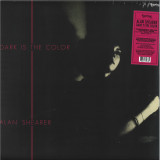
Favorite Recordings presents Dark Is The Color, the first LP by Alan Shearer reissued on vinyl for the first time. Despite being initially composed and produced for the French library label PSI, this rare
and obscure in-demand gem from 1985 sounds retrospectively like a proper album with great coherence and sophistication all along. Indeed, these 11 tracks will delight synthesizers addicts. Expect deeply emotive instrumental compositions, with ingenious analogue sequencing on stimulating chord progressions. The result is a highly retrofuturistic album, sometimes almost anticipating 90's videogames
scores. Just imagine Wally Badarou in a bunker with Talking Heads watching New York 1997 from John Carpenter.
Composed mostly step by step on a Sequential Pro-One synthesizer, Dark Is The Color is the product of the exciting state of mind from the 80's era with new sounds, new tools and new trends on the music spectrum. Influenced by bands like Talking Head or Japan, the sirens of the new wave scene strongly resonate here with Alan Shearer's familiarity and craftmanship with synthesizers.
Back in the days, Alan Shearer aka Frédéric Viger was working for his father’s music label, “Musique Pour L'image”, and their sublabel “PSI”. He started with Marathon Life under his real name before taking the Alan Shearer monitor. These records were produced for radio, TV and cinema industries but as well for companies’ internal communication. They represented a real investment from the label and these catalogues are usually full of amazing music from great artists such as Martial Solal, Vladimir Cosma, Joël Fajerman, Harlem Pop Trotters and even Manu Dibango.
About his musical illustration process, Alan Shearer tells: "Soundtracks are indeed my biggest influences and I'm a real fan of American composers as Jerry Goldsmith or Elmer Bernstein. I've always considered soundtracks as the new classical music or classical music of our century. There is a real state of mind producing music for illustration: you have to stick to the video. You should not tell what the image is saying but accompany what it is saying. You have to find a unique link, people always told me music should not be noticed for itself in a movie, that's what makes it good.”
The Hill District were a group of working musicians assembled by bassist Walter “Sonny” Hughes who following one afternoon rehearsal session together the very same evening recorded their only ever 45 outing the somewhat elusive and now sort after amongst group harmony collectors “Your Scared Of Falling In Love”. The other group members were Sonny’s brother Richard Hughes (Lead Guitar), Anthony Law (Keyboards), William M. Standard Jr (Piano), Mark Smith (Drums) and Daniel S. Lee Jr (Lead Vocals). The groups name was taken from a grouping of African American neighbourhoods in the city of Pittsburgh P.A. locally referred to as ‘The Hill’. The recording session was held under the direction of record producer and song writer James Richard Calloway (A.K.A) Rich Calloway. Calloway would go on to release “Your Scared Of Falling In Love” on his own ‘C-Way Records’ label featuring a instrumental version on the flipside. Rich Calloway hailed from Uniontown P.A. with Uniontown being known affectionately by the local black community as ‘Oniontown’ the name which Calloway adopted for his publishing company. Unfortunately for the Hill District the final mastering of their song left something be desired (a scenario we’ve now rectified with our release) and as a result local Pittsburgh Disc jockeys refused to plug their song leaving their one and only 45 outing to fade into obscurity with the group members going their own separate ways to continue their careers as session musicians with other ensembles. Producer and lyricist Rich Calloway also continued with his own C-way Productions company later composing both sides of The Cleveland Ohio group ‘The Entertains’1975 outing for Steel Town records “Love Will Turn It Around/Why Couldn’t I Believe Them”. Calloway was no stranger to Cleveland having been earlier employed by Way Out Records owner Lester Johnson to compose the lyrics to Jesse Fisher’s “Your Not Loving A Beginner”, the songs arrangement’s being originally laid down by members of the Way Out group The Soul Notes, William Bell (A.K.A Bill Spoon), John Washington and Ricki Dannison under the working title of “I’ve Been Waiting For Your Love”. Prior to the Hill’s District release Rich Calloway had penned and released a 45 single on another local Pittsburgh artist Richie Merrett. The 1973 outing You’ll Always Have Yesterday Standing By” b/w “I Gave It Up” (C-Way 103). Merritt a professional singer who performed with several groups including The Electron’s on their 1968 outing “Turn On Your Lovelight (Shock 209) recorded his first solo outing on the Nashville Deltron label “Can I Get A Rebate/It’s Never Too Late” which he later released again on his own R.A.M label followed by two early 90’s outings, the modern soul favourite’s “Where Did I Go Wrong” and “You Got Problems”. Richie still performs today doing one off shows in between his solo performances aboard 7 Day Cruise ships travelling between Los Angeles and Sant Cabos, Mexico. “You’ll Always Have Yesterday Standing By” was later produced by Walt Maddox under the shortened title of “Yesterday’s Standing By” on his own group ‘These Gents’.
Therefore Soul Junction brings you two 70’s soul/Lowrider in demanders back to back for your delectation.