Поиск:denis
Все
It was the 90s. Paris had the blues, French rap was beginning its slow rise, and a new musical genre was emerging: Acid Jazz. Imported from England by DJ Gilles Peterson, this groovy style blended 70s funk with a certain idea of jazz tailored for the dancefloor. Its heroes were Galliano, Brand New Heavies, Incognito, and the James Taylor Quartet. Jamiroquai topped the charts, MC Solaar recorded with Urban Species, and suddenly, France was swept up in the swing whirlwind. Starting in 1993, Parisian clubs embraced this union of jazz and groove, and in 1994, a compilation was released: Paris Groove Up. Around ten groups delivered the French version of this British style: Mellowman, Mad In Paris, Vercoquin, Ready Made... and Dis Bonjour À La Dame. The band wasn’t new—their roots went back to the late 80s, when bassist Marc Israël brought together a brass section and some seasoned musicians. But the real beginning of DBALD came in 1992 with the arrival of singer Sital. "Christophe Denis joined on guitar and songwriting. In 1993, we opened for Jamiroquai and Maceo Parker, and that’s when the major labels interested in the acid jazz market started noticing us," recalls Marc. Their track Chris’tal, the centerpiece of the compilation, was released as a single, and Dis Bonjour À La Dame's album began production in late 1994 in London, at Roundhouse Studio. “We must’ve been among the last sessions there—it was demolished shortly after. It was a very 70s studio, with old gear, a Fender Rhodes, everything was vintage! We recorded for a month, all playing together live, then added the brass and finally Sital’s vocals. We were lucky to have two exceptional backing singers, Sarah Brown and Mark Anthoni, who worked with Incognito and Urban Species.” The self-titled album came out in early 1995, and it had all the ingredients of a hidden funky gem from the 90s: Hey Mama with its ironclad groove, the irresistible instrumental Sheherazade Groove opening the record, Soul Body with its R\&B sensuality... The hip-hop touch came courtesy of Lee Rick’s, the MC from Mellowman, who laid down rhymes on Hall Blues. The brass section was on fire, the bass went wild, and Sital added a sensual spark to the whole thing. In short, a solid album produced by Fred Versailles (producer of NTM’s first album) and mixed by Paul Borg (Urban Species, UFO, -M-, Mory Kanté), a testament to a time when big funky bands made Paris groove—with Dis Bonjour À La Dame leading the charge. Nearly thirty years later, it’s time to (re)discover DBALD.
2026 Repress
Brooklyn duo Fundido team up with Philadelphia's Universal Cave to press their first physical release titled ‘Paradise Tempo’, a love letter to dance floor music that sits in the cross section of the tougher sounds of the city and the softer sounds of the balearic and the backwoods.The A side kicks off with a flawless downtempo mix from California based Dirty Dave and Alex Pasternak, who find a rare cover of the Cathy Denis classic and refurbish it to perfection. Next up is ‘Emotional Jungle’, a jazzy midtempo weapon led by a massive saxophone hook and edited to optimum club efficiency by NY based Nick Stropko. LA via Serbia’s Masha Mar unearths extremely rare gem ‘Take Me to Mecca’ and reworks it into a dreamy midtempo journey that carries both a children’s choir vocal and a middle eastern synth melody effortlessly across a foggy dance floor. And closing out the A-side is the wonderful ‘Charlie’s Vision’ from Universal Cave, a spooky AOR tinged cosmic trip that is only available on this vinyl pressing.The B Side leads with balearic beach party stomper ‘Amor’ from Fundido themselves; complete with Spanish vocals, lofty piano jamming and a contagious growling bassline. Next up is ‘Sex-O’ from Seoul man Tucan Discos, who reworks a tribal classic into a hypnotic and seductive club mix; followed by ‘Freak Estilo’ from Spain’s Ritmal Astral boss Orion Agassi who offers a bumping freestyle breaks mix with an addictive r&b vocal hook. Last but not least, the ‘Be Careful Operator’ edit from Miles Felix aka Sisserou closes down the function with a block party jam swimming with jazz, swing and soul.When asked what visual imagery they had in mind for Paradise Tempo, the prompt given to artwork maestro Ray Fernandez was ‘salt of the earth utopia’ and ‘working man’s paradise’ … and Ray delivered exactly that. Enjoy Paradise Tempo !
Label owner Nhan Solo is back to his own imprint Mother Recordings with a massive House bomb! This time entitled a beautiful collab track "Do You Feel It" with the amazing DiVine from Amsterdam. The Ep includes three other awesome cuts by Alaia & Gallo, Denis Ago and Blaqwell ft. Curtis Richa of Brobot Records New York. All time classics on one vinyl, enjoy fam!
Tracks are heavy supported and played by Jamie Jones, Marco Carola, Danny Tenaglia, Claptone, Nic Fanciulli, Mark Knight, Cassimm and many more.
- A1: Lazar Cezar - Nkv2
- B1: Vincentiulian - Owowo
- C1: Elia Nafzger - Say Something
- C2: Lumieux - Manhattan Tape
- D1: Sit - Internal Network
- D2: Prichindel - Close To Me
- E1: Zya - Ding Thing
- E2: Larry & Iankiddo - 1602 Landed
- F1: Alci - Man Studer
- F2: Aamir - Dirty Talk
- G1: Gojnea76 - Boards And Swords
- G2: Christopher Ledger - Time Machine
- H1: Alex Font - Soy Griselda
- H2: Pascal Benjamin - Finder’s Fee
- I1: Sublee - In The Jungle
- I2: Dragoș Ilici - Let Me Dance
- J1: Ohm Hourani & Cristobal Urbina - Me Invite
- K1: Ben Neville - Good Techno Stops Time
- L1: Denis Korablev - Nochi
- L2: Cristi Klebleev - Until The End (Featuring The Choir Of Milagros Acapella)
We are thrilled to announce the Playedby020 vinyl compilation, a special edition celebrating Playedby's 10th anniversary. This exclusive collection features 20 notable tracks from renowned international producers. As we mark a decade of musical innovation and passion, the Playedby020 compilation showcases the diverse and cutting-edge sounds that have defined our journey. Join us in celebrating ten years of incredible music with this limited edition vinyl box, a must-have for any electronic music aficionado or committed collector. Thank you for being part of our journey—here's to many more years of musical excellence!
DJ Support:
Denis Sulta, Austin Ato, Laurent Garnier, Tom / Groove Armada, Idris Elba, Jamie Jones, Oliver Heldens, ACRAZE, Mark Knight, Sam Divine, Riva Star, David Penn, Severino, John Summit & many more.
Massive Sampler from KooKoo featuring some heavyweight names inc Mark Knight & Armand Van Helden, Full Intention alongside up and coming names Ewan McVicar & Fabrikate who combine to deliver club smashing versions of Sharon Redd's "You Got My Love", Cloud One - “Disco Juice”, legend D Train’s Keep On, and Gayle Adams “Plain Outta Luck”. Buy or cry.
Hypnotone's iconic self titled mini album reissued!
Originally released by Creation Records in 1991, long out of print and now reissued, meticulously remastered and pressed onto pristine white vinyl.
Exclusive liner notes by band member Tony Martin "The Hypnotone Story: From Manchester to Creation" and including after hours favorite "Sub" and Balearic hit "Dream Beam" featuring vocals by Denise Johnson.
Formed in the vibrant milieu of Manchester's legendary Hacienda nightclub, Hypnotone emerged from the creative partnership of Tony Martin and Martin Mittler. Tony, initially involved as the in-house lighting designer, and Mittler, a bar staff member, fused their interests and talents amid the fervor of the late '80s Acid House movement that pulsated through the club. Their musical venture began earnestly after an introduction to Alan McGee, head of Creation Records. This connection would soon lead to a record deal, propelling Hypnotone into the heart of the emerging electronic dance music scene, releasing 2 albums, multiple singles and standout remixes for artists such as Primal Scream, Sheer Taft, and The Lilac Time.
With Creation Records' support, Hypnotone crafted their unique sound combining state-of-the-art digital samplers like the Akai S1000 with a collection of classic analog synths. Their debut self titled mini album includes after hours favorite "Sub" and Balearic hit "Dream Beam" featuring vocals by Denise Johnson. Hypnotone not only shaped their distinct sonic footprint but also influenced the broader trajectory of electronic music. Their journey, marked by innovation anda deep affinity for Manchester's music scene, exemplifies the transformative power of the era's cultural and technological shifts in music.
This is another must have for collectors and fans of early British (pop) house music, and very happy memories.
Experience the latest journey through Rabe's musical universe unfolds on her seventh vinyl release, characterized by a trippy yet propulsive sound, reflective of her distinct style. The entire 12" record is embellished with a remix by the renowned Spanish producer, Reeko. "Phonix's Ash" introduces a mystical groove, further enhanced by Reeko's hypnotic remix, focusing on immersive grooves rather than dramatic breaks. The B-side is equally intense, with "Long Nights" inducing a dizzying effect and "Drowning Rivers" creating a dreamy and harmonious atmosphere. As always, Rabe's personal works invite listeners to dive deep into her infinite universe of perception.
10 Years Anniversary compilation LP.
Ten years ago, on 21 April 2014, Russian enclave of the Baltic Kaliningrad-based trio Blind Seagull started off its adventure in the soon to be known as Sovietwave aka Russian post-punk underground. Tean years later they have accomplished to release nine full-length albums on all sorts of limited edition formats such as LPs, CDs, tapes with most of them being sold out for years.
It was time to bring many of these tracks back to life, picking up the best among them and reissuing for the global post punk/darkwave niche.
Fifteen cuts previously released by labels like Detriti, Sierpien, Pine Hill through which the band led by Denis Zarubin has shaped its own brand of icy coldwave, one pretty classic and extremely fresh and contemporary at once. On top of these we have one more track exclusive to this release which is a eurodance-oriented remix for their minor hit Animals Die in the Scaffolding. Think of a bunch of goth kids screwing around at the local carnival and you’ll get the vibe!
Decade Of Effort is due on April 21, 2024 on white vinyl LP limited to 300 with fairy-tale artwork by the band enhanced by the magical lettering of young Spanish artist Sara Fornés.
The Chilean label and record store 5 Universos Records present the third release of their vinyl only series where music and creativity speaks for itself.
On Side A, label owner 5UNIVERSOS, delivers two captivating hypnotic tracks, approaching to micro house. "NEK” immerses us in a funky roller with deep bass and acid touches, guided by an Asian voice. “TOKO” leads to an enigmatic dream voyage across the Atlantic incorporating Koto, the national instrument of Japan.
On Side B, the versatile Chilean artist Claudio Solis introduced us with "ABHASA", an enveloping track with dub-techno airs and a solid groove at 132 BPM.
For closing Side B, Denis Kaznacheev, Russian master of minimalism, presents a happy remix of "Abhasa", infusing a healing atmosphere and his distinctive sensitive and hypnotic groove.
This third pressing is an exceptional compendium on vinyl not to be missed; only 300 copies, no repress, soooooo grab this one to your collection !!!
#Chileansareplaying
Mastered by Claudio Solis
The fourth release on Denis Horvat's Vokabularium brings you the fresh sounds of none other than Auggië. Having had multiple releases and remixes on the likes of Innervisions, Borders Of Light, Sum Over Histories, Auggië brings us 3 new tracks weaving together groove and emotion. the EP will also feature a remix from Horvat himself. Expect to hear these making the rounds this year.
Blue Vinyl / Vinyl only
ix3m and Denis Andreev team up for a two track release on 123.ro. They have shared their common interests and taste in music for the best possible result.
- A1: Rose (Solomun Remix)
- A2: River (Adriatique Remix)
- B1: Earth (Mind Against Remix)
- B2: Theory Of Everything (Jupiter Jazz Aka Maceo Plex & Avnu Remix)
- C1: River (Fideles Remix)
- C2: Isaac (Denis Horvath & Kevin De Vries Remix)
- D1: Lll (Ben Böhmer Remix)
- D2: Astronautin (Boris Brejcha Remix)
- E1: Earth (Roman Flügel Remix)
- E2: Nothing Like You Ft Luna Semara (Agents Of Time Remix)
- F1: Infinite Monkey (Patrice Bäumel Remix)
- F2: River (Echonomist Remix)
- G1: Astronautin (Hernan Cattaneo & Soundexile Remix)
- G2: Breathe Ft Luna Semara (Dubfire Remix)
- H1: Collider (Anfisa Letyago Remix)
- H2: Isaac (Anna Remix)
- I1: Dune (Wehbba Remix)
- I2: Boavista (Reinier Zonneveld Remix)
- J1: Nothing Like You Ft Luna Semara (Ameloar Remix)
- J2: Trancoso (Christopher Coe Remix)
- K1: Cooper Station (Anii Remix)
- K2: Collider (Hannes Bieger Remix)
- L1: Breathe Ft Luna Semara (Dubfire Dub Remix)
- L2: Boavista (Meute Remix)
(6LP Box Set, 180gr vinyl, 4c print + Glossy varnish). Stephan Bodzin, Luna Semara, Solomun, Adriatique, Mind Against, Maceo Plex, Jupiter Jazz, AVNU, Fideles, Denis Horvat, Kevin de Vries, Ben Böhmer, Boris Brejcha, Roman Flügel, Agents Of Time, Patrice Baumel, Echonomist, Hernan Cattaneo, Soundexile, Dubfire, Anfisa Letyago, ANNA, Wehbba, Reinier Zonneveld, Ameloar, Christopher Coe, ANII, Hannes Bieger, MEUTE, Innellea
- A1: Martine Girault - Revival
- A2: Ray Hayden - When We're Making Love
- A3: Ray Hayden - I Admit It
- A4: Imaani - That Changed Everything
- A5: Patrick Jean-Paul-Denis - Right By My Side
- A6: Cartier Fraser - Mr Lost
- B1: Ray Hayden - Everybody Loves The Sunshine
- B2: Maysa - You Remind Me
- B3: Martine Girault - There's Nothing Like This
- B4: George Howard - New York Skyline
- B5: Mica Paris & Ray Hayden - One On One
- B6: Natasha Campbell - Thinking Of You
Opaz celebrates 30 years in urban music with a compilation featuring some of their most sought after tracks. Featuring Martine Girault, Mica Paris, Maysa Leak, Cartier Fraser, Imaani, Natasha Campbel, Patrick Jean-Paul-Denis, George Howard, Mary Jane and Ray Hayden.
The compilation will be supported with a month advertising on Solar radio, as well as a two hour show featuring Ray's Productions, remixes and songwriting for the likes of Will Smith, Marvin Gaye, Omar, Mary J Blige, Incognito, Tyrese, Sade, Swing Out Sister, Guru and artists from the label. We expect some support from online magazines and soul music sites. Opaz has a FB promo page with 294 DJ's and taste makers from around the world who support the label and have contributed to the 1.2 million streams on average a year.
Four years in the making, Duct Tape Project is the new brainchild of Tripmastaz in the realms of Trip-Hop and Downtempo. And it's a project that makes perfect sense to anyone familiar with Andrei's background (making Hip-Hop beats since his teenage years), musical capabilities and decades-long experience. Duct Tape Project joins Andrei with a troupe of stellar musicians not only from many different corners of the world but also from acutely distinct genres - Guti, Argenis Brito, Mad Dim, Denis Kaznacheev, Krussia, Damien Vandesande of DOP, Sarkis Ricci, Andrey Orenstein, and vocals by Inga.
Featuring all sorts of live instruments, drum machines, synthesizers and modular systems, Duct Tape Project brings forward a complex work brimming with musicality. Using Hip-Hop, not only its rhythmic structures but also its sampling techniques, as a foundation, Tripmastaz created a vibrant and fascinating ecosystem with enough sonic texture to leave one captivated, enraptured and lost at the edge of words. There are 13 musical compositions in total that explore all things Hip-Hop, Downtempo, Trip-Hop, Chill Pop and Lounge, forming a cohesive and deeply soulful album.
Over the past few years an increasing number of bands hailing from the former USSR have been appearing on the screens and the phones of the so-called Western world’s underground music enthusiasts.
With most of them being pretty obscure and only a very few ones having established a worldwide following (Motorama, Molčat Doma) the Sovietwave tag has worked usefully enough as a tool to identify a wide range of bands each one with a different sound and yet something in common. Whether it be the harsh weather or just the distance creating an exotic effect, there is some icy-cold touch with these bands that immediately makes you know they’re from Russia, regardless of the language they perform.
This goes for Blind Seagull too.
The trio from Kaliningrad, a small russian enclave on the Baltic Sea between Poland and Lithuania, has been around since quite a few years now, releasing tapes and limited edition vinyls on labels like Detriti, Sierpen and Pine Hill.
Finally taking up the challenge of writing a longer full-length (previous albums were seven or eight track long at best), the trio led by Denis Zarubin has created twelve new songs that shine a light on the impressive skills of this young combo to deliver very classic and yet extremely fresh and modern cold post-punk gems.
Keeping it short and sweet, their two-three minutes long compositions cut right to the chase of the darkwave soul: stomping drum machines, frozen guitar arpeggios, tense bass riffs. The formula is occasionally rocked by the intervention of laser synths, noise raids and gothic chorale, while the industrial pièce of the title-track and the IDM-tinged collaboration with experimental giants Xiu Xiu ‘Fear’ will show how this band stands out and how their upcoming, new album is the best proof of this.
Established in Rennes (FR), RED REC has pushed forward a wide range of ambient, elegant and harmonious compositions.In only over a year of existence, the French label has offered a vigorous artistic and technophile approach, with 6 digital releases and an anniversary VA with (KMS) and Tomas Kunkel (Dyad). Their new project lands as the first VA vinyl gathering the quality of the techno stage of Tbilisi in a dyptic release, both accompanied by two bonus tracks
Supported by : Laurent Garnier, Efdemin, Amotik, Geinst, Leghau, Wlderz, Denise Rabe, FEM, Jack de Marseille, Tomas Kunkel..
2018. What the fuck is going on Hatred uprising, the resistance growing. Adelphi Music Factory: musical brothers. Javelin: A gospel piano weapon filled with love. Brotherhood. Sisterhood. Freedom. Peace.
DJ Support:
The Black Madonna
“I love the record so much!!! I cannot tell you how many people have asked me about the Javelin tune!!! Thank you for this wonderful record”
Annie Mac
“it’s a BANGER - absolutely love it”
Denis Sulta
"This is a certified BANGER. I’ll be playing it all summer."
Skream
“Loving this! Will support 100%”
Seth Troxler
“I like the dub”
Madame E. is a musical setting of Georges Bataille's 'Madame Edwarda', a short novel that interlaces themes of eroticism, religiosity and death, and was written under the pseudonym Pierre Angelique in 1941, during the occupation of Paris.
Composer Mirco Magnani wrote eleven electronic pieces and presented them to actor/singer Ernesto Tomasini. They turned them into songs by adding vocal melodies and together they produced a libretto based on Bataille's French text. The result of their dynamic interpretation is a hypnotically spellbinding performance where the audience is transported through worlds - ancient and new - and where Tomasini's haunting falsetto conveys the tormented emotions in Bataille's work and becomes the instrument that articulates the writer's famously obscure themes.
The experimental operatic performance captures the atmosphere of heightened human passion, reminiscent of opera seria and revisited through hazy and minimalistic lens. The resulting dark and twitchy mood amalgamates old vintage electronic devices, string piano and Stella Veloce´s touching violoncello. The stage becomes a space where Eros and Thanatos, real and virtual, analogue and digital, cluster and melody, spirituality and technology are intermixed and turned unidentifiable, hence collapsing the binary logic of dualism.
Written by Magnani/Tomasini and produced by Mirco Magnani, with lyrics taken from "Madame Edwarda" by Georges Bataille, Madame E. was developed between Berlin and London where Magnani and Tomasini are respectively based. Recorded in Berlin, mastered by Murcof and released by Magnani's label Undogmatisch, a collective that also includes Nicolas Defawe (Urban Spree) and Valentina Bardazzi, the painter responsible for the album artwork.
start of the miditonal sub-label for reduced techno music - supported by gabriel ananda, troy pierce, paco osuna, dominik eulberg, ivan smagghe, holgi star, remute (denis karimani), renato figoli, tim xavier, perc, blood & tears, nudisco, chris fortier, joseph capriati, da fresh, david keno, xpansul and many many more !!!
Narthex means railed-off western portico or ante-nave in earty Christian churches for women, penitents and catechumens.
Narthex is also a trio featuring (at the beginning) Daniel Denis (Universe Zero, Art Zoyd), Alain Neffe (Pseudocode, Human Flesh, Bene Gesserit) and Nicolas de Villemarqué (Nuwage Music). They had a very different musical background, mostly electric-electronic rock, and decided to work in the field of acoustic music recorded live (two microphones + portable DAT) in churches of their area. After several recording sessions, Nicolas de Villemarqué decides to leave the group. ln order to complete the trio, Daniel Denis and Alain Neffe ask the participation of some of their friends. Anna Homler, Michel Berckmans and Daniel Malempré have accepted the challenge and succeed to fit into their musical universe.
The instruments Church organ, harmonium, sitar, saxophone, oboe, bassoon, zither, valiha, senzas, tarang, voice, percussions, metal clarinet, classical guitar, mew's harp, ongolok, violin, dulcimer, mouth organ, etc.
The music Often dark, sometimes repetitive or experimental, sometimes rhythmical and exotic, always based on emotion inducted by the sound. One could define it as dark age music (as opposite to new age music), a sort of minimal come back to the roots and purity of acoustic sound without the cultural background linked to the 'academic' use of some instruments (for example African senzas are transformed and tuned to sound like Indonesian instruments, sitar or harmonium are used as rhythmical instruments, vahilla is played with a bow).
The places Churches located in an area of 20 kms in the region where Daniel Denis and Alain Neffe live for years and where they feel at home (and feel the vibrations. Every church, place emotionally loaded, has its own specific resonance and sound structure. Every church gave to the musicians a particular inspiration and fill the sound of the instruments with a natural reverberation/echo. The place but also the moment is important. They had the privilege to be allowed to record in the Ecaussines church at night lightened only by candles. lt was one of their most productive recording sessions.
- A1: What Law Am I Breaking Now?
- A2: Fuck You And Your Underground
- A3: Foot Down
- A4: Billy Joel
- A5: Static
- A6: Dipper
- A7: Slacker Shanty
- A8: Fucking A Junky Without A Condom
- B1: Lalo
- B2: Have Love Will Travel
- B3: Evil Niceties
- B4: Masturbation
- B5: Denis Lavant
- B6: Living In A Haunted House
- B7: Bottom Feeder
- B8: Pet Parade
- C1: We All Bleed Red
- C2: Buck Satin
- C3: Knockout Drops
- C4: The Girl Who Kissed His Face Like A Clock
- C5: Denis Lavant
- C6: Buck Satin
- D1: Devil In Disguise
- D2: Fuck You And Your Underground (Live)
- D5: What Law Am I Breaking Now? (Live)
- D6 1: 2-5 (Live)
- D7: Devil In Disguise (Live)
- D3: I'm Glad I Never (Live)
- D4: Fuck You And Your Underground (Live)
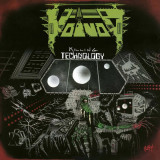
- Killing Technology
- Overreaction
- Tornado
- Too Scared To Scream
- Forgotten In Space
- Ravenous Medicine
- Order Of The Blackguards
- This Is Not An Exercise
- Cockroaches
Voivod wurde 1982 in Jonquière, Quebec, von Sänger Denis „Snake“ Belanger, Gitarrist Denis „Piggy“ D'Amour, Bassist Jean-Yves „Blacky“ Thériault und Schlagzeuger Michael „Away“ Langevin gegründet und nahm eine Reihe von Demos auf, bevor Brian Slagel auf die Band aufmerksam wurde und einen Vertrag mit Metal Blade Records unterzeichnete. Das Ergebnis war das furiose Debütalbum „War And Pain“, das im August 1984 veröffentlicht wurde. Zu dieser Zeit teilten sich alle vier Mitglieder eine Wohnung in Montreal und lebten von 150 Dollar Sozialhilfe pro Woche. Da sie die Schule bereits hinter sich hatten, konnten sie fast jeden Tag proben, was zur Entstehung ihres zweiten Albums „Rrröööaaarrr“ führte. Während der Aufnahme des Albums wurde fast die gesamte Ausrüstung aus dem Proberaum gestohlen. Um Geld aufzutreiben, organisierte die Band zusammen mit ihrem Manager Maurice Richard das legendäre „World War III“-Festival. Dort lernten sie Karl-Ulrich Walterbach kennen, der Voivod davon überzeugte, bei seinem Label Noise Records zu unterschreiben. Nach „Rrröööaaarrr“ von 1986 hieß Voivods zweites Album für Noise „Killing Technology“ und gilt weithin als der größte kreative und klangliche Sprung der Band. Es wurde in West-Berlin unter den wachsamen Augen von Harris Johns aufgenommen und kam 1987 auf den Markt. Weniger hektische Kompositionen wie „Tornado“, „Ravenous Medicine“ oder „Killing Technology“ hoben die Kanadier schnell von ihren Thrash-Zeitgenossen ab. „Rrröööaaarrr„ haben wir mit unserem Tontechniker in einer heruntergekommenen Schule ohne Geld selbst produziert“, erklärt Michael Langevin in dem Buch „Damn The Machine. The Story Of Noise Records“ des amerikanischen Autors David E. Gehlke. „Plötzlich hatten wir ein professionelles Umfeld, ein richtiges Studio mit einem richtigen Produzenten und ein Label, das die Finanzierung sicherstellte. Es ging Schritt für Schritt. Für „Killing Technology“ haben wir vielleicht ein bisschen langsamer gemacht. Wir konnten die Rollen spielen, und es hat viel Abwechslung. Es ist mein Lieblingsalbum und in meinen Ohren die perfekte Mischung aus Thrash, Prog und Hardcore. Es ist definitiv ein entscheidendes Album.“
- A1: The Windmills Of Your Mind / Vivian Buczek
- A2: A Cottage For Sale / Moon Haewon With Tsuyoshi Yamamoto
- A3: Embraceable You / Caity Gyorgy
- A4: The Look Of Love / Denise Donatelli
- A5: April In Paris / April Varner
- A6: Blame It On My Youth / Cajsa Zerhouni
- B1: The Thrill Is Gone / Carme Canela & Joan Monné
- B2: (Sittin' On) The Dock Of The Bay / Inger Marie
- B3: They Long To Be Close To You / Diana Panton
- B4: From This Moment On / Naama Gheber
- B5: Fragile / Sacha
- B6: I Get Along Without You Very Well / Clare Tea
Vocals are the starting point of all music and the source of connection with listeners.
This exquisite female vocal compilation features a lineup exclusive to Terashima Records, from hidden gems to promising young vocalists.
"Jazz is about enjoying the music, not the improvisation," and "buying for the beautiful album cover is recommended," Terashima has long advocated.
Enjoy a moment of enchantment with his unique vocal style. Yasukuni Terashima has carefully selected great voices, great sounds, and great songs, providing a l
uxurious listening experience. Enjoy this vocal compilation while driving, relaxing, or enjoying a drink. It's also recommended as a way to learn about the current
state of contemporary jazz vocals. The "For Jazz Vocal Fans Only" series, featuring carefully selected female vocalists from a lineup exclusive to Terashima Records,
from hidden gems to promising young singers, has received such positive feedback that the eighth installment is now available on limited-edition vinyl!
It also includes tracks by MOON, who recently made waves with Tsuyoshi Yamamoto, as well as Katie George and Diana Panton, who are popular in Japan.
Based on Denis Johnson's beloved novella, Train Dreams is the moving portrait of Robert Grainier, a logger and railroad worker who leads a life of unexpected depth and beauty in the rapidly-changing America of the early 20th Century. The Netflix film features the music of Bryce Dessner, who blends classical influences with a modern sensibility. Dessner has been a member of the successful rock band The National for years. In the past years he becomes more and more known for scoring contemporary films, such as C'mon C'mon, Sing, Sing and The Two Popes. The final song on this album features none other than Nick Cave, making this a real must-have. Train Dreams is available as a limited edition on orange & black marbled vinyl and includes an insert.
Marbled Vinyl[21,22 €]
Uzed is the fourth album by Belgian band Univers Zero. It was released three years after 'Ceux du Dehors', due to a change in line-up and a new repertoire, although the EP 'Crawling Wind' had been released in the meantime.
The album marked a turning point for the band. Univers Zero explored new electric colors, giving it a more rock feel with the addition of new musicians such as Jean-Luc Plouvier, who introduced the synthesizer, guitarist Michel Delory, who played a memorable solo in 'Célesta (For Chantal)', and André Mergen on electric cello and alto saxophone, who enriched the orchestral texture. Dirk Descheemaeker on clarinet and soprano saxophone, the return of Christian Genet on bass, this evolution can also be explained by the arrival of new musicians. UZED'is entirely composed and arranged by Daniel Denis
The recording and mixing were done at Daylight Studio in Brussels in 1984, but to bring out UZED, the sound had to be improved by giving it more dynamic range, which was done at ICP Studios in 2024.
Black Vinyl[20,38 €]
Uzed is the fourth album by Belgian band Univers Zero. It was released three years after 'Ceux du Dehors', due to a change in line-up and a new repertoire, although the EP 'Crawling Wind' had been released in the meantime.
The album marked a turning point for the band. Univers Zero explored new electric colors, giving it a more rock feel with the addition of new musicians such as Jean-Luc Plouvier, who introduced the synthesizer, guitarist Michel Delory, who played a memorable solo in 'Célesta (For Chantal)', and André Mergen on electric cello and alto saxophone, who enriched the orchestral texture. Dirk Descheemaeker on clarinet and soprano saxophone, the return of Christian Genet on bass, this evolution can also be explained by the arrival of new musicians. UZED'is entirely composed and arranged by Daniel Denis
The recording and mixing were done at Daylight Studio in Brussels in 1984, but to bring out UZED, the sound had to be improved by giving it more dynamic range, which was done at ICP Studios in 2024.
- A1: Léonard Steyaert - A Threatening Morning
- A2: Léonard Steyaert - Caught Breaking-In
- A3: Léonard Steyaert - Your Eyes For Everyone
- B1: Léonard Steyaert - The Tenants
- B2: Léonard Steyaert - See You Burst
- B3: Léonard Steyaert - What Really Happened
More Than Meets the Eye is the debut album by Belgian artist Léonard Steyaert - an evocative blend of experimental electronics and intimate songwriting. Across six tracks, the album unfolds like a psychological thriller, navigating themes of alienation, vulnerability, and ecstatic release. Think Radiohead meets Aphex Twin, with echoes of Björk, Portishead, and Messiaen.
More Than Meets the Eye is the debut album by Belgian artist Léonard Steyaert - an evocative blend of experimental electronics and intimate songwriting.
Across six tracks, the album unfolds like a psychological thriller, navigating themes of alienation, vulnerability, and ecstatic release.
Think Radiohead meets Aphex Twin, with echoes of Björk, Portishead, and Messiaen.
Mixed by James Ginzburg (Emptyset), mastered by Joker, the sound is raw, detailed, and immersive.
Tracks like Caught Breaking In and See You Burst oscillate between whispered confessions and intense sonic ruptures.
The album forms a narrative arc - from inner tension (A Threatening Morning) to the revelation of What Really Happened.
Artwork and live visuals are part of a strong visual identity created in collaboration with artists Joséphine Steyaert, Thomas Vanderniet and Esther Denis.
A limited vinyl edition and a performance-based live show will support the release.
Perfect for adventurous listeners and tastemakers seeking something personal, cinematic, and genre-defying.
The third drop into the Poorly Knit ocean, sees Bruce washed ashore with three silted and barnacled explorations into dub techno, ambient and beyond.
Seizing the microphone for the first time since his sophomore album Not Ready For Love, Bruce weaves a seductive siren song with Golden Water Queen, treading sweet nothings into the bubbling abyss. Sinking further into the deep, The Hand fizzes and froths at the fringes of nothingness, born from the wishing of a softer and more insidious soundtrack to Denis Villeneuve’s Dune. Then finally the waves are parted with DHam’s Jam, bobbing along 8 minutes of bouncing kick and prancing percussion, pulling you with peaceful buoyancy along the dancefloor, into “the zone.”
With a continued emphasis on the importance of physical medium within dance music, the 12” is pressed with eco-friendly “Eco-Mix” reground PVC and sleeved in DIY lino printed sleeves.
Forming as teenagers in the late 70s, female vocal group Black Harmony was comprised of Diane Cape, Dup'e Odelade, and Denise Mansfield (sister of Ingrid Mansfield-Allman, lead vocalist on Freeez’s ‘Southern Freeez’).
Whilst their much-loved 1979 cover version debut ’Don’t Let It Go To Your Head’ (Jean Carn) was a hit on the UK reggae charts, gaining major label distribution, Black Harmony’s self-penned 'Let’s Be Lovers’ has arguably become the trio’s most coveted work amongst collectors.
Originally released in 1981 by Tony Owens’ Cyprian Records imprint and distributed from his shop, Seven Leaves Records in Kensal Rise, the single marks one of saxophonist and flautist Courtney Pine’s earliest appearances on record as a member of the backing band Inity Rockers.
- The Sink Thank You
- Beers With My Name On Them
- Why I Bought The House
- Travel Safe
- Cobalt Room: Good Work / Silver Saab
- Voice Memo
- Like Another Planet Instrumental
- Country Girls
- Falls
On the cover of 8 Tips for Full Catastrophe Living, the new album by Asher White, The Statue of Liberty is in pieces but not destroyed - in progress, being built, not yet complete. Her torch is on the ground, her head somewhere out of frame. Before she was a symbol, she was metal, and living, sweating people riveted her together. The spirit of de/construction characterizes 8 Tips, White's 16th LP overall and first since signing to Joyful Noise. Like White's previous albums, 8 Tips for Full Catastrophe Living darts boldly among varied musical styles. Doom metal splits open into bossa nova; psychedelic rock and power pop flip into industrial techno. Each song emerges from its composite parts in the studio: White doesn't draft or demo before recording, but builds out her pieces sculpturally, sound by sound. "It's forever collage, forever assemblage," she says of her music. "To me, it has more to do with J Dilla, L.A. beat, and musique concrète than pop songwriting." The record's quick turns and vivid contrasts reflect White's cultural voraciousness. A writer, painter, and sculptor as well as a musician, she gathers materials constantly, always digging for new ideas in every possible form. The films of Claire Denis, the novels of Clarice Lispector, and the memoirs of Eve Babitz all funnel into White's reflection of 21st century disaster capitalism. 8 Tips is also White's first album to have been mixed outside her Providence studio; after recording it herself, she brought tracks to Seth Manchester (Lightning Bolt, Battles, The Body) who gave the album its brawny, unruly charge. "I was interested in making something that serves dually as a self-help book and a chronicle of self-destruction," says White. Overlaying autobiography onto character vignettes, 8 Tips for Full Catastrophe Living wrenches open the idea of apocalypse - an abrupt disaster rained down on uncomplicated innocents - and peers inside at its bursting, devastated particulars. Apocalypse is slow and uneven. Nations falter as do individual people, clinging fast to their old, dilapidated self-preservation strategies. What saved you in the past might destroy you in the future. Flip it around, shake yourself loose, ruin the person you've known yourself to be, and you might get the chance to become something else. "There have been so many end times, many other apocalypses." White says. "People were writing self-help tips, and people were partying." We have survived catastrophe before. Out of the ruins, people made work - art, books, culture. "I was interested in making something that sounds like a self-help book, but it's actually about self-destruction," says White. "In full catastrophe living, you just have to do a bunch of whippets. This album is mostly about doing whippets. I'm not even kidding."
- A1: Malavoi - Te Traigo Guajira
- A2: Los Caraibes - Donde
- A3: Tropicana - Amor En Chachacha
- A4: Ryco Jazz - Wachi Wara
- A5: Eugene Balthazar - Dap Pignan
- A6: Roger Jaffort - Oye Mi Consejo
- A7: Les Kings - Oriza
- B1: Les Supers Jaguars - Tatalibaba
- B2: Super Combo De Pointe A Pitre - Serrana
- B3: L'ensemble Abricot - Se Quedo Boogaloo
- B4: Henri Guedon - Bilonga
- B5: Les Aiglons - Pensando En Ti
- B6: Los Martiniquenos - Caterate
In Guadeloupe, many people think that jazz and ka music are like a ring and a finger. To some extent, the same could be said about so called Latin music and the music played in the French West Indies.
Both aesthetics were born in the Caribbean and bear so many connections that they can easily be considered cousins. In constant dialogue, there are lots of examples of their fruitful alliance and have been for a while. The English country dance that used to be practiced in European lounges came to be called kadrille in Martinique and contradanza in Cuba. They both featured additional percussion instruments inherited from the transatlantic deportation. Drawing from shared feelings about the same traumatized identity – later to be creolized – it would be hard not to assume that they were meant to inspire each other. The golden age of the orchestras that graced the Pigalle nights during the interwar period further proves the point. As soon as the 1930s, Havana-born Don Barreto naturally mixed danzón and biguine music in a combo based at Melody's Bar. In the following decade, Félix Valvert, a conductor who was born and raised in Basse-Terre in Guadelupe, also worked wonders in Montparnasse with La Coupole, which was an orchestra made up of eclectic musicians. Afro- Caribbean performers of various origins were often hired on rhythm and brass sections in jazz bands, which used to enliven the typical French balls of the capital. In the 1930s and onwards, Rico’s Creole Band was one of them.
Martinican violinist-clarinettist Ernest Léardée, who would become the king of biguine music as well as the main figure of French Uncle Ben's TV commercials (a dark stigma of post-colonial stereotypes), had musicians from the whole Caribbean sphere play at his Bal Blomet – and they all enchanted "ces Zazous-là" (according the words of Léardée's biguine-calypso piece). In les Antilles (French for French West Indies), music history started to speed up in the 1950s, when trade expanded and radio stations grew bigger. The Guadelupean and Martiniquais youth tuned in their old galena radio sets to South American and Caribbean music. As for the women traders, les pacotilleuses, they bought and sold goods across different islands (the "passing of items through various hands" was thought to be most pleasurable) and brought back countless sounds in their luggage. Such was the case of Madame Balthazar, who once returned from Puerto Rico with the first 45rpm and 33rpm to ever enter Martinique.
Out of this adventure was created the famous Martinican label La Maison des Merengues, a music business she opened and undertook with her husband and which proved to be a major landmark. At the end of the 1950s, in Puerto Rico, Marius Cultier competed in the Piano International Contest playing a version of Monk's Round 'Midnight. He won the first prize and this distinction foreshadowed everything that was to come. Cultier, the heretic Monk of jazz, was quickly praised for writing superb melodies, always tinged with a twist that conferred a unique sound to his music. It didn't take long for the gifted self-taught musician to get to play with Los Cubanos, making a name for himself thanks to his impressive maestria on merengues.
The rest is history. Besides, in the late 1950s, Frantz Charles-Denis, born into the upper middle class in Saint-Pierre and better known by his first name Francisco, went back home after working at La Cabane Cubaine – a club located rue Fontaine where he had caught the Latin fever. Francisco's music was therefore heavily marked by his Cuban cousins' influence, which gave the combos he led a specific style and also led to renewal. Things were swinging hard in La Savane, located in the main square in Fort-de-France. He set up the Shango club close by and tested out the biguine lélé there, a new music formula spiced up with Latin rhythms. Soon afterwards, fate had him fly to Puerto Rico and Venezuela.
As for percussionist Henri Guédon (percussions were only a part of his many talents), he was born in Fort-de-France in May 22nd 1944, the day marking the celebration of the abolition of slavery. As an old man, he could remember that in " his father's Teppaz, a lot of hectic 6/8 music was constantly playing...". In the opening lines of his Lettre à Dizzy, a small illustrated collection of writings published by Del Arco, he highlighted the huge impact that cubop had on him as a teenage boy, around 1960. He eventually turned out to be the lider maximo in La Contesta, a big band steeped in Latin jazz. He was also the one who originated the word zouk to describe music which brought the sound of the New York barrio to Paris. It was the culmination of a journey that started in Sainte-Marie: "a mythical place for bélé, the equivalent of Cuban guaguancó". In the early 1960s, the tertiary economy developed to the detriment of agriculture. Yet rural life was where roots music emerged in Martinique and in Guadeloupe.
Record companies played a major part in the process of Latin versions sweeping across the islands – before reaching everywhere else. Producer Célini, boss of the great Aux Ondes label, and Marcel Mavounzy, both the head of Émeraude records - a firm which was founded in 1953 - as well as the brother of famous saxophonist Robert Mavounzy, were big names to bear in mind. Although there were many of them - all of whom are featured on this record - Henri Debs was definitely the major figure in the recording adventure. He proved to be so influential that he even got compared to Berry Gordy. In the mid 1950s, when he acquired his first Teppaz, he worked on his first compositions: a bolero and a chachacha. Then, he became the one man who made people discover Caribbean music, from calypso to merengue. He was among the first ones to rush out to San Juan, Puerto Rico, to buy records and distribute them through a store run by one of his brothers in Fort-de-France. He had members of the Fania All Star come and perform there, which he was madly proud about. He was also the first one to pay attention to Haitian music, such as compas direct and various other rhythms which would soon flood the market. As a result, many of the combos hitting his legendary studio would end up boosted by widespread "Afro-Latin" rhythms. However, he never denied his identity: gwo ka drums were given a major role, although they were instruments which had long been banned from the "official" music spheres. The present selection bears witness to such a creative swarming. Here are fourteen tracks of untimely yet unprecedented cross-fertilization: all types of music rooted in the Creole archipelago have found their way, whatsoever, to the tracklisting. Whether originating from the city or being more rural, they all go back to what Edouard Glissant, in an interview about the place of West Indian music in the Afro-American scope, called "the trace of singing, the one which got erased by slavery." "It is so in jazz, but also in reggae, calypso, biguine, salsa... This trace also manifests through the drums, whether Guadelupean, Dominican, Jamaican or Cuban... None of them being quite the same. They all point to the idea of a trace, seeking it out and connecting to each other through it. This is the hallmark of the African diaspora: its ability to create something new, in relation to itself, out of a trace. It may be the memory of a rhythm, the crafting of a drum, a means of expression which doesn't resort to an old language but to the modalities of it." The opening track features one of the emblematic orchestras of this aesthetic identity, criscrossing many music types from the archipelago. The 1974 Ray Barretto guajira – Ray Barretto was a major New York drummer influenced by Charlie Parker and Chano Pozzo – is magnificently performed by Malavoi, a legendary Fayolais group (i.e from Fort-de-France). Additionally, the compilation ends on a piece by Los Martiniqueños de Francisco. It symbolically closes the circle as it is a genuine potomitan of Martinique culture which also functions as a tireless campaigner for Afro-Caribbean music. Practicing the danmyé rounds (a kind of capoeiria) to the rhythm of the bèlè drum, it delivers a terrific Caterete, a kind of champeta of Afro- Colombian obedience which was originally composed by Colombian Fabián Ramón Veloz Fernández for the group Wgenda Kenya. The icing on the cake is Brazilian Marku Ribas, who found refuge in Martinique in the early 1970s, bringing his singing to the last trance-inducing track. These two "versions" convey the whole tone of a selection composed of rarities and classics of the tropicalized genre, swarming with tonic accents and convoluted rhythms. It is the sort of cocktail that the West Indians never failed to spice up with their own ingredients. For instance, the Los Caraïbes cover of Dónde, a famous Cuban theme composed by producer Ernesto Duarte Brito, has a typical violin and features renowned Martinique singer Joby Valente and his piquant voice.
The track used to be – or so we think – their only existing 45rpm. The meaningful Amor en chachachá by L'Ensemble Tropicana, a band which included Haitian musicians among whom was composer and leader Michel Desgrotte, also recalls how Latin music was pervasive in the tropics in the mid-1960s. They were the ones keeping people dancing at Le Cocoteraie in Guadelupe and La Bananeraie in Martinique. Around the same time, another "foreign" band, Congolese Freddy Mars N'Kounkou's Ryco Jazz, achieved some success on both islands by covering Latin jazz classics – such as their adaptation of Wachi Wara, a "soul sauce" by Dizzy Gillespie and Chano Pozo whose interweaving of strings and percussions can have anyone hit the dancefloor. How can you resist Dap Pinian indeed, a powerful guaguancó by Eugene Balthazar, performed by the Tropicana Orchestra and published by the Martinique-founded La Maison des Merengues? It also acts as a symbol of the maelstrom at work. Going by the name Paco et L'orchestre Cachunga, Roger Jaffory used to play guaguancó too: his Fania-inspired Oye mi consejo is one example of his style. Baila!!!!! Dancing was also one of the Kings' focus points. Oriza is a Puerto Rican bomba and a "classic" originally composed by Nuevayorquino trumpeter Ernie Agosto, which reserves major space for brasses, giving it a special sheen.
Emerging from the New York barrios crucible was also La Perfecta, a Martinique group originating from Trinidad, whose name directly references the totemic Eddie Palmieri figure as well as his own band, also called La Perfecta. Here they borrow Toumbadora from Colombian producer and composer Efraín Lancheros and interpret it by emphasizing percussions, which set fire to the track even more than the wind instruments. The same goes for Martinique's Super Jaguars, who use Tatalibaba – a composition by Cuban guitarist Florencio "Picolo" Santana which was made famous by Celia Cruz & La Sonora Matencera – as a pretext for sending their cadences into a frenzy. In a more typically salsa vein, the Super Combo, a famous Guadelupean orchestra from Pointe-Noire that was formed around the Desplan family and had Roger Plonquitte and Elie Bianay on board, adapt Serana, a theme by Roberto Angleró Pepín, a Puerto Rican composer, singer and musician also known for his song Soy Boricua. Here again, their vision comes close to surpassing the original. In the 1970s, L'Ensemble Abricot provided a handful of tracks of different syles, hence reaching the pinnacle of the art of achieving variety and giving pleasure. They played boleros, biguines, compas direct, guaguancó and even a good old boogaloo - the type they wanted to keep close to their hearts for ever, "pour toujours", as they sang along together in one of their songs. Léon Bertide's Martinican ensemble excelled at the boogaloo which had been composed by Puerto Rican saxophonist Hector Santos for the legendary El Gran Combo.
Three years later, in 1972, Henri Guédon, with the help of Paul Rosine on the vibraphone, tackled the Bilongo made famous by Eddie Palmieri. Such a classic!!!!! And so were the Aiglons, the band from Guadelupe: choosing to execute Pensando en tí, a composition by Dominican Aniceto Batista, on a cooler tempo than the original, they noticeably used a wonderfully (un)tuned keyboard in place of the accordion. On the high-value collectible single – the first one released by Les Aiglons under the Duli Disc label – there is a sticker classifying the track under the generic name "Afro". Now that is what we call a symbol. Jacques Denis
When they performed a handful of concerts as a duo in the summer of 1998, Kristen Noguès and John Surman had already worked a lot on the interweaving of genres: Noguès had confronted traditional Breton music with contemporary music and Surman had changed his jazz into atmospheric numbers that would be amongst the finest recording on the ECM label. As a duo, the harpist and the saxophonist would go on to invent something different: free folk, traditional ambient, modal ‘fest- noz’ … it is difficult to label, because the duo Noguès / Surman is one of a kind.
Diriaou, means “Thursday” in Breton. It is also the title of the first piece that Kristen Noguès and John Surman played together in 1991. Noguès learned the Breton language as a child, at the same time as the Celtic harp, – taking lessons with Denise Mégevand, who would go on to teach others, notably Alan Stivell. At the beginning of the 1970s, Noguès discovered Breton singing (soniou and gwerziou) At the beginning of the 1970s, she discovered the Breton song tradition (soniou and gwerziou) and became involved in Névénoé, a cooperative of traditional expression founded by Gérard Delahaye and Patrick Ewen. She recorded a single with the two musicians in 1974, then her first album, two years later.
Everyone who has listened to Kristen Noguès debut Marc’h Gouez, is now aware of her mysterious plucked strings. Her art, leaving Brittany, would go on to take in all landscapes and folklores, in the same as that of John Surman, conceived a little further north including vernacular jazz, international fusion with Chris McGregor or Miroslav Vitouš, and exploring more personal territory. Remember the Cornish landscapes in one of the best albums on the ECM label : Road To Saint Ives.
Kristen Noguès and John Surman thus shared an ‘extra-Celtic’ inspiration infused with free improvisation. On this recording, made in 1998 by Tanguy Le Doré at the Dre Ar Wenojenn festival, the duo uses original compositions which refer back to traditional songs (Maro Pontkalek, Le Scorff). The musicians then create fantastic impressions: Baz Valan, on which Noguès and Surman have a heavenly exchange; Kernow, on which the shared theme slowing disappears into the mist; Maro Pontkalek and Diriaou which move from the storm to the calm. Elsewhere, there is singing, first with Surman (Kleier) and then moving on to Noguès (Kerzhadenn and her signature song Berceuse). On a canvas of traditional music, the two musicians weave countless memorable landscapes.
GASTEROPODES KILLERS présente Poison Ideas son nouvel album aux sonorités punk-rock-ska. Nos Escargots Tueurs se sont formés il y a 33 ans en Seine St Denis, avant de ramper, lentement mais sûre-ment, jusqu’en Charente sans bave ni lé-zard !
Amateurs de punk-rock, de hardcore et de ska, ils revendiquent haut et fort leurs influences : Clash, Parabellum, Mano Negra, Bérurier Noir, Garçons Bouchers, Wampas, La Souris Déglinguée, Madness, Bad Manners, Specials, Total Chaos, Exploited, Agnostic Front et autres Poison Idea.
Ces Assassins à Coquille se composent de Nath (chant & basse), de Droopy (chant & guitare), de Drunk (choeurs & guitare) et de Boul (batterie & chant). Chacun puise dans l’actualité, son quotidien, ses expériences personnelles ou dans le cinéma pour produire chansons et musiques tranchantes. Et puis, si le dessinateur Chester assure la pochette, alors l’humour est aussi de mise.
Attention, nos Colimaçons Criminels n’en sont pas à leur première sortie discographique et connaissent le « Do It Yourself » sur le bout de la langue. Maîtres dans l’art de la reptation et en totale indépendance, les GASTEROPODES KILLERS ont enregistré et mixé ce neuvième album dans leur studio La Coquille 2.
C’est le retour des Mollusques Terrestres Meurtriers, il est temps de relever vos antennes et de prendre la coquille en marche !!!
Mountain021.1 is getting repressed on 45, slightly edited and re-mastered. The original record has been a sought-after piece of vinyl with no copies available on Discogs for more than a year. Support by Yamour, Lawrence, Mapache, Prosumer, Denis Kaznacheev and many others. On the A side we have Memorandum - heard at Giegling showcases - and Semper, an exercise in driving bass minimalism.