Operating from the depths of London’s musical underground since the late ‘90s, Infinity Plus One has been quietly toiling away, letting his music do the talking for the past two and a half decades. Cyphon Recordings draft in the veteran producer for a rare four-track EP of Detroit-infused, future-facing house and techno laced with the compelling lyricism of JaronX.
The Rebellion EP sees Infinity Plus One in some of his finest form to date. Leading the charge, ‘Context is Broken’ opens with JaronX’s poignant and passionate lyric on the state of global media, where sensationalism sells more copies than facts. From there, you dive headfirst into a hit of heavy-duty, contorted house. Crisp hats, punchy kicks and echoing stabs are interspersed with twisted electronics and JaronX’s arresting vocals. A sub-rattling bassline hits you square in the chest taking this neural club cut to the next level.
‘Say The Truth’ follows. A glitching, syncopated roller, woven with an entrancing monologue that is modulated and layered into tripped-out harmonies that echo around your brain.
On the flip side, ‘Identity Keeps Changing’ is a morphing techno weapon, where voices and synthesisers oscillate through different forms with every new turn. Rave-infused synth lines, breakbeats and a warped bassline channel that ‘90s warehouse flavour for a kinetic dose of dancefloor bedlam.
Rounding off the EP, the surging chords of ‘Utopia’ ping between your ears. A pulse that rides the kick drum, as dizzying arps and heavenly strings are layered into the mix to form a transfixing, gravity-defying techno immersion.
Fusing lyricism with the depth and dynamism of house and techno’s roots, Infinity Plus One hardwires meaning within his music. Visceral and thought-provoking, it’s a welcome respite in a sea of conformity.
quête:dep
Nachdem The National den Soundcheck für ihren Auftritt in Vancouver am 5. Juni 2023 beendet hatten, spielte die Band einfach weiter. Etwas braute sich zusammen: Die prägnanten Gitarrenparts von Aaron und Bryce Dessner trafen auf den Signature-Drumbeat von Bryan Devendorf. Als der Bassist Scott Devendorf loslegte, fing Matt Berninger an, einige Zeilen zu singen, die schon seit ein paar Jahren in ihm reiften. " Smoke detector, smoke detector / All you need to do is protect her", intonierte er. Ihr Tontechniker ließ die Aufnahme laufen und plötzlich war es ein 12 Minuten-Jam. Sie wussten, dass sie etwas Besonderes hatten, und nahmen die Live-Aufnahme bald darauf in Aarons Studio mit. Sie haben ein paar Minuten gekürzt, aber ansonsten das beibehalten, was auf der Bühne in Vancouver passiert ist. Dieser Song, "Smoke Detector", ist der krönende Abschluss von "Laugh Track", die überraschende zweite Hälfte eines Doppelalbums, das im April mit "First Two Pages of Frankenstein" begann. Es erwies sich als das letzte Kapitel eines Werks, das ansonsten neben dem Schwesteralbum geschrieben wurde - der Schlussakt einer Katharsis, die zeigt, was The National in den letzten drei Jahren durchgemacht haben. Vor zwei Jahren war die "Smoke Detector"-Zeile einer der wenigen Fetzen, die Matt während einer lähmenden Depression schreiben konnte und das zu einer Zeit, in der sich die Band fragte, ob sie jemals wieder ein Album machen würde. Nach der Pandemie belebte ihr neuer Glaube aneinander die kreativen Fähigkeiten wieder. "Weird Goodbyes", das bereits im August 2022 erschien, war ihr erster Durchbruch und der erste Vorgeschmack auf diese neue Ära. "Wir haben es wirklich schnell veröffentlicht, weil es wie ein Baby war, das in der Dunkelheit geboren wurde, oder so", lacht Matt. "Wir mussten es den Menschen zeigen". Aber als sie schließlich mit diesem umfangreichen Werk vorankamen, entschieden sie sich, "Weird Goodbyes" nicht auf das Frankenstein-Album zu nehmen. "Es fühlte sich an, als ob die Geschichte bereits erzählt worden wäre. Es war eine eigene Sache", sagt Aaron. "Aber es fühlte sich auch so an, als hätte es einen Bezug zu dem, was wir taten. Das war ein Teil der Logik für die Aufnahme einer weiteren Platte - wir wollten "Weird Goodbyes" ein eigenes Zuhause geben." "Laugh Track" ist das vielleicht musikalisch bedingungsloseste Album, welches die Band seit Jahren gemacht hat. Es ist aufmüpfig und dennoch leichtfüßig, doch es enthält ebenso viel seltene, ungebremste Schönheit wie Trostlosigkeit. Thematisch gibt es keine absichtliche Trennung zwischen "Frankenstein" und "Laugh Track". Während Matt auf "Frankenstein" eher auf der Suche nach einem Zufluchtsort war, hat er hier eine neue, klare Sicht auf das, was zählt. Sein dringendes Bedürfnis nach Intimität wird durch eine immer größere Angst vor der Unwirklichkeit des modernen Lebens noch verstärkt. Die Charaktere auf diesem Album (keine Vornamen, abgesehen von einer Tourmanagerin namens Alice - nur "ich" und "du") decken einander, träumen füreinander und helfen, den Schein zu wahren - und lösen damit das Versprechen von der gegenseitigen Fürsorge ein, das Matt auf dem Frankenstein-Schlusslied "Send for Me" gegeben hat. Wenn "Frankenstein" ein Zeichen für die Wiederherstellung des Vertrauens zwischen den einzelnen Bandelementen war, so ist das lebendige und neugierige "Laugh Track" das selbstbewusste Produkt dieses Prozesses und eine Absichtserklärung für jetzt und die Zukunft.
Head X'Change is the new album by Scythe, a long-distance collaborative project of David West and R.A. Jones. First appearing on two cloak-and-dagger cassettes distributed by Low Company in 2019 and 20, Scythe's "expertly modulated space blues and isolationist architectures" betrayed a uniquely sleep-deprived, DIY take on kosmische atmospheres, where brittle, decaying synthesiser loops found solace in endless trails of feedback and reverb. X'Change was recorded with modest instrumentation but grand ambition, recounting a journey, a memory... of leaving earth, a loved one, a body. Lifting off from tense, unnerving Tennessee, an ode is made to Genevieve, for perhaps the last time. Landing in eerily familiar valleys and amongst the lunar debris of Dawngarden and Superwillow, marvelling back at Earth inflicts a feeling of tininess and innocence, captured in the stargazing blues of Embryo. The titular track then marks a sudden inward trajectory and shift in mood: cool winds and amorphous bursts of black and deep blue emanate from fissures, ominously foreshadowing tunnelling paranoia. "Mark, Ring Me" is a distant plea for human contact... but it may all be too late, for the aching psychedelia For Iris grieves alone into the abyss. For fans of Cluster, Craig Leon, Pete Namlook, space travel...
- Out Of The North
- Leofirth's Honor
- The Bounteous Earth
- Kingdom Of Wessex
- Son Of Fjord
- Absence Of Light
- Leaving Valhalla
- Kingdom Of East Anglia
- Shadow - Walker
- Valhalla Nights
- Silent Ambush
- Animus Anomaly
- Ezio's Family - Ascending To
- Valhalla (Featuring Einar Selvik)
- The First Departure
- The Swarming
- The Fate Of East Mercia
- Asgard Hall Of The Aesir (Feat. Einar
- Selvik)
- Blood Red Sails
- Frozen Lands
- Wave Walker
- The Sceptred Isle
- The Bearded Axe (Feat. Einar Selvik)
- Father Of Gods
- Rivers And Fjords
- Fury Of The Northmen
- To The Next World
- The Tree Of Life
- Trust The Currents
2024 Reissue
‘Assassin’s Creed Valhalla’ takes place toward the
end of the Ninth Century, a time when Norse tribes
were leaving their homes in Scandinavia and
sailing to the collection of fractured kingdoms
known as Anglo-Saxon England. It’s here, during
this age of transition, that you’ll take on the role of
Eivor and lead your people to a new land in the
search for a new home. As you embark on
Valhalla’s epic Viking journey you’ll lead deadly
raiding parties, fight in massive battles and build
up a prosperous settlement, all within the historical
backdrop of Ninth Century England.
‘Assassin’s Creed Valhalla’ went Gold weeks
before the launch.
Score by Danish composer Jesper Kid (‘Assassin’s
Creed 2’, ‘Borderlands 3’, ‘State of Decay 2’,
‘Warhammer: Vermintide 2’) and American
composer Sarah Schachner (‘Assassin’s Creed:
Origins’, ‘Call of Duty: Modern Warfare’, ‘Anthem’).
“‘Valhalla’ marks the first time the two of them
Sarah & Jesper have worked together, and the
sheer size and scale of the Viking-themed
soundtrack is all the better for it.” - spin
Double LP with Red with Yellow Splatter (LP1) and
Teal with Black Smoke (LP2) coloured vinyl in a
gatefold sleeve with printed inners.
- Part - Hiirejaht 1965
- Part - Operaator Kops Uksikul Saarel 1968
- Rannap - Lend 1973
- Rannap - Varvilind 1974
- Rannap - Lugu Janesepojast 1975
- Grunberg - Klaabu Kosmoses 1981
- Grunberg - Liigub Liigub 1977
- Grunberg - Linalakk Ja Rosalind 1978
- Ehala - Aeg Maha 1982
- Aare - Korb. Dzungel - Kas Maakera On Ummargune 1977
- Aare - Linn - Kas Maakera On Ummargune 1977
- Aare - Kodu - Kas Maakera On Ummargune 1977
- Naissoo - Naerupall 1984
- Naissoo - Meemeistrite Linn 1983
- Ehala - Kaelkirjak 1986
- Ehala - Pagar Ja Korstnapuhkija 1982
- Ehala - Harjutusi Iseseisvaks Eluks 1980
Compilation of (mainly instrumental) music from 1960-80s Estonian animated films. Comes with 8-page full-colour booklet in Estonian with texts by Andreas Trossek and Berk Vaher.
Musically all over the place, as you'd expect.
Note: The animated films of this LP can be watched online at kohilarecords.eu/ark
In the mid1970s, when Tallinnfilm animation studios recruited a youthful bunch of skilled artists and cartoonists, interesting things started to happen. Contemporary themes and ironic depictions of domestic life were introduced into Estonian animation – as well as pop-art aesthetics and even psychedelic imagery. Also, composers found their chance to exercise something beyond the routine standards of pop and academic music, to try their hand at the edges of orchestral sonic palette and electronic soundscapes.
Suddenly, pop art merged pop music, and electric guitars, Rhodes pianos and synthesizers were telling tales of a better future that still hasn’t fully arrived today.
A bit more than half a decade on from his widely acclaimed debut Vanishing Points from 2018, Swiss guitarist, composer, and improv musician Manuel Troller releases his new record Halcyon Future. A rhythmically dense and ambiguous, yet joyful ride for unstable times, a plea for warmth and hopeful resistance.
Troller’s mode of incorporating, zooming in, and expanding on small elements from improvised sessions creates a multilayered work of driving rhythms and abstract, vibrating textures. Opening with Halcyon Future I’s distinctive open pulse, this first piece guides us through subtle harmonic shifts that are almost unrecognizable as they take place over extended time, overlapping and creating a sense of ambiguity until the piece reaches an almost optimistic level with Mario Hänni’s unexpected introduction of driving acoustic drums. Relentlessly and with increasing excitement, heavy electronic 80s bass drums and an armada of layered hi-hats push them on, leading to the all-incorporating melodic finale.
The two long pieces Halcyon Future I and Halcyon Future II focus on forward momentum. In between them stands DNA, a purposely directionless contemplation on emotion as such. It is raw, naked, and confrontational, with a tender and subtly changing chord progression creating intimacy and proximity, abstraction and warmth, like a beautifully vibrant hologram for the listener to walk around in.
The B-side with its 20-minute Halcyon Future II features playful futuristic guitars, enhancing and challenging the stereo image that Troller is already well-known for. As it’s given time to develop and take root, the ever-varying guitar interactions densify and the staccato patterns jump out of the speakers with joy, creating excitement and building momentum. Compared to Side A, things turn to a slightly more complex rhythmical, melodic, and harmonic feel here. There are easy references, such as Manuel Göttsching’s E2-E4 or Pat Metheny performing Steve Reich’s Electric Counterpoint, but Troller goes a different and very much more concrete way. Although the piece has been recorded in various places and through a long process of overdubbing, there is an astonishingly strong live feel to it, from beginning to the end, from the slow rise to the full spectrum and the almost krautrock-like finale. Improvisers Hans Koch on soprano saxophone and Michael Flury on heavily fuzzed trombone join in, while Troller and Mario Hänni on many guitars, bass, drum machines, and acoustic drums provide a joyous driving entity, not giving up until it all breaks down again. There is overkill and brute force, though never without depth and a vision of future.
In the musical scope of Halcyon Future, there is no need for an absolute definition of things. A continuously changing interpretation of repetitive and variable elements fading in and out of focus tells a story of an excited sense of acceptance. Feelings of transcendence stem from Troller’s layering of constantly shifting rhythmic structures with unforeseen improvised harmonic changes. Drum machine parts overlayed with acoustic drums shift between musical modes, anchoring the album on the verge of a jazz-influenced, motorik, post-ECM balearic plateau. Abstract textural elements gently swirl around and behind all that is rhythm, providing a submissive counterpoint. As with much of Troller’s work, Halcyon Future is an album that unfolds slowly, revealing more of its richness, detail, and subtle beauty at each listen.
Halcyon Future is a joint release by three:four records and meakusma.
witching seaside ambience for a sound shaped by inner-city living, Atelier’s second full-length studio album, Lights Towards The Exit, channels the mood of a sleepless cityscape.
Lights Towards The Exit is Atelier’s second full-length studio album. After the release of Varsam Court at the end of 2019 on Lossless, run by mentors and friends Mathias Schober and Thomas Herb, the duo experimented with different ideas in the studio, and at the start of 2020 a common thread began to appear between a few of the tracks which laid the foundation for the sound of their second album.
Both Alexander and Jas moved to Berlin in the period before the release of Varsam Court from their hometown of Cape Town, South Africa, where their first album was written and recorded. Moving provided some challenges, particularly with what was the most essential equipment to bring from their previous studio set-up, but those limitations proved to be useful in incorporating new instruments and techniques to the recording process.
Lights Towards The Exit was written and recorded in different spaces in Berlin – from bedrooms in apartment blocks to three different studios across the city. The different locations all had a specific ambience – such as 4th- and 5th-floor bedrooms with busy street views; a studio with no windows in a typical old Berlin backyard complex forever under threat of being sold and gentrified; and a bigger studio with windows on the opposite side of the corridor overlooking the backyard of a mechanic workshop. The final details and edits were completed in Atelier’s current studio, in a contrasting area surrounded by office blocks, plazas, 9-5ers and, most importantly, their friends and colleagues.
Swapping the mountains, sea and seclusion for tall buildings, backyards and a new community, Lights Towards The Exit channels the sensation of being surrounded by people, but still feeling like you're on your own. The album was written through three years of cold winters, sweaty summers and a period where the world stood still during the pandemic. Frustrated with the cease of momentum, but still optimistic, Atelier disappeared from public view, abandoning social media to focus on recording, songwriting and experimentation.
It was a difficult time: the duo longed to perform and continue producing music, and the imposed limitations sometimes felt like an impossible obstacle. Ultimately, though, this would provide inexpected inspiration and influence the sound and direction of the new album.
The sound of Lights Towards The Exit is not a departure from their first album, but a progression: influenced by the new surroundings in the duo’s adoptive city, Atelier’s second album is an ode to first-time experiences, new languages, challenges, club culture and the shift from youth to maturity, as well as a balm to those stuck somewhere in between.
The overall sound is a lift not in tempo, but in energy, matching the openness needed to make a new start in a new place.
Mr Bongo proudly presents the debut album from Tasmania-born, Melbourne-based, Finn Rees. Gliding across a swirling palette of saturated hues, Dawn Is A Melody feels vintage yet vibrant, new but familiar at the same time. A spiritual, deep and textured jazz record, tipping its hat to greats from the past, capturing memories and reformulating them into new ideas with the help of some of Melbourne’s finest talent.
Expert keys player for the likes of 30/70 and Elle Shimada, alongside one-half of Close Counters, this debut LP was Finn’s conscious departure from the realm of groove-based jazz. Instead, Dawn Is A Melody places the piano and arrangements centre stage, giving Finn and his fellow Melbourne crew freedom to explore the spaces in between, new emotions and alternate soundscapes.
In Finn’s own words: “My intention with Dawn Is A Melody was to create a world; a microcosm of colour. Something rich and beautiful that allowed the melodies and compositions to reach their full potential. It was driven by hope, curiosity and the search for beauty and reassurance in this ever-changing world. The emotion behind the music is really about the journey of life, growing up and changing, as well as my relationship with Tasmania’s natural landscapes where I grew up, a part of the world that is incredibly unique and beautiful.”
The album arcs between opening, middle and end. Beginning with the optimism of ‘Looking Up’ and ‘Lagoon’, the former a celestial, string and harp marbled slice of positivity, the latter a spiritual journey of exuberance and hope, Finn’s fingers dancing across the ‘70s Yamaha grand piano. From there the songs blossom outwards with the cinematic soulful journey of ‘It’s Behind Me Now’ and Brazilian-inspired ‘Expansion’, as the divine ‘Crossing’ signals a transition to a new realm. The energy is transformed from the rich cosmic textures to a more intimate and personal feeling with ‘Ablaze’, ‘Between Spaces’ and ‘As It Passes’ which blissfully fades down to simply piano and strings to close out the record.
Recorded at Rolling Stock in Collingwood, Melbourne, Henry Jenkins was drafted in as recording and mix engineer, his minimal vintage mic setups giving a live aesthetic and warmth to the arrangements. Lucky Pereira and Blakely McLean Davies form the rock-solid rhythm section, with a hand-picked line-up of other Melbourne talent on display, including Cheryl Durongpitikul on tenor sax, Siwei Wong on harp, Audrey Powne on trumpet and Allysha Joy on vocals to name only a few.
Plotting a course from Alice Coltrane, through Herbie Hancock, to Arthur Verocai, this is a debut nourished by the past but firmly made in the present. A record unable to be age-stamped, casting ambiguity as to when, what era and by whom it has been crafted. Like a vintage lens capturing a current scene, Dawn Is A Melody is warm and familiar yet focused on the here now.
Following the release of Eric Chenaux's last album Say Laura (2022), The Guardian wrote "the Canadian songwriter has one of the all-time great singing voices in popular music, an intensely romantic Chet Baker-ish instrument that seems to float with piercing direction, like a paper aeroplane thrown hard through mist." With Uncut describing his songcraft "as delicate and lovely as a rare orchid" and Record Collector praising the album's "sublime alien balladry" such are the accolades that have accrued throughout Chenaux's unique and consummately uncompromising solo music for well over a decade now. Delights Of My Life opens a new chapter for the singer/guitarist and formally introduces the Eric Chenaux Trio, with Toronto-based musicians Ryan Driver on Wurlitzer organ and Phillipe Melanson on electronic percussion. Driver is a longtime collaborator, appearing on several of Chenaux's solo albums (even embedded into the very title of the 2010 masterpiece Warm Weather With Ryan Driver). Melanson has a long list of involvements that include Bernice, Joseph Shabason, and U.S Girls, and a recent release with his Impossible Burger project on Chenaux's own experimental label Rat-drifting, but this marks the first fulsome involvement between the two as players on a recording. In many ways Delights Of My Life also picks up right where Chenaux's previous album left off, in its subversions of a classic, timeless jazz-inflected balladry, while the interplay of the trio formation indeed unfurls many new delights. Recording together at Chenaux's spartan home studio in rural France, Driver's harmonically warped organ and Melanson's electroacoustic sampling and percussion hold time in newfound ways. Where previously Chenaux relied on a freeze/sustain pedal and minimalist rhythmic triggers to generate both pulse and chordal foundations, Melanson now paints timekeeping with expressive and intricate colourations, through live deployments of fluid sampled percussion (including orchestral timbres like timpani, kettle drums, and woodblock) that blur the boundaries between acoustic and electronic. Driver also ramps up his role in the song arrangements (prefigured in his support playing on Say Laura), teasing out chords and melodic filigree on Wurlitzer that percolate more prominently with Chenaux's signature fried guitar solos and succulent singing. Both trio members add dulcet backing vocals, most notably on the 10-minute tour-de-force of fuzzed and ring-modulated swing "This Ain't Life" that opens the record. All seven songs on the album groove and sway, simmer and sparkle, like nothing in the inestimable Chenaux discography to date. Chenaux's tunes have the uncanny ability to sound like jazz standards; songs you feel you've heard before, though certainly never quite like this. Yet these are of course all originals, compositionally and interpretively, bent through an inimitable avant/out-music lens. Delights Of My Life conveys warm familiarity, shot through with the exuberantly experimental subversion and playful, even mischievous, iconoclasm that continues to mark Chenaux as defiantly, virtuosically, and genially one-of-kind.
THE 1968 ALBUM ON WHICH JOHNNY CASH BECAME A LEGEND: AT FOLSOM PRISON AMONG THE MOST IMPORTANT AND POTENT STATEMENTS OF THE 20TH CENTURY
Johnny Cash already knew his way around Folsom Prison when he and his band stepped inside the institution’s forbidding walls on the morning of January 13, 1968 to record At Folsom Prison. He’d played there two years prior. But this time was different.
Cash took the stage that day for two shows amid a darkening sociopolitical atmosphere and a raging war in Vietnam, as well as the knowledge his career and health hung on by a thread. The Arkansas native shared many of the long odds and abject failures of the inmates for which he performed. The songs he chose, and the conviction with which he delivered them, say as much. The point at which Cash transformed from a country star into a legendary artist, and a bold statement about the American prison state and its commitment to rehabilitation, the triple-platinum At Folsom Prison remains one the most important, potent, and fabled records of the 20th century.
You can hear it echo off the walls of the room; pulse through the itchiness of the Tennessee Three’s acoustic-based boom-chick rhythms; crackle in the announcements conveyed over the intercom; ring in the comedy of the off-cuff remarks and pair of novelty tunes; sense it in palpable energy that wells up within Cash and his audience. And you can experience it like never before via Cash’s knockout singing. The bedrock foundation of all his music, the singer’s baritone resonates with profound degrees of depth, pliability, and passion that underscore how much this appearance meant to him — and the extent he was living the narratives.
Indeed, every song on At Folsom Prison serves a purpose and speaks to the conditions — mental, emotional, physical, geographical, legal, social — the inmates confronted on a daily basis. Beginning with the explicit messages of the opening “Folsom Prison Blues,” Cash makes it clear he understands and shares many of their plights. Not for nothing did the myth of Cash having done hard time persist for decades once this record hit the streets. That’s how real it is, and how dedicated Cash remains to conveying every note with the same truth he invests in the impromptu comments he makes between and amid songs.
Listen to the sorrow, regret, pity, and loneliness of Merle Travis’ “Dark as the Dungeon,” Cash pulling syllables til they threaten to break and inhabiting the mood of bleak phrases such as “pleasures are few” and “the sun never shines.” Witness the isolation, dejection, and sadness punctuating the walking-blues “I Still Miss Someone,” matched in gravity by a solemn reading of “The Long Black Veil” — a traditional dirge that involves murder, cheating, and deception. Cash cuts even deeper on a heartbreaking solo rendition of “Send a Picture of Mother” and plainspoken version of Harlan Howard’s “The Wall,” detailing a suicide disguised as jailbreak through cliched-jaw deliveries that softly curse the impossible situation.
In chronicling temptations, mistakes, mortality, punishment, and life “inside” — for better or worse, the stories of the disenfranchised, forgotten, written-off, and unrepentant — At Folsom Prison also has a blast playing the outlaw role. Cash captures wild-eyed craziness and out-of-control mayhem on a revved-up take of “Cocaine Blues,” taking extra satisfaction in its dastardly tales by way of voice that shifts into character for the sheriff and judge. The gallows humor and racing drama of “25 Minutes to Go”; quicksilver accents and resigned acceptance of “I Got Stripes”; train-whistle blare and twangy locomotion of “Folsom Prison Blues” — all fight the law only to see the law win.
Cash remains deeply committed at every moment, and inseparably connected with the tortured souls removed from the goings-on of the outside world. No wonder all but two songs here stem from the day’s first performance that saw Cash, Luther Perkins, Marshall Grant, and company give everything. As does the Man in Black’s soon-to-be-wife, June Carter. The couple’s fiery duet on “Jackson” scorches; their combination of surrender and fortitude “Give My Love to Rose” puts us in the dying protagonist’s shoes.
And with the closing “Greystone Chapel,” famously penned by convict Glen Sherley, who watched it all happen under the watchful eye of guards, Cash separates the corporeal from the spiritual, relaying lessons about salvation and survival. Heady themes to which he’d return for the remainder of his illustrious career.
Introducing ‘‘Sad Lovers and Giants’’, a captivation debut album that delves into the personal journey of self-discovery and emotional exploration. Each song is a heartfelt expression of Crystal’s experiences, painted with raw honesty and authenticity. With a blend of genres and a focus on evoking emotions, this album showcases the duality, embracing both beauty and darkness.It’s a musical striptease, where she bares her soul, using her raw voice to convey the depth of her emotions. ‘‘Sad Lovers and Giants’’ transcends genres, aiming to touch hearts and connect with listeners on a universal level. It’s an intimate portrayal of the artist’s inner world, inviting you to join on a captivating journey of self-expression and personal growth.
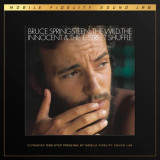
Released only eight months after his exhilarating debut, Bruce Springsteen's The Wild, the Innocent & the E Street Shuffle contains rousing dispatches from the boardwalk, the street, the beach, and the bedroom. It explodes with energy, dares to dream, teases with humour, crackles with tragedy, clings to hope, and overflows with discovery, youthfulness, and personality. It features an unforgettable cast of characters — corner boys, teenage hustlers, doomed lovers, jazz men, junk men, factory girls, fortune tellers, alley cats, pimps, escorts, and more — illuminated by vivid colour, breathtaking detail, and poetic action.
Musically, the heartfelt 1973 record is inhabited by sympathetic vignettes and cinematic arrangements steeped in rock 'n' roll, soul, jazz, and R&B. It finds the New Jersey native looking beyond the parameters of his preceding record and seeking to move on from environments he knows well (and chronicles here) by rushing headlong toward unknown territories, adventures, and people. Underpinned by the singer-guitarist's ambitious poetic enterprise and will to succeed, The Wild, the Innocent & the E Street Shuffle is the album on which Springsteen becomes the Boss.
Mastered on Mobile Fidelity's renowned mastering system, pressed at RTI on MoFi SuperVinyl, and strictly limited to 7,500 numbered copies, Mobile Fidelity's UltraDisc One-Step 180g 33RPM LP set is the definitive-sounding version of Springsteen's sophomore record. Benefitting from SuperVinyl’s nearly non-existent noise floor, superb groove definition, and dead-quiet surfaces, The Wild, the Innocent & the E Street Shuffle plays with a clarity, energy, presence, and openness that complement the expressiveness, dynamics, and scope of the seven restless songs that comprise a work Rolling Stone ranked the 345th Greatest Album of All Time.
Beyond the audiophile sonics that practically place you behind the console at 914 Sound Studios — listen to the separation between the instruments, natural decay of the notes, interplay within the widescreen soundstaging, and nothing-to-lose youthfulness of Springsteen’s voice — this reissue takes seriously this record’s influential merit by presenting it in packaging that underlines its status. Tucked in a beautiful slipcase, the LP is housed in a special foil-stamped jacket with faithful-to-the-original graphics. This reissue is made for listeners who prize sound quality and who want to engage themselves in everything involved with the invigorating set that busted Springsteen loose from the club circuit and landed him on the radio
Determined to liberate anyone within earshot and unafraid to come on strong, The Wild, the Innocent & the E Street Shuffle serves as the debut of the E Street Band — not only heard but seen for the first time by most of the public courtesy of the back-cover photograph. This is where saxophonist Clarence Clemons, organist-accordionist Danny Federici, and pianist David Sancious step out of the shadows — and drummer Vini Lopez and bassist Garry Tallent again stoke a fiery rhythmic engine that helps drive the untamed, reimagined big-band swing of “Kitty’s Back,” breathless R&B thrust of “Rosalita (Come Out Tonight),” and carefree dance steps of the funky “The E Street Shuffle.”
Of course, the main attraction remains a then-24-year-old visionary on the precipice of becoming a sensation and turning a then-bloated rock scene on its head. Recorded over three months while Springsteen and company were busy touring his debut LP, The Wild, the Innocent & the E Street Shuffle reflects the high-octane approach the vocalist embraced onstage and drifts away from the label-dictated acoustic-based frameworks of his debut. The set also witnesses Springsteen deepening his observational skills, with narratives such as the romantically tinged “4th of July, Asbury Park (Sandy)” and redemptive epic “Incident on 57th Street” mirroring changes taking place in the singer’s own life, small towns, and America at large.
A thrilling collision of memories, reflections, and composites — Sandy, Rosalita, and the latter’s parents are all based on actual people Springsteen knew, as is the community depicted in the opening track — the aptly titled The Wild, the Innocent & the E Street Shuffle resonates decades on due to its truths, authenticity, and spirit. Those characteristics — as well as the fact that many of its lengthy songs come on as the equivalent of sweaty, feverish soul revue that won’t stop until you’ve been exhausted — also explain how this now-iconic album triumphed over the reservations of industry “experts” that both demanded Springsteen re-record it and instructed deejays not to play it.
Yet there’d be no stopping a record that saw the past, present, and future, a band whose will would not be denied, and a phenomenon who was born to run. A never-ending invitation to act real cool and stay up all night, The Wild, the Innocent & the E Street Shuffle always feels alright.
Meridian Brothers & El Grupo Renacimiento' excavates the forgotten sounds of the fantastical 1970s salsa dura group El Grupo Renacimiento. The group identifies as "B-class" salsa whose music explores human struggles in the urban city landscape, with themes such as police brutality, social marginalization, and addiction. Meridian Brothers collaborated with El Grupo Renacimiento in Bogota's Isaac Newton studios to capture their "fantasy salsa dura" sound. Although the group came out of myth, its members have been created in spirit. Embodied by Meridian Brothers and depicted in the graphic creations of illustrators Glenda Torrado and Mateo Rivano, the members of El Grupo Renacimiento have now come to life.
- A1: Space Odyssey
- A2: Against The Odds
- A3: Lush Feat. Tkay Maidza
- A4: Be Easy Feat. Magi Merlin
- B1: Mars Feat. Kurtis Wells
- B2: Gaspard’s Dream
- B3: Blurry
- B4: Quest (Real Love) Feat. Poté
- C1: Interface
- C2: Too Much Of The Same Things Feat. Kurtis Wells
- C3: Closer To The Source (Signals)
- C4: No Escape Feat. Barney Bones
- D1: Sunseeker Feat. The Code
- D2: Left In The Air
- D3: Music For The End
Color Vinyl[26,85 €]
‘EVERYTHING IS HERE’ is a journey through space and time, inspired by the more rarefied aspects of prog rock and the wistful side of psychedelia.
Fusing these influences with the accessibility of French electronic and the groove of R&B and disco, this album depicts the sweet dizziness of contemplation. Nostalgic, yet determined and modern in it’s genre blending, the first album of Kartell truly reveals what’s been underlining in his previous EP.
Taking influences in the space and dream pop aesthetic, the musical approach of the album embraces the 60’s and 70’s fascination for outer space, exotic locations, technologies and science fiction which was on the edge of becoming reality.
Nebulous textures and otherworldly sounds characteristic of space rock are infused throughout the record, while keeping a focus on making catchy songs, leaning on a minor-key groove and a pop yearning. It’s also a challenge and an artistic proposition to gather a wide range of genres to tell a story. Densely produced and cinematic, the album draws a truly living landscape where live bass, drums and guitars hold the line, evolving around hazy effects and synthesizer layers.
Introducing "Azerbaijani Gitara vol. 2" by Rəhman Məmmədli, the eagerly awaited sequel to Bongo Joe’s acclaimed debut featuring Rüstəm Quliyev. Born from the vibrant streets of Baku, Azerbaijani gitara culture has evolved into a mesmerizing fusion of indigenous traditions and global influences. From the oil boom era to Soviet rule, musicians have embraced the electric guitar as a symbol of cultural expression.
Rəhman Məmmədli, a legend in his own right, revolutionized the sound with his innovative techniques and impassioned performances. Drawing inspiration from mugham music, Məmmədli's compositions resonate with soul-stirring melodies and electrifying solos.
Join us as we honor the pioneers of Azerbaijani gitara culture while celebrating the continued evolution of this rich musical tradition. "Azerbaijani Gitara vol. 2" promises to captivate listeners with its depth, diversity, and unbridled passion, inviting you on a journey through the heart and soul of Azerbaijan's musical heritage.
Stasis returns to De:tuned with 7 unreleased tracks from his archives for the 'Time Sensitive' LP. Legendary UK techno pioneer Steve Pickton compiles a stunning collection of DAT tape excerpts from the Otherworld studio sessions. Recorded between 1992-1996, this collection represents the peak of the Stasis sound. An in-depth masterclass of emotive techno and simply a must-have for any true techno enthusiast.
Mastered by Matt Colton at Metropolis. Al White created all the graphic work. A separate digital release will also be available at the usual digital shops. Stay tuned!
LIMITED BOXSET[117,61 €]
10 Year Anniversary Gatefold 2LP 10 year anniversary gatefold 2LP edition of Cult of Luna's take on Fritz Lang's Metropolis film, Vertikal. "Somewhere Along The Highway" and "Eternal Kingdom" were inspired by the landscape of Västerbotten, the county we are from. We realised that there was only one way to go for us: to the city, into the future. Making a droney John Carpenter-esque album would be too easy and we've never been about taking the simple route. I was studying film at the time and had been floored by the aesthetic of German expressionism. This resonated perfectly with Erik Olofsson, who had just got into Italian futurism. This was a real challenge. We put in a lot of effort to realize our vision of the stale, artificial city in all aspects of what an album is. The way we played guitar (only down strokes), the production, artwork and band photos, everything was done with the vision as a guide. "Vertikal" is the album where we had the most precise vision of what we wanted to do and worked hardest to transform it from an idea into reality. A lot of things happened during the years between "Eternal Kingdom" and "Vertikal" and I could continue writing for ages but this will do for now. Ten years have passed since its release and what felt like a rebirth of the band, the band that is still ongoing with new goals and missions. It's a full circle kind of thing. At the time we had no label and now we are releasing it on our very own. Life is strange. Johannes Persson - Umeå December 2022
10 year anniversary boxset edition of Cult of Luna's take on Fritz Lang's Metropolis film, the 2-parts concept album Vertikal, I and II Limited to 1,000 copies - 4 x LP Boxset - All colour vinyl copies - Vertikal I - A/B - clear w/ marbled black - Vertikal I - C/D - SideA/SideB Silver/White - Vertikal I - E/F (Demo Versions) - clear w/ marbled white - Vertikal II - A-Side / B-Side black/white - Thick printed paperbag LP
The Shadow Ring (1992-2002) presents a comprehensive overview of the work produced by British musicians Graham Lambkin, Darren Harris, and later Tim Goss over the course of a decade. Throughout their legendary ten-year run, this shambolic rock outfit, formed by a group of teenagers in the port town Folkestone, were an enigmatic force on the international musical sub-underground. The group have left behind a mighty run of eight LPs, a handful of 7-inches, and a spate of raucous live shows and cryptic zine appearances on both sides of the Atlantic. Collected here for the first time are The Shadow Ring's live cuts, rarities, and complete commercial releases, spread out across eleven CDs and a DVD, accompanied by an nearly five-hundred-page book that includes a monographic biographical survey, more than one hundred color photos, a comprehensive discography with transcribed lyrics, and a selection of zine appearances, fliers, postcards, and other miscellanea. In aggregate, this significant collection not only plums the depths of the band and its attendant lore, but reveals a vivid minor history of mail-order networks, bedroom recording sessions, cross-USA couch-surfing, and encounters with fellow travelers such The Dead C, Harry Pussy, Charalambides, Richard Youngs and the No-Neck Blues Band. Where is the connecting thread between Ralf Wehowsky and Squirrel Nut Zippers? Inquire within. The roughly 200 songs in this set trace the band from its earliest days recording in Lambkin's parents' house (SHP Studios), through its brooding mid-period, garnering word-of-mouth notoriety that peaked with the trio turning down an invitation to tour with Pavement, to a string of increasingly uncompromising experiments with electronics, voice, and tape. Although the band's sound morphs considerably during this time period, from spartan beginnings using pots and pans as a drum set to their ultra-deconstructed latter-day approach, certain core sensibilities are apparent throughout: brash youthful rawness, wry and morbid lyricism, stripped-down angularity, and a penchant for atmospherics. This boxset, featuring every record and single, and buttressed by twenty-nine rarely-heard recordings, including proto-Shadow Ring projects such as the Cat & Bells Club and Footprint cassettes, and their unearthed final CD-R Darren Harris Reads Graham Lambkin, presents the first opportunity to hear this arc in full. The ebbs and flows of the band_their schoolboy beginnings, initial successes, first shows and tours, life milestones, and Lambkin's gradual development as a solo artist_are painstakingly detailed in a sizable band history-cum-Künstlerroman by Blank Forms artistic director Lawrence Kumpf, illustrated with candid photos, sketches, letters, newspaper clippings, and other ephemera. The music and videos can speak for themselves, but taken as a mass, this collection makes sense of the group's utter uncanniness without comprising one iota of their mystique, bringing something new to the table for completionists and the uninitiated alike.
"Like Water" is the new album from Jasper Høiby, a luminary in the realm of contemporary jazz and the mastermind behind the celebrated piano trio Phronesis, renowned for its electrifying live performances and critical acclaim across Europe. Høiby, with his latest project, introduces "3 Elements," featuring the gifted Chaerin Im on piano and the versatile Jamie Peet on drums. This new assembly not only draws inspiration from the foundational strengths of Phronesis but elevates the ensemble's synergy to new heights, showcasing a more refined and cohesive sound that distinctly echoes Høiby's bold and charismatic sonic identity. While Phronesis has been celebrated for its dynamic interplay and innovative compositions, "3 Elements" presents a more singular vision of Høiby’s artistry, melding the complexity and depth of his musical influences with a fresh, unmistakable vigour. The lineup brings together an exceptional blend of talent and creativity, with Im's evocative piano lines and Peet's dynamic rhythms perfectly complementing Høiby’s profound bass undertones. Together, they create a sound that is not just an extension of Phronesis's legacy but a distinct declaration of Høiby's evolving narrative in jazz. "Like Water" stands as a pivotal work in Jasper Høiby’s illustrious career. The album skilfully bridges the realms of innovation and tradition, marking a significant chapter in his journey as one of Europe’s most charismatic contemporary composers, bandleaders, and bassists. With "3 Elements," Høiby not only cements his legacy but also redefines the essence of the piano trio format for the modern era, making this album an essential milestone and a testament to his visionary approach to music.