Berlin-based Swiss vocalist Lucia Cadotsch returns with her celebrated Speak Low trio for their second album, released by We Jazz Records on 27 Nov. "Speak Low II" features Cadotsch on voice, Otis Sandsjö on tenor saxophone and Petter Eldh on double bass, and introduces guest artists Kit Downes on hammond organ and Lucy Railton on cello. "Speak Low II" picks up where their genre-bending and forward-looking debut album left off, introducing new shades into the band's sound and also diving even deeper into the songs they tackle. What makes Speak Low special is their approach to really get to the heart of each composition with seemingly minimal means, yet generating a sound which is both instantly recognisable and remarkably impactful.
"Speak Low II" comes almost five years after the band's lauded debut, and proves the depth of the band's approach right from the start. At the core of the trio's operation is an openness to their love of the music and to their surrounding scene(s). The album comes across as a unified collection of songs made truly theirs and found through listening to records and spending time with their musician friends, often on the road. The highly evolved band sound and the equality of the musicians shines through on the Speak Low sound, as the group uses their 100+ performances together as a vehicle for the development of their music.
"The first album was filled with pretty famous songs, but that was actually not at all intentional" explains Cadotsch. "Those were just my favourite songs of the previous 10 years and we started working on making them ours, musically. We were playing around with concepts for the second album, but soon realised that we just needed to find the right songs and adapt them organically, which comes through in how we interact with the songs and each other. This time around, we wanted to dig deeper and made finished arrangements of around 20 tracks, half of which we ditched in the process. The ones that made the cut have been through a lot and they just felt right for us."
In a way, the Speak Low approach could be described as archaeological. Three music lovers connecting with songs found at various sources, readily throwing away any ideas that don't seem natural to them, and hanging on tight to the ones that do.
Turns out there is a concept to "Speak Low II". It's the band itself, their shared musical development and their love of music.
"Speak Low II" will be available on We Jazz Records on vinyl (PURPLE and BLACK editions), CD and digitally. The vinyl versions come with a heavy duty tip-on sleeve and a printed inner sleeve. CD in digisleeve with no breaking plastic parts.
Cerca:dep
It’s with great pride that we announce this amazing album on Optimo Music from Portland-based duo Natural Magic. It was the final vinyl release that Keith McIvor aka JD Twitch put into production before his untimely departure in late September this year.
Having been a long time lover of everything krautrock, space rock, experimental and psychedelic it seems more than fitting that he leaves us this LP as his parting gift; because this sublime album is all these things wrapped up into one and much more.
The album’s opening track “Galaxy Builder”, with its driving tempo, monolithic bass and screaming guitars might give the impression we’re about to hear a Neu for the 21st Century, but no, by the 2nd track we’re already on the first of several wild detours into uncharted territories: part shoe gaze, part ethereal, part psychedelia it’s a unique piece of beautiful euphoria from start to finish. By the time we reach the end of the A-side’s closing track “Distant Bells” the whole place is in tears after hearing possibly one of the most poignant pieces of electronic music of the entire year.
The B-side takes us even deeper into this trip through the duo’s homeland in the Pacific Northwest opening with “Skyward Eye”. If the Orb had ever teamed up with Slowdive and gotten Andrew Weatherall on production this could be it. “Get It Right” is a fuzz-filled epic with heavy dub leanings and meanings...it soars high up into the beyond and prepares us for “Ride”; an unashamed space voyage in the true sense…cosmic guitars, laden with FX; before returning gently down to the rolling green hills of Earth with the closing track “Chugsby’s Theme”. Whoever Chugsby is, his vibe is organic, deeply grounded and beautiful.
In the duo’s own words:
“Natural Magic II is a west coast road trip soundtrack for the fading summer. Taking inspiration from the majesty and myths of their home in the Pacific Northwest, the seven track album is culled from the late night, dimly lit, live sessions of Mike McKinnon on keys/drums and Matthew Quiet on bass. Overdubs of guitar, synths and percussion followed. All this from the same space they throw their legendary Limited Edition parties - all-night free experimentation celebrations in their own right. The album art work is handmade flower pigments, opium poppy pollen ink and wood-scrap charcoal by their friend and collaborator Pith Cocomici. Roll the widows down, tilt the seat back and turn it up. Gas, grass or black mass... there's magic in the hills.
Mikkel Metal makes a welcome return to Echocord with his new ‘Rebuild’ EP, accompanying remixes from Luke Hess and Frenk Dublin.
Copenhagen’s Mikkel Metal is a pioneering figure in dub-techno and minimal house, known for his atmospheric soundscapes and textured production. With acclaimed releases on Kompakt and Echocord, including Close Selections, Victimizer, and Peaks and Troughs he’s cemented his place as one of Denmark’s most distinctive electronic artists. Here he continues to dispay this further diving into new sonic realms with a new EP for Echocord.
Title-track ‘Rebuild’ opens, a hazy excursion through metallic, reverberations, expansive atmospherics and crisp drums before Detroit’s own Luke Hess steps in to offer his interpretation, delivering his signature groove-driven style, extracting the essence of the original and stirring it in amongst robust drums and spiralling dub echoes. ‘Bend’ is up next and displaying Mikkel’s production prowess as he blends murky bass flutters and analogue rhythms with psychedelic guitar melodies and dynamic space echoes, resulting in something that sounds uniquely his own. ‘Steam’ continues this theme with further psychedelia infused guitar tones flowing alongside breathy vocal stylings and fluttering atmospherics tucked into the depths. Rotterdam, Netherlands based artist Frenk Dublin delivers his ‘Deep Space Rework’ of ‘Stream next, reshaping the original into something entirely different with a dropped-tempo roots dub aesthetic, weaving fragments of the original into the composition alongside swaying dub drums and heavy doses of sub. ‘Midnite’ then concludes the release, another experimental sonic foray into unique effect processing, glitched out percussion, haunting vocals, plucked bass notes and expansive atmospherics
- A1: Low Clouds Hang, This Land Is On Fire
- A2: Murmur
- A3: Burn The Throne
- A4: We Overflow The Streets And Squares Like The Sea In A S
- A5: Black Flag Anthems
- B1: They Fall Because They Must Fall
- B2: Gathering
- B3: Still
- B4: But Go Not "Back To The Sediment" In The Slime Of The M
- B5: Storm The Heavens
- B6: 1A New Morning Breaks
Tashi"s latest punk anthems: electric guitar improvisations to brutally impact us with... gentle lyricism and introspective depth! In a time of extraordinary institutional inhumanity, seeing the faces of the many deprived, what is there to feel but exhaustion? What to want but silence? Tashi seeks it all out actively, with intention. Hard truths absorbed, he enjoins power to reconstitute as spirit, to disseminate to everyone outside the walls.
- A1: Robert Pico - Le Chien Fidèle
- A2: Annie Girardot - La Femme Faux Cils
- A3: Spauv Georges - Je Suis L'état
- A4: Zoé - Zoé
- A5: Jacques Da Sylva - Fou
- A6: Valentin - Je Suis Un Vagabond
- A7: Jacques Malia - Histoire De Gitan
- A8: Bernard Jamet - Raison Legale
- B1: Jean-Pierre Lebort - Barbara Au Chapeau Rose
- B2: Les Concentrés - Fils De Dégénérés
- B3: Les Missiles - Publicité
- B4: Hegessipe - Le Credi D'hegessipe
- B5: Marechalement Votre - Ethero Disco
- B6: Mamlouk - Decollez Les
- B7: Mozaique - L'amour Nu
- B8: Jean-Marc Garrigues - Je Dis Non
- B9: Penuel - Astronef 328
The journey through French-speaking pop archives continues with this fifth volume, packed with fuzz, gimmicks, and dissent. Far from the charts, the selected tracks display a great creative freedom, often backed by corrosive humor. Welcome to the surprising, kaleidoscopic, and colorful world of the late sixties and early seventies, Wizzz!
Born in Montauban, Robert Pico stumbled into music by chance when he met René Vaneste, then artistic director at Pathé-Marconi. René brought him to Paris to record his first 45 RPM EP in 1964. A year later, Pierre Perret introduced him to Vogue, where he recorded his second album with Claude Nougaro’s orchestra. Sylvie Vartan then introduced him to RCA, where he recorded four singles, including the astonishing "Chien Fidèle," a track backed by a hair-rising fuzz guitar. Alongside his solo career, he also composed for other artists like Alain Delon (the song was recorded but remains unreleased), Magali Noël, Bourvil, and Georges Guétary. In the Paris of the sixties, he mingled with Mireille Darc, Elsa Martinelli, Marie Laforêt, France Gall, Françoise Hardy, Petula Clark, Régine, Dani, Serge Gainsbourg, Joe Dassin, Franck Fernandel, Charles Level, and Roland Vincent. Despite his efforts and winning a Grand Prix Sacem for his final record, Robert Pico didn’t achieve the expected success in show business and decided to leave Paris and return to the Southwest, where he devoted himself to writing. He is the author of 23 books (including Delon et Compagnie, Jean-Marc Savary Editions 2025, a memoir about his youth and his many encounters). Today, he is relieved to never have become a celebrity and devotes himself to his work with passion.
In 1969, the Franco-Italian movie Erotissimo was released, directed by Gérard Pirès (who later directed Taxi in 1998, written and produced by Luc Besson). This pop comedy features Annie Girardot, Jean Yanne, Francis Blanche, Serge Gainsbourg, Nicole Croisille, Jacques Martin, and Patrick Topaloff. The soundtrack was written by Michel Polnareff and William Sheller, with lyrics by Jean-Lou Dabadie. "La Femme Faux-cils," performed by Annie Girardot. It recounts the feelings of a rich CEO's wife who seeks to develop her sex appeal under the influence of advertisement and magazines. Groovy, sparkling and light, this track, with ITS lush arrangements humorously critiques consumer society and feminine beauty standards.
“Je suis l’Etat” (1967) is the flagship track of the first EP by singer-songwriter Spauv Georges, aka Georges Larriaga, better known as Jim Larriaga (1941-2022). Born into a family of bakers, the young man was initially planning to become a hairdresser when he discovered English-speaking music through Elvis Presley and the Beatles. After this revelation, he decided he would become a songwriter and gave himself five years to succeed. He recorded his first two EP’s independently for RCA under the pseudonym Spauv Georges; meaning “that poor George”, a nickname given to him by the mother of her friend Jean-Pierre Prévotat (future drummer of the Players, Triangle, or Johnny Hallyday). Portraying a depressed and eccentric young man, Spauv Georges created corrosive and amusing songs that didn’t reach a wide audience, despite a TV appearance with Jean-Christophe Averty.
Supported by his loyal friend and fellow songwriter Jean-Max Rivière, Georges Larriaga met the future singer Carlos in the early '70s, then Sylvie Vartan’s assistant. He wrote songs for Carlos, including the popular "La vie est belle," "Y’a des indiens partout," and "La cantine", which went onto become a huge hit in 1972. He also composed for Claude François (“Anne-Marie”, 1971), Charlotte Julian (“Fleur de province”, 1972), helped launch child singer Roméo (who sold 4 million records), and later wrote the hit "Pas besoin d’éducation sexuelle" (1975) for the young Julie Bataille. In 1971, Jim recorded an album for Disc'Az: “L’univers étrange et fou de Jim Larriaga”, which featured pop gems like “La maison de mon père”.
The story of the song "Zoé" began when Pierre Dorsay, artistic director at Vogue Records, asked Swiss singer and musician Pierre Alain to write a song for a new female singer. The inspiration came when he realized that Zoé (the artist's name) was also the name of France's first atomic battery, created in 1948, which consisted of uranium oxide immersed in heavy water! The lyrics reflect a bubbling energy that must be handled with caution, while the instrumentation echoes this atomic theme, notably with the use of a theremin.
Zoé’s career lasted only as long as a single 45 RPM, but it seems Christine Fontane was the vocalist behind this pseudonym, who is known for several EPs, a good "popcorn" album in 1964, and a handful of children’s singles in the '70s. Regardless, the photograph on the cover is of a different girl entirely.
Later, Pierre Alain continued his career, writing songs for himself, Marie Laforêt, Danièle Licari, Alice Dona, Arlette Zola (3rd place in Eurovision 1982), and achieving multiple gold and platinum records in Canada. Also an inventor with several patents, president of the Romande Academy, and head of the French Alliance in Geneva, he now composes atonal music, books, and poetry. Moreover, he is also the host of "Les Mardis de Pierre Alain" at "Le P'tit Music'Hohl" in Geneva.
Filled with oriental choruses and fuzz guitar, "Fou" is from Jacques Da Sylva's only EP released by Vogue in 1967. Despite the quality of this recording, all traces of this singer disappear after this first effort.
Valentin is a baroque pop singer born in Belgium. He is the songwriter and composer of most of the tracks on his three singles released in the late 60s in Canada. A legend says that he reincarnated himself as Jacky Valentin during the 1970s for a rock'n'roll revival career in Belgium, but his older brother sadly debunked this story. Valentin's first two singles were arranged by Claude Rogen, a Parisian session pianist who had come to Canada to promote the song “Mister A Gogo”, a cover of David Bowie’s “Laughing Gnome”, adapted by singer Delphine, his wife at the time. Far from his usual network, Claude Rogen arranged music for Polydor, including the arrangements for “Je suis un vagabond” in 1969, a jerk tune with string arrangements and a furious optimism.
Jacques Malia wrote, composed, and recorded his only 45 EP for Festival in 1966. “Histoire de gitan” is an incredible beat track with bohemian scat that tells the story of a gypsy musician who came to Paris to make it in the Music-Hall, to no avail. The hero of the song and its author probably shared a similar fate, as Jacques Malia faded into anonymity after this remarkable attempt.
Bernard Jamet recorded two EPs for Barclay in the late sixties and co-wrote several songs with Christine Pilzer, Pascal Danel, and prolific songwriters Michel Delancray and Mya Simile. The track “Raison Légale” (1968), his masterpiece, immerses the listener in a courtroom right when a murderer is being judged, with jerk rhythm and free arrangements. A unique, paranoid, judicial, and psychedelic oddity.
Jean-Pierre Lebrot-Millers started his career in show business in 1967 as a singer and songwriter for the Philips label. After three singles, he wrote several songs of a new kind with his friend Pierre Halioche, in the midst of the sexual liberation movement and the democratization of drugs. With provocative lyrics, “Les filles du hasard” and “Barbara au Chapeau Rose” were released on a Philips singles in 1968. The character of Barbara was inspired by a queen of Parisian nightlife during the psychedelic years: model Charlotte Martin, who dated Eric Clapton from 1965 to 1968, then Jimmy Page from 1970 to 1983. Jean-Claude Petit’s arrangements, with a table-filled intro, soul brass, and Hendrixian guitar, emphasize the flamboyance of a hedonistic and sexy character, whose dog is named Junkie because “Junkie est un nom exquis”! The track was recorded live in three takes with a full orchestra.
Upon its release, the record was censored by Europe 1 and RTL due to its references to drug use. Jean-Pierre Lebrot was then banned from the airwaves and later dismissed by his record label. He changed his artist name to Jean-Pierre Millers, while his companion Pierre Halioche became D. Dolby for a new dreamy composition, “Chilla”, which Jean-Pierre produced himself with arrangements by Jean Musy. Once again, the song was immediately censored everywhere. After this setback, he decided to stop singing and started taking on odd jobs to support his Swedish wife and their son until the day he met Jean-Pierre Martin, then production manager at Decca, who had worked with Manu Dibango. Martin offered Jean-Pierre Lebrot-Millers, then employed at Rank Xerox, the position of artistic director at Decca. He accepted and became, a year later, promotion director (radio, press, TV). He worked on Julio Iglesias’s first album for Decca, which became a massive hit and allowed him to meet Claude Carrère. The latter asked him to write new songs and find their performers, much like a “talent scout.” It’s through him that Jean-Pierre discovered Julie Pietri and Corinne Hermès. He composed “Ma Pompadour” for Ringo, Sheila’s husband, and took the microphone again for the syncope hit “Rendez-Vous” in 1982.
That same year, Jean-Pierre Lebrot-Millers tried to release a track for which he had heavily gone into debt: “Si la vie est un cadeau”. Having recorded it in London, he presented it to numerous professionals, all of whom refused to get involved. The same thing happened with Antenne 2 and the Sacem when he proposed the song as France’s entry for Eurovision. He then met Haïm Saban, who was producing cartoon soundtracks and had just launched the Goldorak theme song. Saban, having listened to the song, declared it had the potential to become a hit. He sent Jean-Pierre and Corinne Hermès to meet the CEO of the Luxembourg radio and television network. The latter received them, asked to hear a verse and chorus a cappella in his office, and immediately hired them to represent Luxembourg at Eurovision 1983. They reworked the arrangements and recorded a new version with Haïm Saban as co-producer. The song ended up winning Eurovision 1983, a great comeback for our hero. He continued producing and hung out with the band Nacash in Belgium when a couple came to introduce their daughter for an impromptu audition in a hotel room. The girl sang “Les démons de minuit” while dancing to a radio cassette. Impressed, he had her take singing lessons for a year and composed a song for her (for which he had the melody and title, but no lyrics). This required him to go on the hunt for a lyricist, who ended up being Guy Carlier. They recorded the song, which was initially a ballad, at Bernard Estardy’s CBE studio, and gave the singer a new name: Melody. They showed the song around their industry network without success. Later, Estardy called Jean-Pierre to suggest changing the rhythm and making it pop-rock. Orlando, Dalida’s brother, liked the result and decided to co-produce the track. “Y’a pas que les grands qui rêvent » became a classic hit. The song has since been covered by Juliette Armanet (as a ballad, like the original) and Valentina.
Born into an aristocratic Breton family, Hervé Mettais-Cartier worked as a DJ at Queen Kiss, a nightclub in Poitiers, where he formed the band Les Concentrés with Michel (an actor) and Christian (a radio technician). Together, they created a repertoire of whimsical songs (“Ma bique est morte”, “J’suis un salaud”, “Fils de dégénéré”...) that they performed on stage dressed in white (in homage to “concentrated milk”). They performed at Bliboquet and Olympia in 1968 for the 10th edition of the “Relais de la chanson Française” organized by L’Humanité-Dimanche and Nous les Garçons et les Filles, sponsored by Pepsi Cola. Winners in the author-composer category, alongside Danish singer Dorte, their visibility allowed them to record a 45, and appear on television in Jean-Christophe Averty’s show. The A-side of the disc features Bruno le ravageur, a casatchok dedicated to Bruno Caquatrix, the director of Olympia, nicknamed in the song “Coq Atroce” or “croque-actrices”. The B-side is dedicated to “Fils de dégénéré”, a quirky tribute to Hervé's aristocratic roots, mixing absurdity with sophisticated vocal harmonies.
After Les Concentrés, Hervé Mettais-Cartier formed the duo La Paire et sa Bêtise with his friend Olivier Robert. They performed in Parisian cabarets and toured with Pierre Vassiliu. In the late 1970s, Hervé began a solo career. He recorded two albums for the Motors label in 1978 and 1979, which did not achieve their anticipated success due to lack of promotion. In 1980, he met Bernadette, with whom he started a family and created a “Chansons à voir” (songs to see) show that he performed until his death at the end of 2024.
Publicité comes from the final EP by the Missiles (Ducretet Thomson, 1966), a disc that also includes “La (nouvelle) guerre de cent ans”, featured on Volume 4 of our Wizzz! series. Please refer to the booklet for the story of the band.
“He’s 1.82 meters tall, 28 years old, weighs 135 kg, is black and Belgian”: this is the description of singer Hegesippe on the back of his sole single (Decca, 1967). He appears on the album cover wearing a Greek toga, like a hippie gag – we are at the end of the year 1967. In “Le crédo d’Hegesippe”, this former bodyguard of Antoine and the Charlots plays the delightful card of the thick brute converted to Flower-Power and non-violence, with arrangements by Jean-Daniel Mercier, aka Paul Mille.
“Ethéro-disco” was released on a promotional record for clients of the Maréchal company (Liège, Belgium) for the New Year 1979. Over a funky rhythm, celebrity impersonations (Brigitte Bardot, Jacques Dutronc, Fernandel…) deliver an enigmatic text about pharmaceutical products like ether, bismuth, and aspartate. The track was composed by Dan Sarravah (responsible for Joanna's “Hold-up inusité” featured on Wizzz! Volume 3) and Tony Talado, who was also a singer (one 45 in 1967), songwriter (with over a dozen credits between 1964 and 1985 in various styles from surf music to disco), author (Devenez Végétarien, Dricot Editions, 1985), ad designer, and psychologist.
Décollez-les is on the A-side of Mamlouk's only single, a pseudonym for Marsel Hurten, who is known for his work on several EPs in the late sixties, as well as composing music for Hervé Vilard’s “Capri, c’est fini”, Claude Channes' “La Haine”, Annie Philippe’s “On m’a toujours dit”, and Nancy Holloway’s “Panne de Cœur”.
This strange song, with Afrobeat horns and absurd dialogues between a chef and his kitchen staff, is the result of a collaboration between Marsel Hurten and one of his neighbors, a photographer from Pavillon-sous-Bois (93), where the musician settled after returning from the Algerian War. A music video was shot to promote the record.
Marsel Hurten was born in Tourcoing (59) into a musical family. At a young age, he joined the brass band founded by his grandfather, playing the piston before studying trumpet at the conservatory, as well as teaching himself how to play the guitar. As an orchestra musician, he toured in France, Belgium, Germany, and England. He released a series of solo 45’s between 1965 and 1968 for the DMF and Az labels before stopping recording to focus on working for other artists (Gilles Olivier, Noëlle Cordier…).
“L’amour nu” (Vogue, 1971) is the work of the short-lived Belgian band Mozaïque. The track, written by singer Jacques Albin, closely resembles another of his compositions, “Carré Blanc”, which he recorded in 1969 for Disc’AZ.
Represented by the Lumi Son micro-label based in Marignane (Côte d'Azur), Jean-Marc Garrigues released two 45 RPMs in the late sixties, defending the French jerk sound. The song “Je dis Non” is a short, joyful ode to youth, pop music, and rebellion.
Songwriter and performer Jacques Penuel released three singles. The first one, “Astronef 328” (Fontana, 1969), features a dizzying series of chords punctuated by sound effects, a sci-fi story, and arrangements by Jean-Claude Vannier.
We would like to sincerely thank Pierre Alain, Moon Blaha, Marsel Hurten, Bastien Larriaga, Jean-Pierre Lebrot-Millers, Bernadette Mettais-Cartier, Robert Pico, Olivier Robert, Claude Rogen, Micky Segura.
- A1: Mirai (Léviathan)
- A2: Adieu (Rue De La Victoire)
- A3: Sillons (Abyssinie)
- A4: Turquoise (La Fête Noire)
- A5: L’averse (Vendredi)
- B1: Tête En Bas (88888888)
- B2: Bol Chaud, Bol Froid
- B3: Filmer Du Feu (Inline Twist)
- B4: Water Signs (Saint-Donatien)
- B5: Le Malchin (Bleu Sous-Marin)
- B6: Loin De Vous (Gravité)
- B7: Mi Rey (Léviathan)
Here, Flavien departs from his usual creative process to embrace collaboration—because plouf! (Léviathan) is also the story of a dive, his first collective adventure with musicians he had always dreamed of working with: Michelle Blades (guitar), Kiala Ogawa (keys), Akemi Fujimori (bass), Cédric Laban (drums), and Thibaud Merle (winds).
Reworking these songs is a way of revisiting forgotten musical landscapes, shedding new light on them with a different perspective. It’s about transforming a solitary electronic record into a collective piece by exploring new textures and instrumental approaches.
With this album, Flavien Berger uses his early tracks as raw material—as if the 2015 Léviathan were now a kind of demo from which to extract the essence and create something entirely new. The project, like the music that drives it, is rooted in the idea of reinvention.
The result is a fresh sonic exploration where Léviathan’s tracks take on new forms—some staying true to their original versions, others completely reimagined, blending past and present.
Hiver completes a trilogy of EPs on Gudu with ‘Blue Hell’, another transmission of space-age machine funk from a duo who are truly shaping their own soundworld.
If you’ve followed Hiver, you should know the deal by now: they’ve spent the last decade honing a sound that draws heavily from dance music history – namely the starry-eyed synthesizer funk of classic techno and electro – that drips in colour and emotion without ever feeling retrograde. ‘Blue Hell’ is their third EP for Gudu, and maybe their most accomplished yet.
In Hiver’s words, “this EP was shaped by a mix of late night club energy and the more introspective, melodic ideas we’ve been exploring in the past years. A big part of it also comes from the tension between how people connect today. This constant, hyper-connected flow of networks, media, and online exchanges and our own way of creating music, which is very physical and personal. We’re always bouncing ideas through messages and files, but the real magic still happens when we meet in the studio, face to face. That contrast between digital connection and human presence became a sort of hidden theme behind the EP.”
“With Blue Hell, our third chapter on Gudu, we wanted to capture a moment of clarity, something direct yet still drifting. In a way, this release completes the excursion we began with the first two records: three points that trace the contours of the sounds we’re drawn to. Each track feels like a fragment of that journey, grounded in rhythm but always leaning toward depth and escape.”
Yesterday it started to rain…
The smell of damp tarmac rising up through open windows, a smell which is uniquely evocative for us all depending on our individual histories: a suburban pavement, a school playground, a basketball court.
The rain cut through a band of low pressure that had been lying over the city for days, pinging rhythmically off metal, causing rolling tyres to hiss and spit.
The music that soundtracked this meteorological shift was the debut full length from Rain Text (Giuseppe Ielasi & Giovanni Civitenga), simply titled III. Scattered throughout the nameless eight tracks there are moments of low-end pressure relieved by the fizz and clatter of metallic rhythms; there is static, there is discord, there is release.
The individuals comprising Rain Text have a long history of manipulating sounds for evocative ends, Giuseppe Ielasi has been making music as one half of Bellows for many years, each album stretching and destroying their sound in beautiful increments. He has also released reliably inspirational music either solo or in collaboration for the likes of Editions Mego, Shelter Press and Faitiche. His sensitive ears are also in high demand as a mastering engineer. It is worth perusing the 800+ releases he has technical credits for on Discogs: from classics of the avant-garde to the freshest faces of the Swedish underground, the chances are some of your favourite albums are included.
Giovanni Civitenga helms the SKYAPNEA long-running NTS show. Joining him, you can enjoy the fruits of a lifetime of deep listening through shows that flit between the industrial and the devotional, a space that is fully explored on III.
The album was recorded quickly over three fertile days in Ielasi’s studio in Monza, but of course results like this can only be achieved at such a pace by spending a lifetime obsessing over the mechanics and possibilities of sound.
Those who are enamoured by the rain—who are returned by it to the surfaces, smells and sounds of a lost and idealised youth; who feel themselves restored—are known as ‘pluviophiles’. Their response to rain may well have a biological explanation: when rain hits tarmac negative ions are released into the air, which are thought to result in feelings of wellbeing and positivity. All the more reason, then, to return to the vivid ecosystem that Rain Text has so carefully cultivated for III."
Words by The Dengie Hundred – August 2024
Good things take time, but TRANSLATE is finally here. “Spheroid GAP” is a techno record built on meticulous sound design and deep, immersive textures. Crafted with precision and intention, the EP explores subtle movement, spatial depth, and hypnotic rhythm, revealing a carefully constructed sonic narrative.
The frankly ridiculous Burnski is back as Instinct with more face-melting garage and bassline slammers that update the classic sound with just the right amount of evolution. All of these on his latest for his self-title label are 10/10 weapons: 'Halt' is hurried, swinging and syncopated to perfection. 'Choose One' is less streamlined; instead, there are warped and squelchy lines, bursts of static and a more futuristic twist getting you going. 'Crazy' brings brilliantly chosen and well-deployed samples to the fore over a beat that harks back to percussive UK funky at its finest. The flip side offers a trio of slick bouncers, body-popping movers and brightly lit vibes. Superb.
Childhood Intelligence’s 18th release by ADSR aka. Todd Nickolas & Dominic Paterson from Toronto, Canada. The 2x12” album presents mostly tracks written and produced by Todd, with A1/D1 being in collaboration with Paterson. "Give a teenager in a rural Canadian setting an analog synthesizer, a drum machine and a four-track cassette recorder and feed him a steady diet of 80s EBM, Post-Punk, Synthpop, Electro, Dub, Acid, Hip Hop and House, and you’ll get the kind of genre melding electronic-based music that Todd Nickolas has been known for since his early days of writing and producing." The end result is a versatile one, with “Passive Articulation” presenting abstract Techno - House - Electro visions, and fusing all the elements of vintage Intelligent Dance Music that we cherish so much: warm basslines, beautiful chord progressions, diverse and surprising arrangements infused with haunting melodies, hypnotic cyber sounds, detached vocal cuts and dubbed percussion.…Overall fresh & timeless classiness for the present, past & future.
Recorded various locations New Hamburg, Kitchener-Waterloo, Ottawa, Toronto, San Francisco and Los Angeles. ADSR greatly thanks those who were there from the start, those who joined along the journey and those here now.
- Champagne
- Detox Baby
- Calling
- Dancing In America
- Freak Show
- Your Name
- Good Friends To Go
- Danger Paradise
- Geschichte Schreiben
- Echoes
- One More Time
- Bon Voyage
Mit Calling melden sich The Busters eindrucksvoll zurück - neun Musiker, ein Album, das kollektive Kreativität hörbar macht. Entstanden in zwei Studios - den atmosphärischen Waldstudios bei Berlin und "Der Raum" in Waltrop - verbindet Calling emotionale Tiefe mit musikalischer Klarheit und der typischen Leichtigkeit der Band. Die Songs entstehen basisdemokratisch, ohne Hierarchie - aus Vertrauen, Präzision und Spielfreude. Das Ergebnis: ein Album voller Dynamik, Wärme und Atmosphäre. Man hört den Raum, die Luft, das Miteinander. Statt digitaler Perfektion steht das Gefühl im Vordergrund. Highlights wie der Titeltrack "Calling", das melancholisch-leichte "Champagne", das bissige "Freak Show" oder das hoffnungsvolle "Geschichte schreiben" zeigen die Band in ihrer ganzen Bandbreite - nachdenklich, ironisch, berührend. Live entfaltet sich die volle Kraft: The Busters gehören seit über 35 Jahren zu den besten Live-Bands Deutschlands. Calling fängt diese Energie ein - als klingendes Abbild einer Band, die weiß, wer sie ist, und trotzdem immer wieder neu aufbricht. With Calling, The Busters make a powerful return - nine musicians, one shared language, and an album that showcases the vibrancy of collective creativity. Recorded between two studios - the atmospheric Waldstudios near Berlin and "Der Raum" in Waltrop - Calling blends emotional depth with musical clarity and the band"s signature ease. No mastermind, no hierarchy - just a democratic process built on trust, precision, and joy. The result is an album rich in dynamics, warmth, and atmosphere. You hear the room, the air, the connection. Feeling takes precedence over digital perfection. Tracks like the floating opener "Calling," the subtly melancholic "Champagne," the biting "Freak Show," and the uplifting "Geschichte schreiben" reveal the band"s full emotional range - thoughtful, ironic, and deeply human. On stage, The Busters truly shine: with over 35 years of live experience, they are one of Germany"s most seasoned and beloved live acts. Calling captures that energy - a sonic reflection of a band that knows who they are, yet continues to explore new paths.
- Deathless
- Unbound
- Corridor I - The Affliction
- Sempiternal Penance
- Corridor Ii - The Descent
- Beyond The Threshold Of Flesh
- Corridor Iii - The Void
Black Vinyl
Das Album enthält Material aus allen Songwriting-Phasen der Band, einiges davon stammt aus den Zeiten von „Deprived“ und „Bringer of Drought“ sowie natürlich aus „Foreordained“, erklärt Gitarrist Samuel Dufour.
„Gateway“ wurde von dem langjährigen Mitarbeiter Xavier Berthiaume (Gevurah, Sanctvs) während derselben Session wie „Foreordained“ aufgenommen, gemischt und gemastert, wodurch die beiden Alben einen einheitlichen Klang erhalten und „Gateway“ die etablierten Erzählungen abschließen kann. „Wir betrachten es als das Ende eines Kapitels für die Band“, fährt Dufour fort. „Das heißt nicht, dass unser zukünftiges Material sich komplett von unserem bisherigen unterscheiden wird, ganz im Gegenteil, aber wir haben beschlossen, es beim nächsten Mal ein wenig anders anzugehen, indem wir neue Elemente hinzufügen, die bisher in unserer Musik noch nicht vorkamen, verschiedene Dynamiken ausprobieren und mit einer neuen Stimmung experimentieren.
Thematisch baut „Gateway“ auf Ideen auf, die erstmals auf „Foreordained“ untersucht wurden: „Der Song ‚Revival‘ aus ‚Foreordained‘ inspirierte das Thema des Albums, nämlich die Tatsache, dass Menschen seit Anbeginn der Zeit versuchen, ewig zu leben – oder ihr Leben auf unnatürliche Weise zu verlängern –, oft aus Gründen, die noch absurder sind als das Streben nach ewigem Leben selbst“, erläutert Dufour.
„Wir haben dies als Hauptthema verwendet und das Konzept weiterentwickelt, indem wir die abstoßendsten Formen der Grausamkeit untersucht haben, zu denen Menschen fähig sind – selbst wenn sie die Wissenschaft als Mittel einsetzen, um die Barbarei gegenüber ihren Feinden zu verlängern.“ Visuell setzt das Album die Zusammenarbeit von Phobocosm mit Lauri Laaksonen (Desolate Shrine, Convocation, Pestilent Hex) fort. „Auf den ersten Blick sieht man, dass es sich um ein Tor zu etwas Unheilvollem handelt, aber was dahinter liegt, bleibt dem Hörer überlassen.“ Phobocosm wird „Gateway“ mit ausgewählten Auftritten in Nordamerika unterstützen, gefolgt von Terminen in Europa im Jahr 2026.
- A1: Prayer (Akiko Yano)
- A2: That's The Spirit (Judee Sill)
- A3: As Long As He Lies Perfectly Still (The Soft Machine)
- A4: Outing (Super Butter Dog)
- B1: Waves Roll (Small Circle Of Friends)
- B2: Summer Nude (Magokoro Brothers)
- B3: Across The Universe (The Beatles)
- C1: Night Cruising (Fishmans)
- C2: Ishin Denshin - You've Got To Help Yourself - (Ymo)
- C3: I'm Not A Know It All (Bow Wow Wow)
- D1: Kahlua Milk (Yasuyuki Okamura)
- D2: Odayaka Na Kurashi (Yuichi Ohata)
- D3: I Shall Be Released (The Band)
Clammbon, who have performed numerous tribute albums for artists such as Yasuyuki Okamura, Fishmans, and YMO, have released their first covers album, including
all of their classic covers. From Akiko Yano to Bow Wow Wow, the selection and arrangements show the band's depth, and the loose and casual recordings of
the Magokoro Brothers' "Summer Nude" and the Beatles' "Across the Universe" featuring Takashi Nagatsumi are particularly captivating.
- Heartsick
- Ordinary People
- The Devil We Know
- In The House Of Denial
- Infinite Sadness
- Payback From God
- Yours To Bury
- Perfect Things
- Letters To Insomnia
- Perfect Blue
- Running The Fear Of It Dry
- Ataraxia
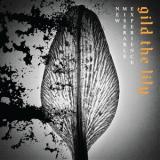
NEW MISERABLE EXPERIENCE are a Philadelphia-rooted collective that reshapes heavy-music rigour into expansive, melody-forward songs through alternative synth-rock. What started as a file-trading collaboration between vocalist/bassist David Grossman (ex- ROSETTA) and multi-instrumentalist Joshua Mahesh Kost expanded into a full band that now includes ROSETTA drummer Bruce "B.J." McMurtrie Jr., technical-metal bassist Brett Bamberger (REVOCATION), and guitarist Brody Uttley (RIVERS OF NIHIL). The group forgoes technical exhibitionism in favour of mood and melody, composing introspective songs designed to reward close listening. Across the twelve tightly arranged tracks of 3rd album "Gild The Lily", the band pares its palette to essential elements: clear melodies, precise dynamics, and richly textured production. The album trades overt bombast for craft, building emotional weight through small gestures and patient arrangements rather than moments of spectacle. "We started saying `infinite sadness' as a bit of a catch phrase with the last album. I think that sums up the vibe of the album and project overall. We are very much in the `sadboi' world with Jeff Buckley, Puma Blue, Radiohead, Deftones, The Black Queen", says Grossman. Sonically, `Gild the Lily' combines alternative synth rock with chorus-tinted guitars, and a rhythm section that alternates between taut propulsion and roomy, reverb-soaked space. The arrangements both electronic and instrumental negotiates smooth and slick danceability alongside sinister edges. The band's aesthetic is one of deliberate economy: textures are chosen to serve mood and narrative rather than technical exhibitionism, and arrangements reveal their depth across repeated listens. Slick, sorrowful and cinematic in atmosphere, `Gild the Lily' is an eclectic collection that can not only groove in vibe and inspire movement, but also pierce to the nerve in ethereal lamentation. RIYL Crosses * Black Queen * Ulver * Vowws * Rosetta * Revocation * Rivers of Nihil
- 1: Het Overvleugelen Der Meute
- 2: Brand Woedt In Mijn Graf
- 3: Verscheuring In De Schemering
After last year's widely acclaimed third full- length album "Bloem" found its way into the hearts and minds of many listeners, it did not take long for the duo of M. Koops and B. Mollema to return to the studio and record an immediate follow up. But do not be fooled by this quick succession of releases; "Gegrepen door de Geest der Zielsontluiking" is in many ways a polar opposite of what "Bloem" had to offer. Guided by a spirit of self- transcendence, Fluisteraars sought to indulge in a deep current of animalistic urge. From murky depths to the high towers of the soul, "Gegrepen..." is an exaltation of a new language, a breaking down of barriers and revaluation of underlying routine. Utilizing a minimalist and spontaneous recording style proved fruitful in this endeavor: only doing one take of every instrument, only recording the natural acoustics of the room instead of the close- up registration of sound so ingrained in modern production. The duo recorded exactly one song each studioday. No overdubs, no synths - they started every day by setting up a new sound palette for each song.
- 1: Children Of The Dusk
- 2: Bend Down And Kiss The Ground
- 3: Vibratory Affinity
- 4: Time, As Veiled Eternity
The follow-up to 2024’s "Perpetual Eden" sees Bloody Head stretch out and capture the cosmic sprawl of their live gigs on record. Available on limited-edition LP with spot-varnished sleeve.
After finding their Perpetual Eden and then seeing it violently retrograde, Bloody Head return with a new transmission devoted to the pendulum’s swing and the big wheel’s turn.
The big wheel turns and the seasons turn and we turn and it all just keeps on spinning away… elliptic, off kilter, centres not holding, the whole merry-go-round whirling and dissolving and coagulating, perpetually.
The CHILDREN OF THE DUSK and the sundry weirdoes and creeps depicted on the cover painting, channelled by Danny Roberts 777, all spinning and singing and sinning as they rattle along… in some sort of strange, discordant VIBRATORY AFFINITY with themselves/each other/it all.
Stay a while and take the time to BEND DOWN AND KISS THE GROUND/smell the roses/find your Eden, in and amongst the nooks and cracks and crannies and in the thin, strange places.
TIME AS VEILED ETERNITY is a microcosm of the whole merry Shambala, pushing and pulling and coming together and falling apar
Recorded, mixed and mastered by James Atkinson at the Stationhouse, Leeds. The session almost kiboshed by Storm Éowyn. A sprawling mass/mess which oozes and lurches from bloody minded heaviness to meditative reflection to unsettling delirium and back again, ending in total sonic breakdown. More focused and restrained, more reckless and chaotic. There is No time, to every season some sort of purpose.
- A1: ) Think Fast, Make Conversation
- A2: ) Here Come The Rugby Boys
- A3: ) Limpet
- A4: ) Drinking On A Weeknight
- A5: ) Back On The Meds
- A6: ) The Day We Missed The Train
- B1: ) Oh Veronica, How Right You Are
- B2: ) Romantic Visions (Prepare For Disappointment)
- B3: ) Strictly Presbyterian
- B4: ) Everybody’s Moving To Australia
- B5: ) Say You’ll Never Leave Me
The Just Joans' new album Romantic Visions of Scotland finds the Glasgow band in characteristically melancholic form, pairing shambling indie pop with sharp observations on romantic pratfalls and everyday dis-appointments, all delivered with sardonic Scottish wit, fronted by siblings David and Katie Pope, whose wry lyrics and heartfelt vocals remain at the heart of the band’s distinctive sound.
Originally inspired by a grandiose exhibition title spotted on Glasgow buses in 2019 for a show at the Nation-al Museum of Scotland called Wild and Majestic: Romantic Visions of Scotland, the new album arrives six years later as a collection of semi-autobiographical snapshots from the Central Belt of Scotland. Whilst some of the details have been exaggerated for comic (or tragic) effect, the songs are based on personal experience of mundane failings, bitter regrets and missed opportunities that make up an unremarkable life.
Recurring themes of nostalgia for a bygone era and the fear of being left behind by lovers, friends and peers run throughout the album. Musically and lyrically, the band channels Village Green-era Kinks, with nods to The Television Personalities, The Smiths and Dolly Mixture.
In the past they have always recorded by themselves in a variety of bedrooms, living rooms – and the occasional toilet. For the first time they have abandoned their DIY recording practices to create what songwriter David Pope calls, “a corporate behemoth in an actual studio.” The album was recorded at Chem19 in Blan-tyre with Paul Savage, who is best known as a founding member of local legends The Delgados. He has also produced and recorded the likes of Teenage Fanclub, Arab Strap and Camera Obscura, and has captured a slightly more muscular version of the band while retaining their ramshackle charm.
The album artwork by vocalist and painter Katie Pope depicts Motherwell Train Station – an ordinary, boring place that speaks to the subject matter of the songs, but with a hint of potential escape. As David Pope ex-plains, “For me, the painting reminds me of the ending of Billy Liar in which Billy tries and fails to leave his hometown for the bright lights of London. Half the band also live in Motherwell, so it seemed appropriate.”
Funded by Creative Scotland, the recording allowed the band to bring in bass and cello arrangements, adding depth and a sheen of musical proficiency to their signature sound.
About The Just Joans - The Just Joans were formed in Glasgow in 2005 by songwriter David Pope. Early demos were collected together and released as a loose concept album, Last Tango in Motherwell, in 2006. Chris Elkin joined on guitar and was followed shortly after by David’s younger sister, Katie, on vocals and Fraser Ford on bass. Over the years they have released EPs and albums on WeePOP! and Fika Records and have gained a cult following as Scottish pop miserabilists.
The current line-up consists of Katie Pope (vocals), David Pope (vocals, guitar), Chris Elkin (lead guitar), Fraser Ford (bass), Arion Xenos (keyboards) and Jason Sweeney (drums).
Press Quotes:
“They fit snugly into the scratchy, low budget Scottish indie tradition of The Delgados and Arab Strap… There’s mischief in this miserabilism.” - Mojo 4*s
“Glasgow’s The Just Joans have documented the romantic pratfalls of a generation of indie kids with sardonic wit and a shambling musical style where Stephin Merrit lies down with The Vaselines.” - Uncut
“Funny and sad, it’s the kind of song that made Red House Painters, The Magnetic Fields and The Wedding Present’s early albums so easy to embrace; an unpretentious sharing of relatable gloom.” - Record Collector