10 year anniversary boxset edition of Cult of Luna's take on Fritz Lang's Metropolis film, the 2-parts concept album Vertikal, I and II Limited to 1,000 copies - 4 x LP Boxset - All colour vinyl copies - Vertikal I - A/B - clear w/ marbled black - Vertikal I - C/D - SideA/SideB Silver/White - Vertikal I - E/F (Demo Versions) - clear w/ marbled white - Vertikal II - A-Side / B-Side black/white - Thick printed paperbag LP
Cerca:departure
Yes' 90125 was a departure from their progressive style but it introduced the band to a new generation of fans, reaching No. 5 on the Billboard 200 and No. 16 on the U.K. albums chart. The 1983 album remains their best-selling album with more than 3 million copies sold in the U.S. "Cinema" earned the group a Grammy Award for Best Rock Instrumental Performance, while "Owner Of A Lonely Heart" was the band's first and only single to reach No. 1 on the Billboard Hot 100 chart.
Named for its Atco catalog number, 90125, the album — the band's 11th studio effort — it was born out of the band's self-reinvention. Begun as Cinema, a new band by Chris Squire and Alan White, the project grew to include the slick production of Trevor Horn, the new blood (and distinctly '80s guitar sound) of Trevor Rabin, and eventually the trademark vocals of returning founder Jon Anderson. His late entry insured that Rabin and Horn had a heavy influence on the sound. The album also marked the return of prodigal keyboardist Tony Kaye, whose crisp synth work on "Changes" marked the band's definitive break with its art rock roots.
"Owner Of A Lonely Heart" was a huge crossover hit, and its orchestral break has been relentlessly sampled by rappers ever since. The vocal harmonies of "Leave It" and the beautifully sprawling "Hearts" are additional high points,
90125 is a significant and well-regarded album in the Yes discography.
Analogue Productions is proud to offer the definitive reissue deluxe 180-gram 45 RPM 2LP of 90125. For Yes fans, this is a can't-miss addition to your album collection.
Bill MacKay and Drag City are delirious with pride to announce the discovery of a new territory: Locust Land, a record which seeks to reflect the nerve-shredding consciousness run amok in our world today - and somehow allay it with sound. Bill"s music is a visceral crackling where it meets the air, and Locust Land can"t help but reflect its era more than any other in his discography. It"s been five years since the release of Fountain Fire - but in the interim, Bill has barely stopped moving, collaborating with artists across the spectrum, including cellist Katinka Kleijn, banjo player Nathan Bowles and keyboardist Cooper Crain. He"s also contributed to recordings by Steve Gunn, Ryley Walker, Bill Callahan & Bonnie Prince Billy (Blind Date Party), and Black Duck (on their self-titled record featuring Douglas McCombs and Charles Rumback). Forget five years - how"d he even get Locust Land squeezed out of his temporal lobes? Bill"s sense of music as art is constantly modulating - lifting off from where it is found and naturally migrating to some other place. Sometimes, that"s elsewhere - others, it"s simply to be found deeper inside the starting point. And so, the action of moving on informs the landscape of Locust Land. This manifests in several different ways. A restless energy and urgency is repeatedly felt - in the driving momentum of "Keeping in Time," "Glow Drift," and "When I Was Here" - while a dogged persistence radiates from the tone colors and percussion of "Oh, Pearl." Mating a dirge-like desolation with sparkling guitars, "Radiator" adds darkness and depth. The sense of searching, displacement and longing in vocal tracks "Keeping in Time," "Half of You," and "When I Was Here" speak literally to the tumult of current vibrations. Within the arrangements, there"s also departure from previous norms - in addition to the brilliant guitar work for which he is known, Bill plays a variety of keyboards, from piano to organ to synth, extending his music with the available voicings, while enriching the sound field without abandoning his signature brevity. For fans of his singing, and following in the recent tradition of Fountain Fire as well as his collaboration with Nathan Bowles, Keys, Locust Land expresses with an increased vocal presence - and heightened engagement, with Bill"s words and melodies drawing us closer. Also different: on his previous solo recordings, Bill played every sound. Here, he has invited other illustrious Chicagoans to join him: Sam Wagster (The Father Costume, Mute Duo) plays bass on three songs, two of which feature the percussion playing of Mikel Patrick Avery (Natural Information Society, Jeff Parker, etc.). Additionally, Janet Beveridge Bean (Eleventh Dream Day, Freakwater) adds otherworldly vocal textures to the elegiac "Neil"s Field." Whether played alone or with companions, this music projects the strength of a universal collective. Even with a piece that might earlier have passed for blissful pastorale, Bill displays some declamatory motives. The reverie which opens the album, "Phantasmic Fairy," embodies both transcendent and desperate moods, with Bill"s ineffable slide guitar playing afloat, with organs and synths, in a dream state suffused with a sense of foreboding - a requiem, perhaps for the days of unencumbered bandwidth? On the other side of the album, the strength to continue to hope appears in the lifting melodicism/exoticism of the album-closing title track, leaving the listener with the sense of having achieved a hard-won space - a place of personal contemplation and dissent, one that everyone on the planet deserves to visit every single day on earth. With cover art also by Bill MacKay (the third of his albums on Drag City to feature his work), Locust Land stands as a thoroughly personal statement from Bill to everyone everywhere.
2024 repress
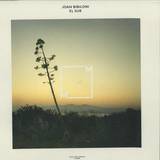
Staying on the Mediterranean coast for their third release, Music From Memory this time shift their attention to the work of Mallorcan musician Joan Bibiloni. TIP!
Primarily a guitarist, Bibiloni was creating music at an early age, releasing his first single at the tender age of 15. In his twenties he formed Spanish progrock outfits Zebra and Euterpe where he would meet Pepe Milan, the two of them becoming the bluesy folk duo 'Milan & Bibiloni'. Bibiloni himself would later go on to play with a number of luminary musicians such as Larry Coryell, Daevid Allen and John Cage to name but a few.
In 1982 Bibiloni set up his own label Blau in order to highlight the muchoverlooked work of musicians not only on his home island of Mallorca but across the Balearic Islands. In doing so he created a platform not only for
local talent but also for his own music to breathe a new life, much influenced by the landscape and life that surrounds the islands.
Whilst Bibiloni's first solo releases on his Blau imprint have stronger echoes of contemporary Jazz fusion of the time, it is on the album known as 'Una Vida Llarga I Tranquila' where Bibiloni really began to experiment with new sounds
and technologies; fusing tape loops, drum computers and synthesizers.
Taking these more electronic infused works as a departure point for the compilation and drawing on material from across his following five albums, 'El Sur' sets out to highlight Joan Bibiloni's unique ambient fusion and sun-drenched Mediterranean beach boogie.
Most Perfect Solitude" ist das sechste Studioalbum von The Third Sound, das am 17. Mai auf Fuzz Club erscheint und ein neues Kapitel für die Berliner Psychedelic-Post-Punk-Band um den isländischen Musiker und Autor Hakon Adalsteinsson markiert.
Geschrieben und aufgenommen wurde das Album in weniger als zwei Wochen, während einer seltenen Lücke in seinem Non-Stop-Tourplan als Gitarrist von Brian Jonestown Massace und seinem neuen Projekt Golden Hours. Auf "Most Perfect Solitude" glänzen schräge 12-Saiter aus den 60ern und luftige Melodien, doch die Platte ist auch nicht ohne ihre dunkleren, schwereren Momente - siehe die schaurige Psych-Rock-Drohne "Veiled" oder "Wasteland", der eine alptraumhafte Vision einer Stadt in Trümmern zur Melodie schwerer Fuzz-Gitarren-Wiederholungen und hypnotischer Drums entwirft.
Most Perfect Solitude" ist das sechste Studioalbum von The Third Sound, das am 17. Mai auf Fuzz Club erscheint und ein neues Kapitel für die Berliner Psychedelic-Post-Punk-Band um den isländischen Musiker und Autor Hakon Adalsteinsson markiert.
Geschrieben und aufgenommen wurde das Album in weniger als zwei Wochen, während einer seltenen Lücke in seinem Non-Stop-Tourplan als Gitarrist von Brian Jonestown Massace und seinem neuen Projekt Golden Hours. Auf "Most Perfect Solitude" glänzen schräge 12-Saiter aus den 60ern und luftige Melodien, doch die Platte ist auch nicht ohne ihre dunkleren, schwereren Momente - siehe die schaurige Psych-Rock-Drohne "Veiled" oder "Wasteland", der eine alptraumhafte Vision einer Stadt in Trümmern zur Melodie schwerer Fuzz-Gitarren-Wiederholungen und hypnotischer Drums entwirft.
One of the shining beacons of the UK post-metal scene, Bossk have steadily built up an unrepentantly loyal following since 2005. Before they reach the big 20, the band are taking this opportunity to take pause and reflect on their past and all the hard graft that has led them to become one of the most lauded bands in the genre. .4, the latest in a series of numbered releases that presents material outside the remit of Bossk’s full-length album output, is a celebration of those 20 years and provides an enticing aperitif for their 3rd album proper, to be released sometime in 2025. As is tradition with these numbered releases, .4 is not a Bossk album in the conventional sense, instead forging a more experimental path by presenting re-worked versions of some old favourites, as well as a smattering of re-recorded songs that only the most obsessed Bossk fan will be familiar with. One deciding factor that emboldened Bossk to celebrate their past is the amicable departure of vocalist Sam Marsh due to his permanent relocation to the United States. The band wanted to give Sam an epic recorded send-off and the colossal 13-minute Events Occur in Real Time provides a fitting farewell for the vocalist, who’s guttural razor-wire screams have provided tectonic shifting textures to the band since their inception in 2005. Acting as the centrepiece of .4, this is the first studio take of the song ever recorded, conceived as it was in 2008, just months before the band went on temporary hiatus.
1981, the leaden years are over, the socialist left is in power in France and the first wave of punk seems a long way off. However, the youth of the day had not said its last word, and bands were springing up all over the place, free radio stations were opening up, fanzines were being published, concerts were being staged on the fly and little by little a scene was forming, a motley crew of kids in revolt, radical activists and just plain old folk passing through.
After having cut their teeth in a variety of more or less confidential bands, in which you'd come across a good number of players from this up-and-coming alternative scene, the members of Guernica moved up a gear, determined to blow on the still-glowing embers of rebel rock. With the shortage of venues the rule at the time, they began by scouring the suburban MJCs, putting on wild concerts and eventually meeting up with the squatters of the Couronnes commune and the members of V.I.S.A., with whom they played an active part in organising concerts in squatted buildings in these relegated areas of the capital.
In February 1983, the V.I.S.A. association and the Abattoir art collective (which included some members of Guernica) organised a concert at the Usine Pali-Kao. That evening, two groups took to the stage in succession: Guernica and a fledgling duo, Bérurier Noir. The evening will go down in the history of alternative rock as one of the key turning points of the period. After the departure of Loran, who played guitar with both bands, Fabrice Benoît joined Guernica on guitar, and the gang continued for a few more months, ending on a high note with a chaotic concert at the Eldorado in Paris.
Until now, it's been impossible to get your hands on any of the band's recordings unless you're lucky enough to own the Paris Mix compilation, the Guernica/Bérurier Noir split or the V.I.S.A. Usine Cascades 1982 cassette. This vinyl, a perfect record of the era, brings together the six tracks recorded by the band at the time.
- 1: Freda Payne - Band Of Gold (Single Mix)
- 2: Chairmen Of The Board - Give Me Just A Little More Time
- 3: Flaming Ember - Westbound #9
- 4: Silent Majority - Frightened Girl
- 5: Chairmen Of The Board - You've Got Me Dangling On A String
- 6: Honey Cone - Girls It Ain't Easy
- 7: Chairmen Of The Board - Pay To The Piper
- 1: Chairmen Of The Board - Everything's Tuesday
- 2: Freda Payne - Unhooked Generation
- 3: Glass House - Crumbs Off The Table
- 4: Chairmen Of The Board - All We Need Is Understanding
- 5: Freda Payne - Deeper And Deeper
- 6: 100 Proof Aged In Soul - Somebody's Been Sleeping
- 7: Honey Cone - Want Ads
- 1: Freda Payne - Bring The Boys Home
- 2: Barrino Brothers - I Shall Not Be Moved
- 3: 8Th Day - You've Got To Crawl (Before You Walk)
- 4: Lucifer - Don't You (Think The Times A-Comin')
- 5: Honey Cone - Sunday Morning People
- 6: Glass House – I Surrendered
- 1: Freda Payne - You Brought The Joy
- 2: General Johnson - I'm In Love Darling
- 3: Chairmen Of The Board - Working On A Building Of Love
- 4: Honey Cone - Stick Up
- 7: 8Th Day – Eeny-Meeny-Miny Mo
- 1: Holland-Dozier Featuring Lamont Dozier - Why Can't We Be Lovers
- 2: Chairmen Of The Board - Elmo James
- 3: Silent Majority - Something New About You
- 4: Barrino Brothers - Try It, You'll Like It
- 5: Danny Woods - Let Me Ride
- 6: Glass House - Thanks I Needed That
- 7: Laura Lee - Crumbs Off The Table
- 1: Warlock - You've Been My Rock
- 2: Laura Lee - Woman's Love Rights
- 3: Holland-Dozier Ft Brain Holland - Don't Leave Me Starvin’ For Your Love
- 4: The Politicians - Free Your Mind
- 5: Harrison Kennedy - Sunday Morning People
- 6: Satisfaction Unlimited - Let's Change The Subject
- 7: 100 Proof Aged In Soul - Nothing Sweeter Than Love
- 1: Eloise Laws - Love Factory
- 2: Freda Payne - We've Got To Find A Way Back To Love
- 3: Brian Holland - I'm So Glad Pt.1
- 4: Honey Cone - If I Can’t Fly
- 5: Tyrone Edwards - Can't Get Enough Of You
- 6: Chairmen Of The Board - Skin I'm In
- 7: New York Port Authority - I Got It Pt. 1
- 1: Chairmen Of The Board - Finders Keepers
- 2: Hi-Lites - That’s Love
- 3: Freda Payne - Two Wrongs Don't Make A Right
- 4: Holland-Dozier Featuring Lamont Dozier - New Breed Kinda Woman
- 5: 8Th Day - She's Not Just Another Woman (Single Mix)
- 5: Eloise Laws - Put A Little Love Into It (When You Do It)
- 6: Melvin Davis - You Made Me Over
- 7: Honey Cone Featuring Sharon Cash – Somebody Is Always Messing Up A Good Thing
- 6: Flaming Ember - Gotta Get Away
Holland, Dozier and Holland are arguably the greatest songwriters ever. More prolific than Lennon and McCartney, they shaped “the Sound of Young America” and propelled the Motown sound in the mid-1960s into a creative stratosphere unmatched by any other independent music label. Their trademark catchy teenage love songs were delivered energetically by previously unknown Detroit groups like The Supremes, the Four Tops, Martha & the Vandellas & Marvin Gaye. Although synonymous with Berry Gordy’s Motown, it was their departure from Motown after a stand-off strike in 1967 and a brutal legal battle that led them to run their own group of labels, Invictus, Hot Wax and Music Merchant. This compilation is a definitive look at this period in history, exploring how H-D-H, under a new guise ‘The Creative Corporation’, drove the next generation of soul music in a myriad of different ways, towards funk, underground disco and jazz. Featuring 55 tracks, this collection documents HDH’s creativity and growth over this seminal 8 year period. During this time the trio developed new artists to rival Motown’s success such as Chairman Of The Board, Freda Payne, Honey Cone, Glass House, Flaming Ember, 8th Day, Laura Lee & Eloise Laws. The collection is complete with a detailed depiction of this period in history by award winning author Stuart Cosgrove who wrote the Soul Trilogy, a series of books on soul music and social change - Detroit 67: the Year That Changed Soul, Memphis 68: The Tragedy of Southern Soul which won the Penderyn Prize, as Music Book of the Year in 2018, and Harlem 69: the Future of Soul. Stuart’s notes detail the relationship with Motown in the final days, the immediate fall out after the trio left Motown and the creation of the new labels Hot Wax, Invictus & Music Merchant
Saltburn is the 2023 black comedy psychological thriller film
written, directed, and co-produced by Emerald Fennell. The film stars a student (Barry Keoghan) at Oxford University, who finds himself drawn into the world of a charming and aristocratic classmate (Jacob Elordi), who invites him to his eccentric family’s sprawling estate for a summer never to be forgotten.
The film became one of the most-streamed films upon its streaming release on Amazon Prime Video in December 2023. It received critical acclaim and several accolades, including nominations for two Golden Globe Awards and five BAFTA Awards.
The music was created by Anthony Willis, who previously scored Fennell’s Promising Young Woman among others. Saltburn is available as a limited edition on white & black marbled vinyl and includes an insert.
Keep It Simple!
That's what Tony Allen told me, whether on stage, in the recording studio or when we were working together on the album "The Source"(Blue Note 2017) in my studio. Obviously, if he repeated it at will, it's because it's so difficult, to express the essential, not to scatter, over-play, over-arrange. So natural for him, so constraining for others! For years he pushed us, the members of his group to develop our projects. I had something in mind, necessarily with him, unfortunately his unexpected demise decided otherwise.
It took a moment to accept his departure, to accept being a voice, to find a new path. The desire to continue the work started together, that of mixing styles, sounds to appropriate them and create new, authentic. The desire also to meet new people, another energy.
After composing music for this project, I asked my friend Ben Rubin, musician and producer to help me record it. I found in NYC what I was looking for, a sense of urgency, that of doing, generous and committed musicians. I knew Jason Lindner, a musician that I have been following for a long time and he was the first person I thought of for pianos and synthesizers. He has this ability to find new and powerful sounds, with a direct and unadorned playing. For the drums, I didn't especially thought about a musician whose playing could come close or far to Tony's. Ben suggested Josh Dion to me, I've been following him since his "Paris Monster" project, I love his ability to make his drums sound like a new instrument by playing the bass synth with his right hand, that forces him to keep it simple! He also plays 2 tracks in drum/synth mode on the album.
I'm also happy that he agreed to sing a song on this album.
So we recorded at the Figure8 recording studio in Brooklyn, Eli Crews providing the sound recording, we decided with Ben to create a powerful and assumed sound from the take. Many biases on the tones, whether on the drums and the keyboards. Back in my studio in Paris, I continued to search, to dig while recording additional saxophones, percussions and keyboards.
I met Tchad Blake during a week-long mixing seminar. His work on the album on is radical.
Keep it simple?
Difficult but I try to remain so on all the phases of evolution of this project, from writing to production, in the improvisation parts. Where I feel it the most is in the immediate joy of playing with Jason and Josh, of tweaking a few sounds in my studio to create the unexpected, surprise in the structures, authenticity. Simple as the desire to go towards something essential, to seek oneself, to find oneself, to doubt but also to invent oneself.
- A1: Magnets 3 52
- A2: Zdarlight (Original) 5 42
- A3: I Want I Want 3 32
- B1: Idealistic 4 08
- B2: Digitalism In Cairo / Departure From Cairo 5 47
- B3: Echoes 3 34
- C1: The Pulse 4 24
- C2: Moonlight 2 51
- C3: Anything New 4 58
- D1: Pogo (Radio Edit) 3 48
- D2: Jupiter Approach / Jupiter Room 6 18
- D3: Home Zone 2 07
- D4: Apollo-Gize 2 19
- E1: Faust 1 16*
- E2: Hot Spot 3 27*
- E3: Kontakt 4 16*
- E4: Maya 1 58*
- E5: Indoor Sunshine 4 09*
Neon Green Vinyl
Idealism Forever is the reissue of Digitalism's genre defining debut studio album from 2007. Now it will be released as a remastered 3 LP set with 2 x 12 " on coloured vinyl and 1 x 12" LP on etched vinyl with bonus tracks, a poster, spot lacquer paint, as a limited edition. The original album double LP is sold out for years.
To date the album tracks have been used in numerous games and commercials. They have been sampled and used in new song interpretations all around the world. The songs have millions of streams over the different platforms and never lost their appeal. The new analogue master of the album shows the songs in their best outfit and the bonus material, which originally was recorded while making the album back in the days, have never been heard before.
Christina Kubisch’s Stromsänger finds this legendary sound artist at the top of her game mixing electromagnetic wave recordings with a score for six voices, creating powerful results. Stromsänger is based on a collaboration with the Norwegian vocal ensemble Trondheim Voices and on a special experience while researching and recording electromagnetic waves in the city of Trondheim.
“The general theme of the composition is the idea of sounds which travel. During a tram ride from the city up to the hills with an old tram I discovered not only stunning views of the surrounding landscape but as well a special soundscape. Wearing a custom made induction headphones, I could hear the normally hidden electromagnetic fields of the tram, which were so impressive and musical to me that I immediately decided to base my piece for Trondheim Voices on this discovery.
As a start, a series of pure vocal recordings were produced by Trondheim Voices while listening to a choice of electromagnetic tram sounds and following score instructions. This material was mixed in my Berlin studio and afterward was played back through a multi-loudspeaker setup into the room of the Elisabeth Church in Berlin and was instantaneously recorded. The emerged recording was played back and recorded again. The process of playing back the previous recording was repeated numerous times, generating numerous “re-recordings”, until the voices sounded aethereal and abstract. The last one of these recordings became the very beginning of the Stromsänger piece.
Part A is based on the electromagnetic sounds of the waiting tram and previously recorded voices. The singers come on stage and start to sing together with their recorded part which slowly fades out while the live singing takes over: a kind of choral for electrical tram waves and voices.
Part B is based on the actual tram ride with strong and intense electromagnetic sounds. The single recordings were treated electronically and were divided into six channels. Each singer has chosen one of these files and improvises with the magnetic sounds as a soloist or in duos or trios.
Part C is based on the itinerary of the tram ride to Lian, where a pilgrim's path starts. The names of the single stops, which have very beautiful and poetic names, are performed together as a kind of "sound poetry". The singers walk around on stage and/or can choose special positions for their performance. The recording of the word "Lian", the final stop, was recorded beforehand and played back and re-recorded several times in the open Norwegian landscape near the final tram stop. The voices slowly disappear and fade out.”
Christina Kubisch, 2024
The sixth studio album, 'Matango!, its title referring to the 1963 Japanese psychological horror film of the same name (directed by Godzilla/kaiju maestro Ishiro Honda) by Australian band The Kill Devil Hills is out on Bang! Records! New album has ten songs, that - according to the band's own words - "entwined in the lyrics are inferences of global unrest and displacement, near future scenarios, climate catastrophe, pandemic vortices, the Simpsons, the grace of women, refugees and boat people, Cold War paranoia, the creative process itself, and of course Australia and its peculiar place in things". Cheery stuff, no? A strange and sinewy beast of an album, it's something of a departure from earlier KDH work: minimal, leering with glitching drums samples, synth swells, empty spaces, and a soup of fat bass tones to float it all in. From the opening ghost radio hums of Survivor Guilt, to the entrancing closing whispers of violin on Weigh of a Woman, this album goes on a pretty strange and serpentine journey. Enjoy listening, as much as we have enjoyed making it.
Channeling a love affair with classic '90s hip-hop, an affinity for otherworldly themes and an ear for raw funk, Barclay Crenshaw uses his given birth name to bare his soul and deliver a slowed-down, emotive collection of collaborations and instrumentals. This self-titled debut album is a left-field departure from his better-known alias, Claude VonStroke, but the quality is undeniably the same. The themes of ancient alien abductions and exploration of time and space are discovered and brought to life over ten tracks that sound like a mixture of gold rope chains and new age enlightenment. Modern organic beats mixed with gorgeous melodic moments and underlying grittiness create an experience that is eclectic, expressive and expansive. Coded art furthers the sense of mystery and the unknown, harking back to the past while gazing into the future.
Synthesizers, Tape Recorders and Analog Machines come together into an enchanting atmospheric album reminis-cent of Eno´s, Jarre´s or Vangelis´ space-romantic compositions.
Resonance is the artistic alias of Javier Pérez Rodríguez, a Canary Islands based producer who began his musical activity in the late nineties, blending cinematic experimental music with dancefloor sounds. After releasing several club-focused releases in recent times, he now presents this new departure - a synth based album for a soundtrack to a non-existent film featuring dreamlike compositions, filled with long, immersive passages that effortlessly blend ele-ments of electronic, ambient, and progressive rock music.
'Valediction' is an ambient ode, an emotional missive departing from a personal and intimate space and expands it to the universe - the cosmos expressed through a lens of ideas and concepts that contrast with its compositional com-plexity. Through this work, the author bids farewell to a stage of his life whilst presenting a new born optimistic and mature vision of parting, naturally transitioning to another phase without collision - a romantic and optimistic escape towards the reality of a recent sensitive time, which may not have been better, but perhaps it was.
'Valediction' is Resonance's spontaneous yet conscious escape to the most endearing realms of his own inner uni-verse, subsequently projecting it outward, in a sharing statement to whoever is willing to listen.
All songs by Javier Pérez Rodríguez
Mastered by Resonance, supervised by Eddy Méndez
Artwork by Aristides Garcia
Released by Keroxen records, 2024
Blue Bendy are kicking off 2024 with news of their highly anticipated debut album ‘So Medieval’ which is being released via state51 on 12 April. Alongside this big announcement the band are sharing the latest new track from the record, ‘Come On Baby, Dig!’, and dates for their UK tour including their largest headline show to date at The Garage in London on 9 May and a special Album Launch Show in the band’s hometown of Scunthorpe to celebrate the release.
‘So Medieval’ captures all the musical foibles, idiosyncrasies and departures from the norm which Blue Bendy have displayed across their previous releases. Expressing their sound over the course of a full record for the first time, ‘So Medieval’ is an explosive mix of genre, atmosphere and emotions. The end result is something rare for a new band: a debut album which is as experimental as it is confident and assured, as tender as it is visceral, as quiet as it is loud, as bloody as it is teary.
Released 25th January, new single ‘Come On Baby, Dig!’ follows on from previously released album tracks ‘Cloudy’ and ‘Mr. Bubblegum’. Simmering down the tempo and darkening the mood, the track stacks forlorn lyrics against an assortment of riffs, tones and textures. The music video, directed by Michael Julings, depicts an unnamed character locked in an existential battle with an immovable black fridge. Starring Laura Schuller, a performance artist recently cast in the Marina Abramović retrospective at the RA, the video also features the band coming together to conjure supernatural powers at the video's climax.
Singer and lyricist Arthur Nolan explains that “Dig is dedicated to an old flame and a city break. I was eat pray loving, digging around for some culture in the wake of breaking up. The wheels came off the trip quickly, and now I won’t go back to Bologna, I’m banned.”
Building on the momentum of their 2022 EP ‘Motorbike’ Blue Bendy are stretching out into vast new sonic terrain. Their following two singles ‘Mr Bubblegum’ - a joyously intricate piece of experimental guitar pop - and the frenetic, propulsive yet incredibly deft sprawl of ‘Cloudy’, saw the band reach new heights creatively. Of the former, The Guardian enthused: “indie is riddled with addled, verbose frontmen right now, but none so rapturous as Blue Bendy’s Arthur Nolan: here he dances all over splayed post-rock and micro-cataclysms.”
Having toured as main support for Squid and Cola as well as playing packed out tents at festivals like End Of The Road and Green Man, Blue Bendy have struck a balance between being obviously skilled musicians, writing complex, layered, overlapping and ambitious compositions, while also utilising space, breadth, and restraint. Their music is bursting with dynamism, exploring push-pull dynamics that results in something ceaselessly unpredictable.
tapetopia 006 In 1983, some more subdued sounds began to waft from the GDR punk underground into the second half of the ’80s. At five to the end of time, it was perpetually striking midnight and the occasional punk band would mix a little laudanum into their potential for aggression. Portents in this vein preceded a dark wave whose foamy crest would break on fog walls of dry ice. Especially in Leipzig and East Berlin, a chain-rattling zeitgeist produced bands that drew from a dark well. Many of these bands arose from the still hot or already cold ashes of punk. The two founding fathers of Neuntage Alt, René Glofke and Taymur Streng (nicknamed “Strangler”), knew each other from the East Berlin punk scene. The third man aboard, Mike Sauer, played drums in the early 1980s for Sendeschluß, a punk band that, lost in thought somewhere in the no-man’s land between punk and post-punk, faded away in 1984. Punk was no longer the order of the day, but it was a form of expression among many and easy to combine. Glofke and Streng found common ground in experimental set-ups with such otherworldly names as Medusa Brahma or Die zeitweilige Erscheinung.
From this far-flung point of departure, a short tunnel led straight into the black light of Neuntage Alt, the coldest star in the low-hanging sky above East Berlin. Neuntage Alt appeared at the end of 1986, during the last blackout phase of the GDR, on the threshold between the underground and the so-called “other bands” – a scene that used the non-socio-critical approach of German Wutwave (“anger wave”) in order to be allowed to perform publicly. In the context of this scene, Neuntage Alt did not belong to the inner circle. Moreover, the band’s subcultural base was initially in Mahlsdorf, on the south-eastern edge of East Berlin. This was where the DIY sound studio of amplitude apostle and great modulator Taymur Streng was situated. Strangler held the position of house electrician and keyboard god in various projects. One of them had the bland alias Mahlsdorfer Wohnstuben Orchester, behind which the avant-garde court chapel of the bungalow studio was concealed. There Taymur also conspired with the East Berlin underground band Ornament & Verbrechen (tapetopia #001). Ronald Lippok of Ornament & Verbrechen remembers how once, at the opening of a joint session, he and his brother Robert attended Taymur’s engaging slide show of his collection of test patterns. Afterwards, they created a piece with the psychedelic title “Das sentimentale UfO”, which sheds an iridescent light on the bizarre atmosphere in the studio. Taymur’s obsession with technology was legendary. The home studio was also his living space; a circuit, a machine park of screwed and soldered equipment, a single keyboard orgy. His own creations were also based on circuit diagrams found in the radio amateur magazine “Funkamateur”. Its somewhat clueless subtitle “Praktische Elektronik Für Alle” (Practical Electronics for All)
The latest album from Australian singer / songwriter Grace Cummings, ‘Ramona’ is a work of raw truth rendered in its most beautiful form. In a departure from the self-produced approach of her 2019 debut, ‘Refuge Cove’, and its 2022 follow-up ‘Storm Queen’ - the Melbourne-based artist worked with producer Jonathan Wilson (Angel Olsen, Father John Misty, Margo Price) and dreamed up a lavishly orchestrated sound that fully accommodates the depth and scope of her vocal prowess