Repress!
In the last few years we’ve seen French DJ and producer Laroye delivering the goods time after time on respected labels such as Atjazz Recordings, Compost, Makin Moves and Foliage. His latest LP just released on Local Talk has been getting big support picking up plays on Radio 1, 6Music, Worldwide FM as well as spins from Natasha Diggs, Gilles Peterson, Craig Charles, Louie Vega, Honey Dijon to name a few. Freerange is proud to welcome him back for the follow up to 2020’s release Be The Change, presenting you with a killer 4 track EP entitled Uku Dance.
Leading the charge, Laroye is joined by influential Detroit artist, DJ, producer and vocalist Javonntte who has written and recorded a brilliant vocal for a track entitled First Sight. Laroye’s fat beats, jazzy chords and soulful touch make the perfect production for Javonntte’s vocals.
Up next we have the Percussive Dub mix of Uku Dance in which Laroye strips things back to the bare bones making for a serious percussion tool work out to spice up your sets.
On Uku Dance a bass-heavy groove is punctuated with vocal chops and deep Rhodes part which adds a moody, late night touch. Just the kind of soulful, dubby, afro track that will get the house dancers throwing down like their lives depended on it!
Closing out the release you’ll find an instrumental version of First Sight.
Search:depend
Loud and explosive or quiet and solemn, post-punk or pre-noise: Vorwärts Rückwärts (ForwardBackwards) are your allies when you have the feeling that everything around you is falling apart. ForwardBackward gives you energy or comfort, depending on your needs.
We get upset. Very. We scream our frustration at the top of our lungs. Loud. But ultimately it doesn't matter at all. Like in the Bild newspaper - fucking blaming alarm every day, and then it doesn't matter at all. Tomorrow we will have already forgotten what we are upset about today and the day after tomorrow we will be upset about things that we have no idea about today. Doesn't matter! The main thing is that it is loud - has a good beat - a driving bass - sharp guitars and the words have a good sound. Until everyone's ears ring and the practice room smells like an old gymnasium. Now finally pressed on vinyl. Actually at least our fourth debut album. Quickly pressed the stop button and finished and finished a small, fine pralined selection. The sound of now. The Sound of everything and nothing. Viva la contradiction.
These outstanding Technics slipmats featuring the skull and headphones dj design will look great on any set of turntables.
Based on iconic, Mexican Day of the Dead imagery, cleverly features a distressed vintage, tattoo style print of classic dj related equipment;
Including turntable tone arms, 7” single adapators, 12” vinyl, cross-faders, speakers, switches and headphones.
These slipmats are suitable for any set of vinyl decks.
Made from the finest but strongest felt material, DMC slipmats are the no.1
choice for djs and vinyl lovers across the World.
Dependable & hard wearing, they are also resistant to dust & other
particles, so will not scuff, scratch or damage vinyl.
Great for your home, studio, club or in competition.
Prisoners Of Love And Hate' is an offering to community, to desires that imprison and liberate, to people in all their divinity and ugliness. Apostille - aka Night School Records’ captain Michael Kasparis - presents is third album with a bang, a bursting ball of NRG, empathy and bristling living.
Like its predecessor 'Choose Life', 'Prisoners…' was recorded at Full Ashram Celestial Garden in Glasgow with Lewis Cook (Free Love) through 2022. A nine song treatise on pop music, trauma, ecstasy and the mundanities between the extremes, Kasparis takes on classic 80s synth pop, 90s house music, 00s trance, wistful balladry, 70s power pop. The thread that runs through the album is a boundless energy, an openness to the moment, to living
the pains and joys equally, open armed.
This is a place of no judgement, of possibility, challenge and comfort. The nine songs on 'Prisoners…' can be read as separate ruminations on the feelings and desires that imprison our experience. Through it all the narrator struggles against them, transported and fooled by love and longing, peering through the bars of anguish, flailing in a cell of emotions. 'Saturday Night, Still Breathing' breaks the album open with an invigorating scream and pounds into the night with a nod to Whigfield, Kasparis’ punk roots and house music. Over a thumping 909 kick and bassline, Kasparis pens a love letter to being with people, the collective energy of hearts in a room, thrumming together, making it through together. Written as private ritual magic, manifesting community during a time of isolation, it’s as if the party is the most important thing in the world. 'Rely On Me' imagines 80s Mute synth pop, Erasure fronted by Bruce Springsteen, romance doomed and forever perfect in the mind. 'Spit Pit' completes the opening triptych of fast paced rollercoasters, an ode to childhood forged out of change and discomfort told with a bold, epic production by Lewis Cook, AFX breakbeats, 160BPM kicks and a commanding vocal performance.
On 'People Make This City', Kasparis eases off the gas, lets the mist blowing in from the Clyde River blow over his version of Glasgow. A wistful ballad about small town gossip and coming through anger to leaving it all behind, it provides some shadow to the bright light of the vibrancy of the album. 'Natural Angel' owes much to 70s and 80s power pop, guitar melodrama, Thin Lizzy and Rick Springfield through the prism of co-dependence in relationships. It’s a theme that’s picked up in slow burner 'Nothing But Perfect', a hazy synth soul-inflected song about building your own mythology, constructing a dream to hide in, to hold on to. The most surprising track of the album, 'Summer of ’03' re-imagines the trance music of early noughties Europe into a lament for an eternal summer or as a fan once put it, “Meat Loaf with a donk on it.” A recognition that all ecstasy has tragedy laced within it, it’s a theme that is sewn throughout the LP and continued on the final song 'Feel Good (You Can Make Me)'. Referencing Shalamar’s 1982 mega hit by way of N-Trance’s piano riffs, the epic closer is riddled with heartbreak, vulnerability and power. It’s a testament to the new confidence in Kasparis’s songwriting, sure, but also to the enduring power of people to come together in mutual dependence and love. If ecstasy is always laced with tragedy, then 'Prisoners of Love and Hate' can always reach out between the bars to meet in the middle, the eternal now.
18 Jahre hat die Welt darauf gewartet!
The Rolling Stones haben ihr neues Studioalbum „Hackney Diamonds“ für den 20.10.2023 angekündigt. Das Album wird 12 komplett neue Originalsongs enthalten.
Die erste Single heißt „Angry“! Sie erscheint am 8.9.2023 auf Maxi-CD und 10inch mit etched B-Seite.
Sie wurde vom GRAMMY ausgezeichneten Produzenten Andrew Watt (Iggy Pop, Ozzy Osbourne, Miley Cyrus) produziert. Begleitet wird „Angry“ von einem Musikvideo, bei dem Francois Rousselet (Nike, Diesel, Pharrell Williams) Regie führte und die Emmy nominierte Schauspielerin Sydney Sweeney (The White Lotus, Euphoria) die Hauptrolle spielt.
In den letzten Jahren haben die Stones immer wieder auf ausverkauften Welttourneen Rekorde gebrochen und 2016 mit ihrem Grammy preisgekrönten Album "Blue & Lonesome" die Albumcharts auf der ganzen Welt angeführt. Letztes Jahr begeisterten sie auf der Sixty-Jubiläumstournee fast eine Viertelmillion Zuschauer in Europa.
„Hackney Diamonds“ wird in verschiedenen Formaten auf CD, Vinyl und Digital erscheinen!
Man With A Gun is the debut long player from Singaporean prog and funk group Funkgus. It has a famously enigmatic toxic blue jacket that lurks you in and musically it is no less intriguing. As well as a passionate cover of King Curtis's 'Memphis Soul Stew' there are plenty of supremely psychedelic sounds. The opener is steeped in funky bass riffs with rock-tinged drum breaks and plenty of raw vocals and from there the grooves come thick and fast, often with plenty of texture and charismatic vocals such as on 'Spill The Wine' and the leggy, expressive sounds of 'Everyday People' with its twisted wah wah guitars.
Works for the Ever Present Orchestra Vol. II continues Black Truffle’s documentation of the late work of legendary American experimental composer Alvin Lucier, who sadly passed away in 2021 at the age of 90. Like the first volume of the series, the two works recorded here were written for The Ever Present Orchestra, an ensemble founded in Zürich in 2016 to perform Lucier’s work exclusively. At the core of the music Lucier wrote for the ensemble is the electric guitar, an instrument he began to explore in 2013. Played with e-bows, in these works electric lap steel guitars take on roles akin to the slow sweep pure wave oscillators heard in many of Lucier’s works since the early 1980s. This strikingly elegant pair of compositions would serve as an ideal introduction to Lucier’s late music for a listener as yet unfamiliar with its graceful exploration of beating patterns and other acoustic phenomenon.
The two pieces have quite different characters, exemplifying Lucier’s ability to harvest a remarkable range of musical results from closely related compositional procedures and concerns. In Arrigoni Bridge (2019), Lucier uses a technique familiar from earlier works such as Still Lives (1995), where sine waves traced the shapes of household objects. Here, three lap steel electric guitars (played by Oren Ambarchi, Bernhard Rietbrock, and Jan Thoben) follow the form of the Arrigoni Bridge that connects Middletown and Portland, Connecticut. The bridge’s two enormous steel arcs become slowly sweeping pitches, alongside which alto saxophone (Joan Jordi Oliver Arcos), violin (Rebecca Thies) and cello (Lucy Railton) sustain long tones, creating a variety of audible beating patterns depending on their distance from or proximity to the guitars. With its stately pacing, warm middle register tones, and rich timbral variety in the sustaining instruments, Arrigoni Bridge is a beautiful example of compositional reduction producing immersive results. Flips (2020), on the other hand, is more austere. Scored for two lap steel electric guitars (Rietbock and Thoben), double bass (Ross Wightman) and glockenspiel (Trevor Saint), the two acoustic instruments played with bows, the piece zooms in on the range of a major second (two semitones). The two guitars sweep in opposite directions within the range, crossing every four minutes; the double bass and glockenspiel sustain long tones, producing beats of different speeds determined by their distance from the guitar tones. This limitation of the tonal range means the music is often dissonant and forces the phenomenon of audible beating to the surface, resulting in a paradoxical music composed entirely of long tones yet alive with pulsating rhythm. Exemplifying Lucier’s ability to uncover near-infinite complexity within seemingly simple materials, Works for the Ever Present Orchestra Vol. II is a fitting tribute to one of the major figures of the experimental music tradition and a testament to the continuing power of his work.
Swapping BPM for GPM (Goosebumps per minute), Dusky’s Life Signs Vol.3 is made from the heart to nourish the soul. to a long-overdue journey to the uncharted territories of Planet Dusky. Completing their triptych for Running Back with four tracks, one of the UK’s most dependable duos shows once again how to connect fun with functionality and funk with efficiency. From the jacking rhythms of early Chicago to the emotive qualities of Detroit and the fever pitch aesthetics of the UK sounds of the 90s or the studies of the contemporary scene, it includes the right choice for each taste and need. Dusky, but not rusty.
Moments of eternity: the first plucks at the strings, a bass note cementing the drift into place a little more than a minute in. The organ drones, iterating unrelivable ancient history, a chiming note of the church. Guitars strings, climbing that stairway to heaven. Gossamer-light when viewed from a distance; up close, the gears grind with a visceral physicality. With BCMC, Cooper Crain and Bill MacKay unite to create Foreign Smokes: provocalogues, equal parts avant-garde noir and fire-and-icy jams to recall bright shades and warm stretches of infinity drawn through the buzzy overdrive of this side of life"s strange and sunny days. Cooper"s organ and synths and Bill"s guitar draw songs from spontaneous statements and elegiac scraps, floating closer, then farther, and closer again to the sounds of the other. Starting with a melody, as set of progressions or even as little as a scale or just a key, gives room for either one of "em to take the lead, depending on where they are or are going at any given time. The reigning motif most often seems to be, to melt and wind around each other"s sound, part of a singular undulation, handed back and forth, a slowly emerging trip up into and through an ideal of exuberance.
- A1: I'm Sorry
- A2: Sweet Nothin's
- A3: Dynamite
- A4: I Want To Be Wanted
- A5: You Can Depend On Me
- A6: It Started All Over Again
- A7: Break It To Me Gently
- A8: Will You Love Me Tomorrow
- B1: Fool No.1
- B2: Emotions
- B3: That's All You Gotta Do
- B4: Dum Dum
- B5: All Alone Am I
- B6: Heart In Hand
- B7: Speak To Me Pretty
- B8: Everybody Loves Me But You
It was in early 1960, with Sweet Nothin's, that things really took off for
Brenda Lee on both sides of the Atlantic. Like all of her hits, it was
recorded in Nashville by legendary hit-maker Owen Bradley who produced hits for Patsy Cline, Loretta Lynne and Kitty Wells.
He was the man credited as the creator of "the Nashville Sound". With just five minutes left at the end of a session, Brenda cut I'm Sorry and in the Summer of 1960 it would become her first U.S. No.1. A second U.S. No.1 followed in I Want To Be Wanted. Amidst the overwhelming sweep of the British Invasion in 1964, she retained her UK following for five successive years, Brenda Lee was voted Best World Female Vocalist in the New Musical Express poll.
- A1: Dungtitled (In A Major)
- A2: Articulate Silences Part 1
- A3: Articulate Silences Part 2
- A4: The Evil That Never Arrived
- B1: Apreludes (In C Sharp Major)
- B2: Don't Bother They're Here
- B3: Dopamine Clouds Over Craven Cottage
- C1: Even If You're Never Awake (Deuxieme)
- C2: Even (Out) +
- C3: A Meaningful Moment Through A Meaning(Less) Process
- D1: Another Ballad For Heavy Lids
- D2: The Daughters Of Quiet Minds
- D3: Hiberner Toujours
- E1: That Finger On Your Temple Is The Barrel Of My Raygun
- E2: Humectez La Mouture
- E3: Tippy's Demise
- F1: The Mouthchew
- F2: December Hunting For Vegetarian Fuckface
2023 Repress
"I simply feel that they are making the most important music of the 21st century." Ivo Watts-Russell - 4AD label founder
"Crushingly sad, lightly melancholic, or even uplifting, depending on the state of mind of the hearer... a sound divorced from intention and its ambiguity is its strength." Pitchfork
"The sound of deep sea disintegration... a work of art." Tiny Mix Tapes
"Music of such quiet and devastating power it can silence a room in ve minutes without the volume knob on the stereo being manipulated. Deeply moving... virtually anyone who encounters it will be in some way moved by the impure music it contains." AllMusic
"Traces the uid contours of a void through diaphanous lines that reveal all of its miasmal abstraction." Dusted
"A two-hour juggernaut of careful dynamics and warm tones." XLR8R
The classic quote originally coined at the DMC World DJ Championships and now an eye-catching design that will enhance the features of your decks.Made from the finest but strongest felt material, DMC slipmats are the no.1 choice for djs and vinyl lovers across the World.Dependable & hard wearing, they are also resistant to dust & other particles, so will not scuff, scratch or damage vinyl.Great for your home, studio, club or in competition.DMC's superior slipmats are your turntable and vinyl's best friend.
Woods are in bloom again, inviting you to disappear into a new spectrum of colors and sounds and dreams on Perennial. Formed in Brooklyn in 2004, Woods have matured into a true independent institution, above and below the root, reliably emerging every few years with new music that grows towards the latest sky. Operating the Woodsist label since 2006 and curating the beloved homespun Woodsist Festival for the musical universe they’ve built, Perennial is the sound of a band on the edge of their 20th anniversary and still finding bold new ways to sound like (and challenge) themselves. Perennial grew from a bed of guitar/keyboard/drum loops by Woods head-in-chief Jeremy Earl, a form of winter night meditation that evolved into an unexplored mode of collaborative songwriting. With Earl’s starting points, he and bandmates Jarvis Taveniere and John Andrews convened, first at Earl’s house in New York, then at Panoramic House studio in Stinson Beach, California, site of sessions for 2020’s Strange To Explain. With a view of the sparkling Pacific and tape rolling, they began to build, jamming over the loops, switching instruments, and developing a few dozen building blocks. The album’s resulting 11 songs, 4 of them instrumental, are in the classic Woods mode--shimmering, familiar, fractionally unsettling--but with the half-invisible infinity boxes of Earl’s loops burbling beneath each like a mysterious underground source. From source to seed to bloom, each loop unfolds into something unpredictable, from the jeweled pop of the aching “Little Black Flowers” to the ecstatic starlit freak-beat of “Another Side.” They are blossomings both far-out and comforting, like the Mellotronic cloud-hopping of “Between the Past,” or sometimes just plain comforting, like the widescreen snowglobe fantasia of the instrumental “White Winter Melody,” touched by Connor Gallaher’s pedal steel. Woods have long used the studio as a place of songwriting, naming 2007’s At Rear House after their shared dwelling and recording space. But Perennial also carries with it an even longer view of Woods. Emerging from the process alongside the music was Earl’s reflection that “perennial plants and flowers are nature’s loops,” an idea rolling under the album’s lyrics like the loops themselves. It certainly applies to the band, too, who have quietly tended to a long, committed project of being a band in the weird-ass 21st century, both individually and communally. Though separated by coasts, the communal sprit carries through Earl, Taveniere, and Andrews’ collaboration, a living embodiment of the freedoms rediscovered every time a new collectively created piece of music emerges. For nearly two decades, Woods have survived subgenres, anchored in the fertile soil below hashtags like lo-fi and freak-folk and psychedelic and indie, and built a shared history that’s something to marvel at. As the flagship band for Woodsist, they’ve accumulated a striking extended family of collaborators (and Woods alum) that have made the label one of the most dependable imprints in the kaleidoscopic low-key underground. It’s a glow that’s transferred whole to the blissed-out Woodsist Fests held in Accord, New York in recent years, which have folded in a wide range of diverse sounds, from the the jazz cosmoverse of the Sun Ra Arkestra and adventurous legends Yo La Tengo, to a hard-to-even-count family tree of contemporaries, like Kevin Morby (who served a few tours of duty as Woods bassist) and Kurt Vile (who released his 2009 debut on Woodsist), a living community in sound. Perennial carries all of this, shaped by decades, but made in the moment, and here right now. The smell of the flowers doesn’t remain, but sometimes the flowers do. Jesse Jarnow Recorded and mixed by Jarvis Taveniere at Panoramic House in Stinson Beach, CA with additional recording at The Ship in Los Angeles, CA and Cottekill Bird Sanctuary in Stone Ridge, NY. Produced by Jarvis Taveniere and Jeremy Earl. Mastered by Timothy Stollenwerk at Stereophonic Mastering in Portland, OR. Jeremy Earl - vocals, guitars, drums, percussion, sk-5, mellotron, vibraphone, autoharp, loops Jarvis Taveniere - guitar, bass, upright bass, hammond, vocals John Andrews - piano, organs, mellotron, drums, vocals Connor Gallaher - Pedal Steel Kyle Forester - sax, wurlitzer
- A1: The Last Of Us 00 01:07
- A2: Get Out 00 07:13
- A3: All Gone 00 01:34
- A4: The Quarantine Zone 00 01:45
- A5: Don't Look 00 02:07
- A6: Forsaken 00 00:42
- A7: Breaching The Wall 00 03:44
- A8: Hope 00 00:41
- A9: Haven 00 01:33
- A10: Resolve 00 01:48
- B1: The Swarm 00 02:08
- B2: Long Long Time By Nick Offerman 00 01:12
- B3: It Can't Last (Sunset) 00 01:48
- B4: Raiders 00 01:46
- B5: Longing 00 00:56
- B6: All Gone (Affliction) 00 01:22
- B7: Vanishing Grace 00 01:25
- B8: All Gone (Purpose) 00 01:21
- B9: All Gone (Isolation) 00 00:51
- B10: Warning Signs 00 02:45
- B11: Salvation 00 01:25
- B12: Subterranean 00 02:49
- B13: The Last Of Us (Prevail) 00 00:48
- B14: Bravery 00 01:26
- C5: Left Behind (Together) 00 01:08
- C6: Fleeting 00 00:54
- C7: Vanishing Grace (Devotion) 00 00:51
- C8: Never Let Me Down Again By Depeche Mode 00 04:48
- C9: The Choice 00 01:23
- C10: Left Behind 00 03:11
- D1: All Gone (Embrace) 00 01:30
- D2: Complications 00 02:32
- D3: Collateral 00 01:08
- D4: Resolve (Isolation) 00 01:19
- D5: Unbroken 00 01:28
- D6: All Gone (Elegy) 00 00:44
- D7: Wounds 00 01:23
- D8: The Last Of Us (Vengeance) 00 02:59
- D9: All Gone (In Vain) 00 01:05
- D10: All Gone (Ephemeral) 00 01:48
- D11: The Path 00 01:40
- D12: All Or None By Pearl Jam 00 04:37
- C1: Survive 00 04:32
- C2: A Great Man 00 01:58
- C3: All Gone (Flashbacks) 00 01:10
- C4: Never Let Me Down Again By Jessica Mazin 00 03:29
Der Soundtrack zur HBO-Serie "The Last of Us" basiert auf der beliebten Musik und Klangwelt des gleichnamigen Videospiels. Geschrieben wurde der Soundtrack vom mit einem Academy Award ausgezeichneten Komponisten Gustavo Santaolalla und von David Fleming.Die intime, gitarrenbetonte Klanglandschaft spiegelt die Emotionalität der Serie wider und nimmt die Hörer mit auf die ungewisse Reise durch die USA in einer postapokalyptischen Welt, zwanzig Jahre nach der Zerstörung der modernen Zivilisation durch eine, von einem Pilz verursachte Epidemie.
Based on the critically acclaimed video game of the same name developed by Naughty Dog for the PlayStation® platforms, The Last of Us is written and executive produced by co-creators Craig Mazin (Emmy® Award-winning creator of HBO’s “Chernobyl”) and Neil Druckmann (creator and writer of the award-winning “The Last of Us” franchise and Naughty Dog Co-President).
The Last of Us takes place twenty years after modern civilization
has been destroyed by a viral outbreak. Joel, a hardened survivor, is hired to smuggle Ellie, a 14-year-old girl, out of an oppressive quarantine zone. What starts as a small job soon becomes a brutal, heartbreaking journey, as they both must traverse the U.S. and depend on each other for survival.
The vinyl release to the acclaimed series contains soundtrack
highlights from the show. Featured are score tracks by composer Gustavo Santaolalla, with additional music by David Fleming as well as songs by Depeche Mode, Pearl Jam, Jessica Mazin & Nick Offerman.
The package contains 2x vinyl, standard weight at 140g, 1x green and 1x clear, a double-sided poster of the show’s key art, spot gloss and soft touch on the gatefold and an insert featuring liner notes by Neil Druckmann, Craig Mazin, Gustavo Santaolalla & David Fleming and images from the show.
Featuring contributions from Brittany Howard, Daniel Tashian (Kacey Musgraves, Demi Lovato), Julien Baker + more. Since moving to Nashville to start their music career in 2012, Becca Mancari has been lauded for their dextrous songwriting and prodigious guitar playing. Their sophomore album The Greatest Part, released in 2020, was an indie rock opus that garnered acclaim from The New York Times, NPR, and more. After its release, however, Mancari was despairing. An illness in their family, coupled with a realization that their alcohol dependency had become untenable, led Mancari to begin the hard work of taking ownership of their existence by mending broken relationships and investing in their mental health. "I didn't realize it then, but looking back, I was a passenger in my own life," Mancari says. The transformative period of self-reckoning was the catalyst that ultimately steered Mancari to write and produce their triumphant new album, Left Hand. After a disheartening studio session with an outside producer, Becca became convinced that they were capable of rendering their vision independently. Close friend and musical ally Juan Solorzano, who has played on all of Mancari's albums since the debut of Good Woman in 2017, joined them in the studio to co-produce the majority of the record. In addition, Daniel Tashian (Kacey Musgraves, Demi Lovato) co-wrote and co-produced the song "Don't Close Your Eyes," encouraging Mancari to track every instrument on the initial demos. As much as self-producing this album was an act of resilience and growth in one's own craft, Mancari brought trusted friends like Brittany Howard, who they play with in Bermuda Triangle, Julien Baker and Zac Farro into the process. Insecurities that had dogged Mancari since childhood couldn't weather the force of energy in that studio, where they executed decisions with newfound certainty. The title track, "Left Hand," is named for the Mancari family crest. After a lifetime spent feeling like they didn't belong, Mancari unlocked a perfect metaphor in the crest: "In many cultures children born with a dominant left hand were taught not to use that hand, and were told that using the right hand was `normal' and `correct.' Similarly, queer children are often times told that it's not `normal' for them to love who they love and that they need to `change.'" On Left Hand, Mancari offers the listener a collection of songs that should be played in moments when we are in need of reassurance and encouragement. No song exemplifies this better than the ebullient track "Over and Over," which is a reminder to friends that happiness doesn't need to be fleeting. "I wanted to write a queer pop song that has meat on its bones," they say. Inspired by one of many reckless and joyful hangs with dear friends in Nashville, the enlivening pop song makes a promise to them, and to the greater community Mancari embraces on this album. "There is something to the feeling/ Head hanging out of the window/ Being ok that we don't know," sung on the chorus over a beat replete with congas and shakers. What follows is a promise to anyone who ever feels like the greatest moments of their life are disappearing in the rearview: "We can have it like we used to, over and over and over and over again." For Fans of boygenius, Phoebe Bridgers, Julien Baker, Julia Jacklin, Caroline Rose, Miya Folick, Molly Burch, Widowspeak.
- Alone In The Morning Alley
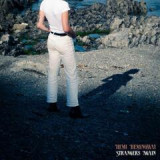
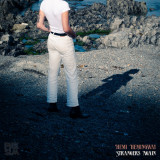
- Strangers Again
- Dreamin' Of You
- Green Envy
- It's So Cruel (Lovin' You)
- January Lake #3
- Now That You Know (We Can't Pretend You Don't)
- Hopelessly Dependent On You
- Burn Your Fires
- Don't Wanna Hurt U
WHITE/BLUE VINYL[22,65 €]
With the rock'n'roll panache of a dive bar matador and the emotional
force of a knife in the guts, Hemi Hemingway makes music that thrills,
spills and breaks hearts
The effortlessly slick New Zealand star has a connoisseur's ear for the finest
parts of musical history, sweeping 60s rock, 50s sheen and 80s romanticism into
the present day, refurbishing them and refashioning them into something new
and fresh.
Debut LP "Strangers Again" is the sound of a starry-eyed dreamer, taking in the
shock of meeting destiny head-on, and figuring out their place in the rough and
tumble of life. It brings together candle- slow burning ballads, soaring, epic
highway rock and thunderous torch songs to soundtrack the sky falling in. But it's
much more than that, a thoughtful and heartfelt exploration of modern themes, of
relating to a world that sometimes lifts you up, sometimes lets you down, and
everything in-between.
With the rock'n'roll panache of a dive bar matador and the emotional
force of a knife in the guts, Hemi Hemingway makes music that thrills,
spills and breaks hearts
The effortlessly slick New Zealand star has a connoisseur's ear for the finest
parts of musical history, sweeping 60s rock, 50s sheen and 80s romanticism into
the present day, refurbishing them and refashioning them into something new
and fresh.
Debut LP "Strangers Again" is the sound of a starry-eyed dreamer, taking in the
shock of meeting destiny head-on, and figuring out their place in the rough and
tumble of life. It brings together candle- slow burning ballads, soaring, epic
highway rock and thunderous torch songs to soundtrack the sky falling in. But it's
much more than that, a thoughtful and heartfelt exploration of modern themes, of
relating to a world that sometimes lifts you up, sometimes lets you down, and
everything in-between.
Joshua Ray Walker announces NEW RECORD “What Is It Even?” - lending his signature alt-country style to iconic pop songs - paying homage to female-identified powerhouse vocalists and their influence on global culture. Launching with his reimagination of Lizzo’s “Cuz I Love You,” Walker pushes himself and his band to respectfully and artfully build a bridge between two seemingly polar styles of music. What Is It Even? Album Rollout 6/2 - “What Is It Even?” Preorder launch & IG1 “Cuz I love You” 7/7 - "Linger" 8/4 - “What Is It Even?” Street Date The catalyst of Joshua Ray Walker’s new album, What Is It Even?, was sparked on the patio of the Tulsa, Oklahoma music venue and dive bar Mercury Lounge, a fitting origin story for any country record. But this is far from an ordinary country record. It was on that Tulsa patio, deep into tour, when Walker and drummer Trey Pendergrass were half joking about what their gospel jump blues version of Whitney Houston’s “I Wanna Dance With Somebody” would sound like, wondering “what if the Blues Brothers covered a Whitney Houston song?” At that point, it was still unclear how the Dallas native would follow up his trio of critically acclaimed, interconnected albums, all of which were packed tight with character-driven songs that put multiple national-tours worth of crowds on the precipice of staining their shirts with either beers or tears, depending on the song. The third of the trio, See You Next Time, led to Walker appearing on The Tonight Show and CBS Saturday Morning, brought with it performances at the Ryman Auditorium in Nashville and Gruene Hall in Texas, landed him on Rolling Stone’s “Best of 2021” list, and prompted SPIN to call him “one of country’s most exciting storytellers.” Those stories about dive bar dwellers running out of last chances made listeners feel a gauntlet of emotions. What Is It Even?, a 10-track covers album consisting of songs made famous by female pop acts, produced with John Pedigo and arranged alongside his touring band of Pendergrass, bassist Billy Bones, and pedal-steel player Adam Kurtz, was born out of wanting to make people feel joy.
Mary Jane Leach is a composer focussed on the physicality of sound, its acoustic properties and how they interact with space. She has played an instrumental role in NYC’s pioneering Downtown scene alongside Arthur Russell, Ellen Fullman, Peter Zummo, Philip Corner and Arnold Dreyblatt, as well as devoting years to the preservation and reappraisal of Julius Eastman’s work since his death in 1990, compiling the »Unjust Malaise« 3CD set in 2005 and editing the 2015 book »Gay Guerrilla: Julius Eastman and His Music«. »Woodwind Multiples« is her second album for Modern Love, following »(f)lute songs« (2018).
»Woodwind Multiples« features four pieces for multiples of the same instrument: four bass flutes, nine oboes, nine clarinets, and seven bassoons. Each piece works closely with the unique sound of each instrument, combining pitches that create other, sometimes unexpected, tones, primarily combination and interference tones, as well as rhythmic patterns. What you hear is what happens naturally - there is no processing or manipulation.
»8B4 (1985/2022)«, played by Manuel Zurria, is for four bass flutes. It is a revision of 8x4, which was written in 1985 for the DownTown Ensemble and was only performed once, due to its unusual instrumentation: alto flute, English horn (originally bass oboe), clarinet, and voice.
»Xantippe’s Rebuke« (1993) was written for Libby Van Cleve, for eight taped oboes and one live, solo oboe. The eight taped parts are equal and dependent, while the solo part is meant to be a solo with the tape as accompaniment. The piece works with the unique sound of the oboe, starting with unison pitches that create the richest sound, building the piece from there. Pitches and rhythmic patterns that occur naturally are notated and then played later, which in turn create other pitches and rhythmic patterns. So, in effect, the nature of the oboe and its natural sound determine the direction of the piece.
»Charybdis« (2020), played by Sam Dunscombe, is for solo clarinet and eight taped clarinets. It combines a somewhat obscured reference to Weep You No More, a John Dowland piece, which combines with the sound phenomena created from the melody and supporting chords of the Dowland.
»Feu de Joie« (1992) was written for bassoonist Shannon Peet and is an homage to the bassoon and its wonderful sound. It is for seven parts—six taped and one »live.« The taped bassoons combine to create a bed of sound that exploits the unique qualities of the bassoon, creating combination and interference tones, starting off with unison pitches, creating a rich sound that builds from there. Most of the subsequent pitches and phrases occur naturally, and are then notated later on in the piece, which in turn creates other notes and phrases.