The second instalment from London Odense Ensemble digs deeper into the group's vision of what modern psychedelic jazz should sound like. Cut from the same sessions as Jaiyede Sessions vol. 1, released last summer, vol. 2 presents a more nuanced approach to the material. On this set the ensemble focuses on shorter, layered pieces - travelling from deep spiritual jazz grooves to gorgeous free-flowing minimalism to full-on acid jazz. There's echo-drenched flutes being absorbed into layers of analog synth pads and guitars, bossa beats and double bass sequences merging with electronics. It's an intoxicating mélange of sounds and styles, spanning wide temporal and geographical distances. London Odense Ensemble came together when two of the finest exponents of London's flourishing jazz scene, flautist and saxofonist Tamar Osborn and keyboard specialist Al MacSween, came over to Denmark to explore new sounds with Causa Sui's Jakob Skott and Jonas Munk, as well as local bass player Martin Rude. For two days the group laid down grooves and ideas and experimented in the studio, and later the best segments were edited and mixed by Jonas Munk, who took a somewhat liberal approach to the mixing process, often dyeing the material with external effects and synthesizers. Jaiyede Sessions are the kinds of records that defy genre-terms, yet have its own instantly recognizable fingerprint. It carries a unique shared vision between the players of what modern psychedelic jazz sounds like. bios: Tamar Osborn: Saxophonist, composer and multi-wind instrumentalist is the creative force behind modal jazz ensemble Collocutor (On The Corner Records). She is a member of the Dele Sosimi Afrobeat Orchestra, performs and collaborates regularly with Sarathy Korwar, Jessica Lauren, Emanative, Ill Considered and DJ Khalab. Al MacSween: Keyboard player & founding member of Kefaya. Collaborations include American jazz legend Gary Bartz, Syrian qanun master Maya Youseff, London Community Gospel Choir, Palestinian jazz singer Reem Kelani & kora player Kadialy Kouyate. Martin Rude: Multi-string instrumentalist & lead singer in Sun River & Edena Gardens with members of Papir & Causa Sui. Jakob Skott: Drummer in Causa Sui with a slew of side projects on El Paraiso, including Chicago Odense Ensemble, Jonas Munk: Guitarist in Causa Sui & studio wizard on most releases on El Paraiso.
Suche:desert
- A1: Mamadou Tangoudia - Kori
- A2: Halima Kissima Touré - Koolo Fune
- A3: Lassana Hawa Cissokho - Ñogome
- B1: Hadja Soumano - Nteri Diaba
- B2: Naïny Diabaté - Sankoy Djeli
- B3: Mah Kouyaté - Soso
- C1: Halima Kissima Touré - Alla Da Fo Ña
- C2: Ami Traoré - Tenedo
- C3: Babani Koné - Soyeba
- C4: Kaniba Oulé Kouyaté - Songne Bela
- D1: Diaby Doua - Boliñaame
- D2: Diobo Fode - Yexu
- D3: Halima Kissima Touré - Duna
- D4: Hadja Soumano - Ayebo
The Soninke collective consciousness finds its origins in a founding myth, a blood pact: the legend of Biida and the decadence of the empire of Ghana or Wagadu (evoked by Léopold Sédar Senghor as a land of plenty in his poem Le Kaya Magan). From the 3rd century AD, gathered in the region of Sahel, on the edge of the Sahara desert, the Soninko ruled over their kingdom and its capital Kumbi Saleh. According to folklore, they were blessed with abundant rain and nuggets of gold could be picked directly from the ground.
They owed this prosperity to a providential but cruel protector: the Wagadu Biida, a seven-headed serpent who lived at the bottom of the Kumbi well. Every year, as a reward for his favours, the Biida demanded an offering: the life of the most beautiful virgin woman in the community. Sacrifices took place for generations, until the 13th century AD, when fate chose Siya Yatabéré, Maamadi Sehedunxote's sweetheart...
Centuries later in 1977, Gaye Mody Camara, a young Soninke raised in Mali's Kayes region, settled in France to found his own empire. Initially selling wax, kola nuts and other goods in his Parisian outlets, he rapidly started distributing cassette tapes and eventually producing a multitude of recordings for his own label: Camara Production.
Crossing paths and collaborating over the next four decades with legendary artists, griots and industry moguls like Boncana Maïga, Jean-Philippe Rykiel, Ganda Fadiga, Diaby Doua or Ibrahima Sylla, Camara became one of the great independent music producers of his generation, and a pilar of the Parisian Soninke diaspora.
Released in close collaboration with Gaye Camara and with the assistance of Daouda N'diaye, one of A.P.S' (Association pour la Promotion de la langue et de la culture Soninké) historical members, this selection of songs and accompanying notes aim to shed a light on an intricate culture and its modern music, injustifiably unknown outside of West Africa and the various Soninko diasporas around the world.
From Malian Zouk to Mauritanian Reggae and other psychedelic groovers originally released on cassettes or digitally, we have given the utmost attention to bringing this music to a new format. It has been carefully remastered and pressed on a couple of 180g vinyls, with riso printed liner notes.
- Limitierte goldene 150G Vinyl mit bedruckter Innenhülle und MP3 Downloadkarte
- A1: Kronos Island: 1St Mvt
- A2: Kronos Island: 2Nd Mvt
- A3: Kronos Island: 4Th Mvt
- A4: Kronos Island: 6Th Mvt
- B1: Ares Island: 1St Mvt
- B2: Ares Island: 2Nd Mvt
- B3: Ares Island: 4Th Mvt
- B4: Ares Island: 6Th Mvt
- C1: Chaos Island: 1St Mvt
- C2: Chaos Island: 2Nd Mvt
- C3: Chaos Island: 4Th Mvt
- C4: Chaos Island: 6Th Mvt
- D1: Rhea Island
- D2: Ouranos Island
- D3: Theme Of Starfall Islands
- D4: Theme Of Koco
Released in partnership with SEGA of Japan and composer Tomoya Ohtani, The Music of Starfall Islands is a collection of beautiful instrumental and classical-inspired tracks which are used as the background music for the various islands in Sonic Frontiers. The music for each island is presented as a suite, containing several movements that layer upon one another and build up to a climax, each with its own distinctive tone and feel, much like the islands themselves, which range from green meadows, to arid deserts, volcanoes and beyond. The music, composed solely by Tomoya Ohtani, is often stripped down, melancholic, and unexpectedly experimental, featuring an array of unusual sound sources (including Iranian percussion, Celtic vocal samples and Armenian folk instruments). In other moments, it is often rhythmic and emotive, with the addition of subtle electronics and the grandiose strings of The Nashville Scoring Orchestra.
While this release is by no means the complete soundtrack to Sonic Frontiers, we are thrilled to be able to present these beautiful and intriguing tracks as a collection on their own. With its downbeat tone and new compositional approaches, this music is unlike any Sonic soundtrack that has come before and may well subvert the expectations of some long-term fans, but should also surprise and delight audiences both new and old.
As Tomoya Ohtani explains in his liner notes for this release: “I wanted to create an atmosphere for each song that, despite the sadness it carries, also has a glimmer of hope. I do not believe there are many other pieces of Sonic game music that focus so much on the atmosphere as the tracks on Sonic Frontiers do.”
- A1: Lous And The Yakuza - Ciel - 2 : 11
- A2: Lous And The Yakuza - Trésor - 3 : 08
- A3: Lous And The Yakuza - Hiroshima - 2 : 47
- A4: Lous And The Yakuza - Monsters - 3 : 11
- A5: Lous And The Yakuza & Damso - Lubie - 2 : 29
- A6: Lous And The Yakuza - Yuzu Balade - 3 : 11
- B1: Lous And The Yakuza & Benjamin Epps - Stop - 0 : 54
- B2: Lous And The Yakuza - Kisé - 2 : 11
- B3: Lous And The Yakuza - Takata - 2 : 29
- B4: Lous And The Yakuza - La Money - 2 : 58
- B5: Lous And The Yakuza - Autodéfense - 2 : 44
- B6: Lous And The Yakuza - Interpol - 2 : 21
Lous and the Yakuza commence à peine à changer la face de la musique francophone. Elle a débarqué en 2020 avec son premier album Gore, et sa flopée de titres personnels, Dilemme (70 millions de streams), Tout est gore ou encore Solo (6 millions de streams), se voyant nommée dans la catégorie Révélation aux Victoires de la musique l'année suivante. Son deuxième opus, que Lous appelle Iota, va plus loin dans sa volonté de proposer un son singulier. Elle y déploie une musique éclectique sans coquetterie, ni calcul. L'album est un statement sur l'amour dans une forme rare : ce qui reste, une fois que la passion a déserté. Les titres égrènent les effusions, les déceptions comme dans ce jeu enfantin où on arrache les pétales de fleurs pour décrire son état amoureux. (Je t'aime) Un peu, beaucoup, passionnément, à la folie, plus du tout... un Iota. Lous nous refait le film de ses relations dans un projet produit en partie par le fidèle El Guincho (Rosalía) dans toute l'incandescence où la mène les errements de son coeur. D'ores et déjà adoubée par la critique, on a récemment pu la retrouver en Une de Vogue France ou encore en interview dans les Inrocks.
Cardinal Fuzz and Centripetal Force (North America) announce First Welcome, the eighth full length album from the ever evolving, veteran psychonauts White Manna. The album is being presented in a 500 copy vinyl pressing and will be made available for preorder on November 12th. The official release date is December 10th. White Manna's longevity as one of the leaders of the modern psychedelic movement is attributed to their willingness to introduce new elements to their sonic repertoire. Initially, these moves were subtle, but as the band has moved on through the years, these moves have become much more pronounced, always leaving listeners wondering what is in store for them as new releases are announced. So, here we are with First Welcome, an album that features warbled country leanings, airy blooms of ambience, and occasional hints of a German yesteryear, all implemented into the band's signature hazy and spacey mosaic of sound. None of these developments are unexpected, as they do build off of their previous album ARC, but here we see the band expand these elements and really make them their own. It should be noted that First Welcome is a product of the COVID era, with much of the recording happening in quarantine or while socially distanced. The band's process relied on communicating via email and sending music files back and forth. For White Manna this made the world of COVID both more fun and challenging, and they used the opportunity to get friends in different places to overdub tracks. Backing vocals and slide guitar were recorded while camping in the Mojave Desert. The saxophone was recorded in Liverpool. England. The trumpet sounds and some of the passages on the Rhodes were laid down in Northern California, and much of the vocals, piano, and synthesizer tracks were recorded in Costa Rica. As a result, the sound of First Welcome is reflective of the circumstances of these contemplative times. White Manna is recommended for listeners of everything from Hawkwind to Harmonia - and everything in between.
'It sounds like Roedelius remixing a Spacemen 3 track'
Prolific Japanese producer T5UMUT5UMU has built up a reputation in the last few years for his ability not just to recreate club styles but to flip them into almost unrecognizable dancefloor hybrids. "Asyl" follows a blistering run of Bandcamp releases where T5UMUT5UMU has melted together gqom and techno, deconstructed grime and welded dubstep to traditional music from Japan and India. Here, he's operating completely off the grid, pulling raw materials from across the globe and hammering them into confounding shapes and patterns. On its surface, 'Fireball' sounds like a liquid metal approximation of South African gqom, but move in closer and you can make out dubstep bass squelches, trap hats, and industrial techno jet propulsion filling in the gaps with rubberized mortar. 'Desert' is the EP's most lightheaded cut, a psychedelic percussive spiral that curves micro-tuned mbira clangs around bee sting bass, aerated noise blasts and sub-aqueous kicks. It's a hard track to place, but fits in somewhere between Donato Dozzy, Menzi and 33EMYBW, all shifting rhythms and precision-edited sound design. 'Sea of Trees' retains this momentum, pushing the tempo and interspersing woodblock vibrations with syncopated bass drums and goosebump-inducing synths, while closer 'Bottomless Valley' shifts back into a gqom framework, shuffling the expected pulse with a powerful dembow swing, half step subs and Indian-inspired rattles. "Asyl" is a varied but shockingly coherent statement from an enigmatic producer who refuses to confine himself to a single path, and at a time when "cross-genre" is the norm rather than the exception, it's refreshing to witness a producer who's unafraid to truly make stylistic left-turns, rather than simply mash together top-level aesthetics.
The Belgian minimal synth band's three releases – a cassette and two vinyl EPs – were all titled »Against The Dark Trees Beyond«. This compilation collects the songs from these records.
"They were interesting times, the early eighties. Against a backdrop of cold war and economic crises, the DIY attitude of the earlier punk movement had spawned near countless new genres where artists and bands broke the three-chord guitar mould and experimented with new content matter, singular song structures and – in many cases – new instruments. Synthesizers became affordable and were no longer the sole privilege of rock millionaires. All around the globe, musical creativity boomed as never before, and Belgium was no exception: Digital Dance, Snowy Red, The Names, Pseudocode, Marine, 1000 Ohm, De Kommeniste, M.Bryo & D.M.T., De Brassers, Struggler, Siglo XX are but a few legendary names of bands and artists who started making a name for themselves.
In Leuven, things were happening as well. Until then, the music scene in this rather provincial town had been dominated by straightforward rock and blues acts. Not for much longer, though: in places like Arno'z and (later) The Gladhouse, where young budding artists met with kindred spirits, bands were often formed on the spot and, more importantly, started to make ripples.
Ludo Camberlin and Karel 'Bam' Saelemaekers already had a certain track record in Leuven's burgeoning music microcosm. But what they shared would become the cornerstone of A Blaze Colour (Against The Dark Trees Beyond): a fascination for new forms and instruments, a penchant for sonic adventure and a profound love for gripping songs. The full band name, by the way, was inspired by a phrase from the Irish-American novelist J.P. Donleavy, a writer who belongs in the definitely-worth-checking-out section.
After appearing on the first No Big Business LP (1981) with the instrumental 'Fisk', A Blaze Colour's first proper release, as was so often the case in those days, was a self-produced cassette. The music – which would later be dubbed 'minimal' – was characterized by the use of basic rhythm machines (Boss Dr. 55, mainly) and analog synthesizers (for the synth geeks: Korg Delta and MS20, Roland SH-2 and Jupiter IV, and the infamous Casio VL-1). Camberlin’s vocals, meanwhile, displayed an aloofness totally in sync with the zeitgeist. Equally important, though: all five tracks on this cassette were bona fide songs with a clear sense of structure, aided by a sonic mastery that demonstrated a high level of experience: 'Means To An End' started out as a proto-industrial track before bursting out into a moroderesque finale. The remix of 'Fisk' was as sprightly as the next river salmon, while 'Or Lie Again' proved the perfect soundtrack to a nightly walk through wet deserted streets. On the other hand, 'Through With Life', rife with disturbing sound effects countered by a slow portamento, could have been a prize track on a post punk 'Lamb Lies Down On Broadway'. And in true dramatic fashion, 'Follow The Signs' was the perfect ending of this five-song cycle: a driving sequencer and gripping chord progression coupled with a simple but powerful vocal line. Considering the limited technical means the duo was working with, this was no less than a triumph.
A few months later, the band released a seven-inch single on its own ABLACO label. 'Dark Trees Beyond', a quirky pop song, was coupled with 'Addict Of Time', a dark and brooding spoken word piece. Not the kind of single to storm hit parades, but it didn't go unnoticed. The Minny Pops' Wally van Middendorp, who had founded the Plurex label in 1978, invited A Blaze Colour to his studio in the Netherlands, to record an EP. It would prove to be a massive step forward: recording in a semi-professional studio offered great possibilities, the recently acquired TR-808 drum machine allowed for a broader rhythm palette, and the three new tracks (next to the re-recording of 'Through With Life') showed a band on the top of their game: 'The New Ones' was a wry and haunting song built around a live drum loop and an ominous bass pattern, while 'Nowhere Else' was a near-pop track with very un-minimal vocal harmonies. And it's a mystery why 'Altitude' – another instrumental – was never used in a stylized, high-profile detective soundtrack.
Another song from these sessions, the revved-up 'Cold As Ever' turned up on the high-profile Plurex "Hours" compilation, where it shone brightly, next to songs of a.o. X-Mal Deutschland, Nasmak, Minny Pops and Section XXV.
Meanwhile, Camberlin had already carved out a bit of a reputation for himself as a producer, while Saelemaekers was a respected graphic designer. It remains uncertain if this played a big part in the end of A Blaze Colour, but the fact remains: as studio recordings go, 'The Ultimate Fight' on the "No Big Business 2" compilation, was to be their swan song. What a way to go, though: maybe their best song ever, this was a synthetic bastard funk groove, complete with shout-out chorus and punch-drunk middle-eight. It shut a door, for sure, but it did so with a resounding bang.
So there it is and there it was. Short, sweet, visionary, pioneering and highly influential. And as anybody listening to this first ever compilation will be able to assess probably one of the most colourful electronic acts of its time.
On a more a personal note, A Blaze Colour proved to be instrumental in my own coming of age as a lyric writer, when Ludo and Bam graciously adopted some of my earlier writings, warts and all. To hear them translated into songs was no less than magic, and it certainly gave me the confidence to start our own band a bit later. And the magic continued when Ludo became our producer and Bam designed our record sleeves. But that’s another story, obviously. Because this is the place and the time to dive back into the wondrous world of A Blaze Colour!"
Bart Azijn (Aimless Device)
- A1: Layla Benitez - Fizzy Pop Ft. Max Milner
- A2: Cocho - Nerves Of Love
- B1: Ale Russo - Strange Beings
- B2: Mass Digital - Little Things
- C1: Double Touch & Flowers On Monday - True
- C2: Obbie - Rainforest Walk
- D1: Nebula - Visionaire
- D2: Draso & Bona Fide - Vals
- E1: Valdovinos - Behind You Ft. Lucio Consolo
- E2: Andy Woldman & Liam Sieker - Eudaemonia Ft. Wilma
- F1: Gerbas & Faka Oren - Ambiencia
- F2: D*Note - The Garden Of Earthly Delights (Lee Burridge & Lost Desert Revisit)
red/clear splatter vinyl
Shake Chain will also be performing at Marina Abramovic’s private view at Modern Art Oxford on September 23rd.
Shake Chain have been busy demolishing audiences and expectations for the best part of three years. Vocalist Kate Mahony sets that standard by starting each live performance by crawling from the back of the room through a disbelieving crowd’s legs in a shiny yellow raincoat. The resulting questions that frantically arise of ‘what’s going on?’, ‘am I hallucinating?’ and ‘is this part of the show?’ are hallmarks of how Shake Chain approach making their unruly, lyric-bespattered rock music.
The four-piece from London are completed by Robert Syres (guitar, synth), Chris Hopkins (bass, synth) and Joe Fergey (drums), all artists hailing from Goldsmiths College, Nottingham Trent and Wimbledon, University of the Arts. A mutual love of thought-provoking performance art and a yearning for disruption have helped Shake Chain lock into their wayward sound. Twitchy guitar lines jolt and jerk, synths burble noisily and tack-sharp drums pin things down for Kate’s reeling vocal to vault and slur. Kate’s singing has drawn comparisons with Yoko Ono, Su Tissue and even a seance with it’s unique embrace of flights of atonal fancy, head-first repetition and ecstatic frenzy. Opinion-dividing arguably, but singular in making Shake Chain dauntingly brilliant.
Shake Chain’s debut album ‘Snake Chain’ was recorded in the New Forest’s Chuckalumba Studios early in 2022. The tranquil setting only slightly skewed by the intense extratropical cyclone occuring outside. When asked to sum up the album the group collectively settled on it sounding like “crying in a Catholic sex dungeon with Eastenders on”, perhaps only half tongue in cheek given the soapy dramatics of opening track ‘Stace’. ‘RU’ is a stompy triumph of ad lib monotony, heavy and wonky, its vocal slowly unwinding into residual sense. Shake Chain’s songs are populated with cowboys, cherry-pickers, content-addicts, private investments, a careless driver called Mike, architects and by much lamentation at the state of our confusing existencies. This last point underlined in luminous marker pen with slow-building vortex ‘Highly Conpeptual’ and whispered closer ‘Duck’.
‘Copy Me’ races along with radiant headbangs of dynamic abandon, one part tumble, two parts pummel, “hold your breath til something changes” commands Kate whilst everything of course is in hammering flux. ‘Second Home’ is similarly coruscating yet bouyant, whilst ‘Arthur’ feels like it could tear inside in two amid sobbing wails and the twining of its disparate parts. Throughout all the unhinged freakouts, found sounds and blasting rhythms though is Kate’s questioning, resilient presence, anchoring everything. On bruising creeper ‘Birthday’ she asks most tellingly “Do we speak language or does language speak us? Is there a mouth in the middle of the desert? Do you ask how cups are designed? Would you say yes when you really mean I don’t know”? Shake Chain are cathartic and absurd, humorous and deadly serious yet always inspired. Its this tightrope walk which makes their album such a thrilling, vital listen.
Bantwanas, meaning children of Africa, is a collective of producers, songwriters and musicians collaborating to showcase quality African House music to the world. Bantwanas is a way to share African culture and music to the world, opening a channel that gives a global voice inviting the audience to connect with African culture through our music, while manipulating authentic African instrumentation.
Their latest release, Ixesha EP, comes via All Day I Dream, with the title track receiving a remix from label founder Lee Burridge and mainstay Lost Desert.
- A1: The Cotillions - Sahara
- A2: The Boys - Cobra
- A3: The Embers - Alexandria
- A4: The Checker Board Squares - Desert Land
- A5: The Kasuals - Port Said
- A6: Arabian Knights - Moroc-Kin
- A7: The Torrents - Snake Charmer
- A8: The Wild Men Of Marrakesh - Sandstorm
- A9: The Versatones - Cobra
- B1: The Sand Steppers - Misirlou
- B2: The Vaqueros - Desert Wind
- B3: The Royce Mcafee Combo - Cairo Twist
- B4: Roger King Mozian - Oriental Cha Cha
- B5: Vasilas & His Slaves - Ole Tsasa
- B6: Al Castelanos - Cha-Cha-Cha At The Harem
- B7: Griz Green - Morocco
- B8: Jol Coyes Boys - Istanbul
- B9: Ilo Kay & His Trio - The Bagdad Fantasy
More in the new series from Jazzman featuring the lowest of the lowball schlock n' roll 45s never known to exist!
After many years in hiding, notoriously shady Super Spiv of the record world Greasy Mike has finally opened up his vinyl dungeon, and we were first to raid it!
We have left no box untouched, no crate unrummaged, no pile unpilfered! Just the greasiest and grimiest, the most shocking and sordid 45s have made it onto our selections. Watch out for more!!!
In this adventure Greasy Mike finds himself lost in the wilderness; hot, thirsty and alone under the unforgiving desert sun. He's been days without food and water; the heat of the day stifling almost beyond endurance, the cold of night a trial of torment. Survival seems impossible - or does it? Staggering across the sandy plains, the eerie yet unmistakable sound of a snake charmer's reed curiously winds its way into his ears. Instinctively he turns his head towards the sound - and lo! An oasis just ahead! Music, laughter - and belly dancers!!!
LTD ETERNAL RETURN ED.[27,69 €]
Somewhere between the late 1990s and the early 2010s, the rif largely disappeared from mainstream rock & pop. Its transformative power - the rif as a means to transport the listener into another dimension - became an art cherished only in the underground of rock and metal. One of the strong proponents of that transformative power is ASTROSAUR, an overlooked gem in the international heavy psyche rock and post- metal scene. The Norwegian power trio has been employing the rif as their principal mode of transport since their 2017 debut album Fade In // Space Out. Now, with the release of their third album Portals, ASTROSAUR are sounding more expansive and convincing than ever, delivering an intuitive exploration of the infnite powered by soaring guitars and surging grooves. With their third full-length album, ASTROSAUR have delivered an incredibly diverse and musically challenging and satisfying experience, showing that this band is greater than the sum of its truly great parts. Over the course of fve tracks and 48 minutes, the band use the best traits of the aforementioned genres to take you on a sonic journey into the deepest caverns of space and time. First single «Black Hole Earth» is masterclass soaring post-rock guitars, with its magnifcent main melody, which is ofset against a blistering desert rock rif, like a star ship phasing in and out of hyperspace, alternating between crushing your guts and showing you the most marvellous views of deep space. From a compositional viewpoint, «Eternal Return» is a mind-blowing afair. This giant psychedelic prog epic has been built from diferent themes and motifs that take turns in appearing, shifting form and developing as they go along. Segueing into new themes or returning to earlier ones, «Eternal Return» gloriously comes full circle, ending the mind-boggling journey of Portals. With the addition of vibraphones, Moog and acoustic guitars, the sound of ASTROSAUR is fuller and more diverse than ever before. From the soaring overture of «Opening» to the glorious fnale of «Eternal Return», Portals shows the next great post-metal band at their most accomplished. Fans of dynamic rifs and intricate compositions can once again rejoice as they're able to tune in and fade out once more with another wild ride courtesy of this exciting Norwegian powerhouse. Limited Eternal Return Vinyl Edition!
Black Vinyl[21,81 €]
LTD ETERNAL RETURN ED.
Somewhere between the late 1990s and the early 2010s, the rif largely disappeared from mainstream rock & pop. Its transformative power - the rif as a means to transport the listener into another dimension - became an art cherished only in the underground of rock and metal. One of the strong proponents of that transformative power is ASTROSAUR, an overlooked gem in the international heavy psyche rock and post- metal scene. The Norwegian power trio has been employing the rif as their principal mode of transport since their 2017 debut album Fade In // Space Out. Now, with the release of their third album Portals, ASTROSAUR are sounding more expansive and convincing than ever, delivering an intuitive exploration of the infnite powered by soaring guitars and surging grooves. With their third full-length album, ASTROSAUR have delivered an incredibly diverse and musically challenging and satisfying experience, showing that this band is greater than the sum of its truly great parts. Over the course of fve tracks and 48 minutes, the band use the best traits of the aforementioned genres to take you on a sonic journey into the deepest caverns of space and time. First single «Black Hole Earth» is masterclass soaring post-rock guitars, with its magnifcent main melody, which is ofset against a blistering desert rock rif, like a star ship phasing in and out of hyperspace, alternating between crushing your guts and showing you the most marvellous views of deep space. From a compositional viewpoint, «Eternal Return» is a mind-blowing afair. This giant psychedelic prog epic has been built from diferent themes and motifs that take turns in appearing, shifting form and developing as they go along. Segueing into new themes or returning to earlier ones, «Eternal Return» gloriously comes full circle, ending the mind-boggling journey of Portals. With the addition of vibraphones, Moog and acoustic guitars, the sound of ASTROSAUR is fuller and more diverse than ever before. From the soaring overture of «Opening» to the glorious fnale of «Eternal Return», Portals shows the next great post-metal band at their most accomplished. Fans of dynamic rifs and intricate compositions can once again rejoice as they're able to tune in and fade out once more with another wild ride courtesy of this exciting Norwegian powerhouse. Limited Eternal Return Vinyl Edition!
- A1: Do You Like It
- A2: Brutal And Effective
- A3: Love Me In Black
- A4: Pain
- A5: Tausend Mal Gelebt
- A6: Terrorvision
- B1: I Don`t Care
- B2: Kiss Me Good-Bye
- B3: I Want You Back
- B4: Long Way Home
- B5: Barracuda
- C1: Poison Arrow
- C2: Prisoner Of Love
- C3: Like An Angel
- C4: Terrorvision (Desert Storm Remix)
- C5: Love Me In Black (Elec-Trick Radio)
Purple Vinyl Limited
Nach dem großartigen Erfolg ihres Best Of-Albums „Magic Diamonds“, das auf ihrem eigenen Label „Rare Diamonds Productions“ veröffentlicht wurde und auf Anhieb Platz 8 der Deutschen Charts erreichte, kündigt Metal-Queen DORO Pesch nun eine Neuauflage ihres 1998er Werks „Love Me In Black“.
Das Album erscheint als Doppel-LP in violetter Farbeund birgt – neben den 14 ursprünglich enthaltenen Songs – zudem mit „Terrorvision (Desert Storm Remix) und der Elec-Trick Radio Version des Titelsongs „Love Me In Black“ zwei Bonus Tracks.
- 1: Runner: I. Sixteenths
- 2: Runner: Ii. Eighths
- 3: Runner: Iii. Quarters
- 4: Runner: Iv. Eighths
- 5: Runner: V. Sixteenths
- 6: Music For Ensemble And Orchestra: I. Sixteenths
- 7: Music For Ensemble And Orchestra: Ii. Eighths
- 8: Music For Ensemble And Orchestra: Iii. Quarters
- 9: Music For Ensemble And Orchestra: Iv. Eighths
- 10: Music For Ensemble And Orchestra: V. Sixteenths
‘Runner is a calmly luminous orchestral piece with the pulsating, propulsive
rhythms that animate much of Mr. Reich’s music.’ – New York Times
‘Reich interweaves the two groups to create a dense textural tapestry that sounds like his most native orchestral thinking to date. A beautiful and dramatically charged masterpiece.' – San Francisco Chronicle
Nonesuch Records releases the first recordings of Steve Reich’s Runner (2016) and Music for Ensemble and Orchestra (2018), performed by the Los Angeles Philharmonic and conducted by Susanna Mälkki.
Reich says Runner is written “for a large ensemble of winds, percussion, pianos, and strings. While the tempo remains more or less constant, there are five movements, played without pause, that are based on different note durations. First, even sixteenths, then irregularly accented eighths, then a very slowed-down version of the standard bell pattern from Ghana in quarters, fourth a return to the irregularly accented eighths, and finally a return to the sixteenths but now played as pulses by the winds for as long as a breath will comfortably sustain them. The title was suggested by the rapid opening and my awareness that, like a runner, I would have to pace the piece to reach a successful conclusion.”
“Music for Ensemble and Orchestra is an extension of the Baroque concerto grosso where there is more than one soloist,” the composer continues. “Here there are twenty soloists – all regular members of the orchestra, including the first stand strings and winds, as well as two vibraphones and two pianos. The piece is in five movements, though the tempo never changes, only the note value of the constant pulse in the pianos. Thus, an arch form: sixteenths, eighths, quarters, eighths, sixteenths. Music for Ensemble and Orchestra is modeled on my Runner, which has the same five movement form.”
Nonesuch has recorded every new piece of music by Steve Reich since 1985, beginning with The Desert Music and continuing through 2018’s Pulse/Quartet, resulting in 22 albums and the two box sets Phases in 2006 and Works: 1965-1995 in 1997. Most recently, the label released his Reich/Richter, performed by Ensemble intercontemporain and conducted by George Jackson, in June 2022. The Times said, ‘What a delight to be able to focus on the music, delivered here with a clever mix of pinprick precision and reverberant haze by 14 members of Ensemble Intercontemporain. The more intently you listen, the more subtleties emerge among the shifting, criss-crossing textures and phrases, sometimes coloured with gentle melancholy but decisively upbeat by the end. Reich/Richter is an ear-tickling tonic and a happy companion to Reich’s newly published book, Conversations.’ Nonesuch will put out a collection of Reich’s complete works in 2023.
Reich released a book earlier this year, Conversations, that includes dialogues with past collaborators, fellow composers, musicians, and visual artists who have been influenced by his work, including: David Lang, Brian Eno, Richard Serra, Michael Gordon, Michael Tilson Thomas, Russell Hartenberger, Robert Hurwitz, Stephen Sondheim, Jonny Greenwood, David Harrington, Elizabeth Lim-Dutton, David Robertson, Micaela Haslam, Anne Teresa de Keersmaeker, Julia Wolfe, Nico Muhly, Beryl Korot, Colin Currie, and Brad Lubman. The Wall Street Journal called the book ‘a testament to the influence of an idea – one that triggered a cultural turning point,’ and the New York Times said, ‘The joy of the book is to hear artists from a variety of disciplines and backgrounds rhapsodizing about their relationship to Reich’s music and how it influenced their own creative processes.’
Steve Reich has been called ‘America’s greatest living composer’ (Village Voice), ‘the most original musical thinker of our time’ (New Yorker), and ‘among the great composers of the century’ (New York Times). His music has influenced composers and mainstream musicians all over the world. Music for 18 Musicians and Different Trains have earned him two Grammy Awards, and in 2009, his Double Sextet won the Pulitzer Prize. Reich’s documentary video opera works – The Cave and Three Tales, done in collaboration with video artist Beryl Korot – have been performed on four continents. His recent work Quartet, for percussionist Colin Currie, sold out two consecutive concerts at Queen Elizabeth Hall in London shortly after tens of thousands at the Glastonbury Festival heard Jonny Greenwood (of Radiohead) perform Electric Counterpoint followed by the London Sinfonietta performing his Music for 18 Musicians.
In 2012, Reich was awarded the Gold Medal in Music by the American Academy of Arts and Letters. He has additionally received the Praemium Imperiale in Tokyo, the Polar Music Prize in Stockholm, the BBVA Award in Madrid, and the Golden Lion at the Venice Biennale. He has been named Commandeur de l’Ordre des Arts et des Lettres and has been awarded honorary doctorates by the Royal College of Music in London, The Juilliard School, and the Liszt Academy in Budapest, among others. ‘There’s just a handful of living composers who can legitimately claim to have altered the direction of musical history and Steve Reich is one of them,’ states the Guardian.
Redefining what an orchestra can be, the Los Angeles Philharmonic (LA Phil) is as vibrant as Los Angeles, one of the world's most open and dynamic cities. Led by Music & Artistic Director Gustavo Dudamel, this internationally renowned orchestra harnesses the transformative power of live music to build community, foster intellectual and artistic growth, and nurture the creative spirit. This is the third recent recording by the orchestra on the label; the others were the Louis Andriessen pieces The only one and Theatre of the World. Additionally, the Los Angeles Philharmonic’s recordings of The Gospel According to the Other Mary and Must the Devil Have All the Good Tunes?, with Yuja Wang, released on Deutsche Grammophon, are included in this year’s John Adams Collected Works boxed set. Nonesuch also released an LA Phil recording of Adams‘ Naïve and Sentimental Music in 2002.
Susanna Mälkki is sought-after at the highest level by symphony orchestras and opera houses worldwide. About to embark on her final season as Chief Conductor of the Helsinki Philharmonic Orchestra, she concludes a seven-year tenure with a distinctive dynamism and imaginative flair to her programming. In addition to a full season in Finland, she will lead the Helsinki orchestra on tour to the prestigious Lucerne and Edinburgh festivals, New York’s Carnegie Hall, and Washington’s Kennedy Centre this season.
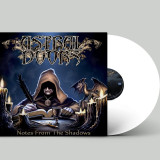
White Vinyl
Wiederveröffentlichung des im Jahr 2014 erschienenen siebten Albums der schwedischen Hardrock Legende. Die limitierte Neuauflage erscheint auf weissem Vinyl inkl. Bonus Track sowie neuen Liner Notes von Astral Doors Sänger Nils Patrik Johansson.
"Notes From The Shadows" (das siebte Album der Band) führt uns zu der dunkleren Seite der Band mit einem näheren Blick in die schwarze Bibel. Ein rein böses Heavy Metal-Album, das die okkulten Texte zum klassischen Heavy Metal zurückbringt.
Elf außergewöhnliche Tracks, gemischt und gemastert im Black Lounge Studio in Grangärde von Jonas Kjellgren (Raubtier).
"Notes From The Shadows" hat sich als ein großer Schritt in der Karriere der Band erwiesen und wird nun als Ltd. Edition White Vinyl wiederveröffentlicht.
LTD. RED VINY
Guitar and bass duo Gong Gong Gong charge out from Beijing's underground scene with a distinct vision and uncompromising sense of purpose. The duo taps into a wavelength uniting musical cultures, drawing on inspirations as wide-ranging as Bo Diddley, Cantonese opera, West African desert blues, drone, and electronic music.
Despite the band's decision to eschew traditional rock percussion, on their debut LP Phantom Rythm, the locomotive chug of Tom Ng's guitar combines with Joshua Frank's thumping, harmonics-laden basslines to conjure an aura of ghostly snare hits and timpani overtones. Over Frank's enigmatic melodies, Ng sings in Cantonese, piecing together abstract tales of absurdity, doubt, desire, and lust. Synchronized to the point of near-telephathy, "the Gongs" use their minimalistic tools and idiosyncratic playing style to challenge the notions of rock n' roll and strip the form down to its bare essentials: rhythm, melody, and grit.
Upcoming album 'Fruit Of The Void' to be released later this fall.
Kosmo Sound is a perfect balance of tight rhythms and extended melodies, and they constantly strive to push boundaries with their sound. Having worked together with dub legends Daniel Boyle and Alpha & Omega and having played as the support act for Adrian Sherwood, The Twinkle Brothers and Omar Perry, heavily inspired, they took refuge in the studio to record this album full of meditative sounds and dense grooves.
“It's a slow motion dub explosion.” - Woodburner
“As a mixture of Slimmah Sound, El Michels Afffair and Khruangbin in which deep dub basses flirt with thin desert blues guitars, jazzy drum patterns and tufts of saxophone.” - Indiestyle
“The canvas that these six musicians span as Kosmo Sound has a musical breadth that effortlessly ranges from dub over jazz to psych.” - daMusic
"an amalgation of styles that tickle the senses" - ReggaeVibes
“This remarkable debut makes one curious about future releases” – Irie Ites