Iron & Wine performed and recorded an absolutely captivating live set of songs in the Blue Room venue at Third Man Records in Nashville. Armed with spartan set-up of a guitar, microphone and his minimal backing band in front of a soldout audience, Iron & Wine’s Sam Beam ambled through his discography, on touchstones like Naked As We Came from classic album Our Endless Numbered Days, The Trapeze Swinger from Around the Well and Winter Prayers from Ghost on Ghost. It was a heartfelt experience without sacrificing any charm, personality or gestalt crowd connection.
quête:desert
After a false start or two, Ess O Ess have finally joined the Kinfolk stable with a thunderous release featuring Laura Lee of Khruangbin fame.
Totem is the name and four versions is the game.
Starting off, the original mix is a wailing guitar-heavy psyche rock out that sees Laura Lee's vocals carrying it across a peyote-filled landscape.
Saul's Swamp Crawl version sees the slow 'n' heavy rock elements kept in the mix but with added electronic flourishes. Head nodding is an optional extra.
The Hardway Brothers decided to tune in with the spirit of Johnny Jenkins and haul it through New Orleans via a pit stop at John Carpenter's desert holiday home.
Otologic bring up the rear with an altogether different take by donning their finest digi dub garb and take it as far away as they can from it's psyche out beginnings
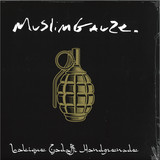
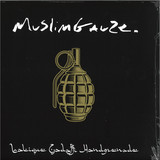
Given Jones' rather slack approach to track titles (both being consistent with and sometimes even just supplying them), it's a bit of a relief to realize that two tracks with the same name are indeed related. In the case of "Arab Jerusalem", which makes up nearly half of the newly-released Lalique Gadaffi Handgrenade, that kinship is immediately apparent even though both tracks are clearly their own experiences. Released as the first track on the Minaret-Spearker picture disc 7" in 1996, "Arab Jeruzalem" (spelling also sometimes being fairly slack) is 5:42 of effectively shifting dark ambience, wordless female vocals drifting over the hand percussion, chimes, and static of the track, with eventual conversational loops discussing ... something underneath.
The end of that version is especially striking for the way the woman's wordless singing starts being sampled in such a way that it overlays the whole track (and, slightly, itself). The almost 24-minute "Arab Jerusalem" here might be called the Deer Hunter version of the same story, building with great patience and many more abstract detours towards what now seems like simultaneously an excerpt and, now, a climax.
As with many of Jones' more ambient tracks, the great length just lets it cast its spell more thoroughly and entrancingly. The other three tracks, meanwhile, suggest some of Jones' other work but never evoke them as directly as "Arab Jerusalem". "Jordan River" is nearly as long (a second shy of 20 minutes) but strips out the vocal elements in its predecessor, focusing instead on a more active percussive workout (analogue and digital both) and a river of hiss running down the center of the track. The title track of Lalique Gadaffi Handgrenade might bring to mind the title of "Lalique Gadaffi Jar" from Libya Tour Guide (last reissued by Staalplaat in 2015), but if they're sonically related Jones must have practically melted the other track to get this one.
And the closing "Desert Gulag" (like the title track, a much more manageable length than the first two epic tracks here) bears a slight resemblance to "Negev Gulag" from 1996's Fatah Guerrilla, here what was a piercing, repetitive drone is softened and looped over more of Jones' percussion. The result is a well-rounded release that shows off many aspects of Jones' sound as Muslimgauze, while existing (like many of these DAT tapes do) in conversation with much of his previously released work.
Berlin / NY collective Climate of Fear releases its debut EP, “Laika’s Revenge” by тпсб – two tracks of sorrowful and menacing technoid expansions. Side A’s “Escape Pod” shimmers like a mirage on a desert landscape, nearly evaporating in the heat; on Side B the title track is five minutes of roiling thunderstorm ferocity. Following his breakout 2018 lp “Sekundenschlaf” on Blackest Ever Black, “Laika’s Revenge” expands on the artist’s fevered vision of the dance.
Fixon returns home with a brand new and powerful EP, after his release in collaboration with DJ Saint Pierre on our latest No Boundaries Series number Two in split EP with DJ Surgeles, Fixon it’s back with ‘Destroyed Landscape’ which contains four Original Cuts, three of them on Vinyl and a bonus track for the digital release, as usual quality music from the Mexican Producer. For this release we also counting with outstanding remixes from two great Producers who we give a warm welcome to the label, first remix from the Italian Distant Echoes who has brilliant releases on labels such as Dystopian and Non Series and for the second and last remix the British Producer BNJMN who is an active contributor of the legendary Tresor Records.
Havazelet's story is both fascinating and mysterious. She was born in Aden, Yemen, in 1936 as Havazelet Damari, she immigrated to Israel when she was 8 years old and grew up in the disadvantaged Ezra neighborhood, in south Tel Aviv. Havazelet discovered her love for singing when she was a teen, when she would sing at feasts and family events. At one of these events she was discovered by an impresario who decided to take her under his wing.
He asked her to change her family name from Damari to Ron, as there was already a young singer called Shoshana Damari in Israel, who was becoming quite popular. In March 1960 Havazelet Ron's only Israeli album, "The Music of the Desert" was released, produced by the "Makolit" label, featuring Yemenite folk songs. Both songs on this 7" are from that album. The identity of the promoter, the album's recording date and location, and the identity of the musicians, could not be found.The album was ahead of it's time in that it introduced an innovative sound, comprised of drums, electric guitar and an organ, making it one of the first albums in Israel to record this type of composition.
... However, it confused the Israeli audience of the time: The vocals were in Yemeni-Arabic, preventing it from being played on the radio, which mainly played Hebrew music, moreover, it was too innovative and far from traditional music for the Yemenite scene. The album fell between the cracks and her big breakthrough to mainstream did not happen.
Following the album's failure, Havazelet left Israel in 1963 and went to Germany, where she performed in festivals, TV shows and recorded several more albums. All of this was made possible by her unique singing talent in five languages - Hebrew, Yemeni-Arabic, German, English and Yiddish, her impressive appearance and remarkable stage charisma. The European audience enjoyed the original music she produced and her Yemenite-style cover versions of Hebrew songs.
In 1968 Havazelet married and a year later retired from the music scene. In 1980 she returned to Israel but she left again four years later, this time to Los Angeles, where she worked as a kindergarten teacher. Havazelet Ron passed away in Los Angeles, in 2013, after a long battle with cancer. In Israel, her name is almost unknown among music lovers in general and among record collectors in particular.
iven Jones’ rather slack approach to track titles (both being consistent with and sometimes even just supplying them), it’s a bit of a relief to realize that two tracks with the same name are indeed related. In the case of “Arab Jerusalem”, which makes up nearly half of the newly-released Lalique Gadaffi Handgrenade, that kinship is immediately apparent even though both tracks are clearly their own experiences.
Released as the first track on the Minaret-Spearker picture disc 7” in 1996, “Arab Jeruzalem” (spelling also sometimes being fairly slack) is 5:42 of effectively shifting dark ambience, wordless female vocals drifting over the hand percussion, chimes, and static of the track, with eventual conversational loops discussing... something underneath. The end of that version is especially striking for the way the woman’s wordless singing starts being sampled in such a way that it overlays the whole track (and, slightly, itself). The almost 24-minute “Arab Jerusalem” here might be called the Deer Hunter version of the same story, building with great patience and many more abstract detours towards what now seems like simultaneously an excerpt and, now, a climax. As with many of Jones’ more ambient tracks, the great length just lets it cast its spell more thoroughly and entrancingly.
The other three tracks, meanwhile, suggest some of Jones’ other work but never evoke them as directly as “Arab Jerusalem”. “Jordan River” is nearly as long (a second shy of 20 minutes) but strips out the vocal elements in its predecessor, focusing instead on a more active percussive workout (analogue and digital both) and a river of hiss running down the center of the track. The title track of Lalique Gadaffi Handgrenade might bring to mind the title of “Lalique Gadaffi Jar” from Libya Tour Guide (last reissued by Staalplaat in 2015), but if they’re sonically related Jones must have practically melted the other track to get this one. And the closing “Desert Gulag” (like the title track, a much more manageable length than the first two epic tracks here) bears a slight resemblance to “Negev Gulag” from 1996’s Fatah Guerrilla, here what was a piercing, repetitive drone is softened and looped over more of Jones’ percussion. The result is a well-rounded release that shows off many aspects of Jones’ sound as Muslimgauze, while existing (like many of these DAT tapes do) in conversation with much of his previously released work.
... Medjool's story starts in 2010, at "Samar", it's a Kibbutz in the Arava valley in the far south of Israel, based on a unique, hippic and cooperative community. The band's four members met and lived there after their Military service. Being surrounded by musicians they started jamming together a lot, finding a joint creative language.
... In 2011, three of the band, – Ori, Nur & Aviram, moved to Tel-Aviv, trying their luck in the big city. 'Gilad' joined them in 2013 and the four friends became Medjool. The next three years were hectic with shows all over Israel, from small clubs to big festivals, gathering loyal crowd which followed the band everywhere. Nowadays, the band's members turned their energy to other musical projects, saying "we only took a short break which we're not sure when it'll end".
'Gbells' and 'Savana' are two energetic wild Afrobeat tunes.
The fact that the rhythm section comprises of a double base and percussion, grants 'Medjool' its unique highlife, groove color.
The guitar and saxophone travel through middle eastern to ethiopian melodies, suggesting the listeners the option either dancing or riding a camel in the desert, on your way to a flush oasis.
SOS: This two tracks on the 7", ... which were recorded in 2015, were the only music of 'Medjool', they had recorded professionally !!!!!
‘Wild Slide’ is the debut album from techno supergroup, Better Lost Than Stupid, aka 3 of the world’s finest producers and DJs - Martin Buttrich, Davide Squillace, and Matthias Tanzmann.
Released on 13 September by Skint/BMG, the 11 track album follows a slew of singles - ‘Back From The Desert’, ‘The Sky Is Too Low’, and ‘Inside’ – which have won praise from the likes of Mixmag, Dancing Astronaut, RA, Radio 1 (Pete Tong and Danny Howard), Marco Carola, Dubfire, Nicole Moudaber, Kolsch, Joris Voorn, Claptone, Eats Everything, Adam Beyer, and many more.
Electronic music underpins ‘Wild Slide’, but Better Lost’ look beyond it with a varied collection of song ‘Wild Slide’ is the debut album from techno supergroup, Better Lost Than Stupid, aka 3 of the world’s finest producers and DJs - Martin Buttrich, Davide Squillace, and Matthias Tanzmann.
Released on 13 September by Skint/BMG, the 11 track album follows a slew of singles - ‘Back From The Desert’, ‘The Sky Is Too Low’, and ‘Inside’ – which have won praise from the likes of Mixmag, Dancing Astronaut, RA, Radio 1 (Pete Tong and Danny Howard), Marco Carola, Dubfire, Nicole Moudaber, Kolsch, Joris Voorn, Claptone, Eats Everything, Adam Beyer, and many more.
Electronic music underpins ‘Wild Slide’, but Better Lost’ look beyond it with a varied collection of songs that combine synth-pop (‘Inside’, ‘Wild Slide’), electronica (‘Boys & Girls’, ‘Harder Than Gold’), indie rock (‘Back From The Desert’), and downtempo (‘Without The Feeling’, ‘Bender’), with the kind of euphoric techno moments they’re individually known for (‘Inside’, ‘Right Now’).
‘Wild Slide’ shows that the comparisons made between Better Lost’ and stadium techno acts like The Chemical Brothers, and Underworld, stand up. The production quality is every bit as good as you’d expect from Buttrich and co, and the songs have been crafted and written by three people who’ve spent their lives making music and then playing it to hundreds of thousands of people.
So what’s the deal now - are we all just going under? And if so, what will we find below? On his second EP for the label, Leibniz immerses himself deeply in the subject matter with three tracks that draw on the titular »Hydron« as an alternative source of energy, with three tracks offering more water displacement than a regular Typhoon-class submarine - it’s that cold, clear bottle of Fuji in a desert full of uninspired memes.
The hundert co-founder overtakes the discussion about electric cars and those damn scooters by cruising down the aquabahn with his hydrogen car at 132 to 134 knots per minute. There’s a coming changeover of power to be felt in the air here for sure, yet there is much more to be gained from the water - the fuel for your deep dive into the unknown once we’ve gone under. In the meanwhile however, you have two options: become conscious of the impact that we as a species have on this planet or find the one gadget that will serve as a fix for everything. Just remember to stay hydrated along the way.
Following January’s acclaimed vinyl debut from Exterior and summer’s much-loved Kota Motomura EP, Edinburgh’s Hobbes Music label ends 2019 with its first album release, also a debut, from GAMING, a fresh new braindance electronica project straight outta Glasgow.
GAMING is a new solo outing that brings together a lifelong love of music and technology and creating left field, rhythmic electronica. It’s the sound of IDM, nineties techno and mensch maschine computer music that is as spontaneous as it is programmed. It's a bit of a grower and may take time to get under your skin....
“Scenes From A Deserted City is a collection of tracks that started as a set of riffs, loops, rhythms and grooves and unfurled around a sense of growing unease about the future of the urban environment around me.
It’s an album that started out as sound…and ended up as a way of telling stories about the age of anxiety we live in, how our world is changing, and how we find a way through that.
This is DIY electronica from Glasgow – it was made on a growing collection of digital and analogue synths and FX units, including a bunch of modular racks, each with its own idiosyncrasies and character that belies the assumption of the binary.
The studio where it was recorded – an abandoned, and often very cold, school building reclaimed by the community some twenty years ago – offered up stories of resilience, even when all seems lost. (I’m not sure what the mice contributed but they definitely climbed in and out of some synths).
This album is ultimately about my changing relationship with Glasgow, a city I’ve lived in for more than 25 years. It’s about how I feel now about the increasing sense of urban decay and how the city can be a very isolating place. It’s about how I reflect on my younger creative self trying to find a direction but mainly feeling a sense of dislocation and not fitting in. And it’s about the questions I have about how that relationship is changing, how it will be forced to move forward.
The result is a soundtrack for walking home on your own, in that headphone bubble when it’s just you focusing on that music that makes sense to you alone. It’s for early in the morning, after the night before, or going to work with the memories of that slipping and sliding inside your head. It’s about how it feels to be both elated and lonely, to be lost in the familiar, despairingly hopeful.”
- A1: Ghosts
- A2: Late Night City
- A3: One By One
- A4: Tvc 15
- A5: All Ways
- A6: Summer In The City
- B1: Nightmare
- B2: Strangler
- B3: Overseas
- B4: The Munsters Theme
- B5: Raceway
- B6: Keep The Pace
- C1: Get Off My Case
- C2: The Late Mistake
- C3: Ice Machine
- C4: Comateens
- C5: Pictures On A String
- C6: Garbanzo
- D1: Uptown
- D2: Cinnamon
- D3: Cold Eyes
- D4: Desert Song
- D5: Donna
- D6: Crime Time
- E1: Resist Her
- E2: Confessions
- E3: Love Will Follow You
- E4: Satin Hop
- E5: Deal With It
- F1: Nightmare
- F2: Walking Watching
- F3: Don't Come Back
- F4: Jo-Ni
- F5: Ask Yourself
In the fall of 1978, after working with a series of bands, New York-based musician and composer NickWest became interested in experimenting with minimalism, collaborating with guitarist and songwriter Ramona Jan and Lyn Byrd. They decided to play pure pop but to substitute a primitive electronic beatbox for a human drummer. The result was Comateens, becoming one of the first groups to discard the traditional sounds and line-ups used by everyone else in New York City’s downtown music scene of
the late 1970s. In 1980 Nick’s brother Oliver joined them as guitarist, and after going on to release three major label albums (Comateens, Pictures On A String, and Deal With It), and with some
successful tours and dance-club hits behind them, the band split up following the terribly untimely death of Oliver in June 1987.
However in 1988 Virgin Records issued another LP entitled West & Byrd, recorded by Nick and Lyn as a duo, and in 1991 released a retrospective compilation called ‘One By One: Best Of Comateens’, now a rare and much sought-after record among collectors of new wave music. Acclaimed by Etienne Daho, the band has made a name for itself with the singles “Late Night City“, “Get Off My Case“ and “Don't Come Back“.
Die Orangen back on the adventurous Malka Tuti with their sophomore album ZWEI ORANGEN. It’s been two years since their debut album Zest animated the underground scene, merging obscure samples, field- recordings, krautrock motifs and a spattering of humour and self-perception into their newly forged genre: Krautback. The Australian duo - Kris Baha & Dreems - return with 2 more years of wisdom tucked under their hats to deliver a matured, developed sound. The industrial sonics & propen- sity for a dusty bush-beaten tone remain, however the sam- ples and ambience take a backseat, handing the map over to the guitar riffs, vocals and song writing to navigate the al- bums vast terrain. Collaborators Jono Ma (of Jagwar Ma), Alex Akers (of Forces) and Hayley Morgan expand the al- bum into a diverse journey across zones and styles, offering their own observation of the spacious musical world of Die Orangen. These 11 tracks will make you contemplate, they’ll will make you reminisce, they’ll give you friendly advice, they’ll ask you to dance, and they’ll question the direction of your compass... Fear not, however, this is music for everybody. As the Oranges say "Saft für alle”
Vinyl Only
Pizzicatto makes a comeback with his brand new LP. The Spanish artist releases his latest work in partnership with the Romanian IULY.B and the Hungarian JAFFA SURFA. A balanced and strong new piece that promises to get everyone on the dance floor. Lespalmes Discs's 2nd release is here
2LP Gatefold Sleeve.
Lost Ethnography of the Miscanthus Ocean” contains six of their earlier works from 2013 to early 2014. The original release was on cassette from Guruguru Brain which was sold out less than a month. There is a new added D2. Miscanthus Ocean only for the LP version. The album is dedicated to Grass Mountain and the incredibly hot, humid summertime in Taipei. This is also the echo of their instrumental trio period before they moved on to digital composing.
Band Info:
Formed in Taipei, Taiwan in 2013, comprised of member Lu Li-‑Yang and Lu Jiachi, Scattered Purgatory is a name
derived from a Taoist ritual which expiates the souls of the innocent from a state in between life and death and then at last, release.
Growing up in Taipei, where two wheeled transportations are popular, the basin city of such population density and humidity had
inspired their sound distinctively differentiates from the US west coast desert drone. If we use Taiwan new cinema wave in 80s as
the analogy, the massive use of longshots of those films expressed a different halo from the Western Spaghetti; Scattered
Purgatoryʼ’s sound expresses soundscape to the world by using a familiar approach ‒– but with an oriental narration geographically
and spiritually.
Adapted Vinyl was a UK based techno label active in the late 90’s that picked up regular DJ support from taste makers of the time ranging from Jeff Mills to Mr C.
This, the label’s 7th record disappeared before a public release when the Integrale Muzique distribution company went out of business in 2008, but now gets its first official release date after years of very limited availability
Label founder Suade is the artist behind this release and these days he is best known as a highly-sought-after mastering engineer working for artists like Dense & Pika, Paranoid London, Jamie Jones and Vitalic.
Focusing his energies into family life and the fine tuning of other peoples music it’s rare to see Suade’s own music on a new release, but this hasn’t stopped him from collaborating on original tracks with the likes of Magda and Radioactive Man in recent years.
The EP has four contrasting tracks all with different moods and tempos all blended with Techno’s classic motoric drive.
With it’s absence from the usual music marketplaces creating something of a mystery this record ended up receiving a new, unofficial name on Discogs - The Citadel EP which is a title taken from the broken-beat second track on the B side of the record.
The Citadel is just one of the highlights on this eclectic EP, as it’s a Latronic Notron sequencer workout that patiently deploys layered synths in ever-shifting cross-rhythms for a languid 5 minutes before its deep, underpinning bass arrives evoking desert travel and arrival.
Baikal, named after the huge freshwater lake in Russia, is another stretched out meditation on tone and harmony acting as a foil to the delicate and vibrant Latin American percussion that filters in and out through a massive stereo Moog Modular system creating an energetic yet static, ritualistic atmosphere.
Trajan - the most driving track on the EP, gives a nod to the Probe era Richie Hawtin sound with a touch of Drexciyan melodics with shuffled percussion and bleeps over a snaking TB303 shaped bassline where the classic Acid box is given the role of control sequencer only commanding the thick, dirty oscillators of the big Moog.
A1 track Felix is a contrast yet again. A big room melodic Techno piece with another massive bassline and an almost orchestral level of layering, building to nine counter-melodies in total before letting rip with a classic TB303 acid line that builds from the heart of the track.
Sam went into an almost psychotic state when making music. He wasn’t himself. He was immersed in the creativity to such an extent that it was almost like a psychotic trance. Here’s an example. He found all this giant kelp down at Western Port bay and he would bathe himself in it for weeks. He would replenish the water and put salt in the bath, but leave the kelp in there. I used to ask Julie, his partner and wife, “How’s everything going?” and she’d say, “Just go and have a look at the bath.” - Tony Rogers
Sam Mallet could have pursued a career as a French literature professor in Paris, but decided his true calling was to remain in Australia, dedicate himself to his music and find the plateau; a word he used to describe the sensory worlds residing in music. Under the influence of Eno, Jon Hassell, Arvo Pärt, John Coltrane and Robert Fripp, Sam explored a wide variety of musical styles and put them to service soundtracking the time based works of his peers. He crafted spatial ambience, somber jazz, and drum computer driven rockers for short films and experimental video works, television shows (including the original Australian Wilfred series), feature films and live theatre. The avant garde Anthill Theatre, known for its departure from conventional staging practices and having a keen eye for talent, enlisted Mallet to provide soundtracks for approximately 40 productions throughout the 1980s and early 1990s.
Sadly, Sam passed away in 2014. A crucial piece of his legacy is undoubtedly the body of work he produced during his life, and the archive of recorded works is vast and deep. Sam seemingly saved everything, from fragments to finished pieces; and often repurposed previously released tracks by collaging them into new pieces. He self released a small number of cassettes and CDs from the mid 1980s onward, the contents of which were culled from soundtrack work and original pieces, but the majority of his music was experienced only within the ephemeral live performances.
Wetlands is the product of countless hours spent with this archive by Rowan Mason (Sanpo Disco/Recurring Dream) and Tony Remple (Musique Plastique), offering a dynamic survey of Sam’s work, and housed in a jacket evoking the minimal design and colour palette of his earliest cassette releases. Two selections of Sam Mallet’s music were featured on the compilation Midday Moon (also produced by Rowan), released last year by Bedroom Suck Records. Along with Left Ear Records’ Antipodean Anomalies, Midday Moon has served to highlight outlier musics and scenes from Australia and New Zealand, and Wetlands plunges deeper into the catalog of this obscure yet groundbreaking artist.
Industrial techno doom jazz meets Touareg percussion and mantric chanting
Soundway presents the unique results of a one-off 2018 meeting in Marrakech between Belgrade-based tribal/ techno/industrial outfit Tapan and the nomadic Touareg electrified desert-blues group Generation Taragalte.
Tapan is not an ordinary “techno” project, rather it escapes easy categorization. It is the Belgradebased production duo of 20/44 club resident Nebojša Bogdanović (Schwabe), and Goran Simonoski, a producer behind music projects such as Belgradeyard Sound System, Piece of Shh and more. Both have been active in the Belgrade music and nightlife scenes since the 1990s, and since 2015 have brought together their diverse musical experience under the collaborative moniker of Tapan.
While performing at the Atlas Electronic festival in Morocco in 2018, they encountered Generation Taragalte of southern Morocco, and recorded the initial music for the Atlas EP in an improvised studio on the festival grounds, followed by final production on returning to Belgrade. The result was the 4-track EP “Atlas”, a dark, desolate and potent collision of the electronic drone-jazz of Belgrade and the windswept, desiccated psych-guitar riffs of the Moroccan Sahara.
Yellow Vinyl
Serotonin returns to revenge with Serotonin's Revenge 2, a four track compilation representing the depth and breath of what we live for.
While resting with his camel in the Taklamakan Desert in Xinjiang this summer, bpmf noticed a shiny object. He picked up a DAT labeled "Static Breaker - 1994". It contained some solid electro, including "Transmission Complete”. Who made this? Did it fall out of a UFO? We may never know. Look for more releases from this find coming from Serotonin Records in the future.
Hailing from Biella, Piedmont and now based in Milan, Kreggo is an eclectic and versatile artist. Defined by Juno as part of "the gum-under-the-schooldesk underground", he has been active since 2014. Along with being the brain behind the Art-Aud label and the cult Secret Rave series, he has released collaborations and projects for labels such as Lobster Theremin, Helena Hauff’s Return To Disorders, Super Rhythm Trax, FTP and Melodies Souterraines to name a few. For Serotonin, he delivers evolved, deep breaks with an edge of electro funk.
Siviyex is Toronto duo Castelvi (Bass Guitar, Vocals, Synths, Vocoder) and M. Gomes (Synthguitar, Programming). Their sound combines elements of Shoegaze, Electro, Italo and New Wave, with the conceptual influence of alternate dimensions, space, dreams and out-of-body experiences. The next wave sound of "Dreams in Wannex" is a definitive part of the world Serotonin envisions.
Schooled in dance culture since a young age, with influences and experiences ranging from rock to rave, London based Nexus 23 brings a "Vortex" of his stark, bass-heavy blend of electro and industrial sound to Serotonin records.
Also included on the vinyl version 4 loops from Serotonin in-house artists: John Selway, bpmf, Synapse and Pointsman.
Look for the digital release everywhere November 5th, 2019 and the vinyl wherever cutting edge records are sold.
Tachyon Audio 004 is a solo release by Tachyon's own, Paradaux. Paradaux has been on a production tear of late and offers a four-track E.P. that takes Tachyon Audio to a new place in space-time. Intro (A1) sets the mood of the E.P. right from the off with a broken experimental beat that forces the listener to move rhythmically.
The second track, Bolder (A2), offers distorted rumbling and broken drum kit sounds and tweaks pounding down through ethereal fading pads. This muscular groove is sure to warm up anyone.
Side B of the E.P. starts off with Absence of Rain (B1), a mind-bending desert acid masterpiece.
The E.P. continues its trek through the mind of Paradaux, as Step Down (B2) brings back a strong distorted broken rhythm that flaunts the cohesiveness and foresight of the record as a whole and creates an emotional end to the journey.
Lastly, as with every Tachyon Audio release, a raw sound of space is pressed into a vinyl locked groove. This time an open-source National Aeronautics and Space Administration (NASA) sample -- the Galileo spacecraft making the first flyby of Jupiter's largest moon, Ganymede, this audio track represents data from Galileo's Plasma Wave Experiment instrument.
IGC_for_life