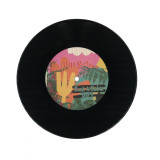
After five years of adventure, Label Affaire finally unveils its first vinyl release with its deep house-tinged 5-track project: Coalescence!
The performance is a fusion between crew's producers (A-Link, yAs, Dis-Louis) and special guests (Denyl Brook & Romeo Louisa), offering a technical and cutting-edge experience.
As fresh as a bivouac night, the EP is the next freeze-dried expedition: light and unusual, yet vital and tasteful. Let yourself be guided on the journey offered by colorful, vibrant tracks, put on the sunglasses and don't forget the sunscreen.
Visually, "Coalescence" is the fruit of meticulous research and development over many months. Designed by Eiviloks and Hugo Wirth, it completes the experience with refined elements, such as a majestic summit offering a detailed panoramic view.
Get ready for a unique musical journey, and don't forget your water bottle!
Search:det
Catz ‘n Dogz make a standout debut on Crosstown Rebels with two compelling new house tracks on ‘Can’t Stand’, complete with a remix from leftfield innovator Robag Wruhme.
A pairing whose renowned reputation has been built and shaped across an illustrious career, Polish duo Grzegorz Demiañczuk and Wojciech Tarañczuk, aka Catz’ n Dogz, have been serving up their own diverse and varied take on house for more than fifteen years. Founders of their own Pets Recordings imprint, in that time they have released on esteemed labels, from Diynamic to Defected, Glitterbox to Watergate and more, while playing at almost every major club and festival across the globe. Their fresh in-between sounds and knack for cooking up curious and impactful sounds have made them mainstays of the scene, and that run of stellar releases continues here with a debut appearance on Crosstown Rebels as they link with ZenSoFly for ‘Can’t Stand’ - with longstanding German favourite Robag Wruhme on remix duties.
Opener ‘Can’t Stand’ sees the pair reunite with vocalist ZenSoFly, a talent they’ve worked with on notable hits like ‘Wave.’ Her vocals bring soul and attitude over a tight, rubbery and sleazy house beat, underpinned with a heavy bassline - providing the sort of chunky cut to lock in a dancefloor and make it march in unison. Robag Wruhme has been a Pampa label mainstay and famously curveball producer for many years with his scintillating blend of minimalism, melody and unusual sound sources. That is the case again with this remix, a dark workout that hurries along on snappy drums, detuned vocals and scuzzed up, droning synths to ensure maximum impact.
The EP is closed out with ‘Wake Up’, a widescreen and atmospheric cut packed with detail. The bassline is taught, freaky vocals echo within the mix, and synths spray about to dramatic effect, delivering another full flavour house cut with a dark soul and futuristic designs.
A1 - Continuum
Teaming up once again the original Spatial production duo open their latest EP serving up a thumping onslaught of amen goodness with Continuum, a track which takes the classic Demon's Theme break and carves it to bits unreservedly with a myriad of chops, cuts & edits. We are treated to some delicious filter work later in the track over a shimmering backdrop of synthwork, glazed with a bunch of micro melodies, bleeps and FX.
A2 - Depth Perception
Meticulously constructed vintage breakbeats immediately set a brisk tone with Depth Perception before a blissful early interlude reminds us to sit back and take a breath, before our breaks return - blanketed with an introspective layer of serene synths & keys which somehow combine perfectly, resulting in a tonal mosaic only ASC & Aural Imbalance can conjure up with their combined skillset.
AA1 - Distant Orbit
Nest up an unsettling, melancholic intro tenuously launches classic atmospheric breaks delivered with that crisp, old school brand new punch we have come to love from the distinctive style of drum n bass Spatial is showcasingand developing with each release. Powered with a lively bassline, it's easy to lose yourself in this piece as the track lives up to its title and sends the listener far beyond the confines of their speaker.
AA2 - Cold Front
An intriguing, inquisitive energy opens Cold Front with an assortment of breakbeats woven together exquisitely in a collage format, DJ-friendly yet mellow at once . The dialed-back airy backdrops showcase a glorious intricacy to the breaks, so detailed with umatched clarity - they almost possess an ASMR-like quality, offering new discoveries to the ear each time on repeated listens.
A1 - Burst Transmission
ASC returns with another stellar solo EP and Burst Transmission dives straight in head first to kick things off, pulsing crafted breakbeats and computer FX intertwine and stack with smooth synths, keys and trademark vocal hits. A powerful undertone bassline perfect for the dancefloor keeps the momentum going with blissful speckles of detail in the composition, including expertly tuned bongo drums scattered throughout.
A2 - Whispers
Sci-fi vibes take center stage as ASC channels that classic 720 energy with Whispers, a track which utilises sharp stabbing snares in distinct, forceful drum patterns which develop and adapt over halcyon synthwork. Respite comes in the middle of the track as the breaks change and settle the vibe briefly, before we are thrust forward again with those epic breaks commanding our attention once more.
AA1 - Psionic bond
ASC continues the retro sci-fi vibes with Psionic Bond, entering with zapping laser FX and a haunting vocal sample echoing before thunderous breaks thrash their way into the track, epic kicks and sharp thrusting snares dominate proceedings while through the wooshing layers of synthwork a distinctive bassy melody elevates the composition. This one is going to send the lucky discerning dancefloor into extra-sensory fever.
AA2 - Future Music
Ending the EP with something a little different, Future Music gives us a true taste of the old school brand new. A building intro lashes you with jabbing bass and effects, classic hi-hats rattle and slowly the 90's jungle breakbeat edits are released in waves as the piece progresses. The construction of the breaks is staggered sparingly, weaved with an influx of effects and samples creating a truly unique experience.
Armand is the debut of a sound collage project called PVNCTVM, which refers to Roland Barthes' term "Punctum". A handful of field recordings, taken during extensive walks through nature and landscapes of certain places, evoke memories in a similar way as sometimes photographs do. Based on this material, personal impressions, literature, photographs, sketches and more a process of various sound experiments begins to create soundscapes which reflect the deterioration of memories between various states of mind. Instruments and other sound sources are used symbolically, as are elements of musique concrete, ambient, glitch and drone.
Singular Texan musician Craig Clouse hurtles unstoppably towards the 20th birthday of his dancefloor-splintering electronic project Shit And Shine, releasing a landmark LP, his first full-length for The state51 Conspiracy, ‘2222 And AIRPORT’. Acid house, minimal techno, electro, funk, krautrock, hip hop, found sound, spoken word, live percussion and industrial are blown apart stupendously and then reassembled – mad-scientist style, in a way peculiar to Clouse – into 13 hypnotic and transportative tracks.
Lead single SWISS, out 24 March, is a gloriously minimalist funk jam that sounds like the exact point at which someone turns the lights off at a lowkey house party and a wild night for the ages gets under way. An almost scornfully skeletal riff, sounding like a misfiring Cyberdine Systems Model 101 summoning up a Prince circa Sign “O” The Times riff while crashing head first into the hyper-processed early work of Prefuse 73, also featuring a cheeky sample of revered Mancunian DJ Luke Una talking about “existential fucking darkness”.
This is followed on 4 April by INFINITE SHITE, arguably the epic central track to the album, is a Shit And Shine banger for the ages, its dancefloor affect, undeniable. An unforgiving, pulsating Byetone-style bass drone worthy itself of being blasted on a Funktion-One rig, is just the background for a colossal acid b-line, destroying all in its path.
Micro details bristle at the liminal level, threatening to only reveal themselves to those in a club, those listening on headphones or those experiencing a heightened sensory state.
It is with honour & pleasure that we present to you the return of one of the finest in game! Active since god-knows-when, and equally known as artist, label owner, event promoter and all-round champion of all that’s right and proper, Semtek has cast a long shadow in the electronic underground over the past two decades.
Ever the mercurial savant, Benji distils a wide range of influences that have shaped his various endeavours on his first 12” for us: from the darkside revivalism of DJ Persuasion through to the raw productions of L.M.Y.E, and even down to his earliest productions on DBA. RAD-SEM1 is two tracks of ice-cold club cuts that capture the chilly futurism of second wave Detroit Techno, the sparser fringes of UKG and the abyssal soundscapes of late 90s DnB. But as is characteristic of Semtek’s output, always far greater than the sum of its parts.
Detroit's John Beltran can do no wrong if you ask us, and what he does do is always famously varied, from sound design for TV to melodic techno excellence via ambient beauty. Here for MotorCity Wine he revisits his Back To Bahia series with a third volume that finds him flexing his Afro-Brazilian deep house chops. The 7" opens up with the jazzy boogie of Lsaura' which is steeped in Minneapolis funk and will get cultured dancefloors in a spin. 'As The Sunsets' that appears on the flip and is a superbly emotive sound with wispy late night melodies and glowing harmonies and shuffling Latin grooves. Essential.
Whitelands follow their acclaimed single ‘Setting Sun’ – which saw the London-based band added to the BBC Radio 6 Music playlist – with their first ever vinyl release, an EP of reworkings, which is released as a limited edition orange vinyl 10” on June 23.Simply titled Remixes, the EP features two reworkings of ‘Setting Sun’ by dreampop legends A.R. Kane – the short Initiation Dub and the epic Hero Remix, which comes in three parts, titled Departure, Initiation and Return and takes the song to some unexpected and exciting new places.“Whitelands came up in conversation three times in a week,” explains A.R. Kane’s Rudy Tambala of how he got to know the band and came to remix them. “Two times is coincidence, three times is a conspiracy, so I reached out to them on social media, and we started chatting. They’re cool, like baby Kanes. ‘Setting Sun’ was close to my heart, reminding me of ‘Fools Gold’ meets Slowdive versus Frank Ocean. Anyway, I heard several approaches in my head, so I thought, ‘Fuck it, let’s do ’em all’. “I knew I wanted to take a prog approach: Marvin Gaye’s What’s Going On, Pink Floyd’s The Dark Side Of The Moon, Sasha’s Involver2, Coltrane’s A Love Supreme, Frank Ocean’s Blond, etc. Even my own sixty nine. It’s that seamless drift from one part into the next, stretching the idea until it ruptures, creating space for a new way of perceiving; this has the first inklings of hive mind, telepathy, in a musical form; you dissolve into it as it dissolves into you. A fundamental dreampop construction and aim, whereby subject and object become one. Ahem. “As the extended mix took shape it suggested to me the three components of The Hero’s Journey, hence the titles. The three-minute pop song was determined by the technical limitations of the 7” vinyl single. Digital has obliterated that. The perfect dreampop song has no time limit. ‘Setting Sun’ A.R. Kane Hero Remix is timely.” Alongside Rudy’s reworkings is an equally dazzling drum’n’bass take on last year’s single ‘How It Feels’ by the band’s guitarist Michael in his howdogirlssleep guise.
Graham Lambkin (of Shadow Ring fame) returns with a long awaited epic double LP, Aphorisms, his first major solo outing since Community (Kye, 2016). Recorded mostly during the early winter months of 2022, in post-pandemic New York and post-Brexit London, Aphorisms assembles the sonic detritus of daily life into hauntingly intimate aural soundscapes. Made between Lambkin's residence in East London and Blank Forms in New York, Aphorisms superimposes the two spaces onto one another creating an imaginary stage where his musical dramas unfold. A transatlantic mediation on the rooms where Lambkin has lived and worked, Aphorisms summons up hallucinatory vistas by way of the composer’s collage technique, layering field recordings, piano, guitar, percussion, vocal fragments, and repurposed elements on top of one another in double, triple, and quadruple exposures. Like the Shadow Ring’s Lindus (Swill Radio, 2001) recorded between Folkestone and Miami Aphorisms ruminates on estrangement and displacement, catching Lambkin as he returns to London after two decades of living in the States, in his words, “leaving home to return home.” Aphorisms continues Lambkin’s synthetic-naturalist approach to sound-making, twisting disparate and unique elements together to create the sensation of a coherent sonic space. At the heart of his practice is the illusion of form, whereby Lambkin combines sonic elements, documenting the moment that they coalesce into music only to disintegrate back into incidental sound. The album is centered around two pianos, one in New York and one in London, sounding together as if through the ether, creating a spectral atmosphere that Lambkin fills with melodic snippets, fragments of songs, spoken-word musings, and guttural barks or “the animal purity of voice,” as he has it. The superimposition of the two spaces is maximized in the album's closing titular track, where, much like on earlier works such as Salmon Run (Kye, 2007) and Softly Softly Copy Copy (Kye, 2009) fragments of familiar melodies float through the mix as though being played from afar. Aphorisms is Lambkin at his best, extending methodologies only hinted at previously and taking his now-idiosyncratic mission statement to a new chapter.
Five years after the release of their last studio album, legendary UK musical institution, Soft Machine, return with a brand new CD/LP,
Other Doors. Boasting new material and two numbers drawn from their extensive historical repertoire, Other Doors finds the band on their usual fiery form.
Featuring John Etheridge (guitars), Theo Travis, (saxes, flutes, Fender Rhodes piano, electronics), Fred Thelonious Baker (Fretless bass),
John Marshall (drums), Other Doors also features two guest appearances from long-serving bassist Roy Babbington, who retired from the band in 2021.
Other Doors was recorded at Temple Music Studios, a facility owned by the late Jon Hiseman during July and August 2022.
It’s a location of which the band is particularly fond, explains John Etheridge. “Working at Jon Hiseman’s studio was special,
especially with Ru Lemer who is a brilliant engineer. He’s fantastically quick and that’s very good as we record mainly live in the studio. It’s come out really well and I think it sounds great.”
On Other Doors they’ve revisited the very first album, originally released in 1968, to include Kevin Ayers ‘Joy Of A Toy. Fred Baker, makes his studio debut with Soft Machine.
A well-known figure on the Canterbury Scene not only is he the perfect choice for the group but he’s also is a long-term fan of the repertoire.
“The way I look at it is that this is all great music which we’re continuing to preserve and keep alive as we play it but also we’re adding to it all the time,” he explains.
The idea for revisiting the number was Theo Travis’ he says and has been part of the band’s live setlist for a while.
The album also contains Penny Hitch, a track originally heard on 1973’s Soft Machine Seven.
If the album ushers in a new member in the shape of Fred Baker, it also acts as a fond farewell to drummer John Marshall, who joined Soft Machine midway through the recording of 1972’s Fifth.
At the age of 81 Marshall has decided to retire making Other Doors his final studio album with the group. “I’ve known John since 1975 when I first joined Soft Machine and of course,
we’ve worked through the years together intermittently ever since. His drumming always meant a lot to me,” says Etheridge.
“We worked over three days in the studio and John played great. It sounds terrific.”
Indeed, Marshall is on whip-cracking form throughout the album bringing his trademark musicality and decisive presence.
With Other Doors, he brings his distinguished career to a rousing conclusion.
Intense, celebratory, and consistently impressive. Other Doors is the sound of a group determined to press forwards with an
integrity and sense of purpose that’s quintessentially and definitively Soft Machine.
One of Japan’s most riveting artists follows that KAKUHAN mindmelt from last year (our number 5 album, 2022) with an engrossing suite of wild field recordings and polymetric percussion featuring a whole raft of additional players weaving drums, wind and brass instruments, cello and electronics into a bewildering Acousmatic matrix. Highly recommended listening if you’re into Marginal Consort, Beatrice Dillon, Will Guthrie, Mark Fell, François Bayle.
Having made his mark on these pages over the last few years with appearances as part of Japan’s cult entities Goat and YPY, Koshiro Hino’s turn last year as KAKUHAN took things to a whole other level with an album that felt like some alchemical mix of elements borrowed from Autechre, Photek, Arthur Russell and Mica Levi - a complete stylistic futureshock that worked as well in the club as it did fuelling extended flights of the imagination.
For 2023, Hino takes us into a completely different headspace, assembling a cast of 11 players - the mighty Joe Talia and KAKUHAN’s other half Yuki Nakagawa among them - for a suite of untamed field recordings, clanging percussion, brass and synthesis that are about as far removed from the diaristic ambient de jour as you could possibly imagine. Instead, the ensemble conjure vibrant sound ecologies teeming with detail, mirroring the natural world and communal traditions to form shapeshifting, organismic soundworlds.
‘Geist II’ was written for 20 speakers, referencing François Bayle’s acousmatic music and David Tudor’s electro-acoustic environments. It paints a richly detailed scene of a nocturnal rainforest, replete with avian hoots and a skin-crawling patina of insectoid chatter that moves around the soundfield, stealthily growing in density with a more “musical” presence of super low end drone and drums converging form the peripheries to a ritualistic climax. In the second part, focus shifts to remarkably pure percussion-like tropical rain, invaded by swarms of scuttling and winged invertebrates that give way to a water music-like polymetric slosh, resolving to ringing tones and more mellifluous gestures that hark back to GRM’s most poetic, romantic urges.
It's a deeply psychedelic experience that harmonises tiny electronic fluctuations with bird calls and scraped, resonant drones that phase in-and-out of the mix. It's sound you can practically chew, and another crucial despatch from the contemporary Japanese avant-garde.
Gold farbenes Vinyl! De Augustines erstes Soloalbum seit seinem dritten Album, dem von Thomas Bartlett produzierten Tomb (2019), und dem Nachfolger von A Beginner's Mind (2021), einer von der Kritik gefeierten Kollaboration mit Sufjan Stevens, ist eine Rückkehr des südkalifornischen Künstlers zu dem in sich geschlossenen Ansatz seines Debüts Spirals of Silence (2015) und Swim Inside the Moon (2017). De Augustine verbrachte fast drei Jahre damit, allein zu arbeiten und die unendlichen Weiten seiner Vorstellungskraft zu erforschen, um ein allumfassendes Werk zu schaffen, das nach seiner eigenen quixotischen Logik existiert und eine psychische Landschaft bewohnt, die so sublim und mystisch ist wie ein Fiebertraum oder ein Märchen. Er schrieb, arrangierte, nahm auf, produzierte und mischte Toil and Trouble allein und formte den kunstvollen, detaillierten Sound des Albums, indem er auf 27 verschiedenen Instrumenten spielte (darunter so seltsame Dinge wie ein Xylophon aus Glas). Inmitten dieses höchst experimentellen Prozesses durchlebte er eine ephemere, aber alptraumhafte Zeit mit jenseitigen Empfindungen und übernatürlichen Visionen - eine Erfahrung, die die Entstehung des Albums kurzzeitig unterbrochen hat, aber letztendlich dazu beitrug, die immense emotionale Tiefe von Toil and Trouble zu bereichern. "Dieses Album entstand aus dem Nachdenken über den Wahnsinn der Welt und wie überwältigend das sein kann", sagt De Augustine. "Ich habe eine Art Gegenwelt als Leitfaden benutzt, um zu verstehen, was hier eigentlich vor sich geht - ich musste mich selbst aus der Realität herausnehmen, um zu versuchen, die Realität zu verstehen." Das Ergebnis ist das bisher visionärste Werk eines einzigartigen Songwriters, das abwechselnd betörend, niederschmetternd und unaussprechlich schön ist und seine tiefe Fähigkeit offenbart, Schmerz in außergewöhnliche Schönheit zu verwandeln.
From Elvis in Memphis retains the distinction of being the most cohesive, passionate, mature, and emotionally invested record Elvis Presley ever made. Named one of the 500 Greatest Albums of All Time by Rolling Stone, the white-soul landmark features backing by "The "Memphis Boys" and teems with rhythm-heavy country, gospel, R&B, and blues. Lauded for its natural, open sonics, the 1969 set now comes across with remarkable clarity, presence, and warmth courtesy of a premium restoration befitting a king.
Mastered from the original master tapes, pressed on MoFi SuperVinyl at RTI, and strictly limited to 10,000 numbered copies, Mobile Fidelity's UltraDisc One-Step 180g 45RPM 2LP box set of From Elvis in Memphis unearths the ravishing inner detail, sticky rhythms, and brilliant arrangements of Chips Moman's inspired production. In short, this unparalleled reissue unlocks the spirit and gestalt of the recording and takes you inside American Sound Studio. It also brings you up close and personal with Presley's singing – widely considered by many to represent the finest of his career – located dead-centre amidst the instrumental hurricane. Equally impressive are the contributions of the aforementioned Boys, and how their Southern-brewed playing – a balance of leisure with swiftness, grandiosity with concision, freedom with control – dovetails with Presley's vernacular.
The lavish packaging and gorgeous presentation of the UD1S From Elvis in Memphis pressing befit its extremely select status. Housed in a deluxe box, it features special foil-stamped jackets and faithful-to-the-original graphics that illuminate the splendor of the recording. No expense has been spared. Aurally and visually, this UD1S reissue exists as a curatorial artifact meant to be preserved, pored over, touched, and examined. It is made for discerning listeners that prize sound quality and production, and who desire to fully immerse themselves in the art – and everything involved with the album, from the images to the finishes.
Sharing much in common with the full, rich, orchestrated Stax Records sound, From Elvis in Memphis oozes with choice nuances and distinctive flourishes that on this ultra-hi-fi edition not only arise with previously unheard transparency and sharpness, but complement and serve the whole. Take the specific tonalities and blending of violas, cellos, and horns that communicate mood and serve as counterpoints. Or lively performances of the backing quintet, and how the piano and Hammond organ trace the lines of the melodies and Presley's lead. Listen to the uplifting support provided by the cadre of backing vocalists (more than a dozen credited), unrivalled in Presley's canon and a precursor to the approach he'd soon adopt in Las Vegas.
Of course, From Elvis in Memphis precedes the icon's transition into his glitzy jumpsuit phase – and follows his merciful move away from the hoary soundtrack work that consumed nearly a decade of his creative life and prompted a rebirth that began in 1968. As the bridge between eras, the record seizes on Presley's rejuvenated attitude and commitment to quality, facets that drip from the fervency with which he delivers every word. For the same reasons, and for the fact it traces back to Presley's original roots and hip-shaking guise, the album further remains a cornerstone of American music history.
Writing about the work's 40th anniversary for Rolling Stone, James Hunter correctly observed: "From Elvis in Memphis represented the full-on immersion in the Memphis idea of Elvis Presley, the American singer second only to Frank Sinatra for the ability to conjure a particular sonic universe with his merest vocal utterance. And from the album's first song, in which a bluesy Elvis espies a woman 'Wearin' That Loved On Look,' to its last, in which a more straight-up-pop Elvis regrets the injustices of life 'In the Ghetto,' his fully engaged, newly energized voice finds its most logical album setting in years."
Incredibly, Presley and company completed more than two dozen cuts for From Elvis in Memphis. One, "Suspicious Minds," turned into the vocalist's final chart-topping single and lingers as one of his most beloved rock n' roll numbers. Even though it never formally appeared on the record, the non-album song is included here as a bonus track and attains newfound depth, energy, and swagger. Coupled with the other dozen tracks – including the sultry "Power of My Love," balladic take of Dallas Frazier's "True Love Travels on a Gravel Road," and driving cover of Hank Snow's I'm Moving On" – it makes for the finest Elvis listening experience available.
Going past musical genres and instead straight towards something more elemental - Selvhenter’s music creates a strikingly direct, physical experience of sound composed of polyrhythms, acoustic and electric melodies, heavy music and improvised beauty.
Since forming in Copenhagen in 2010, drummers Jaleh Negari and Anja Jacobsen, saxophonist Sonja LaBianca and trombonist Maria Bertel have forged a unique approach to making music that starts with their instrumental setup: two drummers that interlock as frequently as they go their own way, a trombone put through a bass amplifier loud enough to rattle your chest and a saxophone put through a range of effects so that it often sounds unrecognisable. Selvhenter work within their own idiom, drawing from the individual players’ personalities and interests to make a highly collective music, where all four musicians are absorbed into a total sound where an improvised free jazz approach collides with experimental electronic music and avant-garde noise/post-punk sonorities.
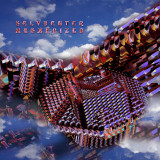
Their new LP Mesmerizer - which marks their first physical album release in nearly a decade and their debut on the French label Hands in the Dark - carries forward this process of exploration, deploying original and complex patterns of rhythm through various percussive instruments and finely textured horns and synths. The attention to sonic details is also almost pushed to an extreme on this new offering, making the open auditory adventure suggested by the title of the album all the more captivating. These creative developments have brilliantly kept Selvhenter’s music alive to new uncharted moods and possibilities, while at the same time strengthening their core elements: a propulsive, dense and often ecstatic music.
Marc Richter aka Black To Comm released his debut record 20 years ago. In 2023 he is still busy releasing music under various disguises and is currently signed to the Thrill Jockey label. To celebrate this anniversary his own Cellule 75 label is re-releasing some classic out-of-print vinyl albums that originally came out on the defunct Type and De Stijl labels. The LP will feature a full-colour printed inner sleeve exclusive to this edition.
In 2009 the Type Recordings label run by John Twells had just released seminal records by Grouper, Jóhann Jóhannsson and Yellow Swans when they signed Richter and put out his breakthrough Alphabet 1968 album. The LP sold out within two weeks, receiving a glowing full-page review in The Wire Magazine by the late Mark Fisher (later reprinted in his book Ghosts Of My Life), was selected for Boomkat's Top 10 releases of the year (alongside debut albums by Leyland Kirby, Demdike Stare and Oneohtrix Point Never) and was greeted with universal praise in the underground blog network as well as established magazines such as The New Yorker and Pitchfork.
The music itself played with the notion of nostalgia without being nostalgic itself. It's the sound of half-remembered dreams, a surreal distorted vision of the past, an aural polaroid of long forgotten musics, a ghostly voice from a non-existent era.
From the original Type one-sheet:
"The mission statement for Alphabet 1968 was to write an album of "songs" for want of a better word. Short tracks which represented genre points, the milestones which stuck in Richter's mind when he thought back to his favorite records. What we arrive at is a breathtaking 10-track album which, over the course of 45 minutes, explores world music, techno, noise, avant-garde, ambient music and even exotica. Each track is linked with a loose thread of radio static or environmental sound, dragging you through the album, as if tuning in to a stray broadcast or a particularly adventurous mix. Richter has pieced the album together from hours of recordings made at his studio with home made gamelan, small instruments and loops gathered from a collection of ancient vinyl and 78 records. The scope of the album is admirable, but ignoring this, it is simply a shockingly arresting collection of experimental oddities, with references ranging from Moondog to Basic Channel by way of Bernard Herrmann. It's not hard to fall in love with Alphabet 1968, far harder would be to place exactly where the record should fit into your collection."
Mark Fisher in The Wire:
"But what if we were to take Richter's provocation seriously - what would a song without a singer be like? What would it be like, that is to say, if objects themselves could sing? It’s a question that connects fairy tales with cybernetics, and listening to Alphabet 1968, I’m reminded of a filmic space in which magic and mechanism meet: JF Sebastian’s apartment in Blade Runner. The tracks on the LP are crafted with the same minute attention to detail that the genetic designer and toymaker brought to his miniature automata, with their bizarre mixture of the clockwork and the computerised, the antique and the ultramodern, the playful and the sinister. Richter’s musical pieces have been built from similarly heterogeneous materials - record crackle, shortwave radio, glockenspiels, all manner of samples, mostly of acoustic instruments. ….. JF Sebastian's apartment was itself an update of older spaces in which science and sorcery co-existed: the workshops of ETA Hoffmann's inventor-magicians, or of Pinocchio's creator, Geppetto. I think, too, of Auguste Villiers de l'Isle-Adam's astonishing 1886 tale The Future Eve in which Edison, using the expertise he has recently acquired from inventing the phonograph, sets himself the task of constructing an artificial woman. But if there are songs here, they are sung by the gramophone and other recording and playback machines. Richter so successfully effaces himself as author that it is as if he has snuck into a room and recorded the objects as they played (to) themselves. Rather than simply automating his music, as in the case of Pierre Bastien and his mechanical machines, Richter makes us feel that he has merely recorded the unlife of objects. ….. Indeed, the impression of things winding down is persistent on Alphabet 1968. Entropy has not been excluded from Richter's enchanted soundworld. It feels as if the magic is always about to wear off, that the enchanted objects will slip back into the inanimate again at any moment."
Little Beat More, Do It Youssef, Not a Pub & Un Rêve Nu labels are glad to introduce ÈCH's latest work, a stunning display of musical mastery that will capture your heart and soul.
Led by Heddy Boubaker, the Toulouse-based band has created a sound that defies categorization, blending elements of free jazz and psychedelic afro-latin rhythm, and more to create a truly unique musical experience which they self described as "post-pfunk-afro-voodoo-weird-free-rock".
With 'Au nombre de joie' and 'Le bonheur des uns fait le malheur des autres', the ÈCH make up two little gems of music that take us back to a time when every note, every instrument was carefully thought out, down to the last detail, a time when music was made simply right.
The EP's artwork, created by painter, trumpeter and percussionist Walkind Rodriguez, represents with colors and shapes blending together to create oneiric flames, archetypal symbol of the band's soul, whose name is derived from a Hebrew word meaning 'fire'.
If you love music done with care, of musicians who pour their hearts and souls into every note, then you won't want to miss out on ÈCH's latest release. So sit back, close your eyes, and let the sound wash over you.
Howard Jones was an icon of the synth-pop era of the early 80s, with a few major hits which have since been etched into the memories of anyone in reach of a radio well into the 90s. While his major breakthrough came with the 1984 album Human's Lib, there was also a curious compilation put together in Japan entitled Howard Jones Sings What Is Love? which pulled together some of his early singles, including extended 12" mixes, but the release never made it past promo stage. As such, it's been a collectors item for a long time, and now Cherry Red have given it a first official release with attention to detail in the artwork and English translation of the original Japanese sleeve notes.