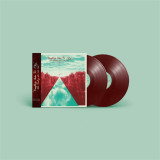
In the wake of a 2020 edition of Movement in the City's second album Black Teardrops (1981), Sharp-Flat Records returns with a prequel by way of a reissue of the band's self-titled debut from 1979.
As the 1970s were drawing to a close, the epic Black Disco studio project with its signature pairing of drum machine and organ had run it course. After delivering a killer trilogy of cosmic lounge outings dating back to 1975, the group yearned for funkier grooves and the core trio of composer Pops Mohamed on organ with Basil Coetzee on tenor sax and Sipho Gumede on bass decided to hire a drummer and rebrand as Movement in the City. In contrast with the New Age detachment of Black Disco, Movement in the City was conceptually grounded in the bleak social realism depicted on its photographic album covers and leaned into the vivid sensibilities of library music from the era. Blending Cape jazz with funk and soul, the group's output evokes a soundtrack for South African city life at the outset of the 1980s while nodding allegorically to the subterranean movements that were in the course of shaking the cage for political change.
With its cast of jazz fusion all-stars, Movement in the City is the manifesto of a band in transition - a bold and slick first offering that delivers a modern South African sound capable of both the funky exuberances of "Mister Lucky" as well as the down-home pathos of "Blue Sunday." Restored from its original tape masters and released in partnership with As-Shams Archive and Pops Mohamed, this rare artefact of South African jazz history is back in print for the very first time since its original 1979 release.
Cerca:detach
Galcher Lustwerk is a Cleveland-born, New York-based producer who has become one of the underground's most respected and unique voices. His deep tracks fuse hypnotic grooves with subtle, late-80s hip-house–inspired vocals, creating a detached yet energising take on the famous Midwest style. He's a member of the White Material collective, first gained attention with the 100% Galcher podcast mix, and has since dropped many choice Eps on the best labels in the scene, including Ghostly International, all of which have cemented his reputation as a visionary.
Shorty Out' is a dreamy late-night sound with spoken words pulling you in as balmy pads swirl without purpose, but plenty of sass. The drums are understated but poignant, inviting you to sink into the vibe and give yourself over to Reflection.
'Vestibule' is another smoky, candle-lit sound, with hunched, dusty drums that make you move without ever being the focal point. More vocal musings bring tender feels and evocative imagery as the synths speak of cosmic escape.
Closer, 'Wet Bulb' is more club-ready with techno-leaning synths and mid-tempo but purposeful drums.
Analogue textures and heady, wispy synths add plenty of human soul, making this another considered cut.
- A1: Talisman & Hudson - Warmth Re-Heated
- A2: Conscious - Morpheus
- B1: Treacle People - Rupununi Rhythm
- B2: The Obsession Project - The Dream
- C1: Interphaze - Aman
- C2: So-Low - The Hourglass (Time Mix)
- C3: Jay Trance - Ridiculous
- D1: Connective Zone - Multiple Sensory Contact
- D2: Cxx - The Comfort Of Strangers (Rhythm Doctor Mix)
- D3: C Hudd & P. Lazonby - The Colours (Mix 2)
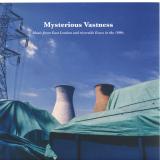
Barking-born Jane Fitz, and Transmigration label founder David Fogarty, curate a collection of tracks from East London and Essex’s rich but largely overlooked constellation of independent record labels and distributors operating from London’s E16 to the edges of the Thames estuary during the 1990s.
Mysterious Vastness documents a hidden and largely detached scene that only forms into something coherent with hindsight. From a time when record labels could press and hand-distribute 1000 copies locally, the late 80s acid house and outdoor rave scenes were moving from the fields to the clubs of London and DJs such as Colin Dale, Colin Faver and Darren Emerson were dominating the airwaves and parties with a distinct mix of other-worldly techno, trance and out-there house music. Among the seemingly bland post-war housing estates and factories, a scattered handful of producers were experimenting with early versions of music production software to create an exotic, end-of-the-century soundtrack to the suburban-meets-industrial landscape.
The compilation features a selection of finds from East London’s second hand record or charity shops over a period of 15 years. Many of which have featured in Jane’s sets over the years, most notably the “Beyond The A13" Podcast for Furthur Electronix. A mix she described at the time as the soundtrack to an area of London “totally bereft of natural beauty, but to me, somehow always full of mystery and wonder.”
- 1: Other Ways Of Landing
- 2: M4 Windy
- 3: To Earth Will You Tell Me When We Land
- 4: (Easily) Moved
- 5: Milk, Blue
Pem is a multidisciplinary artist, songwriter, and gardener whose work fuses organic and stylized elements. Her music is rooted in nature, shaped by long days tending gardens and observing seasonal cycles. Initial ideas emerge as “pocket sketches” — spontaneous melodies recorded while gardening — later evolving into full compositions.
Her EP other ways of landing emphasizes textural depth, world-building, and her distinctive vocal agility. Themes of belonging and rootlessness permeate her work, inspired by her transient lifestyle and connection to gardens.
Pem’s sound blends ethereal alt-balladry with soul and folk influences, underpinned by raw singer-songwriter foundations. Her hypnotic tremolo vocal technique adds an uncanny, esoteric quality. Live, she delivers arresting performances marked by stylized detachment and emotional tension, complemented by self-made costumes and lyrical motifs of fabric and fragility.
Influences range from Nick Drake and Vashti Bunyan to Cocteau Twins, Mazzy Star, and Björk. Her music explores cyclicism, mythology, and planetary themes, merging her real-world gardening experience with mystical undertones.
APORIAMOR noun 1. The death of love’s contradiction.
| “Embody APORIAMOR”
Etymology
aporia-: an irresolvable internal contradiction or logical disjunction in a text, argument, or theory. from Greek aporos ‘impassable’, from a- ‘without’ + poros ‘passage’
-amor: love. Sentimiento intenso del ser humano que, partiendo de su propia insuficiencia, necesita y busca el encuentro y unión con otro ser. Del latín amor.
-mor: latin for death.
APORIAMOR explores the affective ontological and organic processes of love and lust in the turmoil of an urban existence, through the female lens. It expresses the process of strengthening through heartbreak in its various forms.
With her debut EP The Art of the Concrete, elsas knew that by giving that name to a record which was ironically expansive and experimental, she would be calling for a distilled and clearer path further down the line. This is what she’s been incorporating into the sonic world of this new EP, APORIAMOR, signifying the birth of a more matured and distilled version of herself as an artist.
With APORIAMOR (“the death of love’s contradiction”) elsas conveys a personal process of healing in the romantic space. Through different experiences of heartbreak, elsas builds a language - a coping mechanism attached to its subsequent artistic expression – that isn’t founded on hardness or a closing-off, but instead, on a playful but profound reckoning, and learning of self-worth.
APORIAMOR embraces the complexities of being a lover-girl: of moving through life with an open heart. It celebrates the clarity, sweet hindsight, and detachment that come from processing emotion. APORIAMOR is both an affirmation and a release.
elsas makes canonical blends with a forward boundary-bending vision. Her sound in this record is naturally referential of both her Mediterranean heritage and UK alternative music — intrinsic parts of her lived experience. She has had the opportunity to collaborate with artists she deeply admires, each exchange enriching her creative world.
The experience of working hand-in-hand with Sampha for the last 3 years and ongoingly has been a core of her evolution as an artist. She has also collaborated in many forms with artists like Florence + the Machine, Little Simz, Jordan Rakei, Jockstrap, Obongjayar, Black Country New Road, Genevieve Artadi (KNOWER) and Duval Timothy. Additionally, her ongoing work with the Idrîsî Ensemble, of which she is a core member, continues to inform her artistic depth.
The making of this largely self-produced record unfolded over four years — “it’s a well-kneaded dough,” she says. These songs evolved through exposure to multiple environments: from early writing sessions in her childhood home in the Spanish countryside, to stages across the U.S. while on tour supporting Sampha.
Experimentation and modulation are an intrinsic part of elsas’ method, conceiving songs as organisms that respond to their surroundings. Collaborators on this collection of songs include Shrink, Will Lister, Gabriel Gifford, Ethan P. Flynn and more. The record was mixed by David Wrench (a long-time supporter of elsas’) and Nathan Boddy, and mastered by Matt Colton.
With APORIAMOR, elsas creates a visual world from the fabulation of the past, as an act of playful historical revisionism in which she embeds herself as both subject and storyteller. The songs function like an archive of her experiences across various years, each one unearthed and presented as some sort of archaeological artifact. Through this body of work, elsas begins to conceptualize herself as a legacy artist: one who honors the archive of her own becoming while emerging as a distinct and resonant voice in today’s musical landscape.
- Clean Living
- Echo Park Donut
- Hungry Animal
- Loose White Paper
- Shake Me Awake
- Bed Time For Eddy
- Love Means Light Year
- Early Spring
- Emotional Volley
- One Heavenly Body
- One Zero
On Hungry Animal, Luke Temple continues to trace the invisible lines between the personal and the cosmic _ between what we feel, what we observe, and what we inherit simply by being alive. The album reunites Temple with Doug Stuart (bass) and Kosta Galanopoulos (drums), the core of his Cascading Moms ensemble, whose instinctive chemistry anchors the record's balance of rhythmic precision and melodic drift. Together they shape a sound that feels handmade and fluid, delivering sharp observations in soft focus. The album opens with "Clean Living," a tenderly libidinous groove, unraveling purity myths and self-discipline _ less a confession than a celebration of the futility of striving for perfection in a flawed world. From there, "Echo Park Donut" shifts into the memory of an unsettling vignette drawn from a violent incident outside Temple's Los Angeles home. The band moves with a quiet pulse beneath the story, suggesting both detachment and the surreal intimacy of fear. The title track, "Hungry Animal," grounds the album's broader questions: how well can we really know one another, or ourselves? Temple's lyrics circle around the idea that we are animals among animals, driven by instinct and affection alike. It's both playful and philosophical, one of the record's emotional centers. Temple's bandmates bring an understated mastery to these pieces. Stuart's melodic, infectious grooves converse fluidly with Galanopoulos's drumming, which breathes life into each song even as it gently propels them forward. The trio's interplay feels both weightless and deeply rooted _ commanding the listener's attention and empathy without ever forcing it. With Hungry Animal, Luke Temple and the Cascading Moms create a world where reflection becomes rhythm and consciousness gains texture _ a record of quiet revelations and deliberate grace.
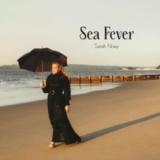
Formerly one third of the much-loved trio Black Box Recorder, alongside The Auteurs’ Luke Haines and Jesus and Mary Chain guitarist John Moore, the British singer-songwriter Sarah Nixey has steadily gained acclaim as a solo artist who makes savvy, sophisticated and poised pop.
Delivering vocals with a detached elegance over opulent tracks, any perceived nonchalance in Nixey’s luxe, cut glass voice belies her empathy, where social commentary serves as protest, both explicit and implied. Like Billy Bragg deepfaked as prime Julie Andrews, this strange but effective juxtaposition radiates soft power. ‘Lies of the Land’ depicts a corrupt post-Brexit and Covid-19 world where inequality and division flourish. ‘England's On Fire’ delves into the nuanced concepts of patriotism and nationalism, and ‘Pleasure Bay’ narrates the story of a love affair with a deprived yet beautiful English seaside town, written after Nixey left London, drawn back to the Dorset coast.
More than just a political record though, Nixey was drawn to the poetic elements of living too, telling stories of life and death, love and loss, conflicts and symmetry, in an intimate and close-up way, as if whispering secrets to her listeners.
“Sea Fever explores the bittersweet beauty of human life amid a volatile world of changing seasons and brutal elements,” says Nixey. “These are songs of deep sorrow, remembrance, birth, and change, set against a backdrop of the sensuous natural world.”
‘Rolling Waves’ explores profound grief following her beloved grandmother's death, while ‘Spring Equinox’ celebrates the joy and awe of life after welcoming her first grandchild. ‘At the Edge of the Forest’ is a poignant story of someone losing their memory, and ‘On This Wide Night’ recounts the early hours return home of a teenage runaway.
Childhood Intelligence’s 18th release by ADSR aka. Todd Nickolas & Dominic Paterson from Toronto, Canada. The 2x12” album presents mostly tracks written and produced by Todd, with A1/D1 being in collaboration with Paterson. "Give a teenager in a rural Canadian setting an analog synthesizer, a drum machine and a four-track cassette recorder and feed him a steady diet of 80s EBM, Post-Punk, Synthpop, Electro, Dub, Acid, Hip Hop and House, and you’ll get the kind of genre melding electronic-based music that Todd Nickolas has been known for since his early days of writing and producing." The end result is a versatile one, with “Passive Articulation” presenting abstract Techno - House - Electro visions, and fusing all the elements of vintage Intelligent Dance Music that we cherish so much: warm basslines, beautiful chord progressions, diverse and surprising arrangements infused with haunting melodies, hypnotic cyber sounds, detached vocal cuts and dubbed percussion.…Overall fresh & timeless classiness for the present, past & future.
Recorded various locations New Hamburg, Kitchener-Waterloo, Ottawa, Toronto, San Francisco and Los Angeles. ADSR greatly thanks those who were there from the start, those who joined along the journey and those here now.
For 20 years Bart De Paepe has carved a distinctive trace in the realm of psychedelic underground and counterculture. With several outstanding solo albums on a.o. Astres d’Or, Ultra Eczema, No Basement Is Deep Enough and with many studio and concert ventures with Sylvester Anfang’s funeral folks, Louise Landes Levi, Timo van Luijk, Raymond Dijkstra to name a few, Bart De Paepe developed a wide and sharp spirit within the orbit of psychedelic improvisation. Since 2007, Bart also curates the Sloow Tapes and Sloowax labels with an impressive catalog of music and poetry by a wide range of resonating artists. Bart’s visual work (drawing and painting), parallel to his musical universe, has been used on many of these releases. He is a genuinely curious traveler, always discovering new dimensions, which is clearly to be heard on the four tracks of this album.
Zürahümnah is an immediate and immersive dive into solitary inner and outer worlds of light and darkness. Zürahümnah is a floating vibration of flickering twilight. Zürahümnah is a mysterious journey through detached time and space. Equipped with Hawaiian guitar, piano, organ and cymbal, Bart De Paepe sets the controls for the heart of the sun.
The RIOT DJ-BACKPACK XL is a high-end, extremely rugged-built backpack designed for the heavy-travelling Pro-DJ. It comfortably holds any digital gear from Kontrol S4 to battle-mixers such as Rane Sixty-Two or Pioneer DJM-S9 along with a laptop and accessories. Constructed entirely from hardwearing PVC Tarpaulin, its outer shell and all zippers are fully waterproof which ensures your gear is protected even in the worst weather. The featured “Zip-Around-Expansion-System” means the main compartment’s capacity can be doubled, turning the RIOT DJ-Backpack into the ultimate versatile packing monster.
+ FITS
Laptop up to 17"
Ableton Push2
Akai MPK-25
Akai MPC Renaissance
Denon MC-4000
NI Kontrol S5
NI Kontrol S4 MK2
NI Kontrol S2 MK2
NI Kontrol S2 MK3
NI Kontrol D2
NI Kontrol Z2
NI Maschine+
NI Maschine
Numark Mixtrack Pro 2
Pioneer DDJ-SB2
Pioneer DDJ-SB3
Pioneer DDJ-400
Pioneer DDJ-RB
Pioneer DJM-S11
Pioneer DJM-S9
Pioneer DJM-S7
Pioneer DJM-900 SRT/NXT
Rane Seventy-Two
Rane Sixty-Two
Rane Sixty-Eigth
Reloop Elite
Roland DJ-202
Vestax VCI-400
Vestax VCI-380
12“ Vinyl
Accessories
+ BASICS
Crafted from hardwearing and 100% waterproof PVC Tarpaulin
Soft-fleece lining
PVC-coated (waterproof zippers)
Lockable zippers on main and laptop compartment
Rubber corner protectors and rubber feet
Main compartment includes several removable adjustment foams, a divider and a protection panel
The “Zip-Around-Expansion-System” doubles the main compartment’s capacity
Main compartment can be packed and unloaded in the “DJ-booth-friendly” stand-up position or in the fully opened and unfolded position to gain easy access
Separate and fully padded laptop-compartment up to 17”
Two large front pockets with internal mesh pouches provide perfect organization of small accessories
Padded back panel with airflow system, ergonomic backpack straps and chest straps
Top and side carrying handles
Detachable trolley sling
Hand luggage compatible
+ SPECS
+ Outer dimensions: 56 x 37 x 23 cm
+ Inner dimensions: 51 x 32 x 8 cm
+ Weight: 3,0 kg
- A1: Primetime
- A2: Turboframe
- A3: All You Did (Feat. Elvin Brandhi)
- B1: Top Suki Girl
- B2: Hunter Hunted
- B3: Cavalier
Assembled by Pedro Alves Sousa, Má Estrela is a conjuration of ideas and obsessions around dub, leftfield dance phenomena and the hypnotic potential of urban somnambulance.
In a levitating state, not exactly detached from the unease of these end times, Sousa surrounds himself by a number of accomplices from past and present endeavours to project a scrying mirror reflection of distinct languages of trance and liberation - dub's space and infinity, jungle and footwork's broken shards, DJ Screws legacy perpetually reanimated via numerous slowed down anonymous versions on Youtube and the lyricism and fire of jazz.
Temporarily a quartet, comprised of Sousa on saxophone and its electronic processing, Bruno Silva and Simão Simões on electronics and Gabriel Ferrandini on acoustic and electronic drums, after the departure of Miguel Abras, Má Estrela had in their 2022 debut album their first document of this ongoing process that’s now continued with ‘Tornada". Miguel Abras has since been replaced with Bruna de Moura and Má Estrela came back to being a five piece.
Coming out in November through Discrepant, with Miguel Abras' bass still present, 'Tornada' deepens the symbiotic connection between those rhythmic, melodic and textural particles in a mutating flux of continuities and disruptions throughout seven tracks. Featuring the invocations of Elvin Brandhi in 'All You Did', 'Tornada' makes its way amidst harmonic spectres, rhythmic debris that breathe for life and a certain, implicit idea of ritual that sustains itself liminally between the ethereal dissolution of time and the physical projection of space.
Eisenmund, the debut by Berlin-based Schimmel über Berlin is a thing of pounding, brittle beauty that seeks to continue on from where angst-ridden, early-eighties Berlin left off. Angular, monophonic synths, guitars that slice through with wiry yet melodic urgency, basslines that pulse with a taut, driven precision and drums that meld everything together. Liv Billerbeck’s vocals come from the middle distance, drifting between detached and desperate, as if transmitted through a wintery cityscape.
Title track Eisenmund jangles with reedy synths floating over a carpet of bass and mournful vocals dripping with a sense of loss. This mood spills over into the other tracks, like post-punk jewel Schreck with its iridescently lovely guitars.
Eisenmund is sharp, atmospheric, and quietly thrilling - proof that the shadows of the eighties can still dance under today's flickering lights. The album, immaculately produced by T-Rex, captures that classic post-punk mood of urban decay, late-night introspection and stubborn sense of motion, which for someone like me, who was there back in the day, seems utterly familiar without ever sinking into mere nostalgia.
Fiona Sangster (Xmal Deutschland)
Die Band Schimmel über Berlin ist eines der vielen Klanggesichter der Liv Billerbeck, ein Gesicht, das man niemals sieht, das im Verborgenen sich umblickt und agiert und das trotzdem aber in einer seltenen Klarheit erscheint. Man sieht es beim Hören, schemenhaft. Ihr Schaffen ist befallen vom West-Berlin der 1980er Jahre (Xmal Deutschland, Malaria etc.).
Eine Rolle, gerade in der musikalischen Brillanz und Produktionsraffinesse, spielt britischer Post-Punk, der sich sehr klar auch im treibenden Spiel von T-Rex (Bass + Produktion), Việt Phương Vũ (Gitarre) und Christian Ramisch (Schlagzeug – mit Phương übrigens bei der ebenfalls sehr guten Band NOJ) zeigt: The Sound, Killing Joke et. al.!
Es handelt sich bei dieser Musik um einen Sound mit retroesquem Anstrich, der spürbar eine vergangene Luft atmet, einer Nostalgie an eine ferne Zeit anheimfällt, die das Quartett ob ihres Alters nicht erlebt haben kann, und die vielmehr eine Sehnsucht bedeutet, in der Unerfüllbarkeit eine Melancholie mitbringt, eine Art treibende Traurigkeit spürbar macht. Das allein ist groß! Was weitergehend daran aber so interessant, besonders und wahnsinnig schön ist: Das klingt in Billerbecks Schaffen – und insbesondere hier, beim Schimmel über Berlin – nicht wie eine Kopie, ein Abklatsch, eine Reminiszenz oder das, was in der so called NNDW bald flächendeckend geschieht: das Anzapfen einer überholten Coolness. Denn etwas ist ganz gegenwärtig daran, in der Eigenständigkeit, macht einem eindringlich das Hier und Jetzt spürbar, auf unterschiedlichen Ebenen: Traurigkeit, ja, aber auch Bock, bis in die Morgenstunden auszugehen, schnellen Schrittes über rutschiges Kopfsteinpflaster zu traben. Musik dann wieder zum Verkrümeln in zugigen Altbauten, von Schreien über einen nebelbedeckten See im Umland Berlins.
Und eben kein Eskapismus, auch wenn die Musik zur Flucht taugte. Merkwürdig ist, dass in dieser Retroschleife dann etwas Märchenhaftes mitschwingt. Vielleicht liegt es auch in der authentischen 1980er-Jahre Produktion, in der immer wieder so ein Klimpern, ein Schellen durchkommt. Es mag aber auch an den Texten liegen, die etwas von Minnesang haben und in ihrer Klarheit, die aus der Kühle und den Kargheiten (der Vergangenheit, der Gegenwart, der Zukunft) entsteht, doch Wärme transportieren.
Wir hören darin heute, trotz all dem Bewusstsein für die Vergangenheit, den Sound einer seltenen Dichterin der Gegenwart. Das ist von einer Intensität, die einen bald absorbiert. Eisenmund etwa, das Titelstück, ist so ein Song, bei dem man sich hinsetzen oder gleich hinlegen muss. Da sind Dinge, die man nicht ändern kann. Wie geht das? Also: nach vorne, heftig, und dann aber so weich und traurig. Hätten Schimmel über Berlin die 1980er-Jahre dieser Stadt beschallt, sie wären hiermit, das mögen sie selbst vielleicht gar nicht hören, die Helden dieser Zeit gewesen. Eisenmund ist das tollste Album, das mir seit Jahren begegnet ist – und die bisherige Klimax dessen, was aus der Allee der Kosmonauten hervorgeht.
Und wenn man das alles so hört, aufmerksam hört, wird einem, obwohl das alles so ein einziger, riesiger Hit ist, völlig klar: Hier geht es nicht darum, irgendwo damit zu landen, irgendwo mitzumischen, erfolgreich zu sein oder in aller Munde. Hier geht es darum, einfach nur genau das zu machen, was es ist! Alles andere ist egal.
Der Klagegesang wird mich immer umwehen.
– Hendrik Otremba
- 1: Bound
- 2: A Love That Hurts
- 3: Breathe
- 4: Feeling Lucky
- 5: Flickering Light
- 6: I Know
- 7: Blackout
- 8: Stalemate
- 9: Hang On
- 10: One Of Us Cannot Be Wrong
Sugaring a Strawberry, the sophomore record from Julia, Julia, is a study in coming undone—on purpose. Recorded at COMA, Julia Kugel's home studio, and mixed through a custom Flickenger clone, the album drifts in and out of clarity like memory itself. It's emotionally retrospective, creatively unvarnished, and deeply human. You can hear it in the hiss, the warmth, in the vocals so raw they're like an open window. These songs weren't engineered for perfection. They were built to breathe. Her long-time collaborator and husband, Scott Montoya, mixes it all so loosely that you can hear the air between tracks— a space that makes the music feel inhabited rather than recorded.
"Bound" opens the album like a secret passed between sisters, solemn and unspeakably close. It begins with the softest of touches: hushed guitar, a near- whispered delivery that carries the intimacy of someone singing only for one other person. It's a love song, but not romantic, more ancestral in the way long bonds can be. All glow and undercurrent, "I Know," is like hearing someone hum through a wound. The track arrives as if it had been waiting, coiled and complete, to be sung. Its pulse is slow but insistent, anchored on a hypnotic loop and a vocal that's half-incantation, half-confession. One of the most outward-facing songs on the record, "Feeling Lucky," opens like a cigarette flicked in the dark– smoky and a little bit slick. Built on a skeletal beat and a nearly detached vocal, it leans into a sarcastic swagger that barely masks the ache beneath. The delivery is droll and glazed, the instrumentation is sparse and a little woozy, leaving space for her voice to sway—a shrug of a song, stylish in its sadness. "A Love That Hurts" drifts in on soft, fingerpicked guitar and a dry, close-mic vocal that feels both haunted and immediate. The mix is stripped down and analog-warm, letting tape hum and silence frame the emotion. Julia sings like she's remembering something she doesn't want to, each line a slight unraveling. Like the rest of the album, "A Love That Hurts" doesn't push toward resolution. It sits in the ache, sifts through it, makes it beautiful.
Sugaring a Strawberry doesn't seek catharsis so much as stumbles into it. There's a quiet volatility to these songs like they might fall apart if you press too hard. It moves in shadow and softness, asking questions it doesn't answer. It doesn’t end with closure. It ends with truth.
- 1: Be Faster Than Your Own Depression (Roland Alpha Juno-) 03:4
- 2: The Tenderness Of Our Own Autobiography (Roland Alpha Juno-1) 03:8
- 3: Eternal Life Makes Your Past Grow Too Big (Roland Alpha Juno-1) 0:24
- 4: You're Mist To Us (Roland Alpha Juno-1) 02:06
- 5: Blissfully Tired (Roland Alpha Juno-1) 06:28
- 6: Breakfast In A Night Club (Roland Alpha Juno-1) 03:59
- 7: Always Ready To Drop It (Roland Alpha Juno-1) 02:33
- 8: A Visit To The Brion-Vega Tomb (Roland Alpha Juno-1) 03:54
- 9: Don't Ask, Don't Pray (Roland Alpha Juno-1) 04:54
- 10: Keep Your Spirits (Roland Alpha Juno-1) 04:48
One Instrument welcomes Morning Seance, composer and sound artist, originally from Italy and based in Vienna. On this debut LP, Morning Seance traces a drifting narrative composed of unstable harmonies, fluid structures, and ghostlike forms. The album unfolds like a dream told in fragments, oscillating between fluctuating pulses and decaying transmissions, from nocturnal stillness to acoustic mirages. The first half of the record moves through zones of suspended tension and evanescent contours, where tracks like “Be faster than your own depression” and “The tenderness of our own autobiography” sketch fragile architectures of affect. The second half enters a more spectral terrain — “Breakfast in a night club,” “A visit to the Brion-Vega tomb” — not places, but agglomerates of sonic sensation, detached from any personal frame.
With each piece, the music dissolves and reconstitutes itself, resisting finality or form, and doing so with an indestructible joy that hums beneath the wreckage. This is degenerate ambient music: anti-geometric and subject to emotional weather — not a refuge, but a slow collapse of structure and purity, where atmosphere gives way to excess and disobedience.
The album is crafted entirely from a single source: the Roland Alpha Juno-1. Despite this constraint, it achieves a vast sound spectrum, transforming one synthesizer’s voice into a layered landscape of textures and moods.
The electronic music of Morning Seance is built on constant variation and intricate, looping patterns with no clear beginning or end. This variation is not simply applied to an audio element, but enacted as a compositional logic — avoiding mechanical combinations and obvious rhythms. The result is a mutable mass of audio matter and tonal debris, guiding the listener through richly divergent environments.
- 1: Semi Detached
- 2: Desire Lines
- 3: Apricity
- 4: Smashing Time
- 5: Faraday
- 6: Straphanger
- 7: The Midnight Bell
- 8: The Obelisk
- 9: Clifton Rise
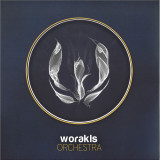
Multi-faceted musician and co-founder of the Hungry Music label, Worakls, has unveiled the full tracklist for his stunning production 'Orchestra', an ambitious project filled with 10 brand-new productions, including recent single 'Cloches.'
Allowing his musical film influences to fully express themselves by incorporating them into his music, 'Orchestra' combines the grandiose feeling of album opener 'Nikki' with the melodic rhythms of 'By The Brook', and wistful yet percussive tones of tracks like 'Detached Motion.' Packed with cinematic elements throughout, Worakls explains his creative process, stating:
'Along the years, I have become more sensible to the emotions of film music, and I wanted to lead my universe into that direction. My aim is to mix in the emotions of this music with the freedom and energy of electronic music.'
With the original music composed to be specifically played with an orchestra, the album is accompanied by a tour of the most prestigious venues in Europe where Worakls will be accompanied by an orchestra formed of 20 musicians. Having recently kickstarted the schedule in Paris, the tour will take in a further 9 sold-out dates across France and Belgium throughout February, March, and April.
Spending the last ten years travelling the globe's most prestigious concert halls and festivals, Worakls' journey into composition started at the age of 3, learning the piano amidst his family of musicians. However, it was the 2015 launch of his 'Hungry Band' group alongside fellow frenchman N'to and Joachim Pastor which earned the French producer widespread acclaim. Proving his skills in composing film scores as well as electronic and orchestral productions, Worakls recently scooped the 'Best Original Soundtrack' prize at the Deauville Green Awards for Ushuaia and InFocus. The accolade was awarded to Worakls for his work on 'Une Oasis d'Espoir' alongside Nicholas Van Ingen & Jean Baptiste-Puchain.
More than a first album, more than a show, 'Orchestra' is the culmination of an inimitable artist whose inspirations touch all generations of music lover. After more than a decade of waiting, 'Orchestra' marks the first solo album from Worakls, and is set for a physical release in Spring 2019.
“Is all that we see or seem but a dream within a dream?” This quote from a poem by Edgar Allan Poe sums up the lamenting, primal work that is "All That We See or Seem"; a project conceived between Finland, England and Brazil. The self-titled album consists of two long-form pieces of droning mysticism hailing from the trio of Gruth (concept, production, electronics), Ellen Southern (vocals, field recordings, percussion) and Johanna Puuperä (violin, modular synthesizer, additional vocals).
The album opens straight into a thousand yard stare with “Myrskymielellä", adapted from a 1891 poem by the Finnish national poet, Eino Leino, who wrote it at the tender age of 13. Here a blank distant droning of synths and the sounds of flowing water hover underneath like a dark river observed from the air. This is a sound and feeling that will stay constant for the entirety of the piece´s thirty minute duration. It is a trance-inducing composition that slowly unfolds elements of pagan ancestry into its own life. At first, faint female vocals are introduced as distant spatial elements, which gradually advance into waves of cries and anguish as the piece progresses and moves further into the storm. The tranquility of the first half is slowly morphed into a full blown ceremony as driving ritualistic percussion and a foreboding witch-like presence shifts the piece into a Dead Can Dance-like territory. Here a constant enveloping mixture of violins, modular synths, field recordings and vocal screams creates the feeling of a grande finale. It is an astounding piece of music that develops like a drone symphony for the beginning of time.
With the second piece, “A Dream Within A Dream”, from Edgar Allan Poe´s 1849 poem, you are transported to the shores of an undisclosed island; a place where it´s only you, your thoughts and the endless emptiness. The continual sound of waves is soon brought together with a cloud of synths and mourning violins that will keep a steady dreamlike state during most of the piece´s duration. This time the wordless vocals feel almost angelic in their pageantry. The composition flows like a slow caress of the soul and feels like the spirit twin of Gavin Bryars' “The Sinking of the Titanic” with its lamenting slow movements towards the unknown.
Truly a ghost of a record, “All That We See or Seem” is an experience hard to shake and feels like entering sacred ground. We are in a place surrounded by earth, both ancient and present. "Let loose, Vanha, the rage of an earthly storm! Detach the elements, completely open the sky! In the Earth, let an incessant storm prevail, so that in my chest I would not feel the miserable pain” - Eino Leino
- Fine + 2 Pts
- Let's Play Clowns
- Dog Park
- I'm Totally Not Down With Rob's Alien
- Hey! Is That A Ninja Up There?
- Pony Up!
- Houston, We Have Uh-Oh
"Pop" is a tag that's been assigned to Minus The Bear throughout their career. It's been used to set a distinction between the unique brand of complex indie rock they introduced on their first EP and the more angular and aggravated sounds of their previous bands Botch, Kill Sadie, and Sharks Keep Moving. It's also a tag that was thrown around frequently in the wake of their streamlined fourth album, OMNI. And it's a descriptor that immediately comes to mind within the first few seconds of their classic second formal EP, They Make Beer Commercials Like This. Now celebrating its 10-year anniversary and first time in print since 2011, Beer Commercials is the evolutionary step between Minus The Bear's first two landmark albums, Highly Refined Pirates and Menos El Oso. Opening track "Fine + 2 Points" remains one of the band's strongest opening tracks in their discography,charging out of the gates with a syncopated stomp that comes across as a more agitated take on Kylie Minogue's "Can't Get You Outta My Head". If Minus The Bear were looking to make pop music without any of its major-scale bubblegum trappings, they nailed it here. The band follows it with "Let's Play Clowns" and "Dog Park" - nods to Highly Refined Pirates' formula of frenetic clean guitar work, bombastic choruses, and Jake Snider's lyrics of detached romantic nostalgia. These tracks may represent Minus The Bear's original trademark version of pop, but on songs like "I'm Totally Not Down With Rob's Alien" the band eschews it's restless energy for atmosphere and dynamics, creating a sound that's inspired more than a handful of contemporary melodic post-rock bands. By the time the band belts out "Pony Up!" the listener has watched the three-year sonic transition between Minus The Bear's first two full-lengths transpire within under half-an-hour, with the their earlier math rock predilections yielding to the tightly wound club-banging pedalboard trickery that defined their sophomore album. Even if Beer Commercials doesn't fit within your definition of pop music, the unorthodox energetic charm of this relatively low-profile release serves as an exciting reminder of why Minus The Bear became one of the most important and influential indie rock bands of the new century.
Three sanguine slices of dub techno from Glasgow-based wunder Conna Haraway. And featuring XENIA REAPER providing vibes and synths on the lush long elevation "Redirect" that sits on the record’s A side.
Shifted follows on from Spatial Fix; Conna’s first solo 12” in March ’25 that released on Theory Therapy. Where that EP was a dense and rich web of texture and atmosphere across the two long sides, this one focuses in on forms of propulsion and a patient, silvery endlessness.
A side track "Redirect" was cut from a longer Sunday night session with XENIA REAPER. Two laptops Ableton linked, chilling in the flat in Glasgow. The amazing synth line is all XENIA, everything else is Conna; looping the synth & bass for about an hour and bringing other elements in and out. The final tune is gorgeous, floating in the blissful ether before the sub and pulse kicks through. Eleven and a half minutes of enveloping pressure, refreshment and delight.
"Detach" and "Duration" both turn to a rediscovered love for 4x4 techno and an experiment in a more classic and subtle sound from the perspective of a producer who might be expected to take bigger emotive and experimental swings that follow the patterns of contemporary ambient and bass. The result is beautiful and delicate vectors of music, satisfyingly easy to slide into a set. Swung techno filled with detail and poise. Tunes that can scale and transform and sit in a sort of home listening club track zone. After hours nrg.
- A1: Eyeroll (Feat Elvin Brandhi) (4 01)
- A2: Malikan (Feat Abdullah Miniawy) (4 08)
- A3: Move On (Feat Iceboy Violet) (3 44)
- A4: 99 Favor Taste (Feat Juliana Huxtable) (0 57)
- A5: Nontrival Differential (Feat Elvin Brandhi) (4 25)
- A6: Partygoodtime (Feat Ledef) (0 09)
- B1: Cut Cut Quote (Feat Elvin Brandhi) (4 22)
- B2: Pique (4 26)
- B3: If The City Burns I Will Not Run (Feat Abdullah Miniawy & James Ginzburg) (3 23)
- B4: Hasty Revisionism (3 14)
- B5: Lacrymaturity (2 43)
Black Vinyl LP. The world has changed, we shouldn't try and pretend otherwise. While we were shut away in isolation our routines shifted, social patterns evolved, and our hopes and dreams were twisted into cobwebs we're still trying to wipe from our fingers. Ziúr tentatively approached this on her last album Antifate, an ambitious and complex hybrid pop fever dream that looked back to a Medieval escapist fantasy as the scent of revolution seemed to hum in the air. But when restrictions were eased, she found herself staring down a discombobulated society that had trapped itself in a spiral of microwaved nostalgia and detached, narcotic repetition. Eyeroll then is Ziúr's musical panacea, a tincture to wake us from our creative slumber and prompt external connection and reflection. It's a polyphonous hex that demands human interaction, and Ziúr's hand-picked alliance of collaborators - Elvin Brandhi, Abdullah Miniawy, Iceboy Violet, Juliana Huxtable, Ledef, and James Ginzburg - each provide distinct voices that together herald a bewildering sonic epoch. Ziúr's palette had to evolve to match the scope of the project, but it was pure necessity that informed the album's defining tone. Recording mostly at night, Ziúr was conscious of the noise she was making so developed a unique way to record organic percussion. Using a set of rototoms - low profile tunable drums - she scratched, scraped and gently tapped the skins to build up the undulating and unstable rhythmic backdrop for each track. It's the first sound we hear on the opener 'Eyeroll', rattling like lost marbles against Elvin Brandhi's primal croaks and screams. And when Brandhi's twisted articulations form words, Ziúr matches the energy with chaotic thuds and serrated blasts of saturated electronics. "I roll the shittiest cigarette," she squeals like she's about to start a mosh pit at Paris's GRM Studios. Without pause, Abdullah Miniawy takes over on 'Malikan', building on the promise of material with Simo Cell, Carl Gari and HVAD with corrosive trumpet blasts and charged, politically incendiary Arabic vocals. Inspired by pre-Islamic poetry and the Qu'ranic chanters he heard growing up in Saudi Arabia and Egypt, he spins labyrinthine stories that cross between the worlds, breaking down physical and spiritual borders simultaneously. Miniawy's scope is expanded even further on his second collaboration, 'If The City Burns I Will Not Run'. "If it rains and the city drowns," he utters over gaseous electronics, "I will not run away, but I will be anxious for the heart of one close to me." After a supple vocal turn from Manchester's Iceboy Violet on 'Move On' and a surreal interlude from poet- DJ-artist-theorist Juliana Huxtable on '99 Favor Taste', Brandhi returns with two more hyperactive collaborations: ,'Nontrivial Differential' and 'Cut Cut Quote'. On the former she slices into Ziúr's skeletal jazz eruptions, screaming and crooning interchangeably, fluxing between the rap battle and the cabaret. The latter is completely different meanwhile, with Brandhi settling into her role as front-woman and groaning dizzying improvised passages that sound like grunge crossed with psychedelic no-wave. Brandhi's spiky musical history has prepared her well for this collaboration; she's a prolific producer and has been using her voice spontaneously since debuting with father-daughter improv duo Yeah You in the mid 2020s. She's found an ideal foil in Ziúr, a producer who matches her restless energy and willingness to bend formality, and leaves an indelible mark on Eyeroll. But the album's most tender moments are from Ziúr herself, who winds the album down on 'Hasty Revisionism', growling over collapsible beats and cascading strings, and comes to an unexpected conclusion with country coda 'Lacrymaturity'. Its feverish amalgamation of country music and euphoric, experimental electronics might seem incongruous at first, but in context with the rest of the album is the only possible conclusion. With Eyeroll Ziúr is making a firm statement about togetherness, humanity, and the renewal of hope when all seems lost. By bringing together such a wide but philosophically harmonic team of collaborators, she's conducted a body of work that speaks to the creative fringe in no uncertain terms. Now's the time to throw away what you think you know, and build bridges you didn't think you need. Now's the time for action. She may have spent her entire career avoiding the solipsistic trappings of "queer art", but by assembling a communal statement that questions so many normative assumptions about music, politics, and beyond, Ziúr has chanced upon her queerest album yet. Cringe? Eyeroll.
REPRESS
New Delhi-based Peter Cat Recording Co. will release their debut album, ‘Bismillah’ on June 14, 2019 via French independent label Panache Records. Debut UK live shows are soon also to be announced by the band.
Peter Cat Recording Co. could almost have a question mark on the end of its name. Not least as founder & frontman Suryakant Sawhney refuses to explain where that name really comes from or what it means (perhaps a reference to the Tokyo jazz club owned by Haruki Murakami), but also since the very existence of the band itself raises a raft of questions. When was the last time we fell for an indie rock band for the right reasons? Not because the band in question nostalgically imitate a perceived ‘golden age’ but because they innately embody the fundamentals of such music: fantasy, sincerity and the freedom to make music without rules or career aspi- rations. And when was the last time this kind of band sounded like Sinatra, Barry White, the sweetest doo-wop, humid fanfares and a psychedelic wedding band, all at once? And all of this coming from India?
In truth, the story of Peter Cat Recording Co. was written within the triangle of San Francisco, Delhi and Paris.
In the first of these cities, Sawhney (a native of Delhi) pitched up to study film-making. More distracted by the city’s peaking live scene of the early noughties, this is where he started to make music and to sketch out an idea for the band.“
The people I lived with supported my idea of writing music, they introduced me to great mu-
sic. There used to be a great garage scene in San Francisco, like The Oh Sees also Ty Seagall, Mikal Conin, all those bands. This is a world I had never seen in my entire life. A big inspiration from San Francisco was that you could record yourself. You don’t need to be in a studio and spend a lot of money to make an album. You can do it”.
At the end of the 2000s, Suryakant returned home to New Delhi, and started his band for real, more or less the same band that plays today. “I wasn’t so concerned about will we be performing, will we be the greatest band, will we be trendy. I just wanted to make something that was consequential and important for us, I think. Something which would last, something people could listen to and be like « this is life changing ». It was for the sake of beauty”.
For the first few years and in India alone, this is exactly what Peter Cat Recording Co. did, in total indifference to the rest of the world. This was until young Parisian label Panache stumbled across the band online via Vice’s THUMP subsidiary, stupefied by the band’s cosmic video for seven-minutes-and-counting track, ‘Love De- mons’. And so in spring of 2018, ‘Portrait Of A Time: 2010-2016’ was released on Panache - making the first international release from Peter Cat Recording Co., bizarrely enough, an anthology of re-mastered, hidden gems from the band’s ramshackle back catalogue, previously recorded in Suryakant’s own living room. With Peter Cat’s off-kilter charm hitherto unheard of beyond the fringes of India, the release provided a gateway op-
Whilst the title track found its way onto Tracks Of The Year lists at the Guardian & NME, it was tricky for new PCRC enthusiasts to get a firm grip on the startling push/pull between the immediate, uncanny music this release gathered, and the cultural backdrop of New Delhi at which it was so startlingly at odds.
Opportunity for a wider fanbase to fall in love with their cloud-like, drunken songs for the first time.
If discovering your favourite new band via a ‘Best Of’ feels a curious premise, then ‘Bismillah’ does more than hint towards the promise of Peter Cat Recording Co’s future. Blending gypsy jazz, psychedelic cabaret, space disco, bossa supernova, Bollywood and uneasy listening with kaleidoscopic ease, in many senses, the band’s knack hasn’t altered. Always different, paradoxical, unpredictable yet somehow familiar. The new album opens to the strains of bird chatter, the whisper of a city’s soundscape and the first few notes from an instrument which seem to be calling us to the departure lounge, a fore-shadow of the flight ‘Bismillah’ launches its listener
on. Suryakant sings with the detached, rueful elegance of Sinatra marooned on a desert island, whilst his band create small space-time capsules which navigate their way through genres and eras – including the future – and between nostalgia and eccentricity.
Peter Cat recently trailed ‘Bismillah’ with the release of ‘Floated By’, an appositely titled musing on failure & missed opportunities, punctuated by the fulsome brass section which weaves through so much of the album.
The languid, blue quality to the track is offset by the attendant music video, created with footage shot, implau- sibly enough, at Suryakant’s own marriage ceremony (needless to say, the wedding band hired for the day was of course, Peter Cat Recording Co.) Sawhney dryly notes; “Hopefully it’s not a many-a-times-in-a-lifetime event. You can’t fake that set, those people actually having a good time, being really emotional and intense.” ‘Bismillah’’s colour-drenched album cover also captures Suryakant’s father-in-law making his wedding toast on that same day - a nod back towards the cover of ‘Portrait Of A Time’, itself a black & white image taken at the wedding ceremony of Suryakant’s own father.
A stumbling but gracious collection of songs rooted in a kind of drunken soul music, the melancholy nature of some of the songs on ‘Bismillah’ renders them almost liquid, before they develop into more dance-like shapes. Suryakant’s rangy voice swoops from the falsetto glide of ‘I’m This’ to the beat-up baritone blown along by the warm breeze of ‘Soulless Friends’. The elliptical structure of album opener ‘Where The Money Flows’ also al-
lows for the use of brief bursts of autotune effect on his vocal without feeling incongruous, whilst the desultory lyrics of ‘Heera’ (a Hindi word for diamond) - sharing something with the Morricone school of grand storytelling - have an emotional weight that would impress even coming from a native English speaker. Perhaps the most gleefully unpredictable moment on ‘Bismillah’ comes with the illusory, vocal loops on the intro to ‘Memory Box’, errupting into 8 exhilarating minutes worth of unbridled, string-backed disco joy. A cat might have nine lives, but on ‘Bismillah’ and beyond, Peter Cat Recording Co. are hinting towards an un- knowable multitude of dimensions. Throw them all together, and it equates less to a listening experience and more to an out-of-body experience.
Peter Cat Recording Co. are: Suryakant Sawhney (vocals/guitar/organ), Dhruv Bhola (bass), Kartik S Pillai (organ/guitar/electronics), Rohit Gupta (horns), Karan Singh (drums)
- Close To Heaven
- What Do You Do?
- Rocket
- Summer's Scorch
- Sit With You (Pain)
- Away, Again
- Flesh
- Roadkill
- Elliot
- Paper Doll
- Carnival Sounds
HAZY BLUE VINYL[22,27 €]
Set in the pressure cooker of fresh adulthood, Jahnah Camille's defiant new EP My sunny oath! is a guitar-based grab at self-acceptance. Romping through alt-rock, lo-fi grit, and sardonic grunge with unflinching momentum, the new six-song collection channels Jahnah's era-agnostic songwriting influences, from The Sundays and Liz Phair to Minnie Riperton and Japanese Breakfast. Largely written before a breakout year including tours opening for Luna Li, Tops, and Blondshell, My sunny oath! is set in stormy self-development. Dreamily layered vocals, modern shoegaze sheen, and keyboard lines accompany Jahnah's ear-worming guitar parts and coyly detached tone, as she pushes through the muck of outgrown relationships, misogyny, and hometown anxiety with the help of producer Alex Farrar (Wednesday, Indigo De Souza, MJ Lenderman). The clear-eyed sonic expansion of My sunny oath! marks a decisively bold, exploratory new direction for Camille's sound with fearless hooks and swirling production abound. It's a messy, vulnerable, and inviting picture of early adulthood.
Cult musician Paddy Hanna announces his forthcoming album Oylegate with the release of his new song ‘Oylegate Station’, out Wednesday, 29th January via Strange Brew Records.
In celebration of Oylegate, which arrives on Friday, 11th April, Hanna plays Whelans on Thursday, 17th April. Tickets are €21.95 + fees and can be purchased here.
After his fourth album, Imagine I’m Hoping, arrived to critical acclaim but not the mainstream success needed for him to continue on as a musician, Hanna found himself at a personal and artistic low point. However, thanks to support from the Arts Council and the encouragement of his family, ‘Oylegate Station’ sees Hanna returning as the intrepid captain of his own ship; he may not know the destination, but he’ll see us along the journey with his graceful pop sensibilities.
Speaking about the new track, Hanna’s cryptic explanation could be confused for a missive from a lonely cosmonaut: “Low rent fuel, caffeine of all shapes, the midpoint of hope and despair, engine still running at Oylegate Station.”
Elation and exhaustion. Love and terror. The weight of responsibility and the strange, disorienting beauty of watching life unfold before your eyes. OLYEGATE, the latest album from Paddy Hanna, is a journey through the euphoric highs and crushing lows of parenthood, delivered with his signature blend of melancholic wit and lush, off-kilter charm.
Determined to sidestep the usual sentimental trappings of writing about having a child, Hanna found an unlikely creative companion in grim Soviet-era cinema. As he wrote, films like Solaris flickered in the background—bleak, meditative landscapes that mirrored the depths of sleep deprivation and the existential wonder of bringing a new life into the world. This contrast of warmth and detachment, of intimate revelation and surreal detour, courses through the album’s DNA.
Despite its moments of cold introspection, OLYEGATE is sonically rich and enveloping—an effect captured in a single request to producer Daniel Fox: "sweet, sweet caramel." Hanna wanted the music to feel like satin lining the listener’s ears, wrapping them in warmth even when the themes tilt towards darkness.
True to form, OLYEGATE marks yet another creative leap for an artist who refuses to be boxed in. "One advantage of being an ‘artist’s artist’ is that you never have to worry about being creatively different between albums. There's real freedom in doing whatever you want and not being judged for it. And even if you are judged, who gives a shit?"
That spirit of fearless exploration—of finding joy in the unknown, the absurd, and the deeply personal—defines OLYEGATE. An odyssey of tenderness and turbulence, it’s the sound of an artist embracing life’s messiest, most beautiful contradictions.
Neon Orange & Black Vinyl. With Information (2019), Cleveland-raised, New York-based producer and DJ Galcher Lustwerk marked his debut LP on Ghostly International, having already carved out a lane of low-key hip-house music with his instant classic 100% GALCHER mixtape: deep, smooth, psychedelic, equally cut for the club, after-hours, night drives, and headphones. Lustwerk leveled up for Information, experimenting with more live drums and jazz saxophone to create a new dynamic, what he considered a hookier, more bittersweet, Midwest mindset. Lustwerk emerged in 2013 with the game-changing 100% GALCHER for the beloved mix series Blowing Up The Workshop, later named a mix of the decade by Resident Advisor. The signature sound - a smoky stream-of-consciousness baritone shadow-boxing with beats, informed by funk, rap, rhythm, and blues - felt like an epiphany distinctly linked to the expanse of Midwest driving and the strobe-lit detachment of club culture. Now over a decade into his musical vision, Lustwerk remains an elusive nightlife narrator, embodied by the hooks and a growing catalog that's proven influential and singular.
This is a recorded document performed by Mark Holub, Johanna Pärli and Sofía Salvo.
As a trio, they had not met until sound-checking for their gig at Berlin’s Cashmere Radio on September 1, 2023 — a fact that may be concealed by their immediate understanding as a musical entity but is obvious by their artistic freedom and curiosity towards each hoc encounters, flexible and steadfast in its performance, and that culminated in an experience that shook the floor of the radio station’s headquarters.
The day after, Sofía, Johanna and Mark gathered in Adam Asnan’s studio and deepened their quest for a communal language. They ignored any musical fetters or conventions, enjoyed the possibilities of a wider time frame without a live audience — and exceeded all hopes of what three personalities can achieve when they are given the space and time to experiment, detached from any restrictions.
Mark Holub is a drummer of outstanding versatility and responsiveness, full of ideas and quick on his feet. Through his playing as well as his experience as a band-leader and composer he is able to steer this coequal group towards thundering crescendo, but sits equally comfortable in the centre of complex and fine rhythm probing in response to impulses thrown in by his companions.
Johanna Pärli makes use of her double bass’s entire body, extracting an armada of multi- layered sounds with an immensely high sonic spectrum that is also reflected in the diversity of her musical projects. She is both patient and wildly adventurous in her performance, and in this trio her contribution wanders from considerate bow work to brisk fingerpicking, gnarly string strikes and pedal use to startling effects.
Sofía Salvo unleashes the full unbounded potential of her voice by taking advantage of her baritone saxophone’s broad range of possibilities. She is one of Berlin’s most singular musicians and her widely proven capabilities cover gentle additions to support and underline pulsive interplay just as masterfully as rapid licks and roaring bursts of noise, spurring the collective to unpredictable intensity.
If music of this particular kind often gives the impression of a constant search, this international trio certainly managed to find common ground and capture a special moment in time for listeners to (re-)discover. Contrary to what frequent misconception sometimes suggests, it’s also tremendous fun.
NERR — Filling Open Spaces was instantly composed and performed live in studio by Mark Holub on drums, Johanna Pärli on double bass and Sofía Salvo on baritone saxophone, recorded in Berlin on September 2, 2023 and mixed by Adam Asnan. Mastered and cut by Rashad Becker, vinyl pressed at Pallas. Artwork and design by Stefan Lingg, produced by Christoph Berg and Stefan Lingg.
- The Pages Of History (Opening)
- Full Steam Ahead
- Uranium
- Paika
- Fat American Lies
- Dog Bones
- When The Music Stops
- Gorya
- There’s A Date On Every Dream
- Crystal Cave
- I Was Made To Rain On Your Parade
- Deeper
"There is great power in secrecy. Detached from the world, brewed under a strict code of confidentiality, a new lifeform came into existence. Led by none other than Sonata Arctica frontman Tony Kakko, this new beast of his gained momentum in the massive shadow of his wildly successful power metal superheroes, slowly, steadily, biding its time, waiting for the right moment. This moment is now: With his self-titled debut, Tony Kakko opens the curtains into this strange new world of his just enough to take a first peek – and instantly hunger for more. A master story teller and a wizard of conjuring musical emotions, Himmelkraft stages Kakkos trademark talents in a wholly new, unexpected and thrilling way. To him, the sky truly is the limit, bestowing upon us an album that sounds like nothing else out there – brooding and dark, menacing and eerie, stomping and monumental.
This project sees Tony Kakko enter a fascinating new era. Much like the legendary Elven smiths of old, forging away in solemn silence, Kakko has stopped the wheel of time to reinvent himself and his bold musical vision. Shrouded in mystery, a new being appears in the fog, barely discernible and yet distinct the very moment Tony Kakko starts to sing.
Yet, everything else remains just what it was from the very start – a mystery. Call them songs for a dying world or songs for a world reborn – either way, you will be intrigued how this extraordinary project will develop. And that’s a promise
"
- The Big Picture
- Method Acting
- False Advertising
- You Will. You? Will. You? Will. You? Will
- Lover I Don't Have To Love
- Bowl Of Oranges
- Don't Know When But A Day Is Gonna Come
- Nothing Gets Crossed Out
- Make War
- Waste Of Paint
- From A Balance Beam
- Laura Laurent
- Let's Not Shit Ourselves (To Love And To Be Loved)
Yellow & Black Vinyl. "The first three are innocent in a way, because we didn't have an audience when we were making them," Oberst says. "But from Lifted on, I was definitely aware of an audience. Lifted was well-received right away, and then everything happened with Wide Awake and Digital Ash." Those two albums came out simultaneously. And their lead singles - "Take It Easy (Love Nothing)," from the austere, remote Digital Ash, and "Lua," from the warm, folky Wide Awake - debuted in the top two slots on the Billboard Hot 100. "First Day of My Life," also from Wide Awake, would later be voted the Number One love song of all time by NPR Music's reader's poll.Bright Eyes had officially broken through. It was a heady, exciting time, but also fraught and tense, both because of the band's careening new fame, and because of the state of the world. When Bright Eyes made their Tonight Show debut in 2006, they chose to perform none of their shiny new hits, instead delivering a searing, harrowing rendition of their caustic anti-Bush anthem, "When The President Talks To God."These days, Oberst is still amusing himself by messing with the extremes Bright Eyes baked into this era's releases, extremes that reflected the polar, with-us-or-against-us, fractious feel of the times. The reworked Digital Ash tracks, originally so clean and elegant, are, on the companion EP, full of "harmonica and mandolins - folky vibes," Oberst says. While the analogue sweetness of the Wide Awake songs have been put through a detached nihilism filter.
Emergent polymath Brother Aten makes his first outing on Bruk with an icy slice of system-ready
minimalism, guided by the cooly detached voice of Ze R.
Taking cues from cult sci-fi and early 80s no wave, Fragmented Dystopia is a crystal clear
statement trimmed of all unnecessary baggage. The title spells out the mood — Aten's
soundscapes are stark and synthetic machine mantras punched out on outboard instruments
navigating gritty, futuristic zones.
On 'Unavailable' steadily humming drones shape the space in which Ze R. hovers, initially
delivering a deadpan denial before their humanity sneaks in as the track snakes through an
intricate lattice of crisp digital percussion. Short and razor-sharp two-parter 'Fragmented Dystopia'
finds an even sparser corner to occupy within Aten's subtly cyberpunk vision, where Ze R.'s
scattered words cut a measured figure delivered at acute angles before breaking into wilder forms
at the end of Part 2.
Originally from Brooklyn and now based in Berlin, Brother Aten has been weaving a fascinating
tapestry of audio and visual work as MAF. His artwork examines the fraught relationship between
technology and society. Ze R. explores dimensions of sexuality, subjectivity and individualism
through writing, performance and community organisation.
- A1: John Martyn - Small Hours
- A2: Stephen Whynott – A Better Way
- A3: April Fulladosa - Sunlit Horizon
- B1: Sylvain Kassap - Plancoët
- B2: Manu Dibango - Night In Zeralda
- B3: Henri Texier - Hocoka Time
- B4: Nivaldo Orneleas - O Que Ha
- B5: 808 State – Pacific State (Massey’s Conga Mix)
- C1: Magma - Eliphas Levi
- C2: Homelife - Stranger
- C3: Michael Gregory Jackson - Unspoken Magic
- D1: Dora Morelenboum - Avermelhar
- D2: Simone - Tudo Que Você Podia Ser
- D3: Experience Unlimited – People
- D4: Otis G. Johnson - I Got It
- D5: Mel & Tim - Keep The Faith
Black Vinyl[39,08 €]
Exploring late-night, after-hours meditations on sound; ‘Everything Above The Sky (Astral Travelling with Luke Una)’ is a new compilation by the titular DJ, promoter and enigmatic cultural curator. Off the back of the E Soul Cultura phenomena, this compilation comes at a timely point in Luke’s rich career as he soars the heights of playing all over the world. Avoiding any chance of his sound being pigeonholed, Luke has put together a tracklist of songs and music that have a transcendental feel, after coming off the grid, going back to source, outside the city walls .
Music has long been believed to aid out of body experiences and many of us have searched long and hard for a combination of those elusive ingredients that might alleviate some of the monotony of everyday life, our daily routines and obligations, and those things that seem to block us from the spirit of the universe. In this collection, Luke selects music with all the right ingredients in just the right quantities, allowing the listener to engage in an esoteric journey of enlightenment through sound. Being a prolific collector of music, Luke initially delivered enough tracks to compile several compilations, making the licensing process the biggest effort to date for the label. The music moves softly and slowly, never becoming too intrusive, exemplifying the wonderful elevating properties of simple songs played from the heart.
Luke’s Everything Above The Sky manifesto reads, “Astral Travelling in the meadowlands with acid folk, spiritual jazz, around midnight hocus pocus, cosmic psychedelic soul, magical spellbound whirling swirling love songs, Brazilian ballads of light into machine soul gospel utopia dreaming, Balearic bossa, Outer Space ancient African drum, the breath of trees, escaping the big bad modern world, gathering round winter fires, walking amongst the bracken in Padley Gorge in late summer twilight, overlooking the Hope Valley, escaping ego, detaching and finally letting go amongst the stars with the slowly floating people. It’s beautiful beyond. Everything above the Sky”.
Beginning his career as an original Sheffield house young blood in the mid 1980s, Luke’s move to Manchester and partnership with Justin Crawford saw the birth of Electric Chair, a cornerstone cult night in the UK underground club scene. Then came Electric Elephant, a Croatian festival paying homage to their wild eclecticism from Balearic to Brazilian to É Soul, house, disco and techno. Luke’s much loved, long-running Homoelectric night and more recently Homobloc sell out festival for 10,000 souls has been at the forefront of Manchester’s LGBTQ+ cultural landscape. Luke’s Friday evening show on Worldwide FM captured imaginations and became a cult four-hour must-listen monthly journey for fans all over the world. Today, Luke remains, as ever, at the forefront of a changing milieu, pairing the momentous legacy of Manchester’s 80s and 90s scene with the delivery of what today’s club communities need to get down.
DM003 is a compilation featuring tracks from Omar Santis & Pistol Pete, Keita Sano, Dj Aakmael, and shampoo (Including Detach, and YS on the digital version). Ranging from moody house trax to mystical acid and bitter sweet electro. All with artist bringing different elements to the dancefloor. Featuring our favorite artists in the realm of house music, residing from Stockholm to Okayama, from Melbourne to Richmond, as well as California
Diving deeper into the story of Japanese reggae pop, Tokyo Riddim Vol. 2 explores an electronic, new wave and often experimental sound unlike anything Japan or Jamaica had ever heard before.
The first time Ryuichi Sakamoto left Japan, he did not go to the United States or Europe - he went to Jamaica. It was 1978, YMO were about to release their debut album, but Sakamoto was in Kingston, invited to play synths for Japanese idol singer Teresa Noda at Dynamic Sound Studios in a band alongside Neville Hinds and none other than Rita Marley. It’s not a story many know, but one which would spark Sakamoto’s fascination with dub and mark a new chapter in the ongoing Japanese love affair with reggae.
The Teresa Noda tracks they cut - ‘Tropical Love’ and ‘Yellow Moon’ - bookend this second volume of Time Capsule’s Tokyo Riddim compilation, which tells the wider story of how a fascination with Jamrock swept Japan, adding a dash of lime to that sweet city pop sound, embracing a globalised musical palette and creating a whole new genre in the process.
For some, like Sakamoto, a diversion into reggae was part of broader fascination with new sounds and styles, tipped into the global disco of homage and appropriation that made Japanese music of the late ‘70s and early ‘80s some of the most creative and undefinable in the world.
You had iconic shape-shifter Yosui Inoue, who toyed with reggae, afro-beat and electro-Balearic, (and whose For Life Records released several tracks on this comp), and Kay Ishiguro, who enlisted J-reggae originator Pecker on the ambitious Stevie Wonder-esque ‘Red Drip’.
Then there were the Compass Point devotees - producers and musicians alike who were enthralled by the sound of the Bahamas studio and drew on the detached cool of Grace Jones - as heard in the music of Juicy Fruits, and the disco noir of Casablanca-signed femme fatale Yuki Nakayamate. Sometimes, as was the case with Risa Minami, the J-reggae influence said more about Japan than it did about Jamaica.
But where Tokyo Riddim Vol. 1 focused on the city pop sound, this compilation goes further, digging out the more experimental collaborations and hybrids exemplified by Tomoko Aran, who in working with Yusuaki Shimizu and Mariah emphasised just how far reggae had travelled to be recast into something entirely new on the other side of the world.
Perhaps more than anything, in connecting the dots between Tokyo and Kingston, between Jamaica and Japan, the Japanese reggae was building a musical language that existed outside of the paradigms of US and European cultural hegemony - an encounter shaped by commerce, capital and creativity that is now being recognised more broadly for the first time.
- A1: John Martyn - Small Hours
- A2: Stephen Whynott – A Better Way
- A3: April Fulladosa - Sunlit Horizon
- B1: Sylvain Kassap - Plancoët
- B2: Manu Dibango - Night In Zeralda
- B3: Henri Texier - Hocoka Time
- B4: Nivaldo Orneleas - O Que Ha
- B5: 808 State – Pacific State (Massey’s Conga Mix)
- C1: Magma - Eliphas Levi
- C2: Homelife - Stranger
- C3: Michael Gregory Jackson - Unspoken Magic
- D1: Dora Morelenboum - Avermelhar
- D2: Simone - Tudo Que Você Podia Ser
- D3: Experience Unlimited – People
- D4: Otis G. Johnson - I Got It
- D5: Mel & Tim - Keep The Faith
Oxblood Coloured Vinyl[36,09 €]
Exploring late-night, after-hours meditations on sound; ‘Everything Above The Sky (Astral Travelling with Luke Una)’ is a new compilation by the titular DJ, promoter and enigmatic cultural curator. Off the back of the E Soul Cultura phenomena, this compilation comes at a timely point in Luke’s rich career as he soars the heights of playing all over the world. Avoiding any chance of his sound being pigeonholed, Luke has put together a tracklist of songs and music that have a transcendental feel, after coming off the grid, going back to source, outside the city walls .
Music has long been believed to aid out of body experiences and many of us have searched long and hard for a combination of those elusive ingredients that might alleviate some of the monotony of everyday life, our daily routines and obligations, and those things that seem to block us from the spirit of the universe. In this collection, Luke selects music with all the right ingredients in just the right quantities, allowing the listener to engage in an esoteric journey of enlightenment through sound. Being a prolific collector of music, Luke initially delivered enough tracks to compile several compilations, making the licensing process the biggest effort to date for the label. The music moves softly and slowly, never becoming too intrusive, exemplifying the wonderful elevating properties of simple songs played from the heart.
Luke’s Everything Above The Sky manifesto reads, “Astral Travelling in the meadowlands with acid folk, spiritual jazz, around midnight hocus pocus, cosmic psychedelic soul, magical spellbound whirling swirling love songs, Brazilian ballads of light into machine soul gospel utopia dreaming, Balearic bossa, Outer Space ancient African drum, the breath of trees, escaping the big bad modern world, gathering round winter fires, walking amongst the bracken in Padley Gorge in late summer twilight, overlooking the Hope Valley, escaping ego, detaching and finally letting go amongst the stars with the slowly floating people. It’s beautiful beyond. Everything above the Sky”.
Beginning his career as an original Sheffield house young blood in the mid 1980s, Luke’s move to Manchester and partnership with Justin Crawford saw the birth of Electric Chair, a cornerstone cult night in the UK underground club scene. Then came Electric Elephant, a Croatian festival paying homage to their wild eclecticism from Balearic to Brazilian to É Soul, house, disco and techno. Luke’s much loved, long-running Homoelectric night and more recently Homobloc sell out festival for 10,000 souls has been at the forefront of Manchester’s LGBTQ+ cultural landscape. Luke’s Friday evening show on Worldwide FM captured imaginations and became a cult four-hour must-listen monthly journey for fans all over the world. Today, Luke remains, as ever, at the forefront of a changing milieu, pairing the momentous legacy of Manchester’s 80s and 90s scene with the delivery of what today’s club communities need to get down.
Forgetting You Is Like Breathing Water, the self-titled debut from the duo of trumpeter Will Evans and guitarist, synthesist, producer and multi-instrumentalist Theo Trump, arrives like a vault revelation. It feels like a decades-old yet newly unearthed masterwork of gorgeous ambient improvisation, the sort of thing scholars live to research and shepherd into deluxe reissue.
The patient, crystalline chords that swell and resonate like a series of confessions; the textured brass murmurs that suggest a ’60s or ’70s Fire Music master at their most poignant. Provocative found-sound experiments threading arcane religious recordings through dystopian soundscapes. Ear-shattering free-noise tumult. Where and when did this music come from? Who are these voices?
As it turns out, Forgetting You Is Like Breathing Water springs from an engrossing human story, though it isn’t necessarily the one you’d expect. This work of stunning maturity is in fact an entrance by two little-known explorers in their early 20s, who grew up together in Virginia, in the shadow of the Blue Ridge Mountains. It documents one of those perfect, sparkling moments in post-adolescence when big decisions and responsibilities are right around the corner, but for a spell, two young artists are able to create among the comforts and nostalgia of their shared past.
It also represents a reunion of sorts, as Evans and Trump connected as toddlers, became inseparable as boys, then pursued independent lives and creative paths as young adults. “Theo is my oldest friend,” Evans says, “and I feel like that’s what this band is — us meeting right in the middle of our interests.”
Now, having conjured this magic, they’ve detached once again: Evans, whose other works include the indie/avant-jazz unit Angelica X, is currently based in New York City. Trump recently moved to England, where he’d participated in his family’s theatre company, to go to school and further his solo ambient project. “This album didn’t start out as something super ambitious,” Evans explains. “It was more just an excuse to spend time together again and make music.”
***
In conversation, Evans and Trump are a delight, especially for cynics who might think that Gen-Z is only capable of doomscrolling. They come across as kindly young intellectuals who grew up using the internet as it was intended, for exposure to ideas and art across genres and generations. Trump points to indie-folk and the oracular post-rock of late Talk Talk, Bark Psychosis and Gastr del Sol. Pressed for his guitar heroes, he cites Bill Orcutt, Mary Halvorson and Marc Ribot, and mentions his devotion to alt-country. Heyday electro-industrial stuff like Skinny Puppy and Nine Inch Nails also meant a lot to him.
Evans is equally intrepid, though his background has a greater jazz focus. Ambrose Akinmusire, among today’s most thoughtfully commanding trumpeters, is a favorite. As for the soulful murmur he offers throughout Forgetting You, Pharoah Sanders’ wistful and lyrical contributions to Floating Points’ work is a touchstone.
The two grew up down the street from each other in the northern Piedmont town of Batesville, Virginia. Their families were friends, holidays were celebrated together and they became the most loyal of pals. As children they had a pretend band.
Then life unfolded, they attended different schools and their paths diverged. Evans discovered John Coltrane and became a jazz obsessive, as Trump found punk and hardcore and later began making ambient music. As a dedicated jazz trumpeter, Evans studied formally and widely; Trump was an autodidact, teaching himself guitar and absorbing synthesis and production techniques. The late teens and very early 20s brought moves away from home and back to home, as well as plenty of listening and learning. The Covid pandemic meant an opportunity to reconnect on long walks. Through it all, together and apart, they remained reverent of each other.
By early 2023, they found themselves living again among the Blue Ridge Mountains. In the evening, after giving trumpet lessons in Charlottesville, Evans would make the eerily beautiful trek “over the mountain” to Trump’s home in Staunton, Virginia. They’d talk and eat and begin to improvise, deep into the night. Evans played trumpet and sometimes drums. (Given the wee-hours recording schedule, the neighbors didn’t appreciate the latter.) Trump plugged a rickety, junk-store Telecaster-style guitar into a cheap solid-state amp and explored open tunings; he also layered on lap steel, electric bass, synths and electronics.
They locked in and relished each other’s gifts. In Trump, those include patience and intentionality and sonic decision-making; for Evans, a distinctive trumpet sound that both musicians think of as a singer’s voice. “Will’s playing is so thoughtful and well placed,” Trump says. “My goal from a producer’s mindset is that the trumpet will occupy the space that vocals would take.”
Often, they got lost in the best way. “The thing I look for most when I’m playing is that feeling of disappearing into what you’re doing,” Evans says. “Usually when that happens, the music is good.”
By the same token, they didn’t pursue free improvisation as an ethic, or as a pure process. Their goal was something closer to spontaneous composition. “We were trying to make good songs,” Evans says simply. Later, Trump did brilliant post-production work, expanding a modest setup into an enthralling soundworld. Under his judicious editorship, music that was wholly improvised sounds at times like a carefully composed new-music commission.
The results speak for themselves. “A Happy Death” summons up a swath of American desolation through the viewfinder of Wim Wenders. “Flesh of Lost Summers” and “Partings” are highlights from an essential ECM LP that never was. “A Collapse of Horses” infuses those seminal post-rock influences with the plod of doom metal or slowcore. The album’s final track, “The Mountains Are a Dream That Calls to Me,” was in fact the first thing the duo recorded, as an evocation of those twilit drives across the Blue Ridge Mountains. “Looking back at what we chose to name the songs,” Evans says, “and some of the sounds and how they make me feel, there is an air of impermanence and loss to this album.”
“I’m excited for everything that’s to come,” he adds, “but I recently thought, ‘Damn — that’s not going to happen again.’ It was a privilege for us to have that time together.”
Through X Scroll Era, Gabo Barranco, aka AAAA, conducts a rigorous overhaul of the aesthetics and statements of low-profile IDM, trance, and progressive-acid music typical of the early 2000’s. In addition to this inherent and undeniable veneration for the era, the pieces on this album — which originated from recordings and experimental exercises with gear and accidentally became an album — serve also as a kind of retrospective inspection of Mexico City's suburbs (Lomas de Sotelo), with landscapes full of indiscriminate concrete, highways of two and three levels, factories, and parking lots that have supplanted nature with their own detached beauty. It is a sound memory, a specific melancholy that praises skate squads of the area, friends from the past, parties, and substances. It reviews the decline of rave culture but also its resilience and capacity for transformation. What AAAA offers us with X Scroll Era is an almost multigenerational soundtrack, a memory that feels collective and recollects euphoria, ecstasy, and nostalgia.
After several LPs and EPs (Acid Test, Omnidisc, Janushoved) and several years active in the dance and contemplative electronic music circuit (MUTEK, BERGHAIN, iii Points, RBMA), X Scroll Era is the first album by Gabo Barranco, aka AAAA, published on the Mexican label Umor Rex.