Minneapolis' Chris Bartels aka Blurstem, and Philadelphia's Andrew Tasselmyer of the likes of Hotel Neon and Gray Acres have hooked up once more for a second collaborative album Midnight Letters. This album's starting point was original concepts played out on guitar which were then processed and experimented with through an ages-old analog tape machine. Add in an array of iPad audio processing apps, samplers, and Ableton software and you have a perfect mix of tools to serve up a sonic journey that perfectly merges the old with the new. The resulting ambient soundscapes are immersive and sparse but packed with subtle details that convey all manner of emotions.
quête:details i
Analogue Productions (Atlantic 75 Series)
Celebrating the 75th Anniversary of Atlantic Records!
Bad Company's eponymous 1974 debut featuring "Ready for Love"
180-gram 45 RPM double LP
Mastered directly from the original master tape by Ryan K. Smith at Sterling Sound
Pressed at Quality Record Pressings and RTI
Tip-on old style gatefold double pocket jackets with film lamination by Stoughton Printing
From the wreckage of Free came Bad Company, the English hard rock supergroup fronted by singer Paul Rodgers and featuring his drummer bandmate Simon Kirke, Mott the Hoople guitarist Mick Ralphs, and King Crimson bassist Boz Burrell. Peter Grant, who managed the rock band Led Zeppelin, also managed Bad Company until 1982.
The group's eponymous 1974 album debut decidedly proves the band is proudly not progressive — the details make a difference, as do the pastoral acoustics of the closing "Seagull" — reducing their rock 'n' roll to a strong, heavy crunch; compare "Ready for Love," a tune Ralphs brought over from Mott the Hoople, to the original to see how these quartet members keep their heads down as they do their business. Appropriately enough given their name, there's a sense of slow, churning menace to Bad Company, writes AllMusic reviewer Stephen Thomas Erlewine.
Their first three albums, Bad Company (1974), Straight Shooter (1975), and Run with the Pack (1976), reached the Top Five in the album charts in both the U.K. and the U.S.. Many of their singles and songs, such as "Bad Company," "Can't Get Enough," "Good Lovin' Gone Bad," "Feel Like Makin' Love," "Ready for Love," "Shooting Star," and "Rock 'n' Roll Fantasy," remain staples of classic rock radio. They have sold 20 million RIAA-certified albums in the U.S. and 40 millon worldwide.
The self-titled debut album was recorded at Headley Grange, Hampshire, in Ronnie Lane's Mobile Studio. The album reached No. 1 on the Billboard 200 in the U.S, and No. 3 on the U.K. Albums Chart, spending 25 weeks on the U.K. charts. The album has been certified five times platinum in the U.S., and became the 46th-best-selling album of the 1970s. The singles "Can't Get Enough" and "Movin' On" reached No. 5 and No. 19 on the Billboard Hot 10.
All the hallmarks of a top-notch Analogue Productions reissue are here for your pleasure: Mastered directly from the original master tape by Ryan K. Smith at Sterling Sound and cut at 45 RPM. Pressed on 180-gram vinyl at Quality Record Pressings and RTI, and housed in tip-on old style gatefold double pocket jackets with film lamination by Stoughton Printing.
Impex Records is celebrating the 35th anniversary of this seminal audiophile classic with our final and finest collaboration with long-time partner and raconteur Jennifer Warnes. This ultimate authorized production of Famous Blue Raincoat is getting the complete Impex 1STEP treatment! After Bernie Grundman cuts the last lacquers, Jennifer's analogue master tapes will return to her personal vault for good.
Impex has always treasured our work with Ms. Warnes, from the original Famous Blue Raincoat 45 Box, The Well, The Hunter, and her latest LP, Another Time, Another Place. Each of these releases celebrates Jennifer's singular legacy of musical excellence combined with exceptional craft in coordination with the original production team of Jennifer, C. Roscoe Beck, and Bernie Grundman.
For FBR's ultimate release, Impex returned to Jennifer's first-generation analog "slave" master tapes and let Bernie work his magic within the laborious 1STEP mastering process on BG Mastering's tube-cutting lathe. We will cut as many refs and test pressings as needed to get the quietest surfaces and intimate detailing. Final discs will be pressed at RTI on VR-900 super vinyl, illuminating every note and nuance of this cherished masterwork.
The three 1STEP LPs and the elegant new 24-page booklet are housed in a deluxe four-sleeve Monster Pack tip-on jacket and booklet with metallic accents and spot gloss applications. Even if you have every version of this pop classic, you will find considerable value and new benefits from this unbeatable production!
The 1STEP Process:
The Impex 1STEP process relies on short, tightly controlled runs that require a new lacquer after each run of 500 pressings. This unforgiving format has the lacquer skipping the regular father-mother process, going right to a single convert and then pressing. Though this dramatically increases mastering and production costs, it also assures each run is more consistent from disc to disc, with less noise, clearer details, and deeper bass.
Reducing production complexity to just a single "convert" disc between the lacquer and the press greatly improves groove integrity, diminishes non-fill anomalies, and increases signal integrity from the master tape to your system.
1STEP Process 180g 45rpm Double LP Pressed on VR900-Supreme Vinyl!
Mastered From The Original Analogue Master Tapes by Bernie Grundman!
Super-Luxe "Monster Pak" Jacket with a Rich 36-Page Booklet & Striking Outer Slipcase!
New lacquers cut for every 500 pressings!
Strictly Limited To 7,500 Numbered Pressings!
There have been more than 40 U.S. releases (and hundreds more worldwide) of Stan Getz's cultural touchstone album and for good reason: few recordings better capture the breezy warmth and easy-going sophistication of Brazilian bossa nova for an American jazz audience. Fewer recordings can replicate the you-are-there presence and flawlessly tight studio acoustics. Only Getz/Gilberto has Billboard Top-10-charting singles like "The Girl from Ipanema." When Impex Records jumps into this densely-populated fray with our own production, we need to bring maximum value and prestige to it. Challenge accepted. We worked directly with Stan's wife Monica Getz and their son Nicolaus to create the most authentic, best-presented Getz/Gilberto ever.
Exclusive to Impex's 1STEP Getz/Gilberto includes an insightful new interview/essay by Charles Granata featuring Monica reminiscences of the making of this record, the subsequent cultural phenomenon, and Stan's battles with some pretty heavy demons. Also unique to this release are two bonus tracks: an alternate mono 7" mix of "The Girl from Ipanema" (without the added echo, thank you very much) and a live recording of "Corcovado" from Carnegie Hall. Finally, the large-format, 36-page booklet features dozens of rare photos, the original album notes, and a fascinating personal remembrance from Monica Getz herself, celebrating her late husband's work and an inside look at Stan's family life while making the record!
Using the original analog master tapes and no computers at all, Bernie Grundman at Bernie Grundman Mastering sought to keep the sense of space and tone on the master tape intact without unnecessary embellishment. Impex 1STEPs get you closer to the source, not the ideal.
We know you have many choices when it comes to enjoying this singular album. The Impex 1STEP of Getz/Gilberto cuts above all other releases with added-value content that takes you deeper into Stan Getz's life and process in a way never previously possible.
The 1STEP Process:
The Impex 1STEP process relies on short, tightly-controlled runs that require a new lacquer after each 500 pressings. This unforgiving format has the lacquer skipping the regular father-mother process, going right to a single convert and then pressing. Though this dramatically increases mastering and production costs, it also assures each run is more consistent from disc to disc, with less noise, clearer details and deeper bass.
Reducing production complexity to just a single "convert" disc between the lacquer and the press greatly improves groove integrity, diminishes non-fill anomalies and increases signal integrity from the master tape to your system.
Features:
The only release of this fundamental jazz classic crafted with the full participation of the Getz family, including never-before-seen photos and notes from Monica and Nick Getz
Exclusive new interview essay about Getz's life and the recording of the album by noted producer and historian Charles L. Granata
Exclusive ultra-luxe Impex 1STEP packaging featuring a deluxe 36-page booklet within a heavy-stock two-sleeve Monster Pack jacket and striking colour-matched slip case
Two all-analogue bonus tracks: an alternate mono 7" mix of "The Girl from Ipanema" and a live recording of "Corcovado" from Carnegie Hall
Limited to 7,500 copies
Sourced from the Original Master Tapes and Presented in Audiophile Sound for the First Time: Mobile Fidelity’s Numbered-Edition 180g SuperVinyl LP Plays with Riveting Detail
Three decades before he released The Philosophy of Modern Song — an insightful book devoted to 66 tunes that both impacted his career and the music world at large — Bob Dylan issued Good As I Been to You. The under-heralded 1992 album, Dylan’s first solo acoustic album in nearly 30 years and first all-covers effort in nearly 20 years, can be seen as a prophetic prelude to what has become the Nobel Laureate’s celebrated late-career arc. It’s also an absorbing continuation of the custom Dylan has embraced since he first picked up a guitar.
Sourced from the original master tapes, pressed at RTI, and housed in a Stoughton jacket, Mobile Fidelity's numbered-edition 180g SuperVinyl LP of Good As I Been to You reveals the immediacy, detail, and stripped-down nature of recording sessions that took place in Dylan’s garage studio in California. Simple, raw, and unplugged, the record presents Dylan in peak form — and showcases a diversity of vocal phrasing, soulful chording, harmonica accents, and close-up ambience that on this reissue emerge like never before. As the first-ever audiophile edition of this almost-lost classic, this LP also benefits from SuperVinyl’s extraordinary properties: a nearly inaudible noise floor, superb groove definition, and dead-quiet surfaces among them.
Recorded and mixed by Micajah Ryan, and supervised by Debbie Gold, Good As I Been to You took shape at Dylan’s home shortly after the singer-songwriter completed sessions in Chicago with a full band. Unaccompanied, he again gravitated to existing works — in this case, traditional folk music — and, with Gold serving as a trusted advisor, performed the songs in multiple keys and tempos until he arrived at what he desired. That careful, determined albeit loose, organic approach emanates from this reissue, on which each note, movement, and space come across more directly, fully, and immediately than on the original formats. It helps draw a through-line to Another Side of Bob Dylan (1964) as well as the similarly themed follow-up, World Gone Wrong (1993) and immersive old-world storytelling of Tempest (2012) and Rough and Rowdy Ways (2020).
Well before Dylan made those renowned 21st century LPs, however, he needed to find a way out of a funk that — save for his 1989 collaboration with Daniel Lanois, Oh Mercy — followed him for years. As author Clinton Heylin reported Dylan admitting in 1997: “My influences have not changed — and any time they have done, the music goes off to a wrong place. That’s why I recorded two LPs of old songs, so I could personally get back to the music that’s true for me.”
Truth: Few, if any, concepts better encapsulate Good As I Been to You. It resonates with the same originality, honesty, resolve, and age- and time-defying relevance as the seminal Anthology of American Folk Music that fired Dylan’s imagination as a kid in small-town Minnesota and, later, per Greil Marcus’ That Old Weird America book, informed Dylan and the Band’s Basement Tapes sessions. This record also contains the type of music Dylan was playing during his acoustic sets at his period Never Ending Tour shows; within a year of the record’s release, Dylan would play half the album’s songs live.
As for those songs: Rife with strange mystery, common circumstance, and epic adventure, the stories appeal to our base instincts. Their themes — jealousy, temptation, sacrifice, love, revenge, identity, opportunity — operate on a fundamentally human level immune to trends, generations, or eras. They’re ancient and modern, serious and comical, open and disguised, simple and multi-layered. They talk of vengeance and justice (“Frankie & Albert”; “Jim Jones”), romance and tenderness (“Tomorrow Night,” “Froggie Went a Courtin’”), the troubled and trouble-free (“Hard Times,” “Sittin’ on Top of the World”). They lend voice to lovers scorned and freed (“Blackjack Davey”), the used and users (“Diamond Joe”), the powerful and powerless (“Arthur McBride,” “Canadee-I-O”), the followed and followers (“Little Maggie”). And akin to much of Dylan’s finest output, things are not always what they appear to be.
Spanning country, folk, sea shanty, bluegrass, and blues motifs, Good As I Been to You re-confirms Dylan’s position as an elite interpreter and sculptor — not of just structure but emotion. Dylan delivers the tunes as if he’s known them forever. He plays with a subtle sense of mischievousness and retains a largely upbeat demeanour; his eyes seemingly twinkle as he sings and picks. His guitar serves as the guidepost for shuffles, boogies, ballads, and mess-arounds while his innate feel for each specific arrangement and melody helps inform pacing, tone, attack.
Like a great author, he understands the importance of adhering to concision, luring an audience, holding their attention, and maximizing the impact of details, actions, and unexpected turns. Though already coarse and ragged, his voice feels ideal for the subject matter and his phrasing — from the clever ways he stretches syllables to underline meanings on the surprise twists of “Canadee-I-O” to the sheer delight he gets from singing “rowdy-dow-dow” on the protest song “Arthur McBride” — outstanding.
Following an inspiring moment during a back-to-back live appearance at Fool’s Gold Presents: A-Trak & Friends in Oasis Wynwood during this year's Miami Music Week, The Magician and long-time friend A-Trak have collaborated on the captivating new single 'Love On You' (ft. Griff Clawson).
The Magician - known for his seminal Magic Tapes compilation series - heads up Potion Records and is a veteran of high-profile collaborations with Kolombo and Samaran, amongst many more. He has a mystic touch and spellbinding sound full of emotion and has taken it to places like Ushuaia Ibiza, Tomorrowland, and CRSSD festival in San Diego while also holding down his influential residency at Elsewhere Brooklyn. Here, he works with A-Trak, a.k.a. Alain Macklovitch, a legendary talent on the decks, president of Fool's Gold Records and a quintessential cultural connector. His 25-year career has seen him take turns as an internationally renowned DJ and World Champion turntablist, as well as being one half of the Grammy-nominated duo Duck Sauce and The Brothers Macklovitch, all of which have meant he continues to reshape the very role of the DJ as tastemaker and storyteller.
Their sublime 'Love On You' (ft. Griff Clawson) is an uplifting dance track that radiates positive vibrations. The rhythm section is married to tender piano chords and plenty of subtle synth details that bring it to life. The standout feature is the well-treated vocal that sounds fresh and futuristic but comes laden with a bittersweet sense of emotion that hooks you in and is sure to be sung back by vast crowds worldwide.
Support from: Purple Disco Machine, Junior Sanchez, Feenixpawl, Swanky Tunes, Olugbenga, ROOG (Hardsoul), Mr. Belt & Wezol, Judge Jules, Sugarstarr, Keanu Silva, Dots Per Inch, DJ Phantasy, Micha Moor, Patric La Funk, Borgore, Don Diablo, Claptone.
Harp – das gemeinsame Projekt von Tim Smith (ehemaliger Sänger und Songwriter von Midlake) und seiner Frau Kathi Zung – kündigen ihr Debütalbum "Albion" (via Bella Union) an.
"Es ist nicht das Ziel, es ist die Reise", schrieb schon der amerikanische Philosoph Ralph Waldo Emerson. Doch bei Smith scheint das Gegenteil der Fall zu sein. Der Weg zu "Albion" mag lang und kurvenreich gewesen sein, und holprig obendrein, aber die Musik, die Harp geschaffen hat, ist voller schöner Melodien, Dramatik und Details. Die zehn Songs und zwei zur Stimmung passende Instrumentals werden umrahmt von akustischen und elektrischen Gitarren, sanften Keyboardtönen und Smiths besonderer Stimme; mit anderen Worten, die Quintessenz dessen, was die Leute in erster Linie zu seiner Arbeit mit Midlake hingezogen hat.
Auf dem neuen Album ist alles jedoch in etwas dunkleren Tönen gehalten. Es sind Lieder über den Zustand des Menschen, von verlorener und gefundener Liebe, von Angst bis Freude, von Furcht bis Akzeptanz, alles in eine sehr eigene poetischen Sprache verpackt. "Albion" wurde von Smith größtenteils allein zu Hause aufgenommen, mit Gastbeiträgen des ehemaligen Midlake-Bassisten Paul Alexander bei "Silver Wings" und "Throne Of Amber", E-Gitarren von Max Kinghorn-Mills von der Band
Spencer Zahn's latest collection is a return to the hushed palette of solo piano lyricism. This focused sparseness comes after the sprawling, lushness of his critically acclaimed 2022 album, Pigments with Dawn Richard. Living life centered around composition. Zahn sets aside a window each day to commune with the piano, to and beauty in details. Statues I is the first chapter of an ambitious double-album The second installment, Statues II, will follow this fall and be accompanied by a gatefold vinyl, designed by longtime collaborator Hana Tajima.
Swedish producer Max I Million is simply on another level in the world of creating lush, jazzy hip-hop instrumentals, and he proves that point over and over again on his latest album, Shine On… From one
track to the next, the immensely talented beatsmith finds new ways to dazzle the ears with layers of creatively flipped samples, earworm melodies, and innovatively created sounds from household items. From the intro to the outro, Shine On…
embodies the spirit of what makes his music so compelling. This is the type of record you could put on your turntable and relax until you’ve had your moment of zen, or dig into the details of the music, like the unreal layering of “On My Mind” or the muddy funk of “Don King.” Those choices, both big and small, exemplify the love that Max put into this record, and they’re why Shine On… is absolutely his finest work yet.
There’s a big clue to the pacific wisdom of The Orchestra in the Sky in the artist name – Hochzeitskapelle + Japanese Friends. For this is, indeed, music based in, and resonating with, friendship, camaraderie, collaboration, and creative exchange. Across two albums – one documenting recordings from Tokyo, the other an expansive double album of sessions from Kobe – Hochzeitskapelle gather around them some of the finest voices in Japanese independent and underground pop music, like Tenniscoats, Eddie Marcon, Yuko Ikema, and Kama Aina, and explore an open field of music, full of creative encounters.
You may already know Hochzeitskapelle as the German instrumental quintet formed by members of The Notwist, Alien Ensemble, and friends from the jazz scene. Across three albums, one a collaboration with Kama Aina (2018’s Wayfaring Suite), they’ve developed a way of playing together that’s intimate and playful, rich and human; it’s a music that’s deliberately rough around the edges, and that nestles cosily into the everyday. Their relationship with Japanese indie has developed over the years, doubtless encouraged by Saya´s „Minna Miteru“, compilations series of Japanese indie pop for Morr Music. A peripatetic gang, Hochzeitskapelle also recently backed Japanese singer-songwriter Makoto Kawamoto on her new album, Hikari.
In many ways, The Orchestra in the Sky feels like the culmination of a set of ongoing cross-cultural exchanges: the Minna Miteru compilations; tours of Japan by Hochzeitskapelle and The Notwist; and indeed, Markus Acher’s Spirit Fest group with Saya and Ueno of Tenniscoats. The latter are present throughout much of The Orchestra in the Sky, and Saya’s voice is particularly winning on songs like “Tsuki no oto”, where the two outfits are joined by brass ensemble Zayaendo. There are several lovely turns from singer-songwriter Yuko Ikema, and Eddie Marcon appear twice; their songs are still beautiful, spectral acid folk, but with Hochzeitskapelle filling the details with lush, sad brass and strings.
But it’s also the potentially lesser-known names that shine through The Orchestra in the Sky, like the frail folk of Gratin Carnival; the delightful, gentle pop songs by sekifu and Zayaendo member, Kanako Numata; a trio of beautiful, stumble-drunk melodies played in swaying consort with popo. That group, along with the presence of Zayaendo, Fuigo, and Mitamurakandadan?, make strong connections with the Japanese underground’s love of brass bands, partly informed by the tradition of chindon’ya, marching bands that walk the streets of Japanese cities. They also all appeared on the recent Alien Parade Japan compilation of such groups, assembled by Acher and Saya.
All things converge, then, on The Orchestra in the Sky, a smart, spirited collection of heavenly pop songs, intimate folk melodies, lungfuls of joyous brass, deep weeping strings, and swooning sighs. The last words go to Acher himself: “Many things we did in the last years come together here and it feels like something special was captured.” We hope you like what you hear.
- A1: Garden Of Peace - Hochzeitskapelle, Tenniscoats
- A2: Higasa Amagasa -Hochzeitskapelle, Gratin Carnival
- A3: Itsuno Manika Watashitachi - Hochzeitskapelle, Eddie Marcon
- A4: Kaze No Uta - Hochzeitskapelle, Tenniscoats
- B1: Kitakana St March - Hochzeitskapelle, Satomi Endo
- B2: Kuroganemochi - Hochzeitskapelle, Eddie Marcon
- B3: Poisong - Hochzeitskapelle, Tenniscoats
- C1: Big Park - Hochzeitskapelle, Kanako Numata
- C2: Unknown Street - Hochzeitskapelle, Gratin Carnival
- C3: Miracle Happy - Hochzeitskapelle, Mitamurakandadan?
- C4: Dep - Hochzeitskapelle, Popo
- C5: Gold Rush - Hochzeitskapelle, Popo
- D1: Boat - Hochzeitskapelle, Popo
- D2: Ashioto - Hochzeitskapelle, Kanako Numata
- D3: When The Wind Blows, The Bucket Maker Gains - Hochzeitskapelle, Satomi Endo
- D4: Coppepan - Hochzeitskapelle, Mitamurakandadan
There’s a big clue to the pacific wisdom of The Orchestra in the Sky in the artist name – Hochzeitskapelle + Japanese Friends. For this is, indeed, music based in, and resonating with, friendship, camaraderie, collaboration, and creative exchange. Across two albums – one documenting recordings from Tokyo, the other an expansive double album of sessions from Kobe – Hochzeitskapelle gather around them some of the finest voices in Japanese independent and underground pop music, like Tenniscoats, Eddie Marcon, Yuko Ikema, and Kama Aina, and explore an open field of music, full of creative encounters.
You may already know Hochzeitskapelle as the German instrumental quintet formed by members of The Notwist, Alien Ensemble, and friends from the jazz scene. Across three albums, one a collaboration with Kama Aina (2018’s Wayfaring Suite), they’ve developed a way of playing together that’s intimate and playful, rich and human; it’s a music that’s deliberately rough around the edges, and that nestles cosily into the everyday. Their relationship with Japanese indie has developed over the years, doubtless encouraged by Saya´s „Minna Miteru“, compilations series of Japanese indie pop for Morr Music. A peripatetic gang, Hochzeitskapelle also recently backed Japanese singer-songwriter Makoto Kawamoto on her new album, Hikari.
In many ways, The Orchestra in the Sky feels like the culmination of a set of ongoing cross-cultural exchanges: the Minna Miteru compilations; tours of Japan by Hochzeitskapelle and The Notwist; and indeed, Markus Acher’s Spirit Fest group with Saya and Ueno of Tenniscoats. The latter are present throughout much of The Orchestra in the Sky, and Saya’s voice is particularly winning on songs like “Tsuki no oto”, where the two outfits are joined by brass ensemble Zayaendo. There are several lovely turns from singer-songwriter Yuko Ikema, and Eddie Marcon appear twice; their songs are still beautiful, spectral acid folk, but with Hochzeitskapelle filling the details with lush, sad brass and strings.
But it’s also the potentially lesser-known names that shine through The Orchestra in the Sky, like the frail folk of Gratin Carnival; the delightful, gentle pop songs by sekifu and Zayaendo member, Kanako Numata; a trio of beautiful, stumble-drunk melodies played in swaying consort with popo. That group, along with the presence of Zayaendo, Fuigo, and Mitamurakandadan?, make strong connections with the Japanese underground’s love of brass bands, partly informed by the tradition of chindon’ya, marching bands that walk the streets of Japanese cities. They also all appeared on the recent Alien Parade Japan compilation of such groups, assembled by Acher and Saya.
All things converge, then, on The Orchestra in the Sky, a smart, spirited collection of heavenly pop songs, intimate folk melodies, lungfuls of joyous brass, deep weeping strings, and swooning sighs. The last words go to Acher himself: “Many things we did in the last years come together here and it feels like something special was captured.” We hope you like what you hear.
The vinyl single LOVE/HATE brings together two sample collages on the theme of good and evil. Often evoked and sung about, but rarely in such concentrated, systematic form, these collages present the words LOVE and HATE in a variegated catalogue of articulations. Poirier’s miniature radio play is anything but misanthropic: never before has the message of hate been conveyed in such a wonderfully warm-hearted manner. The LOVE side features a track originally released by Jan Jelinek in 2005 on the Eastern Developments label under the long-forgotten pseudonym The Exposures.
From the original press release:
Originally intended as the intro to a special edition of the radio broadcast “Abenteuer Forschung” (Adventures in Research) on “sexuality and romance in digital postmodernism”, the composition collages countless “love” samples from the R&B genre. The “collage of digital passion” had a devastating effect, acting as an aphrodisiac that turned the recording session into an orgy. No further details were revealed by the broadcaster. Unfortunately, the programme wasn’t broadcast live so the secret is likely to remain locked away in the station’s archives forever. Nevertheless, Eastern Developments have managed to obtain authorisation for a “toned down” version of the original, providing the listener with a vague idea of the composition’s true impact.
Filled with aural magic and enchanting musical spells, Sorcerer is true to its name. The third of five albums devised by Miles Davis' legendary second quintet – and the second record in a still-unprecedented string of eight consecutive releases within a four-year period that forever changed the face of jazz – the 1967 magnum opus mesmerizes with instrumental colours, subdued musings, and subtle details.
This is a reference-standard reissue. You'll hear poetic lyricism pouring out of Wayne Shorter's horn, the breadth and definition of the notes spreading across an enormous soundstage. Never before have drummer Tony Williams' rim shots ricocheted with such purpose or his light percussive work mirrored that of a feather touching skin. Similarly, Herbie Hancock's piano runs now occupy their own space, where their relationship to the central rhythms and front line becomes clearer.
Prizing inflection and nuance more so than heady solos or uptempo flights, Sorcerer mesmerizes with cerebral properties and cascades of emotional interplay. Such beauty emerges in the mellow ballad "Pee Wee," an indelible statement of restrained authority and sophisticated expression. The swirling title track unfolds as jazz shadowplay, Hancock, Shorter, and Williams mirroring one another's moves with guile and purpose. The opening "Prince of Darkness" showcases the ensemble's reach and communication, every musician going in seemingly different directions yet ending up on the same page
A lasting example of Davis' visionary insight, Sorcerer is comprised entirely of pieces written by his band mates. Indeed, save for the closing "Nothing Like You" – a brief tribute to Davis' eventual wife, who also graces the cover, recorded in 1962 and adorned with vocals from Bob Dorough, the album represents a further maturation and refinement of a quintet that stands as one of the finest in jazz history.
CUT THE ENGINES is the third album by All Structures Align, following the critically acclaimed Details And Drawings and Distance And Departure (both released on Wrong Speed Records in 2022). All Structures Align began as a studio project reuniting brothers Tim and Adam Ineson of 90s underground rock heroes Nub. Their debut album Details And Drawings took everyone by surprise.
Rather than sounding like a tentative bedroom project, it arrived fully formed and with its own identity. It was an album of unhurried patience, of mounting tension (and eventual release) and it possessed a depth that rewarded repeated listens as irresistible hooks revealed themselves almost casually to the listener.
It also felt slightly out of time: no rush to the chorus, no gimmicks, no desire to pack out every second of space with sound. Lots of people agreed and the limited vinyl pressing sold out almost instantly. The follow-up came within the same year with the brothers recruiting drummer extraordinaire Neil Turpin (Objections, Bilge Pump, Polaris) to bring swing and pulse to their songs.
Distance And Departure was the result and widened their audience and acclaim further. So much so that the brothers decided to venture out and play live. To do so they brought in Oli Heffernan (Ivan The Tolerable, King Champion Sounds) on bass and Andrew Pollard (Polaris) on guitar and additional vocals.
If you’ve been lucky enough to see All Structures Align live over the last year, you’ll know this expanded band bring the songs to life beyond simple recitation. Those dynamic shifts in the music are now larger than life and fully multi-dimensional. Cut The Engines is the first All Structures Align release to capture the five-piece live band in the studio. Eight songs as spacious and measured as their previous work but with an increased directness and drama that seems to come from the interplay between people in a room.
Whilst never getting down to Ramones levels of brevity, the songs are compact and sharper than before, as though the addition of extra personnel has allowed their musical language to become more concise and effective. The songs still feel like rich novels condensed into short stories, but the band format has brought a confidence and ease to the telling that increases their impact. The resulting record is their most accessible yet, a slow-core indie-rock masterpiece that will intrigue and delight existing fans and newcomers alike for decades to come.
- 1: Dimension Shifter
- 2: Invaders On My Back
- 3: Anxiety Reducer
- 4: Radio Source Sagittarius
- 5: Mutant
- 6: No Warning
- 7: Evolution Machine
- 8: Triplanetary
- 9: The Last Question
Southern California hard rock mainstays FU MANCHU are announcing details of their forthcoming new album, itled "GIGANTOID," out June 9th the band's own At The Dojo Records distributed throughout the US and Europe via Cargo Records. After almost 25 years together, and following last year's Scion A/V Club split 7" with friends MOAB and 2009's "Signs of Infinite Power," Scott Hill and company return with their first full-length album in close to five years. Recorded with Andrew Giacumakis, singer / guitarist for he aforementioned MOAB at his studio in Simi Valley, CA, the album features a slightly more primitive, raw and ultra fuzzed-out sound than previous releases. "We wrote 17 new songs for this record and got our favorite 9 songs out of that together," says Hill. "We were planning on releasing a 'part 2' record later this year but have plans for some of the other songs to appear in early 2015 to line up with our upcoming 25-year anniversary."
Minimal don Kepler strikes a balance between dancefloor utility and introspection on his latest record, and debut for X-Kalay. Big house and techno incursions straight out of Yorkshire – Leeds, to be precise. It’s a strong testament to the region’s long standing reputation as a hotbed for late-night minimalism.
Subtle flourishes and details stand out across all four tracks. Uncovering relics from ancient futures, ‘Lowlife’ stimulates the pineal gland with a mescaline-strength take on classic ‘90s tech house. While it dials the trippier elements down just a tad, ‘Control’, like its predecessor, recalls golden era Wiggle or Asad Rizvi under his Silverlining moniker.
No half measures on the next one. Bringing heft in spades, ‘Stranded’ comes hurtling in with swinging, jacking 4 AM NRG. It’s some serious gear, which makes the EP closer such an unexpected left-turn. ‘Need’ offers proper heads-down introspection, complete with widescreen, nebulous chords that ripple out into the vastness of space.
While this may be the first release on Sheffield's Central Processing Unit from Global Goon, the one known to friends and family as Johnny Hawk brings a whole heap of experience to the Nanoclusters mini-LP.
Hawk started dropping Global Goon records on the legendary Rephlex Records back in the 1990s. The project's subsequent releases have taken in imprints as esteemed as WéMè and Balkan. Factor in a whole host of other aliases which have delivered missives via the likes of Planet Mu, and you know even before you press play on this witty, wily record that you're dealing with a master at work here.
The confidence with which Global Goon approaches Nanoclusters shines through in Hawk taking much of the mini-album at midtempo. Cuts like 'Khroxic Mould', 'Metallik' and 'Syntheseers' sound like Bochum Welt heading down a dark alleyway. The former in particular is a seasick lope, the tuned synths lurching around like sailors on deck in a storm as bass ebbs and flows underneath the mix.
The influence of Kraftwerk comes through prominently at times here, particularly in the way 'Calcula' and 'Digit Six' play pensive, slightly sombre synth chords off some simple but effective forward motion in the drum programming. That is not to say that Nanoclusters is not full of invention, though. None of the productions are overly flash, but this approach allows the little details to shine through more clearly, from cleverly panned hi-hats to hissing synth counter-melodies which flit in and out of the mix. Enthralling and packed full of ear candy, they're further evidence that Nanoclusters is the work of an expert craftsman.
While the pulse of Nanoclusters remains relatively steady throughout, it's still a rather lively record. Plenty of these tracks will get the dancefloor moving if deployed correctly - though whether they're heard at home or in the dance, it's the attention to detail which makes them stand out.
'Snapterisk' is as perfect an example of machine-funk as you're likely to find - the drum programming is razor-sharp but rubbery with bongos, the bass a lithe burble, and those wobbly stabs of keys that put a bit of wiggle in the beat? Delightful stuff. Elsewhere the ever-looping arpeggio of 'Metro Esc' has hints of Frankie Knuckles' house classic 'Your Love', though an array of interesting sonic nuggets - snippets of vocal, radar-like bloops, a gently insistent low-end pulse - soften the track's clubbier elements with a pillowy sheen. And Hawk throws us a curveball right at the end of Nanoclusters, tapping back into that old Rephlex sound for the fizzy, braindancing 'Metal Glass'.
Global Goon doesn't need to show off on Nanoclusters - from brilliantly slick machine-funk to Kraftwerkian reveries, the CPU debutant lets the music do the talking here. It makes for a confident and vivacious mini-LP, one which wears its expertise lightly.
RIYL: Cardopusher, Bochum Welt, Cygnus, D'Arcangelo
This is a presentation of Xexa's different sensibilities as a composer, musician and sound designer, mapping what are in effect her initial explorations with voice, rhythms, synths, ambience, ever searching for an organic final result. As a student at the Guildhall School of Music and Drama (London) between 2019 and a still fresh 2023, she presented in her third year a portfolio that included what we can now listen as "Clarinet Mood", the final track on "Vibrações De Prata". Her intention was to «study the feeling of listening to music as an environment one inhabits and not as a sound that follows you throughout the day. Walk into, instead of listening to, an ambience». With no previous clarinet training, Xexa explores its palpable sound as a physical doorway to this realm.
Four other tracks ("Assim", "Nha Dêdê", "Fragmented Breath" and "Prendes Nh'Alma") formed part of what she named the 2021 Sound Calendar. Out of a (natural) total of 12 compositions, these four connect with other intimate moments to tell a broader story, one of fragility, «like a flower about to bloom, we can detect first glimpses of colour and form but can't yet divine its final form».
This sort of imaginative sonic micro-management can also be found on "Libelula", where the synth attempts to recreate the beating of a dragonfly's wings. Minute details are a major feature in jewelry, an art Xexa studied in her native Lisbon's António Arroio school. Free spirited as she is, Lisbon is merely a geographical location where she was born, no particular feeling of being Portuguese attached to her position in the world. So far, Xexa's origins in São Tomé and Príncipe and a prolonged stint in London (it feels prolonged, at such a young age) are the two other major environments that form her experience as a human being but also as an artist. We are extremely proud to have been able to access truly special creative, intimate moments and help bring out into the world this physical manifestation of beautiful contemporary music.
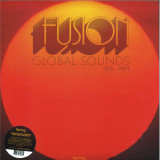
Favorite Recordings comes back with the 2nd edition of its compilation series: Fusion Global Sounds. 8 rare and hidden tracks produced between 1976 and 1984 in various parts of the world. As a fine collector of Jazz-Funk and Fusion for many years, Charles Maurice cooked another fine selection of forgotten Fusion Jazz productions, this time driven by a common Brazilian influence.
On this 2nd edition, recordings come from Brazil, Philippines, Netherlands, Poland, and US, all again from underrated artists mostly unknown from the masses. You'll find here the best elements of the Fusion genre: fine vocal arrangements, catchy Fender Rhodes and synthesizers, irresistible basslines, and classy horns section, altogether bringing a unique groove infused with Brazilian flavors.
The compilation starts with Lerma dela Cruz, a quite occult songstress from Philippines. “Free” was part of a very rare compilation titled “Tropical Jazz Fusion”, released in 1983 on A&W Horizon label (also home of Boy Katindig). With its blowing Samba / Jazz-Funk vibes, it was an obvious match to open this collection. The following song could only enhance this ambience, since that of Brazilian saxophonist, Nivaldo Ornelas, present on this opus with 2 titles taken from his album A Tarde (1983). On “Cactus”, Nivaldo is supported on keyboards by his friend Marcos Resende, both also known for their album on the MPBC series released by Phonogram-Polygram between 1978 and 1981, which has clearly been an inspiration for Charles Maurice in building this second edition.
We could continue telling stories and details about the others great tracks included in Fusion Global Sounds Vol.2, but we believe that the best way is to listen to it and pursue your trip through Fusion Jazz combined with Brazilian styles, including surprising stopover in Poland, or Netherlands.
For this special release he provides 8 cuts of advanced techno, from mental and hypnotic to broken and industrial or simply arpeggiated and beatless.
WHEN THE UNCANNY ARISES starts with No Gender Role an elastic mental exercise with metallic and processed components flying over a solid kick and white noise percussive elements add some hypnotic pads and you have a powerful mind and body tool.
Blue follows in a similar approach, clean drum programming, bleepy synth lines and a progressive arrangement constantly evolving and changing Flipping the vinyl, it’s time for the broken rhythms of Feel and understand combining distorted kicks with gummy sequences again administered in a quite wise structure.
Klonger closes the B side with obsessive metallic hits repeating until madness, a powerful industrial beat for the experienced dj’s out there.
The second vinyl slice begins with Negative One, returning to the martial beat combining a precise drum workout with floaty and liquid components, followed by Anonimo coercitivo exploring the deepest side of techno using textures and drones to spice the relentless beat.
Zero opens the C side, providing a solid distorted groove with metallic details and sci fi interstellar bell like sequences, proper futuristic vibes here.
Saying goodbye, the beatless Nothing To fear, an arpeggiated synth solo reminiscent of the old Berlin School of electronics from the seventies.
A touchable proof of his craftsmanship in the studio by one of the key figures in the European techno scene.