Search:development music

Styles
All
Tim Hecker - Virgins LP 2x12"

Tim Hecker

Virgins LP 2x12"

2x12inchKRANK183LP
Kranky Records
09.10.2026

4/5 REVIEW IN MOJO: “HEARTBEAT TONES DISSOLVE INTO BEAUTEOUS SHIMMER AND STELLAR SYNTH MEDITATIONS GIVE WAY TO CAREFULLY ORCHESTRATED ELECTRONICA.”

4/5 REVIEW IN UNCUT: “IT'S MASTERFUL, THOUGH IT WILL LEAVE YOU FEELING LIKE A SPECK OF GRAVEL IN A SELF-DESTRUCTING WORLD.”

NME - 8/10 review (w/c 14 October) "He’s mastered this stylistic skittishness and you’ll do well to find much dispute about his talent."

NARC - 5/5 review (October issue) "An immersive soundtrack to your own personal psychodrama."

WIRE - ONE PAGE REVIEW (October issue) "The sentiments it stirs to life are shadowed and ambiguous, simultaneously personal and impersonal. It is also fantastically immersive, dragging the listener into its turbulent undertows, then washing them back on dry land, intact but changed.’’

Virgins was recorded during three periods in 2012, mostly in Reykjavik, Montreal and Seattle, using ensembles in live performance.

While this album remains committed to a painterly form of musical abstraction, it is also a record of restrained composition recorded live primarily in intimate studio rooms. This record employs woodwinds, piano and synthesizers towards an effort at doing what digital music does not do naturally—making music that is out of time, out of tune and out of phase.

Some pieces go off the rails before forming into anything, others eschew crescendo
compositional structures or bombastic density while going sideways instead. It points to the ongoing development of Hecker's work. It suggests illusory memories of drug- hazed jams or communal music performance that may have never been performed or been heard.

It is an offering of music into the void, a gift of digital filler between distractions. Yet hopefully it also stands as a document of the enduring faith in the narcotic, enigmatic function of music as long-form expression.

Mixed by Valgeir Sigurðsson and Tim Hecker. Additional assistance by Randall Dunn and Ben Frost. Mastered by Mandy Parnell at Black Saloon Studios in London, UK.

pre-order now09.10.2026

expected to be published on 09.10.2026

34,24 €
Marcos Coya - Moon Trippin EP

For UnExposed Records first vinyl release, Uruguay’s Marcos Coya wanted to show the world a different side of his artistic approach. In a world of monotonous copy/paste, Marcos wanted to bring something unique to the table. A compilation of spacey, dreamy & emotional tunes custom built for the dance floor yet still experimental as well. Deep grooves & long developments. No fluff. No overbearing bangers. True underground production principles. Crafted for those with a refined palate.

The A-side is dedicated to Marcos Coya’s four to the floor production work. This sonic expedition begins w/ a bang: the record’s title track “Moon Trippin”! A showcase of freaky melodies accompanied by groovy percussions which bolster a vocal of Prince speaking his mind about the true essence of creating musical art & his disdain for mainstream music industry critics.

“Delirium” closes out the A-side w/ a dreamy acid house tune adding an emotional touch to the record. After hours material. A real step forward for Marcos and his production work. Leaning heavier than ever into trusting his melodies. Taking a bit more risk with his approach by creating something you’ve never heard from him on any of his nearly 20 vinyl releases over his career.

For the B-side we shift over to a more breakbeat approach with 2 absolute heaters. B1 introduces the track Hearthug has claimed to be one of the tracks of the year: “Rage Dog”. Rage Dog is a Marcos Coya signature track due to its rock & hip hop influences developed during his adolescence. Marcos even purchased new synthesizers specifically to improve this track & its melodies. The cherry on top is the vocal from Rage Against The Machine’s front man, Zack de la Rocha, which adds a rebelliously political undertone to the record, something UnExposed & Marcos both are very proud to address w/ passionate conviction during this time of war and injustice.

We close out the record with “D.N.A.”, the most experimental piece of art on this vinyl release. A wild combination of breakbeats, guitars, melodies & crazy vocals. The perfect bizarrely fascinating conclusion to this wild trip to the moon and back.

Early support from heavy hitters such as: DJ Koolt, Anthea, Velasco, KT, Hearthug, Mario Liberti, Daïf & many more!

In Stock

On Stock and ready to ship

12,56 €
William D Drake - Moulded By Industry LP
  • A1: The Flickering Shade
  • A2: Bliss Again
  • A3: Green Shadows
  • A4: Turtledove
  • A5: A Vision
  • B1: The Storm
  • B2: Me Fish Bring
  • B3: Distant Hills
  • B4: Love In The Universe

Moulded By Industry is William D Drake's six album, his first for ten years and a return to the richly layered sonic texture and epic production of his majestic Briny Hooves. He is joined by long time collaborators James Larcombe, Dean Gaisburgh-Watkyn and Steve Jackson, with the addition of a new crew member, singer Treana Morris. Moving on from his nine years of pianistic and compositional duties in Cardiacs, Drake's solo work has been known for its synthesis of Mellotron-driven grandeur with a surreal playfulness.

But the deep heart of Drake's work is in its powerful evocation of the landscape of the countryside and its connection with love, longing and loss. To this end, his own enigmatic lyrics have rubbed shoulders with poetry drawn from across the centuries. From obscure sources such as Samuel Spree to the poetry of Thomas Hardy and Rupert Brooke, his settings make old words shimmer with human emotion. The texture of his music also reflects an inspirational lack of concern for distances of time. The earthy breath of his harmonium is interwoven with tones teased from archaic instruments by James Larcombe – hurdy-gurdy, dulcitone and melodeon.

But Drake's sound-world is no museum. Here, ancient words and the timbres of ancient instruments become one with the rush of a moment's emotion. Moulded By Industry brings this approach a new sonic depth, intoxicatingly shaded by Treana's lush vocal harmonies and underpinned by Steve's rhythm. Dean's evocative guitar textures give an oceanic sense, tinged with Americana, recalling his work with Drake in their alt country band Nervous. These many layers of sound are drawn together into vivid soundscapes by the painterly mixing of producer Ott. Renowned for his work in electronica and dub, Ott's two decades of experience working with artists such as Sinéad O'Connor, the Orb and Brian Eno bring an organic touch here, more akin to the elemental forces of land and sky than grid electricity. More than any of Drake's previous albums, Moulded By Industry reignites the emotional urgency of old texts. The gorgeous single The Flickering Shade, haunted by glimmers of lost possibilities, is set from words by Thomas Ashe. Turtledove's heady evocation of the blissful madness of love sets the words of an anonymous 17th century ballad. above all, the album is a testament to Drake's love of John Clare, 'The Northamptonshire Peasant Poet'. Clare wrote as the centuries old process of enclosure, in which wild and common land was appropriated commercially, was accelerating.

His works, rather than representing simple sentimentality, are passionate love poems to the landscape and cries from a soul reeling from the creeping unfamiliarity devouring it. This sense of the tension between passion and ill-ease has its most potent expression in Green Shadows. The brooding, slow-tempo energy of Steve's drums drive a horizon-wide lament, alternately lulled by Treana's vocal textures and made restless by James' plaintive hurdy-gurdy and the emotive pull of Dean's slide guitar. The present moment is also a time of enclosure, both metaphorically, as our lives, memories and emotions are drawn into the commercial space of social media, and literally as land and water are swallowed by vast data centre developments. Moulded By Industry celebrates a regained sense of being in the moment in the landscape, in life and in love. The album closes with the utterly delightful single Love In The Universe. The kind of song that could make a cynic use the word 'joyous' without irony, this Harry Nilsson-esque romp reassures us, with a wink, that 'in an infinite universe everything has its place ... even the human race'.

pre-order now09.10.2026

expected to be published on 09.10.2026

22,27 €
HOUR - GHOST BRIDGE

HOUR

GHOST BRIDGE

12inch178467
Dear Life Records
09.10.2026
  • 1: SO LONG WITHOUT A WORLD
  • 2: PEARLS
  • 3: CENTRALIA
  • 4: GHOST BRIDGE
  • 5: SKY IS BLUE
  • 6: SONNY

The title of Ghost Bridge, the East-Coast-spanning chamber ensemble Hour's fifth record, is less metaphorical than one might expect. Bandleader Michael Cormier- O'Leary repurposed it from an unrealized movie concept about a bridge that inexplicably starts disappearing. On the nearly-ten-minute title track of this richly imaginative suite of songs_written for a 13-piece ensemble that includes woodwinds, strings, and vibraphone as well as a rock rhythm section_Hour conjures up this central image with spectral string harmonics and free-time percussion gestures. While writing the keyboard pieces that became the takeoff point for the album, Cormier-O'Leary also found himself reflecting on the loss of loved ones or even his own mortality. The six kaleidoscopic instrumental pieces on Ghost Bridge, though, feel more cosmically inquisitive than straightforwardly elegiac, sketching a progression from existential doubt toward understanding and acceptance. Ghost Bridge forms a contrast with Hour's art-rock-informed, more improvisatory early releases, representing a step further into intricate chamber orchestration. Known for his work with Friendship, Wendy Eisenberg, and 2nd Grade, Phillybased multi-instrumentalist and Dear Life Records founder Cormier-O'Leary has made Hour a home for increasingly cinematic instrumental compositions since the mid-2010s. With dazzling production by Lucas Knapp, Ghost Bridge delivers plenty of the live ensemble's trademarks, especially cyclically developing guitar and keyboard melodies. However, even more than on Hour's last studio album, unconventional harmonies and sophisticated counterpoint take center stage here. These emotionally multifaceted compositions feel as rooted in contemporary classical and film soundtrack music as in indie rock. One of the most striking elements of Ghost Bridge is the more significant developmental role the orchestral instruments assume in each piece. Instead of underscoring Cormier-O'Leary's central hooks, there is a new mesmerizing level of detail to the group's conversational interactions and kinetic energy. "Centralia" is a stately and idiosyncratic fugue built from repeated and overlapping phrases, while Ghost Bridge's compositions are full of unexpected pivots in harmony that allow recurring melodic motifs to sound continually reshaded. On "Pearls," the chords modulate drastically around Cormier-O'Leary's inviting central melody in a way that emulates cuts in a film telling several parallel stories. There is an unsettled quality to the chords on Ghost Bridge, with Cormier- O'Leary's progressions avoiding firm grounding in either clearly sunny or melancholy tonalities. This mood is made more concrete by the record's sole vocal track, the jazz-inflected "Sky is Blue," featuring an uncannily gorgeous performance by Heeyoon Won. The song seems to be a communication from a person who has departed, offering consolation or perspective to someone left behind. Though its sonic palette is often tranquil, Ghost Bridge explores heartbreak, grief, anger, and helplessness in a distinct and pretense-free way. The project represents a bold step forward for Cormier-O'Leary as a composer and arranger, and on Ghost Bridge Hour reaches its most fully realized form to date, connecting soaring themes with an inventiveness that perfectly suits the searching nature of the subject matter.

pre-order now09.10.2026

expected to be published on 09.10.2026

22,65 €
CASPIAN - CASPIAN LP

CASPIAN

CASPIAN LP

12inchWAX63IEX
Wax Bodega
16.10.2026

For more than 20 years, every CASPIAN album has been driven by a desire to stretch boundaries — a relentless ambition that's resulted in one of post-rock's most revered catalogs and established the Massachusetts quintet as an enduring, global force in the genre's modern era. On CASPIAN, the band’s first album in six years and debut for Wax Bodega, the more unexpected way forward was to stop searching for what they hadn’t yet done and instead trust what had defined them from the beginning.

The six-song, 39-minute effort draws freely from the musical vocabulary the band have spent their career writing: evocative melodic themes, dense textures, swelling crescendos and crushing heaviness that rolls in like a slow-moving storm on the horizon. But they still find new possibilities within those familiar contours, allowing patient development and repetition to carry as much weight as surprise. The nine-minute “Remain” turns a recurring melody into a sweeping study in tension and release, while “No One Left to Tell” layers subtle shifts around a hypnotic tremolo figure and “A Great Fire” sends serpentine guitars crashing into buzzsaw riffs. Even the graceful 3/4-time closer “Waltz for the End,” completed in a half-hour burst of inspiration, reflects the quiet confidence of five musicians comfortable enough in their skin to resist tearing everything down for the sake of reinvention, even as the circumstances surrounding them change dramatically.

pre-order now16.10.2026

expected to be published on 16.10.2026

32,73 €
CASPIAN - CASPIAN LP

CASPIAN

CASPIAN LP

12inchWAX63LP
Wax Bodega
16.10.2026
  • 1: Hiraeth
  • 2: Far Country
  • 3: Remain
  • 4: A Great Fire
  • 5: No One Left to Tell
  • 6: Waltz for the End
also available

Peach LPX[32,73 €]


For more than 20 years, every CASPIAN album has been driven by a desire to stretch boundaries — a relentless ambition that's resulted in one of post-rock's most revered catalogs and established the Massachusetts quintet as an enduring, global force in the genre's modern era. On CASPIAN, the band’s first album in six years and debut for Wax Bodega, the more unexpected way forward was to stop searching for what they hadn’t yet done and instead trust what had defined them from the beginning.

The six-song, 39-minute effort draws freely from the musical vocabulary the band have spent their career writing: evocative melodic themes, dense textures, swelling crescendos and crushing heaviness that rolls in like a slow-moving storm on the horizon. But they still find new possibilities within those familiar contours, allowing patient development and repetition to carry as much weight as surprise. The nine-minute “Remain” turns a recurring melody into a sweeping study in tension and release, while “No One Left to Tell” layers subtle shifts around a hypnotic tremolo figure and “A Great Fire” sends serpentine guitars crashing into buzzsaw riffs. Even the graceful 3/4-time closer “Waltz for the End,” completed in a half-hour burst of inspiration, reflects the quiet confidence of five musicians comfortable enough in their skin to resist tearing everything down for the sake of reinvention, even as the circumstances surrounding them change dramatically.

pre-order now16.10.2026

expected to be published on 16.10.2026

32,73 €
RAAKEL BLOODY RAAKEL / ROI - ALKALINE TRAXXX VOL. 2 EP

Second chapter in the Alkaline series. Five electro cuts and one techno excursion, crafted by two artists with decades of dedication to electronic music.

On Side A, Raakel Bloody Raakel brings decades of discipline and formal training into a sharp, uncompromising sound. Active since the late 90s and rooted in both classical education and underground culture, his work reflects precision, intensity and structural control.

On Side B, Roi delivers three focused electro pieces forged through years of experimentation and dancefloor experience. His approach blends coherence, tension and forward motion, driven by a continuous commitment to evolving the language of electronic music.

Two trajectories. One alkaline framework. Built for those who understand the craft.

Cosmic Tribe · Research & Development in Sound.

In Stock

On Stock and ready to ship

Last In: 17 days ago
18,07 €
Alwin Nikolais - Electronic Dance Music, 1966-1989 (Tape)
  • 01: Revels: Dance III (1986)
  • 02: Ten Legs: Dance I (1989)
  • 03: Mechanical Organ: Dance II (1980)
  • 04: Mechanical Organ: Dance IV (1980)
  • 05: Frail Demons: Dance I (1984)
  • 06: Tribe: Dance I (1975)
  • 07: Pierrot: Dance II (1986)
  • 08: Blank on Blank: Excerpt I (1987)
  • 09: Pierrot: Dance III (1986)
  • 10: Aviary: Dance I (1978)
  • 11: Aviary: Dance II (1978)
  • 12: Graph: Overture (1984)
  • 13: Chimera: Dance I (1966)
  • 14: Styx: Excerpt (1976)
  • 15: Gallery: Overture (1978)
  • 16: Frail Demons: Dance II (1984)
  • 17: Aviary: Dance III (1978)
  • 18: Graph: Dance III (1984)
  • 19: Contact: Excerpt (85)
  • 20: Blank on Blank: Excerpt II (1987)
  • 21: Crucible: Excerpt (1985)
also available

2x12"[30,21 €]


Often credited as the father of multi-media theatre, Alwin Nikolais (1910-1993) took complete creative control over his productions - including cutting-edge approaches to lighting and costume that transformed human bodies into shifting sculptural shapes, while also composing wildly innovative electro-acoustic and synth-based audio as accompaniment.

After initially experimenting with musique concrète and tape manipulation (as demonstrated on the 1959 LP Choreosonic Music of the New Dance Theatre of Alwin Nikolais) Nikolais became the first owner of Robert Moog's synthesizer at the Audio Engineering Society convention in New York in late 1964. Relying heavily on the Moog and later the Synclavier synth/sampler, these 21 tracks document Nikolais' highly-prescient compositions across the mid 1960s through to the late 1980s - existing not only as extensions of his other-worldly choreographic productions, but standalone pieces of foundational mid-century American electronic and experimental music.

"Born in Southington, Connecticut in 1910, Nikolais’s early years and early career were in acting, music and puppetry. It was not until the late 1930s that he began his work as dancer/choreographer in Hartford, Connecticut, where he was commissioned by the Avery Memorial Theatre, a part of the Wadsworth Atheneum, to create an evening-length work to the music of Ernst Krenek. Previously his work and study as a pianist-organist found him accompanying silent films. This sort of accompaniment required from the musician not only a playing skill but also a versatility in improvisation, matching movement to sound, and evoking mood to situation.

Nik was drawn initially to dance by his involvement with the percussion scores used by the illustrious early twentieth century German dancer Mary Wigman. In trying to learn more about percussion, he was lured into dance class and thus his career began. His development of music and dance occurred simultaneously. His introduction to the twelve-tone technique opened his mind to the expanding areas of atonal music, and his dealing with music as sound per se. In 1948, after being appointed director of the Henry Street Playhouse in New York, Nikolais formed the Playhouse Dance Company, later known as the Nikolais Dance Theater, and began his aesthetic orientation toward dance as a study of motion. By the 1950s, he had ceased creating literal dances and began his explorations and eventual milieu as an abstractionist.

Sound became an important part of his abstract theatre. For his first dances, which involved his new thinking of dance as both a visual and kinetic art, he used live percussion scores in which he directed his dancers to play instruments of all nature. There was a combination of children’s toy instruments as well as harsh and resonant automobile brake drums, and other pitched auto parts which he also used to accompany classes. Once he installed his own tape recording machines, he quickly used the limited range these instruments provided in a new way, slowing and increasing speed and reversing sound. He also made the sounds adhere to the choreographic structure (not the other way around), thereby giving the dance its independence from the musical phrasing. But the real need remained: the search for new sound. Nik made a sound library, recording noises and percussion and vocal sounds, which the French aptly called musique concrète. Needless to say, he became a master at splicing bits and pieces.

From 1956 to 1962 Nikolais composed eleven major scores for his theatre pieces using such techniques. In 1963, James Seawright, who at the time was assisting Nik in his productions and also working at the Columbia-Princeton Center for Electronic Music, recorded a sound bank for the production Imago (1963). With this material, Nikolais created his first synthesizer score. Imago won the Paris Grand Prix in 1968 and launched the Nikolais Dance Theatre towards its national and primarily international acclaim.

During the same period, Seawright came to Nik and told him of a young man who had invented and constructed a simplified synthesizer and insisted that Nik visit the electronic fair currently being held in New York. Nik did so and met Robert Moog. He was completely taken by the new machine and after making some suggestions to Moog, (which Moog made), Nik bought the inventor’s first machine with the aid of a Guggenheim Fellowship. Moog himself was astonished by what his machine could produce for Nik. This machine was later acquired by the Museum of Musical Instruments at the University of Michigan at Ann Arbor as the first Moog synthesizer. The Synclavier was Nik’s next source of sound and since the mid-1970s remained the major instrument in the Nikolais soundroom.

Alwin Nikolais has been honored and awarded throughout the world. He has received the French Legion of Honor, the Kennedy Center Honors, National Medal of the Arts, two Guggenheim Fellowships, as well as Mellon, Ford, and Rockefeller grants. He has been a recipient of NEA grants since 1966, been awarded five honorary doctorates, all for his remarkable achievements in Dance Theater. His genius has influenced several generations of artists."
—Murray Louis

pre-order now19.10.2026

expected to be published on 19.10.2026

16,60 €
Gigi - Illuminated Audio (2x12")

180g Heavy double vinyl LP with liner notes by Tyran Grillo. Limited Japanese Obi for the first pressing. Original artwork by Russell Mills and photography by Jean-Baptiste Mondino.

The third Time Capsule is a body of dub reinterpretations by celebrated producer Bill Laswell of Ethiopian singer Gigi. Curated by Tokyo record collector, music researcher and seasoned reissue supervisor Ken Hidaka, it is the first time Illuminated Audio is pressed to vinyl after its CD release in 2003.

Ejigayehu Shibabaw was born in 1974 in Chagni, northwestern Ethiopia and by pursuing a career as a singer, went against her father’s strict, traditional gender roles. As Gigi, she embraced the same musical freedom she had strived for in her personal life, incorporating the Ethiopian church, funk, hip-hop, West and South African music into her work. She first settled in Nairobi, then Addis Ababa, where she quickly established herself as one of the city’s leading singers. A move to San Francisco in 1998 led to a long and fruitful creative partnership with bassist and producer Bill Laswell.

Around the same time, Chris Blackwell had stepped away from Island Records to start the art house film company and label Palm Pictures. He took an interest in Gigi and together with Laswell, pulled together an all-star cast of musicians for her self-titled US debut album, including Herbie Hancock, Pharoah Sanders and Wayne Shorter. It won international critical acclaim, not just for its musicianship but for making Gigi a “defining voice for the Ethiopian expatriate community”, as journalist Tyran Grillo praises in his Time Capsule liner notes. From the nation-defining 1896 victory over Italian invaders to the quiet revolutionaries who wear simple shemma garments, Grillo believes the themes in Gigi make it “a shower of sunlight on her homeland for those ignorant of its struggles.”

After its success, Blackwell encouraged them to go back into the studio to rethink the album and Illuminated Audio was born. “Anyone can make a voice sound worldly”, Grillo remarks, “but rare are those who can make one sound inner-worldly.” Gigi was clear with Laswell to give her vocals a minor role “because it’s already been done.” Instead her Amharic verse is fleeting, exhaling through the textures like ghostly fragments; soaring yet muted. Yet the album is still titled under her name, an assertion by Laswell of her central role in the album’s creation. Not only was it a fully endorsed project by Gigi, but she would be present throughout its development, giving feedback on half-finished ideas as Laswell played them back in the studio. “It works perfectly”, she reflected after the album’s release. “We wanted to capture the whole spirit of each track, and Bill’s remixes create a different music language that really puts you in a pleasant place”.

This new vocabulary takes its lead from a technical approach that Laswell had been perfecting during a furtive creative period at the turn of the millennium. Much like his ambient interpretations of Miles Davis (Panthalassa, 1998), Bob Marley (Dreams of Freedom, 1997), and Carlos Santana (Divine Light, 2001), Laswell approached Illuminated Audio by returning to the original multitrack masters. Gigi wasn’t just reworked, but recomposed into an expansive lattice of instruments, submerged in a watery ambience of dub and trance undercurrents.

Sonically, this new language that Gigi refers to, is manifested by the original album’s more understated parts being pushed to the fore. Explaining his contrasting methods, Laswell saw Gigi as being “put together in a way that fits”. Contrastingly, in Illuminated Audio, “a lot of things that I featured in the remix weren’t as audible in the original.” Instrumentation laying near-dormant, deep in the mix, are brought to the fore: the acid rock guitar and Wayne Shorter’s saxophone on ‘Tew Ante Sew’, Graham Haynes’ flugelhorn on ‘Nafekeñ’, Laswell’s bass on ‘Kahn’, the melodica in Mengedegna or the floating synths and talking drums in ‘Gud Fella’.

Brought to his attention by mentor DJ Nori, Hidaka describes Illuminated Audio as a “masterful sonic exploration into ethereal ambience and dub” and made sure this reissue also contained a full remaster to give its “deep musicality” much better dynamics and density in the overall sound. Hidaka admits that Laswell's music “is sometimes so out-there, it is often misunderstood” and, indeed, to dub album non-believers this might seem like a prolific producer imposing himself on another artist’s work; eternally developing rearrangements that never quite get to its destination. But that’s missing its true power and triumph. This is more than the reissue of a remix, but “a wholly unique musical entity”, as Hidaka describes. Illuminated Audio refers to the illuminated manuscripts that comprise the major part of Ethiopian art and its new compositions stand in proud solitude as a rare body of reworks that both informs and enhances their originals.

pre-order now19.10.2026

expected to be published on 19.10.2026

18,07 €
Lapalace - Music To Watch Seeds Grow By 006: Lapalace (Lavender)

Manchester-based producer Lily Mumby, the creative force behind Lapalace, has chosen Lavender as her botanical muse for this sixth instalment. Like the aromatic herb that grows from tiny seeds to fragrant purple stalks, her compositions unfold with a similar patience and elegance. Her synthesisers breathe with a natural rhythm, creating textures that emerge and recede like morning dew on lavender buds waiting to bloom.

The standout track ‘new age night’ – a stunning love child of William Basinski's decaying tape loops and Aphex Twin's intricate programming—carries subtle lavender-inspired tones, balancing the plant's calming essence with hypnotic rhythms. Just as lavender requires thoughtful tending before rewarding the gardener with its distinctive aroma, Lapalace's landscapes reveal deeper complexities with each listen.

Much like gardening itself, Mumby demonstrates an innate understanding of when to intervene and when to allow natural development. This approach echoes throughout her career, from her debut EP "Ephemera" which caught the attention of Insult to Injury Records' Timothy Clerkin, through to her contributions to Chez De Milo's "So It Goes" Remix EP and Manchester label Skiptrace's various artists compilation.

Her work across BBC Introducing and fossil.radio reflects this same philosophy – creating environments where sound, space, and organic movement find their natural harmony. But this composition really feels that Mumby has come of age. "Music To Watch Seeds Grow By Vol. 6" represents the continued cultivation of Lapalace's distinctive sound and demonstrates the maturity of an artist way beyond her years. This music stands as a lighthouse through a thick fog of nostalgia, much like lavender standing tall amidst an English cottage garden.

Early DJ support including - Auntie Flo, Ruf Dug, Courtesy, Vladimir Ivkovic.

pre-order now19.10.2026

expected to be published on 19.10.2026

12,40 €
Altinbas - Beyond the Veil

Altinbas

Beyond the Veil

12inchOSTGUT132
Ostgut Ton
25.09.2026

After regular appearances at Berghain since his debut two years ago, Altinbas now presents his contribution to Ostgut Ton, tying together five tracks that outline an expedition through celestial bodies in ‘Beyond the Veil’. Deepening his research on intricately crafted ambiance, the EP strikes a balance between commanding rhythm and blossoming synth work that reaffirm his inimitable style. ‘Beyond the Veil’ is a conceptual collaboration between an artist and a room; describing the dancefloor as an organism and the architecture of its surroundings.

Over the years, harmony has become synonymous with the Belgian artist’s sound. Deeply tuned and cohesive, Altinbas’s productions walk the boundary between insistent anticipation and unparalleled warmth. Although dancefloor effect remains a central theme for him, ‘Beyond the Veil’ is the latest chapter in a long study of obscurity in music that qualifies almost as ritualistic. Tracks like ‘Beyond the Veil’ and ‘Charming the Cosmic Snake’create tension in the keys that resonates like an expedition into new soundscapes. With weight and stability in the percussion, airy textures and hypnotic synth lines roll off the rhythm to mesmerize the listener. Sculpting his arrangements around the development of rich, dubby and atmospheric tones, Altinbas capitalises on the natural flow of his elements to provide an organic touch to tracks that are tuned especially for high pressure sound systems. ‘Entanglement’ and ‘Winter’ are both examples of this : soulful techno that ebbs and flows with each transition. Dimension is pushed dramatically into each of the five pieces of the EP as a direct response to the current climate of tool oriented techno. Keeping a safe distance from this approach, Altinbas invites listeners to explore the shape of his sound in an embrace rather than submit to its abrasion. The project concludes with ‘Antichamber’ - the fifth track of the EP that announces a departure from strict club codes. Dampening the rhythm from a pulse to a sway, a dreamlike landscape rises from deep within the record, smoothing over any of the rougher residuals from the preceding tracks. The descent that is ‘Antichamber’ is the result of an accumulated euphoria, gently guiding the listener back to consciousness.

‘Beyond the Veil’ represents a checkpoint for Altinbas in his research of moving a dancefloor not only physically, but emotionally. Carving out his own space in dancefloor-oriented music, he offers highly expressive compositions in defiance of the status quo. Altinbas offers this EP as a personal statement of where he stands; five tracks of carefully tended tone and harmonic glow create an emotional urgency for the collective experience.

In Stock

On Stock and ready to ship

15,92 €
C.C.O. - GRAVITATIONAL MATTER EP

For CT022, Cosmic Tribe presents the third edition of the Artist Series featuring C.C.O. (Contra Communem Opinionem), the project of Swiss artist Florian Büchel.

The original material selected here explores a more direct and linear side of his music, combining atmospheric structures, subtle acid elements and elegant melodic progression.

On Side B, both reinterpretations move the material toward more dancefloor-oriented territory. Raakel Bloody Raakel reshapes Gravitational Disturbance into a recognizable acid-electro interpretation with increased groove and syncopation, while Romphea takes Interstellar Matter into heavier and darker contemporary electro-breaks territory with increased low-end weight and a more direct club approach.

The result creates a clear contrast across both sides: progression and musical development on Side A, followed by two alternative perspectives built around movement and dancefloor energy.

Class & Energy in a limited edition of 150 copies

In Stock

On Stock and ready to ship

Last In: 13 days ago
15,08 €
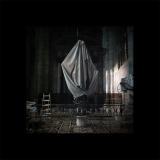
TEODROS MAKONNEN - Teodros Makonnen With His Organ LP 2x12"

Some recordings herald the future in ways that are impossible to see in real time. Teodros Makonnen With His Organ (ቴዎድሮስ መኮንን ከኦርጋኑ ጋር), by the artist Teodros Makonnen, also known as Teddy Mak, is one of those. Today, electronic sounds, synthesizers, and digital production are taken for granted in Ethiopian music, but in the early 1980s, they were novelties that polarized opinion. Even to this day, the story of Teodros Makonnen’s legacy has never been properly told. He played a decisive role in defining the sound of the digital era of Ethiopian music that emerged in the 1980s and beyond, both as a keyboard player and as a producer, songwriter, performer, and sound designer.

Ethiopian music was at a crossroads in the early 1980s. Much like music in the rest of the world, technology and automation heralded either a quantum leap in musical development or the annihilation of musicianship, depending on who you’d ask. The changes were incremental nonetheless, but with the benefit of hindsight one can clearly see that the changes meant different things in different contexts. Drum machines and electric organs came to replace many hotel bands because, all of a sudden, one musician could control drums, melody, and accompaniment. Teodros was one of the first musicians in Ethiopia to explore the possibilities this opened up.

Teodros’ father, Captain Makonnen Beri, was a chief pilot at Ethiopian Airlines and a music enthusiast at that. This would prove important to his development, as Makonnen brought back a piano from Germany, which would lead to the first steps in Teodros’ long musical career. Captain Makonnen’s work as Head of Flight Operations and as a pilot exposed him to the wider world that was far from commonplace for most Ethiopians. In a house where music captivated the whole family, the piano gave Teodros’ talent an outlet. Not only was a piano at home rare in Ethiopian households, his father also brought an Indian teacher to their home to teach Teodros and his brother, Captain Samuel Makonnen, music theory (solfeggio or ear training) and piano. Teodros and his youngest brother, the late great Dereje, a member of both the legendary Ibex Band and the Ethiopian reggae group Dallol, took up music from that point onward, with Teodros beginning to develop his proficiency at the age of eight. His father encouraged him to practice tirelessly at home, and Teodros later received musical schooling at the German School in Addis Ababa.

His obvious talent led to studies and formal education at the Yared School of Music, followed by continued studies in American jazz at Northern Virginia Community College in Virginia. Teodros cut his teeth professionally in his mid-teens, not only as a keyboardist, but also as an arranger for the Wabi Shebelle and Dahlak bands in the 1970s. He mastered electronic sequencing early, rising to prominence through the midnight recording sessions held during the military curfew. The pressures imposed by the curfew required precise and disciplined recordings, and Teodros delivered just that. This, in turn, led to collaborations with iconic artists such as Mulatu Astatke, Aster Aweke, Menelik Wossenachew, Tilahun Gessesse, Mahmoud Ahmed, and Alemayehu Eshete.

In those days, he sat in as a keyboardist with the Dahlak Band when Dawit Yifru took a hiatus to study in Russia, and also with the Ethiostar Band. He secured a residency at the Wabi Shebelle Hotel with the Shebele Band, together with Zelalem Tadese (drums), later succeeded by Elias Bekele, Mulugeta Hailu (bass), Teferi ‘Bibisha’ Mengesha (guitar), Kumelachew G/Selassie (trumpet), and Teshome Deneke (saxophone). A friendly competition developed between the bands associated with the Ras Hotel (the Ibex Band), Ghion Hotel (the Dahlak Band), and Wabi Shebelle Hotel (the Shebele Band). The music scene at Wabi Shebelle saw teenagers commanding the spotlight in an industry otherwise dominated by musicians of an older generation.

At the Wabi Shebelle Hotel, Teodros met a diplomat from Saudi Arabia and later visited him at his home in Addis Ababa, a meeting that had unexpected musical consequences. The man owned a Yamaha double-deck keyboard. That evening, they recorded Teodros Makonnen With His Organ (ቴዎድሮስ መኮንን ከኦርጋኑ ጋር) in one take. This recording, a cornerstone in the early digital sound of Ethiopian music, came about almost by chance, simply because Teodros got the opportunity. Traditional Ethiopian songs were cast in a wholly electronic style.

Once freed from backing duties, Teodros’ keyboards could explore dreamlike soundscapes that took Ethiopian music in new directions. Even though the cassette contained well-known Ethiopian songs, they were given highly original arrangements, performed on an electric organ with drum machine backing and rhythm patterns that left the listener with suggestive, lingering sounds. “Libesh Kabashen” (also known as “Anchi Bale Game”) and “Odu Gol Golesa” wrap you in the very stuff that dreams are made of.

Originally released on cassette only, this recording exudes a mystique that surpasses even some of the most obscure Ethiopian recordings of the day. It remained more or less unknown outside of Ethiopia until now. Some of the tracks, like “Addis Fikir,” are permeated with an almost naive buoyancy, free-floating sounds that lost contact with the ground the moment they were conceived. Others, like “Meche New Hageren Yemayew” and “Lelitu Alnega Alegn,” carry a moodier, quirkier timbre, with pulsating rhythms in the background. Yet even the darker pieces contain an unmistakable wave, something essentially Ethiopian. If most recordings of Teodros’s contemporaries at the time were teeming with atmosphere, his songs seem instead at home in the stratosphere, almost ethereal. Some of the music here could be filed under “lullabies,” were it not for the recurring, almost brooding feeling that engulfs the listener on the aforementioned tracks. You could easily be forgiven for drifting into a blissful haze as the music washes over you.

Up to the advent of electronic music production, Ethiopia was totally dominated by big bands on the one hand, and small groups on the other. The former were tied to large institutions such as the military, the latter emerged from the entertainment industry, in hotel bars and nightclubs. These groups were commercially driven, and bands ultimately had to foster a mercenary approach to employment, albeit not to the passion for music. In the light of this, Teodros’ musical legacy can be seen in two ways. On the one hand, he is a key player in Ethiopian music from the 1970s onwards, leaving an indelible mark through hundreds of compositions and arrangements, including soundtracks for numerous documentary films and advertisements for different companies. On the other hand, the way he and others employed electronics brought Ethiopian music onto a fork in the road.

The replacement of traditional instruments with electronic equipment was seen as impending doom by some. Others, like Teodros, saw new avenues for performance, production, and creativity. Just as later producers like Abegasu Shiota of Admas, Teodros was a trailblazer who opened paths that it took Ethiopian music as a whole more than a decade to rush into. The hotel scene had already been pushed toward electronic music by financial necessity and cost-cutting. Today’s revived global interest in Ethiopian music from the seventies and eighties, alongside a broader resurgence, has changed the reasons for using digital means of music production. They have become tools for musical dreaming. This is where the dreaming began.

In Stock

On Stock and ready to ship

Last In: 3 days ago
24,16 €
Various - Djax-Up-Beats 1990-2005: Volume 2 - The NL Connection LP 3x12"

Delsin is pleased to announce the second volume of their extensive compilation series combing through the catalogue of landmark Dutch techno label Djax-Up-Beats. The series, curated by Rush Hour co-founder Christiaan Macdonald, continues with a look at the label's legacy in the development of Dutch techno through the early 90s. This second volume in the Djax-Up-Beats 1990-2005 series comprises 25 tracks, presented again as a main triple-vinyl album plus three additional 12" EPs. The compilation also features again all-new illustration from Alan Oldham, design by Lost Communication and liner notes from music journalist Oli Warwick. Crucially, every track featured on the series has been carefully mastered by Johanz Westerman, bringing the best out of tracks that often had very little post-production treatment before they were originally pressed to wax. Volume 2 - The NL Connection takes a deep dive in the development of Dutch techno. Saskia Slegers didn't run her label with a specific focus on any one place, but she naturally connected with artists close to home. Emergent producers from across the Netherlands found a vital outlet in Djax-Up whether they were short-lived dabblers or dance music devotees on their way to lifelong careers. Volume 2 - The NL Connection looks at the first outings in Dutch techno by originators such as Stefan Robbers as Terrace, Dylan Hermelijn as Planet Gong and Edge Of Motion (with Gert-Jan Schonewille) and Sander Friedeman as Random XS. Whether it was sensitive, melodious machine dreaming, gnarly acid tweaking, jackhammer techno or oddball outliers, you could count on Slegers' label to point you to the best underground club music coming out of the Netherlands. With four more, equally extensive, volumes to come in this series, Djax-Up-Beats 1990-2005 is a thorough exploration of a true totem of techno culture -- a renegade label that operated on its own terms and carried surprises and slammers in equal measure.

pre-order now26.10.2026

expected to be published on 26.10.2026

31,30 €
Takuya Nakamura - Shape The Future (2x12")

New York-based Japanese jazz and electronic music polymath Takuya Nakamura presents his debut album Shape The Future - almost 35 years into his storied musical journey.

An expansive double album, the album’s first LP documents a spellbinding live performance by Nakamura recorded at fabric. A hybrid set combining DJing, live electronics, vocals, and trumpet, the set also features studio versions of special collaborations with Shigeto, Currency Audio and Tim Reaper. The second LP complements the first by assembling studio recordings of select album tracks. Altogether the two volumes make for a definitive display of Nakamura’s exceptional musicianship across jazz, DnB, jungle, broken beat, deep techno and more.

Across his career, Nakamura has played Brazilian music, merengue, salsa and straight-ahead jazz. He’s opened for Sun Ra Arkestra, performed with David Byrne, Laurie Anderson, Lee “Scratch” Perry, Wu-Tang Clan, and Arto Lindsay, appeared on sessions with Terry Riley, ASAP Rocky, Goldie, and TV On The Radio, and remixed the likes of Quincy Jones, Sun Ra, Billie Holiday, and The Streets. He’s also played under director and playwright Robert Wilson.

Although the musical past and present of the Tokyo-born, New York-based DJ and trumpet player is undoubtedly eclectic, Nakamura is abidingly steeped in the sounds of jazz and jungle. This’ll be obvious to casual observers who may have seen any viral videos of him. But there’s more to this. The depth of Nakamura’s engagement with these kinds of music, the way they’ve made him into the person he is, the decades-long path they’ve taken him on; to now arrive at the summit of a solo album is all truly remarkable. Shape The Future resonates with every chapter in this story.

In high school, Nakamura’s friends started listening to jazz and jazz fusion, which piqued his interest, especially when they started going to clubs to see it live, where they managed to see US legends like Sonny Rollins play. Eventually he began to play jazz every day and his musical skill emerged early. He soon became obsessed with getting closer to the source of this music, which led to his studies at the New England Conservatory of Music in Boston with George Russell, an influential figure who had taught Miles Davis and John Coltrane. Nakamura drank it in: not only the technical aspects but the sense of a direct connection to “a music culture where Russell and his friends changed harmony forever. I wanted to know how that was possible!”.

This was a radical experience in itself, but then another revolution happened for Nakamura. He was playing in a venue called The Western Front, near Boston and discovered that the elderly owner had his own soundsystem and was playing what was then - in 1992 - only just becoming known as jungle. This was as freeing a musical revelation as his proximity to the giants of jazz was, and in that instant the two things fused. He understood that using technology to fill a dancehall with sound and a jazz musician’s reflexes are all working to the same ends: “You’re always making decisions,” he says, “but it doesn’t have to be really difficult. It’s the truth of the frequencies, and how they’re affecting people’s minds.”

From that moment on, his life path was set. Moving to New York City, he sought out jungle and its offshoot sounds wherever he could find them, gigging and collaborating relentlessly, and gradually developing his own live and hybrid live/DJ shows. Through regular appearances at New York fixtures Zebulon and CBGBs, and continual shows elsewhere in the city, Nakamura developed his live performance and DJing and it was in these environments that he gradually weaved together his twin loves without compromising either, building an international reputation in the process.

It’s only fitting then that his first album, almost 35 years after he first found his musical direction, should be a live one: a window into this never-ending process. Even here, he had to be persuaded that he should make a record. A member of the fabric team got turned on to his music after their daughter saw him play. Of course, as a jungle lover, Nakamura knew fabric – which has a special place in the history of jungle and drum’n’bass – and “had wanted to play there since I was very young.” You can hear the club in the record: this isn’t just a live show, in keeping with his jungle roots, it’s Nakamura duetting with the soundsystem, and you can feel how the emotions in the room would have ebbed and flowed.

This dynamic translates to a transfixing record. Setting the tone with lushly textured ambient and reverberant jazz, Nakamura segues into cinematic breakbeat and stellar fusion, infusing it all with intoxicating low end and hypnotic rhythms. The LP’s midway point locks into mesmeric percussion heightened by resonant echoes of piano and trumpet. There’s an endless pull to this music. Nakamura adjusts the levels for maximum impact throughout, and the overall effect begins to evoke some harmonious hybrid between a jazz ensemble, a classic Metalheadz 12” and a Theo Parrish DJ set. His electric form continues through surreal jazz, intricate electronics and rolling sub-bass velocity, right up to the subtly devastating final cover of Peter Gabriel and Kate Bush’s ‘Don’t Give Up’, with Nakamura’s fragile vocal sitting in the heart of a huge sound.

From Tokyo jazz nights to formative studies and encounters in Boston to his artistic development in New York, Nakamura reaches another milestone with his monumental debut album. It’s a release that happened just the way a Takuya Nakamura record should. In the same way his instincts led him to musical revelations, taking his own sweet time has led him to make one of the most extraordinary debut albums imaginable, all executed in his own singular style. In Nakamura’s world, the universe finds a way.

pre-order now30.10.2026

expected to be published on 30.10.2026

27,31 €
Various - Borga Revolution! Ghanaian Music In The Digital Age, 1979 - 1988 (Volume 4) (2x12")
  • A1: Rex Omar - Yesu Do
  • A2: Nat Fredua - Winner-Rapp
  • A3: CST Amankwah - Ye Wo Ayiemu
  • B1: Rex Omar - Bue Me
  • B2: Baffour Kyei & Great Africans Band - Su Nkwa
  • B3: Rex Omar - Alleluiah
  • C1: CST Amankwah - Onyame Asem
  • C2: Chief Kofi Sammy & Okukuseku No 2 - Gyae Ma No Nka
  • D1: Nat Fredua - Understand It
  • D2: Abibifo Dance Band of Ghana - Saworoma / Asase Afanoo

Kalita presents the fourth and final instalment of their groundbreaking ‘Borga Revolution!’ series, uncovering another selection of essential recordings from the rich and far-reaching world of Ghanaian highlife. Spanning deep, hypnotic highlife through to the vibrant electronic productions of 1980s Burger Highlife, Volume 4 captures a period of extraordinary musical change, as Ghanaian artists absorbed influences from funk, disco, boogie, and new synthesizer technology. With previous volumes championed by tastemakers including Gilles Peterson, Antal, Tom Ravenscroft, and Hunee, this final chapter turns its attention once again to the music of the Ghanaian diaspora.

Volume 4 brings together rare recordings from artists such as Rex Omar, Nat Fredua, and CST Amankwah, alongside the elusive, deeply hypnotic and beautiful sounds of the Abibifo Dance Band of Ghana (led by the legendary bassist Ralph Karikari) and Baffour Kyei. Unearthing recordings that have languished in obscurity for over forty years, the compilation moves between deep highlife, rhythmic dancefloor cuts, and pioneering digital productions, revealing yet more musical ingenuity of Ghanaian artists both home and abroad. The final instalment in the ‘Borga Revolution!’ series, it offers another vital collection of forgotten favourites and hidden treasures for DJs, collectors, and anyone drawn to the endlessly inventive sounds of Ghanaian music.

The 1970s and 80s saw Ghanaian musicians begin to incorporate Western sounds like funk and disco into their music, reflecting the changing global musical landscape. However, the country's political instability and economic hardships, marked by military regimes and curfews, forced many artists to leave Ghana in search of better opportunities abroad. In Europe and the U.S., these musicians fused their traditional highlife roots with emerging digital sounds, using cutting-edge technology like the DX7 synthesizer and drum machines to create the genre now known as Burger Highlife.

With ‘Borga Revolution!’ Kalita offers a vivid exposition of this musical transformation, using rare interviews, archival photos, and detailed liner notes to bring to life the pioneering spirit of both well-known icons and unsung innovators of Ghanaian Highlife, one of West Africa’s most exciting musical movements.

· The final installment in Kalita's 'Borga Revolution!' series, examining the development of Ghanaian dance music in the 1970/80s, and focussing on the phenomenon of Burger highlife (a blend of Ghanaian highlife with disco, boogie and synths).

· 2xLP in gatefold sleeve, with printed inner sleeves examining the stories of the artists featured on the volume.

· Includes 10 highly sought-after and under-the-radar recordings, including those by the phenomenal Rex Omar, Nat Fredua, CST Amankwah, Baffour Kyei, Chief Kofi Sammy, and the Abibifo Dance Band of Ghana.

pre-order now30.10.2026

expected to be published on 30.10.2026

30,04 €
Bosse-De-Nage - Hidden Fires Burn Hottest (2x12")

There's a tendency in metal to mistake aggression for honesty, volume for depth. To confuse the performance of darkness with its actual weight. Hidden Fires Burn Hottest, the new album from San Francisco-based post-black metal band Bosse-de-Nage, sidesteps this entirely. It’s the group’s most fully realized work yet, precisely because it refuses to be pinned down.

Bosse-de-Nage have been working with The Flenser for over fifteen years. They were one of the first bands the label ever partnered with and have the longest active relationship in the label's history. But unlike most bands who build momentum through constant touring and visibility, Bosse-de-Nage has largely existed apart from the music world's usual machinery. They've evolved on their own terms, in relative isolation, allowing the work to develop without outside pressure or influence. What began rooted in black metal anonymity has mutated into something that actively defies categorization. The aggression is still there, but it's no longer the point. Hidden Fires Burn Hottest finds the band treating emotions like physical objects, feelings with spatial properties. “No Such Place"" describes a space that can't exist but does anyway, somewhere between thought and location. ""Immortality Project"" examines infinite possibility not as promise but as problem, endless options collapsing under their own weight. These songs don't use metaphor to describe emotion. They make emotion into something you could theoretically touch.
Tracked by Jack Shirley (Deafheaven, Oathbreaker) at Atomic Garden East and mixed and mastered by Richard Chowenhill of Agriculture, Hidden Fires Burn Hottest was years in development, with some tracks beginning in 2018.

The long writing process offered time that most records don't get. Time to live with ideas, revise endlessly, to let structures settle. For the first time, lyricist Bryan Manning wrote everything in advance, creating a surplus to pull from rather than working under deadline pressure. The difference shows.
Coming off Further Still, an album built on constraint and economy, Bosse-de-Nage sought the opposite: sprawl, strangeness, fewer rules. Space for ideas to develop without rushing them. Dynamics that move through quiet as much as noise. Presence earned through atmosphere instead of volume. The record even includes ""Mementos,"" which might be considered the first love song the band has ever written.

Nothing here coheres into a theme. These are pieces pulled from low moments and private feelings made public through sound. The band has never been interested in positivity, in music that resolves cleanly or offers comfort. But bleakness doesn't mean humorlessness. There's something darkly funny running through much of it, even when it shouldn't be.
Hidden Fires Burn Hottest doesn't explain itself. It just insists: what you feel is as real as what you can see."

pre-order now30.10.2026

expected to be published on 30.10.2026

34,03 €
Fred P - Someone Remixed

Fred P

Someone Remixed

12inchBASE003
BASE
30.10.2026

Fred Peterkin releases a lot of music but rarely hands his work over to other artists to remix. This EP, which sees a trio of artists deliver their interpretation of the Berlin-based New Yorker's strings-and-piano-drenched 2023 deep house number 'Someone', is therefore an interesting development. He kicks things off with his own smooth, bass-heavy 2026 'Interpretation', an even deeper and more sensual take that blends dancefloor weight with light-touch jazziness, before Juliet Mendoza takes over with a more locked-in interpretation smothered in warming Rhodes motifs and snippets of soulful, eyes-closed vocal. Dave Aju's take is more weighty, psychedelic and propulsive, while Korea Town's 'Acid' interpretation is darker, faster, tougher and altogether more thickset - the kind of revision tailor-made for peak-time moments in dark basement clubs.

pre-order now30.10.2026

expected to be published on 30.10.2026

18,45 €
Prunk - Footprints LP 3x12"

Prunk

Footprints LP 3x12"

3x12inchPIVALB004
PIV RECORDS
11.09.2026

Prunk is taking a journey back to where it all began with 'Footprints'. Over the years, he has become known for many things: the driving force behind PIV, a tastemaker with an ear for exceptional new talent, and a respected figure shaping the future of house music. However, beyond the label, showcases, and the artist development lies the foundation of it all, which is Prunk, the artist. This album is a deeply personal statement and a return to his roots. Stripping away expectations and industry roles, 'Footprints' focuses on what has always been at the heart of his career, which is creating authentic house music driven by soul, groove, and emotion. Across the album, Prunk brings together a unique blend of established legends and the next generation of artists, bridging the past, present, and future of house music. The result is a body of work that honors the sounds and influences that shaped him while continuing to push the genre forward with a fresh perspective. 'Footprints' is a tribute to artistic identity. It reflects the path Prunk has traveled, the people who inspired him along the way, and the musical values that remain unchanged. Every track leaves a mark of who he was, who he is, and where he's headed next.

In Stock

On Stock and ready to ship

Last In: 17 days ago
39,08 €
Markus Guentner - In Moll LP 2x12"

Twenty-five years after its original release, Markus Guentner's debut album In Moll returns in a special anniversary reissue on Black Knoll Editions, reaffirming its place as one of the defining ambient recordings of the early 21st century.

Released in 2001 during the formative years of Kompakt's influential Pop Ambient series, In Moll emerged from a period of rapid transformation in electronic music. New technologies, expanding digital networks, and shifting creative possibilities allowed artists to imagine entirely new sonic worlds. Amid this fertile landscape, Guentner's music stood apart. Combining delicate melodic fragments, slow-moving harmonies, and a remarkable sense of spatial depth, In Moll introduced a distinct artistic voice whose impact can still be felt a quarter-century later.

The album arrived shortly after Guentner's contributions to the inaugural Pop Ambient compilation, including the now-beloved "Regensburg 1," named after his Bavarian hometown. Those early recordings immediately captured the attention of Kompakt founders Michael Mayer and Wolfgang Voigt. Recalling his first encounter with the music, Mayer describes listening to a demo CDR with Voigt while wandering through Cologne late into the night, replaying the tracks for hours. "We knew that we had found something outrageously beautiful and we wanted the whole world to listen."

Across its running time, In Moll unfolds like a series of dreamlike landscapes, inviting the listener into a world that feels both familiar and strangely other. Bells, hisses, distant textures, and slow-moving bass tones drift through vast expanses of atmosphere while luminous synthesizer washes seem to blur the horizon in a fine digital mist. The album's transportive qualities are matched by a remarkable sense of compositional discipline. Every gesture feels deliberate, every texture carefully placed. Balancing warmth and melancholy with restraint, Guentner created a body of work that rewards both close listening and complete surrender.

Reflecting on the album twenty-five years later, Wolfgang Voigt describes Guentner as "one of the first, but also one of the most important ambient artists" associated with Kompakt, calling his music "an integral, timeless part of the long history of pop ambient." Music critic and former Pitchfork Editor-in-Chief Mark Richardson, who reviewed In Moll upon its original release, similarly noted that the album "marked the arrival of an important new voice," and today regards it as "one of the finest ambient releases of the decade."

The album's influence continues to extend far beyond its original audience. For many listeners, In Moll served as an entry point into a new understanding of what ambient music could be. Black Knoll boss Rafael Anton Irisarri first encountered the album shortly after its release in 2001. "It immediately opened a door to a world of music I didn't know existed," he recalls. "At a time when I was still discovering my own creative voice, Markus showed me entirely new possibilities for what electronic music could communicate." Simply put, "The Sight Below would not have existed without In Moll paving the way."

Far from a historical curiosity, In Moll continues to feel strikingly contemporary. What once sounded futuristic now feels timeless, its patient pacing, attention to detail, and sense of wonder remaining entirely intact. The album's enduring power lies not only in its influence, but in the curiosity it continues to inspire, inviting listeners to step inside its world and lose themselves within it.

To mark its twenty-fifth anniversary, Black Knoll Editions presents the most complete edition of In Moll to date. Newly remastered in full analog by Rafael Anton Irisarri, this expanded release pairs the original album with a newly reworked interpretation by Markus Guentner himself, revisiting the material through the lens of twenty-five years of artistic development. The anniversary edition also features a new visual presentation designed by Guentner, offering a visual counterpart to the album's continued evolution. Together, these recordings and visuals celebrate both the enduring legacy of In Moll and its ability to reveal new dimensions twenty-five years later.

This 25th Anniversary Edition on Black Knoll Editions celebrates a recording whose quiet impact has only grown with time, preserving a work that remains as evocative, singular, and essential today as it was in 2001.

pre-order now06.11.2026

expected to be published on 06.11.2026

32,35 €
Markus Guentner - In Moll LP 2x12"

Twenty-five years after its original release, Markus Guentner's debut album In Moll returns in a special anniversary reissue on Black Knoll Editions, reaffirming its place as one of the defining ambient recordings of the early 21st century.

Released in 2001 during the formative years of Kompakt's influential Pop Ambient series, In Moll emerged from a period of rapid transformation in electronic music. New technologies, expanding digital networks, and shifting creative possibilities allowed artists to imagine entirely new sonic worlds. Amid this fertile landscape, Guentner's music stood apart. Combining delicate melodic fragments, slow-moving harmonies, and a remarkable sense of spatial depth, In Moll introduced a distinct artistic voice whose impact can still be felt a quarter-century later.

The album arrived shortly after Guentner's contributions to the inaugural Pop Ambient compilation, including the now-beloved "Regensburg 1," named after his Bavarian hometown. Those early recordings immediately captured the attention of Kompakt founders Michael Mayer and Wolfgang Voigt. Recalling his first encounter with the music, Mayer describes listening to a demo CDR with Voigt while wandering through Cologne late into the night, replaying the tracks for hours. "We knew that we had found something outrageously beautiful and we wanted the whole world to listen."

Across its running time, In Moll unfolds like a series of dreamlike landscapes, inviting the listener into a world that feels both familiar and strangely other. Bells, hisses, distant textures, and slow-moving bass tones drift through vast expanses of atmosphere while luminous synthesizer washes seem to blur the horizon in a fine digital mist. The album's transportive qualities are matched by a remarkable sense of compositional discipline. Every gesture feels deliberate, every texture carefully placed. Balancing warmth and melancholy with restraint, Guentner created a body of work that rewards both close listening and complete surrender.

Reflecting on the album twenty-five years later, Wolfgang Voigt describes Guentner as "one of the first, but also one of the most important ambient artists" associated with Kompakt, calling his music "an integral, timeless part of the long history of pop ambient." Music critic and former Pitchfork Editor-in-Chief Mark Richardson, who reviewed In Moll upon its original release, similarly noted that the album "marked the arrival of an important new voice," and today regards it as "one of the finest ambient releases of the decade."

The album's influence continues to extend far beyond its original audience. For many listeners, In Moll served as an entry point into a new understanding of what ambient music could be. Black Knoll boss Rafael Anton Irisarri first encountered the album shortly after its release in 2001. "It immediately opened a door to a world of music I didn't know existed," he recalls. "At a time when I was still discovering my own creative voice, Markus showed me entirely new possibilities for what electronic music could communicate." Simply put, "The Sight Below would not have existed without In Moll paving the way."

Far from a historical curiosity, In Moll continues to feel strikingly contemporary. What once sounded futuristic now feels timeless, its patient pacing, attention to detail, and sense of wonder remaining entirely intact. The album's enduring power lies not only in its influence, but in the curiosity it continues to inspire, inviting listeners to step inside its world and lose themselves within it.

To mark its twenty-fifth anniversary, Black Knoll Editions presents the most complete edition of In Moll to date. Newly remastered in full analog by Rafael Anton Irisarri, this expanded release pairs the original album with a newly reworked interpretation by Markus Guentner himself, revisiting the material through the lens of twenty-five years of artistic development. The anniversary edition also features a new visual presentation designed by Guentner, offering a visual counterpart to the album's continued evolution. Together, these recordings and visuals celebrate both the enduring legacy of In Moll and its ability to reveal new dimensions twenty-five years later.

This 25th Anniversary Edition on Black Knoll Editions celebrates a recording whose quiet impact has only grown with time, preserving a work that remains as evocative, singular, and essential today as it was in 2001.

pre-order now06.11.2026

expected to be published on 06.11.2026

31,05 €
Herbie Hancock - Sextant LP

Herbie Hancock

Sextant LP

12inchMOVLP522C
Music On Vinyl
06.11.2026
  • A1: Rain Dance
  • A2: Hidden Shadows
  • B1: Hornets

Herbie Hancock is one of the most prolific jazz pianists of the 20th century. A child prodigy, he played with the greats such as Donald Byrd and Miles Davis. He was one of the first to embrace and master the electric piano, but he always stayed true to the acoustic sound. In fact, he always bounced back and forth between his electronic and acoustic sound, touching upon almost every development in R&B, funk and jazz while retaining an original and distinctive voice.

Sextant from 1973 was recorded just before Headhunters, and can be seen in the same vein, but it’s more than just an introduction to a masterpiece. It features a kind of post-modal, free impressionism while gracing the edges of funk. Three long instrumental tracks explore how far minimalism in jazz can go.

Sextant is available as a limited edition of 2000 individually numbered copies on blue marble vinyl.

pre-order now06.11.2026

expected to be published on 06.11.2026

31,89 €
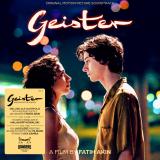
Malakoff Kowalski / Jugglerz - Geister by Fatih Akin (O.S.T.) (2LP,GF,IL,HS)
 
18

RADYO BOMBERO - ABOUT THE LABEL
Radyo Bombero is the record label founded by acclaimed filmmaker, author, DJ and record collector Fatih Akin. Born out of his personal passion for vinyl and film music, the label will initially focus on soundtracks from his films: previously unavailable works will be released on vinyl for the first time, while out-of-print titles will return as carefully produced reissues. Its inaugural release is the soundtrack to Akin's new film Geister, scheduled for release in November 2026. Further projects are already in development.

ABOUT THE RELEASE

MALAKOFF KOWALSKI - GEISTER
ORIGINAL MOTION PICTURE SOUNDTRACK
Composed by Malakoff Kowalski, the soundtrack to Fatih Akin's Geister is the inaugural release on Radyo Bombero.
Born in the United States, raised in Hamburg and now based in Berlin, Kowalski is a composer, pianist and multi-instrumentalist whose work moves between film music, contemporary classical composition, theatre and pop. He composed the music for eleven films by Klaus Lemke, as well as for productions including Schweigend steht der Wald and Stasikomödie. His solo work has been released by MPS and Sony Classical, and he has collaborated with artists including 2raumwohnung, Igor Levit, Chilly Gonzales and Nils Frahm. His sound combines elegiac melodies with a warm, cinematic atmosphere and a subtle sense of unrest beneath the surface.

For Geister, this distinctive musical language meets Fatih Akin's vision of a deliberately anachronistic and romantic score: a tribute to Ennio Morricone's great love themes that plays a defining role in the film's tragic love story and atmosphere.
LP 1 contains Kowalski's complete original film score.
LP by JUGGLERZ opens up a second musical world, bringing together four productions by the internationally successful Jugglerz on a four-track 12-inch disc at 45 RPM: the film's title song Ya Mami, performed by Aya Samra; Mood by Cloudee, Milaa and Jugglerz; Tip by Jugglerz, Limitlezz, Maureen and Demarco; and Beirut Nights Riddim. The four tracks bring Arabic tarab and contemporary Levantine pop together with hip-hop, urban beats and dancehall rhythms.

FATIH AKIN ON RADYO BOMBERO
"Radyo Bombero is on the air. Don't miss a tune!
"
Music is - alongside cinema and literature - a fundamental source of inspiration for me. Having grown up in the 1980s, the way I listen to music has hardly changed: I buy records, listen to them carefully and then copy them onto a portable device. It used to be a Walkman, then an iPod - today it is my smartphone with my playlists.
I do not use Spotify or any other streaming services. Why that is, I do not know. In most other areas, I try to keep up with technological developments. Not with music. I like unpacking a record, cleaning it before listening, holding the sleeve in my hands and reading who worked in the studio, who wrote the music and where the record was made. These things interest me. And they lower my cortisol levels.
Music plays a major role in my films. It is not that, as a director, I want to impose my favourite music on the audience. The music must always serve the story. In Head-On, for example, it tells us something about the characters and their biographies. Crossing the Bridge - The Sound of Istanbul is the musical portrait of a city. Its music tells us about the people who live there: where they come from, the cultures they brought with them and how those cultures have merged with local traditions. The Cut was conceived as a Western, and the music had to help reinforce that idea.
Geister tells a tragic love story. The music was meant to be gloriously anachronistic. And romantic. Just like the light and colours, it had to shape the atmosphere of the film. My films are often about cinema itself, and Geister is no exception. Its music is a tribute to Ennio Morricone's great love themes.
In Malakoff Kowalski, I found the perfect creative partner. He immediately understood my idea and realised it brilliantly. That made it all the more painful when I was told by the music industry that there could be no soundtrack release for Geister because soundtracks were too expensive to produce and would simply sit on the shelves.
It is not as though I am a spoiled child who absolutely has to have a lollipop. But this music is simply too good to withhold from the audience. The idea that there would be no soundtrack release felt like a great injustice.
Then several friends and collaborators advised me to release the record myself. No sooner said than done. But Radyo Bombero is not a one-off project. Geister is only the beginning.

Finally, I have the opportunity to gradually release all the soundtracks from my films that have remained unavailable. Soundtracks that were previously released but have since gone out of print will also return as reissues.
Hainbach's soundtrack to Amrum is already in development, as is a double album featuring the unforgettable German pop songs from The Golden Glove. And, finally, a vinyl soundtrack to Head-On.
Fatih Akin

pre-order now13.11.2026

expected to be published on 13.11.2026

27,31 €
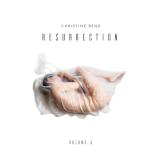
Christine Benz - Resurrection Volume 1 (Growth) (LP 2x12")

Volume 1 - Growth
Resurrection is a long-term musical work that has accompanied Christine Benz for almost twenty years. The first track was created in 2007 (track id - Born after Code), with another piece added nearly every year thereafter.
Throughout this time, she continued to produce other music while steadily developing her artistic language.
Musically, the album moves between minimal techno, ambient and experimental electronic music. Across different phases of her life, Resurrection gradually grew into an archive of her personal and musical evolution.
The complete work unfolds as a trilogy across Volumes 1-3.
At its core lies her fascination with sound as material. Rather than thinking in terms of conventional melodies, she works with textures, vibrations, and spatial relationships. A small number of elements give rise to complex sonic spaces, where minimal changes can have a profound effect. Mistakes, chance occurrences, and unexpected responses from the systems she uses also become part of the music. Even from chaos, remarkable structures
emerge. Whenever unplanned beauty reveals itself, she preserves it as a small “miracle” in which control and chance intertwine.
The complete work unfolds across three chapters: Growth, Structure and Resonance, exploring repetition, frequency, perception, consciousness and technological development in the relationship between humans and
machines. It moves from origin through the formation of an internal order towards connection and interaction.
Volume 1: Growth, draws upon the Fibonacci sequence and the spiral as symbols of natural development, with the music growing through repetition and minimal change into increasingly complex forms. Throughout the
project, technology appears as a tool, a partner and a mirror of our perception, raising the question of whether consciousness, responsibility and empathy can evolve alongside technological progress.
During the project’s long evolution, Donato Dozzy developed an interest in Christine’s distinctive sound design.
In 2021, this led him to propose his own interpretation of Our Determination for Volume 1, subtly reworking the track through his own musical perspective.
The artwork developed by Christine also went through a creative process of its own. The original photographs were taken in a basement around 2019, with a wet curtain draped over her. In 2026, she decided to transform
this visual world into a moving-image artwork. For the production, a film crew reconstructed the entire setting.
The video shoot demanded a great deal from Christine: after several hours beneath the wet curtain, the cold was no longer merely part of the staging. This elaborate creative process gives the artwork its distinctive character
and makes it an essential part of Resurrection.
The first chapter will be released in November 2026 as a double-vinyl edition housed in a distinctive gatefold sleeve with an inside-out finish, matte varnish, and partial raised spot UV varnish. Two further double-vinyl
releases, Structure and Resonance, will complete the trilogy. All three volumes will be released on Pirat Records.Records.

pre-order now20.11.2026

expected to be published on 20.11.2026

42,44 €
Alwin Nikolais - Electronic Dance Music, 1966-1989 (2x12")

Often credited as the father of multi-media theatre, Alwin Nikolais (1910-1993) took complete creative control over his productions - including cutting-edge approaches to lighting and costume that transformed human bodies into shifting sculptural shapes, while also composing wildly innovative electro-acoustic and synth-based audio as accompaniment.

After initially experimenting with musique concrète and tape manipulation (as demonstrated on the 1959 LP Choreosonic Music of the New Dance Theatre of Alwin Nikolais) Nikolais became the first owner of Robert Moog's synthesizer at the Audio Engineering Society convention in New York in late 1964. Relying heavily on the Moog and later the Synclavier synth/sampler, these 21 tracks document Nikolais' highly-prescient compositions across the mid 1960s through to the late 1980s - existing not only as extensions of his other-worldly choreographic productions, but standalone pieces of foundational mid-century American electronic and experimental music.

"Born in Southington, Connecticut in 1910, Nikolais’s early years and early career were in acting, music and puppetry. It was not until the late 1930s that he began his work as dancer/choreographer in Hartford, Connecticut, where he was commissioned by the Avery Memorial Theatre, a part of the Wadsworth Atheneum, to create an evening-length work to the music of Ernst Krenek. Previously his work and study as a pianist-organist found him accompanying silent films. This sort of accompaniment required from the musician not only a playing skill but also a versatility in improvisation, matching movement to sound, and evoking mood to situation.

Nik was drawn initially to dance by his involvement with the percussion scores used by the illustrious early twentieth century German dancer Mary Wigman. In trying to learn more about percussion, he was lured into dance class and thus his career began. His development of music and dance occurred simultaneously. His introduction to the twelve-tone technique opened his mind to the expanding areas of atonal music, and his dealing with music as sound per se. In 1948, after being appointed director of the Henry Street Playhouse in New York, Nikolais formed the Playhouse Dance Company, later known as the Nikolais Dance Theater, and began his aesthetic orientation toward dance as a study of motion. By the 1950s, he had ceased creating literal dances and began his explorations and eventual milieu as an abstractionist.

Sound became an important part of his abstract theatre. For his first dances, which involved his new thinking of dance as both a visual and kinetic art, he used live percussion scores in which he directed his dancers to play instruments of all nature. There was a combination of children’s toy instruments as well as harsh and resonant automobile brake drums, and other pitched auto parts which he also used to accompany classes. Once he installed his own tape recording machines, he quickly used the limited range these instruments provided in a new way, slowing and increasing speed and reversing sound. He also made the sounds adhere to the choreographic structure (not the other way around), thereby giving the dance its independence from the musical phrasing. But the real need remained: the search for new sound. Nik made a sound library, recording noises and percussion and vocal sounds, which the French aptly called musique concrète. Needless to say, he became a master at splicing bits and pieces.

From 1956 to 1962 Nikolais composed eleven major scores for his theatre pieces using such techniques. In 1963, James Seawright, who at the time was assisting Nik in his productions and also working at the Columbia-Princeton Center for Electronic Music, recorded a sound bank for the production Imago (1963). With this material, Nikolais created his first synthesizer score. Imago won the Paris Grand Prix in 1968 and launched the Nikolais Dance Theatre towards its national and primarily international acclaim.

During the same period, Seawright came to Nik and told him of a young man who had invented and constructed a simplified synthesizer and insisted that Nik visit the electronic fair currently being held in New York. Nik did so and met Robert Moog. He was completely taken by the new machine and after making some suggestions to Moog, (which Moog made), Nik bought the inventor’s first machine with the aid of a Guggenheim Fellowship. Moog himself was astonished by what his machine could produce for Nik. This machine was later acquired by the Museum of Musical Instruments at the University of Michigan at Ann Arbor as the first Moog synthesizer. The Synclavier was Nik’s next source of sound and since the mid-1970s remained the major instrument in the Nikolais soundroom.

Alwin Nikolais has been honored and awarded throughout the world. He has received the French Legion of Honor, the Kennedy Center Honors, National Medal of the Arts, two Guggenheim Fellowships, as well as Mellon, Ford, and Rockefeller grants. He has been a recipient of NEA grants since 1966, been awarded five honorary doctorates, all for his remarkable achievements in Dance Theater. His genius has influenced several generations of artists."
—Murray Louis

In Stock

On Stock and ready to ship

Last In: 43 days ago
30,21 €
53X - Cyan Haze

53X

Cyan Haze

12inchEES053
(Emotional) Especial
07.08.2026

The return of Jonne Lydén aka 53X is an exhilarating welcome for Emotional Especial with 4 more seismic analogue psychedelic jams that are becoming recognisably a unique and hypnotic statement.

Lydén’s studio time is distillation for personal contemplation and perfection just 3 releases in 5 years that are worth the wait. The heady demand for his debut ‘Synapse’ and the following ‘Zen ‘23’ on Especial (limited repress incoming!) show constant development a sound of widescreen technoscope where dub beats trance pyrotechnics and 303 mind-melt swirling in a cosmic matter.

His return takes this further his music heritage in Finland’s hardcore punk scene to finding the techno of Detroit and Berlin before submerging in synths and drum programming jamming recording and mixing these trip-out electronic journeys live.

This heavy 4/4 jack is apparent on opening Sanctuary. Like his recent outings ‘Radar’ found on the Especial 50th “sampler” release ‘Gracias Especial’ (EES050) and also ‘Simulaato’ hidden away on blink and you miss it cult label Avidya (AVI003) this is a pure undiluted bang. Straight forward heavy bass kicking charged with acid 303 and monotonic vocal insights the track is a flourishing temple a call of embrace.

The eponymous Cyan Haze showcases 53X’s cinematic finest panoramic audio and sound design creating expansive phonics. BPMs drop samples flourish around break drops and rolling bass – breathing looping shouting lifting.

Owls enlightens. Hardware rumbles cerebral a temporal universe awakening. The collage of found sound successive sequential all encased by hypnotic broken chords rolling bass and melancholic piano refrain. Meta worming braindance ecstatic tribal industrial gliding by Shiva into the night.

Dust closes apt its basement collage pounds Lydén to techno genesis. Proto-zeitgeist steppa dark room incantation pulling and expanding the fantasy to strange dreamscapes. Reincarnation and hope in 2026.

In Stock

On Stock and ready to ship

Last In: 22 days ago
17,44 €
Grooves from Difa (The Pulse of Peruvian Dance Floors) - Chicha Por Favor Volume 2

Around 1970, musician, music producer, and entrepreneur Fernando Arias founded the record label Discos Fernando Arias (Difa) in Lima, the capital of Peru. This label was crucial for the musical production, promotion, dissemination, and development of Peruvian tropical music; more specifically, the so-called “carretero style”, so named because it was rooted in the famous Central Highway (Carretera Central) of Peru, which crosses the country from west to east, from the coast to the jungle, through the Andes mountain range. This style is defined by sudden changes from ballad to fast and aggressive tropical music, with electric guitar lines drenched in fuzztone, reverb, and wah-wah. To this must be added the plaintive, melancholic vocal style characteristic of Andean Peruvian music.

In Stock

On Stock and ready to ship

Last In: 36 days ago
23,49 €
Phase O'Matic - The New Development EP

pressure control’s second release comes from the hands of Shift label-head Phase O’Matic.

Following seismic hits on Libertine, Exarde, EYA, New Fair Tracks and Chandelle, our boy wonder crashes into the pressure control spotlight with a deadly five-tracker primed for the floor.

Touching all corners of what we know and love – you can run, but you can’t hide.

Available for pre-order now via One Eye Witness.

All music by Jules Von Daniken
Pressing and distribution by One Eye Witness
Design by Al Robertson
Mastering by Marco Pellegrino

In Stock

On Stock and ready to ship

Last In: 6 days ago
13,03 €
Jhauk - You Won’t Find Your Way From Here LP 2x12"

Straddling an intriguing intersection of Drum & Bass, Jazz, Fusion and unidentifiable electronica, ‘You Won't Find Your Way From Here’ is the debut album from Jhauk.

An extremely talented multi-instrumentalist from Sheffield, UK, Jhauk came to Blu Mar Ten’s attention when, in 2017, he created a wild prog-rock inflected remix of BMT’s track ‘Titans’
Further conversations with Jhauk revealed the depth of his unorthodox approach to electronic music and unearthed a treasure trove of production skills, culminating in the album before you.

Oscillating between the late-night, moody calm of late 50s Miles Davis, John Coltrane & Bill Evans, the riotous 70s instrumentation of Weather Report, the modern cool stylings of Matthew Halsall and the gritty edges of modern D&B production, it’s scarcely believable that this collection of tracks came from one person working alone in their studio. With tempos and time signatures skittering all over the place, Jhauk uses genres as catalysts rather than containers, he finds the interesting stuff in the hinterlands of their structural relationships and tensions. 

Talking about the album, Jhauk has strong opinions:

“Drum & Bass emerged as club music, and club music comes with its own logic. Specific structures, specific build-ups, a formula that supports that context. 
That's fair enough, but almost 40 years later, why is 99% of D&B still made the exact same way when 99% of the time it's never heard in a club? The same structure, the same formula, barely any development beyond the core idea. Tracks where you can hear 10 seconds of the drop and know almost beat-for-beat how the next 5 minutes sound. No real musical depth or exploration. People regurgitating the same material ad-nauseum but never actually saying anything for themselves. 
This period of composition for me was about taking what I love about D&B, the rhythmic energy and potential for creative freedom it presents and really stretching it to its limits. Of taking drum & bass as a starting point and seeing where it ends up without an idea of what that destination might be. Most people would probably never call a lot of the results D&B, but that's okay because it was never the point.”

 
Dripping with melancholy, euphoria, longing and pure urgency ‘You Won't Find Your Way From Here’ is unlike anything else you’ll hear this year. The sound of an artist entirely unconcerned with impressing peers or performing on ‘socials’; you're hearing a true musician at work, expressing ideas through the skill of his hands, mind and ears. The album’s secrets aren’t revealed with a single play-through, but bears (or even requires) multiple listens to expose its layers.
In previous times, they called this ‘art'.

In Stock

On Stock and ready to ship

Last In: 77 days ago
25,63 €
LNS - LNS-ID VOL 1

LNS

LNS-ID VOL 1

12inchERS065
Emotional Response
23.07.2026

Emotional Response presents the first of 2 EPs by Laura Sparrow aka LNS, the Calgary raised, Berlin based producer and DJ with 8 acid-tinged cuts that are equally expansive and inspiring, personal and inventive.

After her debut Malinge Range (cassette) on fellow native Canadian 1080p label in 2016, LNS moved to Berlin and has released a steady stream of 12”s, exploring ambient, dub, electro and techno. Initially appearing on Vancouver émigré’s Jayda G’s (alongside Fett Burger) Freakout Cult label before settling at DJ Sotofett’s cult WANIA label and more recently on the legendary and ‘original’ German techno label, Tresor.

A love of the Roland TR-303, alongside deep diving into breakbeat creation, manipulation, mutation and production, plus some intrepid mixing and post-production assistance, development and support with DJ Sofofett, have led to a collection of some of her favourite music to date.

LNS-ID 1 and LNS ID 2 are the result. Recorded during a burst of creativity through dedication, new studio equipment and learning techniques, as well the necessity of artistic expression in the moment.

Two sets of four tracks based on the acid tradition in the more restless corners of 90s and early 00s Braindance. Acid lines drive the melodies, while drums move between sliced break fragments and the familiar sounds of the Rolant TR-606 and TR-808.

Pads drift in with a warm glow or at times, quiet ghostly tension. The results are music that leans towards atmosphere and memory, something almost nostalgic that was built for those of us who still chase the more expressive edges of acid.

In Stock

On Stock and ready to ship

Last In: 77 days ago
18,70 €
Jhauk - You Won’t Find Your Way From Here LP 2x12"

Straddling an intriguing intersection of Drum & Bass, Jazz, Fusion and unidentifiable electronica, ‘You Won't Find Your Way From Here’ is the debut album from Jhauk.

An extremely talented multi-instrumentalist from Sheffield, UK, Jhauk came to Blu Mar Ten’s attention when, in 2017, he created a wild prog-rock inflected remix of BMT’s track ‘Titans’
Further conversations with Jhauk revealed the depth of his unorthodox approach to electronic music and unearthed a treasure trove of production skills, culminating in the album before you.

Oscillating between the late-night, moody calm of late 50s Miles Davis, John Coltrane & Bill Evans, the riotous 70s instrumentation of Weather Report, the modern cool stylings of Matthew Halsall and the gritty edges of modern D&B production, it’s scarcely believable that this collection of tracks came from one person working alone in their studio. With tempos and time signatures skittering all over the place, Jhauk uses genres as catalysts rather than containers, he finds the interesting stuff in the hinterlands of their structural relationships and tensions. 

Talking about the album, Jhauk has strong opinions:

“Drum & Bass emerged as club music, and club music comes with its own logic. Specific structures, specific build-ups, a formula that supports that context. 
That's fair enough, but almost 40 years later, why is 99% of D&B still made the exact same way when 99% of the time it's never heard in a club? The same structure, the same formula, barely any development beyond the core idea. Tracks where you can hear 10 seconds of the drop and know almost beat-for-beat how the next 5 minutes sound. No real musical depth or exploration. People regurgitating the same material ad-nauseum but never actually saying anything for themselves. 
This period of composition for me was about taking what I love about D&B, the rhythmic energy and potential for creative freedom it presents and really stretching it to its limits. Of taking drum & bass as a starting point and seeing where it ends up without an idea of what that destination might be. Most people would probably never call a lot of the results D&B, but that's okay because it was never the point.”

 
Dripping with melancholy, euphoria, longing and pure urgency ‘You Won't Find Your Way From Here’ is unlike anything else you’ll hear this year. The sound of an artist entirely unconcerned with impressing peers or performing on ‘socials’; you're hearing a true musician at work, expressing ideas through the skill of his hands, mind and ears. The album’s secrets aren’t revealed with a single play-through, but bears (or even requires) multiple listens to expose its layers.
In previous times, they called this ‘art'.

In Stock

On Stock and ready to ship

Last In: 64 days ago
25,63 €
Voorman - Character Builder EP

Voorman

Character Builder EP

12inchSTLS001
Stelus
17.07.2026

How much weight does it take before something finally shifts? Character Builder EP is Voorman's introduction to Stelus, four functional studies arranged as a single passage. The A-side carries weight: 'Dense' opens with compressed momentum, focused and unrelenting; 'Pressure' follows with restrained propulsion, austerity with distance held deliberately between the music and any release. The B-side turns inward. 'Angst' sits inside psychological friction without resolving it, letting the feeling stand on its own terms. 'Relief' closes the EP with a gradual lift, not resolution exactly, but the slow return of space. Personal development is built under load.

In Stock

On Stock and ready to ship

Last In: 14 days ago
14,92 €
Various - Documents Of Different Reality (2x12")

Featuring rare- and first-on-vinyl tracks from beloved producers such as 2000 And One, Stasis, and CiM. Remastered by DMX Krew and with an accompanying online essay by Oli Warwick.

Across eight carefully selected slices of starry-eyed machine soul, Cold Blow presents an exquisite tour through backroom techno and downtempo electro. With a focus on thematic flow and an immersive listening experience, the London-based label explores works from leading lights of the 1990s and previously unreleased cuts that celebrate the human heart that can be discovered in synthetic sound practices. The development of techno in the 1990s saw the music evolve in different directions across the world. From the expressive blueprint laid out by the Detroit pioneers, a wide range of tempos and energies emerged. Techno's evocative synthesis and intricate drum machine programming was especially potent for deeper explorations away from the dancefloor. Documents Of A Different Reality casts back to when technology was steering quantum leaps in communication and creativity and the future was shot through with naive optimism. It was also a time when the media and industry hadn't caught up with the music to box it into distinct categories. As such, there's a sense of creative freedom that informs the older tracks on the album, from 2000 And One and Sandy Huner's sparkling example of early Dutch techno to London-based LA Synthesis' detailed take on braindance and the majestic night sky vision of cult legend Stasis. There's also space for rare, late 90s machine funk from Icelandic outlier Thor alongside Connective Zone's charmingly fractured bleep dream and a more contemporary offering from Barcelona-based duo Permutation. Meanwhile Mind Control and CiM both capture the spirit of stylistic fusion with twitchier rhythms that take influence from hardcore and jungle as much as techno. With an atmospheric through-line of melancholic pads and harmonious leads, this small but perfectly formed collection naturally follows on from previous, equally thought-out compilations on Cold Blow, and adds a distinct perspective on the history and continuing legacy of pioneering early ambient techno.

In Stock

On Stock and ready to ship

Last In: 49 days ago
28,53 €
Wesenyeleh Mebreku - Resonance of Time

'Electronic lullabies and folk songs from Ethiopia! A landmark recording from Ethiopia’s vibrant cassette era of the 1980s, Resonance of Time features pioneering composer Wesenyeleh Mebreku reimagining Ethiopian folk melodies through the humble circuitry of an early Casiotone keyboard.
'Historically, the works featured on Resonance of Time (የጊዜ ቃና Yegizie Kana) stand as quiet documents of Ethiopian musical memory. Many of the original songs included in this release emerged during important moments in Ethiopian history when music carried the collective emotion of the nation - love, loss, resistance, dignity, and hope. By arranging these pieces from Ethiopia’s musical heritage instrumentally, Wesenyeleh Mebreku aimed to preserve their essence while protecting them from being confined to a single era or performance style. In doing so, his preservation of Ethiopia’s musical heritage became a contribution to his country’s musical legacy itself, as Resonance of Time serves as an important musical milestone of this composer’s innovative recordings and musical developments in the prolific era of Ethiopia’s 1980s cassette tape culture.
'On Resonance of Time, Wesenyeleh made use of the first Casio electronic keyboard - the Casiotone CT-201 - to arrange and perform Ethiopian folk songs in his own unique style. Implementing the soulful, lo-fi character of the keyboard, Wesenyeleh’s interpretations of these works take on a life of their own. Charming analog tones interpret swirling sounds of organ and piano in kignit modality to the beat of a nostalgic rhythm machine while twinkling synthesizer sounds carry the melodies drifting out of time. The recordings reflect a watershed moment in Ethiopian musical history - when traditional melodies started being interpreted on electronic keyboards, and the advent of cassette tape recording allowed for music to be transmitted more accessibly than centuries-old oral traditions. During this time, Ethiopian musical modes were syncretized with new technology and budding musical experimentation, and Wesenyeleh’s interpretations on Resonance of Time are a landmark recording of this era, following in the tradition of reflecting upon and re-interpreting historical Ethiopian music for a new generation.
'Featured on the release are timeless Amharic folk songs and lullabies, Tigrinya love songs, Gurage and Oromifa popular songs, and even works closely associated with performers from Ethiopia’s 1970s popular music era such as Tiz Alegne Yetintu (ትዝ አለኝ የጥንቱ) which was famously performed by Tilahun Gessesse. Each piece, thoughtfully chosen by Wesenyeleh, is beautifully transformed into instrumental music of his own style - allowing these worlds of song to echo into the future while they are synthesized with the electronic innovations of the 1980s and Wesenyeleh’s own musical history.
'Wesenyeleh says this about his musical approach - ”Instrumental music, for me, is a space of reflection. Without words, the listener is invited to remember, imagine, and feel freely. In Resonance of Time, I hear my own musical philosophy: respect for Ethiopian kignit, careful dialogue with Western harmony, and a deep trust in melody as a storyteller.”
'Each piece performed on Resonance of Time speaks to a time when Ethiopian music was shaped by oral transmission through live performance and communal listening. In today’s fast-moving musical environment, revisiting these works is an act of cultural responsibility. These works remind us that melody once traveled slowly, settling deeply in the listener’s heart. The instrumental format allows these works to cross linguistic and generational boundaries, making them accessible to audiences who may not know the original lyrics but can still feel their spirit.
'Resonance of Time also reflects a broader historical dialogue: the meeting of tradition and adaptation. Ethiopian music has always evolved while holding onto its core identity. These arrangements affirm that evolution does not mean abandonment. Instead, it can be a form of safeguarding - ensuring that the musical wisdom of the past continues to resonate in the present and inspire the future.
'In this sense, the album is both personal and collective. It carries Wesenyeleh Mebreku’s own musical fingerprint, shaped by decades of practice, but it ultimately belongs to a wider cultural continuum. It is the artist’s contribution to keeping time audible so that memory, history, and sound may continue to speak to one another.'

In Stock

On Stock and ready to ship

Last In: 80 days ago
32,35 €
Nastia - TECH041

Nastia

TECH041

12inchTECH041
TECHNO Records
26.06.2026

The 41st release on TECHNO Records marks a defining milestone: the first full- scale solo record by the label’s founder, Nastia, in her music career. It opens up a new depth of detail within the character and identity of both the artist and the catalogue.

Rather than making a loud statement, Nastia focuses on a restrained and functional approach to techno, shaped through subtle shifts in tension, texture, and rhythm. The tracks move with intention, avoiding obvious peaks in favour of gradual development and controlled energy—a familiar methodology and a direct analogy to the evolution of the label itself. Crafted with dancefloor energy in mind but not bound by it, the release offers a fresh perspective on the author’s persona, stripping away excess and overexplanation. It leaves ample room for the listener’s imagination and a versatile, expert application within a DJ set.

The trajectory of ascents and shifting attention in an artist’s career is the only honest path, providing material for reflection and the anchoring of values. This depth of experience cannot be replicated by overnight success or short-lived peaks—only decades of exploration, trial, and error can forge a work built to endure. Studio work becomes a new instrument for Nastia to build value capital, while her debut solo EP stands as an artefact marking a historic point for the author and the label.

TECH041

A1 “Indoctrinated” — a masterclass in rhythmic interplay used as a narrative device. It functions as a sonic manifesto: universally accessible yet distinctly individual. A process-driven track, its strength lies in its ability to repeatedly shift the listener’s focus. It serves as an ideal transitional tool, offering a calculated awakening from a hypnotic state.

A2 “Ignorance Is Keelleeng” — a structured dancefloor powerhouse built on a precise understanding of peak-time energy. Functioning as a set-defining anchor, it allows the DJ to pivot the mix in any direction without losing momentum. A true catalyst track that opens up new sonic horizons.

B1 “True Majority” — the most forward-thinking cut on the record, providing a definitive blueprint for the hypnotic techno sound of summer 2026. It presents a multi-layered, all-encompassing sonic tapestry that interacts with the listener while maintaining a strictly restrained narrative. A motif-driven track that subtly exposes an underlying tension.

B2 “Additive Integration” — best conceptualised within an extended set where the goal is to gradually establish the atmosphere and dictate the rules of the journey. A track built on anticipation, it conserves energy and conceals its inner mechanics until the final acts. It compels the listener to decode its sonic language for full comprehension.

In Stock

On Stock and ready to ship

Last In: 38 days ago
13,24 €
Monolake - Interstate (2x12")

Monolake

Interstate (2x12")

2x12inchFIELD39
Field
19.06.2026
 
5

Continuing its faithful documentation of the early years of Monolake, Field Records proudly present the first-ever vinyl pressing of seminal 1999 album Interstate. In a kaleidoscopic lattice of micro-rhythms and exquisitely dynamic textural work, Robert Henke and Gerhard Behles fully collaborated for the final time on this record — and created an electronica landmark in the process.

Monolake's evolution from their earlier dub-techno-tinted works saw their exploration of Max/MSP go further out. The duo yielded greater complexity in the behaviour of their sound palette to achieve an organismic quality that remains an enduring influence on so many strands of experimental electronic music today. Interstate is a vivid record that builds up eight different ecosystems of sound and subtly threads elegant grooves through their root structures.

There's a house-like undulation to the low-end driving 'Tangent-I' and 'Tangent-II', but the infinitesimally detailed layers of sound on top swoon from techno synth shimmers to trickling waters, snaking delay trails and pin prick percussion. You can hear the unmistakable, snappy rhythmic thrust of drum & bass driving 'Ginza', but here it's used as an engine for the crispest array of designer percussion and dub-soaked synth chirrups. Across every track, Henke and Behles demonstrate a potent combination, both groovily instinctive and eternally fascinating to try and pick apart.

After Interstate, Behles departed to focus entirely on the development of Ableton Live and Henke steered Monolake towards a leaner — but no less pioneering — sound. Every Monolake record has its own unique context and sound, and the circumstances of Interstate could never be repeated. Capturing the leaps in progress that were being made in digital music production at the end of the millennium, it's an information-rich document of a moment in time that still sounds wildly futuristic 27 years later.

In Stock

On Stock and ready to ship

Last In: 3 months ago
29,62 €
Laurence Pike - Possible Utopias For Jazz Quintet  LP

Sometimes the title of an album tells you everything you need to know. Laurence Pike’s Possible Utopias for Jazz Quintet is like that: The music within represents a search for freedom, potentiality—liberatory strategies that transcend the ego and the solitary, atomized figure.

But in this case, the album title is also a red herring, because there is no jazz quintet here—just Pike, his drums, and his machines, not so much an ersatz ensemble as a purely notional one, a thought experiment equipped with drumsticks, circuitry, and the desire to go beyond hardwired limits.

And the results, strictly speaking, aren’t really jazz, though they incorporate the vocabulary of jazz, along with that of ambient, electronica, and post-rock. They are some other thing, cognizant of genre but never beholden to it. Again, we’re talking about a search for freedom here.

The Sydney-based musician has a long history of coloring outside the lines, not just in his solo recordings—including four albums for the Leaf label between 2018 and 2024—but also in the trio Pivot (later PVT); Szun Waves (alongside saxophonist Jack Wyllie and Border Community’s Luke Abbott); Triosk, which recorded an album with Jan Jelinek in 2003; and even post-punk titans Liars, whom he joined in late 2018.

Of his first album for Balmat, Pike says, “My loose concept was: What does music sound like when the expectations of late capitalism are removed from it? How might a jazz musician from an idealised culture of the future, or even another world, utilise musical language when the conventions of style and marketing are no longer a factor in music making?”

That inquiry, he says, connects to his “guiding principle: that the purpose of music is to access something bigger than the individual, and reveal a sense of possibility and freedom in the world to the listener. To create an understanding that the future can be something other than what we imagined or expect, even unconsciously.”

Heady ideas, but plug into his stream-of-metaconsciousness flow and you may start to intuit what motivates him. There is a deeply lyrical expression in these pieces—in the ruminative piano of opener “Guardians of Memory,” for example—but also a sense of exploded perspective, of ideas approached from more angles than any one mind could dream up. Of a collectivized consciousness, of mycelial networks branching across tone and rhythm and timbre, of ideas articulated in distributed fashion, nodal points dancing across drum heads.

Pike’s imaginary quintet is hardly without precedent; it’s a continuation of concepts floated across Jan Jelinek’s Loop-Finding-Jazz-Records, Burnt Friedman’s many guises, and much of the recombinant improv of the International Anthem roster, not to mention the far corners of ECM’s catalog in the late 1970s and 1980s, which Pike says have been integral to his development since he was a teenager. Possible Utopias for Jazz Quintet is a point in a continuum, a voice in a conversation, a question with no obvious answer: How can the search for otherness in music manifest something true about ourselves?

In Stock

On Stock and ready to ship

Last In: 56 days ago
23,49 €
ALEX GORDIY - AZURE / ISOLATOR 12"

With CT018, Cosmic Tribe introduces a new editorial format within the catalogue: a focused artist EP on Side A, followed by reinterpretations on Side B — establishing a dialogue between original material and alternative rhythmic perspectives.

Alex Gordiy is a Ukrainian producer currently based in the Netherlands. He has been producing and experimenting across various genres, with a strong focus on electro and techno in recent years. In his music, deep and energetic grooves merge with lush synth textures, creating tracks that unfold with a clear narrative intention.

This release contains two original techno tracks from Alex Gordiy and two electro reinterpretations from EC13 and ROI.

On Side B, the material is reinterpreted through electro. ROI and EC13 reshape the originals into sharper, machine-driven versions, shifting the rhythmic emphasis while preserving the core motifs. The result is a contrast between techno’s linear momentum and electro’s syncopated precision.

Two techno originals. Two electro reinterpretations.

Cosmic Tribe · Research & Development in Sound.

In Stock

On Stock and ready to ship

Last In: 4 months ago
15,34 €
Kimyan - COLORIA (LP 2x12")

Kimyan

COLORIA (LP 2x12")

2x12inchPLUSPLUSPLUSLP4
[ + + + ]
15.05.2026

Austrian musician, painter, and filmmaker Kimyan (formerly Kimyan Law) combines sound and visual design in an impressively direct way to create a comprehensive artistic experience. He takes an open, intuitive approach to his compositions, connecting the
resonances of traditional instruments and rhythmic patterns from Central, North, East, and Sub-Saharan Africa with sophisticated production techniques. Kimyan's current album,
“Coloria,” in which he explores the concept of timbre in a multifaceted way, marks the pinnacle of his artistic development to date.
For his Live -concerts, Kimyan relies on the organic element of playing, using instruments such as electronic drum pads and MIDI controllers.
This gives his pieces a spontaneous, physical presence on stage that goes far beyond mere reproduction and makes his performances a lively interplay between improvisation and structure. In conjunction with his self-designed artwork and videos, corresponding audiovisual worlds are created in which cultural influences and identities, moods and timbres shine together radiantly. Kimyan's works tell stories in many colours, yet always in one language: his own.


f B2 Chara Joy 03:50

In Stock

On Stock and ready to ship

Last In: 4 months ago
24,79 €
TYGAPAW - Together You Gather All Power Applied Worldwide LP 2x12"

May 2026 marks the arrival of TYGAPAW (aka Dion McKenzie)’s first full-length album on Tresor Records, entitled Together You Gather All Power Applied Worldwide. An acronym of its creator’s name, TYGAPAW’s third studio album is a deeply personal collection of music building worlds where Black queer and trans siblings can thrive, while unifying dancefloors worldwide. A proposition that collective wisdom liberates us from the matrix of domination we live within. The album unfolds as the latest chapter in TYGAPAW’s ongoing techno opera opus, continuing to center the voices of Black women, which surface as layered incantations rather than lyrics - powerful, haunting, sensual, activating.
With the process of creating the album starting in 2023, as TYGAPAW (Dion McKenzie) was in the first year of their transition, the music reflects the intensity of that period, where they were experiencing deplatforming as a response to the shift in their physical appearance: Tracks like ‘M32 Riddim’ and ‘Helicopter hovers over my Crown Heights Apartment’ feature high-paced rhythms intersecting with intense siren-like synths to form demanding compositions echoing a heightened sense of alert. Yet throughout the album, relief comes in the form of TYGAPAW’s vocal features, co-conspirators, and chosen family, whose voices are treated with reverb and echo, a sonic fingerprint that leads back to the pioneers in the legendary studios of TYGAPAW’s native land, Jamaica, an important reminder that the past will always inform the future. It is an album for dancers first and foremost, where joy, defiance, and integration with the natural body coexist, and every drop feels less like a climax than a transformation. Expect a bass that permeates your soul and melodic synthesized sequenced phrases echoing the dancehall eras of TYGAPAW’s youth, reshaped into hypnotic melodies that glow over industrial kicks designed to command attention, reasserting Jamaica's pioneering yet often overlooked contribution to electronic music.
In the opening track, ‘Can I Live’, Precious Okoyomon’s words feel like the beginning of a ritual; setting the intentions for the rest of the proceedings. As McKenzie puts it, their “work is about regeneration, resetting, getting integrated into nature, and about rebirth. That’s the tone I wanted to set at the outset of the album.” Ms Carrie Stacks continues this thread of support in ‘Don’t Panic’ with heavily processed vocals on top of a beat that takes inspiration from another important ingredient in the antidote to the oppression of isolation: Ballroom culture. “ I feel like I found my queerness in Ballroom, that’s why this track is very important to me.”
Echoes of NYC Black queer nightlife scene also permeate in the energetic drums of ‘Exorcise the Language of Domination’, in which Julianna Huxtable’s spoken performance complements the various movements and tones of the music. “My producer brain thought this was the one that Juliana’s vocals would be best suited for. I hinted: ‘what do you think of this one?’ She just went into her notes and picked some passages to go with the first section of the track. From there, it was a year-long process of development. It required time and space for this thing to evolve, but I think it’s one of the most powerful tracks on the album.” London’s SUUTOO contributes the album’s only musical collaboration on ‘B2B’, a track that emerged from sessions in McKenzie’s New York studio where the real objective was to connect and have fun; a time out from the demands of life outside.
The album closes out with a double hit of emotion in the form of ‘Effects of Resistance and Black Trans Masculine Experience’. The former features South African scholar Khanyisile Mbongwa drawing connections that exist between Africa and the Black diaspora, whilst looking to the future and calling for a shared sense of community.
The latter piece, an instrumental version of the piece which featured on the IMMIGRANT E.P. of 2025 is a gentle and deeply affecting end to the record, a place of peace and acceptance. This end-of-cycle tone is mirrored in the sleeve photography, which also ties back to IMMIGRANT by finally revealing what was hidden: a portrait of the artist fully self-actualized; a step towards true inner liberation. TYGAPAW is sonically defiant across this album; bass frequencies feel tactile — less heard than inhabited — infectious lead synth melodies remain with you long after the track ends. An overall sound that leaves asserting an urgent need for connection. From Detroit to New York to Berlin to Jamaica, despite geographic distance, this album reminds us that we remain in solidarity, recognising that meaningful world-building requires collective input and action, both personal and communal, if we are to move toward liberation.

In Stock

On Stock and ready to ship

Last In: 5 months ago
25,17 €
Items per Page:

Language