To celebrate the 40th anniversary of The Jesus And Mary Chain’s debut single ‘Upside Down’ is being reissued on 7” vinyl which - as per the original pressing of the release - comes with a colour variation of the original artwork design. To be released on 6 December 2024.
Originally released in November 1984, it put the band on the map selling 50,000 copies and subsequently became one of the first major successes for the now iconic British independent label Creation.
The b-side is a cover of the Syd Barrett written ‘Vegetable Man’, a track not officially released on a Pink Floyd album until 2016’s The Early Years 1965–1972 box set, but a track that caught the imagination of the band in the early-mid 80’s and their cover is an unmistakable and celebrated version.
The single topped the UK Indie Chart twice, once in February 1985 and then again in the March. It stayed in the Indie charts for a huge 76 weeks making it one of the biggest selling indie singles of the 1980s.
Hailing from East Kilbride in Scotland, The Jesus And Mary Chain revolves around brothers Jim and William Reid, the bands founders and only consistent members. The band are recognised as being key to the development of the shoegaze scene and have remained uncompromising in their sound releasing eight albums, most recently ‘Glasgow Eyes’ released earlier this year.
Suche:development
- Vintage Collection
- La Flare
- Deep Ain't It
- Sooth Sayings
- Mollyamory
- Over The Phone
- Candyman
- Supanatural
- Brick That Broke The Window
- Space Blue
- Buttaflies & Brownies
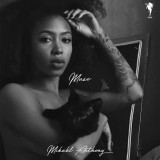
Hailing from the West side of St. Louis, Missouri, Mikahl Anthony’s sonic roots spread far across the global Alt-Soul / Hip-Hop scene. A highly soughtafter multidisciplinary artist (who has collaborated with the likes of Mick Jenkins, Chance The Rapper, Joey Purp, Smino and more), as well as being a founding member of Chicago’s THEMpeople collective, he now prepares to unveil his masterful full-length debut Muse via R&S Records.
Accompanied by several beautiful, self-directed film pieces, Muse is a record with storytelling at its core. Interspersed with commentary from a range of sources telling their stories to Mikhal, whilst collaboratively analysing their personal experiences, it speaks a candid and honest narrative, which reinforce the heartfelt lyrics within. With the project’s name anchored around a dual meaning acronym (1. Ms. Using sensual energy and 2. Making use of seclusion every day). The record is an audio version of docufilm, that creatively interprets the idea of self-therapy, an internal/interpersonal reflection of life experiences that serendipitously connect to Mikahl’s personal romantic relationships. Mikahl explains: ‘I wanted to use a unique style of songwriting, arrangement and filming with the intention of soundtracking my self-development/maturation process’.
On the project’s lasting impression on the listener, Mikahl elaborates ’The exploration of inner truth and vulnerability is key to the future of good music. I want this project to act as symbolism that highlights the mantra that honest approaches and authenticity still has the most value. I also want people to see how important the use of community is when you can connect them to your subject matter...I'd like my audience to observe and engage in their own self-reflections, approaches by way of listening or interacting with the story.’
Drifting to an elevated state of consciousness, Muse is a deeply intoxicating and engrossing listening experience from front to back. From the sliding, kaleidoscopic shadows of opening track ‘La Flare’, via the trepidation-laced atmosphere of ‘Polyamorous’ and the hazy, reverb drenched saxophone notes of LP closer ‘Eddie Kane’ - Mikahl channels moments of joy and pain, infused with spirit enriching instrumentation and gritty textures.
Visual stimuli play an integral role within Mikahl’s music. His songs represent transparency and openness dipped in funk. Layers of soft velvety vocals emerge from jazz harmonies, trap rhythms, and social commentary sourced from voiceovers/excerpts. His creations are the musical representation of documentary films. His art is imagery embodied.
After a two-year silence, the Russian imprint Goodbye Royalty returns with a 12-inch Line Conductors EP. The release is only for vinyl media and embodies the eclecticism of dance, creative minimalism, and the conceptual idea of the album is in a positive experience and purity of spirit. "Line Conductors" and "Topass" have a different set of sound solutions, but the psychedelic shades characteristic of Acusmouse are quite intelligent. Ab Show takes another step forward without departing from its usual sound, offering absolutely two different scenarios. With the frivolous, atmospheric "Antithese" and the deeper and hypnotic "Subminimal Message", where the protracted development of the composition allows you to immerse yourself in the associative images of the new time.
- Wednesday Night Prayer Meeting
- Cryin' Blues
- Moanin
- Tensions
- My Jelly
- Roll Soul
- E's Flat Ah's Flat Too
Blues & Roots is not only a cornerstone in Charles Mingus' body of work but also a testament to the enduring power of the blues as a foundation for jazz
Mingus managed to both honor tradition and push the boundaries of jazz, all while making a deeply personal and politically charged musical statement. The album remains one of the most vital and influential recordings in the history of jazz music. Released in 1960 this album stands out in Mingus' discography as a raw, vibrant homage to the roots of blues and gospel traditions in jazz. Mingus sought to return to his musical roots, drawing from blues and gospel traditions he grew up with, particularly from the African American church music of his youth. The album is a powerful statement of how deeply the blues tradition influenced modern jazz. It combines the unfiltered emotional intensity of the blues with Mingus' forward-thinking and often unconventional compositional techniques. The album's tracks are imbued with a strong sense of the blues, which is especially apparent in songs like "Wednesday Night Prayer Meeting" and "Moanin'." The album carries a loose, jamsession feel, reflecting the church and street-based roots of blues music. The use of call- and- response patterns in several tracks also hints at gospel traditions. Blues & Roots is often cited as a critical album in the development of jazz as a genre that embraced both its past and future. Mingus' ability to integrate traditional musical forms (such as blues and gospel) with more modern, experimental elements opened up new possibilities for jazz. His compositional style, which juxtaposed tightly arranged sections with freewheeling solos, influenced generations of musicians, from avant-garde jazz artists to rock musicians and composers in other genres
The inspiration comes from The rhythms that unite us, the sounds
that guide us on a meditative journey. The whole set maintain a
development and exquisiteness in each note and section that
flood you with a hypnotic and essential groove, offering an
immersive and captivating experience as result.
--
This is an odd to unity!
A long time ago in the Mongolian steppe, people from the Khori,
the Kiyat and the Sunud decided to unite their forces with other
tribes to fight against the oppression of Western forces. The tribal
leaders celebrated their union under the stars of Altan Ovo sacred
mountain. The Mongol Empire was born, the attackers were
defeated and the steppe found peace for centuries.
Don’t stay alone, go with your tribe and you’ll be able to move
mountains!
Initially coming from the DIY hardcore scene, Coilguns have since then crafted their very own blend of punk and ecstatic noise-rock. The history of the band is deeply bound to the development of guitarist Jona Nido’s own label – Humus Records – that now gathers up to 150 releases from Swiss artists of all sonic horizons.
Though their last two albums were 100% self-produced, engineered and mixed by the band members, Coilguns drove in the summer of 2022 to end-of-the-world’s Oceansound Recordings in Norway with producer Scott Evans to track their 4th studio album which was then mixed by grammy nominated producer Tom Dalgety.
The band is known for its raw, uncompromising and euphoric live performances, proudly serving the dancing freaks and the crowd-surfing weirdos.
"Incubus carved their own musical niche and earned a huge following by tireless touring and releasing ever-improving quality albums. A Crow Left Of The Murder came out in 2004, and hit the album charts at number two. The album was produced by Brendan O'Brien, who's known for his Pearl Jam production work. O'Brien shaped an album that Incubus needed in this stage of their development: crisp and clean, but still heavy enough to allow for an effective variation between heavy riffing and fine acoustics. A Crow Left Of The Murder is available as a limited edition of 2000 numbered copies on transparent red coloured vinyl. "
Incubus carved their own musical niche and earned a huge following by tireless touring and releasing ever-improving quality albums.
A Crow Left Of The Murder came out in 2004, and hit the album charts at number two. The album was produced by Brendan O’Brien, who’s known for his Pearl Jam production work. O’Brien shaped an album that Incubus needed in this stage of their development: crisp and clean, but still heavy enough to allow for an effective variation between heavy riffing and fine acoustics.
A Crow Left Of The Murder is available as a limited edition of 2000 numbered copies on transparent red coloured vinyl.
For the first time two single records of Baksey Cham Krong - the first Cambodian guitar band - are officially being reissued in an identical version. Between surf music and ballad, these two records released in 1963 and 1964 are an invitation to rediscover the effervescent Khmer musical scene of the 1960s.
The early 1960s are often described as the “golden age” of Cambodia, with a flourishing economy and a strong cultural development. As the country had just won its independence, the King Norodom Sihanouk - who had been a singer himself (see below) - encouraged dynamism and creativity in all aspects of cultural life.
In 1959, in the midst of this artistic turmoil, Mol Kamach and his brothers created a band: the Baksey Cham Krong (also spelled Bakseis Cham Krung) named after a temple of the Angkor site. The teenagers were influenced by the latest hits they had listened on the radio. For the music, Kagnol got his inspiration from the rock n’ roll of the Ventures and the Shadows while Kamach took over the vocal techniques of crooners such as Paul Anka. The lyrics were either in French (as for the song Ne penser qu’à toi) or in Khmer. The song Pleine Lune became a hit and revealed Kagnol’s musical genius at playing guitar and Kamach’s delicate voice. From their beginnings on the capital’s high school stages to their first broadcasts on national radio, the success of the Baksey Cham Krong was very quick. At the end of the decade the band already split, the brothers getting back to activities that conformed more with their parents’ expectations.
A few years later, in April 1975, the arrival of the Khmer Rouge in Phnom Penh put an end to this musical development and started the darkest era of Cambodia’s contemporary history. A quarter of the population was killed in the Khmer Rouge genocide and the majority of artists and intellectuals were exterminated in a sordid will to wipe out any form of culture in the country. Films and music were banned, movie tapes and vinyls were destroyed. Mol Kamach and Mol Kagnol luckily managed to flee the country: one now lives in France, the other in the USA. Both still continue to make music nowadays.
Bearing witness to the past history, the reissue of these two single records of Baksey Cham Krong brings back to us the Cambodian musical scene of the 1960s.
*Includes download code
The two works which comprise this retrospective release project - "Plan for Sleep” (1984) and "Every Dog Has His Day” (1985) - are collaborations between Yamanaka and Furuhashi which were foundational to the music development of Dumb Type's aural legacy and intermedia innovations at large. Their early stage music possessed a unique charm and innovation, serving as an essential element at the core of their art. Through this project, the legacy of these works is to be re-evaluated, and the essence of the music contributing to the evolution of Dumb Type's sound through this day will be introduced to a new generation.
DUMB TYPE is a multimedia performance art group based in Kyoto that was formed in 1984 and continues to be active at the forefront of the art scene. We are excited to announce the simultaneous release of two cassette book works produced by musician Toru Yamanaka and the late Teiji Furuhashi, a central figure of the group, for works from the early DUMB TYPE Theatre era: "Every Dog Has His Day (recorded in 1985)" and "Plan For Sleep (recorded in 1986)," now available for the first time on vinyl.
Since the founding of DUMB TYPE, Yamanaka has primarily been responsible for music production, while the late Furuhashi played a crucial role in translating Yamanaka’s compositions into stage direction. Their collaboration began with previous groups ORG and R-STILL, and was influenced by the NEW WAVE and progressive rock trends they were pursuing at the time, as well as by artists like Laurie Anderson, Meredith Monk, and Robert Wilson, who fused minimal music and avant-garde performance. Moreover, their bold incorporation of cutting-edge sampling and house music during that era laid the foundation for DUMB TYPE's sound, marking an important intersection in the history of minimalism, ambient music and performance art in Japan.
An expedition in sound in 10 sequences: Enfoncement Deep Sink, Gouffre circulaire [Circular Abyss], Noyau secret [Secret Core], Apesanteur [Weightlessness], Entrailles [Entrails], Four solaire [Solar Furnace], Fissures [Cracks], Mer intérieure [Inner Sea], Éruption [Eruption], Remontée [Ascension]. "Labyrinthe !" is not only a very unique piece in Pierre Henry's masterful repertoire, but also a remarkable demonstration of his compositional skills and musical singularity. Indeed, for this piece, Pierre Henry was deprived of his own, otherwise essential, sonic material. Here, the sounds, provided by GRM collaborators at the time, carry their own distinct stories, sensitivities and qualities. Yet, despite this discrepancy, Pierre Henry's voice, the breath and dynamics of his own music, quickly appear. Through this sonic maze, a music arises, utterly focused on sounds, their development and their use, which Pierre Henry applies with extraordinary clarity and determination.
What if Japanese city pop met no wave? Neither in your wildest dream such occurrence could be real, but let’s make things clear. Frank Chickens could have been possibly forerunners for several famous alternative bands, Cibo Matto on top of all, but sure had a development on their own. Our history began in London, early eighties, art duo Frank Chickens is the original creation of Japanese performers Kazuko Hohki and Kazumi Taguchi. All of a sudden the band debuts with a pair of singles and a full length on Kaz Records, it’s 1984, but could have been easily 1994. Backed by the likes of Steve Beresford (Alterations, The Slits, General Strike, London Improvisers Orchestra), Annie Whitehead (Penguin Cafe Orchestra, Robert Wyatt), Lol Coxhill, Tony Coe and Clive Bell (the top of the cream of the English avantgarde) the band soon became a case in history. Now we have the pleasure – 37 years after its original release – to reissue their second album: Get Chickenized!
The record came out in 1987 on the british label Flying Lecords and showed a different side of the project, with a major focus on the so-called synth wave counterculture, still maintaining a certain avant feel. With original conspirator Steve Beresford still on board, the band was propelled in the studio by another key figure of the London underground: journalist, composer and producer David Toop. Being John Peel’s favorite for a while, the band built a cult following retaining some absurd live performances, well known for their idiosyncratic choreography. Later revamped in the year 2000 - thanks to cult label Ninja Tune – the band enjoyed a second wave of success, with a remix album featuring the likes of Pizzicato 5, Fink and Neotropic. With a cover embellished by the labor of Pere Ubu David Thomas, this second influential album is finally available for your listening pleasure. Here’s your chance to dive deep into this exotic pop extravaganza.
INNER REVOLUTION (EP): A Mystical Journey Towards Freedom
The Intergalactic Civilization is a hybrid, symbiotic entity blending technology and biology, from which no race in the cosmos is exempt. We have reached an advanced stage of development where the manifestation and growth of all life are under the control and management of artificial intelligence. This techno-symbiotic fusion explores the boundaries of its own existence, striving to break free from the constraints of natural laws and technology.
“INNER REVOLUTION” represents Calagad 13’s most personal work to date, showcasing a cinematic sound where each track unfolds as an act or episode in a narrative akin to a sci-fi film. A meticulously crafted transparent vinyl edition, intended for collectors and enthusiasts of the genre, is limited to just 150 copies.
- CD1: Queen I (2024 Mix)
- Keep Yourself Alive
- Doing All Right
- Great King Rat
- Mad The Swine
- My Fairy King
- Liar
- The Night Comes Down
- Modern Times Rock 'N' Roll
- Son And Daughter
- Jesus
- Seven Seas Of Rhye
- CD2: De Lane Lea Demos - 2024 Mix
- Keep Yourself Alive
- The Night Comes Down
- Great King Rat
- Jesus
- Liar
- CD3: Queen I Sessions
- Keep Yourself Alive (Trident Take 13 - Unused Master)
- Doing All Right (Trident Take 1 - With Guide Vocal)
- Great King Rat (De Lane Lea Take 1 - With Guide Vocal)
- Mad The Swine (Trident Take 3 - With Guide Vocal)
- My Fairy King (Trident Backing Track In Development)
- Liar (Trident Take 1 – Unused Master)
- The Night Comes Down (De Lane Lea Takes 1 & 2 - With Guide Vocal)
- Modern Times Rock 'N' Roll (Trident Takes 8 & 9)
- Son And Daughter (Trident Takes 1 & 2 - With Guide Vocal)
- Jesus (De Lane Lea Take 2 - With Guide Vocal)
- Seven Seas Of Rhye… (Trident Take 3)
- See What A Fool I've Been (De Lane Lea Test Session)
- CD4: Queen I Backing Tracks
- Keep Yourself Alive
- Doing All Right
- Great King Rat
- Mad The Swine
- My Fairy King
- Liar
- The Night Comes Down
- Modern Times Rock 'N' Roll
- Son And Daughter
- Jesus
- Seven Seas Of Rhye…
- CD5: Queen I At The Bbc
- My Fairy King (Bbc Session 1, February 1973)
- Keep Yourself Alive (Bbc Session 1, February 1973)
- Doing All Right (Bbc Session 1, February 1973)
- Liar (Bbc Session 1, February 1973)
- Keep Yourself Alive (Bbc Session 2, July 1973)
- Liar (Bbc Session 2, July 1973)
- Son And Daughter (Bbc Session 2, July 1973)
- Modern Times Rock 'N' Roll (Bbc Session 3, December 1973)
- Great King Rat (Bbc Session 3, December 1973
- Son And Daughter (Bbc Session 3, December 1973
- Modern Times Rock 'N' Roll (Bbc Session 4, April 1974)
- CD6: Queen I Live
- Son And Daughter (Live At The Rainbow - March 1974)
- Guitar Solo (Live At The Rainbow - March 1974)
- Son And Daughter (Reprise) (Live At The Rainbow - March 1974)
- Great King Rat (Live At The Rainbow - March 1974)
- Keep Yourself Alive (Live At The Rainbow - March 1974)
- Drum Solo (Live At The Rainbow - March 1974)
- Keep Yourself Alive (Reprise) (Live At The Rainbow - March 1974)
- Modern Times Rock 'N' Roll (Live At The Rainbow - March 1974)
- Liar (Live At The Rainbow - March 1974)
- Hangman (Live In San Diego - March 1976)
- Doing All Right (Live In San Diego - March 1976)
- Jesus (Live At Imperial College - August 1970)
- I’m A Man (Live At Imperial College - August 1970)
- 1: Lp Side One: Queen I (2024 Mix)
- Keep Yourself Alive
- Doing All Right
- Great King Rat
- Mad The Swine
- My Fairy King
- 1: Lp Side Two: Queen I (2024 Mix)
- Liar
- The Night Comes Down
- Modern Times Rock 'N' Roll
- Son And Daughter
- Jesus
- Seven Seas Of Rhye
LP[34,41 €]
Queen’s self-titled debut album will be remixed and released this October. This is the first time that a Queen album has been remixed. Retitled Queen I for this release, the front cover’s Queen logo, originally designed by Freddie Mercury, will be updated with the addition of the Roman numeral “I”. The original album was recorded in 1972 and was released in July 1973 on EMI Records in the UK and Elektra in the USA.
Featuring the singles “Keep Yourself Alive” and “Liar”, the album achieved Gold sales in the UK and USA, and has been a fan favourite ever since.
This Collector’s Edition sees the album presented in a whole new light, having been newly mixed from the original multi-track masters, and with the song “Mad The Swine” now reinstated into the album running order in its originally intended place.
The bonus discs that complete the 6CD+1LP set include: De Lane Lea Demos (also newly mixed from the original multi-track masters for the very first time); a CD comprised entirely of previously unreleased Queen I session out-take music and dialogue; a CD of instrumental and backing track versions of the album; a live CD featuring some of the best and most interesting live performances of songs from this album (some of which are previously unreleased); and finally, a disc comprised of Queen I tracks that were recorded for BBC Radio One (including DJ announcements).
Queen I – including “Mad The Swine” – is also presented on 180g black vinyl.
The Collector’s Edition is complemented by the addition of a 108-page 12” hardback book, which features a treasure trove of rare and previously unseen photography, hand-written lyrics, Freddie Mercury’s sketches, and more.
Presented in a rigid two-piece box with fold-out poster and four photo prints
- A1: Pride
- A2: Home (Feat Dele Sosimi)
- A3: What Would You Do? (Feat Lumi Hd)
- A4: Glow
- A5: Mother Earth (Feat Abdominal)
- B1: A Sad Story But A Good Story (Feat Aaron Applause)
- B2: Good Vibes (Feat Mr Auden Allen, Lumi Hd &Amp; Richie Culture)
- B3: I Feel It Now (Feat Lumi Hd)
- B4: El Camino (Feat Ellie Coleman)
- B5: Woah!
Sam Redmore made a significant impact on the UK music scene with his debut album Universal Vibrations, a vibrant collection of eclectic, dancefloor-ready tracks that earned extensive radio play on BBC 6 Music. His follow-up album Modulate builds on this foundation, blending electronic and live instrumentation across a diverse range of genres, from house and funk to afrobeat and salsa. Sam, now exploring and expanding his creative process, incorporated live performances into the album's development, and collaborated with notable artists including Dele Sosimi and Abdominal.
Something About Livingis an album of live recordings by experimental jazz composer/multi-instrumentalist Robert Stillman. The music was captured over the course of Stillman's time as the solo support act for The Smile (Thom Yorke, Jonny Greenwood, Tom Skinner). The album weaves excerpts from various theater and arena shows along the tour's North American routing into a seamless whole, creating a 40-minute program that represents an expanded version of Stillman's ever-transforming live set.
Something About Livingis the product of a steady, on-stage evolution that happened over the course of the nearly 60 shows opening for the Smile across the EU, UK, US, Canada and Mexico. However, the creative origins of the set began in relative isolation during the pandemic, through Stillman's work on projects like his multi-media installationUnseen Forcesand his monthly broadcast for Margate Radio, both of which drew upon solo improvisation using saxophone, cassettes, Yamaha DX7 synthesizer, and effects.
"At the time The Smile asked whether I'd like to open for them on their first tour, I felt like I'd already been preparing without really knowing it," says Stillman. "I'd been doing this music constantly, but always for a hypothetical audience" During the pandemic, Stillman's solo set-up served as the research lab where he worked on all the concepts he was interested in: solo improvisation, creating and manipulating cassettes, FM synthesis, analogue delays chains, no-input mixing, and non-metric rhythmic pulses. So when he was offered the first Smile tour, the idea was to bring "the lab" onto the stage.
What Stillman could not have prepared for was the experience of playing in venues with capacities of up to ten thousand listeners. "The first tour was in summer 2022, so not that long after the worst of the pandemic, when I had pretty much made peace with the idea that I might never be able to perform for an audience again. Then all of a sudden I found myself in front of huge numbers of people, and felt the massive responsibility of being with an audience, of this thing I'd done alone for so longactually being witnessed, and it was completely overwhelming!" On the flip-side, Stillman also recalls, was a new appreciation of how powerful the live performance was as a social phenomenon. "It's a cliche, but also true: the moment of making and hearing music in a shared time and space has a very specific meaning and power; there was a sense that everyone in the venue was necessary to make it real, regardless of what they were doing, or how they felt about it. There was an inevitability about it that I'd never fully appreciated."
Over the course of the tours that followed, Stillman transformed this appreciation of the shared moment into an ethic of spontaneity that guided the development of his live set. "An important reference for this set has always been an Animal Collective show I saw when I first moved to New York, probably in 2001 or so, that has always set the high-water mark for what I wanted to do live- they were improvising a lot, and out of what would seem to be absolute chaos they'd find their way to something structured, and then back out again into the unknown. It was so thrilling to witness".
ThoughSomething About Livingcompiles recordings from different dates along the tour, Stillman has edited and mixed them into a work that seeks to reflect the ebb and flow between 'chaos and control' that characterizes his live set. Among the compositions featured are some from previous album releases ("Time of Waves", "What I Owe", "What Does it Mean to Be American") as well as some new compositions ("The Dream of Waking", "Renaissance 2.0," and the title track, "Something About Living").
The album/track title "Something About Living" is a reference to a line from Stillman's favorite film,My Dinner With André: "André Gregory is explaining the value of life experiences that, as he says, are'to do with living'.That really struck me, the way he articulated it. I strongly believe live music situations can ask these kinds of questions, for performers and audiences. I hope that's reflected in this music."
[a] 01: Time of Waves (Live in Miami FL) [Live]
[b] 02: What Does It Mean to Be American (Live in Forest Hills NY) [Live]
[c] 03: The Dream of Waking (Live in St Augustine FL) [Live]
[d] 04: Something About Living (Live in Richmond VA) [Live]
[e] 05: What I Owe (Live in Chesterfield MO) [Live]
[f] 06: Renaissance 2.0 (Live in Chesterfield MO) [Live]
0860 is a project by Charlie Fieber aka Fracture inspired by London Pirate Radio. The project includes an album, radio station and interview series that explores the history and legacy of Pirate Radio and its importance in the development of UK underground music.
0860.fm has broadcast interviews with Bryan Gee, Eastman, DJ Flight, Scratcha, Dextrous, Uncle Dugs, Mantra, Missing, Eddie Peake, Om Unit & Laurent Fintoni, Naina & Sherelle, Stamina MC and more. It also broadcasts lost recordings of original 90s & 00s London pirate station broadcasts from the likes of Kool, Rinse, Pulse and more.
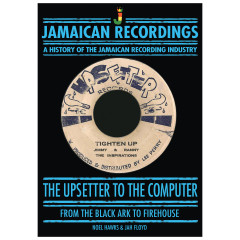
About this book
The growth of the Jamaican recording industry…
Records have played an integral part in the history of Jamaican music and the importance of making records, as opposed to making music, can never be overstated. These are the stories, told through first-hand accounts wherever possible, of the men and women… manufacturers, musicians, singers, deejays, arrangers and record producers… who made the records and who made the sound of reggae available worldwide.
“Clearly this series is set to become the standard reference work on Jamaican music, such is its dizzying depths of research and the vast amount of oral evidence it has compiled from many years of interviews alongside critical quotes from recognised existing literature.”
Steve Barker
The Wire
"In this third volume the authors skillfully weave interview material into its narrative. Among other histories, it examines the work of Lee ‘Scratch’ Perry, who transcended genre and became author of his own productions and, in the process, influenced the development of the major global artist Bob Marley. It examines the development of dub, the studio process that transformed the music, and in doing so exerted yet another influence on popular music on the world scale. It also examines the work of Lloyd 'King Jammy' James who utilised digital technological innovation to become a champion of sound system and record production and, thus, became the Eighties equivalent of the earlier innovator Clement ‘Coxsone’ Dodd.
All this, and much more, is told by many of the protagonists who created the phenomenon of reggae as a cultural force that has travelled far beyond the confines of Jamaica.”
Steve Barrow
Co-Author of “Reggae The Rough Guide”
“Noel Hawks’ & Jah Floyd’s third book on the history of the Jamaican recording business is another triumph. As with the first two volumes, they seamlessly weave quotes and recollections from the key players into the narrative, giving the reader a unique, and genuine, insight into the development of Jamaican music and the business of selling it. An essential read for anyone interested in ska or reggae and for all music lovers.”
Chris Lane
Fashion Records
“I can confidently say, without fear of contradiction, that the final part of Noel Hawks’ & Jah Floyd’s trilogy is every bit as meticulously researched and mentally stimulating as the first two volumes. It may be that no history of Jamaican music can ever be totally definitive given how many of reggae’s key singers, players and producers had already left Earth before anyone had the opportunity to get their takes on how it evolved. But, as of now, you will not find a more accomplished telling of the tale than that which is presented across the three volumes of ‘Jamaican Recordings’… an Order of Distinction-worthy accomplishment that should henceforth become an essential component of everyone’s reggae library.”
Tony Rounce
Ace Records Ltd
- Otis Gayle - What You Won’t Do For Love (2.28)
- Earl Sixteen - Love Is A Feeling (2.40)
- Alton Ellis - Back To Africa (5.13)
- Prince Jazzbo - Apollo 16 (3.32)
- Johnny Osbourne - Eternal Peace (2.52)
- Errol Dunkley - Don’t Do It (2.11)
- Omega - Bounty Hunter (2.42)
- Noel Bailey And Sound Dimension - Wiggles Diggles (3.12)
- Freddie Mcgregor - I Am Ready (2.42)
- Prince Jazzbo - Imperial I (3.17)
- Jackie Mittoo - Lovers Rock (7.33)
- Devon Russell - Swing And Dine (3.25)
- Sugar Minott - Guidance (6.21)
- Dolly Man - Trigger Happy (3.15)
- Nana Mclean - A Little Love (2.51)
- Tyrone Taylor - Rightful Rebel (4.42)
- Wailing Souls - All Alone (2.28)
- Sugar Minott - Revelation (2.51)
Brand new collection of Studio One killer tunes, focussing on the late 70s, 80s and beyond.
Since the early 1960s Clement ‘Sir Coxsone’ Dodd had established Studio One as the unparalleled leader in reggae music in the world. In the years that followed he established the careers of countless reggae legends – Bob Marley & The Wailers, Marcia Griffiths, The Skatalites, Horace Andy, Dennis Brown, Burning Spear and many more.
From its inception Studio One had been at the forefront of every major development in reggae music – ska, rocksteady, roots, DJ, dub and, starting in the second half of the 1970s, dancehall.
Having attained such great success, by the late 1970s Clement Dodd was free to enjoy Studio One’s now firmly established supremacy in reggae music. He released a series of stunning new albums at the end of the decade by Sugar Minott, Johnny Osbourne, Freddie McGregor and others that rode the wave of dancehall and set the path of Studio One’s output for the following 25 years.
During this period, long-established artists such as Alton Ellis, Jackie Mittoo and others returned to the label, recording some of their most creatively satisfying albums with new music that both celebrated the classic sound of Studio One while continuing to experiment, push boundaries and look forward to the future.
This release celebrates this sometimes overlooked golden era at Studio One in the 1970s,1980s and beyond.