the EP FACE I is an evolution from the previously released album JAHRE. it fits into the narrative of urban life and our own personal development. both chronology and emotions are explored here and adapted with lyricism and atmospheric digital and analog sound.
it starts with 1984, beginning of our emotional journey and also literary (GEORGE ORWELL) fixpoint of the electronic adaptation. we feel a kind of lightness in our society, upswing and freedom determine everyday life for a large part of germany. we are free, everything seems possible! almost we move through an utopia. new prosperity and contentment let us blossom, no digital friends and in-between worlds alienate our seemingly naive and peaceful being.
in TMV a first individual emotional world comes to the fore, the mood is mixed and seems fragile. euphoria and melancholy mix to an undefined state of emotional and musical confusion. LYRIK gets a first big space here and carries from the part of confusion into a part of detachment. despite the ambivalence of the first moment, the scene ends in a transcendental, positively driving state of letting go and rest ...
the next part takes us away from the familiar and seemingly peaceful MOMENTS. we jump into the year 2184! 200 years later we are sitting here now, society has turned into an emotional desert like in ORWELLS fiction. a lonely CYBORG sits in the ruins of our once joyful cathedrals and sings about his tearing apart. he can't be without, but also can't be with his own anymore. like a cursed of two worlds he sits stranded in space and time.
the conclusion is made by TMVA, here we get into a very intimate emotional farewell to a lost and unfulfilled love. the calm tempo lets everything flow out that has confused and driven us for years. who or what do we want to become emotionally? are we even capable of letting ourselves fall after decades of searching and disruption? are we already dying? in the end only art and the love of it remains to save us.
ALL LOVE
AMAS_DHE / AMAS_PHI
Suche:development
The Chemical Brothers - one of the most successful bands in the history of electronic music - return with a new single.
‘No Reason’ has been played in their live shows and DJ sets for this past year to an immense crowd response.
It is the first new music from a forthcoming new album project in 2023, a year which also marks 30 years of The Chemical Brothers’ outstanding career.
To mark this anniversary, 2023 will see multiple activations including a brand new album, a book, a tour and lots more in planning and development. More info to be shared in due course.
La Monte Young was a primary influence on Minimalism, the Fluxus movement and performance art through his legendary compositions of extended time durations and the development of just intonation and rational number based tuning systems. With wife and collaborator, artist Marian Zazeela, they would formulate the composite sound environments of the Dream House. Seeing reissue for the first time since its initial 1969 release, Young and Zazeela's first full-length album is often referred to as »The Black Record« due to Zazeela's stunning cover design, complete with the composer's liner notes in elegant hand-lettered script.
Talla 2XLC is celebrating his forthcoming birthday with the annual
spectacular Technoclub event along with faithful friends such as DJ
Dag, Woody van Eyden, Andreas_Kraemer, Sven Wittekind, Ulli
Brenner ,LXD and Bluefire amongst others. While during his career
has faced many obstacles and unfortunate situations, he manage to
stay ahead of his game by gaining the respect and admiration of his
fans and DJ colleagues. His career is a bright example of an artist
that fight against all odds and work ultra-hard to be always at the top
of download shops charts with his single releases and at the top of
the physical sales charts with his long lasting Mixed CD compilation
Technoclub that in 2023 celebrates its 25th year anniversary. Well
known for his ability to provide brilliant remakes of huge trance
classics on his label Technoclub Retro while on That’s Trance service
original solo tracks or collaborations with brilliant singers such as
Christina Novelli and fellow DJs like Ronski Speed or Ralphie B. Last
year he established his psy-trance label Dreamscape with remixes
by his psy-trance alter ego Zyrus 7. Talla 2XLC is not just a pioneer
in techno and trance music scene but also a frequently booked DJ
performing on the most iconic festivals and club events such as Nature One, Mayday, Airbeat One and many more as he knows excellently to entertain his crowds with memorable DJ sets . Talla 2XLC embraces social media with active accounts in the most of them with hundreds of followers.
During the pandemic lockdowns he conquered twitch with
his very successful live DJ sets receiving donations and support from
his global fan base. What is more Talla 2XLC is taking part in wide
variety of documentaries narrating his contribution in the development and growth of electronic music culture. He is co-founder of MOMEM - Museum Of Modern Electronic Music in Frankfurt that any electronic music follower should visit to learn about the history of our culture.
For his 2023 Birthday he has a huge surprise to all his vinyl lovers.
He is going to release his BDay Bash EP that will include two massive
tracks already released digitally under his techno moniker RRAW on
Technoclub Pure. The two massive mainstage techno friendly anthems Wonderful Dayz and The Promised Land. Both tracks have been fans favorites and have been road-tested extensively by Talla 2XLC and many other well-known artists worldwide. Banging mainstage techno basslines, slamming kicks, haunting dark moody atmospheres, acid touches and strong euphoric breakdowns followed by massive hands in the air dark climaxes, turn both tracks into must have for any vinyl lover who wishes to embrace Talla 2XLC techno moniker RRAW. Wish Talla 2XLC happy birthday by purchasing his Bday Bash EP with hi latest techno alias RRAW out on ZYX Music.
There’s more than a hint of ambition on the double LP sophomore effort from Sam Austin Rabede, the producer known as DJ Black Low. Pretoria, South Africa-born and based, the young man makes amapiano with new ways of expressing this local turned-global style of dance music.
In DJ Black Low’s musical imagination, the songs manage to smoothly vacillate between dreamy and firmly-grounded. Adorned with vocalists across most of the twelve tracks, there’s a new dimension to Black Low’s now-signature approach to abstract, angular deconstruction of the rhythmic developments in his songs.
The album references influences and ambitions in its song titles and lyrics while the music itself is anthemic in its sonic and structural aspirations. On many of the songs a slow-burning tension transforms into something unexpected until you’re somewhere else as the track concludes. There is an emotional and compositional maturity that builds on his earlier work. Vocals and lyrics are in focus.
Production collaborators among Black Low’s Gauteng Province circle add to the constantly churning array of ideas that populate this consistently surprising release. Despite being a relative newcomer, DJ Black Low is onto something here.
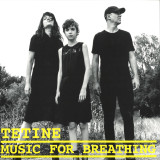
We've been writing new material as a trio since the first lockdown in the spring of 2020.
An organic and electro-acoustic impulse that translates both mine and Eliete's need of self-archiving,
re-inventing and auto-cannibalising Tetine's past, present and
future in order to explore other aural
landscapes and modes of composing intuitively, while at the same time, re-experiencing moments of our
trajectory as a hybrid organism.
Music For Breathing was born as a respiratory, meditative, and improvisatory piece of DIY
tropical-mutant-punk "chamber music" written for cello, voice, piano, organ and electronics.
The work responds to the suspended acts of breathing and vertigos experienced in contemporary polluted
environments in political, social and philosophical transitions, whilst investigating the
secret ontologies of inanimate objects and architectures, as well
as the echoes and ethics of modes of operating things.
Recorded during the intense period of heatwaves that hit London between July and August 2022, in
a small studio set up in our flat's kitchen - so that we could capture the acoustic instrumentation
(in particular, for the recording of cellos) without much
noise interference from the street -
this vinyl version of the album comprises of 5 distinct yet complementary reflective movements.
Musically and lyrically, it explores the atmospherics and syntaxes of time and space, voice, rhythm,
as well as themes such as hearing loss, menopause, pollution and respiration. It builds an expanded suite of unexpected
electro-acoustic textures through repetition, minimalistic motives, simple melodies, chromatic
developments, free counterpoint and atonalism. Conceived as an ode to the poetics of slowness,
the sounds you hear give continuity to the music we composed for the performance-film
The Ether - Prelude No.1 over the first lockdown in 2020 as it simultaneously explores the warmth,
melodiousness and power of the cello in conjunction with electronics.
Music For Breathing evokes this transitory moment: a place and time where language runs out,
communication and information lose their functions, sound and meaning do not correspond. Facts do not correspond to contexts. Spaced Out in Paradise. The last degree of the structure, the
loss of memory. The lost voice.
The album also features our 12-year-old daughter Yoko Afi on cello and vocals. It reflects
a period of free sound experimentation influenced both by romantic composers of the late
19th / early 20th centuries and contemporary electronic music. The pieces you hear were composed, arranged, and recorded
with the joy and melancholy of "those who do not know". In other words, "with the arrogance
of a second childhood" as Derek Jarman once put it. 'Agile and candid as a child'(1).
1) Manifesto da Poesia Pau-Brasil, Oswald de Andrade, Correio da Manhã, 18 de Março de 1924.
(Produced, Arranged and Conducted by Claus Ogerman)
Not long after the dawn of her career, as a teenager in Rio de Janeiro, Joyce was declared “one of the greatest singers” by Antonio Carlos Jobim. Yet despite reputable accolades and the fact that she has since recorded over thirty acclaimed albums, Joyce never quite achieved the international recognition of the likes of Jobim, João Gilberto and Sergio Mendes, all of whom became global stars after releasing with major labels in the US.
There was a moment when it seemed she might be on the cusp of an international breakthrough. While living in New York, Joyce was approached by the great German producer Claus Ogerman. Ogerman had already played a pivotal role in the development and popularisation of Brazilian music in the 1960s, recording with some of the all-time greats like Jobim and João Gilberto, as well as North American idols like Frank Sinatra, Billie Holiday and Bill Evans.
"I met him in New York City, in 1977”, recalls Joyce. “I was living and playing there, and João Palma, Brazilian drummer who used to play with Jobim, introduced me to Claus. We had an audition, he liked what we were doing and decided to produce an album with us.”
Featuring fellow Brazilian musicians Mauricio Maestro (who wrote/co-wrote four of the songs), Nana Vasconcelos and Tutty Moreno, and some of the most in-demand stateside players including Michael Brecker, Joe Farrell and Buster Williams, the recordings for Natureza took place at Columbia Studios and Ogerman produced the album, provided the arrangements and conducted the orchestra.
But mysteriously, Natureza was never released, and what should have been Joyce’s big moment never happened. As Joyce remembers, “I returned home, but Claus and I remained in contact, by letters and phone calls. He was very enthusiastic about the album and tried to hook me up with Michael Franks. He wanted me to go back to NYC in order to re-record the vocals in English with new lyrics, which I actually wasn’t too happy about. But then I got pregnant with my third child and could not leave Brazil. And little by little our contact became rare, until I lost track of him completely. And that was it. I never heard from him again."
While Claus was known to be something of an elusive character, the album’s disappearance might also have been a result of timing. The Brazilian craze was coming to an end, making way for disco and new wave at the end of the seventies, and Ogerman struggled to find a major label interested in a new Brazilian sensation. Additionally, as Joyce mentions, it wasn’t quite finished. Ogerman wanted to add finishing touches to the mix and to record alternative English lyrics for the US and international markets - a critical artistic difference between Joyce and Ogerman.
As the military dictatorship’s grip on Brazil began to subside in the 1980s, Joyce had a handful of hits in her home county, including a tribute to her daughters ‘Clareana’, and the iconic ‘Feminina’ - an intergenerational conversation between mother and daughter about what it means to be a woman. But already a feminist pioneer, these successes were hard fought. Joyce had caused controversy as a nineteen-year-old when she became the first in Brazil to sing from the first-person feminine perspective, and the institutional sexism she faced was worsened by the dictatorship who would often censor her music. Even once the Junta was out of the way, Joyce found herself up against the male-dominated major record companies in Brazil, who sought to dictate her career and sexualise her image, before dropping her for refusing to play along.
A few years after the success of her albums Feminina and Agua E Luz in Brazil, Joyce’s music began to find its way to the UK, Europe and Japan, and “Feminina” and “Aldeia de Ogum” became classics on the underground jazz-dance scenes of the mid to late-eighties and early-nineties.
The full-length version of “Feminina” from the Natureza sessions was first heard on a Brazilian Jazz compilation in 1999 and “Descompassadamente” was licensed for a CD compiling the work of Claus Ogerman in 2002. Following these, word began to get out about an unreleased Joyce album with Claus Ogerman and the legend of Natureza grew.
Forty-five years since it was recorded, Natureza finally sees the light of day, as Joyce intended: with her own Portuguese lyrics and vocals. Featuring the fabled 11-minute version of ‘Feminina’, as well as the never before heard ‘Coração Sonhador’ composed and performed by Mauricio Maestro, Natureza’s release is a landmark in Brazilian music history and represents a triumphant, if overdue victory for Joyce as an outspoken female artist who has consistently refused to bow to patriarchal pressure.
***Disclaimer! While “Feminina” and “Descompassadamente'' were mixed by legendary engineer Al Schmitt and mastered from the original master tapes, the remaining five tracks are unmixed. Due to significant deterioration of the master-tapes, the best audio source for these tracks was an unmixed tape copy Joyce had kept of the recordings. The best care has been taken in the restoration and mastering of this release, but the sound quality may differ from other releases on Far Out Recordings. We advise listening to sound clips before buying where possible.
(Late Nite Tuff Guy & Farley 'Jackmaster' Funk Remixes)
An ‘80s dance classic from the legend John Rocca, gets a fresh new take from Aussie edit king Late Nite Tuff Guy alongside a remastered reissue of Chicago house royalty Farley 'Jackmaster' Funk’s 1987 Hot House Piano Remix.
The main man behind jazz funk favourites, Freeez, John Rocca took to the studio in ’84 and whipped up an electro-fied steamer in the form of ‘I Want It To Be Real’. Tantalizing synthwork, beefed up basslines, gated snares and pure ‘80s vocals, it’s a melting pot of influences with a catchiness that caused a serious stir.
This special double header of remixes kicks off with a brand new mix from Late Nite Tuff Guy. He builds up the brilliance with masterful effect, keeping the vocal in the back pocket till the final frontier whilst adding in some buttery new synth magic and deft filtering to the mix.
On the flip, Chicago house don Farley 'Jackmaster' Funk’s 1987 remix homes in on those blissful piano and vocal stabs for a dubbed out ‘Hot House Piano Mix’. Spiritual keys laid down with passion that will be sure to get any dancefloor hot under the collar.
DJ Feedback:
OPTIMO/ JD TWITCH
Nice! The Farley mix is an all time classic. Lovely version from LNTG.
GERD JANSON
I have love for this.
GRAEME PARK/ THE HACIENDA
I vividly remember playing this record the day it was released while working at Selectadisc in Nottingham like it was yesterday. I played it the same night at The Garage club not long after I started DJing there. It brings back some great memories and this superb remix is just wonderful. Its made me get all bleary eyed and tingly. Absolutely tremendous stuff.
AXEL BOMAN
Love this
KAI ALCE / NDATL
This is a HOT EDIT from Late Nite Tuff Guy!
A LOVE FROM OUTER SPACE/ SEAN JOHNSON
Killer - love it
NORM TALLEY
I love this!
CROSSTOWN REBELS
Nice one!!
JACQUES RENAULT / LETS PLAY HOUSE
LOVE the classic Farley piano mix and the LNTG version is a fun take too!
OSUNLADE/ YORUBA
LOVE THIS!!
DANIELE BALDELLI
Love this classic, and now more love for both new remixes
DANNY TENNAGLIA
I really like this remix
DANNY KRIVIT/ BODY & SOUL
Nice
DJ KEMIT/ ARRESTED DEVELOPMENT
An incredible beefed up edit of an international dance floor classic. 10/10
HELENA STAR / NTS
Amazing record, those chords!!
LOUISE CHEN/ NTS
I’d love to play this.
ERIC DUNCAN/ RUB N TUG
This ones cool.
MAKE A DANCE / BEN
Yes yes yes pease love the original so much.
HOT TODDY/ CRAZY P
The Farley mix is a total winner which is a new one on me, LNTG mix is pretty tasty also
TERRY FARLEY
Yes please. A big early House lesson for me BITD
SUB CLUB HARRI
Realy diigin this.
GROOVE ARMADA / TOM FINDLAY
Love this, production is so good!
After debuting on Flippen Disks in 2018 and a follow-up track on Bradley Zero’s Rhythm Section, PTDD is back on Flippen Disks with this debut solo-EP called „Sizipin“.
Melting PTDD’s signature minimalist sound with a welcoming harmonic world in Hoe Je Het Snijdt, taking a wide array of influences from UK-bass and broken beat in Sizipin to HipHop in N Btj Blvn Dnsn or more progressive club sounds in Kajuit, this EP is a clear big step in PTDD’s development as a producer.
„Sizipin“, a made-up term for an adaptor that you don’t know the use for anymore, it’s a rather fitting name considering the circumstances of the creation go this EP. A connector for quitting his day-job to focus fully on audio and music work, building his studio in deep pandemic lockdown-Utrecht and most importantly becoming a father. Also features a vocal performance of PTDD’s son Olivier. Can you find it?
Hospital Records proudly present the debut solo album from drum & bass icon Grafix. ‘Half Life’ is an introspective glimpse into the influences and sonic development of the Bristol-based producer, who over the years has established himself as a pinnacle of the dance music world. Grafix’s first ever studio longplayer as a solo artist consists of 14 hotly-anticipated pulse pounding anthems, featuring killer collaborations from the likes of Metrik, Lauren L’aimant, Reiki Ruawai and Chrissie Huntley in his hit singles ‘Somewhere’, ‘Feel Alive’ and ‘Skyline’.
High-octane dancefloor energiser ‘Skyline’ sees drum & bass titans Grafix and Metrik collide for a third time on this futuristic drum & bass cut infused with pure uplifting soundscapes. Enter a world of powerhouse synthesis, relentless basslines and Metrik’s very own vocal performance. This is just the follow up you needed from the mammoth success with the duo’s previous collaborations ‘Overdrive’ and ‘Parallel’.
Grafix draws upon his love for rave culture on the acid heavy ‘Blast Out’ - a no-holds-barred drum & bass system shocker. Skittery vocal chops, shredding bass hits and minimal-funk drums show the side of Grafix well known for tearing up the dance - never afraid to drop a wild card.
From the hypnotic and distorted energies on the likes of ‘CTRL’ and album title track ‘Half Life’, to the forward-facing vibes on LP numbers such as ‘Accelerate’ and ‘The Chance’, the versatile flavours supplied by Grafix throughout are a testament to his years of experience in the studio.
Other album highlights include two tracks with the immensely talented Lauren L’aimant who boasts previous releases on staple dance imprints including Anjunadeep, Colorize and Protocol Recordings. ‘Watch The Sky’ is an anthemic stepper home to Lauren’s spine-tingling vocals and Grafix’s catchy synth hooks. ‘Feel Alive’ captures the pair’s undeniable ability to strike up a euphorically cutting-edge dance music banger.
The ‘Half Life’ LP also features the previously released tracks ‘Radiance’ as well as radio hit ‘Somewhere’ featuring New Zealand’s very own Reiki Ruawai. Both tracks of which are no stranger to worldwide drum & bass listeners.
Grafix’s debut album marks a signature milestone within his musical journey as a solo artist and his achievements so far only scratch the surface. The first single ‘Somewhere (feat. Reiki Ruawai)’ to drop from his album racked up global airwave support with an impressive number of plays from radio tastemakers including Danny Howard, René LaVice, Mollie Collins, the George FM crew in New Zealand and of course, Fred V. With regular support from big hitters including Sub Focus, Wilkinson, Friction, Camo & Krooked and more, Grafix’s music continues to talk for itself when racking up countless DJ spins as well as consistent landings across pinnacle industry platforms such as UKF. Keep an eye out for Grafix at Snowbombing, Hospitality On The Beach Albania and more throughout 2022!
The third release of , which will be released on vinyl with the theme of ancient and modern east and west ~ Nihon no Uta ~, is blindness caused by an illness that he had when he was a child, he met Tsugaru shamisen in a poor and difficult life.
Chikuzan Takahashi, a master of the Tsugaru shamisen, has raised Japanese folk songs to the level of art that has been praised around the world. The recorded song is "Iwaki Impromptu".
Several versions are also recorded in the album work, and there are different arrangements only for improvisational songs, but this time Held from 1973 to 2011 at "Maruyama Park Concert Hall" in Kyoto City to coincide with the Gion Festival in Kyoto
It is a sound source when he appeared in "Yoiyoyama Concert". A thick string that tells the beginning, like slamming Overwhelming power that tightens the chest even though it is not a drumstick, like an orchestra that does not seem to be a single performance
Spread of sound, free development of sound. A shamisen player named Chikuzan Takahashi who completely deviated from the frame of so-called standard folk songs It seems that the expression of is involved in the audience at the scene without even seeing it.
Mr. Takeyama describes this song as "a song where you don't know where it started, where it started, and where it ended." It's just an impromptu song, something that you listen to with subtle changes in sound and complex rhythms while making various changes. It is a masterpiece full of dynamism that you can grab until the end.
Bill Laswell, who is active as a world-class bassist, reconstructed the original sound source this time. He has a deep knowledge of ethnic sound sources, and his arrangement is "Mix-translation" instead of "Remix". Is used. While making the best use of Mr. Takeyama's sound source, as the difference in the words shows, it is unique Arrangement with swelling deep bass bass makes you feel as if you are standing on the same live stage and having a session. It is a finish that you can understand his idea of chewing the original and then translating it.
The jacket picture is by Mr. Akira Kasai, a photographer who has taken Mr. Takeyama's picture for a long time. We asked Mr. Takuji Matsubayashi, the author of "Takeyama Takahashi, the sound of the soul," to introduce the work.
In the fight against Alzheimer’s, epilepsy, schizophrenia and other diseases characterized by an imbalance in neuronal activity, there are chemical weapons, such as those that try to prevent the protein fragments known as beta-amyloid plaques from developing in the
cerebral cortex , and physical, such as electrical stimulation that allow to restore the functionality of brain cells. This last resort, which has already been shown to be effective in modifying the activity of the cerebral cortex, is today a weapon of general intervention.
Converting it to precision requires the development of individualized and predictive brain models that allow identifying where and how much to stimulate each patient. To achieve this, an international European team is working on the creation of virtual replicas of the
most unknown organ in the body: the Neurotwin project.
According to recent research, the decrease in power in the neuronal oscillations of the gamma band of the cerebral cortex (a pattern whose frequency ranges between 20 and 50 Hertz) favors the development of protein fragments related to Alzheimer’s.
Transcranial application of weak electrical currents has proven to be an effective and painless way to modulate brain activity without side effects.
The objective is to create complete computational models of the brain with real data of living beings (human patients) and that allow to anticipate and specify the effects of noninvasive stimulation techniques on neurological mechanisms.
“Never turn your back on a friend.”
Alfred Hitchcock
Mastering – Eternal Midnight Mastering Studio
Cover Art – Nitasha Singh Brett
Visuals - Dietriamgle, Espii Studios, Irene Avellanal
We celebrate our 20th release on Amphia with "Shattered Glass", a new EP from Amorf.
The first track, "Glass", debuts with a subtle piano motif that sets the mood, paving the way for a wide array of musical instruments to come into play. Throughout its steady development, rich modular sounds, rhythmical bass sequences, and synthesizer lead sounds can be easily discerned. A pivotal point of the track is its middle part, defined by the intertwining of a second rhodes motif and a distorted synth lead. Going full circle the track ends with a similar motif. "Shattered" is mostly based on improvisation and spur of the moment ideas. Quirky break beats and dense textural pads blend together to create an exciting pattern that immerses you further into the soundscape. The arrangement is a bit more straightforward and, because of that, the track's dynamics keep you invested from beginning to end.
Bringing a combination of two conceptual artists Ultrastretch 11 moves away from dance music to present this comtemporary off kilter.
On the A side, Montreal based producer Ohm Hourani, known for minimalistic jazz influenced works on his own imprint ANOMA and beyond, with compositions showcasing infusions of organic sounds combined with modular synthestisers, drum machines and vocalists such as his collaboration with award winning Jazz singer and Vocalist Diminique Fils Aime.
On this release he presents a 14 minute stripped down, intrinsically and subtly arranged combination of elements Initiale by a minimalistic kick drum joined by a synth driven, quirky / hypnotic mind drilling element paired with the finest straight hihats delicately placed on the background as the Constant. The subtle movement of the track is introduced by percussive drumming, vocals and piano keys forming the most beautiful atmospheric melody. The last element of surprise brings shuffling hihats bringing amazing swing to the overall elegantly slick piece.
The B side brings the highly sought-after drummer Samuel Rohrer. Ranging from ECM sideman to member of KAVE, a quartet alongside techno pioneer Max Loderbauer, Stian Westerhus and Tobias Freund as well as collaborative works with Ricardo Villalobos and Laurie Anderson, he is known for his unique sound aesthetics on advanced musical cross-pollination, developments of improvisation in acoustic jazz and wider horizons of live electronics.
Rohrer also brings a hypnotic reinterpretation but in a very different manner / mood than the A side. Initiated by strings combined with Rohrer’s tight drumming patterns at the forefront and bass line underneath as the constant, combination by which forms a tense yet peaceful core pattern to this track. To compliment this, synths create movement by adding cosmic and quirky sounds forming an atmospheric soundscape with the whispering vocal “shake it” on top. Overall, the paradoxical relationship between tight (rhythm) and lose (soundscape) is presented in perfect harmony with each other.
The Acid Wars of 2020 are fought with mainly three weapons. The classic Tb-303 by Roland, the strong replica Re-303 by Dinsync and the fast spreading Td-3 from Behringer. May the force be with you.
This record contains a special remastered edit of previously released Jupiter Earth.
Machine Learning and Deep Learning are soundtracks to the current development of artificial intelligency - only the future will show where this leads us.
When we started Ilian Tape 10 years ago in 2007, we were both basically kids at the ages of 23 (Dario) and 18 (Marco). There was no plan behind it, no concept, no promotion campaign or any budget, but just an early vision of where it could go. We wanted to build something that lasts. After a few years of playing at parties and producing music, it was the next logical step to start a label. You can clearly see us growing up through the label in terms of artwork, compiling the records and handling things. We made some mistakes along the way and there are surely things we could have done better, but looking back after 10 years now it all makes sense as it was a natural and human development with all its ups and downs.It was always a very personal project, never about making money, but about creating a platform for music we believe in and building relationships with artists in a transparent and fair way. We really appreciate that we were able to work with so many great artists, who shared the same vision and trusted in us, over all the years. A while ago we moved away from the ordinary release info write ups, because in general writing about music is tricky and who isn't tired of the typical, full of praise for every detail of a record, release textsBut this might be starting to get boring for you too, so just buy this lovely triple vinyl package including a poster and download code, light one up and turn up the volume!One last thing though - we want to deeply thank our parents for teaching us to live our dreams and find out who we really are, our friends for the vibes and honesty, all the artists releasing on the label, all the supporters & fans for buying vinyl and files, all the DJ's playing out the stuff, all the diggers selling the stuff overpriced on Discogs, all the dancers working out on the dancefloors & all the clubs doing label nights over all the years.
Somewhere close to Manchester’s ever changing city centre, as the sun fades and peeks through the newest glass facade, you’ll find Shaking Hand. One part in shadow, the other basking in prisms of light as they sketch out their own sonic landscapes in the dusty redbrick mill they call home. One that is just about clinging on from the encroaching developments that surround them.
Against this back-drop where buildings are constantly torn down & built back again, the three piece craft away. Pulling from early post-rock, and 90s US alternative rock, crafting their own brand of Northwest-emo. Assembling something new, yet nostalgic. Looking ahead towards the transforming horizon. Shaking Hand’s music is built on tension and release – quiets that stretch, louds that overwhelm. Repetition that feels both hypnotic and destabilising.
The band’s musical DNA runs through experimental guitar outfits like Women, Slint, Sonic Youth, Pavement, and Ulrika Spacek, balanced with the melodic sensibility of Big Thief and the dynamic intimacy of Yo La Tengo. Their compositions push against structure: sudden jolts of tempo, polyrhythms that almost fall apart, and riffs that unravel into something fragile or ecstatic. Yet, as Ellis notes, there’s an underlying warmth too: “Like walking through an empty city late at night but catching flickers of life in the buildings you pass.”
Early ideas like ‘Night Owl’ and ‘Sundance’ grew out of George’s lockdown “bedroom years,” where new tunings (open E, drop D, and stranger Pavement-inspired set-ups) opened up uncharted textures. Later, in grim rehearsal rooms, the murky epic ‘Cable Ties’ and the hypnotic ‘Mantras’ absorbed the gloom and grit of the band’s surroundings.
The album was recorded with producer David Pye (Wild Beasts, Teenage Fanclub) at Nave Studios in Leeds, housed in a converted church. “The live room was huge and perfect for capturing our sound,” says George. Determined to bottle their onstage energy, the band tracked the foundations live, layering vocals and guitars later. Soviet-era microphones, odd mic placements, and even phone-recorded demos fed into the mix. “You’ve got to watch out for David though,” Freddie laughs. “He made me play four tambourines in one hand, really hurt, man.”
Lyrically, the record drifts between abstraction and lived moments. George’s words often spill out instinctively, words falling into place before their meaning becomes clear. “A lot of the lyrics look like they’re buried in abstraction,” he says, “but when I look back I can see what they were about — whether that’s an emotional response at the time or just an observation of what was happening around me”. There’s contrast at the heart of it all – optimism vs. doubt, the lightness of youth vs. the monotony of work, a city in constant redevelopment vs. the people drifting through it.
The album artwork is taken from unused plans for the 1970s redevelopment of Los Angeles by architect Ray Kappe, entitled ‘People Movers’. Hypothetical buildings for real people, it feels a complement to the band’s own constructions. One thing’s for sure, Shaking Hand’s debut is built to last.
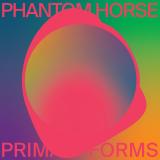
After their last album six years ago, "Primal Forms," the new album by Phantom Horse, finally arrives. The German duo of Ulf Schütte and Niklas Dommaschk have long established a reputation for expertly crafted, hypnotically slow-burning electronic music, and we do not hesitate to say that "Primal Forms" stands among the epitomes of their discography.
The sequencing of "Primal Forms" cannot be underestimated. It is an album in the classic sense. It demands to be listened to in its entirety, which also points to a closer affinity with Krautrock. Likewise, a touch of dub is perceptible, wafting around the songs, which, as usual, bear clandestine titles. It is not unreasonable to see in these compact compositions a clear statement against multitasking.
Phantom Horse are not trumpeters of dystopia. They present themselves resolutely, almost stoically, turned away from the world. This turning away is clearly a statement that can be contemplated in the Mariana Trench as well as in comet belts. In any case, it is best experienced in a space without any human beings. This does not mean that grumpy hermits are tinkering with synths behind closed shutters, armed with wooden walking sticks. This is still open minded music with a connection to current developments. The approach itself is what is audible, and with it, Phantom Horse proves once again that their main connection to time is timelessness.
In an age of all-encompassing distraction on every sensory, thematic, and semantic level, Phantom Horse explores the possibilities of reduction, searching for simplified melodic arcs without resorting to the vocabulary of classical minimalism. The overall impression is more electronic; the slowly shifting, polyrhythmic compositions repeatedly lead to a peculiar danceability. However, these are perhaps the dances of mechanical birds, undeterred by anything.
Written and produced in Hamburg, Nijmegen and Ojén by Niklas Dommaschk & Ulf Schütte
Mastering by Rafael Anton Irisarri at Black Knoll
Artwork by Daniel Castrejón
- A1: Crushed
- A2: That Girl Suicide
- A3: Deep In The Devil's Eye & You
- A4: Kid's Garden
- B1: When I Was Yesterday
- B2: Records
- B3: Spacegirl
- B4: Spacegirl (Revisited)
The Brian Jonestown Massacre is a psychedelic rock band originally from San Francisco, California, led by guitarist/singer Anton Newcombe. Since 1995 The Brian Jonestown Massacre has released numerous albums, first for Bomp! Records, the label which gave them their start, and later for TVT and Tee Pee. BJM has been essential in the development of the modern U.S. garage scene, and many LA and SF musicians got their start playing with Newcombe, including Peter Hayes of The Black Rebel Motorcycle Club.
- A1: The Awakening - Mode For D.d
- A2: Doug Carn - Higher Ground
- A3: Calvin Keys - Aunt Lovey
- B1: Roland Haynes - Eglise
- B2: The Awakening - Slinky
- B3: Walter Bishop Jr. - Coral Keys
- B4: Rudolph Johnson - Diswa
- C1: Henry Franklin - Blue Lights
- C2: Kellee Patterson - Maiden Voyage
- C3: Chester Thompson - Powerhouse
- D1: The Awakening - March On
- D2: Walter Bishop Jr. - Soul Village
- D3: Rudolph Johnson - The Highest Pleasure
This album brings together some of the finest music ever released on Black Jazz Records which in its short four-year history, between 1971 and 1975, released over 20 superlative albums which all successfully blending spiritual jazz, funk and soul jazz of the highest calibre. Similar to other independent jazz labels at the time, including Strata-East Records and Tribe Records, Black Jazz focussed on a number of key artists, most of whom first established their career during this period, and all of whom are featured here. Featuring The Awakening, Doug Carn, Walter Bishop, Chester Thompson, Kellee Patterson and more. Black Jazz Records was founded in Oakland, California, by pianist Gene Russell and percussionist Dick Schory.
The label released twenty albums between 1971 and 1975. Artists who recorded for Black Jazz Records included Cleveland Eaton (bassist for Ramsey Lewis), keyboardists Doug Carn and Chester Thompson, vocalist Kellee Patterson, saxophonist Rudolph Johnson, bassist Henry Franklin, and spiritual fusion group The Awakening. The label was distributed and financed by Ovation Records, based in Chicago. Schory founded Ovation in 1969, shortly after leaving RCA. Schory was a Grammy-nominated percussionist who was also known for his development of the stereo recording techniques including Dynagroove and RCA Victor’s Stereo Action. Schory also pioneered quadrophonic sound, and a number of Black Jazz Records were in quadrophonic and other formats such as ¼” tape and 8-track.
Black Jazz launched in 1971 with Gene Russell’s ‘New Direction’. Russell was the creative force behind the label, acting as producer, engineer and A&R and focussed on developing new solo artists. The most successful of these was Doug Carn, who released four albums featuring his wife, Jean Carn, as vocalist. She later changed her name to Jean Carne and became a successful soul singer signed to Gamble and Huff’s Philadelphia International empire.