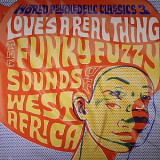
- A1: Manu Dibango - Weya
- A2: Fehintola Anikulapo Kuti - Sorrow, Tears & Blood
- A3: Matata (Air-Fiesta) - I Feel Funky (Air-Fiesta)
- A4: Alvin Cash & Scott Bros Orchestra - Keep On Dancing (Instrumental)
- B1: King Sunny Ade & His African Beats - Ja Fun Mi (Instrumental)
- B2: Oneness Of Juju - African Rhythms
- B3: Lafayette Afro Rock Band - Soul Makossa
- B4: The Nite-Liters - Afro-Strut
- C1: Mulatu Astatke - Yegelle Tezeta
- C2: Tony Allen & The Afro Messenger - No Discrimination
- C3: The Rwenzori's - Handsome Boy (E Wara) (E Wara)
- C4: Ofo The Black Company - Allah Wakbarr
- D1: African Music Machine - Black Water Gold (Pearl) (Pearl)
- D2: The Headhunters - God Make Me Funky
- D3: Ice - Time Will Tell
- D4: Wisdom - Nefertiti
Cerca:dib
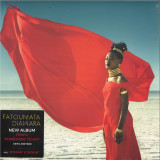
Fatoumata Diawara ist eine malische Singer/Songwriterin und Schauspielerin. Ihr Debüt "Fatou" (2011) und darauffolgende Aktivitäten machten die Künstlerin zu einer der wichtigsten Vertreterinnen moderner afrikanischer Musik. Sie sang auf Alben von Dee Dee Bridgewater ("Red Earth"), Oumou Sangaré ("Seya") und Herbie Hancock ("The Imagine Project"). Darüber hinaus kollaborierte sie mit Bobby Womack, Mulatu Astatke, Cheikh Lô, dem Orchestre Poly-Rythmo de Cotonou, Blick Bassy sowie Rocket Juice & the Moon. Diawara spielte bereits Glastonbury und andere große Festivals, trat in der Carnegie Hall auf und begab sich an Bord von Damon Albarns Africa Express, wo sie sich als Höhepunkt eine Bühne mit Paul McCartney teilte. Parallel setzte sie ihre Karriere als Schauspielerin fort, unter anderem in den Filmen "Timbuktu" (2014) und "Mali Blues" (2015). Ihr Album "Fenfo" (deutsch: "Etwas zu sagen") wurde in Mali, Burkina Faso, Paris und Barcelona aufgenommen und von Diawara selbst sowie dem französischen Superstar Matthieu Chedid alias -M- produziert. "Fenfo" geriet zu einem im besten Sinne grenzenlosen Album. Die elf Songs verbinden alte afrikanischen Saiteninstrumente wie die Kora und Ngoni mit elektrischen Gitarren sowie traditionelle Perkussion mit Kit-Drums. Diawara, die meist auf Bambara singt, wird unter anderem von -M- (Gitarre, Keyboards) dem brillanten Cellisten Vincent Ségal und dem Kora-Spieler Sidiki Diabaté begleitet.
- A1: Marumo - Khomo Tsaka Deile Kae?
- A2: Dele Sosimi - E Go Betta
- A3: Zimba - Baleka
- A4: Manu Dibango - Motapo
- A5: Afriquoi - Kudaushe (Feat Kudaushe Matimba)
- B1: Joni Haastrup - Wake Up Your Mind
- B2: Pat Thomas & Kwashibu Area Band - Gyae Su
- B3: Gyedu-Blay Ambolley - Simigwa-Do
- B4: Penny Penny - Shaka Bundu
- B5: Om' Alec Khaoli & Umoja - Take Me Higher
Wagram turn their attention to the hip-swivelling world of Afro-disco and Afro-Funk, putting together a sizzling set of pan African sounds covering a whole host of dance styles from all over the continent. Deeper diggers may recognise some of these gems from individual reissues over the last few years, but this is the only time you'll find them all in one place.
Tracks by Kind Human Being, CEM3340, Kan3da, Datawave, Foreign Sequence and Dibu-Z. The Time Capsule project, also known as 808 Box, is a project created by Fundamental Records. The six boxes released in recent years include 56 records with over 300 tracks from artists from every corner of the world. Some warehouse copies have surfaced of the 10th Anniversary 808 Box, and these will be available individually. These are new copies in perfect condition, with the original sleeves printed with the images of the classic Roland TR-808.
In many ways, DJ Black Low's debut album, Uwami, shows the signs of an artist's first offering in any musical genre. Showcasing fluency in a broad range of styles and stuffing a number of ideas to the record's brim is the 20 year-old producer's attempt to both introduce himself to a wide listenership and stamp a recognizable sound in their minds. In other ways, somewhat out of the young South African producer's control, Uwami goes against the grain. The album comes at a time when South African electronic music is being fundamentally disrupted. Amapiano, the electronic music movement which first gained popularity with a small, core group of followers, now dominates the mainstream. Well-known and pervasive, amapiano borrows from a diverse palette of musical styles which are popular in South Africa's largely Black townshipsjazz, kwaito, dibacardi, deep and afro house among them. Instead of pandering to the seemingly insatiable local appetite and growing global penchant for amapiano though, on Uwami DJ Black Low seeks out the limits of the sound du jour and tries to stretch them. On his solo productions, he uses the samples and compositional norms that make amapiano hits the bedrock on which to experiment and improvise. With collaborators, DJ Black Low improvises within the boundaries of listener-friendly grooves. The sound he creates has foundations of what could easily have progressed into captivating amapiano songs on their own. But he uses improvised but structured electronic percussion and distortion sounds to drive the tracks in a particular direction. What remains is something like a deconstructed amapiano. For a young producer living in the townships of the greater Pitori area of South Africa's Gauteng province, there were few avenues available for Radebe to pursue a career in music. His trajectory shows the vulnerability of this pursuit. "I had started producing in 2013 and it so happened that I lost my equipment in 2014. I couldn't afford to buy equipment. In 2017, a friend of mine who had been making music found a job and decided to quit music. He gave me his equipment and I was able to start producing again. That's when I started getting back to it. I tried to pick up where I had left off, with hip hop and commercial house but I found that amapiano was the popular music. I liked it, so I started producing it."
Melvin Ukachi needs little introduction, the Lagos (Nigeria) based vocalist and bandleader is a living legend. Melvin is known for his fantastic solo albums, his vocals for the afrobeat star-groups M.F.B. and Ozzobia_but his biggest legacy is without a doubt him being the singer and bandleader of Ofege. Melvin formed Ofege in the early 1970s (when he and the other band members were all still a bunch of teenagers). Due to their vibrant combo of sweet harmonies, hooks & fuzz, Ofege would become one of the most legendary Nigerian groups of all time, with expressive sales and national stardom to follow. At the turn of the century (and because of tracks appearing on various compilations) Ofege would receive international acknowledgment for being the first of their kind and THE ultimate West-African psychedelic funk band! Melvin Ukachi recorded four milestone albums with Ofege: 'Try and Love' (1973) 'The Last of The Origins' (1976), 'Higher Plane Breeze' (1977) and 'How Do You Feel' (1978). When the Ofege story came to an end, Melvin recorded two astonishing solo albums: 'Evolution-Bring Back The Ofege Beat' (1981) and 'I am Ok' (1985). Both of his solo recordings have now become much sought-after holy grails for collectors and fans alike. On the album, we are presenting you today (Evolution-Bring Back The Ofege Beat) the listener is treated to the trademark Ofege sound (as the title of the record obviously suggests). Next to the rootsy and raw Ofege sound, we're shown a perfect glimpse of the late '70s afrobeat works combining soul, jazzy rhythms, William Onyeabor style synths & fluid boogie-danceability Expect some serious 'all-star' guest musicians as well_featured on the album are Chyke Madu (The Funkees) on drums, Berkley Jones (Ofege) on guitar_and many other local legends. To top things off the tracks were recorded and mixed at the legendary Abbey Road Studios in London_all slickly engineered by Rafiu Ayoade (The Apostles) and produced by the president of sound himself Odion Iruoje (known for his work with Manu Dibango, Fela Kuti_and many others). 'Evolution-Bring Back The Ofege Beat' was released on EMI Nigeria in 1981 and is a total Afro-psych-funk classic that begs for a special place in your record collection. It's tight, funky and Melvin's soulful vocals are to die for. This record is a monster! Tidal Waves Music now proudly presents the first-ever reissue (supervised by Melvin Ukachi himself) of this amazing Nigerian Afrobeat album. This RARE classic (original copies tend to go for large amounts on the secondary market) is now finally back available as a limited 180g vinyl edition (500 copies) complete with the original artwork made at Grafikad (who were responsible for designing landmark sleeves for renowned artists such as Fela Kuti).
- A1: Manu Dibango - Soul Makossa
- A2: Roger Damawuzan & Les As Du Bacnin - Wait For Me
- A3: The Wings - Gone With The Sun
- A4: Ebo Taylor & Uhuru Yenzu - Love And Death
- A5: Marumo - Khomo Tsaka Deile Kae
- B1: Orlando Julius - Disco Hi-Life
- B2: Peter King - African Dialects
- B3: Super Elcados - Get Up And Do It Good
- B4: Bukky Leo & Black Egypt - Ake Bo Je
The mighty Channel One Studios,Kingston, Jamaica, has its place set in Reggae's Musical History.Its distinctive sound the studio created on opening its doors in 1972 to its closure in the early 1980's made it the Producers, Singers and Musicians studio of choice during this furtive period. Achieving that vibe and clarity, separated it from the other Kingston establishments.
Run by the Hookim Family's four sons, Jo Jo the eldest followed by Paulie, Ernest and Kenneth. Their father originally came from China and married a Chinese Jamaican lady and settled in the St Andrews district before moving to Kingston Town itself. The family business was built on jukeboxes and one armed bandit machines in and around Kingston. A lucrative venture until the gaming laws changed in 1970, outlawing the gaming machines. So the music side of the business would have to be expanded. So it was decided to open a studio to make the music to supply their already established Jukebox enterprise. The four brothers opened Channel One Recording Studios in 1972 at 29 Maxfield Avenue, Kingston 13. Initially as we stated the purpose of the studio was for the brothers use only, but this would soon change when the various Producers all looking for that Channel One sound came asking for studio time.
The brothers had used the services of Bill Garnet a renowned and well respected technical engineer on setting up the studio. They spent a lot of time laying out the space to get the right acoustics and picking the right quipment. They went with a four track API desk and the best quality microphones such as Neuman, Sony and AKG, vital in obtaining the quality sound and track separation that would prove so worthwhile after the music was recorded to give the best flexibility on the final mix downs. Jo Jo would take over the production duties after the initial hiring of Syd Bucknor a producer who had worked closely with Coxonne Dodds Studio 1 stable. The first release on the Channel One label would be 'Don't Give Up The Fight' by Stranger Cole and Gladstone 'Gladdy' Anderson.The initial two thousand run being swallowed up by their Jukebox interests and so the steady flow of hits would run up to the brake through hit of 1975 'Right Time' by the Mighty Diamonds.
1977 saw Jo Jo extending his stays in New York to a semipermanent status, returning mainly to oversee recording sessions and then taking the results back to America for worldwide distribution. His brother Paulies senseless killing in that year also added to Jo Jo's decision to spend more time with his Hit Bound Manufacturing set up in New York. The Channel One studio would be upgraded in 1979 to sixteen tracks and although Jo Jo and Ernest still covered the mixing and engineering duties Kenneth would now supervise sessions. An often untold part of Channel Ones history is the involvement of Producer Niney The Observer. The mid to late 1970's were heavy times both musically and politically and Maxfield Avenue was in the heart of this crossfire. Some artists and musicians were weary of using the establishment especially when sessions ended late at night and exiting the studio at these times could be somewhat dangerous. But Niney’s fearlessness seen him over running and in many cases running the all night sessions with his trusted set of musicians loosely called The Soul Syndicate. Having the run of the mighty Channel One studio's allowed Niney to build up and work on a stockpile of rhythms that he still has yet to unleash on the world. We have been lucky to select a bunch of material from Niney's vaults for this release. Some great unreleased rhythms and some different cuts to some tracks you might already know. Niney's work with Dennis Brown and his own distinctive heavy roots style productions have been documented and indeed his work on Channel Ones Yellowman releases stand tall also. We hope this fine set of Niney Productions set inside the hollowed walls of Channel One will sit beside them as they so richly deserve.
The strange and majestic musical beast that is Africadelic was Dibango’s follow-up to Soul Makossa, but it was initially released on Louis Delacour’s library music label, Mondiaphone, before “Soul Makossa” became an international phenomenon. As a
Mondiaphone release, it was aimed at television and film producers seeking atmospheric background music, so the original titles are simply “Theme No 1,” “Theme No 2,” etc, with corresponding rhythmic notations such as “3/4 Africain,” “Afro Beat 12/8” and “Medium Soul Beat,” though once “Soul Makossa” hit the stratosphere, subsequent reissues bore actual song titles. In any case, the album is simply wonderful, a driving mix of Afro soul, funk and jazz, with an undercurrent of Latin percussion throughout, given further shades by rock guitar and soul organ, as heard on “African Battle” and the title track; opener “Soul Fiesta” builds
dramatic percussive tension before Dibango drops a killer vibraphone riff, while “African Carnival” makes the most of the full horn section, Dibango’s sax soloing giving room for complex polyrhythmic percussion breaks. “Oriental Sunset” has beautiful vibraphone from
Dibango too, as well as a thrilling flute melody, “Monkey Beat” and “Wa Wa” are funky soul struts and “Percussion Storm” has the band marching off into the African sunset as Dibango unleashes another killer vibraphone melody. Listening back to the album now, it is hard to believe that the whole shebang was written in a couple of days and committed to tape within the space of a week, but that is all more testimony to the greatness of Manu Dibango, one of African music’s true pioneers. Play loud and often for best effect!
• This is the only LP released by The Mighty Tom Cats, a house band for Paul Winley (who launched his Winley Records in 1956).
• Originally released in 1974 ‘Soul Makossa’ is rumoured to have George Benson, Willis Jackson and Buddy Lucas taking part
• Features a brilliant take on the mighty ‘Soul Makossa’ track made famous by Manu Dibango
• Reissued on 140g black vinyl with original artwork and printed inner sleeve
Presenting the long sought after, groundbreaking and classic 1990 UK long-player finally remastered and reissued for 2018. London's Warriors Dance label was a unique operation and a pioneering London label during the late 80's acid house phenomena. Home to an assortment of DJs, MCs and soundmen, they went on to make their own original and indelible mark on the rave scene from the infamous 'Addis Ababa' studio on Harrow Road on the North-West side of the city.
A former reggae and soul studio that was instrumental to the output of influential artists like Soul II Soul and more, a steady diet of reggae, bass, hip-hop, house and techno kept their edgy, and die hard UK sound and style right at the cutting edge of the dance music underground across the globe with the top DJs and producers of the day celebrating the label.
The studio, helmed by label owner Tony 'Addis', acted as an incubator for artists whose names would go down in the history books - No Smoke, Bang The Party, The Addis Posse, Melancholy Man, Hollywood Beyond, The Housemaids and more all featured heavily on the label and contributed to its legendary output. The attitude and approach to the music was utterly and unapologetically a London thing, with heavy African and Caribbean influences also drawing on the sounds emanating from Chicago, Detroit and further afield.
Years later, and with the advent of the internet, Discogs, Youtube and any other digital platform you'd care to mention, Warriors Dance continues to be discovered and rediscovered again by curious diggers and music heads with a thirst for heavyweight tracks to play in their DJ sets. This saw the WD mythology rise again, making their records much sought after by fans from all over the world.
When 'International Smoke Signal' landed in 1990 there was nothing else quite like it in the musical landscape, the perfect sonic example of the Warriors Dance ethos and style incorporating all of the influences and grooves that made the label's output so unique, a sound heavily inspired by the preceding period in London and the UK where hip-hop, soul, reggae, rare groove and acid house were played side by side in the warehouses and empty spaces of former industrial areas. Throughout the late 1980's these often drab and dangerous places were transformed by local DJ crews like Soul II Soul and Shake 'N' Fingerpop with more to offer those looking for an open-minded party scene new places to explore, in turn switching people on to broader styles of music.
It's all in here, the heavy breakbeat driven B-boy house flavour of the album version of the classic 'Koro Koro', the Manu Dibango featuring tribal acid groove of 'International Smoke Signal' to the percussive and ultra-deep stylings of 'Oh Yes (Freedom)' the LP encapsulate a time and place yet continue to capture the imagination today.
Timeless music. There's no doubt the No Smoke project is a direct influence on the deeper, tribal house sounds around today and pioneered the afro house sound alongside 'Yeke Yeke', 'Motherland' etc as the acid house phenomenon swept the world. 'Koro Koro' is the omnipresent anthem which was broken at London clubs like Confusion by Bang The Party's Kid Batchelor and RIP which went on to blow up in New York, and was then signed by Profile Records. Hugely sampled and still played to this day.
'International Smoke Signal' fuses the otherworldly science of dub and reggae with Bronx breakbeats, synth laden ambient house excursions and the heartbeat of mother Africa with the technoid thrum of the motor city effortlessly, all while maintaining its London roots and swagger. A true dance music masterpiece. This is the first time the LP has been remastered and reissued, spread across 2 heavy slabs of high quality vinyl for maximum sonic impact. Made in conjunction with the Warriors Dance family and Tony Addis.
Special thanks to Nicky Trax & Tony Addis. - Remastered by Optimum Mastering, Bristol UK. Proudly distributed by Above Board distribution. 2018.
- A1: Les Troubadours Du Roi Baudouin - Dibwe Diambula Kabanda
- A2: Chuck Mangione - Land Of Make Believe
- B1: Wilson Pickett - Don't Knock My Love (Part 1)
- B2: Wilson Pickett - Don't Knock My Love (Part 2)
- B3: James Brown - Give It Up Or Turn It Loose
- C1: Jackson 5 - Hum Along And Dance (Uncut Version)
- D1: Brainstorm - Lovin Is Really My Game (12 Version)
- D2: Domenic Troiano - We All Need Love
- D3: Gladys Knight And The Pips - It's Time To Go Now
Colorful Electro darkness. Dibu-Z delivers his debut album Junk DNA on Dominance Electricity.
The German producer, who has been releasing Electro and Techno on various labels since the early 2000s, unleashes a dynamic package of carefully selected and sequenced songs, ranging from dystopic ambient pieces, epic Acid-Electro to powerfull, mechanical-funk-loaded Electro club bangers and some relaxed deep-space-cruisers inbetween.
Max Graef and Julius Conrad are Ratgrave. ‘Rock’ is their
second album - ongoing transmissions of Electronic PFusion from Earth. It follows a stellar debut on Funkineven’s imprint Apron. The duo’s sound palette draws inspiration from 80's funk, soul, rock and electronic but through a contemporary lens from two versatile multiinstrumentalists.
In their own words: “Rock is the essence of energy and
vibration we felt in different styles of music, almost like a
parallel component connecting all things we like. In the
process of recording the new album we kept coming back
to this essence no matter what style the original idea was.
There was the raw and brutal energy of Jazz-Rock, a lot of
video game influences that somehow adhered this essence
just as well as quieter Pop and Psychedelic passages that
we recorded. Among other things we absorbed a lot of
heavy music during the time of the recording like Blue
Cheer, Black Sabbath, Frank Zappa or Jimi Hendrix and
realized while writing our own music how much impact
they had even on quieter songs. This is why ‘Rock’ felt like
the perfect title although the music ranges from P-Funk
and Spiritual Jazz to various styles of Pop and beyond.”
Max Graef has previously collaborated with Glenn Astro on
records for Ninja Tune and both artists have previously
released on Tartelet.
This marks the fourth official album on Black Focus, a
London label founded by Kamaal Williams.
4pp digipack. 180g vinyl LP in reverse board printed sleeve
with 3mm spine and digital download card.
The third installment of the Baast album series "Trident" sees the band heading into the direction of electronic soundscapes, delving deeper into soundtrack and ambient textures more so than previous albums "Dimension" and "Bazaar".
R. Scott Dibble and the inimitable DJ Johnny Basil remain at the helm with a round of uber talented guest artists who've contributed in the past along with some new players, heavy on talent but even more so on the vibe that's captured in the recordings.
- A1: Black Bells Group - Sweet Sidney
- A2: Charly Kingson - Nanga 'Boko
- A3: Gyedu Blay Ambolley - Highlife
- A4: Dikalo - Fine Biscuits
- A5: Mekongo President - Angona Mana
- B1: Fotso - French Girl
- B2: Tala Am - Sugar Lump
- B3: Jk Mandengue - Chibidaba, Chibidaba
- B4: Jide Obe - Too Young
- B5: Mulamba - Dashiki (Version Instrumentale)
It's that time again. The skies are calling and its time to board our trusty jet for the 5th outing of Africa Seven's premiere class compilation Africa Airways. For volume 5 its time to brace yourselves for 10 slices of Afro boogie goodness.
We up the boogie time groove with The Black Bells Group (the first band of lead singer Sidney 'Patrick Duteil' who went on to become the godfather of French hip-hop and a well know TV presenter. Here the groove is swinging... the perfect opener. Next up is German-based Cameroonian musician and cousin of Manu Dibango, Charly Kingson with this bass-synth boogie stomper. Big brass and jazzy trumpets add layers of sparkle too.
Next its time for some highlife inspired boogie from Ghanian Gyedu Blay Amboley. Highlife fused with reggae, disco, boogie and jazz just as the lyrics say.
Next we pair up with Africa Seven friend Eko once more under his Dikalo guise. The Cameroonian master musician is on fine form with his heavy brass and deep percussion with a driving afro boogie groove. To round off Side A its off to Cameroon again to groove with Jean 'Mekongo President'. Think Bernard 'Chic' Edwards on the bass with some African style and you can see it's the bottom end groove and afrobeat drums that power this gem along.
We open the second side slowly and purposefully with the highly sought after 'French Girl' from Fotso. Drippy bass synth grooves and a wondrous percussion and drum shuffle pair with piano riffs to make this a unique sounding track. Our friend Tala AM is next with the foot-stomping 'Sugar Lump'. JK Mandengue is next with most definitely the catchiest chorus you will hear today. Nigerian Jide Obe gets synth and clavinet rich with his doe to sensible dating advice 'Too Young'. We close off the album with a track from label good friend Jo Bisso under his Mulamba guise. Sounding like a long lost TV theme from a late night TV show circa 1977. Let's get down and boogie with the brand new dance in town folks... the Dashiki.
Until Volume Six takes flight it is time to unbuckle those seat belts folks.
- A1: The World's Going Fucking Crazy (Feat. Pablo Ygal)
- A2: Echoes Of Time (Feat. Natureboy Flako)
- A3: All In My Mind (Feat. I & Ced)
- A4: Sangoma (Feat. Chunky)
- A5: Abandoned In Space (Feat. Christoph El Truento)
- B1: Alafia (Feat. Mo Kolours)
- B2: Revolt (Feat. Creole Plus)
- B3: Freak Out (Feat. Jeen Bassa)
- B4: Who U Think U Are (Feat. Al Dobson Jr.)
- B5: Ghetto Child (Feat. Jesvs Lo5T)
- B6: Lofi Social (Feat. Dibia$E)
- B7: Hugs For Everybody (Feat. Akello G. Light)
- C1: Smokn Good (Feat. Pudge & Buttermilk Perkins)
- C2: Breathe Low (Feat. Mo Rayon)
- C3: Hand (Feat. Dorian Concept)
- C4: King's Riddim (Feat. Ras G & The Afrikan Space Program)
- C5: Moving 909S (Feat. Darkhouse Family)
- D1: Triguna (Feat. Dagger Dx)
- D2: Fogsmoke (Feat. Tehbis)
- D3: Potatoes (Feat. Josip Kiobucar)
- D4: Drugs (Feat. Samiyam)
- D5: Data Entry (Feat. Flying Lotus)
- D6: Zikzik (Feat. Shah'u)
- A1: Heliopause (Dbs & Aux 88) - Electro City
- A2: Middle Men - Space Quest Ii (Earth Odyssey)
- A3: Dibu-Z - Remote View
- B1: Kalson - Global Surveyor
- B2: Anthony Rother - Matrix
- B3: Keen K - Cat In Space
- C1: Tekkazula - Enya
- C2: Patronen - Zukunft Flug
- C3: Wilx - Vengonost
- D1: Amper Clap - Desolation (Robyrt Hecht Remix)
- D2: Tyraell - Paleocontact
- D3: C*Nt - Hunter
- E1: Silicon Scally - Machine Bias
- E2: Blake Casimir - At The Outer Sector
- E3: Low Orbit Satellite - Projected Memories
- F1: N-Ter - Agram Sunrise
- F2: Obsolete Robotics Feat. Phil Klein - Walk Alone
- F3: Hardfloor - Diet Starts Monday
- G1: Energy Principle - Tempus Fugit
- G2: Fleck E.s.c. - Phase 4
- G3: Adj - Days Of Light
- H1: Pi-Xl - Disciplinary Action (Remix)
- H2: Rauschenmaschine - Nebulous Spirograph (Subatomic Mix)
- H3: Visonia - Nausicaa
Electro globalisation! The German label Dominance Electricity presents Phase 4 of the Global Surveyor various artist album series (launched in 1998).
Featuring heavy-weights of the international Electro genre such as Anthony Rother, Hardfloor, Silicon Scally aka Carl Finlow and Heliopause (a project of Germany's Dynamik Bass System & Detroit's Keith Tucker of AUX 88) and many more, this carefully selected collection includes a total of 24 productions out of 13 countries / 5 continents ranging between clubbish acid power, deep space cruiser, playful kraftwerkesk melodic downtempo and ambient synth magic.
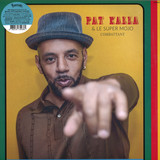
Favorite Recordings proudly presents Combattant, first EP by Pat Kalla produced by Bruno Patchworks' Hovart (aka VOILAAA).
PAT KALLA is a musician, singer and storyteller. Patrice of his birth name, in tribute to the great Lumumba! Lover of words, French language, and music of course. Born in Lyon, from a Cameroonian father, musician and political activist, and a French and literary mother, he explores from his childhood the Soul, the Slam, the Funk ... and the art of telling stories, life being a great one...
After years of touring alongside many bands (Conte & Soul, Legend of Eboa King, Mento Cloub, Voilaaa Sound System), and several acclaimed titles on the two albums by Voilaaa, he comes back with this project to put a bit of primordial lightness in a rainy world: A tribute to the African culture in honor of a father with "Sawa" origins, the tribe from the people of Makossa.
Jojo Ngallé, Moni Bilé, Pain, Manu Dibango, Franco, Rochereau, Kabaselé, Fela, François Nkotti & The Black Style, all these legends' vinyls have turned on the family turntable and the collection has whetted the child's appetite. Through this new trip, he revisits styles that are sometimes little known to Western audiences, such as High-Life, Makossa, Angolan Music, Afrobeat, Afro-Disco and others. We could talk about Franc CFA', we could talk about Jacques Foccart, but we will rather dance, because "the dancer seems naive, but his feet must be connected with earth to understand history..."
Backed by the "Super Mojo Disco", a hyperactive band from Lyon with deep groove and positive energy, Pat Kalla offers us an anti-crisis project, where swaying and feel-good humor is mandatory! An album soon in the crates, beware « c'est médicament » (it's medicine)!!
Born in Cameroon, Vicky began banging the drums at the age of 9. By 13 he had moved onto bass and within a couple of years he was playing every night from 10pm to 5am in the Castel Douala Cabaret. At the age of 19 Vicky moved to Paris to study Banking and Commerce and cram in even more music. He took classes at Épinay-sur-Seine Conservatoire music school and it was here that he met Bandmates of his Dikalo project.
Word spreads and he soon becomes one of the most sought after bass players in the Afro arena. His session work features on many scenes stars, Manu Dibango, Eko Tala AM, Kemayo, Sammy Massamba, Toto Guillaume and many more. A chance meeting with the Gibson brothers also see him play on two of their hit albums. In the 80's Vicky moved to the US for spell and excels as a session bassist and touring musician.
We pick up the story in 1981. With his stature as a musician and bass player riding high he takes a detour to Nigeria to record with the Afrodisia label in Lagos. The "Thank U Mamma" album is the result. It is repressed for the first time, here in 2018 on the revitalised Afrodisia label.
Musical proceedings open up with the heartfelt ode to his mother "Thank U Mamma", smooth pop meets afrobeat boogie. "Marina Drive" slows things down with its smoldering jazz. Side Two opens with "Its Not Serious" a catchy vocal number underpinned with funky guitars and striding basslines. "Stormy Rain" is lazy guitar jazz swansong. We close off the album with the ever so funky "You". Slick funk grooves powered along with a dose of slap bass. As a side note Vicky actually plays left handed but with a "upside down" right handed bass. This upside-down precursor making his effortless slap playing even more impressive.
Vicky went on to record a two other albums and still tours and plays as an ever-in-demand session musician.
- A1: Tala A.m. - Get Up Tchamassi
- A2: Eko - Bowa'a Mba Ngebe
- A3: Uta Bella - Nassa Nassa
- A4: Charly Kingson - Nimele Bolo
- A5: Manu Dibango - Sun Explosion
- B1: Kemayo & K. System - Biram
- B2: Momo Joseph - Africain
- B3: Jake Sollo - Tinini Yanana
- B4: Pierre Didy Tchakounte - Soul Magabe
- B5: The Monstars - Funny Saga
It's just over 3 years since we launched the Africa Seven label in Paris and London. Our first release back then (Airways One) is still our best seller and had to be repressed 4 times so far. Forty or so releases later it is time to take to the clouds again. Being the unimaginative bunch we are, the fourth installment of our African sky filled musical cornucopia is called African Airways Four (Disco Funk Touchdown - 1976 - 1983). This time around all tunes have the Disco flavour. As ever it's all about the music... the skies are wide and funky and the air is filled with musical goodness. Your flight is about to leave.
Your flight opens with a punchy disco funk assault from Paris based Cameroonian Tala AM. Here with his drive bass and guitar funk riff 1981 stomper "Get Up Tchmassi". Next up and staying with the Cameroonian connection is Eko with "Bowaa Mba Ngebe". The lyrics talk of accomplishing the things in life for your family and yourself. The sweeping strings and gloriously uplifting music matching the sentiments of the words perfectly. Uta Bella began singing in the 60's and by the time disco hit in the 70's she was already established a singer in her native Cameroon, here the locked on groove of "Nassa Nassa" is a perfect snapshot of the sound and the African disco times.
Charly Kingson (cousin of Manu Dibango) is next with his "Nimele Bolo". Recorded in Germany with the cream of Munich's session musicians the bass synth is out in force on this one. Punchy brass, rock solid grooves and jazzy Rhodes add all the right ingredients for a fine disco synth excursion. Next is the musical heavyweight from Cameroon cousin Manu with his 1978 Disco, jazz funk masterpiece "Sun Explosion".
Side two opens with a blast of Elvis Kemayo and his piano and guitar funk bomb "Biram". Next Momo Joseph gives us "Africain". Best known in France as an actor, this disco funk groover was released on his self pressed LP "War For Ground" in 1983. A true gem indeed. Nigerian, ex Funkees member Jake Sollo is next with "Tinni Yanana". Recorded in the UK in 83 its slick and smooth with a hint of "at the car wash" groove. Pierre Didy Tchakounte follows on with his soul funk 'golden years' style groover "Soul Magabe". Produced by one of our favourite Parisian producers Slim Pezin. We close off our journey with the tribal chant disco-funk special from the Monstars "Funny Saga".
Ladies and Gentleman, we have landed at your destination, please remain seated until the aircraft has reached the terminal. We look forward to welcoming you aboard Africa Airways again soon.
- A1: Love Is Serious Business
- B1: Knock On Any Door
ALFIE DAVISON first came to prominence in the early seventies as a DJ on the New York dance scene breaking cutting edge singles such as Soul Makossa' by Manu Dibango. Eventually he hit with his own song -- Who's Gonna Love Me' -- recorded by The Imperials and breaking the U.K. Top 20 in December 1977. Davison did record his own version which saw a release in the U.S.A. on the RCA imprint, but it failed to chart.
However, it was his sublime single - Love Is Serious Business' - that propelled him into the Northern Soul Hall of Fame. Released on Mercury Records in 1979, in both 7 and 12-inch formats, it was an instant hit in the North of England where it packed the floor at Wigan Casino courtesy of the forward-thinking DJ Richard Searling who, at the time, favoured the rare 12-inch import.
Sadly, the song failed to chart despite a favourable reception in the trade magazine Billboard, although, oddly, it was reviewed in the Pop', rather than the Soul' section. Davison was completely unaware of the serious' club action that the song received in the U.K. and he never performed it in public, until Ian Levine met up with him at the dawn of the new millennium, in Brooklyn, for the filming of The Strange World Of Northern Soul'.
Alfie Davison passed away in 2014 and leaves behind a small but precious legacy that will be forever cherished in the Hearts and Souls of Northern Soul fans worldwide.
For our second release we brought back to life African movie soundtrack "Ceddo" - composed by one of our favourite African artists, Manu Dibango. 6 tracks full of Funk. With a great story behind.... now it's getting a full vinyl re-issue!
"The film takes place during the 17th century : period of slave-trading and of the introduction of Christianity and Islam in West Africa. The adherents of these religions all desired and hoped to pack their buildings, mosques or churches,by whatever means necessary. Arms and alcohol began to appear, as well as shoddy godds --- gadgets from another era. Anyone with a rifle tracked down and trated men, women and children. Man became money. After having converted the royal family and government dignitaries, the Imam encounters the refusal of the "Ceddo". For the Ceddo, adhering to Islam or to Catholicism would mean renouncing African spiritualism, giving up being themselves. To accomplish his goals, the Imam usurps the throne with the complicity of the dignitaries --- similar to the coups d'Etat of our days. Combining spiritual and temporal power, the Imam reduces the recalcitrant to slavery in exchange for rifles. He obliges the others by force of arms to accept Islam. Ceddo is a film of reflexion, birnging together bits and pieces of facts and authentic events that took place in a period spanning the centuries up to the present day."
There's a myth about music critics that says we are frustrated, wannabe performers. Evidence to the contrary: Vivien Goldman. Ever since she migrated from pitching editors on the little-known music of Robert Nesta Marley to becoming one of the foremost chroniclers of the perfect storm of reggae, punk, hiphop and Afro-Beat, the London-born, New York-based Goldman has made documenting music her primary life work. But between 1979-82, Goldman was also a working musician, creating songs that, years later, would be sampled by The Roots and Madlib. These rare girl grooves are now collected for the first time on Resolutionary, courtesy of Staubgold Records.
Resolutionary takes us through Vivien's first three musical formations: first as a member of experimental British New Wavers The Flying Lizards; next as a solo artist, with her single 'Launderette,' featuring postpunk luminaries; and then as half of the Parisian duo Chantage, with Afro-Parisian chanteuse Eve Blouin. Goldman's synthesis of post-colonial rhythms and experimental sounds are threaded together by her canary vocal tones and womanist themes. Her eclectic musical crew included PiL's John Lydon, Keith Levene and Bruce Smith; avant- gardists Steve Beresford and David Toop; The Raincoats' Vicky Aspinall; the mighty Robert Wyatt; Zaire's Jerry Malekani; Manu Dibango's guitarist; and Viv Albertine, then of her good friends, the Slits. The majority of the tracks were produced by dubmaster Adrian Sherwood, and Resolutionary channels the history of a time when the bon-vivant voice of music was in the air, and Vivien Goldman was its eyes, ears, and mouth.
Ekambi Brillant was born in the village of Dibombari in Cameroon in 1948. In 1962 he attended school in Yaounde and learned his musical craft. In 1971 he heads off to the big city lights of Douala. Here he finds himself in a French TV, music competition hosted at "Le Domino" nightclub. It is here where he brushes shoulders with other Cameroonian music legends such Manu Dibango and Francis Bebey.
The music contest win gives him the break he needs and in 1972 and with the support of fellow troubadour JK Mandengue he finds himself with a record deal with Phonogram and his first hits in France.
Its in 1975 where we pick up this merry tale. Because it is in 1975 when things start to get a bit funky. Which is just how we like it here at Africa Seven. In partnership with French producer, guitarist and all around hero, Slim Pezin he creates the "Africa Oumba" album. He goes on in the two subsequent years to record the Soul Castle and Djambo's Djambo's albums also with Slim.
Our compilation focuses on the funkier end of Ekambi's music drawn mainly from the 1975 to 1978 period. Things open up with our theme tune "Africa Africa" (of course). It's tribal twisted psych funk is the perfect start to any album. We then move to "Aboki" possibly Ekambi's finest dance floor filler. Next it's the choppy disco strings and slap bass of "Nyambe" and the swirling African swing of "N'Kondo" and the pulsing chop-funk "Ekila".
The flip side starts off with "Soul Castle" an ordinary day tale for our hero. "Massoma" and its funk boogie get things bopping next up before "Machine Ma Bwindea" gives us some punchy brass and low slung funk grooves. "Mother Africa" shows us the songwriting power of Ekambi while also managing to have one of the funkiest flange basslines we have heard in a good while. Things close off with swing-time of "Lambo Lena".
Ekambi Brillant would go on to become one of the big name legends of Cameroonian music with nearly 20 albums to his name. He has contributed to the emergence of several Cameroonian artists such as Marthe Zambo, Valery Lobe, Aladji Toure and Africans. He now spends his time in Cameroon and Washington DC. Ekambi, we salute you sir.
Wally Badarou was at the cutting edge musically with his fusion of African grooves with the emerging electro sounds of the early 1980s. His debut album 'Back To Scales' in 1980 has been long out of print and is considered a treasure by many connoisseurs.
Wally plays synthesizer, co-writing and performing Level 42 often considered their 'fifth member'. He also played with Robert Palmer, Talking Heads, Foreigner, Grace Jones and Manu Dibango. He also known for a later hit single Chief Inspector', and Mambo' from the same year (1984) was sampled by Massive Attack
This is a great album deserving appreciation by a wider audience with such an amazing collection of important songs. It was recorded in France, the country of his birth, originally released on French label, Barclay
After spending much of the '70s humping his congos around New York as a session musician, Nigerian Aleke Kanonu pulled in some favours to record an album of his own. The result was Aleke, a criminally obscure Afrobeat/Funk/Jazz masterpiece featuring Buddy Williams on drums, George Davis on guitar and a cameo from Wynton Marsalis on flugelhorn. There are only four tracks on the album but they are all killers. N'Gwode sounds like Fela Kuti and Manu Dibangu hanging out with Bobby Womack, probably somewhere across 110th Street. 'Keep New York Clean' struts like Shaft after a successful bust. And 'Mothers Day' keeps things sweet and soulful, before Wynton Marsalis brings back the groove with his flugelhorn on 'Home Sweet Home'. Until recently you would have had to take out a second mortgage to get hold of Akele. And sold a kidney for the Happiness/Nwanne, Nwanne, Nwanne 12'' Kanonu released a year later. Thankfully PMG has re-issued the LP and the EP, with the CD version containing both. - Peter Moore,
Only 150 worldwide
After more than 10 years in the game and a string of successful
EPs to his name, Idriss D releases his first proper album on his
own Memento Records. At first conceived as a succession of
singles for his Dib 00' series (the first two being Constantine
and Alger), the project then became more of a collection of
dance floor tracks influenced by what he likes to play in his DJ
sets. The title Amalgamation' comes from the desire of
bringing together his life experiences over the last few years,
both music-wise and from a marketing and management angle,
this time exclusively focusing on himself and gathering all the
inputs in one single piece of work. Transition''s atmospheric
vibe and ethereal sounds open the LP with a blast of hazy
vocals and noises, followed by the percussive and trippy Casa
Baratas', a nod to the early 90s Acid House movement.
Karma''s pounding kick drum and stripped down arrangement
are a true example of Minimalistic Techno at its wildest. The
more personal RIP Ouarda' was composed in memory of his
grandmother who passed away: dark and hypnotic, it stands
out as one of the most experimental on the album. Title track
Amalgamation''s landscape of lush eerie synths makes it a
blissful comedown number, while Parall-el''s bouncing rhythm
speeds up the pace to high effect. Strong Hayet' is dedicated
to his mum, a source of continuos strength in Idriss' life,
both in good and difficult times: the heavy bass line and almost
obsessive looping vocals and hi-hats are icy and dramatic.
Barn''s pitch shifts and manic vocal samples swing through a
maze of rim shots and toms, its stomping groove and pulsing
beats closing off the album with a bang.