Info: On her debut album Suave Bruta, across eleven tracks blending traditional Afro Colombian rhythms with electronic experimentation, Ëda Diaz manages to reconcile different parts of her identity, two rich and complementary aspects that she has long viewed as opposites. Wonky Colombian salsa, electrified currulao and an eccentric Colombian-made dembow all sparkle with real-world samples from the buzz of a hairdressing salon to birdsong, and samples cut from classic Latin American tunes, all underpinned by the production of Anthony Winzenrieth evoking Björk, James Blake or Juana Molina.
quête:dif
"Who am I to myself? Just one of my impressions" by F. Pessoa
The new album of the Polski Piach trio is titled Anomalia (Anomaly), and is the band's third album.
They play:
Piotr Mełech - bass clarinet
Piotr Domagalski - bassetl
Patryk Zakrocki - acoustic guitar, general vision and care of the band.
After Południe and Północ (South / Noon and North/Midnight - thematically referring to the time of day and night as well as geographical directions), the band recorded a fully acoustic album, raw but brighter than Północ. The songs contain the title anomalies and are narrative, even cinematic. They flow. The music of Polski Piach is a journey, both through the listener's imagination and musical styles.
The album was recorded live in Piotr Zabrodzki's analog studio. The music was recorded on tape and mixed in analogue way.
The cover was designed by Paweł Ryżko using drawings by Patryk Zakrocki.
Born in Beirut, Lebanon, Rami Gabriel has been a motive force in rock n' roll, jazz, Arabic, and experimental music communities across North America for over twenty years. In that time, he has released numerous projects across genres and under many names. On his debut LP for Sooper Records, Rami trips all the breakers. In his own name and voice for the first time, That's what I been sayin' is not so much a debut as a conflagration in Rami Gabriel's worldly underground. Drawing on Punk, Krautrock, Dub, No Wave, and lo- fi, the territory occupied by That's what I been sayin' is astringent, minimal, and buzzing with the sound of machines dancing in the wind. "I'm used to putting out records based on genre," says Rami of his multiple endeavors. "I was listening to one of the `70s Brian Eno records where he took his experimental work and his songs and put it all together, and I was thinking, `Why don't I try to put all the different ways I've been working for the last couple years onto one record?'" That's what I been sayin' ignites this vision with an album that ranges from the motorik-driven krautrock of "Like a monk" to the unexpected trance-like pairing of "Buzuq synth." That's what I been sayin' is a furnace of Rami's insuppressible impulses, where he undertakes to ask and answer: what is left of punk but making do with what is at hand? At times direct and scorching, at others meditative and wandering, That's what I been sayin' compresses Rami's understanding as a composer, musician, and singer into a restless, 11-track love letter to the underground. For Fans of The Fall, Haruomi Hosono, Brian Eno, and Scientist.
Suffering can be a borderline experience, opening doors to the divine. Canadian black-metal-outfit GIVRE has dedicated its fourth album to this concept, well known throughout Christian history: On "Le Cloitre" (engl. "The Cloister") the band continues its exploration of the atoning side of pain and the austere aspects of faith through music that goes all the way from elegiac elegance to disturbing outbursts. Even the band deals with Christianity, through a historic lense, they should not be understood as religious band in any way!
The group was founded back in 2010 in Rouyn-Noranda by David Caron-Proulx (Composition, guitars, keys), Jean-Lou David (research, vocals), and Mathieu Garon (bass) when they were just 16 years old. They self-produced a demo album, then moved away from their hometowns. David is now a composer for film and mixed media and Jean-Lou is a writer and historian. In October 2020, ten years after their first collaborative endeavors, they reunited and recorded two more albums: "Le Pressoir mystique" and "Destin Messianique".
The creation of "Le Cloitre" was a lengthy process. While most recordings were made right after "Destin Messianique" in 2021, extensive work was done over an extended period of time to add layers and perfect the album's concept. Each of the six songs corresponds to a holy woman from Christian history. The lyrics are taken directly from their writings or hagiography (an idealized biography), delving into their connection to the divine through suffering. The words are sometimes rearranged, but they are all direct citations without anything new added to them, from the symbolic poetry of Hildegard Von Bingen (1098-1179) to the disturbing and factual depictions of Marthe Robin (1902-1981).
The compositions vary to reflect these different perspectives: sometimes dark and eerie, other times blissful or sorrowful. Therefore, a crucial addition to the album's atmosphere was the inclusion of female vocal performances. Additionally, samples from the French film "Le dialogue des Carmelites" from 1959 are incorporated. Excerpts of a piece by Hildegard von Bingen are used in the song dedicated to her. The album was recorded in the band members'home studios. Mixing and mastering were done by long-time-collaborator Gael Poisson-Lemay (Gris, Sombre Forets, Miserere Luminis), who also contributed guitars to the song about Marthe Robin. Vinyl mastering was done by Greg Chandler (Esoteric) at Priory Recording Studios.
- Queen - A Kind Of Magic (From Highlander)
- Simple Minds - Don't You (Forget About Me) (From The Breakfast Club)
- Philip Oakey & Giorgio Moroder - Together In Electric Dreams (From Electric Dreams)
- Tina Turner - We Don't Need Another Hero (Thunderdome) (From Mad Max Beyond: Thunderdome)
- Limahl - Never Ending Story (From The Never Ending Story)
- Kenny Loggins - Danger Zone (From Top Gun)
- Los Lobos - La Bamba (From La Bamba)
- Duran Duran - A View To A Kill (From James Bond: A View To Kill)
- Ray Parker Jr. - Ghostbusters (From Ghostbusters)
- Survivor - Burning Heart (From Rocky Iv)
- Pat Benatar - Invincible (From The Legend Of Billie Jean)
- Orchestral Manoeuvres In The Dark - If You Leave (From Pretty In Pink)
- Oingo Boingo - Weird Science (From Weird Science)
- Huey Lewis & The News - The Power Of Love (From Back To The Future)
- The Bangles - Hazy Shade Of Winter (From Less Than Zero)
- The Beach Boys - Kokomo (From Cocktail)
- Harold Faltermeyer - Axel F (From Beverly Hills Cop)
- Deniece Williams - Let's Hear It From The Boy (From Footloose)
- Lionel Richie - Say You, Say Me (From White Nights)
- Michael Sembello - Maniac (From Flashdance)
- John Parr - St. Elmo's Fire (Man In Motion) (From St. Elmo's Fire)
- Dan Hartman - I Can Dream About You (From Streets Of Fire)
- El Debarge - Who's Johnny (From Short Circuit)
- Billy Ocean - When The Going Gets Tough, The Tough Get Going (From The Jewel Of The Nile)
- Yello - Oh Yeah (From Ferris Bueller's Day Off)
- Eric Carmen - Hungry Eyes (From Dirty Dancing)
- Echo & The Bunnymen - People Are Strange (From The Lost Boys)
"The Eighties spawned many iconic films such as Footloose, Dirty Dancing, Ghostbusters, Rocky and The Breakfast Club. Despite all the different genres, they all had something in common: great film music. 80’s Movies Hits Collected is a collection of music that is inextricably linked to Eighties movie classics, including Queen, Billy Ocean, Lionel Richie, The Bangles, Duran Duran, Pat Benatar, Tina Turner and Survivor amongst many others. 80’s Movie Hits Collected is available as a limited edition of 1500 copies on translucent blue (LP1) and gold (LP2) coloured vinyl. This 2LP-set includes an insert with liner notes, photos, and credits. "
80'S Movie Hits Collected by Various Artists, released 24 May 2024, includes the following tracks: "Philip Oakey & Giorgio Moroder - Together In Electric Dreams (From Electric Dreams)", "Limahl - Never Ending Story (From The Never Ending Story)", "Los Lobos - La Bamba (From La Bamba)", "Ray Parker Jr. - Ghostbusters (From Ghostbusters)" and more.
This version of 80'S Movie Hits Collected comes as a 2xLP. This release comes with (a) Insert(s).
The vinyl is pressed as a translucent, blue disc. Another vinyl is pressed as a translucent, gold disc.
In one sense, it’s easy for artists—songwriters, specifically—to express their feelings in their work. After all, that’s what the lyrics are for! But it’s much harder to convey emotional energy in how you play, slash at the guitar, and the structure of the music itself. That’s precisely why Girl and Girl’s Sub Pop debut, Call A Doctor, feels like such a vital, electrifying shock to the senses. Not since the early work of Car Seat Headrest or Conor Oberst’s widescreen emotional brutality as Bright Eyes has indie rock managed to come across as this intimate and grandiose, as the Australian quartet led by Kai James lay a lifetime’s worth of woes—mental health, the human race’s planned obsolescence if you’ve been living on this cursed rock you know what we’re getting at—across a canvas of indie rock that feels both timeless and in-the-moment.
An audacious and aggressively tuneful blast of a record, Call A Doctor is an unforgettable first bow from Girl and Girl, whose origins lie in James and guitarist Jayden Williams jamming in his mother’s garage in the afternoon after school. One afternoon, James’ Aunty Liss headed down to their practice space after walking her dog and asked if she could sit in on drums. “It sounded really great,” James recalls. “We begged her to stay, and she said, ‘I’ll stay until you find another drummer.’ We wore her down, and she eventually became a permanent member.”
After bassist Fraser Bell joined to round things out, Girl and Girl hit the road and began to make a name for themselves beyond the Australian bush, eventually signing to Sub Pop off the strength of word of mouth. Call A Doctor came together quickly soon after, largely recorded in marathon sessions in a two-story industrial complex over the course of two weeks. “That added to the intensity of the album,” James says about the frenzied creative process overseen by producer Burke Reid. “I can hear the stress in the record, which is good because that’s what it’s about—being tense, tied up, and in your own head.”
Call A Doctor’s eleven songs—spanning sweeping guitar epics and wry acoustic shuffles to spiky punk maneuvers and the type of raw, adoringly unvarnished indie-pop associated with legendary PacNW label K Records—are literally plucked from James’ personal history, as he reworked older recordings with newer lyrics reflecting his past struggles as well as new anxieties that emerged prior to the album’s recording. “I’ve struggled with mental health for a lot of my life,” he explains, “and I went through a particularly difficult patch when we were making the album; the band had started to get some attention, and I felt an enormous amount of pressure to live up to it.”
Far from the sound of collapsing under pressure, Call A Doctor finds James and Co. stepping up with their entire collective chest. This is a record that’s so out-and-out alive that you nearly feel like you’re in the same room with Girl and Girl as you listen to it; lead single “Hello” practically bursts through the speakers, amplified by Aunty Liss’ unbelievable stickhandling duties. “‘Hello’ is all about romanticizing your own misery. Letting those deep, dark, dirty thoughts take over. Understanding that even if you could pull yourself out, you wouldn’t because the constant stress and worry is far too familiar and comfortable.”
“Mother” pogos on a spiky groove that’s reminiscent of the geographically close New Zealanders who make up the legendary Flying Nun label, while “Oh Boy” draws from the Shins’ own jangly sound, injected with James’ wonderfully nervy vocals. Then there’s Call A Doctor’s sorta-centerpiece “Maple Jean and the Anthropocene,” a five-minute epic offering a new perspective on climate change and the notion of what it means, in a personal sense, to suffer: “I live in the bushland, and I was driving home one night and hit and killed a wallaby with my car,” James recalls while discussing the song’s lyrical inspiration. “My first thought was, ‘What is the universe trying to tell me?’ No remorse, no guilt, just total self-centeredness. Which was like, Woah, you fucking psychopath! This wallaby wasn’t put on this earth to send you a message. That’s what the song is about, our egocentric species - thinking you’re the main character and that everything that happens is somehow about you.”
“This record is about an individual who’s too far in their head, trying to get out,” James continues while discussing Call A Doctor’s overall outlook—specifically the snapshot it offers of its creator. But even though this record deals with uneasy topics we all know well from within ourselves, it’s important to emphasize how teeming with life Girl and Girl’s music is. There’s a brazen, bold sense of humor to this stuff, an undeniable brightness to the darkness that makes it impossible not to be drawn in as a listener. Feeling down never sounded so goddamn good.
R'n'Cs is the contraction of "Rem and the Courbarians". made up of Rem (drums - Vox) and the Courbarians brothers, Saïd (Guitar - Vox) and Gui (Bass Guitar - Vox). they were formed in the Orléans region at the dawn of the second millennium, combining Punk / Hard Core with overdriven Garage Punk'n'Roll. giving birth to a Rock'n'Roll speed all their own! The years go by. but the cadence remains the same. they are and remain definitively addicted to feedback and BPMs. Their Rock'n'Roll remains fast and furious. You'd think the teats they feasted on from an early age were loaded with nitroglycerine! And these R'n'R aficionados never tire of it! Class, delicacy and refinement have nothing to do with it. even if some music lovers will enjoy it! Their music isn't a poem, it's an ode to sex, drugs and rock'n'roll. all at breakneck speed! Hang on to the handlebars, because no one escapes this infernal spiral that grabs you and sends you straight to the devil's entrails! They became a national benchmark for speed rock'n'roll. and were repeatedly asked to play with bands such as Nashville Pussy, Supersuckers, Discharge, GBH, Unseen, Guitar Wolf, New Bomb Turks, The Cellophane Suckers, The Butchers, Burning Heads, Etc.. Over the years, R'n'Cs has always been backed, produced and supported by labels such as 442ème Rue, Beast Records, Guerilla Vinyl and of course Trauma Social. Their 7th Opus "Flytrap in the Murderhouse" released on Beast Records / Fly House Records (Trauma Social for the CD) saw the light of day in Spring 2024 and still remains in the tradition of Zeke, Peter Pan Speedrock, Mötorhead. This incendiary bomb will not differ from previous productions. Still in sweat, flames and Rock'n'Roll!!!! Hell Yeah!
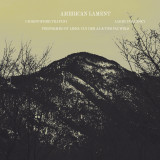
With Folksong Distortions, Pauwels and Van der Aa create a journey of lament through the soul of times gone by. Their radical renditions of works by Larry Polansky and Christopher Trapanido not distort the more upbeat rhythm and tradition of folk songs, but rather reveal and highlight the essence of hard lives, imposed choices - choices that were illusions in the first place - and the difficult times and conditions they have always depicted.
Christopher Trapani arranged two classics from the U.S. South, effects. The work, developed in collaboration with Tom Pauwels and Liesa Van der Aa, was originally made and featured on ICTUS' American Lament programme. The duo was given considerable room for improvisation and interpretation in the process. The first song, 'Wayfaring Stranger', is a well-known folk/gospel melody in A minor. The lyrics contrast an aimless journey through a harsh, hostile world, with the Christian promise of heaven as a 'home' and reunion with lost loved ones. The second song, 'Freight Train', was written by Elizabeth Cotten, a left-handed guitarist who held her guitar upside down, resulting in a very recognisable strumming style.
Sweet Betsy from Pike and Eskimo Lullaby are taken from Larry Polansky's 2005 'Songs and Toads', a five-section piece that computer-composed pieces. The work was originally written for guitar, more specifically for the national steel guitar, refretted in a specific intonation designed by Lou Harrison. Each piece explores a different guitar tuning. A significant intervention to the original work is made to accommodate Liesa Van der Aa's violin with effect pedals, opening to an epic re-reading of the work as conceived by the American composer Larry Polansky. What this set-up enables is a melancholy, slow-paced approach that quite radically opposes the more upbeat and joyful nature of the folk songs.
grey marbled vinyl 2024 Repress
The name Sleepnet first emerged when UKF premiered a mysterious release named "Angel Blade", following a series of cryptic posts on social media. Now confirmed to be the debut solo project for Noisia's Nik Roos.
The EP, cites Sleepnet, is "inspired by true events", and features the tracks: "Love No More", "Angel Blade", "Void Song" (collaboration with Former), "Unravel", "First Light", "Glass Hearts" (collaboration with IMANU), and "Hindsight" The music explores different stages of loss, grief and rebirth, and some of the tracks contain fragments of sounds and music that were originally intended for Noisia productions over the past two decades, but never used.
"Sleepnet exists because I wanted to have an outlet for my music after Noisia. I want to use that vocabulary to tell a more personal story. I want the music, the whole project, to mean something to me. So I tried to do as much as I could myself. Writing and producing, mixing and mastering, logo design and artwork, even some singing here and there. I am considering knitting the merchandise myself as well :D I worked on this EP from December 2019 to December 2020. Writing it helped me identify and process things I'd been going through: letting go of Noisia, grieving over lost friends, and welcoming my daughter into the world. You can look at it in that light: as a process of grief and rebirth. That's what I hear in it. But the music should speak for itself and it has a magical ability to mean different things to different people. So have a listen yourself, I wonder what you might hear."
Attention, Electro-heads! SNC Recs is back with its first vinyl release for 2024, presenting a treat for all breakbeat enthusiasts with Friedrich Ernst's Breakthrough EP. The old-school influenced 12’’ is garnished by two high-grade remixes contributed by none other than the new-wave electro pioneers, DJ MELL G and Viikatory.
Hailing from Dresden, Friedrich Ernst discovered his passion for electronic music at an early age. After relocating to Leipzig in 2020, he co-founded the label "Self Learning System" with DJ Unisex, focusing on releasing electro music and organizing events. Since then, Friedrich has honed his own style and established himself internationally as a label owner and producer, increasingly focusing on live performances.
His second solo EP, marked by his detail-oriented and uncompromising electro sound, fits perfectly into the SNC Recs catalog and brings a dignified start to the tenth series. Completing the release are remixes by DJ MELL G and Viikatory, each bringing their own personal touch to a different track.
repress !
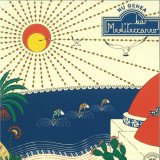
Four years after Nuova Napoli, Nu Genea are back with Bar Mediterraneo, a new album and journey, which projects the sounds of the Neapolitan duo formed by Massimo Di Lena and Lucio Aquilina even further.
Nu Genea's Bar Mediterraneo is an idea of a shared place where people meet and fuse together; a space that leaves its doors open to travellers and their lives, always exposed to the whims of fate. Some of this can be experienced through the multitude of sounds that come together in the tracks, layers of different acoustic instruments, voices and synthesizers merging in a unique musical blend.
Opening up to the voices of many different people, separated by languages but united by the sea and the music, Nu Genea's hometown, Napoli, becomes a true place of encounter.
You can hear this all along. In "Gelbi", a gorgeously deep and propulsive Ney flute plunges into murky waters of the melancholic Tunisian dialect sung by Marzouk Mejri. In "Marechia'", unbridled happiness and sun ooze from the delicate vocals of Célia Kameni and create an acrobatic bridge between French and Neapolitan language. In "Straniero", your soul is arrested from the moment the slow spell-binding mandolin ignites the hypnotic patterns recorded by the legendary Afrobeat drummer Tony Allen. In "Bar Mediterraneo", the title track, bittersweet guitar’s riffs, analog waves and choirs are overwhelming the song giving you what you would like to hear on a boat trip along the Amalfi Coast.
Nu Genea couldn't afford to overlook their firmly anchored roots into the Neapolitan culture and its dialect with "Tienaté", where the power of neapolitan language (interpreted by Fabiana Martone) supports those quarter-tone strings and the uncessant folk-disco groove that spreads to the entire song. In "Praja Magia", repetitive mandolin riffs lead the song, giving space to a choral yet tight vocal line that speaks of Varcaturo, a village close to Napoli. In "Rire", a volley of poetic, deceptively laidback, lyrical fury interpreted by Sicilian Marco Castello intimately combines with a highly musical, multi-textured instrumental backbone and the swoon of a chanson in its heart. In "La Crisi'', the lyrics of a Raffaele Viviani’s poem from 1930 have been adapted to a laidback jazz-funk groove in full NG style. In "Vesuvio", revaluing the evocative verses and powerful mantra of Vesuvio, Nu Genea re-adapted to the dancefloor a folk song by the working-class band E’ Zezi from Pomigliano D'Arco, combining the voices of a school choir with Jupiter-6 arpeggios and bold percussions.
Bar Mediterraneo is the place where people constantly return to transform curiosity into participation, tradition into sharing, unfamiliar into familiar. When travellers come through its “doors”, carrying their treasures of words and emotions, they aren’t strangers any more. They take part in a shared experience, enriching themselves and others by leading to unexpected musical journeys.
DJ Polo returns to Livity Sound with an EP that moves beyond the UK funky styles he established alongside Tribal Brothers on The Link Up EP in 2021. Through his productions and steady online radio presence, the Bristol-based producer has been flying the flag for lean, punchy rhythms with a low-end focus, but on If The Glove Fits Polo has branched out to explore different tempos and sounds taking influence from gqom, techno and Afrobeats.
Much like his approach to funky, this isn’t a set of genre exercises but more a celebration of the shared qualities which bind together dance music from different parts of the world. The result is four sharply-defined club workouts unique to DJ Polo that balance tension and release, flair and subtlety and a consistent physical weight true to Livity’s emphasis on soundsystem suitability.
Livity Sound is a label set up by Peverelist in 2011 as a vehicle for a raw and exploratory strain of UK techno, rooted in the heritage of UK dance music and sound system culture. It has since become one of the UK's foremost protagonists for cutting edge underground electronic music.
Special Guests on the record include: Mark Cisneros, Joe Lally, Derrick Decker, Bob Berberich, Clint Walsh, Dave Grohl, Onam Emmett, John Goetchius, Jerry Busher, Amy Pickering, Ian MacKaye, Amanda MacKaye, Brian Baker, Randy Austin, Martha Hull, Michael Reidy, Nate Bergman, Bobby Madden.
Scream formed in 1979. Drummer Kent Stacks, bassist Skeeter Enoch Thompson and the brothers Pete and Franz Stahl attended school together in Bailey’s Crossroads, Virginia, when they began to discover the punk and new wave scene in DC and the provocative power of making music.
Like most of the punk bands in DC, they were influenced by the Bad Brains, but their rock and roll sensibilities set them apart. In 1982, they went into Inner Ear Studio with Ian MacKaye and Eddie Janney to record Dischord's first full length album, Still Screaming.
Scream followed this with a second full length album, This Side Up, in 1984. The band toured throughout the US and were one of the first US hardcore bands to tour Europe and the UK. In 1987, they released Banging the Drum, which was recorded at both Southern Studios in London and Inner Ear. In 1988, No More Censorship was released on reggae label RAS records. Scream returned to Dischord to release Fumble in 1993.
They made a few line-up changes along the way, including the addition of their friend Harley Davidson on second guitar, and, when Kent Stacks (RIP) left the band to start a family, they asked a young local drummer, Dave Grohl, to take over. After a number of years with "the Scream team," Dave went on to join Nirvana and form The Foo Fighters.
In 1996, at a Christmas reunion show, Kent Stacks returned as Scream’s drummer; the show was recorded and released as the CD “Live at the Black Cat.” Over the next few years, everyone branched out in different directions – Franz joined the Foos for a short period and Pete played with Goatsnake and earthlings? The band returned as a unit, with Clint Walsh on second guitar, in 2011 to record the Complete Control Sessions, which was released as an EP on Side One Dummy and was, until now, the band’s most recent release.
Scream’s newest album, DC Special, will be released in the fall of 2023 on Dischord Records. For this record, Scream invited their extensive music community to help create a unique project that weaves the history of music in Washington DC into the story of the band. Recorded by Don Zientara just weeks before his studio was evicted from its longtime location, the record is rich with both the sounds of Inner Ear and those of friends and musicians who influenced Scream and who shaped DC music over the past six decades. DC Special embodies the same sense of community and politics that inspired Scream from the start and is a truly special collection of new music that speaks to the present and also tells the story of DC music, Scream, and the influences that shaped them.
Bonus Download Tracks
Faces
Politics is Entertainment
Black and White
Lifeline Redux
Smile and Bleed
I Saw Ya (Wanna Be Like Captain)
With 'Stone Flute', the free-improvising duo's third studio album proper, Galecstasy returns to the universe of synthesizers to deliver an aural odyssey, conjuring the ancient tones of a forgotten world.
The album was entirely conceived and recorded in, and around, the majestic landscapes of Joshua Tree National Park in the magnificent high desert of southern California. From atop the mountain, the two sonic surveyors were witness to a 360 degree view of the stars at night. From above, the giant rocks looked like immense wise faces looking up at the sky, or even huge bodies resting on the Earth and looking up at space. It was during this time that Galecstasy started a ritual that ended up being called the “Moon Cruise”. This would involve waiting for the full moon to rise and then driving into the national park after dark. They would turn off the headlights of the car and drive slowly through the alien landscape lit up by the moon. Boulder fields took on the shape of temples; faces carved into the rocks everywhere they looked; giant heads with smiles or haunting expressions; and the knowledge that people had been living, dancing, and making music here for thousands of years. It was during these enchanting escapades that 'Stone Flute' was conceived.
In the mountain-top recording studio, the band were utilizing every potential space to tap into the best vibrations the land had to offer. Where the mic was placed: Perhaps a giant boulder once stood, or an ancient tree. One could feel the different energies of every room. The fireplace in the living room was built of giant lava rocks for the music to swirl around. Sounds would spill and climb around the house.
"The living room was just a beautiful tangle of synthesizers and plants. It was an inspiring place to make great records. We channeled the music of the boulders buoyed by the energy shooting up from the fault lines. The good feelings emanated from the studio, it had become our own temple and the birthplace of 'Stone Flute'."
With 'Stone Flute', the free-improvising duo's third studio album proper, Galecstasy returns to the universe of synthesizers to deliver an aural odyssey, conjuring the ancient tones of a forgotten world.
The album was entirely conceived and recorded in, and around, the majestic landscapes of Joshua Tree National Park in the magnificent high desert of southern California. From atop the mountain, the two sonic surveyors were witness to a 360 degree view of the stars at night. From above, the giant rocks looked like immense wise faces looking up at the sky, or even huge bodies resting on the Earth and looking up at space. It was during this time that Galecstasy started a ritual that ended up being called the “Moon Cruise”. This would involve waiting for the full moon to rise and then driving into the national park after dark. They would turn off the headlights of the car and drive slowly through the alien landscape lit up by the moon. Boulder fields took on the shape of temples; faces carved into the rocks everywhere they looked; giant heads with smiles or haunting expressions; and the knowledge that people had been living, dancing, and making music here for thousands of years. It was during these enchanting escapades that 'Stone Flute' was conceived.
In the mountain-top recording studio, the band were utilizing every potential space to tap into the best vibrations the land had to offer. Where the mic was placed: Perhaps a giant boulder once stood, or an ancient tree. One could feel the different energies of every room. The fireplace in the living room was built of giant lava rocks for the music to swirl around. Sounds would spill and climb around the house.
"The living room was just a beautiful tangle of synthesizers and plants. It was an inspiring place to make great records. We channeled the music of the boulders buoyed by the energy shooting up from the fault lines. The good feelings emanated from the studio, it had become our own temple and the birthplace of 'Stone Flute'."
Composed by Jim O’Rourke and pieced together by Jim together with longtime collaborator and trumpeter Eivind Lønning at Jim and Eiko Ishibashi’s home in the Japanese mountains, this engrossing new album blows brass wails and tense fanfares across O'Rourke's manipulated Kyma tapestries for a deep, captivating trip into the aether.
Eivind Lønning has been sharing ideas with O'Rourke for several years: the duo collaborated on music for the Whitney's 'Calder: Hypermobility' exhibition, and Lønning played trumpet on O'Rourke's brilliant 2020 album 'Shutting Down Here'. For this new work, Lønning headed to O'Rourke and EIko Ishibashi's home studio in the Japanese mountains, where he teased unfamiliar, alien textures from his trumpet to open the labyrinthine three-part composition. O'Rourke took the material and subsequently funnelled it through his Kyma system, transforming it into a swirl of sound that hums alongside Lønning's original takes. The album was composed, mixed and mastered by O'Rourke, with everything's based on Lønning's virtuosic performance.
The album begins by cautiously introducing us to its sonic palette: wavering, bird-like horn wails that O'Rourke contorts around quiet synth oscillations and computerised swarms. Lønning's spittle-drenched blasts are given the spotlight, but O'Rourke's manipulations - often gentle and illusory, and sometimes utterly lacerating - lift the sounds into completely new territory. When Lønning begins to turn rhythmic cycles using the trumpet keys, popping with his mouth to compliment its leathery timbre, O'Rourke replies with dense, hallucinatory drones, juxtaposing unstable electronics with Lønning's breathy, sustained notes. All these sounds coalesce into a dizzy vortex, but O'Rourke is careful not to overwhelm the senses, dropping to near silence as the first act transitions into the second. O'Rourke pelts Lønning's vertiginous wails, steadily mutating them into Xenakis-like stabs until they sound like cybernetic strings and icy tones that extract the tension from Lønning's brassy harmonics.
The third act is more screwed, with O'Rourke allowing Lønning's improvisations wail into cathedral-strength reverb, accompanying the sound with glassy penetrations and throbbing subs. Here, Lønning sounds as if he's heralding the arrival of a celestial being, piercing the atmosphere with bright, sustained tones and muted, jazzy flourishes. O'Rourke hangs back, carefully spinning the notes into naturalistic fibres and orchestral drapery, before he allows the electronics to subside completely and the trumpet to echo into the imposing negative space.
'Most, but Potentially All' is a dumbfounding piece that shifts the dial on contemporary experimental music; dizzyingly complex but never showy, it's the kind of record you can spin repeatedly and hear something different each time. As an exploration of the trumpet, it's a unique expression, and as a progression of electro-acoustic compositional techniques, it draws a deep trench in the sand, setting a new standard.
Remastered and expanded release of Toyah’s 1982 Top 20 album. Originally released as a live double album in October 1982, ‘Warrior Rock’ was recorded at Hammersmith Odeon, London across the final two nights of the tour.
The album presents 15 songs centred around material from the band’s Top Ten albums ‘Anthem’ and ‘The Changeling’. The album is named after ‘Warrior Rock’, the B-Side of Toyah’s 1982 single ‘Brave New World’. The band’s hit singles ‘It’s A Mystery’, ‘I Want To Be Free’ and ‘Thunder In The Mountains’ all feature on the album alongside fan
favourites ‘Ieya’, ‘Danced’ and ‘War Boys’. This expanded re-issue now documents ‘The Changeling Tour’, Toyah’s highly successful run of 25 UK concert dates in June/July 1982 in a more comprehensive fashion.
The 3CD set was compiled by Craig Astley and Joel Bogen and presents 41 remastered tracks from master tapes/archive sources
featuring 26 previously unreleased bonus tracks. A total of 19 different songs feature from 11 different gigs, recorded at nine different locations. For the first time ever, the “four sides” of the original live double album are included on CD - unabridged and uncut. Nick Watson/Fluid Mastering has remastered the package from the original master tapes and archive sources, overseen by Joel Bogen. A wealth of bonus tracks have been unearthed from the archives to provide both a glimpse backstage at concert preparations, and act as a definitive souvenir of the tour’s journey across the UK
Syncrophone Presents the Very First Vinyl Release From Aleqs Notal’s Label : Industrial Light. This Premiere Sees Notal Partnering Up With Long Time Friend and Fellow Producer Modern House Quintet. Throughout Four Tracks &Ndash; Two From Each Musician &Ndash; This Release Dives Into Several Sub-Genres of Electronic Music and Provides Four Compelling Songs. on the A1 Side, Message From the P Opens Up the Record With a Classical Notal’s Signature Sounds : Ron-Trent-Ish Pad and Organ Samples, Supported by Additional Snares and Several Lines of Hi-Hats. This Delicate House Track, With Its Acid Line Chord Core Is Perfect to Open Up a Set. A2 Drinking Workers Sees Notal Weave His Hi-Hats Patterns Around a Typical Detroit-House Bass Line. Architected and Thought Like Scratches (Due to His Hip-Hop Background), Hi-Hats Set the Tone and Enhance the Track as a Back-and-Forth Game With the Bass, Contributing to the Overall Depth of the Song. Once Again, Notal Shows His Creativity About Blending Different Sub-Genres Into a Single Track. on the Flip Side, Modern House Quintet Presents Two Very Different Tracks (Although Both Are Clearly Made for the Floors). B1 Nadrezacalenis Associates Several Layers of Shakers and Subtle Hi-Hats &Ndash; Combined With Percussion &Ndash; in Order to Emphasize the Lush Rhodes Chords And, Later, the Entrancing Vibraphone Notes. Last but Not Least, B2 Dioskouron Is Clearly a Track for a Peak Time Moment. With Its Detroit-Techno Atmosphere, Its Tr-909 Drums Pattern, Its Textures (The Discreet, Yet There, Pad) and Its Pace, DJs Can Rely on This Great Addition for an Ideal 3 Am Set to See Heads Nod and Bodies Swing. as for All the Previous I.l Releases, Artwork Is Made by Jn/wl. ...
With his new instrumental album Ventas Rumba, the French composer (and singer) returns to his signature instrument, the piano, blending it with warm synth tones. This album represents a "return to his roots ", allowing Ezéchiel Pailhès to reinvent himself in a seamless way while still exploring ballads and ritornellos, halfway between light-heartedness and melancholy. Ezéchiel Pailhès has been meaning to write a solo piano album for as long as he can remember. Hardly surprising, of course, for this academically-trained pianist, brought up on classical music and then studied jazz. Yet, since his 2001 debut with the electro-pop duo Nôze, and his subsequent four albums, the artist had constantly postponed this project that was so close to his heart. Then in 2022, just as he was getting ready to start producing an album of new songs, this long-standing aim finally materialized.
The melodies he wrote seemed to stand on their own naturally, spurring him on to compose this series of fourteen tracks, recorded in sessions split between France and Latvia.
A new piano: the Una Corda
Ezéchiel wanted this project dedicated to the piano to begin a new narrative, to explore new instrumental terrain and new tones, something far removed from the familiar piano he has been playing all his life. He opted for the Una Corda piano, designed by David Klavins, a groundbreaking instrument builder renowned for his distinctive pianos with vertical shapes and frames.
The Una Corda, created in 2014, is an upright piano with a single string per note (unlike three strings on traditional pianos). Enticed by the "crystalline and unique" tones of this instrument, which is hard to find in France, Ezéchiel travelled to Kuldiga, Latvia (where David Klavins set up his workshops and studios), to record the first part of the album. Although the title of the album may initially conjure up images of a distant, sensual dance, the reality is quite different. Ventas Rumba indeed refers to the waterfall and rapids (in Latvian: rumba) of the river Ventas, which runs near this small village in the western part of the country. Ezéchiel chose to blur the lines, as the sound and musicality of the title likely evoke both his short stay in the Baltic country, and also a form of distant exotic imagery perfectly in tune with his own mischievous wit. Tracks as short stories
Back in France, Ezéchiel enhanced the first tracks recorded in Kuldiga with subtle synth tone layers, and added other tracks composed and recorded at his Montreuil studio. The album reflects a deliberate and sensitive orchestration of piano, synth keyboards and digital effects, as he puts it: "playing to erase the differences between the tones of the various instruments", as if each instrument's texture echoed the others. According to Ezéchiel, you can listen to Ventas Rumba as you would leaf through "a collection of short stories", through compositions that rarely exceed three minutes and evoke figures of movement, lightness, curves or modulation, such as "La ligne", "La valse des singes" or "Fly Finger". Others more seriously relate to a kind of spirituality, which quietly infuses such different tracks as "Ferveur", "Éclair" and "Louanges". Ezéchiel adds: “I’m by no means religious, but I like what God has managed to get musicians to achieve (laughs)". "Louanges", for instance, despite its electronic edge, "refers to Olivier Messiaen, a very devout composer who I greatly admire". Other tracks are directly inspired by the classical music he listens to on a daily basis. For example, Chopin's “8th Nocturne” formed the backdrop of “Pianovado”. Likewise, the harmonic structure of Beethoven's “Waldstein Sonata No. 21” inspired “Opus 53”. Aside from these multiple references and inspirations, which quickly recede behind a style that is uniquely his, Ezéchiel Pailhès keeps exploring ideas already found on his first solo albums, this time in an instrumental format, undoubtedly purer, fostering an imaginary world that evokes the shapes and themes of ballads, ritornellos, light-heartedness, passing time, reverie or a universal subdued melancholy.
For more than twenty years, Ka Baird has explored the outer dimensions of sound through performance. Extending far beyond their roots in the psychedelic folk movement of the early aughts, Ka is known for their raw, boundary pushing solo performances that bridge experimental sound, performance art, and ritual. Their tool set in the live arena includes extended voice and microphone techniques, electronics, flute and piano. Bearings follows their 2017 debut Sapropelic Pycnic and Respires, their acclaimed 2019 album.
Initially conceived as a twenty minute composition and presentation commissioned by Lampo in Chicago in the spring of 2022, Ka first explored the concept of “bearings” through a series of intimate performances where they shifted guises between magician, shaman, clown, and athlete, all enduring ongoing states of groundlessness through a physically demanding performance that entailed both play and struggle. This piece, in tandem with the heaviness of caring for a dying parent during the subsequent year, laid the groundwork for Bearings, with the album’s final narrative structure revealing itself in the months after their mother’s death the following September.
Enlisting a cast of contributors including Andrew Bernstein (alto saxophone), Max Eilbacher (flute processing, electronics), Greg Fox (percussion), gabby fluke-mogul (violin), Henry Fraser (contrabass), Joanna Mattrey (viola), John McCowen (contra clarinet), Camilla Padgitt-Coles (bowls, waterphone) Troy Schafer (strings), Chris Williams (trumpet), Nate Wooley (trumpet), and their beloved cat, Nisa (purrs) to create a collective hum and thrum, Ka and company create sprawling minimalist densities, punctuated by abrupt starts and stops, complex harmonics and textures, percussive flourishes, and a single, cyclical lyrical phrase: “Here. Disappear. Poof!”
Ka considers the album to be a deviant nod to a song cycle, throughout which certain motifs are repeated in different configurations. In the album’s sonic lexicon, a trumpet blast signifies a birth or death, or a distant string motif denotes a memory. Bearings is a durational work of profound abstraction and focus, within which sonorous elements, structure, and meaning reach a single, unified form. This amounts to nothing short of a creative high-water mark for one of the most dynamic and uncompromising artists working in the landscape of music today.
- A1: Look Inside Yourself
- A2: Make The Woman Love Me
- A3: Only Dreaming
- A4: Black And White
- A5: Valleri
- A6: After Your Heart
- A7: Incredible
- A8: I'll Love You Forever
- B1: Hippy Hippy Shake
- B2: She Believes In Me
- B3: King Lonely The Blue (Later, Alt. Ver.)
- B4: Hangin' By A Thread (Studio Ver.)
- B5: Don't Go
- B6: Fallen Hero
- B7: Can You Whistle?
- B8: Free (The Greatest Story Ever Told)
7A Records are proud to present Davy Jones’ “Incredible!”. A deluxe reissue of Jones' “lost” ‘80s album, remastered and expanded with bonus tracks. The limited edition gatefold Vinyl release is limited to 1,000 copies. Pressed on 180g transparent blue vinyl, it features extensive liner notes from Monkees historian Mark Kleiner and rare and previously unseen pictures by photographer Henry Diltz.
Fuelled by MTV’s re-runs of the original Monkees TV series, “Incredible!” was recorded at the height of mid-‘80s Monkees comeback-euphoria. Given the flurry of activity happening on multiple fronts for the Monkees throughout 1986, especially the grueling demands of their touring schedule, the fact that Davy Jones managed to record a full album amid the chaos is somewhat staggering. “Incredible!” features several songs that could well have reached the Billboard charts, had things played out differently. However, Jones decided to hang on to the album and it ended up being self-released on cassette on his own mail order label. The minimalistic promotion and treatment of the original release belie the considerable studio and artist firepower behind these recordings. This deluxe repackaging allows this chapter in Jones’ fascinating journey to finally more fulsomely shine.
• Remastered With 6 Bonus Tracks
• Rare & Previously Unseen Photos
• Extensive Liner Notes
• Limited to 1,000 copies