Gold Vinyl. The first vocal album by beloved Ethiopian nun, composer, and pianist Emahoy Tsege Mariam Gebru - profound and deeply moving home cassette recordings made amidst political upheaval and turmoil. These songs, recorded between 1977-1985, are different from anything previously released by the artist. Rich with the sound of birds outside the window, the creak of the piano bench, the thump of Emahoy's finger on the record button, they create a sense of place, of being near the artist while she records. Emahoy dreamt of releasing this music to a larger audience before her passing in March of 2023. We are proud to release this music, in collaboration with her family, now, in what would have been her 100th year. LP comes with a 16-page booklet full-color booklet. Gold cover first edition, pressed in both black and gold vinyl editions.
crys cole returns to Black Truffle with Making Conversation, her third solo release for the label. After the intimate song-like constructions of Other Meetings (BT096), Making Conversation documents a different facet of cole’s work, presenting three rigorously conceptualised commissioned pieces, each of which extend her signature approach to highly amplified small sounds into new directions.
The side-long title piece is a stereo version of an 8-channel sound installation exhibited in 2023 at the Tabakalera Art Center in Donostia / San Sebastian, Spain. The piece uses a multitude of instrumental, vocal, concrete and electronic sounds to evoke the soundscapes cole encountered during nocturnal listening session in Bali, Indonesia in 2018 and 2019. In this world of night sounds, she explains, she ‘observed the complex interplay between amphibian, lizard, bird and insect communication, domestic animals (roosters, dogs), man-made sounds (airplanes, vehicles, conversations and evening activities) and sounds that were difficult to place’. Drawing on field recordings as memory aids (but including none in the finished piece), cole’s piece uncannily reproduces the spatiality and pacing of environmental sound without attempting strictly to replicate it. We hear insect-like twittering and birdsong fragments, resonant thuds and distant roars, furtive crunches and taps, muffled breath and metallic scrapes. While at times it can be difficult to imagine the source of these sounds, at other points they are clearly instrumental or electronic in origin; in its placement and layering, though, the whole assemblage suggests the glorious, unthinking richness of a non-musical sound environment. Suggesting at once the electronic gardens of Rolf Julius and the little instrument expanses of classic AACM, the piece is a brilliant enactment of the Cagean drive to ‘imitate nature in her manner of operation’.
‘Valid ForeverrRrrRRrrr… (pt. 1)’ began as cole’s contribution to an Issue Project Room commission to realise a score from Alison Knowles and Annea Lockwood’s Women's Work, a 1975 collection of text and conceptual scores by women artists and composers. cole’s piece begins from Beth Anderson’s Valid for Life, a complex arrangement of the letter R in various typefaces. Where the composer suggests a realisation on a trio of acoustic instruments (playing rolls with velvet beaters), cole translates the piece into her characteristic sound and object language as a trio of rolling sounds on ‘two large similar paper things and one 5-pin bowling ball’. Rolling from one side of the stereo field to the other, the bowling ball’s uneven movement is the heart of this immersive textural array, created with the simplest materials, which generates phantom sensations of pitch and phasing effects solely through amplified friction.
On ‘Valid ForeverrRrrRRrrr… (pt. 2)’, cole makes a first foray in translating her signature approach into conventional instrumental sounds, here in the form of a transcription for MIDI percussion ensemble. The result is refreshingly puzzling, comparable perhaps only to the sparsest moments of Keiji Haino’s classic “C’est parfait…” Accompanied with extensive liner notes, photographic documentation and a download code, Making Conversation is an exciting next step in cole’s work, extending her signature concerns in new sonic and conceptual directions.
out of Stock
Last delivered 2 years ago available to reorder, subject to availability
Mermaid Chunky. It's all in a name, sometimes. The danceable, costumed, curiosity rich duo of artists Freya Tate and Moina Moin are as imaginative as they profess. Or, to get more to the point, as we all need them to be. Freya and Moina are two visual artists and musicians from Stroud and South London, places where they importantly found communities (Stroud's SVA and the capital's Total Refreshment Centre) of like minded people just as willing to chase down an idea to its possibly illogical conclusion. And it is in the collective and the idea of participation that Mermaid Chunky really clicks. This is a party, a collective dance, made all the better with more: people, ideas, layers, kick drums, recorders, saxophones, frogs. To wit, the album's first track and first single, "Céilí," named after a traditional Scottish or Irish social gathering and dance, which builds from a simple recorder line into a swelling, warm burst of major chord dance music. Goosebumps or check your pulse. Further down the rabbit hole, "Chaperone" is almost boardwalk electro, like Fischerspooner on a ferris wheel; "Frogsporn" and "Nature Girl" are mucky, trippy dirges filled with stalactites of synth and squelch; "Tiny Gymnast" is a kaleidoscopic waltz into the night. Hold onto your seats, ladies and gentlemen. You might be wondering how we, DFA Records, all the way over in cynical Brooklyn, entered the picture. There was a day a few years ago, sun shining in full Springtime splendor, when James heard something while waiting for a coffee down the street from the office. It sounded simple yet deceptively complex: a dance track, but one where the one - that anchoring first beat in a measure - could be heard a thousand different ways. Frustrated and interested, he Shazamd the song, playing at the shop from an episode of Zakia's Questing show on NTS, and brought it back to the office, where we all listened to it about fifty times. (The song was "Friends," from Mermaid Chunky's VEST EP, released in 2020. It led to an invitation to open for LCD at Brixton Academy in 2022. Mermaid Chunky has also played live alongside The Comet Is Coming, Alabastair Deplume, Snapped Ankles, and many others.) Thus began our search for Mermaid Chunky. A quest it has been and a quest it will always be.
Get Nuff Nuff Data is a series of books exploring positive forces in contemporary music in relation to place and culture.
This book opens the series with the stories of musician I Jahbar and his surrounding community, set in the outskirts of Spanish Town, Jamaica. In 2011 I Jahbar collaborated with a duo of California based experimental musicians, and his acrobatic performance on their track ‘Spy’, inspired the founding of a record label named ‘Duppy Gun’. Their music captivated me like nothing had before. It was difficult to frame, drawn towards an innovation in sound, while embodying some ancient energy. 'Duppy Gun’ has paved its own unique path in dancehall music ever since, showcasing the power of international creative collaborations, by linking Jamaican lyricists with producers from different parts of the world. There’s a little family formed around those musical projects, of goodhearted, talented individuals.
Led by a growing curiosity, I came to Jamaica, offering to create a visual aspect to the ongoing dancehall movement. During 3 weeks of collaborating with I Jahbar, we worked on a shared vision of promoting the voices of emerging vocalists and documenting their creative spirit.
The feeling of being welcomed to step into an unfamiliar narrative inspired the creation of this series, examining the perceptions of ones belonging and idea of home. Through segments of monologues and conversations, nature and portrait photographs, the book portrays a bond between people and their surrounding land, what they seek to change or wish to cherish and preserve. Get Nuff Nuff Data is dedicated to the simple lines that connect us all, each individual story exists as a universal one.
* Part of the book takes place online, including access to ‘unprintable data’. Exclusive video, audio, and downloads.
Details:
Self published
Designed by Matúš Hnáts
Printed by Tiskárna Helbich
500 copies, Swiss binding, 120 pages, 16x24cm
Printed on Fedrigoni 135gsm Symbol Tatami White
ISBN 978-965-598-736-2
(Barcode on the Last page of the book)
Place: - Air Texture’s regional nonprofit series focused on local environmental causes, features Tunisia for its next in the series curated by Azu Tiwaline and Shinigami San.
As old veterans of electronic deep explorations they are driven by the aim to provide a general view and an état des lieux of the electronic microcosm of this scene supporting its different directions and creative aspects. This compilation is an invitation to have a deep dig into electronic Tunisia.
The artists curated to participate represent different backgrounds and musical perspectives. From score composers to established producers, crossing the path of more experimental ones the curators offer a large view of the ensemble of the different electronic approaches in Tunisia. Different generations are also meeting through this compilation, regrouping almost four decades of producers and sonic creators.
out of Stock
Last delivered 20 months ago available to reorder, subject to availability
Campo's debut album, released in 2012, was a milestone in the new South American music scene. The brainchild of Juan Campodónico - one of the creators of Bajofondo - combines sophisticated pop, electronica, and South American roots, uniting past and present in a unique way. Neo-cumbia, tango, and candombe shake hands with Britpop, soul, and trip-hop in a timeless album. A place where indie rock intersected with the great Latin bands of the 1950s, fringe genres like cumbia villera were transformed into sophisticated music, tango joined alternative pop, and track music became contemplative and landscaped. Juan Campodónico has a long artistic career (Peyote Asesino, Bajofondo) and extensive experience as an artistic producer on some fundamental records of Uruguayan and South American music (Jorge Drexler, Cuarteto de Nos, No te Va Gustar among others). In 'Campo' is a very heterogeneous group of composers, performers and instrumentalists from different genres and geographical locations (Jorge Drexler, Martín Rivero, Ellen Arkbro, Pablo Bonilla and Verónica Loza, among others). 'Campo' was based on the song format, jumping the limits of the Río de la Plata, immersing himself in rhythms, genres and forms of South American songs from the past and present, seeking the link with pop, rock and electronic music. The album -which received nominations for the American Grammys, the European MTV Awards and the Latin Grammys- broke schemes and prejudices. He brought together opposite worlds such as cumbia and britpop, songwriters and dance music, or bolero and electropop, finding beauty and sophistication in unexpected places.
out of Stock
Last delivered 2 years ago available to reorder, subject to availability
Arp Frique returns with a brand new release on his imprint Colorful World Records in collaboration with Rush Hour. A compilation of 12 Cape Verdean gems assembled with the help and knowledge of Americo Brito, there is a very special story behind it. Americo Brito, who features on Arp Frique’s original Nos Magia, is a proud and important member of the Cape Verdean community in Rotterdam. His story reveals the historical connections between radio, vinyl, Cabo Verde and Rotterdam’s international music scene in the 70s and 80s. Cape Verdean insiders say “we export all they have to other countries, only to import it back again”. Cape Verdeans have migrated all over the world, mainly to cities with big harbours, like New York, Boston and Rotterdam (Holland). Rotterdam became one of the main destinations (next to Portugal) on the European mainland. When Americo, like many of his friends and relatives moved to Rotterdam, he quickly became infected with the music virus. Surrounded on a daily basis by Cape Verdean music in Portuguese pensions and small hotels, this was where sailors ingested a dose of “sodade” through the interpretations of their beloved music by the local Cape Verdean artists. Americo took to the stage with his band Djarama in the 70s and 80s. The live music scene was buzzing and the Cape Verdean community had their own infrastructure for arranging shows, often in nightclubs where the band had to bring their own soundsystem. Interestingly, Americo didn’t stick to performing and recording music. He found another way to help spread the Cape Verdean magical secret of music across Rotterdam, Holland and beyond: “There was this spot in Rotterdam where all foreign radio stations were housed, all these different nationalities together, Surinam, Cape Verdean, Hindustani…Guy Ramos and some of my other friends made radio in the 80s there. I got involved in their radio activities. Later on I started to work as a technician and eventually as producer and radio DJ for “Radio Voz De Cabo Verde”. Radio became bigger and there were around 4 different Cape Verdean stations active at one point in Rotterdam. instrumental in the development of this was the attic of a Dutch friend, where “Radio Babalu” came to life. Radio has always held a special place in my heart.” Americo’s music collection stems from this era, also aided by his many travels across Europe to cities with Cape Verdean communities. Alongside Rotterdam local, Arp Frique, Americo unveils some of these songs: dancefloor hits and beloved radio gems known in the Cape Verdean scene by younger and older generations alike, and so far undiscovered by a “bigger” audience. The compilation showcases the worldly view of Cape Verdean music, incorporating knowledge from their travels in their compositions. It ranges from the obvious funana and coladeira, to the more unexpected influences of deep disco, new wave, uptempo reggae, jazz-funk and Brazilian pop music; demonstrating just the tip of the iceberg, but what an amazing t(r)ip it is!
out of Stock
Last delivered 8 months ago available to reorder, subject to availability
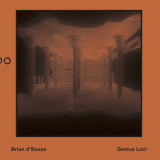
In contemporary usage, genius loci refers to a location's distinctive atmosphere, or a "spirit of the place"...
Genius Loci is a new audio work by sound artist Brian d'Souza (fka Auntie Flo). Referencing the notion of the protective 'spirit of place' from ancient Roman times, d'Souza used a vintage accordion to capture the acoustic properties of the Het Hem building in Zandaam, Netherlands. A former munitions and gun testing factory, Het Hem is a space full of character made up of a range of rooms that each hold a different acoustic property. d'Souza is interested in the connection between sound and space, using the accordion as a sound source with a variety of microphones placed around each room to capture the resonance and reverberation. The results are presented as part of an immersive audio visual website which incorporates generative audio technology developed by d'Souza's Swell Studio in collaboration with The University of Arts in London and is now available at https://thecouch.hethem.nl/genius-loci/ .
The original artist versions of Genius Loci are available on this release for the first time, available on 12 inch vinyl and download.
A State of Flo supports Earth Percent. 10% of the revenue generated from this release will be paid to environmental charities.
Songs ’94-’98 is a smart selection of material from The Cat’s Miaow, an Australian indie-pop group that gifted their decade with some of its finest songs. Released on World Of Echo, the album draws from the group’s string of excellent seven-inch singles, a small clutch of compilation contributions, and features one previously unreleased song, “I Take It That We’re Through”, recorded in 1998. Part of the burgeoning international pop underground of the nineties, The Cat’s Miaow’s legend has only built over subsequent decades, as more people discover this most quixotic and curious of groups: a recent appearance on A Colourful Storm’s compilation of Australian indie-pop, I Won’t Have To Think About You, is testament to their enduring influence. In part emulating the selection of tracks on the 1997 CD-only compilation, Songs For Girls To Sing, Songs ’94-’98 is also the group’s first ever full-length 12” vinyl collection. The Cat’s Miaow started out in 1992 as a home-recording duo, Bart Cummings (guitar, bass, vocals) and Andrew Withycombe (bass, guitar) taking time out from duties with Girl Of The World and The Ampersands (respectively), knocking out songs on Withycombe’s four-track. Soon joined by Kerrie Bolton (vocals) and Cam Smith (drums), the quartet spent the next five years quietly, slowly working away in the suburbs of Melbourne, recording gem after gem of independent pop. Like many of their Australian precursors or peers – The Particles, Even As We Speak, The Cannanes – The Cat’s Miaow were more successful overseas, a sadly typical phenomenon within the Australian musical landscape. The Cat’s Miaow were always worldly and stylish, anyway, each seven-inch single a refined artifact, each song a peaceable jewel. You could hear some relationships with other music – someone (if not everyone) in The Cat’s Miaow was a Galaxie 500 fan; there’s a minimalism to the playing and melodies that recalls Young Marble Giants, Marine Girls, Beat Happening – but the spirit in these songs is endearingly individualised, the result of a hermetic vision, an ideal of what a simple, unadorned pop song could be. They had a winning way with simplicity, songs like “Autumn”, “Crying” and “I Can’t Sleep Thinking You Hate Me” passing by in the blink of a moistened eye, and when they stretched out, as on “Firefly”, you can hear hints of the drifting ambience they’d perfect in their other band, Hydroplane. It’s not much of a surprise that The Cat’s Miaow found a receptive audience, and no small amount of support, from the networked communities of indie-pop labels and fanatics that developed in the nineties – they released records on imprints like Drive-In, Darla, Bus Stop and Quiddity, shared a flexi-disc with Stereolab, and appeared on countless compilations over the years. But they also understood the importance of the local: their first few cassettes reached the world’s mail routes via Wayne Davidson’s legendary Melbourne tape label, Toytown; they turned up on a split single with Davidson’s group, Stinky Fire Engine; they appeared on a tribute cassette for one of Australia’s finest, The Sugargliders, and indeed that’s Josh Meadows of said group playing wah guitar on “Stay”. The Cat’s Miaow also rarely played live – one launch gig, for the Munch video compilation, and a few parties – which is a great way to maintain mystique. Cosmopolitan yet homely, dedicated to their craft, The Cat’s Miaow always felt a little like a group moving in slow motion, using that pace and focus fully to embrace the art of the perfectly stated pop song – every element in place, no flash and no fuss, no excess, just the core of the thing. Few managed to tease such fierce poetry from such understated, elegant means. From Australia or anywhere.
Itʼs been five years since the last BELONG long player, as the duo works slowly to organize their sound works. Both the time invested, and the wait, have been well rewarded with this return.
Common Era shows extraordinary progression from that first album of dense, scorched earth instrumentals, hints of a new direction having been revealed on the Colorless Record EP from 2008 which contained covers of four should-have-been classics from the original psychedelic era.
The new material has such common pop elements as “songs”, vocals and drum machines, but the results could hardly be called conventional and are like little else happening on the current “scene”. The songs themselves are akin to radio transmissions received from another time and place, just as likely to be the future as the past, or even from a contemporary alternate universe.
They are both passionate and dispassionate, grey yet technicolor, ghostly and palpable, distant yet immediate, grainy and focused. Upon listening these conceptual contradictions are dismissed with ease, as the recordings reveal that they fit all of these descriptors simultaneously, an extraordinary balancing act.
out of Stock
Last delivered 2 years ago available to reorder, subject to availability
Indignation Meeting are punky rail fans from Leeds. 15-year-old Peter is the driver - he's the drummer and lead singer, writes most of the songs, and also plays bass and trumpet on the album. The rest of the crew is his dad Michael on guitar, Hugo on bass, and with Keith, Heather and Sally often along for the ride when they play out. Here at DGHQ we've been listening to their self-released debut album Trouble In The Shed since last year and finally spoke with the band and agreed to release it on vinyl for the first time. It was very good timing as they've just been in the studio to finish recording their second album, so we'll be releasing that later in 2024. Welcome on-board! We caught up with Peter to ask as few questions about the band_ Q: "In a week when the Labour Party promised to return the rail network to public ownership, we ask how did your fascination with trains begin?" A: "Honestly, I don't really know - I've just loved them ever since I can remember. It's not like with some people who had a family connection or watched Thomas the Tank Engine; I've just always loved them. I guess it's just a childhood obsession that never went away!" Q: "'Trouble In The Shed' is quickly becoming a firm office favourite here at DG. There's a touch of punk, indie and new wave about it. What would you say are the key influences that make up your musical DNA?" A: "My main influence when this album was released was Blyth Power. They'd been my favourite band for years when this was recorded, so everything on it was influenced by them in some way. They've had so many different musical styles over the years that they kind of conglomerated into this album, to create yet another eclectic mix of songs. The only real exception to that on this album is Electrification - no prizes for guessing the influence there! If you see us live, however, you may notice another influence pervading through our songs. That influence is the anarcho-hippy band 'The Astronauts,' whom I discovered midway through the recording process, and have quickly become one of my all-time favourite bands!" Q: "What's the story behind your song 'Hornby Horrors'?" A: "Hornby Horrors is an interesting one. People who haven't heard it may assume it's about some ill-fated model railway endeavour, but it's actually a tale of corruption in, of all places, the model train company Hornby! This song was the result of several minor scandals at Hornby HQ making their way to the modelling masses, the main ones of which were an ill-fated tier list, which placed retailers in three categories as to whether or not they received Hornby's products, with tier 3 retailers barely getting anything at all. Interestingly, the UK's former biggest retailer, Hatton's Model Railways, was a tier 3 retailer due to their 'competing products' (made by their own small brand Hatton's Originals') and has recently announced closure due to financial hardship. Now as we all know, correlation does not equal causation, but I wonder_" Q: "The album is being released on a specific shade of green vinyl. What's the significance?" A: "The shade of green on the vinyl is very similar to the shade worn by the locomotives from the Great Western Railway in the 1870s - 1940s. Due to this connection, we thought it was only proper we picked this colour, which we have dubbed 'Great Western Green!'" Q: "The album release coincides with an appearance at Rebellion Festival in Blackpool this August. Can you give the readers three reasons why they should come and see your performance?" A: "1 - We like to think we provide something different with our music - it is very obviously punk, but it's a bit more light-hearted than a lot of the political stuff, with nearly all the songs being about some sort of obscure steam loco engine. If you just want something light-hearted to enjoy, we might just be the band for you! 2 - We've got a rather interesting line up - instead of the usual line-ups you see, we've got a 15 year-old singing drummer with his dad on guitar, a newly-turned adult with a massive ginger afro playing the bass, the guitarist from the old anarcho band 'Dog On A Rope' playing some gnarly lead parts, and all topped off with some beautiful backing vocals from the drummer's sister and mother. As Attila the Stockbroker described us, Blyth Power meets the Partridge Family - not to be missed! 3 - Here's something you won't forget in a hurry - as well as his vocals, our 15-year-old frontman Peter plays drums and trumpet at the same time! If that's something you want to see, make sure you get down to see us!"
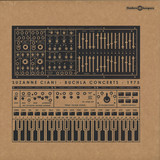
Finders Keepers invite you to witness the incredible first ever Buchla synthesiser concerts/demonstrations providing a distinctive feminine alternative to The Silver Apples Of The Moon if they had ever been presented in phonographic form. This is history in the remaking.
This spring Finders Keepers Records are proud to release an archival project that not only redefines musical history but boasts genuine claim to the overused buzzwords such as pioneering, maverick, experimental, groundbreaking and esoteric, while questioning social politics and the evolution of music technology as we've come to understand it. To describe this records as a game-changer is an understatement. This record represents a musical revolution, a scientific benchmark and a trophy in the cabinet of counter culture creativity. This record is a triumphant yardstick in the synthesiser space race and the untold story of the first woman on the proverbial moon. While pondering the early accolades of this record it's daunting to learn that this record was in fact not a record at all... It was a manifesto and a gateway to a new world, that somehow never quite opened. If the unfamiliar, modernistic, melodic, pulses, tones and harmonics found on this 1975 live presentation/grant application/educational demonstration had been placed in a phonographic context alongside the promoted work of Morton Subotnick, Walter Carlos or Tomita then the name Suzanne Ciani and her influence would have already radically changed the shape, sound and gender of our record collections. Hopefully there is still chance.
In short, Suzanne was a self-imposed twenty-year-old employee of the Buchla modular synthesiser company, San Francisco's neck and neck contender to New York's Moog. Buchla was run by a community of festival freaks and academic acid eaters whose roots in new age lifestyles and the reinvention of art and music replaced the business acumen enjoyed by its likeminded East Coasters. In the eyes of the consumer the creative refusal to adopt rudimentary facets like a piano keyboard controller rendered the Buchla synthesiser the more obscure stubborn sister of the synth marathon, steering these incredible units away from the mainstream into the homes and studios of free music aficionados, art house composers and die-hard revolutionaries. Championed and semi-showcased by composer Morton Subotnick on his albums The Bull and Silver Apples Of The Moon, Buchla's versatility began to open the minds of a new generation, but the high-end design features and no-compromise modus operandi was often confused with incompatibility and, in the pulsating shadow of Moog's marketing, the revolution would not be televised nor patronised. Suzanne Ciani, as one of the very few female composers on the frontline (and also providing the back line) did not lose faith.
These concerts' are the epitome of rare music technology historic documents, performed by a real musician whose skills and academic education in classical composition already outweighed her male synthesiser contemporaries of twice her age. At the very start of her fragile career these recordings are nothing short of sacrificial ode to her mentor and machine, sonic pickets of the revolution and love letters to an absolutely genuine vision of and 'alternative' musical future. In denouncing her own precocious polymathmatic past in a bid to persuade the world to sing from a new hymn sheet, Suzanne Ciani created a bi-product of never before heard music that would render the pigeon holes ambient' and futuristic' utterly inadequate. Providing nothing short of an entirely different feminine take on the experimental records' of Morton Subotnick and proving to a small, judgmental audience and jury the true versatility of one of the most radical and idiosyncratic musical instruments of the 20th century. These recordings have not been heard since then.
The importance of these genuinely lost pieces of electronic musics puzzle almost eclipses the glaring detail of Suzanne's gender as a distinct minority in an almost exclusively male dominated, faceless, coldly scientific landscape. Those familiar with Suzanne's work, a vast vault of previously unpublished non-records', will already know how the creative politics in her art of being' simultaneously reshaped the worlds of synth design, advertising and film composition before anyone had even dropped a stylus in her groove. Needless to say this record, finally commanding the archival format of choice, courtesy of the Ciani and Finders Keepers longstanding unison, was not the last first' with which this hugely important composer would gift society, and the future of a wide range of exciting evolving creative disciplines.
You have found a holy grail of electronic music and a female musical pioneer who was too proactive to take the trophies. With the light of Buchla and Ciani's initial flame Finders Keepers continues to take a torch through the vaults of this lesser-celebrated music legacy shining a beam on these non-records' that evaded the limelight for almost half a century. You can't write history when you are too busy making it. With fresh ink in the bottomless well, let's start at the beginning. Again. You, are invited!
out of Stock
Last delivered 6 years ago available to reorder, subject to availability
Writing music for film and theatre has always been a big part of Hania Rani's musical world. It is also a part of the creative process that can be tantalisingly out of reach for listeners, either the project doesn't come to fruition or the music simply isn't available away from the film or play. From early collaborations with friends, to last year's two scores for full length films (xAbo: Father Boniecki directed by Aleksandra Potoczek and I Never Cry directed by Piotr Domalewski') Rani has been involved in many such projects, each representing an important step in her artistic development and life as a composer and artist:
"Composing for motion picture or theatre is for me a very different kind of work than writing for my own projects. Firstly, I need to collaborate with somebody else who sees the world through the lense of their own art and craft. That's why these kinds of encounters can be so exciting - they are a promise of creating something very new, as a result of creative work of so many people from all walks of life. Secondly, I feel that music in film is an invisible character, a missing emotion that creates a special atmosphere and sensation. It doesn't illustrate, it completes the work of art. I think it is an extremely sensitive matter that rejects banal associations and easy solutions. I feel like composing for film works like an exercise for my imagination."
It is the nature of these collaborations though, that sometimes the composers own preferred compositions don't make the final cut. This is where Music for Film and Theatre comes in as it allows Rani to present a selection of her own personal favourite pieces composed for film and plays. Pieces that made it to the final cut and pieces that were rejected by the director or the producer. Bringing the music together as an album offers a chance for Rani to share her music with her listeners on her own terms and a chance for her fans to hear a different side of her art.
"I put them in one place, as a collection of precious objects that were kept for years in a drawer. Some of them were composed a couple years ago, some are the result of recent research. I am very happy to finally be able to present them as a separate project."
Rani is of course grateful to all of the directors who have entrusted her to create music for their projects, but she professes especially warm feelings for the pieces composed for her first 'real' theatre play, Pradziady, directed by Michał Zdunik. The title comes from 'Dziady' a term in Slavic folklore for the spirits of the ancestors and a collection of pre-Christian rites, rituals and customs that were dedicated to them. The essence of these rituals was the 'communion of the living with the dead', namely, the establishment of relationships with the souls of the ancestors. "I felt this story needed extremely dark and fragile music, and at the same time a sound that could express the mixture of the two worlds - the living and the dead. I decided to compose part of the soundtrack with a string quartet but including two cellos, viola and only one violin. We recorded in a little house, completely built from wood, mostly from Finnish pine. I always felt this space has a very special, warm and natural acoustics - especially when it is combined with string instruments. The track composed for this theatre play is called Ghosts but actually didn't finally make it to the performance, although I like it so much that I thought it would perfectly fit
this compilation". Other highlights include the enchanting Soleil Pâle written for a collaboration with director Neels Castillon, and improvising dancers Alt Take, the beautiful melancholy of In Between (from the film score for xAbo: Father Boniecki) and the magical bliss of The Beach (from I Never Cry) and together they create a beautiful offering from an artist whose every note is worth hearing, but for whom the journey is just beginning:
"I am very happy to see that many artists consider my music as the right soundtrack for their works, because film music was always a huge inspiration for any of my compositions. I find there a lot of life and real emotions, but also a feeling of freedom. Freedom from my own thinking patterns and prejudices. I also believe strongly in collaboration between people, I always feel this is the way to create something really new, based on a mixture of different ways of thinking, feeling, expressing."
This then is Hania Rani, Music for Film and Theatre – enjoy!
out of Stock
Last delivered 2 years ago available to reorder, subject to availability
LOS ANGELES—To celebrate the 40th anniversary of the celebrated Talking Heads and Jonathan Demme’s concert film Stop Making Sense, the set will be re-released as a 2LP and 2CD/Blu-ray set this summer.
Released last year, the sold-out Deluxe Edition of the soundtrack will return as a 2-LP black vinyl on Rhino and 2-LP crystal clear vinyl at retail. Both variants feature a 12-page booklet with liner notes from all four band members –Tina Weymouth, David Byrne, Chris Frantz, and Jerry Harrison—and band photos. The 2CD/Blu-ray version includes the entire 28-page booklet from last year’s Deluxe Edition and a Dolby Atmos mix of the complete concert, mixed by Jerry Harrison and E.T. Thorngren, who also mixed the original release. Both will be available on July 26. Pre-order now.
The band appeared together for a sold-out screening and Q&A last night at the Pantages Theater, the same theater at which Stop Making Sense was recorded. They were joined by Blondshell, who performed “Thank You For Sending Me an Angel.” Another special screening with the band will occur in Brooklyn at the King’s Theater on June 13, with the Q&A hosted by Questlove and The Linda Linda’s performing “Found a Job.” The two events cap off a banner year of celebrations for what many consider to be the best concert film of all time.
The inspiration for Stop Making Sense came when director Jonathan Demme saw Talking Heads perform during the band’s 1983 tour for Speaking in Tongues. Afterward, he approached them with the idea of making the show into a concert film. They agreed and worked together over the next few months to finalize the details. Ultimately, Demme filmed three shows at Hollywood’s Pantages Theater in December 1983 to create Stop Making Sense.
The concert film presents a retrospective of the band up to that point, with a performance that weaves together songs from all six of its studio albums. The show progresses methodically, opening with Byrne onstage performing “Psycho Killer” alone with a drum machine. After each song, he’s joined by a new band member until Weymouth, Frantz, and Harrison are all on stage with him. The group continues to grow throughout the concert as members of the stellar touring band are added: keyboardist Bernie Worrell, percussionist Steve Scales, guitarist Alex Weir, and backup singers Lynn Mabry and Ednah Holt.
The band performs 18 songs in Stop Making Sense, including its recent single at the time, “Burning Down The House.” That summer, the song was in heavy rotation on radio and MTV, helping the song become the band’s first top 10 hit in America. It was, however, a different song from Speaking in Tongues that was destined to deliver one of the film’s signature moments. Talking Heads would perform “Girlfriend Is Better” wearing the now iconic, oversized suit inspired by costumes worn in traditional Japanese theater. For good measure, a picture of David Byrne in the suit also graces the album cover.
Stop Making Sense focuses mainly on music by Talking Heads but does include a few songs recorded outside the band: “Genius Of Love” by Tom Tom Club, “What A Day That Was” and “Big Business” from Byrne’s 1981 album, The Catherine Wheel. Limited edition vinyl versions of both of these albums, along with Harrison’s The Red And The Black, were released for this year’s Record Store Day.
When it arrived in September 1984, Stop Making Sense was an artistic and commercial triumph. The film had people dancing in theatre aisles, and the soundtrack sold over two million copies. Just last year, the Library of Congress added Stop Making Sense to the National Film Registry in recognition of its cultural, historical, and aesthetic significance.
Weymouth praises Demme as a collaborator: “…Jonathan was a very enthusiastic, highly adaptive, and imaginative guy who was just as good a listener as he was a talker and collaborator. From the get-go you just got the impression he was as flexible as he was disciplined. Being team players, that boded well for a great relationship and a great film!”
Harrison says the film still holds up today: “To me, Stop Making Sense has remained relevant because the staging and lighting techniques could have been created in a much earlier time period. For example, Vari-Lights, lights with motors to re-aim them, had just come into vogue. Had we used them, there would have been a timestamp on the film, and it eventually would have felt dated...The absence of interviews, combined with the elegant and timeless lighting, created a film that can be watched over and over.”
Byrne says it’s interesting that this album was – for many people – an introduction to Talking Heads. “We had done a live album before this, but coupled with the film, and with the improved mixes and sound quality, this record reached a whole new audience. As often happens, the songs got an added energy when we performed them live and were inspired by having an audience. In many ways, these versions are more exciting than the studio recordings, so maybe that’s why a lot of folks discovered us via this record.”
Frantz recalls the sheer joy surrounding the entire Stop Making Sense experience. “I’m talking about real, conscious, transcendent joy… I’m talking about what the Southern gospel people call ‘getting happy,’ which means ‘to be filled with the Spirit.’ That is what happened to us onstage every night, and from my seat behind the drums, I recognized that this was happening to the audience too. Joy was visible in front of me and all around me every night.”
out of Stock
Last delivered 2 years ago available to reorder, subject to availability
Veiga lands straight on the dancefloor, no ambiguity about it. Spurred by the guys from RS Produções, he's been honing his DJ skills since he was 17 (currently 23), initially with partner Nunocoox, who gave him even more motivation. Production came naturally sometime in 2020. We venture: maybe one of the good things coming out of the lockdown? Summer of '22, his debut at Musicbox (at the Príncipe monthly residency) is recorded as a festive, lively set, punctuated by the kind of crowd shouts only heard when things go really happy and sweaty. Since then, Veiga's name has been spotted regularly in the afro club scene, growing in reputation
This side of kuduro, "Leandro" is as expressive as it gets, with percussive forces pulling in deceitfully different directions, much in the same style as the slower form of tarraxo. But we can call this house, yeah? No niceties, however: little over 3 minutes and the track abruptly cuts into silence, exuding the raw power of something made for the mix, not in the least "for the people". In a similar pragmatic mode, the stabs in "Sem Nome" get the party started unannounced. Full mode, for the duration. Minimal groove, broken beats and emotive highlights. "Boiler Room" may be wishful thinking, an interpretation of what is required to rock the place or, ultimately, just a title to wrap up the project. In any case, here's a feisty vocal-and-whistle driven stormer, building up to perfection over three and a half minutes. All elements exactly where they belong. Relentless pace in "X de Destroi", a dark side operation, unreal ambiance, breakneck beats, a purgation?
The title "Tudo É No Guetto" contains all the necessary theory. Everything happens in the ghetto. This uplifting house slab celebrates life as it is, freezing hardships for a moment, the ghetto seen as welcoming, a natural place to be. Vocals stashed away in his cell phone come from the animação crew Os Twinni (he joined them for a while). Clipped, repeated and manipulated to convey the very simple feeling of good times. Veiga himself talks about growing up with minimum resources but still happy. That is the memory he retains from being a kid in the ghettos of Amadora, just outside of Lisbon, born to a Cape Verdean father and Portuguese mother. Though the music sounds carefree and the message is chilled, let us not be tempted to rebrand Reality.
out of Stock
Last delivered 2 years ago available to reorder, subject to availability
Being back in the prairies after decades away opened up boxes of tightly wrapped insanity, delicate stuff, and bizarre things. The joy and sorrow of the place drives me into the Blues studio to make more art for you. It's made with big heart from way out West, to keep you alive and virile.”
Welcome back. Where's the party at? Son Of Dave's 11th album kicks off with homecoming outbursts. After 26 years in London UK he's back in the Canadian Prairies demanding as much attention as always. Themes of flat Midwest cities, classic-rock lovin' truckers, and a weird call for More Mayonnaise will keep his multitude of international fans chuckling. The usual Son Of Dave bag of tricks colours the album: Blues-harmonica, beat-box, cheap electric guitar, and that voice that shouts and croons his own brand of Blues infused old-school R&B.
As always, he messes with different rhythms: Funk, Boogaloo, Rock-Steady, or Techno, always doing it his own way. How do you categorize a Son of Dave album? He's become his own style, loved and shared by millions of fans worldwide. That's why you'll find his music in the Breaking Bad soundtrack and many more. You'll hear it on college radio or boomer generation blues radio programs from Switzerland to Argentina. A true maverick Bluesman.
Most of the record is done completely himself. All writing, instruments, editing, recording, mixing and artwork. You're welcome. Three exceptions are “Where's The Party At” , produced by long-time collaborator Tim Gordine in London, and two recorded on Vancouver Island by Zac Cohen at lovely Woodshop Studios, “Yahoos” and “I Told You All I Know”. The album will be released on July 12th. Four singles will lead up. Plenty of videos and fun coming. Shows and tours forthcoming.
Fronted by vocalist/guitarist Taylor Madison, and with Jake Clarke on drums and Mike Paulshock on bass, Webbed Wing cement their place in modern rock supremacy across 10 tracks of fuzzed-out pop nostalgia on new album Vol III. One impossibly-catchy anthem after another, loaded with Madison's signature sardonic wit, makes for one of the most exciting alternative rock records of the year. Taking notes from the likes of The Lemonheads and Teenage Fanclub, "Further" opens Webbed Wing's new album Vol. III with a bang--in less than 10 seconds, we're all the way in with Webbed Wing as they expertly intertwine the vibrancy of modern pop, the heaviness of grunge, and the sincerity of country. Brazen and self-deprecating, "Burn It Down" finds Madison unpacking what it means to fly too close to the sun. Its mid-tempo mastery is a testament to the trio's connection as musicians and friends; everything about this song just works. Drawing inspiration from big country ballads and shoegaze gems alike, the song shows off a different side of what listeners can expect from Vol. III.
Hometown to Come' is the second full-length album by Minhwi Lee from Seoul, South Korea. The eight tracks were written over a period of seven years after Lee's first album and loosely form a single story, contemplating how people who have lost their hometown can return.
“What I had imagined from the title, Hometown to Come, was something forever delayed yet constantly approaching; however, upon repeated listens, it takes on a different meaning—a promise of hospitality being realized every day. Even if our places to meet disappear, ‘the song we sing today’ will remain. We will continue to grow, cross paths again, venture far away, and encounter more faces. And when time has passed and you, having forgotten me, ask about my smile or sadness, I will hum ‘the same song,’ cherishing it as a keepsake.” (morceau j. woo, sound designer)
After a few concerts/screenings improvised as a duo in Cairo and Beirut, as well as for the Rencontres d’Arles, the Lille photography center and the Belgian magazine Halogénure, Dargent and Oberland have teamed up with mavericks Elieh and Halal for a puzzling cross-border manifesto. The first sonic moves of this eclectic quartet, made in a bunker studio somewhere between Paris and Berlin,
urgently took the form of a quest, that of a neo-folklore for troubled times, a music seeping with many kinds of atavism and experimenting in all directions. A fertile no-man’s-land where trance and contem1plation, jazz and electronica, acoustics and electricity would merge in a stimulating mystical magma. From the possible emergence of a Babelian language to the shared desire to rediscover mu[1]sic as a ceremonial act, this encounter took place over three days of improvised sound bacchanalia, the phases of which were all recorded by Benoit Bel (Zombie Zombie, Thurston Moore Group, Oi[1]seaux-Tempête). A hallucinated and generous testimony, SIHR is a synergy of many different worlds and many different possibilities, the sonic vision of a present conjugated in a hybrid tense and exalted by too many tangos danced on the glowing ashes of our days
Dive into the spiritual depths of Carnatic Music (Southern Indian classical music) - An enchanting journey of devotion and transcendence pulsates with raw sincerity and profound spirituality, casting a spell that transcends boundaries of belief.
Originally released on CD in 2000 from South Indian Carnatic music label and reissued on vinyl and digital first time in 2019 by Time Capsule. New 2024 repress vinyl has different tracks on the B side and it still remains as the reverse cut as the 2019 version.
2024 new vinyl repress with different track list on the side B. Reverse Cut Vinyl - This record plays from the inner groove to the outer groove. Comes with a hype sticker.
Born into a musician family steeped in the south Indian tradition of vocal music, the Mumbai-raised singer took advantage of the city’s cosmopolitism to study northern Hindustani disciplines, one of the few vocalists to train in both. Now revered as one of the greatest living exponents of Carnatic music, she received an Oscar nomination for her work on Ang Lee’s Life of Pi.
Within the first minute of opener Sada Bada (Slokam), Jayashri’s intensely spiritual vocals give a clear indication of why she has been increasingly embraced by a new generation of western listeners who’ve made the natural leap from ambient soundscapes to new age and devotional music. Accompanied on the following Bhajeham Bhajeham by a hypnotic rhythmic backing of mridangam drums, bells and the drone of a tambura, over its epic twenty-minute length she stretches her voice into a variety of spellbinding forms – her softly enunciated dedications to Shiva enveloping you with their immersive warmth and cosmic beauty. Keshvaya Namaha is an invocation to Lord Vishnu, the protector of creation and one of the other major deities of the Hindu tradition, while Raghavam recites the names and attributes of two of his most popular avatars: the heroic Rama and the playful, loving Krishna.
One of the album’s new-found devotees is label boss Kay Suzuki: “every time I listen I’m amazed at how such a small ensemble can create such a deep musical landscape. The incredible production plays a big part. That intricate percussion sounds so clear and sits in all the right pockets rhythmically and sonically. Just by following this groove I’m put into a timeless zone, but when her voice hits on top of that gorgeous drone sound and I focus on the details of her small melodies within melodies, my heart centres and I find myself in a blissful place.”
As professor of cultural and political theory in Universicty of East London, Jeremy Gilbert states in the album’s liner notes, the mesmerising sincerity and deep spirituality of these songs present an intense and spiritual charge that will appeal to an audience well beyond believers and devotees of Hinduism.
out of Stock
Last delivered 12 months ago available to reorder, subject to availability
Skin Bank is the second full-length vinyl release from Italian techno deviant Crypto Order. Drawing inspiration from conspiracy theories, occultism, transhumanism and the New World Order, the project mixes confrontational themes and recycled propaganda with a haunting blend of dark beats and ominous melodies. Thanks to a prolific body of work amassed over the last few years, savvy listeners who have been paying attention to the right places will know him already as an unorthodox force to be reckoned with in today’s underground music world. A hallmark of Crypto Order’s work is an enigmatic deployment of both sound and vision. Heavy electro-style breakbeats and extra-terrestrial atmospheres create a warped-yet-familiar sound reminiscent of early techno, whilst a compelling visual aesthetic evoking echoes of the early industrial and power electronics scenes infuses it further with a sense of mystery. Themes of power and control have been par for the course in the music of Crypto Order and Skin Bank is no different, manifesting a world that invites the listener to question the reality around them and dive deep into the shadows of their own repressed and murky consciousness. This is a kind of electronic body music which sends you into a dystopian realm of chaos and intrigue, throwing up uncomfortable questions along the way.
Una Magnum Special Per Tony Saitta (aka. Blazing Magnum: Strange Shadows In An Empty Room)> is a cop movie directed in year 1976 by Alberto De Martino and starring Stuart Whitman, Martin Landau, Tisa Farrow, and Gayle Hunnicutt. It was co-produced by Italy and Canada. An Ottawa police captain searches for the person who poisoned his sister, who was attending the university in Montreal. Later on, he desperately starts to use his own brutal methods to find the killer, but the truth turns out to be something different than what he had expected.
Trovajoli has composed and conducted a score that elegantly occupies a place of all respect in the Cops/Giallo movies’ scoring. The score alternates between action-driven funky music to nostalgic/romantic music in a reflection of the two dimensions of the protagonist: his cop job full of tasks and his private life full of sadness, but he becomes the superhero of the story by taking vengeance against those who hurt him by killing his beloved sister, and ultimately discovering the unexpected truth. For this vinyl album the original record master in stereo sound was used, restored and remastered to the highest quality. More or less the music in the movie is featured on this album, prepared for release by the composer himself for a very fine listening experience. Enjoy a half-hour with Armando Trovajoli and his cool sound!
BOBBY ROBINSON was more than a fixture in hisNew York community, he had been an essential part of its lifeblood for over 60 years. Had he just been the proprietor of the first record store (and reputedly the first black-owned business) on 125th Street, he would have been important enough, but he also had an ear for talent, recording landmark music across four decades, always at home with the music of his neighbourhood, be it doo-wop, R&B, soul or even rap.
He was an entrepreneur involved in over a dozen different labels, sometimes on his own, sometimes with a partner, often with his brother Danny, and he was behind records that became internationally famous by Gladys Knight, King Curtis, Elmore James, Lee Dorsey, Wilbert Harrison and Grandmaster Flash. He made many more that were simply good, and this compilation takes aim at the great work he did as a soul and R&B producer during the 1960s and early 70s. It’s an introduction that shows the quality that he created had depth beyond the headline names.
Northampton, Massachusetts. The Five Colleges. Hampshire College. Forward-thinking education. Electronic Music studies. A vast student population created and sustained a vibrant cultural scene. This is but a snapshot of a fraction, but a fertile and significant one that impacted the lives of many who came in contact with it. The book follows a tight group of people who got together, made music, promoted and released it, created the conditions for others to record and release music, booked bands and then scattered throughout the Midwest and East Coast.
First person memories and memorabilia from Christopher Vine, Craig O'Donnell, Elliott Sharp, James Whittemore, Nicholas Brown, Sean Elias and others, patch up a story of joyous action, firm and enthusiastic DIY endeavours to make things happen as they would like them to happen. It is about a local scene and some key protagonists and it communicates values and methods that are still current — and probably will always be in some form or another among young people with a serious drive to act upon their artistic inclinations. This is also a depiction of what was in fact a model of a music scene. A complete ecosystem was in place during this period. Northampton, sure, but extended across the whole of Pioneer Valley in Western Massachusetts. Bars, music and record stores, live music, College radio, electronic music studios, written press and a lot of energy going into creative work. The immediate "punk effect" motivated the appearance of numerous bands, many short lived, others evolving into New Wave / Power Pop territory, eventually crossing into Post-Punk experimentation.
Turning The Crank is also a companion to an EP of the same title, including music played, produced and recorded in Northampton between decades (1970s going into the 1980s) by different combinations of individuals resulting in The Higher Primates, The Scientific Americans and Human Error. Music in turns mechanical and austere, gorgeously loose, in love with Dub.
Jaqee – is rhythm and life ”Places becoming journeys in themselves… Different places where I have lived and learned, places that have made my heart beat, the emotional realms that I have experienced. This is where it all starts, every time. Where I am is where it happens, because I am, there. Here.” She sings. She laughs! And she cries, too. Jaqee cannot tell when music and singing became her life, it has ”just always been there, in my head” she says. Now with the fourth album she has taken a closer look at herself, from every possible angle. No hiding. Different phases, different sides of her personality and musical creativity are all there. All as one. ”I am a diaspora kid, I fell in love with all kinds of music, I let myself embrace it all, because good music, is good music. All the way from Uganda at age 13 to the new home and culture in Sweden, then leaving Sweden as an adult for Berlin – has made me the Jaqee that I am”, says the Ugandan /Swedish artist who also received a Swedish Grammy nomination for her past work. Being on the move is without a doubt an important part of her life. “For me travelling is about being exposed to different perceptions, situations, cultures and extreme emotions, it has always made me grow. How many times have I not thought that: I wouldn’t have experienced this or that, if hadn’t been here. I love that feeling!” Jaqee’s music reflects this constant movement and progress. The album is inspired by places like Berlin, South Africa and Jamaica. The trip to Jamaica resulted in the only collaboration track on “Yes I am” recorded in Kingston with reggae artist Anthony B. Teka, the “Kokoo Girl” and “Yes I am” Producer says: ”This time around, like on the last album, we have worked with our colleagues in different countries. Musicians we love and musicians that are inspiring like Martin Hederos (The Soundtrack of our lives) who arranged the strings on the album. We also had New York drummer Daru Jones of Rusic Records play on some tracks. All these talents enhance the idea and expression that we wanted for “Yes I am”. With the album done, it is again time to hit the road and tour for Jaqee. “Getting out there and meeting the crowd is a high. We laugh, we dance and we get loud together. This is the best part of working with music – having a good time together. Music is a universal language.” On composing music, she admits that this time, more than ever, the words matter. Newly found motherhood has made this album in particular a significant legacy. Every song has a life punctuation of its own she has not limited herself by thinking in genres. Making the tone very straightforward. “The melodies and lyrics are closely intertwined, how I sing a word makes all the difference. Even though I love word play, it has to be very clear. Since I am not educated in reading music, I instead visualize and hear it, it seems to be the way my system works. It is all about rhythm and life, it is “YES I AM“.
Lenticular Sleeve / White Vinyl. When Jack Tatum began work on Life of Pause, his third full-length to date, he had lofty ambitions: Don't just write another album; create another world. One with enough detail and texture and dimension that a listener could step inside, explore, and inhabit it as they see fit. "I desperately wanted for this to be the kind of record that would displace me," he says. "I'm terrified by the idea of being any one thing, or being of any one genre. And whether or not I accomplish that, I know that my only hope of getting there is to constantly reinvent. That reinvention doesn't need to be drastic, but every new record has to have its own identity, and it has to have a separate set of goals from what came before." What came before: a rightfully acclaimed, much beloved display of singular pop craftsmanship. Tatum's dreamy, unexpected 2010 debut, Gemini, was written while he was still a student at Virginia Tech University. Its equally disarming follow-up, 2012's Nocturne, marked the first time he'd been able to bring his bedroom recordings into a studio, to be performed and fully realized with the help of other musicians. There has been a set of wonderfully expansive EPs in between_each hinting at new directions and punctuating previous ideas_but with Life of Pause, Tatum delivers what he describes as his most "honest" and "mature" work yet, an exquisitely arranged and beautifully recorded collection of songs that marry the immediate with the indefinable. "I allowed myself to go down every route I could imagine even if it ended up not working for me," he says. "I owe it to myself to take as many risks as possible. Songs are songs and you have to allow yourself to be open to everything." After a prolonged period of writing and experimentation, recording took place over several weeks in both Los Angeles and Stockholm, with producer Thom Monahan (Devendra Banhart, Beachwood Sparks) helping Tatum in his search for a more natural and organically textured sound. In Sweden, in a studio once owned by ABBA, they enlisted Peter, Bjorn and John drummer John Ericsson and fellow Swedish Radio Symphony Orchestra veteran Pelle Jacobsson, to contribute drums and marimba. In California, at Monahan's home, Tatum collaborated with Medicine guitarist Brad Laner and a crew of saxophonists. From the hypnotic polyrhythms of "Reichpop" to the sugary howl of "Japanese Alice" to the hallucinogenic R&B of "A Woman's Wisdom," the result is a complete, fully immersive listening environment. "I just kept things really simple, writing as ideas came to me," he says. "There's definitely a different kind of `self' in the picture this time around. There's no real love lost, it's much more a record of coming to terms and defining what it is that you have_your place, your relationships. I view every record as an opportunity to write better songs. At the end of the day it still sounds like me, just new."
Joanna Gemma Auguri releases her new album "Hiraeth" on 28th June via Duchess Box Records Joanna Gemma Auguri is a Berlin musician, songwriter and actress. In the various stages ofher musical solo and band projects, she incorporates influences from folk, ambient andavant-garde music.Being five years old she escaped with her parents from Poland, which was under martial law,and had to learn at an early age what uprooting means. This experience is reflected in her music as an expression of personal sadness, compassion, but also despair about the state of the world.2021 she released her solo debut "11" on her own label Lavender Music. It was mainly characterized by accordion, zitherand her vocals. Her new album "Hiraeth" was recorded at Candy Bomber Studios in Berlin by Ingo Krauss, with a large number of musicians. Besides choir, double bass, lap steel guitar, drums, cello, horns , different organs and keyboards her original instruments accordion and zither still shine through from time to time. Joanna's voice sits unmistakable on top of the majestic,nearly monumental compositions which despite their richness always stay basic and delicate. "Hiraeth" is an untranslatable Welsh word that describes the longing for a home, a place or a feeling that no longer exists or never existed.The album will be released June 2024 on Duchess Box from Berlin.
“The place where I’m taking my inspiration from is a place of pure harmony and light. I’m just like everyone else – I’m very anxious, I have my issues and demons, but there is a place inside me which is much more in peace and harmony, so I took inspiration from this part of myself, rather than the dark part.”
As the world we live in grows darker and more bewildering with every passing day, the transformative power of music has never been more vital. Formed in the small French town of Bagnols-sur-Cèze at the dawn of the century, underground icons Alcest have always been clear about their desire to transport listeners to somewhere different, somewhere better. Led by founder and multi-instrumentalist Neige, the French artists have been one of the most consistently radical voices in all of heavy music, with a sound that eschews metal’s often myopic devotion to casting shadows, in favour of a sublime blend of darkness and blinding bright light.
The release of Alcest’s debut album Souvenirs d’un Autre Monde in 2007 blazed a unique trail through the underground metal world, eliciting high praise and feverish condemnation in equal amounts. Ostensibly a black metal project, Neige’s crew gifted an entirely new perspective to the black metal scene: wherein beauty, fragility, melody and positive vibrations co-exist with the fast, furious aesthetic of true extreme metal. Almost instantaneously influential, Alcest were able to steadily establish themselves as a unique force, both with a series of acclaimed albums and a sturdy reputation as a transcendent live act.
From the enlightened primitivism of 2010’s Écailles de Lune, and the definitive, holistic squall of Les Voyages De L’Âme (2012), to the magical, post-rock splendour of Shelter (2014) and the dark, dynamic Kodama (2016), Neige’s vision has been presented in the most vibrant and revelatory colours. Meanwhile, the legions of like-minded “blackgaze” bands that have followed in Alcest’s wake speak volumes about the Frenchmen’s profound and enduring influence.
Released in October 2019, Alcest’s sixth studio album marked another grand milestone in their story. Their first record for Nuclear Blast Records, Spiritual Instinct deftly sustained the conceptual and musical preoccupations of past achievements, while taking Neige and long-time drummer Winterhalter into new sonic realms, both grittier and more nuanced than ever before. Inevitably, plans to tour their new music were eventually scuppered by the global pandemic that broke out early in 2020. But Alcest’s creative journey continued regardless, and the results can be heard on the band’s latest album, Les Chants de L’Aurore.
Having redirected his artistic energies, Neige began work on the follow-up to Spiritual Instinct, newly inspired by the experiential essence that first led him to his band’s ground-breaking musical life. As with Souvenirs d’un Autre Mode, Les Chants de L’Aurore draws inspiration from the spiritual childhood experiences that have shaped Neige, both as a musician and a human being. A liberated nosedive into the very notion of consciousness and the layered mists of reality, the seventh Alcest album amounts to a euphoric homecoming.
“The place where I’m taking my inspiration from is a place of pure harmony and light. I’m just like everyone else – I’m very anxious, I have my issues and demons, but there is a place inside me which is much more in peace and harmony, so I took inspiration from this part of myself, rather than the dark part.”
As the world we live in grows darker and more bewildering with every passing day, the transformative power of music has never been more vital. Formed in the small French town of Bagnols-sur-Cèze at the dawn of the century, underground icons Alcest have always been clear about their desire to transport listeners to somewhere different, somewhere better. Led by founder and multi-instrumentalist Neige, the French artists have been one of the most consistently radical voices in all of heavy music, with a sound that eschews metal’s often myopic devotion to casting shadows, in favour of a sublime blend of darkness and blinding bright light.
The release of Alcest’s debut album Souvenirs d’un Autre Monde in 2007 blazed a unique trail through the underground metal world, eliciting high praise and feverish condemnation in equal amounts. Ostensibly a black metal project, Neige’s crew gifted an entirely new perspective to the black metal scene: wherein beauty, fragility, melody and positive vibrations co-exist with the fast, furious aesthetic of true extreme metal. Almost instantaneously influential, Alcest were able to steadily establish themselves as a unique force, both with a series of acclaimed albums and a sturdy reputation as a transcendent live act.
From the enlightened primitivism of 2010’s Écailles de Lune, and the definitive, holistic squall of Les Voyages De L’Âme (2012), to the magical, post-rock splendour of Shelter (2014) and the dark, dynamic Kodama (2016), Neige’s vision has been presented in the most vibrant and revelatory colours. Meanwhile, the legions of like-minded “blackgaze” bands that have followed in Alcest’s wake speak volumes about the Frenchmen’s profound and enduring influence.
Released in October 2019, Alcest’s sixth studio album marked another grand milestone in their story. Their first record for Nuclear Blast Records, Spiritual Instinct deftly sustained the conceptual and musical preoccupations of past achievements, while taking Neige and long-time drummer Winterhalter into new sonic realms, both grittier and more nuanced than ever before. Inevitably, plans to tour their new music were eventually scuppered by the global pandemic that broke out early in 2020. But Alcest’s creative journey continued regardless, and the results can be heard on the band’s latest album, Les Chants de L’Aurore.
Having redirected his artistic energies, Neige began work on the follow-up to Spiritual Instinct, newly inspired by the experiential essence that first led him to his band’s ground-breaking musical life. As with Souvenirs d’un Autre Mode, Les Chants de L’Aurore draws inspiration from the spiritual childhood experiences that have shaped Neige, both as a musician and a human being. A liberated nosedive into the very notion of consciousness and the layered mists of reality, the seventh Alcest album amounts to a euphoric homecoming.
On her sophomore album "Germ in a Population of Buildings", upsammy moves through her surroundings with the curiosity of a place-bending landscape architect. The album is rooted in her interest for ambiguous environments in constant shift, and the feeling of discovering strange patterns in different ecosystems. Often, the Amsterdam-based artist finds herself zooming in and out beyond a place's most recognizable surface features to inhabit the microscopic and gigantic. Gathering field recordings and evocative environmental sounds, she shapes this source material into vibrating electro-acoustic rhythms and unstable, psychedelic textures. upsammy's debut album, 2020's critically-acclaimed "Zoom", was praised for its careful reimagining of IDM, evolving vignettes that nodded towards the dancefloor without being shackled to its rigid set of rules. On "Germ in a Population of Buildings" her process has evolved considerably; the skeletal trace of IDM is still present but it's been trapped in amber, allowing her unique sonic landscape to develop organically. 'Being is a Stone' is a proof of concept in many ways, layering upsammy's contorted voice in rickety patterns beneath a lattice of fragile rhythms and faintly melancholy synths. It's never immediately obvious where the sounds are coming from - a hiccuping beat might be glass cracking underfoot, and larger pulses could be wet concrete, rusted iron or bent plastic. As the sounds develop they morph into each other, demolishing what came before and building on top of the ornamental wreckage. On the dynamic 'Constructing', upsammy's sound design fluxes through hyperactive bass music structures, abstracting expectations at every turn. Often her sounds are whisper quiet, rattling and vibrating until heavier masonry drops and disrupts the structure. And when discernible rhythms subside into the background, like on the album's eerie title track, they become almost illusory, morphing between the real world and the electronic. upsammy's processed voice works like a bridge between these realms, snaking between stark, whimsical melodies on 'Patterning', arching from AutoTuned detachment into cooing, dreamy intimacy. By considering the harmonies between each location she's visited, upsammy has been able to build a unique topology that's an uncanny digital amalgam of her lived experience. It's a thoughtful alternative in an era more concerned with flatting the landscape than crumpling it and examining its peaks and troughs.
out of Stock
Last delivered 44 days ago available to reorder, subject to availability
Mick Harris is one of the world's greatest compositional treasures. Starting his career as the energy dynamo behind the drum kit of the UK's Napalm Death, he made the term Blastbeat a household reference, wrote the band's music on his mother's one string guitar, and joined the Guinness Book of World Records for composing the world's shortest song. In the decades succeeding, he has re-inventedmusic several more times, from the wild abstract jazz of Painkiller with John Zorn and Bill Laswell, to the drowning ambience of his Lull project, all while continuing to build a world that he can truly call his own - the dark post-dub of SCORN. "Reaching 54 this year - this won't stop the challenge, driving me more so now than ever" - says Mick Harris, commenting on the recent phase in his creativity. The pandemic isolation and lockdown pushed the work of the maestro more than anything else could have. In 2021, his output is ever-increasing, releasing the newest collabs with Justin K. Broadrick and the single "Distortion", featuring one of the most outstanding voices of hip-hop - Kool Keith - his closest collaborator, Ohm Resistance founder - Submerged. Commenting on the release of "Distortion", Mick Harris said to mxdwn: "I enjoy collabs - they bring something different to the swim." Working on his own and collaborating with everyone from Sleaford Mods' James Williamson, on the previous SCORN release or with Kool Keith and Submerged on "Distortion", Mick Harris never had problems with putting energy into beats and sound landscapes, combining various surreal elements with three basic elements that always push Harris further, that are extremely crucial for both Mick Harris and SCORN as a project - frustration, anger and anxiety. Combining the signature soundscapes of Scorn with tartareous textures, the newest album "The Only Place" reaches a psychedelic groove, based on what Harris calls "Pushing an original idea further" with his own shades of light and dark and celestial electricity of what SCORN is. These 10 new tracks add elements unheard in Scorn since Evanescense and Gyral - ethereal ambiences and floating, near-melodic-but-not-quite moments, a signature of Harris' abilities to generate feelings in a lost world of his own creation. 2024 vinyl version on orange coloured vinyl!
out of Stock
Last delivered 5 years ago available to reorder, subject to availability
House of Harm are proud to announce the forthcoming release of their new album Playground, out December 1st, 2023. The new record builds and expands upon the three-piece’s enthralling shadow-pop sound, a mix of midnight atmospherics, 90s era jangle pop, and contagious synth drenched hooks that further elevate the transcendent vocals of lead singer Michael Rocheford. Rounded out by Cooper Leardi (guitar / synths) and Tyler Kershaw (guitar / synth), House of Harm have amassed an impressive following as something of a best kept secret among their growing fanbase, leading to sold out shows on both coasts by the power of word of mouth alone. The band members have been drawn to music for as long as any of them can remember, and the drive to be around like-minded artists and make their own noise drew them all to Boston after high school. There they all quickly enmeshed themselves, playing in other bands before meeting each other. Ever since, House of Harm have been quietly making a name for themselves among music fans with darker pop persuasions via a steady stream of releases in single, ep and album form. That attention to detail and workmanlike approach at the expense of chasing instant gratification seems to be paying dividends after years of steady effort. The journey of their new album Playground saw House of Harm stay true to that ethos. The band painstakingly narrowed the record down to an efficient 10 tracks that they felt made the most sense, both standing on their own as well as fitting into an LP that built a cohesive world for the listener to get lost in. The album’s name also reflects the experimentation and happy accidents that came about during the writing and recording process. On “The Face of Grace” they set out to explore different dynamics by writing a song entirely without drums, but couldn't help themselves from putting emphasis on the song’s 6/8 waltz time signature. “Two Kinds” is another first for House Of Harm in that it’s predominantly driven by acoustic guitar. That aforementioned vulnerability shows up in other areas of the songwriting process as well with “Two Kinds”, one of their most revealing songs to date from a lyrical standpoint, written from a place of reflection and weakness and tackling feelings uneasy to be put on display for public consumption. Taken as a whole, the end result is an album representing a collection of the band’s most raw and expressive songs yet.
Octave One continues to visit some classic Never On Sunday tracks with a second installment of their Messages From The Mothership series. This latest 12" finds the pair release two different Mothership mixes of 'The Bearer' and 'Contemplate'.
The pioneering Detroit brothers have shown a different side to their sound with the Never On Sunday project, both back when it was devised in the early nineties, and more recently when they have looked back over some of the project's key tracks and added a contemporary spin to them. Already this year the Burden Brothers have offered up new takes on 'Price We Pay' and 'A Better Tomorrow' as well as dropping brand new cut 'Mirror Image' and now their fine form continues on this latest release on their own 430 West label.
The A-side features a new Mothership Remix of 'Contemplate' from 2022 that unfolds over an epic 11 minutes of enthralling deep techno. The synths bring classic Detroit soul and the impassioned vocals layer in emotion to the sleek, compelling drums. The Instruments Version strips out the vocals and places more focus on the sublime rhythm and drums.
On the B-side, ' The Bearer' from the 2023 album Never On Sunday gets a fresh Mothership Dub. It is another masterful and almost 12-minute journey that rides on compelling drums and is lit up with a majestic vocal that soars up high while the warm, dubby undercurrents keep things moving in dynamic fashion and smeared cosmic synths bring a great sense of scale. A Mothership Instrumentals version closes out the package.
These are for more fresh perspectives on timeless house and techno fusions from the ever-innovative Octave One.
out of Stock
Last delivered 20 months ago available to reorder, subject to availability
Club music culture necessarily shifted gears in many ways during and after the course of the pandemic. Older participants found their way into other interests and younger participants took new reigns to orient spaces they felt good inside of. The agenda for the music, and the cultural industry surrounding it at large, took a more frivolous and “fun” turn. Clubs needed to recoup lost money, people needed more refreshing catharsis for their nightlife escape, and in some pockets scattered around the globe a newer and younger cadre of producers/promoters/DJ’s pulled optical cues from a scattering of “darker” influences to give an alternate aesthetic to the aforementioned “vibes” culture. In the midst of this, a large polarization of conceptual energy shifted within the compositional and utilitarian machinations of the club music culture leaving behind the brooding and cerebral placeholders for different kind of enjoyable hedonism. Terrestrial Paradise’ “Artificial Hell” harkens to another prescient time before that shift occurred. “Artificial Hell’ might just be an illustration of what all of this fun escapism encapsulates.
Terrestrial Paradise is the latest moniker from Montreal come Los Angeles based producer Jaclyn Kendal. Having developed and cemented her sonic positionality with releases on North American labels like Ascetic House and Summer isle over the years, as well as a series of monolithic live sets, Bank is pleased to announce Kendal’s Terrestrial Paradise first full length album “Artificial Hell”. Over the course of nine recordings, “Artificial Hell” gives a master class in pressurized industrial techno of the slower variety. Fitting with the legacy of Bank’s output since it’s inception, Terrestrial Paradise’s aesthetic sensibilities sit within the canon of a certain tinge of club music imbued with a sense of natural grit, sans pretense.
“Artificial Hell” nods to artists like Scorn, Regis, and 400 PPM while maintaining it’s own territory in the landscape of cerebral and brooding rhythmic techno. Ominous, mechanistic drones sit above succinctly exacted percussion composition and sound design. Throughout “Artificial Hell”, Kendal shows her proficiency with the push and pull of building and releasing tension. On tracks like “Salvation” and “Relativity” she melds her synth wash wallscapes with driving percussion, serving as both a hint and counterpoint to the the entirety of the latter part of the album taking on spartan ambient compositions as a way to keep the listener in a subdued stasis. This album is a statement piece from a long time participant in the North American underground music sectors. It reminds the listener through perilous, considered rhythms and darker drone impositions to cement themselves back into a place where not
everything is always a good time.
"In the wake of SQUID PISSER’s “Vaporize A Neighbor” EP and Comic Book Set and “Vaporize A Tadpole” Collection comes “Dreams of Puke”, the band’s second full length album. Weighing in at a meaty 12 songs and cut at a lean 45 revolutions per minute, “Dreams of Puke” refuses to let up or let down - emitting climax after scintillating climax - a bounteous bouquet of dayglow viscera and tumor-filled sonic snot.
“Dreams of Puke” is the face ripping, dolphin-loving, anthropomorphized mountain of nuclear sludge intravenously injected with methamphetamines that listeners have been clamoring for. Tommy Meehan's use of effects pedals and sonic textures create a dense soundscape of intestinal debris, mortared with a grout of pus, goo, gummy candy and pure, unadulterated insanity. Meanwhile, Seth Carolina's all out, rage-fueled and categorically pummeling approach to slamming the beats down lays out a visceral scene of absolute intensity - a great white shark attack on The Mall of America.
Tommy explains “The writing sessions for this album resulted in about 100 songs... Demos, seedlings, and scraps were strewn about everywhere. Then Seth and I assembled them into a viable and tangible fruition. I tracked all of the guitars, bass, and vocals myself at Los Angeles’ Castle Barf Studios. The drums we did at Sea Horse Sound downtown”.
“Dreams Of Puke” is an aural DMT trip that will leave brains boggled. Its atonal anthems of slime are a kaleidoscope of brilliant, bespeckled rage that, in the end, will scalp the world & mutate the throne.
Glass Mastered Compact Disc includes Mystery Matrix Message and comes packaged in a Six Panel Tri-Fold Jacket with corresponding Fold-Over Lyric Insert. LP and CD formats each sport unique, subliminally different cover art by painter Gregory Jacobsen of the band Lovely Little Girls. Parental Advisory: Explicit content"
'Quintela', the debut album by Carme López, a performer, teacher and researcher of traditional oral music from Galicia, is a new experimental work for Galician bagpipe. Influenced by the approach of composers like Éliane Radigue or Pauline Oliveros, the Spanish composer creates slowly modulating sound environments, and stretches the sonic the possibilities of the bagpipe to its absolute limit. 'Quintela' is structured in four movements, plus a prologue and an epilogue, which serve as a link to the contemporary language of the instrument.
The bagpipe is strongly tied to traditional musics; its use in different genres and musical contexts is extremely limited and unimaginative. 'Quintela' brings it to a wholly unknown field, decontextualising the bagpipe in order to elevate a personal approach, and leaving behind its male-dominated past (in which it relates to ideas of prestige, dominance or carries even sexual connotations). López expertly demonstrates its grandeur and breadth; the music on 'Quintela' ranges from barely audible sounds of air passing through the hide bag through rhythmical use of its reeds to all-encompassing drones with complex harmonic structures and vibrant overtones.
The narrative arc focuses on the composer's past, its people and places, and could be conceived as a journey in and of itself. A homage to those in our memories, but also a step into the unknown, 'Quintela' is an ambitious, graceful and captivating debut.
U.S. Cinematic outfit Whatitdo Archive Group returns to explore the worlds of Mid-Century Exotica and Library Music with "Palace Of A Thousand Sounds," out on May 5th.
From the instrumental cinematic-soul outfit behind 2021's critically acclaimed The Black Stone Affair comes Whatitdo Archive Group's most recent foray into the realms of the esoteric and arcane, and their most adventurous album to date: Palace Of A Thousand Sounds, available May 5th, 2023 on Record Kicks on limited edition LP, CD and digital platforms.
After The Black Stone Affair enthralled record collectors by traversing the cinematic landscape of an imagined 1970s Spaghetti Western, Palace Of A Thousand Sounds finds Whatitdo Archive Group entrenched deeper in the worlds of mid-century exotica and library music—from the Tropicalia-steeped Amazon to the minor key tonalities of the far-out Near East.
When the dust finally settled from their debut album, composer and tireless sound scientist Alexander Korostinsky set out to discover the band's new direction, with the ultimate goal to breathe new life into the mid-century era sound with the compass of modernity as his guide.
From its conception in 2021, Palace has sought to carry on a legacy set in motion by the likes of Martin Denny, Les Baxter and Juan García Esquivel. Korostinsky, guitarist Mark Sexton, and drummer Aaron Chiazza recorded the album in marathon sessions from Korostinsky's Studio "A," in Reno, Nevada—a mysterious sonic laboratory where the year 1970 has yet to happen, and vintage analog equipment interfaces with modern musical perspectives and experimental recording techniques to produce era-defining sounds.
Not content to appeal to the sensibilities of armchair anthropologists, Palace Of A Thousand Sounds finds the band interrogating the genre itself while making studious tributes to the real places and times it draws from. It's in this tension between here and there, fantasy and reality, that Whatitdo Archive Group find their groove.
Drawing from a century of pop and folk sounds from around the world the way only 21st-century crate-diggers can, Palace is rooted in an undercurrent of heavy funk that is decidedly here and now. Whatitdo Archive Group showcase the breadth of their influences with disarming confidence, equally at home behind sweeping harp, loungey vibraphone or Turkish bağlama saz. A lush seventeen-piece orchestra commanded by award-winning composer Louis King (Janelle Monáe, Monophonics) completes the instrumental mélange, enticing listeners to imagine a borderless planet unified by melody and rhythm.
The album is unafraid to explore the strange and uncomfortable in pursuit of an authentic musical identity, subverting expectations in pursuit of forwarding the genre while paying homage to its past. Fans will appreciate the architectural complexity of the record accessible only through multiple listens—each visit to the palace yielding new details to marvel at, curiosities to ponder, grand mysteries to explore.
Once the needle drops, W.A.G carefully guides you from room to room, sound to sound within the walls of the album's sonic palace. Listening becomes an aural journey providing glimpses into different worlds both real and imagined; you are everywhere and nowhere all at once—a guest in the grand halls and hanging gardens of time and sound.
Steeped in obscurity, a cult following of crate-diggers and musical oddity collectors has been brewing over the mysterious releases of the Whatitdo Archive Group. Surfacing in 2009 from the high deserts of Reno, NV USA, this three-piece recording collective(Alexander Korostinsky, Mark Sexton and Aaron Chiazza) focuses solely on curating, performing and preserving esoteric soundtrack, library and deep-groove collections. As an onlooker, it's hard to tell whether the music they are procuring is actually archival, music of their own creation, or both. Their debut LP The Black Stone Affair, the formerly lost soundtrack music of a once-shelved Italian cinematic masterpiece, was released in 2021 and received praise from the likes of Wall Street Journal, Mojo Magazine, Uncut, Shindig, Blues & Soul Magazine, BBC 6, FIP Radio (FR), KCRW (US), JazzFM (UK) and more. Two years later, the Whatitdo Archive Group is back. Get ready for an exotic adventure with their sophomore full-length effort: Palace of a Thousand Sounds.
out of Stock
Last delivered 2 years ago available to reorder, subject to availability
A home, a house, has countless frequencies. Each room, each corner feels different. Swings differently. And as you grow older, you realize which corner is yours. But yeah, it takes time…
It certainly marks the end of an era when the house one called home as a kid no longer exists. This home, it was the starting point of so many journeys. Of one big, ongoing journey. And so it feels good, soothing, reassuring to at least return to a spot nearby – to that (proverbial) hill from where you can see it. Feel the vibe that made you.
Andi Haberl’s debut solo album as Sun is sort of dedicated to that house. It’s a journey leading to that hill overlooking everything that made him. It’s not about nostalgia, not about actually returning to a specific place. Instead, it’s about finding a personal frequency, an overlapping of sounds and samples, an open space that mirrors and extends whatever frequencies felt right at different points in time.
“To me, the results feel like Gold Panda/Four Tet meets Steve Reich meets Krautrock meets film scores. I just really wanted to create moods that touch me – and ideally others, too.”
Talking about his first solo album, Haberl recalls many stages: early compositions that ended up on Alien Ensemble’s albums, early DIY/home studio/multi-instrumentalist inspirations (Le Millipede), new technologies that came and went, even a set of wildly convincing arrangements (done with Cico Beck’s crucial input) that ultimately became stepping stones for yet another round of DIY takes. “It was a long, recurring process, and the songs went through so many different versions,” he says, talking about phases of growth (“I added more and more equipment over time”) and pruning, “cleaning up my music a bit.” Tending towards instruments that open up space, and slowly falling in love with sampling, he certainly didn’t rush things once it was time for interior design decisions ;)
“During this whole process I got to learn so much about my own taste, how I prefer to listen to the pieces, which musical elements really matter to me… and what my own voice is. For example, that acoustic elements are most important to me: the banjo, piano, drums, my voice, glockenspiel, trumpet, melodica. Anything that opens up some space.”
Every journey begins with a search: “Missing” with its plucked chords opens like a sunrise over pastoral plains, gently leading the way towards the intricate, playful explosion that occurs once a certain amount of energy (“Sun”) hits dirt and other surfaces: things grow, clot and curdle into new shapes, like new buds; layers of sound move forward, drenched in Spring’s new light. Relying on samples to ask for precipitation (“Rain On Me”), robotic “Low” goes from barren to bass-heavy after its midway shift in pace, full of loops plucked from the shade.
Towards the album’s midpoint, things are suddenly reversed: “Cluster” has that backwards pull, you can’t tell what’s what, yet everything is perfectly locked in, as the pace increases once again. And before the title song shimmers with densified cheering (to eventually stand tall like early Lymbyc Systym), “Beside Me” swipes you off your feet with its booming bass drum. The beat returns once again (“Daydream”), full of searching voices underneath, and at “Dawnday,” we can finally catch a melancholy view of the house. Voices hum. It’s the score moment of the album. Everything makes sense now. A happy end of sorts?
“I want to take people on a journey. A personal journey, too, because when my parents split up and sold the house I grew up in, I felt a bit like the ground had fallen out from under my feet. But I have dedicated the album title and the accompanying piece to this house… so I can keep it in good memory.”
“I Can See Our House From Here” has been a long time coming. It’s been a long journey. Homeward-bound. Leading to a place that’s really Haberl’s – his sound. His frequencies.
Known as a long-time member of The Notwist and various other bands/projects (Alien Ensemble, AMEO, jersey, Ditty etc.), Berlin-based drummer/composer Andi Haberl has also worked with My Brightest Diamond, Till Brönner, Owen Pallet, and Kurt Rosenwinkel, to name a few. “I Can See Our House From Here” is his first solo offering.
What Is Not Strange? is the first full-length album by Los Angeles-based composer Tashi Wada in over five years, comprising his most far-reaching and impassioned music to date. Written and recorded over a period that encompassed the death of his father and the birth of his daughter, the album sees Wada reflecting inward to explore broad narratives - being alive, mortality, finding one's place in the world - through new modes of ecstatic, song-based expression. While the denser forms, stark contrasts, and overt surreality may carry a different weight than Wada's earlier work, which elicited perceptual effects with minimal means, the heart of What Is Not Strange? is still in experimentation and unforeseen outcomes.
The Slovenian label Cogo is back for another unmissable 4-tracker vinyl compilation with the heaviest hitters in the scene who represent the most artistically driven hypnotic techno to date. Jeroen Search, Border One, ORBE, and Tonske all lend a hand to provide an understated and deep vibe to this release full of music actively attempting to remove your mind to otherworldly places hitherto unknown.
Jeroen Search kicks off the release with ''Observer'' expertly drawing you in with a very simplified but polyrhythmic staccato synth and kick combination that slowly builds with modulating and swirling pads until it reaches a climax with a tightly regulated drum track and disorienting LFO sequenced synth patch.
Border One continues the theme of the release of minimalistic aesthetics with ''Contour'' featuring polyrhythmic ideas and evolving dissociative synths. The release culminates in a very simplified and restrained drum track that opens up the doors to a massive sonic environment where you're lost completely within the music, sitting somewhat awestruck by passing elements unfolding in front of your mind's eye.
Not to be outdone, ORBE takes a different tact with ''Wolheim'' by introducing the groove elements first and bringing in his deep understanding of setting the sonic stage with his signature atmospheres and scintillating synth hits. The track also echoes the thematic choices previously laid down by Border One and invites you into this strange alien world full of sonic curiosities and audio biology.
Tonske buttons up the release with ''Droid''. A track that has an overall sense of pulling the sonic environment toward you while you travel as a listener in your mind's eye. Outward synth blips are constantly coming from the outer periphery into view as if they are passing stars while traveling forward at a deliberate and determined pace.
out of Stock
Last delivered 11 months ago available to reorder, subject to availability