Joe Sutkowski (Dirt Buyer)'s new album is a documentation of making it to the other side. Sutkowski grew up in New Jersey, and although he lives in Brooklyn now, he remains " an emo kid at heart ," garnering inspiration from bands like My Chemical Romance and Muse, the latter of whose theatrical, dramatic performances inspired the band's own vocal-forward, soaring takes. Initially working together as a duo while Sutkowski and Ruben Radlauer (Model/Actriz) were at school in Berklee, the band's self-titled 2019 debut album was recorded on an IPhone in their practice room on just drums and guitar, and the quietly striking, nuanced stylings earned them accolades far beyond the " fake record label " the two made up to originally release their music. The band's new album, Dirt Buyer II , was recorded in February 2020, and represents a foray into heavier material that marks a deeper shift for the band. Now working as a trio, Sutkowski is flanked by Tristan Allen on bass and Mike Costa on drums, a fellow Berklee grad who cut his teeth playing in bands across Boston including past collaborations with Sutkowski. Half-recorded while the band was on tour with Surf Curse, the record finds Sutkowski reaching out for places, people and beliefs to ground him. Throughout the album he attempts to wrap his head around the idea of fate and how you can brush up against other people and then leave them behind. The songs themselves play with this concept of light and dark intertwined. Oscillating between urgency and cathartic release and more stripped-back elegies, Sutkowski faces the reality that while the people he'd rather forget can still live on through music, he is able to move on at the same time. Half-recorded in his mother and uncle's upstate house where he turned the living room into a studio, he contemplates the beauty and disaster around him - all refracted through visceral visual imagery of how the physical earth meets the unknown to converge in something greater than ourselves. " This is all a living chronicle of all I want to do, which is feel good and be happy ," he admits. " I'm a completely different person now - a better version of myself ." Processing the past, Sutkowksi has emerged with newfound belief, fully intact and with a new path forward to the future.
Buscar:different
Joe Sutkowski (Dirt Buyer)'s new album is a documentation of making it to the other side. Sutkowski grew up in New Jersey, and although he lives in Brooklyn now, he remains " an emo kid at heart ," garnering inspiration from bands like My Chemical Romance and Muse, the latter of whose theatrical, dramatic performances inspired the band's own vocal-forward, soaring takes. Initially working together as a duo while Sutkowski and Ruben Radlauer (Model/Actriz) were at school in Berklee, the band's self-titled 2019 debut album was recorded on an IPhone in their practice room on just drums and guitar, and the quietly striking, nuanced stylings earned them accolades far beyond the " fake record label " the two made up to originally release their music. The band's new album, Dirt Buyer II , was recorded in February 2020, and represents a foray into heavier material that marks a deeper shift for the band. Now working as a trio, Sutkowski is flanked by Tristan Allen on bass and Mike Costa on drums, a fellow Berklee grad who cut his teeth playing in bands across Boston including past collaborations with Sutkowski. Half-recorded while the band was on tour with Surf Curse, the record finds Sutkowski reaching out for places, people and beliefs to ground him. Throughout the album he attempts to wrap his head around the idea of fate and how you can brush up against other people and then leave them behind. The songs themselves play with this concept of light and dark intertwined. Oscillating between urgency and cathartic release and more stripped-back elegies, Sutkowski faces the reality that while the people he'd rather forget can still live on through music, he is able to move on at the same time. Half-recorded in his mother and uncle's upstate house where he turned the living room into a studio, he contemplates the beauty and disaster around him - all refracted through visceral visual imagery of how the physical earth meets the unknown to converge in something greater than ourselves. " This is all a living chronicle of all I want to do, which is feel good and be happy ," he admits. " I'm a completely different person now - a better version of myself ." Processing the past, Sutkowksi has emerged with newfound belief, fully intact and with a new path forward to the future.
Very rare Jungle release on the Cat in the Bag label. Only a few copies available for retail. On the A side a remix of CITBLTD001's track "Dubplate Skankin' " and a special track by Tommy the Cat on the flipside. Every vinyl has a different colour which makes it kinda more interesting !!!
In addition to boasting one of Reid Miles’ greatest album cover designs, Hank Mobley’s 1963 album No Room for Squares is a marvel for the music alone. Standing as one of the tenor saxophonist’s finest Blue Note entries the album features two different quintet line-ups performing a set of 6 compelling original tunes by Mobley and Lee Morgan. This Blue Note Classic Vinyl Edition is stereo, all-analog, mastered by Kevin Gray from the original master tapes, and pressed on 180g vinyl at Optimal.
- Intro 0.45
- Punk Rock Is Back! 2.02
- New York City Punk 2.09
- When The Two 77’S Clashed 3.17
- Down The Roxy 0.57
- 45: Random Punk Memories 4.05
- Looking At The Decals On Steve Jones Guitar 3.03
- We Will All Lose Some Good Friends Along The Way 3.01
- Punk Rock Fanzines 2.22
- Machine Bubble Disco 2.07
- Corrugated London 2.15
- Shakespeare Meets Chuck Berry On Shepherds Bush Green 3.14
- London’s Turning 2.09
‘Hey don’t touch that dial, good news Punk Rock Is Back!’ Mal-One
Mal-One’s new album starts with running through the radio dial, looking for some suitable music to listen to. These snippets are actually samples of songs from his previous album ‘It’s All Punk Rock’. Leading the listener nicely into a new set of songs to get their Punk Rock teeth into.
Songs that cover… the great New York punk scene of the 1970’s that grew out of a little bar in the Bowery District of New York City called CBGB’s ‘New York City Punk’. The Clash’s first album discussed in ‘When The Two 77’s Clashed’. The excitement of London’s Roxy Club revisited with its one line chant ‘Down The Roxy’. Those great ‘Punk Rock Fanzines‘, that kept us all so well informed. An early Sex Pistols gig at the Chelsea School of Art, ‘Machine Bubble Disco’. So named after what was to be the main event of that nights entertainment!!!.’45 Random Punk Memories’ sprang from Mal-One’s own reminisces. Talking of memories ‘Looking At The Decals On Steve Jones Guitar’, the recollection of Steve Jones, future guitarist of the Sex Pistols, stealing Mal-One’s bike when he was the tender age of seven years old. An incident that might have triggered this whole road of discovery in the first place.
A reflection on London’s harsh setting in those heady Punk times in ‘Corrugated London’ alongside a call and response to remember that ‘London’s Turning’ all the time for better or worse and that we can’t always pick and choose the bits we want to keep. The self-explanatory, ‘We Will All Lose Some Good Friends Along The Way’. ‘Shakespeare Meets Chuck Berry On Shepherds Bush Green’, a great story when Joe Strummer was asked by a reporter what he was up to and what he might call The Clash’s next album, which would turn out to be the timeless ‘London Calling’. Joe’s rather
tongue in cheek answer was “Shakespeare Meets Chuck Berry On Shepherds Bush Green’’.
A place close to Mal-One’s heart and a great title, that was crying out to be reused. Which Mal-One does via what he calls his Punk Art Poetry. Sometimes these lines are turned into lyrics and reworked into songs.
The album ends with such a call, ‘An Open Letter To…’ all those people who helped influence us all along the way. As the lyric states often without thought of financial gain, but done so, quiet simply because it had to be done.Maybe some young guns might in some small way, be inspired and find in Mal-One’s current efforts that ‘anything is possible’ and the true meaning of Punk was in fact, ‘Do It Yourself’.
The vinyl version of this release includes a poster that is part of Mal-Ones continuing Street Art project that involves putting up posters around London. This time declaring the news ‘Punk Rock Is Back!’. Included in the album packaging also is a signed and blind stamped limited print of one of Mal-One’s works ‘What Is It About Punk That’s So Different So Appealing’. A punk collage that just carries one word in among its multiple punk images and that word is PUNK. We hope you enjoy the indulgence.
Limited to 300 copies, this 2x12" double vinyl VA is the third physical release of the industrial techno label, Askorn Records. Including 8 tracks ranging from dark and tortured slow beats to hard and industrial techno bangers, this release brings together 9 producers from Belgium, UK, Poland, Australia and France: Twan, Dahryl, Mickey Nox, Tripped, 14anger, Draugr, Hel.IV, Ogmah and Hatelove.
A1: Twan & Dahryl - Ammunition
Pure industrial techno banger. 142bpm bomb full of fast rolling drums and screaming synths, this collaboration between
Belgium based artist TWAN and Dahryl from United Kingdom, is a furious dancefloor destroyer.
A2: Mickey Nox - Switching Horsepower
Classic industrial hammer by Mickey Nox from Australia. A crazy 4-4 techno track with his famous stomping kick, strange FX sounds, chopped with some glitchy voices. Sounds like an unstoppable engine.
B1: Tripped - Fat Load
Tripped demonstrates the perfect mix between hardcore and techno into this track, using his famous and indescribable style. Industrial hardcore and destroyed 909 gabber kickdrums, scary synths, amen breaks and terror atmosphere.
B2: 14anger - Bachman
Heavily distorted bass-line, overdrived kickdrum, an acid break and some electrical noises: Bachman is the latest 14anger
banging track. This raw industrial techno track definitely brings some oldschool rave vibes to this project.
C1: Draugr - Discipline
A dark and groovy track by Draugr. He brings his famous threatening atmospheres, spooky bass and catchy drums on
this one. Crunchy kickdrum, radar noises and a perfectly chosen speech about order and discipline.
C2: Hel.IV - Brave & Thick
Hard, dark and punchy as usual, let's introduce Hel.IV from Paris. Deep and hard kickdrum with catchy drums patterns
surrounded by a screaming distorted vocal sample, and an epic and menacing synth.
D1: Ogmah - No Feelings, Pure Wrath
New harsh and scary bomb by Askorn's founder, Ogmah. A slashing and industrial beast with some shrill highs drums,
creaky and industrial FX sounds, and a long break with scary vocals about sins.
D2: Hatelove - Snakebyte
A slow and dark track with a deep as hell atmosphere, produced by the one and only Hatelove from Poland. Full of filters
automations, psycho and spooky noises, banging drums and crazy sound design. Angering af.
The artwork is an engraving by the artist Daniel Girault from Brittany in France. This is the result of a dark and disturbing
abstract design engraved on a hard metal surface, made by cutting grooves into it with differents sharp tools. After being
drowned into an acid bath, this metal plate is finally pressed with black ink on a thick paper sheet.
King Tree & the Earthmothers is Henry James, Adam Ditt & Derek Eglit
Guitarist/singer Henry James (Robert Jon & The Wreck) and bassist
Adam Ditt (Balto, Gethen Jenkins) met in high school and were always
performing around and touring with different bands
There was a lot of chaos and inconsistency, but the constant would be after
school improvised jam sessions which would inspire the name and core concept
of the project. There was a certain freedom involved in performing as a trio that
always seemed to spark inspiration. Over the years James would find himself
working on psychedelic and progressive rock-influenced bedroom demos. Some
of these can be heard on 2020's "King Tree & The Earthmothers", an effort
performed, produced and recorded entirely by Henry James.
There were various incarnations of King Tree as a live band (as far back as 2016),
but the full potential of the group would not be realized until the addition of
drummer Derek Eglit (Painted Wives, Pinkly Smooth) in 2021. With an undeniable
and explosive chemistry, the trio became locally known in Southern California for
eclectic and virtuosic live performances. They brought a collection of songs to
the studio as a band in 2022 and are now preparing to release their true debut
album in 2023 and hit stages across Europe for the first time in October and
November.
King Tree & the Earthmothers is the "other" band for Henry James, guitarist for
Robert Jon & The Wreck - They will be touring Europe in October/November 2023
The Undisputed Kings of Garage Rock! **Timely repress of their classic singles compilation on 2 CDs or 3 LPs with new gatefold sleeve! – please note unavoidable price hike! A retrospective compilation of singles released on a multitude of different labels throughout the 90′s. Featured tracks are ‘(We Hate The Fuckin’) NME’ ‘My Dear Watson’ & ‘Every Bit Of Me’. A fitting tribute to one of the greatest bands ever. Thee Headcoats were mainly Billy Childish (Git/Vox) Bruce Brand (Drums) and Johnny Johnson (bass), they formed in 1989 after Billy’s previous band Thee Mighty Caesers gave up the ghost. By 1992 they had already released something like 6 albums and 15 singles one of which was catalogue number Damgood1, a split single with Thee Headcoatees. During the ’90′s I must have seen them 60 times, I even went over to Japan with them in 1993. There was something really natural about them, no bullshit. We did the ‘We hate The Fuckin’ NME’ single after journalist Johnny Cigarettes walked out of their gig in Archway after insisting that he should get in for free as he was from the NME and then reviewing Thee Headcoatees by saying there were no girls in the band (he'd left before they came onstage!!). Lots more releases followed including the great ‘In Tweed We Trust’ album. Thee Headcoats carried on touring and releasing records in every corner of the world until mid 2000 when they called it a day
The heralded Minneapolis-based band Barbaro forges an exhilarating
new musical path on 'About the Winter', their inaugural outing for
StorySound Records
Featuring guitarist Kyle Shelstad, bassist Jason Wells, and violinist Rachel
Calvert, the dynamic young group developed a strong following for their
modernist bluegrass sound on their 2020 debut, 'Dressed in Roses'. Their new
album, however, represents a "coming of age" for Barbaro, according to Shelstad,
as it more authentically reflects the band's adventurous musical evolution over
the past few years. All three band members point to the title tune, "Let's Talk
About the Winter" as the song that established the tone for the album. The song,
Wells explains, "fully captured the soundscape that now defines us as a band."
The ten tracks on 'About the Winter' provide a wonderful showcase for the unique
dynamic created from Shelstad's string band roots blending with Calvert's and
Wells' backgrounds in classical music. The album also finds Barbaro expanding
its sound by having Shelstad share vocal duties with Calvert for the first time,
along with weaving electric instrumentation into the group's acoustic- based
music. The bandmates all agree on the key contributions of producer Brian
Joseph (Bon Iver, Sufjan Stevens). "His production," Calvert revealed, "elevated
these tracks to an entirely different level." Together they have fashioned a
captivating pastoral Americana sound on 'About the Winter' that is both
traditional and progressive.
The new album adds to what has been already exciting time for Barbaro, who
were selected by the U.S. government to perform concerts and conduct music
workshops in Qatar, Turkey, and Bulgaria as part of its 2023 American Music
Abroad program.
Singer-songwriter Dora Morelenbaum is one of the stunning voices at the forefront of Brazil’s exciting new musical wave. Her sublime 'Vento De Beirada' EP takes you on a trip into the sensuous sounds of Dora's world. On first hearing her music, we were reminded of the transformational moment when we first discovered the Brazilian singer-songwriter, Joyce. The music is completely new to you, yet instantly familiar, like rediscovering a past love.
Dora is a member of the Brazilian Latin-Grammy-winning superstar quartet Bala Desejo; a trailblazing light opening up Brazilian music to a whole new audience outside of the country. 'Vento De Beirada' EP showcases a different sound to the riotous, joyful, avant-garde Tropicália sound of Bala Desejo. This solo set takes a more dream-like, downbeat, MPB stance. It is firmly contemporary, yet you can also trace the lines of influence back to idols such as Gal Costa and Maria Bethânia.
The EP is comprised of four tracks that have already garnered critical acclaim following their digital release. It starts with the tender and gentle 'Japão', which was inspired by the melodies of the legendary Japanese composer, Ryuichi Sakamoto. Sakamoto once collaborated with Dora's musician parents, Paula and Jaques Morelenbaum, when she was young. 'Dó a Dó' is drenched in lush, sweeping strings that were arranged by her father himself, and is co-written by Dora and Tom Veloso of the band, Dônica. There’s further collaboration on the EP, including production from one of the lynchpins and stars of the current Rio scene, Ana Frango Elétrico. Fellow Bala Desejo band member, Lucas Nunes, contributes towards the production, writing, and guitar with Guilherme Lírio also on production, guitar, and bass. Whilst Bala Desejo’s Zé Ibarra penned the song 'Vento De Beirada' with Lucas and Victor Vasconcellos.
The four-track EP has been cut to 12" and mastered for vinyl by Joker (Liam McLean). With crystalline beauty and a breezy sense of ease and serenity, sounding classic yet contemporary. This release serves as the perfect introduction to an extraordinary talent.
Works for the Ever Present Orchestra Vol. II continues Black Truffle’s documentation of the late work of legendary American experimental composer Alvin Lucier, who sadly passed away in 2021 at the age of 90. Like the first volume of the series, the two works recorded here were written for The Ever Present Orchestra, an ensemble founded in Zürich in 2016 to perform Lucier’s work exclusively. At the core of the music Lucier wrote for the ensemble is the electric guitar, an instrument he began to explore in 2013. Played with e-bows, in these works electric lap steel guitars take on roles akin to the slow sweep pure wave oscillators heard in many of Lucier’s works since the early 1980s. This strikingly elegant pair of compositions would serve as an ideal introduction to Lucier’s late music for a listener as yet unfamiliar with its graceful exploration of beating patterns and other acoustic phenomenon.
The two pieces have quite different characters, exemplifying Lucier’s ability to harvest a remarkable range of musical results from closely related compositional procedures and concerns. In Arrigoni Bridge (2019), Lucier uses a technique familiar from earlier works such as Still Lives (1995), where sine waves traced the shapes of household objects. Here, three lap steel electric guitars (played by Oren Ambarchi, Bernhard Rietbrock, and Jan Thoben) follow the form of the Arrigoni Bridge that connects Middletown and Portland, Connecticut. The bridge’s two enormous steel arcs become slowly sweeping pitches, alongside which alto saxophone (Joan Jordi Oliver Arcos), violin (Rebecca Thies) and cello (Lucy Railton) sustain long tones, creating a variety of audible beating patterns depending on their distance from or proximity to the guitars. With its stately pacing, warm middle register tones, and rich timbral variety in the sustaining instruments, Arrigoni Bridge is a beautiful example of compositional reduction producing immersive results. Flips (2020), on the other hand, is more austere. Scored for two lap steel electric guitars (Rietbock and Thoben), double bass (Ross Wightman) and glockenspiel (Trevor Saint), the two acoustic instruments played with bows, the piece zooms in on the range of a major second (two semitones). The two guitars sweep in opposite directions within the range, crossing every four minutes; the double bass and glockenspiel sustain long tones, producing beats of different speeds determined by their distance from the guitar tones. This limitation of the tonal range means the music is often dissonant and forces the phenomenon of audible beating to the surface, resulting in a paradoxical music composed entirely of long tones yet alive with pulsating rhythm. Exemplifying Lucier’s ability to uncover near-infinite complexity within seemingly simple materials, Works for the Ever Present Orchestra Vol. II is a fitting tribute to one of the major figures of the experimental music tradition and a testament to the continuing power of his work.
The best I can tell, we thought we'd get this album done in 2016. Roughly (not exaggerating) 60-70 songs later, we've whittled and worked and reworked the songs into 'After the Gold Rush Party.' Danny and I started this album while we lived in different cities (I was in DC and Danny was in OKC), then wrote some of them in the same city (OKC), and then the rest of them in different cities (I was in OKC and Danny was in Costa Rica and then Seattle). And weirdly, some of our most generative times happened when we weren't living in the same city. We've both grown up quite a bit and have real life jobs and families. In these songs we were grappling with trying to be punk rock (which we've never really been) while putting on a suit for work (hence, the Mr. Downtown character). But at the same time, punk rock has all but disappeared as a thing that exists - where are the punks, anyway? (See: Speed Racer). The songs read a bit like a travel guide. Part of the growing up process is coming to terms with one's own escapist tendencies - or embracing them, as you'd hear in a track like "Mexico" or "Culebra". Other times, the escapist themes come out musically, not lyrically, like in "She's a Betty" or "Tijuanarevor" maybe. Other times, we play around with just the idea that people are entitled to anything at all (Ms. Universe). And while Danny mixed most of the album, we have much to thank Chad Copelin for - he mixed four of these tracks, and we learned a ton from getting to spend time working with the man who recorded and mixed BRONCHO, Sufjan, Sports, and others. The time last summer we spent honing those four tracks were kind of the catapult for finishing up the rest of the tracks. So, to conclude, After the Gold Rush Party kind of represents us at this phase of the creative process. Big dreams, absurdly ambitious timelines, put into contradiction with the realities of family life, the challenges of the everyday, the mundanity of the workweek. "After the Gold Rush Party" is a nonsensical phrase, but it's exactly what we wanted to name the album. A frenzy of ambition, and then, the lull that lingers afterward.
Since 2011, Mike"s been a Drag City stalwart, first with Sic Alps, then as a solo and with The Peacers - but Mike "The Mighty Flashlight" Fellows has been a behind-the-scenes figure at Drag City since the early early days, playing live and on record with Royal Trux, Silver Jews and Will Oldham. Mike D"s music, in all phases, takes the form of a next-phase roots-pop: soaked in the traditional waters of rock and roll and passed through a variety of after-punk sonic sieves, highlighted with DIY and lo-fi values, and making a jolly hallucinatory racket, at that! He prefers a particular density of obtuse angles colliding sweet and hot noise, an arrangement he has perfected over all his Sic Alps/solo/The Peacers years; his innate understanding of the mechanics of a pop song wends purposefully through the junk-strewn landscape, sharing secrets with cipher in hand. Playing in this cracked kingdom of sound/garden of verse, Mighty Flashlight alternately accents and balances Mike"s eccentricities with his playing and knob-spinning - and with the Flashlight shining bright upon him, Donovan"s serpentine path becomes ever so much more elastic, heightened from line to line, change to change, its motility creating different shapes in our ears. Mighty"s own kind of stereo imagining informs Donovan"s smoky subterranea with additional depth of field, while still allowing all the wayward details within the arrangement to diverge as one. Mike and Mighty wind it all together: art punk utterance and top 40 radio junk of yore, the primitivity that formed recorded music in its youth, honkytonk romanticism, liminal chamber-folk and ever-present disassociated psychedelia, transformed via self-medication into a gleeful, extramusical ennui while giving the listener impetus to sing along with Mike"s patented unlikely combos of melody and lyric.
Outer Order presents his debut EP on his own imprint with a journey through his sonic vision with 5 tracks that suit different moments on or off the dancefloor.
Heavily inspired by late 80s and early 90s UK, Detroit and Chicago productions that were brought to his knowledge by his father, Outer Order set out to recreate his own view on this era by indulging in the hardware and techniques used at the time, setting a timeless tone to this 5 track EP.
Recorded, produced and mixed by Reece Ashibende-Dunn aka Outer Order at his home studio in Mallorca, Spain.
Second Second Coming', Mary Vision’s sophomore LP, is a pastiche of many of Alex Fippinger’s influences, from Lou Reed to Spacemen 3. It is an effort to maximalize the minimal, and to create sound that is at once layered and clear. With that, the lyrics also touch on many subjects with an overarching general thesis: the exploration of self and culture under duress. The album allows you to tune into these explorations via different sonic sounds. You’ll find the pop sound in the first single, 'Fantasy (Ba Ba Ba)', for instance, right before you find yourself indulged in the psychedelic swirl of 'Love Drone'.
The writing experience was one initially based in home recordings. Alex Fippinger would manifest these recordings in his Brooklyn apartment and show them to the 7-piece band who always added a flavor not imagined by Alex himself. Yukary Morishima, who played bass on the record, is very prominent throughout. Aaron Peart found himself to be an integral piece to the writing as well, providing a specific flavor to the songs via lead guitar. Jack Dawson played keys for the first time on a Mary Vision record, adding a playful vibe that Mary Vision fans haven’t heard before. Guido Colzani added drums that are full, yet simple, giving the simple song structures a meaningful foundation. Max Braun held it down on the rhythm guitar, the crux of the songs. Mark Perro was a utility man, adding major guitar licks throughout as well as playing harmonium and providing next level backup vocals. Paul Blackwell engineered and produced this record to where it is now. From the opening chords of 'Window Pane' all the way to the come down of 'Riding Into the Sun', the album is a novel, an unforgettable night out on the town that you won’t forget. If a record could have a character-arc, 'Second Second Coming' would be the textbook example.
Underground prominent figures of the Belgian 80's scene, Alain Neffe and Nadine Bal have released and produced dozens of tapes under different monikers.
Bene Gesserit is probably their most famous and iconic one due to its multiple facets.
Originally a tape released in 1981 on their own Insane Music label, "Best Of" encaptures all the DIY and creative freedom of the band.
From the yagé vapors of "Erg Habbiana" to synth madness of "Gloria" or "Gppm" this album summarizes the full spectrum of their ethos :
Insane music without borders.
This reissue additionally includes four unreleased tracks from Alain Neffe vault.
Remastered by Krikor Kouchain and limited to 300 copies.
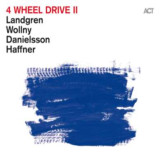
The eponymous debut disc from German-Swedish supergroup 4
Wheel Drive went straight to the top spot as Best-Selling Jazz Album
In Germany For 2019. And the media didn’t hold back with their
praise either: “Four first-league jazz musicians with pure joy of playing
and a love of good pop music,” said ZDF’s ‘heute-journal’ about this
spirited and enjoyable group that combines trombonist / singer Nils
Landgren, pianist Michael Wollny, bassist / cellist Lars Danielsson
and drummer Wolfgang Haffner.
For ‘4 Wheel Drive II’, it is evident that things have shifted up a gear
right from the start, with the rocky, pulsating opening track, ‘Chapter
II’, straight from Wollny’s compositional workbench. Landgren likes to
let his trombone roar like a sports car engine. In similarly dynamic
vein are pieces like Danielsson’s final track of the album, ‘The
Wheelers’, which, thanks to Haffner’s nimble brushwork, makes you
think you’re on a high speed train.
Compared to the first album, there has been another change, an
increase in the proportion of original compositions written by all of the
participants, as Lars Danielsson, who has contributed a sensitive,
poppy ballad to the new album, ‘Just Another Hour’, remarks.
“Interpretations of worldwide hit songs were a factor behind the huge
success of the debut album, but the ratio to original compositions
here is getting closer to 50:50. That said, the fuel powering 4 Wheel
Drive has remained the same: this band is all about creating music
from deep within, and with like-minded people whom you can
absolutely and implicitly trust to be in the driving seat.”
“It just flows,” enthuses drummer Haffner, “we’re a group of close
friends with nothing we need to prove, we can just go for it. I've had
so many magic moments with this band, it really is incredible!”
On the new album, listeners are treated to several new moments of
pure magic, continuing 4 Wheel drive’s illustrious story. For example,
their new instrumental version of the Simon & Garfunkel classic,
‘Sound of Silence’, has something mysteriously Nordic about it. Or
their newly-cast version of the surprisingly infrequently covered
Genesis ballad, ‘Hold On My Heart’, putting it into a jazz context. The
courage to approach pop tunes that have become so ingrained in
many people’s minds from a completely different perspective pays off
in full. Within 4 Wheel Drive are four originals at work, each of whom
can be recognised from the very first note they play or sing.
The debut recording by Setting, a trio comprising Nathan Bowles (solo/trio, Pelt, Black Twig Pickers); Jaime Fennelly (Mind Over Mirrors, Peeesseye); and Joe Westerlund (solo, Califone, Sylvan Esso, Jake Xerxes Fussell). Deluxe LP edition features 140g black virgin vinyl and a reverse board jacket with art by Timothy Breen. Deluxe CD edition features a gatefold jacket with art by Timothy Breen. RIYL: Popol Vuh, Brian Eno’s Ambient 4, Harmonia, The Necks. Setting, befitting its name which can be read as noun or verb, and simultaneously suggests the sun, or any star in the firmament from our earthbound perspective; a story and its surroundings, its scenic context or mise en scène; or a psychedelic experience, as in the prescription to mind one’s “set and setting” arose outdoors, uncontained and unconstrained by architecture. The group’s debut recording Shone a Rainbow Light On traverses textural, phosphorescent topography with a certified organic folk-engine. Kosmische correspondences are inevitable and valid, but also somewhat deceptive, given this meditative music’s terrestrial rootedness in the familiar natural world, more in native humus and humidity than in outer space. Fuelled by a vibratory hybrid of acoustic and electronic instrumentation, these four stately longform pieces sound like a UFO slowly sinking into a peat bog (or, as we call it in North Carolina, a pocosin). An instrumental trio comprising Nathan Bowles (solo/trio, Pelt, Black Twig Pickers) on strings, keys, and percussion; Jaime Fennelly (Mind Over Mirrors, Peeesseye) on harmoniums, synthesizers, and piano zither; and Joe Westerlund (solo, Califone, Sylvan Esso, Jake Xerxes Fussell) on drums, percussion, and metallophones, Setting established its own setting and found its footing in regularly scheduled improvisational sessions outside Westerlund’s home in Durham, North Carolina, beginning in 2021. The three players began as two, in the context of occasional Bowles and Westerlund percussion duo performances dating back to 2018. Fennelly provided the initial impetus to gather and play together with intentionality and discipline, as well as an harmonic adhesive and thickening agent in the grain and gravity of his harmonium and synthesizer. As always, Bowles’s background as a pianist and drummer informs his approach to banjo, imparting a woodiness, a piney verticality and resinous tang. Westerlund’s training with Milford Graves is apparent in his polyrhythmic flow and its correspondences to human circulatory and corporeal rhythms. They recorded their collective discoveries with engineer Nick Broste in the spring of 2022.The record begins, like the group’s name, and like the language of its unique instrumental interplay, with ambiguous grammar: “We Center,” the first and longest track at thirteen and a half minutes, builds patiently to a percolating climax of tidal heaving, with ceremonial connotations. “Zoetropics,” the shortest piece, follows, offering a more diaphanous counterpoint to the density of its predecessor. The zithery, shivering “A Sun Harp,” its title redolent of Sun Ra, showcases Westerlund’s unfettered drumming, which skitters restlessly until anchored, at its conclusion, by a minor bass progression. Finally, “Fog Glossaries” exhales through the maritime and meteorological evocations of its title, distant buoys clanging. Although certainly elements and strategies of so-called ambient and drone musical traditions are invoked and deployed, those diffuse terms feel inadequate to describe everything else happening here: the devotional valences, the minimalist rigor, and even submarine jazz inclinations perceptible beneath the surface. Throughout this four-movement program, which invites deep listening, it is often difficult to differentiate individual instruments from the massed choir of the group’s unified sonic presence. At times what sound like field recordings cicadas, birds, wind, water splash out of this slow but powerful current, only to be revealed as overtones produced by harmonium, banjo, or cymbals. Setting’s sound is fundamentally synthetic in the sense of synthesis, not artifice—in a manner remarkable for its almost entirely acoustic arsenal of instrumentation, often registering as the product of a single alien technology, perhaps the rainbow lights of that bog-marooned UFO. (“Setting,” of course, can also refer to a machine’s variable operational amplitude its temperature, volume, speed, elevation, etc.) Sometimes the most seemingly extraterrestrial lifeforms are in fact our unfamiliar earthbound neighbors. Despite the destruction of many such habitats, the coastal plains of eastern, tidewater North Carolina is home to more pocosins freshwater, evergreen wetlands with deep, acidic, sandy, peat soils than anywhere else in the world. These threatened peat-bog ecosystems are the only native environment to sustain the carnivorous Venus flytrap, among other oddities. The sonic ecosystem of Setting similarly deep, acidic, and boggy contains equivalent wonders, savage and delicate, for listeners willing to take the time to sink.
Ein Jahr nach Veröffentlichung des letzten GOAT-Albums "Oh Death" kündigen die maskierten Schwed*innen nun den Nachfolger "Medicine" an, der am 13. Oktober auf Rocket Recordings erscheint. In der ersten Single "Unemployment Office" ergänzen sie ihren Psych-Rock um Elemente aus dem 70s-Progressive. Nicht nur die neue Single, sondern auch das gesamte Album hat eine durchgängig zurückhaltendere, warme Ausstrahlung, und die Band deutet an, dass das übergreifende Thema des Albums die Vergänglichkeit im Leben ist - in all seinen verschiedenen Facetten: "It's about the impermanence of life in different ways: sickness, relationships,love, death and how our time is finite." Es ist schwer zu sagen, wie oft die Mythologie und das Geheimnis von GOATs Hintergrundgeschichte neugeschrieben werden kann, aber das neue Album macht Schluss, nur in der Vergangenheit zu schwelgen, und präsentiert einem etwas sanfteren Psych-Folk-Sound, der immer noch Goat ist. Die einzelnen Identitäten, die an den drei Alben der Band beteiligt sind, bleiben geheimnisumwittert: GOAT-Sprecher behaupten, dass die Gruppe lediglich ein fortlaufendes Mehrgenerationen-Kollektiv von Musiker*innen aus dem isolierten schwedischen Ort Korpilombolo ist. Nördlich des Polarkreises gelegen, ist die Stadt ein Knotenpunkt zwischen samischen Ureinwohnern, skandinavischen Siedlern und dem seltenen Eindringen von Wanderern von außerhalb. Darüber hinaus geben GOAT nur sehr wenig preis. Die Geheimhaltung der einzelnen Mitglieder und der Mangel an Informationen über Korpilombolo tragen wenig dazu bei, die Behauptungen von GOAT zu untermauern oder zu widerlegen. So "unnahbar" auch ihre Gerschichte klingt, so mysterös beschreib die Band auch ihre Musik: "We often talk about how all music is world music and all other genres are old fashioned. All you can hear is the universal similarity between all music. The music from some old cult in northern Sweden can be the same as the music from wherever." Der Sound des neuen Albums ist die klangliche Manifestation aus nigerianischen Afrobeat, deutschen Krautrocks, Funk und düsteren, halluzinatorischen Rock. Passend zum Titel "Medicine" muss dieses Medikament also sehr stark sein. Unabhängig von Dosierung und Art der "Medicine" - es ist Zeit sie jetzt einzunehmen. Limitiertes Wavy Cap Colour Vinyl-LP (Purple-Clear Colour-In-Colour)
It's a pertinent start-point because, in many ways, God Is Luck exists firmly within that realm, many of the songs pulled directly from improvisation before being twisted into the mysterious shapes we find here on the finished record.
Recorded between the summer of 2020 and the summer of 2022, God Is Luck is an exercise in artistic freedom. The songs came quickly and easily by design, the whole point of the record and the approach to simply let go.
The third Bad History Month LP - following the Pitchfork-championed Old Blues (2020) - where aspects of the new album mirror the shape of Sprecher's previous work, its creation was an altogether different experience for the Philadelphia-viaBoston songwriter. He describes it as a collaboration with 'luck', the freeform nature of the recording resulting in a process that felt "fun and easy and fearless in a way that recording had never been."
"God is Luck means you can control reality by choosing your perspective to always see the luck, which makes you the god of your own reality," Sean Sprecher says of his latest record. With that notion at its core, Bad History Month's latest adventure finds twisted new ways to tell age-old tales. Even in its most fearless compositions, buried within dense fog, it strives for goodness; freedom from fear, love for friends, surrounding yourself with those who inspire.