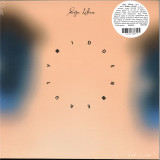
Thought is the essence of where you are now.
Composed in an era where people weren't concerned with music labels but just wanted to hear fresh new sounds and go out to clubs religiously, “Digital Imagination - The Essence of Thought” is a sci-fi inspired mixture of House, full- speed Trance and Trip Hop coming from a young Ted Heinz falling in love with electronic music in the thriving early 90s Boston rave scene. Originally release by Concept Records in 1993 and with original copies now hard to get ahold of, Sunny Crypt is happy to give this record a full reissue treatment with audio restored from the original DAT tape and a new graphic design.
Поиск:digital imagination
Все
- 01: Dune
- 02: Kundela Mawedi
- 03: Paco
- 04: Cameo
- 05: Cacopoulos
- 06: Khettara
- 07: Hell Dorado
- 08: Papambra
- 09: Porpora
Killer Groove Records proudly presents the self-titled debut album by Italian cinematic funk trio Atabasca. A sonic journey where funk, psychedelia and desert groove merge into a timeless narrative suspended between rhythm and vision.
"Atabasca" marks the debut release from the cinematic funk trio, dropping March 27th on limited edition LP, CD digipack and digital formats, the latter featuring an exclusive bonus track. This is a project built on evocative imagery: each song unfolds as an open scene, an emotional landscape where listeners can step inside and write their own ending.
Lap steel, kalimba, percussion and guitars interweave with bass and drums, striking an original balance between tradition and experimentation that evokes unwritten soundtracks for worlds at once distant and familiar. The record navigates between melancholy and irony, tension and release, with a sharp focus on dynamics and sonic narrative.
Deserts, seas, imaginary villages, getaways, pursuits and collective rituals: "Atabasca" emerges as a collection of musical landscapes that unfolds through vivid, evocative imagery.
Jazz-funk, world music, afrobeat, psychedelia and the Italian Golden Age of movie soundtracks merge into a singular emotional geography: warm, analog and deeply human.
The musical journey opens with "Dune", a melancholic statement that leaves room for imagination, before igniting with "Kundela Mawedi" and its cascading lap steel over haunting vocal chants. "Paco" tips its hat to classic westerns, tracing a bandit's trajectory, while "Cameo" drifts back to childhood through minimal rumba and shimmering kalimba. The cinematic imagery continues in "Cacopoulos", a nod to Spaghetti westerns and Eli Wallach, built on raw drum patterns and distorted guitars. Intensity builds in "Khettara", where afrobeat rhythms and Middle Eastern textures intertwine, before "Hell Dorado" tears off in pursuit of the American dream's funk-fueled mirage. "Papambra" weaves hypnotic polyrhythms between kalimba and lap steel, while "Porpora" delivers a sensual, visceral tango of passion and tension. The digital edition closes with "Reprise", a sequel that stretches the album's central theme into an expansive, meditative interpretation.
The tracks were recorded in single takes, capturing the raw energy and natural atmosphere of the performance. Artistic production was handled by the trio alongside Andrea Fabrizii (digger, musician, producer and catalogue curator for CAM Sugar), while Riccardo Ricci mastered the album at Velvet Room Mastering Studio in Brighton.
Like a desert blooming within the evergreen forests of the planet's far north, a unique, alien, disruptive environment. This is the vision behind Atabasca, the project of Luca Mongia (guitars, lap steel, keyboards, vocals), Paolo Mazziotti (bass, keyboards, vocals) and Valerio Pompei (drums, percussion, vocals).
Individually active for over twenty years on both the national and international scenes, the three Italian musicians came together in 2023 to create a project that merges experience, experimentation and creative freedom. Their music is imaginative and at times dreamlike, blending the classic concept of the instrumental trio with the worlds of film scoring and sound design.
Atabasca's sound moves through jazz-funk, world and cinematic territories, weaving together afrobeat, desert and psychedelic influences into a personal and timeless language. Each piece is a scene; each sound, a fragment of a world, a journey between reality and imagination where groove, texture and organic timbre merge into a singular sonic ecosystem: a perpetually shifting balance that generates new inner landscapes.
For fans of Khruangbin, Surprise Chef and instrumental psych-funk!
Between flesh and silicon. “Under My Skin” (2026) is the first album by IADI, released by Neo Life. A record like few
others, highly conceptual, cover art included. Its essence lies in the folds of the increasingly ambiguous relationship
between man and machine, where the former designs the latter and, perhaps without fully realizing it, is gradually
destined to adapt and be reprogrammed by it. Each track of “Under My Skin” is, in fact, a sort of interface, connector, or
any other imaginative point of contact between two creative phases, amid emotional impulses and binary calculations.
The sonic architecture oscillates between analog warmth and algorithmic coldness, constructing landscapes in which
pulsating synthesizers and mechanical rhythms seem to question each other. There's no linear narrative, but rather a
progressive immersion in a zone of near-friction, where the comfort of technology coexists with more than a faint
musical uneasiness, like a background noise that never ceases to remind you who's truly in charge. In “Under My Skin”,
the machine is neither an enemy nor a simple instrument: it's a real presence, intimate, even tactile, amplifying desires,
fears, and dreams of dawns beyond the digital realm. Intelligent dance music. Less noise, more sensations. Electronic,
but profoundly human.
The final result, then, is a music project that speaks to the present, yet sounds like an X-ray of the future, capturing that
fragile moment when humanity and technology stop observing each other from afar and begin to merge, track after
track. It's no coincidence that IADI's album opens with “Impulse”, an immediate expression of an electrical impulse, for
both humans and machines, which is also the language of the nervous system, as fast as it is vital—pure energy and
rhythm, a track as intense as it is irregular. And after this introduction, it's the turn of the equally erratic “Axon”, whose
title describes the neuron that transmits the signal over distance, telling the listener to sit back and relax for a new
journey through the notes toward the more melodic “Cortex”. The cerebral cortex, the ultimate seat of thought and
memory, becomes the source from which the musical flow of the first part of the work is drawn.
Then, suddenly, an automatic, or instinctive, response to the constant succession of impulses: “Reflex”, or zerotemperature techno, with a fragmented pace, featuring vocal samples, breaks, and restarts. In the producer's
imagination, the subsequent, and conversely placid, “Neuron” represents the emotional core of the second part of the
work, providing a kind of respite from the seething vibrations. While the neuron is the basic unit of the nervous system,
the synapse is the functional connection point between one neuron and another effector cell, essential for the
transmission of nerve impulses and communication in the nervous system, enabling functions such as learning and
movement. Likewise, a track like “Synapse” once again illuminates the path traced by IADI. The more experimental and
streamlined “Static” instead suggests true ordered chaos. “Dreamstate” is the conclusion suspended in the void, relating
to that dreamlike state between waking and sleeping, where consciousness fades toward infinity and visions begin. Pure
fading into the subconscious. Eternal return to where it all began. Dancing is a form of consciousness. Every beat is a
question. IADI, however, holds all the answers you need.
Joe Fujinoki centered the compositions of his latest album Glass Torso round the idea of the fragility of the human body. Fujinoki described the narrative thread of the album as that of “holding the shape of a human body as if it might shatter like glass”. The precariousness of the body, the essence of the body as defined by Fujinoki as the torso, and the object relations between the boundaries of dialectical exercises pack themselves into his creative process.
Fujinoki recorded Glass Torso exclusively with analog synthesizers, stumbling in and out of structural loops to find space for accidental discoveries. The ten pieces of recorded material feel somewhere on the edge of typified form, feeling like a vascular system pumping in and out its undulating liquidities. Maybe this is the hollowed space held together by Fujinoki’s notion of the torso where you hear a microscopic world, dubby and generative. Fujinoki is adept at organizing this realm of subtle sound sources, giving proper considerations of shared tonal space. Seemingly, this handling of the precarity of sonic material elucidates Fujinoki’s mature attention to detail.
Ambient music genre tropes often affirm the listeners vessel for escape and dissociation. It provides an intoxicating allure by respite from an overwhelming exterior reality far outside the listeners controls. Here this space becomes apolitical, or its protest vocabulary softer and subtle. Fujinoki does not aim to tackle hyperobject topics on how to course correct the world, but he does something increasingly rarer to come across. On Glass Torso an alternative space is created not as shelter, but as a meditation on negotiation and compromise. This twenty eight minutes of audio lays down a foundation for imagination, for imagining how to negotiate the fragility of the self. Zoomed out, the implications of his negotiative sonics can be a playground for broader reflections on distributive care and attention.
Fujinoki says he feels “alert” to his physicality and placement in the world amidst vast digital cultures creating impositions on him and his surroundings. On Glass Torso he creates a concretized space on a vinyl record, where the virtual and the tangible antagonize one another that create the spectacle of the listening experience. This spectacle is a soft one, a considered one, and an utmost enjoyable one. Fujinoki juggles opposing forces brilliantly, and formulates an exquisite palette of soft passing music so he can also help the listener with the exquisite burden of their own Glass Torso.”
- Nick Klein, January 2026
- 1: Lake Walk
- 2: Lazy Daisy
- 3: Ups & Downs
- 4: Silently
- 5: There Was A Nice Sunset
- 6: Somewhere Good
- 7: Slow Island
- 8: Movin’ On
If – in some parallel universe (or perhaps a not-so-distant-future version of the one we’re already sentenced to living in) – the evil overloads of artificial intelligence were actually successful in their attempts to create convincingly enjoyable “original music,” more specifically tasked with wholly encapsulating my own personal tastes by data-chugging some cocktail of – oh, I don’t know – the posters on my wall, the records in my “most listened to” pile, the mixtapes I made for others, intensive physical scans of my auditory cortex, amygdala, hippocampus, heart strings, whatever else they have splayed out on their autopsy table with the intention of generating one all-encompassing “perfect band” based on the fruitful sum of their findings – that band, for me, would be (or would at least sound exactly like) the Tara Clerkin Trio. It is, quite simply, without exception, the music I wish to hear.
Formed in Bristol UK (where none of them are from yet all of whom are deeply engrained) in 2020, the Tara Clerkin Trio – as it somewhat democratically exists today, despite the singular authority implied by its name – consists of the titular Tara Clerkin, her partner Sunny Joe Paradisos, and Sunny’s brother, Patrick Benjamin. I’ll confess, I don’t know what their respective roles are within the operation and there’s only a very small part of me that cares to learn, as one of my favorite qualities in an objective listening experience is the mystery of who is playing what, which sounds are “authentic” versus synthesized, which chunks are performed “live” in a room together versus meticulously Frankenstein’ed from measure to measure, or how exactly the overall sound is so (seemingly) effortlessly achieved. Though, I suspect, if and when I do witness a live performance by this band at any point, my enjoyment of the music will not be lost in my better understanding of it.
With two extraordinary mini-albums – In Spring (2021) and On The Turning Ground (2023) – making a splash on London’s formidable World of Echo label in wake of their self-titled 2020 debut, this upcoming Somewhere Good LP is, in many ways, the band’s most realised work. In running their usual gauntlet of idiosyncratic (*an overused adjective for which here there is regrettably no sufficient alternative) approaches, Clerkin & co. colour in and outside of compositional lines over the course of 40+ celebratory minutes - never wallowing, despite inherently somber subject matters of self-defeat, disease, displacement, restlessness, gentrification - allowing their arrangements and improvisations ample space and time to situate, stretch out, breathe, cross-pollinate, and ultimately take deeper hold on the listener’s imagination – all while somehow sounding more like themselves than ever before.
Of course, there are traceable influences herein, if one felt that such comparisons were necessary to properly examine and enjoy this music (they aren’t)… Being the big dumb American from the small boring town that I am, cornfed on ‘90s alternative radio with the enchantingly exotic sounds of Maxinquaye and Mezzanine emanating from my chunky tube television, I can’t help but to make a blatantly obvious reference to a “Bristol sound”, ie the whole trip-hop trip, the pastoral crooning over the suggestive urban grime of cracked electro/piano treatments, the digitally-yet-primitively reconstructed James Bond soundtrack string-beats, etc.. But the Tara Clerkin Trio is so infinitely much more than that. There are elements of avant-pop, modern classical, kraut-folk, audio verité, dare I say indie rock (and not of the beer guzzling, masturbatory fuzz-flex variety but perhaps more like a Trish Keenan-fronted Faust, Adrian Sherwood at the mixing desk of If You’re Feeling Sinister, or – in expanding on our alternate reality – a world in which High Llamas cut a full-length for Warp Records with Andrew Weatherall on coffee duty).
The hazy, unmappable skyline-mirage of droning harmonium, upright bass, peculiarly accentuated wind instruments, acoustic guitar, hushed yet literally mighty keys combine to hypnotizing effect. The band may make underlying nods to jazz, sure, but it’s not appropriation, it’s that they have the actual chops to build it out. Beneath the janky samples and oddball percussive embellishment lies actually great drumming. Beyond the manipulated vocal witchery and woefully reflective plain-spoke moments are Tara’s subtly inspired melodies, sung with what might honestly be the glue to the whole crazy equation. A calming consistency throughout the otherwise unpredictably dynamic, boldly intuitive, uniquely British exploration of this (their own) universe in song. – Ryan Davis (Chicago, February 2026)
Heith's music has always been infused with sacred mystery, striking a delicate balance between lived experience and imagination. On Escape Lounge, his second full-length release for PAN, Heith draws inspiration from contemporary digital spirituality and interpretations of experience that are crossing over from cultural niches into the mainstream - including internetbased conspiracy theories and psychological operations. The album presents a sonic diary recorded across Milan, Berlin, London, and Stockholm, crafting a post-informational folklore while exploring new territories in personal songwriting. The title Escape Lounge, inspired by airport waiting areas, serves as a metaphorical waiting room of the mind. Its hidden passages can lead either to peril and loss or to enlightenment and kaleidoscopic mental landscapes. This liminal space echoes the mysterious realms of Twin Peaks or the viral "Backrooms" phenomenon. Within it, contributing musicians - including frequent collaborators Leonardo Rubboli, Aase Nielsen, and 33 drummer Alexander Iezzi - move like ethereal presences, creating intangible soundscapes that leave traces of post-hypnotic melancholia. Notably, the vocal contributions from Price and James K enhance the otherworldly atmosphere, their multifaceted timbres adding layers of intentional ambiguity. Throughout the album, Heith masterfully blends acoustic instruments, human voices, and digital technology along an uncharted path that references the experimental pop of 90s trip-hop, 2000s indie-folk songwriting, and lush Mediterranean psychedelia. The sounds are meticulously crafted, combining synthesizers with guitar-based compositions in a computational songwriting approach that creates a collage across eras and landscapes. Each track unveils new dimensions of this delicate hallucinogenic narrative, delivering an immersive listening experience. As reality continuously shifts, Escape Lounge emerges as both sanctuary and confinement - a space of momentary connections and endless potential. In 2025, Heith will debut a new live show and audiovisual collaboration titled 'The Talk' with James K and Günseli Yalcinkaya, commissioned and premiering at Sonar Festival, Terraforma, Nuit Sonores, and Reworks.
The Very Polish Cut outs are back with a new release, this time a solo outing by POLOTRONIC - who also happens to be a member of the infamous warsaw duo - Holiday80.
The EP entitled "Marzenia" (translated "Dreams") contains 4 tracks. 2 original productions, one remix and one reowrk and as with all TVPCO releases - its a very diverse affair aimed at the dancefloors. The EP kicks of with a brilliant re-imagination of a polish early 90s hip hop classic "Spalam Si?" ("I'm going down in flames") which the producer transforms into a house anthem with infectious vocal hooks, breaky percussions and lush piano stabs. This one is for sure some peak time material that will make the crowd dancing and asking themselves at the same time - where the hell did that one come from? Moving on is the title track "Marzenia" that might be the water to cool down the fire started by "Spalam Si?". It's a dreamy breakbeat house affair with lush bells and 90s inspired synths and female vocal snippets. It will for sure make you nostalgic. On the flip you will find the mesmerizing electro inspired remix for the track "Pami?tnik Manekina" by Grupa Jot, which was part of the 2022 released "Echo Wielkiej P?yty" compilation with obscure polish electronic music. This one was already available for some time in digital format only but now finally makes the jump to vinyl - as a long-time fan favourite. The EP ends with the jacking acid infused track "Jack" that is a deep mid-tempo heavy hitter for the later hours of the night. Polotronic adds here a male polish vocal sample that repeats the phrase "dyskoteka" ("disco"). The brilliant cover is as always, the work of the labels long time collaborator Bartosz Szymkiewicz.
Y’KNOW returns to Spiritual World on October 4th with Why Now, an 8 track 12” that is so stacked with groove that you can physically feel the claps when you run your hand over the record.
Why Now lifts the fog established on the duo’s digital 2023 two-song debut, pushing their signature beat forward minimalism into digital dancefloor soundscapes. Following in the tradition of dub records, Why Now features four vocal cuts on the a-side backed with four reimagined and stripped back dub versions on the b side.
Lyrically, Bally takes on the narrative of a detective in search of the perfect groove, even if it ultimately leads to their own fictional demise. Y’KNOW is clearly in pursuit of the perfect vibe, and while doing so exceeds the imagination of most traditional guitar-based bands with a mesmerizing mix of dub, post-punk and synth pop.
Limited to 200 12” copies.
RIYL: Colour Box, Maximum Joy, Tom Tom Club, George Clinton & Brenda Ray
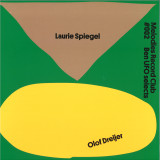
We’re glad to be back with the second installment of our new series of DJ and Artist curated 12” mini compilations: Melodies Record Club.
Ben UFO is up next for volume two, following Four Tet’s selection a few months back. Available early October in loud 12” format and digitally. Here we have two tracks which have been staples in Ben’s DJ sets at different times, but neither were originally produced with a club setting in mind, which is why they’ve never been available in this format before.
On one side, we have “Drums” from Laurie Spiegel’s 1980 experimental electronics album “The Expanding Universe”, a collection of tracks produced between 1974 and 1976 using a computer playing the actual sounds by controlling analog synthesis equipment under control of the GROOVE hybrid system developed by Max Matthews and F.R. Moore at Bell Labs. Drums is a percussive seven minute computer generated workout inspired by Laurie’s interest in African and Indian musics, and which brings to mind the most far out kosmiche music of the period to modern day techno. A connection Ben has tried to make explicit by including it in his first BBC essential mix back in 2013.
On the flip we have a track by Olof Dreijer from the Swedish band the Knife who’s work you might also be familiar with under the moniker Oni Ayhun. Back in 2009 his artist friend Adnan Yildiz curated an exhibition called “THERE IS NO AUDIENCE” in Montethermoso, dedicated to public imagination. Adnan commissioned a single piece from Olof called “Echoes from Mamori”, that played on loop during the exhibition and was subsequently released only on CD. A contemporary piece more clearly indebted to house music, Olof built the track around arpeggios generated using sounds of frogs he recorded in the Amazon and birds around Berlin, fed into a sampler.
Butterfred has been releasing his atmospheric hiphop, grime, dub and ambient-driven hybrids on his own Butterfred Productions label since 2017. His is a committed update of a breakbeat perspective through moody and hazy ambiences that touch upon neo-noir and the logic of rhythm within. For his first outing on Meakusma, he provides six short, yet wide-ranging tracks with a lot of forward momentum. Voice samples and ambientish scapes give all tracks direction, deceptively downtempo beats are at times driving, at times phased-out into the background. There is a definite mystique to Butterfred's work as it purposely leaves threads unresolved. The focus is on space, a spatial perspective that infuses his music with concrete references to his influences, be it hiphop, dub or even triphop. His sense of space is often very private, yet makes for a kaleidoscopic view, unafraid to be extensive. Butterfred has a very subdued online presence. This EP is his first music to also be released digitally. His work speaks for itself and does so in fragmented jolts of imagination and reduction.
Modern Power electronics...TIP!!
Philipp Matalla lives and works in the triangle of Halle, Leipzig and Berlin, in Germany. He has previously released music on labels such as Optimo Music, KANN and Kashual Plastik. His new album on Meakusma delves into some of the themes that have so far defined his work, this time increasing the tension between moments of musical harshness and flickers of introspection, ease and downright beauty. Matalla aims not for perfection, instead deploying the listener's sense of imagination. His work toys with the notion of abstraction in electronic music, often going as far cutting short melodic and other ideas, making for a confrontational stance unafraid of leaving his material in a state of difficult to define rawness, based on versatile ingredients equally rooted in rural and urban territory. Stakes is a gorgeous and gorgeously far out album, integrating elements of psychedelic rock and dub, blending in melodic ideas that are at times abstracted, at times soothing. It is pastoral music for the digital age, where raw bursts of noise and energy dislocate and set the record straight. There is even a croonerish feel to some of its tracks, croonerish from a distorted future that is. Stakes is an experience in eclecticism and musical logic. It dissolves structures and ideas and turns musically recognisable elements on their head.
Individuality, Harmony, Wit.
Originating from the heart of Asia - Taipei, Taiwan, Zy The Way is a fusion collective spear-heading a new musical movement in a digital age. As the offspring of a film director, entertainers and multi-genre musicians, Zy The Way aims to create artistic content that will rock your socks. We believe that true balance is achieved not through the uniting of different social groups, but when we come together with our stories as an individual. Voices and vision, musical styles, personalities, and our own beliefs, Zy The Way is the fabrication of our collective imagination, where no one is left out.
- A1: Ekonda Musicians - Généalogie De La Walé (Rumba Rules Edit)
- A2: Brigade Sarbati - Rando
- A3: Lumumba Ya Muana - Tozozela Ba Ancêtres
- A4: Brigade Sarbati - Edenda
- A5: Église La Résurrection - Nzambi Ya Babo
- A6: Werrason - Block Cadenas
- B1: Brigade Sarbati (Choeur) - Ma Descendance
- B2: Brigade Sarbati - Tshouna Baby
- B3: Papa Wemba - Excuse Me (Live Au New Morning, 2006, Rumba Rules Edit)
- B4: Franco Et Le Tout Puissant O K. Jazz - Kinshasa Makambo (Live From Télé Zaïre, 1982, 2022 Remaster)
- B5: Lumumba Ya Muana - La Vie Est Belle
The official soundtrack of the 2021 'Rumba Rules, New genealogies' documentary movie by Congolese artist Sammy Baloji and Quebec filmmaker David Nadeau-Bernatchez. A deep dive into Kinshasa’s vibrant Rumba scene, including remastered classics by Brigade Sarbati, Werrason, Papa Wemba, Franco & le Tout Puissant O.K. Jazz
Rumba Rules, New genealogies is about contemporary rumba in Kinshasa, but this music has deep historical roots nevertheless. Born in the interstices of the colonial world and thriving during the three decades of the Mobutu era in Zaïre, Congolese rumba has been iconic and popular all over Africa for decades. The roots of Rumba are even deeper, and the many paths it evokes trigger the imagination. The story goes that this music came with the migration of the ‘Kumba’ drum and dance in previous centuries, African slaves having carried it all around the Americas and giving birth to Cuban ’Rumba’, Colombian ‘Kumbia’ and many others. With its varied rhythms, guitars and horns, through LPs and radio stations, Rumba came back to (re)conquer Africa throughout the 20th century, paving the way for new practices. One could say this music is a sort of palimpsest, a memory in itself of Atlantic migrations and histories.
Rumba is nowadays discussed all around the world, igniting many debates among the Congolese diaspora. Being the constant talk of the town sometimes overloads public debate, and many people get tired of this broken record. Thus, over the last decade, enterprising producers have worked hard to promote Kinshasa’s musical diversity and tried to emulate new sounds to reach worldwide attention. But Kin’ locals and urban dwellers will not be fooled : new shoots cannot hide the forest. Despite some difficulties to innovate, despite the pastoralist sermons and the diaspora fighters pushing for concert cancelations, rumba is still at the core of the Congo today. Talented artists such as Fally Ipupa, Ferré Gola, Brigade Sarbati and others are leading the fifth generation, and the religious world has also proven to be a nurturing environment for the cultural and economic dynamism of this music.
Focusing on the music of Brigade Sarbati and his Orchestra, this record offers a deep dive into Kinshasa’s rumba scene. Halfway between professional studios and Zoom H4 field recordings, the rumba herein is about today’s youth: dense, full of energy and breakdowns, insights and name-dropping. The cavacha rhythm, the solo and bass guitar’s playing style, the singing style and numerous dedications all resonate with the history of Rumba. In an era where digital sound is taking over, it is interesting to highlight the instrumental and live performance compositions of this music. Digital technology is indeed used during the recording and mixing phases, but Congolese rumba still relies strongly on instrumental playing. There is all that but also, many other things to hear on this record… It’s time to let it be. A big thanks to Étienne Tron for making it possible: it is on his initiative and through his patience that this album is in your hands today. (David Nadeau-Bernatchez, december 2021)
Killer Groove Records proudly presents the debut 45 by Italian cinematic funk trio Atabasca. A syncopated journey where funk, psychedelia, and cinematic groove merge into a timeless narrative suspended between rhythm and vision.
"Cacopoulos" and "Kundela Mawedi" mark the birth of Atabasca's sonic universe: the first two singles from the upcoming self-titled debut album,which will be released on March 27 in limited-edition LP, CD digipack, and digital formats.
On the A-side, "Cacopoulos" is an impetuous, visionary ride that fuses the power of instrumental groove with the evocative imagery of library music and Italian golden-age soundtracks. From the first beat, listeners are drawn into a dry, dusty landscape driven by a primal drum groove and the acid twang of a guitar that evokes the spirit of classic Westerns. Indeed, "Cacopoulos" pays homage to I Quattro dell'Ave Maria (Ace High) and to the legendary Eli Wallach, the sly outlaw who turns deception into revenge, a subtle yet powerful nod that ties the trio's sound to imagery steeped in dust, dreams, and redemption.
On the flip side, the sound of an old lap steel guitar evokes the gentle waves of the sea, opening the doors to "Kundela Mawedi", a dreamy track with exotic tones and heavenly atmospheres. The sonic journey unfolds through hypnotic rhythms and echoes of ancient cultures, where ethereal voices and warm, entrancing bass lines intertwine with psychedelic riffs and evocative guitar melodies, merging into a soundscape rich in warmth and mystery. The chorus, with its unexpected choral chant, adds a spark of magic. An elegant twist that gently stirs the dreamlike mood and transports the listener into a new sonic dimension, steeped in mysticism and tribal vibrations. "Kundela Mawedi" is more than just a song: it's a sensory experience, a musical ritual where tradition meets psychedelia, sand meets sea, and the soul dances upon the waves of time.
Recorded in a single take, the session captures the raw energy and natural atmosphere of the performance. Artistic production was handled by the trio alongside Andrea Fabrizii (digger, musician, producer, and catalogue curator for CAM Sugar), while Riccardo Ricci mastered the tracks at Velvet Room Mastering Studio in Brighton.
A killer double-sider, blending psychedelic and funk moods with percussive, jazzy textures. A must-have gem for every groove-loving DJ.
Like a desert blooming within the evergreen forests of the planet's far north, a unique, alien, disruptive environment: this is the vision behind Atabasca, the project of Luca Mongia (guitars, lap steel, keyboards, vocals), Paolo Mazziotti (bass, keyboards, vocals), and Valerio Pompei (drums, percussion, vocals). Individually active for over twenty years on both national and international scenes, the three musicians came together in 2023 to create a project that merges experience, experimentation, and creative freedom. Their music is imaginative and at times dreamlike, blending the classic concept of the instrumental trio with the worlds of film scoring and sound design.
Atabasca's sound moves through jazz-funk, world, and cinematic territories, weaving together afrobeat, desert, and psychedelic influences into a personal and timeless language. Each piece is a scene; each sound, a fragment of a world, a journey between reality and imagination where groove, texture, and organic timbre merge into a singular sonic ecosystem: a perpetually shifting balance that generates new inner landscapes.
Fans of Khruangbin, Surprise Chef, and instrumental psych-funk, take note!
- A1: Off Stage—Med Dark Fade Out (Exit) (Starts Edit)
- A2: On Stage—Strike (Falls) (A) (Vinyl Edit)
- A3: Off Stage—Walk (A) (Vinyl Edit)
- A4: On Stage—Crystal
- B1: Off Stage—Pile & Surfaces (B)
- B2: Off Stage—Leaf K2
- B3: Off Stage—K2 Line (Vinyl Edit)
- B4: Strike Ftx (B) (Vinyl Edit)
- C1: On Stage—Strike Ftx (C)
- C2: Off Stage—Stick & Clap (D1)
- C3: Off Stage—Tree Transition (A)
- C4: Off Stage—Stick Walk (Crystal Approach)
- C5: On Stage—Crystal (Rush)
- D1: Reiy C & Swing Mic (B) (Vinyl Edit)
- D2: Off Stage—Surfaces (All) (Vinyl Edit)
- D3: Off Stage—Leaf K2X
- D4: Alt Stage—Drom (A) (Billy Fulcrum)
- D5: On Stage—Everybody Cycles (Vinyl Edit)
- D6: On Stage—Strike Snx (Vinyl Edit)
- D7: Med Dark Fade Out (Vinyl Edit)
Slip is Paul Abbott’s response to his 3 day residency at OTO in 2023. It’s a continued exploration of the acoustic-digital hybrid drum setup Abbott has been developing for some time, which involves drum kit and synthetic sounds combined closely—through an entanglement of limbs and cables—in an intimate but strange relationship with each other.
Paul Abbott hasn’t had any formal musical training, but has a long history of making music, having collaborated for years with Seymour Wright, Pat Thomas, Michael Speers, Cara Tolmie, Anne Gillis and many others. Eventually, led by a profound suspicion of what is fixed or limited, Abbott began finding other ways to organise sound - or what he calls ‘material’:
“I wanted a way to 'persuade' or guide the possibility of something happening - my activity or the events of an algorithmic composition - for example, but without certainty or formalism. It felt to me, during playing, that certain ideas had a particular sort of shape, but more than the form of a line. I began to write alongside (before/after) playing the drums, and ‘characters’ began to enter the scene as a more wobbly, and therefore appropriate option to notation. Working with these characters allowed me to simultaneously approach body, imagination, language and music: without dividing things up or separating these aspects from each other. It allowed me to leave things messy and entangled, whilst trying to deal with form and specificity: wanting to have some things feel or respond differently to other things at other times.”
In approaching his residency, Abbott developed a fixed cast of characters - crystal, lleaf, reiy.F, reiy.C, strike, nee, qosel, sphu and aahn. They each communicate using different kinds of movement and drum kit/s, and Abbott choreographed them as ‘dances’ based on different feelings, or outlines of behaviours suggestive of ways of moving (body, drums, sounds). He then arranged these characters into ‘compositions’: one for each performance day, with each composition featuring multi-layered activity - options for behaviours, ways to move around the rooms, play drums, develop synthetic sounds, change the lights or re-distribute the sound in the space.
After the performances, Abbott took home 9 hours of recordings split into up to 28 multitrack channels for each day, and re-organised his cast once more into a performance for 2LP, CD and digital. It’s an enormous amount of work - but Abbott is activated by the process. For him, the pleasure of unstable edges, possibilities, slippages, is the vital attraction. Like all living organisms, Abbott’s characters have malleability and responsivity. They stimulate a bundle of possible behaviours, a tendency to act a certain way, a temperament, a boundary of respective limits or affordances.
It’s an affective way of working, inclusive of Roscoe Mitchell, Sun Ra, Nathaniel Mackey and Milford Graves. In ‘Pulseology’(2022), Milford Graves reminds us, ‘Breath varies, so cardiac rhythm never has that (metronomic) tempo. It’s always changing. All the alignments of the heart are determined based on the needs of the cells, specifically tissues and organs. The heart knows if it needs to speed up.’ In Slip, to slip, in a heartbeat, is to descend not into the grid of the even metre accorded to the heartbeat, but into a play of mutability and modality. To change is the condition of the heart.
Balmat 17 marks both a return and a new frontier. It is the second album on the label from Patricia Wolf, whose 2022 album See-Through is one of the most beloved in Balmat’s catalog; it also marks the first time that Wolf has turned her hand to a film soundtrack. The results are every bit as magical as fans of the Portland, Oregon, composer’s music might expect.
Hrafnamynd—Icelandic for “raven film”—is a new feature-length documentary by experimental filmmaker Edward Pack Davee. Shot on a mix of film and digital formats, and incorporating his father’s Ektachrome slides from the 1970s, the autobiographical film works on multiple levels at once: a reminiscence of his childhood in Iceland, an exploration of landscape and folklore, and a documentary study of the island nation’s ravens—including a talking raven named Krummi.
Wolf is the perfect artist to score such an unusual film. Mixing ambient music and field recording—including extensive experience documenting bird song—Wolf brings an unusually empathic perspective to her music. In the context of Hrafnamynd, her airy melodies, pensive atmospheres, and vivid textures intuitively complement the film’s grainy film stock and blown-out colors. Friends for years, the two artists further bonded when Wolf asked Pack to film music videos for her songs “Woodland Encounter” (from See-Through) and “The Culmination Of” (from I'll Look For You In Others). Pack used Wolf’s previously recorded music as placeholders as he began assembling a rough cut of the film, which made her a natural choice to help him complete his idiosyncratic vision with an all-new, bespoke score.
But Wolf’s soundtrack also indisputably stands alone as a full-length album. Largely created using the UDO Super 6 synthesizer, it features a carefully distilled palette of warm, string-like pads and darkly glistening mallets, rounded out with the very occasional introduction of nylon string guitar. Musically and stylistically, the album’s 11 tracks represent both a continuation of the ruminative sound of See-Through and also an extension into new expressive modes. Few musicians, ambient or otherwise, are as skilled at balancing melody with atmosphere, or at finding ways to eke fresh at finding ways to eke fresh, surprising sounds out of an intentionally reduced toolkit. Meditative, immersive, and emotionally generous Wolf’s Hrafnamynd soundtrack evokes a range of ambient classics from decades past while confidently marking out its own verdant patch of ground.
Artist’s Statement:
Edward and I have been friends for years, but we really started to get to know one another better after I hired him to make music videos for my songs “Woodland Encounter” and “The Culmination Of.” For those projects we got to spend a lot of time hiking in various locations around the Pacific Northwest with his camera, very nice lenses, and tripod. Keeping quiet, hidden, and vigilant we searched for wildlife, good light on the trees, meadows, lakes, rivers, and skies. Edward was already an appreciator of my music and I was already in awe of his filmmaking talents so it felt like a great fit. Although we work in different areas of art our styles compliment one another. We both tend toward slow and careful pacing, with a focus on emotion and introspective reflections on life and the landscapes around us. For this reason, Iknew that I could trust Edward to create videos for my music. We saw so many beautiful and unexpected things on our filming days, but I was moved to tears once I saw how magnificent and poetic it all was. His video work from the cinematography, to the editing, and color correction helped bring my inner vision to life.
A few months after that, Edward surprised me with an invitation to work on the soundtrack for his new film, Hrafnamynd. I enthusiastically said yes. I had always wanted to work on a film, and I knew that his filmmaking style would be inspiring to write music for. I had recently acquired an UDO Super 6 synthesizer but hadn't used it much. I decided that this would be the synth that I'd use for the film. It has the ability to sound very modern, but can also sound so warm and fuzzy, like a synth from the 1970s. It turned out to be the perfect instrument for this project as the film itself straddles time from the ’70s to today.
When Edward sent me the rough cut of the film, he used placeholder music to help give me an idea of the emotion and energy that he was hoping to achieve for each scene. For many of the scenes, Edward used music from my albums as temporary tracks. This told me that he trusted my work and style and therefore I should just trust my intuition with how to proceed. I wanted to make sure that everything that I made was a direct reflection of what was happening on screen, a mirror of its emotion and energy so people could really lock into the film psychologically. This process took my composing to unexpected places—like being led by a strange cat or a raven that seemed to have something to show me. I found that the approach made the music so much more dynamic than my usual style. I really enjoyed being influenced by the action and dialog on the screen. Thankfully, Edward was very happy with the work. I made sure to handle this project with the utmost care because this is about his life and his family, and an exploration of the experiences that made him an artist and filmmaker. While watching the film many times over, I found myself thinking about my own family and my early memories with them and how the place where I grew up has influenced who I have become. I found that his film invites the viewer to reflect on their own lives in a similar way. I hope that this music and film can guide others to contemplate on the history of their beingness and the people and places that shaped them.
Another aspect to this project is the splendor and wonder of Iceland itself. I had the opportunity to visit Iceland for the first time in 2023. I got to play a show there for the Extreme Chill Festival and met many friendly and brilliant Icelanders. I also got to collect field recordings that I used in the film. It's a fascinating place and culture that easily captures the hearts and imaginations of anyone who visits. Whether you spend your time in the city immersed in its impressive arts scene, or venture out into the wilderness to behold its wondrous landscape, it will leave a lasting impression. The soundtrack is also a love letter to Iceland itself.
*A MODERN JAZZ REINTERPRETATION OF THE MUSIC FROM THE LEGEND OF ZELDA*
WRWTFWW Records is happy to announce the release of Casimir Liberski ReTRio's The Z Suites, a full-length jazz album reinterpreting the music from iconic Nintendo video game series The Legend of Zelda. The epic Z-Jazz journey is available in the following formats: limited edition 180g half speed mastered vinyl double LP housed in a heavyweight sleeve with obi, digipack CD with cavalier, and digital.
Casimir Liberski reimagines the golden era of video game soundtracks with jazz versions of Zelda favorites The Legend of Zelda (1986), A Link to the Past (1991), Link's Awakening (1993), and Oscarina of Time (1998) - plus a few Easter eggs! Dancing between nostalgia and avant-garde, the Brussels-born pianist and composer crafts a sonic world of pixelated folklore where melody and improvisation coexist in harmony.
Music critic Arthur Meurant perfectly explains:
For many video games are a journey of the mind. Since its inception - dating back to the early seventies - this avant-garde artistic medium has nourished the imaginations of a digital age. Casimir, like many others, has been fed a steady diet of pixels from an early age. From simple squares to cultural cornerstones they have become the trail on which playful travelers of the mind retrace the steppes of history. A shared universe, familiar yet endless, of pocket-sized mythology. Its name? Hyrule. Its goal? To amaze. In these few tracks - selected with care - the Casimir Liberski ReTRio invites you, finally, to visit a space which does not exist yet holds us all. A land where all feel welcome. Where all are happy. But also... to rediscover under another timbre the classical compositions of Master Composer K?ji Kond?. A man who, unbeknownst to him, composed our dreams as well as music. That single noble pursuit, where an artist gives soul without losing his own, is yet again a statement of humanity in its purest of forms: art as that which brings us together and makes us whole in a world eroded by modernity. Pick up your key. Gather your maps. Open the door. Adventure calls.
Long live Hyrule jazz!
La Scimmia Records presents: PLANISFERO by Roberto Porzio LSCM05
Renowned Neapolitan keyboardist and composer Roberto Porzio (Parbleu, Psyché, Fitness Forever, The Funkin' Machine and others) makes his highly anticipated solo debut album with Planisfero—a breathtaking sonic journey where tropical rhythms, Mediterranean lyricism, and cinematic orchestrations collide, shaping an intimate and personal musical landscape.
Planisfero blends salsa, samba, and vintage sound library aesthetics with the bold energy of an imaginary Afro-Cuban orchestra. Entirely written, arranged and composed by Roberto, the album is recorded completely live, with no digital shortcuts, becoming a manifesto to pure musicianship and analog authenticity—a rare gem in an era of synthetic production.
Step into a new musical geography—where imagination knows no borders
Maud the moth, the solo project of Spanish-born and Scotland-based pianist, singer and songwriter Amaya Lopez-Carromero announces her new album, The Distaff, to be released via The Larvarium (digital +CD) and La Rubia Producciones (vinyl) Amaya has long used the mantle of Maud the moth as an alter-ego, a séance-like conduit to explore themes of rootlessness, identity and trauma. The Distaff in particular refers to the stick or spindle onto which wool or flax is wound for spinning, and an object which has historically been used across multiple cultures as a symbol wielded by the “virtuous woman”, an authoritarian ideal around which much of the trauma surrounding the feminine coalesces. The album takes the form of a sort of self reflective and surreal autobiography. It was in part inspired by the poem of the same name written by the Greek poet Erinna, as she mourns her friend's loss of individuality and agency in exchange for marriage - and therefore safety and acceptance in the eyes of society. The album exists in an ethereal but violent world of aesthetic overlaps where time stands still and fictional and reimagined folk sits at the table with Maud the moth’s usual sonic menagerie. It is the result of a lifetime of obsession with sound and music, where glimpses of musical genre offer insight into Amaya’s artistic interests and her participation in the underground European scene for many years, in bands such as healthyliving. Heavier, darker, and more exposed than any of her previous works it features some highly accomplished artists, such as Seb Rochford (Patti Smith, Polar Bear, Sons of Kemet, Pulled by magnets, etc.) on drums, Alison Chesley (Helen Money) on cello, Fay Guiffo on violin and Scott McLean (Ashenspire, healthyliving, Falloch) on guitar, saxophone and synthesiser. Maud the moth shares the video for "Siphonophores". About the track, Maud the moth says; I wrote "Siphonophores" on guitar, during the first lockdown, a period where I was kind of trapped between an almost empty flat in Edinburgh and Dresden. It was an incredibly harrowing time, but also one of hope and where important new things were being birthed. I felt incredibly sensitive to everything, almost like life was happening in slow motion. I´m not a confident guitarist since I am completely self-taught, but, probably because of this, I feel that this instrument allows me to focus on aspects of the songwriting that I normally overlook when writing on piano, and I think it was a necessary step for this song to exist. Something else which I've been really exploiting lately and features strongly in the album is the percussive capabilities of the piano, and in particular, of the sustain pedal when mic'd up. This can be heard very clearly at the beginning of "Siphonophores". Written and arranged by Amaya, with some contributions in the later role from the aforementioned collaborators, the album presents nine tracks originally written entirely on acoustic piano as accompanied voice pieces, in pure singer-songwriter fashion. The album was co-produced and recorded by Scott and Amaya in different studios across the UK between January and July of 2024, in a process that started shortly after the 2020 pandemic and finished alongside the album recordings in a detailed, organic and at times obsessive process aimed primarily at capturing the natural dynamics and expression of free performance. The Distaff was mixed in its entirety by Scott and mastered at Abbey Road by Alex Wharton (Radiohead, My Bloody Valentine, Aurora, Kathryn Joseph etc.) Despite being born of a very personal point of view, the album lacks a specific narrator and was conceived almost as a sonic trousseau, where the needle point, silks and other family heirlooms have been swapped for out-of-the-corner-of-the-eye memories of rural Spain by the vineyards, family disputes, old tales of wartime pains, generational breaches and finally the conflict of migration and estrangement. The songs paint dystopian pastoral scenes which evolve throughout the span of one fictional day outside of time and coherent locations and where imagination (often the only account surviving from traumatic events and gaslighting) has become indistinguishable from fact. The Distaff attempts to acknowledge past trauma, comprehend and process some of the more difficult aspects which have contributed to our darker self and offer closure and solace through creative catharsis.
- 1: Canto De Enramada
- 2: A Temple By The River
- 3: Exuviae
- 4: Burial Of The Patriarchs
- 5: Siphonophores
- 6: Despe?Aperros
- 7: O Rubor
- 8: Fiat Lux
- 9: Kwisatz Haderach
Coloured Vinyl[29,20 €]
Maud the moth, the solo project of Spanish-born and Scotland-based pianist, singer and songwriter Amaya Lopez-Carromero announces her new album, The Distaff, to be released via The Larvarium (digital +CD) and La Rubia Producciones (vinyl) Amaya has long used the mantle of Maud the moth as an alter-ego, a séance-like conduit to explore themes of rootlessness, identity and trauma. The Distaff in particular refers to the stick or spindle onto which wool or flax is wound for spinning, and an object which has historically been used across multiple cultures as a symbol wielded by the “virtuous woman”, an authoritarian ideal around which much of the trauma surrounding the feminine coalesces. The album takes the form of a sort of self reflective and surreal autobiography. It was in part inspired by the poem of the same name written by the Greek poet Erinna, as she mourns her friend's loss of individuality and agency in exchange for marriage - and therefore safety and acceptance in the eyes of society. The album exists in an ethereal but violent world of aesthetic overlaps where time stands still and fictional and reimagined folk sits at the table with Maud the moth’s usual sonic menagerie. It is the result of a lifetime of obsession with sound and music, where glimpses of musical genre offer insight into Amaya’s artistic interests and her participation in the underground European scene for many years, in bands such as healthyliving. Heavier, darker, and more exposed than any of her previous works it features some highly accomplished artists, such as Seb Rochford (Patti Smith, Polar Bear, Sons of Kemet, Pulled by magnets, etc.) on drums, Alison Chesley (Helen Money) on cello, Fay Guiffo on violin and Scott McLean (Ashenspire, healthyliving, Falloch) on guitar, saxophone and synthesiser. Maud the moth shares the video for "Siphonophores". About the track, Maud the moth says; I wrote "Siphonophores" on guitar, during the first lockdown, a period where I was kind of trapped between an almost empty flat in Edinburgh and Dresden. It was an incredibly harrowing time, but also one of hope and where important new things were being birthed. I felt incredibly sensitive to everything, almost like life was happening in slow motion. I´m not a confident guitarist since I am completely self-taught, but, probably because of this, I feel that this instrument allows me to focus on aspects of the songwriting that I normally overlook when writing on piano, and I think it was a necessary step for this song to exist. Something else which I've been really exploiting lately and features strongly in the album is the percussive capabilities of the piano, and in particular, of the sustain pedal when mic'd up. This can be heard very clearly at the beginning of "Siphonophores". Written and arranged by Amaya, with some contributions in the later role from the aforementioned collaborators, the album presents nine tracks originally written entirely on acoustic piano as accompanied voice pieces, in pure singer-songwriter fashion. The album was co-produced and recorded by Scott and Amaya in different studios across the UK between January and July of 2024, in a process that started shortly after the 2020 pandemic and finished alongside the album recordings in a detailed, organic and at times obsessive process aimed primarily at capturing the natural dynamics and expression of free performance. The Distaff was mixed in its entirety by Scott and mastered at Abbey Road by Alex Wharton (Radiohead, My Bloody Valentine, Aurora, Kathryn Joseph etc.) Despite being born of a very personal point of view, the album lacks a specific narrator and was conceived almost as a sonic trousseau, where the needle point, silks and other family heirlooms have been swapped for out-of-the-corner-of-the-eye memories of rural Spain by the vineyards, family disputes, old tales of wartime pains, generational breaches and finally the conflict of migration and estrangement. The songs paint dystopian pastoral scenes which evolve throughout the span of one fictional day outside of time and coherent locations and where imagination (often the only account surviving from traumatic events and gaslighting) has become indistinguishable from fact. The Distaff attempts to acknowledge past trauma, comprehend and process some of the more difficult aspects which have contributed to our darker self and offer closure and solace through creative catharsis.
Dienne creates hazy pieces of music full of the melancholy of remembrance and loss combining analogue instruments with reverb-drenched vocals and shimmers of processed electronic sources. Her new album "Conducturis" emerges as a sensory exploration of the human spirit and the boundless horizons of artificial intelligence.
"Abundant in beauty and rich in disturbances" serves as the guiding principle for Belgian composer, Dienne, as she builds songs and soundscapes that portray the images and stories that play behind her eyes.
Combining analogue instruments like the oboe, the piano, and the flute with reverb-drenched vocals and shimmers of processed electronic sources, she creates hazy pieces of music full of the melancholy of remembrance and loss.
Her debut album Addio (2022) was released on Nicolás Jaar's Other People imprint. Addio is a 32-minute study on loss and mourning. Following the death of her grandmother due to Covid-19, and unable to say a proper goodbye due to travel restrictions, Dienne set out to give her "Addio" through musical form. The result is a deeply intimate work that channels classical instrumentation through foggy electronic experimentation.
Memories, biographies, and family histories merge in this simultaneously somber and optimistic work which plays out like a universal and comforting ode to lost loved ones. Her second album, Conducturis, accompanies an immersive film installation delving into speculative fiction, conceptualized by Mira Sanders and Cédric Noël. Conducturis will be released on Cortizona at the end of January 2025.
Conducturis is an immersive film installation project that delves into the realms of speculative fiction, employing the cinematic language of the road movie to envision the ramifications of constructing an artificial brain within the Swiss landscape.
Following their encounters with key figures in the Human Brain Project during an art research expedition in Geneva from 2019 to 2020, conceptualized by Cédric Noël & Mira Sanders, they stumbled upon a remarkable discovery: a hidden fiber-optic cable linking Geneva to Lugano.
Anchored at both ends by the Human Brain Project in Geneva and the CSCS (Centre Suisse de Calcul Scientifique) in Lugano, this conduit facilitated the transmission of intricate brain simulations from the imposing computational hub in Lugano to Geneva via a 'superconductor' cable.
While the nuances of this fiber network eluded the naked eye, Sanders & Noël meticulously pored over maps, gathered endless data, and traversed the terrain. In crafting "Conducturis", they chose to portray an immersive journey along this IT infrastructure connecting Geneva and Lugano, exploring the curious allure of dreaming about artificial landscapes.
The accompanying originalscore by Dienne invites audiences to delve into the intersection of human creativity and machine intelligence. Guided by the principle of being "abundant in beauty and rich in disturbances", Dienne embarks on a sonic exploration of the Swiss landscape, translating its ethereal beauty and technological wonders into evocative musical compositions.
"How can a human sound like a machine?"
This intriguing question lies at the heart of Dienne's artistic endeavor. For her, the soundtrack of "Conducturis'' transcends mere musical notes; it embodies a profound philosophical exploration into the essence of human creativity amidst the rise of artificial intelligence.
Similarly, "How can a human being compose like a machine?" serves as a pivotal inquiry guiding Dienne's creative journey. As she navigates the delicate boundary between human expression and machine cognition, she skillfully intertwines the pulsating rhythms of data transmission with the haunting melodies inspired by artificial landscapes.
Drawing inspiration from the cinematic aesthetics of the road movie genre, as envisioned by Sanders & Noël in their speculation on the construction of an artificial brain, Dienne weaves a sonic tapestry that transports listeners on a contemplative journey through mountains, lakes, and cities.
Each track for "Conducturis" becomes a testament to the fusion of brain and landscape, inviting audiences to ponder the limitless potential of human imagination.
As audiences immerse themselves in the evocative world of "Conducturis", Dienne's soundtrack serves as a guiding force and perfect companion, leading them through a transcendental experience where reality and imagination merge, and the symphony of human and machine harmonizes seamlessly.
"Conducturis" emerges as a sensory exploration of the human spirit and the boundless horizons of artificial intelligence. With Dienne's soundtrack as its heartbeat, this project invites audiences to embark on a voyage of discovery, where the echoes of human creativity reverberate across the digital frontier.
Repress of DVS1's highly anticipated album that came out on Axis digital during the pandemic. From the perceiving body to the liminal space of the dream-state, audible frequencies send a neurofeedback message. A paradigm-shift is activated in the mind. A movement from the present hour toward the realm beyond measure. The pulse of a synthesized kick. The distance between evolving rhythms of time & place left behind. Sensations created in forgotten corners of the consciousness are distant, yet familiar. A low-penetrating drum beat pulsates. Hypnotic hallucinations reveal detailed layers, oscillating from the back to the forefront of the dream. Synth programming yields abstract ideas into concrete images. Lucid percussion arranged to paint a deeper shade of architecture in this future-memory-system. Be aware that sensations resonate into imagination without warning. The observer extends from rational thought to a deeper state of understanding. The mind-body experience gives way to a transient response from a shock wave to the steady state. The senses reach entrainment.
- Rejection Letter Sample
- No Network
- Contactless
- Gift Shop
- Every Elevator
- A4:
- Bad Deal
- Ketchup
- Brainfog
- Covfefe
- Homework
- Tennis
- Portal
Dischi Fantom’s Sussurra Luce series, blurring the boundaries between text, music and voice, returns with their fifth instalment, an expanded version of Hanne Lippard’s “Talk Shop”. Sculpting a fascinating bridge between radically experimental sound practice, conceptual art, and sound poetry, across its two sides the Berlin based multidisciplinary artist taps an almost dada sensibility, delivering a suite of poems and texts where singular words and sentences are looped and repeated creating a sensory experience of the efficiency and stress found in our private as well as public life.
Roughly a year ago, we had the pleasure of exploring the first two releases from Dischi Fantom’s emerging Sussurra Luce series, Ginevra Bompiani, Caterina Barbieri, and Tomoko Sauvage’s “Il Calore Animale” and Francesco Cavaliere’s “Zoomachia Disc 1”. An extension of the Milan based cultural platform Fantom’s broad and diverse activities (exhibitions, installations, performances, etc.) across numerous artistic disciplines, the series, curated by Francesco Cavaliere and Massimo Torrigiani, delves into the “science of imagination”, working with contemporary authors to explore and blur the boundaries between text, music and voice. Now the brilliant series returns with its latest entry, the Berlin based multidisciplinary artist Hanne Lippard’s “Talk Shop”. Released in a limited edition of 200 copies and coming with an LP-sized booklet, it combines orality and textuality with the idea of loop and repetition to explore the notion of time, and it’s a stunning gesture of performative poetics that plums a startling range of subjects through its sonorous forms.
Working across the fields of text, vocal performance, sound installation, printed objects and sculpture, for more than a decade Hanne Lippard has deployed language as the raw material for her work. Working within a practice that rests at the juncture of the spoken and written word, drawing upon content appropriated from the public sphere (found text) intertwined with her own words, Lippard’s work investigates how the rise in digital communication and mediation reprograms our relationship to language, presenting the subsequent fragility of language - its flaws, oddities, and potential for misinterpretation - and its attempts to convey meaning and sense.
“Talk Shop”, the fifth instalment of Dischi Fantom’s Sussurra Luce series and Lippard’s third recorded release - building upon the ground of 2020's “Work”, issued by Collapsing Market, and 2021's “PigeonPostParis”, released by Boomkat Editions - began as a live performance. Combining orality and textuality with the idea of loop and repetition to explore the notion of time, its relationship with the world of work today, and its personification through the experience of the human body - anonymity as the spearhead of the digital economy - the conceptual underpinnings of the piece depart from the notion that the human voice has become commodified by the ubiquitous nature of contemporary productivity, and intertwined with the mechanics of capital - the voices of satnavs, smart speakers and voicemail systems - while the written word has become increasingly anonymous online.
Addressing vocal anonymity as a spearhead of the digital economy, Lippard’s “Talk Shop” - regarded by the artist as “a compilation of poems and texts where singular words and sentences are looped and repeated creating a sensory experience of the efficiency and stress found in our private as well as public life” - taps an almost dada sensibility through its unexpected layers of meanings drawn from a maximalized approach to the potential of the human voice, creating an engrossing and challenging listen from the first sounding to the last, that continues to reveal itself and unfold with every return.
Sculpting a fascinating bridge between radically experimental sound practice, conceptual art, and sound poetry, it culminates as one of the most strikingly singular creative gestures we’re likely to encounter this year. Highly recommended and not to be missed.
Hanne Lippard (Milton Keynes, 1984) explores the social forms that govern discourse. Her artistic practice, which mainly takes the form of reading and sound installations, investigates the voice as an instrument of emancipation and alienation in times of hyper-connectivity. By mixing personal thoughts and appropriating texts from advertising, slogans and newspaper articles, the text becomes a mix of private and public that regains inventiveness and authorship through the use of the voice, becoming a body of its own. Her recent artistic research has focused on the use of the female body as a container of sounds, on the conscious and unconscious automation of speech and language.
YESYESPEAKERSYES is the first vinyl release of the remarkable collaboration between Chicago foot-work founder Kavain Wayne Space (aka RPBoo) and London duo experiment XT (drummer Paul Abbott and saxophonist Seymour Wright). The trio’s synthesis of rhythms, sounds, strategies, technologies and traditions collapse genre, distance, boundaries and preconceptions into a total, and totally unique, brain-body music.
Its two 15-minute vinyl sides are cut from a 60-minute live set at Cafe OTO, London on Friday 8th October, 2021 also available as digital download. This was the fourth meeting of the trio followed, instead of being followed by*, an RPBoo DJ set.
Each time the trio play it pushes further into new technical, emotional and creative space. The collaboration needs ears, instruments, imaginations and bodies to be used in new ways. This need is transformative. Together they – and we – learn. This unique trio combination is rooted in deep conceptual foundations, that push into real and imaginary spaces of innovation and learning in a creative practice of 'interruption' far beyond genres or what is supposed to be. And what emerges each time is a trio technology - a total dance technology for any and all bodies.
Kavain, Paul and Seymour share a fascination with the musical history of Chicago – a source of which is of continual nourishment to their ongoing practice. While Kavain’s pioneering footwork work develops the rhythmic structures of Chicago house and the samples, grooves and melodies of 60’s/70’s Chicago soul, disco and R&B, Seymour and Paul share a fascination with these musics, and bring to this lineage a long-term engagement with Chicago’s jazz traditions, from Baby Dodds to the AACM through their unique prism of club, dance, free-jazz and improvised club structures, technologies and musics.
The LP was expertly mixed by Billy Steiger and mastered by Amir Shoat. Every purchase comes with a bonus download of the full, unedited live set from Cafe OTO.
The album includes artwork by Benedict Drew and text by Edward George.
Finally, it‘s happening: the „other“ Gerd appears on Running Back. Not counting in his remix for Losoul‘s Open Door and not to be confused with the label owner Gerd Janson. Based in the Netherlands and strongly associated with the Clone complex, Gerd has been releasing countless tracks and records since the dawn of the nineties. A true child of the „techno“ Zeitgeist back then, he is keeper of a dozen monikers, project names and joint ventures that tend to connect the dots between house and techno, functionality and avantgarde electronics. Gerd‘s frame of mind is second to none, when it comes to sound research, inspiration and imagination.
For Running Back he decided to put his own spin on some of the label’s signature dishes.
The opener Dance of Enjoyment is exactly that. Based on a cleared sample from Shakira by Quinton Madlala and imported by early South African kwaito and house, it is exactly that. Life-affirming dance-floor fun or pogo time for piano people.
Let the Music Take Control dials the peak time slightly back to being a party starter with its retrofuturistic speak and spell command and some evergreen breakbeats. An additional DJ tool allows to spread the gospel elsewhere, too.
Speaking of which, the flipside deals with that in the realm of an Italian influenced theme park. Sitting neatly between the disco and the house appendix of “italo“, Change Of Heart and Digital Illusion are sugar frosted and masterful produced versions of a style that might never go out of fashion. Earnest characters might be happy with the included bonus beats on their own. All’s well that ends well: Gerd and Running Back are here to save a party near you!
"Remembering is not the opposite of forgetting," Casey MQ sings at the start of Later that day, the day before, or the day before that, his new LP and Ghostly International debut. It's a phrase fittingly misremembered from something the LA-based, Canadian-born composer came upon as he spiraled into unconscious and subconscious-led writing sessions at the piano. Casey's known for his 2020 breakthrough release babycasey, which gave voice to songs seen through the lens of childhood, various film score work and collaborations with artists such as Oklou (who returns here), Eartheater, and Vagabon. His gifts as a producer and songwriter are rooted in textural world-building and the excavation of personal truth. With Later that day... he questions what is true entirely, understanding our mind's tendency to bend and project onto pictures of the past. Across vivid, baroque pop balladry, Casey MQ reorients his recording project and point of view under the notion that memories are malleable. All the joy, pain, love, and loss housed within remembrance is open to interpretation and deconstruction, which he does deftly, with curiosity and complete artistic freedom. "It's a memory album," Casey puts it simply, winding up for the deeper unpacking, "and it might be a breakup album, too_there are more questions than answers." Engaging his dreams and sitting with sheet music at his newly acquired piano, he looked to new and old inspirations including the works of Claude Debussy, Joni Mitchell, and Joe Hisaishi's beloved Studio Ghibli film scores. "Since I was young, I always wanted to write a piano album." babycasey's studied electronic sound isn't wholly abandoned on Later that day... instead, it comes through like an atmosphere, giving Casey's more spacious, minimal arrangements a distinct luster and sheen. The textures and tones shift from song to song as if mirroring the way our minds constantly recontextualize, remember, and forget. Cathartic opener "Grey Gardens" _ its title derived from a dream abstractly related to the Toronto restaurant, but not the 1975 film, which he cites as another coincidental false memory _ presents the record's plaintive, haunted feeling. "Even if not reading into lyrics, sonically I wanted it to feel like you're being pulled into a universe. Not fantasy or otherworldly per se, something more tangible, of the body and mind," Casey says. "Hearing it back, I realized this track was the key to unlocking it." His tender falsetto hovers above ambient washes and echoed keys, each word falling carefully in the crevices. "Asleep At The Wheel" unfolds on arpeggiated synth before a burst of symphonic color; the synth returns inverted to harmonize with the outro, "I love a car crash, I love a story, I love a memory, I swear it's real..." Casey leans into digital imagination on the warm, introspective "Me I Think I Found It." Subdued, stuttered percussion underscores the singer as he cycles through pixelated imagery _ screenshots, smiles, streetlights _ searching for higher meaning through love. Built on ascendent chord distortions, "Dying Til I'm Born" gives the record one of its boldest pulses of emotion. The back half stretches out; "Is This Only Water" is sparse and foggy, "Baby Voice" is intimate and desperate for something to remain. "Words For Love" grooves on guitar, and "Tennisman9" aches in heartbreak. French musician Marylou Mayniel, aka Oklou, appears as the collection's only guest for the closing duet, "The Make Believe," a bright and buoyant send-off that gives Later that day... both a sense of resolve and cyclical-motion. "We are young, under the sun," they sing together, a parting image brimming with lightness.
- A1: Wear Your Love Like Heaven
- A2: Mad John's Escape
- A3: Skip-A-Long Sam
- A4: Sun
- A5: There Was A Time
- B1: Oh Gosh
- B2: Little Boy In Corduroy
- B3: Under The Greenwood Tree" (Words By William Shakespeare, Music By Leitch)
- B4: The Land Of Doesn't Have To Be
- B5: Someone Singing
- C1: The Enchanted Gypsy
- C2: Voyage Into The Golden Screen
- C3: Isle Of Islay
- C4: The Mandolin Man And His Secret
- C5: Lay Of The Last Tinker
- D1: The Tinker And The Crab
- D2: Widow With A Shawl (A Portrait)
- D3: The Lullaby Of Spring
- D4: The Magpie
- D5: Starfish-On-The-Toast
- D6: Epistle To Derrol
Donovan’s Original
A Gift From a Flower to a Garden made for a few firsts: the first double LP of Donovan’s
career, one of the first box sets in pop and, most importantly for Donovan himself; the first
pop album for the children of tomorrow.
He resolved to make A Gift From a Flower to a Garden an album of two halves. The first,
Wear Your Love Like Heaven, was intended for his own generation as they started to think
about the kind of world they wanted to leave behind. The second, For Little Ones, was for
the children they had or would have in the years to come. The result was a kaleidoscopic
folk-jazz suite on the power of love, imbued with all the romance and mystery of an Arthur
Rackham illustration for an ancient English fairy tale. The songs, remarkably adventurous
given Donovan was a globally famous singer at his commercial height, combined the
influences he had amassed so far.
There is something about A Gift From a Flower to a Garden that could never be repeated,
though. It is such an innocent evocation of the childlike imagination, so redolent of its time,
yet set apart from it too. All these years later, the peaceful qualities of this pioneering,
enchanting, deeply unusual album feel more valuable than ever.
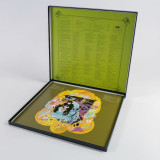
The state51 Box Set
With authenticity core to the project, The state51 Conspiracy engaged one of the UK’s
leading experts in box set design, Daniel Mason at Something Else, to painstakingly recreate
the box, records and accompanying ephemera. The first challenge was to find the deep blue
leatherette paper the original box set was covered in; a problem since it was no longer in
production. “I knew people who had stacks of it, gathering dust on top shelves, so I bought it
up wherever I could find it,” says Mason. Then came the reproduction of 12 loose leaf lyric
sheets on fine art watercolour paper, each of them featuring a watermark and a fairytale-like
illustration by Donovan’s artist friends Sheena McCall and Mick Taylor. Where, though, to
find the same paper stock? “I found out that it was made at a paper mill in North Wales
called Abbey Mills. Unfortunately the mill dissolved in the early 70s and very little of the
paper remained. However enough paper remained to allow us to produce the numbered
certificate also signed by Donovan that sits within the box.”
Then to the iconic cover image. Donovan and Jimi Hendrix’s personal photographer Karl
Ferris, used infra-red film to achieve the psychedelic effect on the cover, but the original
negatives couldn’t be found. Mason then used digital technology to ramp up the colour levels
on a reproduction from an original copy of the album while allowing it to remain a little bit
faded, as it would be after half a century. The same labour of love and care has gone into
producing all elements of the box; from the rebuilding of the famous front cover font to the
hand-numbered and signed certificate; letterpress printed on the original paper stock of the
1968 UK release lyric sheets.
To cap it all off the original mono master tapes were waiting safely in the EMI Donovan
Archive and transferred from tape to digital by Abbey Road Studios where new lacquers
were cut, ensuring Donovan's favoured mono version of the album would be presented both
physically (and digitally for the very first time) in striking audiophile quality. The final touch to
From out of nowhere - if nowhere is the febrile, warped and twilit imagination of Julia McFarlane - comes Whoopee, the second album by J.McFarlane’s Reality Guest. Whoopee is an esoteric, kaleidoscopic movie in music form directed by Julia McFarlane and co-conspirator Thomas Kernot. Full of life, breakbeats and smokey vignettes on the fragile nature of interpersonal relationships, Whoopee is a stylistic evolution from everything McFarlane has done before. Surreal, beautiful in parts and replete with the aching wisdom McFarlane’s songwriting has always promised, this Reality Guest pulls back the curtain on a whole scene of naked truth. Recorded in Melbourne in bursts since the release of 2019’s Ta Da, Whoopee features a new sound palette and band member in Kernot. The duo dive deep into electronic pop tropes, mining digital synths, samples, breakbeats and deep bass grooves, largely dispensing with live instrumentation. If Ta Da took twists and turns with your expectations, offering a Dada-ist, monochromatic take on pop music, Whoopee is McFarlane’s subterranean love-sick pinks, reds, greens, purples and blues. Becoming something of a tradition, the album starts with an instrumental intro pilfered from a 90s’ spy film or cinema intro music, puffing up the listener for the heart-squeezing bathos of Full Stops. Over a bleary backdrop of walking bass lines, jazz- inflected keys and smoked-out atmosphere, McFarlane’s poetry narrates the fragile state of a relationship: “You put a full stop where I thought there’d be a comma, I want the story to continue even with all the drama.” Over a palpable pain, the narrator is revelling in the drama of a relationship, addicted to tumult and heightened emotion. On Sensory, a space age bachelor lounge pad ballad, the converse state of the previous song is explored, here the narrator is battling the numbness of being out of the drama, stuck in a sensory-deprivation tank, anaesthesized and battling to emerge from the fog. Wrong Planet explores an otherworldly pop music, hewing a bright hook out of a sense of confusion. A bona-fide, sing-along chorus bursts out of the narrator musing on the absurdity of existing in this reality. It speaks of one of Julia McFarlane’s main talents, her knack of inspecting human relationships and states with a clear perspective, like an alien visiting Earth and realising everything we are is really, really strange. Whoopee is both more accessible than previous Reality Guest work and somehow more obfuscated. Where the production on Ta Da was dry, sharp and strange, this Reality Guest is blurred, almost smeared with the effluvium of 90s+00s culture and existence. Through it all, it’s hard to deny the undeniable pull of the songs. Precious Boy carries on the lounge theme with a whole sampler of cut up sounds fading in and out of the haze as McFarlane’s voice is right up to the speaker cooing and free- associating, maybe in love or maybe in confusion... maybe they’re the same thing? Sometimes the listener is invited to just bathe in the tone of the vocal, as on Apocalypse, where the texture and timbre of the vocal is luxurious, bathing in piano tinkles and double bass throb. On lead single Slinky, a cut up beat reminiscent of Washingtonian Go-Go drum patterns leads, the song slipping through your fingers, elusive and presenting sound as pure pleasure. Closer Caviar jumps back into the broken breakbeats of a surreal funk, fuelled by the sensory pleasure of the music, a hedonistic whirl in rapture, the narrator now living life to the fullest in all its giddy heights and deep troughs. This is the album’s main character fully-actualised and in the terrible, beautiful moment.
Craig Clouse has devoted the past several decades to exploring a wide range of avant-garde avenues for his brainchild Shit & Shine. The monolithic riffs of raw and powerful psych'n'roll hysteria, the freeform dance miasma, sub-heavy electronica and the blissful stupidity crafted for ecstatic ascension: all perfectly-placed in the idiosyncratic world of Shit & Shine. There's also fertile soil for twisted noises in their lowest form, often obscured by groovier comrades in S&S releases yet vitally important for the substance of Clouse's compositional carcass and OOH-sounds has given him the required space to stretch out his longtime interest in developing loose structures and crackling landscapes to transcend his rhythmic comfort zone.
Making an enthusiastic transgression into noisy tones, "Joy Of Joys" has a friendly way of presenting difficult material. The rough and ready cheapo electronics sparkle in full electrifying mode, welding an ascetic gamut of aural hypnotics with a wormhole of uncompromising loop brut. Clanks, bangs, twangs and creeping, ragged globs of sound bloom on the bones of repetition to focus on the swinging stream of dirty anarchy. Stepping out of any context and genre disciplines, S&S finds new sonic trajectories in "Joy Of Joys" which perfectly sit in-between a wobbly cabal of international sub-underground acts: the idiot-avant strategies of LAFMS, early Mego bad digitalia, no-brow enthusiasm of Wolf Eyes family, micro-DIY ethos of Chocolate Monk and the sheer hellish nonsense of US noise circa '00s.
Clouse was already established as a landscape painter with a series of faux naïf paintings charmingly accompanying his releases. With his heart full of passion for abstract minimalism, he continued these narrative forms but was always in search of the confidence to paint non-figurative art. The first step into the chaotic abyss is coming from his sonic side by abandoning the beat and riff layers of his previous works to complete nakedness and reductionist courage. At once Clouse makes an evolutionary lurch into extremes as well as taking us back to basic forms in "Joy Of Joys". He creates an entire new parallel world to Shit & Shine with his maverick imagination presenting us with one of the most mutant releases to bear his name. Arthur Kuzmin
Sign Libra's third album Hidden Beauty is an intimate voyage through feminine nature, guided by the arts of subtext, musical collage, and mysterious allusions. Elegantly arranged, enigmatic, and mischievous, Hidden Beauty seeks to "release the invisible and bring fragility to the surface." From the rainforests of Closer to the Equator (Sounds of the Dawn, 2016 / Antinote, 2018) to the surreal lunar landscape of Sea to Sea (RVNG Intl., 2020), Agata Melnikova, the Latvian musician behind the Sign Libra symbol, has developed a signature blend of evocative composition with lyricless, ethereal vocalizing. Hidden Beauty attends to a closer space than her first two albums, a playfully layered pastiche of refined references, drawing musical inspiration from the assortment of Erik Satie, the early work of Mylène Farmer and Laurent Boutonnat, and 90s R&B. The first inklings of Hidden Beauty arrived in 2019, with the basic contours of the album sculpted in 2020 and early 2021. Like Sea to Sea, Hidden Beauty was invented as a solitary creative effort, but this time under uniquely hermetic impositions. Tethered to the world only by screen, the artist sought inspiration from an unlikely array of activities: new, unorthodox approaches at composing, learning French, a virtual pedagogical practice, and plenty of jubilant dancing in her flat, sunglasses on, to 90s dance music. Hidden Beauty moves inward from the distant spaciousness of Sea to Sea in favor of a "chamber-like" sound, reflecting the intimate environs of its creation. Balancing the New Age balletic resonance of Closer to the Equator and the cosmic-dancerly tracks of Sea to Sea, Hidden Beauty combines deft, postmodern arrangements with popular, contemporary suggestions. The reverb drenching her previous recordings is sponged up in the songs of Hidden Beauty, giving the exercises contained within a feeling of presence, and closeness. And always Agata's crystalline vocal furnishings, less a lead vocal than a first instrument, the ever-returning counterpoint in a beatific swirl. The other hidden elements of this work are plenty, and perhaps best left concealed for the listener's enjoyment. Or perhaps they are hidden in plain sight and sound, depending on what the puzzle pieces reveal to your imagination. Sign Libra's Hidden Beauty will be released in vinyl, Japanese import CD, and digital editions on November 3, 2023. A portion of the proceeds from this release will benefit Coral Guardian, a non-governmental organization working internationally and with local communities to protect coral ecosystems.
In his “Pulse Music” compositions of the mid-1970s, composer John McGuire forged a unique interpretation of European serialism. A student of Karlheinz Stockhausen, Krzysztof Penderecki and Gottfried Michael Koenig, McGuire moved to Cologne, Germany in 1970, where he become associated with the world-leading Studio for Electronic Music at Westdeutscher Rundfunk (WDR) in Cologne. Like Stockhausen, McGuire found his musical imagination both constrained and inspired by the technology that was available to him.
A conversation with sculptor Hans Karl Burgeff led McGuire to think beyond the horizon and into limitless space. For “Vanishing Points” (1985–1988), McGuire used an entirely digital set-up for the first time: a digital sequencer, eight Yamaha DX-7 synthesizers and a Studer 24-track digital tape recorder. The piece was conceived as a “sequel” to the Pulse Music series, but also a step forward from it. Whereas the Pulse Music pieces had employed steady streams of pulses, with Vanishing Points McGuire employed pulse layers that accelerate or decelerate against one another, vastly increasing the resulting rhythmic complexity.
McGuire's exploration of music technology continued in “A Cappella” (1990–1997), written for his wife, the soprano Beth Griffith, known for her recording of Morton Feldman’s “Three Voices” made in 1983. Using samples, he created a four-voice choir of voice samples and arranged them into interacting parts. The composition faced challenges due to the organic nature of the human voice compared to the precision of synthesized sounds. This process involved extensive editing and a negotiation between the "material" and the "original conception". This sort of negotiation applies as much to the composition of a single piece as it does to the work of two decades.
UK dance music antagonist Works Of Intent redefines big room techno on ‘Richer Sound’, an album sampler with four new tracks to accompany the digital release of his album of the same title which features with six
all-new tracks alongside six cuts previously released on Laurent Garnier and Scan X's COD3 QR label.
Works Of Intent is a vital voice in the underground who champions the sounds and stories of South Asian creatives in his role as Project Manager and Visual Designer for DAYTIMERS. He has also written multiple essays on race, class and privilege in the industry while laying down expressive sets across four decks at key clubs like fabric, Panoramabar and Rex. His emotive, storytelling sounds have come on labels like Turbo, Rekids and Monkeytown, and outside that, he's a go-to mix engineer for some of the UK's most exciting prospects.
‘Richer Sound’ features six tracks previously released on the label’s Various Artist EPs and six brand new offerings that avoid tired big room tropes. Gone are the snare rolls, white noise risers and kick drops, instead Work's operates under the mantra of "big tunes for big hearts" where musicality makes the motive. The artist himself has taken care of the artwork, mixing and mastering and says of the album, “It’s melancholia turned up so loud you can’t ignore it. It’s a deafening barrage of emotions designed for super clubs. It’s unsubtle, it’s unabashed, it’s unrelenting, and it wears its heart on its sleeve. It’s unmistakably a work of intent.”
Cars and motorsport have been a recurring theme in previous Works Of Intent releases and appear again here in 'Left Unseen', which has the high octane, death-defying adrenaline of rally driving perfectly transposed into a big room techno experience. ''Old Ways, New Mistakes' bounces boisterously with stadium-sized kick drums and synthetic mourning that will break hearts across arenas. 'Dreamt I Saw You' takes fawning imaginations to lucid heights with a synthand cymbal pairing designed to get you stargazing in the club.
‘Richer Sound’ is just the sort of expertly-crafted, genre-busting work of emotional and physical potency you would expect from such a restless nonconformist as Works Of Intent.
DeForrest Brown Jr., the writer and producer behind Speaker Music, describes Techxodus as "abstracting Blackness through information overload". On the album he explores the intersection of tech, Blackness and resistance via music taken from his archived live shows, which are then edited, ordered and reassembled in the studio. The main line of inquiry that feeds into Techxodus is Drexciya, whose myths have informed much recent afrofuturist creativity. DeForrest researches and reimagines the artifacts and stories of Drexciya with new maps, ideas and music, particularly reflecting on the 'Seven Storms', seven albums that came out in quick succession around the death of Drexciya member James Stinson, which seemed to herald Drexciyans in the attack mode. The artwork by Abu Qadim Haqq, who also created artwork for Drexciya, links the work too, with Deforrest re-orienting charts and timelines familiar from Drexciyan mythology, working up clues to all possible environments where Drexciyans could survive, from the depths of the Atlantic, to oceanic islands or even outer space. Like Sun-Ra, another touchstone of Afrofuturist music, it might be that the Drexciyans wanted to leave the planet they hated. With these elements, DeForrest creates a soundtrack for an alternate history, a sort of sci-fi sonic fiction which threads together the sonic warfare and mythos of the Drexciyan records with ideas and references to Ishmael Reed's 'Mumbo Jumbo', which tracks the story of 'Jes Grew', an audio virus, back to the coastal black cities of Alabama and the American South. Musically the album is as intense as its inspirations. DeForrest skilfully hand-plays rhythms which amalgamate trap and jazz drumming, but feel at times like orca-song as they pulse through the thick waves of digital sound. Equally the music evokes the ocean, with deep cold drones, or as if it's floating through time like in 'Holosonic Rebellion' which mixes in recordings of African Warriors. Sometimes there is an energetic turbulence as on 'Jes Grew', where punched-in passages of jazz brass bounce against DeForrest's drums to create a weird disassembled jazz. Towards the end the album begins to feel like a spaceship taking off, the rushes of ascending noise and distortion, distant Southern Gospel Vocals feel like music that's leaving earth. Listen to it without the references or feed your imagination; this is a powerful and immersive original work from one of electronic music's most unique creators.
- 1: Hello
- 2: A Love From Outer Space
- 3: Crack Up
- 4: Timewind
- 5: What's All This Then?
- 6: Snow Joke
- 7: Off Into Space
- 8: And I Say
- 9: Yeti
- 10: Conundrum
- 11: Honeysuckleswallow
- 12: Long Body
- 13: In A Circle
- 14: Fast Ka
- 15: Miles Apart
- 16: Pop
- 17: Mars
- 18: Spook
- 19: Sugarwings
- 20: Back Home
- 21: Down
- 22: Supervixens
- 23: Insect Love
- 24: Sorry
- 25: Catch My Drift
- 26: Challenge
A.R. Kive collates the three most astonishing works from that most miraculous of duos - A.R. Kane - comprising the ‘Up Home’ EP from 1988 that signified the band’s dawning realisation of their own powers and possibilities, their legendary debut LP ‘sixty nine’ (1988) and its kaleidoscopic, prophetic double-LP follow up ‘i’ (1989).
In founder-member Rudy Tambala’s new remastering, the music on these pivotal transmissions from the birth of dream pop, have been reinvigorated and re-infused with a new power, a new depth and intimacy, a new height and immensity. Vivid, timeless and yet always timely whenever they’re recalled, these records still force any listener to realise that despite the habits of retrospective myth-making and the
safe neutering effects of ‘genre’, thirty years have in no way dimmed how resistant and dissident to critical habits of categorisation A.R. Kane always were. Never quite ‘avant-pop’ or ‘shoegaze’ or ‘post-rock’ or any of those sobriquets designed to file and categorise, A.R. Kive is a reminder that those genres had to be coined, had to be invented precisely to contain the astonishing sound of A.R. Kane, because
previous formulations couldn’t come close to their sui generis sound and suggestiveness. This is music that pointed towards futures which a whole generation of artists and sonic explorers would map out. Now beautifully repackaged, remastered and fleshed out with extensive sleeve notes and accompanying materials, ‘A.R. Kive’ reveals that 35 years on it’s still a struggle to defuse the revolutionary and inspirational possibility of A.R. Kane’s music.
A.R. Kane were formed in 1986 by Rudy Tambala and Alex Ayuli, two second-generation immigrants who grew up together in Stratford, East London. From the off the pair were outsiders in the culturally mixed (cockney/Irish/West Indian/Asian) milieu of the East End, with Alex and Rudy’s folks first generation immigrants from Nigeria and Malawi, respectively. The two of them quickly developed and fostered an innate and near-telepathic mutual understanding forged in musical, literary and artistic exploration. Like a lot of second-generation immigrants, they were ferocious autodidacts in all kinds of areas, especially around music and literature. Diving deep into the music of afro-futurist luminaries such as Sun Ra, Miles Davis, Lee Perry and
Hendrix, as well as devouring the explorations of lysergic noise and feedback from contemporaries like Sonic Youth and Butthole Surfers, they also thoroughly immersed themselves in the alternate literary realities of sci-fi and ancient history (the fascination with the arcane that gave the band their name), all to feed their voracious cultural thirsts and intellectual curiosity.
It was seeing the Cocteau Twins performing on Channel 4 show the Tube that spurred A.R. Kane into being - “They had no drummer. They used tapes and technology and Liz Fraser looked completely otherworldly with those big eyes. And the noise coming out of Robin’s guitar! That was the ‘Fuck! We could do that! We could express ourselves like that!’ moment”, recalls Tambala - and through a mix of
confidence, chutzpah, ad hoc almost-mythical live shows and sheer innocent will the duo debuted with the astonishing ‘When You’re Sad’ single for One Little Indian in 1986. Immediately dubbed a ‘black Jesus & Mary Chain’ by a press unsure of WHERE to put a black band clearly immersed in feedback and noise, what was immediately apparent for listeners was just how much more was going on here - a
tapping of dub’s stealth and guile, a resonant umbilicus back to fusion and jazz, the music less a conjuration of past highs than a re-summoning of lost spirits.
The run of singles and EPs that followed picked up increasingly rapt reviews in the press, but it was the ‘Up Home EP’ released in 1988 on their new home, Rough Trade that really suggested something immense was about to break. Simon Reynolds noted the EP was: Their most concentrated slab of iridescent awesomeness and a true pinnacle of an era that abounded with astounding landmarks of guitar-reinvention, A.R. Kane at their most elixir-like.
If anything, the remastered ‘Up Home’ that forms the first part of ‘A.R. Kive’ is even more dazzling, even more startling than it was when it first emerged, and listening now you again wonder not just about how many bands christened ‘shoegaze’ tried to emulate it, but how all of them fell so far short of its lambent, pellucid wonder. This remains intrinsically experimental music but with none of the frowning orthodoxy those words imply. A.R. Kane, thanks to that second generation auto-didacticism were always supremely aware about the interstices of music and magic, but at the same time gloriously free in the way they explored that connection within their own sound, fascinated always with the creation of ‘perfect mistakes’ and the possibilities inherent in informed play.
‘sixty nine’ the group’s debut LP that emerged in 1988 had
critics and listeners struggling to fit language around A.R. Kane’s sound. As a title it was telling - the year of ‘Bitches Brew’, the year of ‘In A Silent Way’, the erotic möbius between two lovers - and as originally coined by the band themselves, ‘dream pop’ (before it became a free-floating signifier of vague import) was entirely apposite for the music A.R. Kane were making. Crafted in a dark small basement studio in which Tambala recalls the duo had “complete freedom - We wanted to go as far out as we could, and in doing so we discovered the point where it stops being music”. There was an irresistibly dreamy, somnambulant, sensual and almost surreal flow to ‘sixty nine’s sound, but also real darkness/dankness, the ruptures of the primordial and the reverberations of the subconscious, within the grooves of remarkable songs like ‘Dizzy’ and ‘Crazy Blue’. Alex’s plangent vocals floated and surged amidst exquisite peals of refracted feedback but crucially there was BASS here, lugubrious and funky and full of dread, sonic pleasure and sonic disturbance crushed together to make music with a center so deep it felt subcutaneous, music constructed from both the accidental and the deliberate, generous enough to dance with both serendipity and chaos. ‘sixty nine’ remains - especially in this remastered iteration - ravishing, revolutionary.
The final part of this ‘A.R. Kive’ contains 1989’s astonishing double-LP ‘i’ which followed up on ‘sixty nine’s promise and saw the duo fully unleash their experimental pop sensibilities over 26 tracks, plunging the A.R. Kane sound into a dazzlingly kaleidoscopic vision of pop experiment and play. Suffused with new digital technologies and combining searingly sweet and danceable pop with perhaps the duo’s strangest and boundary-pushing compositions, the album did exactly what a great double-set should do - indulge the artists sprawling pursuit of their own imaginations but always with a concision and an ear for those moments where pop both transcends and toys with the listeners expectations. Jason Ankeny has noted that “In retrospect, ‘i’ now seems like a crystal ball prophesying virtually every major musical development of the 1990s; from the shimmering techno of ‘A Love from Outer Space’ to the liquid dub of ‘What’s All This Then?’, from the alien drone-pop of ‘Conundrum’ to the sinister shoegazer miasma of ‘Supervixens’ — it’s all here, an underground road map for countless bands to follow.” Perhaps the most overwhelmingly all-encompassing transmission from A.R. Kane, ‘i’ bookended a three year period in which the duo had made some of the most prophetic and revelatory music of the entire decade.
After ‘i’ the duo’s output became more sporadic with Tambala and Ayuli moving in different directions both geographically and musically, with only 1994’s ‘New Clear Child’ a crystalline re-fraction of future and past echoes of jazz, folk and soul, before the duo went their separate ways. Since then, A.R. Kane’s music has endured, not thanks to the usual sepia’d false memories that seem to maintain interest in so much of the musical past, but because those who hear A.R. Kane music and are changed irrevocably, have to share that universe which A.R. Kane opened up, with anyone else who will listen. Far more than other lauded documents of the late 80s it still sounds astonishingly fresh, astonishingly livid and vivid and necessary and NOW.
The tone always makes the music. But only those who actually make the sound An ancient-house-avantgarde dream has always been there since the legendary -Warehouse- days of Ron Hardy, to bring more sounds and tones constantly to an independent, repetitive development. And thus beyond the limits of an executive creative artist on the otherwise purely commercial sense what we call in common -beyond imagination-. -Raw Footage-, the latest album concoction of Chicago house legend Ron Trent (Prescription) on his new imprint -Electric Blue- works in the best sense of Stanislav Lem heroes Trurl & Klapauciusals, cruising like those two metal brains frantically invented by the universe of 4/4-Sounds to get insane tracks out of the new material matter located there, and put them together to brand new ones. This trackwerk varies as well as of course between classical Chi-Town to the context of contemporary, epic house dubs and lives in a perfidious manner from the interaction of various computer
modules that constantly spits out new and exciting interactions. In the end, the software sings only as digital output of great analog sounds, which may well be understood as a mocking voice to the majority of contemporary Homeboy wackiness formats.-Unpredictable- and less -cryptic- might fit here as a keyword excellent, where you kick out of the rough house plant a significant entertainment value must, without the need to posess necessarily the same nerves of steel. Anyone who has ever really wondered what House sound could be appropriate for a journey through the vastness of the universe is, gets there now at this point completely to his fullest expense. Trent 2012 and its tracks on this album reflect a lot about the revolutionary founder of -Spirit of music- from the mid-80s, who is recorded then as now but with inadequate slogans such as -light years ahead of its time-. For as
Trents body of work -Raw Footage- is also particularly scary genius material, although still of totally solid stress field and background from the musical spectrum between the Windy City and the Motor City engine bridled her.-But heres to the Future- For Sir Trent more than twenty years after -Altered States- and the relevant follow-ups, thats not really a problem!
Der Ton Macht immer die Musik. Nur wer macht eigentlich den Ton Ein uralter-House-Avantgarde-Traum war und ist es seit den legendären
:Warehouse: Tagen eines Ron Hardy, Sounds und Töne immer ständig neu zur selbstständigen, repetitiven Entfaltung zu bringen und somit die kreativen Grenzen des exekutiven Künstlers über die sonst im rein kommerziellen Sinne gängige Vorstellungskraft hinaus zu sprengen.
:Raw Footage:, das neueste Album-Machwerk von Chicago House-Legende Ron Trent (Prescription) auf seinem neuen Imprint :Electric Blue: kommt im besten Sinne der Stanislav Lem Heroen Trurl & Klapauciusals, und cruiost wie jene beiden Metallgehirne wie wahnsinnig durch das All der 4/4-Sounds, um aus dem dort befindlichen Materiematerial neue, wahnsinnige Tracks zu erfinden und zusammenzustellen. Dieses Trackwerk variert denn auch wie selbstverständlich zwischen dem klassischen Chi-Town-Kontext bis zu kontemporären, epischen House-Dubs, und lebt auf perfide Art
und Weise aus der Interaktion verschiedenster Computermodule, die dabei ständig neue aufregende Interaktionen ausspuckt. Am Ende singt eine digitale Software nur noch als Output großer analoger Sounds, die durchaus als Spottgesang auf den Großteil eitgenössischer Homeboy-Frickelei Formate verstanden werden dürfen.:Unberechenbar: und weniger kryptisch mag hier als Schlagwort vortrefflich passen, wo man dem rohen Housewerk ganz erheblichen Unterhaltungswert abgewinnen muss, ohne das man dazu unbedingt gleich Nerven wie Drahtseile benötigt. Wer sich je
eigentlich gefragt hat , welcher House-Sound so für eine Reise durch die endlosen Weiten des Universums angemessen sein könnte, kommt an dieser Stelle jetzt völlig(st) auf seine Kosten. Trent 2012 und seine Tracks reflektieren mit diesem Album zwar viel von dem revolutionären Gründerspirit einer Musik aus der Mitte der 80er-Jahre, die damals wie heute dennoch nur unzureichend mit Slogans wie ihrer Zeit um Lichtjahre voraus zu erfassen ist. Denn wie Trents Gesamtwerk ist eben auch :Raw Footage: insbesondere furchteinflößend genialer Stoff, wenngleich auch immer noch vom ganz und gar soliden Spannungsfeld und Background des musikalischen Spektrums zwischen der Windy und der Motor City her aufgezäumt. :But here's to the future: - Für Trent auch mehr als zwanzig Jahre nach :Altered States: und den einschlägigen follow-ups nicht wirklich ein Problem!
Portland, OR-based multimedia artist William Selman returns to Mysteries of the Deep with his third album for the label. Drawing on influences such as David Toop, Beatriz Ferreyra, Elizabeth Waldo, and David Behrman, “The Weather Indoors” melds live and synthesized instrumentation, field recordings, and digital processing techniques in a new, more melodic and approachable direction.
Immersive site recordings open into melodic woodwinds, orchestral instrumentation, bass guitar, gongs, and vibraphone. Borrowing from the anthropologist Tim Ingold’s concept of “inversion,” this widescreen staging cuts immediately to the core of the project: the way human beings use the faculty of imagination to aestheticize their built surroundings with architecture, images of distant locales, and domesticated flora and fauna to contain the anxiety for the natural world that surrounds human life.
A clear peak in Selman's extensive catalog, “The Weather Indoors” captures his work at a moment expanding his musical and aesthetic project: Neither genre ambient nor musique concrète, but a unique sound world dense with conceptual play and moments of more traditional harmonic beauty.
“We are contaminated by our encounters: they change who we are as we make way for others. As contamination changes world-making projects, mutual worlds—and new directions—may emerge. Everyone carries a history of contamination; purity is not an option.” —Anne Lowenhaupt-Tsing, The Mushroom at the End of the World
----
'A Soft Degeneration' was featured in a mix from Mysteries label boss, Grant Aaron, entitled 'Sundays are for' – hosted by Delayed.
William Selman has releases on Mysteries of the Deep, Critique of Everyday Life, Going In, Hausu Mountain.
Debut vinyl by Cruz Perro Maldito, a Tenerife based trio forever imbued in the collective imagination and folklore myths of the magical and misty mountain of Agua García, located in Tacoronte district at the foot of Teide Volcano (Tenerife/Canary Islands). Their music is an explosion of free jazz improv where sophisticated sound textures emerg-ing from modular synths and processed guitar create abstract and random rhythmic patterns with complex saxophone lines guiding the ensemble from quiet to menacing passages of sudden bursts of noise and frenzy.
Entitled Truquetin Resorte, the album takes inspiration from the rich history of mechanical automata, such as Talos, the bronze giant who defended the island of Crete and was eventually defeated by Jason and his Argonauts. Or Apega de Nabis, a replica of King Nabis’ wife whom crossed unsuspecting victims with its iron spikes hidden in the device's lower arms, hands and breasts.
Or even René Descartes and his infamous daughter- like Automaton replica, an eerie creation from the renown philosopher to evoke his dead daughter
These myths and more serve as reminder of a mechanical world’s past, a world of complex automata stories with me-chanic ‘imitating’ beings as its problematic protagonists. An eerie counterpoint to our current uber modern digital world and its rapid advancing A.I.s.
Like a winding system of trails and paths cutting through a digital forest-scape, M. Sage's Paradise Crick is shaped by time. Full of wonder and charm, designed patiently and from a rich, curious mulch of synthesized and acoustic sound, the versatile American artist and magic realist's new suite of music is an imaginary destination and a pastoral fantasy that envisions the natural and fabricated worlds as one. Matthew Sage is a musician, intermedia artist, recording engineer and producer, publisher, teacher, partner, and parent. Assembling a sprawling and idiosyncratic catalog of experimental studio music between Colorado and Chicago since the early 2010s, recent highlights include The Wind of Things (Geographic North, 2021), an ensemble-recorded expression of bow-splashed nostalgia, and the four seasonal albums of Fuubutsushi, the improvisatory ambient jazz quartet he formed with friends from afar in 2020. Sage renders projects with nuanced velocity and a completist sensibility _ when it's finished, it's done _ which is what makes Paradise Crick, his debut for RVNG Intl., a compelling outlier. Sage first staked his tent in Crick's conceptual campground five years ago from his home studio in Chicago (he's since returned to Colorado, home to the mountains and prairies often personified in his work). He had just read Richard Brautigan's Trout Fishing in America, a kaleidoscopic reflection of pastoral America's shifting identity by way of magical fishing sojourns. Inspired by that feeling, of getting lost but finding oneself in through the outdoors, he amassed over seventy demos documenting a fictional soundtrack for camping. Pull up to this park, and the sign might read, "Welcome to Paradise Crick. Fire Danger Is Low." The sequence, pruned down to thirteen tracks, courses the dewy mornings, afternoon hikes, and firelit nights of a weekend expedition. While Sage is not a filmmaker, he views the method of making this album as a similar form of world-building via structure, narrative, formal elements, and editorial refinement. Contrasted with his collaborative craft, here he is a sole auteur reclined in total autonomy, able to improvise scenes and implement special effects at will. A parallel precedent for such unchecked imagination in the M. Sage canon is A Singular Continent, his 2014 album that tilted its compass to a faraway land. Where Continent built its world layering samples as composition, Paradise Crick deploys a balance of accessible song structures with experimental instrumentation and sound design. Speckled with harmonica, autoharp, chimes, penny whistle, voice, hand percussion, and other mysteries, Crick's texture is treated as a sensorial adventure; the swamps gurgle, the lakes glisten, and the valleys breathe in robust HD. The rhythms are loose and buoyant, bursting with a few `kick and snare' moments shaped by Sage's lifelong love for drumming and headphone prone electronic music. Crick bumps more than most anything he's done before; crackling static pulses and lush vibrations reveal an intrinsic groove, a hidden beat map. In the landscapes of Paradise Crick, science and magic co-exist, 5k boulders and midi frogs share the frame with real-life memories of Midwest camping trips and the desire to feel extra human in a digitized space. Sage strived for "nature in the holodeck" but couldn't help leaving fingerprints in the simulation, and it's these traces of spirit and character that give Paradise Crick its strange allure. The album's bubbling sense of play, melody, and timbre takes cues from left-field electronic lineage; synth pioneers like Tomita and Raymond Scott up through the more expressive pop tendencies of Woo, Stereolab and the Cocteau Twins, and into contemporary composers like Sam Prekop. The album's vocabulary is uncomplicated; the gestures are sweet and inviting, intended to lull the listener. As much as Sage continues to be an experimentalist by nature in his work, with Paradise Crick, he spins a narrative. Not necessarily a concept album, but rather an invitation to take off for a weekend. That's the modus operandi down here in the Crick, we stretch out. M. Sage's Paradise Crick will be released May 26, 2023 in LP, CD, and digital editions. A portion of the proceeds from this release will benefit Earthjustice, the premier nonprofit public interest environmental law organization.